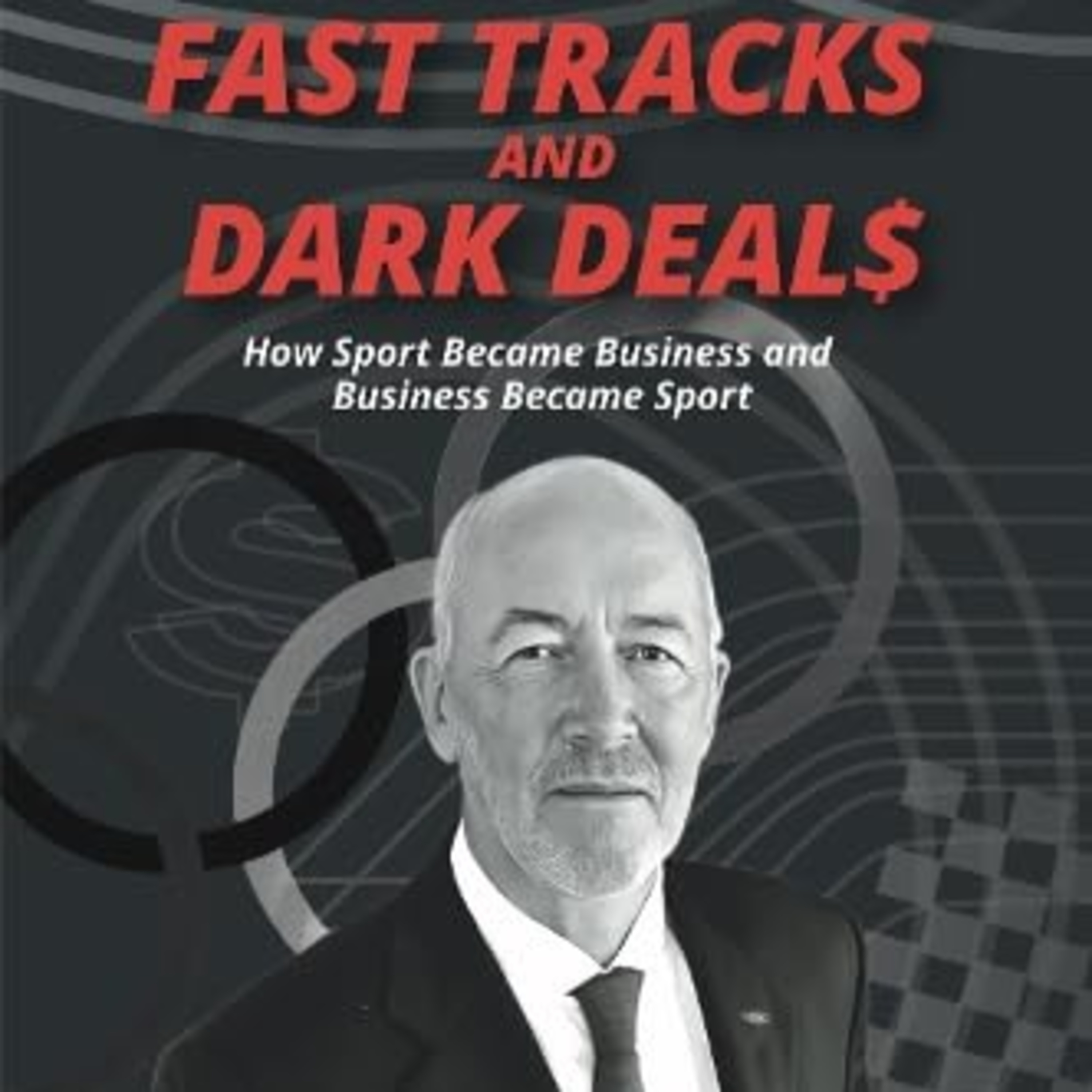
SPECIAL EPISODE: Fast Tracks and Dark Deals – Michael Payne
56m 10s
In this podcast interview, Michael Payne discusses his book chronicling his pivotal role in the sports business industry. He recounts joining the International Olympic Committee during its near-bankruptcy era and helping rebuild its commercial and reputational foundation. Payne describes the complex, often politically charged process of Olympic bidding, illustrating it with examples like Beijing 2008 and Rio 2016, and explains how the Salt Lake City scandal became a catalyst for profound IOC reforms. He also shares his transition to Formula 1, working alongside Bernie Ecclestone, and contrasts the leadership of figures like Ecclestone, Samaranch, and Jack Ma. Throughout, Payne emphasizes the blend of crisis management, negotiation, and adaptability required to navigate the high-stakes worlds of Olympic politics and global sports commerce.
[Music] Hello everyone, welcome to another episode of the Africa Business Support Boardcast with myself, Adam Spiel and my ever-present co-host, Jabu Emtoa. Jabu, what's exciting conversation do we have for our audience today? Well, Adam, I would just say buckle up because today we're joined by a man whose fingerprints are stamped all over the modern sports industry. Here's reputation in my eyes is so strong that borders on folklore really. The stories, the deals, the political mind fields and the reinventions. Truly we have today the man, the myth, the legend. Michael Payne has lived it all and now he's written it all down. His brand new book, Fast Tracks and Dog Deals, how sport became business and business became sport, is wild, meticulous and behind the curtain in terms of giving us a journey through the real machinery of sport, the power brokers, the billionaire gambles, the dog arts of Olympic bidding, the victories, the near disasters, the reinventions that shaped the Olympic movement. It also throws you into the rooms where the modern sports industry was built, ski bum beginnings, ambush marketing battles, political shootouts, perfect storm Olympic crises, gas-lo-family politics and then of course the leap into formula ones shadowy corridors with Bernie Eccleston. It's part memoir, part expose, part history book, part deal makers manual and absolutely unmissable and if his recent sports accord international federations forum keynote is anything to go by forecasting gene edited athletes, AI powered officiating athlete-led media empires and even the NFL plotting a take over world rugby, then I'm sure Adam today's episode is going to be as lively, provocative and unapologetically truthful. On a bog-bust episode it's a great honor to welcome back for the third time on the Africa Business of Sport Podcast. The first ever Director of Marketing at the International Olympic Committee and an industry titan, Michael Payne. Michael, it's a head trick and on a moment of occasion for you, congratulations on your book, welcome back on the Africa Business of Sport Podcast. Well it's great to be back and I think Jabo I should hire you as my agent because I don't think anybody's given me an introduction quite as glowing as that. I think you're probably somewhat overstating the mark but it's great to be back and to share with your listeners some of some of the stories that I've written up in my new book which you have so succinctly summarized. Michael, let's dive straight into it. I don't think there's any time for niceties or any precursors. You open the book with some quite frankly unbelievable family stories. There's references of rebels actors, argentina, brothels, the sky bum years and you frame them as almost as your first training in the dark arts. So I suppose the first question to you might be how directly did that some would say chaotic upbringing shape the instincts that you later relied on in the Olympic deal rooms where improvisation, risk appetite and reading people essentially become survival tools. I don't think anybody who leads a you know professional life cannot look back on their early days and their upbringing and not acknowledge it has to have some impact whether it's good impact or bad impact I think it is impossible to grow up until your 1820 and for your upbringing not to have a important impact. I do open the book in quite a colorful style because I thought it would be fun for people just to understand who I am and some of the family history and it starts off with revealing that my grandfather was at one stage the most sought after terrorist in England. He went on to declare war against the British Empire with the grand sum of £1.3 shillings with his colleague and a pub in county Claire in Ireland war which he went on to win. He was one of the four front leaders chief of staff to Michael Collins that led the war against England for the separation of Ireland. I mean what was the predecessor to the Irish Republican army and then we go on to introduce my mother who was his favourite daughter and she couldn't work out whether she wanted to be an actress or a nun and mother superior at the convent sort of said well as she liked men too much probably a life in a convent was not for her so she went off and married an Englishman of all people. It became an actress and then her first film was murdered in a brothel by a werewolf so that's all about on that's on the first two pages of the book and we try and maintain the pace whether I'm talking family stories business stories or sports stories to not only provide a an informative read and history but also a fun read. Yeah I think it's very important to more or less break their eyes when it comes to writing such books because you did inform the audience that there will be provocative opinions and things shared from your experiences in there so when you start soft you're then able to create that environment where you you want to get your audience you know really part of the story and then get to see the soft side of you the the little things that don't really directly impact but have a little hold on you. In your book first tracks and dog dues everyone make sure you go and read it you describe joining the Olympic movement during what you call it bankruptcy moment one will think that while I want to be a part of an institution doing a bankruptcy you know situation that's going on and you said that during this moment it ran where losing the global shine of the IOC was really going to happen but when you step into that crisis what were your first elements of how you felt in order to move towards rebuilding that credibility and then that name of the IOC? It's difficult today when you look at the billions of dollars that are at stake in the Olympic world to go back to the early east when the IOC was bankrupt it had no revenue sources it had no revenue in the bank and it struggled to find a host to take the games forward you know if you look at the 1984 games there were only originally two candidates one was Terran and as they say they had a some a management change at the top which meant that the IOC didn't think inviting the world to a Ram was a good idea and Los Angeles that had a boat 95% of the people said no so it was game over at the time I mean let's just remember I was only 25 years old I didn't have a family to support I was at the very beginning of my career the IOC at the time as an organization didn't have the money to go and find a headhunt or executive search or whatever so in that sense I was probably very lucky and you know as far for me it was opportunity in Switzerland I might be able to ski at the weekends because I loved skiing and you know I had nothing to lose it wasn't as if you were making some strategic career move and most people basically thought well good luck you might learn a little bit not sure the IOC is going to be around for much longer now we'll see you again in a year or two I mean and it honestly was as black and white as that in the book about your experience in what you term bidding wars and that refers to host cities all across the world trying their luck and putting the hats in the ring so to say to host the Olympic games and your chapters on the bidding wars I think one is titled the bird city theater the covert diplomacy and the perfect storms of politics and desperation I think all these chapters read like geopolitical thriller so from everything you it you witnessed inside that world what would you say people most misunderstand about how a city actually wins the games and secondly which single bid best captures the House of Card Style drama you describe in the book as well well I was a witness and actor to an incredible journey going from a period where there were no bidders through to the delivery of the 92 Olympic Games in Barcelona that really launched the golden era of bidding because politicians around the world saw how they could use the Olympics as a catalyst for transformation the transformation of the city and if you were to go back to Barcelona today or what is some nearly 30 40 years after the games everybody still talks highly about the incredible contribution
of the games as a catalyst. But I think, you know, what is the key to winning? I think if I was really honest, if I knew the answer to that, I'd be a very rich man because I don't think there is some magical formula. What is clear is it's not a technical beauty contest. It's not about who has the best stadium. It depending at what moment in time you are. Depending who else is bidding, you might have a decision that is very sporting driven or a decision that might suddenly be very politically driven. When China was bidding the second time and won the games for 2008, it was a political decision because the IOC membership felt now China is ready and it is the right time to take the Olympic Games to a billion-pilass people. And there was also, you know, there's an element of risk management. If you award the games, are you confident that they will have the capability to deliver and pull it off? There was never any doubt about China. Go forward eight years later, when Rio won, generally it was felt now was the right time to go to South America and in the bid, Rio did a very good job at convincing everybody that technically they could do it. But the subsequent organizing committee and the leadership of the organizing committee were criminally negligent and the leader ended up in prison. But the operation became so difficult that the IOC President Thomas Bach went to sleep each night, not knowing if the Olympic Games would be able to take place the next day. We struggled through those Olympic Games. God knows how we got to the closing ceremony. On television it looked wonderful. Behind the scenes it was an unmitigated disaster. So, you know, immediately after that, you know, the IOC said, we're out of the risk business for a while. We need to make sure we have cities that are either, you know, no brainers in terms of their operational delivery or very much from a sporting perspective. The bidders, and we're seeing a fundamental change in the bidding process. It's gone from a period where there was a man scramble with lots of cities bidding and finally it will be presented to the IOC membership for a vote. Then it went through a period where suddenly cities were withdrawing. And before you knew it, there was only one or two cities left. And the IOC executive board and the president basically designated one or other city. Now I think there are more cities coming back and the new president, Kirstie Coventry, has made it very clear that she wants to have a new bidding process and a bidding process where the IOC membership can be far more involved and engaged again. But that process is only going to get announced next summer. I think it's interesting realizing the staff pool that each main sector of sporting excellence and ability and then political influence has as well when it comes through these games. And one would not be surprised that it tends to cut across other major sporting events, ticket whether it's the World Cup or the IOC that happens every year. But I really want to more into the story of the book. You write that the sole to make scandal created the Olympic movement's most dangerous legitimacy crisis since the Second World War. And that the so-called four-month skateres that were, I mean, I like the fact that you use that phrase. It's very much connecting to people of my generation. The four-month skateres inside the IOC had to steer the ship out of the storm. I can imagine how the political influence and also the social responsibility that had to take form within that period of time. So in trying to steer the ship out of the storm, which reforms from that era, do you think saved the Olympic movement and cost funds and also sports business professionals over the years to come to see the IOC for what it is now. And do today's dialogue based bid in process through all of those lessons? Well, I mean, you set it up right that the Salt Lake scandal which revolved around the Salt Lake city, the Mormons being very, should we say, generous in their in their office to some members to persuade them to vote for them. I mean, in other words, bribery. And when that came to light, because the Olympic world was built on a set of values, it didn't matter what sums of money were involved, the public felt let down. And for a period of time, it was unclear whether the IOC would survive. Once we got control of the reform process and some of the advice I was given by top court-prote American leaders was, look, every organization, every company faces a crisis or a scandal. The real measure is whether you can turn that around to your advantage. And here Samarang, who was in the firing line, said, right, we're going to use this scandal to completely reform the IOC. And we probably put through a set of reforms in six months that under any other structure would have taken 40 years to achieve. And the IOC came through the crises much stronger and healthier. There were the, actually, I think, 40 recommendations of change within the IOC. I'm not sure there was any single one that would stand out more than others, but it ranged from changing the IOC membership. So for the first time, 15% of the membership would be active athletes. And the athletes would be electing themselves to become members. You had the representatives of the IF and the NOCs. You had age limits. You had term limits. You had measures to make the bidding process far more transparent. I didn't necessarily stop cities from trying to be very creative in their games to win the games. But when you are in the world spotlight, when you're under the magnifying glass and the Olympic world was under a magnifying glass way more than any company would ever be, you have to stand up and deliver. And at times people were so well, why are the Olympics being put through the meat grinder like this, you know, when FIFA and football isn't? And at the time, FIFA wasn't. In part because people said, well, that's to be expected in football. There's always going to be issues and challenges and some corruption. And it was another decade before FIFA went through its crises. And it made headlines, but it was different because people didn't care about it in the same way as they cared about the Olympics. If I now look going forward, you know, the IOC has to continue to to evolve, has to continue to fight, to stay relevant, to stay engaged, and to continue to build the trust, particularly of the younger generation. And that trust has become far more fragile in a sort of environment where people move on very quickly. Fortunately, we had the Parasol Olympic Games last year that were, you know, a massive reboot. So they're the Olympic ideal and everybody reminded that the Olympics really are something very special. You know, they only come around once every four years and it's magical when it does. But not easy for the IOC to continue to deliver the show, the complexity of what it takes and to set the highest possible sort of brand value and moral standards. Michael, after the multiple chapters in the book that were dedicated to the IOC and your time, which is I think people associate you with your time at the IOC. But what many might not know or have such an in-depth revelation of a supposed in the book is that you're also an important cog in if one becoming the sport that it is today. You use so many different phrases and terms in the book. I really admire your writing, I must say. Are you described for me alone as a different kind of
political jungle. And if that's not good, you go on to paint Benny Eitelstone as a man who could smell weakness, three continents away. Which I found absolutely just humorous and you know, just bait the book even more better to consume as you insist. Tell us about your time at Formula 1 because you look at it today, just a couple of months ago, they wrapped up a deal with Apple TV for about $750 million for the broadcasting rights in the US and looking at the phenomenon that the Formula 1 sports is today. When you walked into those dark corridors of F1 power as you put it off, just over two decades at the IOC, what was the biggest cultural shock and how did you adapt your Olympic negotiation toolkit to survive a different political channel as you put it now? Great question and I need to think about a little bit. I mean, in terms of the day-to-day negotiations, whether you are negotiating an Olympic TV contract or a Formula 1 TV contract, the rules, modus operandi are very similar. Remarkably, Bernie Eitelstone and one Antonio Samarang were quite similar in a number of fronts. They'd actually become good friends and it was funny, the moment Samarang retired from the IOC, Bernie was all over my case saying, come on Michael, come and join me now and have fun. And I said, no, my, you know, my commitment at heart remains with the Olympic world and I stayed on under Jacques Rogg for another three years. But the organization of the IOC did change. It became far more bureaucratic, far less entrepreneurial and Bernie kept chasing me and sort of basically saying to me, you're no longer having fun. And, you know, one day I realized he was probably right because I always said I, you know, would only, you know, people would ask, what would you leave the IOC? And I said, well, I, you know, no plans to. But the day I realized that I can't make a difference. The day I wake up in the morning and it's just about process, it is not about building something, creating something, is the day that it is probably time to move on. And I'd had a incredible 20 years at the IOC and Bernie, who was under quite a lot of pressure from the banks to effectively get a number two. And I was sort of persuaded to join him and form it at one as a number two. The only slight problem was was that whilst the banks wanted Bernie to have a number two and Bernie and I, you know, had got to know each other and work together, the moment I walked through the door, he didn't want a number two because he still wanted to control everything. And it took a little while to adjust because I'm used to being out there at the forefront, not sort of sitting back, twiddling my thumbs. And I said to Bernie, I said, look, let's be honest, you know, you don't want me sitting in the office here every day. Why don't I take on specific deals, specific projects, look at how we would create new opportunities, new races, new TV deals. But I will also do some other boards and advisory beyond the Formula One. And that ended up as the perfect modus operandi and a stayed with Bernie as his sort of special advisor, what nearly 14 years. And when CBC, Formula One worked closely with Bernie and CBC to sell Formula One. And we sold CBC, so we sold Formula One to Liberty, the current owners of Formula One. And they wanted me to continue. But I felt that at the time Liberty didn't have a clue what they had purchased. And they didn't. And I had too many other interesting boards and programs just to go forward. So I wish Liberty luck. Today Liberty had done a fabulous job. But it took them a lot longer to get up to speed. So when Bernie left Formula One, I decided to leave as well. Bernie and I are still very close. We still meet. He's remarkable. 95 years old. And still one of the sharpest people in the room. And by far, the, what will be the right term, by far the best commercial negotiator I've ever had dealings with. If Samarange was by far the best political negotiator, Bernie was by far the best commercial. And then I surrounded off in my most recent deal with Ali Bubba and Jack Mar. Jack Mar was by far the most visionary business leader that I met over the 50 years. I really like how you given these top individuals or flowers by giving them titles that are very befitting of your experience with them. I think it's very interesting. As a side note, I watched Braun GP on Netflix a couple months ago. And I got to see and understand how Bernie interacts with the different things that are part of everyone. So I can clearly see where his strength and power is alive. In your book, you describe the everyone's commercial system as a skyscraper built on shifting sand. And I find it very interesting. It gives me a good understanding into how your mind went and how the experience was free. Could you outline your role in pushing it toward a more coherent global identity? Because you did mention that liberty at the time that they bought the brand. They didn't know what they were doing. But because you were in there, you knew what you were doing. What strategic shifts where you part of champion in everyone, such that as growing from where it was to where it is a commercial behemoth now. Well, if you look at the revenue models that are underpinning Formula One, it probably starts with what's called the hosting fees. How much each destination will pay to host and Formula One and Bernie really pioneered that model where countries and cities understood that the value of hosting Formula One wasn't about the tickets you were able to sell over the weekend, but was far more of a strategic rebranding platform for the host and the nation. And one of the couple of the hosting deals I did for Bernie, one was to develop the concept for Singapore. Because here the Singapore wanted to rebrand their region from being somewhat calm, stayed quiet into a dynamic host. And that's what they have absolutely succeeded in doing with their nitrace. At the time following the Olympic Games in Russia, spoke to the Russian leadership and said, right, you've got to spend $50 billion rebuilding the region of Sachi. What are you going to do after the closing ceremony? I mean, the Olympic Games has put you in the history books, then what? And to my mind, you have to have an annual event, an event that will also help to build the brand and image that you want for Russia, which is you're wanting to create more of a glamorous tourist destination down on the black sea. You want to be able to show Russian innovation and technology. It's a no-brainer Formula One. Now, it took me a little while to sell Bernie on the idea. And you're going to have to read the book to understand the stories behind that. But I think it starts with the hosting and getting countries to understand the value of hosting major events. And because of my links to relationship with CVC, I went on with CVC to make big investments in volleyball. And I'm now the chairman of volleyball. And we're taking exactly the same model in hosting. There's one of the very few IFs that is really commanding very significant hosting fees because of the broader image and brand statement. But, cheer earlier, I remark about the shifting sands. I mean, that's applicable to the whole sports movement at the moment. And not least, the Olympic world. As successful as the Paris Olympic Games were, there are massive storm clouds on the horizon as to the future of media and television. And how do you monetize content? Who are you going to partner with to be your distributor of your content? The marketplace of sponsorship and how companies are engaging is again transforming at break next speed. And if the IOC doesn't evolve or any IF, and this was one of the key points of my keynote address to the International Federation a few weeks ago, guys, it's changing. And if you don't evolve and adapt to that change, you will very soon find yourself out of business in the museum and be a dinosaur. And we all know what
happen to dinosaurs. I think that's a perfect segue, Michael, to one of our closing questions for this podcast episode. That's looking into the future because the final chapter of fast tracks and dog deals, as well as your international federation forum keynote, argue that sporties being, I think we said dismantled and rebuilt at the same time. I'll take a quote from your speech at the I.F. forum. I wasn't there. You sent me a speech. I haven't yet made it into those rooms yet. You mentioned that as we look into the future, I quote, sport faces more than the relentless pace of change in technology, marketing, and society. These are significant challenges in themselves, but they are deeper, more destructive forces, gathering that strike at the core of what sport is and what it represents, which I thought was a powerful statement that you put out there, Michael. In thinking about the future of sport, you know, and the possibilities like AI-driven officiating that you mentioned, or athlete-run media platforms to sovereign wealth and private equity, possibly running the governance of the leagues in the future. Out of all these forces, which single disruption do you believe will most radically reshape the global sports industry within the next decade? I know you looked into the next 50 years, but if we had to keep it short term in the next decade, what could be the biggest disruptions that yet to be revealed? That's a hard one to single out, un-single disruption, because in some ways, you've got a perfect storm of a series of different issues that is changing the environment and world as we know it today. The biggest single immediate risk is what I refer to as the political weaponization of sport. And that is, you know, when I joined the IOC, it was in the middle of the Cold War. You had the superpower, you know, boycott back and forth between the US and the Soviet Union. You know, Africa walked out of the 1976 games as a political statement over Artyte and New Zealand's links with South Africa. And so sport was being pulled apart and used as a political tool. Even though the countries might continue to trade, engage, none of the sport was a soft option. And one of the great legacies of Samaransh was that he got the politicians to understand to stop playing with sport and let the world come together. And for the better part of three decades, we actually had a relatively calm period. Over the last few years, we've seen the politicians again around the world jumping on their soapbox and deciding who should or should not be able to play, who should or should not be able to compete. And that is a unbelievably fragile deck of cards that could come tumbling down very quickly. And I think Coventry has got her hands full to make sure that the political establishment respects the independence of sport supports it, but doesn't try to use it. And in the current sort of extreme field political media environment, that is not easy. So that's the, that's the sort of the big political issue. Then, you know, you look at how technology is going to evolve. And in some areas, it's great. It's enhancing sport. But, you know, when you look at how technology has evolved with sports equipment, my sport of skiing is transformed. But at what stage is technology taking over and replacing the human performance? You're playing a game of tennis. And the latest in AI cloud technology, we're not that far off where they will change the tension of the strings on the tennis racket. Not at the beginning of the game, not between matches, not between sets, during each point, as it is being played, according to how the tennis player responds. Now, in Formula One, it is a marriage and innovation between innovation technology and the athletes. And it's accepted. But at what stage does technology take over from the human performance? The whole debate about doping. I mean, we're in the dark ages because what is going to happen when the athlete isn't wearing the technology, but the technology is implanted inside the body. That you're wearing some electrode implanted onto the knee to give an extra boost. And the same way as bicycles now have to be x-rayed before the races in order to see if there's a hidden battery. How far away are we from the day where every athlete has to walk through a metal detector to see what's inside the body? But then again, a birth, you know, say your child has is blind in one eye, is able to have an eye transplant and has a, well, I don't know what the term would be, a super eye. Great. Medical saved the child's sight. And then at the age of 18, with this super eye, guess what? He's got a whole new dimension in terms of his ability in shooting or archery or razor. Now, is that real? Is it enhanced? Where do you begin to draw the ethical guidelines? So you can go on and on and on about the pace of change, all referees being replaced by technology. Sometimes it's good. No question. But is there a risk that sport might suddenly lose its soul? At what stage is there a disconnect? And nobody's got the answer to that because nobody necessarily knows what's coming down. But I think the sports leaders have to be ready to begin to debate some serious issues about how do they want sport to go forward? What is the right balance? What is the new rules to be played? And it's both fascinating and at times a little bit intimidating. Finally, really fascinating the points that you've just shared right now, Michael, because as you were ending, you used a very key word there about leaders decision making by leaders. All of these things you've said will or will not become normal for us in the next 10 years, as per the decisions that are made by the people in the room who control these organizations and all the I.Fs whether it's the I.O.C. whether it's FIFA, whether it's any other sporting institution. And bring them this back to the book. Throughout the book, you return to many different leadership moments because you've worked with some of the very best leaders within the sports business industry and how they are decision making literally defined the whole era of the I.O.C. in different stages. And not just of the I.O.C. when you went to F1 as well. And so people like some of us is doctrine, modernization strategy, but idea to modernize it and diplomacy and an era where there's so much international attention. With the very first lady now, we're controlling the reins at the I.O.C. and breaking these boundaries where gender tends to not have a role within sports, but now having more of a front seat within sports. What signals do you believe this sense for the next 50 to 100 years of Olympic leadership? Perhaps who knows, we might get to an era where we don't have even one more precedent anymore. We have two, three leaders who are contributing, with as a coalition because just like you, I like to have crazy ideas for the future. But when it comes to leadership, what does this sign now implicate force to come the next 10 to 50 years? Well, I mean, the ground rules of leadership and management are also changing all the time. And while my book is focused on sport, the lessons in there apply to any business, they apply to government, they apply to politics. And I would, with my own kids around the dining table, try and share with them key business insights and negotiation. Let the other side speak first.
because you never know what they're going to give away. That was one of Martin McCormack's modus operandis. So there's a lot of business insights in there, which are true to any organizational company. If we turn to the Olympics now and the election of Kirstie Coventry, I think sent a very dynamic, strong signal to the youth of the world that here was a young, Africa's most successful gold medal Olympian. Somebody who's had some political experience that is taking on the leadership of the world's sports movement. And the front of house, the speeches, the presentation and everything are very, very strong, creating a very good impression. But the current role of the IOC president is not just titular, it is very much executive and CEO. And it is a very, very big and complex organization to manage and run. And I think she is probably currently getting our heads around that. I think she's probably being underestimated as she is being underestimated as to how strong and tough she is likely to be because I think she's probably going to shake up the administration, which is long overdue. The administration, as I said, the reason I left underrog was it had lost its sense of innovation and entrepreneurship. It was becoming too bureaucratic, you know, two UN organizational, too much on the process. And I think Coventry has an ability to shake it up. Now, interesting remark, you know, you may there about, maybe there's a time where there's like three presidents all at one. And interestingly, if you look back, you know, the rogue presidency was very different from Samaranch. The Bach presidency was very different from Rog. The Coventry presidency will be very different again. It would be my hope that she would return to more of the Samaranch school because Samaranch, whilst he was very much the leader, he empowered three or four senior IOC members to really run their portfolio in mandate. And you had Dick Pound looking after the business side. You had K.B.M.M. by from Senegal looking after the legal and juridical. And you created a small cabinet. And I mean, the IOC membership has incredible talent within it. And under Rog was very much a one-man show with no consultation. Bach was not a one-man show, but was surrounded by the executive administration. Part of that was driven because of COVID. You couldn't, you were forced into that situation. But I think now it's come to the stage where the administration is there to implement. The administration isn't wired to be strategic. There isn't a single marketer at the IOC. It is all lawyers. Now, you need lawyers to keep you out of jail or whatever and to help close the contract. But you also need a marketer and brand. There isn't one. That's got to change. And, you know, it to be fair to Coventry, she's only been there a few months. She's got a challenging Winter Olympic Games to deliver in Milano, Cortina next February. Challenging in the sense that it's great that the Winter Games are back in the Alps, but we're dealing with the largest geographical footprint of venues ever. So logistically, not straightforward. Touchwood, everything goes well with those games. And I'm sure they will. Then second quarter, 26th quarter, 26, I think is when we will really see how the Coventry presidency begins to develop. Yeah, absolutely, Michael. I must say from what we've been reading on different publications so far, the changes or it leads to conversations that the IOC president, Kirstie Coventry, is putting into place seem to be some decisions that have been overlooked or delayed for quite a while. There's a number of working groups that the president had formed and put together to look at many different issues. One being the evolution of the top program and engaging more with Olympic partners. And the other one being the protection of the female category, where we've had a director that has come out, which is landmark around that exactly. I think Kirstie Coventry being the first female president of the IOC, just reinforces the importance that she puts on anything that has to do with the female category and really safeguarding the interest of athletes at all times during the games. Michael, for our final question, it's also an extra bit where we'd like to hear your thoughts on this. And it's about the winter games, as you've already mentioned. Ski yourself to take it back full circle. You've always emphasized a delicate line in the book and also in your keynote speech at the IFCorum. This delicate line between protecting sports quite entity and still evolving its magic as you put it. So with recent reports of winter federations pushing back against program tweaks where we've got some summer games federations wanting to add certain competitions in the winter games program and that has been met by robust resistance ahead of Milano Cortina. How do you interpret that resistance firstly? And what does it reveal about the future balance between tradition and innovation, not only at the winter games, but at the Olympic Games and Paralympic Games in general? Well, the point you bring up there is a very specific point. Whether the winter game should continue to be staged on snow and ice alone, or whether you allow other sports to come in there. I wasn't surprised that all of the winter sports federations said no way because as far as they were concerned, it was a straightforward hostile takeover of their revenues tied to the Winter Olympics. I've been involved in this discussion in the last month and I've made it pretty clear that I think the winter games should stay on snow and ice. I think it would be a fatal mistake to try and take other sports in there because you would make it increasingly impossible to find hosts. How do you suddenly find another ten new indoor venues? So I think the winter games is in a very good place and the issue about innovation is that the winter games are a great job at innovating and bringing on new sports from ski crafts and now they're doing ski climbing. It's not been short and there's probably been greater change on the sports programme with the winter games and there has been on the summer until recently with Los Angeles. The problem with the summer games is they're just so big and Los Angeles hasn't made it any easier by adding another six sports which probably will make it even harder to continue at that level and Coventry has been very clear that there's going to have to be change. One of the stories in the book I tell is behind modern Pentathlon, the oldest sport that frankly tested bottom on every single criteria that the IOC had and the IOC decided with reason to throw it off the Olympic programme. I was lent on very hard by the patron of modern Pentathlon. It happens to be Prince Albert and as a good friend basically he demanded that I fix it. I said this is nothing to do with me. How am I supposed to fix it? I mean I'm not part of the sport. I mean give me a break. And he continued and basically wouldn't let me out of the palace until I agreed. We went back with a few key people. We reformed the sport throughout the horses and replaced them with Ninja Warriors obstacle racing and it probably will make it one of the big successes in Los Angeles because obstacle racing is a phenomenal show. So you've got innovation coming. How that will evolve over the next two decades. Do the Olympic Games stay at 17 days or do you extend it to three weeks to give you more scope and flexibility? Do you which sports or disciplines do you drop in order to create space for new sports? How do you balance tradition which is important with innovation? How do you make sure that you're not looking at this just through the magnifying glass say of the Anglo-Saxon perspective? Because the Asians will have a different perspective. Africans will have a different perspective and you got to find a true amnesty.
And you've got to make sure you're responding to the whole global community. I think the key message back to the International Federation is, guys, you've got to continue to evolve and change. And why is it that if you take the three most, should we say, the three most important sports in the Olympics, track and field, swimming and gymnastics? If you put the five rings behind them, massive success. Take the five rings away. How are those events doing with their world championships? What media revenue are they getting? What sponsorship revenue are they getting? Not a lot. And so, you know, the, I think part of the message that the commentary is going to deliver is everybody's got to evolve here. And you look at some sports, the way that basketball, volleyball has evolved in finding the right balance between sport, but creating an entertainment experience that works with media, works with the fans and the venue. There's a lot to be done. So that's been very long-winded covering all sorts of different subjects and themes in there to what was supposed to be a very straightforward, simple question, my apologies. No, no, no, no, no, no need to apologize, Michael. It's been an absolutely incredible conversation. Just the other day, I was going down memory lane. And the last time we did a recording for over an hour was Episode One of the Africa Business of Sport, because which was many years ago. So thank you for giving us the chance to really dive deeply into your new book for us as an owner to get to discuss your book here on the podcast and have dibs on it, you know, and to really help you to push your story. I mean, you've done an amazing job, a true legend when it comes to sports business. Here on the Africa Business of Sport, because we're congratulated for the exciting journey that you've had. It's a great job, because you're doing a great job helping people to understand the business of sport throughout your continent. You're a continent that is a sporting superpower. And I think anything that can be done for people to understand how this all comes together and importantly, the lessons learned so that everybody's able to build programs that can respond for the future and what's coming down. And thank you for sort of sharing the message. I mean, it's honestly not a bit about me. It's just I was fortunate to be there. And if I can tell the story and make people feel that they were in the room and living these discussions and negotiations, it can also understand, you know, history is important. A theory of sort of management plan for the future. Really important to understand from where we've come from. 100% brilliant, brilliant stuff, Michael. I've job any closing words for this legend here. Yeah, yeah, absolutely. I mean, Michael from the very first time we had him on the podcast was, you know, more than anything, just an incredible gentleman. The amount of time he gives us on the podcast how generous he is with his insights and his contributions. Honestly, Michael, once again, as Edem as just said, congratulations on your new book. I think it is the perfect climax to what has been an incredible career for yourself. It's a career us starting out our careers in the sport business dream of to spend 20 years at IOC, going to F1 all while doing incredible change and literally being the pioneer for sport marketing and what we know today, how billion dollar deals are normal to us today, you were one of those people at the very inception of it. So without making you too uncomfortable with the with the compliments, I just want to tell you I'm hiring you. I'm hiring you. My age congratulations, Michael. Well, have that conversation after this. Absolutely. Really like you've really had a huge impact on me and my association with the IOC and knowing its history, you know, you definitely want to know those individuals who have sparked that passion in me. So once again, congratulations, great to having you on the podcast today and hopefully we can stay connected. Absolutely. And I hope that you can continue to build on your relationships with the Olympic world and the broader sports world. And I look forward to you've been only reading the digital copy. We haven't yet been able to get to the hard copy of the book. It's on its way to you now. Really? I am. And I think if people are not wanting to, it may be difficult at times to track down the hard copy. I know that Amazon has already got it as an on Kindle. And I think maybe one day I'll be persuaded to do it as an audio book as well. But in the short term, you can get it on Kindle. So audience, thank you for joining yet again. To another episode here on the Africa Business of Sport podcast, we do not take your relationship for granted at all. We would love for you to give us a rate and a five story to hopefully of your choice on either Spotify or Apple Podcasts. You can find our podcast everywhere on LinkedIn. We are Africa Business of Sport podcast on X-Mere at Africa BSP on Instagram at Africa Business of Sport. And on YouTube, Africa Business of Sport podcast. Let's go buy for now. [Music]
Podcast Summary
Key Points:
Michael Payne's new book details his career transforming sports business, from the IOC's financial crisis to Formula 1's commercial growth.
He highlights key moments like the Salt Lake City scandal, which forced major IOC reforms, and the high-stakes drama of Olympic bidding wars.
Payne compares leadership styles, noting Juan Antonio Samaranch's political skill and Bernie Ecclestone's unmatched commercial negotiation tactics.
The discussion covers the evolution of the Olympic movement, its ongoing challenges with relevance and trust, and the unpredictable nature of selecting host cities.
Summary:
In this podcast interview, Michael Payne discusses his book chronicling his pivotal role in the sports business industry. He recounts joining the International Olympic Committee during its near-bankruptcy era and helping rebuild its commercial and reputational foundation. Payne describes the complex, often politically charged process of Olympic bidding, illustrating it with examples like Beijing 2008 and Rio 2016, and explains how the Salt Lake City scandal became a catalyst for profound IOC reforms.
He also shares his transition to Formula 1, working alongside Bernie Ecclestone, and contrasts the leadership of figures like Ecclestone, Samaranch, and Jack Ma. Throughout, Payne emphasizes the blend of crisis management, negotiation, and adaptability required to navigate the high-stakes worlds of Olympic politics and global sports commerce.
FAQs
The book, 'Fast Tracks and Dog Deals', explores how sport became business and business became sport, detailing behind-the-scenes stories of the Olympic movement, power brokers, and the modern sports industry.
His colorful and chaotic upbringing, including family stories of rebellion and risk-taking, helped shape his instincts for improvisation, risk appetite, and reading people—skills crucial for navigating Olympic deal rooms.
When Payne joined, the IOC was bankrupt with no revenue sources and struggled to find hosts for the Games, facing a severe credibility crisis that threatened its global standing.
Winning an Olympic bid is not just a technical contest; it involves political decisions, timing, risk management, and the city's ability to deliver, rather than a single magical formula.
The scandal triggered a legitimacy crisis, but the IOC used it to implement sweeping reforms in six months—including athlete representation, term limits, and transparency measures—that strengthened the organization.
Payne served as a special advisor to Bernie Ecclestone, adapting his Olympic negotiation skills to Formula 1's commercial environment, though the culture was more entrepreneurial and less bureaucratic than the IOC.
Chat with AI
Loading...
Pro features
Go deeper with this episode
Unlock creator-grade tools that turn any transcript into show notes and subtitle files.
 PodcastTranscript AI