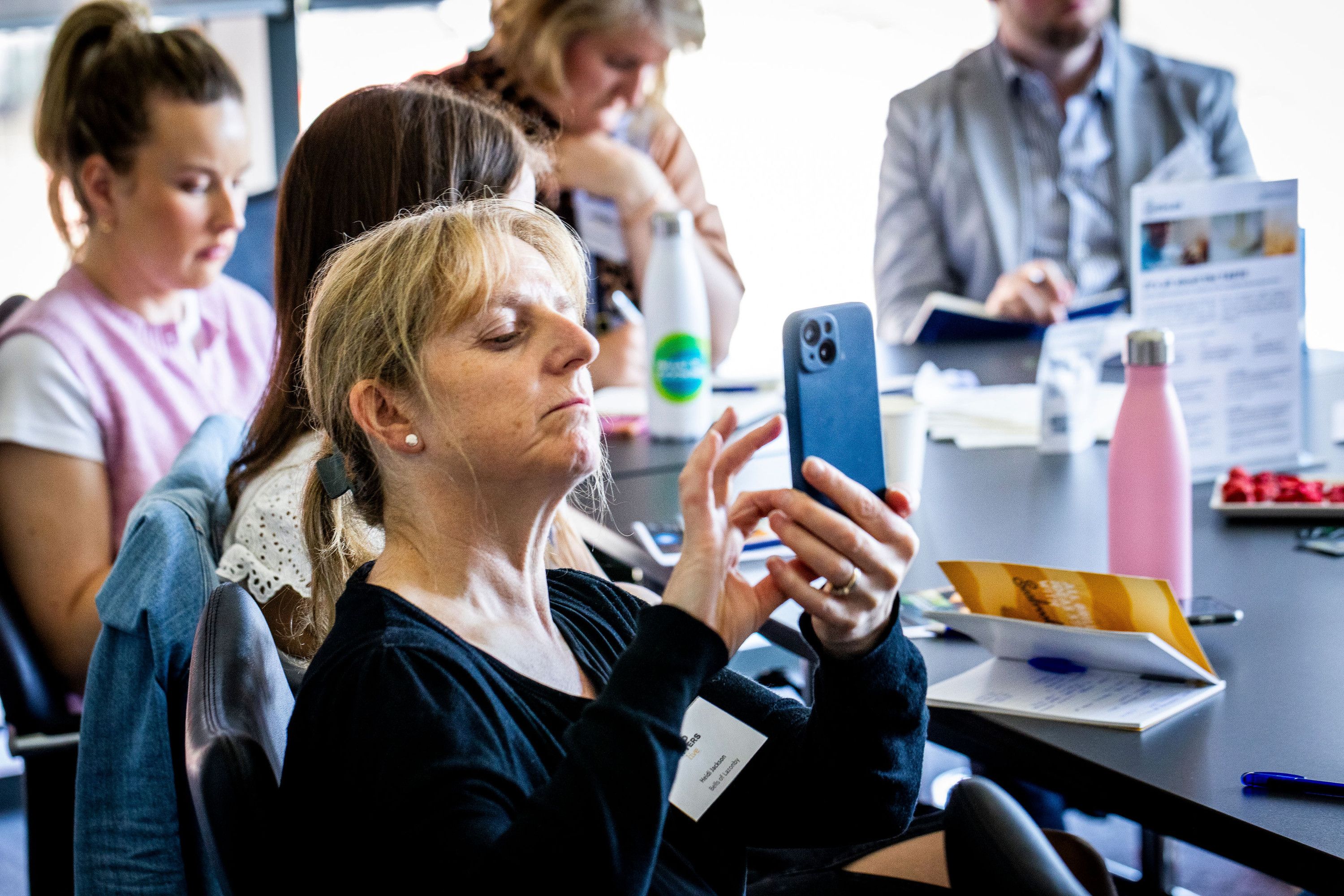
Social media, misinformation, and health & nutrition
32m 45s
The podcast episode at Food Matters Live event in 2025 focused on the impact of social media on health and nutrition brands. Topics included dealing with misinformation spread by social media influencers, the challenges of making health claims, and strategies for managing social media content. Experts from No Nutrition and Huell discussed their roles in developing products, managing content, and engaging with consumers. They highlighted the importance of working with healthcare professionals, using AI tools for accurate information, and educating consumers to navigate misinformation. Strategies for addressing misinformation, engaging with influencers, and collaborating with professionals were also discussed. Both companies emphasized the need for transparency, compliance with health claims, and proactive/reactive approaches to social media management. Overall, the discussion underscored the complex landscape of social media in the nutrition industry and the importance of informed decision-making for brands and consumers alike.
Transcription
5683 Words, 31116 Characters
Welcome to the Food Matters Live podcast, where we showcase the innovations, the big
ideas and the visionaries in the food industry. We dig deep, we look to the future and the
past, and we question everything we think we know about food. I'm Antoni Zara and this
episode was recorded live at the Food Matters Live event held in Manchester in May 2025.
Now, today, we're focusing on social media, how to health and nutrition brands cut through
the noise when social media influencers can spark viral trends overnight with questionable
claims. From apple cider vinegar miracle cures to dangerous weight loss promises, the supplement
and nutrition industry faces constant battles against misinformation. The question is, can
brands successfully compete against the speed and simplicity of misinformation, or is the
battle already lost?
So I'm going to let you just introduce yourselves, tell us a little bit about the the organization
you work for, tell us a little bit about the role that you do within that organization.
And my first kind of main question, and let me just get my words right on this one is,
how has social media changed the way we think about MPD? Now, thank you, Joe.
So I'm Joe, so I'm general manager at No Nutrition. We make really tasty supplements
that work ideally. Yeah, the work that do good but are accessible, because it shouldn't
be, you know, for the 1% it should be available for everyone. My role is around B2B, but a
lot of product development and an awful lot of operational things as well. So we have
one of the biggest to hesitate, hesitate to say the biggest, but one of the biggest ranges
of gummy supplements in the world. But we also have liposomal liquids and various other
things. So very trendy, huge growth in gummy supplements as we've seen the biggest format
now in the US, but a huge, ridiculous amount of misinformation going on. I suppose to cover
that first point, how is it shaping? I mean, TikTok was originally, and you see a huge
amount of this noise on LinkedIn, that TikTok is the place for people to discover new trends
and build new trends. But they kind of don't, they just find a product that they gravitate
towards and go, apple cider vinegar is the best thing ever. And we're two years on from
that starting. And it's still the same noise. And it's not necessarily true. It's not good.
It's not bad. It's just not necessarily, you know, God's gift to the world. So it has
changed it. It gives us more options to socially listen. And it has helped us with developing
more flavors, but we still rely on sources like Inuda and FMCG Gurus and Mintel to actually
find more legit, real hard data. That's our preferred route, but we still use both.
And you use social media to just maybe sense check what's going on, what's been hyped up
at the moment. What's been hyped up, but there are brands that have dominated the space and
they've done a great job of it. And they could be great brands, or they could be brands with
selling complete snake oil, which one of which we called out, which is great fun.
Fantastic. We'll come back and talk about just age profiling as well within social media,
because we're not all tiktokers. And I won't profile myself on that. I'm going to let you
introduce yourself, Jessica. Obviously, your brand is well known. But tell us a little
bit about the brand where it came from and your role within within the organization as
well.
Hi, everyone. My name is Jess Stansfield. Just in advance, I'm so sorry if my voice
goes to the first day all week that I've had a voice. So I've got my water on hand. I'm
a registered nutritionist. I am the nutritional manager at Huell. So Huell, if you haven't
heard of it, is a complete nutrition brand. So where we aim to be is a plan B option.
I think a lot of people have a misconception that Huell, especially some of our products
are powdered food. We are sitting here saying that you should have Huell all meals every
day. That is absolutely not the case. We're just that option for when people are rushing
out the door. They don't have much time and they need something to grab without compromising
on nutrition.
So what do I do? I've actually been at Huell for six, six and a half years now, and I've
done a lot. I feel like when you join a company and there's sort of 20 or 30 people, you kind
of get thrown in the deep end and I was for early 20s and you kind of just do a bit of
everything. Currently, my job now is the content lead for the nutrition team. So any writing,
any blog, any social media, that is basically my job, which ties in so nicely with this
discussion because social media is a massive part of my role, but it's also the complete
bane of my life. Not just at work, like outside of work as well. I'll go for dinner with my
girlfriends and I just keep having to tell myself, Jess, you're not at work, you're not
at work, just keep your mouth closed.
Because there's so many benefits to social media. I mean, things can blow up overnight
and you can get, there's such a faster feedback now. So you know what products people love,
you know what products people don't love, and things really happen overnight. I mean,
I don't know if any of you have tried the Marks and Spencers cookies, but that is just
something that's happened on TikTok. And then they took advantage of it and did the Easter
egg, the speckled eggs. And I think that's where social media can be incredible for brands,
but it can also cause a lot of headaches, as you said. And I understand why people go
to somewhere like TikTok to try and understand a situation. It makes sense to me, but it
is so difficult to navigate. And even as a nutritionist myself, sometimes I even find
myself second guessing myself, which is so ridiculous. But yeah, massive.
How does it feed your MPD pipeline? Is there anything like, do you use it as a source of
information for flavors, as you said?
Absolutely. Yeah, we actually have a small two person insights team who will use like
social media listening tools. And one of the biggest things for us is we're a UK based
company that have a small team out in New York. But the flavors that we over here in
the UK think that would land really well in the US, don't necessarily land. So that's
how sort of insights and social media can really help us, especially in other markets
too.
Brilliant, brilliant. And I suppose it's interesting to see your role is about managing that content.
So you're incredibly conscious of what you're putting out as a brand. Obviously, you can't
control the wider social media world. But in terms of what are the things that you have
put in place in terms of your own strategy for for managing that content? What are the
tips and tools that you put into place that maybe some of the brands can also learn from?
Yeah, it's a great question. I think there's sort of like two parts of it. There's being
proactive and then there's being reactive. So from a proactive perspective, I mean, we
have even put in place it's called our like healthcare professional program, like there's
all it's all well and good Jess from the nutrition team at Huell, who's been there for donkey's
years is saying X about the ultra process food debate or X about seed oils. But actually,
it's important for us to work with other healthcare professionals as well to be sort of educating
people and cutting through that noise in the same way. So working with other healthcare
professionals is something reactively as well. So as you can imagine, we get a lot of not
just customers, but people just reaching out to you on any social media channel asking
particular questions. Now, some of which can be like very specific. And actually, we have
two nutritionists within the team who actually part of their job is to go back to customers
directly and speak to those consumers. So actually just like engaging with people one
on one. Yeah, okay, sometimes you're not going to win people over. Sometimes people are literally
there to call you out and to catch you out. But actually, there's a lot of people that
like any of us in the room have seen something on social media, don't understand it and are
reaching out for help. And that's sort of like, how we can help as well by actually having
dedicated team members to support those questions.
Very good. And do you jump on some of the sort of hot topics that are being talked about
in social media? Or is your sort of a policy to to just not get involved? You're better
to say nothing than to. Oh, no, it's important we have a voice. I'm great. It's it's also
important to like know how to navigate that. Like, sometimes it's hard not to like go quite
heads on. But sometimes, like, misinformation can compromise trust for a brand. So it's really
important that we do tackle it in the right manner. So yes, for the most part, obviously,
there's a time and place, but I say 90% of the time, we would sort of counteract some
sort of misinformation. Yeah,
Very good. Joe, I suppose in the supplement world, there are bold claims that, you know,
are sort of common out there. How do you ensure that you've got that sort of scientific rigor
to support those claims? And again, what strategies have you had to put in place, whether it be
structure, people, processes, extra cross in the T's and dot in the I's? What's been
your experience?
Yes. So obviously, as a supplement brand, we have to focus heavily on the approved health
claims anyway. Yeah. They're the only things we will put on a bottle. We might and I have
used a couple of on hold claims where they have enough value behind them for the markets
that allow it.
How many markets are you in out of interest? Is that because that's obviously
Yeah, so we're kind of pan European at the moment, as well as Middle Eastern and extending
into into African. We've got a lovely shop in Barbados. If you ever find yourselves in
dwellings in Barbados, feel like you have to go. Lovely place. But you're kind of in
this dichotomy of anybody who puts vitamin C in a product 15% of your NRV can claim whatever
they want about that product. It doesn't mean it's good. It doesn't mean it's bad. It almost
doesn't mean anything. It just just means it has vitamin C. And so we try and give
a longer form answer to that and try to give really realistic expectations of that. Because
if you take a product, we have a skin aging product, it's called skin aging full of antioxidants,
vitamin C, vitamin E, botanicals. Lovely. Great. But you're not going to take that
on a day and all of a sudden your skin will look like you're newly born. That's not how
supplements work. So we really hold ourselves back from making anything that's over an over
estimated claim or overzealous in terms of the word in what you use. We will only ever
use good synonyms with those claims. So when we say, you know, you see the contributing
contributes to the maintenance of this is the phrase right from from Esther, but we support
sort of aids or helps. We won't say boosts. We won't say this will make this better. Well,
you know, it's about getting your body to the optimal, not making you a superhuman.
That's not how it works. We will also stop people who are trying to say, and we'll talk
about influencers and creators in particular. Tiktok's a great example. A Friday night,
my phone started going off because we were getting hundreds of orders for a product.
And somebody basically said, this product made me lose four pounds in a week. It didn't
I can guarantee you that it did not do that. We sold about it was literally pulled up pulled
off Tiktok within about three hours. All their commission was pulled. And then they
were essentially shadow banned for a while. Education for us there because that was very
early on in our Tiktok journey. Education was if we get a creator who wants to work
with us, we're educating you more because that is not something that's not okay to
say weight is so sensitive. Yes, you cannot say that. We even had somebody claiming that
lines made mushrooms cured their dogs cancer. So you should take it. See Sharon's face sinking
into the chair. We're like, what? No, delete. But it and this kind of becomes a problem.
It's great. And when we try to do some reach out and work with health care professionals.
And similarly, we have to train nutritionists on team to try and educate people. And I'm
not from a health, but I'm not from a regulatory background. I'm not from a nutrition background.
So I'm hyper careful of anything that gets said. What have you done internally to sort
of help manage it because it is, you know, a full time job at the moment. And you never
know Friday nights are ruined. No, there you go. Yeah. So how what have you done internally
to just help house with all of that? So I'm a big fan of using AI tools to help. Great.
So I like I built a GPT model that would allow you to just literally search through our products
in a conversational way that can find accurate claims, accurate products that will do things
that either a customer is asking, or if a customer is challenging or asking for a particular
nuances about that product, it could help give the initial structure of an answer. It
then needs a human to check it and make sure it's right. And then one of our nutritionists
can also comment on that, but it's about how the standard place and a culture internally
a culture of curiosity and a culture of wanting to do the right thing.
And something goes viral or creates a lot of conversation, be it positive or negative
around your product, around your brand. What's the protocol for reacting? Is there like you've
got to be on it in two minutes or are we going to hold until we know our facts and then we're
going to, you know, what typically happens behind the scenes?
It's a little bit of both. We can't, we can't just knee jerk react. And in the case of we
did the, the recent thing that we did around create team, we held off and said, there are
results coming in here. Here are literal lab test results undocked, like the full Euro
Finns testing that we shared and an explanation of how that works. And that was a social media
posts that linked back to independent lab testing in a long form piece on our site. And because
these 10, 15, 20 second conversations you have on social media are just unhelpful and
too binary.
Yeah, we actually find that we have to react quite quickly. The reason for that is the
quicker that you can sort of, if you choose to add a comment as a brand, the quicker that
you can do that, the quicker you can sort of knit other comments in the bud. And to be
honest, a lot of the time you'll have a lot of people just, you know, acting the brand
and asking for support as well or asking us to address it.
I think as yours got bigger, we're getting called out a lot more, especially from like
social media influencers. I mean, I'm sure most of you in the room would know someone
like tonic health. He literally will go into supermarkets and grab out certain products
and brands and call them out. And actually a lot of the work that he does is absolutely
fantastic, but if we didn't comment when he's calling certain things out, we're just not
defending ourselves.
So time and place. But I also think like part of our job and part of my job as being a healthcare
professional is helping to equip people to understand and equip people to what they can
look out for because it really, really is confusing. So, you know, a couple of us in
the team have worked on what are a few of the red flags that people can look out for?
So we all do it. We all do scroll at eight o'clock at night when we should be going to
bed or whatever it is. What can we tell people to look out for? So like a couple of things.
So does that person speak in absolute? So what I mean by that is are they saying terms
like you must. So you must eat 200 grams protein a day.
Realistically, they should be saying, you know, you may or evidence suggests or just,
you know, nutrition is really quite nuanced. And as well, demonizing entire food groups
is another one. So, you know, people will come to me whether it's in or outside of work
and say, oh, like I've heard, you know, I can't consume still carbohydrates. I don't know
why they still have such a bad name. You know, I still can't, you know, Jess, I've got a
wedding in six months time. Like I'm not going to eat carbohydrates. Like nutrition is supposed
to be enjoyed. It is so far more complicated than putting things in these good or bad boxes
and sort of just closing the lid on those boxes. So yes, addressing things when they
come to us, being reactive, cutting through the noise, but also equipping people with
certain things to look out for. So when they are doing their scrolling and they have lots
of questions, they know sort of how to like cut through the noise themselves a little
bit as well. Easier said than done. But indeed, indeed, George, you want to add anything to
that? Yeah, but we, myself and our like our MPD development team, a couple has made comment
for an independent article recently, which was focused on that red and green flags, essentially
for supplements. And you do have to go back to focus on the label. You know, is it saying
the right things on that label? Is it compliant in the UK? Does it like an American label?
If not, maybe just check it. Just take your time and check it. And again, don't believe
those absolutes because it isn't, it is too nuanced, far too nuanced.
Indeed. Just going back on something you said earlier, Joe, which was education and something
that you said Jess, around working with healthcare professionals. Is there, is there active work
in both of your organizations around working specifically with influencers, whether it
be paid partnerships, whether it just be dialogue and conversation, how are you managing that
to sort of, I suppose, control the comms, you know, from, from, from within social media,
like what's happening for both of you that's sort of leaning in on that.
Do you want to take that one first? Yeah. Yeah. So, from sort of a Huell's perspective,
so within the healthcare professional program, we have partnered with some absolutely fantastic
nutritionist dieticians, both in the UK and in the US. And these partnerships are a little
bit different. So somebody like Dr. Ids or Rihanna Lambert, we're not asking them to
sit there and, you know, hold a Huell bottle and say, oh, I've had Huell for breakfast because
I was rushing out the door. That's not sort of how the partnerships work. The partnerships
work because there's that trust where we are trying to educate on a specific topic. So
for example, how we can get people to understand that consuming more plant rich foods is a
fantastic option. And it doesn't mean that you're not having enough protein and you're
not going to get your gains in the gym. So we'd work with those healthcare professionals
who are fantastic influencers and have brilliant platforms to actually talk about those topics,
but then hand in hand help Huell, but we're not actively sort of pushing a product. And
then I also run sort of like a university outreach program. So yes, I go as a representative
of Huell, but actually the first half an hour of the conversation is talking about careers
in nutrition, talking about how we're going to work through misinformation, talking about
what a job could be like in nutrition. So actually just looking at, you know, the people
that in five, 10 years time are going to be doing all of this because, you know, there's
only a group of us now they're trying to cut through all this noise and actually talking
to university students. There's a brilliant way of, you know, getting the next generation
to pick up the bat one as well.
It's funny because our product development director at my supplier with kind of partner
companies is doing exactly that at MMU today with our shareholder. And we're also going
to partner with them with the university Chester to do a similar sort of outreach and also
to do some research for us because it's expensive. So that's been similar. And we've stayed away
from any kind of major influence of partnerships for a long time. We don't kind of have a face
of the brand and that was a conscious decision because the products are the brand. And you
have such a big range as we do that that's kind of what it is focused on. And I wasn't
going to start paying X hundreds of thousands to a random celebrity to say it's good or
bad or otherwise, you know, it just wasn't what we do. And we have started using more
creator content. More recently, we've restarted that, but being a lot more conscious in terms
of how we educate them and also then going, okay, get their videos back. We'll never pay
for a video beforehand. We'll never go to something and just pay for them straight away.
They can get it to us. And if we like their content, we will tell them we'll use it and
we'll then offer them the kind of paid partnership as it is, but we will never just let somebody
put something out. It is always vetted by our team internally first.
Excellent, excellent. So I appreciate neither if you have a crystal ball, but there is lots
of things out there on social media. What is going to go viral next? Or what's maybe
on the horizon of something that we should be, should be aware of and that you're sort
of scanning for, for it to blow up.
Well, if I knew that, I don't think I'd be working for you.
I totally agree. But what are the things that are maybe keeping you awake at night?
Well, definitely the cleaner label conversation. I'd say, I'd say maybe 12 months ago, the
conversation about ultra processed foods. I mean, actually, we're a team of five, six
nutritionists. We're a small group and we are a little, little family. So yeah, I'd
say about 12 months ago, ultra processed foods were probably keeping us up at night
a little bit because it, because of social media, really, it did kind of go from zero
to 100 quite quickly. And as a result of that, and what a downside of social media is, there's
quite a like fear mongering narrative. So that's why part of my job has just been so
heavily focused on content because you, I would love to be able to answer your question.
I have absolutely no idea, but I think it's going to be working through the narrative
of, okay, actually 20 of those ingredients that you're concerned about are just really,
really long names of vitamins. And actually, it's just that education piece. So as far
saying that, I do think that consumer noise will become loud. So potentially, you know,
shorter labelling will be something that people really want to see. Okay.
We replaced anthocyanins on our label to grape skin extract, for that sort of reason, because
it's exactly the same thing, you know, but you don't get somebody going, there's a chemical.
Everything's a chemical.
We like to categorise. I think, you know, we all can, you know, use social media to
have our rant and, you know, and for some people, it's a vehicle to just letting it
all out there. And that's okay. You know, that's the world that we live in now. I suppose
from a positive perspective, thinking about some of the things we talked about earlier,
got health and fibre and all of those positive things, is there anything that you feel is
on the horizon from that in terms of where social media will actually really be a catalyst
for helping to educate our consumers better? So think of the viral noise being a positive.
Anything in particular?
I think, I hope, and I do think that fibre will be the big thing that people could do
in a similar way that we talked about protein is because we're at such a saturation point
now where everything, you walk through supermarkets, everything's high protein. And it's not, it's
just written on the label that it's high protein. Just make some sourdough bread. There you
go. It's 10% protein. Done. I think fibre can do this, though, but it's a rebrand that
needs to be done socially.
I think we touched on that several times today.
Yeah, definitely. To go hand in hand with gut health. And the nuances that you spoke
about around gut health and this wider piece around it, it's not as simple as just here's
one thing that is like a solution for that. But also for people to challenge ingredients.
We make gummies. So you need a heat stable, colony forming unit that is not going to be
multiple strains but can help create multiple strains, as does really well clinically studied.
Just throw that out there. The gut brain muscle axis is a really interesting one. So increase
in physical capabilities, muscle generation because of the gut, that's a new piece of
research that's interesting.
Okay, we're going to have a whole topic on that next time. Thanks for that tip, Jo. Jessica.
Yeah, I think I mean the idea would be right that fibre knocks protein off the number one
spot. Do I actually think that's going to be the case soon? No, if I'm honest. Do I think
it should be yes? But again, it just, it really, I keep saying it does just go back to the
education piece and I do think it starts at a much younger age. I mean I said about universities,
I have also been going into schools to try and encourage kids to care about what they
eat because it's actually so sad that they just don't get that education. That's a complete
topic for another day but I don't think it's going to be we're going to walk into the supermarket
in six months times and everything will be high fibre and everyone will be buying it.
I could be completely incorrect but I think sort of from a fuel perspective it's just
shining a light on the good things rather than concentrating on everything else. So shining
a light on the fibre, shining a light on all the vitamins and minerals explained to consumers,
what that actually means on a label and just I think with nutrition there's always such
a narrative of what to reduce or what to cut out but actually it should just be shining
a light on all the positive things or the things that you can add to your diet and that's
where I'd really like the shift to go just in terms of nutrition cons, it's just all
the benefits. I mean I'm a nutritionist because I absolutely love food.
And they do say variety is the spice of life. I mean it's a long standing statement and
it sounds a bit cringe to say it but at the heart of it variety is what's going to give
us longevity.
Yeah bring that love back again because there's so many good things.
That word is our longevity. Obviously it's growing at the moment and we talk about a lot
and we've seen a lot more around cellular health and anti-oxidant support and around
astratantin, around anything that's a precursor to NAD+ and stuff. So if we can kind of clear
up that which is quite a myth-defined space and we can blame Andrew Huberman for kind
of doing all in a good way, right, for talking about those sorts of things and then creating
this bus but trying to nail down some really high quality products in that area with science
to help.
I'm going to open it up to the floor. I'm conscious we've got about five minutes.
Some of the things that you're doing are really very helpful in the market to unpick some
other things. And I have two general questions just to ask. One to each of you. From a fuel
point of view, could you ever see a world where a fuel would get behind the whole food
and support it to drive it in the marketplace for people to consume it? So would fuel ever
support quinoa or buckwheat, an actual whole food that isn't fully composed and in a bottle
that has nutritional value? That's one to consider. And my question on this side is
there's clearly a space between regulation, science, what's approved and what isn't.
And I'm interested in your opinion on is it appropriate to use ingredients that don't
have health claims to advertise in front of pack to sell products. Great. Both questions
which Jeff's going to go first. Good news is we do have a product range called our hot
and savoury line which uses ingredients just like quinoa, a lot of high fiber ingredients.
So for example we have, there's always going to be a type of people that are not going
to have the powder, they're not going to have the bottles. So we have lunch meals that are
rice-based, grain-based, noodle-based, just basically just full of vitamins and minerals,
like whole vegetables, grains, top it up with some hot water and your lunch is ready to
go. So yes, we have started moving into that space as well. Thanks. And if we're just out
of interest, where can you get them at the moment? Are they launched or are they in the
MP pipeline? Yeah, all direct to consumer on the website at the moment. I'd love to
see a world that that, it would make my life a hell of a lot easier. Ashwagandha Gummi
is the best selling Ashwagandha Gummi on Amazon in the UK sort of thing and you just
literally just rely on customers knowing that. I'd love to, but we have to and we must advocate
for regulation. Not in regulation but testing. If you look at the first, if you look at like
the first full page of Amazon results for creating gummies, I would put a significant
amount of money that two of those have got any creatine in at all. I'll put money in
it because I've tested quite a few of them and it's been quite a big, it was one because
we did call another brand out on that and we did it actively on social media and we
got a lot of backlash initially before everybody went, oh, hang on a minute, they're right.
So that was good. That was nice. They've got, it starts with the manufacturer. The manufacturer
has to make a good quality product. A brand has to want to make a good quality product
and to test that product from the manufacturer if it's used in that way is genuine and real
and the retailer should do that. You know, even retailers like Holland and Barrett do
not test. They just say, you know, give us your COAs, give us all of this great data
beforehand. Great, we'll list that product. They don't actually test. So, and then also
that test isn't standardized around the world. So you could go to five different Eurofins
labs and have five different, slightly different test results. But yeah, so testing would be
my key message. Brilliant. Great questions. Thank you. Okay, will we wrap it up then?
Fantastic. Just to say thank you very much.
Thank you for listening to this episode of the Food Matters Live podcast. Before you
go, we've got some exciting news to share about more live events this year. We're heading
to Ascot in October and Dublin in November. And for the first time, we're hosting an
event in mainland Europe. In September 2025, we'll be in Rotterdam. Join us as we inspire
the future of food. Learn more and sign up at FoodMattersLive.com.
Podcast Summary
Key Points:
Discussion on social media's impact on health and nutrition brands.
Challenges faced by the supplement and nutrition industry due to misinformation.
Strategies for managing social media content, influencer partnerships, and addressing misinformation.
Summary:
The podcast episode at Food Matters Live event in 2025 focused on the impact of social media on health and nutrition brands. Topics included dealing with misinformation spread by social media influencers, the challenges of making health claims, and strategies for managing social media content. Experts from No Nutrition and Huell discussed their roles in developing products, managing content, and engaging with consumers.
They highlighted the importance of working with healthcare professionals, using AI tools for accurate information, and educating consumers to navigate misinformation. Strategies for addressing misinformation, engaging with influencers, and collaborating with professionals were also discussed. Both companies emphasized the need for transparency, compliance with health claims, and proactive/reactive approaches to social media management.
Overall, the discussion underscored the complex landscape of social media in the nutrition industry and the importance of informed decision-making for brands and consumers alike.
FAQs
Brands can compete by focusing on accurate information, working with reputable sources, and ensuring scientific rigor in their claims.
Social media has provided more options for listening to consumers, developing flavors, and monitoring trends, but brands still rely on reputable sources for accurate data.
Nutrition brands use social media listening tools to gather insights on consumer preferences, especially in different markets, to inform product development.
Brands proactively work with healthcare professionals, engage with consumers directly, and use AI tools to ensure accurate and responsible information is shared.
Brands balance quick responses with fact-checking to address positive or negative conversations, ensuring transparency and providing evidence to support their claims.
Chat with AI
Loading...
Pro features
Go deeper with this episode
Unlock creator-grade tools that turn any transcript into show notes and subtitle files.
 PodcastTranscript AI