The podcast episode opens with the host's personal journal detailing a severe case of chickenpox to introduce the far more devastating disease of smallpox. Smallpox is described as highly contagious and lethal, often leaving survivors with permanent, disfiguring facial scars. It was globally eradicated in 1977, a monumental public health achievement. The discussion then explores the disease's debated origins, suggesting it may have evolved from a rodent virus and possibly jumped to humans via cattle, with ancient evidence found on Egyptian mummies. Historically, explanations for the disease varied across cultures, from attributing it to angry goddesses to theories of corrupted blood or bad air. The most catastrophic impact of smallpox occurred in the Americas, where it decimated indigenous populations who had no prior immunity, dramatically altering the course of history and enabling European colonization. The episode concludes by noting that this devastation was sometimes intentional, citing an 18th-century British plan to use smallpox-contaminated blankets as a biological weapon against Native Americans.
I'm Jonathan Roberts. Welcome to Pandemics Past and Present. I'd like to open this podcast with an account not of smallpox but of chickenpox, it's milder than a dozen. Here are some excerpts from my journal from June and July of 2012. June 24th. Gary, that's my son, brought home the chickenpox today. It seems it has broken out all over his school. I heard his friend had it and that she was out for almost a month. Thought it had passed us by, but he has it now. It's a classic case according to the doctor, a shotgun spatter of pistols on his back and chest. June 27th, three days later. I threw up all last night, high fever today, no spots on my body, and Gary's already better, so it must be something I ate. I don't take a bother with the doctor and just ride this out. July 4th, ten days later. Wow, I can finally walk around, but I have to go out at night because I'm really, really disfigured. I don't want to be seen by anyone. I hope the spots on my face go away because they're really brutal. Mary, that's my wife. She got it too, but not as bad. The kids only had mild breakouts, but I really had it and I still have it. For a while there, it felt like I was lying on bubble wrap while I was in bed. July 10th, 16 days later. Marks are almost gone except for my face. I keep blasting it with vitamin e oil, but the damage is permanent. It adds character, I guess, but I'm glad to be over it. I'm still praying that those marks fade and journal. There are still a few deep marks on my face, one rather prominently situated at the end of my nose. I wouldn't say that I'm disfigured, but I don't look anywhere near as fresh face as I used to. And that was only chickenpox caused by Varicella Zoster virus, also known as type 3 Herpes virus, H-V-3, which by the way is the same virus that causes shingles later in life. It's mostly an innocuous illness, but in very rare cases, it can affect the nervous system. And I think I missed that part, thank goodness. But smallpox is much, much worse. It's very infectious, easily transmitted through airborne droplets or dried spores in bedding. And it has a long, approximately 12 day incubation period, so it travels very well. Smallpox starts in the mouth and the throat, so it's similar to a cold. The sore throat is followed by muscle pain, malaise, headache, and then the stomach is upset with nausea and vomiting. Victims also get a backache from all the wretching. And a few days later, the first lesions appear. First is red spots on the mouth, the tongue, the throat, and then they burst, releasing the virus in the nose and the saliva. And then a rash of red spots appears on the skin. Burst on the forehead, and rapidly spread to the whole face, the neck, the torso, and lastly to the extremities. On the second day of the rash, the macules become raised postules, which later fill with clear fluid and then with a creamy pus. If you had the regular garden variety of smallpox, you'd have about a 50% chance of surviving. If you lived, by day 20, scabs would have formed all over the lesions and then would have started to flake off leaving white scars. Many of those scars would last a lifetime, and the biggest ones are usually on the face. If you get the hemorrhagic form of the disease, you will likely not make it. Though you'll be lucky in one way, because bleeding occurs under the skin, turning it black, but leaving it smooth until you are most likely dead. So I still have scars from chickenpox, but if it had been smallpox and I had lived, I would have been entirely disfigured, and I would have probably been seeking out some sort of plastic surgery just to be able to show my face outdoors. In the past, when smallpox was more common, I wouldn't have felt so self-conscious. There would have been many other scarred survivors of the disease walking the streets. No one would have noticed me. So just a warning to all you history buffs who dream of traveling back in time, as you emerge from your time machine, you would recoil in horror, probably, when you saw all the pockmarked scarred faces around you. Or, to put it another way, no matter who you are or where you live, if you're listening to this podcast, you are one of the beautiful people, the beautiful people of the 21st century. Why? Because smallpox, as an epidemic disease, has been eradicated. It's gone. The last case was in 1977. I can't high-five you through this podcast, but I would, if I could, because all known stocks of smallpox samples have been destroyed, except for two instances. There are samples held at the Centers for Disease Control and Prevention, the CDC in Atlanta and the USA, and samples at the State Research Center of Virology and Biotechnology, also known as Vector in Cult Sovo, Russia. That's deep in central Russia. We're going to discuss why they are still there, but let's revel in the defeat of smallpox a little bit more. It's like a victory over the greatest killer of humanity in world history. But, unfortunately, we can't get too carried away. If we do, we might fall into a trap of biomedical triumphalism. That would be the dream that all diseases can be eradicated if we only take the appropriate steps. As we live through our pandemic, we realize that such a goal is probably a mirage, but let's get back to the history of smallpox. Smallpox is a virus that's similar to many other viruses, so there's some debate about its origins. Some studies show that it evolved from a virus resident in rodents, probably in Africa, between 70,000 and 15,000 years ago. That's a pretty big time frame, but that's a genetic clock at work there. From here, it probably spread around as a zoonotic virus, and then at some point became dangerous to humans as the well-known "Varyola Major" strain, which spread out of Asia and around the old world. Other mutations came out of West Africa and subsequently divided into milder genetic clades around 800 years ago. There's still a lot of work to be done here to find out the rate of mutation, which will give us a better sense of when it evolved. Prior to the most recent genetic discoveries about smallpox, historians like William McNeil had proposed that the virus emerged in cattle and that it jumped over to humans sometime after we settled down to start milking our domesticated cows. Was he right? Well, it is a rodent virus originally. We know that from the genetics, but there must be some association with cattle. Though we do often cohabitate with rodents most of the time unintentionally, the animals that we really love are cows. Just talk to the dairy farmers and they'll tell you how attached they become to their cows, how they name them, and how they aspire to give them a good life. And the relationship that herders have with their cattle may be even more intense. Take the cattle cultures of East Africa, for example. The Samburo name all their cows, even if they number in the hundreds, facing songs to them, swearing loyalty to protect them against their predators. And we've been drinking the milk of cows and sometimes even sneaking little sips of their blood for millennia. So it's quite likely that cows may have been the intermediary species in a transmission of smallpox. The first paleopathological evidence we have of smallpox is the famous pustular rash on the mummified body of Pharaoh Ramses the Fifth of Egypt, who was in his early 30s when he died in 1157 BC. And if you look closely at the photos of his mummified face, you can see that his skin was pockmarked and scarred, Donald Hopkins, a physician and an epidemiologist to examine the mummy, tried to isolate the virus from the skin but without any luck. It may be that Ramses didn't die from smallpox but had it earlier and was disfigured by it, like many Egyptians probably were. This archaeological evidence on the face of Ramses also appears to match with writings in ancient China from around 1100 BC and India around 1500 BC. Could it be that there was an old world outbreak of smallpox from the middle to the end of the Second millennium BC? More evidence is needed but if it was around it may have changed the course of history in some way. Now the historical record goes a little bit quiet after that. Smallpox is oddly absent from the books of the Old and New Testaments and also not specifically mentioned in the literature of the Greeks and Romans. If such a serious disease as very old amage was kicking around Athens, it's hard to imagine historians like Herodotus and Thicidides missing it. There are some suggested outbreaks including the so-called plague of Athens but nothing verifiable. The only solid records we have show that it appeared in the Mediterranean, much later in the 7th century, indeed. And after that kept on breaking out in small but fierce epidemics around Europe, who is probably doing the same in other parts of the Old World. Much more paleoarcheological work needs to be done, especially if we want to find out more about the precise genetic history of the virus. Now this will include digging out graves and I know what you're thinking. Wouldn't that be a little bit dangerous? Well it might be, it depends. If you want to know whether you are at risk or not, just write it down.
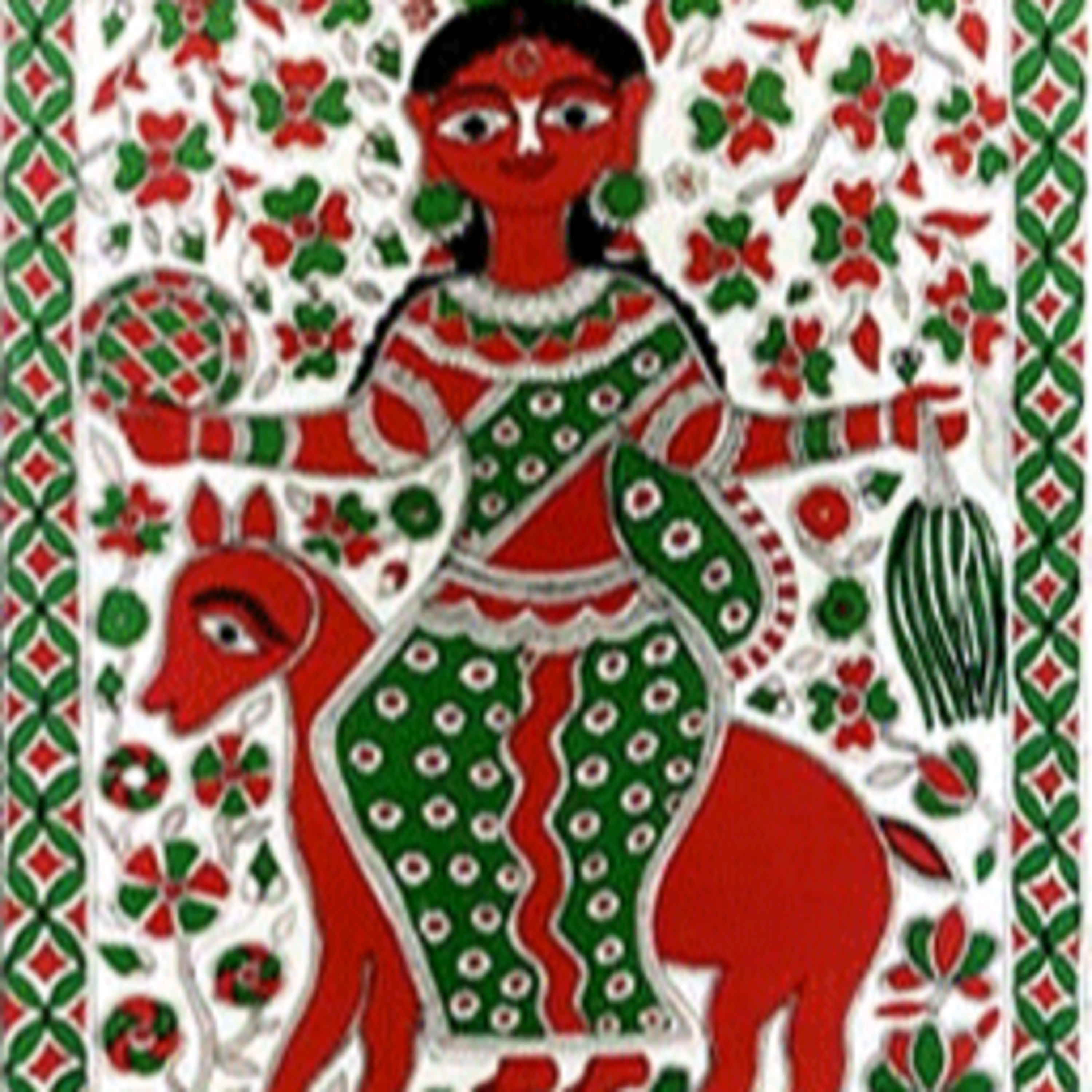
roll up the sleeve on your left arm. Look closely at your skin. Just below the shoulder. If you see a round scar, one that looks like a giant horse fly, took a chunk out of your arm, then you were vaccinated. If not, then, well, good luck during the next pandemic. Oh, by the way, even if you do have the scar, I also wish you good luck, because we simply have no idea whether that vaccine will give you immunity for life. Back to the real question, is it dangerous to dig up the bodies of people who died from smallpox in the past in a search to find out more about the genetics of smallpox? Well, the answer is yes, and as we shall find out later in the podcast, it could become a major problem in the future. Now, we know that smallpox is caused by the very oil of virus, but it is important to note that in the past, people had a very different notion about what caused the disease. In India, the disease was associated with the goddess Shitalah, who had the ability to infect victims when she was angered, and in turn, calm the fevers of those who were afflicted. Portraits of the goddess show her holding a broom in one hand to sweep the disease away, and a pot of cool water in the other to soothe the throats of the victims. In China, a smallpox goddess emerged in the 11th century AD, known as Toshen Yang Yang. And her supplicants actively worked to please this goddess and keep the disease at bay. She was capricious, and she was especially feared by mothers because she was known to choose children as her victims. Supplicants to her shrine were ugly masks, hoping that the disease would pass them by, and if they had to speak of smallpox, they referred to it as beautiful flowers. In the Arab world, physicians understood the disease as the corruption of the atmosphere, and the famous Persian physician, Muhammad Ibn Zakaria Al-Razi, argued in the 10th century AD that the disease was actually caused by fermented blood, boiling and blistering under the skin in the same way that wine, ferments, and bubbles. In medieval Europe, the cause of the disease was also understood through the lens of galenic humoral theory, though there were some outlier seed theories that held it was spread via contagion. But even with these ideas in play, people were still following folk practices to ward off the pestilence. One common practice was to bundle victims up in red cloth to chase away the demons that were believed to cause the disease. During a smallpox outbreak in England in the 16th century, Queen Elizabeth I came down with the disease, and she sent for a physician known as Dr. Burkett, but something of a checkered past as an alchemist, but who was also known to have some rare and promising medicines. When he failed to offer her a quick remedy, she called him a nave and sent him away, and then she started mumbling incomprehensibly about who would succeed her after death, and then she slipped into a coma. The Queen's attendance panicked and begged Dr. Burkett to come back, feeling slighted he refused until they threatened to kill him, and some sources say that he was brought back to the Queen on the point of Baron Hunson's dagger. So Burkett offered her cold water and wrapped her up in red flannel and placed her body next to the fire to warm it and ordered her bed to be burnt, and miraculously she recovered, but the disfigured face. Burkett soothed her, famously telling her that it's better to have the pox in the face than to have it in the heart and kill the whole body. The Queen must have been touched because she gave the doctor some land in Cornwall, or so it is said. Now, there are countless outbreaks of smallpox in Europe, Africa, Asia, and the Second Millennium, but the disease had its most devastating effects in the Americas, where it became an outright new world epidemic. There was no pathogen circulating in the Americas that even came close to the virulence of smallpox, and it had a devastating effect on the so-called virgin soil population of the new world. Smallpox arrived in his Beniole - post-Colombus - around 1509, and it first began to sicken and kill the Spanish colonists. The indigenous population on the island was already diminished and weakened after years of warfare and enslavement, and were probably suffering from other European diseases at the same time. Smallpox was the nail in their coffin, and by the 1550s, the tyno people of his Beniole were wiped out. Their genetics survived in the descendants of those who had children of Spanish settlers, but their cultural presence is now a distant memory. Harvard only and scattered Spanish documents, archaeological remains, some language fragments, and of course genetic ancestry. Smallpox made its way to Mexico with settlers from his Beniole in 1520, and actually proceeded to Spanish conquistadors as they made their way to the Mexican capital. The disease swept through the capital of Tenochtitlán a year before European faces. Many of them probably pockmarked, gazed upon that magnificent city. As much as half of the population was already dead. When Montezuma was captured, his younger brother, Quetluosan, rallied the Mexica to fight against the Spanish, but his efforts petered out when he died of smallpox in 1520. Subsequent epidemics washed over Central America in waves during the next few decades. The Aztec Empire might have had a population as high as 20 to 40 million, but it was reduced to one tenth of that by 1600. A literal decimation if the numbers are correct. In the other densely populated part of the Americas, the Andes, a similar pattern occurred. Francisco Pizarro was given a royal charter to conquer the Inca in 1532, but the job was almost done when he arrived in Cusco. Pizarro encountered very little resistance as he ambled through the mountains, with only 168 men, 27 horses and one cannon, he managed to take over a territory comprised of Peru, Ecuador, Bolivia, and Chile and parts of Argentina and Colombia. The Sapa Inca, whine a cappac, had died of smallpox in 1527. By 1540, smallpox and other old-world illnesses had claimed between 60 to 90% of the Incan population. Also the two major conquests, smallpox rolled in waves around the Americas, leaping ahead of European trade and settlement. In the 1560s, an epidemic broke out amongst the Migma people of Nova Scotia. A population that might have been as high as 30,000 people was later recorded as 3,000 people by a Catholic priest in 1616. Long-term contact with traders, sailors, and fishermen, had whittled their numbers down. Similarly, there were massive diaths and Massachusetts, as recorded by William Bradford of the Plymouth Plantation, who noted that "whole towns of them were swept away, in some not so much as one soul escaping destruction." One can imagine white settlers walking through empty villages in abandoned fields, marking out the places where they would begin to build their own homesteads. It was the same pattern on the other coast. When Captain Cook arrived at Discovery Cove at Nukka Sound on the west coast of Anchor Island, he found that many people living along the inlets of the coast had already seen epidemics of smallpox, probably because Russian traders were already applying that coast. We can imagine the Pockmarked English sailor and the Pockmark New Childhoods fisherman on a sandy beach on the Pacific coast regarding each other with horror and fascination. The catastrophic loss of life in the new world was bad enough, but it meant a dramatic loss of cultural capital also, a devastation of one half of the world's ethnosphere, hundreds of languages, hundreds of aesthetic systems, hundreds of material cultures vanished. The indigenous communities of the 21st century are trying to pull these things together, and in some places with much success, but there has been a long hiatus since the height of the American population, and much of their cultural capital is simply lost forever. In the vacuum of a devastated ethnosphere, settler culture was able to take root with an inordinate confidence. The fortune of the newcomers to find themselves in a land so rich in natural resources were sometimes the fields that even been cleared for them must have led them to believe in something like the divine superiority of Europeans. Americans from all nations on the continent celebrate the genius, initiative, and hard work of their forefathers, but this is mostly white hubris. The underlying reason for their achievements is much simpler. Smallpox cleared great swathes of territory for their ancestors to occupy. At least one European thinker at the time noticed his fact. In a less often quoted part of the wealth of nations, Adam Smith felt compelled to state the obvious, "The colony of a civilized nation which takes possession either of waste country or of one so thinly inhabited that the natives easily give place to the new settlers, advances more rapidly to wealth and greatness than any other human society." His blandly genocidal comment lays bare the fact that no matter how much we may celebrate the ingenuity of the New England pilgrims, Virginia planters, Mexican vicaros, Argentinian gouchos, or L'Exabitone de Nouvelle France, what had really occurred was a stroke of tremendous luck for the surface.
plus European population of the modern era. All the natural capital of the new world, as well as that of Australia and New Zealand, lay open for European colonists. This occupation was of course contested wherever and whenever possible by indigenous people who were already living there, but their numbers were diminished, so much so that they were struggling simply to maintain their cultures. Now I know what you're thinking. Come on, all that divine will stuff was just a historical excuse made up by new world settlers to cover up their genocidal deeds. They knew very well that smallpox cleared out Indian populations, and they must have spread smallpox on purpose. Is this true? Well, yes, in at least one case, it is. In 1763, when the British took control of the Ohio territory from the French, the indigenous peoples of the area organized an armed rebellion and laid siege to several outposts, including Fort Pit, which is now known as the city of Pittsburgh. In an exchange of letters, General Jeffrey Amherst, Colonel Henry Buchette, and William Trent, Trent was a leader of the Pennsylvania militia, hatched a plan to spread smallpox amongst the Shawnee and the Delaware nations. In a letter to Amherst, Buchette said, "I will try to inoculate the Indians by means of blankets that may fall in their hands, taking care, however, not to get the disease myself." And Amherst replied, saying, "You will do well to try to inoculate the Indians by means of blankets, as well as to try every other method that can serve to exturpate this excruable race." Now, when they said inoculate, they meant, in fact, not protect. And it seems that these two were not alone in planning to kill their enemies with this disease. The officers at Fort Pit had already given out two blankets and a handkerchief, and those had previously belonged to a smallpox victim. The hope was, according to William Trent, to, quote, "convey the smallpox to the Indians," end quote. The local militiamen probably knew that the Ohio Indians had already suffered badly from smallpox, and they were hoping that they could make it much worse. They had their eyes on the rich farmland of the Ohio Valley, so it makes sense that, as part of a larger denocidal project to expropriate lands of the Americas, they would use biological warfare to depopulate those lands that they hoped that they could later turn into their own farms. Perhaps they had read the accounts of the Mongols loving infected plague bodies over the walls of CAFA during the siege. We don't know if the plan was a success because it would have taken months before the disease took hold, but smallpox did continue to spread over the years in that area and beyond, whether by blankets or means of other contact. Which begs the question, was the smallpox incident at Fort Pit part of a larger, centuries-long deliberate use of smallpox as a biological weapon? Historians are digging for more evidence, but there does seem to be several moments in the records of colonial America when settlers and soldiers were quite aware of the contagious nature of the disease. There's no evidence of a broader conspiracy yet, but that may not matter if rank and file settlers had already equipped themselves with smallpox as a biological weapon. Now there is still no cure for smallpox, but for a long time people have known intuitively that taking a little bit of postular fluid from someone with a mild case of the disease and scratching that into the skin of someone who had not yet had smallpox could protect against a full-blown case. In India, anoculators known as Tickadars had been moving from village to village offering their services around the subcontinent for millennia, and it seems that something similar was done in China by grinding up smallpox scabs and rubbing them into the lesions of skin, or even by making a patient breathe in scab dust. In Istanbul, the capital of the Ottoman Empire, Turkish women have been conducting anoculation campaigns to protect young children from getting the disease for probably hundreds of years, and this pattern of treatment was famously brought to England in the 18th century by Lady Mary Wartley Montague, a woman who had been disfigured by smallpox in her youth and who promoted what she called engrafting as a means of protecting the health and beauty of English children. Her campaign met with some success, thanks to some positive test results on several inmates at Newgate Prison, but it met with opposition from physicians who regarded her methods as an oriental folk medicine. By the end of the 18th century, variation practices began to spread more widely, finding champions amongst some doctors in Europe and the USA. European armies took to variation as a way of maintaining the health of their soldiers in the field, and in the United States, the famous Puritan minister, and witch hunter, Cotton Mather, fashioned himself to be an amateur scientist and began to champion the cause of variation. As it turns out, he had learned that practice from his slave, an African man who he called on Asimius, who had practiced variation in his home village on the Gold Coast of West Africa. Of course, there were risks involved, a person could still accidentally get full-blown smallpox at a rate of what scientists estimate today to be around 2%, and any break in the skin in those days posed a threat of secondary infection, like tenderness. So most of the people who lined up for variation in the old days were either desperately trying to survive an epidemic, or were quite simply told to get in line and take the inoculation or else. The story of vaccination is quite different. Vaccination is a process that uses cowpox, known in Latin as "vaccinia virus" after the Latin word for cow vacca. The goal of vaccination is to substitute cowpox for smallpox, but to produce the same immune response. The idea of vaccination with cowpox may have been around for a long time. After all, it was obvious to many that the people who milked cows with cowpox sometimes got a mild rash, but rarely got smallpox. This folk knowledge is evident in nursery rhymes, the ones that tell us about the rosy red cheeks of milknates. But the first scientific use of vaccination, inoculation with cowpox, was by Edward Anthony Jenner, a country doctor from Gloucestershire in England. As the story goes, in 1796, Jenner tested his hypothesis by scraping pus from the hands of a young woman called Sarah Nelms, a farm worker who had caught a mild case of cowpox from a cow named Blossom. And then Jenner took that pus and inoculated himself. Just kidding, he was no Voldemort half-kind. Actually, Jenner tested his hypothesis on James Fipps, an eight-year-old boy who was not a relation, but was actually the son of Jenner's gardener. Medical ethicists are probably seeing red by this point. Several violations already here, potential coercion via threat of unemployment, use of an underage subject, animal ethics problems here, etc., etc. Anyway, Jenner inoculated Fipps in both arms that day, subsequently producing in Fipps a fever and some uneasiness but no full-blown infection. Later on, he injected Fipps with smallpox veriola and no disease followed. Sometime later, he injected the boy with smallpox veriola again, and Fipps still showed no sign of infection. Jenner went on to conduct this experiment 22 more times with several other patients, and then, this was his masterstroke. He devised a vaccine that could be stored for a long period of time when immersed in beeftalo glycerin. It could then be transferred to a patient by a bifurcated needle that could be poked several times into the skin on the shoulder in order to create an immune reaction that would result in a single harmless puschal. In the UK, Jenner developed an arm-to-arm method where he was able to create a cowpox-pustule on one patient and then draw from that pustule to vaccinate the next. By the end of the century, he and his acolytes had vaccinated and estimated 100,000 people, despite some opposition to the use of animal material as a medicine. His ideas then spread to France, where Napoleon vaccinated his soldiers, thanking Jenner with a metal. A metal that Jenner probably never dawned considering that England was at war with France at that time. Jenner's idea continued to spread around the world to the Spanish colonies in 1803 to the USA in 1813 and eventually throughout the British colonies. Vaccination programs were successful, but there was no international organization to coordinate them until the mid-20th century. Even in the 1950s, there were an estimated 50 million cases of smallpox every year. The disease was much diminished, but vaccination programs had not yet been coordinated to stamp it out. This changed when the World Health Organization launched a plan in 1958 to eradicate the disease with a ring vaccination program, encircling known population clusters in India and Africa, but the disease still smoldered. Progress was remarkably fast, and by the end of 1975, smallpox persisted only in the Horn of Africa and in tiny clusters in Bangladesh. The WHO continued to hone in in concentric circles, finding small outbreaks and vaccinating everyone around them, as the disease became rarer and rarer to begin to pay in front.
to report any cases they could find, which led them to a village in Bangladesh in October of 1975, where they found a two-year-old girl, Rahima Banu, suffering from a full-blown case of the disease. The WHO team arrived and cared for Banu, who fully recovered, and on November 24, 1975, she was declared to be the last person who had recovered from smallpox. And then they collected her scabs. They sent those scabs to the US Centers for Disease Control in Atlanta, where they're now labeled as the Rahima strain, or more officially as Bangladesh 1975. Incidentally, yes, the WHO victory crossed all sorts of ethical boundaries, the worst of which was that Banu was never compensated adequately for her role as the last provider of various samples. She was so stigmatized by her neighbors that she found herself forced to pose for photos with medical tourists just to earn enough income to feed her family. But this was to be the last of the sad, smallpox stories. The disease had been defeated, high fives all around. Except actually, that's not true. There was a case in Somalia in 1977. Ali, Mao, Maolin, got sick while conducting vaccinations around villages in Somalia, but he survived, and he later went on to be a vaccinator for polio. And there was another case a year later in 1978. Janet Parker died after contracting the disease at a medical lab at the University of Birmingham in England. She was actually only a medical photographer and wasn't even working on the virus, somehow she was infected via air particles that came through a venting duct while she was making a phone call. At least, that's what the official report says. Nevertheless, the global eradication of smallpox was certified based on intense verification activities by a commission of eminent scientists on December 9, 1979, and subsequently endorsed by the World Health Assembly in 1980. The first two sentences of the resolution read, the WHO declares solemnly that the world and its peoples have won freedom from smallpox, which was a most devastating disease, sweeping in epidemic form through many countries since earliest time, leaving death, blindness, and disfigurement in its wake, and which only a decade ago was rampant in Africa, Asia, and South America. World Health Organization resolution, WHO, 33.3, it was defeated. Except for, okay, there are a couple later outbreaks in laboratories in Russia, and for this reason, all known stocks of smallpox were destroyed, or transferred to two WHO reference laboratories. The aforementioned CDC in Atlanta and vector in cult Sovo. In 1986, the WHO recommended the destruction of the virus and set a date for December 30, 1993. This was postponed to 1999, and then postponed again until 2002. It seems that the US and Russia course, the WHO into permitting temporary retention of the virus for specific research purposes. In 2010, the WHO tried again, assembling a team of public health experts to implore the US and Russia to destroy their stocks. Even the leaders of the original eradication campaign said that there was simply no value in keeping that virus, but the samples of smallpox, including Rahima Banu's scabs, remain in Atlanta and cult Sovo. Why? Well, there's some evidence that smallpox can survive for long periods of time under natural conditions. A historical example comes from Aberdeen, Scotland, into 1780s, when a construction worker caught the disease while demolishing a smallpox isolation hospital. There are also rumors that other people have caught the disease while digging up old graves or opening old coffins. Why they were digging up old graves and opening old coffins is another question. But the danger of pandemic smallpox remains and may even be more threatening with the thawing of permafrost, which is turning up mass graves from past epidemics. It seems that the powers that be think that we might need the material stored in Atlanta and cult Sovo after all, just in case we need to make a vaccine. That is to say, for some reason we can't just use cowpox. I know, I know it doesn't make sense, which inevitably leads us to believe that the most likely reason to keep the virus is that some military virologists are still holding out hope that it can be used as a biological weapon. We have that first example of its use by the British against the Shawnee and the Delaware. And later during the Second World War, the British Americans, Japanese and the Soviets all had plans to use smallpox as a weapon. And then we all abandoned it because it was felt that it would be too easy to come up with a defensive vaccination program, which leads us to a curious question. If we aren't willing to rid the world of smallpox, we have to ask ourselves whether we really want to eradicate pandemic disease in general. Perhaps we've spent so much time evolving along with these diseases that we just can't see ourselves living without them. And that's the eerie thought with which I will end this episode of "Pandemics Past and Present."
Podcast Summary
Key Points:
The host contrasts a personal experience with chickenpox (caused by Varicella Zoster virus) to illustrate the far greater severity and scarring potential of smallpox.
Smallpox is described as highly infectious, with a gruesome progression of symptoms leading to disfiguring scars or death, but it was declared eradicated in 1977 after a global vaccination campaign.
The origins of smallpox are debated, with genetic evidence suggesting it evolved from a rodent virus, potentially transmitted to humans via cattle, and has ancient evidence like the mummy of Pharaoh Ramses V.
Historically, smallpox was understood through various cultural and medical lenses, such as being attributed to goddesses in India and China or explained by humoral theory in Europe.
The disease had its most catastrophic impact in the Americas following European contact, devastating indigenous populations, facilitating colonization, and causing immense cultural loss.
There is documented evidence of smallpox being used as a biological weapon, such as in the 1763 plan by British officers to infect Native American communities with contaminated blankets.
Summary:
The podcast episode opens with the host's personal journal detailing a severe case of chickenpox to introduce the far more devastating disease of smallpox. Smallpox is described as highly contagious and lethal, often leaving survivors with permanent, disfiguring facial scars. It was globally eradicated in 1977, a monumental public health achievement.
The discussion then explores the disease's debated origins, suggesting it may have evolved from a rodent virus and possibly jumped to humans via cattle, with ancient evidence found on Egyptian mummies. Historically, explanations for the disease varied across cultures, from attributing it to angry goddesses to theories of corrupted blood or bad air. The most catastrophic impact of smallpox occurred in the Americas, where it decimated indigenous populations who had no prior immunity, dramatically altering the course of history and enabling European colonization.
The episode concludes by noting that this devastation was sometimes intentional, citing an 18th-century British plan to use smallpox-contaminated blankets as a biological weapon against Native Americans.
FAQs
Chickenpox, caused by the Varicella Zoster virus, is generally a mild illness, while smallpox is much more severe and infectious, with a high mortality rate and often leaving permanent scars.
Smallpox is easily transmitted through airborne droplets or contact with dried virus particles in bedding or clothing.
Symptoms begin with sore throat, muscle pain, headache, and nausea, followed by a rash of red spots that turn into pus-filled lesions, often leaving scars after recovery.
Yes, smallpox was eradicated as an epidemic disease in 1977, though samples are still held in secure labs in the USA and Russia for research purposes.
Smallpox devastated indigenous populations, causing massive death tolls and cultural loss, often wiping out up to 90% of communities and facilitating European colonization.
Yes, in 1763, British officials planned to spread smallpox among Native American tribes using contaminated blankets during conflicts in the Ohio territory.
Chat with AI
Loading...
Pro features
Go deeper with this episode
Unlock creator-grade tools that turn any transcript into show notes and subtitle files.
 PodcastTranscript AI