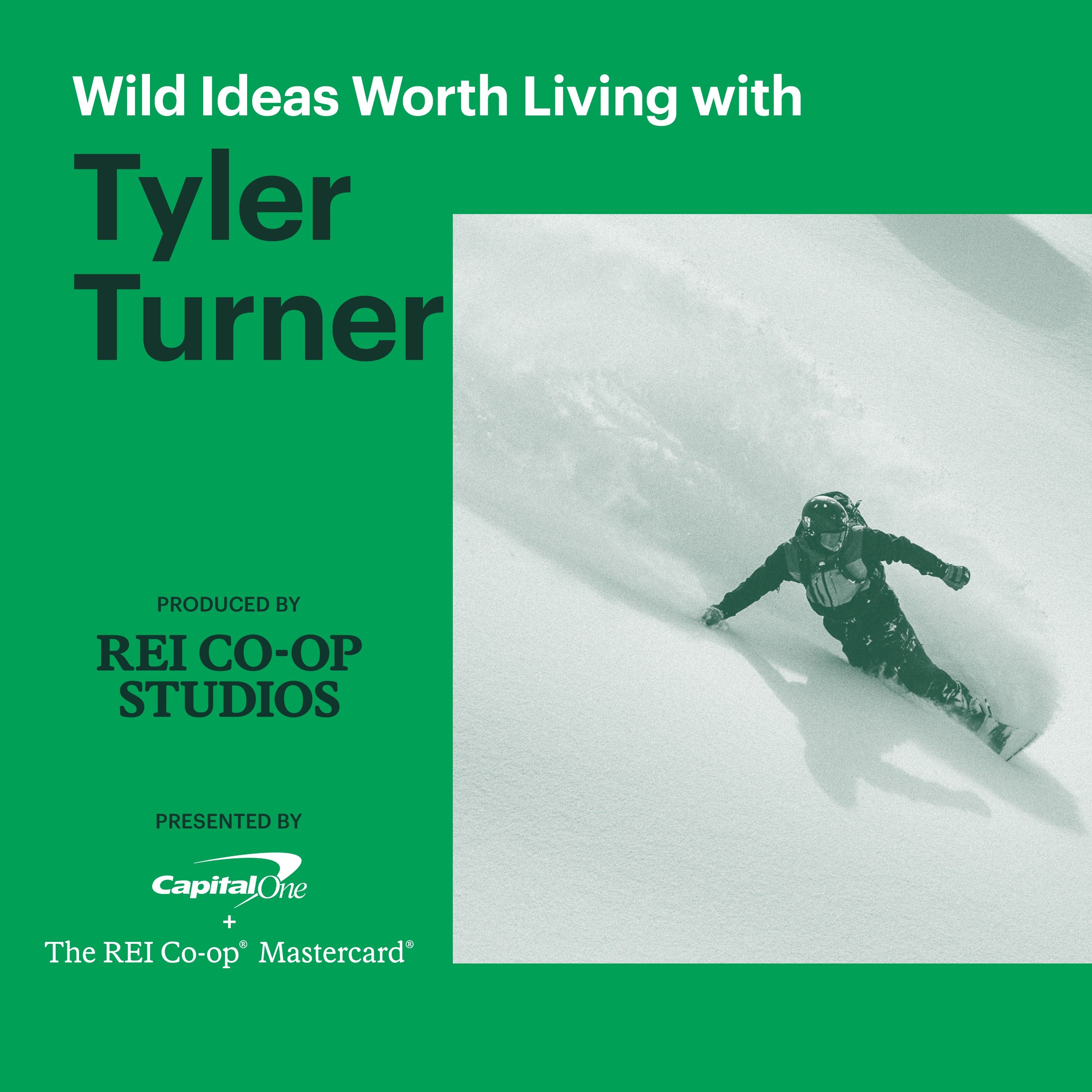
Skydiving & Becoming a Paralympic Snowboard Champion with Tyler Turner
from Wild Ideas Worth Living
30m 50s
Tyler Turner, a lifelong adventure athlete, faced a life-altering skydiving accident in 2015 that resulted in the amputation of both legs, a back injury, and a brain injury. Despite immense physical and mental challenges, including a difficult recovery from painkiller addiction, his passion for sports like skydiving, snowboarding, and surfing motivated his rehabilitation. Adopting a philosophy of "perpetual forward motion," he focused on small, consistent steps toward recovery. Turner gradually returned to his beloved activities, first skydiving again by adapting his techniques, then making history in 2017 as the first bilateral amputee to fly a wingsuit. His perseverance extended to snowboarding, where he not only relearned the sport but also achieved elite success, becoming a three-time world champion and Paralympic gold medalist. Turner's journey highlights resilience, adaptability, and the power of purpose in overcoming adversity.
Tyler Turner has always been a bit of a daredevil and all-around adventure athlete. He grew up skiing and snowboarding and eventually made a career as a skydiving instructor. But in 2015, Tyler had an accident that resulted in the amputation of both of his legs. It was unclear if he'd ever be able to return to the sports he loved, especially snowboarding. I didn't want to ride because I was about to find out maybe that I can't snowboard again. And then like, I'd only gone like 30 feet. But in that 30 feet, I went, "Yep, this is snowboarding." I was just like giggling and screaming and pain, but like screaming and joy and like it was just a really cool moment. And then we pulled over the side of the run and I took the prosthetics off and then that season I just spent trying to figure out how to ride more. That first ride was the beginning of an important journey for Tyler. Since then, he's become a three-time Paris snowboard cross-world champion and even one gold at the 2022 Paralympic Games. Outside of snowboarding, Tyler has also made a return to surfing and skydiving. And in 2017, he became the first bilateral amputee to fly in a wingsuit. I'm Shelby Stanger and this is Wild Ideas Worth Living, an REI Co-op Studios production presented by Capital One and the REI Co-op Mastercard. Tyler Turner, welcome to Wild Ideas Worth Living. I'm really excited to speak to you and you're fresh off of playing from Chile. Like literally you just walked in the door. What were you doing there? I was down filming some content for one of my amazing sponsors and it's me such a cool piece. I can't wait to see it. That's pretty awesome. Okay, so I want to go back. So you're stud and it sounds like you've always been a stud. Like you're a Paralympic gold medalist in snowboarding, the first bilateral amputee to fly in a wingsuit and I feel like you also placed in the adaptive surfing competition at a high level. Were you always outdoorsy? Were you always attracted to adventure sports? Tell me how you kind of got into all of this and Canada where you grew up. Well, yeah, action sports, adventure sports, been everything forever. I grew up in Northern Saskatchewan. So it's like, you know, quads and snowmobiles and ATVs and then I moved to Alberta which is mountains and just the opportunity for rock climbing started climbing at a young age and it was like a work and I climb and I guide what are rafts and I working towards ski, snowboard, guiding certs and competing. But moderation is not a word in my life. So it's just like all in all the time. I dive head first and I think I'm an addict but I like to think that they're healthy addictions. Were your parents like this? Did you have siblings who were like this? Like who fostered that in yours? It's just something you're born with. Yeah, I always say I was just born with the screelers I think. Like I don't know where it comes from. I don't have a great explanation. It's just like for me doing these things which gives me joy, it makes me happy. You know, it's so cliche but like I feel more alive when I'm doing this stuff and if I'm not doing it, I'm just like sad and funny enough growing up my brother actually was kind of the crazy one. Like I wouldn't ride roller coasters but he he wanted, you know, the biggest scariest roller coaster or whatever. But for me, it's about planning, like perfect planning and perfect execution and that's why I love the sports that I participate in because there isn't a lot of room for imperfect execution. Tyler always enjoyed adventure sports that require focus and precision. Growing up, he loved snowboarding and slalom skiing and he discovered surfing as a teenager. After high school, Tyler went on a four-month surf trip to Australia with his friends. While he was in Byron Bay near Brisbane, Tyler tried skydiving for the first time. He thought it'd be a one-off experience but from the moment he jumped out of a plane, he was hooked. You hear everyone doing a skydiving byron bay so I'm going to do the touristy thing and I did a skydiving, it was amazing, did it with one of my best friends, my brother and a couple of friends from back home and landed and were all high-fiving and I think everyone's like that was so cool and I was just like that was amazing but these guys get to go do it again. You know, the instructors we were with, the filmers and they're like high-fiving us and they're going to do this again. Like man, that was cool but like one and done, that's just not for me. Moderation, as I said, not my thing. And so I just started this thought process saving up money and trying to get myself to a place where I could make enough money to support getting a solo license and then pretty much consume my life for the next five years. And God, all my coaching certifications and everything. So it became a job. It wasn't costing me $200 every weekend. It was making me $200 on a weekend. So I think on the surface, you look at skydiving, you like jump out the plane, float down, we play pressure, land safe. But it's so nuanced and there's so many different avenues in skydiving and that's what really hooked me is like trying to perfect your human flight and how far can you push it and how, you know, how precise can you be with flying your body and some people fly at such an incredible level. And so there actually is this like progression within the sport that I don't think most people see and that's what really hooked me. Tyler was 21 when he got his skydiving license and he soon started exploring other ways to fly like wing suiting. For those unfamiliar, wing suiting is a bit different from skydiving. Wing suit divers were a suit with fabric webbing between their arms and body and between their legs. This allows them to glide through the air like a bird. Once Tyler was introduced to wing suiting, it quickly became another obsession. For years he lived like a classic adventure dirt bag, sleeping in a van, jumping out of planes, climbing, snowboarding and doing pretty much any action sport you could imagine. But in 2015 when Tyler was 29 years old, an accident changed the course of his life. 29 is like the most pivotal year for just a human in general. I've talked to so many people who had a big life change at 29. So that's how I mean, that was almost eight years ago today and you had this horrific accident skydiving and you still don't know what happened. Yeah, you got it. I've tried everything like hypnotherapy and all the different ways to try and remember what actually happened because no one saw it. So really don't know what happened. I mean, I made a massive mistake. There was lots of things that played into it. Well what I was doing was a job. I film people doing their first tandem skydiver doing a tandem skydiver helmet that has cameras on it. And then when you land your parachute, you kind of get an opportunity to practice some skills and push yourself a little bit on landings. And I just made a mistake doing some pretty high performance stuff and I hit the ground going extremely fast. And I'm lucky because most people that make that mistake die. And then I was in a coma for quite a while after and then I have no memory for a while after that. So I actually am definitely missing like the next two weeks to a month of my life is kind of just wiped. I've tried so hard to get memories back and I can't. I'm lucky I've heard the stories and seen the photos and everything and so I've kind of created memories of that. I actually only had one leg amputated at that time. But it's just like my back's broken, my brain injury is really devastating. I'm trying to learn how to talk again and not just for like a couple weeks but like for years. And like over that time, it's this longer process where the first few months I just was like, why? Why put in the effort? Why show up? Like what's the point? Because there isn't anything out there for me. It's all gone. Identity, everything. Community, it's gone. So why? But then it kind of comes around and you know it like gets the point of like, all right, I'll show up. When I got to that point of like, I'll give it a try. I think that was kind of the like, like I say, instead of like waking up me like, oh my God, I have no legs. I don't want to do this. And then like, oh, but I'm going to do this and I overcome. It's more like, man, my legs, everything's messed up. I lost everything. This sucks. And then it got to like, well, I guess I'll wake up every day at least. You know, like that. It's not as like amazing. I appreciate the realness in which to tell a story. I think like none of us can relate to that. But I think everybody can relate at some point to like not wanting to get up out of bed and like, it's just sucking. And then you just have to do it, even if you don't want to. And then the day is gone. And you're like, okay, that was a day. And then there's another day. But I'm sure there's, it's not linear. I've come up with this theory essentially or this way I kind of approach things now that I've learned through all this. And I call it perpetual forward motion. Like if literally in one day, all you can just put one foot in front of the other, like that's all you got done is one foot in front of the other that day. That's forward, you know, that's all that matters, like just.
Keep the momentum alive. I got this theory from Dr. John Coleman, this mental performance coach that I worked with, an amazing guy. And he said, "If that pendulum's swinging, there's energy." And when that pendulum dies, when it stops, that's where it's hard. You know, it's hard to rebuild momentum. That apathy is hard to recover from. So he's like, "Sure, you're mad, you're angry." Like, you can imagine where that pendulum's swinging to. It's like, there's so much power in there. I want to go back. So you have extreme physical pain. And there's just your whole identity as God, mental pain. Like, going to the bathroom now is just, it's hard. Everything is hard. It's still hard, and it's still probably the thing that I hate the most about being a double amputee is going to the bathroom and having a back injury. Because not only just getting to the toilet sucks in the middle of the night, but then also like using the toilet sucks. And I know you've had people with spinal cord injuries on here before, and it's that part that nobody talks about. It's like, I would, I don't, my prosthetics, they're awesome. Like, they work well. They're, I mean, they suck sometimes, but I wouldn't trade them back in. You know, like, my life's great with two prosthetic legs. I would do anything to trade my back injury and my brain injury. Like, those two affect my life so much more, and they're invisible, right? You don't see them. How soon after your first leg was amputated was your second leg amputated? You're in half 18 months. Oh, wow. That's a long time. Yeah, I decided like I'm going to commit to the rehab. I'm going to commit to everything. I'm going to do what's asked of me. And I'm going to try. But I kind of like had this feeling that it wasn't going to work. And as the time went on, I had with my right leg, I had this reference of what a good leg feels like. And just because I have, you know, my original meat leg there doesn't mean it's good. And it was holding me back. And after a lot of surgeries and the pain stayed the same, I would just be like, so if you want to mess this one up and cut it off, you know, like just feel free. I got to the point where I like, secure this foot. And yeah, it was a wild decision, but it was the right one. I saw this like potential that if I amputated my second leg, I could go do the sports I want to do again. I might be able to skydive surf, snowboard. And I got out of surgery, like smiling, high-fiving, like life was good. And then after a couple of weeks, this like feeling set in, like, ooh, you know, was that a good idea? And yeah, I sat with that for a few months while I waited for it to heal to get my second prosthetic and walking into the prosthetic's office in Vancouver, I'm like, I'm going to find out here in like, well, 30 minutes. If this decision I've been pondering for like two years was the right one. And it was kind of a crazy moment. I stood up and I was like, yeah, it hurt like hell, but I was like, it's natural. When Tyler first started wearing prosthetics, he was still an unbearable pain. Over time, the pain is settled down though. And Tyler has returned to some of his favorite activities. More than 100 years ago, Nikon's very first product was actually binoculars. That's right, not cameras, binoculars. Today, Nikon is still crushing it in the optics game. From the trails to the tree tops, Nikon binoculars are built to go the distance. Designed in Japan with precision engineering and decades of optical expertise, they deliver brightness, sharpness, and clarity. Whether you're birding, hiking, checking the surf, or just taking in the views. The Monarch series is rugged enough for your wildest adventures, while the pro-staff lineup offers incredible value without compromising performance. And with one of the lowest return rates in the industry, you know these binoculars are built to last. So next time you're out chasing wild ideas, bring a pair of Nikon binoculars and see the world like never before. What are you waiting for? Head to your local REI store or REI.com and grab a pair today. In 2015, Tyler Turner was in a skydiving accident and lost both of his legs. Since then, he's figured out how to return to some of his favorite sports. He started small, adjusting to his new prosthetics, and testing what his body was capable of. But before he could start snowboarding or skydiving again, he had to overcome an even bigger obstacle. So what was the turning point for you? Like from when you decided I'm going to do sports again, just differently? I mean, the turning point was committing to getting off painkillers, really, because I wasn't able to pursue what I wanted to do with how deep I got down that hole. And my passion for skydiving and snowboarding and surfing and the potential to do those sports again is what really motivated me to figure that out. And it was undoubtedly the hardest thing I've ever done in my life. And I've lost two legs and had a back injury and a brain injury and getting off of obiets is like not even close. Like prosthetics was easy compared to that. But once I kind of got through that, that was where I was sitting there. It would have been like January 2nd, 2020. And I was sitting there off painkillers. And now I have two prosthetic legs. And I was like, all right, let's send it. How did you get off of them? I tried multiple times, multiple ways. How I got off was I had something that I wanted so bad. I wanted more than that. And that was sports. In the end, I went cold turkey, which I would not recommend. It was as brutal as I could ever, I can't even describe it. It gets impossible to describe how bad it was. But yeah, I tried other methods before and I wasn't having success. And I wanted to skydive so bad. And I wanted to serve in everything. But honestly, skydiving and base jumping because there's not that space for messing around like that. So those sports forced me to be fully sober and clear my mind. Well, we're good for you. Thank you. And thanks for talking about that. So what was the first activity you did that really made you feel yourself again? So yeah, I think skydiving was the first. I mean, up there, like with activities I used to do. I mean, obviously I played other sports wheelchair rugby and stuff. I was playing some sports to keep my mind and like my brain just at ease a little bit. But skydiving was the first of like those sports that I love that I went back to because as much as it seems crazy and extreme really like you get this nice little ride up. To altitude an airplane, you can roll out of that airplane if you want. And then you're floating on a bed of air and then provided you land it softly and safely. You know, there's, there's a lot of skill goes into it. But like it's not the most taxing thing on your body. So I was actually able to like get wheelchaired up to an airplane. And then got into that airplane. It was quite the scene and my biggest worry at that time with like still my back and pelvis and everything was in pretty rough shape. It was like how am I going to land this? And it sounded really nice. It was kind of sandy and soft and came in, slid on my butt and then they brought my wheelchair out to me. It was a pretty cool moment. But I was happy like skydiving was accessible to me, which is kind of crazy to think it was the most accessible sport. But it was, it was there for the taking and yeah, I got all those feelings back. I got all that all those juices flowing again and it's pretty amazing. Amazing. And then you just kept doing it. Yeah, once I once I like after that first one and I proved that I was still capable, then there was no more like reservations were gone at that point. I did one. It's got to have the first day and then after that I was you know back to doing four or five maybe like a day and just progressing. And trying to figure out how to fly this new body like I was flying with prosthetics with out prosthetics. You know different like I was saying earlier like there's all these different branches of skydiving. And it's more nuanced than you think. And so I was trying different types of free flying and can I still do all these things?
things and you know, just kind of the progression kept going and I just wanted to get back to the point where I recertified all my coaching certifications and they checked me out and said yeah, you're yeah, it's still good to go and I got back teaching people in the sky and just got back to everything I love and and now it's it's just normal. It didn't take long for Tyler to feel comfortable skydiving again and he started jumping on a regular basis. In 2017 after extensive training and planning, he became the first bilateral amputee to fly in a wing suit. The skydiving and wing-shooting like when I leave the plane it feels identical to how it felt before my accident and you know the suit you're kind of laying on it it feels like you're laying on this bed of air like on a magic carpet almost and I was it was definitely a little weird I my right legs got um quite a bit of weakness from paralysis in it and so my right leg was kind of getting thrown around a bit but I settled in and and once I settled in it just like it was incredible. As Tyler took up each sport he regained confidence in his body and he wondered how far he could push himself. More than anything he wanted to snowboard again. Tyler loved carving through powder in the mountains but as a double leg amputee he was unsure if he could ever regain the balance and control that the sport required. So then how did you start snowboarding again? The snowboarding has been my entire identity pretty much my whole life so it um it was kind of a non-negotiable I was going to figure out how to snowboard but I also knew I had to be careful with it because like my first time putting prosthetics on like my first time skydiving all this stuff that moment where you find out like it's a make or break moment it's it's kind of incredible how it's like literally a single like that moment you'll know an answer and maybe if you can't like I couldn't walk on my prosthetics perfectly I knew the answer at least I knew there was potential there and I was scared for that moment with snowboarding and I knew it was gonna have to come at some point I was gonna have to find out so I was really patient it was the sport I was the most patient with because I guess it's like the most precious to me you know I didn't want I wanted to make sure that I was gonna be able to give it the best chance of success and I knew it was gonna take like time for my prosthetics to heal feel a little better deal with the pain like get calluses built up and everything I also was careful to set um in a really achievable goals off the bat with it because other sports as I excrete I'm gonna fly wing suits or whatever but with snowboarding I was like I'm gonna ride my snowboard 10 feet this season like that's it um I was like one of my best buddies Cody and uh had people walking me around with my hands over their shoulders and I couldn't barely walk and I I put my feet in the bindings I don't think we strapped them up but I just with my forearm crutches I pushed got a little momentum and like slid 10 feet and uh I was like hell yeah proud of my accomplishments year one 10 feet done check everything else is a bonus but that summer I just like I was obsessing about snowboarding and again plan plan plan and like running down how how I'm gonna do it and and luckily you know unlike scativing and and wing shooting there's a lot of people I can talk to and get beta from and ask about their experiences and really lucky to have you know double amputees before me that have done it and I've gone through the experience and so with the world of social media you can be pretty shameless and just reach out and hey here's here's my situation here's what I'm trying to do and luckily most people were pretty good to get back to me and and help out and it works so hard that summer and like almost opening day 2021 I guess it would have been me and my good good buddies growing up we snuck out opening day and we had a plan I remember the night before on this carpet in this living room we're like I'm standing up and like all right you know like this could work and we're like putting pieces of rubber underneath my heel to try and wedge it so it felt a little more normal and I come up with a plan like how we're gonna even ride the chair lift how how are we even gonna get me to the chair lift because I can barely walk at this point with the pain but we we got up there and we had a plan to kind of go down you know falling leaf where you like hold each other's hands when you're learning to snowboard like and have the instructor giving you support I was like I'm gonna do that with Spencer my buddy and uh so you like kind of gets me up and I'm like I don't want to find out like I didn't want to ride because I was about to find out maybe that I can't snowboard again and I was too nervous I for two and a half years I've been saying like I'm gonna snowboard it's gonna be possible I'm gonna this is what I'm gonna be able to do making all these claims and then like I'm about to find out here in in one second if I turn this board I'm gonna find out if those are even possible and I was like super scary but he kind of he kind of just gave me shitties like did get over it you know point the damn board downhill Tyler did as he was told and took off down the slope it was exhilarating even if you only made it about 30 feet before the pain took over but in that moment the joy of being able to ride was far greater than any discomfort over the subsequent months he continued to set small achievable goals to manage the pain increases endurance and build back his skills the first time you snowboard it was like 2020 but then you made the Olympic team like pretty quickly after yeah I like the skills were there but it was just trying to figure out the pain and like pain management and how how to be able to ride more than two or three runs in a day or like stop seven times on every run so I started going to camps and stuff and canister word was really good to me like they saw the struggle but also like that there was potential there so they were accommodating and like all right well hey you can you can do three runs great let's just like really train hard on those three runs and like make sure that we're progressing and also the coaches I'm lucky they've worked with amputees and snowboarding for enough years that they had some good ideas and ways that we could adapt and modify and and take different approaches and it was all just this like fluid thing and it was happening so fast too because the games are coming and yeah I just kind of went for it so like how soon did you know that you were going to enter the Paralympics after the first time you just went 10 feet to be honest I wasn't super interested um I I think like a lot of you know kind of just like common people in North America of the world like the Paralympics are getting more and more tell-vise prime time and they're they're getting the light that I think they deserve but I didn't tune in much it was hard to because it was kind of buried on the internet somewhere maybe YouTube would have it but yeah there wasn't access to it but to me the Paralympics felt like a participation ribbon that was my vision of it so I'm like yeah whatever Paralympics yeah I just want to go snowboard and ride powder again and whatever and then I watched the sochi and South Korea, Pyongchang and I was like oh damn yep these like I I didn't really know I didn't know what I was in for and like I watched the racing and like oh okay like like this legit yeah yeah you know it's coming down to 100th of a second and it's gnarly and it's fast and and these guys are good and I'm not that good and so that was kind of where it like it took some time to come around to like okay yeah this is competing for your country on a national level with like national support and competing for gold medals and it it finally was like okay let's let's give this a try and yeah when when that kind of shift happened and it was actually I was riding with a friend of mine and he's like he's like he's like did if you talked to the Paralympic team and I was like well I sent an email just like inquiring the information and it's like yeah I don't know whatever not really my thing and then he called one of the coaches and was like yo so you should go snowboarding with this guy and then they invited me out to a camp and it just like took off from there it was it's like there's a year and a half till the game so if you want to do this let's go you didn't just like do it you won gold yeah how did it feel to win gold yeah gold was incredible I it was fun because there's just no pressure like I was still just kind of a no one out of nowhere and um I was honestly I would just be laughing to myself and every time I made finals because I won like five World Cup set season before so all the World Cup oh I lost one World Cup that season there's six I won five of them then I won World Champs
like three weeks before, 'cause World Championships was postponed a year because of COVID. So we went World Cups, World Championships, and Paralympics all in one year, which is crazy. However, for me it was great 'cause like-- - It's trading. - I'm brand new, yeah. Like it's great opportunities. And I, so I was kind of building this momentum and every time I was in the final start gate, I'd just be laughing like, what am I doing here? Which was awesome because then I just, I kind of went snowboarding and didn't care because it kind of blew my mind that I was even there. I didn't know if I'd ever be there. And yeah, that momentum I was able to take all the way to winning gold. So you know, how was it winning gold? You ask, it's like, it was just, I couldn't ever imagine that level of accomplishment. I just wasn't even a consideration. So yeah, I don't know if it's still sunk in years later. Like I did it, I did it, and I don't know how and it's just the wildest. - You can follow Tyler on Instagram at tieturner14. That's TY, T-U-R-N-E-R-1-4. You can also find him at tieturner.ca. Wild Ideasworth Living is part of the REI Podcast Network. It's hosted by me, Shelby Stanger, produced by Annie Fassler, Sylvia Thomas, and Sam Pierce-Nitzberg of Puddle Creative. Our senior producers, Jenny Barber, our executive producers, our Palo Motila and Joe Crosby. As always, we love it when you fall the show, take time to rate it and write a review wherever you listen. And remember, some of the best adventures happened when you follow your wildest ideas. (upbeat music)
Podcast Summary
Key Points:
Tyler Turner, an adventure athlete, lost both legs in a 2015 skydiving accident but was determined to return to extreme sports.
His recovery involved overcoming severe physical pain, brain injury, and addiction to painkillers, driven by his passion for sports.
He successfully returned to skydiving, became the first bilateral amputee to fly a wingsuit in 2017, and later won Paralympic gold in snowboarding.
Turner emphasizes a mindset of "perpetual forward motion," focusing on incremental progress even during the toughest phases of rehabilitation.
Summary:
Tyler Turner, a lifelong adventure athlete, faced a life-altering skydiving accident in 2015 that resulted in the amputation of both legs, a back injury, and a brain injury. Despite immense physical and mental challenges, including a difficult recovery from painkiller addiction, his passion for sports like skydiving, snowboarding, and surfing motivated his rehabilitation. Adopting a philosophy of "perpetual forward motion," he focused on small, consistent steps toward recovery.
Turner gradually returned to his beloved activities, first skydiving again by adapting his techniques, then making history in 2017 as the first bilateral amputee to fly a wingsuit. His perseverance extended to snowboarding, where he not only relearned the sport but also achieved elite success, becoming a three-time world champion and Paralympic gold medalist. Turner's journey highlights resilience, adaptability, and the power of purpose in overcoming adversity.
FAQs
Tyler Turner is a former skydiving instructor and adventure athlete who grew up skiing, snowboarding, and engaging in various outdoor activities. He later became a Paralympic gold medalist in snowboarding and the first bilateral amputee to fly in a wingsuit.
In 2015, Tyler had a skydiving accident that resulted in severe injuries, including a broken back, brain injury, and the eventual amputation of both his legs. He was in a coma for a period and faced a long recovery.
Tyler patiently waited for his prosthetics to heal and carefully tested his ability on a snowboard. His first short ride confirmed he could still snowboard, leading him to spend the season refining his technique and eventually competing at a professional level.
Tyler adopted a mindset of 'perpetual forward motion,' focusing on small daily progress. He emphasized maintaining momentum, even on difficult days, to avoid apathy and rebuild his life step by step.
Tyler's strong desire to return to sports like skydiving and snowboarding motivated him to quit painkillers. He eventually went cold turkey, which was extremely difficult, but his passion for adventure sports provided the necessary drive to succeed.
Skydiving was the first major sport Tyler returned to, as it was relatively accessible despite his injuries. He was able to get wheelchaired into a plane, complete a jump, and land softly, reigniting his passion and confidence.
Chat with AI
Loading...
Pro features
Go deeper with this episode
Unlock creator-grade tools that turn any transcript into show notes and subtitle files.
 PodcastTranscript AI