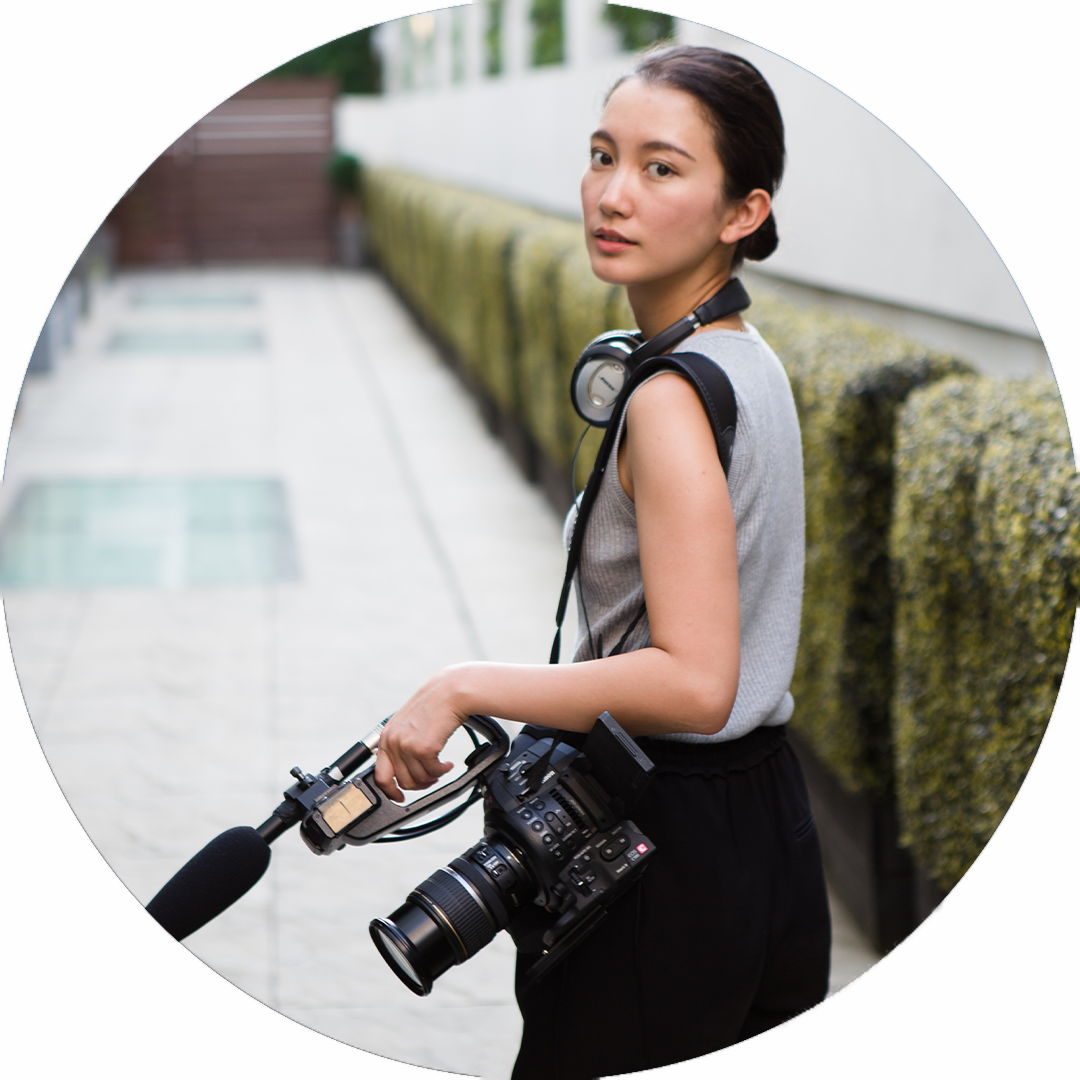
In 2017, Shiori Ito publicly accused a high-profile Japanese journalist of raping her. She undertakes her own investigation of the case in her film, Black Box Diaries. I'm Tom Powers, and this is pure nonfiction. Black Box Diaries begins with Shiori Ito recording herself on her iPhone. It's spring 2017. Several months before me too would become a trending hashtag. Shiori is turning 28 years old. She's about to give a press conference to accuse the journalist Noriyuki Yamaguchi of raping her two years earlier. He's known to have close ties to Japan's Prime Minister, so it'll be a shocking revelation. Here's Shiori in the film. This could be a big change in my life and some others or many others. And I'm not sure if I could be responsible for that, but all I want to do is talk about the truth. When Shiori first reported the rape to police in 2015, they advised her to let it go. Her own family told her to let it go. She felt the system was like a black box, hiding things from view. So she started secretly recording her conversations with police, including a man she calls "investigator A." He stood apart from his peers and trying to move the case forward, but eventually was blocked by his superiors. Shiori was faced with a dilemma. She wanted to quote her recordings with investigator A in her memoir, but she worried might lose his job. We want your column to ask for permission. It's a tense scene. He's being helpful, but he's also making inappropriate propositions. He says with laughter that he'd be willing to testify for her if she'd marry him. She laughs awkwardly back and gives a look of dread to the camera. The book "Black Box" became a bestseller in 2017 and helped break open conversations about rape that were previously taboo. That public dialogue led to changes in Japanese laws that give more support to victims of rape. But it also led to a right-wing backlash against Shiori, including death threats. The film follows her over several years as she takes her case to civil court. Death box diaries premiered at the Sundance Film Festival in January and was acquired by MTV documentary films. I met up with Shiori just two months later in March at the CPH Docks Festival in Copenhagen. Even though she's been living with this story for years, there are things she's still processing. This month the film is opening at New York's Film Forum and playing in other theaters. I started by asking Shiori how she was drawn into journalism in the first place. I was so sure that I wanted to be a journalist when I was 16. I ended up being in the studying in high school in Kansas. I just had to, yeah, I had completely, you know, had no idea where Kansas was. And of course my classmate in Kansas was. How did Kansas wind up being the place? I know. Well, it was like an ex-gender program and I had like a bronchier, host family, which was amazing. But I put on my regiment on my profile saying I love nature, I love animals. So yeah, the people who was so, yeah, alright, girl. Kansas. So yeah, I remember first weekend was like rodeo day and I, yeah, wow. And I grew up watching dreaming about, you know, Laguna Beach and O.C. And I thought that was all about America. Nope. And so I had to just keep describing, you know, I'm not part of China. That's what was question. Oh, you're pan-cool. Which part of China you from, you know? So and I realized most of my classmates never left Kansas as well. So it started feeling a bit scary. What kind of information, how information can shape the idea and, you know, how they think. So I started listening to watching news and that was the start and I knew that I, yeah, that's what I want to do. And I'm really ADHD too, so I just needed to move around and talk to people. So I thought, wait, this is perfect, you know, dream. Did you have any vision of a particular kind of news that you want to be doing? Yes, I actually want to be a photojournalist to start with. So when I, yeah, and their university, I studied photography and journalism. But when I started my work, but can do 2017 as an intern at Reuters, they just didn't have opening for the journalists. So I started doing video journalism and that's how I got into filming. So this horrible thing happens to you in 2015. You go to the police, you're not getting any help you want there. You decide in 2017, spring 2017, which I think is meaningful date considering later on in 2017, there were this became a much bigger news story. But can you talk about like all the thinking that went into making that decision to go public? Yeah, well, I never had that, you know, it wasn't like this decision made. It was just really naturally, we made all the steps. How can we find out what happened behind the investigation? Because I learned there was RS warrants, but then it sort of was disappeared. So I questioned a lot, how could that happen? Who gave the older? More I learned, it was, I realized as a, you know, as a victim who made a report, but I was also as a journalist, it was quite hard to reach to find out. So I kind of want to, yeah, call out other journalists if they can find out what's going on. So I was wishing to do that and so I decided to go public and also I was scared of for myself what could happen if they can just erase the RS war and what could happen in my life. So to be public, I thought that could be safer for myself as well. In a way. It's pretty clear in the film that it wasn't that there were other pressures on your pressures inside your own family who were second guessing whether you should do this or how you should do this. So can you talk about how you handled that pressure, how you came to a decision despite maybe hearing from lots of people? This is a bad idea. Yeah. Well, it was scary. We have this saying in Japanese called kiyosumi. Kiyosumi de la kara otsuru. Maybe I'm wrong, but it's like jumping off this from this one of the highest located temple, you know? And in Kyoto and that's how I felt, but and I didn't know where I would learn or if I was a bi, but I just had to, yeah, find out what's going to happen. And for me, I feel like already my personal life was bit like more, I don't know, hopeless in a way, but I believed in storytelling and journalism. So that never, I could never give up or lose the hope. So I was hoping. Can you elaborate what you mean when you say you felt your personal life was hopeless? Yeah, because it was, I didn't want to believe it, but once I, you know, made a report to police, they said, if you do that, your career would be over, you know? You won't be able to work anymore and whatever you wanted to do in this industry because the person who did this horrible things to me was really powerful journalist. And yeah, so which I didn't want to believe, but yeah, it wasn't just police saying it was just also my, yeah, family, other people kept telling me so. And yeah, more I go, I felt like, if I, if I, I feel like I'm going to be a real man.
go public in Japan. I'm sure it's different here. In Denmark I've been talking to women here and they have quite different perspective of gender which is amazing. But in Japan talking about sexual violence is such a shameful thing. If you do, it's such a, you know, there is a big norm against victim. And so I knew that if I go public and talk about what happened to me, I won't be able to, I don't know, live as a normal woman. No more Japanese women would live. When did you start thinking that you could make a film out of this? So when I first recorded my, you know, the investigation process, which I questioned a lot, it was purely for documenting reason so that I can maybe point out what, you know, what was going on. Something you could use in a court case. Exactly. Yes. But then after I went public, I realized that, yeah, it was hard to get back to work. I couldn't even walk the street. I didn't feel safe. And then middle of nowhere, I got a Skype call from my producer Hana. Back then I didn't know her and her friend, how Japanese friend from London and saying that I usually just move here and we should think about what we can do together. You can just live in my office, she said. And I actually did live on their Hana's desk for many years. But that time, I think, you know, going out from Japan and once you're leaving from that society when, you know, you feel like you're in a middle of tornado, but it's great that you are physically away from the place. So you can think really what you can do. And back then I was starting my career as a documentary filmmaker and I wanted to do more slow storytelling, rather than telling, you know, what was going on in the world in the newsway. So when I discuss about that with Hana, I realized that that's something we can do. And I actually had already some of the documents. And I don't know what I was thinking when I did the first iPhone recording because it wasn't for making, you know, for documentary film, but which is now opening a well film. Yeah, I guess I was scared that I feel like I need to record it for if something happened after the press conference. I think that's what's in my mind. But so yeah, I'm trying to wrap my head around what it means to for you to live with the story and to retell this story happened in 2015 when public in 2017. You wrote a book. You've been interviewed by a number of journalists. You went through a court case and now nine years later this film is coming out. You're being asked questions about it again. How do you, you know, take care of yourself when you're being asked about this horrible thing over and over again? I think yeah, it's never it's getting easier, but it's not easy. So I relied a lot on wine and my cat to survive. But um, what wine you said? Yeah, wine. Yeah, usually not the recommended. I know. So please let me know if there's any way good way to survive. I'll cope with. But I think what I personally felt before I was really isolated I feel I was quite lonely by telling this story and just by sharing my story I could meet you know my friend, new friend, my filmmaker friend. Yeah, my team member who came on board for making this film and I don't know. There's always new new discovery and when I say yeah, wine and cat, I also get new suggestion of oh this works and that. So you know, I think sharing and tearing story is also for me to find a new solution how to deal with it and um, let me ask this, you know, when you're when anyone is editing the film, it can be agonizing to be looking at the material you shot and wishing something was different or wishing you had something you don't have and you know, you're just going back in the at-room day after day, you know, confronting things that you wish were different. But for you, there's this whole other layer of of challenge and that you're also looking at yourself and looking yourself processing a range of emotions including, you know, really tough ones. Yeah, at some point I couldn't look up who did this because there was just a lot of really remembering, reliving the moment and most of like so many moments that I've forgotten because I wanted just to erase from my memory. So it for us, me and my editor took four years because sometimes I needed a break and in the beginning I had a quite different idea about this film. I didn't want to see myself much in documentary. I thought I could maybe recreate what was looking, what I was looking at that moment. So I went through my diaries and trying to go back to the location all the time and remembering, you know, when this conversation was police happening, the investigator happening, where was I, what was I thinking, what was I looking at through the window. So I tried to go back and film by myself to film my personal point of view. I was a perspective. So and I worked with also stop motion animator who could maybe recreate. I taught my diary and nightmares. But yeah, later I realized we have this amazing moment of the real road, hutages. We've got to use it. But the question was how much do we want to use it? How much emotion we want to use it? Because before I, as a journalist, I thought I shouldn't put any emotion in it. But I guess, yeah, the day I decided to do the documentary, I am already crossing the line as a journalist. So, but to commit that, okay, you know, this is already crossing the line. So why don't we do that way? It took, you know, one way of storytelling in a way. It took me a lot of time to just admit that there's no way around to be balanced. And yeah. I want to ask you about your self-presentation. You're very first press conference. Some people criticize you for what you were wearing. And throughout the film, we see that you lived in a world where you heard from a lot of critics in different ways. And I wonder how much you internalize that when you are putting yourself out into the world. Let me ask this. In the film, I think one of the wonderful things about it is that we do get to see you in all kinds of different situations with your friends, you know, feeling their support, you know, having a sense of humor about, you know, of really terrible stuff that you're dealing with. I wonder as you put together this film, how much you were thinking about those voices in the worlds that are waiting for you to do something that they can criticize. You know, I think criticism is okay. But these words of, you know, violent word, it's almost threatening my life sometimes and, you know, trying to also attack my friends and family, that was really. really hard. I guess if it was just for me, I've decided I signed up for this, I decided to do it. Okay, but for my family and friends, yeah, they weren't ready, of course. So that made me almost stop for my family because they were also super afraid. Like my sister did, she thought she would never get a job. She's much younger than me and she was about to graduate her university. So she was like begging me if you do this and if people know I'm your sister, they'll never give me a job. And so by the way, my family haven't seen the film. Let's see. But have they been able to see positive reviews of it? It's all in English right now. So let's see. So that's what I'm now. My little campaign right now is, you know, have some exposure outside and positive feedback. So yeah, we can bring back to Japan, but we still don't know if we can, yeah, screen it in Japan because it's still sensitive topic. So we'll see. But I want them to see in a theater. So I haven't shown anything yet. But I for yeah, I physically kept distance from all the social networks because if someone criticized me on face, great. I can handle that, but all these people I don't know the name and face. It was just too much to handle, too much to get these negative or, yeah, energy just lie next to my phone, you know, next to me with my phone, right? I always woke up with these messages and I couldn't take it anymore. So yeah, one point my best friend, she just took my phone saying, you know what? It's a good friend move. Yeah, it was. And I really decided we delayed all the social media from my phone and I'm not going to check it. So I had amazing assistant who even go through my emails for me. I still have that because I'm still getting it and it's still, yeah, hard to look at these things. But I need to slowly go back for the cream, you know, film criticism. We need to be open and look at it. So, but I think, yeah, time to time. It's getting better. I just restarted to use Instagram recently. Now I know how to message on Instagram. So yeah, I think when someone watches the film, they could, they see in the film that you went through a civil court case that came out in your favor in Japan Supreme Court upheld that case. And one could get the impression that, oh, like this, this is done. You brought a case to trial. It came out in your favor. And maybe it gives a sense of closure in the film that isn't exactly the way things work in real life. So I wonder, you can talk about where you feel at today compared to where the film ends. The film ends with my face looking out the window. And it was right after us hearing the result of the Supreme Court. And me and my best friend are just singing our favorite song. I will survive. I will survive. But I realize that some moment I, yeah, looking at the footage, I'm happy. But then, one second later, I don't look very happy. And that's it. Yeah, it's no. I mean, it was right. It ended with my favor. Of course, that should be a good thing. But doesn't mean that I ended there, right? Our life goes on. And I think that moment, I was just looking back what took, what was the cost, the time, all the emotions. And yeah, so it's, I don't regret any of that, but still, yeah, it was, it's, it's, it's not the end. And that's that's also not, of course, my goal to win the case. I was, I just wanted to try and test where our legal system locates today. So, which was I felt so it was good update still, but still it wasn't the crimin, you know, it wasn't, my criminal call, criminal case was dropped. You want a civil case? Exactly. So the offender kept saying that I didn't do anything illegal. So, um, civil court in Japan, um, ruled that there was no consent. And, but unconsented sex isn't rape in the criminal way in Japan. Let's put it that way. So, um, I just want to highlight that part saying that there is something we really need to change in our law. Now, in the other reportage I've read around this case over the years, outside journalists have pointed to this case as elevating this conversation in Japan, starting new conversations, um, around sexual assaults and, uh, and consent. What do you think has changed if anything in Japan in the last nine years? So, legal point. Last year we had a big update that our age of consent used to be 13 years old. And now it's 50. Um, right after I went public in 2017, they also had a small update, which is not a small big for us, but now male victim can report the rape before it was only for women. Uh, so, but then yes, consent is still not updated in our law. So that's, that's like a huge part. But the media has been, I guess, uh, highlighting, spotlighting, um, putting lights on these cases that we never talked about. And I feel like a stigma of rape is getting less, which is yay because I want it. That's what I want it, um, as well. So that it's easier to reach out for help. But, um, I think I start seeing other women speaking up, which is great. But we, and, you know, I think everyone has different way to survive speaking up is one way, not speaking is the other way. But the problem that I have here is that uh, it's crazy that we have to, you know, publicly speak up to reopen the case or, you know, like to get attention so that they can do any wrongdoing behind our, you know, law or system. So that's, that's the thing I think that the woman has to, or men has to speak up, um, to, to seek the justice. It shouldn't be like that. It should be just automatically, you know, being supported. So that's a still big part of missing. And that has to be I think done with the law change. I want to ask you about the figure in your film, you call investigator A, um, he was, uh, uh, uh, investigator originally signed the case. At first, he was trying to dissuade you from, uh, moving forward because he, I think he just didn't think that going up against his power structure was going to work out for you. Ultimately, the conversations you had with him that you recorded were useful to your case. And then you were going to put those conversations in a book and you had to call him to let him know that this was going to happen, um, uh, with a reasonable concern that it could have a negative impact on, uh, on his career. Can you talk about all the decision making you went through in, um, in navigating that relationship with him? So the part we're using in the film, I didn't remember of that part actually. And I'm like, I did it fluct. Like, you didn't remember calling him to, no, I didn't remember. He actually, he was joking but he. he said, "Why don't you marry me?" So that even I lost my career, it'll be fine, you know? And yeah, and my editor-- - Which is an audience member, it's hard to interpret what if he's making a bad joke or if he's, or if that just exemplifies some kind of patriarchal crossing line or-- - It is crossing the line, but-- and I was so shocked. So that footage, it was filmed by Hannah, who doesn't speak English. So I needed to update her, but like 10 minutes, I couldn't speak. That's how shocked I was, I guess, but I didn't remember that part. I guess I wouldn't not remember. 'Cause for me, he was a little hero. And I feel like-- - But a complicated hero. - It became, he never showed me the way of like interest. So I was so shocked and yeah, also, I don't know, confused because I wanted credit him for what he was being doing, but I feel like putting that part in this film as well, I will discredit him, so it was a hard choice, but yeah, but all of it, it's real and it happened. And it's human part of it, I guess, so we decided to put it. But that part I always questioned, should I put it? Should I not put it and I did. - It feels like throughout this process that that's what you keep coming back to is this happened, and so I wanna tell it, even if it's not a story that people wanna hear, is that right? - Yeah, right, and there's some, yeah, there are other parts in the film that I questioned a lot. Like, other part that I questioned the most was the selfie video I took for my family, as my last message before I tried to kill myself. And that as well, I didn't remember filming it, so we just discovered, yeah, in my phone, when we just double check in, is there anything left? Yeah, I didn't want my family to see it, and it didn't happen, I'm still here, so what's the point? And it's, yeah, so, but again, it happened, and the part I think, especially I wanna forget, or I've forgotten somehow my brain process to hide it, to protect, I guess, myself, is the part that I should expose. I felt, I don't know if that makes sense, but. - I mean, if I understand you correctly, you're saying that the most emotionally intense parts, you wanted to be transparent about it. - I guess so, and it was, so in a way it was really hard, seropie session, exposure seropie session, you gotta face it, and try to understand why you wanna forget it about this moment. Yeah, and, but yeah, as a film, I wasn't also sure if this is okay, because I'm directing it, it's too much of me showing them what I felt. So, I questioned a lot about this with my team, and yeah, it's great that I had amazing team, who understands what's going on in my head, so they never say no, but we always circle back to the conversation, and yeah. - What if you have advice for other journalists as they report these kinds of stories? - Yeah. I think what I've done, anyone can do it, even you're not journalists, I, you know, simply had my phone, and that's all the devices now everyone has. So, and if you are experiencing it, you're the closest person, closest access that you can get. So, yeah, documenting devices just got super easy to access, and we have it in our hands, so just record it, and you can forget about it, it's there, but then maybe years later you'll find your film. - We're speaking in March, the film just had its world premiere two months ago, at Sundance, it's had a few different screenings and in festival settings since then. So, what is the feeling you have now with audiences watching the film? - Wow. Every each audience has different, you know, reaction, and I feel, this is my first film, and I only made TV docs, and of course I got reaction, but not in the cinema theater, seeing them, I didn't realize how many of us have been there, have been, you know, experiencing similar thing. And, yeah. - Can I pause you there, 'cause that is striking to me since you've been doing this for nine years, and still you feel surprised to hear those kinds of reactions. - Yeah, yeah, true. And so, every time I go up to the stage to the Q&A, I could still see so much emotion in the audience, some of them crying with red eye, or, I know that because they feel it somewhere, and they're going back to their memory, maybe. So, yeah, and, but because I don't see that reaction so close, so, yeah, it's a lot to see. - It sounds to me like a big thing you still have before you is for this film to screen in Japan. Am I right in thinking that that's the next mountain to climb on this? - Yeah, and it's the biggest one. It's Mahouji. How can we do this? But all I can do is just, yeah, try to connect us many as people outside of Japan and find a way to bring back together, I think. (upbeat music) - And when I thank Shiori Iito for speaking with me, her film Black Box Diaries is opening at New York's film forum and playing in other theaters. Our interview was recorded in March. She updated me this week that the film still hasn't screened in Japan, but she's working to make that happen. (upbeat music) We have a newsletter called Doc Voices written by Bella Racklin. You can find it by searching on Substack for Pure Nonfiction. If you wanna advertise to our 40,000 readers, send an email to
[email protected]. Thanks to our team, series producer, Hannah Norton Swan and web designer cross-strategy. Our theme music is composed by Andre Williams and our executive producer is Rafael and A. Howson. I'm Tom Powers, follow us on Instagram and visit our website purenonfiction.net. (upbeat music) [Music]
 PodcastTranscript AI