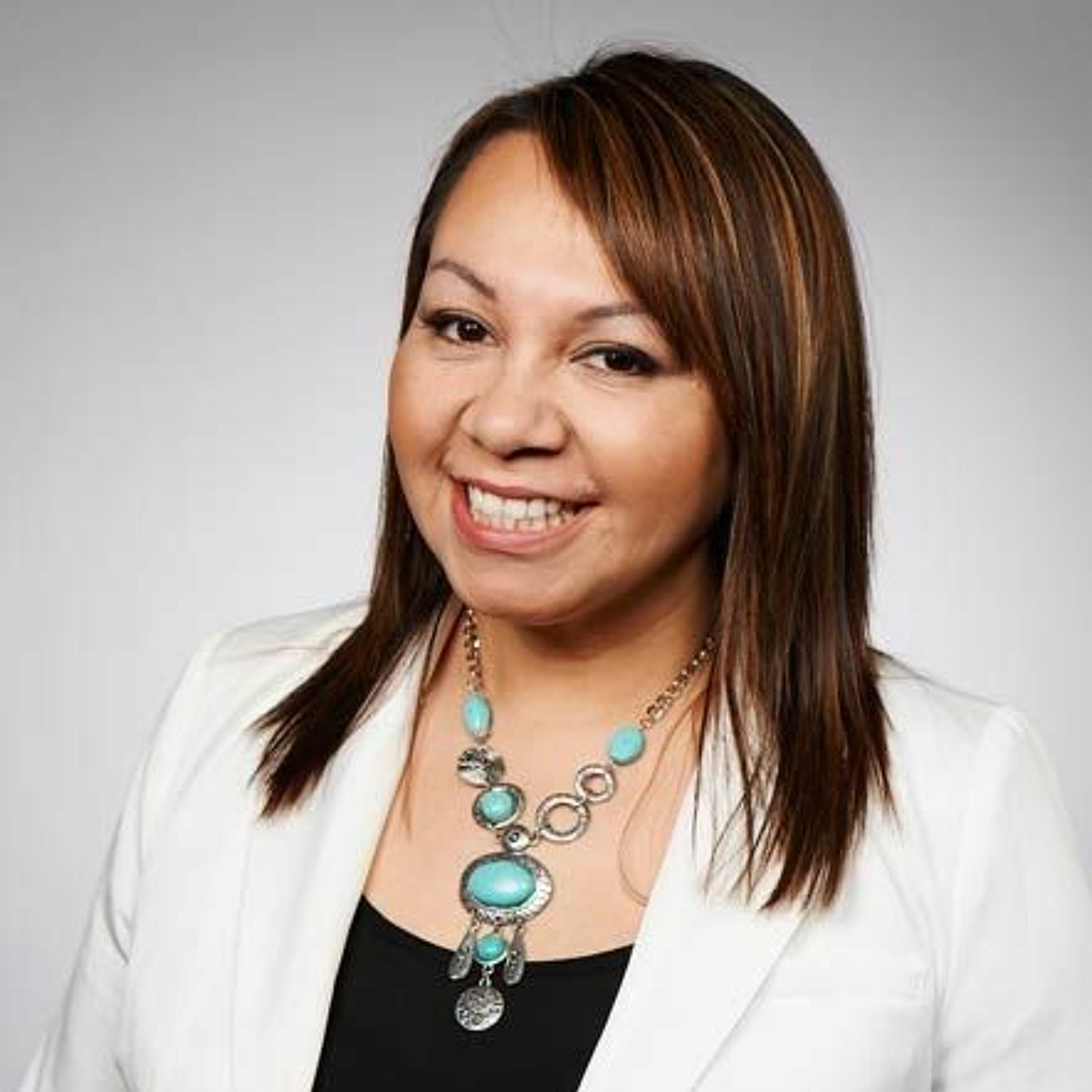
In this podcast episode, Pam Palmater welcomes Sheila North, a renowned Indigenous leader, journalist, and activist. North shares her journey from a childhood in Bunibonibee Cree Nation, where she dreamed of being a news anchor after watching television with her father, to becoming the first female Grand Chief of MKO. She describes leaving an abusive marriage and returning to school, earning diplomas in business and communications before working as a Cree translator and eventually a journalist at CBC and CTV. North reflects on her unexpected path to leadership, noting she never aspired to be Grand Chief but was urged by community members and an elder who emphasized that leadership is a responsibility to serve. Despite feeling inadequate and facing sexist remarks during her campaign, she leveraged her communication skills to gather community input and advocate effectively. North also highlights the importance of her Cree language and her role as a mother and grandmother, which shifted her focus toward future generations. Throughout the conversation, she emphasizes resilience, the value of dreams in keeping her alive during tough times, and the need for Indigenous voices in media and politics. Palmater and North bond over their shared experiences as grandmothers and advocates for Indigenous justice.
Did you have any idea when you were kid that you were going to be elected as the grand chief of MKO? No clue. No clue. And it wasn't one of my desires to do that or to be that. I admired leaders and I admired leadership and I saw I didn't know at the time, but I witnessed my father as a great leader. He was one of the first chiefs. I love to look at history on how this worked, but he was one of the first chiefs in Canada that kicked out in Indian agents and he became chief of our community when he wasn't even from our community. He came to from another first station and so when he married my mom, he was elected as chief right away and then he was an Indian agent. So I have a long history of leadership that I've watched over the years and grew up with over the years, but I never imagined myself to be one of them. Quainin Deluisi Pam Pometer and I'm the host of this show The Warrior Life. I'm a lawyer, professor, author and activist from Ilor Vibhara First Nation and my motto is education for action. No more awareness. We need to take action on injustice. And this podcast is really different than any other podcast you're going to listen to. I guarantee you that because it's all about indigenous voices. Indigenous people on the front lines, indigenous lived experiences and actual indigenous peoples. No pretendians on this podcast. And this podcast is totally enriched. Like this education is all about the culture, insights, experiences. I mean, and you're going to get everybody from authors, artists, musicians and academics to leaders and activists, land defenders and water protectors. They're all on the front lines of indigenous resistance, resurgence and revitalization. And today, oh my gosh, I'm so excited to have this person on today. I have been trying to get her on maybe for a couple of years now. I feel like I'm harassing her at this point. She is world famous. She's a leader. She's a journalist. Like, you're not going to believe everything that she's been able to accomplish. We won't even be able to cover it in this entire podcast. So you've got to stay tuned. We're going to love this one. Hey, uh, hey, uh, hey, uh, hey, uh, hey, uh, hey, uh, uh, uh. Welcome back to the Warrior Life Podcast. I'm your host Pam Pometer. I am so pumped to introduce to this podcast my friend Sheila North. She is phenomenal. I can't even do an introduction. That would be as amazing as she is. She's literally everything. She is an activist. She has been out there on the front lines trying to stand up for justice for all of our people, but especially indigenous women and girls. She's a journalist. I mean, she's been everywhere. She's on CBC and CTV. And a bunch of different specials. You can always see her in the media. She is her own filmmaker. I mean, we're going to talk about one of her most amazing films. And she's also an author. She has a new book out which everybody is raving about. And if that's not enough, she's won a ton of awards like in a bunch of different categories, some big hitting awards too. And she's like a friend to everybody. What you won't see is how she is behind the scenes supporting everybody and trying to lift them up. I know when I was like way, way, way back in the day when I was running for national chief of the assembly of First Nations, she's like, you got this, Pam, you know that song, "Titanium." That's you. That reminds me of you and it's so funny because when we got here together this morning, the first thing she said is, yeah, you, Pam, Titanium. So welcome to the show. Sheila North. I am so beyond excited to have you here. I'm so excited and honored to be on your podcast, Pam. And sweaty hearing you talking about me because I feel like you're talking about yourself because I'm so, so impressed with how much you've been able to do in such a short amount of time. And you've raised a level of our people in such a big way in our society. So I'm so honored to be here with you. Do you see why I'm having her on this show? I just need to have her around me all the time because she's just so positive and uplifting. I just, I love that about you, Sheila. And before we get into it, because you know I'm a lawyer, you know I'm going to have like a thousand questions for you. You're literally going to be in the hot seat. But I want to take some time and let you introduce yourself the way you want to and maybe a little bit about your community. Sure. Sure. Thank you. I'm going to start this thing awesome. Bon Bono be creation. You know what's it? I mean, we go school, we win, we win, we win, we win. And then that's a no big hug. Yada. Hi, everyone. My name is Sheila North. I'm from the Bon Bono be creation in northern Manitoba. That's what I said in my clean language. And elder taught me that I have to use my mother tongue in every public space that I speak to first before I speak the second language that I grew up with in English. So I come from Bon Bono be creation. It's an isolated beautiful community surrounded by beautiful clean water still. Most of my family is still up there. My aunts and my uncles, my siblings and my mom now live here in treaty one in Winnipeg area. I'm a cook them. I'm a mom and I am so happy to be here that I think being a cook them has been the most important and best role that I have had so far in my life. So I always want to make sure that people hear that because it's changed my life. So I'm very happy to be here with you as a mom and a cook them and everything else at Pamsen I was. Yeah, and everything else she said. Well, that's so awesome because we're the same in that regard. I'm a cook them too. In McMillan language, we call it Miggajoo. But I have a new grandson and he just turned one. So my life is different. It just makes you a new level, a new type of warrior because now you're thinking definitely of the future. And as a mom, I felt like I was always in survival mode, which I love. I'm mom and they're my blessing. But now being a cook them, I feel like I'm looking to the future and I can just imagine what our ancestors must have felt like for us in treaty making time. So those are the things that I'm reminded I've been my new role as a cook them son. Very blessing. It's so great because even more nowadays, once you get older, less and less things bother you, well now that I'm a grandmother and I've got my grandson, you can say whatever you want about me on social media, that's all the none of that stuff is important. It's literally baby is important. I feel like sometimes holding them up like Lion King, you know, oh, well, this is great, Sheila. And there's so many things I want to know and I don't even know if I've ever talked to you about your life history, which is one of the reasons why I like this podcast because I get to find out. You've done a significant portion of your life as a journalist. I mean, everybody knows you from TV. I think everybody knows you from TV. And I mean, the thing that I'm super curious about is did you always know that you wanted to go into journalism or be on TV in general because you know, some kids they want to grow up and be a, I don't know, firefighter, someone to be a teacher, someone to be something else. Did you know you're like, oh, I'm it. I'm in the media. Absolutely. I mean, there was a moment in time that I didn't realize or I didn't remember my dream or I didn't focus on it, but I remember being a child and some of my earliest memories watching television, mostly the news, the national CBC, national with my dad and my mom. It was the only thing that we were allowed to watch when we were kids was the news and sports like hockey football and sometimes Walt Disney on Sundays. But other than that, that's all we were able to watch. And so the people on TV became my role models, I guess. My dad was always watching and and then the people that sometimes were on the news were my dad's friends because my dad was former chief. He worked at M.I.V. Manage of the Indian Brotherhood at the time. So he knew and grew up with in the political sense with, um, Ovid Mercury, National Chief Phil Fontaine, Dave Creschein, Elijah Harper. Elijah Harper has been to our house many times when I was a child and I remember him coming in the middle of the night, for example, during a campaign, I suppose. And he stayed at our house because there's no hotels in our community. So my dad opened the door and they had a really late night visit. And I remember peaking around the corner, looking at them, talking to my dad, making tea. And I remember one specific question my dad had was, how is Howard Polly? What is he like? And he was our former premier in Manage of us. So that must have been the time that Elijah was running for the NDP, which he got in and did that famous holding up the feather in 1990. So that was a lead up to that. And I remember him.
remember being there and he saw me, Elijah, and he said, "You're little girls here." And he said, "Oh, this one, she always wants to listen to me speaking or adults talking." And so he had me come in and sit with them. And I was just fascinated at the conversation. So the people on the news carried on those conversations. And I've always wanted to do that. I've jumped about being a news teller and anchor and all of that. And thankfully, thank God after many trips and winding parts of my journey, I finally got to realize my dream just a little while ago. I was a journalist for 10 years. But I was an anchor most recently. And when that actually happened, I kind of even described it feeling. I was sitting there just before the cameras went on. And everything I was crying in my face. And it was explosions in my head. I could describe it as. And I just realized I was realizing my dream. But in short, I'll say to that, the pursuit of my dream and thinking of my dream over the tough years kept me alive. So I'm thankful for my dream, because it did keep me alive literally many times. And achieving it didn't feel like an end. It just felt like a new beginning now. And so I'm so thankful for that dream, because it means more than just being sitting in that anchor chair to tell a story about whatever. But it was definitely something that I wanted to do since I was a child. And I don't know why I'm not afraid of the camera or the microphone. It's just something that I guess creator gave me a little bit of a skill with doing and gift, because I know some people who are terrifying both. So just like you, I think you're comfortable as well, because creator has something for us to say. So you know, we are. I wish I knew you when we were kids, because when I was in grade four, my brother gave me a little tape recorder. And you know, some batteries and a cassette tape like for young kids, you're not going to know what that is, but we know what that is. And I was trying to think, okay, what can I do? What can I record? So I created a show called P-A-M news. Oh, wow. And I went around and I interviewed everyone. I would do commentary on bad things. My sister did it. I'm not doing cool things. I know I feel like I should have named this podcast P-A-M news. But it would have been so cool to know you and like back then it'd be friends, but that would have been fun. Yeah. Yeah. So like when I was looking at like all of the things that you have accomplished, I see that you've did some diplomas and things. Was that journalism related or was that I thought I saw one of them was like business specific? Yeah, yeah. So in '94, '93 anyway. I left my first marriage, which was not in a good place. And I started realizing at that time when I left him that I really have to do something better for my kids because I didn't want them to feel like this was all that life was living in hardship. So I felt the call to get back to school. I didn't finish school in high school because I had my daughter. But when I moved away and started to figure out that I needed to be better for myself and for my children, I moved to Brandon. And one of the things I wanted to do, there was three things I wanted to do in life. And that was being a journalist, being a doctor, and being in business like my parents. My parents were in business the whole time that they raised me in my siblings. And so I was really drawn to the entrepreneurial spirit, which I still have and my kids have it too. And so I moved to Brandon. I started taking business courses, economic development courses, social development courses. And so I have diplomas in those. And I know well enough about accounting to know that I don't want to do it for my whole life. It's a skill that you have to really like doing. I aced it because I'm an overachiever that way, but it's not something that I want to do for the rest of my life. So I did take those business courses. I opened my own shop when I moved to Winnipeg with my kids. And I had my gift shop for about two years until I had to close it because it was too hard to do it as a single mom with two little kids. So I went back to work. And this is when I explored being in the hospital scene. I was thinking, "Wonder if I'd like being a doctor." So I went to work as a translator, a Cree translator in St. Boniface hospital. And there I discovered that I had the major Iq factor that I could not get over. So the idea of being a doctor was out the window. And I think the need to help people was still there, but being a doctor specifically was not. So this is when I started pursuing journalism after that. And I started to see these two big, big callings in my life, I guess. And so I started pursuing journalism after that and went to radio courses. And then here in Manitoba, a course called Creative Communications, which is one of the best better communication courses in Manitoba, at least, maybe in Canada. So I took that and I ended up at CBC and then stayed there for a few years. I took a dip, which is when I met you when I was called to work at the assembly of Manitoba Chiefs, just as I don't know more what's starting. And so I, organically, became one of the strategists, I guess, from the AMC and working with Grand Chief Derek Neapinak at the time. And then I got pulled back into journalism after that because of our success in I don't know more, I will say. We got major cuts, AMC got one of the biggest cuts at that time, 80%. So most of us that were there were forced to go and find other work, which is what I did. And I went to work at CTV at that time. But it was hard to get back into that box of not having outspoken thoughts and being an advocate. I still maintained, I think, a level of trying to be neutral on many topics. But it was hard to not highlight the injustices as much as I wanted to. And so during that time, Derek Neapinak at the time and others, my friend Jennifer Wood and others in the community started asking me to run for MKL. And so that's where that happened and that's how that happened. Well, that's the thing. You follow people's like paths and a lot of youth will ask people like us questions like, how did you do it? And did you know? And there's no way I knew from a kid that I was going to do this first than this, than this, and this, and then this is what I was going to do. Sometimes your path just takes you on different trajectories until you know what it is you're going to be doing. But did you have any idea when you were a kid that you were going to be elected as the grand chief of MKL? No clue. No clue. I admired leaders and I admired leadership and I saw, I didn't know at the time, but I witnessed my father as a great leader. But I'd love to look at history on how this worked. But he was one of the first chiefs in Canada that kicked out an Indian agent. And he became chief of our community. He wasn't even from our community. He came to, from another first station. And so when he married my mom, he was elected as chief right away. And then he got the Indian agent. So I have a long history of leadership that I've watched over the years and grew up with over the years. But I never imagined myself to be one of them. And I literally sold that I didn't want to run at MKL at the time. But when I spoke to an elder about it, I spoke to many people. But one elder really resonated with me and she said that it's not, it's, don't think of it as a privilege or even an honor that you're being asked. This is your responsibility to give back. And so ever since then, that's how I run every election. I don't run because I want to. I don't run because I choose to and say, pick me. I do that during the campaign. But I run because people ask me to and credible people. And so that's how I ended up running and becoming the first female grand chief of MKL at the time. Oh yeah, that's right. I should have also said first female grand chief. And these aren't small accomplishments. This is huge because you know what it's like during elections, especially for Native women. You know, you got people in the background saying, oh, I'd love to support you. But you know, women probably aren't going to be elected. It's probably going to be so and so. And it's like, but you know what? You just keep going and you keep going. And I think you mentioned something that to me is really different about Native politics. In general, I know, you know, there's exceptions, but I find in non-Native politics, you get a lot of you.
of ego and people running to be like the feature of something or to get contracts or like who knows what reason. But for native people rarely do you ever just see randomly someone running? It's usually because there's elders and other leaders and community people behind them saying, hey, look, things aren't great right now. We really need you to run or and sometimes it doesn't even have to be that it's not great. That this person's moving on, we don't see like a really good strong leader. We really need you to step up and that's a huge commitment. And so like, was there any point like during the whole election time like, and I mean the first time like you were running for a grantee of MKO? Was there any point in time where you were like, you know, I don't, I don't know about this. I'm kind of having my doubts or was any part of it like scary? Oh my gosh. Oh yes, yes. I, I felt totally inadequate all the time. The whole time, even when I got it, I felt inadequate. I'm thinking, what am I going to do now? But you know, I realized in my journalism career and the skills that I've built and acquired during that time, one of the biggest skills that I needed and then I had was being able to communicate people's ideas, people's thoughts. And so I, yeah, I totally did feel inadequate and some people even reminded me that I was just a woman. Good for me running because I'm a woman. Wow, that's, that's so cute. You know, so people were giving me that attitude, not not everyone, just a few actually one of the other candidates. Let's say, saying that to me, we've since resolved that we're okay. But at the time, that was very prevalent and only one other journalist asked, asked one of my supporters, do you think it's going to be a problem that she's a woman and the answer at the time was, well, most of my sisters tell me what to do in life. My mom tells me what to do in life. My grandma, these are all women. And so they're the leaders in my life. So that was a beautiful answer that I will never forget. But yeah, I did feel inadequate because I didn't feel like I had leadership skills I thought. I didn't think I had the ability to do what a leader is supposed to do. And at the time, I didn't really know exactly every day, day to day stuff that they did. But thankfully, because of the communications skills and backgrounds, I was able to gather opinions, bring people together, share their thoughts, and being able to formally make presentations in a clear concise way of what their needs were was the biggest skill I think that I was able to bring to the table. And I still feel that way because we have so many thoughts as you know, so many opinions. But the ones that when we stick together and do things together are the ones that make the biggest impact. And we were able to do that when I was Grand Chief with the QE to the Inno Mino Yaon, which is called Kim. And it's a health transformation initiative and movement that is still there. It came to be as I was leaving my role. But it was hoping that I pursued from day one when I started because I started bringing a team together and around me that could help me figure out what our chiefs are saying, what they wanted. And at the time, we looked at 30 years of resolutions and we picked the common themes of all of those years. And health came up more than anything else. So that's why we pursued that and I was relentless with Minister Jane Philpott at the time. Everywhere I stop, where I said we need to sign an agreement to get this health transformation moving in Northern Manitoba. And finally, at the end, she did. Of course, because you are very determined. And what I love about your leadership and the way you've been as a journalist is you always have this very quiet, calm, but very strong persona, which is a very unique combination. Sometimes people who are just exudes strength, they're also very like boistress or whatever. And sometimes you see people who are calm. But rarely do you see those things put together. And one of the first times I met you was, I don't know, we were doing a protest or something in Manitoba. And I was going to be part of the press conference. And you're just the way you introduce people. You were just had such this calm. And you were very stately. I think that's the best word for it. You know, like the old school stately, where people held themselves in a certain way. They carried themselves in a certain way. They were respectful. You didn't see them yelling and swearing at people and doing all the Donald Trump stuff you see today, but just very stately. And like even the first time you ever introduced me, you're like, and I'd like to introduce you to Pam Palmetter, who is a friend to Manitoba. And just like the way it was, and that's like there she is. She's the grand chief of MKO. And for anyone who doesn't know, MKO represents the Northern First Nations in Manitoba. And then she ran for the grand chief of the Assembly Manitoba Chiefs. And she ran for National Chief of the Assembly of First Nations. So she is just like, what I love about you, Sheila, is you just keep going and keep going and keep going. You don't sit on the sidelines. You're like, okay, I see a lot of problems. I see some gaps. I'm at least going to step up and say, look, I'm offering myself to do that. And how many people do do that? And then I think, wow, not only have you been involved in so much politics, and you have all this journalism background, but you've also been an activist. Not that those things are necessarily separate, but somehow you've also been able to incorporate into everything you do is being an activist and calling out injustices, especially for the issue of murder to missing Indigenous women and girls. Like you were always in the media. You were always pushing. You were always on the ground. You were always collaborating with families. And I really appreciate that because you helped push this to where we got to have a national inquiry, to where it became common parlance in the media where Canadians and Manitobans started to actually understand what it was. What do you think it's your background, like your family who were just involved in leadership and involved in first nation issues, or what made you also add the whole activist aspect to what it is that you do? When I realized I was the survivor of missing a murdered Indigenous women and girls, and I didn't realize it until I started working in journalism. And the stories that I was hearing at that time in 2005, 2006 and 2007 and on, I, when I was listening to the stories and interviewing families, they were telling the same story that I knew when I moved from my home community, Bonnabee to Winnipeg. And the challenges that I felt and that I saw and was a part of during those teen years when I was very vulnerable and very impressionable. And the perpetrators that were lurking around constantly, they were relentless as well. And so when I realized in talking to families what they were facing and what they were up against, it almost became like a cloak that was put on me to never forget that I am a survivor and that I have to help where I can, when I can, however I can on raising awareness. But as you said, you know, putting forth some action into ending the national epidemic of missing a murdered Indigenous women and girls. And so it's been a lifelong journey. Later on in life I realized also that my father was in the same situation because during the years when our people had TB, his mom was very young and when he was a teenager his mom went away to a TB hospital but she never returned. And the family thought that she was buried in a mass grave near the paw in northern Manitoba. But 60 years later, just before my dad passed away, we figured out we found out where she was and she was all the way down in Brandon. So my dad never knew where his mom was living or where she was or how she died or anything for 60 years. And we saw the signs of what the impact was on his life and everything makes so much sense in the things that he did and the choices that he made. You know, it's just an issue that has been percolating and always with me since even before I was born. And so it's not something that I can easily shake off. My role has
changed I believe, including many other people that I remember on the front lines with, that has changed. But I still remain committed. I don't have a choice. I remain committed to help raise awareness. And I was a witness in 2010 and on of how we're letting us and how powerful our women and girls were and some men who never stopped raising awareness, who called to action. And in 2015, it became a national election issue as you remember. All the parties had to answer whether or not they would call a national inquiry. And the liberals did come through and did honor that. But unfortunately, it also had to take the galvanizing incident, I believe, of what happened to Tina Fontaine. But all of these had to happen, I think, and are happening because women and girls and some men, lots of babies and strollers were relentless and I was a witness to it. And so I feel privileged and honored to say that I saw the power and the movement of our people. And I still do. I saw it at the UN level. And now I see it back at the grassroots as a comfortable circle. >> Well, and that's the thing, I'm sure for any of our listeners who might not be aware, say you're listening from another country or something about this crisis of murder to missing Indigenous women and girls, thousands and thousands of Indigenous women and girls over decades have been abused, neglected, trafficked, disappeared, kidnapped, murdered, lots of violence from society and institutions in society, not just domestic violence and domestic violence is always a part of the process when we're talking about violence against women. But one of the things I noticed most is that if you look at the women on the front lines of, say, vigils and rallies, the women who are speaking out, the women who are taking leadership positions, they've all. They've all had things happen to them. And it always used to just shock me that here's a woman on the front lines. She's had all her kids taken away from her because of racism in the social, you know, social work system and the police system. But she is still on the front lines fighting to protect all of her sisters and aunties and like friends and like, it's the people who have been most impacted sometimes that you see on the front lines. And every time I saw that I thought, I have got to be a part of this because if they can be a part of this with so much history and background and like, like, look at you, you know, the fact that you're a survivor and here you are doing all of this stuff like is all of this part of what made you work on the film that you worked on. I think it's called 1200 plus. Can you tell us a little bit about that film and how it came to be and I mean, because everybody has talked about it? Yeah, for sure. Yeah, so this was the time when, you know, Tina Fontey and had just been found and I was working at CTV, would it pay at the time? And I was on a bridge where she, near the bridge where she was found and I was interviewing on a former police officer who was telling us that it's futile to look and search and drag the red because there was an initiative here by a, you know, a man at L.A. now here, Bernadette Smith. She and a group started dragging the red looking for bodies. And so we were asking the opinion of a former artist or when to pick police, I believe, who was under, who used to do undercover, underwater recovery and he was telling us at the time that it's, they're not going to find much. But anyway, at the time, there was a guy taking pictures on the bridge. He was kind of annoying. And afterwards, when we were done, our interview packing up our stuff, his wife came and talked to us and we started talking all of us as a group. And he was in Winnipeg at the time for an ailing father and he was from Winnipeg, but he also lived in Massachusetts and New York. And so he was interested in what was going on in Canada. He said he grew up in Canada. He's a Jewish man. And he never knew and never heard of this issue of missing a murdered women. And so he was curious, like, what did I miss? Why, why don't we know about this is what he was saying. So we started talking because he's a filmmaker and I was a journalist and we started collaborating and organically again, it just started happening. We stayed communicating and we just picked up times and during my off times from my work. And then he came back to Winnipeg a few times. We started filming and interviewing people that I knew. And it took us four years to put this film together. And we talk about everything from the current situation to some experiences, to connecting to the residential school era, the 60 scoop era. It took a long time and it was during that time as well that I was asked to run four grand chief. And so while I was running for grand chief and then became grand chief is when we finished the film. And it's 90 minutes. We have different versions of it. And we've shown it to many different groups so far. I haven't been able to publicly promote it or endorse it yet because of the different roles that I've had. Ethically, you're not supposed to promote yourself or other things you're doing. If you're in office of any kind, I'm not sure if that's colonial rule or not, but I don't know. But I've followed it because I didn't want to be accused of using any ages or platforms that I had to promote myself. But it's there. It's a resource. It's now housed at Winnipeg Film Group. And my good friend Anita Olsen Harper, who's the wife of the late teenager Harper. She has a PhD in, I don't want to butcher what it is, but it's on education. And she created a curriculum around the film. So we have a film and a curriculum around missing murdered women. And we tried not to cast any blame. We wanted people to come up with their own thoughts after the film. We didn't want to say that this place was doing wrong. This place was doing wrong. We just put it out there as facts. But it is clear, you know, some of the injustices. And when people finish watching it, a lot of people are angry at police. And that's been my experience as well in interviewing all kinds of families and every story that I've ever told on MMIW. The common theme was that police were not respectful. They were even disregarding and disrespectful of families when they tried to get answers or justice for their families. So the attitudes and the dismissiveness sort of show up in the film, I think. And it's very timely because the current police chief here in Whitepag, Danny Smith, he just started his role as police chief. And he's in the film. And I showed him a diary of a girl who had a long struggle and she ended up murdered as well. And the police never came and took the diary that I even had access to. And so I was presenting it to him and he said they would look into it. But to this day they haven't. And I'm not surprised. So yeah, it's definitely a film that has been under promoted and I think needs to be out there. Not because I made it or anything, because I think it's timely and people need to know some of the history and also some of the, you know, hear from the survivors themselves and the families. Well then let's do that. Let's promote it. Let's come up with ways to make sure that we promote it because I've often found that there are official things that are important, reports, statistics, you know, inquiries. But often you get the really lived experience, the honest, brutal truth when you talk to people on the ground. And it's just a different kind of education. It's just raw and it's honest and it's not Hollywood. And I think people need to see this. And one of the other things I think we should be promoting is your new book. It is called My Privilege, My Responsibility, a memoir. Came out in 2022. Remind me of the publisher. I think it was like Grand Prairie publishing. Oh, there it is. Yes. With your beautiful face on it. Great Plains publishing. Yeah. There's a local would a pig or Manage Hoba publisher. Great little company. Yeah. Oh, that's awesome. That's so awesome. And I'm going to put this little picture up so that when we're talking it's here in the corner. I'm also going to post links to it obviously in the description.
description box, whether you're listening to this on the podcast or on the YouTube version, like reading closed captions, make sure to post links to it. How did this book come about and pretend I know nothing about it or I mean, obviously it's entitled a memoir. So it's going to be probably about you and your experiences. But what made you think to do a book and then how does this book unravel because everyone's been talking about it? I mean, I think I've seen it on various different bestseller lists for different bookshops and things like that. Oh, wow. Cool. Again, I didn't have a chance to promote the book as people normally do when they have books. It's really good to promote it. But I didn't get a chance to do that because of the roles that I was in at the time and working at CBC and then in elected positions or being an election. But yeah, I think it was just after the pandemic or when we were still under restrictions, one of the main people, Mel, her name is at the Grand Plains Publishing contacted me and said that they are interested in talking to me about me publishing a memoir. And at the time, again, I was thinking inadequate. I don't have enough information to write a memoir. But she said she wanted to meet, so we met and she talked to me about the process. And so I said, "Well, I don't know if I have enough information or enough lived experience to write a memoir." And then she reminded me of all the stuff that I've done and she said that it was very much timely and relevant that we should try. So they gave me a really good, a good, safe and welcoming opportunity to do this. And I wouldn't have been able to do it without their tremendous support. I started, I guess, while the restrictions were still going on here and I was in my little house. I just bought my tiny little house here. And so I was alone and I had my computer. And there was stuff that I written years back. So that helped me at least have a place to start. And so I did write sort of a book before more of other experiences that I had. So the process was grueling. I'll have to say. You know the process. More than I do, Pam, writing a book, you have to be so dedicated and so self-disciplined, locking yourself and just shutting yourself from the world. And then focusing on one thing, especially during deadlines and then the number of edits that you need to go through. And so it's going through the memories that I had. And I tried to think of chronologically how to tell the story, but it was so difficult. So I just wrote it how it came out. And I started with where I was at at the time that I had just won an election. And just finished my role as a grand chief and some of the difficulties and the victories that we had. And then I went back to my childhood about where I was and I talked about, you know, the time I met Elijah and my mom and dad's impact on my life and my whole, my siblings. And then I unraveled to my experiences coming to the city as a 15 year old and then going into my relationships and then how I started pursuing my dreams and realizing my dreams. And I even went to the Grammys with my second husband. We went to the Grammys twice and I talked about that and it was totally unexpected. What definitely was not a bucket list I've ever had. But I got to go and saw some crazy amazing things. And I ended off not really closing it off just to say, you know, the future is still open for all of us. And I imagined at the end of the book what it would be like if we had more women in leadership. And what could we do to foster that society for that to happen? Because what I realized also in my different talks and even in the book, lots of young women come up to me, even at golf courses and different places that I'm at socially. Women come up to me almost in a sheepish or shy way. Not because they're embarrassed or anything, but they just don't feel that confidence. And I can sense that they have that calling, but they don't know how to pursue it. So they ask me, how do you do it? How do you step up to become a leader? And I always listen to the people around you. They speak their guidance and follow what they're asking you to do. And so I feel that women are starting to awaken to that call. That was always there. We were leaders in our own families and our own communities. You know, different palos you go to, Pam, for example, you always see the women are the ones that are calling the shots and delegating and in charge. That's our beautiful community and colonialism and all of that has changed and turned our community upside down, which is why I think we have a lot of challenges in our indigenous politics. So I sort of end off in my book calling for better and open spaces for women to enter into leadership and whether it's indigenous politics or mainstream politics, I think we're all needed. And I named it my privilege, my responsibility based on the conversation I had with that elder who kicked me in the button said, don't feel privileged to be a racist is your responsibility. So that's why that phrase stuck with me and still does. Oh, that, I mean, that's just so amazing because I think about, you know, it's one of those nerdy academic people I've read like a bazillion books. I'm like a bookaholic. Every time someone comes out with a book, I get it, especially when it's our people. But I noticed when I was younger, native books were less few and far between compared to general society. But then, you know, the ones that were writing were almost always native men, right? And like some were very influential for me, like I think of Vindaloria and Danny Paul and Ty Alfred. There's a bunch who as I was going through all different stages, they were very influential. But there were rarely any native women, at least in Canada that I could see. And so when I see in more recent years, more women, native women and not just like say, you know, say in the corporate world kind of woman, which is like great, like we should be everywhere. But women who speak to my lived reality, the on the ground, the family base, the cultural base, like the really grounded kind of women who have self-doubt and fears and worries, like I did. Because sometimes I feel like at least in the past, people are promoted as this, like here's this perfect person, like here's this superstar. And there's no way I could be that superstar because I have fears and I've made mistakes and I've done dumb things. And I've, you know, there's no way I can be that. But what I like about especially women writers is here, we're going to share our vulnerabilities because the path from here to here is not perfection. There's so many things happening between. And I think I think that's why a lot of people have responded to your book because when it first came out, I like I have a social media holic as well as a bookaholic. And I'm monitored to see what people are saying. Obviously there's trolls and stuff everywhere. But the vast majority of people talking about your book is all good, all good, how it spoke to them, how if you can do it, then they can do it. They feel like you're one of us. And I think the more we, you know, not promote people as shining stars on a big platform that you can't ever reach and see, yeah, our people can do it. That that really speaks to people's hearts. Have you had some feedback? What's your feedback been like? Yeah, most of the people that I've talked and I just talked to someone recently about it. She said it's like I was sitting there visiting them and just telling them a story and what it was like growing up on the reserve and then what it was like coming to the city and some of the challenges there. And they had no idea some of the things that our indigenous people face, first nations face in our own country. And so hearing that makes me feel good because that's what I was hoping for is that people get what it's like for some of us. And there are many people who don't survive the challenges and for them, we should tell the story of what these challenges are. And we still face them today. I still walk around if I'm not wearing work clothes, if I'm working workout clothes or cleaning clothes that I go to the store here in Winnipeg. I'm still followed around and I made to feel like I'm going to steal something. So I'm constantly walking around with my hands up so people don't think I'm stealing. And so the challenges are still there, the challenges are real.
I think that we're starting to get a better grasp of it and we're starting to stand up for ourselves and pushing back. And even in perpetrators, we're starting to push back and sometimes, sometimes, it's uncomfortable. Sometimes, you'll ruffle a lot of feathers. Sometimes you get on blacklists because of the things that you call out. And I can say that for myself. But it has to be so because when are things going to change if we don't call things out as they are, especially if we do it out of place of love for others and if we do it out of concern, not out of just to be a contrarian or anything. Because I'm not a confrontational person. It takes a lot to poke me and say something. And I'm not even good at it. And I can't argue that good. Which would not make me a good lawyer. But it's sometimes creator gives a burst of something that tells you you have no choice but to say this and do this. And so I follow that. And it's hard. It's sometimes awkward, but it has to happen sometimes. So this book has been a blessing and a curse because it was so hard to do. I had to recall many difficult and hardened moments. And it hurt a lot to do relive some of those moments. But I also think that it's going to help people because it tells a story about a lot of other people. But at the end of the process, I was even annoyed at myself of myself because I'm like, "I don't want to hear any more about myself." The fifth edit is just the worst. And then you still find mistakes after. You put my vision at the first time I cracked it open. I saw a mistake. I'm like, "Honey." But it's so exciting. So I guess my next question is, is there going to be a future book about something? I think so. I don't quite know. I've had stories and ideas percolating more so lately. And the publisher always said, "This is just the first of many." So I'm thinking of what that could be. I know that it's definitely going to be on the plight of our experiences, I guess. And based on that, and I have creative ideas. I have fictional ideas. I've always imagined the world what it would be like if colonization never happened. I've always imagined that. And I was maybe someone who was still this idea, but I'll put it out there anyway. But I was thinking the other week when I was here with my colleagues from the international community, they were here in Canada with me. We were talking about the history and some of the things that were going on. I told them I had this idea of a story where you know how some fantasy or something crazy happens. Simple like putting a coin in a well or something and then all of a sudden life changes. Some of them are comedy. Some of them are serious. They tend to be serious. But I was thinking, what if something happened that all of a sudden all the non-indigenous people were gone from our lands? But in this time, this era. So we have access to all of their buildings. We have access to the government. Everything. What would that be like? Poof. All of a sudden, not that I need to want our neighbors and our non-indigenous people here. You know that's all. But imagining what could that be like and what would we uncover or what would be see, how would we move forward all these things? So I'm like, that'd be a good fantasy. Oh my God. It's like total sci-fi, apocalyptic kind of native version. That's awesome. You've got to do that. When I was talking to my friend from Mexico, Charlotte, she said that there was a movie based out of, I think, California, where a day without Mexicans or something like that. I haven't seen that yet, but somehow they all got deported. And so everyone had to do their own laundry and all that and other stuff. But that was based on comedy. Yeah. Yeah. Oh my gosh. Imagine. Oh my goodness. All right. Well, what are you doing now for anyone who doesn't know you? What are you doing now? Where are you working? What are you working on? Are you doing a thousand things at once? Well, interestingly, I just finished a contract with the International Commission on Missing Persons. We had hope to move forward with the work that we were doing because we didn't feel like we were able to do the initial work plan that we, that was agreed upon between Surnak, the Crown Indigenous Relations and Northern Affairs Canada. I think that's what the acronym means. And the International Commission on Missing Persons. We were supposed to as a program manager for the program. We were supposed to go across and talk to nations, first nations, in Newwood and May T about their options on how they would want to go about addressing the unmarked news in their territories and around residential schools. ICMP is world renowned for the work that they do in identifying remains and unmarked graves around the world. They've been in 40 countries. They're in Ukraine and they're in Mexico. They're in Bosnia right now. And they were going to come and talk to first nations about options. But there was concerns that were raised that were, I believe, unfounded that caused a huge pause in the work that was supposed to be done with ICMP. And so now that the work has ended and we'll see what happens going forward. Maybe it'll be picked up hopefully in the fall. But this was a call made by first nations themselves, Pimichikamak, you know, David Monias, supported by Chief Derek Neepinak and Chief Willie Sellers from BC, others throughout the country who want the work done. And so that's where I'm at at the moment. I'm now, you know, looking for other opportunities to do. But I also have a lot of other things that I'm working on at the moment that I, that's keeping me busy, but at the same time, I remain optimistic about this future, especially today's eclipse day. Anything can happen. Oh my gosh. Yeah, that's right. It's a eclipse day. Oh, it's all good news for the future. Yes. Yes. So I'm here. I'm promoting the things that I can while I can. I have a few things. I earns in the fire, but I'm well. I'm thankful. I'm a cook-o. I have my little house. It took me almost 50 years to finally get my own house. And thanks to the, you know, the sad experiences that we've had, for example, the day school. That's the only reason I was able to get my house is because of the day school experience. And so my sisters and I all invested in our, in getting houses. And otherwise, most of us, most of our indigenous people will not have the opportunity to mass enough money to have down payment. So this is a reality for me. And I was able to do that now. Have a tiny little cute little house that I'm very happy in and looking forward to what creator has for all of us, including yourself. Like you're, you just keep leveling us up and I'm very happy for that because we need that. We are people needed so much. We have so much to offer. I'm beautiful. People need space to grow. And I want to continue to be a witness to it. Well, we're excited to watch you in action and everything that's going to come out and help you promote everything that has come out. Thank you so much. We're taking the time to sit down. Now we have to do this in person, not for a podcast, but just to hang out because I miss Winnipeg, I miss Manitoba and I don't get to go back. And I know what I do. Thank you so much. And thank you to all the podcast listeners. I appreciate the time you take and all the YouTube viewers and closed caption readers. I appreciate all the support you have for this podcast. But more importantly, all the support for the Indigenous people that come in and talk about their issues and their calls to action and things that you can follow up on and things that you can do. I mean, in this podcast, we talked about murder and missing Indigenous women and girls. So find your skill, find your strength, find your resources and find ways to support Indigenous people, Indigenous authors, Indigenous content creators, you name it. There's a multitude of ways that you can do that to support people. Please do that. Use this podcast as a teaching tool.
Maybe saying to school of journalism or filmmaking or book writing or advocacy. I mean, she was done so much. You could use this in a multitude of class old politics. Yeah, I can't forget politics, leadership, kick ass women. If I'm allowed to say kick ass women. So thank you so much. I'll post all the links to everything she does, all of her socials, and use it, promote it, and be friends and allies and supporters and comrades, and mark alongside Native people. Thank you so much everybody. Till next time, keep living a warrior life, Willalia. Take a say. If you enjoyed this episode, please consider supporting my podcast. Your donations help me keep the warrior life podcast, open access to everyone, and free from those annoying ads. And it's super simple. Just click on the link below to sign up for a Patreon monthly or yearly subscription, or click the links for the Buy Me a Coffee app, or the Coffey app to make one-time contributions. And if you belong to an awesome community group, business, or organization that's committed to Indigenous reconciliation, consider sponsoring an episode or two. Herzmene is your like. Thank you for helping me lift the voices of Indigenous warriors doing phenomenal things to help make our world a better place.
Podcast Summary
Key Points:
Sheila North, a journalist, activist, author, and former Grand Chief of Manitoba Keewatinowi Okimakanak (MKO), is the guest on the Warrior Life podcast hosted by Pam Palmater.
North recounts her childhood dream of becoming a journalist, inspired by watching news with her father and meeting leaders like Elijah Harper.
She pursued various paths—business, translation, and journalism—before becoming a TV anchor, a role that fulfilled her lifelong dream.
North was the first female Grand Chief of MKO, a role she accepted reluctantly after an elder framed it as a responsibility to give back, not a privilege.
She felt inadequate during her campaign but relied on her communication skills to unite people and articulate community needs.
Summary:
In this podcast episode, Pam Palmater welcomes Sheila North, a renowned Indigenous leader, journalist, and activist. North shares her journey from a childhood in Bunibonibee Cree Nation, where she dreamed of being a news anchor after watching television with her father, to becoming the first female Grand Chief of MKO. She describes leaving an abusive marriage and returning to school, earning diplomas in business and communications before working as a Cree translator and eventually a journalist at CBC and CTV.
North reflects on her unexpected path to leadership, noting she never aspired to be Grand Chief but was urged by community members and an elder who emphasized that leadership is a responsibility to serve. Despite feeling inadequate and facing sexist remarks during her campaign, she leveraged her communication skills to gather community input and advocate effectively. North also highlights the importance of her Cree language and her role as a mother and grandmother, which shifted her focus toward future generations.
Throughout the conversation, she emphasizes resilience, the value of dreams in keeping her alive during tough times, and the need for Indigenous voices in media and politics. Palmater and North bond over their shared experiences as grandmothers and advocates for Indigenous justice.
FAQs
Yes, she dreamed of being a journalist since childhood, inspired by watching the news with her parents and seeing leaders like Elijah Harper.
She took business and economic development courses, earned diplomas, and later studied in the Creative Communications program in Manitoba.
No, she had no idea and never imagined it. She admired leaders like her father but didn't see herself in that role.
She ran because credible people asked her, and an elder told her it was her responsibility to give back, not just a privilege or honor.
Yes, she felt inadequate the entire time, even after winning, and faced doubts from others about being a woman.
Her communication skills from journalism helped her gather opinions, bring people together, and present their needs clearly.
Chat with AI
Loading...
Pro features
Go deeper with this episode
Unlock creator-grade tools that turn any transcript into show notes and subtitle files.
 PodcastTranscript AI