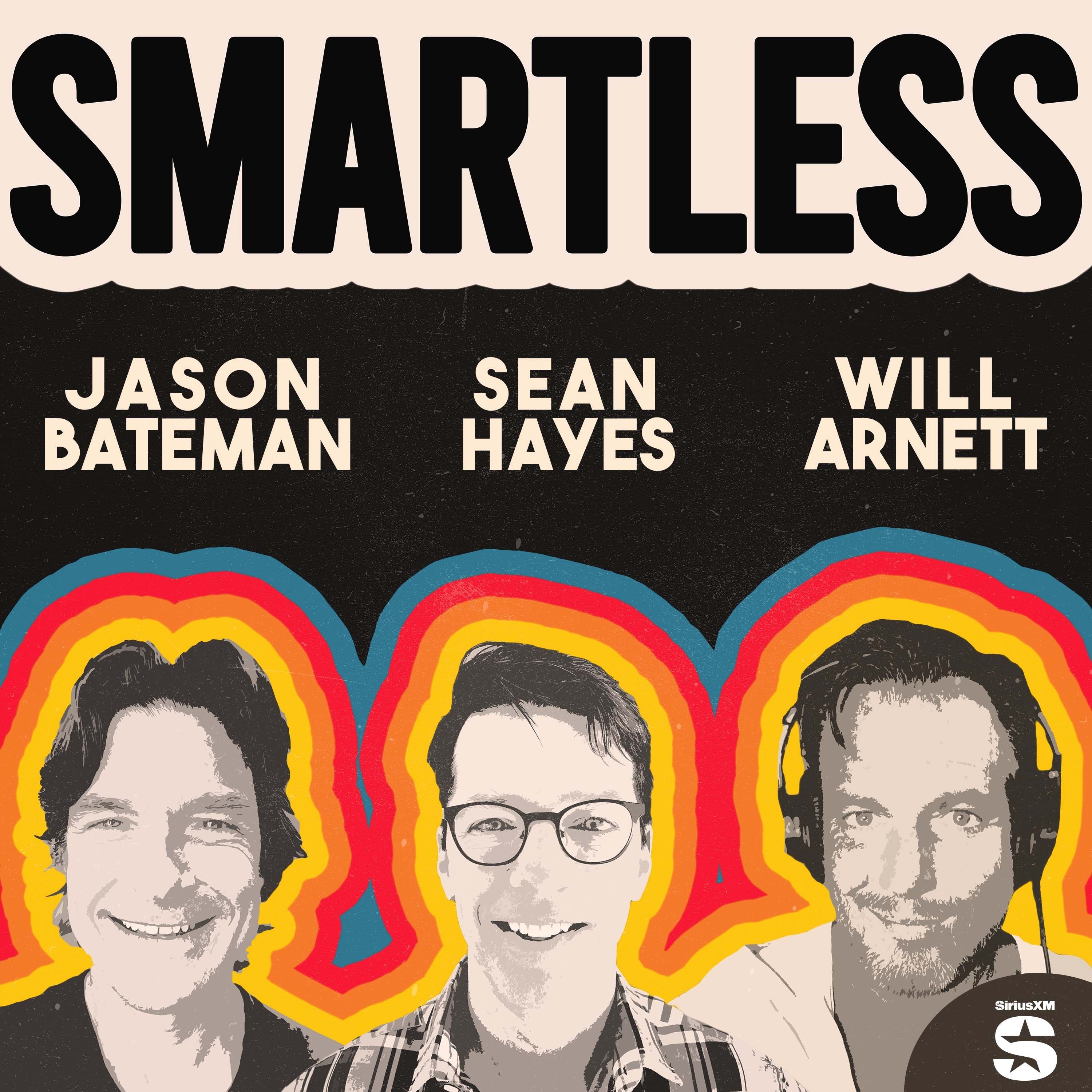
The episode begins with a heartfelt tribute to Jim Burrows, a pioneering comedy director whose work on shows like *Cheers*, *Frasier*, and *Friends* deeply influenced the hosts. His passing is remembered as a significant loss, not only for his professional contributions but also for his mentorship and personal warmth. The conversation shifts to a vivid, real-life incident at the Hollywood Bowl, where a man aggressively blocks a guest’s car, leading to a chaotic but ultimately resolved situation that the hosts use to underscore the unpredictability of life and the value of community. The main guest, Sharon Horgan, shares her journey from a career in administrative work to becoming a celebrated writer and performer, highlighting her creative process, the challenges of writing, and the joy of collaboration. She discusses her acclaimed shows *Pulling* and *Catastrophe*, emphasizing how each project feels like a fresh start, despite the emotional ties to previous work. A key point is how she balances creative control with trust in actors, often accepting improvisation and allowing the natural flow of performance. She also reveals her new HBO series *Youth*, a story centered on a woman in her 50s navigating parenting, aging, and personal growth. The series, shot across England and Spain, reflects her deep understanding of life’s transitions. The conversation ends with reflections on location, routine, and sleep, with Sharon sharing unconventional sleep habits and a fondness for imagining facial treatments to help her relax. The hosts conclude with a playful tone, celebrating Sharon’s humor, resilience, and enduring impact on comedy, while teasing the upcoming premiere of *Youth* on September 20th.
(upbeat music) - What are you eating, Jay? What are you chewing on for the cold open? - Yeah. - You're back on your bars? - Yeah, I'm on my bars. - Don't mention the brand. Because you know what? It's not worth getting, you know, $12 of free bars, you know what I mean? - That's true. Instead, I will just give a nice Hawaiian welcome to our audience and say hello, oh my god. - Welcome to "Smartless." - Smart. (upbeat music) - Smart. - Smart. - Smart. - Smart. - Smart. - Smart. - Smart. (upbeat music) - Did we get a workout? We got a workout in? Already, JB? - We got some cardio, we got some sauna, we got some pool, we got a shower. - What the, would you have you gone to bed? I mean, that's a lot to accomplish. - Guys, I'm still up. (laughs) - Oh, no, I'm still up. - Um, Willie, I told Jason, I saw Jason on Sunday, we missed you, sorry. - Oh, you guys got together? - Yeah, what was your excuse? - Not in town, is that still? - You could phone in, but you're in town now. - I am back. - We're gonna see you later today. - Wait, but what, don't fall for it, Sean. You're back out again in a few days? - No, a couple weeks. But let me just say this, we are going, we are gonna see each other tonight in this afternoon and tonight. - Oh, that's right. - In under circumstances that are not the best, but we're gonna celebrate the life of somebody that we all work with, and we all love deeply. - The great. - The great Jim Burrows, who we had on the podcast and who sadly passed away a little while ago, and close, close friend of ours, close friend. - Close to our of ours, father figure of ours. - Oh, one of the all-time great, not just, you know, obviously, he revolutionized multi-camera, like television directing for comedy, et cetera, but he also was just such an excellent guy, so kind and generous and just funny, man. - So it was instrumental in giving me, it really important roles in my life as an actor, and also in mentoring me as a director, and helping me find representation as a director. - And to remind people, my sister Tracy, he directed every episode of "Well in Grace" and "Cheers," and he directed, like, the first year of friends and two and a half men and big bang theory, and Mary Tyler Moore and everything you've ever loved. He, and he co-created "Cheers" on top of that with the Charles brothers, and it reminds me, I think I told him when he was on the J.P., I don't know if you remember it, but one time we ran into Jimmy and Midtown in New York, and we talked for a second, then he said, "All right, I'll see you guys later." And I go, "All right, cheers." And then I sort of like watched him, and I looked towards you and you were just staring at me with that, like, "Dummy, do you just see "Cheers" Jimmy Rose, fucking Canadians, damn it. So, I told Jay the story, but I'll try to tell a sort of version. So, speaking of Jimmy, his wife, Debbie, bros, who we love, she invited Scottie and I for her first outing since her husband passed away to the Hollywood Bowl, and so we go and sit outside on our front stoop and wait for the Hollywood Bowl, and Jay, please move me along if this is taking too long. -Oh, my God, this guy, this guy was sitting, this guy got up his car across the street. -I think Will, your guest just clapped or snapped together. -I don't know, she's still here. -Mike's still hot, still ready to come on the podcast. -I can tell you later, but it's this crazy story, but this guy got out of his car, came over and started berating me and Scottie out of nowhere, and put his phone up, he started videotaping us, and we were just sitting there. -Where were you sitting in front of your house? -In front of our house, yeah. And then Debbie pulls up, and then he starts kind of getting in her face, and my face, and then it was weird. And then we got in the car to go to the Hollywood Bowl, and he just stands in front of the car and says, "Nope, you're not going anywhere." And wouldn't let us leave this guy like having like a mental break. -What was the crux of his complaint? -There wasn't anything he was just parked across the street, and when they were sitting out on their stoop, waiting for their ride to pick them up. Debbie, this guy just gets out of his car, walks towards him, and says, "Hey, so what did he say?" And he's like something out of total, out of level. -Yeah, like, "Hey, people have been talking about you guys, and not good things." And I was like, "Well, taking number, you know, but what else do you know?" -Well, I mean, that part seems fine, to be honest. I'm still with him, I'm still on his side, go ahead. -But then, so a deb somehow, like, maneuvers are car around this guy, who's trying to stop them from leaving for some weird reason. He gets in his car, and pursues, and starts chasing them down the street in his car, and, like, trying to ram them off the road. -Yeah, and then pulls in front of the car, and blocks the car, so we can't drive on a busy street on island. So what they decide to do is drive directly to the Hollywood Bowl and talk to some of the local security there. -Yeah, anyway, it was really weird. -And say, "Hey, this is all just to say, a shameless plug for our show at the Hollywood Bowl." -Oh, my God. -Wow. -I did not see that covered shot. -Come see us October 17th at the Hollywood Bowl. -You never know what's going to happen. -Yeah. -Anyway, Michael, I produced, there was, like, "Hey, plug your show this morning." I had to have the Hollywood Bowl, so I'm like, "Oh, I actually got a real story." -It is true. -It is true, everybody. October 17th, come on and enjoy. We don't know what we're doing, and we just need a little help out there. -Yeah, we'd love to see it. -Empty seats would be terrible. -We'd love to see you, so come on and come say, "Hi, and shout at us." -I think Will has a friend, and Sean has a friend. I have no friend for this one. This is a two-guessed night, double your pleasure, double your fun. -It's going to be a lot of-- -It's going to be a single price. -It's going to be a lot of fun. -Ticket, yeah. -I wanted to give a hint about my guest, but I'm not going to, but I-- -We have it in there. -Yeah, it's just somebody we know who hasn't been on the podcast, who-- -Let's hear one more snots if you'll get it. Speaking of good guests. -Oh, so you can talk about a segue. Hey, our guest. Now, JB, you and I-- -Wait, so you were just talking about the Hollywood Bowl guest. -I was. Now I'm talking about our guest today. -You seem less enthused about this one. -No, no, no. I was about to get into two, because you and I both know and have worked with this person. -Oh, boy. -There's a-- -And I don't-- -Horsher Darasi. -No. And I think that no, on different projects. But, Sean, I don't know if you know this person, but you definitely know her work. -Okay. -Super, super, super funny. I first saw her. I think was in her claims series Pulling on BBC, which made me laugh super, super hard. She-- she's won all sorts of awards for-- -Shon, you were into the video named Pulling. -Pulling, yeah, I did. -I haven't returned it. -She was-- she was also-- I got a lot of claim for her series, "Catastrophe." I got to know her on the increase to the decisions of Todd Margaret with David Cross, Jason. -Yes, come on. -You can do her from "Game Night." You guys always hilarious, writer, producer, -Sharon Horgan. -Pulling on the phone. -Come on. -Sharon Horgan. -How do I just say that face-to-matting part today? -You did? -Oh, yes. -Oh, that's so funny. Do you know what that noise was? That click? -Uh-oh. -I was just sitting here and I've got loads of shit on my desk. And I just picked up a thing, and I thought maybe it was hand sanitiser. -There's eye drops? -I dropped. -I haven't got my glass. It is eye drops. -Is eye drops, yeah? -Oh, okay. -Yeah. -And you just scored it some on your hand? -I think it would be okay to both-- -As long as you don't put hand sanitizers in your eye. -Yeah. -Exactly. -Oh, where is that key? -You said that's your officer. -Yeah, well, it's my office, but it's also kind of slashed-- -The Winter Wardrobe. -The Winter Wardrobe. -Well, not really Winter Wardrobe. You can see there's a mirror there. -Yeah. -That's where I might try on clothes for a thing. Not my regular clothes, like if I have to get dressed up for a thing. -Sure, yeah. -It's a weird room. -Do you have a mirror? -It's a weird life. -Sure, and do you have a mirror face? -Huh? -What's that mean? -Do you have a mirror face? When you look in the mirror, you really want to see how you look. -You know? -Isn't there a face? -Walker through. -Yeah, I'm here. -Give her the Richard Early. Give her a tele note. -So we have a friend who, to trigger his mirror face, he kind of semi-whispers his, his is aligned to himself, which is, he pretends he just got directions from someone, and he turns over his left shoulder and he says, "It's where?" -Ah! -He's gonna use-- -Really? -Yeah, I really hear it. So, it kind of tightens up his eyes. So, it's where? -It's like Smokey. -Yeah, now do it. Now try it, say, go. -It's where? -Yeah. I don't need that. It would work for me. No, I mean, unfortunately, I'm, I can't, I pipe in the mirror. I can't help it. -You passed it. -Yeah. -I think we all, my 16-year-old, he accuses me of doing a certain face, like, in photos and stuff, and now he does it to me, which is really tough, because if it was one of these guys-- -What is this guy saying? -Okay, go fuck yourself, but it's 16-year-old. -Because I bet he nails it. Let me see it. -It's kind of like-- -Yeah. -Yeah. -It's the worst. -Yeah, yeah, I know. -It's so worse. Sharon, welcome to the show. -Welcome to the show. -Sharon, I just have to say, we, Will was like, "I don't think you know this person, but I called you, and you took the call, and you gave me a wonderful advice for a project. -Oh, I had, I had paranoid about that for a while. -No, no, it was wonderful. So, thank you. -Tell us about this. -This is about pulling. -No. -That was not a bit. -No. -No, no, no. We don't talk about it. No, but it was great. -Oh, good. I'm glad. I'm glad, I'm glad that worked out. But you know what speaking at totally different topic bad sisters
I still talk about bad sisters. It's one of the best shows I've ever seen in my whole life and you were I mean I was just incredible. And then there was a season two which I still have not seen Oh, you could see that. That's the other that's if you like feel like the first one. I love the first Jesus shun. I'm sorry. See the second. Sorry, sorry. I'm doing good. Sorry. Sharon's been like non-stop. Just great, great work and great reception for you and everything you're doing since the last time I saw you. I mean, congratulations. You were sharing it. You consistently not just not just as a performer, but it's so admirable and the way how much stuff you create. How much stuff you write for yourself. Yeah, it's really impressive. And I wonder like does that engine still is it just as strong in you now as it was 10 years ago or do you does it feel more like a mountain to climb the as as you go on? No, I still really like creating new stuff because I think that I mean I loved bad sisters and you know I kind of it's hard to say goodbye to it in a way, but but I also think when you're making something you you kind of get you know that that show had a certain kind of feel to it. And so with that comes a certain kind of music that you choose for a soundtrack and you kind of you get into you know you kind of fall into a pattern and then when you when you make something new you get to start all over again from scratch you get to be you get to just like put your playlist together and and and and and start over and and it's really scary because when you when you come up with characters you kind of you always think that's the that's the last time you're going to come up with a good character so it's so it is scary but but it's it's really fun to to start over, isn't it? Yeah, I will say that I think now it occurs to me that the sort of the English model which has always been and we've sort of adopted it in this country now with in this country I think it was often people were known for a certain series they do one maybe two series in their life and and the audience set them in this new role but they knew them from the the first thing that they were known for you guys have always done in the UK because because of the way that the formatting is done you didn't have a lot of shows that did 9, 12, 15 seasons so people could go and do one or two seasons of a show and then you could go and write a new show and the audience is we're totally willing to go oh she's doing this new show. I mean you could do a couple of shows in a year you know yeah in a year we we'll be doing six episodes like we will film a series in six weeks I mean it's a little bit different now because you know you're making shows that are we'll air on Amazon at the same time as child four so you kind of have to make eight or ten and you can't you know so it's a little bit different. Well we all have the same distributors now right it's not yeah yeah exactly but back in the day when we were just making stuff for you know a UK or a nervous audience you know you film it in six weeks and then you're kind of yeah you move on to the next thing and also you would you would get like a couple of seasons or like with pulling you know that was like two seasons and and and a special and and that's kind of that's kind of your dough and that's it and and also the budgets were were sort of low enough that the risk what they allowed you to do stuff I mean the budget I've we've done I've done it before you show up and you're like where's craft service and they're like what'd you bring. There's nothing. There's some will and I did this show called the increasingly poor decisions of top market but did anyone see? No but I remember a little piece of with David Cross it was so funny but it had no no budget craft services was a box of biscuits and some tea bags it was around yeah that was it yeah it was for us that was completely normal but for any Americans coming over they were just a gas that not having constant food oh it um a funny thing can I just say funny thing because it just came into my head when we were doing um game night yeah I was I was by the way can I just say yeah I'm one of the best I've seen game night three times minimum I fucking love that film and I was so underappreciated to both of you guys it is such a funny good company it is a really great funny I urge anybody please see game night it's so good sorry but I was when I was filming when I was filming game night um I was writing this series for UK TV called Motherland so when we were in the in the tray when we were in the trailer I was writing that series and I'm my co-writer like when we would um I don't think there was even I don't think we resume I can't remember anyway I would be eating lobster there was lobster in cross surfaces so I be eating lobster in my giant trailer while she's like you know sitting in her shithole but that in London sure with all the massive amount of work it takes to fill up a blank page and you do do what you do what is just it's so impressive but it is an enormous amount of work and yes amount of concentration um and it's just a work ethic and writing yeah what what what is your favorite part of it that fuels you through all of that tough tough work and discipline what what is the thing that most excites you and drives you to do what you do I think it's the the writing bit for sure because although although I do I love I love an edit where you're putting it together and making it better like we're just kind of incrementally kind of making something actually good yeah but the writing bit I think but like what part like creating characters or coming up with stories or just sitting in a room with funny people laughing I think is ridiculous joy yeah do you ever do it but you ever you do you write solo by yourself in a room I write solo by myself as well but like even the things that I don't know why I did that with my hair so I even the stuff that I write mainly solo I like now I I I love to have a writer's room and and you know someone writes um you know a few episodes are written by a couple of the writers in the room but that like I just came from one today and it was you know some of the people will end up writing a script but a lot of them are kind of there you know um as consultants or you know just a bunch of writing assistants yeah just coming up with ideas yeah there's nothing better that field there's nothing it's some of the deepest laughs I've ever had have been and stuff that by the way bits and jokes that never made it in anything but some of the hardest laughs are in those rooms pitching a bit and somebody comes up with a bit that catches you off guard and you're like holy shit I've never heard something like that and and also like at that stage the possibilities are endless I mean you can go anywhere and no one's telling you that there isn't enough money and no after is turning it down so wait so so so you just walk around with like tons of ideas all the time every day every week uh no I wouldn't I know I don't think so I mean I I I kind of I have that slightly unfortunate thing of not always being in the moment because I'm thinking like that could be that so that's not healthy I don't think no I think for the most part I don't walk around thinking like that but I guess when when um when I need to start thinking like that like if I'm thinking I don't know I'm gonna not do this series beyond you know um this season I kind of think oh I should think there's something else but then I also kind of go back like I go back and look for things that were germs of ideas and and that have now become more relevant in your life because you're at a different stage in your life you know right right right you know in your relationship or with your family or work or sometimes things just suddenly become relevant and and you're like oh it's an idea how do you decide on what to take on will you primarily do what it is you think up or um or like what's the ratio as far as incoming calls with ideas like hey maybe think about it maybe adapting this magazine article or this book or yeah I mean for the most part for the most part I don't do that like although bad sisters was that was an incoming call that was um um brought to me because it's a Belgian series and you know would you like to adapt this and so that was kind of sort of the first time I did that but generally it's you know like there's incoming calls with like IP to adapt and that kind of thing but for but usually you know I do that within the company or you know like you know connect something with the writer that I admire or you know okay the things that I do myself often are things that I just kind of think I should probably have I could either have some therapy or I could write this thing about there must be a certain relief like when you're knowing that like when you're working on all these ideas and the sort of the various stages of development we all know that that sometimes that can be long it can be obvious you're trying to put it together use all those different elements and then all of a sudden you get a call from Hollywood and you know big Hollywood superstar Jason Bateman's doing a movie that's a that's a cake walk with lobster they're gonna have lobster every day and all you got to do is sorry do you mind taking a couple first class flights to Atlanta you know what I mean it's staying at the four seasons would you would you do that I mean that kind of feels like a very
vacation a little bit that I love doing that. I mean, I really do. I think that's a total buzz to to where all those jobs gone. Where have those jobs gone? We'll be right back. And now back to the show. Now Sharon, talk to me about how you write something that you know you're going to play this character and you're writing that one, but you're also writing other characters. And you have to oversee or drive or approve the casting of those characters. And inevitably, they're going to perform those lines differently than how they have lived in your head as you wrote it. And the reason those lines work is because you're kind of performing them in your head is you're writing them. And then they come in and they read it in a different way. And you might not be directing or something like that. How do you manage that? Because when you're playing the character you wrote for you, you're doing it perfectly, right? I mean, you're like, no, but you're like reading the mind of the author. But with these other characters and it all sounds a little bit different, do you have to bite your tongue? Do you kind of whisper to the director or the showrunner or oftentimes you are those people? Yeah, I mean, yes, I think it is, but I think I've learned how to be better at it. Because I used to, it used to be a problem, you know, if people didn't do it the way that was in my head or like when, when Dennis. Oh, I just, I just, it just doesn't work as well. Yeah. And you sort of end up, I remember with pulling like, and Dennis Kelly, who wrote it with me, we'd never made anything before. I don't know how we were allowed to make it. We didn't even have to make a pilot. We just wrote a script and then suddenly we were, it's because it cost 10p to make. So there was like, didn't have much to lose. But I remember, we wrote this line. For Tracy, 10p is $10 trillion. Yeah. Very expensive over there. We wrote this line for one of the main actors in it. And it was just a stupid line. It was a joke about a thing. Do you remember the Cock lollies episode? Well, one of the girls has created this, come up with a thing called the Cock lollie. And it's, it's a nice lollie in the shape of a car, so she's like, you can market it to, you know, hen, hen parkies or, and she has to say, but she has to, go to car, go to car, go to live show. Someone must have done it. Someone must have, she'll be. Okay, I got a chop off of it. The guy that she's pitching the Cock lollies to, she's doing it as a sort of like dragon, dragon, dan style pitch and the guy she's pitching it to. He suggests like, or he goes, can you, can you get, well, will there be a joke on the stick? It's a brilliant idea. You should have a joke. A joke, you know, used to be able to, used to be able to like write a joke on the stick, yeah, on the stick of the lollie. And she says, there's a place in Birmingham. It's all they do. And it was like, you know, it was just because she was so honest, she was like, she could search this thing. She'd practice for this pitch. She was just like, had to be off the, off the cuff. There's a place in Birmingham. It's all they do. And like, she said it in a brilliant way. And it was perfect. And we just kept going in and going in. It's a place in in Birmingham. It's all they do. So just throw it away. And then we walk off and then she'd say it again. And it went on and on and on until she hated us. And then we made her come in and do it again in ADR. Oh my god. Yeah. Yeah. So talk about a line reading. You were like saying, no, here it is. I'm going to say it. And you're going to repeat it the way you get all hot. She wanted a line reading because she was like, I want to, I want to do it the way. So we were doing it. But even then it was cheaper. It didn't make it. Okay. So do it. Do it how she did it and then do it how you wanted it. Oh god. I'm not going to remember really. I think she was. We'll just have her name. What's her name? She was brilliant. By the way, it's very funny. Sean, Sean, let's do. Let's do it. So we haven't done it. What happened to the fan? Where's the fan? Where's the fan? Do you know? Yeah. Sharon. We started. Yeah. Funny or in life. But if I've never heard of it. What is it? Yeah. We've done it. We've done it. We've done it. So you have to do a line reading of where's the fan? Okay. So when I went to no relation to this ball. I went obviously. I went to San Francisco for a trip and we checked with a friend of mine. Just the ones. It's so slow hanging footage. That's about the cheapest joke I think I've ever. It's ever slipped out of my mouth. It's so awful. So you're in Greece. Wait, what are you saying? So I go to San Francisco with a friend and we check into a hotel. And I can't sleep without a fan, right? So I call the front desk. I'm like, can you send up a fan? And they said, sure. So they sent up a fan and on the fan is a note that says, please do not remove from the office, right? So then we were like, well, what happens, what happens when the boss walks into the hotel that day? And then you have to give the line reading of where's the fan? But you have to give it like a preamble up to it. So then I would say, so like somebody coming and be like, okay, boy, we got a lot of problems in the hotel. I've done. Where's the fan? Yeah, okay. So we started when you do it at dinner and you make everybody. Everybody has to go around and do a different reading of noticing the fan and seeing that. So I have to do the preamble too. Yeah, just a little bit. Hey, listen, I'm sorry. I'm late. The trap was, where's the fan? Yeah, okay, and now Amy had one. Amy Polar had one. It's really funny. She comes in. She goes, guys, I am fed up with, haha, where's the fan? That's great. By the way, the first time I've ever played this game, you never heard of it. Nailed it. Nailed it. So I wanted you to do what it's written. It's Birmingham, they what? There's place in Birmingham. What is it? That's all they do. That's all they do. You need, you wanted the pause. You wanted the pause. Yeah, exactly. Yeah, there's place in Birmingham. That's all they do. That's all they do. Yeah, that's all they do. Maybe with a bit more like satisfaction in the fact that she's already sort of. It's all they do. I will tell you that later. That's good. And you can pull the, but you can pull out this. Yeah, I make sure you can pull out a way for people to pull out the whole thing. But you know what? You know what? The thing is that I was continuing to be a bit prescriptive with actors and how they do things because the thing is there's not, I had to learn that there's not just one way of doing things. Do you know what I mean? Right. And I remember speaking to Donald Gleason about it and him just sort of going, what's the point in hiring actors if you're just going to tell them how they should do? Like what, what are we there for if we can sort of, you know, what you were, what you were trying to manage was also the assumed expectation from the hiring hands that brought on Sharon Horgan to deliver something that you stand by, that you stamp, that is your aesthetic, that is your humor, it is your script. And then if all these actors come in and they start freestyling, it starts to drift away from something that you can stand by and manage and say that right, I would assume that that was going through your calculation of like how much do I let these people contribute? Yeah, were you worried, were you, were you worried about the people at the BBC getting the cut of this and they're going through and they're all watching it in a conference room and then they go and they hear her go, they're placing Birmingham, it's all they do. And then they just pause, pause it right there. Because that's the thing. Sharon Horgan lost her fucking mind. That's the thing. What have we done? No one gives a shit. That's the thing you kind of, but it's all so like, nobody gives a bit of it. I genuinely feel that there is an accumulate of effect thing though. And if you let all the little things that you stand by go, then over the course of it, it's just not a deal. So then what do you do? Yeah, you do lots of takes and then you sort of create it in the edit, I guess. Well, you know what they're saying? What's coming is like the stage you got to by having your come in for ADR and for Tracy, that is, I think it's automated dialogue replacement. I think it's what it's called. Probably. I think it's additional or something. Yes. So you go in and you just record your line that you read and then they kind of put it in your mouth to picture and so, but sometimes you can change the way the line sounds. And what they're saying is coming with AI is that not only can you unilaterally, Sharon, as the showrunner, change the reading of that line, but you can also manipulate the face. And this is the stuff that they don't need AI for that. Right, I've shot someone's mouth this week. Really? You just heard me out. Right, so it doesn't look like it. Jason, they can make you, Jason, they can make you look happy. They can, wax, lift my eyebrow. They can lift your brow. Yeah, well, you can cancel your appointment with the, with the Beverly Hills doctor that I know you have. Dr. Lyft. Wait, wait, Sharon, you shot somebody's mouth? No, listen, it was such a small
thing, it was actually a what you call it, an extra supporting artist, who was it was mouthing, like he looked really funny, and and facially he was doing something funny, but he was miming something while the actor was speaking. So we didn't want to cut him out, so we just shut his mouth. Right, yeah, yeah, yeah, yeah. It looked like he wasn't talking. It looked like he wasn't, he wasn't talking, yeah. Someone told me that I should work in animation, because if you work in animation, you can just make the people do whatever you want. Yeah, by the way, talk about like you, you can do, it's like the running process, so it's why Simpsons, I'm not why it's so funny, they're brilliant people, but you can do anything you can go anywhere. There's no budget, you can pitch, anyway, but that's what they're saying is coming in, in AI is not, and it's not going to be some cartoon character. It's going to be something that looks exactly like a person. I mean, I, that's a whole different episode. We talk about how we all feel about that, but it's just like it's freaking remarkable. But isn't it, isn't it interesting? An animation, what I was saying yesterday was human behavior has become so cliche that animators can now animate, you know, the way people behave, because we've seen a billion movies and TV shows, we know how they're going to react basically. And so I don't know what I'm saying other than it's just like there's no surprise. It feels like there's no surprises with like if you're shocked, this is what you get with your shock for this actor and that actor and that actor. There's certain you just get a different look of it. Show me shocked. Show me shocked. Show me shocked. Show me shocked. Oh my God. That guy's shaking. I like you to an eight. I'd love you to five. Still rolling. I could do laughs. I could try less. I could try less. Slightly shocked. Slightly shocked. I have like 10 faces that I shuttle through. That's the idea. Yeah, right. Anyway, Sharon, I, I'm just remembering, Sharon, I remember you know, some of some of the, I saw it on a talk show or read it or something about, you know, I read it. I live for, I live for medical stories, you know. Oh, yeah. Yeah. And I read something. All right. Remember, maybe you said it about a catheter or something. What, oh, yeah, just take your time and sort of figure out what you're going to say. Yeah, it was like, I want to take a second. No, no, no, no. We'll ask you. Not only do you not know the source, you don't know what she said. Jesus. I don't remember, but it was. No, no, no. You're making this up. Do you want it? We use AI and we can have her say it. If you want to. Losing color. Keep your hands about to remember. I don't know if you remember. I thought it was so. I don't know. I don't know. I don't know. I don't know. Do you remember it? Do you remember your position on catheters, Sharon? Well, I think so. I had a catheter. Yes. I don't remember having one. You did. A catheter just sort of drains, could be draining anything really. Good. No, sure. Yeah. I think it's just urine. I think I had, I think is it just urine? I think it's up your pee pee hole. Yeah. That's where the urine comes out. No, I've never had that. Oh, sorry. I'm sorry. Tell me your name again. I had one inserted in my leg to drain blood, but I'm sure I don't ever remember. For what? When I have your leg. I dislocated my my hip, but I did it when I was little and the, you know, the doctor I was seeing didn't realize that it was. That didn't work. That's growing pains in it and it got work. It got more. Oh, so then they had to open it up and put pins in. Oh, god. And so I remember that thing hanging out of my leg, but I don't I don't believe I ever told over you. I was 13. Wow. Was this it was just in Ireland? Yes. Yeah. Because you were you were born in your born in England, but you moved to Ireland. Is that right? Because your your mom or your your mom's Irish? Is that right? Yeah. My mom is Irish and well, my mom met my dad in London. And they had the first of their two kids in London before they moved to Ireland to trace us. Right. Right. And then you guys you guys moved to Ireland because of their medical techniques of. Well, they moved to Ireland because my my mom and dad worked in it in a pub. My dad was a landlord of a pub. And it was in the the east end of London when it was really, you know, like wrote really dodgy kind of area. And I think he was asked to give an alibi for a local gangster. And he was right, right. I'm getting my family out of here. And so you moved us all over to Ireland. My grandpa's from Dingle. Oh, really? No kidding. Really. Sean's back. Do you go to Ireland? I went I went twice once with my family in 2001. And then I did one of those, you know, audience with no, they family, they follow your family tree. Do you think you are? Yeah, that's what it is. That's the one. What do you find out, Sean? You're scared to do it. Everybody was drunk and landed up in jail. And yeah. Oh, yeah. That's it. Have you done that, Sharon? I haven't actually really have you done that? No, but a lot of people ask me, who do you think you are? So I get that mainly at restaurants. I will. So Sharon. So you're so you're born in England. You move to Ireland. At what point does sort of the idea of making people laugh and you're parents to reforming hub? Yeah. When does that all start? They were running a pub and then they moved into poultry. And how did it happen? The funny thing. Well, I guess I'm in a family of five kids and, you know, I guess, right? Where are you? You kind of second eldest. And it's, you know, how you get attention, I suppose, is making parents laugh. When did you think I might be able to make a living at this? Oh, fuck no, for years. I mean, I, I didn't start making a living at it until, like, about until I was about, you know, in my, in my early 30s. I, I did other things. I didn't do this job. Like what? I worked as an administrative officer in the employment service for six and a half years. Oh, that sounds like a desk and an office building. Oh, yeah. Yeah. I was like signing people on for, you know, employment benefits and helping them. No, signing on at the labor exchange. Yeah. What happens when you get laid off from the, from the employment office? I didn't get laid off. I, I, I would have been there for life. I just had to, I had to just like, it must be a tough job, actually. I just had to leave. This was a job you took for practical reasons. It was, it was, it was an opportunity and you wanted to make sure. No, it was because I, yeah, I think I just, my, my, my dad just kind of instilled a, a, a work ethic in us. And, and if you weren't working, you were, you were just kind of, what the fuck were you doing? Kind of thing. So, so like, I wasn't getting, I kind of went to London to find my fortune, kind of thing, you know, but I didn't know how to do it. And I was kind of too scared to do it as well. Did you know anybody who was performing or doing comedy or? No, nothing. No one. I just knew people like me who were kind of, didn't know what they were doing with their lives. Did you study something in college that you went to London to pursue? I was studying Orch in Dublin. And then I tried to get into drama school in Dublin and get in. And then I came to London to try and get, in drama school and didn't get in anywhere. So, and I was just like, oh my god. So, yeah. So, but then I did go back to, when I left the employment service, it was to do, I went and did a degree because I, I thought, shit, I bet, you know, I better get some kind of degree in what? In English. Okay. So, that's when I started doing creative writing. And that's when I kind of thought, oh, because, because I wanted to be an actor like I, I had no, weirdly, I had no interest in writing or, you know, well, so tell me about that, about them not letting you into fricking drama school twice. I know. I mean, who's laughing now, yeah. I went to, I went to so many places to, to, to apply. That's wow. And we will be right back. When you look back, was it, was there something that you were doing wrong or different than, because you're clearly very talented and very capable and have a definite control over your, your, your, your acting tool? Were they looking for, like, more grand sort of classical, Shakespearean type of performance that you weren't interested in doing? Because you're so natural. No, because for all drama schools, all drama schools, you have to do a modern piece on Shakespearean piece. I think, I don't know about you guys, but like, auditioning used to terrify me. Oh, I used to lose all my skills. You know, I took me a long time to learn how to do a good audition. I, I mean, I was, I was still proud of that. Because I was terrible. I'm terrible at it. Yeah. No. How is that? First of all, both of you, they're not possible. You guys are both terrible auditioning is one of the more terrifying things that has been in my life for ever and for always. Really? I remember, I remember going for an audition for extras. Do you remember the Ricky? Do you remember? Yeah. I went for an audition for extras. We had the same agent, which is, I think, why I got the audition because it was kind of early in my career. And, and, and I got a phone call they say and, and Dung said, they weren't just come back in. I was like, oh, that's great. And it's Ricky said, I wanted to come in backing because she can't be that bad. Like, because, because my agent, and obviously,
Big me up, you know, and I've done a few bits, but not much, though. But I bet you got worse on the second time, because now it's a whole shit. I gotta go back in there, like, all I wanna do is get the hell out of there as soon as I get in there. And if they give me notes and they want me to do it again, now I'm like in a total flops world. Yeah. And I'm starting to have a panic attack and I can't get out. Jason, you used to have, what was your parting line that you used to say is great? What was that? I was just saying. Good luck with it. Yeah. Oh my God. How much? Cause I used to sweat so much. Yeah. I would have to wear layers. I remember doing an audition with Matt LeBlanc for that show. Joey. No. No, no, no. I know the one you mean. Episodes. Episodes. Yeah. And so I got quite far down the line and I was called back and called back and then I was doing the scene with Matt and when I got up to leave, I'd left my, I'd been wearing this little cardigan and sort of took it off and it was sort of sitting on the seat. And when I was leaving, I forgot my cardigan and he picked it up and he sort of like held like like this. Like you. Like it was a sweaty, smelly thing that it was. Like I'd sweated so much into it and sort of pick it up like it was a snot rag and have handed over to me. It was, it's horrifying. But I think I found a way to sort of. What is it? What's the secret? I don't know. Like I had to just start doing a breathing thing. I had to just sort of start, you know, another thing was like I would eat a banana, eat a banana and just sort of learning to kind of control my breathing. Like the banana thing is probably completely psychosmotic but I, but I thought that it would give me a slow release of energy and, and if I had this banana, I wouldn't convince myself that, you know, it helped me with the shakes or. Yeah. Wow. I mean, now I use beta blockers, but like. Yeah, there you go. Yeah. It just takes annex. You're done. You're fine. But you fixes it all. Not, not just, not destroys your brain cells, they're just, you know, I don't understand. You hear these like super famous stories of very famous actors, movie actors and stuff who later like 20, 30, 40 years later after you finally hear that like, oh yeah, they were high on this or drunk on that when they filmed that scene or they didn't. I'm like, how can you know, how can you say your lines? Like, I'm not like the Charlie Sheen documentary. And you know, I'm not, it's out there for everybody to see. So I'm not commenting on anything other than he admitted like, oh yeah, I was high then. I was drunk. How do you remember your lines? Remember, remember we had Seth on here, Seth Rogan and I said, Seth, do you ever work stone and he goes, I've never not. I don't know how that's possible. I mean, either. Yeah. Well, do you remember when we were doing the increasing positions of Todd Margaret, such a long name to say, but I was doing a scene with you. And Spike Jones and David, I think it was just the three of you, and I was jet-like, I just arrived over Monday night before. And every single line in my head just went like everything. And the more I tried to think of the lines, the more panic I got until there was nothing. It was just like a blank nothing. And I was just standing in front of it. I never met you, I hadn't met you before, like Spike Jones, like the whole thing was the worst experience. No. And in the end, they had to just date, because David was directing it as well, wasn't he? And the end he had to just like go, you know, we haven't got it, basically, goodbye. We haven't got it. And they had to do an extra days filming, an extra half days filming, whatever it was, to get the scene because I, I left it all up so badly because of the lines. You know what, Sharon, I don't remember that because my recollection is always is how impressed in I sort of, I was, I had such a talent crush on you, I was always like Sharon, so good. So I never, in fact, in fact, if you remember, the only person I remember going up in their lines all the time was Spike Jones, had to, he got to a point, and we were like, I remember was sort of investigating, I forget what the story was, but he ended up, he had a notepad with him. And so eventually he just wrote down all this dialogue and the notepad, right? And so we're doing a scene, we're doing a scene, you know, Spike and he has his laugh so funny. And he's like, okay, so Bumble, literally pretending to go through the thing, but he's actually just reading his dialogue of the paper, and at one point he goes, and he goes, so anyway, so I dammit. And then he goes, and then he goes up and I just look at him and I go, you're reading. How are you going up on your dialogue? Yeah. But he's the greatest actor. I wish he would do it more. Oh, he's so good. He's so, so good. My other recollection of that is, do you remember Simon, the sound, the sound mixer who was so funny? Yeah, I do actually. Yeah. He was one of the funniest. Right? I kind of had a bit of a crush on him. I think. He was so funny. Yeah, he was handsome. He's the funniest sound mixer. And I remember one time we were shooting a scene, maybe we were in it and we were shooting on a stage somewhere in London, and we're going through and there's some sort of thing in the story. And David's like, hang on a second. I don't think that that's right because the timeline does it, so we sort of stop shooting for a second. And he's like, I don't think we have to change that because the timeline doesn't work on a David Cross's going through in his mind. And he's like, and I think that people will notice the timeline. And then you can't even see Simon because he's just offset the sound mixer and you just hear him go, he goes, dear channel four, imagine my disgust when I realized the timeline didn't work out of it and it's fucking that, he brought me to my knees. I was laughing. So hard. God, that guy. Simon, if you're out there, we love you. Well done, Simon. Now, Sean, when are we going to get you to the States to do a little bit of work? Is it happening? What kind of, what kind of work? What kind of work? What kind of work? I mean, I'm, what's going on right now, is there something going on right now? Karen's got a new show that premieres September 20th, where in the year 2026 called Youth. Yes. I'm surprised I'm not part of considering why you're right. And Sharon, talk to us about youth a little bit if you would. Well, it's on HBO and. Yeah. And. Well, I see the organization. All right. And it's eight episodes, half-hour. So it's kind of going back to, it's more sort of along the pulling catastrophe kind of lines because it's kind of documenting, I suppose, a certain. A certain period in your life. And like 30s was sort of misspent 20s and catastrophes, like having young kids and, you know, trying to stay in love with your partner. And youth is about kind of someone slightly similar to me, who's in their 50s. And their, their kid is leaving for college and their, their parents are kind of, you know, getting older. And they're sort of, it's kind of about the sandwich generation and now you kind of hit a point in your life when it should be about you. Like you should be out there, you know, living it up and sort of get overwhelmed with some of these other elements. Yeah. And it all comes kind of crashing down on her and I kind of, I sort of wanted to, I came up with the idea and the characters ages ago, but I'm kind of glad, and their bad sisters came along and I ended up doing that, but I'm kind of glad that I'm doing it now because I feel like I've got so much more to say about that period in a woman's life. Did you shoot that here or did you shoot it in England or here here, here, sorry, where we are in the States. Sorry. I shot it here in the, in the, in England's got you, got you. Yeah. And, and, and, and, and in, and in Germany and in Spain, so we shot in a few in a few. Sounds nice. Jesus. I like a nice arc on that. Do you know what? It's the first time I've ever, you know, when you shoot something and you're, you're filming and it's like disgusting weather and everyone goes, next series, we should like set it in Spain. Yeah. So I kind of did a slight version of that, even though it's just one episode, like, got to do that thing of like, you and Sandler have it all figured out. Yeah, maybe, maybe after, did you get a taste for it or an hour, you like, hey, maybe my next character, she just, boy, she loves Italy. Yeah. Yeah. I should, I should have, actually, because, because it kind of, we're, we're, we're kind of figuring out some ideas at the moment for where it could possibly go if we got to do it again. But if you did that, that would mean not living where you live now. What would you miss most about living where you live now and, and, and the way in which you're sort of your, your, your whole personal life is set up there? What, what, what, what, what would you miss most about your, your creature comforts? Um, well, I didn't have a creature comfort, like, I, I'm, my brothers and sisters kind of live nearby. Yeah. The ones who aren't in London are in Ireland, which is also very nearby. It's just over there. Yeah. And, and so I think it's that. I think. She's pointing to her right. Yeah. Yeah. But my, my, you know, my kids are grown up now. So it's kind of weird. So all those things that kept me in London, which, you know, I was mainly that was family, but it's also I'm just not great at change, like I'm not great at, yeah, no way.
I mean, that's so funny considering that you've had so much change in your professional life and it's all about change. Yeah, I know. I just kind of don't, I mean, I've had the same agent for like 25 years. I've lived in the same house. I just kind of once I kind of settle into something, I might know, this feels like a good place. When you go to the, when you come to the States, where do you go? Where's your favorite place to stay? Where do you prefer? I actually have a house in Beachwood, you know? Oh, yeah. Do you need me to go take care of that? It's very close to me. Well, I mean, I, I get over when I can. I used to be there a lot more, but you know, when, you know, after COVID and everything kind of changed. Like, it used to be that you used to have to fly. It used to be, you used to have to fly to, to pitch ideas. Right. Do you remember? You would have to just be in the room. And so I used to be there a bunch for that. But now it's all zoom museums and you ever walk down to a large mount, you know, a large mount, really careful here, Sharon. Yeah. All right. That's, that's, that's all I wanted to know here is house. Yeah, it's pretty. It's like, I like it. Then Sean's going to be the guy outside of your house. Yeah. A lot of people are talking about you. What is it that when you, when you, when you come to Los Angeles and then you leave and you're back in England, what are some of the things you're not missing about Los Angeles? Not, not miss it. Yeah. It's like, oh, you know, I don't miss, uh, such. I don't miss, I don't miss hearing industry talk everywhere. I find it very disconcerting and, yeah, and destabilizing. You don't, there's not like that here at all. Like, you'd have to sort of seek it out or just spend all your days and so on house or something. Right. Yeah. It's just, for the most part, it doesn't sort of touch you. So you get to just say, right. New York's the same way. There's so many different industries in that city. Yeah. Yeah. What are the main industries in LA outside of like tech and and entertainment? Carpets. Art. Carpets. Carpets. Yeah. Jackings. Pretty big. Carpets. Yeah. That's really the second real optic. That's very funny. Holy pages are, yeah, they're super bonkers. Holy up with the dog grooming. Obviously, dog grooming. Yeah. Yeah. Yeah. Everybody. Posing at a coffee shop. That's pretty big. High-speed car chases. I mean, I, I like LA, though. I like it as a place to sort of, I think you, I think I'm, I'm like, I'm fitter in LA. You know, like I do more kind of wellness things. Like I look, it's easier to be fit. Right. Yeah. I think you kind of end up just drinking a lot of green things and well, you're, what are you drinking today? You're drinking something orange. What is that? Yeah, it's, it's actually my, someone gave it to me. Okay. Oh, so you don't know sure what it is. Careful, careful, careful. Don't forget. It's a zoo key. It's called a zoo key. Is that product placement? I needed something to give me a bit of energy because I was worried that I was going to be low energy. Because of us. Yeah. Yeah. Yeah. Because of me. Because I've done a full day at work and I didn't really sleep last night. Oh, you're going to sleep so well. Wait, wait, wait, wait, wait, wait, let's take into this. Let's just look at what happened with your sleep. Yeah. Yeah. Well, I don't know. I go, I'm really up and down. I mean, I think it could be hormonal. Sure. But yeah, at the moment, I'm not sleepy. I think maybe I'm worrying about what the show's about to come out, potentially. Yeah. Well, you're mind is spinning. You're mind is spinning. I keep waking up at like 415 and just like lying there and I keep putting on a podcast that, that, you know, put this one on. You'll go right right now. Yeah. I have been listening to you guys over the last week. We got an award from the Insomnia Association. They found the cure with our bug. Wait, do you? So I'm not so I hate not sleeping. I think this is this is, but it's our it's our age. I, I, you know, Sean has arguably the worst sleep hygiene of all time. Oh, that's that's horrible. And it's just going to get worse. Thank you. But do you, so do you now, how do you, do you try to like you, do you go to bed early to try to come? I, I, I try like last night, I was in lying down at 10 30 p.m. Okay. And I thought that that would be good. And I actually took a calms last night. You know, calms. It's got homeopathic sleep thing and kind of like melatonin or whatever. Yeah, kind of like that. And it's still didn't. I was like, you know, it took me ages to even get to sleep. And then when I got asleep, I, I, I, I, are you a coffee drinker? See, this is the thing. I am a massive coffee drinker. And you know, when you're in a writers room, everyone, it's disgusting the amount of coffee you drink. So I'm definitely taking in more caffeine than just need to shut it off earlier. You know, like, yeah, stuff drinking at like two or three. You can't have any after that. Yeah, but that's what I'm doing that. I'm stopping it. How about green tea? Try, try green tea instead of coffee. Really? It's a much better high. Yeah. Is this? Oh, yeah. It's not such a spike. It's just a nice steady. She's just, I like, I like the disagreeing thing though. I like, I like feeling a bit like you like a little hungry. I like that morning. I love that morning. Just last off. Yeah. But in the afternoon, I talked to, I talked to Sean this morning to give him shit about his internet before we did the, the, the peak gas as we call it. And I, and Sean said, how much coffee we had this morning? Yeah. Yeah. It was on. But I love it. I love it. But I love a crash. So it's intense, isn't it? It's like, it's, it's a proper drug. It is a proper drug. Do you, do you, do you, um, do you ever do any sort of like, uh, sleep, uh, I don't know, like, like, um, those, like, I listen to like rain sounds. Uh, yeah, I tried all that. You know what I do. But Sharon tried this. This is what I do sometimes. Sometimes I'll Google facials. Well, I mean, that's why I'll Google somebody. I don't know. Yeah. I'll Google somebody having, would you say facials? I'll Google somebody giving somebody a facial. Okay. I mean, you're really having a tough time. You don't need to enunciate it. It's begging it worse. And watching it, watching it, like, then, like, falling asleep makes me fall asleep. Like, because I'll imagine my face sitting like, you know what I mean? Yeah. Cause of the relaxing thing. Yes. It really, really relaxes me. Try and check it out. Do me. Do me. Do me. I'm like, I'm going to die. I thought you were going to, yeah. Oh, you want me to send you a link, sir? Well, no, I thought, I thought you were going to give me like a specific kind of, well, I do like the Japanese, like, we're not like Japanese facials because they, they, they really get in there and the person falls asleep immediately, getting it and it makes me feel like, are we listening to on this podcast? Fucking Sean's looking at people getting their faces rubbed so he can fall asleep. But yeah, we're going to lose everybody. Got it. I love it. Anyway, try it, Sharon. Get back to us if it works. I will. And the meantime, thank you for being here. Sharon, you're the best. Sharon, you are the best. We, God, you're so good. You're so funny. You're such a town. HBO is premiering youth on September 20th with the incredible Sharon Horgan whom we adore. Sharon, thank you for taking the time. We hope you get some rest. It's really nice to see you. You're great to see you. Thank you so much. I'm Beachwood. Come on back. Give a shout. Yeah, do it. Well, yeah, I think in October, all right. Game night, we would love it. Game night, too. Let's bring that to I wish. Yeah, everybody, I'd be first in line to watch. First in line for Game night, too. The great Sharon Horgan. Bye. Love to you. Bye. Bye. Bye. Bye. Bye. Bye. Bye. Bye. Bye. Bye. Bye. That's a great Sharon Horgan. I know one of one of Britain's great exports. Oh, yeah, just she what was the name of the I watched the show many, many years ago. What was it? It starts to see. Tastrophe. Yeah, catastrophe. Yeah, super talented. And you never see her acting. Very, very real. Right. Exactly. Oh, she's so funny. I know it was one of those when we were when I knew she was coming on and I was thinking like, what else is she? And then I was like, I remembered Game night that she was in that. And I was like, oh, and I really lived. I don't want to go back into game. I kind of love that movie. I want to watch that again. I tried to watch it with the girls. I don't know. It's so years ago. And we only got through the first five or 10 minutes and they're just looking at, well, because they were looking, because they were looking at me, like, Dad, why do we have to watch your shit? Like, we want to watch something else. Like, or at least that's what I thought they were thinking. And I just started to just get all sort of, like, cringed out. And I was like, you know, let's, let's turn this off. It's sorry, guys, you know, like, well, they'll watch it. By the way, I've done that. I've done that before with the boys, too. What am I doing, you know? But trying to fall asleep with the facials is a good trick. Yeah, but how did you discover that action? Yeah. I don't know because I, because I always fall asleep if I get a facial. I'm going to get like a few a year, but, you know, you know, and if you watch somebody getting a facial that yeah, and like literally that was your cause. You and go, she, you changed my life. That's right. I'm waiting for the phone. I'm, I'm, I'm, it's going to happen. Huh? She's going to call me. Right. Anyway. JB, do you have trouble falling asleep? No, he's asleep now. You know what, you know what? I, for me, the best thing for falling asleep, honestly, works like virtually every time is I just, I listened to a really cute little lullab. Bye. Oh, that was a beautiful, beautiful end there. I didn't even see it coming. Bye. Bye. (electronic music)
Smartless is 100% organic and artisanally handcrafted by Bennett Barbaco, Michael Grant-Terry, and Rob Amjurff.
Podcast Summary
Key Points:
The episode honors Jim Burrows, a beloved comedy director and mentor, who passed away recently, highlighting his profound influence on the guests’ careers and the comedy industry.
A bizarre and tense incident at the Hollywood Bowl involves a man aggressively blocking a guest’s vehicle, leading to a confrontation and eventual resolution with local security, which the hosts use as a humorous, real-life anecdote.
Sharon Horgan, a highly acclaimed writer and performer, joins the podcast to discuss her work on shows like *Pulling* and *Catastrophe*, the creative process behind her writing, and her new HBO series *Youth*, which explores mid-life challenges and family dynamics.
Summary:
The episode begins with a heartfelt tribute to Jim Burrows, a pioneering comedy director whose work on shows like *Cheers*, *Frasier*, and *Friends* deeply influenced the hosts. His passing is remembered as a significant loss, not only for his professional contributions but also for his mentorship and personal warmth. The conversation shifts to a vivid, real-life incident at the Hollywood Bowl, where a man aggressively blocks a guest’s car, leading to a chaotic but ultimately resolved situation that the hosts use to underscore the unpredictability of life and the value of community.
The main guest, Sharon Horgan, shares her journey from a career in administrative work to becoming a celebrated writer and performer, highlighting her creative process, the challenges of writing, and the joy of collaboration. She discusses her acclaimed shows *Pulling* and *Catastrophe*, emphasizing how each project feels like a fresh start, despite the emotional ties to previous work. A key point is how she balances creative control with trust in actors, often accepting improvisation and allowing the natural flow of performance.
She also reveals her new HBO series *Youth*, a story centered on a woman in her 50s navigating parenting, aging, and personal growth. The series, shot across England and Spain, reflects her deep understanding of life’s transitions. The conversation ends with reflections on location, routine, and sleep, with Sharon sharing unconventional sleep habits and a fondness for imagining facial treatments to help her relax.
The hosts conclude with a playful tone, celebrating Sharon’s humor, resilience, and enduring impact on comedy, while teasing the upcoming premiere of *Youth* on September 20th.
FAQs
Sharon Horgan is a British comedian, writer, and actress known for her work on shows like 'Pulling' and 'Catastrophe'. She has won awards for her writing and has a strong background in creating character-driven comedy, with a career spanning multiple successful series.
The show 'Youth' is an HBO series that explores a woman in her 50s navigating life when her child leaves for college and her parents age. It deals with the 'sandwich generation' and personal growth, and it premieres on September 20th.
The show 'Youth' was filmed in the UK, Germany, and Spain, allowing the series to capture diverse settings and atmospheres that reflect the global aspects of the story.
Sharon values starting fresh with each new project, which allows her to create original characters and soundtracks. She finds the process exciting and believes that the fear of creating something new keeps her creatively driven.
Sharon struggled to gain acceptance into drama schools and faced anxiety during auditions, often experiencing panic attacks and physical symptoms like sweating. She eventually overcame these challenges through practice and mental techniques.
Sharon has learned to be more flexible and open to actors' interpretations. She often works with multiple takes and uses editing to preserve the humor and intent of the original script while allowing room for creative input.
Chat with AI
Loading...
Pro features
Go deeper with this episode
Unlock creator-grade tools that turn any transcript into show notes and subtitle files.
 PodcastTranscript AI