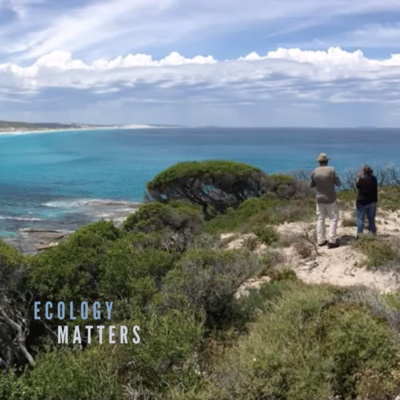
This podcast episode from "Ecology Matters" highlights a significant shift toward valuing Indigenous ecological knowledge in Australian conservation science. It features the collaborative work between Indigenous consultant Shandell Cummings and ecologist Dr. Alison Lullfitz, who partner with Shandell's family in Noongar Boodja, Western Australia. Their project integrates intergenerational Indigenous knowledge—such as harvesting practices, cultural stories, and sacred relationships with plants like the djarlgarra tree and the yam "yok"—with Western scientific frameworks. This two-way learning deepens the ecological understanding of species and landscapes, revealing how millennia of human interaction have shaped ecosystems. The speakers emphasize that such collaboration is built on long-term, trust-based relationships and genuine respect. They note a positive trend over the last eight years, where sharing this once-overlooked knowledge is becoming more common and respected within scientific communities, offering a powerful model for improving biodiversity conservation and social wellbeing across Australia.
There's been that big shift where people were starting to appreciate cultural knowledge a lot more than what it would have been appreciated in the past. So it has gotten bigger over the last eight years or so, just purely based on the fact that we're starting to share this information and people are going, oh well maybe we should be taking advantage of this. Welcome to Ecology Matters, a podcast from the Ecological Society of Australia. And each episode meet a different ecologist, discover what makes them passionate about Australian ecology, what their hopes and fears are for the future of our natural world, and why they think that ecology really does matter. Yeah, that's when I was hooked. It's really about pursuing one's curiosity and one's passion. I wanted to understand more of the mechanisms behind these things. I could see what I could contribute to make it a better place. I instantly fell in love with Norfolk. It's an amazing result to start with and promising leading into our next experiments. I have to feel it's making a difference. I often feel like I have the best job in the world. It's absolutely huge, it's been so wonderful. We're lucky to have two guests this episode. Murninger Woman and Indigenous Consultant Shandell Cummings and Dr. Ellison Lulfitz from the University of Western Australia. Shandell and Ellison work closely with Shandell's family in Nunga Budjo, South Coast, Western Australia. Together they explore and map the many linkages between Indigenous and Western ecological knowledge. This work brings together different frameworks of thinking, with the shared goal of improving both biodiversity conservation and social wellbeing. Shandell and Ellison were awarded the 2021 Bush Heritage Australia right-wing science prize. I was working for an organisation called South Coast Interim and Ali came on as the Diabit project officer and I was working in the cultural programme and we met there and hit it off really. We were quite friendly towards each other and stuff and then I stopped working there after a while and so did Ali and we sort of progressed into our studies and we hooked up again through uni. We're pretty much known each other for quite a while. We also work with Shandell's whole family, almost as old as we say. Shandell's mum, Lynette Nath is an elder in this part in Murninger Country. So we have been working quite close with her and Shandell is, you know, her mum's slowly passing a lot of her knowledge and so on across the Shandell and so I guess we're kind of working in that way as well almost intergenerational and even done little bits with Shandell's kids now as well. So yeah, it's really nice, sort of quite a family affair really. Can you talk a little bit about some of those projects that you're working on and why that sort of two way learning is so important? The project that Ali and Steve offer are doing with mum looking at that traditional information across country and visiting locations and delving more into the cultural story about that. I think me participating in some of those spaces but also undertaking that intergenerational knowledge transfer at the same time means that I'm building up that knowledge base. So the things that mum can't easily participate in with Ali, I stepped in and do that sort of stuff. So the presentation, so the ESA and the TEDx, Kinjahling was another example, just stepping in and helping out with that information or the cultural side, the cultural view of a particular place or process. I think that's where we've sort of picked up quite strong connections in based in that sort of way. I think Shandles family is still, they really still live the culture, you know, they get out and they harvest different plants at different times of the year and they're digging up particular tubers and things like that. So I guess Shandles and her family are really bringing that practical, you know, is still practicing this interaction with different plants such as various occasions or another one called that we've done a lot of work on called Yoke or platysochidiflexa, which is a tuba that you dig up. So like understanding the influence that, you know, through her family and generations going way, way back have had on this particular plant, being I would have bring the science together with just that practical understanding and knowledge about where you would go and bush to find it, how you actually harvest it when you get there, what you actually do in terms of digging it up, time of the year, how often you would dig it up, understanding that different families would go to different places and all of that stuff that really feeds into understanding the ecology of that plant because that's an interaction that's happened for at least tens of thousands of years. So us working together in this way is really building up that knowledge base of understanding ecosystems that we live amongst better, I think, really. Yeah. Definitely meets that criteria of two-way sharing, that's a sure. Yeah, like it's sort of, I guess it kind of plays into that, us just really developing that closeness to plants and other parts of the ecosystem of really understanding that thinking of things as, thinking of their value, I guess, you know, just an innate value that they have. And I think you had an example about them with Jartree as well and the areas, because it's considered a sacred tree, the areas now by, you would expect them to be relatively understood. I think, I mean, we always have been taught, you know, specific things about that particular tree, like not picking the flower for us. It's very significant as, you know, we believe that when we die, our spirit goes into that tree or there's a process that occurs and we end up with our spirit being in that tree. And so when the flowers come out, it means that for us, we see that as our old people coming back to check on us or check on country, make sure we're doing the right thing on country. So for us that tree or that species is very significant. Something else that I learned from Shandals Maum, I don't even mean was she talked about Mujah being like, so say if there's like a kangaroo resting under Mujah, then that's kind of at that point while it's resting under there. It's also kind of embodying spirits of, you know, that might be intrinsically linked with that plant and so on. So I guess that really, that kind of understanding really makes you think about how our Nongar people manage that country, you know, that just understanding that point that you wouldn't hunt animals when they're resting under Mujah, you can see that likely that's not a place that would have been kind of in traditional times targeted for hunting of animals and therefore likely not burned beneath that deliberately or so there's kind of a whole lot of other actions that just by understanding that one thing was a whole of actions that you can kind of understand about traditional management of that area and how that has come to contemporary times to be the way it is, I guess. I think and it's not just archaeological knowledge, it's also just the knowledge that, you know, families, you know, Shandals family has just within their old history, you know, that they're passing on from generation to generation. So yeah, and it's sort of when you pull all of that stuff together, you kind of have all of these aha moments of, oh wow, so yeah, you do actually see that plant growing all the time around places such as this or yeah, but it's quite an extraordinary thing. Do you feel that appreciation or respect for traditional knowledge is improving or is it becoming more broadly respected? When I first started working at South Coast and I remember, you know, that was a very, very long time ago and it was a group that was traditionally developed or came about through a group of farmers that sort of wanted to work together to, you know, look at their land management practices and see how they could make it better or, you know, look at that sustainability of farming practices. So back then, you know, I think that's a great way to make it happen.
know, we're talking 20 years ago, not a lot of that information would have been privy to everybody because Aboriginal people weren't in a position or didn't share a lot of that information. So now, especially with these types of projects that Ali and Mum and that we're all working on, that means we're giving this information to people and helping them to understand it a little bit better. So, I'm hoping that's what's happening. Yeah, I think so. And, you know, I think just among conservation scientists and ecologists, you know, I was thinking probably, I mean, back when I first started my PhD in 2014, I feel like there's been quite a shift probably just in that period really where we've gone from, you know, lots of people not even really factoring in that, you know, there's been people in our Australian ecosystems having these interactions and inputs, you know, humans have just been here. I think that is really changing now that it's becoming much more in the forefront of conservation scientists, sort of minds of what's the role that people have had in how this plant lives where it lives or this animal lives where it lives or whatever it might be. How can we, you know, how can we look to how people have been managing this for its prospects to be better into the future or whatever, whatever it might be. I think, um, people are a lot more tuned into that than they were even one of my 12, eight years ago. Yeah, way more than, but I, but I think that's also, you know, people are starting to see the work, especially that mum has done over the last few years with Ali and Steve and at UWA. I think people are starting to see that information now and people are going, oh, okay, well, that's who we can talk to and I think that's been a big issue in the past is that people haven't been aware of who they could talk to because, you know, different people talk for different countries. So, um, I think that it has potentially, not potentially, it has gotten beer over the last eight years or so, just purely based on the fact that, you know, we're starting to share this information and people are going, oh, well, you know, maybe we should be taking advantage of this. For me, I think it's really important like this, um, it's an information that you, you know, it's, it's not recorded anywhere and working with elders on country and the younger generation as well, like me, um, means that that information is being collected as long as there are processes in place that are protecting that knowledge, then I would definitely encourage anybody that has the opportunity to do a similar project to what we've been doing. It would be great to see more projects like this happening across Australia. I think that we couldn't do the work that we do without having really strong relationships, so really building up, you know, that, that trust and respect and just relationship that we've been up on this journey together, you know, Shandell and her family and Steve Hopper and myself and our team here at UWA and Albany, like I think that's, like the sort of work that we're able to do with really getting out and really talking really deeply about different aspects of ecology and culture and so on like it. That doesn't happen overnight, like it really, um, it really needs to come from a really, really genuine kind of base and, um, and of trust and respect for one another, I think. And we can't exist in this space without those relationships that we have with, um, Shandell and her family and with other elders that we work with and their families as well. So, um, those relationships between people are really at the core of, of this sort of work that we do. Ecology matters is a podcast by the Ecological Society of Australia and not for profit organisation supporting ecologists and ecological science in Australia. We acknowledge the traditional owners and custodians of country throughout Australia and their connections to land, sea and community. We pay our respects to their elders, past, present and emerging. To learn more about our work, follow us on social media, visit our website or sign up to our newsletter. You can find links to these in the show notes. This episode was produced by Grace Heathcoat and Ellity Compressy. The theme music is "Glow" by Scott Buckley. Lastly, thank you to all the ecologists who have taken part in this series and shared their perspectives on why ecology matters.
Podcast Summary
Key Points:
There is a growing appreciation for Indigenous ecological knowledge in conservation science, with increased recognition over the past eight years due to greater sharing of this information.
The collaboration between Indigenous consultant Shandell Cummings and ecologist Dr. Alison Lullfitz exemplifies successful two-way learning, integrating practical, intergenerational cultural knowledge with Western science to better understand and manage ecosystems.
Their joint work involves mapping cultural landscapes, studying specific plants (like the yam "yok" or *Platysace flexuosa*), and understanding how cultural values (e.g., the sacred djarlgarra tree) inform traditional land management practices.
Strong, trust-based relationships and genuine respect between Indigenous communities and scientists are fundamental to this collaborative research, which aims to enhance both biodiversity conservation and social wellbeing.
The integration of this deep, place-based knowledge provides critical insights into long-term human-ecological interactions and offers valuable perspectives for contemporary environmental management.
Summary:
This podcast episode from "Ecology Matters" highlights a significant shift toward valuing Indigenous ecological knowledge in Australian conservation science. It features the collaborative work between Indigenous consultant Shandell Cummings and ecologist Dr. Alison Lullfitz, who partner with Shandell's family in Noongar Boodja, Western Australia.
Their project integrates intergenerational Indigenous knowledge—such as harvesting practices, cultural stories, and sacred relationships with plants like the djarlgarra tree and the yam "yok"—with Western scientific frameworks. This two-way learning deepens the ecological understanding of species and landscapes, revealing how millennia of human interaction have shaped ecosystems. The speakers emphasize that such collaboration is built on long-term, trust-based relationships and genuine respect.
They note a positive trend over the last eight years, where sharing this once-overlooked knowledge is becoming more common and respected within scientific communities, offering a powerful model for improving biodiversity conservation and social wellbeing across Australia.
FAQs
It's a podcast from the Ecological Society of Australia where each episode features an ecologist discussing their passion for Australian ecology, their hopes and fears for the natural world, and why ecology is important.
The guests are Murninger Woman and Indigenous Consultant Shandell Cummings and Dr. Ellison Lulfitz. They work together to explore and map the linkages between Indigenous and Western ecological knowledge to improve biodiversity conservation and social wellbeing.
It combines different frameworks of thinking to better understand ecosystems, incorporating long-term human interactions and traditional practices that have shaped the environment for tens of thousands of years.
They are working with Shandell's family on projects like studying the Yoke plant (platysochidiflexa), combining scientific methods with traditional knowledge about harvesting, timing, and family-specific practices to understand its ecology.
Shandell's mother, an elder, passes cultural knowledge to Shandell, who then collaborates with researchers, ensuring the preservation and application of this knowledge in contemporary ecological studies.
Yes, over the last eight years, there has been a significant shift as more information is shared, leading conservation scientists and ecologists to increasingly recognize and integrate Indigenous knowledge into their work.
Chat with AI
Loading...
Pro features
Go deeper with this episode
Unlock creator-grade tools that turn any transcript into show notes and subtitle files.
 PodcastTranscript AI