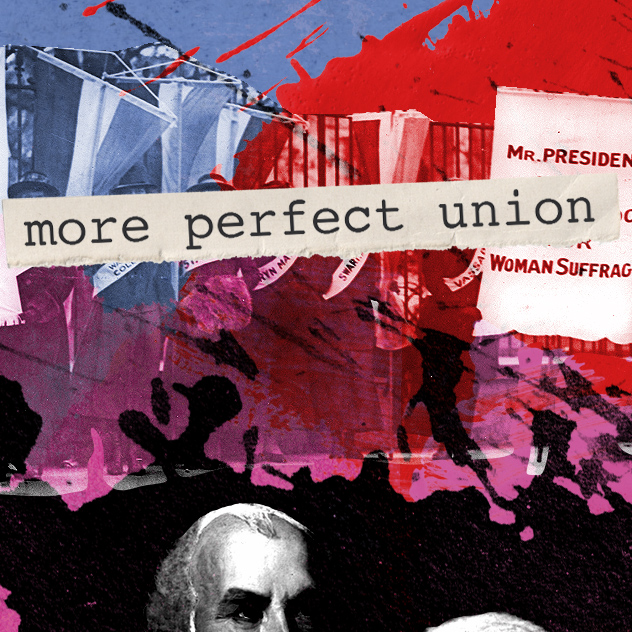
For the first century of American history, U.S. senators were elected by state legislatures, a system designed to insulate the Senate from populist pressures and preserve state sovereignty. However, this structure led to political deadlocks, corruption, and violent clashes—such as the 1905 Missouri legislature brawl—demonstrating its inadequacy in a growing, partisan society. By the early 20th century, public frustration with the Senate’s ties to wealthy elites, bribery, and legislative inefficiency intensified. Western states and progressive reformers pioneered direct election systems, while sensationalist press coverage, especially by William Randolph Hearst, fueled public demand for change. Despite fierce opposition from established senators and concerns over federalism, the 17th Amendment—ratified in 1913—mandated direct popular elections. This shift, though criticized by originalists like Antonin Scalia as a threat to states' rights, significantly improved accountability, expanded representation (especially for women), and strengthened the connection between senators and constituents. While it altered the Senate’s electoral process, the institution retained key functions like advising the President and checking the House. Ultimately, the direct election of senators fulfilled the framers’ vision of a "more perfect union" by placing ultimate authority in the hands of the people, reflecting their belief in popular sovereignty as the foundation of a unified and democratic republic.
For the first 100-plus years of American history, senators weren't elected by the people.
They were chosen by the state legislatures.
This was supposed to buffer the Senate from the masses and bring an extra level of prestige
and dignity to the office.
But when the framers of the Constitution came up with that system, they failed to account
for some of the pitfalls, including what would happen if two political parties but heads
in the state legislature over which senators to send to Washington.
By the turn of the 20th century, that initial oversight was spinning out of control.
In Missouri in 1905, the election process became so contentious that it ended in this major
fist fight in the state legislature.
And George Haines, one of the greatest historians of the Senate, described it this way.
The Republicans had tried to turn back the clock literally in the chamber so that they would
have more time to promote their candidate.
And this so irritated the Democrats, so the Democrats picked up the ladder they had been
using to reach the clock and threw it out the window.
Then, a massive brawl broke out.
The fist fight followed, desks were torn from the floor and a fuselot of books began.
The glass of the clock front was broken.
The pendulum itself was still swinging.
One of the members picked up ink bottles and hurled them one after another after another
at the pendulum.
This emotion and toward turn arose in wild disorder, the presiding officers of both houses mounted
on top of the speaker's desk and by shouting and waving their arms tried to quiet them all
down.
One of the ink bottles hit the pendulum at just the right angle and smack.
Time suddenly stopped ticking.
A perfect union, not so much.
I'm Lilian Cunningham with the Washington Post and this is Constitutional.
We the people of the United States in order to form a more perfect union.
It was justice.
Ensured domestic tranquility.
Provide for the common defense.
Remote the general welfare.
I'll secure the blessings of liberty.
To ourselves, our prosperity.
Do ordain and establish this Constitution for the United States of America.
When the framers drafted the Constitution, they had a dilemma before them.
How to successfully unite the states and strengthen their collective identity without stripping
away their individual power.
In practical terms that led to the question, what should representation for the different
states look like in order to create a more perfect union?
Well, in response, the framers came up with a structure for Congress and how we would
divvy up representatives between the House and the Senate.
And that framework is basically still intact today with one very notable exception.
How we elect senators.
The direct election of senators is certainly the biggest change that has ever been made
to the framers' vision of the Senate and its members and how they're elected.
This is Betty Cohen, the official U.S. Senate historian.
And that change took the form of the 17th Amendment, ratified in 1913.
It updated the Constitution to finally give voters the power to directly elect senators
themselves, instead of having state legislatures pick them.
But not everyone has agreed that shift was for the better.
Former Supreme Court Justice Antonin Scalia, for example, once said, quote, "The 17th
Amendment has changed things enormously."
And because of its passage, quote, "you can trace the decline of so-called states' rights
throughout the rest of the 20th century."
Now Scalia isn't alone.
In the past decade as the Tea Party movement gained steam, several conservative voices like
politicians Mike Lee and Rick Perry have called for the repeal of the 17th Amendment.
Like Scalia, they said that it upset the balance of power between the states and the federal
government, constraining states' rights.
So, let's explore the story of why direct election of senators came about, and whether
it did mark a step toward or away from a more perfect union.
In the early days of America, up until the writing of the Constitution, the states had
been working off a document called the Articles of Confederation.
And they had come together to form the Continental Congress.
But it wasn't going so well.
Very quickly, the Articles of Confederation began to fail as an instrument of government.
This is National Constitution Center President Jeffrey Rosen, who was on our first episode.
States weren't paying their taxes to the national government.
States were violating the rights of other citizens, congressional resolutions were ignored.
And this abuse of power by state mobs or state legislatures led to tremendous anxiety
on behalf of leaders such as James Madison and Alexander Hamilton, that state legislatures
resources of tyranny.
So it's decided that we need a stronger federal government.
But the question then becomes, what should this stronger government look like?
And what authority should the states have under it?
Well, in 1787, when the delegates to the Constitutional Convention met in Philadelphia,
there was a lot of debate about representation.
How would representation be based?
That was a great bone of contention.
And it was contentious for a few reasons.
For one thing, the big states and the small states had very different perspectives on whether
the states should all have equal representation or whether bigger states should have more
power and smaller states should have less power.
But also, there was a lot of disagreement about exactly how strong that national government
should be and how to empower the national government while still protecting the states.
The most ardent nationalist in the Constitutional Convention was Alexander Hamilton.
He made a radical proposal to abolish all states.
He wanted a truly national government without the risk of independent sovereign states.
He warned against the ambitions of state demagogues who hated central control.
So Hamilton is far to one end of the spectrum.
But there are others like James Madison and the peg-legged preamble writer, Governor Morris,
who, while they don't think that we should get rid of states, do think that a stronger
federal government is very important.
They propose a plan where the number of representatives in Congress will be entirely based on states'
population numbers, meaning the bigger states will have more members.
And they do this because they don't think it's very important that all states have equal
power and an equal voice.
These turn out to be the hottest debates at the convention.
Some delegates like William Patterson of New Jersey argue that all states should have
exactly the same number of representatives.
Ultimately, of course, they end up with a compromise.
They decide on a House of Representatives where each state has a different number of members
based on population, and then a Senate where each state has the exact same number of members.
Two.
William Patterson lost the battle of states as independent sovereign entities, but he
did succeed in persuading the delegates to recognize in the Senate where every state
has two representatives, regardless of its size, a principle of independent state sovereignty
that continues today.
Interestingly, even though this debate about representation takes a really long time to
resolve, the question of how to elect these representatives is solved really quickly, even
though there are a number of ideas initially proposed.
They considered several options.
For one, they could have the House of Representatives elect senators, but that didn't seem particularly
practical because the Senate was designed in part to be a check on the House, and how
could you check the House if they're responsible for your election?
Another one was to just give Senators lifetime appointments, Alexander Hamilton favored
that one.
Another one was to do straight popular vote election the way we do today.
This idea that voters in the states could directly elect their two senators was put forward
by delegate James Wilson.
James Wilson must be the most underappreciated of the constitutional framers.
It was Wilson who came up with the idea that we, the people of the United States, as a whole,
are sovereign rather than we the people of the individual states.
But everyone else at the convention.
shot down Wilson's idea that we the people should have the power to elect our own senators.
That was deemed at the time to be fairly impractical and would not be consistent with the
Senate that they were envisioning in 1787. James Madison and basically all the other delegates
end up thinking that what makes the most sense is for senators to just be chosen by the state
legislatures. Because they thought that state legislatures would be wise intermediaries who would
check popular passions and ensure that only the best people were chosen to serve in the Senate.
But Wilson was still skeptical. On June 20, 1787, he warned his fellow delegates at the convention
that state legislatures were likely to end up jealous and infriction with the federal government.
And that would prevent these legislatures from purely representing the best interests of their
citizens. Then on June 25, Wilson made one last case for popular election, saying both the state
governments and the general government were "derived from the people, both meant for the people,
both therefore ought to be regulated on the same principles." And what he meant was,
since citizens get to elect all their representatives at the state level,
why shouldn't they be allowed to elect all their representatives at the federal level as well?
He said, "This new government ultimately shouldn't really be about uniting and serving the states.
It should be about uniting and serving the people of those states."
So, quote, "the individuals therefore not the states ought to be represented in it."
But Wilson is still outnumbered. And the decision to have state legislatures elect senators
gets written into the Constitution.
Now, this had great tradition behind it because this was actually the way the
Confederation Congress and the Continental Congress before it had been elected.
So, that was the system they were used to. Another reason they chose this system of election
for senators was because they needed states to ratify the Constitution. And so, they had to be
sure that they were giving something to the states in return for building this new federal government,
which many states saw as taking away their powers and their privileges.
The framers also envisioned senators playing a different role in supporting and improving American
democracy than members of the House would. They really wanted the Senate to be a very different
body from the House. Whereas, the House members were there to represent particular districts or
sections of states. And they were facing re-election every two years. So, they had to be very cognizant
of public opinion and how they could work public opinion to shape their own careers.
On the Senate side, they didn't want it directly answerable to the people. They didn't
want it to be influenced by the tides of public opinion. They wanted to give it some distance and
some protection from the whims of the voters. That's why, in addition to having the senators
elected by state legislators, they decided senators should serve longer terms than those in the House,
six years rather than two. Senators should also be older, at least 30 years old instead of 25.
And they had to be citizens for a longer time. And by going to the state legislatures for
these choices, they really thought they would get individuals who had long service in government.
So, there were people who would know their states well and there would be people who would have
strong connections to the state governments. And that was true of many of the early senators.
You know, we had people like Oliver Ellsworth of Connecticut who was one of the great legal
brains of the early Senate. He was the author of the Judiciary Act that created the federal judiciary.
The framers of the Constitution had also given the Senate specific powers that the House
didn't have. Most importantly, the powers of advice and consent. So, they were there to advise
the President. They were there to consent to reject treaties or nominations. And they were also
there to be the sole power to try impeachment. So, all of these things gave the Senate this kind
of advisory role that had not been given to the House. So, this all sounds great. It goes into
effect. And for several decades, the process of states choosing their senators goes quite smoothly.
No one gives much more thought to James Wilson's lone pushback at the convention
that senators should be popularly elected until the middle of the 1800s.
The issue really starts to heat up and it heats up largely because we're coming into a time
period in our national history when we're developing two very strong political parties.
The Republican Party is born in the mid-1850s. The Democratic Party has grown much stronger
in the last 20 years. And so, partisan issues are becoming much more important in American politics.
By the 1850s, you start to see deadlocks in state legislatures.
The kind of deadlocks that led to fights like the one in Missouri, where the state legislature
erupted into an all-out brawl. And these partisan battles and legislatures across the country
got people thinking that maybe our system for electing senators wasn't quite working.
As a first attempt at fixing the system, Congress passed a new law in 1866 that tried to
standardize the process for Senate elections. It set a consistent date for holding the elections
and it required that state legislatures take one vote every single day for as long as it takes
to get a majority winner. Unfortunately, this didn't really resolve the deadlocks.
It just consumed a ton of the state legislatures' time and meant that Senate seats could go months,
sometimes years without being filled. By the time you get to the 1880s and 1890s,
the inability of state legislatures to settle on a candidate became increasingly problematic.
There was a case in North Carolina when they had 85 candidates that came forward for one seat,
and none of those candidates were ever able to get a majority vote. And so even though the state
legislature voted over and over and over 200 in some ballots, they weren't able to settle on one
candidate. And these deadlocks and Senate vacancies weren't the only problem. When we go into
the gilded age, you get larger and larger and more difficult cases coming before the Senate of
corruption. Over the course of the 1870s to the turn of the century, we had nine high profile
bribery cases in the Senate. And some of them have to do with the electoral process itself. For
instance, bribery of state legislators became a problem by the 1880s and 1890s when people were
offering bribes of various forms to legislators to actually elect a person as a senator.
At the same time, the Senate itself is changing. America is changing. This is a period of the rise
of big business. This is a time of industrialists and financiers. This is a time when elections are
getting caught up in money issues and campaign issues and campaign finance issues. And the attention
that gets throughout the 1890s in the early 20th century really helps to stoke those the calls
for reform. It's just this growing awareness of the Senate becoming what at that time was called
the Millionaires Club. It was people who were elected from big business, people who were elected
that were tycoons of industry, people who had really strong ties to the money that interest in America.
People like industrialist Simon Guggenheim, or railroad magnate William Clark, who reportedly
bribed state legislators for his Senate seat. And when questioned about it, famously responded,
"I never bought a man who wasn't for sale." And so you got people elected to the Senate who
were very wealthy, who were very powerful. Some of them were answerable to the demands of the people,
some of them were not. But it really shaped an overall reputation of the Senate to be just this
body of millionaires who really have no connection to the common man. And there was a lot of
truth to that. It's not the complete Senate, but there was a lot of truth to that issue.
Many of these wealthy senators were coming out of the eastern and the mid-Atlantic states.
But a different sort of tide was rising in the West.
In the West, they were more progressive, they were more populist, and they looked for people that
would come in with new ideas and new reform impulses. And they're frustrated with the inability to
get any sort of reform passed in Washington. And so they start to look for ways they can make
that reform happen at the state level. By the 1890s, the western states are moving towards
creating their own system of direct popular election of senators. One of the states that led the
way was Oregon, and they came up with this ingenious plan. Oregon basically did two things.
It gave citizens the opportunity to tell their state legislators who they thought should be their
senators. And the state also started pressuring candidates running for the state legislature
to take a pledge that they would honor those requests, even though they weren't official.
bound to do so. Once they did that and they were successful at it other Western
states began to do it and in fact by 1910 there were close to a dozen states it
had some sort of popular election system in place. And one of the results is that
the Senate starts filling with members who are more progressive and who feel
that they more directly represent the voice of we the people since the
citizens of their states actually had a say in electing them. You get people like
William Borough of Idaho for instance who will play a really important role in
the national debate over direct election. You get people like Francis Warren who
is the first senator from Wyoming and he's also a very strong supporter of
direct election. Joseph Bristol of Kansas will be an important player in this
story Albert Beverage of Indiana is another one. So it becomes sort of the
Midwestern Western states versus the Eastern powerhouse. Around the same time
another force emerges that questions how well the classic Senate election
model has been serving the will of the people and that force is the press. In
particular it was publisher William Randolph Hurst who was sort of the King of
tabloid journalism of the time but he was also a member of the House in the
early 20th century and he was a strong proponent for direct popular
election of senators. So Hurst hired a man named David Graham Phillips to write a
series of articles for Cosmopolitan magazine which at the time was kind of a
muck-raking magazine and the series was to be about the Senate and the
corruption in the Senate and why direct election would be necessary. He wrote
nine separate articles that ran in Cosmopolitan from March to November of 1906
and the articles were kind of a pivotal moment in a way because first of all
they were highly sensationalized and a lot of the charges were false. The
series of stories was called "treason of the Senate" and it opened with this
line quote "treason is a strong word but not too strong to characterize the
situation in which the Senate is the eager, resourceful, and indefatigable
agent of interests as hostile to the American people as any invading army
could be." Yikes! Well before this series launched it's true that two US
senators had been convicted of taking bribes from business clients in exchange
for special treatment from the government but this series went on to
investigate roughly 20 more senators showing how the combination of state
legislature elections and big business interests was producing senators who
didn't serve the people. His series is pretty widely denounced by responsible
journalists and editorialists of the day and obviously it's denounced by the
Senate but it gains wide popular support and it really helps to change the
tide of public opinion in favor of reform of the election process. He portrays
senators as bribers, money lenders, you know all the worst kind of stereotypical
views of political corruption. In some cases he took incidents and really sort
of exaggerated them and other cases he just made stuff up but it's an image of
the Senate that really stuck and it's an image of the Senate that reflected the
general public perception of the Senate as this out-of-touch collection of
wealthy men who had only their own interests at heart. And so this series
becomes a major turning point. Soon after efforts gained steam in Congress to
reform the election of senators and the efforts not surprisingly start in the
House of Representatives rather than in the Senate itself. The House introduces
1819 different resolutions for a constitutional amendment to establish direct
election of senators. Most of those amendments actually pass the House. They get
sent to the Senate and they die in the Senate because they're referred to the
Committee on Privileges and Elections. The Committee on Privileges and
Elections was controlled by old guard senators who had no interest in direct
election of senators and pretty much every proposal for reform once it got to
the Senate died in that committee and never made it to the Senate floor. There
are a few different reasons these efforts are meeting resistance. Opposition in
the Senate for a good part comes from senators who are just on principle opposed to
changing the Constitution. That's one group. Another are really tied to the old
system because that was their system of election and they feared that if they
changed that system they would lose their seats. However in 1909 there's
finally some movement. And that's because Kansas Senator Joseph Bristow manages
to maneuver a new resolution for direct election out of the Committee on
Privileges and Elections and get it sent to the Committee on the Judiciary.
That's a key moment in this story. The Judiciary Committee then creates a
subcommittee to consider the resolution. On that subcommittee is Idaho Senator
William Borough, one of the great proponents for direct election. And it
really owes it to the hard work of William Borough that that resolution manages
to get out of committee and make it for the first time to the Senate floor for
debate. But it makes it to the Senate floor in a slightly altered form. And this
is the next major stage of the story. By 1909 we're living in a United States
where almost every issue is touched by the issue of race. And that becomes an
important component in the direct election system. Because the only way that
Idaho Senator William Borough could convince his peers to let the proposed
constitutional amendment for direct election actually leave the Judiciary
Subcommittee and go to the Senate floor for a vote was if he agreed to tack
onto it something that the Southern Democrats wanted a race rider. The race
rider basically stipulates that if the Constitution is amended and we switch
over to allowing voters to directly elect their senators, then sure that's
fine. But the states themselves have the ability to control the terms of the
elections. The federal government won't have any say. Now the reason this was
called a race rider is that what these Southern states were essentially saying
between the lines was we don't want African Americans in our state to
participate in electing senators. So if we're going to have popularly elected
senators, then we better be able to create whatever voting terms we see fit. In
other words, we better be able to exclude anyone we want to. When you're talking
about the 17th amendment, there are two sections of the Constitution that you
have to think about. There's article one section three, which is the part that
defines how Senate elections happen. And that's what they're trying to change
from indirect to direct election. But there's also article one section four, which
says that the times, places, and manner of holding elections for senators and
representatives shall be prescribed in each state by the legislature thereof. And
it says the Congress may at any time by law make or alter such regulations. And
it's that phrase that becomes the target of the debate in the Senate in 1909
in 1910 and 1911. Because it's that phrase that the federal government can
regulate the terms of elections, that Southern Democrats want out of there if
they're going to start allowing elections for senators. That stipulation itself
is called the race rider. The debate is less about how senators will be elected
and a lot more about will federal authorities maintain control to regulate
elections in the states. So this proposed constitutional amendment with the
race rider stuck onto it goes to the full Senate for a vote. When it gets to the
Senate floor, another senator from the West Utah Senator George Sutherland
comes into the story. Sutherland proposes yet another tweak, which basically
takes away the power of the race rider and says that the federal government can
still exert authority over state elections. The Sutherland amendment becomes the
subject of heated debate in the Senate for months and the whole debate
senators around the issue of congressional authority over state elections. It was
a long debate. It was a contentious debate. Each side accused the other of
racebaiting, Northern Republicans who opposed direct election. Some of them
sided with the Southern Democrats because they hoped that that would kill the
resolution. All sorts of political maneuvering happened. Finally in 1910, the
Sutherland amendment passed the Senate, but the constitutional amendment that
came with it failed to get the two-thirds vote it needed for passage. And the
host system.
The system essentially went back to square one.
They had to more or less start over.
So they do. In 1911, there's a new Congress.
And this made a difference because as a result of the 1910 election,
there were a lot of new members in the House and the Senate.
And a lot of those new members were products of direct election systems
and a lot of them were supporters of a direct election system.
Balance of power had shifted a little bit in favor of the reformers.
The House of Representatives quickly introduced another proposal
for direct election of senators.
This one has the race rider back on it.
Again, it gets all the way to the Senate floor.
Again, another contentious debate.
Joseph Bristol cans us again.
Brings forth another amendment to this resolution.
It becomes known as the Bristol Amendment.
And in his amendment, the race rider is stripped away.
So we're back again to the original form.
The debate keeps going week after week.
But the influx of reform-minded senators into the new Congress
was just enough to finally even the scale.
When it came to a full vote in the Senate, it tied 44 to 44.
Vice President James Sherman stepped in, broke the tide vote
in favor of passage of the so-called Bristol Amendment.
The two versions, so we now have a House version
of the resolution with the race rider intact.
And we have a Senate version, the Bristol Amendment,
with the race rider taken out, go to conference.
Weeks go by again as they try to settle the difference between these two.
In the end, the House, wanting to get direct election through,
essentially gives in to the Senate's version.
And so the Bristol Amendment is the one that actually becomes
the constitutional amendment for direct election.
In 1912, the Bristol Amendment, also known as the 17th Amendment,
was officially passed by Congress.
As Betty Cohen mentioned at the very beginning,
this was the most significant change we had ever made
to how our government would operate.
We had passed amendments before that clarified the protections
that citizens and states would have, amendments that had expanded voting
to new groups, even in amendment adjusting the presidential election process.
But no other amendment had so fundamentally overturned
a part of the framers' original vision for our government structure.
The framers of the original constitution were deeply afraid of direct democracy.
Jeff Rosen again.
But what they agreed on was the need to disperse power to protect liberty.
And they wanted to disperse power both horizontally between
the three branches of the federal government and vertically between the states
and the federal government in order to ensure that we, the people,
retained ultimate power, but no branch of government,
whether at the federal or state level could easily speak for us,
unless we empowered it to do so.
But our challenge is to translate their principles into a very different era.
And at the dawn of the 20th century, that's what Congress did.
It sent the 17th amendment off to the states for ratification.
And the funny thing is, despite all that turmoil over it on Capitol Hill,
it actually goes through state ratification very easily.
By April 8th, 1913, the necessary three-quarters of states have ratified it,
and it officially changes the constitution.
One of the things you have to remember is that by the time we get to 1910, 1911,
nearly 40 of the states had already come out publicly in favor of direct election.
In fact, state governments were asking for this reform.
State governments were tired of dealing with sending elections.
They were tired of dealing with the corruption and the bribery that came along with it.
And they saw it as just a nuisance to them by then.
They were also tired of the amount of time their state legislatures were spending on it,
when they could be using those sessions to pass state legislation and focus on a sea of local issues.
Today, many people look back at the debate and they think it was taking power away from the states,
but in reality, the states wanted that taken away from them.
Oh, sure, there were people particularly in the Eastern Seaboard and in Southern Democrats.
They were not in favor of the amendment, but even in some of those cases,
the states had spoken in favor of reform.
So they didn't have much of a choice at that point. They had to step on board.
So what changed after ratification of the 17th Amendment?
Did it move us to a system where our leaders in the Senate better serve the people?
Where there's less corruption? Did it better perfect our union?
I think the Senate today, if you compared it to that of the early 20th century,
is much more egalitarian.
The Senate tends still to be wealthier than the House members as a rule,
and we still have some members of the Senate that are very wealthy members,
but it's not the Millionaires Club of the 1890s.
We also have senators that are teachers and farmers and doctors,
and you could also argue it would have been a lot harder to elect women to the Senate
under the old system than you do under the new system.
We don't get our first female senator until 1922, she's appointed.
The first elected woman senator comes in 1932.
If they had had to contend with the indirect election system
where they had to go and get the favor of the state legislature to gain office,
it would have taken even longer to get women to end office,
because they didn't have those kinds of connections in state government.
So I think the fact that we have 21 women senators in the Senate today
is also due in part to the fact that we now have a direct election system.
And what about a better functioning Senate?
One that can work more effectively to serve its citizens?
It's interesting because this constitutional amendment, like many others,
has had consequences intended and unintended.
It did get rid of the deadlocks, and it got rid, of course, of the bribery of state legislators.
It also helped to cement a stronger bond between senators and their constituents,
because now they had to go directly to the voter, rather than just to the state legislature.
And I think that in the long run has had a positive impact in many ways.
It also had some unintended consequences.
Senators had to go out and start campaigning, for instance.
That led to questions of campaign finance, questions of campaign finance reform,
and it's been a long story to where we are today, where we have millions of dollars spent on Senate elections.
As early as the 1920s, even the 19 teens, the Senate begins to hold investigations
looking into campaign finance issues to be sure that there is no corruption in that process.
I don't think they intended that when they passed the 17th Amendment,
but it's been one of the results of it.
And there's always the possibility put forward by people like former Supreme Court Justice Scalia,
that something of the original intent was shaken or lost by the change.
I had the remarkable experience of seeing one of Justice Antonin Scalia's last appearances before his death,
and it was at the Union League in Philadelphia.
And I heard Justice Scalia say, "The 17th Amendment represents the death of federalism."
He said that no amendment has done more to undermine the balance between federal and state's rights
than the decision to have popular rather than legislative election of senators.
It's a dramatic statement from the great originalist.
There is a strong argument that in adopting the 17th Amendment,
you took away a part of the framers original design for the Senate.
And the framers original design of the Senate really wanted it to be a body
that was insulated from public opinion and distanced from public opinion,
and one that was able to serve in a true advisory role to both the executive and the House.
And so there are people who argue by making them directly responsive to popular opinion,
you've taken away that buffer zone.
And because they have to answer to the wishes of the people at the voting booth,
that somehow they do not have the ability to stand back and have the distance
and have the wisdom that they might have had under the original system.
So there's that part of the argument.
There are those in Scalia might be in this category as an originalist
that just do not want the original constitution change.
There are others who would see direct election as a way to undermine
the role of the states and the federal government.
And that argument flows from the idea that state legislatures used to be able
to just directly tell their senators what to do to best represent the states interests.
In the early years of the Republic, there was a lot of truth to that.
In fact, state legislatures often instructed senators on how to vote.
But fairly early on, by the time you get to the 1820s and 30s,
senators have moved beyond that and are not taking instructions well from state governments,
I would argue that despite the fact that we have
This one important change in the framers of vision
for the Senate, the Senate still maintains virtually
all of the role that they had in mind.
It still serves as a check on the president and the House.
It still serves as an advisory body on nominations
and treaties.
It still serves the full state's interest
because they have to deal with the statewide constituency.
And they tend to have very close ties
to the governor and the state legislators.
And so I think even though the method of election
has changed, most of those ties and most of what
empowered the states under the old system
remains in place.
Only one of our constitutional framers, James Wilson,
had anticipated that this change might be necessary.
But all of those men who signed their names
at the bottom of the Constitution in 1787,
knew that the first words at the top of the parchment
said, "We the people of the United States
in order to form a more perfect union."
That is, they knew that America was a work in progress,
an experiment in how to unite the different wills of the people.
A more perfect union did not mean total consolidation.
It meant popular sovereignty.
It meant that either people of the United States
as a whole had the ultimate power
to authorize our delegates and our servants
to speak in our name.
We now have we the people that vote and elect US senators
directly.
So it's no longer a voting process that's disconnected
or no longer one step removed via state legislature.
It's directly empowering the people.
So if part of the process of we the people
to form a more perfect union is to somehow empower
the people to make the decisions that are important to our country,
the direct election would be directly tied to that.
On June 25, 1787, as James Wilson was advocating in vain
for direct election of senators, he reminded
his fellow delegates at the convention
to imagine what a future America might look like.
He said, "Consider the amazing extent of our country,
the immense population which is to fill it,
the influence which the government we are to form will have,
not only on the present generation of our people
and their multiplied posterity, but on the whole globe."
Wilson, for his part, said he was, quote,
"lost in the magnitude."
And his point, it seemed, was that we can never fully grasp
the immensity of what's to come.
Or even future practical realities like how the state legislatures
will act toward the federal government,
or whether the small states will become bigger states,
or whether political corruption will go up or down
with any given change.
But if the strength of our union rests on our ability
to best represent its multitude of voices,
then that should be our greatest ongoing effort.
Many thanks to this week's guests, Jeffrey Rosen,
president of the National Constitution Center,
and Betty Coed, the US Senate historian.
"Fife and Drum Music" is by Otheterner
and the rising star, "Fife and Drum Band."
Special thanks to Sharday Thomas
and the rest of the Turner family for its use.
Our theme music and additional compositions
are by Ryan and Hayes Holiday.
The original artwork for our podcast is by Michelle Thompson.
And, as always, a huge thank you to Ted Muldoon.
My producer here at The Washington Post.
As a thank you to you,
the post is giving constitutional listeners $100 off
on a one-year, all-access digital subscription
to The Washington Post.
Visit wapo.st/podcastoffer to redeem it.
That's wapo.st/podcastoffer.
If you like the show, please rate and review us
on whatever platform you're listening to this.
And, if you want to let me know personally
what you think of this series, I would love that.
You can find me on Twitter @lily_cunningham.
Thanks so much for listening and stay tuned
for more episodes of Constitutional.
[MUSIC PLAYING]
[MUSIC PLAYING]
Podcast Summary
Key Points:
Senators were originally elected by state legislatures to provide a buffer against popular opinion and preserve state sovereignty, a design rooted in the framers’ concern about democratic excess.
This system led to frequent political deadlocks, corruption, and violence—such as the 1905 Missouri legislature brawl—highlighting its flaws in a partisan and increasingly industrialized society.
By the early 20th century, growing public frustration with bribery, inefficiency, and lack of accountability in senatorial elections fueled demands for reform.
Western states and progressive reformers led early efforts to implement direct election, while the press, notably William Randolph Hearst, amplified public opposition to the Senate’s elite, corrupt image.
The 17th Amendment, ratified in 1913, shifted Senate elections to direct popular vote, overriding originalist concerns about federalism and weakening state legislative control.
Though critics like Antonin Scalia argued it undermined federalism and eroded the Senate’s advisory role, the change expanded democratic participation and accelerated diversity, especially for women.
Direct election reduced deadlocks, increased accountability, and forced senators to engage with constituents, though it also introduced new challenges in campaign finance and political influence.
The framers’ vision of a "more perfect union" through popular sovereignty was fulfilled by direct election, even if it altered the Senate’s original institutional design.
Summary:
S. senators were elected by state legislatures, a system designed to insulate the Senate from populist pressures and preserve state sovereignty. However, this structure led to political deadlocks, corruption, and violent clashes—such as the 1905 Missouri legislature brawl—demonstrating its inadequacy in a growing, partisan society.
By the early 20th century, public frustration with the Senate’s ties to wealthy elites, bribery, and legislative inefficiency intensified. Western states and progressive reformers pioneered direct election systems, while sensationalist press coverage, especially by William Randolph Hearst, fueled public demand for change. Despite fierce opposition from established senators and concerns over federalism, the 17th Amendment—ratified in 1913—mandated direct popular elections.
This shift, though criticized by originalists like Antonin Scalia as a threat to states' rights, significantly improved accountability, expanded representation (especially for women), and strengthened the connection between senators and constituents. While it altered the Senate’s electoral process, the institution retained key functions like advising the President and checking the House. Ultimately, the direct election of senators fulfilled the framers’ vision of a "more perfect union" by placing ultimate authority in the hands of the people, reflecting their belief in popular sovereignty as the foundation of a unified and democratic republic.
FAQs
The framers believed state legislatures would act as wise intermediaries, checking popular passions and ensuring only qualified individuals were elected to the Senate, thus protecting the Senate from direct public influence.
The 17th Amendment, ratified in 1913, changed the election of U.S. senators from being chosen by state legislatures to being directly elected by the people, marking the most significant change to the Constitution's original structure.
Partisan deadlocks in state legislatures, widespread corruption, bribery of legislators, and growing public frustration with the Senate's lack of connection to ordinary citizens drove demands for reform.
Yes, it eliminated bribery of state legislators and reduced deadlocks, but it also introduced new issues like campaign finance, which later became a focus of reform efforts.
It significantly accelerated the inclusion of women in the Senate, as women could now run directly for office, leading to the first elected female senator in 1932—much earlier than under the indirect system.
Some critics, like Justice Antonin Scalia, argued it undermined federalism by removing state legislatures’ role in selecting senators, but many believe the states' influence on senators remains strong through state ties and constituencies.
Chat with AI
Loading...
Pro features
Go deeper with this episode
Unlock creator-grade tools that turn any transcript into show notes and subtitle files.
 PodcastTranscript AI