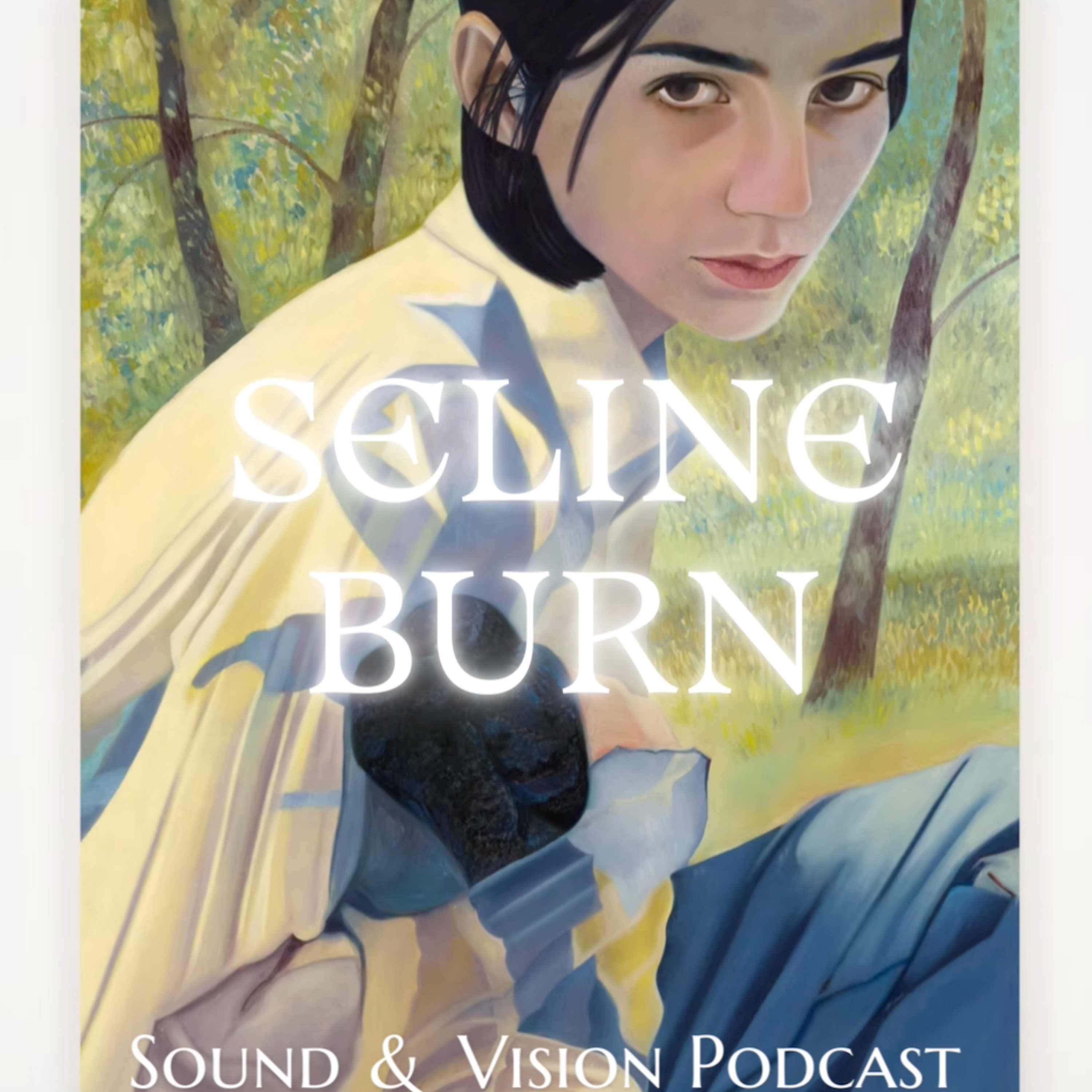
The New York Studio School offers a marathon program for artists, emphasizing rigorous art-making strategies, critiques, and scholarships. Selene Byrne, known for her figurative paintings, merges personal memories with art history in her work. She shares her transition from illustration to painting, pursuing a master's degree in critical image practices. Selene highlights the need for self-discipline in art, reflecting on the challenges and rewards of being a self-driven artist. The conversation delves into the importance of encouragement in pursuing artistic paths, the evolution of artistic interests, and the balance between passion and stability in an artist's career.
Transcription
12320 Words, 64511 Characters
Welcome to Sound and Vision. Conversations with contemporary artists and musicians about
the creative process. Here's the host of Sound and Vision, Brian Alfred.
Sound and Vision is supported by the New York Studio School. This summer, the school welcomes
artists from all backgrounds to learn from dedicated artists and to expand their art practice
in the transformative marathon program, either in New York City or virtually from anywhere in the
world. Rigorous and immersive, marathons unfold daily from 9 a.m. to 6 p.m. over 10 days and
students engage in a wide range of art-making strategies, comprehensive critiques, and inspirational
discussions. Generous partial scholarships are available. The New York Studio School, celebrating
60 years of excellence in drawing, painting, and sculpture, cultivates studio skills, material
knowledge, and self-development. For aspiring and experienced artists alike, the ambition and
artistic excellence practice at the New York Studio School will prepare you for a lifetime of
art-making. The school offers full-time studio-centric MFA and certificate programs as well as the
evening and weekend classes and the intensive marathon program. Visit nyss.org to apply today.
Sound and Vision is sponsored by Golden Artist Colors. I've been using Golden Paints and mediums
for over 25 years. They make the best acrylics, oils, and core watercolors that you can buy.
They're an employee-owned company and have some of the best customer support you can get. Check
them out at GoldenPaints.com. Sound and Vision is also sponsored by Fulcrum Coffee Roasters,
a Seattle-based, full-service, wholesale coffee roaster and retailer with over 25 years of experience.
Their deeply personal relationships, collaborations, and services that they provide transform how
customers experience and enjoy coffee. Their three unique brands, Fulcrum, Silver Cup, and Urban
City, are unified in simple earnest and grounding principles. You can get them delivered to your
door by checking out FulcrumCoffee.com. Enter the code podcast when you check out for 15%
off your order. FulcrumCoffee.com.
Selene Byrne is an artist born in Switzerland who is recognized for her evocative figurative
paintings that merge personal memories with art historical motifs. Her work explores how
everyday objects, relationships, and artistic traditions shape our perception of the world.
By intertwining elements of our personal experiences with broader social and historical
context, Selene invites viewers to question the cultural norms that influence visual
representation. Her work has been featured in exhibitions in Switzerland and around the world
at places such as Kunsthausen, Pascale, the Kunstmuseum Thun, Wilde in Geneva, and Basel,
Switzerland, Everyday Moonday Gallery in Korea, Delphian Gallery in France, and Helsinki,
and Baird Gallery in Los Angeles, where she has her current show up now.
I spoke to Selene about moving with young, piano, illustration, finding painting, languages,
the figure, and much more. Here's our conversation.
So you bet you were traveling a lot, right? Yeah, I came back to Paris like
one hour ago, like when I called you. So yeah, I've been like traveling, yes, but also like
going back and forth between Switzerland and here, because I'm currently moving like stuff,
but I have to finish work here. So it's all a bit unstable, but I'm so happy to be back in Paris
and get back to work for the next two weeks. And then I'll get back to Switzerland for good.
And yeah, I'm going to leave Paris soon. Oh, so you're so you're moving that like
that's where you're moving to, you're not moving to Paris? Yeah, I spent like one year in Paris now
and like I'm moving back to Switzerland, because I'm beginning a masters actually there,
like a part-time masters. I don't know if you have that in the US, but you study part-time,
which allows me to continue my practice like and doing shows and working and
doing the how is it called like the exactly juggling of everything. So yeah, I'm happy to go back to
school to to feed my brain a bit. I feel like I've been so much in my work, like my brain is like
hungry for some good literature, like yeah, some good stuff. Well, when did you but when did you
graduate from school? I graduated in 2019. Like I studied illustration, I didn't study fine art.
Like I yeah, so right. And then I kind of
fell into painting. And yeah, I don't know it was during the COVID. And I don't know my my
my paintings got some resonance online and I got first shows and like
but already during my studies, I was feeling like Oh,
maybe I don't want because illustration, you always have to communicate something like it's
there to communicate in in a in an image, right? Like sometimes accompanied with some text or I
don't know children's book or like even like flyers or whatever. And already there I was like,
wait, I'm not sure if I want to tell stories like if I want to be an author. It was more about
expressing something. And then I I really got into painting because it gave me that space. It
was like a much broader frame, maybe. And yeah, so that's how I got into painting. Well, you've
you kind of fell into it in a really successful one, like you're doing really well with it. So
is it going to how's it going to feel to go? Are you studying? Are you going to be studying
specifically painting or art? Or is it a study? It's called critical image practices. So it's
a fine art study, like monsters. But like there's a major and a minor and I'm doing the art teaching
to just to have like a solid base because I've been like, kind of working on the side with like
right in and as a barista, you don't earn much. So it was always like, I was always so stressed
and like, even if sales go well or whatever, like, it's not like it's not said that you can pay your
rent with it. Like it's extremely unstable. So I always told myself until I'm 30, like I want to
give it a shot. I want to like try everything, put all my young energy into that and my passion.
And yeah, then last year, like this year, I'm turning 30 and already at 29, like right now,
I was like, oh, like, how am I going to jiggle this in the future? Because of course, like,
you can have shows and you can have successful from the outside, but it doesn't mean that you
automatically mean that you have like a sustainable practice, like that's going well, well, well,
well, well forever. And like artists that you have these ups and downs. And it's really, I think
it's really something we should normalize. Like you cannot, yeah, I don't know. So yeah, that's why
I decided to dip into that. And I've already done some teaching and I really liked it. And so yeah,
that's why I decided to like, give it a solid base. Yeah, what do you do on this side? Yeah,
do you do something on the side? Are you a full time artist? What?
Well, I was a quote unquote full time artist for, I mean, when I started showing in the late 90s,
I quit my day job when I'm, you know, that I was working at New York City. And I just was
fortunate enough to start living off my work. I mean, not extravagantly, but I was just paying
my rent. It was a little cheaper then in the late 90s. And it was now in New York City. So,
but I did that for years and years and years until I mean, I was just lucky. And I started
teaching. God, I don't know. It was 15 years ago or something, maybe 12 or 13 or something.
But now I'm like the head of the painting program where I teach and I've been,
I'm tenured. I've been doing that for a long time. So, but yeah, I think it's a really prudent idea to
to sort of think about your future and not solely have to depend just on selling work to, you know,
make ends meet. But yeah, I think I'm guessing since you studied illustration, like anyone who
studies in a more design or commercial oriented field of the art, usually has a little more
awareness of sustainability of getting a job or there's talk more about providing for yourself,
where sometimes in art school, or at least when I was a student, they never talked about
any of that stuff. No information. I mean, these days, it's different. I've even taught a class
called art working where it's about how to like find work when you get out of school,
just to sustain yourself or finding creative pathways to paying bills while you're trying to
develop your career and your art practice. So, but yeah, it's not easy. And there's is not like
you were saying the desire to normalize that. I think it's much more acceptable now. When I was
an art student in undergraduate school, and this was like in the early 90s, it was it was almost
taboo to talk about money or paying for anything. It was like, they didn't want to taint your education
with like real real world stuff. It was all about art. But that's a really kind of not really
preparing people for the real world. Yeah, and I think, yeah, I'm like,
I think it should be much more even now, like, it's like, as you said, it's become more normal,
maybe to talk about it, because it's just the reality of things. But even us, like we had like
one course after illustration, like after the studies, like one week, it was called for for
[inaudible] which means like, preparations for the real world, like for the job world, you know,
and it was a one week course and like they banged us with all of the things we should do. And at
least we had that because it was such great advice, like how to make your invoice. And as an artist,
you need to make invoices, right? And totally, they never teach you this stuff. It's like taxes,
how do you pay taxes? How do you do all that stuff? Yeah, it's a lot. Well, at least you had a week,
I guess a week. That's all. But to be fair, like at the first course, like at the very first course,
they told us like, if you're here for money, like this is the wrong room, you should go now,
you should leave now if you want to make money, which I thought was fair. But like when you're
20, you don't really think about you're like you're coming out of school, like at least in
Switzerland, like if you make a matura, I don't know what's like, I guess that would be like when
you go to uni, before you go to uni, you don't think really about, I don't know, it's so normal
to have a side job and like make ends meet and everything. But yeah, like my boyfriend is a
photographer. So he's like, self-employed too. So it's even more vague sometimes to make ends
meet. Yeah, unstable. So yeah, I mean, I'm pretty spontaneous. And I love a good adventure. But
like, I want to live on my own, like I don't like I'm reading a Hema of Clint's big, big book by
Julia Voss. And like she lived at her mom's until she was 40, 45, like there are plenty of examples
like that. And it's such a somehow it's really touching to like read that to because you think
of these artists and like you see their big names and then the real reality of things is
quite different if you like get into it and see how like they what they gave gave up to just make
their work. And it's also so beautiful to see that like how how much passion there, like how much
importance they they put into it. Yeah. Totally. Yeah, I think it's pretty, it's funny because
when we as artists tend to think, okay, well, what we do is very ephemeral and it's not very stable.
And, you know, you you you hope that you can pay the bills and make enough and you got to
scramble. And then the other side, the corporate world is very stable and it's a nine to five job
and you can get paid or benefits or whatever. But there's a lot of a there's a lot of flexibility
within that on each side, like just because you have a nine to five job doesn't mean it's stable
necessarily. And also, I think it really no matter what area you're working in or what it is,
you really have to bring a lot of energy and commitment to like it has to be fulfilling to
yourself, or you're going to disconnect from it. So it's all about sacrifice, like for artists,
maybe we sacrifice stability, but we're chasing this thing that we really love and we're passionate
about. And if you're working on Wall Street or finance or or a day job that you just are not
interested in, you're sacrificing your peace of mind of doing something that you love just so
you can feel better about paying the bills. So either way, it's about sacrifice. My theory is
you might as well, you might as well chase the thing you love because then at least you're shooting
for it as opposed to just doing something you hate that crushes your soul, but you can pay the
bills completely, completely understand. And it's funny because every time like when you have these
questions in your mind, like in your studio late at night, like, what am I doing? I'm stressed over
painting, like, Oh, my God, like, I don't even know if it's gonna, you know, and always then I'm
like, it's either that or I apply for a job. And then the answer is clear for me at least,
like, I'm like, okay, push through, like, I have to push through at shifts in a cafeteria too.
Like, so yeah, I'm super, super grateful and happy. And yeah, just what's exciting to be able to be
showing the work and doing well with your painting and also dipping back into,
you know, education and like stimulating your brain and doing the conceptual side of things too.
So how did you get to this, this young woman who was interested in illustration or interest in
drawing or visual things? Like, where did you grow up? And like, what was the environment like
where you were growing up that fostered creativity for you? So I grew up in the French part of
Switzerland. And I have parents, they're really like, I would say they're both really gifted,
like my dad, T is a great, great at drawing my mom too. But like, they never pursued like an
artistic career or something like that. But like, yeah, we had like some paintings at home,
like not real paintings, but like just some prints, you know. And so I think I was just like,
a very like, I, my parents are from the German side of Switzerland, and we moved to the French
part of Switzerland. And I got to school, like when I was in kindergarten, when I was three or four,
and I didn't speak French. So I grew up very overwhelmed because I couldn't communicate at
school like at first. So I just got home. And I think I processed it with drawing from an early,
early age. And I just got home, I just started to draw, like every day, I don't know, yes,
was a way of processing. But I never thought about doing it like as a career or something like that,
like I really didn't. And when I wanted to pursue it, like, I wanted to become a florist,
you know, or something like that. That was, that's like possible in, in the, in the, I don't know
how, like in the working class, I would say. And so it really didn't get to my, I don't know,
like I wasn't encouraged in pursuing something like that, because I just didn't have the,
just wasn't on my parents' minds or mine. I didn't even know you could do that.
And so then I wanted to become a teacher. And let me tell you, I am terrible at math. And it was
my biggest gift in life, I think, because I fell through. I fell through the exam, like I had the
lowest note, and I took my classes on the side to, to get good at it. But I didn't get it with
this teacher. So I had to redo the year because of math. And so I got a really good teacher,
and like, I was like, at the end, I got like one of the best grades or whatever, because my, my,
I just got it, like math, math, you have to understand like your teacher. And so, but in
this year, I reconsidered my decision to become a teacher. And because I had some time, you know,
I had some time to overthink, because I wasn't sure about becoming a teacher anyway, it was just
like, okay, so I'll just do that. And then, yeah, I had some friends, I think, that went to the,
it's called the FAUKUS in Switzerland, Propedeutikum, I don't know what that, like it's a
preparatory year for them to study the uni, like, or the art school. And even there, you have to
apply. And so I was like, okay, I'll just apply and see if I get in. And then I got in, super happy.
And during that year, I was already like, oh, okay, maybe I'll become a teacher still, because
I didn't really see myself as a graphic designer. And then I had a teacher who just told me,
you should do illustration. And I think it really motivated me, because like, to get in the, like,
there's like, at the time, there was like this, just one place you could study illustration,
it was a bit competitive. And I thought, okay, it's that, or I'm not going to do it. Like, if I,
if I get into it, I want to give everything I have, or then like, if I'm not chosen, it's fine,
like, I'll just, and then I got in. And yeah, I think that's, I think it's what I needed this
encouragement from outside to like, start to believe in myself and really pursue that. Because
I'm good at like second guessing and overthinking. So, um, yeah, I think I definitely needed that
encouragement from outside. And then I don't know that when I got in, I just never
reconsidered to give it up, or like, I really wanted to push through and like, give it all I
I had. And I also love the challenging part of it, like, you have to start a painting, like, you
have to, there's no one who's going to tell you to do it. Nobody waits for you. So it has
an aspect that's really like, it's now or never, like, it's self-discipline in a way, or it's like,
yeah, you have to, you have to, it has to come from inside. And I think I really like that about
it. Like, that's, nobody can, like, of course, you can make a commission, but it's not the same. Like,
you need to have that will in yourself. You have to set yourself that goal. And I think that's
maybe some mental strength I really aim for. Yeah, completely. Yeah, you have to be self-driven.
No one's going to, I mean, unless you're in school and you have final critiques, or you have a
deadline or something. But basically, it's like, when you go to the studio, it's you. That's for
some people, that's the hardest thing. You know, sometimes I'll have students who are just, they're
not self-motivators. They need someone to tell them the good. And then other people just love it.
They love being able to set their own schedule and just working all the time. And that's usually a
recipe for success if you're driven, if you're self-driven as an artist. Yeah, but yeah, I think
also that it's like, it comes with, in waves, I think this discipline, discipline, like, it's not
there. I definitely, especially when I have pressure, it overwhelms me. And I have to get
myself out of bed and push myself to the studio and get myself to sit down and stop drinking
coffee and stop scrolling and just do the work. It's not that it's just like happy clap. At a
point, it just gets more serious. And like, you have to take yourself seriously at the point
where you're like, stop negotiating with yourself and like, just do the work. And yeah.
Yeah, I, I, I agree with everything except for the coffee thing. For me, if I don't have the
coffee, you can do both. Yeah, that can actually help out. But it's funny because I feel in thinking
about that, I feel like lucky that when I was developing as a young student and finding art,
that I didn't have as many distractions and I was often bored because it was so much easier to go
to the studio when there's no internet or TV or like, there's not a lot going on. There's no social
media. So you could just go hang out in the studios with your friends. And that became the
place where you would just go and work and hang out and get ideas. And I feel like it must be harder
now because there's so much fun entertainment that you really have to be disciplined. I mean, even
me now at my age, I'm still like, okay, that's enough phone for today. Do you know what I mean?
That's addictive. And I think to be creative, you really have to put those hours in. And
you know, sometimes it's like when you're at the studio for like the sixth or seventh hour that
you really just start rolling and making great work. And if you're constantly distracted, it's
hard to get in that rhythm. So I think that is, that is totally a challenge. But I wanted to ask
since, since you went to school for illustration, was it, I mean, obviously you were, you kind of
thought, oh, well, here's like something creative that could also be a job, like you can, you know,
it's other than like artists where there's no real job, you're just trying to show your work.
But were you super into certain illustrators? Or did you have a specific aesthetic that you
were really into? Or were you pretty loose with it and just kind of feeling out a lot of different
ways? No, I wish I had that. I wish I was just loose and whatever, just like, oh, I don't know.
But like, I think I, like I was so driven, like with my, like, as I mentioned, like with my parents
that were like a bit of a conservative about art, like my dad, like he asks me, like, even when I
did like realistic portraits, you know, he was like, why is this skin blue? Like he wouldn't, he
just doesn't, he wouldn't understand. And now he's gotten so much better at it. And I'm, I'm so happy
that like, I can, because this whole world awaits him, right? But yeah, no, I, I definitely had like
role models like Sengantini or Unker, that's like a Swiss painter, that's really known in Switzerland,
but like really like figurative oil paintings, like super realistic. So I was, I always had
like this goal to paint like hands, like, I remember like, I wanted to paint hands like so well,
because it was the hardest thing to paint or, you know, this, and now like, I realize that I slowly
like want to let that go, or like, that I'm, I actually think, you know, it's funny, because I
actually think like, when I'm going to be 40 or 50, maybe I'm going to be able to let myself paint
abstract. And I'm looking forward to it so much, but it's not like now I just, I'm still finding my
way and I'm still having to express all of these, these figurative matters, because they're a way
to communicate for me to process things. And I'm not, I can't like, I don't know, it's just my way
of expression right now. And, but I definitely had like a very, very figurative approach from the
beginning. Yeah, but it's funny, because if you look at your work and you zoom into certain areas,
whether it's like foliage or the sky or water or certain places, where you can definitely see
you getting lost and not almost like the quasi abstraction of that area, you know, where it
becomes about the way that you're painting. So if you need to, you know, use a figure or, or a
landscape to explore that, either way, you're sort of doing it to an extent, give you crop in on
certain areas of the paintings, those are wonderful abstractions really. Thank you so much. I can
say the same about your work, like I really, like there's some graphic elements like where you reduce
like fleshen, and what's that called surfaces into one surface, and it gets like, it gets like
abstract, like I'm thinking of this portraits, you know, and yeah, so yeah, I think that's really,
I think that's like a sweet spot to experiment in, because I feel like I'm like daring to get
a bit more loose. Right. Yeah. But you know, what's funny is, in undergraduate school, and
graduate school, I was purely an abstract painter, I was making all abstractions. And then it wasn't
until I went to this place called Skauhegan after I graduated from grad school, and I was walking
to my studio and a bolt of lightning hit a tree, and it fell onto a power line, and then all the
power went out in the sculpture studios. And I was like, Oh, that's what I should paint. Not all
these number systems and fractals and stuff like that. So I just change, I just went and needed
a lightning literally. Yeah, it was like a bolt of lightning. But it's funny, I went from abstraction
to to representational, but in the reputation, representational images, there's a lot of times
where I'm playing with elements that I learned or thinking about an extra because I love abstract
work. I mean, I love it. Yeah, yeah, yeah. When I go see a show that's like a knockout abstract
show, it's just like, for me, it's the best, you know, I just went to see the Joseph Albers,
Annie Albers show, it's Werner that was like, Oh, that's amazing. What do you love about it? Like,
not knowing or like, that's so much about expression or like, what do you love so much about
abstraction? Well, I think it's distilling things down to their the raw element, like sort of
removing the narrative and the narrative becoming just the way that you're building the picture
plane is really intriguing. I mean, like some of my favorite music is like jazz or instrumental
stuff. I love songs with lyrics and words and stories, but I also love the stuff that's just
about the sonics, because it's almost in a way it's like hits the raw nerve a little more directly.
And yeah, I just really love that stuff. And I feel like sometimes the grass is always greener
on the other side of the fence, you know, like you like the thing that you're not doing, because it
it gets somewhere that you're not going towards as directly. So that's kind of the nature of us
as artists, I think. Yeah, yeah, I think I also really admire, like, as you said, like the rawness
of it, because with the representational painting, as you mentioned, there's like this slight feeling
of like, this person knows what she's doing, like it's like a skill or like you're, you're showing
something. And like, you want it to be recognized for what it is. And there's like, yeah, it has like
an aspect of that's more controlling, maybe, or, um, yeah, and I really admire like that.
That loss of, yeah, just like the rawness to it, definitely. Yeah, it's funny, because of people
who don't study art, maybe like a casual person who is looking at art who doesn't know that much
about it will look at abstraction think, Oh, that's easier. You don't have to make something
look like something. It's just easier. But if you're an artist, you realize that abstraction is
a lot harder because you don't have the narrative. You don't have the body to lean on or the familiarity
with landscape. There's no, it's, it's just about that image. Oh, like, it's like, here it is. Like,
yeah, it's not easy. And plus the, with the history of abstraction and that it's, I don't know,
it just seems like it's, it's a little trickier. It's not, it's not so easy. It's not as easy as
they, they make it out to be these casual viewers of artwork. That's like, uh, you know, I was a jazz
DJ for years in college and played music and like free jazz. I went through a phase of just loving,
being completely enamored with this idea of a lack of structure. And when other people listen to
that stuff, they're like, this is just noise. It doesn't mean any, it doesn't make any sense.
But actuality, it's, you know, they're really talented musicians who are breaking things down,
and it becomes really interesting. But it's, yeah, it's just a different kind of, it's a different
kind of thing. Yeah, yeah, yeah, yeah. Did you also wonder, oh, sorry. Oh, no, I was just gonna,
go ahead. You wonder. I was just like wondering if it has to, because I'm like, I'm super interested,
like in the subconscious, in the, in the conscious and the relation. And I also wonder if it has to
do like areas in your like areas where you like, as you mentioned, that you were like this free jazz
DJ, that it was like a way of just being free, you know, totally. Yeah. And like just
loving that no structure and everything. I think sometimes like maybe art, like in the figurative
for me, it's also, because I'm like trying to process so many things with it, it's like
an art or like a way for me to understand something, like processing something. And that's
maybe why it has to be figurative, or why I have to do it that way. And maybe if I have, if I feel
like I have control over my life, maybe I get free free and expressing. I don't know. Yeah. No,
I totally understand what you're saying. I think this may or may not be true. And I'm sure it's
different for different people. But I think like, let's say you see abstraction is this free place
that's got less boundaries. And it's you can explore a lot of times when people have that kind
of relationship to work where they have those boundaries, they will, you could migrate to
abstraction, and then you'll be bound by certain kinds of markmaking or you'll see you'll create
those anyways. So it's like, let's come back to what you said about the grass is green. Or that
we intrinsically have tendencies that we push back against as an artist. So it doesn't matter if it's
representation abstraction, if it's painting, drawing or sculpture or insulation or performance,
like, you'll create these sort of things to push back against. But that's what really,
that's what motivates us. Because I think we're trying to explore through making. And if we figured
it out, it would be over. So it would be boring. It would be done making art to be like, all right,
that's it. That's a wrap. I'm done. Yeah, absolutely. The beauty is that you never figure it out. And
we never really listen to this. And I'm gonna write that down. So I brought it up for a second.
But how about music? Like, growing up, was there music in the house? Were you interested in music?
Was it important to you? Like, I had piano lessons from an early age. But um,
Did that destroy your, your will to for a lot of kids, piano lessons can be the kiss of death
for the music? Like, I had to do 30 minutes a day. Like, it was like a task to do. And like,
I liked playing the piano, but I could, it had to do with a lot of learning, like getting these
pieces, understanding the music and me, my way through it, it was just always like learning
it by heart, like to be honest. Yeah. But yeah, I just like, yeah, so there was a lot of, it was
really like, I'm not, I had to learn so much and I was good at it, but I wasn't a natural
talent at it because like, yeah, I don't know. And yeah, but there was a, other than that, there
wasn't a lot of music. We had some CDs, we listened to music primarily in the car, like radio or just
like, um, classic, some classical music. But like, yeah, when you think like, yeah, my parents, they
grew up in the, in the 60s, 70s. And you would think like they're like, they know so much music,
but like, I didn't grow up with a lot of music. And then I remember when like, my brother got really
into music, like my older brother got into music, like, and he was like trying to DJ a bit too.
And so like, and then there was like Apple music and I would go to the, because we didn't have a
lot of CDs at home, I would go to the library and they had like, they had a lot of CDs. And like,
at the time, I think I couldn't afford like the Apple music or I'm not sure if it even existed.
But I would go to the library, I would take all the CDs home, and I would put it in my,
yeah, there was Apple music, because I charged it on my iTunes. So yeah, then I had my little
iPod. But it was really like, I did, I don't know, like, when I think, when I think back now,
like, and I see how my boyfriend speaks about like, he grew up with music, you know, like,
he knows all of these artists, and he knows this, this, this, and I'm just like, Taylor Swift?
No, but like, yeah, but I, no, no, no, but I really got into music then. But like, I,
yeah, I discovered it a bit for myself, I would say, and it was lovely, like, it's nice to discover
something without like, like, on your own. Yeah, like, you had to find it. Well, did you have,
so you didn't have older siblings? I have one older brother, yeah. Oh, you did? Well, how old was,
how much older was he? He's two years older than me. Oh, so he didn't force his music on you at all?
No, no, I think it was more like something he did in his bedroom, like. Oh, it was private,
it's like he, yeah, yeah, yeah, yeah. And maybe it's the mysterious aspect that like,
that I was in, he's like listening to music with his earphones, so maybe I should,
maybe I should get into that too. Yeah. That's cool. So, well, wait, you, so you grew up on the
French side of Switzerland, right? So you grew up speaking, but you didn't speak French, you
spoke German growing up. Yes, was German. And then we, we moved to the French side for some years
before we moved back again to the, to Basel, to the German side again. Yeah, when I was 10, we moved
back. But you learned French. So you speak German, French, English. Yeah. Yeah, it's amazing. Anything
else? English. Yeah, that came later with school. So yeah, I'm sure you can hear my accent. I'm,
I love languages. I'm fascinated by language. And yeah, it's really, it's funny because like,
I'm German, I grew up like, I'm German, but I only took French for eight years. So I never spoke
German. But it's funny when I go to Germany, I always feel bad that people will speak to me in
German and just, sorry, American. I can speak French a little bit. Yeah, I know. It's a funny
feeling. But yeah, I love languages. It's, I think. Yeah, me too. I'm always so jealous of European
life because it's a polyglot sort of environment because people, I mean, English is usually the
intermediate language, but people generally learn more than one language, which is really great.
Yeah, yeah, no, I love, I love that, that I got to learn so many, so many languages. And I also
feel like every language has like such a specific feeling to it. Like I don't know how to explain
it, but I feel like if I talk in my accent in Swiss German, I am another person than when I
speak Swiss German in like, totally another Swiss German accent, like it's really weird to say that.
But like, there's every language and every even, even every accent has like brings out a specific
person in you, I feel like with my boyfriend, I speak French. And I always hear a bit my
German accent and gets on my nerves so much. But like, it's, it's so cool to, I don't even know now
that I've lived in Paris for some time, what, what's my brain is, what language my brain is
thinking in. Right. So I'm just thinking and also, because English is everywhere, like on social media,
like, even like on the ads in the city, like it's English so many times already. So it's becoming
this massive soup of languages. And it's really interesting, I think, to, to see that because
it's a new thing. Yeah, I don't know. There's such a beauty to, I think that that kind of like code
switching you're talking about because each language has its own sensibility. So like French is so
different to German, like the feel of it and the way that, you know, you speak. And I, I, yeah,
there's that, there's sort of a notion that people, especially in Paris, are a little bit
of judgmental if you're not perfectly fluent. Did you feel that way because you're, you know, not
native Parisian with that vibe? Of course. Yeah. But it's like, I didn't really feel like
that way it like people didn't switch languages for me. But like, I have to say Paris, French is
different than Swiss French. Like, I was in this beautiful, beautiful studio space, studio space
in an old convent. And we always eat lunch together. And really at the beginning. And even now, like,
I just can't follow up. Like it's so quick. And if you're not there every day, like you have to
catch up and it's really like, at the end of the day, you're exhausted. Like, who like, I need to
speak some German. Yeah, it's like exercise, verbal exercise. Yeah. I didn't really feel like the
judgmental side of it. It just made me feel like wanting to belong more. I think wanting to learn
it better to become more part of because I think Paris is so cool. Like, of course, there are aspects
to it that are like just overwhelming with all the, yeah, with all the, all the, just the size of the
city and the metro and just finding your way into that. But yeah, it made me want to, I don't know,
I think maybe because I moved as a, as a kid, it makes me like when I have a new surrounding,
I just want to adapt myself as quickly as possible because it allows me to have
conversations and new friends or I don't know, it just, yeah, so. Yeah, it's probably you're wired
a little bit to be able to acclimate or to want to integrate to a new environment. So it's just
something that you're used to. Whereas if you had someone who grew up in one place,
and then when they're 15 years old, they move somewhere completely different. It's so much
harder to, to adapt and to, you know, adjust to the new environment. Were you in Paris over the weekend?
Right now. Yeah, this past weekend. No, no, I came back just today, like some hours ago,
like I was in Switzerland. Why, what did I miss? Well, PSG won Champions League. I'm sure it was
like crazy. Oh, yeah. Yeah. Oh my God. Yeah, I saw it. Like, there's always something happening here,
like, yeah, it's, it's crazy. Like, they are passionate. They are very passionate. For sure.
I will. Where did you grow up in like in the French part of Switzerland? What area?
I grew up in Valais. It's a canton. Like it's like Switzerland has 26 cantons, like 26 regions.
And Valais, one of them is like where you go skiing, like it's, there's Verbier,
there's Montana, like all of these big ski areas. So I grew up in, in the central city of Valais,
it's called Sion. Yeah, I grew up there. And yeah, my boyfriend, like I went to primary school with
him. So I know, like he grew up in the same city. And so when I came back, like I haven't,
I didn't see him for 17 years. And so it definitely, there are so many childhood memories.
Yeah, I can imagine. I don't know why I'm telling you that. Well, it does inform your,
and that's what I was going to ask you is, did your environment, the aesthetic and the feel of
where you grew up, do you feel like that left some sort of imprint on the way you see the world,
or your aesthetic or your colors or your sensibility at all? I mean, I grew up in a place
called Pittsburgh in Pennsylvania, which is very gray. So I think for a long time, my artwork was
just very gray or, or kind of muted. And then it took me a long time to like push out of that. But,
you know, I think you, you sometimes some artists are kind of influenced by those early years and
the landscape or the colors of the vibe of like where you grew up. I mean, I wouldn't exclude it,
but I, my initial reaction would be like, it's more the absence of it that I'm like,
putting in my paintings because it's more like internal landscapes. But yeah,
I never got asked that question. It's a good question. I don't think so. I feel like maybe,
like I have one, like, as I told you, I have one older brother, but I have five younger siblings.
Whoa, that's a big family. Yeah, I have three brothers and three sisters. So
at home, it was always like so much going on and like very vibrant. And maybe that's why
painting for me was or drawing for me was like the solution to like have some calm in the storm.
Yeah. But yeah, maybe it's that vibrancy at home. Like there was always something going on,
always games, plays, I don't know. We like, yeah, with five younger siblings, honestly,
like I was the circus manager, like I made a circus, we made like theaters, like it was super fun.
That's great. Yeah, maybe it's that colorfulness. I don't know that I reflected my work. And I've
already heard like people saying like, your paintings are so in your face, like calm down.
Yeah, yeah, yeah. But yeah, so, but it's really just, it's not like it's color is something so
intuitive, I feel like. Yes. Or the beauty in color is if it's if it can be like, intuitive.
And then it's really, I don't know, it's really personal. And I think that's so beautiful. Yeah,
I agree. Yeah, it's just had so much to express through it. And now I think I'm calming down
maybe a bit. I'm not sure about that. But yeah, I love that. You need to calm down. Let's do it.
But maybe that's why there was a music in the house too, because there were so many kids that
like why add more sonic, like, you know, just that would probably be kind of more chaos,
I would imagine any house with six kids is probably going to be a little dynamic.
Yeah, yeah, yeah, yeah, yeah. Yeah, definitely. And yeah, no, and like every one of us learned
an instrument to like, so it was like a different one. Each person got a different. Oh my God,
but they were trying to form a band. One sibling. My like, my most my youngest brother,
he plays the piano too. Well, you can only fit so many instruments in the house. You're gonna,
you're gonna double up on one sooner or later, right?
Well, I guess this is jumping ahead. But when you sort of quote unquote fell into painting,
how did that happen? Like how did you and did it take a while or was it something that was really
kind of natural once you got into the flow of it? And then did you pull from sort of like your
education with the illustration was more of like, I'm just going to make these paintings the way I
want to make them because you didn't go to like painting school necessarily, right? So was it
just sort of like figuring out your way to make things because your paintings are very accomplished
and they feel very you like they have your style and your techniques. So how did that
sort of transition from, you know, the illustration to painting? So I had one course in illustration.
It was with Rachel Lumsden, who is a British painter. I don't know if you know her. I don't
think she's she's amazing. Like I had one course during illustration that you could like choose
from you choose many courses and I just chose painting. And yeah, there was something about
this course, like just the size of the of the canvas and the freedom you had in just expressing
whatever whatever you wanted, right? That just opened a new space for me that was just
where I just felt home or I just I just couldn't stop. Like I would be the student. I remember like
I went in because we had 24 hour access to the school and I just didn't quit. Like I this was
like a new found freedom for me. And I'm so grateful that I had the possibility to to do that.
And yeah, after school, I started to work as a graphic designer and illustrator in like a branding
company. And I was on the computer all day long or on the iPad. And I just yeah, I started to feel
like, oof, this is not like the frame I want to express. Like it has it limits, its limits. And
so I started to rework on these paintings that I made in school back in school. And yeah, with time
I just took in more seriously or yeah, I don't know, I just couldn't stop Brian. I don't know how
to state it to to explain it. It was just like an inner urge to like break free. I don't even know
concretely on from what I wanted to break free but had this inner urge to to just express myself and
to I feel like with talking like language has its barriers, you know, like, you can try to explain
and I think I'm someone who always wants to be understood so much. But like even in conversations
there is like a certain area, maybe also because at home I there were certain areas that weren't
talked about or in or maybe I didn't I don't know how to explain it but like there was an area I
couldn't express myself freely. And I found that in painting and I think that's why I couldn't stop.
Like sometime I pursued music like I wrote little poems and I wrote my own little songs. But quickly
I don't know I just I feel like I because when you play the piano like you have to have a room
and I think I'm someone that really likes like this safe place where you're just like on your own
and you're just like free to do whatever you want like nobody's gonna hear you and
with singing like it's loud like you you will be heard and I think I just painting was my yeah was
my safe place. And I would imagine it's yeah it's hard to verbally describe but it's like a feeling
you have when you're doing something and it just feels like yeah this is it this is the way I want
to express myself. And you have that curiosity right like you you're just like you make something
be like oh I want to try a different like what happens if I it's that question mark of wanting
to pursue. Yeah do you still have that question mark or how do you how do you keep the question
mark because I feel like it's so important to keep it to to keep the question to search. Yeah
totally I think I mean now that I've been I guess maybe when I was in graduate school is when I
really like locked into like oh this is what I'm although I guess in my senior year undergraduate
around that time is when I was like okay this is what I'm doing I'm just gonna do this I really
want to try and that's what I don't know almost 30 years now so I think what happens is you
how old are you you look like 35 I'm sorry that's a zoom filter I'm 50
yeah I just turned 50 recently so yeah I've been oh congratulations wow thanks yeah I don't know
how excited I am about that milestone but hey I made it this far so but I do I mean if I look like
that at 50 I'm telling you to zoom you can congratulate me I have the 50 and older filter
but no I basically I think what happens is when you when you lock in and you're really
into what you're doing in the studio I've found that like over time what happens is
I mean I'm lucky enough personally I feel like in my own work that it's really engaged in my life
like what I do and what I see and where I travel and it's very open to the world because like my
paintings are kind of about the world so as my experiences change and I do different things
it kind of fuels my desire to make work about that so since I'm constantly doing different things and
and never kind of like getting too stuck in one way of working of one doing one thing it always feels
revitalized for me so I don't ever feel like oh I just don't want to make work I mean but I did
for probably like 10 years when I first started showing I just painted all that that's all I did
and I think once I had a child and I started like doing things more things outside of the studio
and getting out and traveling more and all that stuff it kind of it gave me less hours in the
studio but it gave me more energy when I got into the studio to bring all that life experience back
in so for me that's what keeps me going but I think it's different for everyone one of my favorite
artists of all time is on koara and he's the guy who just painted the date every day which I think
is this beautiful meditation on life so I'm sure some people would think oh my god that's the most
boring thing to do every single day but it's very sort of meditative and and uh I don't know there's
a quiet beauty to that but different people I think find different ways to stay engaged and to
but yeah it would be a bummer if the question mark goes away and you're just like all right
do you think like if you stayed in one place like how would your how would your expression
change like because you said like you move around and like it it fuels you yeah and I can like I
completely agree to that it's like the same for me like I I was in a la for the first time I saw
the desert for the first time and deeply touched me I know there's a sense of this big sky and
it's it speaks to you I feel like you cannot unhear it right and uh yeah so I definitely agree with
that and my question is like how how do you think it would change like would it go more in word
like probably or maybe to your point that you were saying earlier you were like oh well in my
work it wasn't so much about what I saw growing up but it was almost like imagining what could be or
thinking outside of that so maybe it would become I mean this is all a guess but maybe it would be
more like escaping through the work or trying to invent it or make you think of COVID
too like totally stuck did it did it change something for you well my work changed because I
wasn't going to the studio I was working at home so I was working really small so but yeah a lot
of the work I was making during COVID I don't know how it was for you but I was making a small
stuff because it's just I didn't have a big studio so I was working at home and then be a lot of the
imagery was like escapist it was like about nature and it was very quiet and peaceful and
it was almost like where I imagined I would be if I weren't stuck in the New York City yeah there's
no nature in the apartment you know it was kind of like um not the best place I I have some friends
who were during COVID like upstate or out in the country and they had all this land and trees and
it sounded so wonderful I was in the city yeah so I didn't have good for you I guess well I mean
I that's what the artwork was it was kind of like imagining where I'd want to be in my mind yeah so
maybe that would be it but I mean even when I was in high school I was driving across the US to
California and driving back and I totally relate to what you're saying about California in a desert
and stuff like the first time I drove across the desert I was like what the hell this is crazy
it's so flat and you can see storms when you drive across the country like multiple storms like a
thunderstorm over there like probably like you know scores a miles away and then some over there
so that kind of like recalibrates your your mind that's why I think travel is so great for people
it it just makes you think differently about the world more openly it's definitely so refreshing
and so good to see something you've never seen before and we're so quick to think we know like
we figured how life works because we're in our own bubble and so it's so enriching yeah to
to see something completely different yeah I think it's rewarding and but I think yeah to your
question I think different people find different ways to stay motivated I know it's funny because
when I was younger and there were artists who were doing really well I would talk to friends and
sometimes people would be like I don't understand that artist they're making the same painting over
and over again or like it seems like they just found one thing and they're doing that forever
but then it's like well I guess for them it was more important that they just stuck to a style and
wanted to sell the work or they just wanted they were really into it and they didn't need a lot of
change but everyone has to live with their own artistic process so if it's boring to you you've
got to live with that as an artist I would think you'd want to keep it fresh but you know to each
his own yeah that's that's like a big question I'm asking myself too when I because I feel like
consistency that like you can see clearly in the work like I'm like wow how like I admire it so
much but like for me like I have I don't know if I'm not patient enough but I feel like I'm always
like I'm so quickly bored of myself I think or how I how I I couldn't like if people ask me like
okay so how is your approach like how do you how do you make an artwork like I couldn't say like a
a guide that's like step by step like because it's every I don't know like even myself sometimes I'm
like this work is finished and I'm like I couldn't redo it I don't know how I did it it's like I just
try to figure out stuff on the go and like it's that curiosity or this like as we said like this
finding of something that keeps me going like if I have an approach well it's I think it's a bit
different for for pencil drawings like colored pencils drawings there I have like a specific
thing but there yeah there's another interest in that like that I pursue but painting especially with
oil painting like you cannot stop like where's the limit like I I don't know why I should stop at
yeah one technique or one no embrace the change I feel like and I it's funny that you mentioned that
too because in in some of our work you know we have these different ways of working with different
kinds of work that we do and I've found that over the years finding that balance is really nice like
because I do collage I do painting I do animation I do digital work so like moving around between
those is really nice so I don't get too stuck in one way of working so what you were saying with
the paintings is exactly when I do animations sometimes I look at my older animations like
I don't I couldn't recreate that I don't know how I did that at that moment because I was tinkering
around with the software and I'm not like an animation guru or anything I kind of learned it
as I go along so but I embrace that I love that I couldn't figure it out necessarily I think you
only need those answers when someone wants a real a clear definition of like so how do you make these
and they want you to say I do this this and this every time but doesn't know how it is we change
we're different yeah yeah there's something really human about it too I think totally yeah I mean AI
could do it the same every time if you wanted to just type in what you want and let it do its thing
but we're not like that we we change we do different things yeah yeah and I think it's a value that
will I think it's a value that will be more cherished or like more appreciated in the future
maybe like this because it can be replaced it can be like made up or anything like vulnerability
like making mistakes like even like making mistakes in texts like now I'm like whoo this person wrote
this right exactly it wasn't like yeah there's something really beautiful about it that yeah
but it's been like that with all new advances of technology if you think about the camera when it
first came out I was like oh my god this looks just like reality we don't need to paint anymore we
just take portraits of people and now look what people do with cameras I mean they would try to
make it the most abstract image like people will push the boundaries I mean it's just anytime new
technology comes it has this purpose and then that is like exaggerated and then then people break it
down and try to make something different out of it and subvert it and make something creative
I think it's just natural it's just when you're in the midst of a new technology it's daunting
you're like what is this thing does it kind of take over but it does it's scary it's scary too yeah
yeah definitely yeah I'm people probably scared of the camera when it first came out and they took
photos and they were like what the hell that's like me looking back at me yeah it's probably pretty
strange yeah I'm thinking about mirrors you know we're not supposed to see our own face right like
yeah maybe in the water like in a sea or like in a lake or something but and distorted yeah
like not in a mirror like it's so interesting to think about that I totally agree I wonder
if the world would be a better place if we didn't have mirrors because then we wouldn't be obsessed
with like you know what I mean yeah yeah yeah more relaxing probably yeah so freeing yeah for sure
a couple questions that I want to ask too about the work is one is and this always stumps people
so if you don't have an answer it's fine but what do you think your paintings sound like music wise
oh I think like water drops like rain oh like literal oh I I meant more like that's great
oh like I meant more like like music like the style or like a band or something like if you feel like
your paintings have the vibe of you know this artist or that artist but I love the water droplets
oh yeah I would love to say like some snoop dog
you might need to change the subject matter a little bit for that snoop yeah um I could see it
what would they sound like I think maybe I don't know I would like to like there's this um
opera like the carnival of the animals I don't know if it's that in English something like that
yeah yeah be cool but I'm not sure like there's a lot of drama in opera I want to say yeah yeah yeah
but like I want my yeah but I would love to to for it to be like a bit more chill like to be a bit more
I think it is it's kind of mysterious there's a mysteriousness to it you know
but it's figurative so it feels like there's it feels like place so yeah
yeah yeah yeah are there and then the other thing is are there any contemporary artists that you're
really into right now some or maybe a couple from the past that you really love but who are some
some major people that you just like man I love that oh okay so artists living then
right now I'm reading this Hilmaugh Clint book so amazing right and to be doing that when she
was doing that is it's wild yeah and it didn't got noticed like she she exhibited but she exhibited
figurative work she didn't exhibit her abstract work yeah because she knew it wouldn't be understood
so that's really impressive I think like to know that and still do it um yeah it's very fascinating
to me um yeah there's her and um yeah there's so many it's hard to pick one like I always hear this
in podcasts and yet like oh it's really fine you know it I just didn't know if there were certain
people like like man a or something or you know with one artist that I absolutely love his paintings
that I your paintings don't look like this but it just reminded me a little is um is what's his name
oh my god I'm gonna forget his name her non-boss oh really do you know his work that's a compliment
yeah yeah yeah isn't his work really great like there's something a little bit about the palette
yeah the palette and the energy of some of the way that that's painted just it your paintings
don't look like those paintings but it just made me wonder if like if you'd seen that work and if
you were into it but then that's the thing is like you know when I was coming up people would
always be like oh you must like Alex Katz or Sheila or you know the same like few artists that look
like my work and I was like yeah they're great but I also look at all this other stuff you know
like Tom Friedman or yeah like all these other artists who have nothing to do with my work so
yeah definitely yeah there's there's always like aspects of artists that I'm really fascinated by
so it's really hard to pick just one with oh of course hmm well what about and also do you are
you into cinema I would imagine that you might like movies yeah yeah yeah yeah yeah yeah but um
yeah my boyfriend is more like he's a cinematographer too and like he's working as a dop and
very into cinema so I'm always a bit like the underdog that's his kind of like that's your
thing like your brother listening to the music with headphones is like oh that's his his thing
yeah yeah yeah so I'm always like do you know do you know this filmmaker she's so amazing he's like
yeah but there's this and that you didn't know about it so right yeah so much a bit um but no like
yeah I really like um painters nowadays that are like I don't know I saw Noelia Towers show
in Paris and then I listened to her interviews and I just like getting like I get so obsessed
with people you know and then I want to know everything about them and um yeah I don't know
then I I I consume everything that is about them and um then there's like room for another person
but it's always like very obsessive deep dive I understand yeah exactly see but I think that's
what would make you a good teacher though that's why teachers teachers who like to learn who get
who are very curious I think that's good yeah yeah I think it's like uh wanting to understand
and like of course there are so many many like there's so many like I have I have painters like
Caroline Absurve I'm sure you know um that are like fascinating because they're on the
and on the like figurative and abstract like that really fascinates me or then
of course like big big big artists like Chloe Wise which we interviewed I listened to that
interview yeah or um yeah that are like really good with just concepts and like really strong
concept and this shows about that or then like dreamier dreamier works or I don't know like
there's so many yeah each person is so different and like every person every artist has like this one
way of doing things and it's so fascinating yeah it's always like an aspect like that I deeply
admire and don't understand which makes it so wow yeah yeah I love the Paris for that because I saw
so good shows and had great access to go to openings I'm sure you do to it in New York and
that's like so so cool to see so many shows a week and it's daunting I mean I guess Ben oh my
I mean it's funny I rarely go to openings I mean I go see shows but I don't go to many openings just
because well you don't see anything family like but I yeah that's true yeah it's a lot but uh but
yeah it's it's great like if I you know I can go 15 minutes and go see as much artwork because I need
to see for like months you know there's so much stuff which is really great well now that you're
moving back are you in wait did you say you're going to basil is that where you're going to be
and I come from like my parents they live in Basel left now like near to Basel but I'm
going to move to Fribourg that's like near Bern like 20 minutes from Bern like it's in between
Genie like it's very central in Switzerland so everything is quite accessible and yeah it's
a bit more on the countryside like it's a little I don't know how many people live there it's a
little town yeah and it's just perfect but you can go see art but you've got your own space so you
yeah exactly you got the best of both worlds yeah that's nice yeah cool well so for people who are
interested in your work your show is up for a few more days right in LA yeah it's up until the 7th
right so June yeah so for people who want to see your work is there other what are the other ways
or do you have anything else coming up are you taking some time just off for a little bit
I oh so I um yeah so there's this show in LA right now and I'm gonna have a little show group
show in Basel soon um in June just after art Basel at space 25 and then I'm gonna have some
paintings at the Musée d'Art de Puy that's near Geneva also in Switzerland it's like a very nice
group show of over 40 female artists um it's gonna be in September and it's focusing on figurative
art it's called comeback so that's really cool and then next shows are planned next year um there's
gonna be a solo show again um yeah in September cool yeah more details on that but if people
follow you on Instagram I guess in your website that's the best way to keep up with what you're
up to yeah exactly yeah yeah awesome well it was great meeting you thanks so much for doing it
thank you so much for having me Brian and I want to know so much more about your work too like what
are your shows too like I want to I want to know what you're up to right now yeah we'll talk to you
after I'll tell you all about it okay good good all right thank you thank you so much
why I make art contemporary artists stories about life and work
if that is available and I'll tell you additions many thanks to Celine for taking the time to talk from
the Paris make sure if you're listening to this when it releases check out our show in Los Angeles
if you're there at the Paris Gallery it's up for a couple more days if not check out her work on my
social media website many thanks to golden artist colors many thanks to folk of coffee boasters
and many thanks to New York studio school for sponsoring you can support the podcast by sharing
it with a friend or telling other people who are interested in artists and artist stories
spread the word or leave a rating for you wherever you listen to your podcasts
make sure you stay subscribe, log in, comment, leave a rating and review and keep
tuned because we've got some great people coming up thanks for listening
you
Podcast Summary
Key Points:
The New York Studio School offers a transformative marathon program for artists, providing comprehensive art-making strategies and critiques.
Selene Byrne, an artist from Switzerland, creates figurative paintings that blend personal memories with art historical motifs.
Selene discusses her journey from illustration to painting, pursuing a master's degree, and the importance of self-discipline in art.
Summary:
The New York Studio School offers a marathon program for artists, emphasizing rigorous art-making strategies, critiques, and scholarships. Selene Byrne, known for her figurative paintings, merges personal memories with art history in her work. She shares her transition from illustration to painting, pursuing a master's degree in critical image practices.
Selene highlights the need for self-discipline in art, reflecting on the challenges and rewards of being a self-driven artist. The conversation delves into the importance of encouragement in pursuing artistic paths, the evolution of artistic interests, and the balance between passion and stability in an artist's career.
FAQs
The New York Studio School offers full-time studio-centric MFA and certificate programs, evening and weekend classes, and the intensive marathon program.
Selene Byrne's art explores how everyday objects, relationships, and artistic traditions shape our perception of the world by intertwining personal experiences with broader social and historical contexts.
Golden Artist Colors offers acrylics, oils, and core watercolors, known for being high-quality products with excellent customer support.
You can get a 15% discount on your order from Fulcrum Coffee Roasters by entering the code 'podcast' at checkout.
Selene Byrne is starting a part-time masters in critical image practices, focusing on fine art with a major in art teaching to create a solid base for her artistic career.
Selene Byrne transitioned from illustration to painting during the COVID period when her paintings gained recognition online, offering her a broader expressive space than illustration.
Chat with AI
Loading...
Pro features
Go deeper with this episode
Unlock creator-grade tools that turn any transcript into show notes and subtitle files.
 PodcastTranscript AI