In early March 2020, journalist Maria Garcia travels to Corpus Christi, Texas, to meet Abraham Quintanilla, Selena's father, for a podcast about the singer's legacy. The success of the project depends on securing music rights from Abraham, who is known for being protective and difficult. Initially, Abraham declines interviews and denies permission, but after meeting him in person at the Selena Museum, Garcia and her producer spend time with him, eventually gaining his trust. Abraham allows recording and shares Selena's early life: her discovery at age five, the family band formed after financial ruin, and their full-time touring by the time she was 12. He describes himself as a strict, guiding father, contrasting with Selena's warm nature. The narrative also explores public perceptions of Abraham as controlling or greedy, fueled by media portrayals and the trial of Selena's killer. Garcia, grappling with her own father's recent death, finds parallels in the complex father-daughter dynamic. The story emphasizes how Selena's rise was intertwined with Abraham's determination and sacrifice, shaping her as an artist and person.
Support for WBUR comes from MathWorks, creator of MATLAB and Simulink Software, to design and develop engineered systems, accelerating the pace of discovery in engineering and science. Learn more at mathworks.com Support for this podcast comes from Nature is the solution, a podcast from the Nature Conservancy. This show tells climate stories like a stubborn optimist because hope, innovation, and nature itself are key to solving the challenges ahead. Follow on your favorite podcast app. Produced by the I-Lap at WBUR Boston. In early March 2020, I was on a plane. On my way from Boston to Corpus Christi, Texas, Salinas hometown. It was the early days of 2020, the before. The country was still flying. People were still out in the street. I'd gone dancing the night before. I'll be at a playing hands-anitizer on every 10 minutes. So I was tired on the plane, but I couldn't sleep. I was antsy. My stomach wasn't not, and it wasn't just because of the impending pandemic. I was on my way to a month-long reporting trip in Texas, interviewing scholars, fans, and all kinds of people for this podcast. Except this podcast, of course, didn't exist yet. And that's because the whole theme hinged on the first leg of this trip. This is when I hope to meet with Abraham Guintanilla, Salinas father, whose notoriously protective of her image and music. I'd hope to land an interview with him and also ask him to let us license some of Salinas songs for the podcast. My boss's thinking was, "No music rights. No podcast." Before this plane right to Texas, our producers had been working on securing those music rights for a few months. We'd had to wrangle all these parties, songwriters, record labels, and small publishers, and convince them that the project was worthy of Salinas music. But I knew that the final deciding yes or no would come from Salinas family. I'd managed to reach Salinas father Abraham on the phone a couple times before. But he wasn't really interested in interviews. Said too many reporters had asked him too many foolish questions. I told him, "Oh, this podcast, it's an old Salina. It's rooted in love. I want to show her legacy's true impact." And he was like, "Everyone wants to do that." When he heard disappointment in my voice, he told me not to feel bad. He rejected journalists every day. Meanwhile, I heard from the record label. They said Salinas family would not approve our request to license her music. I tried reaching Abraham again. I emailed him, left him messages. Nothing. So back on the plane, I wondered how things would go down. Abraham knew when I'd be in Corpus Christi, but he'd stopped short of setting an official meeting with me. Either way, I felt like I had to at least try to talk to him. But I felt this apprehension, this skittish feeling. I've been a journalist for 15 years. I've met plenty of people who make me nervous. But this felt like there was so much more at stake. Yes, to some degree, because of the music rights. To some degree, because of his famous temper. But really, it was because Abraham felt like such a big part of Salinas' story, a foundational part. He wasn't just her father. He was her manager, her mentor. And Salinas talked about him all of the time. My influences were, I would say, my father. My father used to have a band way back when. And I guess it's where we got the musical talent, Brahman. I never saw Salinas mom on TV. She always seemed more private. As you might imagine, since Salinas' death, her mother has stayed in the background, saying very little, rarely even seen in public. But I remember being struck by Abraham, even as a kid. I was 11 in 1997 when the Salina biopic came out. Edward James Olmos portrays Abraham opposite of a young Jennifer Lopez as Salinas. Abraham is played as a demanding, often controlling, short fused father. Baby, you got to pick it up, man. People are, you lost everybody because of the rhythm. I don't know that. But material. Well, they weren't dancing because you weren't playing around the entire time. Abraham, Abraham, the kids did great. Just dropped the piano. The famous scene when a grown Salina takes off her jacket on stage to reveal for the first time one of her now iconic boosties. And he freaks out. What is she wearing? She's practically got nothing on. She's in a brawl. Abraham is not just her bra. It's one of those things. You know, like, all of us are wearing a cellar. She can't be wearing things like, have the men out here. This narrative about Abraham, Quintanilla isn't just about him being an angry man, though. During the murder trial of Salinas Killer, Yolanda Saldiber, her defense painted Abraham as a greedy business manager who used his children for financial gain. Alatino Joe Jackson. And even after the trial, these weird speculations about Abraham's swirled about, especially on Spanish media. One of those rumors was that doctors couldn't save Salina because Abraham refused a life-saving blood transfusion due to his religion as a Jehovah's Witness. Even 25 years later, Salina fans on social media have an unusually fraught relationship with Abraham. But back to Abraham. Abraham is a shrewd businessman. People say that he's a lot like Joseph Jackson. He's worse than Joseph Jackson. I have a question for Abraham Quintanilla. If you would have never made Salinas star, none of this would have happened. And do you have any regrets for making an star? I dare you say, Salinas father was faking it, was hitting care about her all. He saw his daughters of money making machine. Excuse me. What father doesn't wish well for their child? It doesn't push them to succeed. So I thought Abraham was scary and kind of sexist. And I was worried about going to see him. But I knew that if I wanted to really understand Salina, I had to start with Abraham. I'm Maria Garcia and this is anything for Salina, a podcast about belonging from WVUR and Futuro Studios. Hi, I'm Erica Henningson and in the midnight rebellion, I play Dr. Elizabeth Green, a brilliant physicist who is not afraid to speak her mind. She is passionate, fierce and she is a mom who cares deeply for her family. I can't wait for you to hear her story. Listen to the midnight rebellion from WVUR, wherever you get your podcasts. Once in Corpus Christi, I went to the Salina Museum, her family created after her death. The last time I had spoken to Abraham, before it felt like he kind of ghosted me. He said he'd probably be around the museum. But he wouldn't explicitly agree to meet with me. So I was still uneasy about the whole thing. But I was also super excited to be at the museum. I'd wanted to come here since I was a little kid. This is where Salina recorded her last songs. Her clothes are enshrined in glass cases. Her music plays nonstop. Hundreds of photos of her smiling face around her dozens of music awards, her childhood dolls, her fashion sketches. All of these objects put a void into sharp focus. And it's not just her things. Salina's absence is on display too. And I saw how this shook people. It's okay, it's okay, it's okay. What do you think it is about her that makes you feel this way?
way. I don't like it. I'm way great. Oh, I got you. As I was looking around, I spotted Abraham. He uses a can now, but he still looks spray for 81 and he's immediately recognizable with a slightly stoic gaze, speaking through dark tinted glasses. We said, hello, he led us to his office, a modest room right of the museum's main display space. We made sure our equipment was off because Abraham still had not agreed to be recorded. He took control of the conversation immediately. One thing led to another and before we knew it, we had spent the whole day together. I could tell he was feeling us out, producer Kristen Torres and I talked about it that night at our hotel. Like he laughs pretty often. And he laughs genuinely. I mean, he mostly laughs at his own jokes, but he's like a a people person. I wasn't expecting that. Yeah, but I mean, I also think like he's aware. He's very aware of this perception of him as being like the controlling guy. Like he's very aware of that narrative. The next day, Abraham allowed us to record. He's not recording right now, right? We went to the high hole, a tax-mex restaurant he's been coming to since Alina used to join him a quarter century ago. I want the same. They're welcome. Got it. I want it in a bowl. And do you have just regular beans? Yeah. There's a big painting and dozens of photos of Salina set up like a shrine on one of the walls of the restaurant. A lot of people came up to Abraham to say hi. You don't know that they have come here. No, you just, you just turn the heat on or that's how you go. No way. I was still slightly on edge around Abraham. Scared that I'd mistakenly say something that might offend him that I'd encounter the Abraham of the Salina movie. Sometimes it was a little awkward or more like I was a little awkward. All right. You're going to ask questions? I'm I'm I'm well. All right. Lunch. Are you just going to I have to admit, I listen to this tape now and I'm like, God Maria, you ask questions for a living. You've been a journalist for a while. What happened here? Mr. Kintanant, does your does your wife cook? Does your wife cook? We out we out all the time out of our camp. But if I'm really honest with myself, what I was doing was this instinctive, culturally specific, intergenerational code switching like, okay, I've morphed into this very non-threatening version of myself with other 80 year old male relatives. I get this dynamic. But also it's genuine. It's notoriously easy to make me laugh. And I found Abraham's grandpa jokes I'm using. Like after lunch, when he gave an off the cuff tour of the recording studio to unsuspecting visitors and poked fun at an engineer. He warned the Grammy. Please don't applaud him because he's going to want some more money. And then finally, he agreed to do a proper interview. I was just honest about how important sitting down with him was to me. Oh, man, Mr. Keith, I've been dreaming of this moment for a very long time. Well, we're here. Tell me you're born and raised in Corpus Christi. February 20, 1939. Selena's origin story, as an artist, is directly tied to Abraham's. So by hearing his story, I was also really hearing Selena's. Here's a condensed version. Abraham grew up in 1950s, segregated South Texas. They had three high schools, one for the Mexican, one for the Yangos, and one for the blacks. His father was a mechanic and worked long day. So Abraham hardly saw him. His mother stayed at home. And so what kind of a boy were you? I like gardening. I used to plant my mother would buy me little pecs of seats. And around my house, I worked the ground, that softened it up, and it would plant the seats and beautiful flowers would grow there. His parents were religious. They'd converted to being Jehovah's Witnesses. But Abraham grew up fast. By 11 years old, he smoked cigarettes, and by 15, he hitchhiked to California for six months after an argument with his father. So I was kind of like the black sheep of the family. And then I started going to dances when I was very young. How about we love music? At 16, he joined a band called Los Theonos, singing "Dew Up at Sock Hops and Parties in Corpus Christi." [MUSIC - "Dew Up at Sock Hops and Parties in Corpus Christi"] Abraham quit school and managed the band's bookings and finances. He found he was good at the music business. He made money. It was an exciting life. The band played in Mexican-American strongholds across the country from Chicago to Fresno. Then Abraham did a stint in the army during which he met Marcella, the daughter of farm workers in Washington State. The two married and went back to Texas. Abe went back to playing the band. Los Theonos got bigger. Abraham would have gone on tour a lot. Abe, his oldest son, didn't recognize him sometimes when he'd come home. He wasn't there when Suzed, his first daughter was born. By 29, after about 13 years making a living off music, Abraham had had enough. He quit and moved the family to a tiny Texas town called Lake Jackson, where his parents lived. He got an office job at Dow Chemical. And by 9 o'clock at night, everybody's going to bed. And I'm used to the nightlife. So I was like a cage line, stressed out, anything that family I was irritated. But he eventually settled in. Music was behind him. And then, Selena came. In a weird coincidence, she was delivered by physician Ron Paul years before he ran for president. At least that's according to Abraham. So what was baby Selena like? Selena was a cryer. Not like Abe or Suzed when they were babies. She cried a lot and wanted attention. I guess maybe she was exercising her lungs because she was going to be a singer. [LAUGHS] Abraham discovered five-year-old Selena's talent after her brother, A.B., received a bass guitar as a gift. She was upset he was getting all the attention. She told the story in interviews a few times. I started making up my own melodies with songs, because I could breathe already. And my dad said, no, no, no, he got hit. He goes, try it like this. And he started teaching me. And I started picking up. And when you're young, and you have the timing already, and you can memorize a melody or repeat a melody right after you hear it, then you have-- then there's a little bit of talent. So my dad was like, hey, he's $1. [LAUGHS] So he started teaching me. By the time she was six, Abraham says Selena knew 30 songs by memory. Here she is in her very first recording at eight years old. [MUSIC - "Felix of Love"] Even this early at the behest of her father, Selena traversed between English and Spanish, pop, and tradition-bound music. [MUSIC - "Felix of Love"] Watching these home videos of Selena so little, but so poised, and so on pitch, it's hard not to see what lay ahead. Abraham formed a family band. Selena's brother, AB on the bass, middle daughter Suzed, on the drums, and little Selena on vocals. By the time Selena was nine, the kids performed at a Mexican restaurant Abraham had opened and left his job for. [MUSIC - "Felix of Love"] But that same year, the restaurant closed. The family lost everything. Their house, their savings, everything. Selena once said in an interview they were so poor. They mostly ate beans and sometimes eggs. Abraham tried to get a job at another plant, but nothing worked out.
There was only one other way Abraham knew how to make money. The family band went from a hobby to a way of surviving with Selena at the forefront. We started playing at a restaurant at my dad's own. I binge-loot started playing for weddings and family affairs. My dad kind of forced his on him. And it all happened from then. We went through our times and we had to turn to music as a means of putting food on the table. And we've been doing it ever since. I think so much about how their entire life changed from one day to the next. Selena's voice and performance at the tender age of nine became tools for her family's livelihood. Even as a kid, she talks about music as a means to get ahead in life. What grade are you in, Selena? Okay, tell me also how you are and why you like to play in the band. I'm Chen and the reason I like to play in the band. Good money. Oh really? You make pretty good money in it, huh? Yes. Very good. Abraham knew that the Hanoi market from his days managing los dinos. He called all his old contacts. He knew the kids would only get better if they performed often. He book shows every weekend and sometimes during the week. If you heard him, you wouldn't think he was a kid's band playing. To the point where I started booking him even in nightclubs. Really? Yeah. Were you ever scared that the world was going to be cruel to your children? You know, if they were out there singing? No, because they hadn't me there. By the time Selena was 12, she'd been touring throughout Texas for three years and appearing on regional television shows. That's when Abraham and Marcella removed Selena from public school and enrolled her in a school by mail out of Chicago. The family began touring full time. Abraham says Selena was so sharp she could do her schoolwork by herself with no tutor. Her education came up in early interviews. You still go to school? Yes. I ask that if you're still going to school because you look to me like what, 16, 17? 16. 16 years. So, studying at the school full time or correspondence? Well, I have a full-time course. And I graduate. I was supposed to graduate at the age of 15, but I got real lazy. And so I graduate next year. Even in her early years, people were always curious about Selena and her father's relationship. Reporters always try to ask about it or around it. What is it like working with your father and for your father and with the family? I think it's great. A lot of kids, my age, don't have the opportunity to work with their father and have the same interest and same goals. So you see it more like a Moldivian DACA? Yes, it is more of an advantage because he'll always be there for me. And he's always protecting me. I don't feel scared of anything. Abraham was a protective force around Selena. He was a strict father and an exacting manager, a guarded person, strategic and stubborn, often seen as the opposite of Selena's warm buoyancy. It's really hard to find a picture of Selena not smiling. It's harder to find a picture of her father smiling. Abraham admits he was a stringent, calculating father to his big, hearted daughter. And Selena was so warm. Yeah, but I was always correcting her. Don't do that. Be careful. Don't spend too much time talking to this guy. You know, things like that. So I don't think that would be controlling. That's given my kids guidance. To be careful. Because she's. I am the type, how I trust God and my immediate family. Other people that are not that close, I trust them as far as I can speed and I can speed very far. That's the way I am. That's my personality. I made it one years old. I ain't got to change. Selena's willingness to look hard for the good and people might have let her to meet her murder. Yolanda at that hotel room that fateful Friday afternoon in March of 1995. Since finding out three weeks earlier that Yolanda had stolen money, against meeting Yolanda. One thing that really bugged me about Selena was that no matter how wrong that other person was, she would leave an open door for them to get out of it, given the benefit of the doubt. I am not like that. If you're doing something that I know that you're doing something wrong, you know, I'm not gonna, and she was different. She would always find a way to let that person out of that situation. To find the good and people. Even if she had to look really, really hard. Here's where I have to confess something that's under the surface of this interview for me. When I'd visited Abraham, I was figuring out how to live without my own father. He died in a sudden, violent accident on New Year's Eve the year before. A giant windmill blade carried by a truck had smashed into his own semi-truck. The hardest part about losing him was that it felt he died as we were transitioning into a new phase of our relationship. He was my person as a kid, my favorite person, and I think I was his. He tickled me with his perfectly groomed beard. We had this tradition every day I'd run to give him a kiss, Elbecito we'd call it when he'd get home to our trailer from his factory job. He'd record me on our camp quarter often. He didn't speak English. He came from a family of 12 siblings and a child to the home with a dirt floor. But he was a modern parent in so many ways. He took me to my first concert to see Destiny's Childs and bought me my first CD, Brandy's self title debut. He built me an outdoor dance floor for my 13th birthday so I could invite all of my friends for a party. It's one of my happiest memories. Me in 90s black, corduroy bell bottoms, gelled up curly hair, brown lipstick, hoops, dancing with all my friends. My dad made stuff like that happen. That same year my parents got a divorce. It was one of those painful, openly hostile separations. And suddenly my person was gone. I hardly saw my dad. I tried staying with him one summer, but he left me alone with nothing to eat, but microwave popcorn for a few days. I fainted from dehydration backstage during a rehearsal of a local production of grease I was in, pretending it was a heat. I embarrassed to say I didn't have food at home and I didn't really know where my dad was. To this day, I still don't know exactly what he left this way. Was he struggling with mental illness? Was he just so consumed by his own pain that he wasn't aware of my needs? Did he just stop liking me? I was estranged from him most of my adolescence and early adulthood. I went through bouts of intense anger as a teenager, of grief as an adult, and of forgiveness when I became a mother. When I realized that like many working class immigrant parents, my dad loved me with the limited emotional toolbox that his upbringing had afforded him. And there was something about being around Abraham that brought all of these thoughts about my own father to the surface. Let the no-dance, movies and shows would have you believe they're either not around or they're super machos. My dad or Selena's dad. But of course it's more complicated than that. My father was around, attentive, affectionate until he was it. And Latina daughters.
are more complicated too. Selena may have started off under Abraham's wing, but she went for what she wanted, even if it wasn't always aligned with her father's vision. She opened her own fashion boutiques to have something that was just hers, despite her father's warnings that it divert her from her music. She eloped with a man she loved, even if it meant facing her father's wrath. She wore what she wanted, but ultimately Selena's not here to tell us what it was like to be Abraham's daughter. Just like my dad is not here to solve these questions for me, to answer why did he leave me? Over the years, Abraham's reputation as a hard man, it stuck around. When we joined him for that spontaneous museum tour, and he opened it up for a Q&A, who's going to be the first one to ask a question? The first question someone asked him was why he was so mean to Selena? Me. All right. Why are you yelling at her so much? She's a grump old. Have you ever seen me before? No, in the movie. Do you know me? Then why do you say that? That no. No, that is a movie. Especially on the RV. It's a movie. She said that he's like, "RV, it wasn't even an RV, it was a bus." The bus. Number one, that was the actor. That was not me. And that's why a lot of people that see the movie, they think I'm a bad guy, I am a mean that I control my children, I can do this, I can do this. It ain't like that, do you? I am a father, a proud father that had the privilege of working with my kids since they were little. And as they grew into adults, they became my friends. So don't believe the characters in the movie. But even if he says it's just a movie, there's this one scene Abraham told me happened almost verbatim. That's always hard for me to watch. Are you listening to me? If you think I'm going to allow you to come in and mess up my family, ruin everything that we work for, you're wrong! It's the scene in the tour bus when Abraham finds out about Selena's relationship with her guitarist Chris Betis. Abraham loses it. I love Selena, we want to get married. That's it! You're fired! You cannot do this! And then he threatens Selena. Tells her he will essentially take away her music career if she continues to see Chris. Selena, you're the ones who do this. Do you understand me? Do you all understand me? It's over! The musical success that they had all sacrificed for, what Selena had strived for since she was nine to help her family survive, the dream that had finally come true. Abraham threatened to end it all in an effort to control Selena. And so what you saw in the movies almost identical to what was happening in real life. How did you feel like why did you get so angry? Well, I didn't know him that well. I've never liked a man with long hair. I think long hair is for women. Wait, why you get married tight down right now? What if what do this guy here marries my daughter? And he's one of these Mexican guys who think they're machos. And that's more than a bin or like that. He marries my daughter and he says you're not going to sing anymore. And all the words that we got as a family says they were little kids. We'll go down the tube. [Music] The last few years of my father's life, our relationship had been on the mend. He was a cross-country truck driver and stopped in Boston to visit when he could. We spent hours sitting next to each other quietly watching movies. He'd buy a dessert each time. We'd never had an explicit heart to heart about our history. The closest we got was once when in a crying rage after a therapy session. I texted him that he'd never known the damage he'd caused me. He didn't answer and stayed away for months, but later reached out. I thought the big conversation would come. But we never got the chance. I felt this desperation, this cutting feeling that I'd have to live my entire life with this profound ambiguity about how much my dad really loved me. I think that's why spending time with Abraham struck me the way it did. There was something about how evident his love for Selena was, no matter how flawed, that halted me. He was rigid, overbearing, but he was present, steady, involved, and to me that felt alluring and lasting. There's this moment I keep coming back to in Selena's famous interview on the Cristina show where the host asks Selena if she lost out on her childhood. Selena says yes, but it was for a good cause, she says, to help my family. And if your parents do something wrong, you still have to love them. When I heard Selena say this, it felt like a turning point in understanding her. I could see now how the defining part of her identity, of her family's identity, of their journey from the restaurant to the music, was devotion to each other. They stuck together, even if it meant sacrificing part of yourself. It was just, it's really cool about our family, we don't hold grudges, and I think that's been the key to the success. We get into a little disagreements, and whether we're right or wrong, we'll go and apologize. That's just the way we are. Here's what I know for sure about Selena and Abraham. Both are much more layered than the world thinks. Those rumors about Abraham refusing a blood transfusion to save Selena's life, we checked, and they're just that, rumors. He's an easy villain, and Selena is an easy saint, and neither wanted to be that. Another thing I know for sure is that Abraham, however imperfectly, for better or for worse, has dedicated his life to his daughter's memory. During the museum tour, one of the guests asked Abraham, a question I'd been wondering too. My question is as a parent, how do you do this every day? How do you walk and see all of the memorabilia and seeing people's reactions as a parent? Like, how do you do it? Well, that is a very painful thing for humans. Especially if it's your child. It's a different kind of pain. They will never understand unless you go through it. Me, it hits me. Before I know it, like I'm in the shower shower, it hits me. Or I might be somewhere in a car, and it hits me. Sometimes I get so involved in doing things for Selena that I forget she's not here anymore. In my mind, she's here. After we wrapped up our time at the Selena Museum, I got a text. New York and Boston were shutting down because of COVID-19. Our month-long reporting trip had to be cut short after a few days with Abraham.
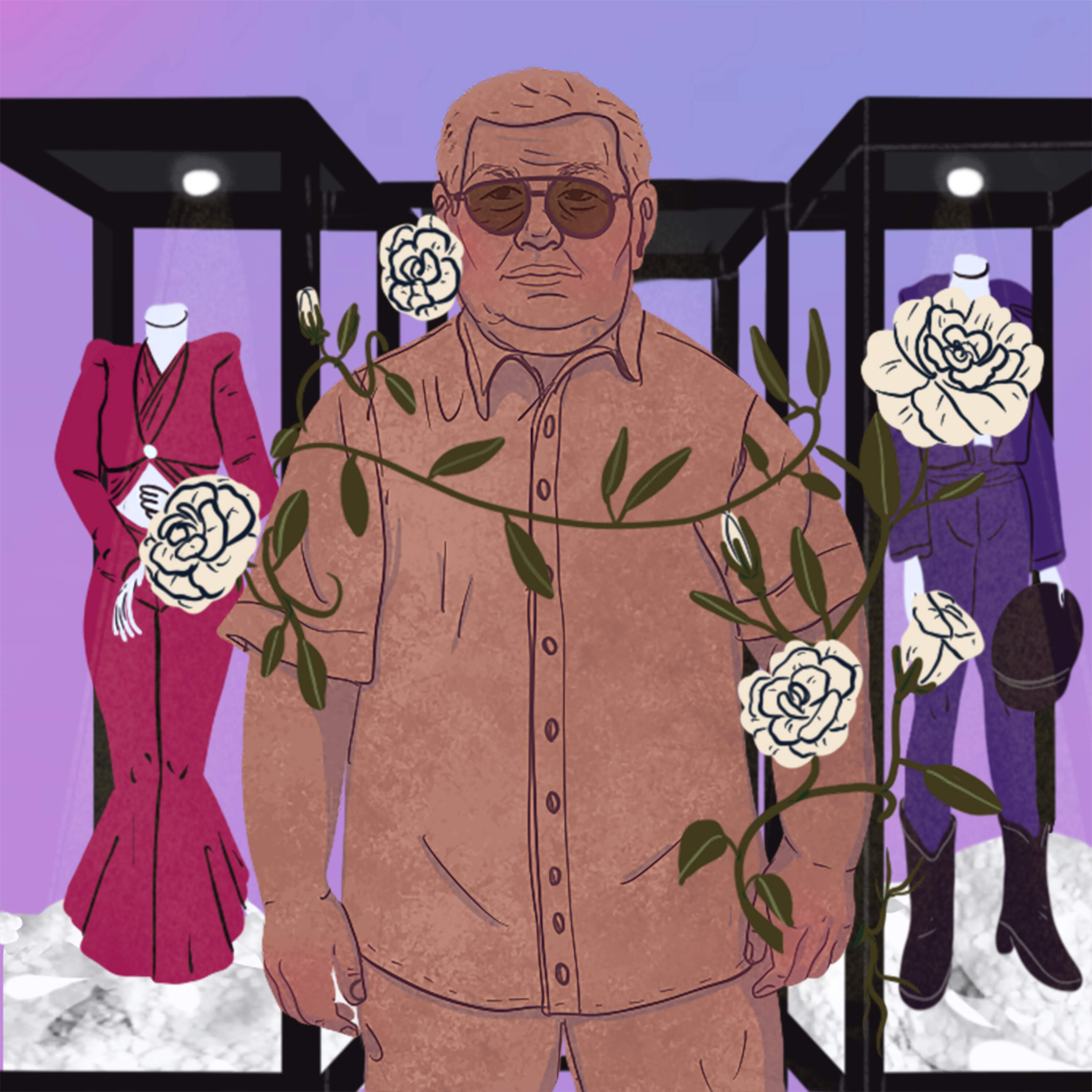
I came back to the East Coast and then eventually to El Paso to quarantine and began the after part of 2020. The months of reflecting and writing about Selena, about Abraham, remembering the song he told me he loved the most from her. "Don't stay with me anymore, I want to go back to my heart and give you happiness." This is "No Make It a Mass." It's a song about resignation, about accepting the loss of someone you love, about letting go, even if you don't have all the answers. "It's the most I remember of my life." We're able to play the song. Well, because remember those music rights I was so nervous about, Selena's family changed their mind. They said yes. "I'm so happy, and I'm so happy that I can't forget my own love." "Because I'm so happy." One of the things I spoke a lot about with Abraham is how Selena almost immediately became a symbol for something bigger than herself. I've always known that. I remember living through it as a kid, but what I didn't remember was the culture war that her death sparked and the reverberations of that battle today. "You did place Selena and you did take a guess shot." "And I'm going to do it again. And I'm going to do it 20 friggin' times. And I want you to leave my country." "I was born in this country, all boy, and I have the same equal rights you do, come now." That's next time on Anything for Selena. [Music] Anything for Selena is a co-production of the iLab at WBUR, Boston's NPR News Station and Futuro Studios. I'm your host, Maria Garcia. Our producers are Kristen Torres, Anthony Acelejido and Juan Diego Ramirez, with additional production assistants from Frank Hernandez, Sandra Rianio and Mariela Xac Cabinal. Mixing and sound design by Paul Vikes. Our editor is Marlon Bishop. Ben Brock Johnson is the executive producer of the iLab and contributed production management. Additional editing for this episode by Iris Adler and Catherine Brewer. Iliéna Galvez created the artwork for this series. Find out more about Anything for Selena on Twitter and Instagram at Selena_Podcast and at www.org/anythingforcelena. [Music] [Music]
Podcast Summary
Key Points:
The podcast host, Maria Garcia, travels to Corpus Christi, Texas, in early March 2020 to meet Selena's father, Abraham Quintanilla, for a reporting trip that will determine whether the podcast can proceed.
Abraham is portrayed as a protective, controlling, and shrewd figure who managed Selena's career; public perceptions of him are mixed, with some viewing him as greedy or harsh.
Abraham initially resists interviews and denies music rights, but after spending time with him, he agrees to be recorded and shares Selena's origin story.
Selena's talent was discovered at age five, and by nine, the family band became their livelihood after losing everything; Abraham quit his job to manage them full-time.
The host reflects on her own father's sudden death, drawing parallels to the complex father-daughter relationship between Abraham and Selena.
Summary:
In early March 2020, journalist Maria Garcia travels to Corpus Christi, Texas, to meet Abraham Quintanilla, Selena's father, for a podcast about the singer's legacy. The success of the project depends on securing music rights from Abraham, who is known for being protective and difficult. Initially, Abraham declines interviews and denies permission, but after meeting him in person at the Selena Museum, Garcia and her producer spend time with him, eventually gaining his trust.
Abraham allows recording and shares Selena's early life: her discovery at age five, the family band formed after financial ruin, and their full-time touring by the time she was 12. He describes himself as a strict, guiding father, contrasting with Selena's warm nature. The narrative also explores public perceptions of Abraham as controlling or greedy, fueled by media portrayals and the trial of Selena's killer.
Garcia, grappling with her own father's recent death, finds parallels in the complex father-daughter dynamic. The story emphasizes how Selena's rise was intertwined with Abraham's determination and sacrifice, shaping her as an artist and person.
FAQs
The podcast explores Selena's legacy and impact, focusing on her father Abraham Quintanilla and the host's journey to understand Selena's story through interviews with her family and fans.
The host was nervous because Abraham is known for being protective, controlling, and having a famous temper, and he had previously rejected interview requests, putting the podcast's music rights at stake.
Abraham discovered five-year-old Selena's talent when she started making up melodies after her brother got a bass guitar; he taught her, and she quickly learned 30 songs by memory by age six.
The family lost their house and savings, becoming so poor they mostly ate beans. Abraham then turned the family band into a full-time livelihood to survive.
Abraham acted as her manager and mentor, booking shows every weekend, including in nightclubs, and removing her from public school to tour full-time, while being a strict and protective father.
The host's father died in a sudden accident a year before, and she was navigating grief while interviewing Abraham, reflecting on her own relationship with her father.
Chat with AI
Loading...
Pro features
Go deeper with this episode
Unlock creator-grade tools that turn any transcript into show notes and subtitle files.
 PodcastTranscript AI