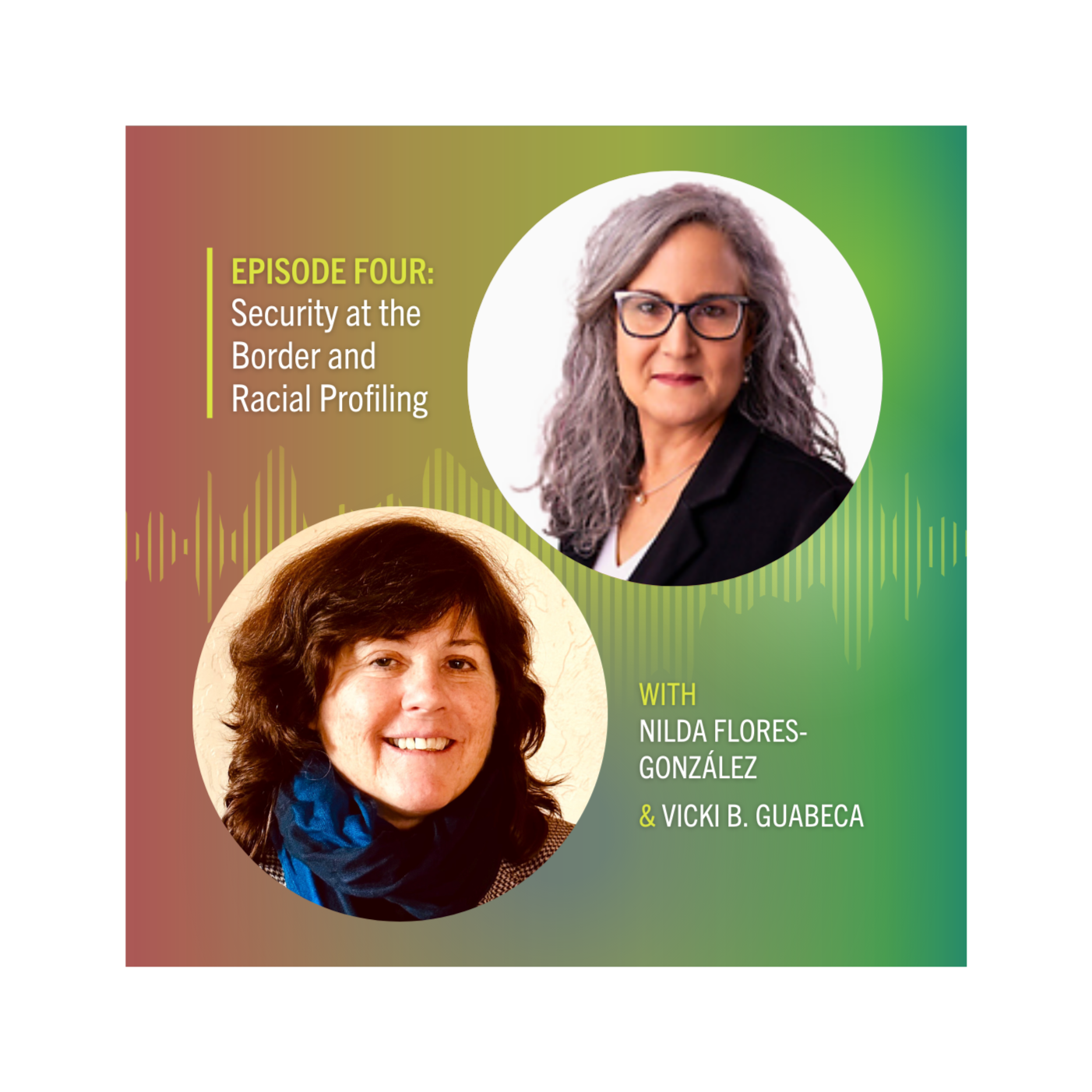
The podcast episode focuses on the challenges faced by Latinx young adults living in border communities in the U.S. due to heightened border security measures. The discussion highlights the emotional toll, racial profiling, and daily disruptions caused by the heavy presence of border patrol agents and interior checkpoints. Policies like the 100-mile border zone grant authorities to conduct searches and interrogations within the interior regions, impacting the lives of both immigrants and U.S. citizens. The interview sheds light on the need for reforms to address the unintended consequences of border security measures, emphasizing the importance of understanding the human rights implications and seeking alternative approaches to border management that prioritize social justice and community well-being.
Transcription
4760 Words, 27403 Characters
We see the pain that young people that we interview go through because their daily lives are marked with unpredictability, with this emotional stress and with this fear that they live in because of the heavy presence of the border patrol and of our country's fixation with enforcement, with punishing people, with watching people, and we believe that these reforms are needed so that people who live in this area can feel that they are full Americans. Hi and welcome to the fourth episode of the podcast Immigrant Lives. My name is Elizabeth Aranda and I'm a professor of sociology and the director of the Immigrant Wellbeing Research Center at the University of South Florida in Tampa, Florida in the U.S. Today we will be discussing the important issue of border security and its consequences. Previous decades have witnessed the ramping up of border security in the form of construction on the border wall, electronic surveillance at the border and in the 100 mile border zone, and checkpoints in which residents of border communities are routinely stopped for inspection and often pulled over for secondary inspection. We discussed the unintended consequences or perhaps intended of some of these policies and practices for residents that include not just immigrants but also U.S. citizens. We've invited two experts to be with us today to understand how some of these policies and practices might affect residents of border communities, specifically Latinx young adults who find themselves the objects of such scrutiny, regardless of their citizenship status. Nila Flores Gonzales is professor and associate director of sociology in the T. Denny Sandford School of Social and Family Dynamics. Our current research explores the effects of racialization on the ways in which Latino youth understand national belonging. Professor Flores Gonzales is the author of Citizens but Not Americans, race and belonging among Latino millennials, and school kids, tree kids, identity development in Latino students, and co-editor of Marcia Latino Chicago in the immigrant rights movement, and co-editor of immigrant women workers in the neoliberal era. She's published articles on various topics such as race and Latino identity, youth and social justice, and education and has received funding from the Ford Foundation, the National Science Foundation, and the Russell Sage Foundation. Based in Tucson, Arizona, Vicki Gaubeca is associate director of US immigration and border policy for the US program of human rights watch. Vicki has a master's degree in public health from the University of Arizona in Tucson, and a BA in communications from Wilson College in Chambersburg, Pennsylvania. Vicki uses her expertise and commitment to human rights to guide human rights watch work on policies that protect the rights of border and immigrant communities, conducting research on human rights violations and advocacy with relevant stakeholders and community leaders to change laws and practices at both the state and federal levels. Formerly, she directed the Southern Border Communities Coalition, and prior to that, she directed the ACLU Regional Center for Border Rights when it was founded and based in Las Cruces, New Mexico. Originally from Mexico City and a border resident for more than 25 years, she has more than 20 years of experience in policy advocacy, community organizing, public affairs, communications, and public health in a variety of settings. But as a member of Border Immigrant and LGBTQ communities, she is passionate about racial and social justice for all people. It's such a pleasure to have you both here as guests on the podcast, so I want to thank you for your time. So I'd like to begin with Ms. Gaubeca for folks that are unfamiliar with how the Southern US border has been militarized in recent decades, and more so in recent years, could you describe some of the policies and practices that the US government has implemented to increase border security? Yeah, so I would say that the last 30 years, it has been really incredible to witness firsthand how much enforcement has been deployed at the US Mexico border. And you know, just to start off with, I wouldn't call it border security. In fact, a lot of the advocates have shifted to border enforcement as they're a large group of people that live in the border lines that don't feel insecure. In fact, our safety feels diminished by all of these resources that have been deployed at the border. So for example, in the last 30 years since 1994, specifically when border patrol started its prevention through deterrence, it's bad and thing. We have seen a five-fold increase of border patrol agents. We have seen a construction of hundreds of miles of 18 to 30 foot walls that are carving to the part of our community that have severely affected not just people, but you know, has affected the environment, natural resources, including the environment. We've seen an exponential increase in surveillance technology. We've also seen the use of permanent interior border patrol checkpoints. We've seen an Arizona with the last state to install permanent checkpoints. Peacat landowners are concerned about how that affected their property values. So now we have it across all four states, which means that some communities are isolated from others within the United States. They're, for example, in Hedge New Mexico. There are many mixed families. We have mixed status families. And they can go to a doctor in Las Cruces because they would have to go to the checkpoint on the way back. So sometimes they have to travel all the way up to Albuquerque to go to a doctor, which is like three and a half to four-hour drive from head. So the implications on the border community affects, you know, how we move through our communities, but it also affects especially black and brown community members even more severely because of the levels scrutiny that they get over the, you know, white appearing individuals who go to their checkpoints or who even go shopping. And I have a massive number of stories I could share about what the effects of these public scenes and infrastructure are on border community members. I really appreciate the report that Neil Del Flores on salaries. You know, I think it would just reflect really what the impact for our border communities. And I have the same wagons as severely affected by these policies as well. You know, I'll stop there. Great. Now, thank you for clarifying that for us that it's been more like border enforcement rather than security. I mean, the reasons that are used to back up these measures are to stop the flow of immigrants and asylum seekers. But in your view, does that even work? Are these even solutions to that? Now, I mean, I would think that it's the definition of a not-so-spark approach to border. And what I mean by that is that we've been doing this for at least 30 years. And it was still coming. So we have spent the United States has spent billions of dollars on hardening the U.S. Mexico border and people are coming and they will continue to come. We're experiencing unprecedented human mobility throughout the world, many of which is caused by climate change, conflict, or economic conditions and violence. And some people just come here because they want to, you know, reunite with their family members in the United States. And meanwhile, the U.S. basically just focuses on a law enforcement solution is that do nothing to address why people are compelled to move here. And I think it's time for us to start thinking of a different approach. We cannot continue the United States, cannot continue to ignore the human mobility and continue to increase. The United States cannot enforce its way out of this problem. That's a good point. And Neal, I'd like to bring you in. You study the well-being of Latinx young adults who live in border communities in Arizona and you and your co-authors recently published an article that Vicki was referring to on how the border wall and the practice of inspecting residents living within the 100 mile border zone affect these young adults. First, could you explain to our listeners what we mean when we talk about the 100 mile border zone? The 100 mile border zone refers to a policy that extends the U.S. Customs and Border Protection's jurisdiction 100 miles into the interior of the U.S. And this includes land borders and also from the coastline. So most of the U.S., all around the U.S., it is the 100 mile zone applies. And so this goes from the border from Canada and Mexico and also the West Coast and the East Coast. And what the border zone does is gives authority to customs and border protection to board buses and trains without a warrant to enter property if you live within 25 miles from the border to stop, detain and interrogate individuals who are suspected of immigration violations. And it also, what Vicki said, it sets up checkpoints throughout the 100 miles. And some of these checkpoints are permanent. These are places where all cars have to stop. You are asked about your immigration status. Some people may be sent to further interrogation. What is called secondary inspection? So they have to go and be interrogated. Their cars can be searched. There's drugs niffing dogs also. So most of these checkpoints are permanent, but they are some that are what are called tactical checkpoints. And these are checkpoints that can be open anywhere within those 100 miles. And one of the things that many researchers have found is that, and Vicki, I'm sure you know this, that many people, what you were referring to, avoid these checkpoints. And it's not only because of your legal status, it's because it's a hassle. You don't know, even if you're a U.S. resident, you don't know if you're going to be pulled for secondary inspection. So it may take you more time because you have to stop and interact and possibly go to secondary inspection. And so a lot of people try to avoid, make all longer distances driving so that they can avoid these checkpoints. So talking about your report, could you summarize the findings of your research and how these policies and practices affect Latinx young adults? Yeah, one of the things that people are not aware of is that about two thirds of the U.S. population live within the 100 mile border zone. Two thirds, that's large. Two thirds of the U.S. population, 200 million people. This includes New York, LA, you know, towns, you know, all that the Canada border, all of the southern border, all of the sea coast. And of course, most of the enforcement concentrates in the southern border. And that's where we, when we hear border crisis, people immediately think of the U.S. Mexico border because that is where the concentration of this enforcement happens. And I wanted to interject one second and say that Arizona has 375 miles of international border with Mexico. So all of that is militarized. And there's a lot of the enforcement concentrates there. 40% of Arizona's population lives in the border zone. 41% of the people living in the border zone in Arizona are of Mexican origin. And they have been studies that have found that people who are look Mexican are 26 times more likely to be asked for an ID are 20 times more likely to be sent to secondary inspection. Yet in many of these towns, they are a very small percentage of the population. So these affects people's everyday life. And also statistics show that about 60% of people who are arrested are non-deportable individuals. So a lot of that means that they're U.S. citizens. They're U.S. citizens or they're permanent legal residents. So these are people who are documented in the country. And so therefore they will not be eligible for expedited removal. And so a lot of these efforts are really not restraining undocumented immigration or unauthorized immigration, but rather it's affecting the life of U.S. citizens. And so in our research, what we have been looking at is there's a lot of focus on the detention of immigrants and rightly so. But there's also the effect that this has on U.S. citizens. So people who have been born and raised in the U.S. whose constitutional rights are violated on a day-to-day basis if they live in this area. And so we refer to them as collateral subjects. So these are people that are caught in this web of enforcement, even though they have the right to be in the U.S. And so their daily lives, and I think this is what Vicky was getting at, that their daily lives are filled with surveillance by customs and border protection. There's heavy presence of border patrol. And many towns is sort of replaces the police. So a lot of the day-to-day interactions with officials, it is with border patrol rather than local police. Many young people have talked about the border, the border wall as a daily reminder and a physical reminder of their situation. And you know, as Vicky said, a lot of people cross the border regularly. Some of the young people we interview go to mass in Mexico every Sunday they cross and go to their grandparents house. And so this is something that, you know, people is part of their daily life having to deal with this enforcement. A lot of young people also talked about racial profiling and for many of them, this was more marked when they were with people who are non-latino in their cars, for instance. And so they are more likely, they talk about being more likely to be stopped, to be asked, to have to remove sunglasses, for instance, when white people do not have to do this. And some of them talked about the destruction of their property. One young man told us about being distracted by one border patrol officer while the other one ripped their back seat looking for drugs. And so some, the other thing that we found is that people enact strategies to try to lessen the effect that this has on their daily lives. One strategy is that they get the sentry card, which is the Secura Electronic Network for Travelers Rapid Inspection card. And this card is supposed to expedite entry from Canada and Mexico. And what we found is that that is not necessarily true. A lot of young people told us about still being sent to secondary inspection, even if they had the card, having to wait. And so one of the things that we kind of got from our research, some of these young people were saying, well, why do we pay this money to have expedited to be checked? We're pre-checked, right? It's like having the TSA pre-check approval. And yet, it depends on that particular day that they're crossing, you know, if they're pulled or not. So some of them, but some of them nevertheless get this card to try to expedite entry when they go to Mexico and come back. And many of them talked about trying to remain calm, being very annoyed, but trying to remain calm and compliant, and not, you know, particularly not calling attention to themselves, if they were crossing with someone who's not a citizen. So we have one young woman who talked about crossing with her boyfriend, who's a legal permanent resident. And he, you know, she getting very annoyed and he'm telling him, well, you know, don't say anything quiet because, you know, like I could get deported. I'm not a citizen, right? And so a lot of US citizens in the 100-mile zone also have family members who are from mixed legal status, right? These are families who have citizens who have legal permanent residents, who may have people who are in the process of of getting permanent residency and others who are undocumented. And so in the complexity of life or who's in your car, who, you know, so for them, this becomes a matter of unpredictability in daily life and having to deal with racial profiling and and probable consequences for family members. So given all that you've told us about the racial profiling, the likelihood that if you're Mexican, you're 26 times more likely to get pulled over per secondary inspection, things like that. I'd like to ask Vicki, some would argue that the US cannot have open borders and that some security measures are needed. And particularly folks who argue that would say we need to stop the flow of drugs and organize crime across the border. How do you address those folks who believe that we need some sort of balance? I mean, clearly what Neil does saying is that this is his own where there's rampant racial profiling and human rights abuses. But then on the flip side of that, what about folks who argue that we need some sort of security measures? What do you say to that? You know, before I answer that question, I just want to put a finer point on what Neil that was talking about. Just because I think that by sharing stories, people can understand the impacts a little bit better. But I remember talking to other schools, athletic schools, high school, athletic team. And this is in Mexico, who basically we're going through a checkpoint out on the quarterboard, extramural game. And in the van, there was one person who was a US citizen who was darker than the rest, who appeared Mexican. And the border patrol agent, who was female, actually pointed her out and kept asking her if she was the US citizen and then proceeded to put her hands on her gun. Honestly, that is a terrifying experience for somebody who's a teenager, who loses their sense of the longing for this community. Because of that, I wouldn't even call it a record question. It is a huge background aggression against an individual. There are thousands of these stories that I've heard across the borderlands. And I just think that people need to understand the implications of their policies before they think that they're going to harden one more and make them harder. The term open borders is outright a political dog whistle. I ask people what does a closed border look like? Because you can build a wall, a wild hide and a wild beat. People will still find a way to come in, either through the oceans or flying over somehow. They'll figure out a way to get here. And so it's a colossal weight of taxpayer dollars, like billions, to enact only these type of deterrents tactics. Because the only thing that these deterrents have tactics have been successful, is increasing the number of deaths of migrants who are attempting to enter the remote regions of the border and increasing the sense of oppression that border landers feel when they have to go to these checkpoints, when they have to face border patrol agents and how they lose their sense of the long wall in that process. I think also we need to make the distinction between smuggling and drug trafficking. They don't happen together. migrants don't bring drugs into the country. Well, so the drugs that come into this country counsel ports of entry, which are how you enter this country while we are another. Also, just to add another finer point to what Neil Doe was saying is the vast majority of the arrests that happen at checkpoints are not of nonsense. That's like less than 1% of the arrests. It's mostly US citizens or lawful permanent residents for small amount of drugs, including muddy water. And a great example of that was a couple of years ago, Willie Nelson was arrested in the muddy water when he went through a checkpoint in the El Paso area. So I think that honestly, we don't as a country, we don't understand the implications of our policies or how they're implemented. We're not understanding the high level of human rights abuses that are occurring and not only the high level of these abuses, but the lack of accountability of the agents who commit these abuses. People say, oh, well, it's happening in the border around. We need to do it because we need to secure the border, but that's it's just not working. It's really something that we need to pivot away from and start talking about the immense contributions of our transporter activities, for example, the economic resources that Mexican choppers bring into the US when they go to Tucson to go shopping or to less groups at El Paso. We have to value how migration actually contributes to how communities thrive. And we saw a perfect example of that during COVID, when they shut down the border, the local business rules on both sides of the border suffered. And so I do think that we need to get away from the false rhetoric about borderlands, I love what my border learned. We have a wonderful culture here. We are bilingual, multi-national, multilingual. If you take into account the number of tribes that are here. I mean, and this is something that I don't hear often, but the Hona Automation, actually their tribe crosses the border. Part of it is in Mexico, in the larger parties in the US, and they like to, in times of years, have these religious rights. I want to go to Mexico, and now the interference of their religious rights is happening because they're not allowed to cross into their own nation, that's in Mexico. So those are just a few examples I wanted to shoot at. So you're arguing for a reconceptualization of how we think about the border and border life. And in that reconceptualization, if we had to rethink how we think about the role of, for example, customs and border patrol, what role could they play in a context where we would want, one of the priorities would be to mitigate human rights abuses. And so, add security in terms of the flow of drugs, like you said, across ports of entry. So what would the role of that agency be in this reconceptualization of the border? Honestly, when it comes to people, I think the only role that customs and border protection should play is basically identifying a referring. I think that we need to change up the system, for the fraction of the billions of dollars that we spanned, on hardening the border, the U.S. Mexico border, we could instead invest in a humane, orderly, efficient process at ports of entry, that would actually create a new, fresh job model for border communities, and would actually contribute to the vibrancy of our communities, including it within the United States. By establishing these centers at ports of entry, you're also preventing people from crossing a more dangerous, more remote part of the border. You're also preventing this huge spike of people who had died by following from border walls, or we've seen a couple of examples, not just the one that, that no dimension is a little poor of people who hang themselves, as they're trying to get into the United States. I mean, these are tragedies that not only affect people who are trying to come here, but also community members when they witness this type of violence against individuals unnecessary and completely preventable violence against our communities. And I think it's time to turn this trip around, but it's not happy what our policies are, the money that we're spending, how we continue to think that that's going to solve, how on what all its twings exacerbate and creating an untenable situation for both border landers and for our visitors. Nilda, I'll direct the last question to you. Given your findings, and Biggie alluded to the one example of the man hanging from the border wall, obviously deceased and how one of your participants witnessed that and could hear the cell phone and his backpack ringing, thinking about those findings. What are some of the implications for the folks living in these communities, whether their immigrants are US citizens? Yeah, I want to echo what Biggie said. We need to find alternatives that will do away with these constant surveillance and questioning that people who live in the border zone experience on a day-to-day basis. This really takes a toll on their well-being, on their emotional well-being. It also makes them question what kind of Americans are they, right? When they don't enjoy the same rights as people who live outside of the 100-zone live. And I want to also say that we have had young people who did not know that this was not normal, that thought that living like this, everybody in the US lived like this. And they're really surprised to find that outside of the 100 border zone, there are no checkpoints. So they couldn't even imagine alive without this, without these constant surveillance. So I also believe that we need to stop racial profiling. And if they need to inspect, and if they need to check people, maybe count to 12 and the 12 person gets inspected. Or question, but not do it by these racial profiling, as Biggie said, the story of the girl in the boss, right? Because this is constant. There are some people because they're darker skinned because they look more Mexican, right? Because of that stereotype that they are constantly being pulled over and being questioned. So some people bear the brunt of a lot of these policies. We also think that they should be reformed to the Sentry Program so that it actually works so that people that have the Sentry card, actually they have been vetoed already by the government, they have already been inspected when they applied to this program so that they should have actually easier entry into the US when they are when they're coming back rather than being subjected to questioning a potential secondary inspection. Otherwise, what we have is just a program to grab money from people who live in the border zone. We also think that there should be compensation for damages to property and to the time of people when they are sent to secondary inspection. We, as I mentioned before, we have stories of people whose properties whose cars have been destroyed, but yet the Border Patrol does not have to pay for that. So they have not done anything wrong. They have not broken the law, but yet they're the ones that have these costs. And finally, I wanted to reiterate what Vicky said about accountability. So one of the problems is that the Border Patrol police is itself. And so they are the ones that are doing internal investigations. They're not frequent. And we also know that nothing really happens. There are no consequences for people who are violating. So we need to really work on that perhaps having an external evaluator that is assessing these complaints that people bring forward and that they are actual consequences for Border Patrol officers who are violating people's rights, who are racial profiling, who are harassing people. And so in addition to that, to that accountability is also training his training officers in how to interact with the public, in how to avoid racial profiling and doing this sort of thing. So in our work, I want to reiterate again that we see the pain that young people that we interviewed go through because their daily lives are marked with unpredictability with this emotional stress. And with this fear that they live in because of the heavy presence of the Border Patrol and of our country's fixation with enforcement, with punishing people, with watching people. And we believe that these reforms are needed so that people who live in this area can feel that they are fool Americans. Well, that's a fine point to end on thanks to both of you for such an interesting and thought-provoking conversation. And also for the work you do, it's important and we definitely need champions of human rights and the well-being of residents and border communities. So that's all for now. Thank you for listening and please join us for our next episode of Immigrant Lives. [Music]
Podcast Summary
Key Points:
The interviewees in the podcast discuss the emotional stress and fear faced by young people living in border communities due to heavy border patrol presence.
The U.S. government's border security measures include construction of walls, electronic surveillance, and interior checkpoints within the 100-mile border zone.
Latinx young adults in border communities face racial profiling, surveillance, and daily disruptions due to border enforcement policies.
The 100-mile border zone allows customs and border protection to conduct searches and interrogate individuals without warrants.
The impacts of border enforcement extend beyond immigrants, affecting U.S. citizens and documented individuals as well.
Summary:
S. due to heightened border security measures. The discussion highlights the emotional toll, racial profiling, and daily disruptions caused by the heavy presence of border patrol agents and interior checkpoints.
S. citizens. The interview sheds light on the need for reforms to address the unintended consequences of border security measures, emphasizing the importance of understanding the human rights implications and seeking alternative approaches to border management that prioritize social justice and community well-being.
FAQs
These include a five-fold increase in border patrol agents, construction of 18 to 30 foot walls, use of surveillance technology, and installation of permanent interior border patrol checkpoints.
No, these measures do not effectively address the reasons people are compelled to migrate, such as climate change, conflict, or economic conditions. The focus on enforcement does not solve the underlying issues.
The 100-mile border zone extends CBP's jurisdiction into the US interior, allowing for warrantless searches and stops of individuals suspected of immigration violations. It affects about two-thirds of the US population and leads to racial profiling and daily surveillance.
Latinx young adults face racial profiling, increased likelihood of being stopped or sent to secondary inspection, and disruption to their daily lives due to border enforcement measures.
US citizens living in border areas face violations of their constitutional rights, increased surveillance by border patrol, and uncertainty in daily interactions due to heightened enforcement activities.
While acknowledging concerns about security, it's important to note that security measures disproportionately impact communities with racial profiling and human rights abuses. Open borders are a political dog whistle, and billions spent on deterrence tactics have not effectively addressed the root causes of migration.
Chat with AI
Loading...
Pro features
Go deeper with this episode
Unlock creator-grade tools that turn any transcript into show notes and subtitle files.
 PodcastTranscript AI