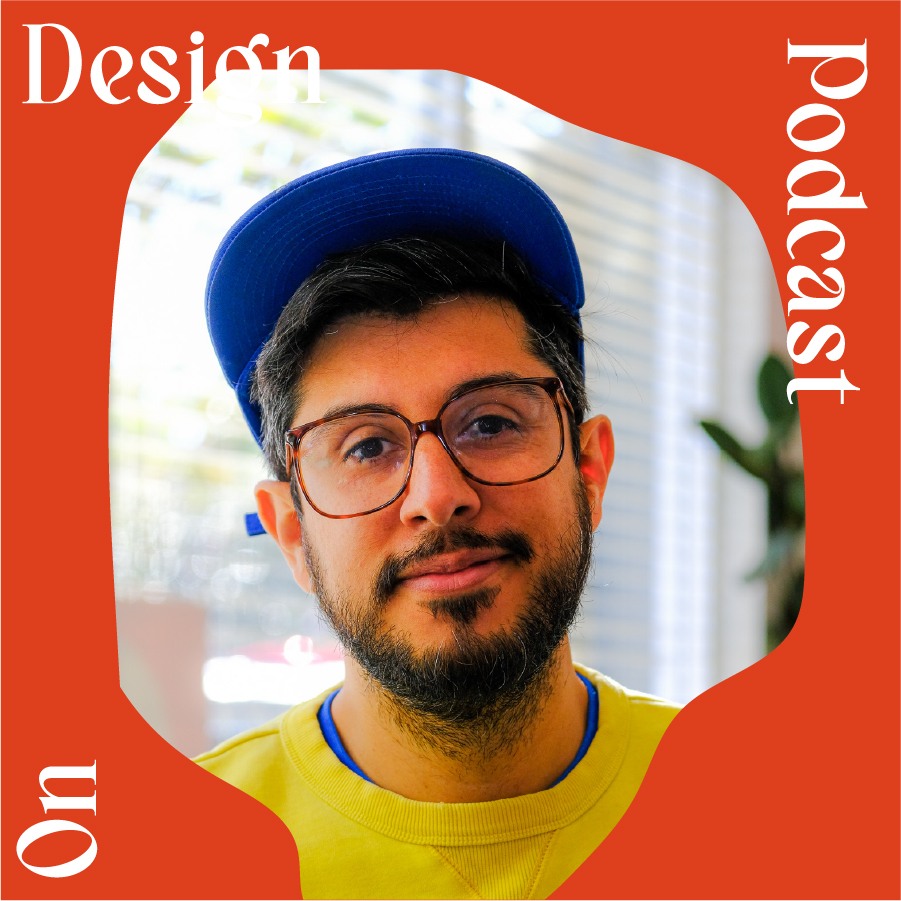
[Music] Hi everyone and welcome to the new episode of Don't Design Podcast. I'm your host, Yustina Green. Many of you will be listening to this episode as 2024 is coming to an end. And today's conversation is just what you need. If you're in that place of reflecting on this year, looking at your head, looking at your practice and seeing how it's evolving or how it's stuck, looking at the things that excite you and the ones that might not feel right anymore. Today, our guest is a wonderful creative Sebastian Curie. But first. [Music] Hey guys, I'm excited to introduce you to Shillington. And online design school, I highly recommend. I don't know about you, but I have learned so much more from online courses I took in the past 12 months than I did from my so-called traditional university education. And I know that you get the degree and the school's prestige, but honestly, I'm not sure these days it's worth the money, because what you don't learn is how to work within the industry. And that's where Shillington comes in. They offer three or nine month online graphic design courses taught by practicing industry designers, which ground you in design theory and then teach you how to answer real briefs from real clients. I've dropped in on some classes recently, and it's amazing how quickly students develop their design skills, even if they join as complete beginners. Honestly, studying with Shillington is your shortcut to becoming a professional graphic designer and a cost-affraction of what it would to study at the university. To find out more about their full and part-time options, across four global time zones, visit ShillingtonEducation.com or click the link in the show notes. That's ShillingtonEducation.com. Before running this podcast and working as an illustrator, I spent a decade in public relations, working with designers, architects, artists, and media brands on getting them into press and other media. I was even heading up Disney's PR for two years. And then now, I want to share all of my industry knowledge and show you how to get featured in newspapers, magazines and on websites that your customers read, whether that's creative review and design or financial times and forbes. I've distilled all my extensive knowledge into the insider's guide to PR for creative businesses. And this is Digital Guide. I tell you everything you need to know about PR, with examples from the creative industry and useful templates for you to create your own press back, write a press release, and the email journalists. The guide is available now as a digital download from my website at ustinagreen.com/PRGuide. And I've also included a link in the show notes. This information rich guide costs just 45 pounds. And for you, dear podcast listeners, I'm offering a further 20% discount with the promo code on design, that's one word. So head to ustinagreen.com/PRGuide and use the promo code on design, that's one word, on design, to get your insider's guide to PR for creative businesses today. Right, back to today's episode. Sebastian Curie is an illustrator, a graphic designer, a painter, and an animator. But don't let that overwhelm you. He's just a wonderful, down-to-earth person. In our conversation, he honestly talks about his career path, what he's learned along the way and actually, learning itself is a big theme in our conversation, with Sebastian highlighting the importance of always learning. And it's about the importance of it, but also the joy of learning and the joy of growing and evolving and really how hitting your 30s or getting close to your 40s doesn't mean at all that you're stuck or you're also a maid, kind of set creative, that will never change. But before I talk more about what we actually talk about, let's just jump into the conversation itself. Let's go. (upbeat music) - Let's get started with quick fire questions, 'cause I'm very excited to have you here. So let's get into who you are, your work, and for the listeners to get to know you better. - Sure, sure, I'm ready. - If you weren't in your current role, what would you be doing? - I would love to be a gardener. I like plants. - What would your dream project be? - No brief, big budget, a lot of time. - I like that, no brief, big budget, no deadline, I say. - Oh, you know, ideal conditions. We never get all of them, yeah. - Who's a creative that you admire? - Well, we were just talking about Wilford's culture, really admired his work, really. Yeah. - What's one thing he cannot stand in design? - Readability. I struggle with readability a lot. - Yeah, when I have to work on design and stuff, I always go for beautiful. I always go for interesting, but reliability, you know, to be clear sometimes is to be boring. - And what's the best piece of advice you have ever given? - That's easy, work with talented people, you know, better people than you, people that you admire, people that is ahead in your career. - Yeah. - And was that jumping to kind of the main conversation? Was that easy for you to do to find this people kind of to surround yourself with people that you would consider better than you or farther ahead in their careers? - Oh, at the beginning it was real easy, I was the worst. It was, yeah, it was just a matter of getting any job. Yeah, at the beginning it was nice. I don't have a problem with working with people that is more talented than me. I actually, the beginning of my career and until the point that I went freelance, I used to work at studios and it was a team job always. So, yeah, everyone was better than me. For the, I don't know, first six, eight years, everyone was a better animator, better graphic designer, better illustrator, better 3D generally, better everything, yeah. But little, I learned very slowly, you know, but I'm very curious. So at some point after those six, seven years of working on different places and studying careers and all that, I started to feel that I was level, you know? I started to feel that I will bring value to those places. But yeah, it was, I think it was, it was kind of easy. Maybe the main problem is that I had to sacrifice my comfort, you know, I will work on a place. And then I will be doing all kinds of things because when you start, you know, you're an intern so you really don't have a position. You're like, hey, you're gonna help Justine, you know, you're gonna help this person and I did that for six or eight months. And then I was like, hey, I think I learned most of the things that I wanted to learn. I want to go to a better place with more talented people. And then I will quit and I would get the other job without, you know, like just jumping. So I jumped both six or seven times for the first eight years until I got to a studio that was really good. And it was impossible to get that good in the time that I had. So I worked four years in this other studio called Plenty. And then I learned a lot of animation. I really, I only made like, I learned there, motion graphics a lot, 3D, I don't know, just like nerd stuff about motion graphics. And then I became a director there. So yeah, it really helped me. But before that, it was like a learning process, yeah. That's very interesting that you changed jobs so many times. And then when there is something that you would advise, other people kind of, you know, young creatives at the start of their careers to keep moving. If you can sustain that, yeah. You know, there is a moment where it's not healthy. There is a moment where it is really uncomfortable because you lose your friends. You don't know anybody, you are the new guy. You keep being the new guy always. So that affects the day to day. You know, it's not the same going to your job if you don't know the names of everybody or something that. And sometimes you go to a job and your expectations don't meet, you know, what you already have there. But I will advise to try to push it. Yeah, for me, you know, I was very curious. I'm still on and when I started doing, I would say video stuff, not even graphic design stuff or motion graphic stuff, just stuff around video, you know. Adding subtitles to something, transcoding something to the other, I don't know, like a, let's export MP4s. They were MP4s, but MP4s do something. Just a small task, you know, at the beginning, that was the thing that I could do because I was out of school and they required that. And then I couldn't grow faster than my boss would say. So at night, I would learn After Effects, you know, or Photoshop. And to my new boss, you know, on the interview, I would say, "Hey, I have this portfolio. I use After Effects and Photoshop." And also avid, you know, or premiere editing tools. And these new boss would say, "Hey, actually, your portfolio, it's fine, you know, we could work with that." So I would jump out. And then I would do the same. You know, I would learn C4D and B-Ray. And then the same, "Hey, I actually use." And if you do that, it is faster. It is really hard to change the perception of somebody, but it's really easy to present yourself as a new somebody, you know? So, yeah, I did that when I was a kid for a bunch of times. My LinkedIn is terrible. Yeah, and it helped. It really helped, yeah. - Right, 'cause there's this notion as well. I'm not sure it's there anymore, but there was this notion that if you change your jobs too quickly, then that's kind of not a good sign. But I really like what you said, because I agree with it, that if you, when you add one company, one studio, they have certain perception of you. So changing that perception can be very, very hard, especially if they see you as a junior, and then you might be there in four years. And they might still see you as a junior. - Yeah, well, it is also an industry, you know? Sometimes, see, let's say that you have a really good boss, and you really got better, you know? You were like, okay, I started at level one, and now I am level two. Still, your boss knows that he has to, he has to try to pay you the same, you know? And even if you do, then you, I don't know, let's say that your boss says, okay, now you're not only doing subtitles, you are also doing, I don't know, this motion graphic thing, you know? And you have a bigger role. He's gonna try to keep the salary where it is. He's gonna try to keep you doing the same task, because you are reliable. And this thing where you don't control the task, that's the part that you want to do, you know? It will be great if you get paid for the things that you don't know, so you always learn. And in my experience, it's really hard just to talk with your boss about that. At some point, I did that. You know, I was like, hey, I'm really good at doing this, the A thing, I was good at doing animation to the animation after effects. And then I was like, but I actually want to treat the animation. That is a very different thing. Would you let me, I can't do the two things thing, but let me do the three things too. So, and my boss at that time, he was like, I don't know, you know, maybe we're gonna give you something, and he did, he actually did. So, sometimes, you know, it's a salad thing, sometimes it's a skill thing, a role thing, but I always try to push, and I always try to follow my curiosity. In the real world, you know? I don't know, I had to, I had to do a lot of sacrifices, but yeah, it worked for me. I don't know if it works for everybody. - And where are you living at the time? 'Cause I know you moved a few times. Where were you living kind of when you were the intern when you lived in those first few years? - All that part I did in Buenos Aires. Yeah, I learned, so I studied in Buenos Aires. I studied post-production in it's called UNLA, University of La Nuz, it was my neighborhood. And then I started working and I worked for six or seven years. I got good, you know, I was an animation director. I will do big projects, I don't know, for HBO, for Europe, for North America. But then I was a really bad graphic designer, really bad. I was terrible. And I would work with people, and they would say, "Hey, why you are, do you need help with this stuff?" And I hated that. So I went into school. I was like, "Okay, I'm gonna have to deal with this stuff. I went to school, I studied graphic design." At some point I had to go freelance, because my time, you know, it was an infinite. So I had to take some time off of my work, and I was doing freelance projects and school. Yeah, graphic design. Up to the point that later, you know, like two years into that, I got a proposal to go to LA. But all that chunk that I would say are between six or eight years. Yeah, I moved jobs, I studied a lot, and I was very interested in defining what I would like to do, because that was also my problem. I wouldn't know, you know? I didn't know if I wanted to be an art director, creative director, it's just like a blank designer, you know, I didn't know. I was curious about everything. I like everything. And I was actually not a list. I could do everything. So it took me time to know what I would like to pursue. And when did you feel that you know that this is the path? I don't know, I still don't know. No, I still don't know. When I was a kid, it was terrible. Now I'm more in peace with this thing. I love when people know what they want to do, you know? You hear these interviews or you hear people that they went to school, I don't know, to study graphic design. They studied a graphic design career at some point they put a studio, and that was it. They were always happy doing that. Me, I went into journalism at the beginning. I was super lost. I liked to read a lot, but journalism and reading is not completely, you know, the same. And it took me a year to say, no, this is not for me at all. I can do this. And I went into a school again to study post-production. And then I liked that, but post-production is a career that teaches you about music, about video, about films, about graphic design a bit. So when I started working, I tried a bunch of stuff from being a video editor to an animator, to a graphic designer, to a designer for branding, in television, then 3D. I don't know, a lot of stuff, you know, very different stuff. And I couldn't decide, couldn't decide at all. So I was doing kind of everything. It is very common in Latin America to work as a journalist, and you have a couple roles. So it wasn't that weird, but when you listen to an interview, usually people they have, you know, a goal. And I couldn't have it. I was like, I actually don't know, you know, I can say. Right now, well, you ask, when did you know? I think never. At some point, I understood that that was my answer. I will never, I'm never going to know, you know, what I want to do in the future. But I can create the conditions to do a bunch of things. So I am always such a journalist, yeah. And I jump between stuff. And I like it. I think for me, it's very healthy. Right, you found your way of working, right? Because it might be that if you were to stick with one thing, you would actually be unhappy, because you have a lot of curiosity, like you said. Yeah, I think I would be a bit unhappy. At the end of my animation career, I wasn't happy. It's not a good place to be. I wasn't happy with my job. I work a lot of hours. Animation is a time-consuming task. Every animator knows this. And I will work on big studios. They're very demanding, you know? And I love my work. I can't deliver anything that I don't like. So if I give you something, I have to like it. But if you're unhappy about your job, that's very hard. So I struggle with that. And yeah, it was a happy time of my life. But in work terms. But yeah, I suppose that I just got comfortable with myself. And I suppose that's something that everyone has to do. At some point, you realize that everyone is a bit different. And maybe, if you didn't know what to study, when you had 20 years old, that's not that weird. And that's fine. And if there is this quote that in motion graphics, people will tell me all the time that maybe you know it better. Master of non. How is it like-- Oh, jack-a-volt trades. Jack-a-volt trades. Jack-a-volt trades, master of non. Yeah. And it will kill me. It will kill me because I was a jack-a-volt trade. Still, it is hard to define what exactly I'm doing. And it seems that it attacks your value. If you're a jack-a-volt trade, you don't know anything really well. You know, this ring and a specialist to do this thing. And I told you that I was failing. I was like, hey, but I want to be good at that. I'm just very curious. I like animation. I like the science. Just let me do the whole part. Because I can draw a bit, or whatever. But that's the thing, because then are you master of non, or are you master of many? And it's actually a theme that came up in another interview from somebody who has worked in advertising for almost 20 years. And she said that nowadays, I don't know what your experience is as well. Clients look for people who can do quite a few things, partly because of budgets, but actually being a master of many is a great thing now. Yeah, well, yeah, in studios, you learn that you are a very valuable piece, because you can do a bunch of stuff. So any project that the studio brings, you could be a key part on that. And at some point, people stop saying that about me. But also, I don't know, inside me, up to the point that I got to-- I work at a studio called Buck. And they are very important in the industry. And for me, at to the point that I got there, I was always questioned myself, OK, maybe this is studio that I am now. It's not that good. So I'm actually a master of non, because there is a master that is in the other studio, the next studio. And the time that I'm going to meet him, he's going to be like, he's going to be great at this. And I'm going to suck. So inside me, I will feel that. I will feel that I was a jack of all trades at all. But I will deliver things at a proper level. Clients will like them. I will get approved projects. And I don't know. It was fine. But it took me years and years of traveling countries going to different studios, working with different people to create enough confidence in myself to say, I'm actually-- I don't know, it's jack of all trades. But I'm a-- some trades, I am really good. And I'm, for sure, a master of a bunch of stuff. But a master of none, I think it depends who you work with. It depends on the team. It depends where you are. Yeah, it's a generalization. I think you should just compare to the people that it's around you. And I always try to work with people better than me. But if you learn, that's a skill. It's just learning. It's a skill that some people, they forget. When you hit 30, or when you hit, I don't know, 28, nobody goes into university again. And I went into a university again there, and I learned a lot. It completely changed me. I wasn't an animator, fully animator, not drawing, no graphic skills. And when I-- it's just in two years I became like a really good graphic designer. And I suppose that if you keep learning, you just change. And people around you, they don't change that much. Usually, people stay in a comfort zone because it's comfortable. I suppose at some point, I stop. Now I'm not pushing it that hard, because it also takes a lot of energy. But yeah, up to the point that I was traveling countries and working on different studios, I was putting 200% there, yeah, for sure. And you said that you're, at the end of your career in animation, you weren't happy. There's quite a few things I want to talk about. But actually, a better one to talk about now is talking about work and putting work in, because we've just talked about learning, about gaining new skills as well. And there's a quote I read, I think, one of the view interviews that said, "Art is work and inspiration doesn't exist." But I'm not sure if that's your quote or kind of a quote you use, right? And so I really want to talk to you about, what does that mean to you? Are you ready for your own creative career? Then this is for you. You know that I'm a fan of Continuous Growth and Professional Development, so if you're looking to finally get your graphic design skills to the next level and enter or transition within the industry, I highly recommend Shillington. Their intensive graphic design course is three months full-time or nine months part-time, and graduates consistently land jobs at top studios like Coto, Dix and Baxi and MacCan. Shillington is your shortcut to becoming a professional graphic designer. To find out more, visit shillingtoneducation.com or click the link in the show notes. Do you have amazing projects and products, but nobody knows about them? It's time to become your own PR. Get featured in the press and shine a light on your amazing work. And yes, we can do your own PR. I can teach you how. The Insider's Guide to PR for Creative Businesses is a digital download in which I've distilled 10 years of experience working as a PR for designers, architects, artists, and even design. In this complete guide, you will learn everything you need to know about getting featured in press and other media with examples from the creative industries and handy templates to use when preparing your press back, writing your press release, and contacting journalists. You can get the guide now at usedinagreen.com/PRGuide for the super affordable price of 36 pounds if you use the promo code on design to get 20% off. Link can be found in the show notes. [MUSIC PLAYING] Well, you know, I suppose everyone is different. Yeah, but I don't believe I'll learn an inspiration, you know? But I suppose I don't believe in inspiration because it's not something that I can use to actually create work. Let's say that you are a professional artist. And you have to create work. You'll go every day to a studio. Even myself now that I have a studio on my own balls, you know, and all that stuff. Waiting for inspiration is kind of hard. It's not something that is efficient. You know, 2024, who waits for anything? So I wanted to be in control of that situation, of the situation of creating work. So what I usually advise is that in any case, when you are going to be inspired, maybe your work is going to get better. I prefer to create the conditions. You know, I am very methodic. I'm a graphic designer. So I work in first, you know, researching. Then I do-- and then analyze what I have, what I have to create, what is outside in the world. Then I see what I am doing. Then, you know, I start to see how those compare. And at some point, I start creating work inside my-- within my vocabulary, within my language. And then, when I propose stuff, I start again and try to check that and see if it's adding any value. If it looks like myself, if the client is going to look at it at something relevant. So it's not at all inspirational. Some days, I feel that I'm better. And I can pinpoint. It's like, hey, today, I'm actually on point. I did these two things. I love this drawing. Awesome. And maybe you could call loud inspiration. But what I usually try to do is to create this practice. You know, I come everyday to the studio, every day I draw. Every day I have to create something. To me, it's the daily effort. I feel if you-- every day, you do something very little in years, you can actually something big. And I suppose that serves myself because I was a person that it would be really bad at graphic design. It would be really bad at animation. My first animations are my bird drawings. I'm my first, I don't know, anything. I wasn't an artist at all. I was an artistic-- I didn't know how to draw until I got to illustration a couple of years ago. I didn't know how to animate. So inspiration wasn't a thing that it cool, take me to where I am now. It was more about creating the conditions to learning, control. All that sounds great to me because I was like, OK, if I don't have it now, I'm going to have it in the future. And it's something that feels me. So yeah, I never speak to inspiration. I'm not that kind of artist. And I think that's more empowering as well that you simply or not so simply you show up every day. Yeah. And there's nothing essentially magical or mystical about it. It's just kind of doing the work. I have to say that it's very magical when you do the thing and you really like it. When you do a drawing, I don't know if this happens to you. But if you do something and you really like it, that is a bit magical. You'll get excited. You'll get excited, you know, completely. It's like, this is great. It's like a tingling sensation. You'll get that. That's the magical part. But then it's not something that you feel before, and because you're feeling something, you're like Picasso, you know, like, "I don't get that." Yeah. I've had it before where I think I really love drawing characters. And now I draw every day and stuff. And sometimes when something just comes out of your hand, and you're like, oh, I didn't know I could draw this. Or like a cool character with the interesting proportions and already with personality. Sometimes it's a mistake or something that happened there, but you didn't actually realize it when you were doing it. If I don't know, the sensation, I changed that feeling all the time when I'm working. It has a novelty element, you know? At the beginning, you know, when I was saying that I wanted to jump both, you know, and do new stuff, fresh stuff, new stuff has this excitement thing that old stuff doesn't have, you know? The routine is very comfortable, but it's boring, you know? The routine is healthy, you know? It allows you to be productive, to be functional in this world, but new stuff, you know? The new stuff, that's where the excitement is, you know? A new book, a new movie, a new drawing, a new stuff, you know? A newness. And it was very aware of that. So, for example, when I got stuck into animation, to the animation, I would be like, okay, if I can try, you know, 3D animation, oops. And then, or modeling, whatever, 3D is insane. And then, when I started post-production, there are a lot of tools, you know, that you can work around post-production, and I did that music, you know? When I was stuck there, I would learn instruments. I'm a curious person. I like what it surrounds art. Now, it's being a couple of years, but we're doing a lot of painting. And acrylic painting, you know, has a lot to teach you. And I suppose, you know, every time that I get stuck, I try to learn something new. With the lowest, lowest stress that I can, you know, with the lowest expectation that I can give. And just by, you know, this daily effort of doing something and you being very critical about the fact that, you know, that you're doing something, it gets better, just naturally, because of your process. And I believe in that, you know, I just do something that sucks. And then, I know that it's going to get better, so I don't get anxious, and two years into that, and I'm doing paintings, you know, or whatever, you know, I'm doing illustrations or things like that, you know, I feel that you have to trust that process, you know. And follow, you know, the new stuff, I think the excitement, you know, it feels you. That's very interesting, because for me, the new stuff is the excitement and the absolute dread. But I said recently doing videos of me in the character, kind of doing something quite quirky, but that's coming out of me. And I need to get it out of my system. Like, I know it has to happen. And I posted like six videos, so it's like just a start. So I had to tell myself, like, to not judge it or not think about it. And I gave myself until Christmas, because that's about like six, six months. It was like, for six months, just do it. And do not judge, do not remove, delete, worry. And just after six months, that's when I'm first allowed to maybe assess it. Yeah, yeah, yeah, I can tweak along the way. But only after six months, I can, yeah, actually, I do that all the time. And it's hard, you know, it is very hard because well, the whole social media thing, it is around to create your, to show, you know, to your best self. Best work, best photo, best body, best painting, best whatever, best studio. And it's terrible, you know, I don't, I don't, I don't work like that. I understand what are the rules, you know, and I try to work around that. But if I speak for myself, I, I'm doing painting because I'm really bad painter. But I want to be part of the conversation. I like paintings and I feel that if you create image, nowadays, painting is a big statement. And to me, you know, it, it, it means a lot. It really means a lot. And when I do a JP, you know, it doesn't mean that much. So because it means a lot, just to me, you know, this is a personal thing. I go into painting and now at least I can paint the stuff that I want to paint. But, you know, you just, you just try to work with yourself. You are the tool and hopefully you're going to learn and, and you have to, to try to enjoy it. Like you said, you know, like, hey, I'm going to do these six months. And then I'm going to try to see what I'm doing. And if I look silly, well, I'm going to try to improve it. But, but I'm going to put it there. At the beginning, when I was an animator, I was an animation director at a big studio. You know, like a prestigious studio and I started doing drawings. But I wouldn't, animators, they don't draw. You know, you don't, you don't use a synthetic. You don't use a pencil and paper. You use a mouse and a keyboard. So my hand wouldn't do anything. You know, it was terrible. It wouldn't follow my mind at all. So all my first drawings, if you scroll down really, you know, go down on my Instagram, you're going to see drawings that be edges are all wobbly. And I couldn't, it wasn't, you know, an intention. I think it reached as an intention because you designed that. But the truth is that my hand wouldn't follow. It was terrible. I couldn't do that. And I was fine. You know, I was like, okay, you know, this is going to get better. At some point, my hand is going to follow. And at some point, my ideas hopefully get better. Execution is a matter of patience, you know, and confidence. And I will say resilience. Resilience, yeah. Well, you have to, you know, you have to stick to it. And you have to, I don't know how you feel. But sometimes you do the thing and you hate it. But you have to publish that. You have to share it because art to me at least is for sharing. You know, you want to enter a conversation, conversation of drawings, conversation of paintings, conversations. You know, so you're like, hey, I did this thing. What do you think? What do you think she's seeing? I did this drawing. And you're like, you know, you're not going to put a like. So, you know, I have like 52 likes. And you feel, maybe you feel terrible, you know. So next day, what are you going to do? Are you going to do an animation that looks great? Or are you going to do a drawing that looks terrible? And I feel resilience, you know, helps you to do that. And you're like, no, no, no, I'm going to do a drawing. I feel, you know, I feel great when I'm doing the drawing. The drawing looks bad, but I feel great. Separate those two, at some point, hopefully the drawing is going to get better. And if not, whatever, you know, just stick to it. And I did that, yeah. And he held myself. I got better when out of that happy moment of my life. And I connected to the work that I always connected. But at some point, it was broke. There was an interesting quote that I heard that really helped me with the practice, which is similar to what you're saying. Where it said that if you want to create a really good work, like it's all inside you already. So, but it's covered by lots of really, really shit work. But you have to take the sheet layers. But you have to get all the bad stuff out to access the good. You cannot bypass it. So I, yeah, I sometimes turn into like a maniac. And I just, the ideas I have that feel solid and intuitively right, I just get them out because I know that the more I get out, the closer I'm to the good stuff, hopefully. Totally. No, yeah, yeah, I feel it's true. I like to read a lot, you know, and I feel sometimes you find similar paths, you know, or you read something. For example, Meat on Glacier talks a lot about drawing, you know, and an art and how commercial art applied art, you know, connects to fine art that I suppose is the thing that we all chase. You know, there is something that we do that is special, that we put into the paper or whatever, into Photoshop. And we believe in that. We connect, it has meaning for us. You know, it's not a, I don't know, like a McDonald's commercial. It is a drawing that I did. And casually, it is a McDonald's commercial, you know, but our art is very cool of the stuff that we do. And there are a lot of artists that struggle at the beginning. You know, they said that their work was terrible. You see the work, their work was terrible. And you're like, okay, you know, that's great. He used to suck. Now he's great. Now I have, you know, a perspective. Yeah, I have, you know, some kind of like future, optimistic future. And I, I love to hear that, you know, people that the other day I was, for example, I was watching a documentary on Joseph Advers. I don't know, he's early work, you know, early early, like 20s. But I really like his series, "Kromash to the Square". You know that one? The squares with the colors and the interaction of colored theory. He did that when he was 62. 62. I am 38. You know, I was like, this is great. This is great for me because you still have time. And it takes time, you know, it takes time. It takes effort to create this insanely exceptional body of work, you know? So I always try to just reassure myself that there is time that I can do better work. And that optimistic future fuels, you know, what is happening, you know, today. I do something and it's not like, at Joseph Advers, "Kromash to the Square", you know? But I think that's a really lovely thing because I think we can be quite rushed, or also because of social media, I feel like everything has to happen here and now. And we have to be amazing right now. And like you say, there's time if we put in work, if we put in kind of daily practice. Yeah, totally. I mentioned painting and there's a beautiful painting right behind you. And I really wanted to talk about the hands and where they came from in your practice. And also how do you balance the personal painting work that kind of morphine artist work with commercial projects? I talk a lot with my wife about this stuff. She also is an artist and I have different answers for different moments. But they're all true, you know? I can be a contradictory guy. I feel there is something about art, you know, that you go deeper into identity. It is really hard to create art if it's all imitation. Imitation is part of the process, but at some point you find gestures that are your own and they are not or accidents that read as your own. But there are a lot of heritage, you know, in art. And I come from commercial art, the way that you work as a commercial artist, you work in industries that are mainstream, that are popular, that are established. So the kind of work that surrounds commercial art is established art. So you work a lot with references, you know, that's the way that you go. You never start from a conceptual, original thing. So for years and years, I would imitate stuff. I would take a mood board, you know, like, I don't know, anyone that would work on an agency or a graphic science studio or whatever in this industry. They saw a mood board or they put together a mood board or they put three or three or four images that are references. And that's how you, you know, establish a universe, you know? You can't. And then from there, maybe you create stuff. When I started doing the hands, I was reading a lot of books. And I found a book from Ben Sean. And then I was reading about Milton Glaser, artist's work is a great book for me. I was reading about David Hogni. He wrote his own books, and the first one is great. I don't remember the title, but he talks about how he steals from Picasso. And it's so hard to steal from Picasso because it always looks like Picasso or like Hughis. And he was like, this is fucking genius. You know, like, you steal something and it looks fucking the same terrible, you know? And that happens to me a lot. I will draw and it will look like somebody else. And you hate that because you see, you know, like you admire the other person, but you want to do your own work. And this tension happens all the time, you know? Like, hey, I really like this drawing. So I'm going to do something similar, but I want that similar thing looks like my own. So the hands intended to do that, you know? I was like, okay, Ben Sean draws a lot of hands. And I was like, okay, maybe I can do this very intimate thing about working, about creating, you know? I'm really bad at speaking. At that moment, I was struggling with English because when I came to United States, I wouldn't speak English well. And I was like, okay, but the best way that I can speak is with my hands, you know? My work speaks better than me, you know? And so I did this drawings that at the beginning, they were rough and raw, but they didn't look at all as a motion graphic thing, you know? You have to think that I was an animator. And I was like, these hands, they don't look at all like that. And I love that. And at some point, they became an iteration. I will do more, I'm more drawings, I'm more drawings, and I will try to make them more, I will say even weird, you know? It's hard to, it's hard to explain creative process because there are no linear and sometimes they're not logical. But, but what I intended to do was to create a body of work that will look like myself. But truly, you know, like, hey, I have some heritage. I love, I love the Benchon, I love Nataniel Russell, I love Diego Rivera. They're all, you know, if you go and check hands, you're going to see, you're going to see some stuff there. I love Chef McFarridge. I love, I don't know, there are so many artists that did a hand drawing, you know, or hands drawings. And I wanted that, you know, I wanted to, to be in that line of artists, you know, if you put myself there, that's that will be for me some kind of award, you know, I just wanted to be inside that conversation. So I create a lot of, a lot of work into that. Just for me, for me, for myself, at some point, I also, I will share that work because for me, creating art, it is about sharing, you know, it's part of the process. So even at the beginning, you will see sketches that look very raw. And even you could say that they are bad. But I will share those and I will learn from those and I will keep doing that in the morning or at night. And that's how that body of work started to grow. The painting thing, just by reading, you know, you start reading really old school stuff and every artist that you read or most of the artists that I read, they are painters. And painting is a format, you know, that is established and it's all school, you know, you can go painting really back, back in time. And today it is really hard to find certainty, you know. I don't know, like two years ago, we had the NFT thing. I was doing loopable social media animations in MP4s. I don't know, when I started working, a 4-3 proportion for a TV screen was a standard. Then, you know, we went to 16 by 9. That's a change of canvas. It's really hard, you know, and you work on a wide landscape format at some point. The length of the stuff got really short. So, you know, technology really informs how we work and it's really hard to escape that. But, if you do painting, because it's so old, that is like, you know, that is established. It's not going to move. I can go and buy a canvas, you know, on a shop and put it here and maybe someone 100 years ago did the same and 200 years ago did the same. And I like that consistency. You know, the work should be known as ephemeral. If I do something on a painting and I put it there, hopefully, that's the intention. Hopefully, it's going to last. I don't know how long, but longer than my last advertisement for Apple, you know, or whatever. If I ask you, you know, like, hey, do you remember a piece of advertisement that I did five years ago or three years ago? You would say, like, well, no, I don't know. Who did it? You did it. I didn't know. Even if it lost my, if it used my language, even if it's, if it really looks like me, people forget, you know, forget the kind of work that we do, because the digital world that we live in, it's really, it moves really fast. Instead, I started doing stuff on paper, stuff on paintings, and the result. It is stays. Stays with you, is stays with me. If you get a painting, stays in your home, you've, I don't know, if you get a print, you know, you hang it there and I feel there is a connection with that. So I started discovering all that, just because I wanted to be part of that conversation. Same stuff, you know, curiosity, and the new thing, it was exciting to start painting. I don't have any, any kind of education around painting. I didn't hold a brush before, I don't know, like, two years ago. The first time that we got a brush, I was like, this is fucking weird. The first paintings that we did, they look awful, learning process, you know, that stuff. But I was very excited. We were very excited. Yeah. And to these days, we still get to do paintings. I get to sell paintings that is crazy. If you get into painting, painters gonna say you, say to you, nobody sells paintings. It's really hard to sell a painting. But then, you know, like, I'm a commercial artist. So there is a tension between what I do for a brand and what I do for myself, what I do for a private commission. You know, sometimes as someone comes to the studio and they ask, so what's, what is your real art? You know, because you're doing your hands, that's your wrong thing, right? But then you do these commercials. Are those your own thing? And as I said before, you know, it's hard to define myself. I actually like to be part of the commercial industry. There is terrific people there. Really talented people. Great ideas. I think there is value into this work. I talk a lot about Milton Glaser. And he is a commercial artist. I like Bob Gil. He was one of the first designers, you know, that created Pintergram. And he is, you know, a graphic designer work, you know, applied art. And so many, you know, I really like a lot of graphic designers. So I see value there. And I think the conversation, it is interesting. You know, it shouldn't be impossible to create valuable art and bring, you know, high standards of fine arts into commercial art, into advertising, even into Instagram, you know. And that's what I always try to do, you know, when I go into a call with an agency and I have a CD there, I have a safer proposal for them. Hey, I think this is what you will like. And I know that because I work 15, 18 years in small and big studios in United States and in Europe, in Canada, in Latin America. So I'm a informed professional that knows what your client is going to like. And usually I'm on point, you know. And then I said, but he me out, I have this other thing that I think is very interesting. And because people is people, new stuff and edG stuff is always going to connect more, you know. You're always going to see the advertising that is well done and be like cool, you know, and scroll down. But then sometimes it happens that you see something fresh, something new, and you connect with that, you know, maybe you don't know what was the brand or what was the product, you don't, I don't know, I never remember what was the product that I was selling. But, but you really connect with that. And I feel people that is working on this stuff, people that is executing. Sometimes they they feel it, you know, and they're like, Hey, there is some substance here in the commercial arts, in an advertising agency, in, you know, in these in these silly places for art. And then my paintings, they just speak, you know, for two galleries, two, two, two, two collectors. I don't know, it sounds, it still sounds silly to speak to this because I'm a graphic designer first, animator, commercial artist, and last, you know, in this, in this, all these categories, I'm a painter. So I still don't feel like a painter, but I do painting. And I don't know where that puts me. And sometimes I get to sell a painting and the guy that buys the painting, he's like, this is hard. And so I'm like, I'm happy, you know, I'm like, great, you know, I also like it, just take it home. And I just try to work with those two, you know, that tension keeps me happy. And to finish our conversation, because we talked about curiosity about learning new skills, and you've mentioned that you've been now painting for maybe three years, I think, about three years. Yeah, about three years. And I know that you always, you know, we talked about the newness and the magic. And so are the paintings still the newness? Or is there something else? Yeah, no. Can you believe it? I am terrible. I am the worst, you know, I used to be Buenos Aires, right? And I used to share a space, a workspace with some friends. Everyone was an animator, graphic designer, traditionally. So I came here to United States and they moved from Buenos Aires to Spain. And at some point, a couple of years after we met in Spain and one of my friends, he was like, hey, save, how are you? So what are you doing? You were an animator. And now are you doing illustrations? You don't draw. And I was like, well, yeah, you know, you know that I usually try to do this stuff. I don't know what it's happening. You know, I'm just like following. And nowadays, yeah, I feel the same. I would like to go into sculpture. I feel volume. It is interesting. I have some experience with volume when I was working, you know, way back in 3D. I will model stuff, just you know, assets for commercial stuff like that. But I feel the drawings that I do, I don't know if you see this, right? But the drawings that I do, especially the hand drawings, but also the people, they're very concrete. They have a way. They're monumental. They're monumental. They look like a physical thing. The problem is that plan are drawing, you know, it's very abstract and line drawing even more. But let's say that the shapes that I construct, they look like blocks of clay, of rock or something like that. They look like they could be as culture. My initial explorations say otherwise. They look terrible. And this year, like I said before, you know, it's just hard to sustain everything. What I'm trying to do now is not to be the same guy as I was when I was 25, 20, something, you know, this thing of like, hey, just change your job every six months and do the regular thing, but also do the night thing, work as a graphic designer, but also study to the animation and three the animation. That thing doesn't go anymore for me because I'm not, I'm not 20, something. I'm 38. So I have to work slower. And at the studio, I am the only one working. My studio is just me. My wife that helps me with some administration stuff and my dog. I have a winner dog. And that's my studio. And sometimes an assistant to help painting, but it's not that I can create big bodies of work, you know, it's just myself. So I'm very, I'm being very patient with the sculpture stuff. I would love to get there in the next two years, hopefully. I will do it right now, you know, but it's hard to create a new body of work. It took me like four years or three years. I don't know when I started doing the hand stuff, but all these hand drawings, you know, that now are published by this this still screen prints. And then I do the paintings, you know, that all those, I don't know, things that you create around yourself, they take time. If they don't take time, they look like shit. And yeah, my sculpture looks terrible right now. But that means you're going to take your time, that's the thing. And I think that's a lovely, lovely nose to finish. Does the, does the future say, hopefully, yeah? No, absolutely. I don't know anything about sculptural. So, you know, I don't, I don't have any experience never to touch up piece of clothing. I don't know anything. So that's also part of the problem, you know, I don't know where to start. It's a problem where it's a solution, right? Because you did say that three years ago, you touched a pen and you're like, that feels in your paintbrush and you're like, that was weird, right? First time that I grab a pen to, to draw, you know, like piece of paper pencil, you had a remember of being a kid and doing that, but as a grownup, you draw and it looks like a kid's drawing and that feels terrible. But I think we have some really lovely lessons for our listeners as well, whatever projects they have in mind, whatever they're working on, that it doesn't have to happen now, right? Thank you so much, Seb, thank you. Thank you, thank you so much. It's great to talk with you just, you know, you're amazing. Right, you guys, are you taking time? Are you patient? Are you working towards things with the belief that you're on the right path and that you don't have to rush? I personally really struggled with that, so I'm going to reflect on that a lot because I'm more of doing one thing and whilst I'm working on something already thinking about the next thing, but I guess I do believe that everything that you do, you have to put some time into it to see where it takes you, but also you can be too scared to abandon things quickly if they don't feel right. So it's a balance, I think, choosing what you want to commit to, realizing what doesn't work for you and then sticking with your choice. I do think that if we have done enough work on ourselves to be able to tune into our intuition, then it's much easier to know which path to follow and what project to follow. So these are my thoughts on the matter that I'm going to leave you with and if you want to share your ideas with me, you can always drop me a line at
[email protected] and I'm also @yustinagreen on Instagram. Big thanks to Shillington for supporting this season of the podcast and I'll see you here next week. Bye for now! [Music]
 PodcastTranscript AI