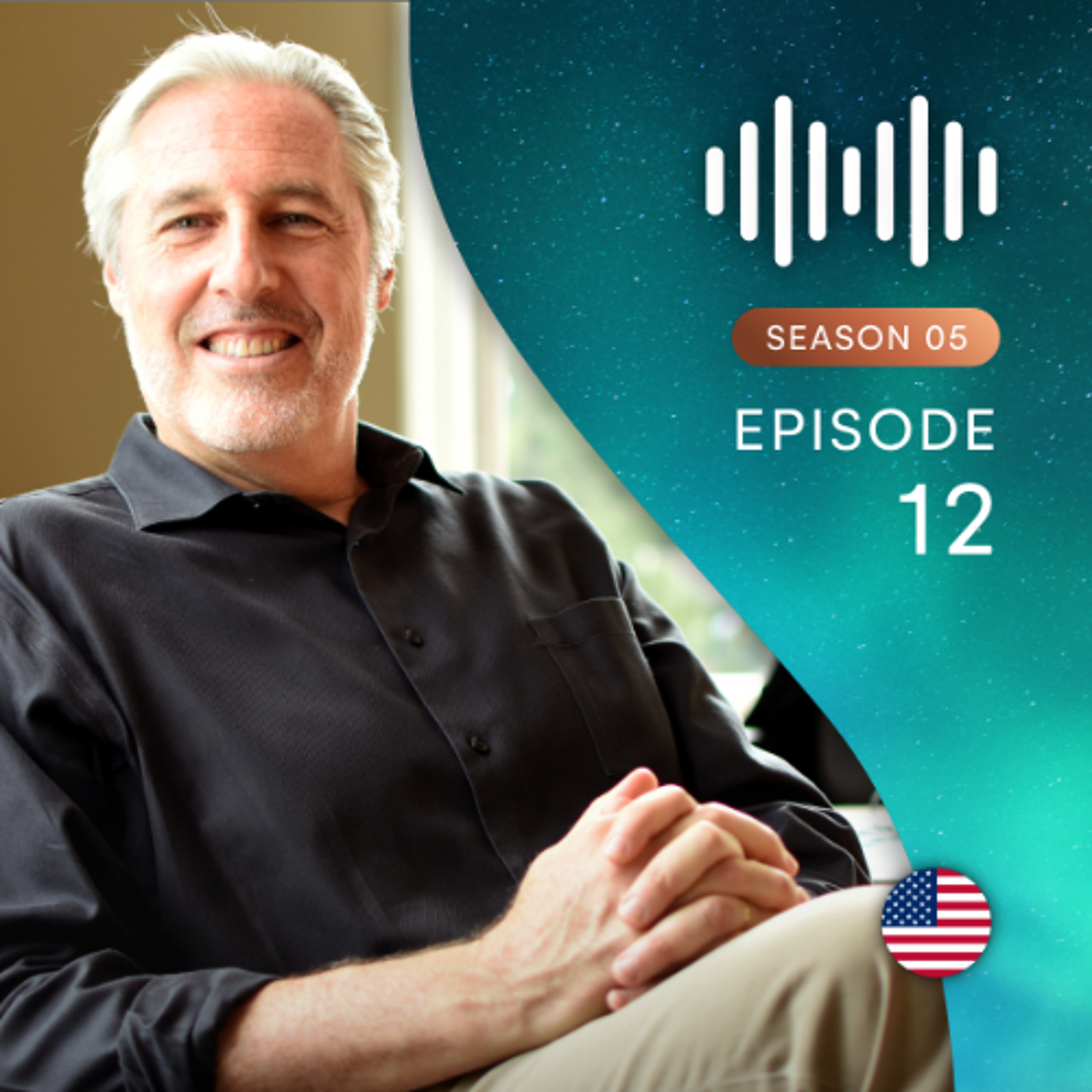
Today I welcome Lee Fertig, Head of School at New Wave of School in California. In this episode we talk about the importance of student agency in schools, teaching civil discourse and embracing difference, the art and tools for leading with agility and nuance, and what education might look like in 2050. I kind of want to ask you about student agency, we're going to kick off the podcast around that. Can you just explain what is it and why is it so important to you in your school? It's important to me for students in the school I lead right now, it's been important to me throughout my entire career assignment. Student agency really refers to young people having the agency, having the autonomy to shape their own learning, and in turn to shape the world around them, rather than solely be shaped by external factors. We really need young kids, I think it's really important, I think we need our children now and for many, many years already to feel a sense of ownership in the learning trajectory. They need to understand that they actually have the capacity and the will to kind of be partners in the learning trajectory with their teachers, and that happens when they're 17 years old, it also happens when they're five years old, it's a different level, it's a different scope of agency, but it's really important because that will be a lifelong skill that they will bring into the workplace later on. And do you think this is something that is more important now, if you've seen this work successfully in the past, I'm just thinking of faculty, rosters, schedules, those are the old-fashioned view of, well no, you're meant to be teaching me, what am I going to learn from you, kid? And you fight this old-fashioned view of how you teach as opposed to how do you empower these young men and women to stew with their own education. I think you actually have two things in that question, one is, is it just as important or even more important than before, and the answer is a resounding yes, I think it's always been important, but in today's world and we're not going to have time to go into what today's world is characterized by, we can say, we can argue, we can probably agree, young people in particular are probably feeling alienated from the forces that swirl around them. And so even more important now than previously, we need to do whatever we can to give them a little bit of agency to help shape those forces that are around them. In terms of what are the expectations of schools and teachers and parents and school communities, yes, for sure, there's a lot of people who still strongly believe, because they grew up that way, that there's a sage on the stage, and that is the teacher, and you're going to deliver information and knowledge to my young children. And that just is not authentic, doesn't reflect how the rest of the world works, whether it be graduate school or the workforce. And so I think that is one of the dimensions I mean that distinguishes possibly good schools compared to very good or excellent schools. And is it easy to introduce student agency? You've got to allow a framework that's going to enable them to be able to go and do this. I can't imagine it's an easy thing and wasn't an easy thing to introduce at your school. It's easy in the sense that it's actually tapping into young people's national inclination that we sometimes inadvertently or maybe even intentionally, which is worse squash through the education process, but it is very difficult and it can be exhausting and fatiguing, even though rewarding, because of the expectation. And not only the expectation that people bring to the learning landscape, also teachers need to see a little bit of control in the classroom. And it's hard, it's difficult for professional practitioners, for faculty members to actually sit back and say, I'm going to actually shift, I'm going to shift a little bit the local stuff control of what's happening in the classroom here and I'm not going to be in charge. Not so easy all the time. Yeah, I mean, I've had countless stories with other schools that go through this and the investment they have to put in in educating and training, the professional development side of teachers. Can you give me a good example of how your school is actually foster student agency? You need to develop a culture and ethos that is a little bit pervasive. There are times when we have teachers in our middle school level or upper school level, even lower school for that matter, when students might, there could be an upper school chemistry student or a math student who goes up to the teacher afterwards or an English teacher and says to the teacher, you know, I think I know what you're looking for. I think I know what you want me to demonstrate in terms of concepts and skills and all of that. I have an idea, could I offer what I've learned in this unit through an alternative type of assessment? And we want the teacher to, maybe not to say yes automatically, Simon, but to at least entertain the idea, at least engage that student in dialogue and our teachers in a way would do exactly that, engage students at all ages in dialogue, which allows them and powers them to be partners in the learning journey. Even more simplistically, don't oversupervised and over script and over structure times in the school day that gives students the opportunity to try things to fail, to fall, to get back up and try again, it could be recess, it could be lunch, it could be in between class time. In my estimate, schools that are overly prescriptive and structuring every single minute of the school day, you're not giving the kids a chance to exercise any agency whatsoever. How much of it is to do with the place that you're in? You kind of don't walk too far out your doors, you're in the hardest Silicon Valley where it's all about innovation, trying new things, you know, the sense of agency, everybody's got it there, they'll all try, some will fail, some will succeed exceedingly well. Do you think it's easier in the environment you're in, could just still be adopted, say, in a rural school in an Eastern European country? Is it the same? I'm a firm believer, it can be adopted in every school in every setting. I do think there are contextual differences, I think there are nuances. I think a good school, a good leader needs to be mindful of those contextual differences and be really aware of how far one can push, how much training faculty and teachers need in order to make this happen. Yes, I am acknowledging that there are certain contexts that facilitate this kind of student agency work, maybe a little bit easier than other contexts. I've been in eight schools and five countries on four continents. I will argue that in all of those settings, radically different from each other, in all of those settings, you're able to move forward this important construct of student agency. And if you've seen the big difference in outcomes for the students that adopted or educated in this way? Absolutely. I think there are outcomes in terms of the concepts and the skills that they're learning in particular subjects, but even more importantly Simon, there's a disposition that is engender of self-advocacy. And that self-advocacy and advocacy for those around you as well, my learning meets that I think they bring with them throughout their school journey into university, into the workforce as parents, as professional collaborators. So I think the outcomes are immediate as well as long-term. I can't cite some of the research right now that demonstrates those outcomes that we're talking about. There is ample research out there that shows this. And you wouldn't be head of school of all these different schools unless it had results and you saw outcomes tangibly for these young men and women. How much does technology played and has impacted student agency chatting to another head earlier today actually just around this big divide between the skill set of the students and technology particularly and the skill set and the interest in technology of the teacher. Is that very different than where you are in terms of sort of that technology piece? We're at a fork in the road again with yet another technology tool or a cluster of tools if you will, but it is a tool. And so yes AI machine learning, large language models, they have the potential of transforming. What we do in schools, how schools operate, they have the potential of diminishing student agency. These tools also have tremendous potential in elevating student agency as well. Just like the calculator, the graphing calculator, the abacus maybe a long time ago, I'm being provocative on purpose. I just think if you embrace what's happening in the world of emerging technology, it is up to the educators to determine which path we are going to take. And there is the opportunity to take a path that elevates student agency. It's hard work. I do think that students need a lot of guidance. I think there are appropriate ways of incorporating the technology. And I think we need to be crystal clear and explicit with students in each class at each grade level about what ways we encourage them to use technology, what ways they're allowed to use technology, not necessarily encourage, and in what ways and what times are they absolutely not supposed to use technology that's still the educators on us. Yeah. And it's extremely difficult because it's just changing so rapidly right now. And I just see as a tool in my toolkit, but the promise you can go down a rabbit hole of inefficiency, non productivity, and all of these things because you believe that you invest time in a tool that's promising all these things and that's also about sort of disinformation. You know, it's trusting content is so much we consume so much content now. Even your agency based on false information, there's a skill in that to be able to go actually I want to go down this route because I read this, but we don't know whether it's true or not. Right. And all the more reason then for educators, good practitioners and wonderful school communities to still be in place to be the guiding force for young people to learn everything they need to learn, you know, Simon, there are many people and probably some people who have been on this podcast as my guess who are claiming and positing that this new introduction of emerging technology that we're witnessing right now potentially is so transformative is going to shut down schools schools as we know at bricks and mortar schools no longer will exist. And I just don't really believe that maybe I'm digging my heels in maybe I'm too old and I have a fixed mindset, I don't think I do. I actually think the need for really thoughtful, intentional, strategic educators and school communities has never been more silent because of what we're witnessing in the world right now. I hope you enjoyed the Inspiring Schools podcast. We're always on the hunt for guests with vision and a desire to share them. If you'd like to be involved or know of someone with great ideas at a school near you, please drop me an email to
[email protected] and my team will be in touch. I want to talk about your experience because you've got an incredible experience as you said you've been on multiple contents being the lots of schools around the world. You have seen a lot of diverse perspective cultures and the way that they embrace education. How would you define there's something about civil discourse in the context of education? The notion of discourse in and of itself, let's look at the not so rosy picture first and then we'll turn to the more positive side. What some people are calling discourse in the world around us or dialogue, it's really not. Our kids are exposed to models of sheer antagonism and polarization and faulty assumptions. So, the idea behind fostering good civil discourse in a school setting is referring to productive and meaningful dialogue across perspectives. We want students not to stick their heads in the sand and shy away from difference and divergent perspectives, but to actually have a genuine curiosity and an inquiry into learning more about what those differences can uncover. In order to embrace that, in order to have good dialogue about difference and divergent thought, we need to teach kids concrete skills on engaging in discourse, civil discourse. And that's what I think a lot of schools are doing and some schools are doing it really really well. Is it more difficult with that in America at the moment, polarization, the amount of not just I'm going to say it was polarizing that we were experiencing seeing what's happening in America itself. But now this polarization across the globe with America, I mean, that's probably a great place to teach how a student's sort of adapting to this. I would say not a week goes by when I don't say to a student, a parent and my school community, a teacher, a board member, somebody I run into at the coffee shop, I am constantly sharing with people that our jobs as educators in schools has become more difficult. If in fact, so much of the mission and vision and values of really good school communities is too foster meaningful, productive discourse and dialogue around difference. And yet we're swimming in a sea of anything but that in terms of the news and media and social media and models and government and everywhere. Yeah, our jobs are more difficult. They're a lot more difficult. I don't think there's an inevitability of failure, though Simon. I think we can still move things forward. I think schools, especially schools that have some level of resource and have a certain ethos and culture that is conducive to this work, they have a good chance of combating what's being thrust upon us from the outside world. Have you seen intercultural competence evolve in your career and in schools around the world? The notion of developing intercultural competence in young people and adults for that matters is really truly one of my passions. I've done a lot of research on it. I've done some practice around it. I am a firm believer, Simon, that if I'll just use America as an example, that if every single American teenager had an opportunity to immerse themselves in a radically different culture for one semester, one school year. I know this sounds very cliche and I'm on my soapbox. I actually think the world would be a different place. I actually do believe that broadening of perspective, and I'm just using America as an example, it could be other countries as well, that broadening of our perspective, that immersing oneself in just a little bit of healthy unfamiliarity, that that is one of the most powerful gifts in developing intercultural and global competence. A developmental theory of intercultural competence, stemming from the work of a gentleman by name of Milton Bennett, and he talks about people having the opportunity to go from ethno-centric to ethno-relativism, and at the far ends of ethno-relativism, when you get to be really robustly interculturally competent, according to Bennett, he has a wonderful phrase, constructive marginality. And so marginality often has a really negative connotation, rightly so, in our society today. The notion of constructive marginality means that one can have a rootedness in a home culture, if you will, yet the other foot could dabble around and successfully adapt and integrate into other cultures, and that's constructive, according to Bennett and this developmental theory. I want to move on and ask about how do you encourage students to engage in meaningful dialogue rather than avoid difficult conversations, because there's lots of difficult conversations to have, but sometimes you're too scared to say what you think because you're worried that it may upset someone, or, as you may say it wrong, I've had the number of situations in my daughter, through her dyslexia and the way she processes things, the way she may be presents herself, sometimes when asking questions comes across maybe not in the best way that someone might take that literally, not with the intent it's due, so how do we engage in meaningful dialogue? It's a really, really good question, and this refers back to your previous comment, Simon, about there are contextual differences for sure. This is where the educators and the professionals in the school setting really need to assess what do the young people need in that school community in order to engage in meaningful dialogue? In my current setting at the Nueva School and the heart of Silicon Valley, these students are, they're kind of almost naturally, regularly, almost obsessively seeking out meaningful dialogue with each other and the adults that surround them, and that's not always the case in every school. If you're in a school setting where students are not pushing themselves to do that, then it needs the job of the educators in that community to create structures, systems, processes, protocols, so that kids have the opportunity to exercise this dialogue, this practice and dialogue to make mistakes, to fail miserably sometimes, and then to get themselves back up on the horse and try again. It happens in classes, it can happen in advisory systems in schools, it can happen through assemblies, with guest speakers, artists and residents, I think we really need to bring a little bit of difference into the school community to create the fodder for meaningful dialogue for the young people. You go more as a person through challenge and failure than you do when it's everything's easy because you never come against friction to be able to deal with it. I read somewhere that you think that agility and leadership is more important now than ever before. How can leaders prepare for the unexpected while still fostering stability within their schools? One of the best things that leaders can do to prepare for the unexpected is to expect the unexpected. So I often say the only constant we have, the most stable thing, the constant we have in schools right now is change. There's an inevitability about change. Every leader that believes there's a point A and a point B, and once I get to point B, I'm good to go for the next three years. I really think they're being foolishly simple about what leadership is right now. I think leaders need to stay fit mentally and physically to sustain a certain level of agility. I think they need to do a constant and somewhat accurate job of assessing the pulse of what their communities are feeling and thinking about and that could be formal surveys and solicitation of input. It could also just be informal anecdotal assessments, if you will. I also think that leaders need to stay curious. They need to have a certain sense of humility. They need to be willing to be vulnerable, and maybe most importantly Simon, and I often say this when I do leadership training with others, just need to stay who they are. They need to be themselves. They need to be authentic. They need to do all of these other things in terms of being a lifelong learning leader. If you attempt to be someone you're not, that's going to fall apart pretty quickly. Great advice, particularly about being authentic, I think we live in a world where people are living a facade sometimes on what they think people might like them for, as opposed to sticking to what they really are and believe in. Could you give me an example of when you've had to pivot quickly as a school leader? Just to talk about COVID for an example, COVID was really difficult, it was disastrous for the world and for schools, and yet I'm not dismissing. I'm not dismissing the impact it's had on us, and yet it in some ways was just yet another world event that leaders in schools need to pivot against. Part of my international upbringing in schools as a leader Simon means I have led schools that have had to deal with two military coups, been in a place where the currency devalued significantly overnight. These are fairly extreme examples. I think the notion of pivoting, again, leaders need to expect the unexpected and I do feel so fortunate that I think my formative years as a leader were immersed in the unexpected and that actually was great learning for me as a leader. Do you have any practical tools or frameworks that you use that could possibly help other school leaders to remain agile in their decision making? One of the things I said about leaders being as agile as they can in their leadership is to kind of almost regularly assess what the thought, what the feeling is, what's the sense, what's the pulse of those that you're working with and those that you're serving. There are some practical tools. There are quick and easy instruments, inventories, assessments that a leader can use to assess others in their community. I often use the disk assessment, it's a leadership tool that gives me information about how I'm being perceived as well as how I'm perceiving others. There are models stemming from something called concerns based adoption. It's a long time ago where you can actually use practical surveys and tools to get a sense of what is going on in people's minds in the community you're serving so that then you can determine what are the action steps and interventions I need to engage in. There are a lot of different tools out there. The leaders need to have a willingness and an eagerness to use them. I want you to look into your crystal ball, you've had a lot of experience leading schools around the world. I'm not saying you'd be leading a school in 25 years time, but in 2050, in your crystal ball, what do you think the future of education will look like? Will it be any different? Yes and no. I think in 25 years, for example, there will still be a curriculum in each school. That curriculum might be molded and shaped and adjusted, but there's still going to be healthy conversation and sometimes constructive tension about what should be taught, who should teach it, when it should be learned, how and all that. I do think that the notion of curriculum, the what and the when and a little bit of the how, is still going to be very much in place in schools in 2050. In terms of the how, in terms of instruction, in terms of assessment, I think we're going to see a little bit more change, AI and the emerging technologies are giving us so much more opportunity to personalize and differentiate if we use them well. The learning journey for each and every child, I can imagine how individual learning plans will become more viable and more feasible for schools and leaders in school. So I see more change there and I see a lot of change, I envision a lot of change in kind of the overarching structures and systems. I think that we'll see the cadence of schools, the timeline for schools throughout the year, the daily agenda of schools might shift. I think different dimensions of the schooling experience Simon will see different amounts of change. If we were 25 years further on, would you like to teach in that world? Absolutely. Because regardless of what it is, with the uncertainty of knowing, not knowing what it would look like, I'm a magnet for young people, I just, I love being around them. I love being around adults who also love being around them. I think it is probably people talk about it being a noble profession and it is beyond that. We as educators, regardless of the era, we've had the privilege, the responsibility and the opportunity to actually work with these wonderful young people who will eventually make decisions that will better this world for all of us. You can connect with me on Twitter, Instagram and Violent Tim. Remember, keep inspiring schools. We need more future school thinking now.
 PodcastTranscript AI