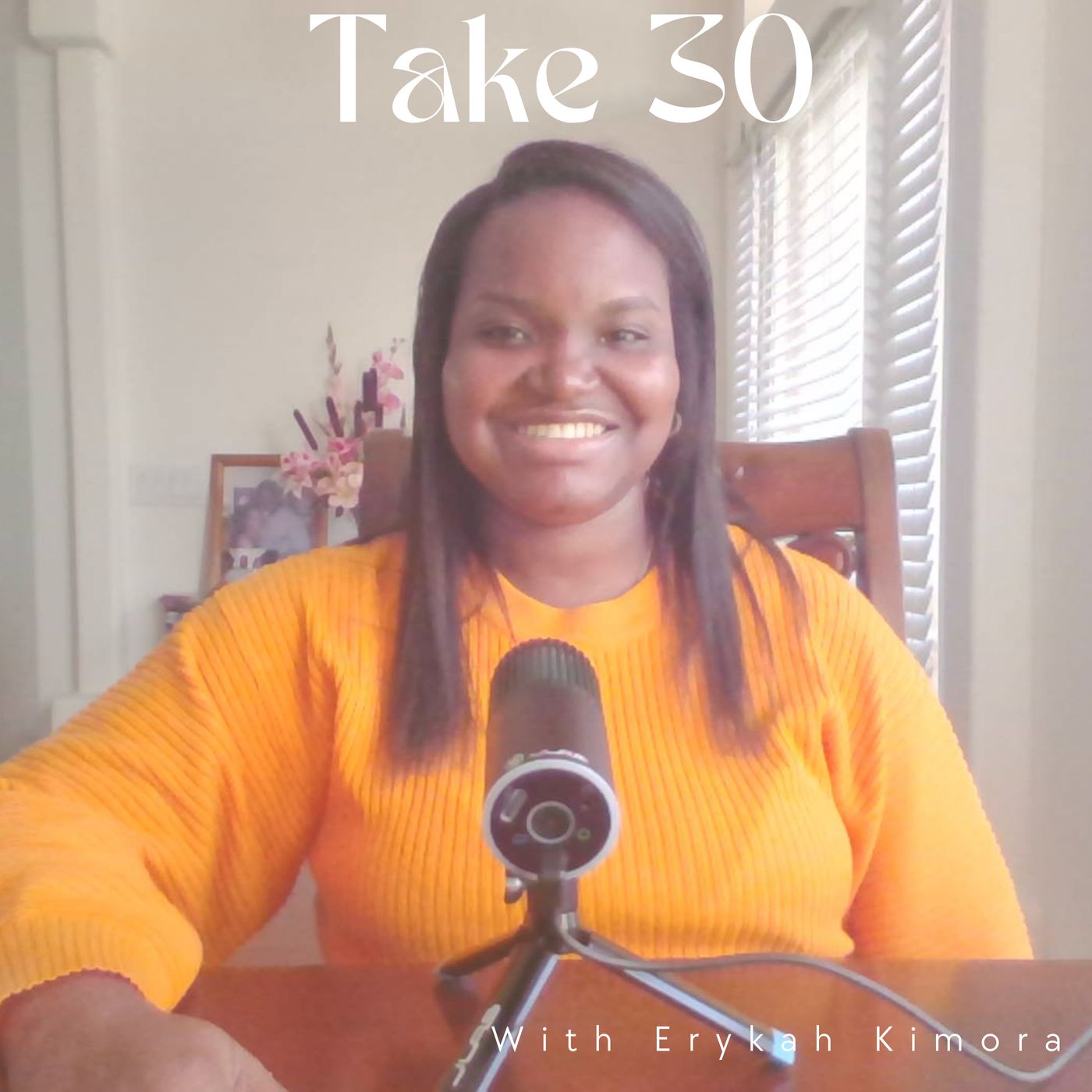
Season 4: Episode 25: beyond the brain: Rewiring your nervous system FT Tauna Young and Cara Maxfield
from Take 30 with Erykah Kimora
39m 56s
In this episode of the Take 30 podcast, host Airica welcomes Tanya Young, a psychiatric nurse practitioner, and Cara Maxfield, a seasoned entrepreneur and sales professional. The conversation begins with each guest sharing a recent personal challenge or lesson. Cara discusses the importance of enforcing one’s own boundaries rather than expecting others to follow them, a reminder she received from a friend. Tanya reflects on managing self-doubt through her faith and improving her communication skills to ensure her intentions are clear. The discussion shifts to mental health, where both guests share experiences from healthcare settings. Cara recounts how a hospital provided mental health support for her after her son’s accident, highlighting the need for such services. Tanya, drawing from her nursing background, notes that mental health is often overlooked in treatment plans, which inspired her move into psychiatry. She then explains CES, a handheld device that uses tiny electrical currents to calm the brain, mimicking a meditative state. Tanya shares how it helps her regulate her nervous system during panic attacks or after stressful interactions. The episode underscores the value of proactive mental health care and simple tools like CES to foster calmness and resilience.
[Music] Hello you guys, welcome back to another episode of the Take 30 podcast. So today I have not won but two special guests. I have Miss Tanya Young and I also have Cara Maxfield. We're going to be talking to both of them today but before we get into this week's episode, make sure if you haven't done so already to follow at the Take 30 podcast for new episodes from me and also follow me on TikTok, take.30.with.airica. We're up close little clips from each of my episodes. So yeah, and you guys can stay up to date with me on all social media. All of that will be linked in the show notes below. So yeah, I hope you guys are having a lovely Wednesday. We are recording this episode on Tuesday and it is currently very cloudy here in Florida right now. Yeah. So without further ado, I am going to introduce both Miss Tanya and Miss Clara Cara to the podcast. Hello you guys. How are you guys doing today? Good morning. Great. Thank you for having me. Hello. How's everything going? How's your morning going? Yeah, it's great. We're in I'm in Idaho. Boise, Idaho. It's actually quite sunny and warm here. Kind of a flip how we normally are with Florida. I think. Ah, I know. You guys usually keep all the good weather for yourselves over there. Right. Yeah, and the funny thing is today is today. Yesterday, it didn't rain. It was actually a nice day but today we're going to be getting rain both today and tomorrow. And it's yeah, it started off. It rained this morning a little bit so it's supposed to be raining all day today. Boy, yeah, I think it'd be pretty nice here. I don't think we're expecting any of that. Okay, so before we get into the episode, I just want to know like, what's something challenging that's happened in the last few weeks or what's something you've learned in the last few weeks? That can be anything. A book you read and article that you read. Maybe something you saw on TV. I'll go ahead and start with a care upper. Okay, yes. Thank you. Thanks for asking me. So my has to do with a conversation I had with a friend recently and I was sharing just a frustration that I had with somebody else and my friend said, I need to remind you that when you have boundaries in your life, it's not about expecting other people to follow your boundaries. It's about you enforcing your own boundaries. And so I was really appreciative for that reminder that it's my responsibility. Yes, I think it's really important to set boundaries for yourself because we tend to especially with day-to-day tasks or maybe you have that one, I don't know, that one toxic friend that is always putting you down. It's important that you establish boundaries. And that's something that I struggle with is setting boundaries for myself. Sometimes I tend to overwork myself. And I'm always doing a bunch of different things and then I have to have that reminder to just take time to slow down. Yes, absolutely. Sometimes we have to enforce our boundaries within ourselves. Yes, yeah, I agree. What about you, Miss Tanya? What's something to learn? Yes, and thanks for mentioning boundaries, Cara. I agree with you boundaries. I think it's a very misunderstood concept to the people think it's something that other people are supposed to adhere to, but no, it's something you enforce within yourself. You know, that's a great question. I think for me it's kind of a combination of two things. I'm a believer and I know that a lot of people aren't and I completely respect that. I definitely offer people the same respect for their beliefs that I hope to receive for mine. You know, as a leader and a business owner, a couple of businesses, I'm doing a lot of things that are challenging that are also very important to me. And I understand that to doubt myself is to doubt God. And so that is good for me to remember, but at the same time, or do I need a lot of help and instruction from him, from everything that everybody that surround me. And I've learned that I'm not always as good at communicating as I would like to be. I do pride myself on being a truth teller honest, but sometimes there's multiple ways to tell the truth. And sometimes the words that come out of my mouth are not necessarily what I intended. I'm always trying to be aware of that. It's probably something that I learn every day and I try to get a little better on it every day. That's awesome. Thank you for sharing that. Let's give both of them a round of applause. Thank you. I like that. It's an expecting it. Right? But just, you know, and I think it's important, like, you know, leaning especially on your faith, you know, whatever, whatever you believe in, God, the universe, you know, it's important to just, you know, also, you know, just have the, you know, for me, it's more of the universe, the universe guide you into the into the right path. But yeah, I agree. It's, you know, with communication to sometimes like I do, you know, have to kind of work on communicating with people, which can be hard sometimes. But I've gotten better at that over the years that I've, you know, with communication. That still, that still can be a struggle. But go ahead. We'll start with you, Cara. Just tell us a little bit about yourself. I know you are a business owner and you also work in marketing and sales. Yes. Yes. So I call myself like a seasoned entrepreneur. You never know what business I'm going to start or end this day. I've been in sales and marketing. Oh, geez. Oh, probably over 20 years. I'm, I'm, I live in Utah. I'm a single mom. I have now, unfortunately, become a middle-aged woman and have all those challenges that have also come with being with that. Oh, wow. I, you, you got a lot going on, girl. Yeah. We'll go into like the challenges of like being a single mom and taking care of your children. So you've been, so you've been in sales for 25, over 25 years, like, and you're also an entrepreneur. Just tell us like how you got into a little bit about how you got into sales and marketing and stuff like. Yeah. That's one I love that question because for me, the journey to start, they're actually started with someone choosing to believe in me and then offering me an opportunity to get started and I was like, you know what? I like that. I also now believe in me and I think that's the path I'm going to start. Awesome. That's, yeah, it's, it's always good that, you know, you have somebody, you know, believing in you and now you feel like, okay, I can kind of do this on my own now. Yeah. Yeah. Yeah. All right. Miss Tanya, just tell us a little bit about yourself. Yes. Thank you. It's actually Tanya. I know it's Tanya. Tanya. Well, the time that's okay. Yeah. Thank you, Erica. Yeah. I'm a nurse practitioner, specializing in psychiatry. I'm having a wonderful time doing it. I'm very passionate about what I do and it's, no one is more surprised than I am about how much I love working in psychiatry. I never had [BLANK_AUDIO]
any intention of any kind of ending up in psychiatry. I thought I'd end up in an ER somewhere, maybe urgent care. I love the procedures, the suturing, things like that. Never expected, or had any desire to end up in psychiatry. But I did just kind of on a fluke, just something kind of spoke to me, and I was gonna do one day a week in a mental health office. And I was gonna work the other days in a primary care office. But I started the one day a week, mental health care office job first. And I ended up just being shocked at how much I loved it. So I was like, never mind to the other one, and ended up going full time in mental health. And it's just, it's so rewarding. And I'm having just a wonderful, wonderful time. It feels like a hobby to me. - That's amazing. And speaking of mental health, so I work in the ER too. And I've seen the psych patients. And I think mental health really is important. And one of the things that I think, we should do is maybe have, 'cause I've seen a lot of patients, especially one patient specifically told me that they wanted to seek counseling, but they don't have any, - Like wouldn't be your. - And I was like, well, I really can't give any kind of medical advice because I'm not clinical, but I did tell her and he said, well, do you have insurance or maybe see if, if you can find a therapist that covers your insurance because unfortunately, one of the things that I would advocate for is having mental health professionals like on site and things like that to give them the care that they need because she was telling me that she had to be a psych patient in order to receive care. And I was saying, you know, if we can, you know, have a mental health professional on site in the ER somewhere where they can just help talk to the patients. Like that would be a great thing, you know, and you know, just they might not need to go into the site unit or become big or active, but they just want to have that extra support from a mental health therapist or something along the lines there. - Yeah, a few weeks ago, my son was unfortunately in a motorcycle accident. And though I met the ambulance at the hospital and I walked into his room and you know, there were all kinds of doctors and nurses and the police and the EMTs there. And then at one point someone walked in and introduced herself and she said that she was there for me to support me. And I realized, okay, yeah, like I needed to be remembered. I needed to be reminded that like even my mental health in that situation is very important because if I'm not like able to take care of myself, how can I take care of my son? - Right, yeah, that's very important. So yeah, and it was really eye-opening like to see that it's like, you know, if your mental health isn't where it's supposed to be, like if you're not doing well mentally, how can you serve others? How can you, you know, like you said, Cara, take care of your own family. You gotta, it's important that we always make sure that we take care of ourselves first. - Yeah, I love that the hospital did that for you Cara too. You know, that was when I was a nurse working in the ER and working in the hospital, that was definitely something that I noticed Eric at the same thing that you were just mentioning that mental, the mental health, there's always a treatment plan for individuals and it's meant to cover all things. Like we don't just dress the wound, but we address the fact that maybe there's gonna be an infection to they need physical therapy. We go after the specific problem in a well-rounded way, but the mental health of the person was never considered in any way. And that's significant because that's one of the largest contributing factors to their ability to get well. And so I saw how the mental health of the individual when it was poor, how much it impaired their path to wellness. And so that was, it really stuck out to me. And I think that that was probably the first little seedling that was planted in me that eventually grew into pushing me into a field that I never thought that I would want to go into. - Yeah, that's amazing. And I think they, we need more, the mental health of a patient should be addressed more and hopefully as time goes by, we have those resources available, especially for people who need them and maybe want to check themselves in to the ER, but they finally have that extra support from a therapist on site. Because I know that therapy is very expensive and some people can't afford it, which hopefully there might be some kind of policy put in place where they can help individuals still be able to seek the help that they need without having to pay an arm and a leg just to go into therapy. - Yeah, well, just like you don't want to think about your health for the first time when you end up in the hospital in the ER without a return. Same thing with mental health. Yes, I agree that I think that there should be more emphasis on mental health in the hospital, but along with other aspects of health, hopefully a person is attending to that and is being to those needs long before there's a crisis. - Yes, yeah, I agree. Yeah, but one of the things that I wanted to get into and I wanted to ask you, what is CES and basically what is CES for for people who don't know what CES is, Miss Tonya. - Tonya. - Yeah, thanks for asking. So it's cranial electotherapy stimulation is what CES stands for. It's just a little tiny handheld device, just pretty basic, has a little wire hook to it. And it just has these little ear clips. So yeah, little ear clips here. Okay, two little clips. You just clip them to your ear. It doesn't matter if it goes this way or that way. I don't even take off my earrings, just put it in front or behind, it doesn't matter. I could put this one behind them if I wanted to. It doesn't really matter. Then you turn this on and you can set it to go off automatically over 30 minutes or 45 minutes or just stay uncontinuously. Okay, it just has a tiny little nine volt battery in there, nothing major. And just that little teeny tiny microcurrent that's very subtle, very mild and gentle, that little tiny electrical current because of the placement and the places in your brain that it targets, that does wonders at helping a person experience calm, to feel calm. It literally puts your brain into the, it's like an on switch for the mechanisms in your brain that it elicit calm. So it like puts your brain into the same brain state that a brain is in when it's meditating. Ooh, interesting. It's a, it's very interesting, isn't it? It's just, it's so simple, you know? It looks like something you'd get in a radio shack, you know, from in the 90s or something, but it's, it, it, it, it's, it's amazing what it does and how impactful it is for people. And if I didn't see it with my own eyes on the daily time after time after time after time, I probably wouldn't believe it. So I won't blame anyone for being skeptical because I was the biggest skeptic of all in the beginning, I think. Ooh, that's like putting on your earpiece and just like kind of listening to like a calm little meditation. Mm-hmm. Yeah, I mean, you know, honestly, there was, there was a study in 2013 where they took a bunch of experienced meditators, like really experienced meditators while they were meditating and they didn't, they did EEGs on them while they were doing that. And EEG is just a scan of the brain that like shows what the electrical, electrical activity of the brain is happening at that specific time. And then they did EEGs of people.
who were using CES devices while they were using them. They took the two groups and their EEGs basically couldn't tell them apart because their brand states were essentially the same. Okay. Another question I wanted to ask you because that's really interesting because now that's like making me curious to want to try it, especially somebody who meditates in the mornings, like that. Yeah. I mean, I didn't mention to Reptume, sorry Erica. No, no, go ahead. Go ahead. I mean, I get so excited about this that I just can't help myself sometimes because it's so it's so incredible. And I'm glad to hear you say that you meditate. Meditation, it's very impactful, highly encouraged for anybody. And I'm sure that you know, it's a discipline that people learn to do over years. It takes, you know, it's not an easy skill to build. And I don't think there's any true replacement for that for the discipline that it takes. But it is nice to know that there's a shortcut to that brain state. That's cool. Interesting. Yeah, it's pretty mind boggling, isn't it? Yeah. Yeah, that's getting that's giving that I'm getting curious now to want to try something. We need to send you one that you just yeah, yeah, I can tell you it works. It works. I use it on the daily in my life. Yeah. Yeah, you should definitely I'll after this call, I'll definitely send you my email address. Actually, I'll send you my address and you can send that device to me because that that that is good, especially because I started meditating about four years ago. And I mean, at first, it was really hard because I could only do like maybe two minutes and then that two minutes, them to like five minutes and then I was able to do it a little bit longer each day. Now I can probably do about 15, which is pretty cool. But it's definitely something that kind of takes time and it's like not so it's something that like overnight, you can do 10 minutes of that you have to kind of ease your way into it. So. Well, the device is called Neurovonacom. And I love that it has calm in it because it's about getting our nervous system to be calm. And when I use the device, sometimes it is because my nervous system is way up here. Sometimes it's it's not it's I don't necessarily feel anxious like when we go to do to do meditation. I mean, usually we don't start meditating because we're feeling super anxious, you know, it would take a lot of work to get into that calm state. And so I use it when I'm when I'm feeling like I'm having a panic attack or or other things or just because I want that calm feeling in my life that that I get when I use the device. Oh, that's it. Yeah. In fact, I was I was having a particularly very strong dysregulation of my nervous system just very recently. And I put on the device. And, you know, I was enjoying the feeling of having it. And I put it on 30 minutes. I hit the 30 minute timer. And it was so interesting to me as soon as it turned off, like the instant feeling that I had that I was reminded of of that calmness. I don't I don't know how to describe it. But then so I was like, I got to do this again. I got to do it another 30 minutes. And as soon as it turned off, I was immediately reminded of the calmness that it was making me feel that I wasn't necessarily focusing on because I was focusing on the little, you know, current going going that I could feel on my years. Oh, okay. And I guess it's one of those devices like I guess you use it like especially when you're feeling really anxious and it helps to calm the nervous system down. Yes, yes. That is of course like when it has come into the best use for me. I mean, like I said, I use it sometimes when I'm not necessarily feeling anxious, but I recently had so I've used it when I started to feel a panic attack coming on. And it has helped me get to that calm state. And but I recently discovered that I had an interaction like I with with someone. And I engaged in the interaction longer than I should have because of the emotional state that it was put in me in. But I was engaging because I'm like, if I can just get this person to really hear what I'm saying, this interaction would just be easy and calm because because they're just they're choosing to misunderstand me is how I felt. And so if I can just explain it just the right way. So I continue to engage to point where I was like sobbing and crying. And after I went through that emotional state, even after I was no longer feeling emotional, I had a nervous system that was so out of whack. I was not talking to this person anymore. I was not able to see this person. I was I was but yet I started to feel it in my body like my hands were like shaking and numb. My body was just like so depleted of just me. And I realized that even though I was out of that emotional that very heavy emotional situation, that it had put like my nervous system into that same state of like not being regulated as a panic attack does. And so I use the device and and it and it helped me in the same way that it does when I use it in the middle of a panic attack starting to come. And what what it so it can it can show up for you in those moments when you need to calm down in the moment. That's that I mean that's a great way to use it. But it it I think it's probably a very valuable way to use it is to use it just as a as a habit to like train your body and brain to make that calm state its new default setting. By using it just regularly especially for that first month if you used it like twice a day every day for a month whether you're feeling anxious or not. Then it trains your brain hey this to be more comfortable with that calm space and to know how to go there and get used to being there. And so by doing a kind of a loading phase for for that first month or so a person can just lower their baseline level of anxiety in general and just make that calm space more accessible. Make them familiar with it kind of make that it's new the brains new habit because the brain is a very habitual organ. You learn something new every day that is a cool device. Yeah because there are times where you know I need something a little bit more than a meditation. I just need like I feel like that kind of a device would especially when I get very anxious because I struggle a lot with social anxiety and so when I'm in a big setting sometimes like what a big social gathering I tend to flare up it's like it's like you can't you can't you can't even speak or put the right words in that moment and I need like something that like could kind of help really grow me and I mean meditation helps and it really does but like something like that I feel like that would be that would be great especially like it'll help my nervous system like calm down especially if it's in like that guess flight or flight or flight mode if that makes sense. And you know and it and it can I it kind of can just calm me down a little bit because I do get anxious even sometimes you know and I just need something a little bit more than just a meditation and I feel like that that device would be great for me. Absolutely a lot of people do it use it exactly for the types of situations that you're describing where they'll use it you know they have a I say a weekly team meeting with work that they always get nervous about they'll use it ahead of time and then be able to show up for that meeting and handle themselves a lot better. I mean you could honestly you could show up with it on because it's just it's so discrete yeah but a lot of people will use it ahead of time and so you can enter that experience already in a state of calm because your your your mind is going to follow what the what the body experience is first first your body is going to have certain physiological changes that occur in response to a perceived stressor and then your mind is going to make a story that matches that feeling and so if you can put your body into a state of calm you're bringing it to a space of calm beforehand then you can just interact with it completely differently and be able to you know handle itself according to your priorities and values in that moment. Yeah I like that.
You know, thank you both for sharing that. Give you guys a round of applause again. (audience applauding) Yay! (laughing) - Yeah, I'm so happy. - All right, you can follow me around all day with that please. (laughing) But, okay, so I have one last question for both of you. Before we wrap up, but self-care is the most talked about topic. You see on the news all the time, take care of yourself, and that doesn't necessarily mean getting your hair and nails done, even though that feels nice. But I wanna know, and okay, I'll start with you, Cara. How do you define self-care? And what self-care activities do you incorporate in your life? - Yeah, I love what you started to say because I was going to say the same thing. People talk about self-care, because they're either going something, like a dessert, or go get their hair done, or take themselves shopping, and while that is great, sometimes self-care is really, truly taking care of our health. And it's so easy to be able to say, "Oh, my ankle hurts, I hurt my ankle." And people usually feel like they could say that without any judgment from anybody. And they're not afraid to share that their ankle hurts, and that they're going to go get the necessary help that they need. Maybe it just needs to wear a different shoe. Maybe they need to just elevate it. Maybe they need to wrap it. Maybe they actually need surgery. So I speak about my mental health challenges in hopes that people can say, "I feel anxious," or "I feel very overly sad," and I really don't know how to handle it. To be able to speak about that, just as openly, and it's about, so first, it's about awareness, and then being able to accept it, and see it not as a weakness. So when I get feeling anxious, or whether it's on a small level, or a very large level, it's not a weakness in me, it's just another thing in my body that is just like my hurt ankle. And so it's about being able to the things that we need to do to address those issues in our life, just the same. And for me, CES is one of them. I will step back from certain situations, like I spoke about boundaries earlier, enforcing a boundary within myself to not just be in certain situations, and sometimes it's therapy, sometimes it's calling a friend, sometimes it's taking a nap. - I like that. I like that. Yeah, and self-care, you know, I think a lot of people confuse self-care with getting your hair as like I said, and their nail is done, which all of that is good, are getting a nice massage, which all of that is good. And, but it kind of goes deeper than that. And it's really like, for me, the way I describe it is, like, what do I need today? Like, what fills my cup today? So I asked myself that question, like, what is it that I need? And it could be that, you know, I need to journal, like, write down three things I'm grateful for for that day. And, right, and, you know, kind of if I'm feeling sad, like, okay, well, why do I feel sad? Or what in that moment made me feel sad? So that was, it's kind of like a time to reflect and do the inner work. And sometimes for me, it could be like just, you know, I have to make sure that I get my exercise, like, even if that means going for a walk, moving my body, I think, is good for both for your mental and your physical health. And, you know, even doing yoga. And finding just activities that kind of bring me joy. Yeah. Yeah. What about you? Oh, thank you. Yeah, I'm really glad to hear you mention joy just now because I think that things really kind of shifted for me probably about 10 years ago when I realized that I'd kind of been trading myself like a machine in some ways. Like, I was just, I focused on all the demands and things I had to do and never really recognized that I really needed more joy than I was getting. I needed more sweetness and just enjoyable things in my life. And, but I had so many things that I was doing at the time. I was in school at the time and I had a family and just had a lot going on and I realized what I was doing. And so I made a shift and really legitimized the significance and the importance of the things that I actually enjoy doing. And I started calling it vitamin J. We know that we need a certain amount of vitamin D, C, K, E, all those things, right? And we don't discredit the significance of those things to our overall health. And, but I think a lot of us tend to not recognize the significance of vitamin J. And, you know, we need, we all, the most important part about self-care is really I think recognizing that you need it. You know, that we all have our certain recipe for what a joyful life looks like for us and calling it what it is, listing those things out and making those things a priority is essential. Cause I mean, all we're really trying to do is just live a good life. That's so much that we care about all those other things. We just want to live our best lives. Yeah. We really do. We just want to live our, we just want to live our best lives. And I think part of that is like you said, I like the fact that you said vitamin J because we do need some vitamin J in our lives. Let's, I realized that I needed more than I thought I did. Yeah. A lot more than I thought I did. Yeah. We all, yeah. I think we all need, you know, a little vitamin J, you know, and vitamin J, vitamin J is very important. Cause you know, we always talk about vitamin D vitamin C, but it's like, we do need a little vitamin J. We need a little, let's call it, we can call it vitamin joy. But thank you guys for coming on the podcast. I really appreciate it. I appreciate this conversation I had with you guys for anybody that is listening, please let anyone know where they can find you both on social media or on your website. Sure. Yes. We have Neurovana.com. So N E U R O V A N A C L M. And I'd also like to say that for any of your audience, Erica, that would like to purchase a device, they can put in code Erica 20 and they can get a prescription for free. Because normally that costs $20, so they can get that prescription for free. Look at that, you guys. So I will put that in the show notes below. So if you use my code, it's Erica 20. Make sure to use that code and you'll get 20, is it 20% off in your purchase? You get the prescription for free for free. Oh, you get the prescription for free. So you get the prescription for free for $20. You guys, so I will put that in the show notes below so that you guys can purchase one of the devices. Wonderful. Thank you so much for having me as a guest. You're welcome. And Kara, where can we find you on social media? You can find me on my on my Instagram. It's Kara Maxfield one. Ooh. Okay. So you guys, I will put both Kara and miss miss Young's info in the show notes below. And you guys can get in contact with them. You know, feel free. But also this will end this week's episode. Thank you guys so much for listening for tuning in every other Wednesday and listening to this podcast episode. I really appreciate the support. I will link all of my social media and the show notes below. Just make sure that you're following at the take 30 podcasts for new episodes, live updates from me. So you'll be getting all of that. But like I said, I'll link all of my social media and so in the show notes below because it's I have a bunch of them. But I think one message I have for all of my listeners who are listening, make sure to take care of yourself in whatever way that looks like. You know, maybe go outside, you know, take some fresh air, go for a walk, you know, maybe do some yoga, find activities that bring you joy because joy is very important. Anyways, I love you guys so much. And I'll see you guys not next week Wednesday, but the following one today. Bye guys. Thank you.
Podcast Summary
Key Points:
The podcast episode features two guests, Tanya Young and Cara Maxfield, discussing personal growth, boundaries, and mental health.
Cara shares a lesson about boundaries being self-enforced rather than dependent on others following them.
Tanya emphasizes the importance of self-doubt management through faith and improving communication skills.
Both guests highlight the need for better mental health support in healthcare settings, such as ERs.
Tanya introduces CES (cranial electrotherapy stimulation), a device that induces a calm brain state similar to meditation.
The device helps regulate the nervous system, reducing anxiety and panic attacks, and can be used as a tool for daily calmness.
Summary:
In this episode of the Take 30 podcast, host Airica welcomes Tanya Young, a psychiatric nurse practitioner, and Cara Maxfield, a seasoned entrepreneur and sales professional. The conversation begins with each guest sharing a recent personal challenge or lesson. Cara discusses the importance of enforcing one’s own boundaries rather than expecting others to follow them, a reminder she received from a friend.
Tanya reflects on managing self-doubt through her faith and improving her communication skills to ensure her intentions are clear. The discussion shifts to mental health, where both guests share experiences from healthcare settings. Cara recounts how a hospital provided mental health support for her after her son’s accident, highlighting the need for such services.
Tanya, drawing from her nursing background, notes that mental health is often overlooked in treatment plans, which inspired her move into psychiatry. She then explains CES, a handheld device that uses tiny electrical currents to calm the brain, mimicking a meditative state. Tanya shares how it helps her regulate her nervous system during panic attacks or after stressful interactions.
The episode underscores the value of proactive mental health care and simple tools like CES to foster calmness and resilience.
FAQs
CES stands for cranial electrotherapy stimulation. It is a small handheld device with ear clips that delivers a gentle microcurrent to the brain, helping to induce a calm, meditative state by targeting specific brain mechanisms.
A 2013 study found that EEG scans of experienced meditators and CES users showed similar brain states. While meditation is a skill built over time, CES offers a shortcut to that calm state.
The device is called Neurovonacom. It is designed to calm the nervous system and can be used during panic attacks or as a regular habit to train your brain to be calm.
CES can help calm the nervous system during a panic attack by inducing a calm brain state, similar to how it helps with anxiety or emotional dysregulation after a stressful interaction.
Setting boundaries is about enforcing them within yourself, not expecting others to follow them. It helps prevent overworking and managing toxic relationships.
Mental health is crucial for overall recovery. Addressing it in hospitals can support patients and their families, as seen when a hospital provided mental health support to a parent during a child's emergency.
Chat with AI
Loading...
Pro features
Go deeper with this episode
Unlock creator-grade tools that turn any transcript into show notes and subtitle files.
 PodcastTranscript AI