160. Seacology: Protecting Island Habitats and Cultures
36m 24s
Seekology, led by Max Rojasdomke, is a nonprofit based in Berkeley that protects island ecosystems and cultures worldwide, addressing the severe impacts of climate change on these vulnerable areas. Its founder, Dr. Paul Allen Cox, started the organization 35 years ago after a Samoan community sold their forest to loggers to fund a school. Cox sold his belongings to build the school instead, establishing a model where communities identify their needs—such as schools, kayaks, or watchtowers—and in exchange, pledge to protect nearby habitats. This approach ensures intrinsic buy-in, as poverty and conservation cannot coexist when people are forced to choose survival. Seekology has completed over 460 projects, safeguarding 1.6 million acres, including rainforests, mangroves, and seagrass beds. Notable initiatives include protecting mangroves in the Dominican Republic and Jamaica through youth sports and education, and a new focus on seagrass in Greece, which sequesters carbon more effectively than rainforests. The organization relies on local field reps to connect with communities and has earned recognition such as the Prince Albert of Monaco Prize and a Nobel Peace Prize nomination. Seekology also offers eco-trips to bring funds and awareness to project sites, emphasizing sustainable tourism and community engagement.
Welcome everybody, this is the Rotary Club of Silicon Valley and every week we bring you the story of people who are doing all sorts of wonderfully interesting things all over the world. They do these things locally, globally, digitally. The goal is to follow Rotary's motto of service above self. Why? Because there is a lot of joy and meaning that comes from serving others. There are many ways to serve others, obviously, and our opportunity to explore those stories by finding people doing interesting things and inviting them to speak to us is something that we value as a service to everyone who is inspired by a great story. And we've got a great story for you today. Today our speaker is Max from Seekology. Max, you can read his entire bio by pausing this recording, whether this is a video or an audio podcast and taking a look on the page where you found this and reading kind of more detail there. But at core what we are talking about is an approach to valuing the environment in ways that is all the more effective and sustainable and fascinating than what you might be familiar with when you think about the idea of protecting island cultures and marine space and things like this. So I am very excited that he agreed to present what's happening with Seekology to us. And Max, welcome, I hand the mic over to you. We are happy to have you as part of this particular recording of the Rotary E-Club of Silicon Valley. Rustin, thank you for such an enthusiastic introduction and thank you to everyone here who is watching live and to everyone listening. Good to meet you. My name is Max Rojasdomke. Good morning. Buenos dias. And I'm here to represent Seekology. We protect the unique habitats and cultures of islands worldwide. We're based out of Berkeley, but our impact has felt internationally. So the first question we always get for hopping into conservation is of course, why islands? Why do we focus on protecting island cultures when environments of all sorts clearly do need our help? Well, do their isolation, unfortunately, islands are disproportionately affected by climate change. In plain speak, communities, cultures and creatures are all impacted today by climate change in a much more media way than most of us still don't understand. But that's still kind of difficult to grasp. So I always like to make a material. So let's talk about extinctions in the US, something lovely to talk about on a Friday morning. So my question for you is, and keep this answer in your heart for a second is, looking at the continental US minus Alaska and Hawaii, what percentage of extinctions do you think have happened on the continent until the US versus the Hawaiian islands? A little hint for that is Hawaii makes up 0.16% of total US land mass. So if you were thinking that 20% happened on the mainland and 70% happened on Hawaii, you've clearly seen me present before. This is just a way to kind of articulate that the size of an area doesn't always correlate to the scope of the impact and that islands are the places where conservation goes to furthest right now. While every area you know of course is needed, as Dr. Olson the Smithsonian so eloquently put it, global warming is one of the swiftest and most profound biological catastrophes in Earth's history. So we've a pretty good idea of a pretty bad thing. What is sea college you doing to help it? Where's our need? Well, it's in every single project we do and it's our win-win approach. So when you go on our website, when you visit a project in person, when you hear about it, you can expect every sea college project to have three things. A conservation benefit, pretty self-explanatory, how this project helps the environment. A community benefit, also self-explanatory. How does this project fulfill the community nearby? How does it support them? And the third parameter is it has to be on an island or affecting one, probably the most obvious. So all of our parameters are pretty self-explanatory and intuitive because that's how we want our projects to be. To understand this kind of mindset and how we got here, Kendra J. Svignot, our thinking behind it, we have to, of course, start at the beginning. So about 35 years ago, sea college's founder, or co-founder, excuse me, Dr. Paul Allen Cox was an afforest. He had some moan forest. He's an ethno-boughtonist by trade and he was looking for cures to modern ailments, things like cancer, Alzheimer's, other concerning issues. He was working with some, like what native moans, totally respectful, going through the forest, working with them in their culture to understand, you know, these plants have significance. Maybe there's something medicinal that we can extrapolate from it. Until one day, the community said he had to stop finding plants and he had to leave. When he asked them why, they sadly explained they were selling the forest to loggers. Now, why were they selling this significant forest to loggers? Because the chief recognized that in order to protect his community's future, he had to sell their past. They were going to build a school with the money the loggers were going to give them for this wide swath of historic old-growth rainforest. So Paul did what anyone would do. He went home. He sold his car. He sold his house. And he got a lot of friends, she had a lot of money. And his wife was very trusting. And he came back to Simella and he said, "Here's all the money you need to build that school that the loggers were going to sell you. Please don't cut down the forest." So the chief did what anybody would do and he chased the loggers out with machetes. And that school, the Fale Lupo Rainforest School, was built 35 years ago. The rain first in the school are still standing and it's just kind of this significant 10-volve kind of. House ecology honors the people we support while protecting their environment. And you'll see a through-length throughout this presentation which kind of shows that poverty and conservation cannot exist within proximity of each other because when people are forced to figure out where to find their next meal, they're going to sell or change whatever the route them to make sure they can survive. So all of our projects try to alleviate basic economic stressors to help the conservation be more fortified and long-standing. So since that faithful 35 years ago, the ecology is expanded across the globe. Turns out there's a lot of violence. This numbers little out of eight were now at over 460 projects, 1.6 million acres protected. The rest of the numbers are pretty accurate. You'll see that there's quite a lot of concentration around Asian islands as well as central and south America. It's where most of the islands are. But we have a few projects domestically, some in Europe, some in Africa. Anywhere in Ireland can be found really. So let's talk about some of these projects, the work that we're doing, how unique they tend to be. So this first one's a classic psychology project, classic psychology example. So the community benefit for Uma Village and Robbie Island is exactly what you're looking at. Tentin' in my Aki Hall, I said butchering it. This is a community hall in the kindergarten. The community said, "We need this. Can you give us the supplies to build it and the tools to create it?" Also we need to renovate a small historic building nearby. So all of the psychology projects follow the same kind of idea where the community identifies something they need. Like a community hall in kindergarten, we give them the money and tools they need to create it. So jobs go to their economy, you don't send people out to do it for free. We support the craftsmen who lived there and we give them the funds to build it so there's work and pride in their, and what they've done in exchange, they promise to protect something nearby. And then in the case of Uma Village, it was 1,200 acres of forest for at least 15 years along with some mangrove planting. So this project is a great way to understand psychology secret sauce, which is in every project we do. And that secret sauce is intrinsic buy-in. It's something I've been talking around so far, but now I want to label it explicitly. When we go to communities, we do not lecture, we do not act. We ask them what they need and we ask them what they can protect. That is the through line. Because when people feel heard, acknowledge, and you can actually listen to their pain points, there's more desire to actually follow through with equipment. We're not coming in and saying you need to protect this and we'll give you this one specific thing. Every project is unique to the conservation persists. Another example, and this is when I actually was lucky enough to visit about two years ago now, was San Lorenzo Bay and the Dominican Republic. This was an interesting project. It's a national park, but it's a new one. So for generations, fishermen had fished in San Lorenzo Bay and they used the proceeds to feed their families and provide for their livelihoods. Whatever the past, a couple of decades, fish populations decreased as a result of global warming. They've had to fish more to make about the same as they had previously. The fishermen came to see college and they said, "This is unsustainable. We're making less money. There's less fish. The future is not looking good." So psychology said, and they said, "We want to change this to tourism. We want to take people through these waters that we know best. We want to take them in sustainable kayaks, no gas. We want to show them our slice of the world." So we gave them the money to do that. They bought kayaks. They rebuilt the local station and exchange. They protected almost 3,000 acres of mangrovego systems. This is now a national park in the DR. You have to get over and spend everything. It's not just an American thing. It was incredibly amazing to watch. To what? It's, excuse me. My personal trip, I remember we were going through some mangroves. The fish when it was pointing to birds and crabs and fish. The through line again was, "No, some mid-ther in a while." My father used to describe that to me or I haven't seen it look like that in so long. It's remarkable what even
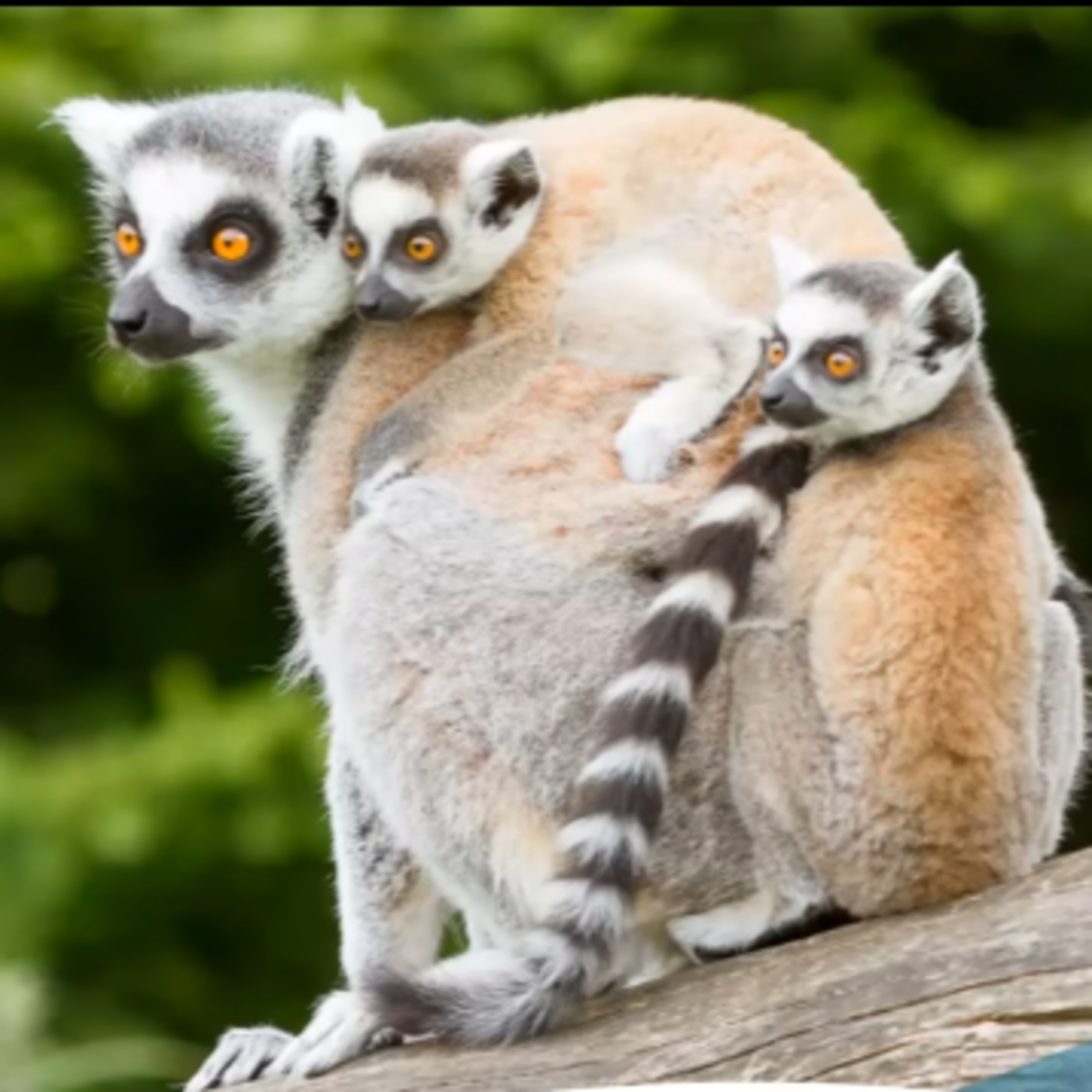
just a couple of years can do, that how an environment spouts back. This one's another interesting one. This one shows the tenacity of psychology and the communities we serve. So over in the Philippines, Burangay, Boulinan, the community was pretty comfortable. They had wide-swares of areas that they fished from and they did it sustainably. And they were able, they had schools, they had everything they needed to kind of fulfill themselves, but they're issues with the legal fishermen and poachers coming in the evenings. And so they started losing fish and their ecosystem started getting damaged which impacted local business. And they recognized that while they were struggling, issues were gonna come within the Levy at this kind of outside concern. So in exchange for them conserving a 900 acres of protected area, these significant areas, mangroves, sea grass and coral, we built them a watchtower. Or well, they built, we funded a watchtower at some kayaks. This is a photo of the watchtower being built in 2004 and some of the patrol men who would go around to the evenings and just make sure that their environment was actually protected. So this is interesting because in 2005, a typhoon, or 2005, 2004, the years get conflated. About a year ago, a typhoon hit and it tore down that watchtower in this photo. And so now we're working with them again to rebuild it because the their commitment to protect the area still stands, so we stand with them and making sure that we can fulfill our ended. They have the tools they need to do that. And I'll end these examples with one of my favorite ones because I can never say it. It's Andranno, Hobaka Village in Madagascar. And I like this one because of how simply cute everything is. We protected a rare lemur as you can see in the photo, projected over 3000 acres of forest and created 5.6 miles of fire break. So for the Californians in here, especially Ernesto, I'm from San Diego, so I know something California as well. Fire break is critical. And these numbers of acres, I want to re-emphasize the scale. Islands are smaller. So about 3000 acres on an island of seismatic askurs, quite incredible. So these communities really don't want to damage their environments and giving them the tools to protect themselves, allows them to protect their own environments. And here's that school saying thank you. The other half of the cube won. So now this is a video that I'm not going to show you. Just for the sake of time, I'm going to keep going. Clicked it, there we go. So that video would have shown you in what we were talking about, our smaller individual psychology projects from that initial map of your remember, where we work with a specific community to alleviate their issues and support them throughout climate change in the coming decades. But about 10 years ago, because of our success, we started to see some themes and the Dominican Republic, and you might have picked up on this. One of the themes was over and over again, communities wanted to protect mangroves. Why mangroves? So mangroves are kind of a panacea of climate change. They're not perfect, but they're incredible. They rebuild the ecosystem, acting as kind of water break and nurseries for plants and animals. They protect against rising oceans because of their long roots in weaker sandy and muddy areas. They also sequester quite a bit carbon, which is something, you know, we value interrestrials rainforests as well. So go bigger, go home. Our first national multi-year initiative was born. Psychology partnered with the Dominican Republic's government, Navy, multiple towns and villages. And I believe a few other local NGOs to report nationwide mangrove awareness campaign. So this meant we supported mangrove based tourism through some of our projects, mangrove based education. A lot of people don't know the value, don't understand how they're valuable. And because we listened to the community, what they wanted, youth sports. The DR is huge on sports and it's not just baseball. So some photos of some kids benefiting from the work, some local acknowledgments as to what we've been doing in our first national project. And I'm sure everyone here recognizes Aragua's Gali was, right? So this lizard was actually found during the DR's project. This was a new species. The scientific term is Gura Yo-Ku-Us, Iran-Gu-Lanus, if you want to say it incorrectly. And so it's not only a new species to science, but it's also the only known member of a new genus. So this lizard is now found in scientific journals noted by media and herpthologists around the world and was named after the indigenous name of Enrico, who led a Tiana, which is a native uprising against Spanish colonialists in the 16th century. So a very significant animal to the DR, and one that might have been lost if we hadn't been protecting its environment. So from that was born our second national initiative, which wrapped up a few years ago, called Play for the Mangros. So we took our educational aspects and our sports aspects and we focused them specifically at kids. Because quite often we found that, you know, when you teach a child something, they come home, they share with their parents, they're more willing to listen to their kids than you. So we actually found, by starting with the children, kind of awareness and value of Mangros increased across all age groups. And of course, kids want to play sports. So we funded a bunch of volleyball initiatives, we funded some baseball initiatives, and we also created a lot of opportunities for kids to go and plant Mangros themselves. It's going to take onists of their community, their environment, their future, and really make them material. And that stuff's meaningful. And of course, you know, with the success of this secondary project, we took it to Jamaica, where we saw a lot of success with similar environments. Here's a photo of our founders in the front left and our leader of special events is in the back right. And if you look in the back, middle or back left, excuse me, and you look in the back, but a left, the man with the beautiful mustache is a local field rep of ours. This is a part where I like to share kind of how we find our work. This is a planned aggression, if you will. So psychology is that we have an office in Berkeley, but we serve people around the world. How do we do that? We do that with these things called field reps. These are people who live in the area, who are from the area, they're typically scientists. They work other nonprofits, or a few are tribal chiefs, and what they basically do is they act as liaisons for us. They know what their communities and nearby communities need. They're exposed to it through their work and life from one way or another. And when they find a project that's overlooked, under-supported, it happens to be related to an island. They kick it back to us, and they work with us, and the community to find a middle ground and find a way to kind of create this project. So that is Ishmael, our Germanic and rap, and he has been instrumental in pioneering our play for the Mangeros initiatives. He's a teacher as well. And currently, we're working on seagrass. We've moved to Europe, and we've founded Geese of the Greek island Seagrass Alliance. It's a nationwide outreach education campaign to protect Ponsidonia. It's a type of seagrass that compared to any other type of-- or what is it? So this seagrass, a nacre of it, sequesters more carbon than any terrestrial rainforest. So we're investing in seagrass heavily now because seagrass is one of the best ways to pull carbon out of the atmosphere and combat global warming today. So some photos of some things you protect with seagrass. This is a local NGO we partnered with showing off Misfag as they get out there to collect some samples. And citizen scientists always educating the youth. It worked in the DR, it worked in Jamaica. It's working in Greece. Show the kids why it matters, and they'll tell their parents why they should protect it. So this is a lot about the work we're doing. Are people noticing? Thankfully. In our 35 years, we've gotten a few awards. Some ones I like to point out, because I think they're pretty fun. We got the Princess Prize for Innovative Non-Profits, Laureate, Prince Albert of Monaco. So this is a prize you cannot apply it for. You literally called our founder on the man in the photo and said, you won this prize, and he said, I don't believe you. But it was real. It seemed like a prank. Last year, we actually won the Littman Family Prize. We were the first domestic nonprofit to receive this. This is from UPEN School of Business. So it's remarkable non-Profits making a difference. And a few other-- yeah, we got a Nobel Peace Prize nomination. That one too. A lot of fun stuff. The trick about psychology projects is that they're typically far away. The cool thing is we do a few trips every year. This is a way to bring money to those areas. We stay in environmentally sound, like eco-logs. This is what have you. There's opportunities, typically, for swimming, hiking, scuba diving, and engaging with locals. So this is me on the left. I led a trip last year throughout Baja California. This was a five-day trip where we spent every night camping on a beach and then kayaking at a daytime, and free time for snorkeling and swimming around. And we visited-- it was kind of crappy, if you know mind. But we visited some toilets. And this is a shot. This is Insenada Blanca, White Beach. And this is a very famous tourist spot in Baja California. Unfortunately, tourists are messy, and no one was taking charge of the beach. So this beach was dilapidated. Psychology came in and worked with local tour guides. And what we basically created was sustainable toilets based out made with wood chips on the island. And every month, a different tour companies responsibilities to clean the toilet and bring the wood chips and everything else back to be used as fertilizer. So now this beach's cleaner, local farmers have.
beer and the tour guides have a clean beach and a little side hustle. And it was great for us because we got to enjoy an absolutely incredible adventure. Some other trips we've done, this is a dive trip. We went to the Red Sea a few years ago. Here we protected about five islands, almost 500,000 acres, an installation from monitoring buoys to protect the reefs around them. We actually got to go see the installation, some of our divers and some of our supporters, and some of some pretty cool parrot fish, among other things. So, there's some upcoming trips I'd like to share. We'll be going to Croatia later this year. Beautiful shot of Croatia right there for you, where we've started some new projects. And we're partnering with the Cal Academy of Sciences to do a joint cruise to Costa Rica in Panama in 2028. So this is a great way to kind of get involved and see the work we do if you're interested in traveling some of these incredible places. So I'd like to end it with a profound thank you to everyone for listening, for being interested and for recycling a little bit today as I'm sure you already have. And if you'd like to learn more about us or anything that we do, I've got some information here and I'm here right out of chat. So Russian, thank you so much for giving me this time and space and thank you to everyone else here for listening to me talk about something that I just really do enjoy. What a pleasure it is for us to do so. Our wonderful stuff, Max. Now, what I'd like to do is take a minute and introduce the group that we've got on the recording from our club, Kathleen Island in Southern California. We've got Ernie Rodriguez from the larger rotary space in California. We've got a good friend, Aggie Freeman joining us from the Central Valley. Good to see you Aggie. And then from Canada, friend of the club and former presenter, Jason Elate and his work with insect flux. And so I'm Russian Hurley. I'm in San Jose. And it is a pleasure to be able to bring these stories and to talk to the people who bring them to us about the different things they're doing. There were several questions that all kind of roll around how you got involved, how you think about what it means to be involved, what it is that is important to you for being involved in this effort. And I think that's a good place to start because it oriented in terms of the other elements of the discussion that we'll have. Make sure I'm answering the question correctly before I do answer it. Essentially, it's how I personally got involved and what about the work is important to me? Okay, perfect. So how you got involved? Man, there's so many different places to start a story. You know what I mean? So I would say that I'll start it with my education. I have a bachelor's in English and education and I have a master's in politics and education. My interest has always been in advocacy and policy work. So when I graduated with my master's, unfortunately, it was the pandemic and I found work as a consultant. Consulting consulting work pays really well. I have nothing against it, but I found that it fed my stomach but not my soul. And that's also okay because, you know, everyone finds what motivates them. So I found psychology. I grew up in Southern California. My first job was at a aquarium and then I became a lifeguard. So I've always loved the ocean and the water. You know, life led me other directions, but coming back here was incredibly, if I like a return to form. And so my background of policy means that I'm quite sensitive to how nonprofits work. And while a few are exceptional, a few can be quite middle-length. So see, call it, do something that I was very sensitive to before applying. And since joining was, how do you send it to the people you serve in your service? Because a lot of, well, not a lot, but some nonprofits believe they have the answer and they ignore the issue completely. And psychology has shown me through their actions, through my visits, through the work that I've seen that I've supported that they really do at their core care about the people they're serving. And I think that a lot of good has come from that. So I have to end. Yeah, so that's what supported me is like the effectiveness, I would say, of helping. Well, I end the personal history in that space as well, which is really wonderful. You, in that last answer, you got into a space that is very important to rotarians. There are certainly rotarians in this club and those who think similarly. And that is, how do you make service work well? Right? Clearly it's not parachuting in with the answer that you're inflicting on a group. It is much more about working in a way that is really, really constructive for the goals of both the organization and the community. So what is it that allowed the transition from, hey, we'll build this school for you, don't sell into the loggers to this is a model, right? You know, is there something along the way where that became part of the discussion in the history of the organization of psychology that got people into a mode of like, this is how we need to approach this in all sorts of settings? That is an incredible question. And I would say the answer is that it has been pretty much baked in since the beginning. So the co-founder, though when I spoke about Dr. Paul Cox, he's an anthem bonness, but he has a quite strong appreciation and understanding of the community around the culture that he kind of appraises. So when our work started, it really was, you know, they told us what they needed and they told us what they could protect. How could we have the audacity to then assume that it's the same thing everywhere or that the same thing would work everywhere? So I wish I could tell you, you know, we sat down, we're like, oh, you know, this is working, let's formalize it. But it really was this kind of consistent flow of how do we practice empathy proactively? I think that that really does kind of continue it. It isn't, well, while I can't tell you, you know, we came to an epiphany, we'll back curtains whenever we're reviewing projects. It's one of the first questions we ask. And nothing gets shot down quicker than if you can't connect the community and the conservation. If it's not stringent enough, if it's not shot down internally, the board will veto it, the founder still involves like this kind of empathy is at every level, I would say. But no, it wasn't. I'm how we're going to do it. It was more so we've just been doing this. Looks like it's what we should keep doing. So it's as if there is a lesson there that says, hey, there is this thing that makes sense to us, us being some group that wants to serve in some fashion. We bring this thought to a community. The community then helps us refine the ideas in a way that allows it to be optimal for that setting. And then the next piece would be the metrics that allow others, supporters of the effort, you know, broadly or specifically to feel like, yes, this is really working. And I have read about psychology before. I mean, one of the things that you say is just like we're protecting this immense amount of space on the planet. And can I get you to talk a little bit about that as a way, assuming you agree on the three part piece of we have this thing that we believe can make a difference. The community agrees with us and helps us set it in the right way for where that is. And then this is how we develop that story so that the story allows more people to become involved in the success of this. Gotcha. I will qualify that, but I think the first two bits were more statements than questions, but those were correct. And the final one, which is kind of the question, I have an answer for. So we do have a thing that helps. I would say that where psychology leads the answer the most where we kind of just things is in places where they recognize, okay, here's an example. We were working with this community. Oh, man, I think it was in the New Zealand Highlands. And essentially they had a gas generator for a community of about 40 homes in this village. And they were like, hey, this gas generator is expensive. We have a river nearby that is our source of income. We want to protect it. And we just need more power, basically. So gas generator is pollute. So our field rep and us, you know, so the local individual who represents us and then us domestically suggested a water, what is it? A micro hydropower plant. So basically we would get rid of the gas power and we put it in a micro hydropower. Now this part, you can quote me, but quote the full quote, which is I'm not sure. But essentially there are cases where people recognize the problem and we offer potential solutions or the field rep. The person there typically has a bit more knowledge and backgrounds that maybe you need this. So when this solicitation comes to us, it's already been somewhat refined by our local representative who is part time employee of psychology, but a full time citizen of this area. So that kind of, we always listen to the community, but sometimes there's not educational gaps, but lacks of awareness of things that you know, you might take for granted knowing you exist. So we'll kind of help along there. But yeah, the community has to agree, understand, install it, give input and whatnot. So how we developed a story for donors. As the individual most interfacing with donors, I often get asked, you know, how do you evaluate the success of your projects and whatnot? And this is the answer that I personally didn't understand when I first joined, but I have come full circle on it. So again, I have a policy background. I did consulting before this. I love numbers. I love deliverables. I love things that prove this is working or it's not. So see call it.
Again, because a lot of these committees are not off the grid, but somewhat off the grid. A lot of the, we get updates twice a year, January and February, June, July. Those typically look like a PDF, a few descriptions from an NGO of like, "Here's what we did, here's what's going on, some photos from it, and some testimonials." That's like a best case. We have a local partner who is an organization who knows how to ascertain results and get those to us. But some communities are really just small communities, and we'll get word documents with them talking about what they did and some photos of the work that's going on. And we take those as credibly as we do take those official reports from local non-propasably partner with. Because in both cases, the environment's coming back and the people are saying it's working. And if they're messing with us, we have field reps who go visit these places and double check, but that intrinsic buy-in is our best protector against abuse or lack of success. Again, these people live there for generations. They know what's wrong, they know what they need. And typically, they have the knowledge to fix the issues, but not the tools or resources to address it. So we've had a very high success right over the years. But to come back to your question, we developed the story for donors by collecting the photos, collecting the testimonials, presenting them in newsletters and on our website. And some major donors who support specific projects fully or totally get personalized updates that go directly to them. Okay, the power of the story. Well, that certainly makes sense to me. There are some specific spaces. So you talk about mangrove awareness in the Dominican Republic and how that fits in with how you've worked with community. That's fantastic. I was curious about the Florida Keys and the issues happening with mangroves there, the tourism, effects of tourism there. I was looking at the map and looking for Puerto Rico because it's a place quite special to my heart. What has proven challenging in some settings for establishing a presence and helping do some of the activities that the psychology does? Challenges in assembling your presence and Florida. I'll answer the Florida question first and they will tie in the second one and I think you might already be inferring on like a through line. We don't have any projects in the Florida Keys currently. We do have some domestic projects and we're not opposed to Florida Keys. But if I had to guess, it's probably a mixture of we don't have a contact in Florida or someone who's Florida and who's like helping us find work and the cost to impact might not be kind of material yet. In other words, because we don't have someone who can find us projects, we don't know how much a project would be or where that project would be. What it would look like. But it's not something we're opposed to or have been avoiding by any means. So now to come back to a much larger sense. Our projects range from about 25,000 to $55,000 on average. They take about one to two years to complete the community aspect, the school building, the solar panel installation, what have you and the conservation lasts for a minimum 10 years up to in perpetuity. Typically, it'll go longer than whatever the minimum is, but we said a minimum because you know, why not? Or they'd like that. But some issues we do have typically are the, it's like it's tough to answer it because we don't have a lot of issues. Typically like the communities are receptive and like we have a through-lantic connect. Some problems we have in the past have been what you'd expect and they were mostly early on, but like liaisons weren't liaisoning or things were taking too slow. In those cases, we'll step back and we'll come back in a few years and find a new person to connect with. And for the most part, our issues now have been climate change really. I'll go back to the Philippines example. We built this whole watch tower protect about a thousand acres and then a typhoon comes through and blows the tower up. Like now we got to rebuild that thing. So the biggest issues for us now are climate change. But and historically, it was implementation for those are more early organization growing pains. We don't have those concerns as much anymore. Well, one of the exciting things that we have is the opportunity to keep talking to people who are bringing these really, really interesting stories to us. And so I'm excited for us to continue the conversation, but in recognition of time, I'll wind down the recording and hand it back to you for a final word in just a minute. But for all of you who have taken your time to watch this recording or listen to this podcast, I hope you are excited about what you're hearing. It might be specifically this story and take a look at seacollege.org. The links for learning more about their work are on the page where you found this video. But also just that sense that there are a lot of people making a difference in a world where the news is often about doom and destruction. There are a lot of great things happening from the people who as they say over at Fix the News, Angus and Amy, who are rolling up their sleeves and making a difference one thread at a time. So we are happy to do that. Please tell others about our club, Rotary, the Rotary E Club of Silicon Valley, the ease of finding it by going to Rotary.college and Rotary itself, Rotary.org. We hope that that will be a source of a lot of inspiration and hope for you. Or those who are absolutely excited to have this story wind out in a beautiful way. Max, what is it you would like people to have clearly in their heads as we finish this video or podcast? If you feel like you want to make a difference today to help an environment or community that desperately needs it, come learn more about psychology where we practice island, creature and culture conservation. Thank you all. I love it. Thank you and thank everyone. We will see you next week.
Podcast Summary
Key Points:
Seekology protects island habitats and cultures worldwide, focusing on areas disproportionately affected by climate change.
The organization uses a win-win approach
Seekology’s model prioritizes intrinsic buy-in by asking communities what they need and what they can protect, rather than imposing solutions.
Projects have protected over 1.6 million acres across more than 460 projects, including schools, kayak tourism, watchtowers, and fire breaks.
National initiatives in the Dominican Republic and Jamaica have focused on mangrove and seagrass conservation, with youth education and sports as key tools.
Seekology relies on local field reps to identify and support overlooked projects, and has received awards including a Nobel Peace Prize nomination.
Summary:
Seekology, led by Max Rojasdomke, is a nonprofit based in Berkeley that protects island ecosystems and cultures worldwide, addressing the severe impacts of climate change on these vulnerable areas. Its founder, Dr. Paul Allen Cox, started the organization 35 years ago after a Samoan community sold their forest to loggers to fund a school.
Cox sold his belongings to build the school instead, establishing a model where communities identify their needs—such as schools, kayaks, or watchtowers—and in exchange, pledge to protect nearby habitats. This approach ensures intrinsic buy-in, as poverty and conservation cannot coexist when people are forced to choose survival. 6 million acres, including rainforests, mangroves, and seagrass beds.
Notable initiatives include protecting mangroves in the Dominican Republic and Jamaica through youth sports and education, and a new focus on seagrass in Greece, which sequesters carbon more effectively than rainforests. The organization relies on local field reps to connect with communities and has earned recognition such as the Prince Albert of Monaco Prize and a Nobel Peace Prize nomination. Seekology also offers eco-trips to bring funds and awareness to project sites, emphasizing sustainable tourism and community engagement.
FAQs
Seekology protects the unique habitats and cultures of islands worldwide, focusing on conservation and community benefits.
Islands are disproportionately affected by climate change, with higher extinction rates and greater environmental impact relative to their size.
Every project includes a conservation benefit, a community benefit, and must be on an island or affect one.
Founder Dr. Paul Allen Cox sold his car and house to build a school in Samoa, preventing loggers from cutting down a rainforest, which led to the creation of Seekology.
Seekology uses intrinsic buy-in by asking communities what they need and what they can protect, rather than lecturing them.
In Uma Village, Rota Island, Seekology funded a community hall and kindergarten; in exchange, the community protected 1,200 acres of forest for 15 years.
Chat with AI
Loading...
Pro features
Go deeper with this episode
Unlock creator-grade tools that turn any transcript into show notes and subtitle files.
 PodcastTranscript AI