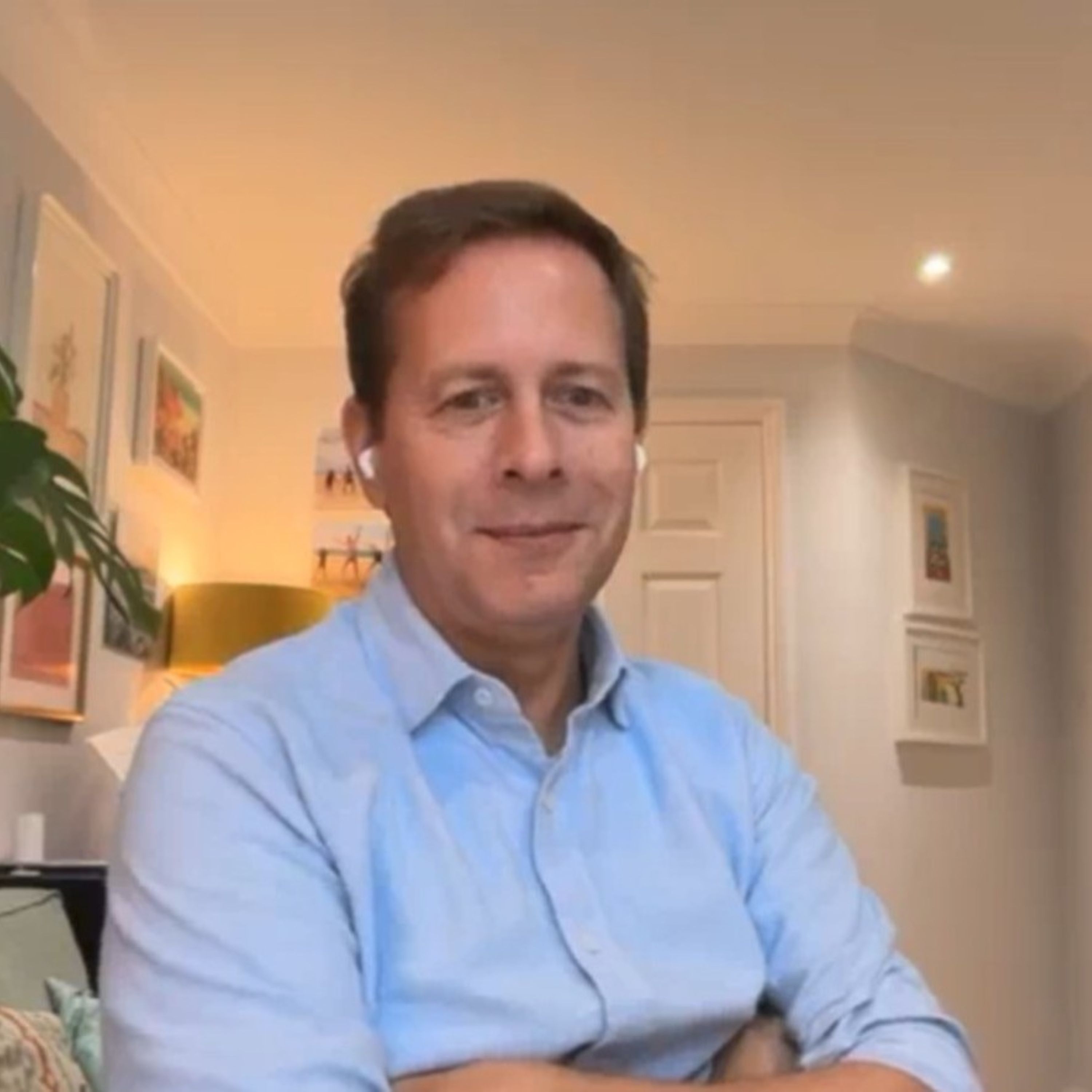
1162: Scaling Growth Across the World’s Most Complex Markets | Guillermo Lopez, CFO, dLocal
45m 2s
In this interview, Guillermo Lopez, CFO of DLocal, discusses his career journey and leadership philosophy. With over 20 years in finance, including key roles at American Express and Visa, Lopez highlights the importance of gaining diverse experience across different business functions and geographies to prepare for a CFO role. A defining moment was his time at the startup Tink, where he learned to thrive in a fast-paced, less-structured environment, making decisions with imperfect information—a skill directly applicable to his current position at DLocal, a global payments platform operating in complex emerging markets.
DLocal simplifies payments for major global merchants in nearly 50 emerging countries, managing local regulatory, currency, and compliance complexities. Lopez’s main objective is to build a world-class finance function at the 10-year-old company. He emphasizes a data-driven, analytical approach to leadership, focusing on maintaining strong cash flow, disciplined capital allocation, and strategic finance involvement in key business decisions like market expansion and investments. He sees significant potential in AI to automate tasks and enhance efficiency, allowing finance teams to focus on higher-value activities. Overall, Lopez views the CFO role as critical in providing data-backed insights to guide growth while ensuring financial resilience in a volatile, opportunity-rich landscape.
Support for CFO Thought Leader comes from Intuit QuickBooks. Sync your payments bills and funding into one powerful platform. And that's sweet! The number one AI Cloud ERP. Hi, this is Sterley Young, I'm the CFO of FlexPort, and you are listening to the CFO Thought Leader podcast. This is Episode 1162. [Music] I really want to build a world-class finance function at Deloq. It's going to take me more than 12 months, but it's definitely my main objective. I come from companies with very strong finance functions. And AMEX, these are very good examples. And that's what I would like to build. Those schools of finance professionals like AMEX has been, or PepsiCo, or G-Cupital, that's what I would like to do. And I'm so running by fantastic colleagues with a lot of talent, but at the end of the day, the local is a 10-year-old company. Vaguum people value. There's so much I need to do to help them an elevate them. That's my main objective in the next 12-18 months. Hi, it's Jack. On today's show, we speak with Gil Yermal Blow-Pez, CFO of Deloq. [Music] Before we introduce today's guest, I want you to think about how finance leaders make decisions when the ground is constantly shifting. Payments is one of the most complex, fast-moving arenas in business, layered with regulation, currency volatility, and massive data flows. And yet, that's exactly where some of the clearest lessons about modern finance leadership continue to emerge. Today's conversation explores what happens when finance operates without perfect information when speed matters as much as precision and when data has to guide judgment rather than replace it. Our talk with Gil Yermal Blow-Pez of Deloq begins after this. There's a reason people say to look before you leap, think Napoleon, invading Russia. What was he thinking? It was a brutal winner. Without a clear view, your decisions can set you up for a hard fall. That's where into a QuickBooks come in. QuickBooks Money Management Tools syncs your payments, bills and funding into one powerful platform, giving you visibility and control over your cash flow, so you can be confident in your next move. QuickBooks Money Tools are built right into the platform, so you get real-time insights into all your cash coming in and going out. Spend less time chasing invoices. In fact, you can get paid 45% faster with automated tools to help identify overdue invoices and draft payment reminders to customers, pay vendors seamlessly, and relax knowing it's paid right. No more manual mistakes or misdeadlines, state organized and connected. Bills, vendor records, 1099 payments and financial data will be in one place. With QuickBooks Money Solutions, you can optimize liquidity. Stay tax-ready and gain the clarity and confidence you need to leap when the opportunity strikes. Don't have a brutal winner. Take control of your cash flow. Learn more at QuickBooks.com/money. Again, that's QuickBooks.com/money. Oh, and yes, terms apply. Money movement services are provided by Intuit Payments Incorporated. License says a money transmitter by the New York State Department of Financial Services. Stay warm. [music] Hello, CFO Guillermo Lopez is with us. Guillermo built his finance career at the intersection of global payments, pricing strategy, and FinTech innovation. He spent more than a decade at American Express and senior finance leadership roles, stepping into CFO positions in highly regulated data-driven environments. Today at Delocal, Guillermo oversees finance for a global payments platform, serving some of the world's fastest-growing markets. Guillermo, welcome. Thank you, Jack. Thank you for having me. So, Guillermo, please take a look back for us. What were interested in, of course, so those experiences, you believe best prepared you for the CFO role. What comes to mind for you? Well, I've been working in finance for over 20 years. And I have, I would say, I have maybe a non-traditional finance background. Yeah, I started in consultants and I started engineering. I was an IT consultant. I was helping companies who wanted to offer their product and services in the Internet. It was the '90s. So, you know, the Internet was something very new. And I spent like a few years there, and then I went to study an MBA at Chicago to the U.S. I fell in love with finance, but nobody was giving me a chance in finance because I was an engineer. So, it was actually American, especially Lonna, who took a risk on me. My boss at the time was Grand Maze, who's also CFO in the UK. And he took a risk and put me into a finance role. And I asked him, why did you hire me for a finance role? I mean, I was already in my early 30s. No finance background in my career. He said, well, Guillermo, one, you're obviously good with numbers. And two, because you've been a consultant, I can put you in front of like external parties. And I don't have many people around in the department who can do that. So, that's how I started in finance, more than like 20 years ago. At what point maybe did you realize you were building toward a CFO role? It's clear you knew you were in the finance lane. That was going to be your lane. But when did you realize that the CFO role? Even if you didn't call it that at the time, you knew you were aiming for it. So I'm a late bloomer actually, because I took my first role in finance. I spent more than three years on it and I loved it. I was enjoying it so much. And then I started to apply to what could be next. Some of the roles were in finance and some were not. And then a boss of mine, and I was very unsuccessful, by the way, applying to the next role. And a boss of mine, who is Christophe Lacagiac, he's currently the CFO for American Express in New York. He took me a second year, but you're very talented. But you don't know what you want to do. So basically go and do your homework and figure it out. And that's exactly what I did. I spent like six months going through different roles in the organization, talking to people, among the many CFOs, doing research about, okay, this sounds exciting. So talking to a lot of people, going through newspapers like Joe Postons about what they were looking for, it's that's what made me realize, you know what, this is what I want to be when I grow up. And that's how I started seriously to consider a career in finance and become a CFO in the future. You moved across from FPNA to pricing, to regional leadership roles. And I'm wondering, was that all intentional, that breadth? It seems like, you know, you had a wide breadth, a wide lane to learn within. It was intentional. So there was a culture in American Express that promoted the move into new roles, every two, three, four years, depending on the role. But for me, it was important to do things in different parts of the organization. So I move across businesses, I move across different finance type of roles intentionally, because I wanted to get breadth. And that's something, by the way, that I continue doing in my career later on, even in cultures that don't promote that. I think it's important to get breadth, especially if you're thinking about a CFO role. Your work in global pricing and portfolio valuation, required balancing growth with margin discipline. How did those experiences shape the way you now think? Call them trade-offs as a CFO? Yeah, I think I think you can ask that question, not just about pricing. I mean, also when I was managing P&L, there was that question all the time. And I think one of the critical things is I'm very data-driven. I am the non-emotional part of the decision-making, that's the way I think about it. I try to get data, analyze it deeply, and use it to inform decisions. And sometimes that data is financial data, sometimes it is. So, yeah, I'm a very analytical person, very data-driven, and I have applied that to pretty much all the roles I've worked on. Much of your career has involved operating across multiple geographies and regulatory regimes. How did that exposure change the way you assess risk and make decisions under uncertainty? Yeah, I think it's a good question, because if you think about how I developed my career later, I moved from very large companies like Amazon Visa to very small companies, I was able to make that transaction very similar to that. I think the only way I could do that is because I became very used to making decisions sometimes with imperfect information. So, the roles that I had involved that, and I think the fact that I had to lead large businesses very independently, equid me well to do that. And when you're working on large international businesses like you're talking about in which you pose a completely different continent and the team that work around you, it's also that you think on today, you need to actually have that level of independence in making decisions and feel, you know, feel empowered to do that. And I found that. I found that in American Sprayers. I found that at Visa. I had great bosses and mentors that helped me to do that. Now, you already revealed some of what I'm about to ask to us, but I just before we move on and ask you about the local, I want you to look back sort of at the full arc of your career. And certain roles perhaps stand out more clearly in hindsight. And which experience, as you look back, which experience do you think best prepared you for this current role at DLocal and why? So, probably the most critical one was at TIC. When I was at Visa, Visa acquired a Swedish company that was founded by two young people in Sweden in Stockholm. And it was called Tink and it provided open banking services. And I was basically the grown up that Visa sent to work with them in Stockholm. There was commuting from London to Stockholm every week. It was such an important kind of opportunity for me later in my career because I was used to very large companies with systems and processes and know how they have been developed over decades. And now I was in a company that was actually very small, but had the need to move really fast, be very clear client-centric and make decisions very quickly on areas in which you were not a subject matter expert at all. And it was down to another beginning, right? Because you go there and you don't have the support that you have in big companies. But I found myself that it was one, a lot of fun, and two that I was good at it. I was able to move fast, make decisions, focus well on what the priorities are. And it made me actually change completely about how I was thinking about my career and try to take a bit of a bigger risk on, maybe I can go to small companies, having a broader, more senior type of role in them and make a difference. So that was a pivotal moment, I would say in my career. Want to find out now about this opportunity, a D-Local, tell us about this company, what are its offerings, what sets this company apart? Yeah, so let me explain it for like obviously, suppose many of your listeners are not experts in payments. So D-Local is a Euro-Yen company, and it was funded 10 years ago out of Euro-Y. But they two entrepreneurs, self-yofogl and Andreas Brofski also held by the co-founder Sebastian, Kanovic, and what it does is that it helps big global companies over, offer their services and products and be paid and pay in emerging markets. So thanks to D-Local, you can buy services in Temu or Shane or Amazon or you can pay your Uber driver or Uber can pay their driver in countries like North-Ordafrica or Argentina or Uruguay or we're pressing in more than almost 50 countries. And so it is the expert on payments in the global south, that's what we do at D-Local. So it actually, you think about the open banking ecosystem, it is very unique. It has a very special niche of expertise. We are the experts on the global south. We have the largest coverage in terms of how you pay, so from the big critical companies to alternative payment methods to all the local solutions as you can think in all these countries. It has a merchant first mentality, so we're big going with all these big merchant, global merchants to all these countries and we have very good deep relationships with them. And what we do for them is we solve a lot of complexity. So if you think about what it means to pay and be paid in these countries, these are regulated countries. So you actually have a lot of compliance requirements, you have to do settlement, you have effects as porcelies that you need to think about, you have taxes, porcelies that you think about. And so we solve that complexity for the merchants. And we've been doing it very well. So just the brands that we have in our portfolio tells you that it's a validation of what we do. It sounds like you have this specialization in compliance, you have this infrastructure to because it sounds expensive to it because each region is very complex and has its own quirks or special needs. What you know, tell us how how are you able to offer these services and be cost competitive. The first thing I think is we put merch in first. So it means that we tried much as we come to solve what what our clients are trying to get like if they want to open into a new market, we're going to think, okay, how do we actually help our client to do this. And we do it at a speed. We are really fast in doing that. That's embedded in the culture of the company. I come from large company, as you know, and they're struggling to how do we get back to these two critical things, put the client first and move at a speed is really difficult when you're at large company. So it's 10 years old and it still has not lost that. And I think that actually provides a lot of the value that I'm talking about to the merchants. Now you're right, in order to serve our clients need, we need to deal with a lot of complexity. We need to get very good at from a compliance perspective and regulatory perspective. We need to actually get into this market. And when it comes to, I don't know, from money movement to effects also get very good at that. And what happens over time, Jack is as you get a bigger present, a bigger volume in these markets, you start to get the benefits of the scale. So at the end of the day, we are payments business. So as we get a scale, the embracing leverage magic is thought to materialize in your PNL right. So in some markets, we already seeing that into more than marketing, which we are smaller, we we don't get, but we will at some point. Right. And so that's the beauty of the business model. So during your career, you've overseen finance in both mature and emerging markets. And I'm wondering how that background influences how you think about planning or forecasting or capital allocation. How does it, you know, again, you have this perspective, you know what happens in mature markets, as well as emerging. And here is a real emerging markets opportunity. How does that influence how you think about these things? Yeah, it, it, it, it adds extra layer of complexity. The, the, the, the scenarios that you need to think about and the volatility in them is something that has to be also part of your analysis. When it comes to not just be an L management, balance, it management, but also capital allocation. So for example, what we're thinking about was the minimum liquidity buffer that that I need, right to run this business. You start to think about a scenario out of this operating in these countries that you wouldn't, right. If you're thinking about Europe, for example, no, they use. But you know, I'm, I love numbers and I love complexity. So I always welcome that challenge. Getting more, the payment business is a complex business, but payment business in emerging markets is even more complex. And I something that personally I really enjoy. Help us understand better. Again, we're touching on currency volatility, regulatory diversity, our persistent realities for, for D local. What financial disciplines matter most in maintaining your resilience? It's a good question. So one of the critical things that makes my, my job is here is that we have a business that generates cash. So it's customer positive. Well, I have a very high like a bit that to cash conversion. And so that keeps you a bit of a buffer to absorb any potential volatility around all those items. So making sure that that high a bit of the cash flow conversion and that customer positive that we're seeing every month maintains and it's nurture and solidified Israeli critical. As a CFO, your role extends beyond reporting and controls. Where do you see finance making the greatest strategic contribution to the business right now? I think where we can add more value is when we help to make decisions around investments, capital allocation or a strategic initiative like M&A or expansion to a new market. I think if you put in your shoes, the shoes of a CEO, what are the critical decisions that they divide on this to make is usually around that. Do we launch this product, do we launch this market? Where do I put my resources? Do I have more people in operations or in the commercial time? Do I extend to a hard and do I acquire this company? I think finance need to be embedded into that decision making process. And it plays a different role to the one that someone in the commercial team or in the product team or the CEO would play. We need to come with the data. We need to come with this is what the data tell us. That's what we I think that's the value that we are to the table. I think it's not different too many years ago, but I think it's just still valid. Does the local operate largely virtually or what is the mindset for the company? Yeah, at this point in time, we have remote company. So a lot of the people work remote all across the globe. So for example, you're talking to me, I'm in London. A lot of my team is in Uruguay, Argentina and Brazil, but I also have people in Spain, in Madrid. And a lot of the people that I interact from the business can be London in Madrid or in Montevideo. So you have a combination of people who go to the office because there's enough mass within the company and it's to be honest, it's great to go and work together. But we tend to be at this one in time remote fest. Looking ahead, the payments landscape continues to evolve rapidly. And what financial priorities are most critical to sustaining D locals long term growth? I think it's a combination of being, I think what we can add more value is to being disciplined from a capital allocation and investment perspective. So we are growing business with a lot of opportunities ahead of us. We're going to continue growing. But we need to be disciplined on making sure that we are investing on the right initiatives, making sure that they are returning a more minimum threshold to us. Because we do have the opportunity to do that. We don't want to waste money investing on opportunities that don't have a potential. The other one is how do we, after we have, we maintain a strong balance sheet of we have invested in the right things. How do we have discipline on how do we return the capital to our stakeholders? I think that's the other critical thing in which finance can play a very strong role. This is a good segue for us because we want to talk to you about, I guess, resource allocation as well as your AI investments. And we're wondering how you go about evaluating AI investments, whether you look upon them a little differently. The ROI is likely calculated a little differently. What would you share with us? There are two angles for AI. I can talk about AI in finance as well because it's something I'm really excited about. We have a massive opportunity and we're seeing it on AI across the company not just finance, want to be more efficient. There's a lot of activities that AI can do better than us. That allows us to actually dedicate resources to more value added activities. But it's not just automating some of the activities that we do. It's also about doing them better. So some of the areas in which we're exploring AI is going to help us do the activities that we currently do better, like having more financial control or more data. So to give you a couple of examples where we're using it, we use AI currently to reconcile for example, bank movements and understand them better. We're exploring using AI in areas like transaction reconciliation. You can imagine in a payment business, you have millions, billions of transactions across different payment methods within different countries and currencies. And then you're making settlements across different stakeholders and parties related to them. So try to reconcile all that vast of information is enormous. And we think that AI can play a role in that to make things better, more efficient but also better. But we're also exploring AI in areas like for example, can it help us do violence analysis during our monstrosing better? That's another thing that we're exploring. We have a small team that what is doing is it has, it's uses AI to identify processes that we can do better, for example, automating. So it's not just, it's not just using AI to automate and be more efficient. It's also a tool that we're using to understand the areas that we can actually do better and automate. So kind of an educational, we use it also for documentation. I think, and to be honest, I think we're just starting the potential is enormous. The areas that I see in the organization that have been using AI for more than finance and they're more advancing what they do. But I think the opportunity ahead of us with AI, even in finances is large. Can you help us, where do you see AI making maybe the biggest impact inside the finance function? Yeah, I think at the moment where I see the most potential, tangible potential, this is what I was talking about is when you have to deal with a vast amount of data in which rules based engines are not enough because you are getting new type of data all the time. The format of the data is not the same. So there's a lot of discrepancies. So solving that complexity is something which we see gay. I have a lot of potential. Looking ahead, how do you see, just specific to the finance leadership role, looking ahead, how do you see finance leaders evolving as AI becomes more embedded in decision making across the organization? I think I usually AI all the time. I don't know you, but I can see how everybody in the organization is using it all the time more. I use it to inform myself about areas that I'm not familiar with. I use to actually get answers directly myself without having to talk to people in the organization. So it makes you, I think, more knowledgeable and independent from that point of view. It elevates how you operate as well because you start already from a position in which the discussion or the decisions, you know, at a higher level. So I think it just empowers everybody. If I'm using it, I'm sure that all the body that is using is finding that as well. So when I read about the thread of AI, I don't see it in the workplace. I see mostly benefits to be honest. Do you see has your finance team? Would you would you characterize your finance team as playing a role here in terms of sort of evangelizing AI as it partners with different parts of the organization to ensure different teams to trust and act on AI driven insights. Is that a role finance plays yet? I don't think we are playing it yet, but I see a role in it. The local is an AI first company. So before putting a process we think about, I can AI help us with this process or this task, some activities. And finance is not different to the rest of the organization yet. But it's true that a lot of people in finance obviously, including myself, you come from a different world in which you were putting processes in place and systematized them, rule space. And there's an opportunity that a lot of people are not familiar with yet. But as I told you, we have a couple of people in the team that that's their job. They think about how do I automate, how do I apply AI in the automation? How can AI help me with this? So it's just the beginning. As you start to implement more of these processes with AI, the people start to get more familiar with it. We even have a process by which if anybody can think of a way to automate some of what they're doing using AI, they can raise it and the team goes and help them actually do it. So from that point of view, it's embedded already in the organization. We just have to start to show more of what it can do, right? To have more people converting into it. Excellent. Thank you for answering a few of our extra questions there, Guillermo. We are up to what we like to refer to as our finance strategic moment. And again, I shared with you a little upfront about this. This is just where we always ask finance leaders to share a story or. Some insight from their past that given the fact they were in finance and their lines of sight where they're into the business, they could play a strategic role perhaps. What would come to mind for you? My favorite moment of the power that finance can break to the table was probably when I was in American Express in the international corporate CFO role. And to give you a sense, it's a, it was a business at the time I talking more than 10 years ago. It was investing close to $700 million a year. And the investment was mostly on media campaign, sales teams across the world. They were basically selling big corporations and small business cards. Right? So $700 million a year is a lot of money. And you would say, okay, so how did you actually split those $700 million? Well, the reality is was it had been allocated historically by whatever reason. Okay, I'm going to create high 12 people here. I'm going to put $5 million on Facebook. But there wasn't any. So I was thinking behind it like very, very sophisticated thinking behind it. So what I did at the time is I hired a small team of data analysts. And they started to crunch data. They started to crunch data about what was their behavior of the card members that we were acquiring through the different channels through the different investments. And I put that together with financial analysis that were able to calculate an ROI for all the investments that we had across the world. It took us six months to do it, but it gave you an insight into the power of merging financial analysis and data and not just financial data, but also platform customer market data. Now the following year when we had to allocate the $700 million, we knew which ones were actually giving us a good return for investments and which ones weren't. So it allows us to say, you know what, I'm going to put more money into this media campaigns. I'm going to put more money about people into selling small cards in Japan. And I'm going to take out people that are selling big cards in Australia and move them to the Philippines. So actually, it allows us to make decisions based on data. And that was a big departure, best of what we were doing before. I did an analysis of the time is these changes that we are implemented this year. I'm going to give us $30 million more revenue every year. And that is compounded. So the following year that was 60 and the following year it was 90. So you can imagine as you start to do these every single year based on data, the potential is enormous in terms of the upside that you can get. It really taught me about the power that finance can bring when you actually start to use not just financial analysis or financial data, but platform and customer data. Every business is asking the same question, how do we make AI work for us? The possibilities are endless and guessing is too risky. But sitting on the sidelines is not an option because one thing is almost certain. Your competitors are already making their move. No more waiting. NetSuite by Oracle can put AI to work today. NetSuite is the number one AI cloud ERP trusted by over 43,000 businesses. It's the unified suite that brings your financials, inventory, commerce, HR and CRM into a single source of truth. That connected data is what makes your AI smarter. So just doesn't guess. It knows. And you've got total flexibility because now with NetSuite AI connector, you can use the AI of your choice to connect your actual business data and ask every question you ever had from key customers to cash on hand to inventory trends. Plus automate those tiresome manual processes. Let's see your competitors do that. Right now, get the business guy demystifying AI free at net suite dot com slash CFO TL. That's net suite dot com slash CFO TL as in thought leader. Nice. Thank you for that great great moment of insight for us. We are going to move to what we like to refer to as the mentoring round and we're going to ask you to look back again. We're wondering when you first stepped into a CFO role. So before Delalco go back in time. You step into a CFO role for the first time. And you think there's something you didn't expect about the role, something that you know all the responsibilities fell on your shoulders and you think to yourself, I didn't expect this. What is it that if you could go back in time and tell yourself something, what is it? What is it that you would tell you? You're making me think that's like what would I have told myself to make things easier? You know, the biggest for process I probably got in my career that I've been blind to is when I stay holder, I don't interact with often or have an ongoing dialogue with comes with a completely different perspective that I wasn't seeing. Whether it's a member of the board or it's a founder or it's a senior person within or without your organization. And sometimes I get the feeling that even when I try to talk as many people as possible to get feedback and input that only enriches what I'm doing. Those moments have told me that sometimes it's not even enough, right? The more information, the more people you talk to the better. Where they someone very junior in the organization or someone very tangential to actually what you're doing. I think those are kind of the moments that more have landed on me in my career. You know, we always like to ask our guests, Guillermo to reflect a little on the personal side for us. We're wondering and again, you haven't been at the local all that long so there might be some people who don't know to about you but something most people don't know about. Guillermo Lopez, an interest that you have a pursuit from your past. I see a bicycle up to the right of you. Any. Tell us something about yourself, something that interest or something on the personal side. Yeah, yeah. I'll give you a minute. The back is here because in London it's raised to get you back stolen. So it's not the car I do because I can't be on the side because I can't be stolen. Yeah, I do love to exercise. It keeps me healthy and it keeps my mind able to cope with the stress of the job. One of the activities that I really enjoy although I'm very bad at it is surfing. Which is very difficult to do if you're from a three-door regionally and you live in Chicago or London. But every time I get a chance to get into my wetsuit and get my boar and try to catch a few waves, I do it. You know, I'm reaching at age and I'm still going out and having fun with it. I don't think since I was in my early twenties on and off but when my kids started to be in their early teens, I started back with them. And you know, I haven't stopped in the last ten years. As I find some time, for example, when I go to Uruguay to visit my colleagues at the local, I get a car and escape for the weekend and try to get some web seen in La Pedrenao in La Rocha. So that's kind of my secret. I'll be trying to get better at surfing all the time. Is there a park? It's just a segue back to your cycling. Is there a park in London where you enjoy cycling or is known for cycling? Yeah, you can, for example, I mean, for example, the Richmond Park is a very good park. You have quite a few kilometers out there. You can cycle there. But also where I leave you can take it out in the street as well. Yeah. Here in New York, it's amazing how many bike lanes are with us today that weren't there ten years ago. Is it London a similar story or bike ever present? It is, it is. I remember I used to, I used to cycle to work actually when I was working here in London. It changed a lot since like, I don't know, 2005, 2007 to now. Many more cycles, cycle lanes. But also you can see there's many more electric cars as well. You can actually feel less pollution as well in the last 20 years. You can feel it if you're as cyclists, yeah. So I think it's got better definitely. Before we go, we always like to ask if there's a book or a resource you'd recommend. It doesn't have to be a business book. It might be just something that challenged your thinking in one way or another. It might be something you escape with. I read a lot. I'm a Navi tweeter. I mean, I always have like three or four different books. And I read three or four books at the same time. One thing that I actually do is if I find a book boring, I stop immediately and move to another one. There's just not, there's too many good books out there, not enough years to read all of them. So I don't waste time with boring books. And I have to confess, I don't read many finance or business books. So I move between fiction to sometimes I read books on physics. Sometimes I book history books. So I will read all kinds of books. Do you now I'm reading a book, for example, from an army general from Germany in the 19th century called on war for example. So I read a bit of everything. But do you schedule time to read or is it something you just, you always have a book handy somewhere in case you find you have time? Yeah, I have, I, you're going to see it, but I'm surrounded by books in here. And then you go to my room, you'll find three, three books in my bed table. And then you go to the kitchen, you'll probably find out that you were reading. So I, they travel with me. We're up to our final question. This is where we ask you to look forward finally. And we're interested in your priorities as CFO of D local over the next 12 months. What are your priorities as CFO? Yeah. I really want to build a world class finance function at the local. And, uh, Max, these are very good examples. And that's what I would like to build those schools of finance professionals like MX has been or Pepsi call or G capital. That's what I would like to do. And I'm surrounded by fantastic colleagues with a lot of talent, but at the end of the day, the local is a 10 year old company. Veya and people value. There's so much I need to do to help them and elevate them. That's my main objective in the next 12 to 80 months. Guillermo Lopez, thank you for joining us on CFO thought leader. Jack, thank you very much for having me. [Music] Thanks for listening to CFO thought leader. If you'd like to go deeper into the leadership side of finance, check out our new newsletter CFO EQ. Each edition surfaces the stories, insights and emotional intelligence shaping today's most impactful CFOs. Subscribe on Substack or follow along on LinkedIn. Just search for CFO EQ. Because what's rarely measured matters most.
Podcast Summary
Key Points:
Guillermo Lopez, CFO of DLocal, aims to build a world-class finance function at the 10-year-old global payments company, leveraging his extensive experience from companies like American Express and Visa.
His career path was non-traditional, starting in engineering and IT consulting before transitioning to finance, where he intentionally sought diverse roles across businesses and functions to gain the breadth necessary for a CFO position.
A pivotal experience was working at the fintech startup Tink (acquired by Visa), which taught him to operate in fast-paced, less-structured environments and make decisions with imperfect information—skills crucial for his role at DLocal.
DLocal specializes in enabling global merchants to pay and get paid in emerging markets, handling complex local regulations, currencies, and payment methods to simplify operations for its clients.
As CFO, Lopez emphasizes data-driven decision-making, maintaining strong cash flow, disciplined capital allocation, and using finance strategically to guide investments and growth initiatives, including the evaluation of AI opportunities.
Summary:
In this interview, Guillermo Lopez, CFO of DLocal, discusses his career journey and leadership philosophy. With over 20 years in finance, including key roles at American Express and Visa, Lopez highlights the importance of gaining diverse experience across different business functions and geographies to prepare for a CFO role. A defining moment was his time at the startup Tink, where he learned to thrive in a fast-paced, less-structured environment, making decisions with imperfect information—a skill directly applicable to his current position at DLocal, a global payments platform operating in complex emerging markets.
DLocal simplifies payments for major global merchants in nearly 50 emerging countries, managing local regulatory, currency, and compliance complexities. Lopez’s main objective is to build a world-class finance function at the 10-year-old company. He emphasizes a data-driven, analytical approach to leadership, focusing on maintaining strong cash flow, disciplined capital allocation, and strategic finance involvement in key business decisions like market expansion and investments. He sees significant potential in AI to automate tasks and enhance efficiency, allowing finance teams to focus on higher-value activities. Overall, Lopez views the CFO role as critical in providing data-backed insights to guide growth while ensuring financial resilience in a volatile, opportunity-rich landscape.
FAQs
DLocal is a payments platform that helps global companies offer their services and get paid in emerging markets, specializing in the 'global south' with expertise in local payment methods and compliance.
Guillermo started in IT consulting and engineering, then pursued an MBA. He entered finance when American Express took a chance on him, leveraging his analytical skills and client-facing experience from consulting.
Working at Tink, a small, fast-moving fintech acquired by Visa, taught him to make decisions with imperfect information and adapt from large corporate structures to agile environments, which was pivotal for his career shift.
DLocal prioritizes merchant-first solutions and speed, building scale over time in emerging markets. As transaction volumes grow, economies of scale help reduce costs and improve margins.
Maintaining strong cash flow conversion and a customer-positive business model provides a buffer against currency volatility and regulatory changes, ensuring financial stability.
Finance adds the most value by embedding data-driven analysis into strategic decisions like capital allocation, market expansion, and M&A, helping guide investments and resource priorities.
Chat with AI
Loading...
Pro features
Go deeper with this episode
Unlock creator-grade tools that turn any transcript into show notes and subtitle files.
 PodcastTranscript AI