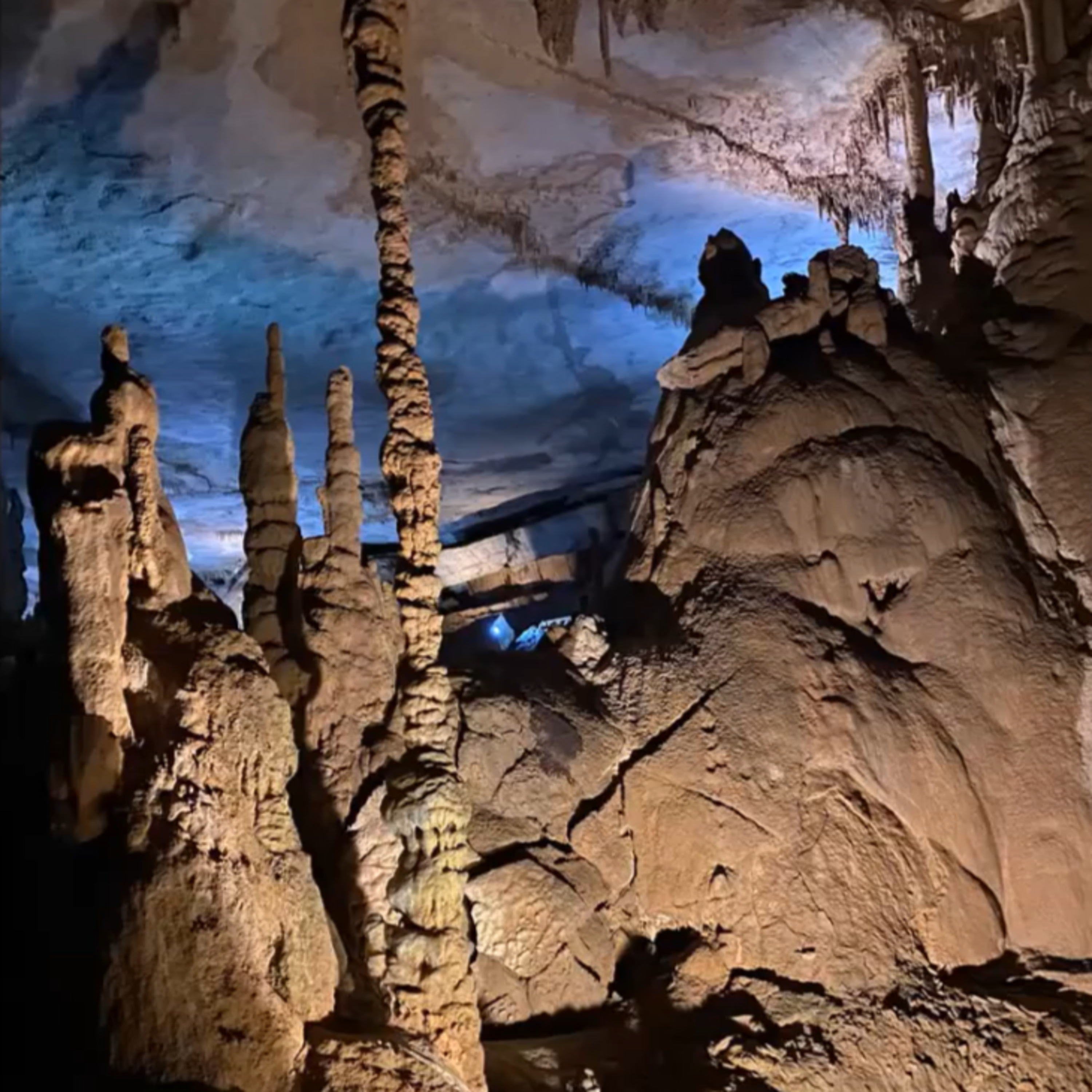
Dave Foster, a Rotary member since 1989, recounts the remarkable transformation of Horse Cave, Kentucky, from a polluted, odor-filled waste site into a vibrant destination for tourism, education, and industry. For decades, the town’s cave system was contaminated by untreated sewage, including from a dairy and a chrome plating plant, leading to a foul smell and environmental degradation. After the American Cave Conservation Association formed in 1986, they secured federal and private funding to build a modern wastewater system, establish a cave museum, and protect the fragile cave ecosystem. This effort not only cleaned the water but also revived the local economy, enabling major factories to relocate to the area and creating over 3,000 jobs in a town of just 3,000 people. The restored cave now supports 21 unique endemic species and attracts 25,000 visitors annually. The story highlights how environmental restoration, community leadership, and long-term commitment can overcome deep-rooted challenges. It also emphasizes the role of Rotary in fostering networks, trust, and collaboration. The project has inspired global interest in cave conservation, with universities and researchers from around the world engaging in studies. Despite ongoing challenges like economic pressures on small towns and the need for sustainable small business models, Horse Cave stands as a model of how environmental action can lead to economic and social renewal. Foster urges support through awareness, visits, and partnerships to sustain this progress, noting that the transformation from a liability to a proud community asset reflects Rotary’s core values of service, leadership, and global impact.
Welcome everybody. This is the Rotary E Club of Silicon Valley and every week we bring you the
stories of people who are improving the lives of others, improving their communities and essentially
just making the world a much more joyful and enjoyable place to serve and do all the kind of things
that are wonderful to do when you understand that joy and meaning that is a part of being in a
group like Rotary. Rotary is a bigger organization. There are 1.2 million people around the world and 36,000
clubs. Our club, the Rotary E Club of Silicon Valley, is both online and asynchronous, which means
it is a crazy flexible crowd that can do their meetings any time during the week that they want.
If that's intriguing to you, take a look at our site. You can find it at Rotary.cool. Really.
And if you're just curious about Rotary, generally go to Rotary.org where there's all kinds of
good information about the good work being done all over the world by good people and wonderful
organizations and grants that make all kinds of great things happen, it's proud, it's a thing we
can be proud to be part of for sure. All right, so this week we have speaking to this Dave Foster
from Kentucky. He is part of the American Cave Conservation Association. He was the subject of a
wonderful story in the New York Times that I read and thought I need to reach out to this guy.
This is a great story about what happens in a community when people work hard to turn something
around. And so he's got a great story to tell us on that front. Dave, it is such a pleasure
to have you today. Welcome to the Rotary E Club of Silicon Valley and I hand the mic over to you.
All right, thank you, Restant. Great pleasure to be here. We're really looking forward to talking
to you folks. And I've been a Rotary club member since 1989 here in the Horse Cave Rotary Club.
So we actually were a small town, but we have a Rotary Club here. And so it's been a big part of
my life for many, many years. Well, I want to start out with just a brief question for you folks.
Have you ever heard the word "carst"? Some folks have, some haven't.
Carstereas make up about 20% of the United States. There's a lot of carstereas around the world.
And carstereas are typically areas that are underlaid by limestone or dolomite, very soluble rocks.
And the features in carstereas are things like sinkholes, caves, underground streams and springs
because the rock can be eroded and water can move very quickly through carstereas. And so because
of that, carstereas are very vulnerable to contamination because there's no, if a human being can walk
through a cave, obviously bacteria and microorganisms and viruses can move through the water very
easily through the caves as well. So groundwater gets contaminated easily in carstereas.
You have thin soils, you have problems like sinkhole collapse and flooding. And so these all
contribute to both environmental and economic challenges in carstereas. And that's carstereas
or the reason that we're here in horse cave. And it's the focus of our mission is in protecting
caves and carstereas. So, go ahead and fill that up. This is a typical sinkhole plane.
If you look across it, you have all these round depressions and it kind of looks like maybe the
surface of the moon, but they're not created by craters. They're created by the lands sinking into
caves underneath. And here in central Kentucky, we have thousands of sinkholes. And every one of
these things is people think they're round and deep and they're shaped like a trash can. So
they're a good place to dispose of garbage. But where you put garbage in a sinkhole, for
instance, you're, you're mainlining it into the groundwater system because that's where the water
is going. It's creating those sinkholes. Go ahead. The American Keep Conservation Association
also, we focus on cave ecosystems, unique animals like this blind crayfish that can only
exist and live in cave systems. And it's a very energy pull environment. There's not much food
down there. And so these guys have adapted to live in very unique environments. And we work to
preserve incredibly beautiful mineral formations in caves. This is one of the cave in Alabama.
And I think I'm correct that not too long after I took this picture, there were some
vandals that broke into that cave and destroyed that long formation that you're looking at.
So that's a problem all around the world. These things take millions of years to form.
The caves just take a long time. And when they're destroyed, they're pretty much just story forever.
So we work to protect these kinds of resources. We also have some of the origins of artwork
and a lot of archaeological material that are preserved in caves. So we work to preserve those
kinds of things as well. This is some some cave paintings and a cave in Brazil.
And one of the things that we do to protect caves is we build cave gates. This is a
a bat-friendly cave gate on a cave in Kentucky called James Cave, which was a great bat
hyper-naculum. That's an endangered species. And per year, this was a show cave and they
literally built a solid wall over that entrance and put it doorway in. And the bat population
plummeted from hundreds of thousands of bats to about 29 bats. And so we've replaced that
with a with a gate that allows the bats to move back into the cave. And hopefully the populations
will begin coming back. And then the big deal in caves, as you see this beautiful little blue pool
down here inside a cave. I believe this isn't hidden river cave, isn't it, Jay?
Is groundwater? Because caves are conduits for water flow. So we do a lot of work to
try to protect groundwater. So we'll take a little bit of our story. This kind of a blurry picture.
It's an old historic picture from the 1930s of Hidden River Cave, which is a large cave entrance
right in the middle of the town of Horse Cave, which is not too far from Mammoth Cave National Park,
the longest cave in the world. This cave was used to generate electricity and water for the
community. As the first settlers built around the cave entrance, they put in a pup system,
and you can see that right here. And they were pumping water to the surface. They put in a dam,
and water would turn through the turbine in the dam. And that would generate electricity for some
of the first straight lights in Kentucky. So this was a pretty unique cave. It was providing
tourism revenue for people that went to see the cave, electricity, and water for the community.
And in a small community, that's a pretty major resource. Unfortunately, as people began
living over the cave, they didn't know what to do with their sewage. So they would drill a hole,
run a pipe into the ground, a straight pipe, or they'd put it into a septic system that didn't
work very well because there's not much soil in the cave areas. And so the cave began to get contaminated.
By the 1940s, Horse Cave was so contaminated that literally there was a horrible odor coming
out of it. We had a crimery that opened up that was making cheese, and they were dumping large
amounts of away, a real milky substance into the ground, and it turned the river in the cave,
the color of milk. And if you've ever smelled spoiled milk, that's what Horse Cave, the town smelled
like in the 1950s and 60s and 70s. You'd walk downtown and you'd have to hold your nose.
Well, they built a sewer treatment plant in the 1960s. This is a picture of that
to try to fix the problem. It was an old-style sewage treatment plant. It used biological methods
to treat the sewage. This is called a trickling filter. And back to algae would grow on these
limestone rocks and eat the sewage, and then they treated it with some chlorine, and the effluent
would go right back into a hole in the ground. Well, unfortunately, the sewage plant was overloaded
with crimery waste, and then we added a metal plating plant, a chrome plating plant that came in,
and that poisoned the algae in the filtering plant so that in the trickling filter,
so that what was going into the ground was just barely partially treated sewage.
And of course, in the winter months, this thing wasn't functioning at all.
So, all we did by building a sewage treatment plant in Horse Cave was we took the sewage from
lots of sources and concentrated it and put it right into the cave. So by the 1970s,
Hidden River Cave was just unbearable. The town really didn't care at that point. The town
was one of the largest tobacco markets in the state of Kentucky. It was the fourth largest
tobacco market in Kentucky, and as long as there were millions of dollars of tobacco money
rolling through the town, who cares about a cave, right? Well, in the 80s and the 90s, the tobacco
market kind of went away. A lot of it went to China. Tobacco became not quite as favorable a product,
and so the money left Horse Cave, and that's about the time that the American Cave Conservation
Association came into town. And the owner of the cave was very interested in trying to rebuild
the tourism economy in the community. And also, we were trying to get some industry back into the cave,
that the tobacco industry had left and the EPA and the divisional water weren't interested
in permitting any new factories to come into the town because we didn't have a sewer system.
So it was just going to make the problem worse and worse. So these are some of my board members
from the American Cave Conservation Association. We came here in 1986 and looked at this cave
entrance and said we need to tackle that. We moved our headquarters to horse cave and we began
raising money and we began working to get a new regional sewage treatment system built
that would clean up horse cave, protect the cave and allow us to use the cave again.
And that process we bought a huge building right into the cave entrance and turned it into the
American Cave Museum. Had to raise millions of dollars to do this, which is not the easiest thing
to do in a town of 3,000 people. But we were able to get federal grants, some state grants,
we had some private foundations across the state of Kentucky that helped us and we developed a really
cool museum in the cave entrance. We weren't sure if we were going to get the cave back but
we kept working on it. The sewer system got online about 1991 and almost immediately
but water quality in the cave got a whole lot better. So we're sitting here in horse cave. We've
got this three historic buildings that we've renovated for a museum. We got the cave area,
which is just on the right of that building. It's beginning to recover. We're still raising money.
This thing didn't happen overnight. It was truly a community effort, local leadership,
regional cooperation, long-term commitment. These are all values that align very closely with
Rotary's tradition of surface above self. And it took us literally 30 to 40 years
to get where we are right now. We just stayed at it, kept building, kept raising money, kept trying
to make Hidden River Cave and Horse Cave better. Along comes the pandemic, which just about
did us in. But fortunately, right before the pandemic had, we were able to acquire
some of the cave tracks or some of the largest parts of the cave that we'd never been able to
own before. We were able to acquire those. And so just as the pandemic hit us in 2020,
we were able to open these new sections of the cave. So once the world opened up again,
we were like a new attraction. This is sunset dome. This is one of the largest cave rooms in the
United States. It's 200 feet wide, over 100 feet high. And it's just an incredible place. It's
just this large, enormous underground room. To get there, we had to build a swinging bridge
that's over nearly 100 feet long that goes across this deep canyon. And this is the longest
underground swinging bridge in the world. So we spent about half a million dollars just
getting the cave back open. And I'd like to say our history, the first 40 years of our history
were struggling just to get by. The last five years, we've seen the numbers in the cave double
as we did these developments. We're seeing just a lot of growth. We've been able to go from a
struggling organization that was barely paying the bills to being able to hire environmental
educators to do conservation projects, not only in horse cave, but in other caves. This is one
our environmental educator, Dylan, working with a group of school kids. We do hands-orant
science here. We go down to the cave and we take water samples and we test them for dissolved
oxygen and nitrates and pH and those kinds of things and teach the kids how ground water science
works. So that's kind of where we are today. We took this thing that was just an open sewer
in horse cave. You've heard the phrase think globally, act locally. When we took a local problem
and we turned it into something that I think is globally important. We're an example of what
you can do in a situation like this. We've turned the cave into an attraction that now attracts
25,000 visitors and several thousand school kids every year. The cave ecosystem is continuing
to recover and now supports one of the most diverse cave animal populations of any cave in the
world. We have something like I think 21 endemic cave species that can only live in the cave.
Exploration is still ongoing and that's really exciting because we're here in a small town in
Kentucky and we're still finding new cave. This is this area is the Mount Everest of cave, because
we're next to mammoth cave National Park, the longest cave in the world and it's exciting because
we don't know what we're going to find next week. James sitting here waved everybody.
He was my operations director here. He and several other staff members did a surveying trip, a 12-hour
surveying trip in the cave just a couple days ago and they found they surveyed 400 feet of new
cave passage and turned around in a new passage that's 50 feet wide and 20 feet high that's still
going. So it's pretty exciting that there's still stuff like that to be found in rural Kentucky.
The wastewater system that we we managed to get put in has made it possible for major industries
to now locate into horse cave. This is a picture of dark container corporation that's a mile upstream
from the cave. The cave actually runs directly underneath this plant and these factories that have come
into town, dark TMRs, eddies, sister shubards. They now employ around 3,000 people in a town of less
than 3,000 people. Now this is the kind of environmental success story you never hear about. We cleaned
up a cave and it brought us jobs and in the early days skeptics would say to me wouldn't it be cheaper
to just let the cave remain a sewer. This let the sewage run the cave. Who cares? Instead of spending,
we spent millions of dollars to restore the cave to build a sewer system, to build this system.
But the investments paid for itself many times over. I mean, 3,000 factory jobs in a small town
is generating a lot of tax revenue. So horse cave is a destroying example of how environmental
stewardship, economic development and community collaboration can work together. So we've accomplished
more than we ever thought we would here. Our work's not done. How are we doing for time?
We have pretty good type of shape time wise. And I just want to say we need your help.
The American Cave Conservation Association continues to challenge the idea that world-class science
can only happen in big cities or major universities. Here in horse cave we're proven
that can thrive in a small rural community. And our biggest challenge is sustaining the funding
needed to grow and support our programs. There's a lot of major philanthropists that just don't know
we exist. The Bill Gates Foundation is in the world. They're not in horse cave.
So we need you to help us share our story, help us get the people that can help us
aware of what we're doing here. And as you said, we were featured in the New York Times
and CBS is Iron America last year. And we're very grateful to groups like the Silicon Valley E-rotary
Club. Because you guys are helping amplify our mission. We appreciate that so much.
Rotary as Rotarians, you understand the importance of service and leadership
and investing in communities. And we feel like what we've done in horse cave reflects those
same values. So there's really just a few simple things that you can do to help. You can share our
story. You can visit horse cave. We invite you to come down and see us and help support our work
through partnerships or connections. So Rotary has always been about bringing people together
to create meaningful change. What happened in horse cave is proof that what that kind of
collaboration can achieve. So we want to invite you to be part of our story. And I want to thank you
and open it up for questions. That is wonderful Dave. Thank you so much. We've got several members
of the club in the group here in California. My name is Rushden. I'm based in San Jose.
We've got Steve in England and Victoria in Hungary. And so quite the international crowd
celebrating the achievements of the American Cave Conservation Association for sure.
So Dave, let's start with this. You've been a Rotarian for a long time. How has the Rotary Club
been helpful in helping revive this cave and make it such a wonderful piece of the community?
Oh, it was a big help. When I first came here, I was encouraged to join because it was pretty much
the business club in the community. And I didn't know anybody. I didn't grow up here in a small town.
If you don't grow up with people, they'd
don't really know you know and they don't trust you. I had a lot of skepticism for a lot of years when I
first moved here is this guy is he just blowing smoke or is he really going to do something and so
joining the rotary club introduced me to the backers introduced me to the industry leaders
the people in the community and as you work with these people they get to know you and they find out
that you're real and you're going to do what you say you're going to do and so that was a huge
networking opportunity for me and many of the Rotarians are members of my organization
and supporters and rotary itself supported us with donations for many years so it was a huge help.
So this is this is a multi decade effort on the part of a lot of people
principally you. What is it that has this is this is Victoria's question so thank you
Budapest for this. What is what is it that's kind of kept you going on such a such a difficult
problem that could so easily have been that's too big to handle. I think I'm just really stubborn.
You know it's kind of funny back in 2020 I think it was 2006 we had a bad recession in the
United States everything was going under at that point almost every small business and
downtown horse cave had closed there were two businesses left there was the local bank and
there was us in 2006 during the recession and you know the banks got bailouts because they were
too big to fail and what I used to tell people back then was we're too small to fail we don't
really have any other options I didn't have anything else I could do and so I just hung in there
and fortunately we're still here. Well I love that now my guess is that there are other communities
especially around Kentucky where where you know there are so many cave networks. Are there other
communities that have approached you and said hey we we see what's happening here you know can
can you guide us on how to start a process for ourselves to to revive you know kind of the caves
in our area and make them something that is a point of community pride likes happened in horse
cave. Well horse cave is kind of a unique community in that we've got this big giant cave entrance
right under main street so that's kind of rare but all communities have assets that I think are
underutilized and this is a good example of how you take what was really a liability and turning
around and turning it into something positive so we want to we want to tell that story
we've also become kind of the industry leader in education about car sticker so there are
millions of people around the country and around the world that depend on groundwater from springs
and from wells that move through these cave systems so even though they may not have a big cave
in their town that's a tourism community they need to understand how to protect that water
because that water is their lifeblood and so a lot of what we do is teaching about the cars and how
easily it's contaminated and where the sources of contamination can come from and how to prevent those
kinds of problems and that's a problem that's not just a United States problem there are
large amounts of cars all across the world particularly in a lot of third world countries and the
tropics a lot of island nations are made up pretty much of carbonate rock lots of caves so protecting
the groundwater is protecting life. Has that is that set of partnerships that have supported
the the cave association and and also the community becoming aware of the science around this as
you described has that has that been supported by universities in the area as well I mean have you
have you had connections with a number of the universities that are there and yeah in fact international
we've had we work closely with Western Kentucky University one of their professors is on our board
they're the university that's 45 miles down the road they bring students up here they do water
testing they do student projects and papers on the cave we've had in the past a couple of groups
from McMaster's University up in Canada and I think there's another university up there and I'm
slipping my brain but there's two universities in Canada that have been a Western University
Canada had a good course program and they would come down here and do work with us we get researchers
from all over the country they come we had a group of cave explorers from South India a number
of years ago that came over and did serving and mapping in our cave so you know when you're
you're near mammoth cave national park and it's the the easiest place to find a big cave is where
there's already a big cave and that's the biggest cave in the world so people literally come from
all over the world to cave in this region and to study in this region and explore in this region
so from that low point where there were only the two businesses still going how is it how's it
going now how is how is how is Main Street there in in horse cave it's still a struggle we're doing
better it kind we have highs and lows as the economy goes you know Main Street a small town of
America Main streets are struggling I wish I had an easy solution for that the problem is you know
the big box stores came along the big home depots and Wal-Mart's of the world and were you were
we used to when I first came to horse cave I could go around the corner to the hardware store
and buy a shovel and now you can't do that because they have to go they go to the big box stores which
don't they're in the bigger cities and now those those stores are under threat from the even bigger
box stores the Amazon's the places like that of the world and so the small towns have kind of
gotten left behind and the trick is figuring out how do you how do you do buying and selling
in places where you don't have the benefit of volume you know we've focused on ecotourism
and a lot of places around the world are doing that you know if you go to places like Costa Rica
you know where they have beautiful natural resources the ecotourism has become a huge source
of revenue and income and and that's kind of what we're doing there are other places you know
small towns that are entry is to national parks and forested areas and rivers and lakes and I wish
there I wish there were some solutions to keeping Main Street alive other than having a huge
natural resource in the middle of your town I'm not sure what those solutions are but I think
it's something that we need to be working on because I think small towns are the lifeblood
of America and there's still communities you know a lot of people live in a big city
and they don't know who their neighbor is I know pretty much everybody in town I've been here
40 years and I didn't even grow up here and there's a real value in that and some of the biggest
movers and shakers in Kentucky are from this town there's a guy named Wendell Cherry who grew up
in horse cave and he founded the the health care giant humana but he grew up in horse cave we've
got two basketball players in horse cave that both played on the Harlem grove trotters
back in the day you know so just because it's a small town doesn't mean significant people don't
come from these places but the sad thing is the kids grow up and they go where the jobs are
and so we're happy that we've been able to by creating a mechanism to clean up the groundwork
or protect the cave we've been able to get factories and industries back into the town
that allow the kids to grow up here to have a good high paying job and stay at home and I think
that's part of the solution but it's still tough to keep those mom and pop stores open
well certainly having 3,000 jobs amid the number of newer factories has got to help so essentially
horse cave has become a bit of a hub for the region where where people in other small towns are
driving over to work at these factories is that right yes absolutely all right so so I love that
that what you're doing is is environmentally fascinating it is aesthetically incredible you know
these pictures you know we've left them up just because you know this is such this is such a beautiful
place looking forward to visiting myself someday I think that would be great I've come from a small
southern town and and totally understand what you're saying about the difficulty of finding those
moments where people can come together around a really good and creative idea that might be a
little different than what's happened before so so kudos to you and your rotary club and Jay back
there helping out and just and just the entire team I love that we're able to share the story I
love that the New York Times focused in on on what you guys are doing I'll wind things down and
then I'll hand it back to you for the final word so for
So everybody who has been watching this video or listening to the podcast, by the way,
those of you listening to the podcast, make sure you get a chance to watch the video.
These are some pretty amazing pictures we got here, even though you could follow the
story.
There's plenty of great things to see, and we'd certainly encourage that.
But all of you who've taken your time, thank you.
We know that there are a lot of different directions you can go to spend your time and
to find stories.
But we believe that stories of people who are making the world around them better are stories
that inspire us to see possibilities in ourselves, our hope for our communities, and just that
thing I was talking about at the beginning, the joy and meaning that comes from service.
So we encourage you to take a look at Rotary.org to learn more about Rotary and Rotary.Cool
to learn more about the Rotary E-Club of Silicon Valley.
And I love that our club has had the opportunity to share the stories of clubs all over the
world and inspire people to say, "Hey, I could get involved in something like that in
my town," which we think is a really good idea.
As we always like to do, we hand it back to our speaker for the final word.
Dave, what would you like people to know as they're finishing up this video or podcast?
Like I said, just share our story and visit Horse Cave.
And I just want to thank Rotary for helping to get what we do out there to the world.
You guys are amazing people.
Rotary is an amazing organization.
It's been part of my life for more than 25 years.
So I'm happy to be a Rotarian and I appreciate all the great things you guys do all over
the world.
I know you're about communities, you're about people, you're about doing the right thing.
So thank you.
Thank you.
Thank everyone.
We'll see you next week.
Podcast Summary
Key Points:
Dave Foster, a long-time Rotarian from Horse Cave, Kentucky, shares the story of transforming a contaminated cave into a thriving community asset through decades of dedication and collaboration.
The American Cave Conservation Association restored Hidden River Cave by building a modern sewage treatment system, ending decades of pollution and turning the site into a major tourist and environmental attraction.
This environmental restoration spurred economic revival, attracting over 3,000 industrial jobs and generating significant local revenue, proving that environmental stewardship can drive sustainable community development.
Summary:
Dave Foster, a Rotary member since 1989, recounts the remarkable transformation of Horse Cave, Kentucky, from a polluted, odor-filled waste site into a vibrant destination for tourism, education, and industry. For decades, the town’s cave system was contaminated by untreated sewage, including from a dairy and a chrome plating plant, leading to a foul smell and environmental degradation. After the American Cave Conservation Association formed in 1986, they secured federal and private funding to build a modern wastewater system, establish a cave museum, and protect the fragile cave ecosystem.
This effort not only cleaned the water but also revived the local economy, enabling major factories to relocate to the area and creating over 3,000 jobs in a town of just 3,000 people. The restored cave now supports 21 unique endemic species and attracts 25,000 visitors annually. The story highlights how environmental restoration, community leadership, and long-term commitment can overcome deep-rooted challenges.
It also emphasizes the role of Rotary in fostering networks, trust, and collaboration. The project has inspired global interest in cave conservation, with universities and researchers from around the world engaging in studies. Despite ongoing challenges like economic pressures on small towns and the need for sustainable small business models, Horse Cave stands as a model of how environmental action can lead to economic and social renewal.
Foster urges support through awareness, visits, and partnerships to sustain this progress, noting that the transformation from a liability to a proud community asset reflects Rotary’s core values of service, leadership, and global impact.
FAQs
They are protecting caves by building barriers like bat-friendly gates, restoring groundwater systems, preserving unique cave ecosystems, and educating communities about the dangers of contamination.
After decades of pollution and community neglect, the American Cave Conservation Association built a modern sewage system, cleaned the cave, and developed it into a major attraction that now supports tourism, education, and local jobs.
Rotary provided crucial networking, community connections, and financial support, helping build trust and long-term commitment among residents and leaders to overcome skepticism and drive the restoration effort.
It features a historic water-powered electricity system from the 1930s, a massive underground room called the Sunset Dome, and is home to over 20 endemic cave species, including blind crayfish.
The clean water system has attracted new industries, creating around 3,000 jobs and generating significant tax revenue, transforming Horse Cave into a regional economic hub.
No, their work is globally relevant, as they educate communities about the risks of groundwater contamination in karst regions, especially in tropical and island nations with soluble rock formations.
Chat with AI
Loading...
Pro features
Go deeper with this episode
Unlock creator-grade tools that turn any transcript into show notes and subtitle files.
 PodcastTranscript AI