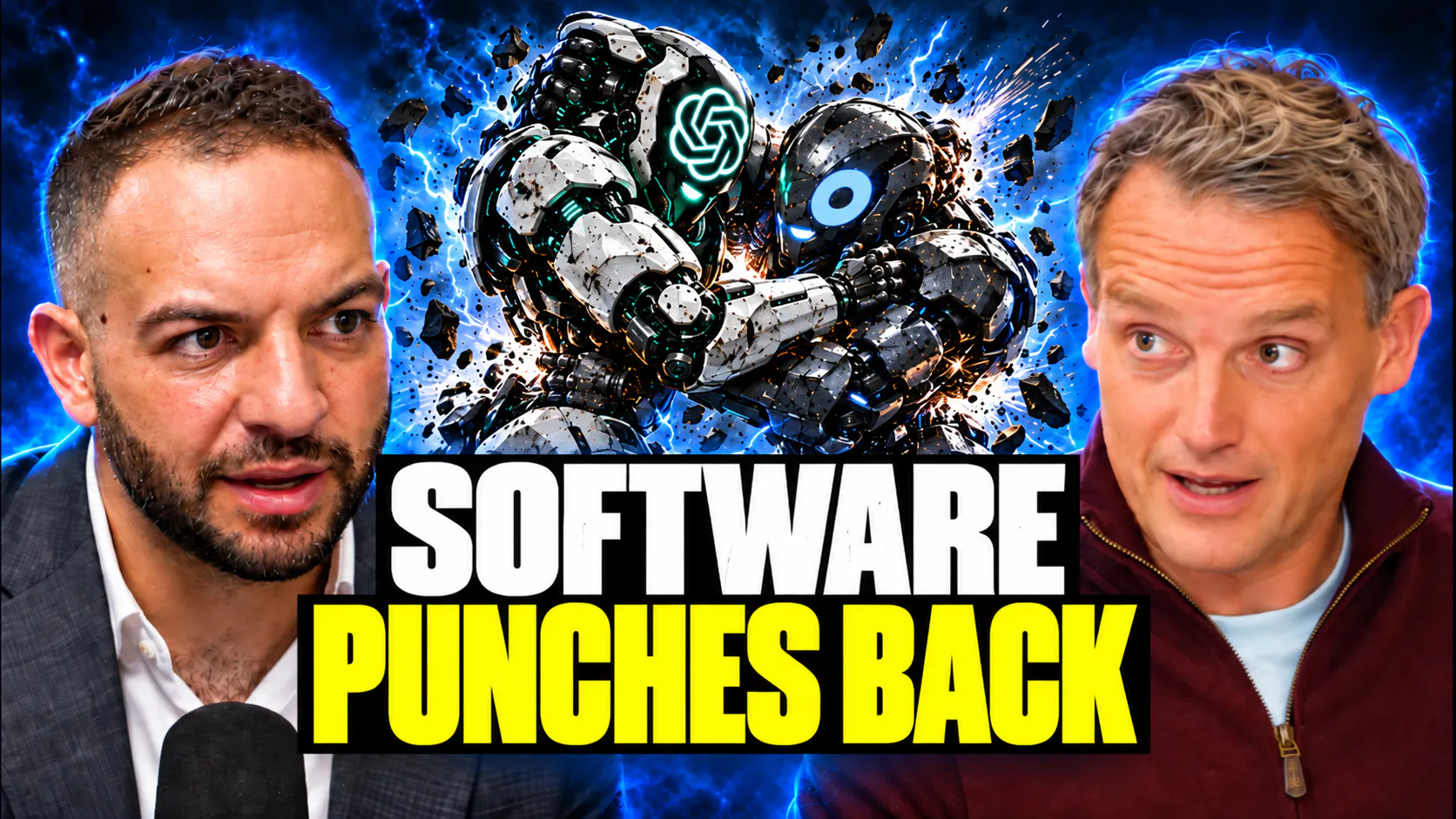
SAP CEO: AI Won't Kill Software, But It Will Change Your Job — With Christian Klein
from Big Technology Podcast
61m 28s
AI is transitioning from experimental tools to a core part of enterprise operations, with significant progress in accuracy and reliability. SAP CEO Christian Klein emphasizes that AI must operate within structured business contexts—accessing industry-specific data, process knowledge, and governance rules—to deliver trustworthy results. Accuracy thresholds, especially in finance, require 95%+ precision, making raw language models insufficient without integration into systems like SAP’s ERP. The company highlights that AI doesn’t replace software but enhances it by adding contextual intelligence and automation. As a result, businesses are shifting from expensive frontier models to cost-effective, high-performance alternatives, optimizing both cost and outcomes. This shift is supported by better data integration, improved transparency, and stronger governance. While AI automates routine tasks like data entry and compliance, it also demands workforce re-skilling and cultural adaptation, with employees transitioning from transactional work to strategic decision-making. The broader software industry is seeing a rebound as companies realize that AI alone cannot solve complex business problems—value comes from combining AI with domain-specific knowledge and structured processes. This evolution underscores a new reality: AI is not a standalone technology, but a collaborative force within mature, governed software ecosystems.
Now that this has popped clips is over or paused,
software is booming.
What's happening?
Let's talk about it with the CEO
of Europe's largest software company, right after this.
This episode is brought to you by Genesis.
What does it actually take to put a gentick AI to work
across an entire enterprise?
I recently spoke with Genesis Chairman and CEO Tony Bates
about why orchestration is emerging
as a competitive advantage in customer experience
and what companies need to get right in the AI era.
Then, I sat down with Adam Mitchell,
head of enterprise business solutions at Boya Financial
to go inside a large scale,
a gentick CX transformation,
including the business decisions,
trade-offs and lessons along the way.
You can watch both conversations now
on my YouTube channel today.
It's never been more challenging to get
frontier compute.
How do you know where to look,
who to trust, or how much to pay?
A cash is an open cloud that provides easy access,
flexibility, and peace of mind.
That's how companies like Razor were able
to cut their inference cost by 15 times.
Visit a Cosh.network/Alex for free consultation.
That's a Cosh.network/Alex for free consultation.
Welcome to Big Technology Podcast, a show for cool-edded,
and new on its conversation of the tech world and beyond.
We have a great show for you today.
Today we're joined by the CEO of SAP Christian Klein,
who's here to talk with us,
about the state of software amid all these SaaS
pop clips, worries, and along with some other big decisions
that software companies are faced with today,
everything from hiring to the integration
of artificial intelligence and more.
Great to see you, welcome to the show.
What a great introduction.
Thanks for having me, Alex.
Okay, so we talk a lot about software on the show,
and AI on the show,
and we don't really have to, you know,
when we say we think AI is gonna do this or that,
you know, we don't have to make any planning decisions
based of it, we just talk about them in the next show.
You, on the other hand, you do need to make planning decisions.
You have to basically decide,
and that's why things could be such an interesting conversation.
You have to basically decide what you think
the trajectory of AI's progress is gonna be,
and then you plan based on top of it,
because if AI stops now, it's one set of decisions,
if AI keeps going a little bit,
but then hits a wall, it's another set of decisions,
and if we go into recursive self-improvement,
it's a third set.
Each one of these impacts your business dramatically.
So actually, you know, you make the choice,
and then you run a company based off of it.
I think that AI has to hit a wall at some point.
We've seen great progress, progress that's gone through
many walls that people put up, or for, you know,
presumed walls, and it's continued to build,
but it can't keep going on this, like this forever.
What do you think?
And do you think it's good?
We're about to hit like recursive self-improvement,
or do you think that what I'm saying makes a little sense?
- Yeah, happy to answer that question,
and let me maybe just describe it,
how I describe it to my employees.
And when we do an all-hands, I always show them a mountain.
And I said, look, we climb the cloud mountain.
We did the cloud transformation,
and then now we have to climb the AI mountain.
And now on this journey, there will be obstacles there.
We have to overcome, AI has to overcome.
And when all of this hype started with Generative AI,
I mean, of course, everyone was using all these LLM models
and start testing it, experimenting with it.
And now it's really about, okay,
but it's nice to experiment with it,
but all of our customers are saying, okay,
but what is in it?
Show me the value.
And why does AI understand so much, you know,
all the unstructured documents?
I can summarize a mail, I can summarize a document, and so on.
But what about the business?
Why does there always a certain limits with the accuracy?
So that is the first obstacle we have to overcome.
And the third one, I guess, the world is talking about that.
Do we need to regulate AI?
Do we need to govern AI?
Because obviously, when you're wanting
the world's most mission-critical businesses,
I mean, obviously, governance plays a huge role.
And this is where I would say,
these are the kinds of obstacles we have to overcome
to further climb up the mountain.
- Okay, well, Christian, this is kind of the core question here.
- Yeah, all right, AI doesn't understand
structured data that well right now, I think.
But your job is basically, big part of your job
is assessing whether the technology
will be making those leaps in the future.
So we could talk a lot about what the current state of AI
is and we will, but for you to run the company, right?
Let's say AI, for instance, gets really good
at like going into ERP and being able to like make
serious calculations about things.
So it's getting better at.
NSAP's business, I should say.
- Yes, yes, yes.
- It's enterprise resource planning.
That means that it brings together systems like finance, HR,
manufacturing, supply chain, and sales into a single system,
single software system.
So your job is basically to figure out, big part of your job
is to figure out whether AI will be able
to overcome those obstacles, what timeframe AI is going
to overcome those obstacles and then how you adjust.
So do you think it's going to get over the hump
is basically the question I'm asking?
- One on percent and when, and I would say look,
I mean, you know, we, for example,
code financial closing agents and we are sitting here
at the Volkswagen and of course they work today.
I mean, AI understands business,
but you know, maybe it understands today
with a 93% accuracy.
But you audit us when you release financial results,
they say, okay, so this time my numbers were 7%,
you know, too high and they say, well, what?
I mean, you know, you need audits, you need,
it needs to be certified and so on.
So it's 100% accuracy is needed.
And that's where I guess every tech company
is not working on and you know, every software player
is now using especially SAP as we have so much knowledge
about industries, processes, and data.
I mean, we are working this on a constant basis.
And yes, of course, AI understands business,
but sometimes you need an accuracy of 100%,
90% accuracy is not enough.
And then when it comes to governance, I mean here in the US,
when we are wanting the US government,
when we are wanting, you know,
many public sector customers, you know,
agents need to understand what is fat RAM, yeah.
So that, you know, which data can I access?
What data can I share?
Where's the data going to be stored?
And so that is also the governance part
and we are working on that.
So for me, Alex, this is more a question of now months,
yeah, until we are really reaching a level
where you can really trust AI,
wanting your business.
And then you can still decide, okay,
the human is in the loop fast, that's a rule.
But then you can really decide on the autonomous level
of the agents on how autonomous
candy agents want to business.
Okay, so this is important.
So your perspective is within months,
AI can go from basically working within software
and giving us, giving your customers
like 90 something percent accuracy.
You anticipate 100% accuracy within months.
I would say it's absolutely possible, yeah.
So it's for some task.
And obviously we will then develop the next agents
for supply chain optimization.
And then, you know, here we are maybe there in eight to nine months.
So, but it's not that we are now talking
not anymore about years, yeah.
So business AI is real, business AI is coming.
And also 100% accuracy is not always needed.
I mean, for example, when I do my customer visits here in New York,
I'm asking toolworks that put me
together a customer breathing.
And then--
Sure AI is a piece.
My exactly tool is our, you know, co-worker.
And when it's 90% accurate, it's totally fine, yeah.
Maybe, you know, when I ask for the latest earnings,
and it's not exactly the latest earnings,
maybe it's the earnings before, okay.
I mean, who cares?
But, you know, and there a 95% accuracy is totally fine.
But I don't need a bunch of people in my office
preparing me for this customer meetings
and winding all of these prewings, yeah,
because I get the data out of SAP.
I mean, the public content is anyway understood by the LLM.
So, you know, here we go.
So it really also depends a little bit on the AI use case.
Yeah, okay, so 100%.
That's really interesting, because I think the big thing
that has been holding back a lot of enterprise rollout
and the ability of enterprises to integrate this technology
has been the fact that, yeah, if you're doing something
like tax supply chain, projecting your sales pipeline
and you're at like 92%, I just will not use it.
I mean, you could check the work,
but you don't know where the problems are.
So can you ask another chap about where the problems--
if it finds 90% of those problems,
you now have a compounding issue.
Yes.
But things change when it gets to 100.
So I think the way that you're framing it
is we're about to see a real explosion of enterprise.
And it depends on the AI use case.
It also depends just an hour ago.
I visited a big customer here in New York
and they said, oh, Christian, you know,
I love your financial closing assistant,
but it's only 93% accurate.
But okay, there are 100 finance systems
wanting, hanging somewhere around in this company,
someone on SAP.
So, okay, we need to clean up the house.
I mean, your data is a mess.
So it's also not only the agent per se.
And the other person is.
So it's also the data, the data quality,
the data silos in a company where we then need to match data
so that the agent can really understand, okay,
where does all the financial data sit?
How do I depreciate a certain asset, you know, and so on?
And the more systems you have and the more you lack data quality,
I mean, of course, you know,
this is also then the reduces the accuracy of your AI agent.
- Okay, but I thought smarter and smarter AI
was supposed to solve that problem, right?
That basically like the big,
one of the big reasons that enterprise point at
for like not being able to roll out AI,
like there are all these stats about like one in 20 pilots
or one in 10 pilots actually make it to production.
- Yes.
- Is because the systems are working
on sort of faulty data foundations.
But is the AI at the point where it's getting good enough
to figure that out on its own?
Like companies are putting teams and teams on this
to try to figure it out.
But why is the AI sort of not able to do that on its own?
>> Yeah, I mean AI will also solve that challenge.
I mean, look at, when I look at our data platform,
I mean, we are partnering, you know,
with other data lake providers like data breaks,
a snowflake, a big query and so on.
But obviously, I mean, it's easy to do
zero-copy so that, you know, we can share data
without moving the data.
But then, of course, the semantics, you know,
matching data, fixing data quality issues.
Of course, AI, now, you know, in our data platform,
AI will help us to match data from a SAP
to a Salesforce system, from a workday system
to an SAP system.
So that also that, the cleanup of the house
is getting easier and easier.
And also that the agents can really access
a semandical data layer, which is also coming out
of the box so that you don't need an army
of data scientists anymore, always, you know,
from every month's end, you need to clean up
your financial data and you match it to your HR data
and to your employee data and to your payroll data.
I mean, you know, all of this work
will also get automated because AI is very good
in matching those data points together.
And that is, of course, also part of what is happening
underneath the agents in the data platform.
- Business today moves very fast.
But it moves fast despite, you know,
it moves fast despite the fact that processes are amassed.
It moves fast despite the fact that culture
can be a problem.
- Oh, yes.
- So it's basically the net of this, that's just business.
You know, I guess like we've heard stories of companies
that used to be on this annual plan of planning,
your plan, your release, your big event,
and then you plan again.
Now they're on quarterly or monthly plans.
- Yes.
- So is that what we're going to see is basically
a speed up of the ability of businesses
to release products, to serve customers, to grow.
Is everything going to get fast?
- At the speed of execution is definitely getting faster.
And that's also, I mean, you need to also then redesign
your own planning cycles inside the company
to react to that.
No matter if you do supply chain planning, financial planning,
workforce planning, I mean, we at SAP,
we look at our virtual agents and then we look at our employees.
And I said, hey, this now needs to be looked at together.
We can't plan, you know, here in the agents
and here we plan, you know, and do our employee plan.
And so, and we need to do this faster app
because the software, the AI is moving now much faster.
So absolutely.
And then the second point what I would say is,
you mentioned one important point and that's culture.
Because, you know, when I look at some of the SAP projects,
I mean, obviously, when you technically migrate
to a new software, to a system,
but you change, don't change anything on the business side
because also the business has why to change and so on.
It just creates uncertainty.
I mean, obviously, you are not seeing the business benefit.
Now with AI, the mindset in many customs I'm seeing
has completely changed.
They say, wow, if we miss that board,
I mean, it's really disruptive, you know,
for our company, so we have to change.
So the openness for change is also now very, very different.
So speed of execution getting much faster,
planning cycle is getting shorter,
but also the business is now very clear.
Hey, we have to be on, we have to write this wave,
otherwise it could be too late.
Okay, so I have a lot of culture
and hiring questions, talent questions to ask you
throughout our discussion about today,
but I'm just gonna start with the first one.
Are you noticing people getting exhausted?
Because if you, you know,
there was a story in the Wall Street Journal,
I've referenced a couple of times on this show
that I initially hated and now I'm like,
starting to see the wisdom where it was like,
bosses were mourning the loss of busy work.
Because, you know, even though, you know,
the example is doing expenses.
People are like, I'd rather my expenses be automated
so I can focus on the bigger thing and that makes sense.
But like, if AI handles, let's say it handles all this
road work, so all you're doing is like,
very highly intense cognitive work.
And everything is so fast, it seems,
I don't know if it's a recipe for burnout or not.
What do you think?
- I actually, it could be actually.
I mean, you have to see,
I mean, many jobs will change really dramatically.
I mean, you know, to look at all the controls
in finance in HR and so on,
they will get all automated now with the AI agents
we are delivering.
- Wait, what's going to get automated?
- The controls, the compliance checks, everything.
Yeah, so also the typical stuff here,
what many people are doing in their business life.
And then of course,
- That's full-time job for thousands of people.
- Yeah, it's a full-time job for thousands of people.
And now you're even in planning and steering and company
and putting the pricing lists together and so on.
I mean, AI will, you know,
be infused a lot of intelligence into that.
And then of course,
people have more time to spend on,
we would say the devaluating task,
to spend more on, okay,
when the earnings is already prepared,
including my remarks.
And even, you know, AI even tells me how to
when to waste my voice or lower my voice.
I mean, obviously, you know,
it's such a different preparation.
It's also then the way on, okay,
now I have more time to spend
on really on delivering, you know, my earnings speech.
And so I guess that is really a different change of working
and definitely needs a lot of change management,
absolutely, yeah.
- And how about the part about people getting tired?
I mean, I'll give you an example for my life.
I'm blessed.
I mean, I really, I really am.
You know, it's nice to be able to run,
you know, this company,
I won't say on my own because I have a lot of help,
but like the, you know,
running, you know, a media company with one person
mostly wouldn't have been possible to the level
that we're doing it.
But like, I'll have cloud, cloud, cloud, cloud,
cloud is doing my invoicing, cloud, cloud, co-work.
You know, soon it will do these projections,
it will keep on top of my inbox.
It's gonna do, you know,
all these other things like expenses and things like that.
And so my time is like really spent on
interviewing, like doing these higher cognitive low tasks.
I love it, but I can't tell if I'm more tired
because of it.
We're like, rarely do I have a moment to like downshift.
And it's great.
It's great, but it's also like,
I'm starting to questioning whether it's kind of,
whether it's what I want.
So your company's 100,000 people in the neighborhood.
- Yes, yes, yes.
- You know, what do you hear from people about this?
- You know, I see this also in my daily life, you know,
all the prep work, you know,
it's suddenly getting automated,
the customer privings and all of that.
And so I can really focus more on the content,
but do what, you know,
and then it's like just much better time, you know,
where you have with your team talking about the strategy,
you're discussing, you know, certain things on,
are we here on the white track,
or do we need to cross-correct about,
what about this leadership decisions I have to take,
or what about other things?
So I would say, yes, there is a change of the type of work
what you're doing, but I would say,
will it get more boring or more exhausting?
I mean, I don't believe so,
but you have to structure indeed your day-to-day
in a different way, absolutely, yeah.
- Yeah, okay, so no increase in fatigue.
- So far. - No, no, no, no, that's good.
And I also, honestly, I,
to the customers, I've talked to many customers,
and also end users of AI,
and so on, I didn't hear that now.
They are all happy if, okay,
let's get rid of all of these workflow approvals,
let's get rid of all these compliance checks and controls,
and then let me focus on the stuff that really matters.
So, yeah.
- Yeah, I mean, I'm framing it in the most negative way possible,
but I also think that, like, yeah,
I would never go back to like wanting to do all this,
to all the invoicing and expenses on my own.
- Happy, let's offer takes.
- What I'm, of course, getting an heavy-embley all-hands is,
okay, it's my truck still secure, yeah, and,
okay, what about restructuring, what about that?
And so I get that, yeah, so not about so necessarily,
I'm getting exhausted, or it's more like,
because I can do so much of the work
that might be afraid to tell you.
- Yeah, yeah, yeah, yeah.
But also, honestly, I really appreciate,
I mean, we are wanting at full speed these days,
the transformation happens at full speed.
So, and the workload is not getting lower for our people.
So, AI helps them to get more productive,
but it's not like that we are wanting out of work
in development, or in finance, or in HR,
and other parts of the company.
- Well, that's why, like, what I think,
I think I spoke about this with Mohammed Alam,
one of your colleagues, like,
when I think about, at least with today's technology,
like, is it going to create mass job loss?
My answer's always like, I don't think so.
It used to be, I'm sure no.
Now, it's, I don't think so.
And the reason is, is because companies,
they have a massive roadmap.
They have so many things they want to do,
they have things their competitors are doing.
And so, if your choice is, you know,
do the same with what you're doing with fewer people,
but with technology, or keep people,
but do even more, because they have this technological boost,
the companies that survive will do more with people and tech.
- Yeah, and, you know, I believe that,
and I tell this, my people, honestly, I said,
hey, I mean, our workforce, you know,
the way all of our skills and, you know,
the people working here at SAP,
I don't believe that in 12 months from now,
you know, we will, you know,
there will be a mix, a different mix of chopper files.
Yeah, we will need other, you know, chops will,
we will hire people, data scientists,
full-stack developers, et cetera.
But, you know, we will need less people and other chops.
And now it's a question about how much can you re-skill,
how much can you, you know, train people on a new job,
but also sometimes, you know, in these moments,
a company also needs, you know, you know,
new employees to come in with new skills,
with a new mindset, and pad them with the experience colleagues
we have as well, because you need it to,
to, to, to, to, may know how you need to add,
they understand the software, which is underneath the AI.
So I will.
would say that will be a workforce transformation, but it's not necessarily that it's only about
restructuring, it's really about, you know, at the end of the day, you need to have the wide
skills and the wide mix of people. Yeah. People often hear the term re-skilling and they don't
believe in it. They think it's a nice thing that academics think of, but when you go to somebody
and say we're going to re-skill you, you've been doing job A forever, you're going to do job B,
it doesn't work in practice. What's your experience been? Like have you seen successful re-skilling
programs? Oh yeah. So, I mean, inside our company. So, talk about it. I mean, for example,
we had a lot of developers coding on primary software and now coding cloud software is different,
yeah. It's more DevOps, you know, what you code need to be tested automatically. You need to
then ship it and it's in production and it's then on us, yeah, that it's back free and that we
deliver it and that the system's one stable. So, it's really it's really a different way of coding
and it's a different mindset, yeah. And then the question is also it's not only about the re-skilling
from skills, functional skills, it's also about the mindset does someone really need to go into
this new field, into this new world. And so, and that is so absolutely it's possible or taking
out when we are rolling out our co-worker to work. 80,000 people are using it, but at the beginning,
it was also there's some resistance, yeah, you know, what does it do to my job? How can I practically
use it? Going across this barrier of, you know, does it really help me? Or do I need to still
cause correction? Things for tool work is producing for me. But once you, you know, you train the
people, you coach the people and you see, hey, you can get, you know, stuff done faster and you can
focus on higher value adding tasks. That is the moment where they say, okay, let's use this tool
in legal, in HR, in finance, in sales. And, and then you see, yeah, that people are, you know,
able to adapt to that and learn and also acquire new skills. You know, pre-chat GPTA, I wrote a book
talking about how the tech giants were already using AI to like minimize road work and make room
for more inventive work. And, you know, I, it came out in April 2020, not a great time to release
a book, but I'm glad I did it. And the main pushback that I got was, are basically what I,
what I said was about work was that you take people off of these road tasks and you put them on
more inventive tasks. And it's more fulfilling and it helps a company grow and move faster and
be more inventive. And the main pushback I got was when AI automates like back office work, like
data, moving data from one place to another, or like, you know, one example that we gave in the book
was like AI is going to eventually be able to write like new higher letters and, you know,
benefits letters and stuff like that, which like felt crazy at the time, but it's been doing it
for years now. The pushback was people who are used to doing this like data, let's say moving data
from one to another, are not going to want to do the more inventive work. It's a different type of
thinking. It requires different culture, different set of permissions and they're not going to be
able to adapt to the new type of working. What's your read on that? Is that a fair criticism?
It also depends on, you know, on each individual. I give you an example in our world,
you know, for 50 years we coded software and for 50 years, we were never running out of customer
requirements on features, new features for our software. But over time, obviously, you know,
the business, you know, the business which you are running, but at the product manager just
didn't need to go out always to the customer and to completely reinvent how business is running
because it was one feature more and the software was running the business in a very stable way.
Now with AI, we tell our product manager, no, no, no, no, don't sit too much in house, go to
the customer and reinvent how supply chain works, how we do inventory optimization, how payroll
will work in the future. So that not an army of people need to make sure that the payroll is
working correctly and people are getting paid in a in a in a in a correct way. And now it's really
about this excitement of oh, now I'm going there and with with this technology, I can really
completely reinvent how businesses, how companies will work in the future. I really reinvent
the future of work. And I would say with the vast majority of our people that creates excite
some excitement, maybe a few people will say, I'm not sure if I'm into that, I'm used to a certain
type of working. Yeah, it could be, but this is really about how to you bring your people with you
and how you do the change management. I'm not saying that every single employee will make that move,
but I guess a lot of people get it. Oh my god, this is exciting. This is new and I love to learn
something new in my working life. Okay. And you've segwayed perfectly to the SaaS apocalypse
because, you know, there's there was this belief remains remains a belief among many that
software like yours was developed for you you develop it for the masses, right? So you build software
like SAP people have to be able to use it and use it in different functions, different companies.
And so when you get a seat to it, you're going to get this software that's kind of built for
everything features you're going to want to use features you're never going to click on.
Yes. And this idea once this idea came through became popularized that once people could
build software on their own, you know, because you could prompt it and then can show up for you,
then the old way of building software, old way of building software wasn't going to work anymore.
And we would see new software vibe coded replace, you know, the old software. And that that
narrative has plagued software companies until recently for, for, you know, about the better part
of a year at this point. Yeah. Let's just high level. You know, what was what's your reaction to
that? What was what was your feeling as that narrative became popular? Okay. Yeah, let's go back in
time, especially when this narrative came up. I mean, of course, you know, the first moment you
think to yourself, okay, I see more development productivity is going up like hell. Why can't
people just reproduce what we build over 50 years? And then I asked my product managers and my
portfolio team and goes through our portfolio. And which solution do you believe can, you know,
can you wipe code easily and just reproduce it and replace it maybe? And the answer was very
quickly that they said, oh my god, I mean, you know, we are building ERP's. So we are building supply
chain payroll finance. It's not only that you need, you know, you have seven million data fields
in such an ERP, which you need to correlate. So there are hundreds of millions data correlations,
what you need to understand to want a business. But there is also, of course, deep process knowledge
by industry, you know, by country, local requirements. I mean, we are investing hundreds of millions
every year to keep our software compliant. And then, you know, the answer was, okay, there may be,
one or two solutions, small solutions, where there is not so much process and data context inside,
which you might, you know, just can replicate. But the West, I mean, definitely, you know,
you need to have a lot of domain knowledge. It's definitely not easily, you can definitely not
easily wipe code it. And so, yeah, and that gave me a good feeling. But still, Alex, I mean, obviously,
there's not not a time to lean back. Because clearly now, I guess, in the next phase,
you know, the value creation is now moving up from the system of record into the, into the
enchanting eye layer. So absolutely, our AI needs to be world class to still also defend our
existence in the system of record. Okay. But now, now let's go back to something you said earlier.
Yes. Where you said that AI is getting good enough to be like 100% accurate in some of these
tasks, you said that AI is getting good enough to sometimes reconcile data. The, they're
just to all sit on the side of the SaaS podcast, and you can be software for the 6K.
SaaS podcast, people would say, man, the AI is getting good enough that, that those hurdles,
domain knowledge, process knowledge, you know, being able to put data together,
it's going to do it. Yeah. And therefore, the mode, while it still exists today, because the AI
wasn't good enough, when the AI gets good enough, that mode's gone. Yeah. What do you think? Yeah,
mean, well, when we talked about the, the beginning, about all of the security, I mean, that was the
security on our AI platform. I mean, we tag in LLM and then we put, you know, our AI foundation
next to it, where we train business data, business process knowledge, where we build knowledge
queues, semendical ontology layers. And so, and that's why we are giving the LLM's now the
understanding to deliver, you know, agents who can actually live up to all of these accuracy
targets we talked earlier on about it. If you just use an LLM alone, there's no way that you can
want a warehouse with it, that you can do a financial flows with it, et cetera, et cetera.
But it's an LLM plus our AI foundation, plastic governance. Yeah. It's not only the business
data and the business process. It's also that you need to understand all the legal requirements.
I mean, the agents cannot just go wild and do a financial close without understanding the
tax requirements in a certain country. So, that's more to it. And that's why, you know, I'm so confident
that, you know, these LLM's are super powerful without any doubt and they're getting better,
but they need the process context, the data context and the governance. And this is, you know,
I would say where SAP, I mean, this is what we are doing for living since 50 years. Yeah.
Okay. Well, I have not done with my questions here and I have some other things to speak with you
about regarding this conversation. Yeah. So, let's do
do that when we come back, right?
Yes.
Yes.
Yes.
Yes.
Yes.
Yes.
Yes.
Yes.
Yes.
Yes.
There are a lot of things AI can replace. Teamwork isn't one of them. And covering technology every day, I'm seeing firsthand just how quickly the relationship between people and AI is evolving.
For me, there's constantly new information to research, interviews to prepare for, and ideas I'm working through with my team.
What I like about Notion is that AI becomes part of that process, working from the same context we are, instead of sitting off on its own.
Notion is the AI workspace where your team's knowledge projects and agents all come together in one place.
Teams using Notion move faster, cut friction and cost by consolidating tools, and stay aligned.
That shared context means AI can help answer questions, surface information, and handle some of the busy work while the people on the team can focus on the thinking and collaboration that actually matter.
Learn more about how Notion can support your business at Notion.com/BigTech. That's all lowercase letters. Notion.com/BigTech to try Notion today.
And when you use our link, you're supporting our show.
This episode is brought to you by AvPoint. Everyone's racing to roll out AI right now, co-pilots, chatbots, agents doing real work.
But here's the part nobody loves talking about. All that AI runs on your data.
Most teams have no single way to see it, secure it, and prove it's under control.
That's exactly what AvPoint does. For 25 years, they've been the trusted layer beneath the world's most demanding data, now extended across your entire AI estate, your data, your cloud, and the agents acting on your behalf.
And to have more than 28,000 organizations deploy AI with confidence, to innovation scales without scaling risk. AvPoint, the unifying trust layer for AI, head to AvPoint.com to see how enterprises deploy AI with confidence. Learn more at AVPT.co/BigTechnologyPodcast.
Violent threats against executives are growing at an alarming rate. When a company experiences backlash, executives are the first people blamed.
When their address and other personal details are sitting online, this backlash can lead right to their front door.
The team at Ironwall knows this better than anyone. They've protected some of the most targeted executives and individuals on the planet for almost two decades.
As a white glove enterprise security service, they protect your people with continuous personal data removal, proactive prevention tools, and human-led emergency support.
So when someone goes looking for your executives, Ironwall ensures they hit a dead end.
So here's what to do. Go to Ironwall.com/BigTechnology, fill in the quick form, and request your free risk assessment.
Their team will show you just how exposed your executives are and how to lock it down before threat reaches their front door.
That's ironwall.com/BigTechnology. Learn how to stop online threats before they become real-world attacks, the links in the show notes.
And we're back here on Big Technology Podcast with SAP CEO Christian Klein.
Great to see you. Thank you for coming in. I said before the break, I wasn't dumb of my questions, and I'm sure not. All right. So, okay. This idea that like AI is going to get better and people can vibe code, you know, their own SAP is going to be hard.
Because even if the AI gets better, all this domain-specific knowledge is tough to include.
I have this theory that what you might see instead of people vibe coding software is that the AI companies, which currently make like the foundational labs open AI and anthropic, which currently make their best models available via API, will close those models off.
So, for instance, let's say GPT-6 Astra right now. It's pretty smart, but it has those limitations. But we've seen like unreleased versions of open AI's technology, be able to do things like team up in a swarm, work for 88 hours and solve like, you know, the hardest math problems ever.
So, is there a world where they say, we're not going to keep, we're not going to release these models, maybe for safety.
But we are going to put them on some of these problems that SAP has been working on for a long time, and then decide that in order to make money because AI models are going to commoditize, they have to go upstream, which means take that knowledge and do a chatbot version of your business.
Yeah, fair question. And look, the truth is, when you come to our business AI platform as a citizen developer, as a business user, or as an IT guy, a developer, you can actually develop agents on top of our platform.
So, we are delivering hundreds of agents, standard agents for finance, supply chain HR, but also the business and the pro code that developers can also build agents on our platform.
And what you find is all these models where you're just talking about. But what you also find then on top of it is that we connect those models to the business poses and the data knowledge, the context of what our ERP actually knows about your business.
And we are reproducing that in our ontology and our data layer. So, you know, you have all of these models. What's ontology? Explain that.
The ontology is actually when you have, you know, you have SAP data, but you also have non-SEP data what the agents need to understand when you do asset management.
The agent needs to understand the sensor data. I add the signals of a machine to understand when does the machine needs maintenance.
And then it needs to pair this with the SAP data about, okay, let's create a maintenance order. Who is the worker who can fix this machine, et cetera, et cetera.
So, that was the logic.
So, and that is the ontology. What we are building now, what we are bringing together. And we also tell the agent, okay, machine has a problem.
Where do I find the spare part for this machine, who's maybe not working anymore? Where can I find the worker who's fixing it, et cetera?
And everything on time, so that there is no downtime to the machine. And that is the ontology. That is the semantic layer.
And again, why would you go to, you know, a third party platform when you find all of these great models on our platform, plus you get all of the semantics that the ontology blasts.
We are going to want these agents to make sure they adhere to the governance of your company, of a country, of an industry.
So, you're skeptical that there's a, even if they hold those out. So, right now, opening in an anthropic or making their models available in your platform.
Yes.
But you're skeptical that if they were to withhold their latest models from your platform and try to do it themselves, they'd be able to do it.
No, I'm, you know, the same question I got years ago about the hyperscalers. I mean, we are. This is a different technology.
Yeah, that's a different technology.
But we are partnering. And, you know, they are, of course, they are super powerful. I mean, they are running, you know, the most, you know, the most systems of the world.
They are owning, you know, a lot of our systems. And they could also say, yeah, we are not providing this infrastructure anymore.
So, and this is, you know, and this is similar. But I see, you know, there are so many models now coming to the market that I would say there is a healthy competition also going on.
And we are not seeing this one model who, you know, solves all of the problems.
Actually, we are seeing a lot of open source, a lot of own weight models who are also doing a very, very good job when it comes to also looking at the price outcome ratio of an agent.
Yeah, it's not only important to that the agent does a great job, but it's also at what costs us the agent does a good job.
And so I feel there is so much healthy competition that I'm not so much worried about.
Okay, there is now a provider saying, oh, we are not offering you this model anymore, because again, there is competition. There are many models and there is not this one model who actually will solve all of the problems.
Let me ask you this. Would you accept, or I don't know if you do this already, would you accept opening an IRANthropic as like a front end to your software?
Yeah, that I mean like you have all this great data could let's say a user of SAP who is used to like locking in and going through the GraphQL user interface or using your agents.
Yes.
Are you open to them like having a connector through ChatGPT, for instance, and being able to query that data and do that through ChatGPT for business?
I mean, the way how we solve for that is there is tool work, you know, our core work and it's our interface, but you don't integrate.
We actually embed those models into tool work. So you can also switch the models, you can do certain tasks with Anthropic, you can also do certain tasks if you're in Europe and software is important.
You can also use Ms12, you can use the latest model. And then, but then it's really about SAP's interface, that's our tool, our tool work, it's our core worker.
And then of course there will be also scenarios where you will build an agent, you know, let's say, Salesforce, Adobe and so on, and they need to also then access, you know, SAP data.
And that's totally fine, as long as people are going through our API gateway and the agent gateway. And so, but I would say predominantly, you know, what we are seeing now with our customers that users working with SAP software, they will use tool work.
But there will be definitely also some party agents accessing SAP, right?
We will have access to SAP systems via our agent gateway.
Including opening I and Anthropical including include so there will be a world where yes, yes, yes, but yeah, okay, but it needs to be controlled, yeah, and the customers will also rely on that that it goes through our agent gateway.
Because again, governance is important, right back is important, right, you don't want to go having an AI agent doing uncontrolled things in your ERP system.
So that's why I'm very, very confident that first of all, a lot of the SAP users who do work in finance in HR and supply chain will come right.
true work because that is the place to be. You can do everything what you do with an LLM model.
Plus, you get the SAP data, the business process, the context. We also have a data platform
who infuses non-SCP data. And if you build a third party agent, for example, for your next marketing
campaign and you want to weed out some other data, I mean, yes, you can do it, but it will happen
why our agent gateway and the marketing users are anyway is not, you know, our prime users of
the SAP software. Okay, let me ask the question one more time in a maybe different way because I don't
know if I'm getting the right answer or fully understanding the answer or getting the question
out the right way. All right, there's an example recently where meta has this muse professional
assistant. And you could get muse to shop for you. Yes. There's two approaches to this. Yes.
There's Amazon's approach where meta is like we want muse to be able to use Amazon and people can
say it by me a leaf blower. And then the muse will go into Amazon and buy them a leaf blower.
Yeah. And you will never have to touch Amazon. Yes. And then there's the shot. Okay,
so Amazon blocked that. Yes. Shopify said that's fine. So we Shopify said we want a third party agent
to come in and use our technology. And Amazon said, no, if you want to buy on Amazon, you can use
you can use Amazon.com or use our agent. Yes. What is your philosophy? The Amazon or the Shopify?
Actually, we offer both. Okay. So that's an ideal model. The ideal world is that, you know,
because our AI platform tool work is so great. I mean, in my eyes, customers and users will
understand, why would I use an LLM model standalone if I'm not getting, you know, the same business
context and not the same governance. So that we have a connection. We are, yeah. But the API
connection is not giving you all the business context. It's not giving you the semantics.
It's not giving you this deep process mode. It made some other stuff that. Yeah. Yeah. Okay.
A pure API connection, pure MCP server. It's not the same like the ontology, the context we are
having on an AI platform. So and the governance, yeah. When it's ACP managed, we also make sure that
you're when you're doing a financial analysis that, you know, when we govern it, why a tool work,
it is ensure that only the people who are allowed to see the numbers are also getting access,
yeah, to this report. So the agents understand that. So why would you then go into a third
party platform where you have, yes, API access. Why are our API gateway? That's possible.
You can access from a third party platform, you know, into the SAP system. Why are the API gateway?
But there are so many reasons for for SAP users to use tool work because better context,
better governance that we believe. Yes. The main route will, will, will, will goes via
tool yours. Yeah. Yeah. Yeah. It is interesting. Like when we sit down with someone like yourself
and hear it, it's like, oh, this is actually, you know, not as simple as a one sentence tweet.
Yeah. And that's what the market seems to have been responding to. I mean, SAP this year is,
it's down 21%. But it's been up 43% over the past two months. It's a roller coaster for you.
Oh, yes. Oh, yes. But I'm used to it. I mean, then I became CEO,
several years when I'm used, you know, I did the cloud transformation. Right. The market was
a, oh, are they going make it or not? And, you know, the share price was down. Then we reached the
all-time high. We, we proved that we can transform the company. And that's another transformation.
And it's a similar pattern. Now, the good piece this time, we are not alone in this. The whole
software industry, you know, went down. But I guess more and more and investors analysts, and of
course, also customers realize, hey, an LLM alone will not cut it. So we will need the software,
the app to provide the context, the governance. And then the LLM, so of course, the key, you know,
to unlock this value. But it needs to be really brought together with the business process context
and the governance. And I guess that is something. But in the last two months, many people realized
in the market. Yes, software is made a dramatic comeback. Oh, yes. Oh, yes.
Yes. I want to hear a little bit about you mentioned open source. I want to hear a little bit about
the way that you think about spending with these models and which models you want to use.
Yes. So we recently on the show cited some data from Ramp. They have an economics lab,
which obviously is like, they're getting credit card data from lots of startups.
Yes. But they think it's indicative of what the rest of the economy is going to do.
Yes. In August, 53% of spend on AI was on the frontier models, models like Opus and Fable.
And so in September, that number was 40 or at the end of August, the number was 45%,
which is quite a decline. Some 53% to 45% decline in terms of the spend on the frontier.
Yes. What that suggests is that companies are discovering they don't need to use the best AI
to succeed. Yes. Have you found that at SAP? Similar patterns. Absolutely. And I mean, again,
that's also very to the discussion, you know, to the point you brought up early on,
would customers go via a set party platform directly to the ACP system or will they use,
you know, our tool work, our platform? I mean, in our platform, you're also not locked into one
model, because you see, yeah, with every model released, you know, it can change again, you know,
the one model gets better than there's a new open source model who is really producing
creative results. And we also see agent by agent, not every model, you know, performs the same.
So this multi model being agnostic is really also a key differentiator,
what customers are loving. They're saying, okay, I'm not locked into any frontier model.
I can't and SAP is even doing the switching from one model to another to always optimize
the token spend with regard to the outcome in comparison to the outcome. And now to your question,
yes, indeed. I mean, we of course also started, you know, coding with a lot of frontier models.
Still coding is something what we do a lot with the frontier models, also for stop frontier
reasons, et cetera, et cetera. But then, you know, for many agents we are wanting, you know, and
for also for task light, okay, create me a head count report from my manager or do me a financial
report. We actually see that some of the open source model performs so good that it and then
compare it to the cost of those models, we are going to switch and many agents we are building.
In the meantime, have seen the fifth model, because we are always, you know, optimizing, yeah,
outcome versus the tones and the cost of them, the cost we pay for such a model.
Yeah. And has that emphasis on cost grown recently?
Oh, yes. Of yes, yeah, because the overall tone spend is up, which is good. But you, you know,
it doesn't help you if some of your employees is getting 20% more productive. If at the same time,
the cost is going 30% more up, yeah. And of course, and by the way, this is also for our product
manager, a cultural change, yeah, we told them test every agent, which we are releasing to the
market needs to be tested with different models. And they need to do this all the time. And because
we see new model comes, oh, maybe we can switch the model, yeah, because it's a better price
outcome ratio at the end of the day. And so, yeah, that will continue. And we see this also as a
clear differentiation that there is a software company like SAP who does this for you so that your
AI tones are not running away while you are celebrating your maybe your productivity gains.
And then at the end, you look at your panels that's, oh, shoot, you know, my, my, my profit is
actually not hitting the mark anymore. Yeah. Um, it's, it's interesting, right? It says that,
it says a couple things actually. First of all, it says the AI has gotten good enough that the
frontiers is only going to be applicable to certain use cases, yes, which is wild. Yes.
Um, it also says that the standard models are, are, you know, are really working. And an interesting
thing about the standard models is they don't tend to be, I'd like standard versus frontier,
they don't tend to be like, you know, 80% of the price for 80% of the performance. Yes.
Right. They tend to be like 10% of the price for 80% of the performance. Yes. And look, I mean,
we also acquired an AI model, one, a tablet AI model, yeah, who does predictions. And I mean,
it's remarkable. Yeah. We took all the data of retailer, SAP, non SAP. And without a data scientist
touching it and building data pipelines, doing the semantics, matching the data so that it makes
sense, the tablet AI model actually did it with the same accuracy then for the customer,
then what a team of 10 data scientists did before. So you see, you know, it's not only the frontier
models is also the tablet AI models had other models coming up for more for the structure data,
the all the models we are building, you know, for the business data. So I would say there is not
this frontier versus, you know, own source standard models. There's also no tablet AI models coming
because for predictions, these models are becoming better and better as well. As a business person,
what do you think it says about the business of these frontier AI labs? If the frontier is,
you know, it's harder to charge a premium for the frontier. Yeah. Keep on innovating. Keep on,
you know, making the model better, better. No, they are making the model better and better,
but people don't need the cutting edge. But others are on it as well. Yeah. So that's why I'm saying,
I'm not I'm not afraid of all that, you know, one model is on one provider says, oh,
you are not going to allow to use our model anymore. There are so many models in the meantime.
And they are making all good progress. And but again, it's the same like SAP when Hasselblatt
founded this company. There was not not many competitors. Now we have hundreds of competitors.
I mean, that's the name of the game. We have seen that others have seen that the only way is
keep on innovating to justify the price. And if you don't, if you're not much better than the West,
of course, at a certain point, it's then hard to justify the price. But this is a game we all blame.
I'm going to I'm going to answer my own question. I think that if you're spending billions and
billions on training frontier models and the standard models are doing just as good or good enough
job for many of your customers to the point where we are seeing.
things like 8% declined, not year over year, but month over month. That might be a problem for your
business. I want to ask you to think through with me on that one or disagree, but I have to put
that into the record. Yeah, I mean, I guess this is also the question, but everyone at a frontier
model is also asking themselves. And it's also interesting. I may be one addition to that,
I mean, you know, that's of course a financial close. That is inventory. This is when you ship,
when you build accuracy needs to be record high. We have a rule 95% or better. Otherwise,
it's not worth to ship the agent. The customers will just not use it. But then there are many other
agenda I use cases that take, you know, a customer previewing. I had come to report what I mentioned.
I mean, this is not, it doesn't need to always be 98%. Yeah, it's also okay if it's 94% because I'm
still, you know, all the people who needed to prepare that stuff, you know, we need less time on
that. We can focus more time on the value adding stuff, prepare myself for the meeting, et cetera,
et cetera. So, and that's why I would also say all of these frontier models and, you know, we don't
need to always use the best, best model from an outcome perspective. You always need to match it
to the price and to the nature of the model. What is the accuracy, what I need to have the
acceptance of the business? Yeah, very interesting. We have IPOs, so we'll learn a little bit more about
this. How about, you know, you've sort of talked a little bit about this token maxing reckoning
or the token reckoning. Ramp also has interesting data about the spend for the top 1% of employees.
Oh, yes. Right. So, top 1% of employees, they're not just consuming a little bit more tokens,
they're consuming way more. So, knowing smile for those on audio. So, we're going to ask this,
all right? So, in a month, the spend from the top 1% of users fell from $7,976,
according to Ramp Economics Lab, to $7,205, which is a 9.7% decline.
With the users, the top token govors within SAP, have you encouraged a similar pullback? Have
you seen a similar pullback? What's that knowing smile all about? Yeah, we also have this 1%
and my CFO says, hey, where's this going to? And honestly, it took some time until we actually
introduced certain token limits in SAP, because I told my CFO and my COS said, hey, I mean, now we tell
everyone use AI to, you know, he skill yourself to change and become more productive. And when I'm
now the first one who actually introduces this token limits, it's also the message of what I don't
like. But at a certain point, we are really so, oh my god, now the token spend is really coming to a
point where we definitely need to set some limits for certain shops. But, you know, for the top 1%,
I mean, the ones who are doing the model training and so on, we didn't really set a limit,
let them run because we see this is a very important task, a very important job to make the
accuracy of the agents better. So I said, hey, we can't compromise on that because all, you know,
the success of our AI really depends on the accuracy of our agents. So let them do the job. But then,
of course, you know, for, you know, all the developers, the product managers, the designers, I mean,
there we also introduce limits, also for people in finance and nature. And of course, there are certain
limits where we can't say, hey, you can't just experiment around spend the tokens when we are not
seeing, you know, the respective productivity outcome. But we said very healthy and still I would
say fair thresholds where everyone says, okay, I can definitely do my job with AI and I'm not
reaching this limit, you know, every month. And then, of course, people are allowed to say, yeah,
but I have this certain task where I feel AI can really help me. It's this time, it's very special.
So neither higher tone spend. And then we have a approval process where a manager can also say,
okay, for this month or for this task or for this project, we give you more tone spend. And I
feel the people accepted it well. And it was also the right message to not send the message of,
we forbid you know, the user of AI or you reaching the limit so fast that it's hard, you know,
to really optimize your day job. But vice versa, also making sure that tone spend, you know,
stays under control. I guess what was even more important than this tone limit system model switching.
I mean, yeah, of course, I mean, we are testing, as I said, different models. And when you switch
from one model to another, that can cost, can cut your cost by 10 by a factor 10. And that is,
of course, even more effective than, you know, introducing all of these tone limits for the certain
chopper files in a company. When did this all go into place? I would say the tone limits, the
budget by chopper file we did four months ago, three months ago. And the model switching,
we build this into the platform from day one on, but in all fairness, and we were just building
the agents, getting them out, celebrating success, getting references. And now I would say in the
last three months, we are also intensifying our product mentioned, intensifying the more,
the work on switching the models, testing the models and, you know, optimizing them. And really,
also look into the TCO for model, because, you know, at the end, it's not about only about
delivering create agents. I mean, at the end, it also needs to be from an economic standpoint,
it needs to be reasonable. How long does it take between when we see some crazy frontier AI
behavior, and when it gets diffused into business? Let me just give you one example. Like,
the hugging face attacked from opening AI. Hundreds of bots, you know, attacking a problem.
Well, that's, I mean, that's like well known, but there's also the math, the attacking the
millennium problem, problem, and succeeding. That seems to me to be, you know, these sort of
swarms of agents working to solve business problems. I don't know. It's, it hasn't, I haven't
really heard about it much from, from businesses. Like, even those that have said, you know, we have
like a multi agent system. It's like six or seven, not hundreds or thousands working together.
Yes. How long does it take from, you know, from when we hear about something like that,
at the frontier, to when you get it, and where do you think we are on this agent's form thing?
I would say look on cyber security, obviously, it's something where you always have to be ahead of
the game. Yeah. So we are testing different models all the time, but it's in cyber, it's like
these type of uses anywhere. Yeah. Okay. On the uses everywhere, I mean, you know, whenever a new
model comes, we are testing it right away. A model switch can be done in one week, two weeks,
we need to change, you know, when there's a new model, we need to change APIs, we need to,
you know, adjust the MCP service, but we can do this very fast. And so it doesn't take a long time
to really test out a new model and how does it perform on the, on the business side?
But like swarms of, swarms of agents for business use cases. Are you testing that now or?
Yeah. Yeah. Absolutely. Yeah. We are doing this. And when we are building all of these A to A
use cases, I mean, obviously, yeah, we, we need to test it. We also need to test, you know,
the collaboration of these agents, how do these models also perform? And so, yeah, we are doing
all of that. Yeah. I will say if I was sitting in your seat, yes, the thing I'd be most afraid of
is what's going on with cyber security right now. Because when you think about your customers,
they've got finance, supply chain sales, HR, these are the most sensitive records a business could
have. Yes. And if we see, you know, agents going zero day, yes. And people being able to direct
them. Yes. That is, that would scare me. Exactly. And that's why I guess what we are doing. Yeah.
And in our deaf operating model inside the company, we are always now working on, you know,
how can we use AI to detect vulnerabilities earlier? How can we put more proactive measures in
play to test the firewalls of the company and the product? And what do we do on patching the
system and so on? Yeah. So that's definitely now something what I would say for every technology
company, this needs to be at the very top of the agenda. Your cyber security budget is going up.
Yeah. Substantially. Actually, I mean, on the one hand side, it's going up because you're
investing into AI. Right. But you know, finding the ability is patching. I mean, of course,
that also gives you productivity gains. So it's going up, but it's going up in a reasonable way.
Okay. You know, we're a podcast where we don't like to do the theatrics or the we try to really
understand. So I'm really going to resist being like, what's wrong with Europe? Okay. I'm going to
resist that question. I actually want to ask it to you this way. Europe has put so many regulations
on its tech companies and people would say business in general to the point where if you speak
with people here in the US, they'll they will be like, it's not even worth doing business there.
We have a lot of European listeners. As I told you before, I'm from a mixed marriage year.
American. My wife is European. I think that like, it would be good if Europe became a good place
to do business. Yes. So this is, I'm not going to hurry. I want to know from your perspective,
because you're running the largest software company in Europe. What is the thought process that
the European regulators are going through to get to them where they are?
What are their intentions? And do you believe that those are good intentions?
Yeah. I mean, first, I really believe they have all good intentions. I mean, who in Brussels
does something to disadvantage Europe? Yeah. But of course, what people sometimes do,
especially the ones who are not so close to the technology, they tend to regulate the
technology itself. I guess what we are now learning. And we talked about also the concerns and the
risk we are seeing coming with AI.
I guess you need a regulation, but you should regulate more the business outcome, the impact
on a society and not the technology per se, not the use of data.
Because otherwise, it's so hard to do business and get a startup going in Europe.
And also for us, we are a global company and we are doing our research and our development
also in Palo Alto, we're doing it in Bangalore, we're doing it in everywhere in our labs.
But for a startup, it's really hard and I guess, you know, puzzles in Europe, I mean, it's
definitely they realize that all they stretch it too much.
That's why they call it omnibus, this is where you can, where they now collect all the
simplification measures, the deregulation measures.
So, and I know they're dealing with it right now and I hope there is stuff coming, which
definitely helps us to put the regulation to the right level.
And again, I can really emphasize not enough that the need to make sure that you regulate
the impact on societies, but not to regulate the technology per se, because how can you be
competitive if you are the only part of the world who is really regulating the technology?
Yeah.
So, you think there's going to be some form of overall banking?
I'm confident.
I mean, the message is loud and clear, not only by SAP, I mean, many startups, the other companies
like Siemens and so on, I mean, we're building a lot of industry in Europe, so they say
I, I mean, I'm on a blind AI industry AI and all of these companies, you know, say message
to Europe, we have overall regulation.
Let's scale it back.
Yeah.
And it's mostly GD, sorry, I come from like more of like the ad perspective, GD, I mean,
GDPRs, like, the ad, it's speaking of the intentions, like I get it, you want to protect
people's data.
Yes.
Say, mostly that or it's just.
No, it's actually not so much about GDPR, I mean, what Europe does is the AI act, the data
act, which then puts another layer of regulation on top.
And you know, it's, it's not only in another layer, sometimes, you know, these layers are
also overlapping so that even the legal people or the data protection officer is not even
knowing anymore.
Okay, there's so many quays on so many overlaps.
So it also takes forever until you understand how can I use no data to build AI and
to do research and to apply AI in the customer's business.
And so that is, you know, these all of these layers of regulations.
And then, you know, the reason ones with the EU data act and the AI act.
Mm-hmm.
All right.
Christian, feel the dunk?
Yeah.
Thank you.
Thanks for coming in.
Thank you.
And here's the sign.
Sense a lot for your time.
Should business end.
Yeah.
Very good German actually, yeah.
I'm learning.
All right.
Well, thank you for being here.
Thanks to the New York Stock Exchange for hosting us today.
Good to be here.
Thanks for watching.
And we'll see you next time on Big Technology Podcast.
[MUSIC]
Your heart can tell you a lot about your health.
Apple Watch Series 12 measures your heart rate every five seconds with the most accurate
heart rate sensing and awareable.
So your vitals app, now with heart rate variability, can tell you when something is off.
And your readiness score can let you know when to rest and when to push.
Here are the story in every heartbeat with Apple Watch Series 12.
The features described are for wellness purposes only and not for medical use.
iPhone 11 or later required based on Apple conducted study of heart rate accuracy
August 2026.
Visit Apple.com/AppleWatchSeries12.
When you shop Kroger delivery, you can expect the savings you love and fresh groceries delivered
right to your door.
More refrigerated trucks keep your items cool while our associates are committed to getting
every detail right, carefully selecting and packing your order with care.
Because bringing you fresh quality groceries is what we do best.
Right now, enjoy free delivery on orders of $50 or more with your digital coupon, restriction
supply, seasite for details, Kroger, fresh for everyone.
Podcast Summary
Key Points:
AI is evolving from experimental tools to enterprise-grade solutions with growing accuracy and trustworthiness within months.
Achieving 100% accuracy in critical areas like financial closing is essential, driven by governance, data quality, and process context.
SAP and other software leaders emphasize that AI must be integrated with domain-specific knowledge, data semantics, and enterprise governance to deliver real business value.
The rise of AI agents is not replacing software platforms but augmenting them—users rely on platforms like SAP’s Toolwork for context, control, and compliance.
Cost optimization is a major focus, with companies shifting from frontier AI models to more affordable, high-performing standard or open-source models.
Enterprise AI adoption is accelerating due to faster planning cycles, increased agility, and a cultural shift toward embracing change.
Data quality and system integration remain key challenges, but AI is now helping automate data matching and cleanup across siloed systems.
While AI reduces routine workloads, it also demands workforce re-skilling and cultural adaptation to focus on higher-value, strategic tasks.
Summary:
AI is transitioning from experimental tools to a core part of enterprise operations, with significant progress in accuracy and reliability. SAP CEO Christian Klein emphasizes that AI must operate within structured business contexts—accessing industry-specific data, process knowledge, and governance rules—to deliver trustworthy results. Accuracy thresholds, especially in finance, require 95%+ precision, making raw language models insufficient without integration into systems like SAP’s ERP.
The company highlights that AI doesn’t replace software but enhances it by adding contextual intelligence and automation. As a result, businesses are shifting from expensive frontier models to cost-effective, high-performance alternatives, optimizing both cost and outcomes. This shift is supported by better data integration, improved transparency, and stronger governance.
While AI automates routine tasks like data entry and compliance, it also demands workforce re-skilling and cultural adaptation, with employees transitioning from transactional work to strategic decision-making. The broader software industry is seeing a rebound as companies realize that AI alone cannot solve complex business problems—value comes from combining AI with domain-specific knowledge and structured processes. This evolution underscores a new reality: AI is not a standalone technology, but a collaborative force within mature, governed software ecosystems.
FAQs
Yes, within months, AI is expected to reach 100% accuracy for specific tasks, especially in areas like financial closing and supply chain optimization, where high precision is critical.
Poor data quality, silos, and inconsistent systems across departments reduce AI accuracy. AI can now help clean and match data, but this is essential for reliable decision-making.
SAP’s platform combines LLMs with business-specific data, process knowledge, and governance rules to ensure accurate, compliant, and context-aware AI agents.
Yes, but spending is shifting—companies are increasingly using cost-effective, standard models that deliver strong performance at lower prices, reducing reliance on cutting-edge models.
Governance ensures AI agents comply with legal, financial, and data regulations, especially in critical areas like financial reporting and cross-border operations.
AI will automate routine tasks like compliance checks and data entry, but will not replace humans. Instead, it will free employees to focus on higher-value, strategic work.
Chat with AI
Loading...
Pro features
Go deeper with this episode
Unlock creator-grade tools that turn any transcript into show notes and subtitle files.
 PodcastTranscript AI