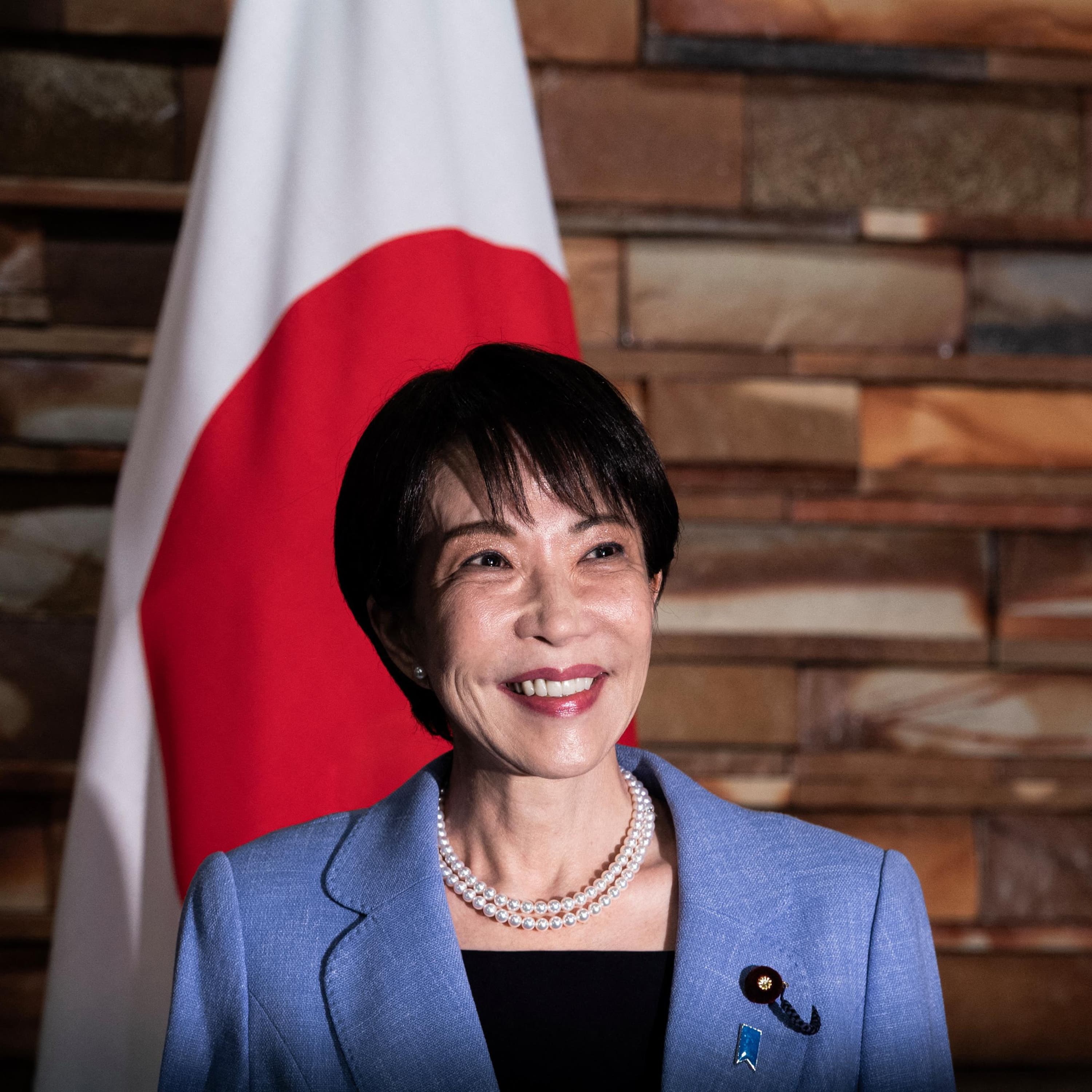
Sanae Takaichi: the most powerful woman in the world?
28m 26s
Sanae Takaiichi, Japan’s first female prime minister, has quickly become a global figure due to her charismatic, unconventional style—playing drums, using social media, and inspiring a personality cult with branded merchandise. A protégé of Shinzo Abe, she is a historical revisionist who wants to end Japan’s “masochistic” view of its WWII past. Her main goal is amending or scrapping Article 9 of the pacifist constitution, which currently restricts Japan’s military to self-defense. With a two-thirds majority from a snap election, she aims to make Japan a “normal country” capable of joining allies in overseas conflicts, such as supporting U.S. operations in the Strait of Hormuz. This has sparked significant protests, particularly by women, who fear a return to militarism and potential casualties. Geopolitically, Japan faces pressure from a volatile region involving China, North Korea, and Taiwan, while the U.S. urges greater military burden-sharing. Domestically, Takaiichi opposes progressive gender reforms (e.g., same-sex marriage, separate surnames) and struggles with an aging population and economic stagnation, though she acknowledges the need for migrant workers. Her leadership balances conservative ideology with practical challenges, making her a transformative yet controversial figure.
This is the Guardian. Today, how the most powerful woman in the world wants Japan to march to a new beat. It wasn't the sort of scene you'd normally associate with Japanese diplomacy. You'll know I'm a bar. What we've just inflicted on you is the sound of two very rusty drummers trying, not entirely successfully, to keep time to BTS's dynamite. The one with marginally more rhythm is Sanae Takaiichi. And she ought to be the better player to be fair. She used to play in a heavy metal band and was notorious for playing so wildly that she was always breaking her drumsticks. But since last autumn, she's been better known as the Prime Minister of Japan. And that was her giving a lesson to her South Korean counterpart. Takaiichi has had a whirlwind first six months in charge, meeting world leaders. So we have a very popular power of a woman? As well as her metal heroes, deep purple. You are my girl. And now, Japan's first ever female leader wants to transform the world's fourth largest economy. And top of her to-do list, scrapping its pacifist constitution, which has stopped Japan taking part in foreign conflicts since the Second World War. But what does that mean for the rest of the region? From the Guardian, I'm Ellen Pitt, today in focus. The cult of Sanae Takaiichi. Justin, but very welcome to the show. Nice to see you. Good to see you too, Helen. Thanks very much. So you are the Guardian's Tokyo correspondent, which I've always thought is probably one of the best jobs in journalism. Remind us how long have you been in Japan now? Oh, dear. Well, the quick answer is, I'm in my mid-50s and I've been here more than half my life. I haven't changed a bit in all that time. So you've had a front row seat for the rise of this fascinating woman who is now running your adopted country. And we already know that she plays the drums and that she likes heavy metal. But give us some of the basics. What's her background? How old is she? And what sets her apart from her predecessors? She's 64, which is fairly young for a Japanese politician. There are plenty of them in their 70s and even early 80s. But she does come from an unconventional background in the sense that she's not an hereditary politician. So she doesn't have a well-known father or grandfather who served as Prime Minister or Minister in previous governments. That's quite common among Japanese politicians, particularly those who rise through the ranks. You know, her mother was a police officer. Her dad worked for a Toyota affiliate. She had a sort of fairly ordinary middle class upbringing in Nara, which is a city in Western Japan that she now represents. But she was bright. She went to Kobe University, which is a good university, which is where I think she fell in love with drumming. She got into motorcycling. There are old photos of her sitting on motorcycles. And then she spent time working in the media. She also did an internship at the US Congress. She sort of steadily became a leading light in the conservative right of the party that govern Japan almost without interruption since the end of the war, the Liberal Democratic Party. And she's a protégé of perhaps Japan's most famous post-war Prime Minister. And that's Shinzo Abe, who was, of course, assassinated three, four years ago. Indeed he was. And Takaichi won the LDP leadership race in October last year, becoming Prime Minister with initially a very slim majority. And then she took this huge gamble in February by calling a snap election. And she emerged not just victorious, but with more than two-thirds of the vote, which gives her huge power to change the country, as will come on to discuss. But before we do that, and at the risk of sounding a bit basic, I must admit that she came on my radar by a social media where she seems to be always having a right old time. Can you just tell us what is she like as a person? And how she has managed to inspire what looks almost like a bit of a personality cult in Japan? When I think about the devotion that she has attracted in her followers and her voters, particularly young Japanese, then perhaps personality cult isn't that far wide of the mark. So she posts a lot on ex, far more than any of her predecessors. And she's sometimes, apart from the fun stuff, she also goes into quite a lot of detail about policy and also answers some of her critics directly through the lens of social media, which is something that her predecessors didn't do. [SPEAKING IN GENERAL] As a personality, for some people, some of her behavior in public has been described as embarrassing. Oh, really like what? Well, when she-- I mean, I quite liked it when she sang Happy Birthday in Italian to Georgia Malone. [SINGING] [SINGING] [SINGING] There was a time during her trip in March to Washington. And she met Donald Trump. And he was showing her around the White House. And then there was the auto pen photo, replaced the portrait of Joe Biden. And she kind of let out an exaggerated laugh and sort of jumped up and down a bit. And people thought that was slightly embarrassing. And on the same trip, she was sitting in the overroom with Donald Trump and said to him directly in Japanese. [SPEAKING IN GENERAL] Donald, using his first name, you're the only leader who can bring peace to the world. And I think a lot of people back here-- perhaps even people who might have voted for-- I thought that that was just a little too forning. And obviously, given recent events kind of defies logic in many ways. Yeah. And I guess when I suggested that she'd spawned a personality cult, it's because I've seen some of the merchandise that she's inspired. And I can tell you, I've never seen anybody in a Kierst Armate shirt. I've never seen anybody thinking, oh, I would love to have the handbag that Theresa May carried when she was prime minister. Tell us a little bit about the merch. Yeah. Well, there are shops in the Japanese national diet building where you give shops. That's the parliament, isn't it? The national diet. Yeah, that's the Japanese parliament. And you can buy all sorts of stuff there. But Takahichi themed souvenirs are selling really well. And in fact, Japanese people love buying theme merchandise and souvenirs wherever they go. And Takahichi is certainly taking advantage of that. You have plastic folders with a prime minister feeding a deer, a keychain of the prime minister. And these cookies have the US president, Donald Trump, on them too. Conservative leaders. And somebody I know, a Japanese voter who isn't a natural LDP voter, told me after she was elected prime minister. She said, well, she's a little bit like the chatty, smiley, but quite formidable middle aged woman who lives down the road who you can stop you in the street and have a chat. And while she's very easy to get on with, you probably wouldn't want to get on the wrong side of her either. And I think a lot of people kind of relate to that, especially after decades of having older male prime ministers who feel far less approachable and seem to occupy the Nagata-cho bubble, Nagata-cho being the sort of Japanese answer to Westminster. Right. And I hear that she reveres Margaret Thatcher. And Thatcher, of course, was famous for subsisting on very little sleep. Is Takahichi also a bit of a workaholic, would you say? Just after she became prime minister, she promised the people of Japan that she was going to work, work, work. And I think that's another reason why a lot of people thought, oh, OK, right now here we have somebody who's not interested in her career as much as public service, which makes a refreshing change. But that's beginning to cause her problems because she's definitely lost weight. And she's had one or two minor health problems. She attracted a lot of attention, not all of it positive, when she summoned some of her staff to her residents in the early hours of the morning, just so that they could prepare her answers for a debate later that day. And people were saying, look, there's working hard is one thing. I'm working hard for the country is one thing. But expecting your colleagues to do the same is probably unsustainable. Yeah, because isn't there such a thing as a concept in Japan of death from overwork? Yeah, Karolshi, there's an actual word for it. Yeah. Can we just talk about how big or little a role her gender plays in how she does politics? Because I think some people don't actually see her election as a win for gender equality, do they? Why is that? Yeah, for a few good reasons. I think anyone who expected Takaichi as prime minister to be a champion of some of the issues that have been pushed by progressive Japanese feminists over the past few years and decades.
They were naive because all they had to do was look at her track record. So there are three, I suppose you could sort of call them culture war battlegrounds in Japan at the moment. One is whether women should be allowed to become reigning empresses as opposed to the spouse of the reigning emperor. The second is whether married couples should be allowed to keep separate surnames. When you get married in Japan you have to choose one or the other. So you can't keep the name you had before you were married. The vast majority of cases, well over 90%, I think the woman, the wife, will take her husband's name. The third is whether Japan should legalize same-sex marriages. She is opposed to same-sex marriage. She is opposed to allowing married couples to keep separate surnames and she is opposed to having female empresses. And it seems like everybody, well foreign leaders seem to be queuing up to meet her, to visit her, Kirsta has been over there, as you say, she's been to Washington to meet Trump. She's been hanging out with Georgia Malone. I guess it's not just I presume that she's fun to hang out with, but because Japan right now occupies a particularly important geopolitical position. Why do you think that she is in such demand? It's partly down to the novelty factor of having a female Japanese Prime Minister. But as you say, you know, Japan, along with South Korea, their US military allies, security allies, they're in a particularly unstable part of the world. Of course there are other parts of the world that are actually at war at the moment. Sure. But the predictions have always been that the Asia Pacific will be the next major flashpoint for two reasons. One, because of North Korea's development and nuclear weapons, and also Chinese designs on Taiwan. If the Taiwan straight is, as some people have said, to be the spark that lights World War III, then Japan is going to very much be in the thick of that. And what kind of Japan has she taken the reins of right now, kind of economically? Because when I think of Japan and this might sting any Japanese listeners, but I think of it as a former economic powerhouse. And that's probably because I'm a 90s kid when Japan was the place. It was the future. And it feels a bit like South Korea has stolen a march on Japan in recent years as Japan's population has aged. How is Japan looking right now? I mean, it's interesting that you mentioned Japan's aging population. And that is also something that South Korea is battling with as well. So there are all sorts of concerns, especially among younger people about their pensions and then among policymakers, how Japan is going to afford to pay for health care and welfare costs for a ballooning elderly population, population of older people. So though, I think it's those structural issues that pose the biggest danger to the Japanese economy in the long run. And what does the new Prime Minister want to do about these domestic problems? Why is her vision for Japan? I think her main focus so far is Japanese security. And in fact, on that same visit to the White House, she said that she wanted to repeat in the Oval Office something that her mentor, Shinzo Abid, said several years ago when he was with Trump. And she ended, she said, in English, Japan is back. And I think for her, that's less to do with economic power and more to do with military power. Yeah, which we're going to come on to talk to. And when it comes to these demographic challenges that you've outlined, what's her prescription for that? Does she think that there should be more immigrants letting to Japan in order to fill the workforce shortages? When in fact, when Abid was Prime Minister, he came to the realization that the solution is immigration and relaxing Japan's strict rules on immigration and guest workers, sort of migrant workers. And there is a record number of foreign workers in Japan now, 2.6 million. And that's out of a population of around 125 million. Mainly young people from other parts of Asia who work in food service industry, in farming, in fishing, in manufacturing. But she's also under pressure to do something to curb, guess what, immigration, partly because fringe parties of the, you know, to the right of the LDP have become more popular. But at the same time, she knows full well the massive contribution that migrants make to the Japanese economy. Let's talk a bit about her approach to foreign policy and defence and security. And I think before we do that, it's probably worth you laying out what I think her have fairly controversial views on Japanese history. Yeah, she's a historical revisionist. And you know, she's part of a movement within Japanese conservatism, particularly in recent decades, that wants to end what they call the masochism Japan's view of its conduct during the war. Massochism, gosh. So to put that in context, a big part of that is to offer a different explanation. Some would say whitewash, Japan's conduct during and before the Second World War, during its colonial rule of the Korean Peninsula, and its invasion of parts of China. And to sort of end this culture of constantly apologising for actions made by people seven, eight decades ago. She recently initiated a plan to amend Japan's pacifist constitution, and it's kind of no war clause, which was established after the Second World War, at the behest of the Americans, I think. And to do that, she will use the two-third majority that she was able to win when she gambled on the snap election in February. Talk us through what she wants to do there and how controversial that's proving in Japan. It's going to be another year before we know exactly what Takahe he wants to do to the pacifist constitution, but it's no secret that she is not an admirer of Article 9 of the constitution, which is this key clause of the Japanese constitution and what it does. And this is the official wording. It means that Japan renounces war as a sovereign right, and prohibits the maintenance of armed forces with war potential. And then it goes on to say that Japan must never threaten or use force to resolve international disputes. So what that means in practical terms is that Japan can only use military force as a purely defensive measure if it comes under attack first. It's actually important to say that legislation has been passed in the past decade, the kind of stretches that interpretation so that Japan might be able to come to the aid of an ally, i.e. the United States. But if you're looking at purely at what the constitution says, then Japan can only use military force as a defensive response, which is why the Japanese military is actually called the self-defense forces. How is that? Yeah, she could do the least possible, which would be to specifically mention the self-defense forces because they're currently not mentioned. So that's one end of the spectrum. At the other end would be to, yeah, to scrap Article 9 and replace it with something that in her words would make Japan a more normal, quote, "normal country" i.e. to be able to not be restrained by this purely self-defensive posture and to be able to freely join allies in wars overseas. I mean, in the current context, that could mean sending Japanese forces to the strait of Hormuz to fight along the Americans and the Israelis. Yeah, well, Trump would like that. Trump would love that and in fact did ask her to do that and she had to say no because of the constraints placed on her by the constitution. Look, I expect Japan to step up because, you know, we have that kind of relationship and we step up in Japan. We have 45,000 soldiers in Japan. We have, we spend a lot of money on Japan. So I hear they get more than 90. He was quite sort of reluctant, wasn't she, when she said no? Yeah. But this feels like a huge deal in a country that had two atomic bombs dropped on it. It is. And once the debate gathers pace, it's going to be incredibly controversial. And again, it's one of those issues where it's difficult to say the Japanese public want this or don't want this because I think if it was just a question of giving legal recognition to the self-defense forces, then I think about six, opinion polls suggested about 60% of Japanese are in favor of that. But if it's a wholesale rewriting or scrapping of article nine and a total renunciation of Japan's post-war pacifism, then it's going to be a lot more complicated. There's an important generational factor in that a lot of people, they remember the absolute misery of Japan's militarism.
passed and they remember its aftermath. I was alone on the road then I felt the flash. Everything I was seeing turned to white. There are still lots of people who survived the atomic bombing of August 1945 in the same ghost for Nagasaki. It's difficult to overstate how much it meant and still means to a certain generation of Japanese to live and look forward in a country that was finally a piece of its neighbours and a piece of itself. I think that's why it still touches a nerve with so many people. So for some reason Takayuchi had been able to stretch the definition of the constitution and use some of the laws on collective self-defense and all the rest of it and send a Japanese mind sweep or something to the straight-of-war murs. And a single Japanese sailor had been killed. Her popularity would just plummet within minutes of that news being broken. It's a huge risk. And how is opposition building to these proposals, the specter of such a huge change? Yeah, well it's building outside Parliament. That's the first point to make because most MPs are in favour of some sort of constitutional reform. But what we've seen in the last few weeks is a wave of demonstrations all over Japan. All of the big cities, a lot of the bigger towns, but also here in Tokyo outside the diet building. According to one study, I think 60% of all of the demonstrators have been women. But we've seen these wave of demonstrations. First of all calling for an intermediate end to the Iran War. Secondly, demanding that Japan not get involved. And third, and perhaps most important in the long term, that Takaichi abandoned any idea of altering Japan's peace constitution. How unusual, you're a via veteran Tokyo correspondent being there for decades. How significant do these protests feel? The protests do feel like a moment for me. And as you say, I've been here a long time. But it feels like there's something different about these that the vast majority of the people there are just people who may not have been particularly interested in politics or geopolitics in the past. But now that they see this looming threat, they've decided to come out and show their support. Coming up, can Japan remain pacifist in an increasingly dangerous world? And just in looking on from many thousands of miles away, you can see why Takaichi feels that Japan might need to be more assertive militarily because it is surrounded by nuclear armed adversaries in China and Russia and North Korea. And it's in a very vulnerable position. Japan is located in a geopolitically complicated area and potentially one that could turn nasty quite quickly. And then of course, the perennial Taiwan question, whether China thinks that now or sometime in the not too distant future will be the right time for them to make a move on Taiwan, a democratic, self-governed island that's aging regardless as a renegade province that will one day be reunited with the Chinese motherland. So Japan is in a precarious position. And I don't think many people would argue with the fact that Japan needs to be able to defend itself. And I think that's been given more urgency under Trump's sort of second time in the White House because although he's always insisted that it's time for Japan to take more responsibility for its own defence and to pay more towards the bilateral security relationship. In the last year or so, I think there is this feeling that if something were to happen in Taiwan and Japan were to be drawn into that in some way, could we rely on the United States to come to our aid? And what was Takai-Chai actually said about what she thinks Japan should do if China attacks Taiwan? She was in Parliament and somebody asked her a question about Taiwan. And apparently she had a scripted answer that would have probably not even been commented on very much. Yeah. She started again, reportedly ad-libbing and said, well, if there were to be a conflict in the Taiwan strait, then Japan would have the right to become militarily involved because having a war involving a superpower like China on our doorstep would pose a threat to Japan's very existence. And of course, that has set off a huge route between Japan and China that is now at least a couple of months old and doesn't really show much sign of slowing down. China's consul general in Osaka saying that if the Japanese Prime Minister was to stick her head into Taiwan, well, I think I should go and cut it off. It's nasty language like that. We've got the exclable times there. And what was China said that it will do if she does manage to change the constitution? They haven't said explicitly what their reaction would be. What the Chinese government quite often does is to talk about Japan's dangerous slide back into militarism. And that Japan's leaders should reflect on Japan's wartime atrocities and resolve never to repeat the past. It hasn't really gone beyond that stage at the moment. But what I think would happen is possibly we could see a Northeast Asia arms race. That's going to inevitably prompt discussions on spending more on arms in Japan, on defence. In fact, Japan already does. One of the first things Takaheji said was that she would raise defence spending to 2% of GDP by around now. Actually, it's traditionally been around 1%. Last week, Japan's cabinet approved plans to start selling lethal weaponry overseas for the first time since the war. So things are moving in that direction. How likely is it, do you think, that she will be able to implement this really radical agenda and accomplish everything that she set out to do? As I was saying, it really depends on what form that takes, whether it's just sort of tweaking the wording to include the self-defense forces or whether it's wholesale revision. But I think that the Japanese public just don't have the appetite for it at the moment, unless it's something almost imperceptible that doesn't really change the nature of Japan's defence policy. If it's something more fundamental than that, then I can see Takaheji really falling at the final hurdle. How fascinating. Justin, thank you very much. That was Justin McCurry, our Tokyo correspondent. You can read all of his coverage of Japan at guardian.com. And that is all for today. This episode was produced by Joe Pinnett and Guy's Affman and presented by me, Helen Pyd. Sound Design was by Ross Burns. The executive producer was Hummer Khalili. We'll be back in your feeds this afternoon with the latest.
Podcast Summary
Key Points:
Sanae Takaiichi is Japan’s first female prime minister, known for her unconventional background (heavy metal drummer, motorcyclist) and personality cult, including themed merchandise.
Her top priority is revising Japan’s pacifist constitution (Article 9) to allow a more assertive military role, including potential participation in foreign conflicts.
She faces domestic opposition, especially from women-led protests, fearing a return to militarism and risks of casualties.
Geopolitically, Japan is under pressure from allies like the U.S. to increase military involvement, particularly regarding tensions with China, North Korea, and Taiwan.
Takaiichi is a historical revisionist, opposing apologies for WWII actions, and holds conservative views on gender issues (opposing same-sex marriage, separate surnames for couples, and female empresses).
Japan’s aging population and economic challenges persist, with Takaiichi balancing immigration needs against right-wing pressures.
Summary:
Sanae Takaiichi, Japan’s first female prime minister, has quickly become a global figure due to her charismatic, unconventional style—playing drums, using social media, and inspiring a personality cult with branded merchandise. A protégé of Shinzo Abe, she is a historical revisionist who wants to end Japan’s “masochistic” view of its WWII past. Her main goal is amending or scrapping Article 9 of the pacifist constitution, which currently restricts Japan’s military to self-defense.
S. operations in the Strait of Hormuz. This has sparked significant protests, particularly by women, who fear a return to militarism and potential casualties.
S. urges greater military burden-sharing. , same-sex marriage, separate surnames) and struggles with an aging population and economic stagnation, though she acknowledges the need for migrant workers.
Her leadership balances conservative ideology with practical challenges, making her a transformative yet controversial figure.
FAQs
Sanae Takaiichi is Japan's first female Prime Minister, aged 64. She grew up in Nara with a middle-class upbringing, studied at Kobe University, played drums in a heavy metal band, and worked in media before rising through the Liberal Democratic Party as a protégé of Shinzo Abe.
She wants to amend or scrap Article 9, which renounces war and prohibits maintaining armed forces with war potential. Her goal is to make Japan a 'normal country' able to join allies in overseas conflicts, though this is highly controversial.
She posts frequently on social media, engages with critics, and inspires themed merchandise like plastic folders and keychains. Her approachable yet formidable demeanor resonates with voters tired of older male leaders.
She opposes same-sex marriage, separate surnames for married couples, and female empresses. Progressive feminists view her policies as regressive on gender issues.
Japan faces an aging population, rising welfare costs, and labor shortages. While she relies on immigrant workers (2.6 million), she faces pressure to curb immigration from right-wing parties.
Large demonstrations have occurred across Japan, with 60% of protesters being women. They demand Japan avoid involvement in foreign wars and abandon plans to alter the peace constitution.
Chat with AI
Loading...
Pro features
Go deeper with this episode
Unlock creator-grade tools that turn any transcript into show notes and subtitle files.
 PodcastTranscript AI