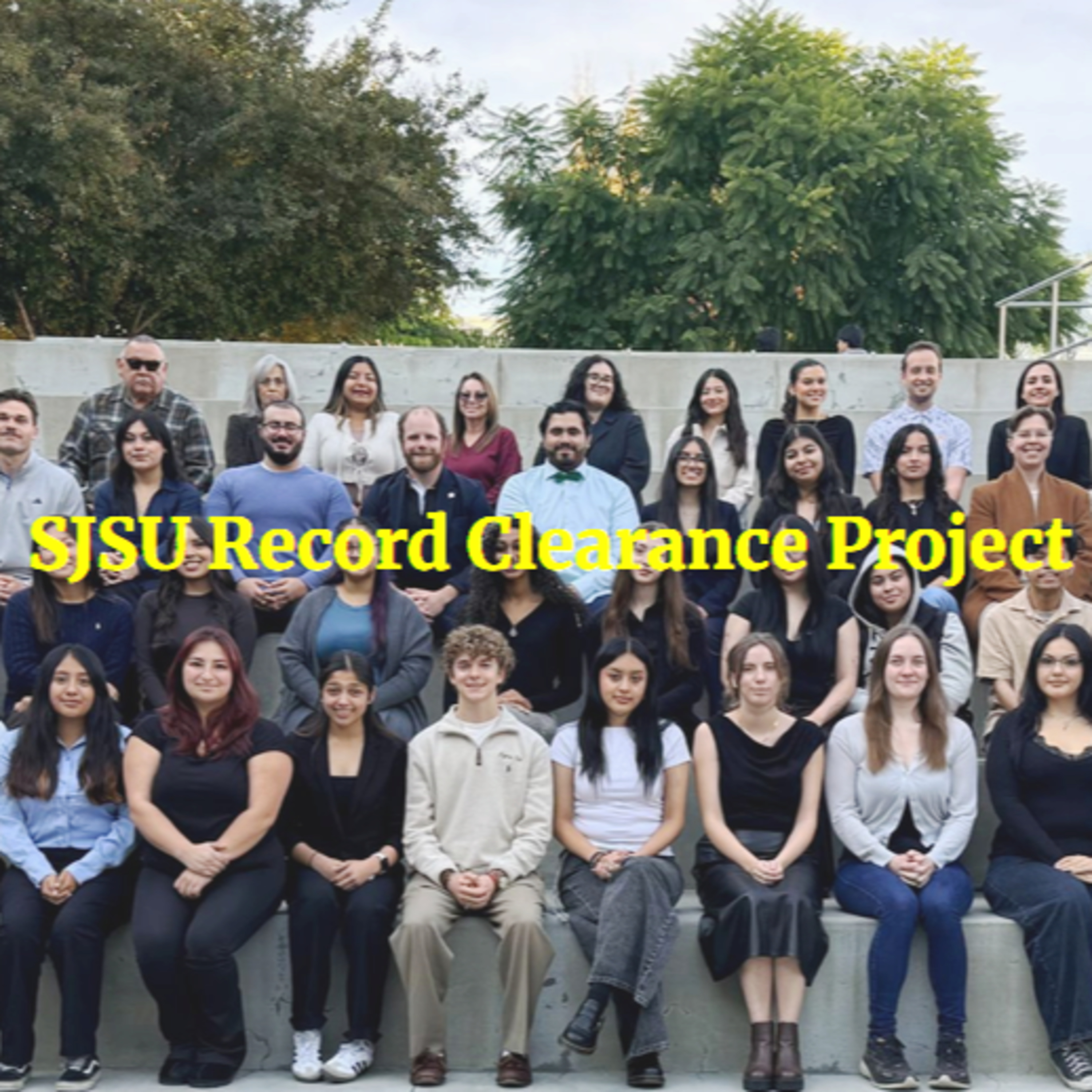
The Record Clearance Project (RCP) at San Jose State University, founded in 2008 by attorney Peggy Stevenson, offers free legal services and service navigation to help Californians with criminal records clear their convictions and rebuild their lives. The program addresses the reality that one in three U.S. adults has a criminal record, which creates barriers to employment, housing, and education. RCP’s legal services include record review interviews, reaching over 3,000 clients, and court representation in Santa Clara County, achieving a 99% success rate across more than 2,000 petitions. Unique to RCP, clients and students can appear in collaborative courtrooms, turning a typically negative justice system interaction into a healing experience. The program also provides community education, reaching 16,000 people, and has trained over 11,000 students who contributed 137,000 hours of service. The Service Navigation Mentoring Program pairs recently released individuals with mentors—former clients with lived experience—who provide individualized support, including assistance with employment, housing, education, and essential needs like food and transportation. Additionally, RCP offers computer literacy classes in English and Spanish, helping 176 participants since 2024 gain digital skills and receive laptops. These efforts reduce recidivism, increase lifetime income by about $60,000 per person, and lessen the burden on the justice system, demonstrating that pairing legal remedies with education and compassion can create transformative, community-wide change.
Welcome everybody. This is the Rotary E Club of Silicon Valley. Every week we bring you the stories of people who are making the world around them better. They do this locally. They do it globally. They do it digitally. There are so many ways to make a difference in the lives of others once you really start putting your time into making it happen. Rotary is a big organization, about 1.2 million people around the world. That is spread across 36,000 clubs. The operating principle is service above self. Finding ways to just find that thing that someone else might need. Have a better day. Have a better life. Whatever it might be. We believe that a focus on innovation, entrepreneurship, and education in parts or in whole is something that can inspire people to see new possibilities for their communities. And understanding the talent that many bring who have made mistakes in their lives, but are ready to contribute is something that I think sits near and dear to the hearts of many of us. And so we're really excited today to have members of a team from San Jose State University and the Record Clarence Project talk about the work they are doing. I think you're going to find this to be an exciting topic. If you are interested in the full bios of our speakers, Sandra, Emily, and Kanita, then feel free to pause. All right? Right in the middle of my sentence. I'll give you the video on YouTube or the podcast on whatever podcast app or page you use will allow you to get to the details that we post as part of this. We'll remind everybody that to find lots and lots of these amazing stories, you can go to rotary.cool. Click on meetings and you will find story after story after story to inspire you. Speaking of inspiring, let's get to this story. So Sandra and Emily, I understand you guys will be doing kind of the initial piece. I'm going to hand it over to you. Welcome to the rotary E-club of Silicon Valley. Thank you so much, Russian and fellow Rotarians for the warm introduction and giving us the opportunity to speak with you today. My name is Emily Benson. I'm a project assistant with the Record Clarence Project and got started back with the project back in 2024 as a student and I'm very happy to be here as a staff member. Thank you. Thank you, also Russian. My name is Sandra Carillo and I'm also a staff member for the Record Clarence Project. I also began as a student back in spring of 2024 and I again want to reiterate that I'm very thankful and grateful for being here today. So thank you. And I'll introduce myself as well as I'm part of the team. I'm Kanita. I am a project supervisor at the Record Clarence Project. I've been here for many years and again, I'm very thankful to have the opportunity to have your ears for a few minutes today. Yes. And with that, we will get started. We are extremely grateful to be here and share about the work that the Record Clarence Project also referred to as the RCP operating as a state university does to help individuals clear their record and access the second chance that the lot provides. There are two parts to our program, legal services, which I'll be presenting on and service navigation, then, which my colleague Sandra will be presenting on in a few moments. To provide some brief background, our amazing director, founder and attorney Peggy Stevenson founded the RCP back in 2008. And ever since then, we have provided free legal services and service navigation guidance that have positively impacted thousands of people all across the state of California. As the only undergraduate legal services clinic in the country, the RCP has trained students to provide legal services, will helping those who are leaving custody move forward with their lives. Nationwide, one in every three adults has a criminal record. Many of these people in our community is carrying the weight of a past conviction long after they complete their sentence. Even years later, a criminal record can affect some of the ability to secure employment, find housing, pursue education and fully immerse themselves in their communities. As we know, most employers do conjoct background checks as part of the hiring process, and specific convictions can come up and prevent someone from getting a job. Luckily in California, the law does provide a path forward, but people simply do not know that this path exists, or they don't have the proper resources to navigate it, and that's where the Record Clarence Project comes in. At its core, our mission is to promote justice by providing free legal services while ensuring that these services are delivered with dignity and respect. What is Record Clarence and what is its benefit? Record Clarence, also known as Expungement, is a dismissal of a conviction. And Record Clarence is a broad umbrella term for remedies that the law provides to help people get better employment opportunities, enter specific careers, and obtain professional licensing, helping empower them as they move forward with their lives and put their past behind them. And how does our project do that? Through two avenues, Legal Services, which I'll be touching on, and Service Navigation. Diving into our Legal Services in a bit more detail, we have two main functions. Number one, being a Record Review Service. Anyone in California with a criminal conviction, we conduct a Criminal History Record Review, where we meet with these clients one-on-one, review what's on their record, and advise them the next steps in the record clearing process. And through these Record Review interviews, we've been able to reach over 3,000 clients. For many of these people, these Record Review interviews provide all of the information that they need to clear their record without going to court. The second part of our Legal Services focuses on court representation. People that have more serious cases, we are able to provide court representation in Santa Clara County to help them petition the court to dismiss convictions, reduce felonies to misdemeanors, and eliminate any debt that they may have. We have achieved an overwhelming 99% success rate across over 2,000 court petitions that we have filed. And to touch a little bit more on these hearings, most Record Clearance hearings are done off-calendar, where the clients don't have a chance to appear in court or speak. Our program has a very unique opportunity to appear in a collaborative courtroom, to provide clients with a positive core opportunity, allowing their family, loved ones, mentors, and even children to appear and speak on behalf of their growth and transformation. The students that work with these clients on their cases also have a chance to appear before a judge and speak in court, which normally wouldn't be able to do outside of being a certified law school student. One of the most powerful pieces of this experience is previously clients that have had negative interactions with the justice system have a chance to end, normally their last interaction with the justice system in an extremely positive and healing way. With additional funding, we're looking to expand our court representation service to underserved areas in California. A majority of our services, record interviews, and court rep are provided through local state grants and donations from the community. And one of the most empowering pieces to our community is education. Education is empowerment, and we're able to do this through our community education presentations that we deliver all around San Jose, from jails, to community sites, to rehabilitation facilities, home or shelters and nonprofit organizations. And our students, along with a former client who has gone through the program, who is a positive experience of growth and change, give these presentations on legal rights and employment rights. One of the main points that we have found through this outreach is overwhelmingly 90% of people do not know about their basic rights to expungement. Sandra and I have given many of these presentations and it's really amazing to see the moment this information sticks with someone in their eyes that it's attainable and it's accessible to them and applies to their case. And through these presentations, we've been able to reach over 16,000 people. And the way that we were able to provide this level of care is through our amazing RCP students, interns, and alumni volunteers. We've had over 11,000 students, San Jose State University students participate in the Raccoc clearance project, collectively producing over 137,000 hours of free legal services to our community. This unique hands-on experience gives undergraduates an opportunity to learn about the law and within a short semester apply the law and work with clients to help clear their records. They gain an extensive understanding of how the legal system works. We'll see the first hand power of Raccoc clearance. And Sandra and I would be happy to expand on this in the Q&A, but we've been lucky to go through the program as mentioned as students, interns on the legal services side and lamenting side and can first hand speak to the power and energy produced by helping clients clear their record. And something that I want to touch on that is extremely special about our program is the proximity of our work to the community, not only are we directly immersed, but many of our students actually come from the direct communities that they serve. Most recently during the summer of 2025, we developed and piloted a week-long practical legal skills class inside of jail that we launched for the very first time. Classes, cover topics such as record clearing law, legal research and draft and client declarations led by some of our amazing RCP volunteers and interns and also our staff. And a long-term goal for our program is to see how more involved, long-term education can provide empowerment with the overall goal of reducing recidivism. And with additional funding, we're looking to continue to provide these classes in an outside of custody. And to leave you with a couple words just on the impact of the work, when someone clears a record, it can mean finally qualifying for a job that was out of reach, receiving a professional licensing and directly getting to work and immerse themselves in the very communities that our clients come from. The law can be damaging for so many, but record clearance has a chance to be extremely healing and pivotal. And at a start, this work is about recognizing people are more than their past. And it's about ensuring the opportunities promised by the law are accessible to everyone. When the law is paired with education and compassion, it can be an extremely powerful tool for change. And this is a direct example of the system working. And with that, I would like to pass it on to my colleague, Sandra, who will talk about the second side of our amazing work, the Service Navigation Mentoring. Thank you so much. Thank you so much, Emily. Well, the Service Navigation Mentoring Program is a program that aims to support recently released individuals from custody to gain stability.
and have a successful reintegration into society through mentorship and accessibility to resources. In this program, our mentors meet with the clients to provide an individualized support all based on the client's needs. Some of the assistance they provide is assistance with employment, education, and housing opportunities. The mentors also provide essential needs like food, clothing, hygiene kits, a cell phone, transportation by providing the clients with either a bus pass or a bike. These mentors really do focus on meeting the clients where they are and in order to ease their path of success. These mentors also hold weekly meetings or weekly check-ins with their clients so that they're able to keep track of their progress and advise and just kind of see what other services they may need. Once a client has proven or shown that they're self-sufficient and that they have completed all the goals that they had set for themselves when they were enrolled and showed that they're ready for expungement, then this is when their mentor goes ahead and refers this client over to the legal service so they can begin the process of expungement. With additional funding, then this program would be able to hire more mentors so that they can help and assist a larger population. Just like in the legal services, there's there's intern student interns. We also have student interns in the service navigation mentoring program and these students actually get the opportunity to work closely with the clients and see actually the impact of a second chance on a person that's trying to rebuild their life. So it's very rewarding seeing that impact. We know in this program, we know and we understand that once a person is recently released from custody, they face extreme vulnerability to real funding because like my colleague Emily mentioned, they face barriers like finding a stable job, applying for housing, looking to further their education because they don't have this financial stability to pay for expenses. They also struggle to navigate around in the city that they're released in. Actually, many of these individuals don't have a family member or don't have a friend that they could rely on so without this support and without this the ability to having the resources that they need, they may become overwhelmed and may are more likely to reoffend. It is this lack of guidance that another factor that mentors in this program assist clients with since these mentors are actually former clients of the record expunged. So they have they have a past they have had the records expunged in our now appear mentor. They have the lived experiences to connect and relate to the clients that they're serving, which is really amazing because then they're able to provide the advice that they need in order to change their mindsets and making them self-sufficient and helping them become a contributing member of society like themselves, like the mentors did. This is why programs like the service navigation mentoring program is are important because by facilitating the access to the resources the clients needs and also by showing them that they're actually capable of change, they can begin to break the cycle and this not only impacts and benefits the clients but also they benefit the community as a whole because by preventing a client from reoffending we're also keeping our communities safer and this program the mentoring program really is an example of how real change begins with real care and people that actually care. With as we work with clients re-entering society we notice that there was a significant gap in technology. So especially for clients who served longer sentences right and as we know today technology is a necessity not just something that you know it's needed for employment to find resources and just to complete daily tasks right. This is why we began offering computer literacy classes to fill in this gap and in these classes participants learn just the basics of how to use a computer, how to navigate the internet, they learn how to use different Google apps like Google Docs, Drive and they learn how to use their emails, they learn how to look and apply for jobs online, they also receive assistance on building the resume and cover letters and they receive tips and preparation for interviews. Once the student or the participant completes these classes then they receive the laptop that they trained on while in the course. These classes are actually an eight hour program completed in four weeks. These classes enroll approximately five to eight students. The reason because they're relatively small it's because they tend to provide assistance to each individual depending on their needs and their level of digital literacy. These classes are not only offered in English but they're also in Spanish and since the program began in 2024, 176 participants have successfully completed the course and not only have they gained the skills they needed but also they've received assistance with other tasks like for example some received assistance completing them for their FAFSA application or enrolling in a community college or enrolling in online classes to complete their GEDs. We do plan and we wish to continue these classes to help more people that need this assistance and this service. This is why we're currently looking for sponsors for four week long classes of these computer literacy courses. I want to leave you with why we believe it is important to have programs like the digital literacy classes and it is because if we offered these computer literacy classes to formerly incarcerated individuals, if we don't then they don't have the skills and this population faces significant barriers like the ones we've already mentioned, you know, like self-sufficiency, social integration and access to the resources they need. This is why it is very important that we have the week, the week close that gap in technology so the formerly incarcerated individuals can actually transition, have a successful transition from incarceration to our society. Thank you so much. Wonderful guys, I am excited for us to be able to jump into Q&A. The first thing I'll do though is just introduce the group. So in addition to Emily, Sandra and Kanita, thank you for being here to share this story with us. We have three members of the rotary E-club of Silicon Valley. We have in Fremont, we have Lisa, a proud San Jose State University alum, very nice. In the South Bay, we've got Rose. Rose, good to see you. I am based in San Jose myself, Brushton Hurley and we have a friend of the club, Claire, up in Oregon. Great to have you with us as well. So in jumping into the Q&A, there are so many things to get excited about with what you're doing. It seems that the framing thought though is hope that if you can get people into a space where they have hope for a good life, that suddenly the numbers change completely with regard to recidivism and everything else, would you like to speak to that a little bit before we get into some of the other details? Absolutely. I think the core of sort of the program is providing a sense of hope for the future for not just themselves, but our clients, family and children. And a huge stepping stone of that is the record clearance and gaining sort of the self-sufficiency, like skill sets that they need in order to be productive members of society, while also being able to partake in their community and provide back to those communities to sort of extend that seat of hope that they receive themselves back into other people. That makes sense. It also makes sense to me that by having fewer people go back to jail and more people find gainful employment, that there is an investment dollar return that comes on this program. Is that something that is a part of how you talk about the program? For every dollar invested in something like this, there is this kind of economic output, as measured by exoroirs.
Yeah, so there have been a number of research studies that have come out not necessarily just from this program, but in general about record clearance that for every individual who gets their record cleared or dismissed here in California, they have an additional $60,000 increase in their income over their lifetime as they're moving through and getting more opportunities because they don't have the weight of their record holding them back from the things that they want to do. Beyond that, there's also sort of the impact, the lessening of the impact on the justice system when people aren't going back into the system, those resources aren't being used up as much. And so there's also a lower spending on the actual system impact. Makes it sound like a highly taxpayer-friendly program that you get going. What's I love? Several questions that have come up. The first has to do was just the nature of legal advice. You know, this was characterized at one point about this is the only undergraduate legal program. And could you give us more of a definition of that? What is it that undergraduates in this program at San Jose State University get to do that undergraduates in every other college in the country would not have that chance to do? Yeah, I think I'd start first with contextualization of why we went to San Jose State, why it was founded here. Our program director used to work over a Stanford legal clinic with other Stanford law students. And as she was working with the students, she realized, you know, why couldn't undergraduates also do the same level of work that law students can do? Undergraduates have a level of intelligence that matches law students, but they also have a level of compassion because they come from the community that they oftentimes are servicing here at San Jose State. And so they're able, undergraduate students are able to approach clients, I think, in a more humane and compassionate way than maybe someone who's more in a law school mentality. But the scope of what the actual undergraduates are doing is direct to client work. So they're doing legal analysis on what is on a person's record, what remedies are available to get those convictions dismissed. And then they're actually the service provider. So they are giving the information to the clients. On the court side, they're the ones who are interviewing the clients, they're the ones who are putting together the legal documents. But all of this work is possible because we're able to have attorney supervision who, you know, signs their name on the work that the students are doing. And it's because they're confident in the work that the quality of the work that the students do is the main reason why they're willing to put their bar card on the line, as you will, because it through and through is we've been doing this for, we're coming up on 15 years of work here at the Rector Clarence Project through and through we find that undergraduate students are just incredible at providing services in a way you might not expect. And fantastic experience for them as they think about their own futures. So that's exciting. But let's talk about some of the mechanics of how expungement works. Can I assume that there are certain offenses that are that if that is what a person has a record for, that is easily expunged and others for which it is perhaps not even an option. And if so, what are those? You might be surprised to learn that as of 2023 laws have changed so that almost every single type of conviction that people have here in California can get dismissed. The only exception being sex offenses that were sentenced to prison. Pretty much everything else is on the table and the level of difficulty in getting the record cleared sort of depends on the county and the judge who is looking over these requests. But in terms of opportunity, most everyone can have their entire record completely dismissed. That's one of the pieces of this that is so eye-opening for anyone hearing the story, that this is available and that so few people know about it, especially those for whom it is most important. If you're getting a 99% success rate, that would suggest a couple of things and feel free to correct anything. But please correct anything that I get wrong here. One is that you're working to be as efficient as possible with the particular cases that you take on that make sense for the undergraduates, things like that. The second is that the laws really are that kind of wide open to giving people a second chance. And it might make sense for us, here I am asking about five questions or one's apologies. It might make sense for us also to spell out what expungement is. So for example, if someone has been in jail for a crime of just any particular kind that's not the one you mentioned a moment ago, and then applies for expungement, that is granted. And then goes to a job and to apply. And in that job, they say, do you have a criminal record? Is the legal answer no because it's been expunded or is it something different? The answer to that question ultimately depends on who the employer is and how the question is specifically asked. If it's do they have a current criminal record, the answer is no, it's been dismissed. But for certain professions, let me lay, let me lay it out, I think maybe a little bit clearly. There are private background checking companies. So typically like the retail employers who will pay a company to do a background check. And those companies will send in a request to see what they can find. But that access that they have to information is significantly limited. And for anyone whose record has been dismissed or expunge here in California, what that means is that they're not allowed to report on that information at all. So effectively for employment in the with through the private background checks, it's like the person doesn't have a record at all. There are sort of subsections. So things that require professional licensing here in California, a number of boards, you know, medical licensing, even even a barber licensing, cosmetology, where technically those agencies are able to have access to complete records. But when people's records are dismissed, there's a note saying that they're dismissed. And that needs to be taken into consideration as people are finding employment. And if there is any concern about someone's previous record in terms of their ability to do the job because of that record, then the licensing agency needs to go to the person and give them the opportunity to explain why that won't be an issue. So having a record dismissed is more protective because they're not agencies and both private and public alike aren't able to just hold cold slate, say, you have a record, we can't hire you. They have to take into consideration certain things. So there's a number of different things on that employment side. Good. Lisa has a comment on this. Well, I actually have a situational. I wanted to know what you would do in this situation. At one time, I was a human resources officer for a home depot. And if somebody's stole, I had to, I had 10 questions in order to why I was terminating somebody. It could be that they were leaving for another company or what have you. But if they stole, I had to put, they stole, you know, that was the reason. The problem that they didn't know is that home depot partners with dozens and dozens of other companies in the same database. So if somebody didn't mean that they wouldn't just not be employed at another home depot, it could have also been a seers. It could have been TJ maps. It could have been anywhere else. All because of that one pretty theft possibly. And so I'm wondering what could be done in a case for somebody like that? Because here's this huge database that they don't have a right to really get a job in so many other employers. So for instance, the retail, they won't get another job in retail most likely. Absolutely. There's a distinction, I think, in the systems of how things are processed. It sounds like there. It's sort of an informal. It wasn't, it never got to necessarily a criminal charge. But more, it's just a note on that person's employment history. That would be because it's an employment situation.
I just want to make a clear that our program primarily focuses on expungement and because that's a really technical employment question the general advice would just be to reach out to labor employer labor labor attorney who has more knowledge base on the systems and what companies are allowed and not allowed to do and keep track of in their systems because there might be a legal argument that actually those companies are breaking the law by having that information but it depends on what the law is actually saying because our our focus is on expungement where more in We have a lot more knowledge in what actual having actual criminal records beans for people in terms of employment so That's the best way it can sort of address your comment So that gets us back to to a question about how How you focus your time as an organization So the the work that the undergraduates get to do Does that end up focusing on particular kinds of cases to help someone develop the experience of what it means to be in this? What we do when we're particularly looking for clients to for students to work with is clients who are motivated and who are really really looking to Get put their pass behind them and also have more serious cases for for some context we Went when the law changed to allow almost all prison cases to be eligible for dismissal We had a gentleman come in who had a murder charge from when he was 17 and the law now made that sort of case eligible and we were able to apply and give Relief in his conviction The petition was granted by the judge and now he he's Moving on forward with his life with real estate licensing and things like that So there's there's a very real impact in sort of the What type of case? Clients have that can limit them, but I think there's also when it comes with for students and interacting with clientele It's sometimes I think more eye-opening to have clients who have serious cases because you can humanize them in a way that the system the justice system demonizes them, right? I think there's a lot of preconceived notions about people who have criminal convictions especially for things that are serious like Assault voluntary manslaughter like things that are very serious But I shouldn't necessarily hold people back if they put in the work to Atone for for you know that what they've done and recognize the impact of their actions and Having students be able to interact with clientele who have those serious cases is they they're able to get more context on What Get more context to what led people to do those things and give them a more human light and more compassion Well, there are our multiple questions that we're gonna jump into After we finish the recording it is one of the perks of being a part of these teams that do these recordings that we get to talk to these interesting people both while we record and afterwards To the extent that their time allows and so I invite anyone who is interested in learning more about what it means to be part of a group That that is excited about helping improve their communities to take a look at our website You can get there via the shortcut rotary dot cool And to also learn more about the record clearance project you'll find a landing page linked on the page where you found this recording or on our club page and we hope that you'll give that a good look We thank you for taking the time To to watch this recording or listen to this podcast and we are excited to be able to bring these kinds of stories to you As we always like to do we headed back to our speakers for the final words So Kanita, what would you like people to have clearly in mind as they as they finish up? We've obviously provided a lot of information, but I think the main takeaway we want people to leave this recording with is that people deserve dignity and a second chance and the record clearance project believes that the main way to do that is through education and compassion So that people in the community can also experience the effects that That compassion gives it's a domino effect really a multiplier of Work is that one person take a chance on one person and let them run and see what they can do in their community I love that and thank you all we will see you next week
Podcast Summary
Key Points:
The Record Clearance Project (RCP) at San Jose State University provides free legal services and service navigation to help individuals with criminal records clear their convictions and reintegrate into society.
Legal services include record review interviews (over 3,000 clients served) and court representation in Santa Clara County, with a 99% success rate across 2,000+ petitions.
RCP is the only undergraduate legal services clinic in the country, training students who contribute over 137,000 hours of free legal services.
Community education presentations reach over 16,000 people, highlighting that 90% of individuals are unaware of their expungement rights.
The Service Navigation Mentoring Program pairs clients with mentors who are former clients, providing support for employment, housing, education, and essential needs like food, transportation, and technology.
Computer literacy classes, offered in English and Spanish, have helped 176 participants since 2024, with graduates receiving laptops and assistance with tasks like FAFSA applications and GED enrollment.
Record clearance boosts lifetime income by approximately $60,000 per individual and reduces strain on the justice system, making it a cost-effective, taxpayer-friendly investment.
Summary:
The Record Clearance Project (RCP) at San Jose State University, founded in 2008 by attorney Peggy Stevenson, offers free legal services and service navigation to help Californians with criminal records clear their convictions and rebuild their lives. S. adults has a criminal record, which creates barriers to employment, housing, and education.
RCP’s legal services include record review interviews, reaching over 3,000 clients, and court representation in Santa Clara County, achieving a 99% success rate across more than 2,000 petitions. Unique to RCP, clients and students can appear in collaborative courtrooms, turning a typically negative justice system interaction into a healing experience. The program also provides community education, reaching 16,000 people, and has trained over 11,000 students who contributed 137,000 hours of service.
The Service Navigation Mentoring Program pairs recently released individuals with mentors—former clients with lived experience—who provide individualized support, including assistance with employment, housing, education, and essential needs like food and transportation. Additionally, RCP offers computer literacy classes in English and Spanish, helping 176 participants since 2024 gain digital skills and receive laptops. These efforts reduce recidivism, increase lifetime income by about $60,000 per person, and lessen the burden on the justice system, demonstrating that pairing legal remedies with education and compassion can create transformative, community-wide change.
FAQs
The RCP, founded by Peggy Stevenson in 2008, is a San Jose State University program providing free legal services and service navigation to help individuals clear their criminal records and reintegrate into society.
Record clearance, also known as expungement, is the dismissal of a conviction. It helps individuals gain better employment opportunities, enter specific careers, and obtain professional licensing, allowing them to move forward with their lives.
Anyone in California with a criminal conviction can access the record review service, and court representation is available for those in Santa Clara County with more serious cases.
The RCP has achieved a 99% success rate across over 2,000 court petitions filed, helping clients dismiss convictions, reduce felonies, and eliminate debt.
This program pairs clients with mentors, often former clients, who provide individualized support with employment, education, housing, essential needs like food and clothing, and weekly check-ins to ensure successful reintegration.
These are four-week, eight-hour classes teaching basic computer skills, internet navigation, Google apps, email, and job application assistance. Participants receive a laptop upon completion, and classes are offered in English and Spanish.
Chat with AI
Loading...
Pro features
Go deeper with this episode
Unlock creator-grade tools that turn any transcript into show notes and subtitle files.
 PodcastTranscript AI