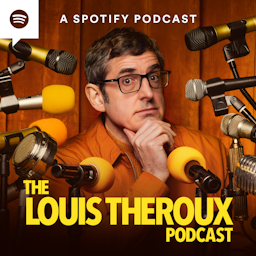
S7 EP8: Yorgos Lanthimos discusses working with Emma Stone, suffering for his art, and directing a Bourne movie
1h 7m 38s
The conversation explores the filmmaking philosophy of Yorgos Lanthimos, a renowned director known for dark, absurdist, and psychologically intricate films such as *Dogtooth* and *Bagonia*. Lanthimos emphasizes that his work does not provide clear answers or moral resolutions, instead inviting viewers to interpret and engage with ambiguity. The films often present closed systems—like the isolated family in *Dogtooth*—where language, reality, and perception are manipulated to reveal how power and control operate within societies. Rather than explaining “why” characters act, Lanthimos focuses on the “how,” encouraging audiences to construct their own meaning. This approach reflects a deep interest in how family, belief, and societal structures shape behavior. He values creative freedom, trusting actors to bring authenticity without over-directing, allowing performances to emerge organically. His films are not merely provocative but politically aware, addressing global issues like refugee crises, environmental degradation, and right-wing populism, though he avoids didacticism. Lanthimos maintains that films should challenge viewers, not comfort them, and that the most powerful moments arise from uncertainty and personal interpretation. The discussion also highlights his artistic journey—from early commercial work in Greece to a career defined by experimental storytelling—and his belief that true artistry comes from trust, collaboration, and the willingness to let meaning emerge from the viewer’s experience.
Hello there, welcome to a bonus! Wow, that was loud. Installment of the Louis Theroux Podcast. Lucky you. For this special bonus episode, I'm delighted to be joined, but I won't keep doing that. By a BAFTA and Golden Globe-winning visionary filmmaker who goes by the name of, August Lentomoss, why? Because that's his name. Over the past 15 years, Yorgos has become one of the most distinctive voices in modern cinema, with films like The Acclaimed and Garlanded Poor Things, that had Emma Stone in it. It was like a surrealist steam punk reimagining of the Frankenstein myth, with a woman as the monster. And the favourite, with Rachel Weiss and Olivia Coleman, that was sort of about Queen Anne, wasn't it? She raced lobsters in her hall, and a lot of it was fun with the Fish I Lens. She's got a very amazing, very amazing, listen to my language. I should be a film critic. He's got an amazing eye. As he uses funny lenses, I already sound like I'm more on. If Yorgos is listening to this, and that's just a small sampling of Yorgos's over. And there is also Dog Tooth, which was the first of Yorgos's films to put his name on the map, and the first one I saw, darkly comic, you might say, about the imprisonment of a family by their father in their house. We talk about that quite a bit. The killing of the sacred deer, starring LTP alumnus, Barry Keogan, the lobster, and many more. Yorgos has a coterie of frequent collaborators, including Colin Farrell, Olivia Coleman, Willem DeFoe, friend of the pod, and Emma Stone, future friend of the pod. She'd be a great guest. Who we work with most recently in his film, Bagonia, the BAFTA nominated, and Oscar nominated. It tells a story of two conspiracy theorists who kidnap a CEO, kind of a tech boss. I won't say broke, because it's a woman played by Emma Stone after they become convinced she's a space alien. I enjoyed it very much, and it resonated with themes I'm interested in, to do with things like conspiracy theories, bizarre paranoid thinking, but also the emotional resonances of toxic relationships, because it's partly about that. We recorded this conversation in December last year while Yorgos was in town promoting Bagonia. A quick warning, this conversation contains strong language and adult themes. All that, and much else besides coming up. Thanks for doing this, I appreciate it. No, I'm very happy to. I'm, you know, as I said, I get my huge fan. I actually don't know what I'm doing here, because I'm probably the least don't person who's ever interviewed for this. Well, you're on Instagram, and I was surprised to see how few followers you have. But you're not posting a lot of personal posts. No, because I just did a proper account, because it was an account that everybody thought it was me, and it wasn't. Really? And I just decided, like, let's just do a proper account. Yeah. So I just started it, like a couple of weeks ago. Listen, I'm a big fan as well. I mean, not as well. I am a big fan. I think we'll cut the bit out where you say you're a fan. No, you never do. I'm listening to your post-casts. Maybe we won't. And actually, I've seen almost all your films. You've got one out at the moment called Bagonia. Indeed. Congrats, it's brilliant. It's really good. Thank you. Obviously, there's a tone that infuses your work. It's been characterized lots of different ways. All of them end up being somehow reductive. Sometimes it's called dark, absurdist, bleak, maybe harrowing, torturous. Sometimes they're characterized as being films that demand. Well, they're punishing in some way. Speaking of which, like, I don't see them that way. Are you serious? Yeah. -Hilarious? -Have you? I didn't say that one. They've a lynch called Dogtooth, a fantastic comedy. See, he gets it. He gets it. So the one I watched first was Dogtooth, I watched in 2009. Without getting too deep into spoiler land. I'm sure people have. The people that have watched that film. The ones who haven't seen it have stopped listening already. Yeah, exactly. Well, that's got it. It's a dad and his wife, who've kept his three kids more or less locked away behind closed doors, deceiving them into believing that life on the outside of their remote house is either dangerous. And in fact, maybe there isn't much life out there, but either way, they're now in their mid-twenties and they've never really left the family domicile. Yeah. The opening. I re-watched it last night. Oh. The opening scene is. They're listening to recording from their dad. Do you remember this? Yeah. You wrote it in direction. Actually, I remember it because we just did a new. a restoration, like a new digital transfer of the print, of the negative. And I kind of re-watched it. What's the opening scene? The opening scene is like a montage, actually. It's like a. There's like a close-up of the mother pressing play on the tape machine. And there's like a list of words and their meaning. Yes. So one of the words is C, C, in Greek, talasos. Talasa, talasa. And they define it as. Armchair. Yes. And there's a couple other words, excursion. Yeah. It's defined as. I don't remember. Toaster or something like this. Yes. They're all wrong definitions. And you realize this is a world where the grown-up children are having to be more as reprogrammed with the wrong meaning of words so they don't make us too many questions. Yeah. So because, you know, the parents' thing that they might have slipped a couple of times, a word or something, and now they have to give it a new meaning for the children so they don't know what excursion is because they'll be asking for one. So they don't want them to leave the house. So it was like a way of, you know, introducing the rules of, you know, this microcosm. Yeah. It was the same way, I don't know, if you remember, the airplanes because it is. They're under a flight path. Yeah, they're. So how did they explain that this plane's going over? How did they explain that? And I went like, "Why don't they throw them little planes?" 'Cause they see them as little up in the sky and then they'll just go, "Oh, a plane fell from the sky and then they have it as a toy." So it was just like trying to solve those problems that those parents would have with a thymus that we wrote the script together and, you know. It's thymus Philippu. Yes, that I've written many films with and he's a very good friend. I think the idea to start it from myself and if thymus, like making observation about, especially about Greek society and how families are structured and, you know, they're. I think they might still be. I think younger generations are a little bit different, but like, children would stay with their parents and they were very old. And it was, you know, kind of fascinating for us to. In Greek culture, probably Mediterranean as well. If I be so bold to, like, generalize a little bit. I wonder if I'm going to make it. I'm going to go on out on the limb and. This is risky. Boys would be cooked for by their mums - Yes. - until they married and then their wives would cook for them. - Exactly. It's something in there. - That's the thing, yeah. Another fix is. Sometimes they eat fish and you're like, "Well, how are they explaining the fish?" And then you see the data arrive with fish in a plastic bag and he puts them in the family swimming pool. And then goes out wearing scuba gear with a dark gun. A hot. Not a dark gun, like a. A hot pool? No, like, it's cold. Sub-act quirk. I don't know what you mean. You're not. - Spear a gun. - Spear a gun. That's it. You're not a fisherman, are you? No. And she has to go through the charade of. He's like, "Oh, there's some fish that have appeared in the pool." Presumably, they think they're spontaneously generated. Yeah, probably. Yeah. Yeah. You know, and it raises something that's true for a lot of your films. You know, in a way, that was the film that broke through for you, although it wasn't your first film, but. Well, two things. This was one is the how becomes more interesting. In some way, you'd work more with the idea of how is this happening, rather than why is it happening? Mm-hmm. I don't. I think you're not that interested in the motivation. - Crit me if I'm wrong. - No, I think. Why is the dad doing it? - Yeah. - Why is the wife going along with it? Yeah, I think that, like, those are things that are. Some of them easily deduced from what's going on, and I find it more engaging to ask from the viewer to do that work, instead of, like, serving everything on a plate. - I. - I even enjoy that more. You know, when I watch something or listen to something or read something. So, yeah, it's more about the behavior and how it affects people and how. You know, we can investigate the things that we consider as given, if they were slightly different, what would that mean? And just engage in that kind of conversation about, you know, how we've structured society, relationships in the world.
testing it in ways. You know, creating this situation that tests that instead of saying, "Oh, you know, this is what families do and this is how children react and there you go. I mean, you knew that already." It's testing something. I mean, I don't want it to make it sound like you're performing an experiment. I guess there's two things. I've fallen to that trap to say that a few times. Yeah, I don't think that's worth it. Yeah, no, I'm just trying to explain, you know, that we're building these rules, which is like an experiment. You offer work with a closed precinct, but not always, but in which something's a little off-kilter. I mean, what strikes me is that the audience is always a little bit in an intriguing way left out. So, for example, it's 55 minutes in of "Dog Tooth" that the word "Dog Tooth" is used, and basically you get a clear, so it's more than halfway through the film, you get a clear understanding that the world outside is dangerous. Until then, you're like, "Why don't they just leave?" And then you get little breadcrumbs. I don't think you ever fully arrive. Again, I think it's one of the reasons I engage with these films is because they don't feel fully resolved. It's not like you then you're like, "Oh, now it all makes perfect sense." Yeah, no, you have to make sense for yourself. Like, yeah, if you re-watched the ending now, it's very much that. And I remember it was the first time that I talked to people after watching the film, and I realized that it really depends a lot on the person that watches the film, to make up a lot of stuff, and the way that my films kind of demand that. But I remember even people saying, "Well, we're going to spoil it, but that's fine." Like, when, you know, the daughter that escapes, the oldest daughter that escapes, ends up knocking out her own K9. K9? Yeah, and in order to fulfill, by the way, "Dog Tooth" is a made-up word, right? It doesn't really exist. That's not what you call your K9, correct? Yeah. We don't call it your dog tooth. I don't think. Yeah, no, I don't think so either. I think I like that, that in the English title would be a made-up word. It kind of made sense with the film. But people have told me, like, she's going to come out of the trunk, right? Because she was holding. At the end, she took knocks her tooth out. She finally leaves. She's allowed to, because her tooth's come out in theory. As long as she gets in the back of the car, he drives off. They can't find her. He's outside his place of work. She's in the trunk, and there's like a 10-second shot of the trunk. And she's in there, but nothing's happening. Yeah. But people have told me, but it's fine. She's going to get out because she was holding a hammer or a screwdriver. And she wasn't. No, but people that really wanted her to escape saw that. Yeah. Which is like one of the, you know, revelations about, like, how people watch films and how they project their own. People really want answers. I think it's in Pulp Fiction where there's a car, and it's never revealed what's in the boot of the car. Oh, yeah. Then there's like a glow or something. Yeah. And there's endless threads on the internet about, oh, what's in there? It's actually someone's soul or some stolen gold. And you just sort of think, like, no, it's never, we don't need to know because we don't know. Yeah. It's an narrative device or something like that. Yeah. Because in a related sense, I can't find my quote, but it was a New York Times quote where it was basically saying, and it seemed to be implied almost as a criticism. It was, it's like, is this documenting depravity or is it just being depravity? Like it's not clear where these interested in documenting it or interested in provoking by creating it. And I thought, well, that might be true, but I don't think that's a criticism. It's too intellectual for me. Oh, here we go. A.O. Scott in the New York Times says, at times, it seems as much an exercise in perversity as an examination of it. Well, that's criticism. I think I know what you mean, but I don't think that's a problem. I can. I'm with you. Yeah. You know what I mean? It's a bit like, well, I'm giving you something to make you uncomfortable. I'm trying to make you uncomfortable. Yeah. It's like the thing that I was, I initially, early on, like I felt weird listening to that I'm being provocative. And then I realized it's a good thing. Yeah. Like you need to be provocative. Like how I else are people going to be moved out of their seats? Yeah. Literally. And metaphorically, like move their minds a little bit to different directions or see things from a different perspective. If you don't provoke them, if they, you know, so I take it as positive now. I would go further and say if there's some people who actively dislike one's work, I won't make it about you. Yeah. That's perhaps not a bad thing. Yeah. And I just stood there early on that that would be weird. And that's why I had a weird reaction with the success of dog tooth in the beginning because like I felt that the stuff that I make is not for everyone. And that's fine. And that there will be people that will hate it and people that will love it. And I understood that that's the kind of things I'm interested in. Not purposefully making people hate the work, but like it's just the natural outcome of this kind of work that people are different. And also, especially if we talk about, you know, around the world, different cultures, different, you know, different upbringing experiences and all that. Like how can something that's provocative and interesting and different and relatively original be accepted and liked by everyone? Like that wouldn't be right. So you don't want that really. No. So I made peace with that early on. What I was going to say is it was 2009. It was a huge hit. Well. Well, it was a hit. Well, it did really well. I mean, cost what next to nothing. Yeah. I mean, those all the Greek films that we made, we kind of did it with, you know, five, ten friends and, you know, we paid for the necessary stuff. And then everybody offered to work for free mostly or with like very little money and it was like what 250,000, you know, like something like that. You couldn't even make a documentary for that. Well, you could, but it would be well, not this day, I guess. But yeah, it was nothing. It's just like the love of people that, you know, wanted to make films. And especially at that time, in Greece, there weren't that many films being made. Like there was no industry. I mean, there still isn't. It has improved, but there wasn't the notion of becoming a filmmaker in Greece when I was growing up. It was like a non-existent thing. And that's why I started by doing commercials and saying like at least I'll be doing something that I is similar to what I like, but I'll be able to earn a living. And yeah, at some point, we just decided why don't we just go, you know, and make it like that with no money? You'd gone to film school, right? Kind of. In Athens? In Athens. So if there's a film school, why is there no film industry? There's like a, there's like a very small private film school. Now there's one at the university as well. But yeah, there wasn't such a structure like when I was growing up, there were like two or three, you know, older generation filmmakers, you might have heard of Theo and Galopoulos, for example, the most well-known one. And it was them that they were making films and you know, they were using up all the resources of the Greek film center. So there was like no chance that a young filmmaker would like be able to be included in that. So there was a boom in advertising in Greece, like just before the crisis actually, if you can make the connection. So like a lot of money being spent on commercials and, you know, like people who don't remember what year was it? Was it 2009? 2009. It was massive. People said it was because of the Olympics. Do you remember that? That I think they spent too much money on the Olympics. Yeah, I think they were like generally spending too much money. It was the bubble. What year was the Olympics? 2004. 2004. And the other one was they said, "Greek people don't pay taxes. This is normal in Greece to not pay your taxes." There's a lot of that. Some of that is partly true, but I think there was that bubble of banks loans for mortgages and things like that that kind of exploded. It was the era of mobile phones and all these companies coming in and spending millions and millions and doing commercials and people buying stuff and getting houses and mortgages and there was like a whole thing going on. And I think that, you know, a lot of these things led to the crisis, well there and in other places around the world. But it was, yeah, felt.
Quite hard in Greece. Yeah, but luckily by then you were soaring. Yeah, but into your next safety career. I mean, it was over here. And you moved over here. Yeah. It was striking that you were doing two or three commercials a week for nearly 10 years. Is that possible? No, I mean, I probably exaggerate. But for a number of years-- But like, for a number of years, I was doing like a commercial a week at least. But what I took from that was it's almost like the Malcolm Gladwell thing of 10,000 hours that you put so much time into making these, in effect, short films that you must have your craft in some way. Yeah, the technical aspect of it. I think that was very helpful for us to decide that we didn't need that much in order to go and make a film. If we wanted, like, if we gathered like these 10 people that just wanted to make a film, we didn't need lights. We didn't need makeup. We didn't need anything. We would borrow stuff, and we would shoot in locations that they gave us for free. And we could just make a film like that instead of not making anything at all. And just being there and going like, oh, it would be so nice to make a film one day kind of thing. So that's how we made the three first films in Greece. And then, yeah, after Dogtooth's relative success, I decided to move over here. Because at some point, after making three films this way, I just felt that if I was to continue making films, I needed to be able to make some choices instead of, like, just boring stuff and filming in the house that was free instead of the-- You needed the freedom of a bit more money and more. A little bit more control over aspects of the filmmaking. But dialing back-- so you grew up and you've talked about, you were not a massive cineast. You were quite sporty. In fact, your dad had been a basketball player, professional, nationally known in Greece. I can't remember. You gave a few examples. Like, maybe you were watching Flash Dance. Was it-- were you watching back to the future? Just made a dream? Yeah, grew up like, yeah, with it. Watching mainstream films, Indiana Jones, and, yeah. And then, you had a sort of damacine moment when you watched, was it a Tarkovsky film? Probably. Because I went to a film school again, like, thinking, you know, I kind of like these films. I'm never going to make it a Spulberg film or anything. But I can learn the craft and do commercials and do something like this. That's how I went to film school. And then, all of a sudden, I discovered Tarkovsky and Bison and Casavetes and those filmmakers, Bungu-L, and that I had no idea about. And this other world opened for me. So it was relatively late. I mean, I was like 19 or whatever. And then, when you were working in commercials all those years, were you continuing to educate yourself in film and increasingly thinking, wow, this may be something for me? Yeah, I used to watch a lot of films and read a lot. A lot of the stuff that I learned and technical, I was getting magazines from American cinematographer, for example, that's very technical about cinematography and all the stuff that we were really learning in film school. I was just reading about it and then I would be experimenting while we're making commercials. And I go, like, we should do this process with a filament. And they were going, like, how are you crazy? We can't do this. We should do bleach by pass or whatever. And the labs would be furious with this guy that wanted to do all those things. And so, yeah, I had like a real thirst for it. But I didn't really think that I was going to actually make a film. I was just like, getting to learn about these things and then, of course, watching films and contemporary films, you know, at the time, apart from the old ones that I discovered in film school. Which ones were you aware? Because it feels like Lars von Trio was doing interesting things at the time. Yeah, I guess it was, maybe, Michael Haniker was, of course, Michael Haniker, and maybe a pizza pong, whereas it's a cool, the Thai filmmaker. Oh, you know, it got me. Yeah, timing young, for example. It's a filmmaker. Yes. Oh, Jesus. You're not writing these things down. But like, we're recording this, so that's fine. I'll be writing them down. I-- [LAUGHTER] Who were those people you were watching at that time? So you were dipping into Asia, too, huh? Well, I mean, to be honest, like, my memory is so bad. But that was gradual, I guess. Yeah. Getting into more obscure, more experimental. Sometimes they call them. I don't really like that. Characterization. They call them non-narrative. I don't like that either, because-- What's an example of a non-narrative? I don't know. So they can say, like, a Lynch film is non-narrative. Some are, some are. Blue Velvet's narrative. Yeah, but like, even-- Well, even Eraserhead's narrative. But is-- does narrative need to be always linear? No. That's why I don't love that. Yeah. Jean-Luc Godard said, oh, is that a good dial? Said a film needs to have a beginning, a middle and an end. But not in that order. Finish each other's sentences now. OK, when Dogtooth got the reaction that it did, I think it was nominated for an Oscar. It was, isn't it? Commiserations on failing to win. Yes, thank you. It was like a win that we'd even got nominated. Exactly. It's an honor to be nominated. I'm so sorry you lost your Oscar. I've lost many since then. Have you? Have you-- you must have won a couple? No. Well, my people have won, like, actors. Emma Stone won one. Yeah, it's two. Actually-- well, she has won two nod with me, with me involved in the film. Right. This is one one. So that's your only bit common one one for your favorite, yeah, with me? Those are yours. Yeah. I'll claim. You should get joint custody. Well, I got the cards. Emma got the Oscar. I got the card that was saying, like, Emma Stone winner. So she gave me the card. That's almost patronizing. That's almost a little bit insulting. You've talked about that moment of arrival. You know, and Hollywood, a bit like a vampire, feeds on fresh blood, right? And it's like, oh my god, there's a new guy. Have you seen dog tooth? Yeah, it's awesome. Let's get him in for a meeting. That's my bit. So that's good impression. Yeah, hey, your ghost. Awesome to meet you. Big, big fan. You talked about not enjoying that, surprisingly. You said I had a weird negative reaction to all the noise around dog tooth. Actors meetings in LA. I didn't know what I was doing there. This is you. I felt it was fake in a way. Well, I mean, a lot of it was fake. Like those meetings are extremely superficial most of the times. I don't know. You're already in a position to make movies you want to make, right? So in a way, so what are they going to do? Slot you into a franchise? We got an exciting project for you. Star Trek 7. Yeah, I mean, I wasn't really at the time like after having made dog tooth and being nominated for an Oscar, it was like there was an interest in what it was that I wanted to do next. And I did entertain the idea, like going back to my roots as a teenager and go like, should I make a boring movie? Like, for example, that'd be fun. Literally? Literally, yeah. Really? But like only for a little bit. Not really after seeing how the whole thing worked. Did you do a meeting for bone? I don't think I did a specific one. But I think like my agents were asking like, what, you know, what it is that you want to do? And I said, like, I'd make a boring film. They were like popular at the time. A friend of mine who is a very talented documentary maker. And he made a string of successful documentaries. Hollywood came calling. And they offered him, dude, where's my car, too? And he passed. He passed. He passed. But it's funny how you're going to a different table than the casino. How much of these chips worth? I think there is something interesting in that if you have the guts to do it, you know? Yes. Like if you go like, you know what, I'll try this. Yeah, but then do you remember when the guy made the Lives of Others? I can't remember his name, too. That terrific German film went to Hollywood. And do you remember what he made? Yeah, but that's not the same thing. Go on. He made the tourist for people who were interested in the punch line. Yeah. I don't think that the Lives of Others was, in a way, such a different film. Not to the tourist, just don't get me wrong. But like I don't think it was timing young doing the tourist. Right. Is what I'm saying. Like his film was like, you know, a successful, popular film that, yeah, was, as they say, narrative. And, you know, I think it ticked a lot of the boxes. But even that, yeah. Yeah. I do love that film. Yeah. Exactly. Yeah. Yeah. But, um, and obviously, when he made the tourist, like, he didn't have any control over it. The studios had. And that's what I realized. Did you see the tourist? I mean, we're saying it. I didn't. Like, it's terrible. But it might be. It didn't do really well. No, but the people themselves that makes kind of say it's terrible, so. Um, but I, I think that's what I realized when, when I flirted with the idea that you actually don't have any control, like, they want to kind of have you there as the new thing. But, and say, oh.
this guy is doing this, but like they want to actually do it. So I realized it's not for me, and I just want to keep making the films that I want to make and have as much control as I can, which I'm very lucky to have achieved. I haven't made any film that I didn't have total creative freedom, even that's hard to bear. I mean, people that do difficult jobs hear that and say like, "Oh, really?" I was going to say making films is difficult, but try taking out someone's appendix. Exactly. What would be a better example? Try. No, but that's really hard. Like someone who cleans people's houses, I think that's brutal. And we're saying, "Oh, we're making films it's so difficult." But it's weird that it is, and it does affect us like deeply and profoundly, and it's the narrative that we built for ourselves and what we consider important and all that. But anyway, it's hard for me because I've chosen to do this, and this is all I have, and it's life itself in a way. So, although it might seem ridiculous to someone on the outside, I still do suffer-making films, but not in a real world, though. Of course, that doesn't surprise me. It's obviously not suffering in a conventional physical sense. It's a kind of feeling of responsibility, and you've been given an opportunity, and not many people are in your position, and you don't want to fuck it up. And you don't really have many people you can blame because, to a great extent, you're a captain of your own destiny. No, and I've chosen that. Like I said, I have complete creative freedom, so yeah, it's all my fault. But it's going south. Yeah, it's just me, it's my inability to do whatever I need to do. What was your. Because you've talked about it in the past about how stressful you find it, how in some respects, it's quite an unhappy. Emma Stone said, he's really miserable while we're filming. You said, yeah, it's insane, it's immense. Then the question was, and it hasn't gone away over a time, Stone, it's gotten worse. Lanthimos, you try to rationalize it. Why are you so upset? This is a movie. Of course, when you compare it with other things that are happening in the world, it's ridiculous, but for you in that moment, it's everything. It's gotten worse. Was Bagonia the most stressful, would you say? I think so, but that might have to do something with the fact that I kind of made three films back to back without taking a break in between. You did poor things, kinds of kindness and Bagonia are very productive, and not only that, they're all outstanding. Thank you. I think so. My opinion means nothing. Well, it means something to me. Well, I mean, less now that you didn't know most of the filmmakers are invention. That's true. You might just be ripping them off. I'd see those and be like, he's just taking it all from. If I say that, make up a name, it'll sound like I'm being racist, so I won't do that. Bagonia, it's about two guys. A guy in his cousin, the guy's played by Jesse Plemons, a tremendous actor who you've been working with a lot, and his brother, played by a neurodivergent cousin. What did I say, brother? But you said a cousin, I think, in the beginning, and his cousin, but they've got a brotherly relationship. They do. They kidnap, this isn't a spoiler, I don't think. The character played by Emma Stone. No, I'm very early on. And she's a girlboss. I know that's a weird term, but that's sort of how it feels like she's got Cheryl Sandberg, the Facebook executive energy. She's like an uber-menture of Silicon Valley, Silicon Valley tech sorting. In fact, she works in a pharmaceutical business, and she's almost oddly composed, even the act of being abducted. Like a lot of your ghosts lamp the most films. A lot of times, you're second-guessing the reactions. No one's behaving exactly as you think they might. And so you're a little off balance, which partly prevents them from feeling like victim narratives. It would be easy to make trauma porn with these kinds of plot setups. Do you know what I mean? Yeah. Oh, look, that person's being horrific to that person. And when are they going to escape? It's much more finely grained than that. She seems at times more in control than he does. Would you agree with everything I've just said? Everything. To the truth. It feels like I'm a lawyer now. Nevertheless, on the night in question, one of the things in my head was like, as somebody's made documentaries about conspiracy theory. So the Jesse Pleman's character's gone deep into the internet, and he believes various conspiracy theories, he thinks Emma Stone is an alien. He does. And so I'm watching thinking this relates to things I've been curious about. So the first question I have, how interested are you in real versions of the things that take place in your films? Like, do you research that? I know you didn't write Bagonia, but nevertheless. I research if I think there's benefit to it. On this one, for example, I felt that, well, first of all, the screenplay that Will Tracy wrote was, you know, already brilliant. It was a fully developed piece of work. Yeah, because Ariaster developed it with Lars Knudsen their company and the Ariaster who directed midsummer and hereditary. Okay. Is that right? Yes, you're a beast. I'm just helping the people. We've got it. It's not just you and me here. And Edicton, the latest one. Always afraid. Always afraid with working things. Working things, great films. So they thought that I might be interested in it. Why didn't Ariaster want to direct it? I know. I don't really know. I think he just was interested in other things. He was, he wishes he directed it now. Yeah. Is that true? Maybe I said that as a joke. I definitely have said that to him. Have you? Does he say does he agree? Yeah, he gets the joke. Right. I don't know if he fits true. There's probably some truth to it. Yeah. But because he was interested in it from the beginning, because he really loved the original film. I hadn't watched it. Save the green planet. Yeah. To Korean film. Korean film. I didn't know the film. So he was a fan. So that's how he got involved. So maybe he thought that as a fan, he didn't want to make that film. But he thought it was a good idea. The premise of it and the concept of it, like to be transported to modern day America. So they thought I might be interested. So I and I was and I worked with Will Tracy a little bit on the script to just make it more, you know, my own. Will Tracy had been a writer on succession. He's been a writer on succession. Yeah. A great writer. So there was so much already there. And I kind of didn't want to go like, oh, but there's this thing in real life. And should we make it more like this? And like I felt reading it that it was like really strong. And I just concentrated on other stuff that, you know, I knew that I would do differently instead of like researching what the reality around it is. So when you say you concentrate on the things that you can bring to the culture, what is that? What is that? I don't know exactly. It's very, it's very instinctive. Like I, there were like great characters, great dialogue, great premise, maybe structurally, I do things differently, or you know, even casting Aiden who's autistic, like he wasn't written as an autistic person. But I felt that it should be in a way. And it would make more sense. The whole thing would make more sense and it would be richer. And you know, parts of the comedy of it or, you know, like his background, his mother, and those kind of like dream or flashback sequences instead of like being expositional about it. And just, you know, things here and there. Yeah, that I do differently. But again, it was a great script from the beginning just to be fair. This episode is brought to you by Money Box, the award-winning saving and investing app. Money is important. Why? Well, because it means freedom, freedom to enjoy your life. We're now in a new tax year, and as long as you're in the UK and over 18, you have a brand new ISO allowance. So you can save up to 20,000 pounds and not pay any tax on the interest you earn. This is the last year that your cash ISO allowance is 20,000 pounds before it's reduced, but under 65s in April, 2027. Handy to know. To make the most of it, check out Money Box. Money Box is trusted by over 1.5 million savers and their customers rate them excellent on trust pilot. So if you've been putting off sorting out your savings, now's the time. Open a Money Box cash ISO in the app or at MoneyBoxApp.com. It takes just a few minutes. ISO and tax will supply.
No, don't you know I might read some of the bad ones like Because they do send the reviews like they and I see the email and I go like very quickly down the links And if I say something like really bad, I might click on it and see yeah, why it's just interest me to see You know, well first of all if there's some something truthful in it and then may I may be I learned something Mm-hmm. And then You know like where is it coming from? I'm interested to see and a lot of the times it's just like people just wanted a different film But it's like they didn't make it so they're getting this one But they wanted it to be different. It's not about You know how good it is or it's about it should have been another way So I find that interesting to read because you know Reviews that praise the work. I don't have much to gain from And it makes me feel uncomfortable. I get that. I mean it can confirm you in things like oh It's working. I'm not alone. Yeah, but you get you get a sense of that anyway like because Films are especially you know the films I've been making the last few years like they're widely released You get a sense of whether it's working or not and you know talking to other people like and if you start promoting the film and then if you get into that whole awards kind of Season thing, you know you speak to other people you get a sense of You know how the film is doing you don't have to like read someone's Specific view of what the film is and what it means to them and I also don't love The analysis of what it is that I do because it kind of ruins it for me. I like just not knowing and Working as I said before like instinctively like instead of saying like What you've been doing today, basically. I know I was kind of I you know what I I try not to take offense No, that's what it's hard No, but like it's it's hard for me to actually try and Understand it. That's why you know, I usually just agree Right, so all the time you said you said you got it. You were basically just agreeing No, I genuinely think that I haven't figured out how you do it Yeah, but I do think what I have figured out is that You can't interrogate the mystery too much and just as in the films You're more interested in The how than the why in certain respects that sort of the the mechanisms and the ways the rationalization and the shifts in power as opposed to what's behind all this I think in a weird way I think I take that from the filmmaking process a bit like There isn't a kind of universal solution like there isn't necessarily a unitary meaning you exist as a viewer within the tensions And if I can make this about me even more than it already is like I do try to When I make a documentary rather say like what's the meaning or what's the takeaway? I find it easier to talk about tensions Yeah, there's a tension between The urge to be tolerant and humane towards Even predatory people like Peter files while also taking a sufficient account of the seriousness of their crimes How do you balance those two moral imperatives there isn't really an answer no? And that's the beauty of it like of what we do like you You know for these things to people and then they make what they Want with it like it's it's impossible to control like that's the weird thing about it like because you have to make so many decisions making something either a documentary or a narrative film You make so many decisions thinking that you have some kind of control they're gonna say this things They're gonna be in this house There's gonna be this music and you think that you have this control and creating this work That you hope will have some kind of impact but like in reality imagine how What we were saying before like how different people are and how they're gonna perceive it in different ways and you have to be able to Just let that go and say yeah people are gonna you know think different things about it And that's why I also said like before like I agree because nothing is wrong. There's no version of what you think about Well, they're might there might be some extreme ones, but like they but you can't say like you were wrong Thinking you know this part is funny and this isn't and you're not wrong like you have a different sense of humor You have a different experience in life or a different understanding of situations or tensions are you as you say and It might be something personal of that you recognize that makes you Experience in a different way. So it's like you have to kind of let go one of the things that your films also often are marked by Distinguished by his amazing performances Most recently by Emma Stone and Jesse Plemons in the past also Willem Dafoe Olivia Coleman Colin Farrell many others And yet it's also been said by them that you don't say that much and they they say they'll come to you and say like Why am I doing this? Like why have I decided to hack out my own liver and you don't do that's a reference And you'll cut off my own finger. Why and then you like you don't you say it's not about why? Yeah, that's why I keep working with Emma because it doesn't ask those questions Stop doing that stop doing that. No, they all like they all get it. I think eventually, but like I understand that the urge Of an actor to have a little bit more information, but I think it's more beneficial for everyone if we don't analyze things too much and You know, I I try to work with people that I trust a lot and that Also is the same for people behind the camera, but also the actors that I know they'll bring something that Is hopefully surprising and something that I didn't necessarily expect But yeah, no, no, I've been lucky that I I try to make sure that you know like I the actors that I work with have a sense of what it is, you know my work and You know, they appreciate it in a certain way and then I think Also to get along as people like just how communication is and how the interaction is and then I think Then it becomes easy to just you know, trust them and they trust you and Also the benefit of course of working multiple times with them is that you know, you build trust more and more But I think it's well the reason to get back to that that I don't like to say too much to them or explain too much is because like I have an explanation, but they might have an explanation. That's more interesting also You know, it allows me to to to have a distance When I see what when I observe what it is that they're doing and what they're bringing and that allows me to see if maybe It's not working because if it's something that we both have agreed on Then you kind of tend to think that's the correct thing and you kind of tend to even see that that you agree Even if it doesn't exist So I I prefer to not know what it is that they're thinking right and then they bring it and if I go like that doesn't look right I can tell them Well, but if it is it's great because you know, you didn't necessarily expect that or it is what you expected and they're doing it, you know, they're Making it even greater So that's the reason it's not like some kind of Tutative no process of it. It's just like I think it's beneficial for them as well And I think they get it like with that might was Naturally like that from the beginning and that's why we get along so well Did she say that you sometimes do line reads of bad line Yeah, now I love to do that even more when she said that is that noise her What I yeah, I do like that's a cadence you don't yeah like or you know or if something physical or I just Try to emit her to her and go like don't do it like this And like okay, you don't have to do I get it's a big no-no. Isn't it doing line reads? Yeah, so we're talking that once. Yeah, well why because like it's insulting or I guess it's insulting the other thing is like It's reductive like it's yeah, then you have to like mimic the other person like doing sometimes I watch films not yours But you think I think you've got that line wrong like I think you're emphasizing the wrong words You know what I mean. Yeah, and it's off putting anything like why didn't the director just say no just say You can't handle it. I know what you mean imagine saying that to Jack Nicholson. Yeah, I think he's got that one right It gets it right most times. Yeah That's the thing like I think intelligent talented actors Do not get the line wrong right? It's just about finding the nuances and the diversity of what that can be and you know try and Capture that and then be able to Play around with that during the editing so you let you can you know score
their performances. But yeah, I just love, I didn't start out like that. I just love finding people that I can trust and I feel like they bring much more than I could have imagined. I think I started out thinking like I have to control everything and I am the one who knows best about everything. And you know, by working with people, you know, multiple times and trusting them. And I realized that it's so much better to just, you know, get ideas for everyone and then, you know, just have the confidence to sort them out and understand what's beneficial for the for the end result and what isn't. So yeah, I just love giving them the freedom as well. No, it's not like withholding information just to tease them or anything. It's just like giving them, I see it as giving them more freedom to come up come up with their own ideas about the character or the scene or what that is. Do you have a sense of what separates the really good actors from the not so good actors? Is this why I missed it? Because I'm such a terror. I can't act. Please don't ask me to be in one of your films. I was going to write after as soon as we finished. I know you were thinking it. Yeah. You can see it in my eyes. How did it, you know, I've always mystified and I even said because we had Florence Pugh on the podcast. I will tell you if you get a line wrong. Would you? I will tell you because you're famous for that stress. That word. What do they do? No, so I said you are famous for that. You are famous for that. Yeah. You can't handle the truth. You've obviously got an eye for actors. You know, you work with great actors, they bring great, you get great performances out of them. What do actors do? How do they do that? I don't know how they do it. It's incredible. You know, a good sign for me is like when they're in a terrible film and they're still decent. Yeah. Within a terrible film, I think that they have like a quality that like shines through anything. So that's something to look out for, I think. Do you watch many terrible films? I mean, in that version. Do you say across what Hollywood is doing? You know, I try as much as, you know, is there something you could learn? Do you, I mean, learn or learn which I'm curious about the state of things. You know how Tarantino will see anything? Yeah, and say anything. What do you think about that? For people who don't know. Well, a lot of criticising him about speaking too much and then say something about him, that's as far as I'm saying. I didn't mean it like that, but he famously in the last couple of days has said of Paul, is it Dayno? Dayno, I think. Paul Dayno, who's in, who's a terrific actor, who's in, there will be blood and what was he, another one I should call prisoners. Prisoners, yeah. And for some reason, he's directed films as well, quite entirely decided to yeah, publicly criticise him. Yeah, well, we don't have to. No, we don't have to pile on it. No, Paul Dayno. Oh, there it goes. That could be great. Thanks very much. How's the internet? We've got to feed the internet. The internet is hungry. But they've def, everybody's defended Paul Dayno and yeah, it doesn't need defending because you know, that's just something someone said. But my point was before you got us down a click date, side passage was Quentin Tarantino, you brought it up, not me. Well, I mean, you brought up Quentin Tarantino. So he famously, he's like, I go and see, he said so, you know, he, but he's a fan of just movies and he'll go and see and whatever comes out, you know what I mean? Yeah. Are you like that? No. Would you go see like a Marvel film? I think I think you don't have kids, is that right? No, I don't. No, there's no reason for me to do that. Did you watch the Minecraft movie? No, I don't know what that is. You don't know what it is. That was the number two box office film of the year I believe. I'm not there already. And I guess. Wow. Number one was a Chinese film that I didn't recognize. You might have known what it was. I'm not going to go down all the list of the hip films. No, but yeah, I mean, I do watch films like I marvel to what you know, I mean, if one of them kind of intrigues me for some reason, superhero film. That has intrigued me. If I don't know, tell me some. Well, there was a Superman reboot. I didn't see that. Lego Batman. I saw the previous Superman. Lego Batman. The previous Superman was which one? There's been so many. There's like the in-between. Yeah, the key rebooting it. There was that film which I just couldn't believe what I was think is like he was like saving. I think it was New York City. And like he was throwing people like on buildings and the buildings would be destroyed. So I was thinking like he's killing way more people than the bad guy would by just destroy all its buildings and collapsing. So they always say about the Death Star, right? Yeah. There was a lot of probably cleaners on the Death Star. Do you know me? Just non-partisan, non-ideological support staff. And then they blow up the Death Star. And we're all like, yeah, tens of thousands of people. Yeah. So I don't know. I don't know. I'll go with something like that. Yeah. Spider-Man. It's been a while. Would you have watched like the original reboot which was the brand, not brand of Palmer? Sam Raimi. Sam Raimi. I think I've watched that. Yeah. With Toby Maguire. And Willem DeFoe, your friend. Willem DeFoe, my friend. Willem is in everything. Tell him that. I'm sure he'd appreciate the company. No, I tell him. But he loves working. Like he's like that. Someone you love having on set. Like he loves working. Apparently, I interviewed him as well. And he was like, yeah, I love making the movies. And then he didn't literally say this, but it was along the lines of, yeah, but when they come out, I'm not that interesting. Yeah. I listened to that, yeah. Did you? Yeah. So he's, yeah, he's not. I think you're in shelters at one point. Yeah, maybe I did. What was it that I said? I don't remember, but it was funny. I was finding to hear that. I was aware that I felt like I also loved a bram of its pounding you like. Did you like that? That sounds sexual. Well, for people who don't know that Marina Abramovich was a recent guest of the podcast. The most famous arguably the most famous performance artist now living. She didn't pound me exactly. She was playfully. I enjoyed her. I enjoyed it. I call it flexes. She's feisty. She's feisty. I like strong. Yeah. Are there mainstream Hollywood directors that you watch out for and you find interesting? Well, the mainstream, you're saying mainstream in Hollywood. Forget mainstream. It's like really complex the issue. Like is Paul Thomas Anderson a mainstream? Yeah. I forget mainstream. Yeah. Of course. Yeah. Thomas Anderson is great. Yeah. But I love talking more about like, you know, Kelly, I heard and people like that that I find, you know, well, not enough people, you know, know their films. She's got a new film out. She's got the masterminds. Yeah. Like Brilland. I don't really know who. I don't know her work. See? Even you. Even. I love the even. Has she made many films? It's made quite a few, yeah. What was the one about the sex worker? Anora. Anora. Yeah. Was that up your alley? Yeah. It was yeah. Fun. Yeah. I'm not going to become great in Tarantino. I did know what that wasn't. It was lost everyone with Kelly, right? Right. I don't know what to do with Kelly, right? Yes. I'll give you something else. I gave you Paul Thomas Anderson, but he doesn't need it because he's like so popular right now. I got watch Spielberg movies and I watch Scorsese movies, you know, of course. You know, I feel like I'm on the edge of losing everyone. No. No. Not at all, actually. Harry asked that we already mentioned the safety brothers you've talked about. This is their, they're my friends. We grew up together. No, we didn't grow up together, but we met during dog tooth, actually. We they had their from daddy long legs and we met at festivals. Yeah. Yeah. It's great. And yeah, we became friends at this cage. No. Oh, you're talking about the latest one. Long live Jesus Christ. You're so illiterate. Why am I even here? Daddy long legs. It was 2009. The softies are maybe though, you know, uncut gems. Of course, I've seen on good time. And now they, they have both made individual films that they directed. Marty Supreme is one that jaw softly did. Is that good? Yeah. Oh, well, I haven't seen it, but my people say it's good. And Ben's after did. Oh, oh, Ben, I'm sorry. I'll remember in a second. The smashing
seen with the rock. So they've both made films, yeah, they're great. Let's arrive somewhere. I mean, I feel I don't want to peel the layers away. So you should and I have a bad habit of doing that. But I know, okay, I'll say this. So you grew up, you're you're an only child. Your dad wasn't in the picture for a lot of it. Yeah. Your mum died when you were 17. Yeah. And you never really reconciled as far as I'm aware with your dad or in so far as that term is appropriate. It's not as though you became massively close with your dad after that. No, no, no, I would like see him ever now and then but like, yeah, we're never very close now. Do you think you have a suspicion of family life? I guess so. I mean, I do have a very particular view and experience about it. Maybe that's part of how, you know, we started something like dog tooth. For example, maybe, yeah, the reason I don't want to have kids, maybe you don't want to. But also, you know, the state of the world doesn't really encourage. Do you feel gloomy about the state of the world? It's, yeah, it's something that I'm like trying to, I'm wrestling with because, yeah, everything points to that. But then how useful is to just say that and, you know, whatever is left of it, what do you do with it? What's top of your list in terms of threats that you see? Because there's quite a few to choose from. There's quite a few. Yeah, that's the thing. But that's the thing. Like it's overwhelming. Yeah, like it's, you know, yeah, the environment, refugees, like that's up my alley, like in Greece. That's how most of them are trying to escape the horrors of. Is that still going on? Of course, yeah. There was a crisis on Lesbos. Was it back in the day? There still is. It's the same. It hasn't, it's just like we're, you know, we're focusing on different things. But that's still, it's still happening. Is it like a refugee camp on Lesbos? There's Lesbos? They don't call them camps anymore. They call them hospitality centers or something like that. But they are like camps. And they're not just on Lesbos. They're on many islands and on main lands. But yeah, it's pretty, yeah. Rough situation. And then let's not even talk about, you know, what's going on guys on West Bank and what you did, a documentary that I'd like it to be longer. Oh, thank you. So, yeah, there's, there's, well, America. What's going on there? Like the rise of, you know, right wing, right wing populism, populism everywhere. Like there's so much, like we're probably not the best to talk about these things. But, you know, I do notice them. Would you ever think, well, I'd shine a light on this with, with a film, I think perhaps you're not issue driven in that way, straightforward away. I'm, I guess I'm not, but I'm, I'm, it's hard to ignore it more and more. Yes, I am political, but it's not. I explore, as you said, like whatever, human power dynamics, or whatever. And it's never directly political. I think Bugonia is more directly political than, like there's political reference, specific political references. And yeah, I'm like in a, in a place where I, I'm wondering whether I need to do something, which is, yeah, more directly political. And in terms of like addressing some things more head on. And I don't know what that is. Maybe I'll make a documentary. Welcome back. Hope you enjoyed that. I was definitely reaching my limit of journalistic or podcast hosting competence. Like there were times when I thought, well, when the guest calls you illiterate, albeit slightly tongue in cheek, um, you realize, and maybe you haven't brought your A game or maybe your A game. Is there a C game or D game? You all got said, I don't have much to gain from reviews that praise the work. Do you agree? Well, since we recorded, I've had a film come out, um, Louis Thoreau inside the manuscript and Netflix documentary. I found that I preferred reading the positive reviews. I don't know that I learned much from them. I didn't read all the negative reviews. You're surprised that there were any. There were a few. One had a headline. They called the film an infuriating failure. I really found that very funny. That's the most I've seen her laugh. I mean, you could spin that as a positive. Oh yeah, maybe you should be infuriated. Maybe the failure is you. Maybe the world is a mirror and it's bouncing back. Think about that reviewer. I try not to memorize their names, which suggests I do memorize their names. If you find yourself in Athens, in Greece, not Georgia, between now and May, your boss has a photography exhibition open now. It was reviewed in the New York Times very favorably. We'll put a link in the show notes for that. Have you checked out the show notes people at home in Radio Land? Um, I'm amazed. I don't do them. I'm not sure who is doing them, but they, I mean, if I, I just have to say like, oh, um, I like the smell of my own farts and they'll have a little link to, like, you know, farts, you know, it's extraordinary. That's not a good example. Like, they're going to put up the Wikipedia page for Athens, probably. No, it's amazing though. Are you doing that? Ellie does. Ellie does them. Wow. Maybe too many. No, it's just right. For me, the big takeaway was that he'd seen my documentaries and genuinely seem to have got something out of them. For me, the takeaway is that someone reviewed my film and the headline was Louis Thru's Manusphere film is an infuriating failure. Oh, wow. That's it for me for a while. We'll be back with more episodes quicker than you can say. The Louis Thru podcast credits. The producer was Millie Chou. The assistant producer was Artemis Irvine. The production manager was Francesca Bassett. The music in this series was by Miguel de Oliveira. The executive producer was Aaron Fellows. This is a Mindhouse Studios production for Spotify.
Podcast Summary
Key Points:
August Lentomoss (Yorgos Lanthimos) is a distinctive filmmaker known for dark, absurdist, and psychologically complex films like *Dogtooth* and *Bagonia*.
His films often explore societal norms, familial control, and the mechanisms of power through surreal and ambiguous storytelling rather than explicit explanations.
*Dogtooth* begins with a world where children are taught false definitions of words to prevent questions, creating a closed, controlled system that gradually reveals its dangers.
Lanthimos emphasizes the viewer’s active role in interpretation, leaving narratives open-ended to reflect personal experiences and foster individual understanding.
He values creative freedom and collaboration, trusting actors and collaborators to bring authenticity, often allowing performances to evolve organically without over-explaining.
His work challenges conventional narratives by avoiding clear moral judgments, instead focusing on how systems of control and belief shape human behavior.
Despite the provocative and often unsettling nature of his films, Lanthimos views them as morally neutral, aiming to provoke thought rather than impose judgment.
He remains committed to making films that reflect real-world tensions—such as toxic relationships, conspiracy theories, and political crises—without simplifying or solving them.
Summary:
The conversation explores the filmmaking philosophy of Yorgos Lanthimos, a renowned director known for dark, absurdist, and psychologically intricate films such as *Dogtooth* and *Bagonia*. Lanthimos emphasizes that his work does not provide clear answers or moral resolutions, instead inviting viewers to interpret and engage with ambiguity. The films often present closed systems—like the isolated family in *Dogtooth*—where language, reality, and perception are manipulated to reveal how power and control operate within societies.
Rather than explaining “why” characters act, Lanthimos focuses on the “how,” encouraging audiences to construct their own meaning. This approach reflects a deep interest in how family, belief, and societal structures shape behavior. He values creative freedom, trusting actors to bring authenticity without over-directing, allowing performances to emerge organically.
His films are not merely provocative but politically aware, addressing global issues like refugee crises, environmental degradation, and right-wing populism, though he avoids didacticism. Lanthimos maintains that films should challenge viewers, not comfort them, and that the most powerful moments arise from uncertainty and personal interpretation. The discussion also highlights his artistic journey—from early commercial work in Greece to a career defined by experimental storytelling—and his belief that true artistry comes from trust, collaboration, and the willingness to let meaning emerge from the viewer’s experience.
FAQs
The opening scene features a mother pressing play on a tape machine with a list of incorrectly defined words, like 'excursion' being defined as a toaster. This creates a world where reality is manipulated to prevent children from questioning the rules, setting up a closed, controlled environment where the truth is redefined.
He explores how families can create false realities to control behavior, using surreal and absurd elements to question societal norms, particularly around parenting, communication, and the manipulation of language and perception.
His films deliberately withhold clear explanations, forcing the audience to piece together meaning through their own experience. This ambiguity encourages personal engagement and prevents the film from offering a single, resolved narrative or moral.
He trusts his actors deeply and avoids over-explaining scenes or characters. Instead, he allows performers to bring their own interpretations, resulting in nuanced, emotionally authentic performances that feel spontaneous and genuine.
Inspired by conspiracy theories and toxic relationships, 'Bagonia' moves from the psychological isolation of 'Dogtooth' to a satirical examination of paranoia and belief systems, while maintaining Lanthimos's signature style of unsettling realism.
He sees provocation as a necessary tool to challenge viewers' assumptions, not as a critique of society. The goal is to unsettle and provoke thought, encouraging audiences to question their own beliefs and perceptions of reality.
Chat with AI
Loading...
Pro features
Go deeper with this episode
Unlock creator-grade tools that turn any transcript into show notes and subtitle files.
 PodcastTranscript AI