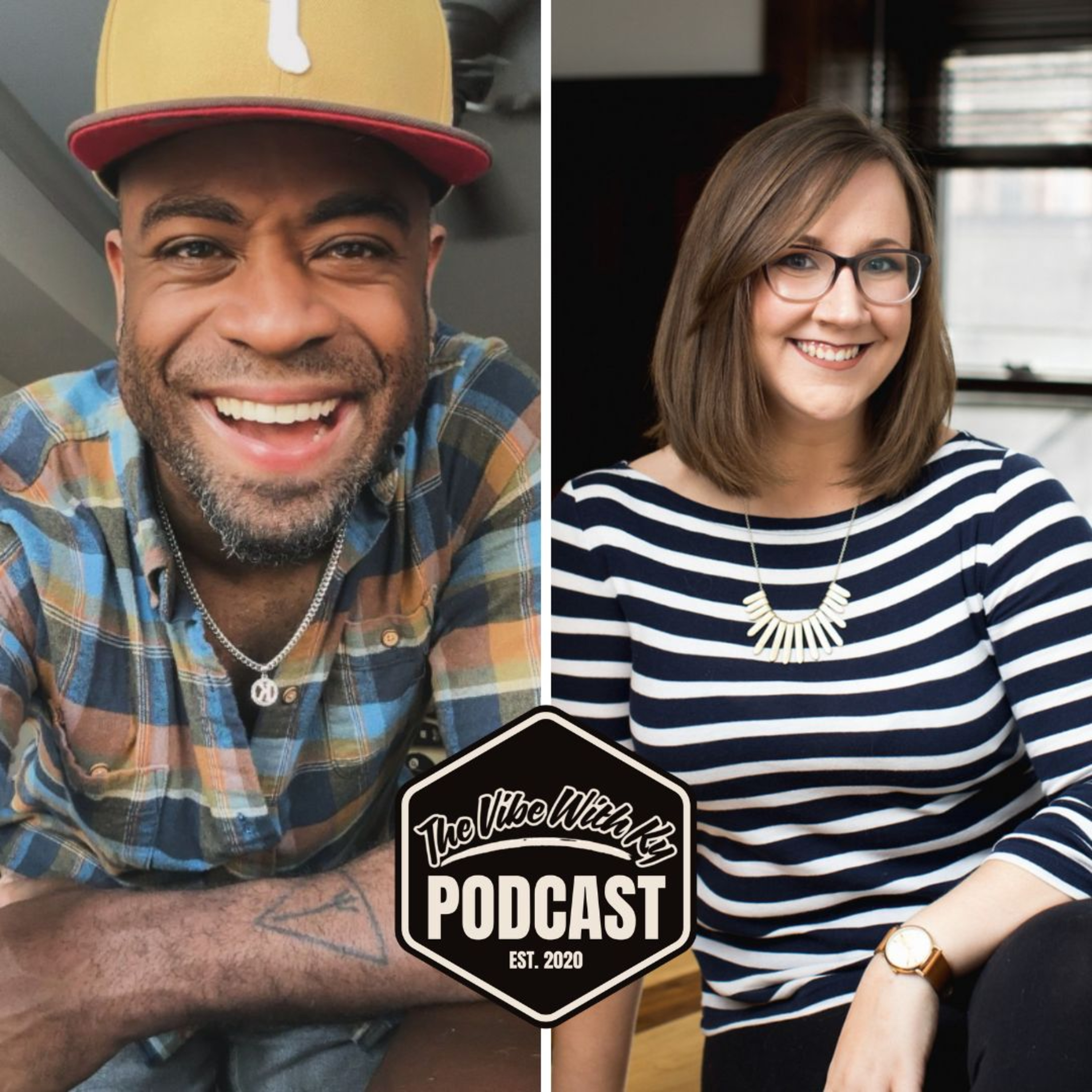
S6-E40: How to Get Stuff Done With ADHD - ft. Dani Donovan on The Vibe With Ky Podcast
from The Vibe With Ky Podcast
50m 33s
In this episode of *The Vibe With Kai* podcast, host Kai sits down with ADHD creator and author Danny Donovan to explore procrastination, executive dysfunction, and practical strategies for getting things done. Danny shares her ADHD diagnosis journey, which began in college when a nurse practitioner recognized her symptoms after years of misdiagnoses with mood disorders. She explains that her viral comics and the book *The Anti-Planner* stem from her own need to process ADHD struggles visually and humorously, creating content that helps others feel less alone. The conversation covers common ADHD experiences, like leaving half-drunk water cups around the house and the shame of feeling like a "hot mess." Danny introduces her "roadblocks and feelings" framework, which matches specific emotional states to actionable tools, rather than offering generic advice. She emphasizes that her work is self-serving first—made for her own understanding—but that this authenticity resonates widely, validating others' experiences. The episode also touches on the challenges of self-publishing and marketing as an indie creator. Ultimately, Danny and Kai swap personal stories, including Kai’s habit of keeping shoes on at home to stay in motion. The episode offers a judgment-free space for listeners to find humor, clarity, and practical help for navigating ADHD chaos.
question, what are you supposed to be doing right now? Besides watching this, of course. Be honest, because this week's episode of The Vibe With Kai podcast might be the thing that gets you going. What up, Vibeurs? It's Kai. Welcome to The Vibe With Kai podcast. Today's episode, oh my god, it's for all of the people who are in the, I'll start after I find my shoes, crowd. I sat down with the brilliant, the hilarious, the award-winning ADHD creator, Danny Donovan. You know her viral comics. You've seen her videos and her book, The Anti Planner has helped tons of us ADHD folk get stuff done when we just don't feel like it. This episode, Danny and I talk about procrastination, executive dysfunction, shame, tiny wins. And we also talk about why your house has like 12 aftrunk water cups. You know what I'm talking about? Yeah, same. In this episode, you're going to hear simple rules with zero judgment and real stories that hit home. We also swap stories in this episode, like why I like to keep my shoes on at night when I'm at home because it can keep me out of bed and keeps me in motion. It helps me. Danny breaks down her roadblocks and feelings framework so you can match what you're feeling to a tool that works right now. There's no fluff. It's just help. Before we jump into the episode, I would really like if you did these things that I'm about to tell you. Please like and subscribe so that you'll never miss an episode. Also, drop a comment, leave a review, and let everybody know whether the Vibe With Kai podcast has been helpful for you. Alright friends, let's take a deep breath, let's grab those half drunk water bottles that are all over your house and let's get on stock. Enjoy today's episode of the Vibe With Kai podcast featuring Danny Donovan. Danny has a gift for turning the chaos of ADHD into moments of clarity and humor and real connection. And today, we're going to talk about how to get stuff done when you don't feel like it. Why procrastination happens in practical ways to move forward. This episode is a therapy session for me. I'm glad that you're all listening and that you're all watching all that kind of stuff, but this is mainly for me and my therapy. I wonder if you have a copay. I'll pay it after the session. What's hilarious is everyone's like, oh my god, you made this book. It's exactly what I need it. I'm like, I made it for me. Like literally, I made it for me. All my content. I'm like, I make it for me knowing that there are so many people who are just like me. Like I really do this. I think I was like a unique little slow flame. And it's like, no, I have never had an original experience in my life. You're like, oh, you mean that? Oh, you did your, you did your, uh, uh, washed your bedding and you've been sleeping on your bare mattress for like two days. I did that last week. I literally did that last week. But like, that's, that's why I appreciate your content. Why so many people appreciate your content that you make because it is so relatable. And it's funny because the, the ADHD content created a world while vast is, is small. So like we all kind of like know each other. Yeah. Like in a way. We're all great. We're all, it means we all got to figure it out. I don't know, do, do people write you sometimes? And, uh, and as like it talks you as if you have ADHD figured out and that you're the expert and you know, everything and anything to people where I should be like, hey, uh, a lot of people like thank me for being so honest about my hot mess life because they see themselves in my mess. Like I, I have, you know, TikToks where I did like a, uh, you know, sarcastic like take on this trend back when TikTok, you know, was first, it was like, like 2020. And there was this like things in my, in my eco-friendly home that just makes sense. And it's like these super sweet girl like voices, like pointing at their stuff with this like glitter filter all over it. And I was like things in my ADHD home that just don't make sense. And it's like heart one, like abandoned beverage containers. And I like went around and it's like my dirty house with like all of this like mole. And I'm like, there's, there's containers where I'm afraid to open because there's probably moldy coffee inside, you know, and, uh, you know, like there's just can't like simply stuff on the counter, like simply put it down and like push it out of the way and come back to it later. And people really were like, I have never seen a house that looks like mine. That is on like the internet. That isn't somebody just like, I'm, I'm, I'm doing a speed clean event, you know, it's validating. It's a very validating thing. And then because I get similar messages sometimes that people will be like, Hey, I just watched your video on this and I just, it's nice to know that I'm not the only person that's a hot mess. And I'm like, I'm glad that we're acknowledging that we're all a hot mess. So I appreciate that. The key is you know, everyone's like the highlight reel. And you're like, whatever everybody else would cut, that's what that's the content because that's the real stuff. The entire internet is just people trying to sell you stuff and sell you that their life is great. And if you can come out and be like, my life isn't great, but it is great. And I am not a like ashamed to say. And I think that's really the big thing that like so many people and so many content creators, especially ADHD content creators are like, I'm going to be real with you because I am tired of pretending that I'm somebody that I'm not. And then they're taking off the mask and other people feeling empowered to do the same. Yes. Yes. I do, I do feel as though like whenever we go online, we're just always being sold something. Speaking of the anti-planters on sale. Yeah. $10. But it's different. It's different. Yeah. So it's different. We were just talking about about how, you know, I have been doing, it's been after three years. And I can't believe if we've sold 100,000, over 100,000 copies now self-published, right? I have flexed, 4.9 stars. But I literally, I got it's insane. But like, and I have been the entire marketing department on top of being the accidental CEO of an e-commerce company that I wasn't planning on making, right? It turns out that if you publish your own thing, you have to like keep doing it. Yeah. So annoying. And now I just make myself so annoying. It's like, oh no, I had a, I had a baby, and now it's going to turn into a child. Like, so I, I did this, you know, this whole thing, and I'm trying to, to now get some help with like the side of marketing now that I've, I was like, capped out my organic audience. But we were talking about how, how, you know, it's a challenging, that is, but especially for someone like me where I'm like, I hate feeling sold to. The reason why people like the anti planner is that I'm either just like giving them information about, you know, activities to try in the book, which are like essentially free tutorials. Or I'm talking about like the, the act of like self-publishing and why, why it is expensive. So people get to see the flip side of e-commerce, and how much money goes into it when you're an indie creator. Or the story of how I made it by myself, or the story of my count, you know, there's counterfeit copies out there. Like, and so like, the stories that go along with the anti planner beyond just people being like, this is really helpful for me. But people really like supporting creators. People really like supporting people that's like every dollar that goes to you isn't going to Jeff Bezos, you know, like people are, unless you get an on Amazon, in which case it is. They're not sponsoring this. They're not sponsoring this podcast. They're fine. Yeah. Okay. Okay. But that's the thing is like the, that's what's been challenging for me, like as a creator with a product is like, how do I make sure that people are seeing it and buying it so that I can pay my team while also not feeling like I'm just constantly selling. And so for the longest time, it was like, I'm going to make ADHD content. And if that content, like on Twitter takes off, then I see it taking off. And then you do the reply where I'm like, I don't have a sound cloud. But if you struggle with this, you'll probably like my book. And that was really great. That's what, that's what fueled the whole anti planner like at the beginning. And then Twitter was like, oh, you. And so like then having to figure out on the fly. What do I, what do I do? So anyway, yeah, I want to go back a little bit because I want, I want to talk about how it began for you, right? What was your own ADHD diagnosis journey? Like how did that shape what you create today? Like walk us through that. So I will give the most, the TLDR, it's a very long story. But I, I, in grade school, my mom had asked my teachers, like, do you think that Danny, like, I found out, I found out one teacher later in my found out recently two teachers. My mom has two teachers, not a doctor. Two of my teachers, if I could have ADHD. And one of them said, she can't have ADHD, she's too smart. Wow. Yeah. And one of them said, well, I mean, she's doing good in school. Like she's got good grades. She just needs to, okay. She just needs, oh, what is it? She needs to learn to not disrupt others. Because I was one of the rare, like, I'm combined type. I lean hyperactive. And there's not a lot of like hyperactive, like, you know, hyperactive leaning, like girls with ADHD are like a different chatty, cappy breed, right? And so I, but so I didn't even realize that she had thought that. And then I got diagnosed with a mood disorder, diagnosed with anxiety disorder, diagnosed with depression, diagnosed with, yeah, this tail is old. This tail is old. This time, it's like, they're going to find it everything. They're like, you're not white, little white boy. Like, you couldn't possibly have only for these people. And it's like, it's because people are looking for it. Like they're looking for it. Because that's the stereotype. And the same thing with my teachers, right? Like I feel like if I was a boy, they might have had different, you know, different answers to my mom's questions. And so, um, and again, like, and it's not to say anything about, like, I was like, little like white boys also deserve to remember ADHD. I'm saying that it's one where it's like if they don't recognize, we're not looking for it. Yeah, Danny Donovan is canceled. I'm like, I am married to an ADHD.
"I love him so much." (laughing) I just, but he got found really. Everyone, all my friends, all my guy friends, all my, I was like, all my white guy friends with ADHD, all got diagnosed young. And like, it's, anyways, that is obviously not indicative of everybody's experience, but for me, I got every pretty much like buy one, get seven free. And I found out later, right, it's all stacked on top of this untreated base. And I went in my freshman year of college because I had done really well in high school. And I'm like, you know, straight-a-student kind of person. And I got to college. And I was still doing good in school, but taking care of myself was so hard. Like, laundry and feeding myself. And all this stuff, I didn't realize I lost the structure of my parents. And like, now I have to parents myself. And that was really hard. And I was getting depressed. So I went to talk to someone about depression. And she heard how fast I was talking and how much I kept apologizing. And she goes, why are you keep apologizing? I'm like, oh, because you asked me one question. I answered five questions and it's annoying. She goes, who said it's annoying? I'm like, everyone, I swear crying. She goes, has anyone talked to you about ADHD? And I remember having this, I'm 19 years old. I remember having this feeling, my stomach, that just came up. That's like, I don't want that. Because in my head, and again, obviously, to have changed my tune, this is my entire thing now. I love everybody. But it's just, I remember thinking to myself, I don't want that. I associate that with boys in my class who didn't have any friends. I like associated that with the weird, like, quote unquote, weird kid, right? And like, I didn't want it. And she handed me like a piece of paper that had all of the symptoms on it. And I remember reading it and be like, oh, no. Yeah. This is it, right? And she goes, he goes, well, I just want to let you know, like, I recognize myself in you because like, I have ADHD. And she, my, like, Psychiage, or a nurse practitioner that I saw, and she didn't have to do that. But she literally clocked me because of my communication style. And that's the thing that I think people with ADHD are able to do. Like, my first viral comic was about ADHD storytelling and me going on to engines and taking some, like, so long to get to the point. How long has this answer been? But like, being able to get to the thing where we can recognize each other, because we're on the same frequency. We're on the same wavelength. It's like, if we can see ourselves in each other, because I don't fear that I'm annoying you, and that you're judging me. And so really, like, I think really goes to show, like, she changed my life. I could have very easily walked away from there coming and saying, I think I have depression. And somebody just hearing the things I said and go, yep, that's depression. Here's the anti-depressant. Instead of her reading between the lines and catching me. And so I got treatment in college and I had a much easier time, you know. And then what ended up happening is after college, I just, I literally thought that like meds, like all I had was meds. I was not in talk therapy. And so I was struggling with like work stuff and just like not, my quality might work. I was getting all my work done. It was the perception. It was the perception thing and they're not getting there on time. I'm like, why do I have to get here on time to sit at my desk if I get all my work done? And everybody likes my stuff. I don't, your rules are dumb. And but I started going to, you know, talk to somebody else about it and asked like, what, I'm like, do I need like workbooks? Like, what do I, what do I need to do? And I found Jessica McCabe's, how to ADHD YouTube channel. And I watched her content and I dude, I was just crying, crying, watching her talk about how, how shower, getting myself to shower is hard and laundry is hard. And like these regular, I'm having goosebumps, remember this. She's like now one of my best friends. Having all these experiences that were basic, quote unquote, basic adult responsibilities that I felt like such a failure for finding challenging. And so like, that's my whole, it's like, I almost got caught. I happened to get caught. And then the, but the last piece of accepting myself was not meds. And it wasn't even therapy. It was finding people who could speak my language because they lived through it. And we're sharing their experiences and me seeing myself in them and hating myself less. So now I'm like, I want to give this to the world, man. Thank you for coming to my talk. Now, like people are, like you get to be on the other side of it now because people are having similar journeys watching your content. And you've now built up this, this massive online community that's surrounded by honesty and humor. Did you ever, did you ever expect that your work would resonate, especially on a personal level with so many people around the world? I hoped for it. But I think crazy thing was that again, so I was a graphic designer for 15 years. And I love graphic design. Like I missed it so much. I made that first ADHD storytelling comic. And it was, I almost didn't put the word ADHD on it. And I almost didn't post it because my boss followed me on Instagram. And I hadn't told my boss I had ADHD. And my coworker, I sent it to her. She goes, oh my god, this is so you. And I'm like, yeah, I made it. And so she was like, well, you can post it on Twitter because you've only got like 600 followers. And like, who's going to see it? Like who cares? And so I posted it there. It got retweeted by Aaron Brok, who had a big ADHD audience. And it just like blew up immediately. So my first, really my first one took off. This is in 2018. And there wasn't anybody else making like ADHD comic like series. And so I saw the response. It was a funny comic. But at the end, after end of story, it says like apologize. And there were so many people who were like, I'm crying. And so I thought to myself, like this was really cathartic. And then essentially turned that project into like public art therapy. But again, I didn't plan on making a comic series. I was not like putting a bunch of content out there waiting for something to hit. I made one comic one time. And people were so starved to see themselves on the internet. And an experience that they'd had that like, it just went viral. And so after that point, finding it a cathartic medium to express myself first, not trying to make stuff that other people will like. I made stuff for myself, what was true for myself. And then if other people related great, and that really seemed to work well. So I found it not just again as like, OK, cool. This is a career. It was like, I had a really difficult time leaving my job. Because I liked my job. It was just one where I'm getting up at 5.30 in the morning, which is crazy, because I'm not a morning person to make comics and learn and listen to podcasts and net halos, like "Driving to Distraction" audio book, while I'm doing makeup and learning everything I can. And when I learned something new, I would take the thing that I learned. And then how can I turn that into like a metaphor that makes sense to me or a concept that makes sense to me and then retranslate what I was learning into the real world, that was just copying someone else's idea. How can I make it my own? And so that's how I ended up covering so many topics. Was truly come along on my learning journey while I visually and comedically process the stuff. And I realized that the thing that people really like about my stuff, I think, is that jokingly say that I'm like, I'm a bird, stuff to people. I'm like, I will chew on these really difficult things. And then give it to you, I was like predigested, so it goes down easier. Because it's a simple meme humor makes the painful insights go down. [LAUGHTER] No, but it helps. And that's the reason why-- like you make it simpler to have these types of conversations, because these conversations are not easy to have sometimes, or even processing it internally. It's not easy. And so flash forward now, you've written the anti-planar. And you've said it's organized by-- and I quote-- executive dysfunction roadblocks. Can you walk us through what that means and why it's so helpful? Yeah. So the thing that happened with the anti-planar was it started out. I genuinely was going to just kind of make a planner that worked for me, that had like funny lettering, which is what people expect when they get it, or like some people expect it to just be like a funny take on a planner. And I'm like, to be fair, that is what it started as, the idea that it started as. And then I started realizing that like, OK, well, I've got these coping mechanisms. I've gotten this little notebook that I've been using to trick myself into working on this other project. And like, maybe this is actually what I need, because this is what I'm using. I'm not using the layouts for this thing. I'm using this other stuff I'm making. And so I wrote down on a bunch of note cards, just ideas for what I have already done, what might be fun, came up with a bunch of activities, bunch of games, bunch of strategies for how to potentially get stuff done. And I looked at all of them and I was like, dude, if I put this in a book, I would not, I would get so overwhelmed. I would not know where to start. If you said here's 165 different ways to get stuff done, I'd like open it. And I would get frozen and I go, all right, well, user experience wise, that is not that's the opposite of what I want is people to spend money on something they don't use, because God knows I do that constantly. And I don't want to do that to my people. And so I thought like, how do I make this the most useful, right? And so thinking it through and realizing, right, like a planner, I always say like a planner is a hammer. And like, you can get a screw into the wall with a hammer. It's not easy, because it's not built for that. And you can try and it's painful. And you might think that like, oh, I'm weak. Like, why is it so much easier for other people? It's like, well, you've got a different resistance, right? And so like, even with this, even if it's a screw, there are different kinds of screw drivers. Like there are.
different types of resistances in your mind that make it challenging to get, you know, get stuff done. And in order to do that, you need the correct tool. And you need to know what tool goes with what resistance, right, in order to like get past it. And so for me, what I started to do was to brainstorm on other no cards. I'm a big note card, girlie. And brainstorm, what are all the reasons I don't want to do stuff? Right? And I wrote down, I'm like, oh, I'm like anxious, or I feel aimless, or I don't have information, or I feel distracted. Or I'm, and I just started, like, brain dumping. And then I took those cards and sort of was like, okay, which of these sort of mean the same thing enough that they could be the same section. And then realize, all right, here are the, I've had 16 different kind of like main sub-emotions that I found were what got in the way for me most often. And then I took those sub-emotions and was like, all right, 16 is still too many things to look through. That's still too much stuff. Do any of these fit under like an umbrella? And so I did the same way with like a feelings wheel, you know, it's like happy, sad, angry, but it's like there's different types of sad. There's like grieving and disappointed and stuff. It's like there's things inside of this main thing. And so I wanted to do that with these emotions. I'm like, can these be grouped? And I found, right, like that overwhelm. There's like overwhelm being that you've got, you know, high demand and low capacity, but you could be intimidated. You could be over committed. You could be panicked. You could be burnt out. Like there are different reasons why you might not have capacity or there might be certain reasons why you think there's too much demand. And so being able to have the book broken into five sections means when I say, all right, I want to file my taxes and I can't get myself to. And it's like, now I just have to look through these five emotions and be like, all right, which of these, which of these five can I pick one of these five? And I'm like, overwhelm. A lot of them often like, okay, two of these might match, but it's like overwhelmed. So I flip the tab over and it has says, how are you feeling? And I've got the four different like overwhelm emotions in there. And each one has different like eye statements. So you can read it and be like, I'm going to do just one really fast. So you can see. So it's like, yeah, how are you feeling? Intimidated. So it's like, I have so much to do. It's going to take forever. There are too many steps involved. I'm afraid to even start. And I read that. And I might immediately go, yep, that, you know, and it's got like, and I've got illustrations. I've got illustrations with it to like vision. Sometimes people just visually need to be like, that one, that one's me. Or, you know, maybe it's burnt out where it's like, I'm putting others needs before my own. I struggle with self-care. I'm all out of energy. I just can't anymore. And so people who struggle to identify their emotions are still able to do it because they don't have to look at just the word and be like, is that me? They can read the sentence or four sentences and go, oh, that's how I feel. So it's again, giving them the pre-digested. Like, here is exactly if you relate, if you relate to this, this is the section for you. And then they flip to that section. And here are the specific tools. Here are the different strategies and activities and games that will help you with that roadblock. So you don't have to navigate 165 activities. You don't have to navigate 16 tabs. You know, it's like, how, so that's what I accidentally invented like my own framework in order to try to like make these activities easier to navigate. And then zooming out people are like, you know, that framework doesn't exist anywhere, right? Like, you invented a thing. And I'm like, oh, I guess so. I just didn't want it to be hard for people to read. But like, here's the thing. Like, you, you have this talent of helping people visualize things. But like, it's like, it's like a skill because even listening to you speak, like I could picture it in my head, like everything that you're describing. And like, it takes skill to be able to not only help people picture that in their brain, but like, you can also physically, you know, help people picture as well. And I think that's rare. And I think that's also why so many people connect with what you do and why like whenever you're any of your stuff comes up in my feed, I'm like, hell yeah. You know, I remember it was, we were in a meeting because we're doing the, by the time this airs, it'll be in the past, but we're doing the shimmer ADHD summit the next week, which is super exciting. And at one point during the happy hour that we did with all the speakers, they put all of the content creators into one room, to like talk and stuff like that. And I thought that was so cool because I'm like looking around the screen. I'm like, I love every single one of these people because they all have this amazing. Yes, yeah. And like, it was just, it was just so cool because like, I'm like, I've been following these people for the longest time. And I, I, I legitimately get inspired by the work that you do. Because like people like will send me your, like my audience will send me your stuff and be like, Hey, have you seen this? I'm like, yeah, I saw it already. Okay. I saw it already. But like, again, I think that's why so many people can resonate with what, with what you do every single day. Yeah. Oh, you did the hand thing, like the hand thing means I got. I do, I do this thing with people normally. I like cross my fingers, like with my therapist, my family, my friends, my coworkers, everybody knows, like, Hey, finish. I don't want to cut you off because I want to fit it here. What you have to say, but just so you know, when you're done, I have a thing to say. It's like a great visual signal. But I started to do it and then realized that you wouldn't know what that meant. So then I went like this. But I, I wanted to mention that like the thing that I love is that like right now, right, there are creators whose work I am not familiar with because I am spending all of my time trying to figure out how to set up health health insurance for my employees, you know, and stuff that I'm trying to figure out how to outsource how to do health insurance for my employees. And I don't have the same amount of time to be just like engaging with social media in the way that I used to. And I don't have the time to be making content, especially content that's that's, you know, directly able to generate sales like I used to. And I used to feel really guilty about that because I loved, I loved making that stuff. And I miss making that stuff. And I just, I don't have, again, I don't have the capacity, but there are other creators who are like, like, there's way, there's a generation of different, like, you know, the, the, the, the people who made content before me and the kind of like graduating class that like I'm on. And there's like these next kind of like waves of, of different people who are inspired by different creators. And they take up the mantle. They're like, I will continue to make content because I too want to learn about myself and I too want to listen to other people. And I too, like, that, you know, exactly what you're doing. Like, I want to share my voice. And that means that that people like me who are able to then go, okay, I am not responsible for educating the entire internet. You know, like, I am not, I am not. And I don't want to be like, there's so many different people like diverse voices and just being able to know that like it is not on any, any one person's shoulders to be connecting with others. And so like, I'm just really, really grateful to even be here. And like you said, on that call with 20 other people. And I knew some of them, so many people, I'm like, look how many people there are, who stuff I haven't heard about yet. And I'm really excited to go check it out. No, it's, it's great. And, and again, like, this is a so air before or after the summit. But I can talk, I'm going to talk about the summit as if it, as it had already happened. How much fun did you have at the ADHD summit with Shimmer? It was great. It was so much fun. It was awesome. I really love that the, I love giving talks, but I do also just love Q and A. So being able to really, some great questions, like the questions were fantastic. Yeah. I just, I'm, I'm really excited. I hope they do something like this again, because I'd love to be involved again. Yes. I want to talk procrastination because I know that this is something that, that a lot of, I know people write me about all the time. And I feel as no procrastination often gets labeled as laziness, right? Which is a, a giant misconception. Are there any other misconceptions that you about ADHD specifically or procrastination that you wish people understood about why we actually procrastinate? I personally don't even, I don't, you even use the word procrastinate often, you know, with, with some of the things that I struggle with, but, but it's not laziness. It's definitely not lazy. I, I have literally stopped pretty much, pretty much almost exclusively stopped using the word lazy to describe myself, uh, ever because I, I'm like, laziness, I think at the beginning of the end of my, like, laziness is a capitalist construct. But don't let me near that sub-buck. Because it's used to shame people. It's used to shame people. Yes. As like productive as, as people think you're supposed to be and you're not, it's literally a label of you are not living up to expectations. That is what that label means. And it is so harmful and so, you know, we internalize it and we think, I have a moral failing. I have a character flaw. Something is wrong with me. Because other people aren't like this. It's just a me problem. And the thing is, is like, with procrastination with quote, unquote, lazyness, with a lot of like ADHD struggles, it's like, you're set up to fail because you're operating in a system that was not designed with you in mind. It is not optimized for you. Everybody's expecting you to keep up with them. Everyone is expected. They're like, we have to run the same race. I don't care if you don't have shoes. Right. Right. And it's like, it's so much more painful. Like,
I can, I can run, I can't keep up with you. Got more twice as hard. Yeah. I got to work twice as hard. And also I had a lot of five K to even get to this starting line. And yes. Just one more like and it doesn't and and and just because and then it's like, okay, well, sometimes you take meds, right? And it's like and sometimes it's like it's the it's cheap. It's it's flip flops. And I'm like flip flops are better than nothing. And some days I lost where my flip flops is now. So why are my flip flops working anymore? But like it makes it easier, but I'm still not kind of catch up. And and it's not my fault. And so really like and that's not to say that like ADHD is a is a catch all like excuse for everything in your life. It is one where like, ADHD is a reason. And like I have Jessica has a really great explanation for this as far as like if you tell me to get something off the top, you know, at the top shelf and I'm really short. And I can't I'm too short versus like if you want me to do that, I'm going to need a letter or to realize, and that's the thing that's really hard. But I think that that's what makes people with ADHD so resourceful. Like I joke that all of us are just like little MacGyvers that's like I will the lengths that will go to do not have to look for scissors, right? Like the things that can suddenly become scissors. But like we solve our we are national problem solvers because we have to be we are national problem solvers. And I think that that's one of the things that people get the anti-planer and they're like, wow, I thought that like I didn't know what I was doing. And like tons of these things are new. But I have been using a lot of these strategies and I didn't even realize they were coping strategies. I have learned over my lifetime ways to cope that I did not realize I was even doing. I was just doing them. Yeah. Which is validating for them because then they're like, wow, maybe I have been trying, you know, this whole time I felt like I wasn't and I'm like, why do I have to have my friend over in order to fold laundry? And you're like, is this body doubling? Yes. Absolutely. And that's why like us having this type of conversation is so important because I know that there's going to be somebody that's listening right now that's going to be like, oh my, wait, yes, me. I get, yeah. And that kind of epiphany is I think why we do what we do. I'm a late bloomer to the ADHD world. I wasn't like I'm 38 now. I wasn't diagnosed until I was 35. So like this is all new to me. And like you, like when I, I was first diagnosed with my fun depression and generalizing anxiety disorder, right? I started out there. And it was exactly right. And so like it was having these, I'm continuing to have these conversations. And I'm still struggling with some things. And that's when my doctor, you know, talk started talking to me about ADHD. But mental health in general for me, I like, I didn't think about mental health at all in my life. Whenever I thought about mental health, and this is no lie, the first thing that popped into my head was straight jackets. Like legit, like when you think of mental health, if somebody has a mental health problem, somebody that's in a, you know, a psych ward with a straight jacket. Like that, that was my, my brain. So like it was hard for me to, yes, no, like legit. And like, and I, it took me a while to fully understand what was happening. And then ADHD comes along. And then it's like putting on glasses for the first time. And you end up seeing these things in such a unique way that everything just starts to make sense. Right. And so I try to go through my, like whenever I'm making any piece of content, or filming an episode, or running a blog, or whatever it may be, I always try to keep like that one person in mind that is discovering this for the first time, no matter what age they are. You know, whether there were 35 like me or like we're finding more and more especially women, 40s, 50s, 60s, that were either misdiagnosed or not even diagnosed in the first place, discovering these things. Right. And I find it amazing. I've gotten emails from, from women who are like, I'm 78. And I am just learning about this. And it explains my entire life and why I felt so different. And it makes me so sad, but it makes me so, I'm gonna cry. It makes me so happy to know that people like you are out here so that little girls who felt like I did don't have to live 50 more, you know, 50, 70 more years and think that they are broken and something's wrong with them. And so being able to, you know, and it's sad. I don't know if you're the same way where like you hear people and they're like, it's too, pretty much like it's too late for me. Like they think that like, oh, I've made it this long. And and I've, I've, I've just like white knuckled it through life up to this point. So like, what's the point? Like I'm in my, or they're like, I'm in my late 50s. Like what, what, what, what, what, good would it do me besides the fact that like, I don't know for a lot of us, we just need the validation that like, oh, I needed glasses this whole time. And I've been walking around through life, bumping into stuff and people have been calling me. It's just like, man, you know, it's not my fault. And I think that there were people, I don't know if you've talked to, have you talked to people who are like afraid to go and like even seek a diagnosis because they're seeking a grade that they maybe don't have ADHD. And it's like anyone you're talking who's like, well, I'm afraid to go get either I have been, I've been meaning to get tested, but I keep putting it off. I'm like, that should be a diagnosis, not to criteria. As well as, um, I'm afraid that I don't have it. And they're just going to tell me I'm lazy. And I'm like, that is also indicative. Yes. Absolutely. I always tell people advocate for yourself. Like, you know your body and you know your brain more than anything. And it's never just one answer. You know, and even if it's not ADHD, it might be something else, but it's important to have these conversations because you may discover that it is, that it is something else and that you need to be, you know, treated or you need to help learn how to manage that thing. So it's important to go into these conversations, not necessarily with an expectation of being diagnosed with ADHD, but just an expectation of having a conversation where you're going to learn more about yourself. And I promise you when you do get that diagnosis or any diagnosis, when you start to understand why you are the way you are, it's like this incredible weight that's lifted off of your shoulders. It's such a beautiful feeling. And I know, I know a lot of people that are older that get to experience that. It's like you get the operative you would have been going through life working in a system where like everybody assumes that you're on a Windows computer or a Mac computer and you're not. And it's like, oh, it turns out that you're a Linux and nobody knows how to use Linux and you have never humbled the Linux operating manual in your life. This show wasn't sponsored by Amazon. This show was sponsored by Linux. So now like, what the heck? Oh my god. But like, so that's actually one of the important things I think I wanted to mention about the the anti planer is not to bring it back, but one of the I get asked a lot. It doesn't say anything about ADHD on the cover. Like I mentioned ADHD and a couple of my comics. Like I have like my ADHD paralysis. Like how it feels versus how it looks comic and it did not take the, you know, the title off of it, even though the book's not about having ADHD. And I, you know, I point to people in the back where I'm like, yeah, wait, do I have ADHD? You know, and like why I've got a whole thing about ADHD in it, but the book is not the anti planer and ADHD friendly guide to blah, blah, blah, because and like we talked about the roadblocks are not just ADHD roadblocks. They're executive dysfunction roadblocks because you can have executive dysfunction with autism. You can have executive dysfunction because you've got because you've got CPTSD. You can have executive dysfunction because you've got I get I get hit up from multiple veterans associations who are like these books are incredible for our patients who have traumatic brain injuries. Who had, can you imagine if you used to have executive functioning skills and then you just cost them, right? Like it's in and it feels like I'm here, you know, it's burnt out parents. It's overwhelmed college students. It's not just people with ADHD. It's it's people out here who are just like struggling to stay afloat. And I think that that us all kind of collectively finding each other and them not seeing the word ADHD on a cover and being like, oh, this isn't for me. I'm not going to look at it or I'm not going to give this to my friend because I don't want them to think I think they have ADHD. You know, like it's a coping toolbox that helps everybody and I really love being able to obviously I made it with me and my commute, you know, with the ADHD community in mind, but I never thought that I would be hearing from a lot of the different types of groups that I hear from. Right. If somebody is listening right now and they are just beginning their ADHD journey, what would you say to them? Welcome, welcome, welcome. So the coolest community on the internet. Literally, if you are here and you are listening to this, you are on your way. Like you are literally, you are on your way. If you just got diagnosed and you are already listening to stuff like this, you are about to have this brand new wave of information. Welcome to your new hyperfocus of figuring yourself out as a hobby because there's nothing better than unraveling the mystery of yourself because we confuse ourselves. It's like, why am I, I don't want to do this and I keep doing it or I do want to do this and I keep not doing it. Like my mind isn't an egg, but what is going on and when you can zoom out and like intellectually understand it, you can stop judging it so hard because you know why it's happening.
happening. Right, right. Amen to that. Look at you, preaching today, Danny. Look at you, preaching. As my second podcast in the day, I was already facing with you, we're already warmed up. Yes. We're not. You were. It's because we were talking, we were talking before, before recording. We were talking before. And like, so you, you recorded a podcast before this one with somebody else, I recorded a podcast episode with somebody before this. And so like, and we're both, I mean, I'm a night. Are you a night owl? Because I'm a night owl. And I'm not. I'm not a morning person. Yeah. So like, I'm very much. Oh, yeah. Oh, yeah. Oh, yeah. I like, I'm more creative at night. So like technically, like, it's, we're recording this right now. For me, it's 920. What time is it? Are you on the East Coast? It's nine. I'm in Atlanta. Okay. Oh, yeah. That's right. Yeah. Yeah. Yeah. So, so like, it's 920, but like, honestly, in my night is just just getting started. Right? Because and I discovered this about my ADHD and just ADHD in general is that a lot of times I'm more creative and I'm more productive at night because my brain is quieter. It feels like because I just, I don't have as many, you know, distractions. There's not like people or messaging me or, yeah, it's just me and my cats. So like, it's, it's quiet. And I, and on top of that, I don't have to mask because like a lot of us, 80s, years, we mask our symptoms a lot because like you were talking about how this world really wasn't built for us. And so like, we have to sometimes mask our symptoms in order to keep up with everybody else. And that's exhausting. It's just me is exhausting. And so now when I'm home at night by myself, I can, I'm more productive because I'm not masking. It's just me and my cats. That's it. And I love it. I, I love working. I was a, I struggle. I can't start at night. I love, I will, I will work until four in the morning. As long as I have gotten on a roll by 4 p.m. If I have not, not on a roll before dinner, it is done. I am rewatching the blood that time or whatever it is. Right. Like I am, I am, I am in, I am in not work mode, unless there's like an emergency because my brain's like, okay, well, today's just a wash. But, you know, rely as I don't know, if you're the same way where it's like you get on a hyper focused streak. And it's like, now I can go, go, go. And then my brain goes, Oh, well, I know I'm capable of that. I should be able to do that every day, right? And it's like, no. And I think that's the other thing with us is like, you have to embrace the inconsistency. There's no way that you can go at 150 percent all of the time. And I'm like, I'm going to go at 150 percent. And then I'm going to be like the next day. I'm like, I can't even answer an email. Uh-huh. Oh, absolutely. Like I'm, I'm in the phase right now. I'm at that point in the week where like, I am like, go, go, go. Like I had, like I had a good day today. And I'm like, go, go, go. And I'm like, taking advantage of it. But Lord knows probably at either tomorrow or Friday, especially if I don't have any deadlines for anything because it all, but a lot of it got done. Like it's just, it's not going to, I'm going to crash. Yeah. I'm going to crash. And I learned to accept that. Yeah. You got to expect it. And that's one of the things that he's bringing right back. But I can't. But like with the, with the anti-planar where it's like, yeah, my eight inch, she told us he should borrow. She told me she goes, what if your system is, and this is before I finished the book. She was like, what if your system is that you have a hundred systems and that the plan is to not be consistent, right? And so that's really when you start, I, say, I made this book for the consistently inconsistent because instead of me thinking, I picked this one system. I'm going to use combine boards for the rest of my life. It's like, I'm going to use combine boards for this one project. And then I'm going to drop it and do something else. And then the next time I have a really big project, I might, I might bust out of combine board or I might try something else. But like it keeps that novelty alive. And it reduces that shame of feeling like I quit something. So like if you can go into anything like an experiment that you can't fail, you only learn. And if you want to come back and try that experiment again and remix something else in like in the book, there's a few different things that's like try pairing this with this and mixing and matching strategies. Like you can, you can really cook up anything. And if you learn, there's also a thing on like how to DIY your own productivity strategies based on your own interests and what works on you and how to take the things that you love. And then you can trick your own brain by, you know, like I love magic, the gathering. And so it's like when I was working on the book, I had post notes that I would write on the post note, what I needed to get done. And I put that on top of a magic booster pack. And I had a little, a little box of booster packs. And when I hit that milestone, I got to open up that magic pack. And I'm like, yes, I did bribe myself like a little eight-year-old with little shiny, but I'm not back in front of my face. But it totally worked. And like, that's the thing is you got to be able to feel playful, like not judging of yourself. Like you got to do what you got to do, man. That's all we could do. I always say, you know, what you got. I was going to say, what's the, what's, what is, is there like a silly or weird way that like you get stuff done? Like what is it that works for you that you would say isn't maybe like a standard is maybe some other people? Is there anything? I don't know if this is okay. That's a loaded question. No, no, no. What's your view on AI? I don't think this is weird, but it's something that I'll do that helps me stay active. Like if I want to be productive is I keep my shoes on. It sounds so odd, but if I take my shoes off, yes. Like it like it, I, if I take my shoes off, it's done. That's it. Right. And so I will purposefully keep my shoes on throughout the night. And when I do that, I'm more likely to continue working than if I have my shoes off. Is that weird? That's such, that is so, no, it's not. I was like, the reason I was smiling so hard. I'm like, this is well documented on the internet for us with ADHD. I do the same thing. And it's like, because I, my brain is like, okay, I don't just sit on the couch with my shoes on and watch TV. You know, like I don't just get in bed and scroll on my phone with my shoes on. And so it like you see in this mode, you know, the same way with like you're like, I'm trying to clean or I'm trying to do anything like it is just a cue to your brain. In the same way that like I will sometimes put on like, I'm not, I work for myself. I work from home. I don't have to dress up for anybody. And there are times where I have a lot of stuff to do. And I'm going to paint my nails red. And I'm going to put on a blazer. And I'm going to put on high heels to sit at my stupid desk because I need to feel like a path pitch today. And I won't be able to do it if I'm sitting here in my pajamas. And so like, you can really find different ways to like, to give your brain the cues that it needs to know like we are in, we are in go time. Also, I didn't ask about the cussing. So if you need to believe me, please. Oh, no, no, you're, you're fine. You're fine. Okay. I don't know. Just so you know, tomorrow I will be putting on my blazer and my heels. And I will be a productive bitch. That's good. Okay. Oh, my God. I appreciate you, honestly. And I, I thank you for like taking time out of your, your evening to come hyper focus with me over here. And, and, and all of that. And I, again, I appreciate the work that you do because it is affecting so many people in a positive way. And it's validating so many people's journeys. And most of the time, like you won't even hear from some of these people. But like, you're still affecting them. And I, I think that's something I know you're proud, but like legit, you should be super proud about the work that you have done and that you continue to do because you're still growing. And, and like, I'm, I'm happy that I get to call you my friend now. It's official. Are we friends? I am too. This was amazing. I'm, I'm so glad. Thank you for, yeah, thank you for having me. And thank you for making so like, honestly, cool, easy. I will, you know, we hopped on that call, the shimmer, that shimmer call early on. And like, really me talking about what it is that I love talking about. And you may like hear literally hears my like, like we should, we should, we should talk. And like, I am, everybody isn't like that. So thank you so much for, you know, having this job. This has been great. Yeah. And, and for the record for anybody listening, they did put like five ADHD content creators in one room and they gave us a job to do, which was like, answer five questions. Here's the question. Did we answer those five questions? You have 14 minutes answer five questions. And like eight hours later. You can't put like, hella, ADHDers in one room, especially if we're all funny and we're all like fun. Like, it's not gonna, it's not gonna work out in your favor, but that was fun. And that is a wrap. Vibers, did you like that episode? Thank you so much for hanging out with me today and checking out this episode. I truly had a blast. Big thanks to the amazing Danny Donovan for sharing her time, her honesty, and her super practical pull. If you want even more about Danny, if you want to learn more, if you want to get her anti-planar book, anything like that, you can check the link in the description of this podcast. You'll get a link to her anti-planar, her comics, her videos, her social media platforms, her resources, all of that is in the show notes. If you enjoyed this episode, if you had as much fun, [BLANK_AUDIO]
as I did during this episode. I would love if you liked and subscribed and drop a comment or review for the Vibe with Kai Podcast that way other people like us can find this type of show because it's really important that they find it 'cause we do some cool stuff over here, right? Vibers, thank you again. Thank you so much for hanging out with me today. Your support means more than you'll ever know. Thank you for watching and for listening to the Vibe with Kai Podcast. As always, my friends, much love. Good vibes. I'll talk to you later. Bye. [BLANK_AUDIO]
Podcast Summary
Key Points:
The podcast episode features Kai and ADHD creator Danny Donovan, discussing procrastination, executive dysfunction, and shame.
Danny’s ADHD diagnosis journey began in college, after being misdiagnosed with mood disorders; a nurse practitioner recognized her symptoms.
Her content, including viral comics and the book "The Anti-Planner," focuses on relatable ADHD struggles like abandoned water cups and messy homes.
"The Anti-Planner" is organized by executive dysfunction roadblocks, offering games and strategies tailored to specific feelings, not generic planning.
Danny emphasizes creating content for herself first, which resonates with others who feel seen and validated in their "hot mess" experiences.
The episode highlights the importance of peer connection and humor in reducing shame and building practical coping tools.
Summary:
In this episode of *The Vibe With Kai* podcast, host Kai sits down with ADHD creator and author Danny Donovan to explore procrastination, executive dysfunction, and practical strategies for getting things done. Danny shares her ADHD diagnosis journey, which began in college when a nurse practitioner recognized her symptoms after years of misdiagnoses with mood disorders. She explains that her viral comics and the book *The Anti-Planner* stem from her own need to process ADHD struggles visually and humorously, creating content that helps others feel less alone.
" Danny introduces her "roadblocks and feelings" framework, which matches specific emotional states to actionable tools, rather than offering generic advice. She emphasizes that her work is self-serving first—made for her own understanding—but that this authenticity resonates widely, validating others' experiences. The episode also touches on the challenges of self-publishing and marketing as an indie creator.
Ultimately, Danny and Kai swap personal stories, including Kai’s habit of keeping shoes on at home to stay in motion. The episode offers a judgment-free space for listeners to find humor, clarity, and practical help for navigating ADHD chaos.
FAQs
The episode focuses on ADHD, procrastination, executive dysfunction, shame, tiny wins, and practical strategies to get things done, featuring ADHD creator Danny Donovan.
Danny Donovan is an award-winning ADHD creator known for viral comics, videos, and her self-published book, 'The Anti-Planner', which has sold over 100,000 copies.
She was diagnosed in college after a nurse practitioner recognized her rapid speech and apologizing as ADHD symptoms, despite previous misdiagnoses of mood, anxiety, and depression disorders.
It is a framework by Danny Donovan that helps match what you're feeling to a tool that works right now, breaking down executive dysfunction roadblocks to get stuff done.
Kai keeps his shoes on at home to stay out of bed and keep in motion, which helps him manage ADHD-related procrastination.
The 'Anti-Planner' is a book organized by executive dysfunction roadblocks, offering activities, games, and strategies to help people with ADHD get things done without judgment.
Chat with AI
Loading...
Pro features
Go deeper with this episode
Unlock creator-grade tools that turn any transcript into show notes and subtitle files.
 PodcastTranscript AI