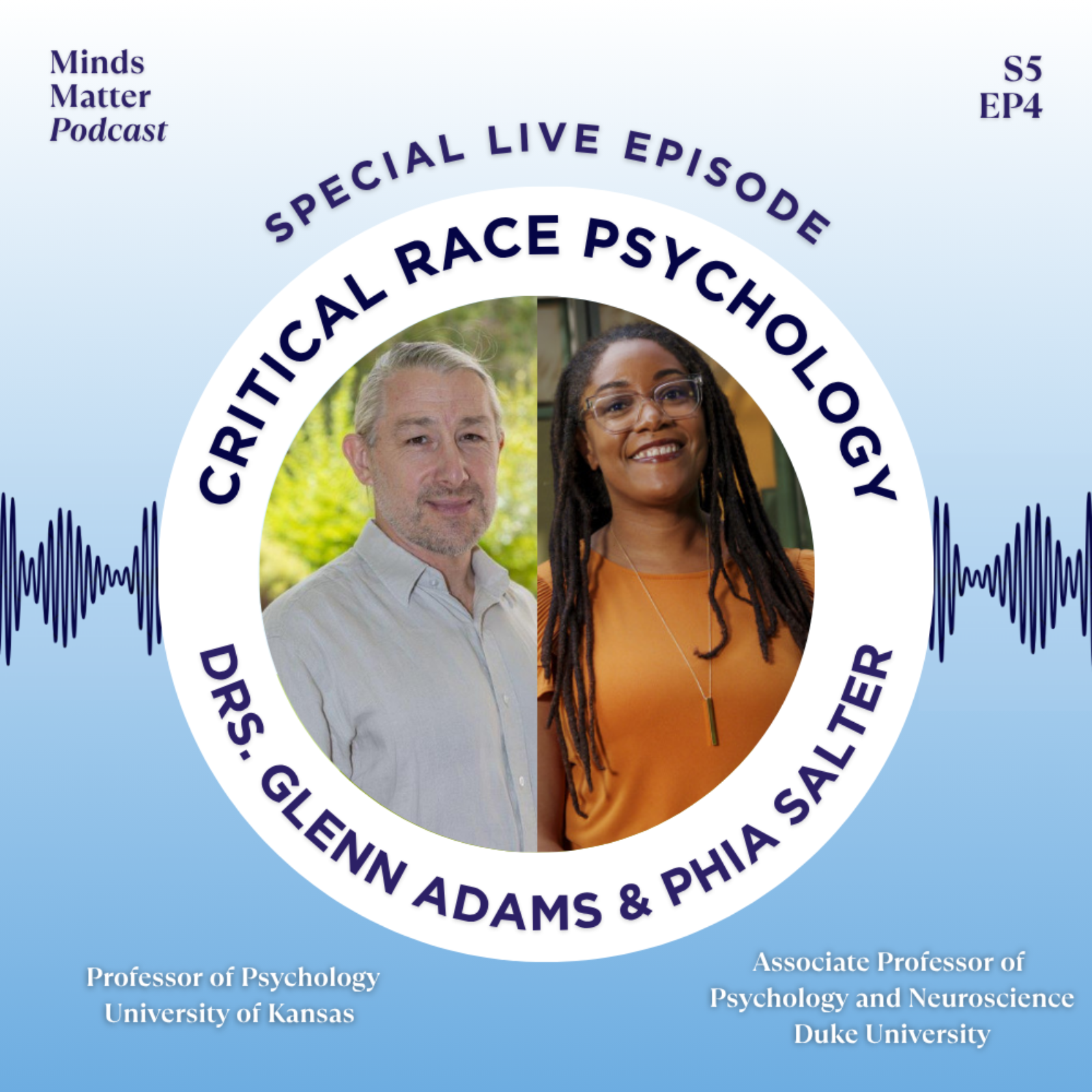
Critical race psychology, as developed by Dr. Fiya Salter and Dr. Glenn Adams, transforms traditional psychological research by centering systemic racism, colonial legacies, and the role of history in shaping present-day perceptions. Rooted in critical race theory, this approach challenges the idea of psychological science as neutral, revealing how institutions, methods, and knowledge systems are shaped by colonial and racial power. A key insight is the Marley hypothesis, which posits that knowledge of historical oppression enables individuals to perceive current inequalities more accurately. This is contrasted with celebratory history, which celebrates individual achievements without context, often obscuring systemic barriers. The researchers emphasize that psychological phenomena—like belief systems, identity, and memory—are not neutral but products of cultural and colonial structures. They advocate for intersectional analysis, community-based research, and policy applications, such as supporting critical history in education, to counteract erasure and promote equity. Despite early resistance and political backlash—particularly from efforts to remove critical content in schools—the field has gained traction, with increasing academic and grassroots engagement. Both scholars express optimism about a future where psychology more deeply interrogates its own foundations, moves beyond inclusion as a surface-level goal, and actively reimagines knowledge systems to reflect diverse, historically grounded realities. Their work underscores that psychological science must confront its roots in colonial modernity and recognize the ways power, memory, and ideology shape both research and lived experience.
Welcome to this very special episode of our podcast Minds Matter, which is a psychology
and neuroscience podcast that impacts the latest research in our field with expert special
guest. And this is our very first live episode. Actually, we're here at SPSP at the critical
perspectives and psychology pre-conference. I'm very glad to get to chat today with our
two guests, Dr. Fiya Salter and Dr. Glenn Adams. Glenn Adams is a professor at the University
of Kansas, whose work spans cultural psychology, decolonial theory, and the psychology
of oppression. And Dr. Fiya Salter, who is a professor at Duke University, was research
also examines oppression, racism, and collective memory. And today, we'll be talking about critical
histories as well, including this really interesting Marley hypothesis that some of you may
have heard of, this idea that not knowing history is linked to denying the consequences
of that history today. Together, they've been central figures in building critical race
psychology, which is an approach that will be discussing in detail today, but really
takes psychological science and its tools seriously, but also questions the idea of kind
of being a neutral observer as a scientist that were often taught as students. And it really
examines how our field, including its questions, its methods, and also where we maybe have
not been looking, is really shaped by the world that produces our science and our scientists.
So we're digging into all of this today, and just to get us started, a big part of this
work as I mentioned argues that there's kind of no need from nowhere. So I'd like to start
by asking how you both got into this field. Yes, thank you for that question. I think
like many of us in this room research is personally relevant. You know, there's that same research
as me search. And so just as a black woman navigating different spaces, including those
that were predominantly white, predominantly black, being black, and a predominantly black
country at a time, all of those things have influenced how I see identity in myself and
others influenced by different contexts. And so that's a main kind of component of how
I came to this work. Yeah, thank you. Thank you for the opportunity. It's great to be here
in conversation with Dr. Fia Salter. There are many things that can have contributed in
that shape us and inform our interests, but I suppose one of the biggest ones for me is
the experience of being a Peace Corps volunteer in Sierra Leone, West Africa, between the time
that I was an undergrad and before I had any consideration of going to grad school really.
So it was that experience that shaped not only my intention to go to grad school, but also
to study what I study. And there may have been two manifestations of that experience that
I'll mention. One, for me, white cake growing up in rural Pennsylvania, who had never been
outside the country until I stepped off the plane in free town. A very important aspect
of that experience was to not just to sort of understanding of things going on in an
African context, but more importantly, I think, to do what we refer to often as turn the
analytic lens and look back on the US and fields of academic study in the US and kind
of denaturalized the whiteness that constitutes those fields. So that was one very important
thing. And the other important thing, I think, is just also to illuminate for me the interesting
and importance of psychology, because a big manifestation of what I thought I saw in
that context was what you might call a colonization of the imagination. And I thought that a psychological
analysis was relevant to address that kind of colonization of the imagination by which
I mean, you know, not only which I'm sure we'll discuss more, but a kind of colonization
of our understanding of the past and how that informs the present, but also a sort of
colonization of the future, because the future is this imagined space. So a very pressing
matter, which pushed me into a psychology and a kind of collective, well, you oriented
psychology with those social psychology generally failed me in that respect. But we can talk
about that.
Okay, let's talk about it. Let's talk about critical race psychology. Can you tell us kind
of an overview of this and what the tenants are and how it perhaps from our traditional
ways of being trained in psychology?
I think about critical race psychology really just being inspired by and being an extension
of critical race theory just sort of applied within the psychological context. And we know
that critical race theory really started as a race conscious intervention in the law.
How race and racism were shaping outcomes and processes and just the whole system of
law and so for psychology also thinking about how race and racism also shape not just our
field, which is an important piece, but also our beliefs, our attitudes, our structures
that are, you know, apparent in our field and how we might approach answering and asking
the questions that we do. And so critical race theory and critical race psychology is not
exactly static. And so you'll see people really range in how many ideas or tenants are associated
with the field. For myself, there are six main ones that I think about. The first and
probably for many critical race theories is the systemic nature of racism and thinking
about how racism manifests not just in our heads, but in the world around us in institutions
and the structures that we encounter every day. And in addition to that, a second tenant
is about how people of color in particular, their experiences with these histories and
systems gives them a unique, if not elevated view of how those structures and how racism
work in our society. And kind of building from that, people of color, people who have experienced
marginalization and oppression have always used stories to sort of convey their experiences.
And so counter story telling is another key component that really emphasizes how to address
and challenge some of those narratives that might paint people of color just as deficient
or as in need of help in really minimizing their virtues and other pieces of their humanity.
And then on the other side, there are also components that also address whiteness. And
so thinking about why identity, not just as a natural thing that just is, but also as
a psychological tool and resource that brings benefits and that people invest in and that
people create and shape and use. Sometimes critical restures will also just talk about that
as white privilege. And it's manifestations in the law and in other fields and in other
areas. I think that was four. Fifth one, I would say, is thinking about related to whiteness
is also the ideologies that might stem from that identity, particularly colorblindness,
ideologies of meritocracy, other neoliberal, abstract ways of thinking about fairness and
merit and kind of divorcing those things from their racial structure and how those things
can not only reflect racism but also perpetuate race and racism in our society. And then
a last important one is also intersectionality, right? So we can talk about race and racism,
but as a concept it also has these links to other forms of oppression that not only make
those experiences of race and racism different for different people, but also how race and
racism shapes how people experiences those other aspects of their identities. I think that
was six. There are more or less depending on who you talk to, but those are the ones
we've mostly been focusing on. I think as a student of kind of traditional quote-unquote
psychology, maybe a lot of us have been more exposed to cultural psychology as being close
to addressing some of these questions. And both of your work does draw heavily on cultural
psychology and I feel I would consider you both cultural psychologists. I'm curious
if you consider yourselves cultural psychologists, but this is also a field that I think tends
to quite heavily often sidestep questions of oppression. So I'm wondering how you kind
of see your work in the framework of cultural psychology and just what you think of that
in general. I'll let Glenn talk, we'll answer this question, but I will say I call myself
a social, cultural, critical race psychologist. So I wear all the hat.
Yeah, I think that that resonates. So for me, critical race perspective, the primary manifestation
of it has always been the idea that racism is something that is constitutive of the United
States, of many settler colonial societies, but particularly in its own historical
trajectory, the theory deals in large part with the United States. So yes, the systemic
character of racism, but also the racism is constitutive of the United States and the United States
society and things within it, such that you can't talk about it in any kind of nondelusional
way without talking about race and racism. And that's something that resonates very strongly
with a decolonial theoretical perspective, it's a decolonial theoretical perspective. And
here, I mean, a specific kind of theoretical tradition, not just a sort of loose use of
the world to refer to any kind of decolonization effort, but really the perspective that arises
from decolonial theory by people who call themselves that, but they emphasize a lot the idea
that a very similar idea, that colonial coloniality or the kind of lingering psychological and
sociological, other effects of colonialism, coloniality, you can't talk about modernity
without talking about coloniality.
Coloniality and the colonial encounter and colonial power
constituted the Eurocentric modern order
that we all inhabit.
And again, to talk about it without that
is to kind of tell a very incomplete story.
And that matters for us as psychologists
because our field is pretty much oriented around this thing
of modernality without talking about coloniality.
You can't talk about individualism
without talking about coloniality, which
gets to your question about cultural psychology, I think.
And rightly, note that quite often doesn't bring power
and historical disempowerment into the view
in thinking about what are the particular cultural
ecologies that give rise to these different habits
of mind that we're investigating.
It doesn't often articulate the kind of power
as a source of those.
And partly, that was a conscious choice
for potentially reasons that we can critique.
But I think indefensive or where I think it's indispensable
or why I want to use a cultural psychology lenses
because it can help us think about how deep that structuring
the colonial structuring of mind goes.
It's not just simply a matter of which identity we choose
or which identity we invest or what preferences we might have,
but the way we have preferences, the way we have thinking
about why is it that we emphasize--
why is it that we have a color bond perspective?
For example, part of the answer is this abstraction
from context that comes from this modern individualist
mentalities that the European enlightenment and so forth
produced.
If we think about those as colonial products,
then we have to think about--
helps us illuminate some other things
that we need to put on the agenda, I would suppose.
When I first got into grad school,
I started thinking more about structural issues
and these more critical perspectives.
And it kind of left me feeling like I shouldn't be in psychology.
I should be in a different field.
What do you think about that?
Do you ever feel that way or do you
feel that the investigation of the mind at the end of the day
is what you want to look at, but we just
need to be interdisciplinary.
How do you think about that?
And is that something that you've ever
grappled with at all?
Yeah, definitely issue that I've grappled with before,
particularly as an undergrad, thinking
about whether sociology or psychology
or anthropology was the right space for me
to ask and answer these questions.
But what I do think that psychology gives us
is that, again, these structures aren't just natural.
People build and reproduce and participate
in the maintenance of these structures.
And I think that psychology is a great way
to think about how the world is constituted by our thoughts,
beliefs, attitudes.
And so yeah, I have certainly grappled
with the what is the right level of analysis,
what a cultural psych perspective does.
You really do need both sides of that coin,
because they inform each other.
And that if you're personally, I think,
if you're just fixing one side or working on one side,
the other side will still need work.
Not to say that other fields aren't also
participating in both sides, those dynamics
and those relationships.
But I do think psychology has a really nice opportunity
to think about structure, which we're doing more than we
used to do in the past in terms of what's
in our publications in the field, but also not necessarily
completely taking the person or the individual out of it
because we're also agentic.
And the things that our builds can also be dismantled.
And so yeah, I just really think
that you need both sides of that dynamic.
Yeah, so I think I answered a little bit at the beginning
that I see the psychological is an important site
of investigation because of the power of the imagination,
which gets at what Fia was discussing.
And the fact that that imagination has affordances,
it comes from somewhere, and maybe thinking about the affordances
at constitute different kinds of imagination.
But I think Fia's dissertation research
is an excellent example of the reason why one
would want a psychological analysis.
Because it gets at this issue of, yeah,
the structures are there, but how and why do we invest people
invest in particular structures?
And how do those things get in the world
and how do people make the choices that reproduce them?
And if you haven't read that paper,
it's like a 2016 Frontiers article
on the intentionality of cultural products.
And it gets exactly what the force of psychological stuff is,
I think.
So one of the largest perhaps exports in our field
has been this idea of implicit bias.
And so I'm wondering if you can talk about these findings
in the context of traditional psychology
and also in the context of thinking about this
from more of a critical race psychology perspective.
And then maybe contrasting it to the work
that you've done on Marley Hypothesis
and how these examples find maybe two different ways
of looking at psychology and what we can do with it.
I think the implicit bias idea in one of our earlier works
we had referred to something regarding the Trojan horse
of racism.
And this was in response to an article
that had talked about the IAT or implicit racism
or implicit bias as a kind of Trojan horse
and that people with intentions to be otherwise
could nevertheless, in vibe and just incorporate
these racist associations that exist in the world
and that this was a kind of way in which racism snuck in.
But our analysis was that that kind of language
is a way to sneak in the prejudiced problematic, which
locates racism primarily at the level of the person
and the power of the IAT-ish kind of thing.
The implicit racism work could be really to direct our attention
to the world and the way the world's constitute
racialized patterns of affect.
And I think the presentation we heard this morning
on algorithms is a good example.
The algorithm does an IAT, I think there's a resonance
between those two.
And I think that the idea there of how it can direct
our attention, it could have directed our attention
to more systemic understanding of racism.
Before I pass on to Fiat to talk about the Marley hypothesis
stuff and recent manifestations of it,
I would like to say that I appreciated the way
that you described it.
I think you described it as the fact that knowledge of history
informs people's understanding of the present.
Sometimes, perhaps because of our writing,
we weren't quite as precise.
Sometimes people emphasize this idea of group difference
and knowledge of racism and something that's a more particular
finding, it could be or could not be depending
on the structural affordances or educational affordances
that people have.
But the important thing is that once you have
or don't have knowledge about the past,
that it informs your understanding of the present.
And that was in the historical development of the work.
Part of the motivation was to think about the way
understandings of the past informed the present.
That was a very exciting kind of idea.
But the other genesis of the work was kind of
as trying to find a measure of reality attunement.
How do we know whose perceptions are kind of based
in some kind of accurate knowledge or based
in some kind of reality assessment
and whose were kind of delusional?
Because as you all know, there's this story about people
exaggerating racism to begin some kind of strategic benefit.
So the idea was, OK, if we look to see what kind of perceptions
are associated with some kind of reality attunement
that might give us purchase on who is seeing things
as they are and who's suffering from delusion.
So that's sort of the genesis of the work.
I just wanted to also quickly add.
But I think the IIT, one of the things
that was so powerful about it is that I think
it translated for people, again, similar to Eduardo Bonilla
Silva's idea that you can have racism out of racists.
And so the idea that someone could say, oh, I wasn't aware
that I was holding these biases.
I think, in some ways, was really appealing,
but also translated some associations that do exist in our world
that people could then have a framework to kind of understand
that, but as it kind of sometimes gets translated,
again, into individual biases, I really
do think that sometimes it can sway our attention
that, well, I do or I do not have these biases
and not necessarily addressing the consequences
of just the existence of those associations that are in our culture,
that are in our world, that have these implications
that anybody can absorb or inadvertently or intentionally
use in conversation or in their interactions with other people.
So with the Marley hypothesis, just additional insights,
I think Glenn rightly pointed out that one of the key ideas
and points from that paper is not just about really framing
that black people are like this or white people are like that,
but that there is some knowledge that exists in the world
that if you have engagement or access to it,
that it facilitates being able to see the world
and inequalities that exist in that world today.
And so one of the things that's been interesting for me
is thinking about, OK, what is it that critical history does,
that celebratory history might not do?
How does critical history act as a tool to facilitate perception
or access to an understanding of racism
as more systemic versus as more individualistic?
While celebratory history and engagement in knowledge of celebratory history, I think also does important work when we're talking about the role of perhaps how to address or have support for policies that might address racism.
Critical history and sort of that linking the past, the present, in that way has been more, at least fruitful in my data in terms of moving forward.
So I will give you an example from a cultural artifact. So when I was going around to different schools looking at Black History representations, there was this poster that had the tagline, they didn't wait for opportunity, they invented it.
There were several African-American inventors on the poster and it was in several different schools that I had visited. So it was kind of mass produced and likely free for schools or teachers to hang in the classroom.
And at first, this is actually a very celebratory message, famous first in terms of like these African-American inventors. And it is just their pictures and maybe it invites you to go look into their stories.
People that were on the poster was Jack Johnson. And I knew him as a boxer. And I was like, huh, what is Jack Johnson doing on this poster as an inventor?
I, you know, go research it a little more. And I didn't know that Jack Johnson had gone to jail for transportation of a white woman across state lines, which was illegal for a black man to do at that time.
And that he had panted some form of a wrench while he was incarcerated. And so when I think about celebratory history, it's like, oh, this is an extraordinary achievement that this person has had.
But we don't actually know how extraordinary it was without the historical context of why and how and when he invented it.
And so for me, that's kind of the difference between the celebratory history is just giving you the picture of the person who has done something great, almost they didn't wait for opportunity, a very individualistic kind of highlighting of their achievements versus critical history, giving you that context of actually what makes their achievements so extraordinary or great in the barriers that they had to face in order to achieve those things.
Let's talk a little bit about kind of the day-to-day of the work. I'm curious how you feel that being informed by this kind of CRP perspective shapes your research, the questions that you ask methods, and also things just daily things like peer review or how you're training your students, and how you think that might perhaps be different than if you weren't informed by this perspective.
I guess one way of saying that this is that when I think about a critical race, theoretical perspective or critical race psychology is not like I got a card in the back of my wallet, it says critical race psychologist that I got a whip out.
So it's not like I'm a card carrying member of a guild, but it's not because I'm afraid of the label because I'll teach a class that has that label, interrogating critical race perspectives, but I see it more as a perspective and not necessarily as a --
academic religion or something if you want to call it that. So for me, the primary idea is understanding the systematisticity of racism in American society or Eurocentric modernity, but also in the way that manifests into the way we do research.
So it comes up a lot and all the time. But what I would say is that a lot of people, I think because of the strong emphasis on qualitative method, for example, in a lot of critical race theoretical perspectives, elevate that and think that if you don't do that, that's like you're not really doing the right thing.
You're betraying the perspective, and first of all, kind of factually, there are counter examples of that. But second, I see from my own practice, the important part is the counter story telling.
Doing experimental research or quantitative research is not like carving nature at its joints or revealing something about nature, it's a form of evidence that you incorporate into a story.
So you're telling stories with your research anyway, and you can use a bunch of different tropes and kinds of evidence when you tell the story. So you can do counter story telling with quantitative methods as well.
So I think primarily think about what you're doing with your work and have high in mind the way that doing business as usual often has stuff packed in it that has evolved culturally because it serves certain interests and think about what those interests are.
Yeah, I'll just completely agree, and I just add that I listed off like six tenants and I mentioned that some people say three, some people say nine, but it's not a checklist of things that you have to do, not do in order for it to sort of constitute critical race psychology, that it really is a framework in a way of viewing data, viewing your interpretations, viewing your questions.
And they can be racial topics or not racial topics, so meals work earlier, right? So we think about sampling bias, right? You can think about that through a critical lens, even though it is not necessarily a racial topic.
And so I think critical race theory, critical race psychology really is about how you're approaching the work versus you need to fulfill a certain set of number of tenants or or not in order for it to be real critical race theory or real critical race psychology.
I think there's certainly work that's consistent with the critical race frame and some work that's probably not consistent with the critical race frame, but that there's a lot of good ways to do that work.
There's been some kind of recent research and also in sociology, there's this kind of idea that sometimes if we collapse our analysis in terms of racial groups, which I've done in my research as well, that sometimes that can sort of serve to actually reinvide those categories, rather than being more critical about what it means.
And I think you answered the question a little bit, especially with the idea about the Marley hypothesis and the fact that it's not about, you know, black people are able to recognize racism because they know the history.
And that that's a feature of blackness in some way that it's really a feature of you brought around knowing the history and why people maybe just weren't exposed to it for a number of different reasons, but I think there's this kind of way in which sometimes we can fall into the trap, I think of almost like homogenizing within a racial group.
And I've done that right, analyzed data, it's just like, what do you know, do this, black participants do this, white participants do this, and I don't know why really. So, I'm just kind of wondering your thoughts about this and about this potential homogenization and potential kind of reinviding of these categories and how do you address it and how you think about it.
Yeah, I think that's a great tension to identify and to name and to think about. I think there's a couple of ways that it shows up. So, one is the sort of thinking about and being aware of sort of individual differences.
So, even in the modern hypothesis, though we focus on these group differences and how knowledge of history might be one part of explaining why those groups tend to report different levels of racism in our society, but that also we find that racial identity is related to that.
And so, how much you might identify with your group or not might also be relevant. There are other factors, political orientation, like all of those things, and I think part of the addressing the tension.
You mentioned, well, I don't know why. Well, one thing might be to talk about that, like in the discussion section. So, because it's not as if, for example, I think that black people are born knowing more critical history.
That is socialization. I mentioned very briefly that I had gone to lots of different types of schools, being in environments where that history is present or not present.
Now, we live in a highly segregated society, and so that context is going to influence different group outcomes. It's not that we have to ignore those. But yeah, I think that understanding, trying to identify why and also being conscientious about, well, no, I don't think that just because you are black, you will think this way or that you will do this thing.
But being patterns of particular views or beliefs or experiences, that it can also be important to document those, and so that we can understand what's going on.
Yeah, I would add to that, I think that maybe sometimes we talk about race consciousness, but what we mean by it is often racism consciousness. So, being aware of the role that racism has played in constituting, I've said this before, constituting the United States in the modern order.
So, I think the antithesis of that is trying to evade that information or trying to avoid that information or become ignorant of that information, both individually but also collectively.
I would love to actually hear more about the experience of having published the 2013 paper in 2013 and the last 15 years, because I think, as you said, this wasn't a type of framework that people were necessarily used to thinking about these things and like people weren't used to thinking about.
of systemic racism, systems of oppression.
violence in that way.
But now, especially in post-2020 entered,
I feel like very kind of mainstream vocabulary,
especially for certain parts of the left.
So I'm just curious like how that experience has been,
and if you feel that your work has been received differently,
and you kind of mentioned the world was ready
to receive it at one point, but now it feels like maybe.
Oh, so yeah, how has that experience been?
- The idea that critical history can raise
the consciousness about how racism is operating a society
that when we put out that work,
it's not just going to allies,
and I think that there has been a recognition
of the power of that kind of work,
not to say that education is a band-aid and fixes everything,
but I do think that there is a reason why critical black history
is under attack because there is data to suggest
that it is one pathway for us to think about reshaping our world.
And that does threaten some folks.
And so part of the reaction to seeing how things have
panned out over the last 15 years is both first time
of administration and the executive orders.
I was like, this is data.
He's doing exactly the sort of using colorblindness
to dismantle racial justice and racial progress,
and that's exactly what this framework said would happen.
And you know, this sort of pattern of racial progress,
retrenchment, racial progress, retrenchment, right?
Didn't start in, you know, recently, right?
That's a pattern that we've seen over the course of history
in the United States.
And so, you know, part of it is like,
it's weird to get confirmation on something
that you're writing about and you're saying is terrible.
Play out and happen.
But at the same time, you know, I think it's also nice
that community organizers and that folks use these frameworks
to collaborate and to further help others
understand the processes that are at work as well.
So, you know, when you see the work you're doing,
even if it's not like your work,
but you're seeing the conversations being translated
into every day, like that's also really satisfying
because it becomes a resource for folks
to engage in social action.
And sometimes we're also just confirming
what community organizers have been saying.
And that's also useful in like really energizing too.
And so, it's up and down.
- Yeah, I would think in the time since that first paper
came out, there's been a lot that happened, right?
And as you mentioned, there was a kind of moment
when people were looking around for that kind of work
to be able to talk about it and to look not only
at American society, but also the field of psychology
and to think about things within the field.
And that was useful.
And then the retrenchment happens.
As we were talking out, I would say that a very influential paper
for me has been Charles Mills, a philosopher,
a critical race philosopher, if you're familiar with his work,
this concept of white ignorance
was his not about, you know, the ignorance of white people
so much, but it's about the tools
of whiteness and a particular kind of ignorance
that gets instantiated into society,
via cultural tools, like representations of the past.
And that work is very much what's happening right now.
I think it seems though, even within the field,
there's kind of a disdain for that kind of work at first
and then a kind of appreciation for it
and then a kind of fatigue about it.
So people's like, okay, yeah, we've had that.
And so maybe part of this has to do with another question
about like what kind of work we think this implies
for the future.
And so one thing I think is that I think we need to go
as a field, I think if we want to address some of these problems
or we need to recognize that the point is not just about inclusion.
We recognize a kind of epistemic exclusion
as a form of epistemic violence
and we say that the remedy for this is a kind of inclusion
which is an important thing, but to use a metaphor
that we had used in a paper at one point,
if you have a fish bowl that has water that's kind of toxic,
if you change the fish, it might change the chemistry
of the water a little bit, but it's not gonna change it very much
and it's still gonna be toxic.
So I think thinking about a form of epistemic inclusion,
not just a kind of, not just even sampling.
So sampling bias, yes, is important to consider,
but epistemic bias, what are the ideas that inform the field
and inform our methods and really pushing that idea,
which is part of what a critical race analysis would do,
is gonna face a lot more pushback
from the mainstream of the field
because that challenge is more of the kind of assumptions.
I think in some other pre-conferences before this one started,
I saw someone presenting work on informs of knowledge
and indigenous understandings of science
and how these can exist side by side,
but recognizing that there are alternative understandings
and the people who occupy positions of power
and the hegemonic notions of the field are gonna resist that.
I don't even know that they resist it,
they just don't, it's like this isn't,
that's not what science is,
they just have a conception of it that's resistant
to the very imagined of it.
And I think a critical race analysis has,
to me that's also a cultural psychological sort of analysis.
- At this point in our episode,
we're taking live questions from the audience,
but because of audio issues,
I'm gonna be revising a couple of those questions here.
So our first audience question is,
are there any ways that your work has applied
to policy in the past?
Are there any ways that you're hoping your work
can apply to policy in the future?
- Part of the reason why I had asked earlier
about a distinction between how we were defining basic
and applied is because sometimes people make that distinction
by saying, okay, I'm studying basic affect.
I'm studying basic preference.
And you're studying prejudice,
which is a racial prejudice, which is a kind of that.
So that's one way in which people talk about applied.
It's like there's this basic thing
and now we're applying it to the domain of race.
But that's not necessarily like out in the world
I'm doing a study in the world,
which could be either basic or applied.
Like I can be in a community doing work,
but for me what makes it basic or applied
is a little bit more about what it's trying to do
epistemologically and not necessarily methodologically.
But there is a kind of work where we say, okay,
I mean the translational I think is definitely,
I can understand that as taking something out
from here and into the world.
So I think in terms of this work,
this work is theoretically oriented
because it's about reimagining the world
in a different way than people typically imagine it.
And so it's very theoretical in that respect,
but it's also very applied in the sense of community
engaged because a lot of one of the tenants
or one of the ideas that inform it
is that the experience of marginalized communities
is a source of a privileged site for understanding reality.
That in many ways people have a better grasp
in reality in those conditions,
they have less room to be delusional,
that they don't have that affordance
than out of that privilege.
And so one can learn a lot by engaging
that kind of community-based work.
And I think that's really a way in which,
so that's one way of thinking about the applied.
And then the other case is,
how do we think about what people are learning
in schools and elsewhere,
which is a very important notion?
Or all the cultural sites of memory
and cultural sites of knowledge, like museums,
all the places where the current administration
is trying to scrub things.
Those are all sites of potential application
and organization to do something about it.
And I think-- so this is one thing for me
where the perspective leads.
Yeah, I think another place, similar place that it leads
is that we've seen or read about many states
that are restricting, teaching certain critical histories.
But what we don't talk about as much
is that there were a couple of states
that actually were enhancing
or supporting the teaching of critical history.
And so one of the sort of policy implications,
I think, is providing the data or providing the evidence
for those states or those school districts
that say, yes, we would like to teach the 1619 project.
Yes, we would like to keep these books in our library.
So I think some of the implications of the work
is just, in the very least,
supporting those who may come against that backlash
and, like, no, actually, this is why it's important.
And this is what it can do for kids, right, for our society.
That sort of thing.
Can I just add a little bit?
Because I'm not satisfied with what I had said earlier.
Because I do think there's a very important component
to a lot of critical race perspectives
in the community action component.
And certainly the work that a lot of people do
is organized around that.
So more of a critical participatory action sort of research
or community psychology kind of research,
I think, is something that I have an aspiration to.
There's also the issue of who should do that work
and when they should do that work
and with whom they should do that work.
And that's a consideration as well.
Those are things that I'm wrestling with
in my own academic citizenship practice.
Can I just add?
I was re-emphasizing that we can't all
do all the things, right?
It requires collaboration.
It requires working together.
It requires reading across different areas
and different approaches.
And also--
supporting the kind of work that even if it's not what you do but you can see
the implications or see the positive aspects of that type of work to also be
there to support it. So we all have different gifts and talents that we can
contribute to the to the project and so don't let again I just really feel there's
multiple good ways to do the work and so don't let one idea of the way to conduct
this work stop you from getting involved because collaboration and working
together and citing each other and all of that also does part of that work. My
question is being trained as a psychological environment and having a
critical perspective that raises a midst of stomach I get accused of taking
a sociological perspective a lot and that my little analysis is like too
broad for psychology that the individual level so how do you
you method a lot to be like justified that a systemic focus is still about the
individuals. My bias response is that you could just say your cultural
psychologist and that you need both lenses on the problem to really understand
it but I know as a graduate student I also face similar I don't know if it's
still true but back in the day it's not just like the level of analysis if you
weren't doing an experiment you weren't really a social psychologist and
historically and contemporarily that's just not true. Some classic works aren't
just about individuals but look at group dynamics and all of those different
kinds of things it's really tough now because the funding climate but sometimes
you also might have to put in applications for your own kinds of support even
there's small grants that allow you to do that work it just also helps to
continue to I'm not saying that you need to validate it for your advisor
validate it for your program but if someone's supporting you and doing that
work they can't tell you not to do it I suppose. Yeah thanks that's a that's a
great question and I think that's one of the classic ways that people in
social psychology programs kind of silence this kind of questioning and this
work and when I said that earlier on social psychology as an institution
almost kind of killed some of the things that was interested in terms of my
interest or didn't it failed me I think is what I said it failed me as a tool
because it doesn't engage that collective analysis like you looking at that
it's social psychology textbook your definition is going to be a variation of
something like psychology in the real and imagined presence but another
person something like that right well one of the things I would like to do would
be to ask people okay so what what is a context that that first that doesn't
exhaust the social and I think the point of thinking about the cultural
constitution of the person becomes really useful and powerful here like we
only exist through cultural tools and collective tools and the knowledge we
have part of what this whole cultural psychological turn does although it has
plenty of problems but it does show us how the kind of thing that we thought
was just like the way people are that's afforded by particular realities and the
thing that a critical race perspective helps us do is to know those
particular realities didn't just happen because of philosophical greatness they
happen because of extraction and appropriation of labor that enabled a certain
kind of modern individualism that our field takes as a just natural state maybe
they're talking about a methodological individualism but again this is what
I think the psychological is important because we can bring that emphasis on
creativity and imagination and dynamic construction the kind of
constructivist approaches it's kind of necessary but this this business about
like yeah being sociology people used to say that about anthropology too but
sociologists and anthropologists also have sociology and anthropology of
individual subjectivity it's a not very well-informed comment I suppose it's
difficult as a graduate student though it's to tell people that that's the
case but I think we I think we can we can provide resources for each other to
help us make that case I just also want to add that sociology is great people
never say oh well you're really a behavioral economist and mean something
negative about it but when it comes to like psychology we're like oh you're
really a sociologist as if that would be something bad to be to good point I'm
just making a face but that's a good point that's a good point our final audience
question is to reflect on the day and on this day that we recorded this
episode we had a lot of talks from many scholars many early career scholars
talking about directions that are based on these critical perspectives in
psychology so what are Dr. Salter and Dr. Adams excited to see moving
forward and how are they feeling about the future of this perspective a full
room and people standing at the back gives me a lot of hope and makes makes me
really optimistic I think the kinds of topics that we study can often be very
difficult emotionally draining and right when you're looking at the real
world manifestations of these things it can be overwhelming and can be really
hard but the importance of the work is one of the continued drivers and so the
need is still there and I'm just happy to see so many people in this room who
also see that need and are doing the work and taking in the work I think as an
educator and it's like I'm optimistic broadly right because if you didn't
think that you could impact people or change minds probably wouldn't be
teaching but I think it gives me a lot of optimism and excitement and also
right there's been a couple of talks that made me like even just reflect on
like am I engaging in these practices how can I do better what can I do to make
sure that I'm also pushing the work forward in a positive way that's going to
be impactful yeah I think I found the the range of things that people presented
in the morning to be very exciting so I think if can that that's a good sign of
continuing things like people are talking about stuff like critical historical
consciousness they're talking about systematicity of racism and this is not
what one refined a lot of 10 20 years ago it's PSP so that's definitely
something to applaud I think I'm excited to see people push more on some
ideas say within cultural psychology I think Jessica mentioned this in her
presentation that the idea that this weirdness thing is about whiteness those
modern individualist ways of being have at their basis kind of a racial
constitution and we gotta think about that more within the field but also to
think about the idea that the realities we inhabit aren't neutral they're
psychological products they're cultural psychological products collective
psychological products again like fears dissertation is the to me the the
primary example of this like people choose to put things on the wall because
it resonates with them it's even kind of celebratory but it you know it does
something for people so thinking about that investment in particular
realities it's kind of obvious now when you've got people scrub in the walls of
things related to slavery or racism but it's still important to recognize but
and finally I'm very excited to see people think about how far down modern
colonial basis of the field goes beyond sort of the issues of inclusion or who's
represented at the table like what is the table what is the table made out of
and can we make a different table that's more reflective of broader
understanding is not just in a cultural diversity sense but they can help us
look under the table to see what it was propping it up all the time but I
wanted being Dr. Celter and Dr. Adam and the organizers as well for such a
great day I think you all would be hearing this thing as well
I want to give a huge thank you to Dr. Celter and Glenn Adams for joining us
on the podcast in this very special live episode I initially wanted to give a
huge shout out to the organizers of the SPSP critical perspectives in
psychology pre-conference who made this live episode happen those organizers
are Jada Copeland, Katara Ragland, Fiya Salter and McHaleis Brawl our intro and
outro music is nobody's stayed for the DJ by Glacio minds matter is created and
co-hosted by Beth Fisher and me Eva Matasusa we'll be back in a month but in
the meantime find all our episodes and show notes on minds matter podcasts
dot com
Podcast Summary
Key Points:
Critical race psychology extends critical race theory into psychological research, emphasizing systemic racism, the role of marginalized experiences, and the ways whiteness and coloniality shape psychological frameworks.
The Marley hypothesis argues that knowledge of history directly shapes present-day understanding of inequality, showing that awareness of oppression enables more accurate perceptions of social realities.
Celebratory history highlights individual achievements without context, while critical history provides necessary context that reveals systemic barriers and deepens understanding of racialized realities.
Research in this area challenges traditional psychology’s neutrality, exposing how fields like psychology are shaped by colonial and racial power structures, especially in methods, assumptions, and educational practices.
Critical race psychology promotes intersectionality, recognizing that race intersects with other forms of oppression and that individual differences within groups must be acknowledged to avoid overgeneralization.
The field encourages community-based, participatory research and policy applications, such as supporting critical history in schools, to counteract erasure and promote equity.
Critical race psychology confronts epistemic violence and exclusion by advocating for inclusive knowledge systems that challenge dominant, often white, narratives in psychology and education.
Despite initial resistance and backlash—especially from political efforts to remove critical histories—there is growing academic and community engagement with these perspectives, signaling a shift toward more critical and socially conscious practice.
Summary:
Critical race psychology, as developed by Dr. Fiya Salter and Dr. Glenn Adams, transforms traditional psychological research by centering systemic racism, colonial legacies, and the role of history in shaping present-day perceptions.
Rooted in critical race theory, this approach challenges the idea of psychological science as neutral, revealing how institutions, methods, and knowledge systems are shaped by colonial and racial power. A key insight is the Marley hypothesis, which posits that knowledge of historical oppression enables individuals to perceive current inequalities more accurately. This is contrasted with celebratory history, which celebrates individual achievements without context, often obscuring systemic barriers.
The researchers emphasize that psychological phenomena—like belief systems, identity, and memory—are not neutral but products of cultural and colonial structures. They advocate for intersectional analysis, community-based research, and policy applications, such as supporting critical history in education, to counteract erasure and promote equity. Despite early resistance and political backlash—particularly from efforts to remove critical content in schools—the field has gained traction, with increasing academic and grassroots engagement.
Both scholars express optimism about a future where psychology more deeply interrogates its own foundations, moves beyond inclusion as a surface-level goal, and actively reimagines knowledge systems to reflect diverse, historically grounded realities. Their work underscores that psychological science must confront its roots in colonial modernity and recognize the ways power, memory, and ideology shape both research and lived experience.
FAQs
Critical race psychology applies critical race theory to psychology, focusing on how racism and oppression shape research, methods, and assumptions. Unlike traditional psychology, which often assumes neutrality, it highlights systemic racism, the role of whiteness, and how cultural and historical contexts shape psychological experiences and knowledge.
The Marley Hypothesis suggests that knowledge of history—especially critical history—shapes how people perceive present-day racism. Those with access to such history are more likely to understand systemic inequalities, while lack of exposure can lead to denial or delusion about the impact of historical oppression.
It examines whiteness not as a natural identity but as a psychological and cultural construct that enables privilege and shapes societal structures. White privilege and ideologies like colorblindness are seen as tools that maintain racial hierarchies and obscure systemic racism.
Yes, critical race psychology doesn't require only qualitative methods. Research can use quantitative approaches to tell counter-stories and demonstrate systemic patterns, showing how structural racism influences beliefs and behaviors across populations.
Critical history provides context and reveals the barriers faced by marginalized groups, showing how achievements were made under oppression. Celebratory history highlights individual success without context, potentially reinforcing individualism and downplaying systemic barriers.
It often faces resistance due to its challenge to dominant assumptions about neutrality, individualism, and objectivity. Mainstream psychology may resist epistemic diversity, especially when it questions the foundations of knowledge and methods within the field.
Chat with AI
Loading...
Pro features
Go deeper with this episode
Unlock creator-grade tools that turn any transcript into show notes and subtitle files.
 PodcastTranscript AI