S3E2: From Ice Cream to Cracklin’ Chicken: The Unexpected Pivot
36m 29s
In this transcription, Jackie and Brian share their journey from losing their ice cream business, Amphel Hills Creamery, to creating a new venture, Rambling Chick, a brick-and-mortar chicken wing concept. After leaving their previous business, they struggled to find stable employment, with Brian failing to secure a job at a major ice cream company and Jackie considering returning to teaching. They explored various consumer packaged goods (CPG) ideas, including ice cream sodas, cereals, TV dinners, and chicken wings, but faced obstacles like a non-compete agreement and market saturation. Their initial hesitation to open another brick-and-mortar store stemmed from the overwhelming operational challenges of their past business, such as staff turnover and maintenance issues. However, they shifted focus after identifying a gap in the chicken wing market, where most offerings are deep-fried and tossed in standard sauces. They aim to elevate the concept with higher-quality ingredients and a unique approach, similar to how Shake Shack revolutionized hamburgers. Throughout their journey, they reflect on their resilience and the process of starting over, guided by their friend Debbie Rosen, a therapist who helps them make sense of their experiences. The story highlights their creative process, financial struggles, and determination to build a new business from the ground up.
Where Jackie and Brian, and this is as the ice cream churns. Together we found at Amphel Hills Creamery, a little Brooklyn ice cream shop that grew into something bigger than we could have ever imagined. This is our story of loss and resilience and the honest, sometimes beautiful, often complicated, art of beginning again and again. This season we catch you up on what really happened with the social and ample hills and take you with us on the next leg of our journey. We're opening something completely new, rambling chick, a bold unexpected concept for us and for the rest of the world. Our guide is our close friend Debbie Rosen. She's a therapist, not our therapist, but she has been helping us make sense of where we've been and where we're headed. Let's get started. Hey there. Good. So the way we ended it last time, we said we were going to talk about rambling chick and definitely want to do that before we start that. I'm really curious how you landed there. You mean like why rambling chick and not, you know, like a popcorn company or just anything else? Right. I mean from ice cream to rambling chick. Yeah, I guess there's a pretty big distance there. Right. It's cream and chicken. Was there anything in between? Well, that's true. I mean, it was two years ago. We left ample hills, slash the social, right? And a lot has happened in those two years. And I guess, you know, when we left there, the impetus wasn't immediately, let's go start something new. You know, I mean, that was always in the back of my head, but we also needed just financially to go try to find real jobs, quote, unquote, real jobs if we could. But you know, that was rough for me that meant, you know, R&D job at an ice cream company or product development at an ice cream company. I mean, I'd love to go to work and be like Ben and Jerry's, you know, ice cream tester ice cream maker. But you know, those jobs are few and far between that didn't really work out, but we did do some consulting and, you know, I don't know, like, you know, Jackie, you had your own things you were looking at. So for me, I was a teacher for 20 years prior to ample hills in the social. So I had to think about whether that was something I wanted to go back to. And I love teaching. I loved what I did. And it's how we met. It's how we met Debbie too. It's how you and I met. But it's also how we met Debbie. I didn't love teaching. No. Not the way Jackie did. Well, Debbie was a guidance counselor and Brian and I were teachers. And so we would hang out in Debbie's office and talk about life. Yeah. I did it for one or two years and you did it for 15 or 20 years. Yeah. And many more years. But you looked at teaching and then you looked at other things too. Because after your teaching career, you were. Yeah. So I did one of the things that was really important to me at ample hills was culture and training and developing staff. And so I started working for various companies during that. I just want to say also because I think this is really relevant when you were a teacher, you were a teacher at a school called city of school and your job was a resource coordinator which at time, you were working with a whole caseload of students and managing them working throughout New York City in all different areas. So there was this experience of understanding all these museums and companies and food companies restaurants restaurants that all these students were interning in and you being able to be not only liaison with the coach for the students. And I really believe that translated so well when you went to ample hills and those why you like it so much too. Totally. Totally. And I was able to get my hands in so many different professions and walks of life from museums like you said to restaurants to fashion designers. I mean, it was incredible because that's what city as was about was about connecting students to internships across the city. Yeah, because you really get to see from both pens, you hear what the companies see in the students and you hear what the students see, what they get, what they don't get. And then from there you can figure out what's missing, what needs, what needs to change. And I believe with ample hills, that's what happened. Absolutely. Yeah. But at the end of the day, we weren't quite doing enough with this consulting. And I wasn't finding that great big job at Ben and Jerry's or whatnot. And so, this idea kept eating at us, I think maybe more of me than Jackie to be fair of just wanting to start over, to start something new, to go out and baseline get our own jobs. When you can't really find work or consistent work, that's also part of what entrepreneurship is, right? It's going out and making your own job and building your own business so that you can support yourself and your family. And so, I think that that was always sort of at the back of my mind. And as we sort of looked at what to do, I mean ice cream wasn't something we really wanted to do, but we also really couldn't do it, right? Yeah, we had an uncompetement. Oh, yes, that's what it was. Yeah, we had a non-compete because of the ample hills and the social things. But, you know, we're also kind of tired of ice cream. You know, we had, I felt like, you know, I'd said everything I could say with ice cream and ice cream recipes. And I didn't really have a new idea that was differentiated enough from the old ideas to really give it a go. And so, you know, then it just comes down to, okay, well, what is that idea? What's the new idea? And at the time we weren't interested in doing a brick and mortar again, a brick and mortar store again. Definitely not. But that's different now because aren't you doing one with rambling chick? First, what was your hesitation and then what led you to make the change? That's true. Rambling chick is very much a brick and mortar and that is terrifying. But why am I? It didn't start that way. No, I get, no, it didn't. You know, I think at the time, we were just tired. Two years ago, we'd done brick and mortar for 10, 15 years. There's so much to brick and mortar. There's so many moving pieces to brick and mortar food establishment. It's just, it's like you want to be able to just focus on ice cream and customer service and like branding and storytelling and the fun stuff. But you have garbage removal, you have sewage stuff, you have like staff turnover and in emotional stuff with staff. You have POS systems, you have, there's so many moving parts and it can feel so overwhelming that you just don't want to, you want to do it. And so we were looking at CPG products and now CPG for those who don't know CPG stands for CPG stands for a consumer packaged good. And basically what that means is anything that you would see walking down a grocery store aisle like a bag of popcorn or a box of macaroni and cheese. It's not something that you go and get at a burger place or a fried chicken restaurant. That's a brick and mortar retail and then you've got CPG or consumer packaged goods. And so we thought we know those aren't exactly easier. It would be ridiculous to call it easier to get into the CPG game. But the focus is more focused like you're dealing with literally the product and the packaging. And the packaging of course is the same thing as branding and i.e storytelling and the why and that's something that we're really good at. So we thought well maybe we could just focus on a CPG product that we could start and be able to grow it slowly over time. And that's what we were thinking. So you mentioned all the downsides of brick and mortar and i'm also thinking about the cost of especially a New York City of the rent of a place can be extraordinary. And and i'm just wondering because i don't know about CPG or the costs. I mean i've heard about having to pay hundreds of thousands to get in supermarkets but it's true. Is it an expensive venture to do CPG? Yes yes yes i mean it's really probably a fools errand that we were thinking this way because there is a huge amount of startup costs but depending on the product that you're talking about you can start small. I mean like you know if you were doing a bagged popcorn you could start by bagging yourself and selling it at flea markets and then starting to sell it at your local grocer and then trying to pick up a bigger grocer and and sort of grow it naturally and organically. And we've listened to basically every guy rise how i built this which there's a lot of CPG products. Success stories out there which are alluring for us it was certainly a thought. Yeah so there's definitely ways to do that. Unfortunately you know yes once you get into trying to actually get into the big grocery store places and build a business out of it and not a hobby then it requires you know an inordinate amount of money you know this slotting fees that's what you're talking about paying to get onto store shelves but we were still just in the brains dorming and having fun phase in trying to get a better look at the video.
trying to sort of think through if we could hit upon the magic product and the magic story that we could find investors to sort of fund that process. I'm curious on what were you thinking of what ideas, what products were you most? I mean, I think so. I mean, first and foremost, like, you know, would walk down the grocery store aisle. I'm the one who does most of the cooking here for the family. And so, and I don't like to go to the grocery store once a week, like I did growing up, you know, it's a barrier. We, I go like every single day and like, you know, I also, you're on foot. You've got bags. I don't have to carry as much stuff. Jackie likes to think I'm weak and, you know, I think carrying my bag. But anyway, I like to go to the grocery store every day and I go to different grocery stores all the time and you just walk up and down the aisles and you look for what are the things that I'm passionate about? Like what are the things that I'm passionate about eating and making and then what are the things that there are opportunities for in the grocery store aisle? And it can feel unbelievably overwhelming. So like, I don't know, pick something. For example, mac and cheese, you know, I love mac and cheese. I make great mac and cheese. We're going to have mac and cheese at Ramblend Check. But if you looked at like a CPG product, a consumer package, good product, you go down the mac and cheese aisle at the grocery store and my God, besides all the craft mac and cheese, 15 years ago, 20 years ago, there was just the craft mac and cheese. Now there's Annie's Organic craft, you know, mac and cheese. There's Flaming Hot Cheetos mac and cheese, you know, there's Goodles mac and cheese. There's Bonza mac and cheese made with chickpea pasta. There's everything. What new thing are you going to say with mac and cheese if you're going to try to create a product there? There's a little bit too much going on there. There's not what you'd call white space or, you know, or a blue ocean of opportunities. And the mac and cheese aisle. You know, and it can feel like that, you could leave the grocery store and say, there's nothing. Nobody's ever going to come up with a new grocery store item because every potato chip's been made, every pasta's been made, every jar of hot sauce has been made. Like, and it can feel like that. In some cases, it's true. But then you take a company like Bonza and, you know, I don't know, five, ten years ago, they came and said, hey, maybe the world needs chickpea pasta. I would never have thought that. I mean, I don't really like chickpeas, but like, you know, gluten intolerant. Right. And gluten intolerant. And so that led to that. And it's a better for you product. And so, so anyway, we were looking at those things. And one of the things that we hit upon early on was ice cream sodas. Ice cream sodas are a drink that, you know, they used to have in the 1930s and 40s at all kinds of soda fountains. You know, every kid growing up knew what a ice cream soda was. Actually, it's soda water, a celtzer, a little bit of syrup, like a strawberry syrup, a chocolate syrup, or an orange syrup, a little milk or a little dairy in the drink. And then a scoop of ice cream on top, right? And so like a root beer float, a little bit like a root beer float, but a different thing with a lot more flavor opportunities. They don't, people just don't make them anymore. We did them at the social and it was very successful. So I thought, I mean, this is pretty dumb, probably in retrospect. But I thought, why not see if we could take that experience and put it in a can, like a canned soda, a canned soda drink, right? Is there a market for a canned, milky creamy, bubbly soda that tastes like an ice cream flavor? Debbie, you're looking like you don't really like the idea. No, I think it's really hard, but I'm also intrigued by, you know, allowing yourself to just kind of go to the extreme. Well, I wanted to see if I could make one, you know, first and foremost. And I spend a lot of time making these at home, you know, just like combining celtars and syrups and flavors and things like that. And they tasted really good, but at the same time, you know, one of the things you have to do, of course, if you're looking at any kind of product is research the marketplace for where, what are the other products out there? And of course, in the world of soda, canned soda right now, the whole market is going in the exact opposite direction, right? All of the healthy sodas, polypop, poppy, they're all like a low sugar, low glycemic, healthy gut kind of thing. Sometimes it's good to be doing exactly the opposite of what the trends are. But in this case, it started to feel like, you know, maybe that was a fool's errand to be trying to create a dairy thing, a low sugar, low glycemic ice cream soda can drink. And then, of course, when we looked at it financially, canned soda is not something like a bag of popcorn that you could start out at the local farmer's market. You have to do massive runs and, you know, create in a bottling factory, the inventory and the cost. But again, I was trying to think first and foremost, could I make a product? Could we tell a story that was wholly interesting and different? So we jettisoned that. I mean, that was. Jackie, where are you when these ideas come up? How do you give input? Well, some of them, I think, are absolutely ridiculous. Were you humoring me? Sometimes, yes. Some of them, I think, are actually pretty brilliant. And actually, one of the things that you forgot to mention or you didn't mention was a Christmas gift that we made for our kids. So that first Christmas, when we lost the businesses, we were pretty strapped and we had to be creative with some of the gifts. So Brian made two different kinds of cereals. Can you talk about that for a brief minute because they were kind of brilliant? Yeah, yeah, yeah. I mean, I didn't make cereal from scratch, of course. But we took like rice crisps and baked them with cocoa powder and peanut butter and different flavors, you know, I think kaleo got a peanut butter and chocolate one. And kaleos, we called kaleos koala crunch. Yeah, that was fun. And we did a whole box for them. So we got into, I guess, you know, the reason you're talking about this is we got into the idea of like creating packaging and CPG products and stuff like that. And I also did like these Lafay Taffies, you know, with like bad dad jokes and made the Lafay Taffy from scratch, which was a lot of fun. So I mean, we thought about things like that, candies and things. But keeping it on a sweet note, because of course we were doing ice cream. So we were thinking, well, what, you know, is similar to ice cream, but not ice cream that, you know, doesn't have to be frozen, that kind of thing. I do think that those cereals and the Lafay Taffy were great. And they were great gifts for the kids. Okay. But what were all the ideas? Spill them all. And then there's another idea that we played with was like frozen TV dinner. TV dinners. That was really fun. That was definitely. TV dinners anymore. No, they're not TV dinners, but of course, you know, we wanted to kind of create something that was nostalgic like a TV dinner. When you hear TV dinner, you automatically think of the 1970s and you think of that metal tray that's separated and you've got your mashed potatoes and your turkey, whatever. What was the popular stofers or hungry man or but making them really fun for kids and healthy? Yeah. Yeah. You know, a full meal, not just because what's happened to the frozen food aisle is that all those things are segmented, right? There's like alphabet shaped chicken nuggets and, you know, mac and cheese in the frozen aisle as well and all those things, mozzarella sticks, but they're all separate. And so the idea of creating something that had games on the packaging, interactive elements so that, you know, parent could, you know, feed their kid and enjoying something that was playful for a little bit while they were eating different things. But, you know, as we research that idea, you know, there's a reason why most of those multi-course TV dinners have gone the way of the dodo. And that's because it's very hard to cook a brownie and a piece of turkey and some peas and some mashed potatoes at the same temperature for the same amount of time. So when you stick it into the microwave or in that case the oven with your metal tray, everything's really cooking at different temperatures and at different times. And so it's just, it's really a hard thing to control. And I think that, you know, people in the market, you know, maybe it could still work, but that was one idea. But that frozen food, looking at all those frozen things and those alphabet shaped chicken nuggets and let us also then to chicken wings. And I think that was the big thing. Now, I mean, I, and I have a memory that, you know, Jack and I like bonded very early on eating chicken wings when we were like dating at the beginning. Do you remember that? I don't. I'm sorry. I don't remember bonding over chicken wings at all. That's really strange. Yeah, it's strange. I mean, it was some other person you dated. Yeah, I guess so. Well, probably then it meant more to you than Jack A. But I guess so. I don't know. I don't know. He was bonding with me around them. I guess it's a weird thing to eat on like early dating so they're messy and whatnot. Anyway, whatever. So chicken wings, but you know, as we looked at the frozen chicken wings, there's lots of, you know, Tyson and Purdue, it froze in chicken wings in the aisle, right? I love chicken wings. My best friend and I for like 30 plus years gone to the same place in the West Village to get chicken wings. And we've been going there so long now that everybody that works there is younger than the amount of time that we've been going there. It's kind of disturbing. It was the first time where we started to think about brick and mortar.
because when I started to think about what is going on in the chicken wing space, if you look at Buffalo Wildlings, Applebee's, everybody's got a chicken wing on their menu, a TGI Friday's, wingstop. All of these places basically are selling the same product, it's a deep fried chicken wing tossed in like hot sauce and butter, you know, buffalo sauce. And so we thought nobody, and in their other flavors, there's teriyaki, and lemon, pepper, and garlic parmesan. They tend to all have the same other flavors, and really it's, you know, the Buffalo wing is the primary one. But when you look at that, it's strange. Nobody has elevated the chicken wing out there in a big way. The way that, say, for example, if you look at like five guys came along and Shake Shack came along. And what they did to the McDonald's or Burger King hamburger, they elevated it to a higher quality, a higher casual, if you will concept the better ingredients, the better quality burger, so that there are these differentiations between that bottom-rung burger and a more elevated burger. But I don't see that in the space of chicken wings. And so we started to really think this could be a thing. This could be a thing either as a CPG, and we were intrigued then as a brick-and-mortar concept, could it be a thing? Could we make these chicken wings? But we kept also wondering, well, then how do you elevate the chicken wing? What does that actually mean? Is it different flavors, different gourmet flavors? Yes. Could you make a better for you chicken wing? I could we make a chicken wing that, I mean, let's be honest. Like the chicken wing is probably the least healthy part of the chicken to eat. Right? If you deep fry a chicken wing, you're eating more percentage of chicken skin to chicken me than any other part of the chicken, just because of the size of the whole thing, right? So that led us to think, well, what if we took the chicken skin off of the chicken wing? What if we removed that thing that was so unhealthy? You remove about 40 to 50% of the calories of the chicken wing by removing the skin from the chicken wing. And then what if we then took that chicken wing and we marinated it? So now there's no skin as a barrier to protect against a marinade entering the meat of the wing. What if we marinate that wing in like a buttermilk and spice blend, right? The way you would marinate a fried chicken leg, you know? So we started to play with that. And then I thought, well, what if we then take that marinated chicken wing, which is all wet and gooey? And instead of rinsing off the marinade, we roll the chicken wing in something else to simulate the chicken skin that we've removed, right? Something crunchy. And all a whole world of like flavor possibilities opened up, you know? Nuts, chips, crackers, ramen noodles. I mean, like literally anything that you could think of that was dry and crunchy, we could pulverize or break up in a little bits and roll that chicken wing in. And then not deep fry, but bake like air fry or bake in a convection oven. And now that chicken wing is moist and juicy because of the marinade. It's got a crunchy component because of whatever that crunchy thing is or crispy component. So we started making these over and over and over again and brought people in. And people were really digging them and they were loving them. And they didn't feel like they were missing the skin. And, you know, and we started to think about what could that look like? It could have be a brick and mortar business. And I think we really hit upon that when we were thinking about what to call this thing, right? Yeah, we were thinking that it could be both, right? Having walked through the aisles in the grocery store, we noticed that there were only two kinds of frozen chicken wings. And they were in bags and they looked uninteresting, right? So then we thought what if we had our chicken wings frozen in a bucket, that would stand out in the grocery area, that would stand out in the frozen chicken wing section? We started to think what could we do regionally to tell different stories of different parts of the country through these flavor profiles of chicken wings? That's right. And then that's where the name came from. Right. And then we hit upon the name wings across America. We're flying across America with different flavors and honoring various regions across the US with our flavors of chicken wings. And, you know, we had through Amphal Hills, we had this amazing cross-country experience where we drove a camper across the US from New York to LA. We called it "Churning Across America." And we were creating ice cream flavors across America that spoke to those regions. We thought, well, wow, this could be the chicken wing version of "Churning Across America." It could be wings across America. The story of how food brings people together, how ice cream brings people together, how you bond over chicken wings or a specific flavor of ice cream or a specific flavor of chicken wings. You know, that that is all a part of connection and connecting people together. So it sounds like a great idea. Now, why didn't you go through with it? Well, yeah. I still like the idea. What happened was one, it's kind of hard to remove that skin off that chicken wing. I mean, like, I got really good at it. I mean, I really, I'd watch YouTube videos. But I got, you can't buy a commercial skinless chicken wing. It doesn't exist. And so I thought, well, how fast can I remove the skin from a chicken wing? Can we make this economically viable? So I did feel like I could get to a place where like in five or six seconds, I could remove the chicken skin from a wing. But I think what happened was, you know, we were getting really good feedback. People were liking them. We were meeting with potential investors. We'd have these dinners. At the same time, though, we were looking at the other chicken wing places that, you know, not your Apple bees or your TGI Fridays, your big full service restaurant. We were looking at like wing stop or all the different wing boss. There's just dozens of chicken wing specific fast food and fast casual places around the country, right? And we were looking at them. And all of them on their menus had also a chicken sandwich, you know, a deep fried battered chicken sandwich, you know, which of course Chick-fil-A popularized first and Popeyes has one, Wendy's has one. And we thought, well, we needed to have a chicken sandwich to go along. We couldn't just serve chicken wings in this restaurant. And so we thought, well, we're not frying the chicken wings. So we don't want to have a deep fry. So we don't want to have a deep fried battered chicken sandwich. And plus everybody's already doing that. So what could we do to make a chicken sandwich that's as interesting as the chicken wing? And so I started playing around with trying to make a chicken burger, you know, a smash, a smashed thin burger with the same sort of marinade on this chicken thigh. And then we started sharing that with people at these dinners that we would have. So we'd have the wings and then we introduced the burger. Yeah. And we thought like the burger will be secondary on the menu at wings across America. The feedback was just overwhelming that people just responded to the burger in a way that they just didn't respond to the chicken wings. And while they liked the chicken wings, they lost their minds around the burger. And we started to think, well, maybe we needed to switch the focus here. At the same time, around the same time, in all my research about like, has anybody done a skinless chicken wing? Has anybody done this on a big scale? I hit up on this little scene video. I suggest people go look it up because it's really amusing. But in 1990 or 1991, KFC, which was then called Kentucky Fried Chicken. And I think it's really interesting, right? In 1991, Kentucky Fried Chicken changed its name to KFC because they didn't want to highlight the word fried in their name. I mean, everybody knows it's fried chicken. But they thought, well, let's take the word fried out and just have it called KFC. It's easier to say people know our name and our brand by now. And it was the time of like Jane Fond and workout videos and everybody in Leotards. And you know, just it was like a time when everybody was trying to think about, you know, how could they make something healthier? And so fried chicken. So at the same time, KFC rolled out a nationwide plan to create a skinless, fried chicken. And do you remember this, Debbie? No. Do you ever have it? No. All right. Well, nobody that I know has ever tried it because it only lasted for three months, four months. It was gone from the American landscape. And so they did an entire national jingle. There's a TV commercial. There's all these people dancing around in Leotards and eating the skinless fried chicken. The song talks about how it's skinless. And I was really like this big mind blowing moment for me because Kentucky fried chicken, a huge nationwide brand that had been around for decades was very successful. Couldn't make a skinless chicken work. And it occurred to me that the reason
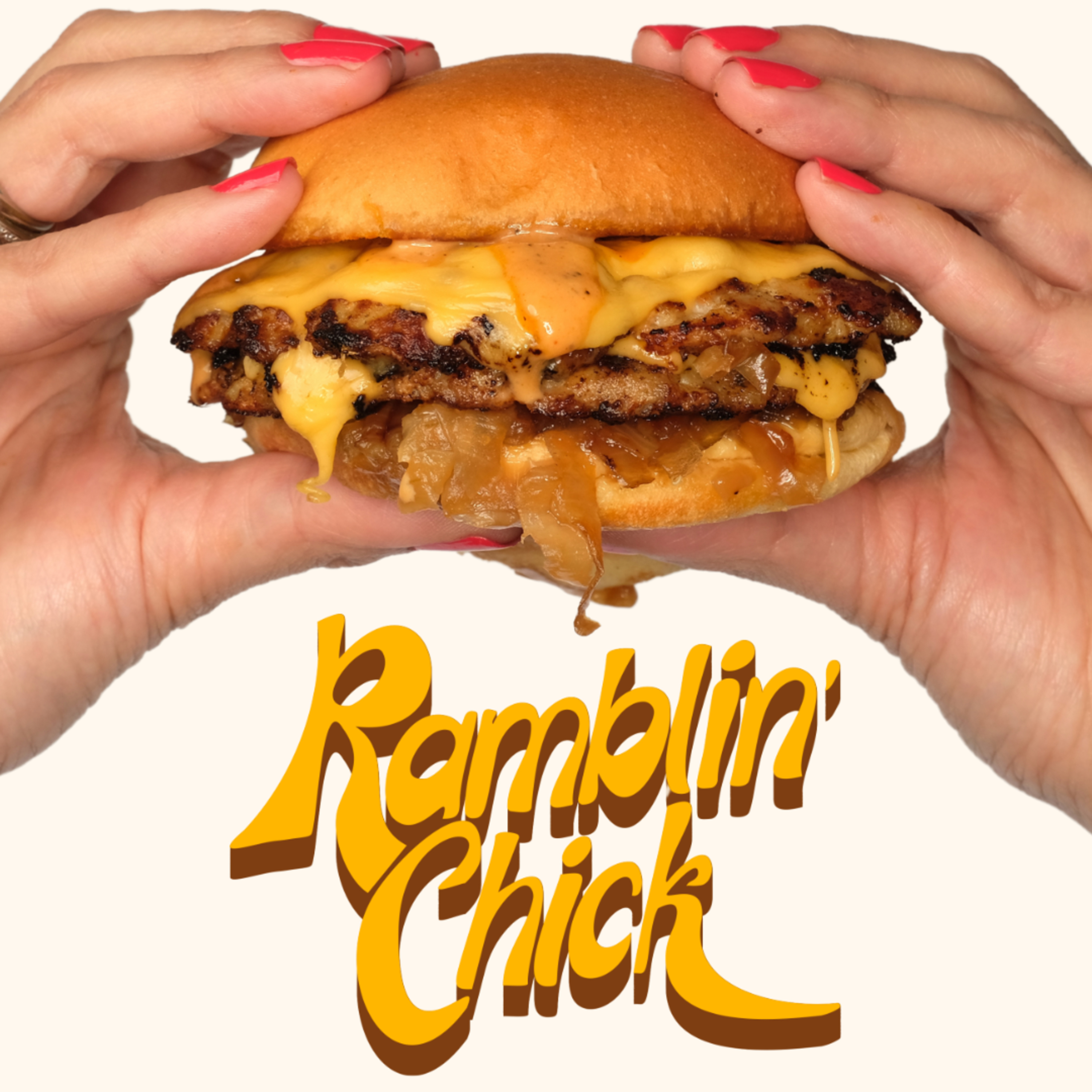
for that probably was that nobody wanted to talk about chicken skin. That nobody, everybody loves the taste of chicken skin, like on fried chicken. Of course, we like the taste of it, but I don't think we want to be reminded that there is skin on a chicken, you know, because of course we're eating an animal. It's a very psychological thing, and I just think people didn't want to be reminded of it, and I don't know if it tasted good, it probably tasted fine, but I just don't think that when you, and so we had this problem of how do we talk about these chicken wings, you know, it took me like how long did it take me in this podcast to explain the chicken wings we were making. We're taking this skin off from marinating them. Now we're rolling them in like captain crunch or potato chips or cheetos. Well, those things aren't healthy. Now we've taken this skin off. It's a little healthier, but I've now I've added something that isn't healthy, and then so it was just, it was a better for you product than was baked and not fried, but you have to explain all that, and that's a really hard thing to tell that story quickly on a menu board. And so the chicken burger, the chicken smash burger, the crackling chicken smash burger, didn't require any explanation. Like it didn't require anybody that comes to that burger, comes to it knowing like, oh yeah, like, you know, we should eat less beef and we should eat more chicken. Like I don't have to, we don't have to say anything about it. We don't have to say it's better for you. We don't have to talk about it, you know, our challenge really our huge, huge challenge is that nobody I think in the history of time has ever heard the two words chicken and burger together and said, oh, that sounds good, right? Like we just don't think of a chicken burger as something that we crave or want, you know, and so that's that's the often people think it's you know, it's yeah, right. It's a sad cousin to a turkey burger, which in turn is a sad cousin to the, you know, the actual burger, the beef burger. Yeah, this isn't that. I mean, this burger is really thin, it's chicken thigh meat, it's marinated in that same buttermilk blend. So it's juicy, you know, that goes straight on the flat top. And so all the fats that are in the thigh meat and in the marinade help it caramelize the same way that a beef burger caramelizes. So you get that nice browning, maliared reaction. And then we serve it on a bed of caramelized onions and American cheese and then our signature ramblin burger sauce. And so we're creating that sort of traditional Oklahoma beef smash burger in the form of this chicken burger. And we do different variations, but really the thing with the whole concept was let's elevate the chicken burger from its second or third class citizenship and make it the hero of the brand. It's not the thing that you settle on in this restaurant, right. It's the thing that you actually go to the restaurant for. And in fact, you know, our tagline for ramblin chicken is in search of the great American burger. And the reason for that is there's this disconnect, right. You see in search of the great American burger and its ramblin chick, wait, those two words are in our infriction because of course a burger is beef. And our whole thought process here, our whole concept is what if the great American burger, the very ideal of what the American burger is, it's not beef. Like what if we had it wrong all along, right? The 125 year history of the American burger, we had it wrong. It was chicken all along. That's the idea here. You have to trust me. No, thinking thinking big is what you do. But in this case, sounds really lofty. I mean, why can't you have why does it have to be a competition? I don't think there's anything that's going to replace the American him. Yeah, well, we're not talking about replacing it. But first of all, why competition? Like all businesses competition. Like literally you open your doors, you're competing against the talk. That's the competition that you could potentially sell an equal amount. But as far as people view the burger, they're not going to say, oh, I don't think about burgers anymore. I'm not going to buy them. I only want a chicken burger. Well, you mean beef because you're saying burgers and ours is. Yes, it is. Okay. This is my, but that's the point here, right? So our whole thing is you haven't tried this burger, Debbie. I don't know why you haven't tried it. You haven't tried it. And you need to try. But I will always crave a hamburger at sometimes. Yes. But I get it. I get it. I believe you in that it's delicious because you do make. And I crave, you know, I crave that beef to too thing too. But what we've, what we do and what I think we've achieved with this burger is something that scratches that same itch, that fulfills that same craving that you have when you're craving that meaty beefy burger. Like nobody has done that. And that's why the space, that the what you're saying speaks to the challenge and the opportunity, the challenge being nobody thinks of chicken burger is something that could let alone compete with a beef burger or you serve it. You know, but that's what that's what we're doing. And in fact, you know, I think you'll really appreciate then our, our, our sign that we're going to have up in the shop, which is going to be called the evolution of the burger. Okay. You know, the evolution of man and it shows the monkey and how the monkey slowly starts to stand up and become a man, a homo sapien. So in our case, it's going to be a, you know, a cow on four legs and a overtime the cow is slowly standing up answering them morphically until the very last image the cow has been knocked over. And there's just a little chicken standing there, right? Because that's the evolution of the burger. That's it. And it works. Listen, you're in for the fight. I get it. No, that's what it is. We have to be able to send that message clear and strong. And I think that that's, that's what we're doing. That's what we're doing. Yeah, I can't wait to try them. Well, that's good. I, you know, and we'll have to have your honest, unvarnished opinion afterwards. All right, then. I guess until next time. Bye, Javs. Thank you.
Podcast Summary
Key Points:
Jackie and Brian, former owners of Amphel Hills Creamery, are launching a new venture called Rambling Chick, a brick-and-mortar chicken wing concept.
After leaving their ice cream business, they struggled with unemployment and consulting work, leading to a desire to start something new.
They initially explored consumer packaged goods (CPG), including ideas like ice cream sodas, cereals, TV dinners, and chicken wings, but faced challenges with non-competes and market trends.
Their shift from CPG to brick-and-mortar Rambling Chick was driven by a perceived gap in the chicken wing market for elevated, higher-quality offerings.
The couple’s journey is guided by their therapist friend Debbie Rosen, who helps them reflect on their past and future.
Summary:
In this transcription, Jackie and Brian share their journey from losing their ice cream business, Amphel Hills Creamery, to creating a new venture, Rambling Chick, a brick-and-mortar chicken wing concept. After leaving their previous business, they struggled to find stable employment, with Brian failing to secure a job at a major ice cream company and Jackie considering returning to teaching. They explored various consumer packaged goods (CPG) ideas, including ice cream sodas, cereals, TV dinners, and chicken wings, but faced obstacles like a non-compete agreement and market saturation.
Their initial hesitation to open another brick-and-mortar store stemmed from the overwhelming operational challenges of their past business, such as staff turnover and maintenance issues. However, they shifted focus after identifying a gap in the chicken wing market, where most offerings are deep-fried and tossed in standard sauces. They aim to elevate the concept with higher-quality ingredients and a unique approach, similar to how Shake Shack revolutionized hamburgers.
Throughout their journey, they reflect on their resilience and the process of starting over, guided by their friend Debbie Rosen, a therapist who helps them make sense of their experiences. The story highlights their creative process, financial struggles, and determination to build a new business from the ground up.
FAQs
Rambling Chick is a new brick-and-mortar restaurant concept from the founders of Ample Hills Creamery, focusing on elevated chicken wings and other comfort foods like mac and cheese.
They were tired of ice cream after 10-15 years, had a non-compete agreement, and felt they had said everything they could with ice cream. They also wanted to create their own jobs after struggling to find consistent work.
CPG stands for consumer packaged good, such as a bag of popcorn or box of macaroni and cheese sold in grocery store aisles, as opposed to brick-and-mortar restaurant items.
They were initially hesitant to open another brick-and-mortar due to the high costs and complexity, so they explored CPG products to focus on product, packaging, and branding without the hassle of a physical store.
The founders considered creating a canned ice cream soda, a nostalgic drink from the 1930s-40s made with soda water, syrup, milk, and ice cream, but abandoned it due to market trends toward healthy, low-sugar sodas and high production costs.
While researching frozen foods, they noticed the chicken wing market lacked elevated options, similar to how Shake Shack improved the hamburger, leading them to create a higher-quality, casual chicken wing concept.
Chat with AI
Loading...
Pro features
Go deeper with this episode
Unlock creator-grade tools that turn any transcript into show notes and subtitle files.
 PodcastTranscript AI