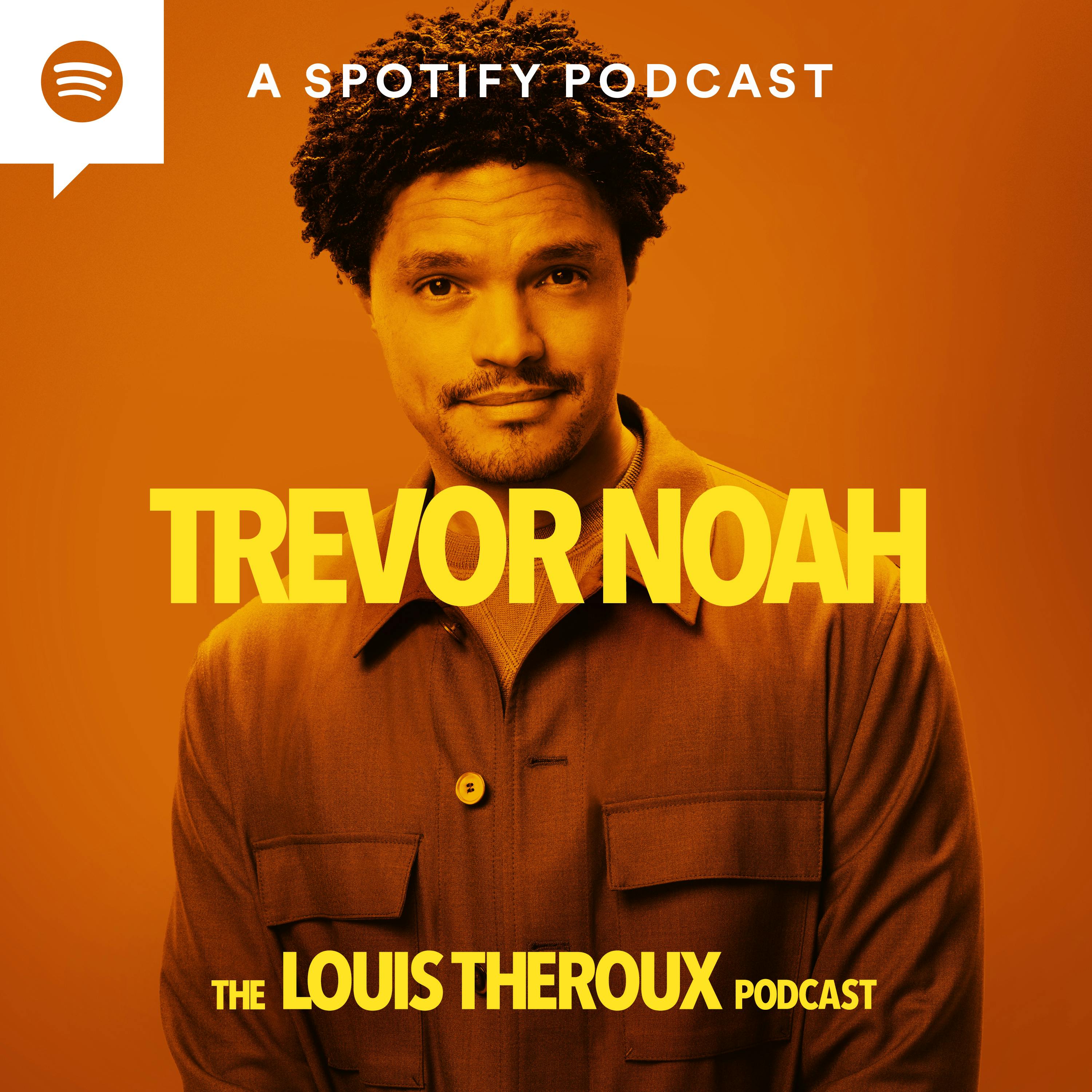
S3 EP3: Trevor Noah on growing up during Apartheid, landing ‘The Daily Show’, and being friends with Bill Gates
from The Louis Theroux Podcast
76m 22s
In this podcast episode, host Louis Thoreau interviews Trevor Noah, focusing on Noah's upbringing in apartheid South Africa as the child of an illegal interracial relationship, as detailed in his book "Born a Crime." They discuss cultural nuances, such as differing interpretations of the term "coloured" in South Africa versus the U.S., and reflect on comedy's evolution, referencing shows like "Mind Your Language." Noah shares his current life philosophy, emphasizing gradual self-improvement (inspired by the Japanese concept of "kaizen") and balancing touring with tech work at Microsoft, where he engages with AI philanthropy. The conversation expands to societal issues, including conspiracy theories surrounding figures like Bill Gates, historical patterns of scapegoating during crises like the Black Death, and observations on South African culture, such as unique slang terms. Throughout, Noah and Thoreau explore themes of identity, progress, and the global consumption of media, highlighting both personal anecdotes and broader social commentary.
One, two, one, two. Are we rolling? Hello, Louis Thoreau here. How are you? Welcome to another episode of my podcast to Louis Thoreau Podcast. Today I'm speaking to comedian, writer and TV presenter, Trevor Noah. Born in Joe Berg, there's more of that coming up, so apologies in advance. In 1984, Trevor had a remarkable childhood during a partake in South Africa, the racist South African regime. It's all chronicled in his brilliant book, Born a Crime. It was illegal for black people and white people to be in a relationship hence the title of the book. His father was Swiss German, his mother is closer. Yes, I actually, I'm pretty good pronunciation. And at the time of Trevor's birth, his parents' interracial relationship was illegal. He spent his childhood walking the line between several different cultures. He was a successful stand-up comedian and actor in South Africa, then decided to go over to the US in 2011. He became the first South African stand-up to appear on the Tonight Show and the Late Show with David Letterman. Then he got his big break and offered to host the Daily Show on Comedy Central, replacing John Stewart. We talk about that. We recorded the interview remotely in September 2024. Trevor had taken a break from his busy schedule and joined me from New York. There were some issues with the camera at the beginning. There might be some tech people or elves, as I like to call them, wondering in and out of the screen. Don't worry, I docked their wages. It won't happen again. One of the things we talk about is what happened when Trevor's compatriot, Tyler, the talented R&B singer, who had a huge hit with the track "Water," broke America and her use of the term "coloured," which I use in inverted commas, but is a well-established term in South Africa, but which in America has painful racial connotations. And she was criticized for using it by some Americans, which she, I think, understandably was baffled or maybe offended or confused by. So that's something that we go into in some detail. Warning, there is strong language in the episode, as well as adult themes, including domestic violence. But first, this. How's life? How's it all going? It's going well. How about yourself? Good. I'm excited to talk to you. There's a lot of ground to cover. I don't want to fathom out. I never fathom out. I'm a total pro. It's a thrill to talk to you. You are an international icon. You are one of the most successful comedians in the world. Does it feel weird hearing that? Well, no, you're used to that by now. No, no. I mean, it's weird hearing it from you, though. I mean, I pretty much grew up on your videos, everything, just like you traveling around the world, causing trouble everywhere. So stop it. You're flattering me and I'm not going to fall for it. Oh, this is completely true. It's completely true. I can't tell you the amount of times I have watched your videos talking to far rights. And I mean, now they seem so quaint versus what we have today. But those conversations you would have traveling to some random part of America, talking to proud members of the KKK or going to some evangelical hub where they were against everything gay and yeah, so I literally I'm not even thinking about that. I won't pretend that I didn't secretly hope you might have seen one or two of my things, but I try not to let my dreams get cloud my editorial judgment. When you saw, if you've seen things of mine, would you have seen those later on? Like, were they on in South Africa? So I probably, no, I definitely saw them later on. Everything in South Africa, we had a strange world where, you know, obviously in a part like there's no free speech and we don't get anything. And then we get this deluge of content from all over the world. But I didn't know growing up. We were how far behind we were. So I watched a lot of British television that coincides with the British television that people were watching, I guess in the 80s or 90s. But to me, that is my childhood. Do you know what I mean? So I have like a strange reference point with a lot of people from the UK where I'll like have the same shows that are my favorites as like my friends parents, but not my friends. Yes. What would we give me some examples? Like one of my favorite shows was a show called Mind Your Language. Do you remember that show? Stop it. What's it? Seriously, that's really amazing. That's really great. That's interesting. So you're delayed, you're kind of lagged like being on a star where the light takes a long time to travel right. Your TV beams were arriving about 20 years late, which puts us in sync more or less. It would describe the show because it was it was kind of politically incorrect by today's assessment. Yeah, but I've rewatched it and I've realized that like maybe I think you use the right term maybe politically incorrect or maybe some people be sensitive, but I think it still holds up. It was it was a show about an English a night school and this in particular was an English class. And so you had this English teacher who was like working class, but he was very like clean in his English, obviously. And and then you had people from all over the world who were trying to learn how to speak the English language and they were all immigrants into the UK. And so you had like this Italian guy and you had you had like a French woman and you had an Indian man and a like a man from Pakistan and it was like a whole group and look, obviously they were the tropes of each country. You know, so the French woman was only about like sex and just like being romantic and then you know, the Indian man and the Pakistani man were constantly at odds with each other. But I don't know. I mean, like comedy exists in the world of tropes. So maybe it wasn't as nuanced as we would like our comedy to be today, but I don't watch it now and think to myself, oh, that was disgusting. It was just like, you know, a simple introduction to cultures from around the world. And I don't know. I think I think a lot of the topics they got into they they scratched at something deeper. And so I appreciated it then and I can still appreciate it now. I don't expect people from the past to be as advanced as we are or how this advances we think we are today because then that means there's been no progress. So that would be weird. Yeah, and advanced, even that word advanced might need a red flag on it because I'm sure and we'll be looked back on and maybe, you know, these debates are still being litigated to some extent, whether we've inhibited comedy by being overly vigilant. But before we go into the weeds on that, well, but I think what we should say first was like, how are you doing? What's going on with you? Do you want to just fill us in? Oh, I'm doing well. That's that's a funny segue. I'm doing well. I'm I don't know. I'm in a stage of life where I'm I'm trying to pursue two things. You know, one is is is a simple endeavor and that is like just trying to make every encounter that I have with another person, hopefully make them feel a little bit better. And then sort of like trying to add value if I can put it that way. And then the second thing I'm doing is just finding the little things that bring me joy in the process. That's what that's all I'm living in right now. You know, I I realized at some point, you know, one of the one of the upsides of living in America is that you live in a country that constantly propels you forward and encourages you to take everything and get everything and be as big as possible. The downsides are exactly that. You know, it's almost like the overconsumption bleeds into your life. And so it becomes more than just the overconsumption of goods and services. It's also the overconsumption of success or and now I'm just yeah, I'm trying to I'm sort of trying to live in like a small in a smaller world, you know, maybe a little bit of Ike guy and and and just try and enjoy what I used to find so much pleasure in. And and that was the small things like I was I was easily the undisputed champion of finding all of the meaning in in a meaningless day. And I'm slowly trying to get back to that. You threw in a Japanese word which I'm ashamed to say I'm not familiar with. Oh, it's the it's the practice of getting like gradually better day by day, right? So it's just a beautiful philosophy of don't don't try and just be better. Just get a little one percent better. Just tiny little bit tiny tiny tiny little bit better every day. Try and improve on the thing you did yesterday. But don't look at the big picture, you know, just keep on trying to get a little bit better. If you did 10 push ups, try and see if you can do 11. And maybe you'll get to 12 and and every day you're doing that and the same with your writing or the same with how you sprint time with your friends. And I I I extended to everything. It's it's a nice reminder that my goals are not as far from me as I think they are because my goal is only one percent away. Does that make sense? Yeah. Yeah. I like that. Is most of your professional energy taken up with touring at the moment? No, I've broken it up now. So I last year it was 100 percent touring, I would say. This year it has been I would say 30 40 percent touring and then maybe 30 percent working in like tech and then 30%
It's like working on my book and writing other things. That's how I'd break it down. And then 10% acting like I'm working, but really just scrolling on the internet. 10% that's pretty, that's not a bad proportion. It might be higher in my case. When you say 30% in tech, what does that mean? I love working in tech. So I've been working with Microsoft for, geez, now it's going to go on eight years. You know, now I've been lucky enough to just spend time with everything. I work with their philanthropy team. I spend time with AI for good labs. I, and it's cool because it's like a university, but I get to add value at the same time. And so they gave me a fun title, Chief Questions Officer, which I think means, I'm an idiot, but they wanted to give me a nice title. But yeah, it's just been like a, it's really been a wonderful break from everything else that I do. You know? I love that. You're kind of like somewhere between a savant and a jester and just an ideas guy and just a cheerleader. I think you've met, have you met Bill Gates? I have, yeah. I've never seen you all sessions with him. You're friendly with him. Yeah, definitely. Yeah. Do you think he, you know, on the internet, I mean, to look for logic on the internet is a fool's errand, right? But do you think he gets a bad rap? Oh, he does, definitely. He does, definitely. But I think he, and I've spoken to him about this. You know, the thing with Bill is he's so sort of like logical in what he's doing and how he's doing it that sometimes he takes for granted the value of appearances. And I can get that coming from like a tech world. Like if you, if you want to see like who Bill Gates was, go back and watch some of his, like, some of his stuff around when, when Microsoft was going through its antitrust case back in the day when they were being broken up. He was pretty like, he was pretty headstrong about things. He's just like, no, I don't care. This is what we're doing. This is how we are. And, you know, and I think maybe that's been his gift, but that's, that's probably also been his curse is that he's a little too logical and straightforward in his head if it makes sense, it makes sense. You know, so if he goes, he thinks to himself, he's like, this is the way we're going to fight malaria and we've talked to the experts and this is how we roll it out. I think sometimes he hasn't given as much credence or value to the idea of people accepting that this solution to malaria is actually good for them. And yeah, Bill Gates has definitely been turned into like a boogeyman on the internet, you know. He's like one of the top 10 boogeymen and I think that the reason that the narrative is that he was trying to chip people by, you know, by stealth using the COVID vaccine as a way of doing it. And thereby usher in some kind of one world government. Oh, I don't really know. It's extraordinary how what an important role he occupies in a certain conspiracy narrative. I wonder if he knows that. But I think he does. And I asked him about it. I love asking him about these things, even when he was on my podcast, I actually asked him about it blatantly. I was like, okay, are you chipping us? Even though I think some of these things are ridiculous, it's like, help me understand why are you the largest farm owner in America? Are you trying to, you know, rig the food system? What are you doing? You know, and then he explains it. And then you ask, I ask another question. I go like, what are you doing? Why are you trying to microchip people? And he answers the question. The thing is he's not. But what's more interesting to me than the truth of it is how it's helped me understand the narratives that we create and shape in the world and how it's almost made me realize that's one of the downsides of losing religion in the world is that we've now had to create devils where before we had one, you know, before the devil was like this beautiful clear concept that everyone agreed upon and every Sunday we would check in with each other to be like, we still fighting the devil, everyone's fighting the devil. All right, we'll see you next week. And I think maybe it's a human need. I don't know. We almost need a devil. Otherwise, why are things happening and why are they going wrong and who's doing this and who's the idea that it's just happening? I think troubles the human mind. Like it, you know, makes us feel helpless. So you have to find a devil. And when you find a devil, it becomes so much easier to live your life because now when it goes wrong, you go, it's because of the devil. It's that devil. And now we've just made those devils, people, I think. Well, I think it was always people as well. And you know, during the pandemic, I read a book called The Great Mortality, which was about the Black Death 1347 to 49 when a third of the European population died. And when people started dying mysteriously from plague, job one was, well, we don't really know what's causing this. Let's round up the Jews and basically throw them down a well, right? Oh, I mean, literally, not across the board. Like there were, I mean, in a way, it's more instructive to reflect on the fact that there was some people who said, like, this is crazy and barbaric. Even in the 14th century. But there'd be enough people to say, well, maybe, but maybe not. It's worth a shot. And the level of atrocities level that the Jewish community was really instructive and kind of extraordinary and shocking. And so I think it's always been the case that we've looked for human scapegoats, but the idea being that, oh, they're in thrall to the devil. I mean, in a sense, we've got a slightly more secularized version of that now by trying to find people who are active, sort of malefactors. Yeah. Yeah. We talked a little bit about my programs. Embarrassingly, I'm going to spin it back to that for a second. I made three programs in South Africa. Yes. One was in the 90s where I interviewed Eugene Terblanche, who was the leader of the sort of the far right, AWB, who were leading a last-ditch attempt to preserve some kind of white racist foothold. Yeah. Needless to say, it didn't fall their way. Although there is a funny little place called Orania. Have you ever been there? I've never been nor do I wish to go. It's an interesting test study, Orania, you know. Would you be allowed? I don't even know what the rules are. Yeah. I don't know if they wouldn't allow you, but I don't know if they, it's a weird one. It's a kind of mini township of Africa. Yes, right. But it's not just Afrikanas. It's specifically people who have said, this is how we wish to live. No one who is not us should be here. If you're not white. If you're not even Afrikanas white, we don't want you here. This is our enclave, and we're building this within another place in another space. And I don't know. It's weird. I've had so many conflicted feelings about this, because sometimes I say, isn't that what you want? Is like all the races to go to one place together and then just do their own thing and like not bother anyone? Sometimes I think that, and then I'm like, yeah, but then in the long term, what are the fallouts? What are the effects? Is it going to grow beyond that? At some point that piece of land doesn't become enough and then, you know, as soon as you have like land that is decided on the British, it was once again that you're done, like the British. The level of animosity I got as a British person from the, the Boers and the Afrikanas was extraordinary, which is a part of actually, it's a block on one of the many on British history is what the British Empire did as part of their land grab and then kind of used the rights of the indigenous community as a moral leverage, but they just wanted the diamond, the Brits just wanted the diamonds. Yep. That's all they wanted. The English wasn't it? I love it that they, in the robot, you turn, lift at the robot. They're about to, you know, you know, like the South African lingo doesn't get enough up. No one knows. You get in the back. You go, you go, lift at the first the robot. Then there's another robot. Right. You know what I'm talking about. I know exactly what you're talking about. You're probably within a hundred miles. Yeah. People in radio land, a robot. What is a robot Trevor? A robot is a traffic light. In their defense, it was, it was robotic in that it moved from one color to the other with no control from a human being. So for all intents and purposes, it is. I mean, technically you could say it, but it's a, it's robotic. It's a robot. I like that. What about the Bucky? So a Bucky is, I guess what, what in the US maybe would people would call not really a pickup truck because it's smaller. Is it? I thought it was a pickup truck. No, but it's a small Australia. They call it a "yout". Yeah, yeah, yeah. You see, it's closer to a "yout". Is it? It is closer to a "yout". But a pickup truck. Not in the Jamaican sense. We're going all over the world. Then the second one I made was we used later. It was about trophy hunting in Limpopo province. And then the third one was about Hillbrow and also deep slute. Deep slute. And that was about vigilanteism and the ways in which the civilian population were attempted to fill the gaps left by an undisellous police force. Like a police force that had said, you know what, what happens over there? Happens over there. You know, they can worry about that. My, I'll dial in the accent in a minute. That's a very good accent. Stop it. No, no, I'm being serious. That's one of the hardest ones to put us in. I don't even know which one I was doing. You don't think it's wrong. You were doing it wrong. No, you were doing it well. From you, that's how you were. Matt Damon, are the only people who seem to have gotten that right? That I love your accents, man. And so that was more about the collapse of sort of law and order and the ways in which either mob mentalities and or vigilanteism had filled the gap. So I have a little familiarity with South African culture, but I really find interesting. Like we in the UK have this sort of double-edged relationship with America. Like it's both. It's sort of everything we aspire to, but everything we purport to look down on as well. And I can only imagine for a South African, America's even more remote in certain respects. And maybe it doesn't feel like that because there's this culture coming in that you're consuming, be it Michael Jackson.
or hip hop or the movies, but to them, like they don't know a cockney from an Australian. So South African, what do they make of that? Yeah, it depends on where you go and when you were to go there. But you're not wrong. I mean, like I remember when I first came to the US, the idea of any African, you know, forget South Africa. If you're just from Africa, first of all, Africa for many people was a country. For some people, it still is. And then Africa was an idea and that idea was a place sort of frozen in time, you know, preserved in carbonite and they pictured people in loincloth running around and, you know, us having no technology. And it's a pretty pervasive idea. I think that's, that's, you know, diminished over time. And I think in fairness to people, you know, I used to think it was like an ignorance. And then I realized, no, it's just you have the information you have at hand and you, you know, your reality shaped by what you, what you're given or what you can see. So I think pre the internet, like real, real internet, I think that was a, that was a pervasive idea, you know, and, and I think over time, you know, you know, with its entertainment or with it's just the world we live in, people have sort of had a broader idea of what South Africa is and what Africa is and I mean, even things like the Black Panther movie has crazy as it sounds changed how people saw and think of Africa. Like I, I distinctly remember Black Panther coming out and then in the months and years that came afterwards, people just having this different idea of what was in Africa and what wasn't even though it was based on a fictitious idea. Mm-hmm. I believe it. You know, there's parts of your story that are well documented and, and just to say in passing, before I joined the call I was watching an old documentary that was sort of about the time when you were building up to doing your first one man special in, in South Africa. I can't remember the name of the documentary, but it's on YouTube. You laugh, but it's true. You laugh, but it's true, yeah. Yeah. And what strikes me just now is you, you look the same age now. Your hair's a little longer. Whatever you're doing, your skincare regime, I don't know what it is, but it's working. But it was funny to see we would have only been about 22 maybe, 23 years old. Yeah, 22, 23 somewhere there. You were taking the world of stand up, the then nascent world of stand up in South Africa by storm ruffling a few feathers, some older stand up, some male Miller was one who was saying like, this guy's arrogant. Like he did, he had, he was, people were really having a pop at you, but you seemed quite enduroed to that. You were like, hey, just gone hate, that wasn't verbatim, but that seemed to be the attitude. And then what I'm curious about though is how you left having more or less conquered through your, you know, pure skills as a stand up, both physical and observational and mimicry. So the big step, okay, sorry, it's the world's longest question. The big step I'm presuming 2011, you decide to go to America. Is that basically what happened? And you thought, okay, I need, I need a big upond. It's funny, the documentary you're speaking about, I met that filmmaker, his name is David Mayer, and I met him when he was coming to South Africa. His original plan was to make a film for his thesis for at film school. And he knew a South African and he was coming to, you know, do this documentary on comedy in South Africa and what it meant and how it had evolved post apartheid and this whole thing. He was talking to every comedian, a few things went wrong in what he was trying to do. And so he was left with no subjects to follow. Initially I said no. And you know, his friend begged me and said, please look, there's no one else he can follow. He spent all of his money on this film. Can he follow you around? And I was like, all right, just don't, don't annoy me. You know, and, and he came along for the ride. And we became good friends, you know, this lovely guy from North Carolina who was living in LA at the time. And at some point he said to me, have you ever considered doing comedy in the US? And I was like, no, not really. And he's like, dude, I think you'd be like really good. Like, like, you're, you're funny. And when I show people your stuff, they laugh. And I was like, yeah, but I don't need to come to America. And he's like, dude, I think you should just try it. And that's what I did. You think his nudge played a real, I don't think it is. I had no inclination. You had management at that time, right? I think there's a guy who speak, who's, who's in the documentary. I can't remember his name. Takunda, yeah, but I mean, management in South Africa was just your friend who sort of came with you to some gigs and feel that a few calls. But management is a strong word because there was such a fledgling and still is comedy in South Africa. You know, occupies a wonderful space where it is still a raw art form where you're really doing it for fun. So it hasn't become like the business that it is in like the UK or especially in the US. So even having a manager was like a cute idea. It's not a real thing. It was really just a great friend who was navigating this wild world with you. You know, and I think maybe that's what I loved about comedy. And I'm lucky that that was my formation was. I never saw it as a career. I always saw it as this thing that is like it's like one of my favorite hobbies and I think it's ridiculous and I love doing it. So I never thought of going somewhere. I didn't need to go somewhere to do it because I can do it wherever there's people in South Africa. We have microphones. We have speakers. We have a lot of funny things to speak about. So I wouldn't have gone. You first experience of stand up was at a comedy club where a friend said, "Tripper, you're funnier than all these guys. Why don't you get up there?" Right? Yeah, but it went to legend. Yeah, but that sounds like a little, what happened was this, you have to understand the comedy landscape in South Africa. Because if you tell the story like that, it just seems like arrogant and weird. What happened was my best friend and my cousin and I, we all lived together in the same house. In Jopour? And this was in Johannesburg. And so one day my friend Nico says to me, "Hey, man, we're going to go watch comedy. Do you want to come join us?" And I was like, "Comedy, what is that even?" And he said, "Oh, these guys, they tell jokes." And I was like, "I have no interest." And you were working as what at this time? So at that time I was working as a, I was probably presenting a few television programs. Like there was a kids television program that I worked on. Right, so you were sort of on TV, like you were show business. Yeah, but again, even you see business, I don't think is the right word to use for what we were doing in South Africa. It didn't make you famous. It was just a job that you did and you, you know, fame wasn't what you got from it. You just got a paycheck and you carried on. And that paycheck, by the way, didn't bring you like fortune. You just paid your rent and you kept it moving. So when my friends one day I acquiesced and they said, "You've just come with us to the show and we go to the show." And they knew all the comedians. Because it's such a small group of people. I mean, at the time in Johannesburg, I remember counting, I think we had a total of 30 comedians, like people who called themselves comedians and performed comedy. They were 30 in all of Johannesburg. And so my friends knew them. They knew my friends. Guys would go on stage, tell jokes. Some nights were just horrible. And it wasn't even a comedy club. They were given access to a part of a bar that had its worst nights, which was a Tuesday night. No one came out to drink. And so they said, "These guys can come and tell jokes." And I went and I joined. And that night in particular, the comedians were having a rough time. And my cousin and my friend got a little tipsy. And they started heckling the comedians. Who were their friends? And so one of the comedians came to our table after, like in the break. His name is Gideon Loudzi. He still puts on shows. And he came over and he's like, "Hey guys, come on man." Why are you guys heckling, man? He's like, "You know how tough this is." And my cousin and my friend are like, "Oh, Brian, he's like, you're terrible. You're terrible, man." What's going on? These jokes are terrible. Gideon said, "If you think it's so easy, like, if you think it's so easy, why don't you get on stage? Why don't you get on stage?" And then my cousin said, "Well, I'm not funny, but my cousin is." And he pointed at me. And he's like, "He's funny than all of you." And I was sober. And now all of a sudden I'm thrust into this little spat. I'm not even friends with these people. And Gideon goes like, "Oh, okay, you think you're so big. Why don't you come on stage?" And I was like, "Look, I didn't say anything." He's like, "No, come on stage." And I was like, "I really don't want to do that." And he's like, "Oh, because you scared. Everyone's got a big mouth until they challenged." "You're a chicken, yeah? You're a chicken." And then now it became like a challenge. It was such a stupid thing, but it was so much fun. And I stepped up on what we call a stage, but really, it's like a few tables put in a corner of a room. And I got on top of them. And, you know, and I started saying things. And really it was my cousin who was shouting out. He would say, "Tell them the story about the Nigerians who are fixing your VCR." And then my other friend was like, "Tell them the other story." And he's like, "The other friend was like, "Tell them that story." And so they would shout the request. I would tell the story to the crowd. They would laugh. My friends would shout the request. They would laugh. And that's literally how it started. And you immediately felt pretty comfortable up there? Oh, yeah. I've never felt more at home. Then being on stage. Yeah, I've never felt more at home. It was like discovering a place that I had always been, but didn't remember going to. It was really strange. I even remember when I did comedy in the UK for the first time. This was two years into my career. That was the first time I bombed. I didn't even know that bombing was a concept. I was on stage and you walked up and you told people things and they laughed. And I was like, "This is what a world is."
wonderful life this is and that's all I did. I didn't get paid and I did more shows than any other comedian in the country like everyone knew if you want someone to come and tell jokes at your show and you don't have money call this guy his name's Trevor Noah he'll come he'll drive himself he he asks no questions and he does comment you were doing it because you were enjoying it or to hone the the craft or there was no craft there was something there in my head there was no craft it was just everything I would do was based on what I had experienced that week and what I was talking about with my friends on the way to the show. And just to mention in passing that the show that you eventually arrived at that first one man show the day walker. Yes extraordinary and still holds up and and I just enjoyed like as a sort of almost feels like intimate to the point of feels vaguely intrusive like I feel like I'm eavesdropping on a conversation that's taking place within South Africa there's so much specificity about different languages different tropes habits ways of speaking that it feels like oh I'm really getting an inside look at what South Africa is really like as well as obviously being funny there's a lot of physical comedy we were conscious early on of having a gift and what if you had a gift like what it was. No I really wasn't because I think for most of my life it wasn't a gift it was a curse you know my my mother tells me of how everyone everyone loathed the moment when I would walk into a room like everyone in my family ever when I was a little child they were like if Trevor walks into a room just pray to God that you've stocked up on all the energy you need because they could you would say he has a radio in his chest that's what they said they were like this kid walks into a room and he just does not stop and he you know and I guess funny was part of it so in school they always said Trevor is just he's he's too much and he's not disrespectful any but he just doesn't stop making people laugh and he doesn't stop cracking jokes in class and he doesn't I just I was like this is my whole life I've always found funny both essential and wildly entertaining because it's such an unpredictable thing that you that you are interacting with you know out of thin air you are you're sort of plucking at these strands that send reverberations out that creates these convulsions in other human beings I've always found it fascinating in myself and in other people and it makes people feel good I think that's that there was a bonus it's like no one was crying no one was feeling bad you know so the teacher was saying hey stop that but everyone in the class laughed what a what a wonderful experience you know scrolling forward so you're when you're in America having made the leap according to what I read it didn't flow all your way straight away right and that there may even have been a time when you thought this isn't working out like basically a better head back and give up on the American dream is that correct no I don't think it was a dream in that way it was more me not falling for the for the elure of the American dream you know there's this idea and and you you know you said it earlier on like many people even in the UK will go oh America we look down in so many ways but then I'll speak to them and they'll go oh but I would love to live there I would love to work there I would I would speak to British comedians who dream of going through the US and and and and applying their trade and there's something enticing about it and I'll be lying to you if I if I said I had that because I in South Africa I had my friends I had my my familiarity's my food as you said our cultures I was doing comedy in English and then playing with six or seven other languages in that English show what a you know and and now I lose all of that when I travel to another country so yeah it's like you've lost all your superpowers yeah to mention that it's America's not the easiest place to crack if you're not it's hard enough if you're American but if you're from somewhere else how you I mean I get I feel like I'm galloping forward but at a certain point you get hired as a as a contributor to the the daily show America's leading I guess a typical daily kind of news program then hosted by John Stewart again according to legend you came onto John's radar and he looked at some of your tape he saw one joke and said yep let's bring him in and then stood up and said that guy's going to take my chair one day if you could I've heard the story I've heard I've heard different versions of the verbiage but it's pretty much the same story I heard he he watched something of mine on YouTube and he said if that guy wanted to he could do my job which I think is John being very kind but also I in now now that I know John Stewart and I'm lucky enough to call him a friend and a mentor I think John always saw something in me that I see in him as we we have something in in in common despite all of our differences and it goes way beneath the surface and it's sometimes it's how we see the world or how we see the conversations that the world is having or so so maybe that's what he saw in me it's funny the point that you've galloped to is now me I'm out of America at this point basically I'll speed you through it I went to 2010 2011 I'm like in the US I'm doing comedy in random places because of David Meyer and and these shows that he puts on for me in LA I now get management in America and they go you should do comedy and now I am but very quickly I realized this is like a it's a it's a it's a hot list slog you're in random towns in America depressingly going from one city to the next begging people to come watch your show and barely earning enough to fly back home and and really just reset and get ready for the next show you you're completely living from hand to mouth and and I was just like this is not the life I'm looking for but even though people were selling it to me I was like no this is not what I'm looking for I'm not trying to be famous and I don't care to blow up quote unquote in America and who one day I was talking to a friend of my Neil Brennan who's a really great comedian wonderful writer creator of many things he was also starting his stand-up career at that time and I remember having a conversation with him in Denver Colorado and we're just commiserating and then Neil said to me why don't you go home he said why are you doing this he said I I'm doing this because it's sort of all I have and I have to try he said why you doing this and I was like yeah you're right I don't know why I'm doing this and so I left and then in the years that followed I was performing more all of us now the UK was growing as a market for me so now I was performing everywhere from Birmingham to Newcastle and Brighton all the way through like I was performing everywhere in the UK I was doing shows in Australia I was performing in the United Arab Emirates I was America was gone as a concept to me and I promised you I didn't feel like I had lost anything and then one day I got a call from John Stuart and when he called me I will never forget where I was I was standing in Harrods in London I was in one of like the lower levels in Harrods where they sell technology because I we never had anything like that in South Africa and I mean if you've never been to Harrods just go for the spectacle and I remember I was standing Louis in front of a was an underwater moped or scooter whatever you want to call it essentially you sit under the sea with a bubble over your head and at the time it cost a hundred thousand pounds and I remember looking at it and I was like how long in would I have to work to get a hundred thousand pounds and I was like I would never be able to earn it but I was like but I need this thing and I just stood there watching it and my phone rang it was an unknown number from America I answered and the voice on the other side was John Stuart and that was the first time we spoke he invited me to the show I politely declined because I I had a UK tour that I was doing and I was enjoying my life in South Africa and he was really gracious enough to not like be offended by me declining but he instead said he said okay said if you if you're ever in New York look me up and I was like I'll do that and then when I was in New York he reached out again he's like you're in New York I was like oh this guy's relentless and then he invited me to hang out and that's that's literally how it began I walked in the building I was I could not believe how smart he and his team were and I also didn't understand half of what they were talking about you know what is a filibuster what what is Jerry mandering who who who is Mitch McConnell what's a John Baynote what is happening I was like I don't know I don't know about this world and and then John said to me do you want to do something and I said no I said no thank you your world is very this is not me and we had another conversation about Africa and laughing about my experience in New York and then John said why don't we do that he said this exact thing that you just said to me why don't we do that on the show and that was my first appearance on the daily show was a conversation I had with John just walking through the building laughing about being in New York and you know being shocked at how terrible the roads were I'd like come all the way from Africa to experience the worst roads I'd ever seen and and that was that was the genesis and that's how it began I mean how was your experience on the daily show I mean just to contextualize it because we have a lot of UK listeners who may not even be that familiar
Obviously it had been around a while. Initially it was Craig Killborn that was the host, then John Stewart took it over and took it to the moon. He remade it in his own image and became such a trusted and beloved truth teller, right? And he sort of took it beyond the realms of ordinary comedy to the point where he became a sort of voice of sanity at a time when things in politics were going really crazy. And he'd also do a lot of great coverage of media. He did a lot of takedowns of Fox News. You take it over, you're less well known to the broad public. You're coming into something that's, you know, you're putting on a pair of shoes that have been fashioned to fit someone else, right? Yeah. Then just to reflect in passing, then there's a mini, a mini drama over some tweed old tweets. And then that, it's always like, he's no John Stewart, was the first part of the narrative. He was like, "Oh, I know. He's made some jokes about fat people and some other stuff." How was all of that for you? Oh, it was, it was, it was everything a roller coaster ride is. But, but, that makes you think quite fun. Yeah, that was about to say the thing about roller coasters that makes them fun is that you know that you're on them. But if you blindfolded somebody, put a bag over their head and then like whisk them away and put them on a roller coaster but didn't tell them what it was and they'd never experienced it, they would think that they are about to die at every turn. And then there would be moments where they'd be like, "I think I'm having fun." But that's what it was. It was a whirlwind because for, you know, to put in the world of the UK, it's like coming in and taking over like a beloved show, like QI for instance. And all of a sudden everyone goes, "The new host of QI is going to be Albert Grape." And everyone's like, "Who's Albert Grape?" And it's like, "Well, he's from another country and he's hosting QI." So yeah, immediately there was a mad dash to figure out who I am. And I didn't understand it because the daily show didn't hold that place in my heart, you know, which I always say is probably the only reason I was stupid enough to say yes to it. Many people said no. A lot of people don't know that side of the story. A ton of people were approached to host the daily show. I think everyone from Chris Rock to Amy Poland, Amy Schumer and I mean tons of people were approached. And I think everyone said no. Everyone was like, "That is the hardest show. We would never say yes. Why would we give our lives up to do that?" Everybody said no. And I guess literally I think because it did not stand in the same esteem for me, I had visited it. But after every single show that I had done at the daily show, I went back to South Africa and I carried on living my life. And what excited me most about it was, I wonder if I can inject more international news into the daily show. I wonder if I can talk more about other countries. And I wonder if we can become more digital. Like it's only on TV. I wonder if there's a way for this thing to exist on YouTube. And so that was actually the thing that I was pursuing. It wasn't the daily show itself, but it was this idea of trying to not modernize, but just slightly alter this idea of a show. And that's why I said yes. And it was terrible in the beginning, absolutely terrible. It was first, who is this guy? He shouldn't have it. He's a nobody, where's he from? And then it was like his comedy's horrible. And then people would take tweets of mine, old tweets. And the funny thing about the tweets was, like people never gave it the context, which I don't expect them to. But Twitter has had many evolutions, you know? I mean, we're in one right now, I feel. But when Twitter first started, it was a status update platform. If you remember, it was just, you know, Trevor is. Louis is. And then slowly over time, it morphed into like a short joke platform. And that sort of way, like I built my followers. And it was really funny and it was really well meaning. And I would jot down like the genesis of ideas on the platform as sort of like a notebook for myself that I would keep for doing jokes later. So it wasn't even like this is the joke. It was just like, just write this down, just to book market as a concept. And it was, it was really small back then. It was, you know, everyone following you sort of knew you. It wasn't what it is. It definitely wasn't what it is today. And how it's evolved into like a news platform slash. Yeah, you know what I need to know? That doesn't even need that much unpacking. Like I get that. I feel as though we're over that whole idea of, oh, we sent a tweet that sounded a little bit rude about such and such in 2011. Uh, you know, it feels as though I'd like to believe that that's no longer kind of worthy of much interest. I am curious whether it's, do you think so? Yeah, I think it's the list. And I think it's because we don't understand that social media has evolved into something more than what we think it is. We still treat it, I think, like a cute little me, you friend connect. And that's how it's sold to us. But it's not that. It's, it's, it's a strange tool that has this pervasive way of making people bump into the one thing of another person that they will hate. Yes. And so I think we, we, we may be over one version of it, but I only see it getting worse in different ways. I, you know, I have yet to read a series of tweets from people on, let's say an issue like Israel Palestine that has brought nuance and has brought like a level of understanding from one person to the other. Now it just seems like it's, it's just, it inflames. So I don't, I honestly respectfully. I don't think we're like over the thing. I just think it's going to take different shapes and forms and some will be more destructive to us than others. (upbeat music) How are you feeling? How's your energy? All good? Wonderful. Good. Which we, I want to go back, I'm, I'm not, the sons of time are trickling. We should just, you know, I'm really intrigued by, you know, the, the, the, the, the mosaic that is South African, racial politics and then the America, which all, you know, I love America, I'm half American. It tends to see the world through American eyes. I mean, that's understandable. You know, the South African artist, Tyler, recently fell afoul of perceived sort of, well, kind of constructions that Americans make about race and specifically on the use of term, followed, right? I hate that. Follow this. Yeah, man, I, you know, you know why I hate it? Because I felt like any system of oppression, you know, I sometimes picture like a, like a, like a villain or a, or a treacherous beast that is terrorizing a populace. That's how I see it. And you know, there's always that moment in the movie where the beast is filled. And as it descends into the depths of the ocean or as it falls off a cliff, it's tentacles reach up one last time and grab a few people who thought that it was completely over. And they're sort of like impaled or dragged to the depths. And it's like, well, the Valrock did that to Gandalf in the first Lord of the Rings film. Exactly. It's like just when you thought it was over. And then it's like, oh, no, one additional one tentacle. I feel like when I watched the Tyler thing, I felt that about apartheid. I was like, damn you apartheid. You know, we're out here living our best lives and Tyler's out here conquering the world and putting out amazing music. And then your little tentacle of confusing racial dynamics has now thrust her into a conversation that's far more complicated than the internet would ever allow. Because it's so hard to explain this to people, you know. And I, it's funny when you talk about day walk on my first special. One of my jokes was about this. Was about the perception of race and colored and not colored. And so for people listening to understand this, the apartheid government developed a system to oppress people based on the color of their skin. One of the more insidious and genius elements of apartheid was that it realized in order to oppress a majority of people, you had to make sure that they were constantly a minority. And so because white people were minorities in South Africa, they didn't have the quote unquote sort of luxury that America had of just saying, if you have one drop of blood that is from a black person, you are black, they couldn't afford to do that. Because then very quickly the whole country would be black and they would be up against, you know, insurmountable odds. Instead they said, no, you are not just black. You are the tribe that you're from. So for instance, my family, Possa, right? The Possa is my mother's tribe. And so if you were Possa, you lived in the Possa homelands as they called them and that's where you were restricted to. And you could move to some places, but that's really where you were supposed to be. And so you Zulu and your Trana and your Tonga and they moved and everyone stayed in it. So even amongst black people, there was a separation of what your blackness meant. You know, and some of it was worked because it acknowledged fun enough the complexities of blackness. And that is like, black isn't just a flat idea, this culture that's involved in it. So that's part of why it worked. That's why it's an insidious, genius system. And then the apartheid government had this sticky issue to deal with. What do you do with the product of people who have sex and they're not the same race? Primarily, white people and black people or white people and the natives as they called them. Because despite what the apartheid government was telling everybody, it was possible for a white person to have sex with a black person.
and it was possible for them to have children, which was a terrible thing for the apartheid government because fundamentally they were telling people that people were sort of different species in many ways and so this now was undermining that theory and so what they did was they decided that this skin tone that I have by the way they would call this coloured and so even in my family as Trevor, according to their apartheid government my father's a white man they'd go white, my mother's a black woman, black possa tribe and then they would go this child is coloured and that's why I was born a crime because I wasn't allowed to be, my parents went to allow to be a couple and the way my mother got around it she just always found a way to navigate systems brilliantly because they were I think because they were ridiculous she used logic she just told the doctors because babies when babies were born your skin colour is really hard to pin down she just told the doctors that her father my father was from Swaziland and she basically said no he's a light skinned black man from Swaziland and so on my birth certificate till this day it says that I'm Swazi doesn't say that I'm Possa doesn't say that I'm black doesn't say that I'm coloured it says that I'm Swazi and that was how my mom was able to circumvent any suspicion in the beginning of my life but now as Trevor I grew up in this country when people see me in the townships funny enough they used to think I was white they didn't think I was coloured right so people would see me walk through the streets kids would scream literally Louis that scream running down the road in the opposite direction that there was a white man approaching now I wasn't white and I wasn't a man I'm like a I'm like a six seven year old kid walking down the street in fact earlier when I was like four maybe even I'm walking down the road and they're screaming because they've never seen anybody who is not black other than the police who are whites and for a lot of my life people thought I was white obviously my family didn't think this then when we moved later on we moved to a coloured area which was the mixed tone you know like in the UK they just say mixed right they'll just say like mixed but we moved to an area where imagine if mixed was forced to be with mixed because mixing wasn't allowed that's sort of what happened in South Africa so now instead of just one generation that's mixed you now have multiple generations where if you go back multiple steps those people are also mixed so sometimes people can't even really pinpoint a white or black person in their family their whole family is coloured which is mixed which is unique in the world by the way we we haven't really seen that take place anywhere else not even Brazil you don't think maybe not not really in the same way because they'll still like into mix I mean they'll have like mulatto and they have all those things but it it it wasn't like as restrictive you know but there's a pride that comes with being coloured that I don't think should ever be taken away just because the world doesn't understand it doesn't mean that now they shouldn't experience it coloured people have created much of their own culture their own vibe their own food their own and it's a beautiful thing that is adjacent to and oftentimes overlaps with black but doesn't necessarily need to be contained only in the flatness of what black is considered in the rest of the world and so I think what was tough for Thailand what has been tough for Thailand and then her fans is that some people in the world go wait you're not proud to be black but you are singing and performing a black music style and we're supporting you partially because of the blackness that you that you bring and then Tyler's going no it's not about not being black or being it's like and it's it's as weird as it is to say I've realized sometimes it's just understanding that in England your name will be Michael and in France your name will be Michelle mm-hmm nothing's really changed mm-hmm it's just that in one place that's how they say it in England your name will be John in an Afrikaans community in South Africa your name will be Johan nothing has changed and in Brazil you will be Shuao but you are still you it's just in that place they have a different way to say the name that you have have identified by and and yeah I think in the same way we talked about the Twitter thing where I said I don't think it's over the thing that happened with Tyler is that it's like a tentacle a little spike of a part I'd you know it even like makes us question how we think of race as a whole and it shows us how fragile the whole concept is and yeah I don't think she deserved it and I don't think she should be forced to like deal with I don't think Tyler now has to turn into a historian every time she goes to an interview or you know delve into the the the socio-political aspects of her very identity just for her to sing and enjoy herself um but I but I do think it's been interesting to see how people deal with it because going back to our conversations it's amazing how quickly people go straight to your bad we hate you you're wrong you're this and I think people spend very little time saying huh what does this tell me about how different my world is to another and what could this tell me about how I could see my world going forward well put um I know we haven't got much longer I want to shout out your book uh born a crime number one New York Times best seller uh I'm gonna summarize basically this is dangerous kind of what it talks about which is that you know growing up between two well not between two worlds but as you put it kind of chameleon um as you said you you your father was white he was Swiss and not you kind of intermittently involved but mainly you were living with your mum and her family but almost like not an object of curiosity but a figure of some uniqueness even in their world like your grandmother you say at one point didn't like to spank you because it felt wrong spanking yeah like she spanked to spank me once and never again she felt felt weird like I don't feel I feel weird spanking your white a white boy I guess yeah yeah yeah and then and then your your prayers were favored because it was viewed that prayers spoken in good English found more favor with Jesus and God both of them native English speakers of course and and and then you grow up kind of going between different worlds speaking like four or five languages um and navigating these different and complicated political and cultural reality then if that weren't enough to deal with um you've got this turbulent figure in your household your stepfather who becomes increasingly erratic and I thought you handled your relationship with him really well because he emerges as a figure of some likeability like he's got certain qualities that you you you seem to admire or so there's aspects of him that you seem to get along with um and then he but I guess drink takes over along with his inborn whatever it is so anger anger chaos trauma and I mean are you okay talking about how it kind of reached a kind of a hideous climax yeah yeah I and one of the reasons I okay might be the wrong word you know because it reminds me of a time that's terrible and and still haunts me in my life and my family I think but I I speak about it because I realized how many people are experiencing this behind closed doors domestic violence is a is a strange pervasive issue in society that is swept under the rug because the shame is somehow born by the victims you know children are ashamed to admit this is happening in their worlds because it says something about them somehow you know the the people who it's happening to predominantly women obviously they are ashamed because it says something about their choices in life or you know what they've subjected themselves to yeah so no I I'm not okay okay would be like the wrong way to put it but I I'm always open to speaking about it because I I too am still navigating it and its effects is is okay by say what happened yeah no you can well but so after she's finally got shot of him and moved on he evidently slips into well one can only speculate a pit of grievance angry drunken rage and and shoots are in the head yeah and I think that was um since since then I have read far too many stories where the same has happened but unfortunately the outcome hasn't been the same because I was lucky my my mother survived um miraculously my mother survived being shot in the head a bullet passing literally through her her whole skull from the back of her head out through the front of her face and um yeah I I when I first told the story I told it primarily because it was told in in in the newspapers I've always tried to be a private person with my life and also very carefully with my family's life you know I they didn't subscribe to anything fame related so I'm very careful not to tell their story for them but the newspapers you know wrote like everything and and the way they wrote things didn't give it the nuance that I think it deserved and that it didn't tell a complete story and yeah and so that's really why I wrote about it was not because I'm a tell all kind of person but rather because it was out there and I was like well I would rather give it the thought and the nuance that I feel it deserves um and I'm glad I did because a lot of the healing that I've gotten has come from commiserating with people all over the world who have experienced something similar maybe even with a worse outcome and then sometimes with with a few words.
outcome that isn't as bad, which has meant that people have been stuck in it for longer. I should say, by the way, because she appears briefly in the documentary we were talking about, and she comes across as a force of nature, and just oozes a kind of charisma and quality of vivacity, and she just lights up the screen. Yeah, yeah, she really has that. She seems like an amazing person. Someone said you speak to her every day. Is that really true? Yeah, yeah. She sends me like Bible verses every single day, and then other times it'll be life updates. It's this is heavy. I'm going to just, uh, is it okay if I say what you said, when you heard the news, you called your stepfather, and incredibly, he, he, having just shot your mom in the head, answered the phone. You said, you killed my mom. He said, yes, I did. And he said, yes, and if I could find you, I would kill you as well. Yeah. That's a long pause. Maybe you should inform listeners what happened to him. What did the judicial system do? Oh, they didn't, didn't really do anything. He spent a little time in holding, and then went on trial, and then the courts decided that he wasn't a threat, and because it was his first criminal offense, that he should be given leniency, and this was somehow sort of like a crime of passion, et cetera, and it would be better to have him outside than inside. And, um, yeah, and that's pretty much how it turned out. Um, and it's, it's, it's an interesting and complicated one, because my mom survived. He wasn't punished as if he shot her. Um, and, and so there's like, there's a complicated conversation that I'll always have with myself about justice versus, um, people having second chances versus incarceration, but it's a, it's a really complicated one because I go, what, what is justice? You know, is it, is it the idea that somebody's punished in kind? That's not really possible. I mean, I've, I've had every feeling, you know, the grief, the, um, the fear, I think as, as time has passed, and as I've worked in therapy, it's definitely gotten easier for me, but it doesn't mean that it's got, it's, it's a, it's a chapter of my life that will, will never ever be erased, you know, there, there are a few things that you can remember more than the day you thought your mother had died. So I think what it's also done for me is it's made me a lot more aware and conscious of how we treat young men and men in general who start to show us signs that they rage at the world is, is, is spilling out, you know, because I think we're seeing that more and more. And, and now people are having to play catch up to ask the question, what is it that's making men angry? And how can you help heal that pain that that anger is caused by? And if you don't, what is the price you pay? You know, and I think unfortunately time and time again, we see the price that is paid is paid by the weakest in society. It is the women and children. What strikes me about you is you give it everything you've been through levels of trauma that are described and sometimes just hinted at in the book and other things you've been through. And yet you ooze a kind of poise, a tranquility and equanimity. And, and your stand-up actually is, is, is, how do I put it? Like, friendly and positive and ingratiating in a good sense. You don't seem angry. And yet, I feel as though you've got every right to be angry or at the very least in some respects wounded. I think I think I've definitely been both. You know, for many different reasons wounded most certainly. And I think wounded I was, I was happy to accept very early on. Anger was one that took me a long time to to appreciate and accept, you know, because we live in a world where we're told so many times that anger is is not something we should feel. And it's like, why are you being angry and anger is you losing control of yourself and anger. And, and it took me a long time to learn that the emotion is not the issue. It's your reaction to the emotion that you really want to be cognizant of. And, and so in, in that time, I've, I've learned to accept things. I'll be like, yeah, I'm angry. I'll, I'll be angry at things that happen to me that happen to my family, things that have happened in South Africa as a country as a whole. I'll be angry about stuff I'll read the news, geopolitical events. I will get angry and I do admit that anger. The one thing I don't ever wish to be a part of and maybe that's partially because of my upbringing, not just in my house, but in the country I was, I was born in. I don't ever want my anger to be taken out on others. I've seen that close up and I've seen it on a, on a macro level in, in South Africa. Seeing that anger pour out. It's funny. You say that I remember once I had this conversation with Louis CK. This was right before I was about to host the daily show. And I was at the comedy seller in New York City in the West Village and I walked past Louis and I said, Hey, what's up, Louis? How you doing? And he was like, Hey, what's up, man? And then he turned, he's like, wait, wait, he's like, Hey, Trevor. And I was like, Yes. And he said, uh, say, Hey, you, you, you, you're taking over from John, right? And I said, Yes, I am. And I said, are you, how are you feeling? It's like, are you nervous? Are you, are you like, how are you feeling? And I said, Oh, man, I said, I'm, I'm shitting myself. I said, every day I'm shitting myself. I said, I barely sleep. I'm reading everything about American politics. None of it seems to make sense. And I'll never forget his reaction. He looked at me and he said, Oh, wow. He said, Oh, I like you so much more now. And I said, what? And he said, I've watched some of your interviews leading up to the Daily Show and I thought, this guy has no fear. He has no apprehension. He, he's completely unflappable. And he was like, he's like, what a piece of shit. He's like, he's about to take over the hardest job arguably on television in America. And he doesn't seem like it has changed his day at all. And what an idiot, what an arrogant idiot. You know, going back to the, the genesis of your question, I, yeah, I've never felt the need to involve people in the thing that I'm going through. And that's been one of the, one of the, the issues that I've worked on in therapy on a personal level, which has been great. Now I lean on people more. I share with my friends more. I'll tell them I'm stressed. I'll tell them I'm tired. I'll tell them where before I felt like I was burdening them. Now I understand it's either venting or giving someone an opportunity to show up. Dude, I know I've monopolized your time. Well, you were meant to so. I know. Actually, that was the plan. That's called hosting a podcast. It's sort of in the job. But thank you for sharing a bit of your thoughts and, and, and thank you for your feedback about having seen some of my programs. That was my main takeaway. Was that you'd actually seen my incredible body of work? Yeah. And, and thank you for real. Like, I, you know, I, like, I don't know if you ever thought that your work would be encouraging a South African kid to think about how they approach the world differently. You know, you were cheeky, you were funny, you were incredulous. You were, but, but I always felt like you were kind. And so is, you know, definitely. I always felt like you were, like, I'd never seen anybody speak to a member of the AWB the way you did. I just hope we can do more of that. Don't get cocky with me, my friend. I don't need you or your publicity. I'm not a man. What was this other one? Anyway, you don't think it's wrong. What? Racial mixing? No, I don't. I really don't. Oh, wow. And, and I'll be presenting my one-man show in Countess in South Africa. I'm still workshopping it with my friend Trevor. I, and that needs a little work. I'll meet you at the robot. Yeah, you now you're going a little, it's like you've slipped into the English version of that. But, you, you have it sometimes. It's got to, it has to stay, it has to stay deeper than that, that's mostly deeper than that, even in the way that some of the words are, if you're meeting you at the robot, there's a certain particular way, I'll be in my back, that you want to hold, hold it. I'll bring some built-on, lift over from the bri, and that's the extent of my vocab. Thank you so much, Trevor. I appreciate it. Thank you so much. Thank you very much. See you down the road. Hi, it's me again. I'm back. I hope you enjoyed that. And in case it wasn't clear, yes, I'm a big fan of his comedy and in particular, check out his first special from when he was in South Africa, day walker. It's on YouTube. It might be illegal, but it is there. I think, well, well, anyway, we don't encourage piracy. His accents are incredible and you get the full gamut of his South African accents, of which they're required a few. And also, read "Born a Crime." His amazing memoir, which talks about his upbringing, and well, I summarized it in the chat, didn't I? Check it out. It's well worth the read, along with his new book, which is for kids.
but has a lovely poetic quality. It's called Into the Uncut Grass out in the UK. On the 8th of October, today, if you're listening to this on the day of release. A big thank you to Trevor for going into some emotionally raw terrain with me. That story of his stepfather shooting his mother is unbelievable and horrific. And that may be the longest pause I've ever been in an interview. And I think Millie might even have trimmed it down a bit. If you have a spare moment, feel free to check out some of my South African documentaries. They're on BBCI Player, if you're in the UK, or just find them on whatever your local service provider is. The first one was called Louis Through. They called it Whites. It was just the episode that was about Boers and South African White separatists. It was a weird weekend's episode. The second one was about Louis. It was called Louis Through's African Hunting Holiday, where I went and declined as it turned out. Spoiler alert, I declined to shoot a war hog. I mean, it's a bit of a no-brainer. You know, why don't I shoot a cuddly-looking animal that's literally featured in the animated film The Lion King? Why don't I shoot it with a crossbow on national television? That'll make me popular, but I sort of had to go through the shurard of, well, maybe in the moment, I'll suddenly get the urge to shoot the cuddly war hog. But I didn't. And the third one was called Louis Through, Lauren Disorder in Johannesburg. And that was about, well, I described that, it was about crime and law enforcement by private citizens. I said to the woman, she dissembled with a bunch of people, some of them were holding string that cornered someone who's allegedly a miscreant. I said, what are you doing? She said, we want to ban him. We want to ban him. Many of these stories appear in "God of Get The Roo, this available from your local bookshop or for £10 on Amazon." We want to ban him. Speaking of South African accents, should we shout out Leonardo DiCaprio in Blood Diamond? That diamond is my ticket out of here. And what's the other thing he says? Some people say, how could God let this happen? I say, God lived this place a long time ago. And the baffer goes to. If you've been affected by the topics discussed in this episode, Spotify do have a website for information and resources, visit spotify.com/resources. Credits, the producer was Millie Chou, the assistant producer was Amelia Gill, the production manager was Francesca Bassett, the executive producer was Aaron Fellows, the music in this series was by Miguel Dioliverra. The diamond is my ticket out of here. This is a Mindhouse production for Spotify.
Podcast Summary
Key Points:
The podcast features an interview with Trevor Noah, discussing his background as a South African comedian born during apartheid to an interracial couple, which was illegal at the time.
Topics include cultural differences in language and comedy, Noah's current focus on personal growth and balance in life, and his work in technology with Microsoft.
The conversation touches on broader themes like conspiracy theories, historical scapegoating, and the complexities of racial identity, using examples from both South African and American contexts.
Summary:
In this podcast episode, host Louis Thoreau interviews Trevor Noah, focusing on Noah's upbringing in apartheid South Africa as the child of an illegal interracial relationship, as detailed in his book "Born a Crime." They discuss cultural nuances, such as differing interpretations of the term "coloured" in South Africa versus the U.S., and reflect on comedy's evolution, referencing shows like "Mind Your Language." Noah shares his current life philosophy, emphasizing gradual self-improvement (inspired by the Japanese concept of "kaizen") and balancing touring with tech work at Microsoft, where he engages with AI philanthropy. The conversation expands to societal issues, including conspiracy theories surrounding figures like Bill Gates, historical patterns of scapegoating during crises like the Black Death, and observations on South African culture, such as unique slang terms. Throughout, Noah and Thoreau explore themes of identity, progress, and the global consumption of media, highlighting both personal anecdotes and broader social commentary.
FAQs
Trevor Noah was born in 1984 in South Africa to a Black mother and a Swiss-German father. Their interracial relationship was illegal under apartheid, making his birth a crime, which inspired the title of his memoir.
After establishing himself as a stand-up comedian and actor in South Africa, he moved to the US in 2011. He became the first South African stand-up to appear on major American late-night shows before being offered the hosting role on The Daily Show.
He talks about how the term 'coloured' is a well-established term in South Africa but has painful racial connotations in America. This caused confusion and criticism when used by South African artist Tyler in the US.
He focuses on making positive encounters with others and finding joy in small things. Professionally, he balances touring, tech work with Microsoft, writing, and acting, while practicing gradual self-improvement.
He has worked with Microsoft for about eight years, collaborating with their philanthropy team and AI for Good labs. He holds the title of Chief Questions Officer, which he humorously describes as being 'an idiot with a nice title'.
He believes Bill Gates gets a bad rap due to being overly logical and not valuing appearances. Noah sees Gates as a target in conspiracy narratives, which he attributes to a human need to create 'devils' to explain complex issues.
Chat with AI
Loading...
Pro features
Go deeper with this episode
Unlock creator-grade tools that turn any transcript into show notes and subtitle files.
 PodcastTranscript AI