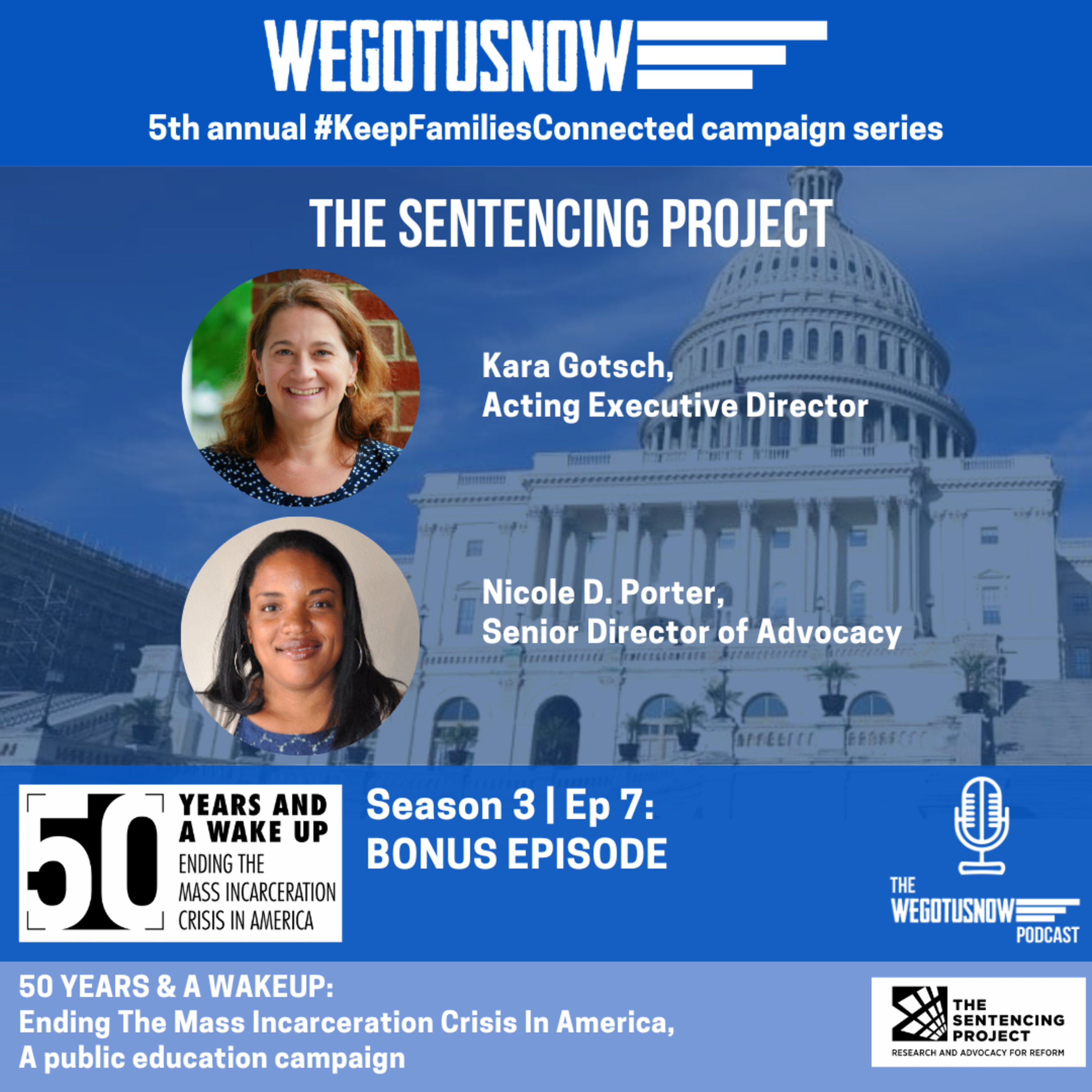
S3 | EP 7: THE SENTENCING PROJECT ~ 50 YEARS & A WAKEUP
70m 53s
The discussion centers on mass incarceration in the United States, framed by the Sentencing Project's "50 Years and a Wake-Up" campaign launched in 2023. This marks 50 years since the prison population began surging in 1973, leading to a system that prioritizes extreme punishment over community investment and social services. The campaign aims to highlight this crisis and mobilize those directly impacted and advocates for change. Experts explain that mass incarceration is driven by policies like mandatory minimums, life sentences without parole, and expanded policing, choices not made by other Western nations facing similar crime trends. These policies have failed to enhance public safety while causing profound harm to individuals, families, and communities, with the number of people serving life sentences now exceeding the total U.S. prison population in 1970. The Sentencing Project has long worked to popularize data on incarceration's racial disparities and growth, advocating for reform. Despite evidence against punitive approaches, current political trends risk reverting to harsh sentencing, underscoring the need for continued advocacy to shift resources toward rehabilitation and community support.
Mass incarceration in the US is the great tsunami that has ripped apart families and destroyed communities. At the epicenter of this destruction are the children of those incarcerated. My name is Ebony Underwood. I am the founder CEO of We Got Us Now. We got us now as the first of its kind, national, nonprofit, nonpartisan, organization, built by, led by, and about children and young adults who have been impacted by parental incarceration. These are our stories. Welcome, we're here at the Sentencing Project. This is the third season of The We Got Us Now Podcast. And I'm here with two incredible change makers. I'll let them introduce themselves. Hi, I'm Nicole Porter, Senior Director of Advocacy with the Sentencing Project. And I'm Karagach, Deputy Director at the Sentencing Project. Nice to be in conversation with you, Bill. It's wonderful to talk to you. Always an honor. Yes, yes, yes. So we are here today to talk about this campaign that you all have launched this year. We got us now as a partner in the campaign. Nicole, I'll let you speak more to the title and what it means and why. Yeah, and thank you so much. It's been wonderful to have. We got us now as a partner. The 50-year-in-a-wake-up campaign is a narrative campaign that the Sentencing Project launched this year to March 2023 is the 50th year Mass Encarceration. That's because 1973 is the first year that the prison population started to surge in the United States bringing us into this current era that we're living through now, the era of mass incarceration. So we titled this narrative public education campaign 50 years and a wake-up. A wake-up is that reference that a lot of folks who are doing time have been disappeared to prison in jail, referenced their time served and the day that they're exiting. So if they're sentenced to 20 years or 50 years in prison, they're serving 50 years in a wake-up. So we did that intentionally as a way to call in people who are currently incarcerated in prison and in jail, as well as connect to people in the free community who are working around the country in partner organizations like we got us now, but also individuals who are directly impacted, formerly incarcerated folks in their family and loved ones to join us in this narrative conversation throughout 2023 to call attention to the mass incarceration crisis in America. Thank you so much for doing this too. I personally feel like this is really, really important because of the way that I've personally been impacted. Of course, you all know it's very personal to me, but also just people have still to this day. Like they hear the word mass incarceration, but they don't really even know what that means. And so before we get into this campaign and really dive into it, Cara, I would love if you could speak to you being here at the Sensing Project and even the journey of the Sensing Project focusing in on mass incarceration. And what does it mean? Yeah, I mean, that's a good question because I think a lot of people don't know when we use the term mass incarceration with that means. I mean, I think it's important for people to recognize that the United States is a world leader in incarceration. We rely on sentences of incarceration and extreme punishment to address a lot of our social problems in this country, right? Instead of investing in communities, after school programs, mental health services, broad access to substance use treatment, we rely on mass incarceration because we have decided that investment in that aspect of public infrastructure is the way to go, as opposed to investing more in communities and social services and those kinds of strengths. We obviously don't believe at the Sensing Project that that's how we should be focusing our particular resources, but that's the decision that our country has made. And that's what we have had a huge build up. Over the last number of decades, we have seen policy makers respond to the war on drugs or increases in substance use disorder. Instead of focusing more attention on how do we divert people from using drugs? How do we figure out how to punish them? And that hasn't worked for people who commit other kinds of offenses, including serious violent offenses. We have extended the loan for their time in prison when maybe 30 years ago you might have faced a 15 or 20-year sentence for a violent crime. Now you're looking more likely at a life sentence or another very long extreme sentence. Many people who are sent to prison will die in prison. That is really a uniquely American experience and experiment that our organization is really trying to shine a bright light on and make sure that policy makers and the public know of the consequences of that. We're using resources for people who no longer are threat to public safety, who long ago aged out of the likelihood of committing crime. We're paying instead for them to enter their twilight years to die in prison when there is no public safety benefit. And instead we're causing great harm in fact by doing that. Instead of returning people to communities and families where they can be contributors, improving communities, and building up their families, we're choosing to keep them away from communities. And that causes great harm not only because prisons are inhumane places to live or to be incarcerated, but because it is doing a disservice to to keep people there when they don't belong there. And so the focus on mass incarceration for the sensing project has been more than 10 years that we all have focused on this. Over 35 years. Yeah, he has been in existence as an organization. Yeah, focus primarily on this issue. Well, I mean, the SITANCE project was founded as a legal services organization to help prepare criminal defense attorneys to prepare a synancy report. Well, that was one of the original missions or priorities of the organization when it was founded in the mid 80s. Then when the second executive director, many people believe him as the founding, but he was not Malcolm, young was the first, then Mark Mauer, then our current executive director is Amy Fettick. But when Mark joined the organization late 80s, with his experience, sort of looking at data, very few people at the time were helping to sort of popularize these numbers that were being published regularly by the Federal Bureau of Justice Statistics and the public interest. The Bureau of Justice Statistics when published these annual reports in terms of what the realities were in terms of the nation's prison population and then state level data. I think they would issue press releases, but it would go often unheard. One of the priorities of the synancy project under Mark's leadership was that there needed to be a bridge organization between the folks producing the data like the Bridgesys Statistics and then also criminologists who were doing research in universities and research institutions across the country who were documenting the problems with the nation's growth of incarceration and the impact on communities, impact on residents, but it didn't have communications plans, right? Didn't weren't intentionally trying to get that information in front of the media to try to, shape a conversation, develop, establish a counter conversation to let people know that the prison population was growing unchecked, that people were being disappeared to prison. We have to remember this time, the height of the drug war, very anti-black, racially explicit news reports that we would look on now and be shocked probably by the languages used, the images used, that was dominating the news in the 80s and contributed to normalizing the expectation that prison, jail, arrest, policing were experiences that people should become accustomed to, should get used to. And so the synancy project in the late 80s, early 90s started publishing reports to get to a mass audience publishing press releases to communicate to reporters and journalists. Mark was actually on the nightly news. I think it would be a little unbelievable today to think that in the news market is so different now, but at the time we have these archival videos of Mark on the NBC nightly news being interviewed by some of those famous anchors from the late 80s, early 90s, talking about synancy project reports, documenting racial disparity in the prison population, documenting the drivers of incarceration, right? And at the time, very few, if maybe only the synancy project was doing that type of work, and so it really helped popularize the fact that the nation's prison rate was growing unchecked to sort of bring it into the popular consciousness. And that coupled with advocacy and trying to counter the punitive laws that were being adopted at the time, contributing to the increases in people being admitted to prison in jail, increasing length of the day that's contributed to the growth in incarceration. The synancy project has been working since that time to try to push the country in a different direction. That's so awesome to hear. You know, before getting into this work, the syncing project was the organization that I would go to before research around this. It was like, oh my god, people are actually talking about this, but from the lens and perspective of understanding that this is like wrong, right? And this is harsh, and this is egregious. What are we doing to hear the backstory and to get like real context about like where it started? I think for people to just know, it's so important. But here we are 2023, and we're still in this cycle of. Fighting a good fight. Yeah, that's right. Yes. I'd love to hear what was the driving force to stay committed to this issue? Because with that cycle of attention, you're going to win into a bunch of different directions. Like, what was the driving force to stay on point with this issue? I guess that's partly leadership, right? And a commitment to the cause, understanding deeply that the harm caused by the prison experience, both for the individual and for families. I mean, I got into this work a long time ago. Not quite 35 years ago, but in the 90s, I remember. I worked at that time on prison conditions issues. And I remember going in and talking to people who were incarcerated, and at that time I worked for legal organization, so I would have access to their case files. And I remember very distinctly interviewing number of people who were vulnerable and had been abused while they were incarcerated. And I could see in their files, many of those who had been abused had a below average, not just below average, I accused, but I accused that would qualify as intellectually disabled. And in those conversations, knowing sort of that background and hearing how individuals were communicating and knowing what their underlying offense was, I remember thinking, why is this person even here? They have undergone so much abuse and so much trauma just in those short period of time. Look, I mean, several years of being incarcerated, but there's no reason they need to be here. And that was just so overwhelming. And it made me want to shift my focus from improving prisons to stopping the flow of people going into prison. That seems so critical to me because so much harm is happening in prisons. And we have such a bloated system of incarceration here. I truly believe you can never have a good prison, right? You're never going to have a rehabilitated prison if we choose as a country to incarcerate people at the level we do. There will never be enough funding resources, people to address the needs of many of the folks who were incarcerated, and you will just continue to cycle of abuse and trauma that many of them have already experienced prior to coming to incarceration. So that's when I as an individual decided to make the transition action to the sentence in project, which was about stopping the flow. I really thought that that was critical. And I think that people who come here also share that commitment, compassion, devotion to ending the harm and just significantly bringing down the prison population so that we cause less harm as a country. Right. Right. Right. Mass incarceration and imprisonment. And I think our leadership has been committed to that as well. As the prison population has grown, the number of people directly impacted has grown awesome. There's very few people who can say that they don't know someone who's been impacted by the prison system, by the correction system, more criminal justice system. And in some ways, that's why I think the movement for reform has grown so much. And actually, I know that's why the movement has grown so much because so many people are directly affected and directly impacted and want to see change. So it was surging, right. When you were in the midst of it. But where was the moment where you all have identified like, oh my god, this is now literally mass incarceration. Was there like a, is there a date at that point where that happened? Was it the 90s? Was it 1990? Well, so 1973 was the first year that the prison population started increasing. It peaked in 2009. Okay. And it started modestly declining, but not at a scale that matched the rate of growth in the 70s through the 90s. In the 90s, the crime rate started to go down. But the incarceration rate continued to go up. And that's because the length of time served requirements had increased due to a mix of policies, mandatory time served requirements. Many of your audience may know about mandatory minimums. So that's sentences that were adopted at the federal and state level across the country that regardless of the circumstances for the defendant, if convicted or if pled guilty, the defendant was required to serve a number of specified term of years, regardless of the individual circumstances or even how many offenses they might have committed prior to that sentence. Other practices that helped contribute to that lengthening term or confinement in the 90s was the elimination of parole in a handful of states around the country and the adoption of life sentences. One of our priorities is eliminating life without parole because that has been a driver of the number of people who incarcerated and it's such an inhumane synancing practice in terms of contributing to disappearing people away to prison and not considering the ability to change once incarcerated for a range of reasons, not just because at the human level, somebody may change, but people agent to disability. The circumstances that might have led to a sentence can change a person in addition to the rehabilitation or personal development that people engage in while incarcerated and the life without imprisonment policies that are driving synancing don't take that into consideration in many of the jurisdictions that continue to uphold them. And in fact, the number of people sentenced to life imprisonment today exceeds the total number of people who were imprisoned in 1970 before the air of mass incarceration started. So the fact that just the number of people sentenced to life imprisonment exceeds the total number of people in prison at the federal and state level in 1970 is one major factor that folks in the audience should consider when like how redefining mass incarceration. And I'll just say that violent crime didn't just increase in the United States in the 70s. Violent crime also increased in other Western nations. Other Western nations did not respond to their increases in violent crime in the way that the United States did. They made investments in social services like here I was talking about earlier to prevent people from coming in contact with the criminal legal system to begin with as opposed to normalizing incarceration and imprisonment as a life outcome for marginalized communities who are most at risk of arrest and incarceration. So the United States made a choice in responding to violent crime in the 70s and 80s within prison as opposed to investments or prioritizing public resources to help marginalized communities avoid incarceration or avoid the trauma and harm of their criminal legal system, particularly given how traumatizing their criminal legal system is. I mean, Kier talked about prison conditions. Obviously the news is often covering fatal police interactions. So even at the point of arrest there can be very traumatizing experience for residents. And in fact, that's considered to be one major driver of why the growth in of incarceration increased in the 80s is the likelihood of arrest that residents have because of the expansion of the police force. That was a finding uncovered by the National Academy of Science and its report that was published almost 10 years ago in 2014. So since the early 80s, American residents have a higher chance of coming in contact with police because they have a higher contact of coming in contact with police. They have a higher chance of getting arrested and that leads to a range of other outcomes that contribute to the increase in incarceration. That policy responds to violence focused on expanding policing and expanding the likelihood of imprisonment in incarceration are choices that the United States made when other countries did not make that choice. Other nations have done it much more successfully, right? I know in the book Mark actually wrote the meaning of life with our colleague Ashley. Right. Right. Right. Right. And they talk about 20 years as enough, right? That's the subtitle. Other countries have, as you said, come into our surge of violence in their communities, but they reacted and responded in different ways. My question now is what is the answer or response from policymakers when that issue has been brought up in the statistics and data and research have shown that we can do this in a better way? What is the response? I think part of the reason why this campaign this year is so important is because we're trying to remind particularly policymakers of the lessons that we've learned. We are now in an environment that very much among policymakers that's echoing a lot of the really harmful political rhetoric that we encountered in the 1980s and the 1980s around crime and responses to crime. You know, we've been pushing back really hard against in states and at the federal level moves to increase sentences, moves to denounce reform efforts both at the local and national level. And the campaign serves as an opportunity to say we've done this. We are the most punitive nation in the world yet we continue to have crime at unacceptable levels, particularly violent crime. We have an increase in gun violence in this country in response in my view largely from the pandemic and people's reaction to the pandemic has definitely influenced, I think, crime, the increasing violent crime levels. That punitive tough harsh response has not made a difference. It doesn't mean crime stops. It hasn't diminished his acceptable levels and now we even have enough tick again. We have to do something different. We cannot rely on this uniquely American tradition of locking up more people for longer periods of time. I think right now, you know, there are certain politicians who think that more prison and longer sentences is the right approach. And me as an organization are working really hard to remind them of the evidence that says the opposite. I think there are policy makers who are willing to look at the evidence and consider the evidence, but we're also in this unique environment of sometimes the truth doesn't matter. And that's something we also need to confront. So not just statistics and research matters, but a broad constituency of individuals who have diverse experiences and knowledge needs to be sharing a message about the evidence, but also the experience of what 50 years of mass incarceration has caused and how it has harmed individuals. There are families and communities because there's a lot of data and evidence out there. It influences some people, but it doesn't influence everyone. And we do need to have a cultural shift mindset. And I really do think individual stories and experiences directly impact experiences are so critical to changing the hearts and minds of lawmakers and the public to make them understand the consequence of this punitive mass incarceration approach and how all the harm it's caused. Because a lot of people don't seem to be moved by the evidence and the statistics, which I do believe as a part of a research organization is really important, but it can't just be about that because not everybody is moved to change. I feel like the way that we have to think about this is absolutely what you just shared. What is driving people to push this policy and where's the point of connection that us as like, right, allies in this work, to end mass incarceration and come up with reimagining how we do punishment in this country? I think that there are elected officials now, elected at the state level, elected locally, so mayors, county level officials, who have been directly impacted by mass incarceration. Some of them have direct experience. They've been arrested. They may have not been sentenced to an offense. I don't know that we've done all the research to understand exactly which look have let ease in states. People who have been formerly incarcerated or who have been convicted can then go on to hold office, but that does happen and it has happened. We have a colleague out in Washington state, state Rep Tara Simmons, who is formerly incarcerated woman since getting elected up to offices helped champion in expansion of voting rights, another alternative to incarceration. There's a growing number of people who with lived experience through incarceration who are interested in political office. And so within our lifetime, in the next couple of election cycles, that might be a growing reality. And those folks lived experience will help shape policy. We'll make them policy champions that informs hopefully a better way around not responding to problems with more incarceration because of our own lived experience in terms of influencing their ability to develop shape and get policy adopted. And I think even for current elected officials who have not been formerly incarcerated, many have loved ones who have been. So there's a handful of state elected officials who are champions to criminal legal reform who often talk about a sibling or a friend or a constituent who has moved them to act, to move them to be a champion for change. And so that is happening as care was mentioning earlier because of the scale of incarceration. So many people either know someone, directly impacted who's either in prison or who has been in prison or were in prison themselves. It is an unfortunate outcome of mass incarceration that the scope of it, the scale of it, I think will drive more and more people to act. And I think that's the moment we're in. 50 years into this mass incarceration era given the scale of incarceration that the country continues to live through working with folks who want to be champions, whether or not they're elected officials or grassroots activists and want to identify the solutions to point the country in any direction. I think that is happening, but obviously we need more of it. And I think those policy solutions are around giving people hope for something else that in responding to real concerns are on time, increases in violence. The idea that building more and more prisons or disappearing more and more residents to prison isn't a solution because we've been doing that for the last 50 years. And yet there are still these outrageous coincidence. So there have to be other solutions. There has to be another way to stop the gun violence that leads the news that makes people anxious to go into public because of the likelihood of a mass shooting or the fear of a mass shooting. There has to be another way. There has to be another type of opportunity for the corner boys or the young men who might be hanging out on the street who are marginalized at risk of contact with the police and if things go the wrong way because somebody woke up on the wrong side of the bed because it's in the heat of summer or for whatever other circumstances could lead to an escalation. There has to be other types of opportunities that the community can be looking towards policymakers and residents, community stakeholders can be asking for, can be demanding. I think one of the things is that communities in officials and residents demand more. They deserve more than prisons. They deserve more than a large police presence that increases the likelihood of incarceration and arrest. They deserve all the things that Karen was talking about earlier. If we care about public safety, if we care about the reasons that might lead people to commit crime, then investing in communities that lead to quality services, quality increased, improved quality of life has to be a better outcome, has to be a better way than building human warehouses that lead in result in the likelihood of imprisonment to begin with. I think it would be an underdeveloped conversation if we didn't talk about race in the United States and how race is such a dominating force in developing policy and thinking about what the policy solution should be, what investments, how the United States is going to invest resources in policy in order to get at the problem, rather than developing or establishing solutions that continue to reinforce harm or continue to reinforce trauma because the people being impacted by those policies, those tough on crime policies aren't viewed as fully human, aren't viewed as worthy of the future. I think that everybody is worthy of a future and this is why it's going to be so important given this fellow mass incarceration. The future that policy makers and stakeholders imagine is for everybody so that those solutions don't rely on arrests, they don't rely on imprisonment, even the guys on the corner who may be loud or who people question like what are they doing there, they deserve a future and we have to imagine their future not just where they are today but where they could be going and what services, what interactions could get them there and we can get into all of this sort of weeds on that but I think that's one of the central thoughts that I really want people to understand is that everyone deserves a future and if we organize potential policy and solutions around that then hopefully that'll help move the country in a different direction away from mass incarceration. Well that goes to the point of you know we carried what's saying too about uplifting the voices and the stories of those that have been impacted have what may have been those boys on the corner who have been incarcerated for such a long time and why they should be part of this conversation especially given the size and scope of impact that has happened here in this country. And so when you were asking well what's the policy and or policies I mean it's so comprehensive what needs to happen and so much of it is about believing in people in a different way right and not letting racism cloud our vision of the future and what people deserve and what they don't deserve. Why do we have mass incarceration or why have we decided to approach punishment as the solution to social problems is like well why is have we as a country decided that universal health care is not something that should be guaranteed a birth that is also a mystery to me right shouldn't everyone be able to have good health make sure that their needs and well-being are taking care of both physically and mentally emotionally but we've decided that that should not be of national public interest other countries they haven't decided otherwise right to real mystery in part of it and and I think racism influences that I think this sort of belief that where individualism in the United States we're not collectively focused we're more selfishly focused might influence that as well that's why earlier when I talked about culture change that there is deep-seated culture change that needs to happen to take on the immense transformation in our country that needs to happen in some respects to get to where certainly the sensing project would and I think we got a snout would want our criminal justice system to be I mean obviously we don't want to rely on a criminal justice system at all because it's certainly no respect in the wake functions now and we need to re-imagine how we hold people accountable right of cost harm right I mean harm is real and it has profound traumatic effects that must be accounted for and people who are victimized must be cared for interestingly enough given how much conversation there is about protecting victim from prosecutors victims are not protected in this country their needs are not addressed even when great harm has been caused to them it's just a system of hurt all the way around right I think we would have learned know from the pandemic it seems like people have become more compassionate around all of these issues especially in light of the pandemic and the separation like what we got us now what we brought up was the fact that we are all experiencing this pandemic which to us as starters and sons that have been impacted by mass incarceration and incarceration and the separation of our parents we're so used to that it was like oh now the world sees what we have been experiencing all this time isolation and yes and not being able to reach or you know connect with your loved ones you know in the way that I guess everybody kind of takes work yeah that's really interesting I hadn't really thought about that sort of connection yeah yeah there was real connection with that but with that being said it brought light to like what this experience has been not just for us but also the separation and then also the importance of well-being and you talk about health care I personally think that it's like our systems right like we've been screaming to our policymakers but apparently you know they listen you know and it sometimes feels like it goes in one ear and out the other but I feel like it's the other systems that we may need to be in conversation with about how to best support one another as a society and right like as a society like what does that look like how do we support one another it may take you know corporations lifting their voices and it seems like they they've been doing that to some degree I feel like people are a little bit more compassionate I'd love to hear your thoughts and like if you all have encountered that at all in this work I know you all specifically work around policy and research thinking about this cultural change I mean certainly after the murder of George Floyd right there has been a lot of surge in conversation around injustice obviously in the context of policing as you know but more broadly racial injustice racial injustice not just in the context of policing but obviously that is a huge piece in about it I feel like there was a lot of frustration and disbelief that we are still confronting after 400 years sort of our original sins and why can't we get over this but why can't we fix it it was really wonderful to see the protests over that summer and into the fall in response and there seemed to be you know even corporate America responding and making investments in community-based organizations and recognizing that racial justice needs to be also a concern of corporate America that was great I wonder whether that concern still is at the forefront for them now three years later maybe it is maybe I'm not being generous enough it certainly has sort of fallen out of the headlines in the way it was more centered a couple years ago but certainly that was a wake up moment I think for the country and for broader America and it was exciting to see that real groundswell of protest take place but we have those moments periodically right through out our history were horrible incidents events take place and there's a spark that goes off and people's minds and recognition that we have not come very far as a country in context of racism and exploitation but it never ends right I mean we got to keep building our community building our coalition expanding the network of people who are sharing their perspective because it's a big problem obviously I mean that's like the understanding of the world but I do think that politicians are motivated to stay in power and if what they believe will require them to stay in power is to ensure justice and ensure racial justice that maybe we can make some more meaningful inroads of change if that is what a politician believes they need to maintain power is they have to advance the kinds of changes in policy reforms that we are calling for I think some were politicized over the last three years I think the congressman frost out of Florida the youngest member of congress he you know who knows what his future will hold given he's still in his 20s and he's elected to congress and he may have several decades ahead of him in terms of being a policymaker and congress or in some other office certainly others were activated over the last few years as part of the reckoning following George Floyd's murder some of those folks have gone on to get elected to office but their folks are in the community organizing I think one outcome of the window over the last three years is the politicization that some people went through following the murder of George Floyd and the education that they experienced that helped deepen their own political awakening or political analysis will hopefully contribute to their continued engagement over the next three years 50 years and those folks who got activated who got engaged will be in this coalition to help challenge mass incarceration and I think one of the opportunities of this campaign is to help with people's political development right so we are engaging in a narrative campaign we're working with partners at the national level at the state level calling an attention to 2023 being the 50th year mass incarceration talking about what God is here talking about what solutions the country should be looking at to move us in a different direction for people who were partnering with through organizations or at the individual level hopefully this conversation can help contribute to that political awakening that perhaps for some started in 2020 following the murder of Mr. Floyd for others they are continuing to build on that awareness that analysis and these are going to be the people first whether they're going to be voters or going to be residents some people though cannot vote I mean one of the outcomes of mass incarceration is the growth of people who are disenfranchised from the franchise disenfranchised from voting because of a felony conviction in some states like Virginia and Iowa Kentucky for life unless they receive a pardon or do some executive action by the governor till the constitutions in those states change other people are disenfranchised because they're still in the community completing their sentence and in some states that's decades and but some people are activated and they're engaging in other ways they're doing the organizing so we have a colleague based in Texas or hey who works with Latino justice okay cannot vote was released from prison many years ago will not complete his parole term for many other years but while on parole has led organizing campaigns leads political training workshops for other formerly incarcerated residents not just in Texas but across the country he's helped write laws but he can't vote on the elected officials who will have a final say on whether or not those laws get enacted but he's a resident paste axis and is engaging in the community in other ways including as an activist with the leading Latinx civil rights organization so in addition to folks like Jorge and other formerly incarcerated activists who can't go into the ballot box and cast a vote because they're disenfranchised but can participate in other ways right their politicization because of mass incarceration can help contribute to this growing echo chamber this growing coalition that can move the country in other direction and then there's the folks who will join them because they were activated by being called to action because of Mr Floyd's murder being called the action because of other events because of the mass shootings that continue to happen and the concerns over gun violence and the reality that the current whatever needs to happen the current policies aren't happening aren't contributing to change and an understanding that mass incarceration can't be the solution because they see the harm of mass incarceration and other impacts of the community so I think that that is part of what we're trying to do and that will contribute to part of what needs to happen going forward is to support people where they are in developing that political analysis welcoming people into the coalition that needs to continue the work to help move the country in a different direction and then give people places to join give people the tools to support their work and their continued involvement in this issue whether or not they can go into the ballot box or whether or not they can't because they're disenfranchised and there's other ways for them to engage in the conversation I think that political awareness that you talk about is critical a lot of people feel activating a lot of people feel vocalists a lot of people have been feeling fatigued by all of what has happened from George Floyd on forward but a lot of times they don't know what to do so bringing in back to 50 years in a wake up think you all have one of the toughest jobs on the planet with this work that you do there's an attempt to build a federal prison that nobody wants including the federal government but there's a congressman how Rogers and Kentucky who has been working for the last 17 years to try and get a prison built in his rural district he already has four because coal industry is dying and he sees the prison industry as next job creator in his rural district the Trump administration said they don't need another prison the Biden administration says they don't need another prison but Congress won't rescind the 500 million dollars that's been allocated to build this new prison what 500 million dollars for one you imagine can you imagine what 500 million dollar how that could be used in other ways i get their stimulus program instead of building a new federal prison that one prison yeah yeah five hundred million dollars sure it will cost more than that but that's how much they've already allocated i mean there's a billion dollar prison planned at the state level in Alabama a state that's chronically overcrowded and the human warehouses they are just outrageous in terms of their conditions and i think part of this work is for how Rogers and others including the governor of Alabama if they're really focused on stimulus because in some ways that's what directing money towards a prison construction project is then what else could they be building in their community that doesn't rely on disappearing people the people don't know this the people we don't know this we don't know that there's five hundred million dollars allocated to build one prison that nobody needs ten dollars in Alabama to build one prison well several state prisons but yeah when Alabama is one that has some of the lowest quality of life in decators for his residence and if the state is gonna organize a financing deal to go on a prison building boom what else could the state be doing exactly through the quality of life for their residents what are we doing that is absolutely nuts i would hope that the hope is it's working at demanding more that people deserve more and that rather than how Rogers continuing to move forward on a five hundred million federal prison and how Rogers is the congressman representing this world as strict as that residents should be working for more so in those church town hall meetings or it the library rec rooms where people come together in other sort of social conversations at dinner you know some holidays are coming up when folks gather around their family table that they talk about what do they imagine in their community rather than focused on fear what do they want what do they want to make their communities better and that the imagination around that can help drive a conversation that's hopeful that can help move the country in a different direction so congressman Rogers constituents i hope are coming together around a table with the plan for what's possible in the community and hopefully are communicating that to him so that he doesn't continue to focus on stimulus through prison construction that can bring resources into his rural district but in ways that are affirming ways that don't continue to build another human warehouse that disappear people to prison but in ways that can help develop the community and a transformative way and a holistic way has that money already been allocated so the money's already been allocated what we're seeking is a rescission so congress will take the money back the money has not been used yet the attempt was to build a prison on top of an old coal mine and there were environmental problems regarding the land and so there's it's been tied up for years and getting this prison built because the land is polluted most recently this has come up again because the bureau prisons is doing prospecting in the district to find a new location for the prison and so we got involved to say hey no there's no reason to find a new location for this prison this prison doesn't need to be built and what's interesting if you look at the numbers of the you know for the federal prison population it actually declined quite a bit since it's peak in 2011 and there's no reason that the federal prison should be building another prison and both the Trump administration attempted to get this money rescinded as the Biden administration they recommended that's their position that the money should be rescinded but only Congress can rescind the money because they Congress holds a push for Jim's wow so how Rogers sits on the Appropriations Committee and with the long-time chair for many many years and now is the chair the Congressional Science of Subcommittee on Appropriations and so has a position of significant influence on how the federal government uses the money because he writes the bills that says this is where the money is going to go so it's very hard to stop it but we're working on that and the love support from your network and listeners you know we have a take action on our website I was going to ask if that's something there is absolute call to action we're asking people to contact their house representatives forage them to tell the Appropriations Committee to rescind this money that you don't want to be spending $500 million on that's ridiculous prison and rural Kentucky can I say where some hope is despite the significant increase in incarceration there has been one aspect of the carceral system that's significantly declined since it peaked and that's the justice system okay so the justice system peaked in 2000 since then the last time the number of views in out of home custody were counted it had declined by 77% so that's a significant declined since when it peaked in 2000 to when it was less counted I believe in 2019 okay and I say that because if people want to imagine a reality around the overall criminal legal system the overall scale of incarceration we know that it's possible because the youth justice system has experienced a significant level of incarceration and I think within states there have been some states that have de-carcerated and then they've moved to permanently close prisons and then reuse them for non-carceral purposes okay yeah okay it's an experience that needs to continue right because even in spite of the practice of closing prisons and reusing old prisons for non-imprisonment purposes we still have a too high level of incarceration we're still in this mass incarceration era so much so that we're doing this work to call attention to and to bring people into the conversation and move the country in a different way but I think people can point to real examples that can give them hope and can give them practical realities to look at in terms of calling for de-carceration calling for an end to mass incarceration and then figuring out well what are the solutions that we can be talking about at those kitchen tables at the holidays that are coming up in Hal Rogers district and in Alabama and in other localities other communities around the country too so my home state of Texas there's a closed prison in the Dallas area that's being reused that's being planned to be reused for community space it sits next to a green space and the the Tarrant County Conservancy that's taken over this closed prison has engaged in community conversations many with directly impacted residents who are jailed at the closed prison some of whom were hired to help lead and engage in the community conversations of around what the future at this closed prison could be so that it's important to know that those types of conversations are also happening in the US there is this analysis that we incarcerate too many people right in the country many people politicized like we were talking earlier because they were incarcerated they continue to experience collateral consequences of their incarceration others because their loved ones were mm-hmm but we need more of that right we need that same kind of engagement with that same kind of energy in Hal Rogers district I'm sure that's happening but we need to support the people who are working right now in the Hal Rogers district to stop that federal prison and but it starts here you know they're actually doing the work yeah well and we're working on it we need more support and partners on the ground absolutely grassy partners it couldn't do it alone there's no one organization or one individual right it's a community a true community movement right because the problems are so great you know some would say that mass incarceration everybody gets it now right this is something that personally hurt people said oh you know mass incarceration we all get it we understand it's wrong okay so what are we doing what are some of the solutions what's the workforce development piece you know how are we doing reentry what are the problems but apparently no right the sensing project says no it's 50 years and a wake up and so with 50 years in a wake up I would love to know from you both what is top of mind and then what do you believe is the call to action I think top of mind though is building a broader stronger constituency of individuals families directly impacting people advocates academics policy makers church people people of faith people of goodwill children grandpa's grandma everyone who understand the who say they get it but prioritize this issue and are willing to speak up and give voice I feel like we keep saying that over and over again but it really requires all of us to be talking about 50 years and a wake up the wake up part is also wake up America it's true right that wake up pieces is too full right also a shout out to all of us who've been asleep for too long have just sort of accepted the reality of our culture that has allowed 50 years of harm to continue wake up we've got to stop it so I really do think it's about expanding the community and the movement to incorporate as many people as possible right and the take action is unifying you know making sure we're all talking and speaking in a unified voice and that we're clear about what we demand and I think part of that is we need to vision what we demand right and understand that the sensitive project has its policy priorities right you want to end mass incarceration by ending extreme sentences and tapping sentences in 20 years we want to expand the right to vote to everyone regardless of their experience with a criminal justice system the criminal justice system should have no impact on our democracy those are completely to you know there's no reason that should have any influence in who has the right to go and we want to end harmful incarceration for young people right is by debilitating our children we are creating harm for them as adults right it's right it's dimeed their ability to grow into successful people right yeah who thrive and that's what we want we want people to thrive yes it's building our community and unifying our voice so that we have the power yeah we have more power than our position gets I mean as a society too right mm-hmm right what we could be doing is also looking at real opportunities to decarcerate so in the communities that we're building with the coalition of voices and perspective that care reference getting this people together to demand more of their representatives whether or not they live in how Rogers district or they live in a district in New York California because there are two high levels of incarceration in every state every community around this country and even in states that have historically low rates of incarceration like who's that like a main like Vermont those low level incarceration states still have higher levels of incarceration than other western nations whose population exceeds theirs well so because the overall rate of incarceration in this country is too high even the jurisdictions that have relatively low rates are still far too high so this is work to be done in every community these coalitions those coalitions of perspectives that care I mentioned need to be getting together in every neighborhood in every zip code around the country and need to be visioning and imagining more for the folks on the corner in the city and for the folks that may not be on a corner but are in some other marginalized corner in a rural or suburban district and imagining in a future that keeps people whole as opposed to disappear them to prison in jail so working around decarceration at the very least thinking about ways to match levels of decarceration in the adult criminal legal system to what we've seen for youth since it peaked since the youth justice system peaked in 2000 to where it's declined to today and yet still there are too many youth who are in out of home placements I don't want people to think that despite the outcomes of the justice system they're set in their current satisfactory levels of youth retention there's still more work to be done to keep youth home so that they can thrive as what Kira mentioned earlier and then we need to be demanding more we need to be demanding more resources to keep people out of the criminal legal system to begin with and I just hope that for this country and I hope that for every resident that people can imagine that they deserve more that the most marginalized among us deserve more so that we can move the country in a different direction and the call to action around that would be to engage join us at the S&C project visit us online at S&Cproject.org the information including a snapshot of the overview of incarceration is right on our website people can learn more about the current trends in incarceration the drivers that got us here including the policies that got adopted in the 70s and the 80s that it contributed to incarceration growth and people can have those conversations at their dinner table right over the next couple of months they can get in contact with us if they want to figure out other ways to follow up in their community or with their representative with the calls to action that are on our website around stopping that federal prison in Kentucky or other cost action that we want to support so those are some next steps the people can take. I love that so the local support state-based support and then the federal support is building that coalition I just want to say thank you both for taking the time to talk with me today I'm happy to know that we're in this fight together I'm so really happy to know that you all are still committed to this work I think the important thing about the S&Cproject and what others can learn from the S&C project other orgs other allies other people would have been either ignited by 2020 and George Floyd I think that by staying on course and staying committed to your mission and what your vision for this country has been is what makes you a stand out organization and it's probably and it can attest to widening been around for so long yeah it's really powerful powerful work and I would encourage everybody to you know take a nod out of the S&Cprojects book and you know stay steadfast on your vision and commitment because it is so commendable I want to thank you Evedy and your family for the inspiration that you provide the colonized S&Cproject and the whole movement around S&C your experience and your truth telling and it's at a long ago right you know it always inspires me to hear you talk about the effective S&C on you and your family and your dad and now that I know your dad who is such a bright light and someone I love to work with without those personal experiences sort of informing the policy discussions it's just not the same right charts and graphs and numbers can really bore people it's pretty quite honest sometimes but having you and your brother there in the room talking about your dad and what it was like to grow up without him yeah completely changes the debate I know that was what back in like 2014 Anthony started and then I came down and was like oh my god I could believe how the conversation was centered around data I'm like wait a minute these are people are we not understanding yes there's whole families attached to these numbers yeah I try to emphasize that what I can't believe it and that yeah that's what drove me to say wait we got to do something like this is this has to stop yeah so now right so my father had life without parole I mean I talked to so many people and they would be excited then when his people were would be presented they'd be like okay no just because of the sentence yeah yeah this is something that we cannot take on or our hands are tied or we don't know how to help or we don't want to help again the sensing project because you guys were not into the whole political landscape and very much focused on the work it was a place that brought me much refuge and hope right this was a place that literally for me personally it brought me a lot of hope just around like okay at least there's somebody fighting on inside because I sound like a just a biased daughter when I'm like no this is like now that I'm learning these are so many families and so all I have to say thank you for your support because yeah my dad came home and as soon as you know of course he's he's 67 years old where's he going he came out in the middle of the pandemic where's he going like what's he going to work for over I mean oh I work for you know insta card he didn't even not operate the phones so but today he's a dooban but you know the sensing project was you know thanks to Amy Fettic and to you Cara just the this whole support of the staff you guys were like yes less work with mr. Bill Underwood and oh my god it's invigorated him well you know and he has invigorated or not just our research with our colleague like to tell you how often we hear from colleagues and say thank you for hiring Bill because he's often the only person in the room yeah when talking to congressional staffers or contact talking to the Department of Justice who has actually lived the experience and he has 34 years of experience in the Bureau of Prison he knows the Bureau of Prison better than most of the people who work at the Bureau because he has lived there longer than they have been alive right yeah that perspective that he brings is irreplaceable and he constantly is raising issues and topics in discussions that know whatever thought of yeah and that is immense yes yes yes and all they're so thankful for it okay so tell us what does he do here tell us his title he's the he's a senior fellow for the campaign to end life imprisonment and his work focuses on federal advocacy in particular because he was incarcerated in the federal prison system so policy makers at the federal level have control over the federal criminal justice system in case people didn't know that they do so he participates in hill meetings meetings with the Department of Justice Department Justice oversees the Bureau of Prison's which is where he was incarcerated he is talks with officials of the Bureau of Prison's and coalition partners media the media writes op eds testified in Congress twice his expertise is regularly relied upon by our colleagues and and they asked for him and they asked for him they requested him that's that in here he's requested to testify in Congress and that recently no I haven't been requested me no that is so okay see this is the joy thank you for bringing that up because yes it's like this is what second chances look like this is what the Sons & Sink Project is talking about this is exactly you all been saying this whole time he's a testament to that and thank God we came together as a community to like advocate for people to get these second chances because wow I'm like he's so much and I said and for him to be able to say there are more people like me yeah it's so important right we've had a huge victory in your dad coming home but the the conversation doesn't it right it doesn't it doesn't in there but it's such it's such a bright light I mean every time I see him I mean I'm looking at the picture like oh my gosh wow I'm still shocked I'm still shocked so thank you again he's thriving yeah he's thriving right and for his age that's such a wonderful thing and to be able to be like a part of something the most people are retired but he's like he's not in a position to do that and I tell you and it's not just about your dad's experience but that is a public safety solution we were talking about solutions earlier viding purpose right creating opportunity so that people have purpose right whether or not it's as an advocate when people come out or figuring out a strategy or on purpose for those folks on the corner or in this marginalized community it another rural corners or suburban corners that is public safety right there so your dad exemplifies it and there's other stories there's other ways to fill that out for the millions of other people who are impacted by the criminal legal system too absolutely absolutely look at how we brought that all together yeah all right one more time you got to tell people okay so where do we go if someone wants to get more involved how do we get people activated join us online at Sydency Project.org we have tons of information including toolkits on the campaign okay we welcome organizations grassroots organizations to national partners like we got us now and also individuals again many individuals are politicized because they've been incarcerated in jellies and themselves that their loved ones have and we invite all of you all to join us online and to learn more about the campaign and then take action and it's a year long campaign so let's keep it going and I think it'll go in some ways beyond okay I mean I mean I mean we this is a significant thing that we're trying to push the country in a different direction on so we're calling it tension to 2023 is the 50 year of mass incarceration but obviously this is going to be a cultural shift we're trying to push the country and a new cultural direction and at the end of 23 we'll take stock of where we are but clearly the goal around decarceration and ending mass incarceration will continue it has to there's been 50 years of policies that we're having to unravel yeah so if we don't want to continue or we want the next 50 years to look different that's going to take real investment in this but you all are committed yeah and I'm here with you yeah we get us now it's here it's committed we got this we got this right all right I think that's a wrap right yeah mass incarceration in the US is the great tsunami that has ripped apart families and destroyed communities at the epicenter of this destruction are the children of those incarcerated my name is Ebony Underwood I am the founder CEO of We Got Us Now we got us now as the first of its kind national nonprofit nonpartisan organization built by led by and about children and young adult who have been impacted by parental incarceration these are our stories to learn more to join to donate go to We Got Us Now dot org
Podcast Summary
Key Points:
The Sentencing Project launched the "50 Years and a Wake-Up" campaign in 2023 to mark 50 years of mass incarceration in the U.S., which began with a prison population surge in 1973.
Mass incarceration is a uniquely American system that uses extreme punishment instead of investing in social services, community programs, and rehabilitation, causing widespread harm to individuals, families, and communities.
Key drivers include punitive policies like mandatory minimums, life without parole sentences, and expanded policing, which have disproportionately impacted marginalized groups despite evidence showing these approaches are ineffective at reducing crime.
The Sentencing Project has worked for decades to bridge data, research, and public advocacy to counter punitive narratives and promote reform, emphasizing the need to reduce prison populations and address the trauma caused by the system.
Current political rhetoric is echoing past punitive approaches, making the campaign crucial for reminding policymakers of the failures of mass incarceration and advocating for evidence-based, compassionate alternatives.
Summary:
The discussion centers on mass incarceration in the United States, framed by the Sentencing Project's "50 Years and a Wake-Up" campaign launched in 2023. This marks 50 years since the prison population began surging in 1973, leading to a system that prioritizes extreme punishment over community investment and social services. The campaign aims to highlight this crisis and mobilize those directly impacted and advocates for change.
Experts explain that mass incarceration is driven by policies like mandatory minimums, life sentences without parole, and expanded policing, choices not made by other Western nations facing similar crime trends. S. prison population in 1970.
The Sentencing Project has long worked to popularize data on incarceration's racial disparities and growth, advocating for reform. Despite evidence against punitive approaches, current political trends risk reverting to harsh sentencing, underscoring the need for continued advocacy to shift resources toward rehabilitation and community support.
FAQs
Mass incarceration refers to the uniquely American system of imprisoning people at an extremely high rate, often for long periods, as a primary response to social issues instead of investing in community resources like mental health services or education.
It is a narrative public education campaign launched by The Sentencing Project in 2023 to mark 50 years of mass incarceration, using the phrase 'wake-up'—common among incarcerated people—to call attention to the crisis and mobilize advocacy.
While other Western nations invested in social services to prevent crime, the U.S. chose to expand policing and incarceration, leading to the world's highest imprisonment rates despite similar historical crime trends.
Key drivers include mandatory minimum sentences, the elimination of parole in some states, life without parole sentences, and policies from the 'War on Drugs' that increased arrests and sentence lengths.
We Got Us Now is the first national nonprofit organization built by and for children and young adults impacted by parental incarceration, focusing on advocacy and sharing their stories.
The Sentencing Project acts as a bridge between academic research and the public, using data and reports to highlight issues like racial disparity and the harms of mass incarceration, while advocating for policy change.
Chat with AI
Loading...
Pro features
Go deeper with this episode
Unlock creator-grade tools that turn any transcript into show notes and subtitle files.
 PodcastTranscript AI