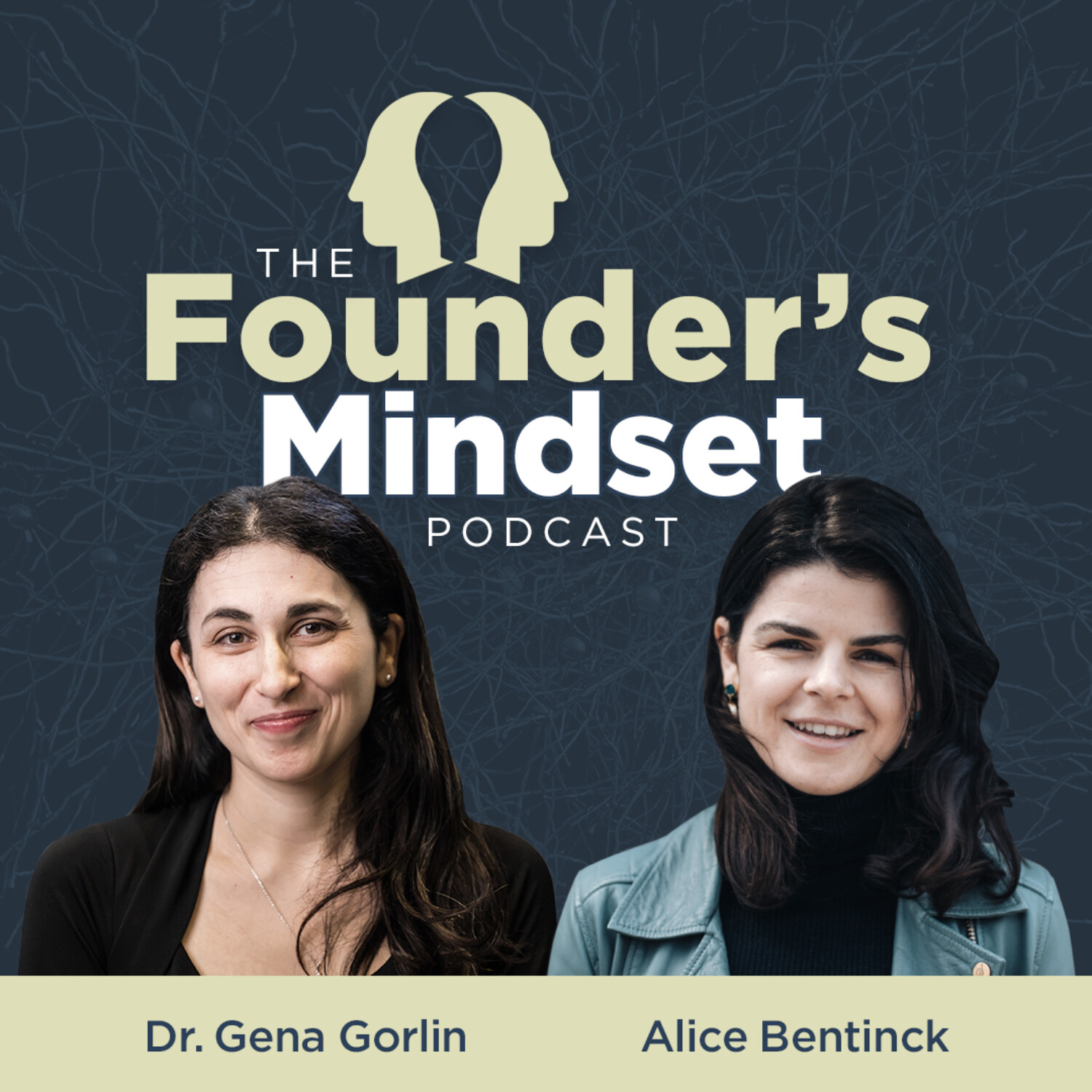
S3 | E4: Supersonic Flight and Why Big Ideas Aren't Crazy
55m 48s
Blake Scholl, founder of Boom Supersonic, shares his journey from a tech career to building a company aimed at making supersonic passenger travel a reality by 2026. His origin story is rooted in a first startup that failed to ignite his passion, leading him to invert his approach: optimize for personal motivation above all else. After leaving Groupon, he pursued supersonic flight despite lacking aerospace expertise, discovering that conventional wisdom about its impossibility didn't hold up to simple analysis. He describes the psychological weight of choosing a mission that could either fail spectacularly or change the world, ultimately deciding that trying and failing was better than never knowing his limits. Blake emphasizes the importance of a dynamic self-view, continuous learning, and using first principles to cut through complexity, such as reducing aerodynamics to Newtonian mechanics. He also discusses the "bystander effect" in entrepreneurship, where obvious problems are often ignored because everyone assumes someone else is solving them, creating ripe opportunities. Throughout, he stresses the need for personal growth, like learning to empower leaders and asking "dumb" questions despite discomfort. Looking ahead, Blake focuses on de-risking Boom systematically—securing pre-orders, proving market demand, and building physical prototypes—while acknowledging the immense execution challenges remain, but he draws confidence from past "impossible" achievements.
I thought I basically did everything wrong the first time and if only I could invert it
then we'd have a different, different story.
So I would get up in the morning and think, "Why in the world did I get into this?"
Either I fail at this or I kind of become famous and change the world, which is like a weird,
you know, a weird thing to watch psychologically, so I've got some stories I can share.
Welcome back to the Founders Mindset, the podcast where we deep dive into the psychology
of Founding a Company, through the personal stories of the Founders themselves.
I'm Alice Bentink, co-founder of Entrepreneur First, where we invest in individuals to help
and find a great co-founder and divide their ideas into a successful start-up.
I'm joined by Dr. Gina Gordon, a clinical psychologist, founder coach and faculty member
at the University of Texas at Austin, who's been collaborating with us to better understand
and support the psychological needs of early-stage founders.
Hi, Gina.
Hi, Alice.
In this episode, we spoke with Blake Shull, founder of Boom Super Sonic, described by the Guardian
as "the man who aims to bring the son of Concord to the skies."
Blake is on a mission to bring supersonic commercial passenger flights to the world by
as soon as 2026.
In this conversation, we discussed what moved Blake to take on this mission at a time
when it would have seemed crazy to almost everyone.
How he honestly answered the question, am I the person to go do this?
How he's had to grow and change to keep pace with his company?
And much more.
So without further ado, here's our conversation with Blake.
Blake, it is such an honor and a pleasure to get to interview you for our podcast that's
all about the Founders mindset.
I think if listeners haven't already heard of you and of your company, Boom Super Sonic,
probably at some point in the foreseeable future, they will have heard of at least the airplane
in which they're flying at double speed to get to their destination within the world.
So it's just such a cool privilege to get to look behind the scenes at the psychology
of the person who's building it all.
So thank you so much for being here.
Thank you for having me.
I'm excited for the conversation.
Well, let's dive in because there's so much I'm sure there's to talk about.
So when you think about your origin story and you think about what brought you to founding
Boom and everything that happened leading up to that point, I'm really curious if you can
actually let us in on any key experiences or takeaways from your prior ventures, particularly
if they were really painful experiences or hard one learnings that you brought to Boom
that informed your desire to found this particular company or how you've gone about it.
Yeah, lots of lots of learnings there and I broadly thought from, Boom is my second
real startup and I thought I basically did everything wrong the first time and if only
I could invert it then we'd have a different different story and so far I like how it's
going to boom.
But maybe I'll share a little bit more of my story and try to sprinkle some, sprinkle
some of the lessons through there.
So Boom, as I think everyone knows, is building supersonic passions or airplanes and airplane
that I hope ultimately everyone listening will be able to take advantage of to be able
to get around the planet far more easily than we can today.
Think across the Atlantic in three and a half, four hours, think across the Pacific and
four and a half, Tokyo to Seattle, think about being able to get to Australia or New Zealand
from the US as easily as we can get to Hawaii today.
So that's the big picture and the first question a lot of people ask me is, oh, you must
be an aerospace engineer, but I'm not.
I actually went to school for computer science.
I've loved airplanes since I was a kid but really never thought I've had a career in aviation.
In my mid-20s, I set a lifetime goal of breaking the sound barrier and I put a Google alert
on supersonic jet so I could be first to know when I could buy a ticket.
But it was crickets and kind of, you know, meanwhile, I was having my first career in tech,
worked at Amazon, when my family thought it was a bookstore, I could understand if I
will kid with computer science three wanted to work retail.
And then I had my first company that I started that sold to Groupon and that first company
I'll tell a little bit of the origin story there because it's a very, in my view, there's
a lot of learning in the contrast with boom.
And so I had been at Amazon so I thought I knew e-commerce and I had been at this other
startup called Pelago that was one of the first mobile app companies and so I thought,
okay, I knew mobile.
So what should I work on?
I should work on mobile e-commerce.
And so I started this mobile e-commerce company that built basically a barcode scanning
game that was intended for people who was shopping stores.
My and you, I'm an e-commerce nut and my least favorite thing in the world was going
to a store.
And so what I found was that it was like any startup that was really hard, except I
would get up in the morning and think, why in the world did I get into this?
You know, it's, I'm working really hard.
I'm really worried about failing.
I'm going to lose all the investors' money and let my friends and employees down and
let myself down and I'm thinking it's not even worth it.
And so when we had an opportunity to sell the company in a way that everyone would make
a bit of money and in a small exit, it was like a massive relief to me.
I thought, great, don't be a exit, stop having to worry about failure, live to found another
day.
And I actually look back and I feel really lucky that that first company didn't work.
Because if it had in a big way, I would have been stuck working on something that I just
didn't love.
And instead I got to spend, you know, two years at Groupon kind of retaking the bank account
and I'm reflecting on what I learned.
And you know, a joke I often make is there's nothing like working on Internet coupons to
make a year into work on something you really love.
That's the only thing that's just well done.
But the story also extends to my first company because I was not building something that
I was passionate about.
And so one of my first takeaways was that anything I'm going to do, especially as founder,
I'm going to work really hard at it.
I'm going to run at my personal red line because that's who I am.
And being at personal red line is going to feel the same from an effort perspective,
regardless of what I'm working on.
But what won't feel the same is how motivated I am.
And as I, you know, I left Groupon in early 2014, I was contemplating what startup I wanted
to do next.
And one of the first things I realized was I wanted to optimize for my own personal motivation.
And so that, okay, let me make a list of everything I might work on in descending order of how
happy I personally will be if it works.
And forgetting literally everything else.
Like is it physically possible, do I have the resume for it?
Is it a good idea?
And so I thought, okay, I will work down that list.
And I'll probably end up an idea number four, number five, after I've crossed off the other
stuff.
And of course, I'd have this like supersonic thing in the back of my head for like approaching
a decade.
I had had something on my two new lists called Figure Out of Start an Aerospace Company.
And all I had done is order some books I hadn't read.
I was like, okay, great.
I got a look at this supersonic thing.
I will probably get two weeks under the research.
And then I will understand why it's a bad idea no one's doing it.
And I will move on, I'll move on to the next far more plausible idea.
But instead, what I found was that there was a whole bunch of stale conventional wisdom
about why there wasn't possible that didn't stand up to careful analysis that anybody
with a spreadsheet and half a brain could do with data that could be found in Wikipedia.
You don't have to be a rocket scientist to look at it.
You just have to look.
And so I continued to kind of turn over more cards.
And every time I turned over a card, it was like, no, this is plausible.
This is plausible.
And I spent basically a year from when I left Groupon to when I hired my first employee
at Boom, really just getting educated, actually reading those books I bought, took an airplane
design class, built a spreadsheet model, the airplanes, started to meet people in the
industry because on day one, I didn't know a single person in the aerospace.
I had no network.
I had to have to build all that from scratch.
But along the way, there were kind of a lot of insights.
Now, maybe I'll lay out a couple of them here that I could talk more about in Gene and
Alice.
You can tell me which might be most interesting to double click on.
But there's one which is kind of the psychology of the decision to go pursue something that
was definitionally big like either I fail at this or I kind of become famous and change
the world, which is like a weird thing to wrap up with psychologically.
So I've got some stories I can share from that.
Another is what it's like to learn a new domain from scratch.
One thing I'll say there's a headline there is I think that knowledge and skills are way
more variable than passion is and passion trumps knowledge, but I could talk about that
more.
A couple of the big, a couple of the big things.
let me just pause and let you react and scare me.
- Amazing, thank you.
Alice, I know you probably have your own desired
follow-up direction.
And I, of course, just really want to eat up
your bullet point one about the psychological reality
of facing a decision, whether to go huge or go home
and being not on the 2020 hindsight and of that decision,
but on the end that I think a lot of our listeners
are familiar with where they're perhaps contemplating
their own version of supersonic air travel
and it sounds crazy.
And for most of them, it'll turn out to have been crazy.
You know, and like, how did you know at the time
that maybe this wasn't crazy?
- No, I mean, I didn't know that it wasn't crazy.
- And maybe you didn't know.
And that's interesting.
- I remember I had finally made the decision to go for it.
I called up my lawyer who had kind of incorporated
my first company and I said, Ted, you know,
I got another thing I want you to set up,
but let me warn you, it's crazy.
And I gave him the whole pitch for boom.
And this was the like really broken 2014,
very early pitch for boom.
And he said, I've got some feedback for you.
Stop saying it's crazy.
And, but the reality was, I didn't know
whether I would succeed at it.
And, you know, I spun for a while,
worried about that question, and then I realized
that the only way to know the answer
of whether it's really possible
and the other far more vulnerable question
of whether I'm capable of it
is to stop worrying about that and just try.
I don't think, I don't think I can know my limits
without running at something.
And I also don't think I can know my limits
without running at something
I'm really motivated to go do.
And, you know, a thing I would, you know,
I looked in the mirror on day one and said,
am I the person to go do this?
And from a static perspective, the answer was definitely no.
Like, I didn't have any experience in aerospace.
This was a company that would require billions of dollars
in capital.
I had to date raise less than a million dollars
for my first company.
I didn't know anybody in the, I mean,
like the list of reasons why I couldn't do this
was a mile long from a steady point of view.
But then I thought, okay, what matters more?
My passion about what I would like to create here.
Or my insecurities about what I'm capable of.
I thought, okay, well, I need to have a very dynamic view
of myself.
There's gonna be lots of learning
and self-reinvention along the way.
I'm gonna have to go develop a whole bunch of skills
that are things that not only can I not do,
I'm actually afraid of.
And I don't know how to predict on day zero
whether that's gonna succeed or not.
But I know for sure if I am at age 80 on my deathbed,
hopefully 120, but we'll see, looking backwards.
And if I never gave it a try,
I know for sure I will regret that.
And on the other hand, if I try and fail,
then I'll have found my limits.
And I remember thinking about the people
who set out to do big, hairy, ambitious things.
Like I thought if Bill Gates having said
that his goal at Microsoft was to put
a conversational computer in every home and in every desk.
And he said that when that was a really absurd idea.
And then truth is, they put also put them
in our pockets and our cars and like a bunch of other places.
They were massively overachieved that goal.
And I thought, well, what is it like to be Bill Gates
or somebody like that on day zero?
And my thought was that look,
the people who try to do big things
and succeed, history knows their names.
And we celebrate them.
And the people who try and don't succeed,
we don't know who they are.
They're lost to history.
They're sort of the dark matter of entrepreneurship.
But they know they tried.
And I thought I would rather try and fail
than think I'd never really found my limits.
And so in a way, it was jump off a cliff.
And I thought that the first 18 or so months on this,
I thought for sure we were guaranteed to fail.
And it turned out that was like oddly liberating.
'Cause I would get up in the morning,
I would feel very free.
I think today is the day that I find the bug in the spreadsheet.
'Cause it can't possibly be that I'm the person
that found the formula for supersonic flight.
And actually psychologically about 18, 24 months in,
it got way harder because I started to realize
that it actually all was doable
if there was a big oopsie, I would have found it by then.
And at this point now I've promised my friends and investors
in the world I'm gonna go do it
and then the pressure went way up.
- Yeah, well, what do we,
this kind of mental framework that I think is very powerful
and very liberating, this idea that if this goes right,
how big is it gonna be?
And if it goes wrong, how big is the failure gonna be?
And I'm amazed how often when founders are thinking
of this through, they're always thinking
about downside protection.
And they're not thinking about how big the biggest outcome
possibly be.
And actually as you're saying, like the downside is,
okay, maybe some reputational risk, maybe,
the worst that could happen is you learn a bunch of skills.
But the best that could happen is a globally important
world changing company that you will have no regrets
about having tried to make happen.
And I'm amazed how hard it is,
I think particularly for people earlier in their career
where they feel like it's a huge risk attached
to founding a startup.
How hard it is for them to lean into this framework.
But I do think it's super, super powerful.
It feels like you kind of went into this
with totally unconstrained ambition.
And one of our beliefs on entrepreneur first
is that there are lots of sort of cultural norms
that constrained people's ambition.
You know, the fact that you felt you had to justify
that it was a crazy idea and that the lots of risk
on that it was gonna fail.
How would you encourage some of our listeners
with thinking about going after ideas that seem,
you know, they'll be poo-pooed culturally
that are on the more ambitious side of things?
How would you go about encouraging them to build confidence
in their idea and ability to do that?
It sounds like you did that so beautifully for yourself.
- I mean, I guess my advice should be just go for it
because I'm not aware of a single successful founder
who doesn't have an immense story
of personal growth along the way.
Maybe if you're on your fifth startup
and you just kind of know how to do everything,
but I suspect even on the fifth startup,
if you're challenging yourself at all,
there should be a lot of personal growth there.
And so your founders are going to learn if they go,
they're going to have to reinvent as they go.
And so why not do it against something that's really worth it?
And I don't believe it is possible to know one's limits
without running at it.
And the best way for those limits to be as high as possible
is to be as motivated as possible.
And so that means going for a big idea,
but it doesn't necessarily mean a big idea
and other people's eyes.
It means, in my experience, going after a big idea
in my own eyes, because that's what gets me up.
You know, like there are, if you asked,
if you're at a survey of the world and said,
"What's the biggest unsolved problem in the world?"
You probably hear climate change or something.
I don't know, you hear something really popular.
And maybe for any different founder,
that's the right thing to work on.
But my view is that the personal motivation really mattered.
And so finding an idea that is big for me
was the most important thing.
And I got lucky in that what I found exciting and inspiring,
I was able to get other people to find exciting and inspiring.
And I don't think that's an accident
because passion is, passion's contagious.
- Can I. - Go ahead.
- Sorry, just trying to jump into it.
I want to just catch hold of this.
Is it partly important that people weren't already
that excited about it?
Like this is something you were really excited about
that was kind of a blind spot culturally.
Like people weren't even considering this a possibility.
Nobody was really working on it or not that many people.
And so it was this ripe fruit for the soul.
- Yeah, I mean, in part of me thinks like,
oh, I was really lucky to fall in love
with an idea that's really sexy.
On the other hand, if I look back at what the world thought
about supersonic flight in 2014,
it is not like the world thinks today.
Like we've been able to change that.
Back then, it was, oh yeah, Concord was a failure.
It was really cool, but it's kind of passe.
Maybe if supersonic flight comes back,
it'll be at us in the form of a private jet
for the ultra wealthy.
And if we're lucky, maybe in 50 years,
there'll be something available for everybody.
But it was not, it was not regarded as practical.
And moreover, I think a perspective that I was able to bring,
that boom has been able to bring is this idea of,
it's not about going fast, like top gun style.
It's about human connection.
And it's about what I think the fundamental purpose
of travel is, which is not about traveling.
It's about the experiences we have on the ground,
connecting with people, be able to fall in love
with somebody from anywhere on the planet,
be able to connect across culture,
be able to have do business on any continent.
And like that's, they're all these untold stories
about the importance of the transition
from propelary aircraft into the jet age,
that like, you know, for example, Hawaii
wasn't a tourist destination without the speed of the jet.
And it was all these things, you know,
I start to imagine forward, what would it mean
when we could go to Sydney as easily as we could go to Honolulu?
You know, what would it mean for my kids?
You've had a grandpa in Hong Kong.
They basically never got to see if Hong Kong were nine hours
from Denver, not 18.
That whole perspective.
And now I think we've had enough success
in kind of sharing that vision of Super Sonic Flight
that a lot of people get excited.
But yeah, in 2014, some people I thought would be,
that would be great if it worked, but I think you're crazy.
But I think that the actual impact of it
is still probably underappreciated.
- The vision piece is so inspiring,
particularly this connection of,
you're not just focusing on the functional output
of what the product can do at sea, it's the emotional piece.
One of the things that I definitely see founders
struggle with is when you have a very big compelling vision,
how do you balance that with what you're doing day to day,
which is probably reasonably detailed
and sometimes doesn't always feel like it rolls up
to the big vision.
How have you balanced that as a founder
and particularly bringing your team on the journey as well,
that kind of like my appear at the day to day
of being a founder with this extremely big and inspiring vision?
- So I don't think there's only one valid answer
to that question, but with a business like Boom,
where there is a very big long-term vision,
what I've found is that the easiest way to do it
is to get really clear on what the in-state looks like
and then sort of work backwards.
And that in-state ends up providing a lot of clarity
about what's going to matter in the short term.
So to make that a bit more concrete,
when I was wrestling with kind of whether to start Boom,
one of the exercises I did was say,
okay, let me get my own ego and insecurity out of this.
I want to, let's imagine the year is 2050,
that I'm sitting on the beach,
stepping my ties and reading about aviation history.
First off, I still think for flying around
at 80% of the speed of sound
or I think we've gotten to supersonic.
And I'm well sure, I sure hope we're going supersonic now.
Okay, great, how did that happen?
How do I think that history reads?
Do I think after 150 years of not doing it, Boeing did it?
Yeah, probably not, like history doesn't go like that.
It's probably, it was probably a new entrant.
Okay, what would that new entrant look like?
Well, they'd probably be from outside the industry
because everybody who grew up in the industry
would have learned all the lessons, but why can't be done?
So it's going to be an outsider.
Okay, great, what would the outsider,
what would the outside effort have to look like?
Well, it's really hard.
So they're going to have to have a dream team.
So ability to put together world class talent
is going to really matter.
Being a great judge of great talent is going to matter.
It's going to be a long journey.
So perseverance is going to matter.
And what enables perseverance?
What's going to be, it's going to be belief in mission.
So having a really clear mission
and having a team that is both strong
and really bought into the mission is going to matter.
And I could keep going, but my point is,
I was able to sort of take myself out of it.
Imagine what a success story would have to be like.
And then it's like, okay, turn that around.
Go become that.
And what I've found is that that, you know,
sort of working backwards view, kind of, you know,
sort of reverse historical reasoning has provided,
sort of an ever present view of what are the things
they're going to really matter.
And so, like culture is going to matter.
Hiring will matter, building a culture of resilience
and perseverance is going to matter.
Being able to be really persuasive,
being able to talk about what we're doing in a way
that will cause a lot of people to want to be part of it.
Both as individuals who are going to vote with their careers
investors are going to vote with their money,
suppliers, customers, like all these people
that we need to throw in with us years before this becomes
a reality, like the ability to tell that narrative
and get them excited about it and want to lean in
and be part of it and believe in it.
And like, you know, and the notion that that was going
to be important was really clear from day one.
And, you know, but to bring it back to me personally,
I did not have the capability to be that person
on day one, I had to learn it.
- You mentioned all the things that you knew you needed
to learn and you mentioned some of them.
You were afraid of learning or you were afraid
whether you could learn them.
I'm really curious retrospectively.
Have any of those fears come true?
You know, have any of the really scary things happened?
And if so, how did you deal with that?
- Like all of them and then some.
I mean, to give you a concrete example,
like the networking, for example,
building a network from scratch,
being able to go to events, meet people,
win their support, like on day zero,
like the most terrifying thing in the world to me
was a networking event.
And I've gotten to the point where I'm not,
I can do them and I actually enjoy them.
And so that's been important.
If I think about what has been psychologically
the most difficult, it's the areas
where I had a lot of growth to do,
but I didn't even realize it.
And so like going along, thinking I'm successful
at something, thinking I'm doing it right,
and then discovering that actually there's a,
there's a massive weakness or a massive shortcoming.
And I'm in need of, you know,
I've been making big mistakes that I didn't realize
I was making and I need to go,
I need to go perform a, you know, perform a self-system upgrade.
- Can you give us an exam?
- Yeah, I mean, so some of them have been around
how other people experience my leadership.
And the, like, I hear I'll share one that's,
that's relatively, relatively recent.
The, you know, I was having,
I was having some frustration with getting people
to kind of take up and take responsibility, you know,
for areas and drive them.
And this has probably been an ongoing thing, you know,
for the last, you know, forever in the company of,
you know, how do I hire big leaders
and get them to own and drive big areas?
And something I realized relatively recently
was I was doing some things that were,
with unconsciously disempowering my leaders.
And so there would be something that would come up,
I would get very curious about it.
I would jump into the middle of it,
thinking that I was doing a good thing
of being a leader who's connected to the details.
And in reality, what I was doing was,
was not creating space where my leaders felt empowered
and responsible for, for driving their areas.
And, and actually what I needed to do was,
very much the opposite of what I thought my impulse was.
And, you know, for example, I'd come to a status meeting
and deliberately sit in the corner
and make sure the team was speaking
to the executives accountable, not speaking to me.
And, and so once I started to see that,
I was like, wow, I'm actually,
it's not, I'm not just doing that in one area
of the company, doing it in every area of the company,
or approximately every area of the company.
And so I was like, okay, there's a whole set of typical,
typical ways of operating sort of my default mental software
that needs to be retooled.
And the worst versions of this are the ones
where something is actually a really healthy behavior
in one context, or at one stage.
And then the company, for those in develops,
and what used to be the exact right thing to do,
turns out to be, turns out to be the pathological thing to do.
You know, so for example, when the team is really small,
I believe founder CEO is need to be incredibly hands-on
and driving, but when more leaders come in,
that starts to shift.
Another example of that is, in the early days of the company,
I was really proud of our very low turnover
and very low attrition.
And I made the, I made the mistake of being proud of that
when it's really not something to be proud of.
And B, I talked to the team about it.
And then what actually happened was we built up
like all this attrition debt and got to a point where,
we actually had a bunch of people that weren't fit
or they had been a fit in an earlier stage
and were no longer a fit of a later stage.
And all that kind of built up and it was time
to make a whole bunch of changes.
And in an ordinary course of business, you know,
that's fine because some people who fit at one stage
don't fit at another stage, that's okay.
But I told everybody that it wasn't.
I told everybody that we're really proud of low attrition.
And then so it's like, oh, some people are leaving.
And it became this like far more painful journey
for the entire company than it needed to be.
So anyhow, some of the most painful,
difficult lessons are the ones that are surprising.
Like I think about the ways I've needed to grow
and develop that are the ways I anticipated.
It's been hard, but it hasn't been, I don't know,
gut wrenching, you know, it's the surprises
of the most gut wrenching.
But nonetheless, the thing that I always go back to is,
you know, I, no matter how difficult it is,
I still know what keeps me going,
which is I don't get to think what,
I don't know if the more I think,
why don't I get myself into this, is it worth it?
Like I know the answer is, yes, it's worth it.
- I loved what you said earlier about,
you had to have a dynamic view of yourself.
And I suppose what you're saying here as well is,
it's not just a dynamic view of yourself.
You are having to be incredibly dynamic
and agile in terms of how you behave at different stages
of the company.
And we do see a bunch of founders getting tripped up on this,
where, as a founder, you do have to constantly
and invest in scaling yourself as much as scaling the company.
You have obviously got a pretty repacious approach to learning, as in you took on learning
about an industry you knew nothing about, you've obviously spent a lot of time thinking
about how to improve an upscale as CEO and founder as well.
What's your secret here?
Do you have any tips and tricks about this?
It seems like this is something that you're particularly good at.
I think people underestimate ability to learn.
We tend to get taught, we go to school, we learn to feel, we become an expert, we become
a more narrow expert, a more narrow expert, more specialized, and then the notion of making
a rapid jump into something else, especially a little bit later in life is not socially
accepted or it's regarded as difficult or whatever, but I think actually the opposite
is true.
I think my ability to go learn things has only gotten better with time and there are a
couple of key ingredients to that.
One is having a good internal sense of what understanding versus confusion looks like,
and knowing any given topic, am I clear on that or am I really confused about it?
It's okay to be confused, I'm confused all the time, but I'd like to believe I know
when I am, and if it's something that matters, then I'm going to focus on it and I'm going
to stay on that until I get clear, and so that's one important one, like in the first year
of this, when I was still in the very big leaps of jumping into a new domain, I kept
the confusion list, meaning when I felt confused about something, I'd write it down, and
I had a goal of taking one thing off the confusion list every week, and I think I had my head
initially the idea that one day would become empty, but no, it actually, it only gets
here every week, but what it did have for me is self-awareness about what I was and was
not clear on, and that turned out to be super valuable, so confusion versus clarity and
not accepting confusion if it's something really important, that would be less than one,
and less than two is about thinking in terms of first principles.
I think, again, we tend to get taught that if we're really smart, then we handle complex
things and subtle things, and I think the opposite is really true, I think the real
wisdom is in very simple basic understanding, and so one of the advantages in coming to
a new domain into my career, I didn't have four years to go get a four-year degree in
aerospace, I had to understand things and simpler, more basic principles, but the result of
that was I could get to really important truths, I think, more easily than people who have
been steeped in knowing too much detail, and I found that that's not just true technically,
it's true in everything I've come across so far, I now buck at the world, and there are
things that are simple and there are things I don't understand yet, and being willing
to ask what seems like the really basic question, I've found is really important and powerful
in every domain, and yet, even to this day, I've been doing this for eight years, and I
know it's part of my success, but I still get nervous every time I ask a question because
I think it's dumb, and I just have to have that in any way.
>> Thank you for sharing that, that's awesome, it doesn't go away.
>> Yeah, some things go away, but that one still, I'll still be in a group of people who
I know are far more domain experts than I am, and I'll still have this question and I'll
feel like I should know the answer already, and maybe sometimes I should, I don't know,
but regardless, I think I need to know the answer, so I'll just ask a question, and I push
through that little bit of discomfort, and I basically never regret it, and I'm often
surprised at how often the response in the room is, that's a really important question
and none of us understand it, and at all, the whole conversation goes to a far more productive
place.
>> Yeah, can I just respond to the, I think, magical synthesis of the two pointers you
just gave, knowing when you're confused, knowing the difference between confusion and
understanding, and naming it to yourself, and thinking in first principles, because I
think people want to think in first principles, they want to be able to name and then proselytize
the simple insight, and so they settle for a woozy and underspecified understanding of
that insight, right, they're kind of proclaiming something that they don't really actually understand
in all of, you know, on the ground, okay, but where have I really gotten this from, and
what would it be, right, or they take that first model of intelligence you shared, right,
as, as lore, and they get really, really technical and jargony, and they get lost in the details,
but it's that synthesis, it's, do I actually understand it, have I identified a simple
truth that I actually understand, and could reduce back to all of the particulars I've
observed and seen underneath to be able to, to integrate it?
>> Yeah, I think that's, I think that's right, I think that, I think those two do go powerfully
together, and the thing I try to do is sort of tag in my own mind bits of knowledge with
kind of how confident am I in it, and how much do I understand it for myself?
And there are, there's just too much that I have to deal with, and too much that all
of us have to deal with, to get every single thing to this kind of perfect state of, I could,
you know, I could go back and rediscover it all from reality directly, but knowing, knowing
which things I know with what degree of confidence and, and where I have first 10 knowledge and
where I'm more operating on rules of thumb, allows me to kind of shift my cognitive focus
and go get more clear on the right things, the right times when I need to.
And I mean, I make this more concrete, because I think another thing is, I don't know,
I don't know if everyone knows like, how to know when I, when we've got a first principle.
So to give it, to give an example, in, in the technology world, you know, there are,
a bunch of rules of thumb and engineering about what's possible or not, and the, so long
as we're not trying to do something new, rules of thumb kind of tend to work that's where
they came from, but the fundamental stuff in, in physical world engineering is, is physics
and it's Newtonian mechanics.
And so when we would have, in this, you know, to this day, when we're having debates about
what's physically possible, you know, oftentimes I will say, please explain that limitation
to me in terms of Newtonian mechanics.
And, and I, and I, if I don't understand, like, basically all of aerodynamics is just
Newtonian mechanics applied to air, and like literally, like high school physics explains
the vast majority of what goes on with airplanes and engines.
And understanding it through that lens is incredibly powerful.
And yet, you know, you can go look at aerodynamics, you get lost in calculus.
And so reducing back to like, F equals MA in the context of physical world engineering
is, I found really, really valuable, the same, the same kind of thing applies in, in finance
everybody as much as it does in engineering, you know, in that, in that case, it's things
like cash flows and margins and what are fundamental cost inputs versus, you know, the difference
in a cost and a price, for example, is a big one there. That's awesome. And I, and just
for the record, it's, I don't think most people actually understand F equals MA.
And so that's, yeah, step one is make sure you actually understand these principles,
because, you know, I think I may be approached understanding briefly at some point in college
when I took a Newton's Principia course. And even then, there were some woozy spots.
It might not matter for what you're doing now, but, you know, no, I'm not complaining
about it, but the point is, you know, someone in your position really needs to understand
it, and then so much follows. That's, that's right. I think there's a, a psychological
point in here, which is important, which is, for me, setting aside, I should understand
that, recognizing that I don't and going and doing what feels like remedial work is
really important. Like, in that first year on Boom, I took a Khan Academy remedial physics
because I didn't think I actually understood it. Um, and I, and I, same thing calculus,
I hadn't had a calculus class since high school. And I wasn't sure I actually had ever
understood it. Um, and, uh, you know, so it, it felt wrong to have to do those things
that felt like I should have known them, but the truth is I didn't and going and getting
really clear on that stuff really mattered. Such a difference maker. When I think about
how little we really come to understand fully in school and how little of a model we even
have for what it means to fully understand something, that just that willingness to do
the remedial work and to own your confusion and to ask the quote, stupid questions, just
that's right. And as, as we have this conversation, I find myself thinking we probably need
a better word for it than remedial because that's, it's got such a little judgment around
it. Maybe we should call it something like second pass mastery or, I don't know, that,
that, uh, going back, covering material that we've already been exposed to, but getting
to the point of deep understanding and mastery, which is, which is,
powerful for them to be able to apply it?
This was such an important conversation for somebody who is in a significant leadership position to have.
I think even the idea that when you're asking a question that you think might be done, the fact that you feel nervous,
I think nervous is not a word that we often associate with leaders and leadership.
But what are we missing out on because leaders aren't leaning into the fact that they should put themselves in positions where they feel nervous?
They should admit when they are the dumbest person in the room or the least educated, I don't know what the right phrase is, person in the room.
And it's just such a powerful view of what an exceptional leader looks like, somebody who isn't afraid to learn, isn't afraid to ask questions that might undermine how they perceive themselves.
And it's a huge amount for our listeners to take away from this.
Yeah, I think it's important to have confidence and ego in the right place.
And it's easy to put, to have ego in very concrete places like, I don't know, I know how to swing dance, tango scary.
As an example, as contrasted with, I can learn new skills. I'm confident in that, even if at first I'm not natural at them.
And the, I think the more, the more I've been able to take my, you know, confident versus not confident off of concrete things and bring it to more basic things, then the better my ability to push through.
This is going to scary moments of thinking I should be good at something I'm not yet good at. And having, you know, having trust, or sometimes it feels like faith because I'm still figuring it out.
That if I stay on it, I'll ultimately come to understand it.
One thing that I've noticed working with founders is that their company comes to resemble them in ways that they realize and ways that they don't.
And that's part of the reason that I think it's so important to consciously attend to our own psychology is to our own personal growth as we grow a company.
I'm really curious. You're a really self reflective guy. So I suspect you have something interesting to just notice about this. Like how does boom reflect your personality.
So first of all, I think it's really true what you said that that companies can easily reflect the strengths and weaknesses of the founder.
And this is one of one of the reasons why it's really important to hire for people who have complimentary strengths.
And I'll give, maybe I'll give a little aside on that because that could be useful. So at boom, we hired, we hired a president of the company who is very, very different from me in terms of what she's, what she's strong at.
And, and for a while, like I kind of really struggled with that because I would think, oh, Kathy is doing X. Like, but if I were a good CEO, I would be doing it. And, um, and eventually eventually I got over that and I realized like how Lou, I've got somebody who's better at that that I am.
I should be happy about that. I should go focus on the stuff that I'm naturally good at. But that was, that was much easier.
Much easier said than done. And I think if, if we happened ultimately done that, boom would suffer from my weaknesses a lot more than it really does.
So for example, you know, I, I'm one of one of my strengths is to be able to kind of imagine a future or ways out and then talk about that and the big opportunities and ambitious things in a way that gets other people excited.
And I, on the flip side, I'm not a great organizer of execution. And, and so it's important I have people around me who are really great organizers of execution or else this company would, you know, it would be at risk of like chasing chasing big shiny ambitious things.
Versus getting really good at day in and day out, moving through, moving through the work of turning a very complex vision into reality. The positive side of it, like a thing that is, I think a part of me and a part of boom is, you know, we're willing to go do things that the world said we're impossible.
And we are, we are open to the idea that what everyone believed about a topic turns out just to be wrong and then we can find our own way through it.
You have talked before about this ability to learn to see problems that others don't see.
How would you, it's a very inspirational statement and I can imagine lots of people reading that and saying like, yes, but how do I actually do that?
And it sounds like you have done an amazing job of that. Is it, can you articulate the process that you've been through? Because it sounds like it was a sort of mixture of passion, passion meets a potential opportunity.
Are you able to put any more sort of structure around that idea of how, how do you learn to see problems that other people don't see?
I have a couple of couple of things. So this is, I believe it's learnable. I don't think I was like born with it.
When I took my first job out of school at Amazon, working on software for automated merchandising, I was very nervous going to that job that I would have, that it was very different than anything I'd done before.
I would have like no intuition and no ideas. And, and so I spent a lot of time thinking about how to generate ideas, practicing that, practicing brainstorming.
And, and I think that, you know, I think that probably, that probably made a difference. And that was sometimes that was things like having an idea, then trying to generalize it by like one level.
Like what are, what are all the things that are in that family of idea, and then try to find the best one out of that family as an example, there was like one technique that I kind of self taught myself in my early 20s.
But going back to the thing I'll have to ask about very specifically about learning to see problems other people don't see.
You know, I try to be tuned into my own discomfort in the world. And, and try to notice it. And, and not assume that it's inherent. So to give an example, let's take traffic as an example.
Like literally, like we all, like virtually all of us suffer from the scourge that is traffic that sucks up, you know, tens of minutes is sometimes hours per day out of that over the our life, it like literally sucks up years of our lives.
And as I can tell, there is like no serious credible efforts to do anything about it. And so for a while, so for a while I gave myself the mission, whenever I'm stuck in traffic, think about how to make it better.
And it turns out like I think it's actually very solvable, just no one's working on it. And, and so there are.
Someone's listening.
If you want to sort of traffic company email me, I would love for you to do it.
I'd love to help. I've got a bunch of ideas. I think it could be, I think it could be a really good company.
But the, to bring it back, the verticals here a little bit. So there's that notion of like noticing the discomfort. And by the way, tuned into my own personal discomfort ties back to the thing we were talking about the start of the conversation in terms of connecting to one's own personal motivation.
Things that make me annoyed are going to be more, more powerful motivators for my startup and somebody else might not be bothered by them at all, you know, for example, people who really love travel don't mind the flights are on.
If I actually really, really really love travel, I wouldn't be working on supersonic because I'd be willing to put up with one flight.
I have to like travel and amount such that, ugh, I want to go more, but I don't want to, but I'm not willing to because I'm too annoyed by the flight. So that I think that was probably important in my ability to go choose that problem.
Okay, so notice, notice things that are like little bits of annoyance. And then, and then there's another piece which is overcoming the bystander effect. And if people don't know that phrase, the bystander of this effect is this concept that of social psychology, which basically says the more obvious a problem, the more likely it is that everyone assume that somebody else is working on it.
The quintessential examples, there's someone like dying in the street, and if there's only one person around, they'll run over and help, but if it's crowded, and there are zilling people there, everyone assumes that someone else is already called 911 and it's all taken care of, and they go about their business. And then the result is when everyone thinks that then turns out nobody does anything literally nobody.
And I think supersonic flight was an example of this. Everyone's like, well, that would be great. No one's doing it. It must be impossible.
You know, or traffic is obviously awful. No one's working on that. I'm sure either somebody good is or it's actually not solvable, but that I think there's a paradox there, the more obvious and the more big the problem, the more likely it is that everyone assumes somebody else is doing it.
So what if, what if the most obvious, maybe not even hard solutions, the most obvious big problems actually have nobody pursuing them. And I've seen a lot of evidence across fields this could actually be true.
If it's true, how awesome is that for founders and say what it means is there's low hanging fruit all over the world, like really.
big important problems that are completely wide open with nobody working on them. I only
want to work on something if I think it might not happen otherwise. And one could take that
as a very big ego thing to say, but I don't intend it that way. What I intend is things in the
world that are very crowded, that are full of lots of good people working on them, like crypto,
lots of good people working on crypto, a lot of great people working on that. I don't think I
can have anything to add to that. But something that a problem I see that doesn't have a lot of
people on it, that I'm interested in because that's an opportunity to make a contribution.
I love that. I love that. It is just this whole concept of being very intentional about how you're
coming up with ideas and also that you can practice it as in this idea that you practice generating
ideas. And you generalize them into different kind of problem sets. And then you aren't talking
about evaluating and analyzing and kind of cutting ideas. You're just looking for the best idea
within that certain pool. And I think it's so easy for people to assume that developing ideas
is an intrinsic that one has. It's not a muscle that one has to learn and develop. And then when
people do generate ideas, they're often trying to fail them. And all ideas in the early stages
are bad. They all have massive wars. So it's much more saying like, okay, well, what's the best
of this bunch? And then how can I run with that? And particularly your point around like running
towards the green space, the open space where no one else is heading. Maybe there's a little bit
of ego there. But ultimately, if we want to make made changes in the world, that's pretty much
the only way to do it. I don't know if it's the only way to do it, but it's some people running
to crowd of spaces and win. Otherwise, they wouldn't be crowded. But the blue ocean thing works for me.
I'd love to end with a more future-facing question. Blake, if possible, you're at a point with boom
where I imagine that you can almost see the runway, so to speak. Like you can see a future now,
it's tangible. And you're not the only one who can see it where commercial, supersonic air travel
is available to everyone because of your efforts. So how do you work with that? Like I can imagine
the analogy of, you know, the kids in the backseat on the road trips and, well, are we there yet?
Are we there yet? Or, you know, how much longer? And there are probably lots of challenges in giving
an exact, you know, like projected date, although I don't know how exactly you've got it mapped out.
Like how do you think about that? The overall path has probably been clear for a long time.
But what we've been trying to do is sort of systematically take risk off the table.
You know, like think of it as from the early days, what are all the reasons people might pass
on an investment because they see risk? Like, oh, is the technology going to work? You know, can I start
at build a supersonic jet? Is there really going to be a market? Is anyone going to buy it?
The passengers really want this. The airlines want it in the specific form that you're building it.
You know, is there going to be ample funding involved? And so what we tried to do is, you know,
take all the things that could really be seen as risks and then try to reduce those risks and
generate, you know, tangible progress against de-risking every major threat to the company. And so
that's what we've been doing really kind of for eight years now. So why do we have pre-orders for
airlines? Because we want to demonstrate to the world to suppliers, to investors that people don't
just want supersonic flight. They want overture the 64-seat all business class, you know, very specific
first product we're building. We do a lot of passenger research surveys because we want to
demonstrate, for example, the airlines that passengers want this and they're willing to pay for it.
In fact, they're willing to switch airlines to get it, which is a really powerful thing that's
even more true than they ever thought it would be. You know, how does a startup build a supersonic
jet? Eight years ago, I could give a theoretical argument where I started to be able to do that,
but now you can walk into my hangar and I can point at our first airplanes say there it is.
And so as I think about, you know, what's left, we have to execute really well and we need to
continue to keep the company funded through a very capital intensive development program. But
the technology is there. The market is there. The supply chain is there. The customers are there.
The regulations are there. And we need to, you know, but we need to go execute what is
one of the most complex safety, critical developments ever done. And we need to do it, you know,
in a capital-efficient way with it, you know, obtain a lot of money. And so there's a lot of
execution left. There's a lot of, you know, if I stop here and think about like all the challenges
that are still ahead of us, it can look really daunting. And something I keep telling the team is,
next time you feel like you feel nervous because we've set out to do something impossible,
look at the rearview mirror and notice all the things that we've already done that people
said were impossible. And so just keep doing the quote unquote impossible because the quote unquote
impossible is not actually impossible. Thank you for joining us on this episode of The Founder's
Mindset. Make sure to subscribe or follow us to be the first to get every new episode.
And if you enjoyed the show, why not leave us a rating and review to help us to reach even more
people would hugely appreciate it. As always, you can find out more about entrepreneur first by
heading to join eaf.com. And you can get more of Gina's thoughts on Founder Psychology at
builders.ginagulin.com. I've been I was bending and I'm Gina Gorillan. See you next time.
[BLANK_AUDIO]
Podcast Summary
Key Points:
Blake Scholl founded Boom Supersonic after learning from his first startup, which he felt he did "everything wrong" and lacked personal passion for the mission.
He prioritized personal motivation over conventional feasibility, choosing supersonic flight despite having no aerospace background, and embraced a dynamic self-view rather than static limitations.
He used "reverse historical reasoning" to envision a successful 2050 outcome and work backward, guiding strategic priorities like hiring, culture, and persuasion.
Blake emphasizes the importance of learning new domains from scratch, using tools like maintaining a "confusion list" and reducing complex problems to first principles (e.g., Newtonian mechanics).
He highlights the "bystander effect" in entrepreneurship, noting that obvious, big problems often have no one working on them, creating opportunities for founders.
Blake candidly discusses personal growth challenges, including learning to empower leaders and overcoming the fear of asking "dumb" questions, which he still experiences.
He stresses de-risking the company systematically over eight years, proving market demand, technology viability, and customer interest, while acknowledging significant execution remains.
Summary:
Blake Scholl, founder of Boom Supersonic, shares his journey from a tech career to building a company aimed at making supersonic passenger travel a reality by 2026. His origin story is rooted in a first startup that failed to ignite his passion, leading him to invert his approach: optimize for personal motivation above all else. After leaving Groupon, he pursued supersonic flight despite lacking aerospace expertise, discovering that conventional wisdom about its impossibility didn't hold up to simple analysis.
He describes the psychological weight of choosing a mission that could either fail spectacularly or change the world, ultimately deciding that trying and failing was better than never knowing his limits. Blake emphasizes the importance of a dynamic self-view, continuous learning, and using first principles to cut through complexity, such as reducing aerodynamics to Newtonian mechanics. He also discusses the "bystander effect" in entrepreneurship, where obvious problems are often ignored because everyone assumes someone else is solving them, creating ripe opportunities.
Throughout, he stresses the need for personal growth, like learning to empower leaders and asking "dumb" questions despite discomfort. Looking ahead, Blake focuses on de-risking Boom systematically—securing pre-orders, proving market demand, and building physical prototypes—while acknowledging the immense execution challenges remain, but he draws confidence from past "impossible" achievements.
FAQs
Blake's first startup was a mobile e-commerce company that built a barcode scanning game. He learned that he wasn't passionate about the problem, and that while effort feels the same regardless of the task, motivation does not, so he decided to optimize for personal motivation in his next venture.
He made a list of potential ideas ranked by how happy he'd be if they worked, and supersonic flight was at the top. He spent a year researching and building a spreadsheet model, finding that conventional wisdom about its impossibility didn't hold up, and then decided to try it despite knowing he might fail.
He viewed it as either failing or becoming famous and changing the world, which was psychologically weird. He decided he'd rather try and fail than never know his limits, and found the first 18 months liberating because he expected failure, but it got harder once he realized it was actually doable and pressure mounted.
He works backwards from the end state, imagining what success looks like in 2050 and what that implies for the company. This reverse historical reasoning clarifies what matters short-term, like hiring world-class talent, building a strong culture, and being persuasive to attract stakeholders.
The hardest areas were where he had growth to do but didn't realize it, like unintentionally disempowering leaders by being too hands-on. He had to retool his default behaviors, such as sitting in the corner at status meetings to let executives speak to each other, and learned that what works at one stage can become pathological at another.
He keeps a 'confusion list' to track what he doesn't understand and takes one item off weekly. He also thinks in first principles, reducing complex topics to simple truths like Newtonian mechanics for aerodynamics, and isn't afraid to ask 'dumb' questions, which often lead to valuable insights.
Chat with AI
Loading...
Pro features
Go deeper with this episode
Unlock creator-grade tools that turn any transcript into show notes and subtitle files.
 PodcastTranscript AI