Speaker 1Venture into the great indoors with VLUX Skylights and let natural light and fresh air transform every room. Because home isn't just how a space looks, it's how it feels. Discover more at VLUXUSA.com
Speaker 2When you shop Kroger Delivery, you can expect the savings you love and fresh groceries delivered right to your door. Our refrigerated trucks keep your items fresh while our associates are committed to getting every detail right. Carefully selecting and packing your order with care. Because bringing you fresh, quality groceries is what we do best. And right now, enjoy $20 off your first online order of $75 or more. Restrictions apply. See site for details. Kroger. Fresh for everyone.
Speaker 3And through that shimmer in the air, I seemed to hear a sound. As though a distant horn were blown in some lost land that I had known. Seemed to speak from tree and stone and echo all around. And with the music came these words. Poet, take up the tale.
Speaker 4You realise I am supposed to awaken these longings through imagination.
Speaker 3Yeah, I'm trying to wake up something dormant. Sleeper awake. In the summer of 78, fixed on this idea that Christianity is psychologically true, but not actually the case. Which was very convenient. I was reading the Psalms as poetry. And literally, one minute, I'm in control, I'm in the room. And the next moment, I'm not alone in the room. I felt an extraordinary presence of the Holy One, as it were. That if this presence looked away from me, the thread would snap and I would just fall into nothingness.
Speaker 4Many people actually, undone by beauty, culture and art, have then been very surprised to find themselves drawn to this particular person.
Speaker 3Yeah. God is utterly transcendent, but he loves us enough to take the whole of heaven and body it forth to us in the person and work of Jesus Christ. As soon as we start trying to push God back up into the abstract and the fleshless, we're losing the gospel.
Speaker 4So you're not just a poet and a priest, you're also a singer-songwriter.
Speaker 3We haven't even seen that face before.
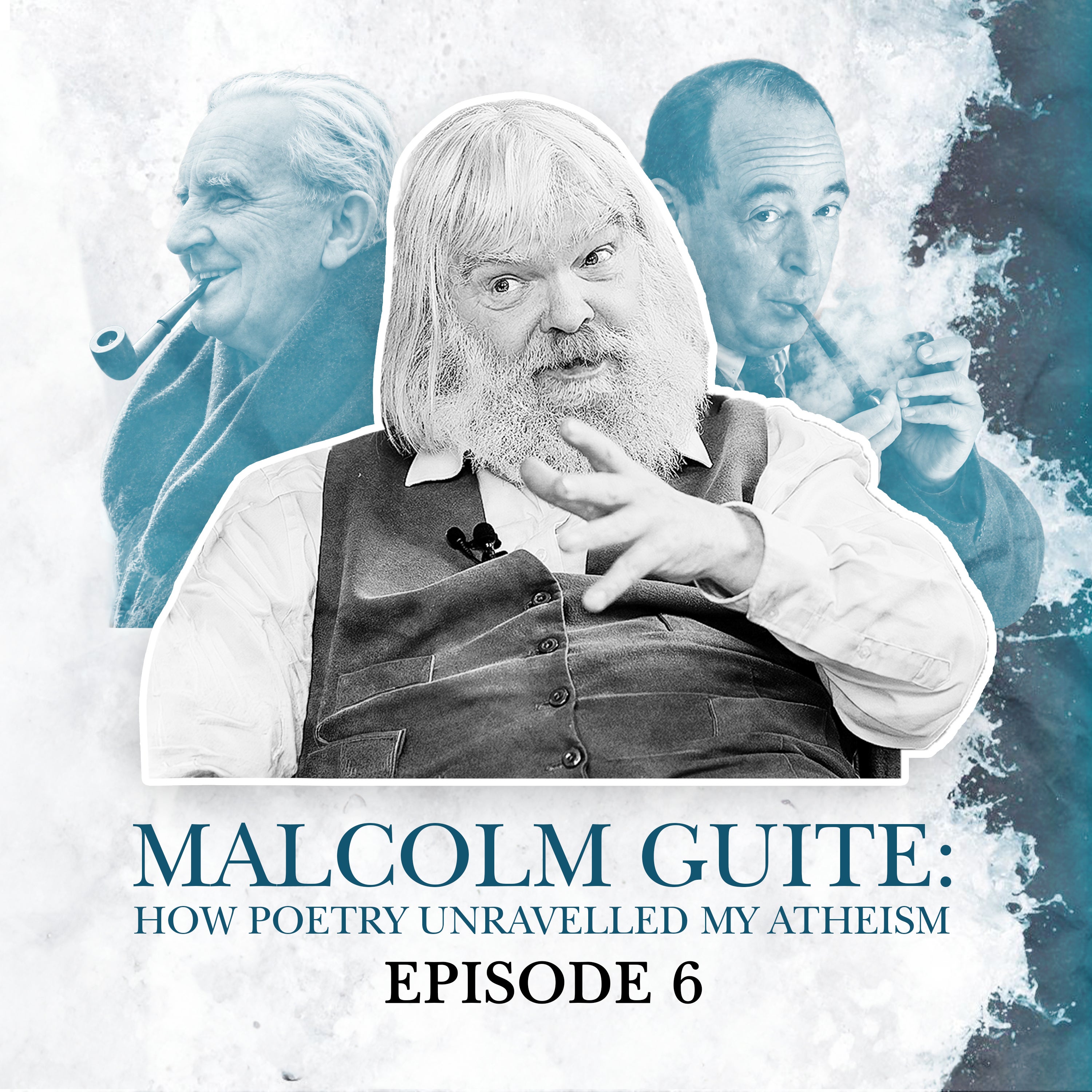
Speaker 4Hello, and welcome back to the surprising rebirth of belief in God with me, Justin Briley. And what a delightful show I have for you today. My conversation with poet, priest and musician Malcolm Gite on how poetry unraveled his atheism and the rebirth of imagination that we're seeing in today's world. Thanks, by the way, to Sir298, who gave us a five-star rating recently on Apple Podcasts, saying, Season three is finally here. So glad this is back. The world's definitely a better place to have this podcast in it. Always well-balanced, reasoned and thought out. It brings good news at a time when the world really needs it. If you enjoyed today's conversation, feel free to rate and review us on your podcast provider too. It helps others to discover the show. And by the way, just a heads up that our other podcast, our sister podcast, Uncommon Ground, just launched its second season. You might want to go and check that out too. We'll leave a link to it from today's show. Professor John Lennox and atheist YouTuber Joe Folley are my latest guests on Uncommon Ground. It's the show that does debate differently. And to celebrate the launch of that new season, we're running a competition to win a signed copy of John Lennox's autobiography, My Story. So listen out at the end of today's show. The How to Enter. And just to remind you, if you become a silver supporter of ThinkFaith, not only do you get early ad-free access to episodes of both of our podcasts, you also get a lot of bonus content from both shows too, including at the moment an exclusive interview with New York pastor John Tyson on Jesus versus the Manosphere, and a video of me giving you a behind-the-scenes tour of historic Yarnton Manor, Oxford, where we record Uncommon Ground. And it's also where we recorded today's show with Malcolm Grant. If you step up to gold-level support, you'll get all of that, plus signed copies of both my books and the chance for a regular catch-up with me on Zoom. Your support also just makes a huge difference to us meeting the cost of producing these shows, charting the rebirth going on in our culture. The link to support is with the show notes. Thank you so much. Also, if you listen to the end of today's show, I have an announcement about a recent guest on the show, Wes Huff. But for now, it's time to dive into Myth, Imagination, Poetry, and Epic Arthurian Ballads on today's surprising rebirth. If you get a chance to catch this on our YouTube channel, it's worth it too. As I've said before, Malcolm looks like perhaps the closest living embodiment I know of Merlin Gandalf and C.S. Lewis rolled into one. Welcome to today's show, Malcolm Gite, on how poetry unravelled his atheism.
Speaker 1Venture into the great indoors with VELUX Skylights. Create spaces full of natural light and fresh air so you can better connect with nature, your home, and those around you. VELUX Skylights. Discover more at VELUXUSA.com.
Speaker 4Hello, welcome along. I'm Justin Briley and we're back in Yonatan Manor just outside Oxford and my very special guest joining me today is Malcolm Gite, poet, priest, singer, songwriter and scholar and the author of a new epic ballad, Merlin's Isle, the first part of which has recently been published, Galahad and the Grail. Malcolm, what a treat to have you with me.
Speaker 3Oh, it's a pleasure. It's a pleasure to meet you again, following all these extraordinary developments in terms of a new flowering of faith, or at least openness to it from very unlikely.
Speaker 4Well, in a way, I'd love to talk about that because I think what you're doing in terms of re-enchanting, to use one of those words that we've been using recently, literature, poetry, and our fascination with Tolkien and the mythology and so on, I think
Speaker 3that's part of a hunger. It is, yeah. It is some element of what Lewis called the yearning for the far-off country. But the far-off country may turn out to be within as well as without.
Speaker 4Absolutely. Well, we're here, as I say, just outside Oxford in this beautiful 16th century manor house, which you've had a little tour of before we started filming. What are your connections going back with Oxford?
Speaker 3Ah, well, there you go. Of course, you're asking a Cambridge man. Properly speaking, I ought to call it the other place. But no, obviously, there's still lots of connection between Oxford and Cambridge. Sadly, not the one railway that C.S. Lewis used to go on, which he called the Cantab Crawler, when he would go off to the maudlin Cambridge rather than maudlin Oxford when Cambridge wooed him over. so oxford connections for me i guess first and foremost lewis and talking i mean back in the day when you could still go into it indeed back in the day when you could still smoke a pipe in it i would go sometimes on my own and sometime with my friends to the eagle and child or the bird and baby as the inklings called it and sit in the room where they sat the rabbit room as it was called and uh and talk wouldn't drink and smoke with my friends and just pick up the vibe So that's an important place. Another place that I think is really holy ground in Oxford is Addison's Walk, where the famous conversation took place between Lewis Torkin and Hugo Dyson in September of 1931, which was, I think, a turning point for Lewis and which covers so much a prophetic conversation. Because in the end, it was about whether or not there is any truth in myth. You know, it's the conversation in which Lewis famously said, you know, he loves myths, but unfortunately they're lies, even though they're lies breathed through silver. But Tolkien says, no, they're not lies. And we know so much about this conversation, partly because there was no Boswell running along in it. But Lewis wrote about it extensively to his friend Arthur Greaves. And Tolkien wrote the poem, Mythopoeia, in direct response to it and sent it to Lewis. Yeah, yeah. And then included it on Facebook. So we know a huge amount about that. And I think it was not only a turning point at the time for Lewis that he brought his reason and his imagination together, you know, but also I think it's potentially a turning point for us and for our culture.
Speaker 4I agree. And I've often spoken of and written about that, that famous conversation between them. Also this, the fact that Lewis himself recognized, and you see it in, you know, when he writes about it in Surprised by Joy, during his atheist phase, this partition of his brain, the two hemispheres that he talks about.
Speaker 3two hemispheres of my mind. So this is extraordinary. And he's, of course, he's looking back, he's writing this in, in surprised by joy. It's, you know, a couple of decades later. So the two hemispheres of my mind were in the sharpest contrast on the one side. sharpest contrast. On the one side a many islanded sea of myth and poetry on the other a glib and shallow rationalism nearly everything i loved i believed to be imaginary i.e not real nearly everything i believed to be true i thought grim and meaningless i thought boy you know we that's a diagnosis not just of lewis at the time but of our split culture the whole of you know cartesian dualism that the only meaningful stuff is in here but this is a mere private consciousness you know out there is just res extensor as he says dead stuff that split and i think the conversation of which we speak at the 1931 is the beginning of the healing of that split you can you know because you may remember famously how the conversation goes on i mean not just on edison's walk but after in lewis's rooms so talking defends myth and if you like with myth the imagination has at least potentially truth bearing mm-hmm because he says the the heart of man is not compound of lies but draws some wisdom from the only wise you know um but so then they get on to the subject of christianity and lewis says something like well even if i were persuaded that you know the life of jesus i think he said i think i possibly am persuaded that the stories about jesus are historical even if the story of the resurrection is historical bully for jesus you know a man 2 000 years ago happens to go through these experiences and he says well i'm not sure i'm not sure i'm not sure i'm not sure i'm not sure i'm not sure i'm not sure i'm not sure i'm not sure i'm not sure i'm not sure where does that leave me and talking i can't believe you just said that jack can you not see that this great myth that you have always loved in the story of balder the beautiful beautiful and adonis the dying and rising god which you love but but sigh to say i wish it wish it were true but it's only a lie this has actually come true it has taken place in history it is myth made history and as talking or dyson whichever it was that said that to them you can almost feel the two of them are the same thing they're the same thing they're the same thing they're the same thing two hemispheres of lewis's mind quivering and coming together yeah satisfactorily around jesus so he can rely on the story of jesus as actually the case it's all there under pontius pilate you know while quirinius was governor but he can respond to it mythically and resonantly and those two things come together and i think that is a coming together in lewis which had already come together which is precisely what our age is seeking for now that we love our myths and legends and poetry but is that is that are they merely a private compensation a kind of decorating of the interior of our mind to to make up for the grim meaninglessness out there or are they a clue as to how things
Speaker 4really are and what's fascinating to me is that he he he almost uh predicts what now people like ian mcgillchrist are literally talking about well
Speaker 3i had the pleasure of quoting that to ian mcgillchrist and he didn't know that exact quotation and he was like whoa that's my thesis that's my thesis by
Speaker 4lewis yeah i mean for those who aren't familiar with that name let's quickly sort of very quick summary ian mcgillchrist wonderful sort of polymath um educated in both the humanities and medicine psychiatry and so on and and came out several years ago with the master and his emissary extraordinary influential book the master is emissary looking at this the fact that that yes it appears that biologically um the two hemispheres play important roles um the left brain right left right right brain you know we have our sort of caricatures of that but he very skillfully shows the way in which the left brain essentially deals with the more logical mathematical pulling things apart the right brain is more the holistic way of understanding things in their biggest sense
Speaker 3yeah so this i mean lewis said interest now i i only got onto what mcgillchrist was doing towards the end of writing my book faith hope and poetry which is subtitled theology in the poetic imagination which was a defense of the reason of defensive imagination as a truth-bearing faculty complementary with reason and trying to work so but then i sat in everyone as soon as i read mcgillchrist oh my goodness you know we really are singing from the same same hymn sheet here but lewis uses the hemisphere's image in um in surprised by joy but i remember i started working on lewis's poetry at some depth um when i was writing the chapter on lewis as a poet for the cambridge companion to c.s lewis and i'd always been slightly troubled by that that it's so beautiful it's almost so pat the the two hemispheres of my mind thing i wondered you know as a historian as it were you you want a contemporary you want something he wrote during the time in the late 20s that he's describing and i found that in a poem as it is called reason the poem i didn't think it could and it was actually just um walter hooper you know he's rushing the edition out just put that in pro tem uh but that's a poem where rather than using the two hemispheres he uses this is written right at the cusp of that point in fact it's written before the conversation with talk so pre-conversion pre-conversion i thought only just uh pre-conversion but you know maybe we don't know i mean it may be a year or two before conversion anyway um he uses the analogy of the goddess athene for reason and the goddess demeter for imagination i mean so it's a wonderful he it's he he he imagines each of us as it were our soul as athens i mean set on the soul's acropolis the reason stands a virgin armed commencing with celestial light and he who sins against her has defiled his own virginity no cleansing makes his garment white so clear is reason that's pretty strong language so if you know that two and two is four but it would be more convenient if it were five if you mess with truth arrived at by reason you're never going to be capable of and you know you use as dance so he who sins against her is deferred so no but no claim so clear as reason then he goes on but how dark imagining warm dark obscure and infinite daughter of night her pains are long and her delight and then he says temp not athene okay don't mess with reason wound not in her fertile pains demeter nor rebel against her mother right then comes the agonized question which really shows he was telling the truth and when he wrote and surprised me so here's the thing oh and then he goes on and then he goes on and then he says oh who will reconcile in me both made and mother who make in me a concord of the depth and height who make imaginations dim exploring touch ever report the same as intellectual sight then could i wholly say and not deceive then could i wholly say that i believe i need he won't let go of my and of course you're kind of wanting if you say jack is behind you i mean if you think about the way he says what what does the person who is the who will reconcile in me well they make a concord of the depth and height so i mean he's almost echoing the language of ephesians that you may know low length and breadth and height and depth and know the love of god that passes knowledge it's about being rooted in ground and of course you might even say who comes into the world by somebody who is both a maid and a mother i mean jesus right jesus and absolutely so this is a weird thing i mean obviously you know i travel in america and i'm i'm always glad to talk about lewis to the hugely enthusiastic american following but for them you know lewis is kind of almost made over and it's like lewis helped me to understand that i had a personal savior in jesus that's great lewis found it but the initial thing he found in jesus was a solution to a massive epistemological problem yeah which is how do i reconcile these two ways of knowing reason and i don't think we should lose track of that hmm because the christ whom lewis encounters and through lewis many of us encountered is not just a nice privatized personal savior i mean of course we have a friend in jesus and it's wonderful to have an interior life with him but he is also the one who heals the rift that we made you know between reason and imagination between object and subject between out there and in here all those things find their reconciliation and their their just connection in christ the reconcile
Speaker 4it's wonderful and i think one of the reasons we return so often in a sense to lewis as one of the most famous converts of the 20th century is because he his own journey so closely maps onto the things yet on to right and and so many people have found themselves in a similar position to him over the years i mean if you were to just take a couple of steps back in fact from that moment addison's walk if you like which was to some extent the culmination of that journey where he suddenly was able to put it all together in jesus i mean lewis talks i think about earlier on his imagination having been baptized yeah even though he's yeah yeah like i mean in a way you
Speaker 3you could you could summarize the whole of surprised by joy by saying you know my imagination was baptized when i was 16 by george mcdonald the rest of me just took a bit longer to catch up tell us who george mcdonald was for those who
Speaker 4maybe haven't come across him so george mcdonald was the one who was baptized when he was 16
Speaker 3is this extraordinary and until Lewis and even Lewis now, underappreciated Scottish genius. And he was a minister to start off with, as a Congregationalist minister. But his theology was too loving and generous for his own congregation. And, you know, that's why he published Unspoken Simmons. So he began to write novels. And he wrote, he more or less invented the adult fantasy genre, the adult protagonist who goes through a wardrobe or a portal or in, you know, a closet or, you know, a transition, finds himself in the other world, has adventures, comes back again. So he wrote two novels in that genre, which kind of bookend. One is called Fantastase, and the other is called Lilith. And Fantastase, which was published in, I think, something like 1858, something like that, was the book picked up unsuspectingly by Lewis on the station in Leatherhead.
Speaker 4It was almost completely arbitrary, wasn't it?
Speaker 3Arbitrary, yeah. And yeah. And yet, Lewis has a really interesting description about reading the book. And he talks about a light, or he calls it a bright shadow. Now, bright shadow is something that's almost out of the book itself. And he says the enchantment that he felt, he didn't know the name for this enchantment, but now he knows it's called holiness. These adventures in the realm of Faerie of Anodos, the adult protagonist. But the adult protagonist is a young man like Lewis, trying to find his way, like Lewis, needing to be made mature. Like Lewis. Anyway, Lewis says that as he read the story, whereas other books he'd read tended to disenchant the world around him, and you'd close the book and come back disenchanted. He said the magical light that came out of that book cast its enchantment on the woods going past as he saw them in the railway carriage. His whole world became open to a deeper enchantment as a result of reading this book. But he says he'd unconsciously passed on the enchantment to the world around him. Yes. Yeah. Now, I think lots of people use the phrase baptized imagination, and I get it, but they don't understand quite the depth at which Lewis is using it. The point, you know, as Paul says, no, you're not. They're all who are baptized into Christ, are baptized into his death, as well as his resurrection. Baptism in the sense of submersion and re-immersion is a mimesis of death and resurrection. Something has to die. Something has to be left behind. To offer your imagination to God for baptism is not to have him give a willy-nilly blessing on anything you ever imagine or think up on, you know, your sort of solitary fancies. It's about offering the capacity of imagination to God and have him give it back to you, cleansed and renewed. And he, Lewis, I think, felt that somehow happened through the mediation of Macdonald. And he regards it as a blessing. It's a blessing. It's a blessing. It's a blessing. He regards it as a prevenient grace, to use technical language. It's a grace which enables
Speaker 4the turn. It feels though that that was something that almost came upon Lewis in a sort of a sudden way. It was a revelation in that sense.
Speaker 3But it took him a long time to work out its meaning.
Speaker 4Yes. And in a sense, then you also obviously have this other journey going on, the journey of reason, where Lewis says, you know, I sort of basically came to believe that God exists in the in the sidecar of Warnie's. He sort of had this intellectual sort of journey where he was thinking about the philosophical implications. And those are both going on.
Speaker 3But the thing for Lewis is that he must be, he must honor both, you know, tempt not Athene, but wound not in her fertile pains Demeter. And the story of Christ, because it is the imaginatively resonant myth, made satisfactorily you know, made searchable and, and, and, and, and open to reasonable, you know, so it's not, I think that he abandons reason for imagination, but rather that he integrates them. And I'll tell you an interesting story. So about that question of reason and imagination in this. So, so around was we're coming up to 2013, which is the 50th anniversary of, um, of, uh, Lewis's death of Lewis his death. Yeah. I was asked if I would guest edit the journal theology for a sort of Lewis special, which I've, you know, agreed to, although I shouldn't really be left to edit anything. Anyway, um, I got in touch with Alison McGrath and we thought we'd do a pair of, as we thought, complimentary essays for, for this in which McGrath would talk about Lewis's rational apologetics, his appeal to reason in books like me, Christianity and miracles and the problem of pain. And I would write about what you could broadly call Lewis's imaginative apologetics. And then a few months into this reach doing our emails more or less crossed in which I wrote to Alistair. I said, look, I'm finding that the rational apologetics are embedded in the imaginative apologetics. I mean, one of the best pieces of rational apologetics is in the silver chair where he redoes the myth. You know, it's, it's all in Plato's cave and asks you, you know, and, and, and puddle glum, you know, this is all Plato, you know, as the professor says, it's all in Plato. And McGrath wrote emails back and says, it's funny you should say that because when I look at Lewis's great rational arguments, I find the best thing about them are the imaginative illustrations, you know, the analogies, the, the, the, the metaphors that he offers, you know, the, the comparisons with ordinary common experience. So in a sense we carry on with, and then we kind of did it live in a way we've been working on these papers for theology, but there was the great occasion, which Michael Ward helped to make happen of Lewis finally being recognized, profit is not without honor, except in his own country, you know? So finally Westminster Abbey says, okay, you know, we'll have Lewis there. So we had a, we had two lectures, which McGrath and I did the day before. I was present for them.
Speaker 4So I remember.
Speaker 3And, um, we were able to say, show really in both of our things, though, his emphasis was rational and mine was imaginative that in fact, these things are seamlessly interwoven. Whereas once they were the two hemispheres and sharpest contrast and Lewis himself, I mean, finally summed it up absolutely brilliantly in a, a late and weirdly titled essay called blue spells and flallens fears. You know, that's an explanation, but he sent one sentence. He says, reason is the natural organ of truth. Uh, but imagination is the organ of meaning
Speaker 4beautifully summarized. And he, he was just the master of putting things in such a pithy,
Speaker 3helpful way. He proved to the shame of most other academics that academics don't have to be obscure.
Speaker 4Most of us are still quoting him because you can't do better than he already did. I mean, I want to perhaps come back to how this has shaped your own work as well, in terms of the imagination, the way it can be a truth bearing as well as meaning bearing. And, um, but I'd love to also just explore before we get there. And before we get to Galahad and the grail as well, to the extent to which your own return to Christian faith in your late teens mirrored to some extent, Lewis's in as much as I get the sense that you had a sort of imagination being re-baptized. Yes, I did.
Speaker 3Absolutely. Well, I mean, and it wasn't, I mean, at least McDonald was genuinely Christian author for Lewis. The imagination was really Keats, the poet Keats. It was, you know, because I had very much, I mean, I've been brought up as a Christian as a child. Um, but then, you know, I had my first exposure to the, the contrary arguments and the whole modernist narrative that Christianity belonged to the childhood of man, you know, religion belongs to the childhood of mankind and we'll wither on the vine. You know, we must look out there. It's bleak, but we must dare to know it, you know, all that stuff, which I got at school, but I was at a boarding school. And I was actually very homesick, but I couldn't quite admit that to myself. And I think faith and the poetry I'd learned to love from my mother were all woven together. And in a sense, I tried to dismiss them all, you know, because I wanted to take revenge on my own finer feelings because they were actually too much to bear. So I, I basically took a really rigorous reductive materialist account of everything. We didn't have Dawkins in those days, or if we did, I didn't know, but we had a guy called BF Skinner, who was a behaviorist, um, uh, biologist. And I read his stuff in the scientific American. I was a bit of a precocious kid and I was reading sort of Jean Paul Sartre under the bedclothes. So I, I had kind of got this idea that essentially Newtonian physics accounts for every, ultimately accounts for every movement. These things happen because they have to happen. There's no meaning to them. And that includes the, the, the, the firing of the synapses. You were somewhat of a determinist. Yeah. I was, I was very proud of learning the word epiphenomenon, you know, that our consciousness and our finer feelings and our sense of beauty and these are all an accidental byproduct of the mere concatenation of atoms in our head. But in the end, you know, in the end, this is, you know, the entire experience is a tale told by an idiot signifying nothing, you know, to borrow Shakespeare's phrase. So I kind of took that view, but then you say, okay, there's no meaning. I shall have to make my own in a sort of individual way. knowing bitterly that actually it doesn't add up to anything, you know, so Beckett. was my guy you know then i go to keats's house and taken there by my aunt and um i i'm stood in the room which had the french windows opening to the garden where the tree is where the nightingale sang and i'm feeling you know lonely and miserable and bored and my aunt's going through all the meticulous things so the ode to nightingale was up on the wall and i thought like what am i why i wish i wasn't here but i'll read this you know so i start and of course it's got this very unpromising opening but it just totally got me you know my heart aches and a drowsy numbness pains my sense as though of hemlock i had drunk or emptied some dull opiate to the drains one minute past and lethe words had sunk so i'm going like dull drain sunk you know teenage angst is really resonating with totally yeah i'm with you man of course i mean if it had been a poem by philip larkin it just would have ended on yes i sunk uh but then he doesn't even tell you that he's heard the nightingale this is there's this just completely transcendent second stanza coming out of nowhere you know it goes do not through envy of thy happy lot but being too happy in thine happiness that thou light winged dry out of the trees in some melodious plot of peach and green and shadows numberless singest of summer in a full throated ease and i'm going like what was that you know so i'm carrying on now and i just was completely enchanted and trans you know he goes out and he you know this intense sensual you know in embalmed darkness i guess each week then he looks up at the skies you know the famous thing that fitzgerald says already with the tender is the night and happily the queen and then it's this intense beauty there's this voice which is more than mortal that and then suddenly out of nowhere appears the biblical figure of ruth and imagines ruth hearing the nightingale that he's hearing and he says it found its way into the sad heart of ruth when sick for home she stood in tears amidst the alien corn and i i'm just thinking oh shit i can't cry and you know what i feel like my aunt is here you know but i mean i you know made me and then after that comes this extraordinary thing which was transformative for me and it's just an image it's not even a logical sequence so the same nightingale that ruth hears he then says have charmed open charmed magic casements opening on perilous seas in fairy lands for long so the towards the back of the poem is this these windows opening on this extraordinarily you know talk about the yearning for the perilous seas and then the poem comes back forlorn and we're back where we are but i just i couldn't have even expressed it i just had to keep rereading the poem but i now know if you like if i were writing surprised by joy you know so surprised by keith that what happened there i mean when i walked into that house i thought everything was only could be reduced could be totally accounted for by the firing of synapses and then i was like why did i have to do that what was the point of this and the exchange of chemicals in the brain i walked out of the house not doubting that there were synapses and chemicals and serotonin but say that is not all something happened here which was utterly transcendent and it cracked open as it were the kind of concrete that that that imminent frame had poured over over all that was generous and generative in my heart and i suddenly thought i was open to a possibility now it took some years to get from that openness to the possibility to realizing that it it met me in christ but that was essential and in that sense it was transformative
Speaker 4i'd love to explore what that journey looked like because i think many people actually at some level have experiences of one sort or another that look a bit like that it might be some kind of moment of transcendent joy in a rock concert or you know or you know being yeah on top of a mountain and the sunset and it
Speaker 3happens i'll tell you who who writes incredibly well about that and collected a whole series of experiences together in sequence and that's dorothy sayers in a late book um the book's called the poetry search and the poetry statement but the essay is called the beatrician vision and she takes dante seeing beatrice when beatrice salutes him having this completely transcendent view he suddenly sees her and she's like oh my god i'm so happy i'm so happy i'm so happy i'm so happy as in the glory of heaven but she says oh there's lots of things that she talks about wordsworth when he talks about you know it odes on intimations of immortality from recollections of early childhood snappy title um you know where there was a time when meadow groven streamed into me did seem appareled in celestial light the glory and the freshness of a dream and you can she takes interesting she takes it right through to aldous huxley in the doors of perception yes writing about seeing the vase of flowers when he's experimenting with masculine but you know he sees something which is way more than the masculine he sees the flowers utterly translucent and essentially i mean coleridge had a brilliant phrase for this he said it it is the translucence of the eternal in and through the temporal
Speaker 4that's that's that's so interesting i i i suppose the question is you know many people i suppose should be able to see the flowers but they're not they're stop there and say well i can't i can no longer believe there's nothing yeah there's something you know but they like to leave it as sort of some abstract something um and to some extent i think lewis you know oh for a while yeah leaving as an abstract something well i mean he was 16 when he
Speaker 3read fantastis i mean you know he was exactly yeah but took another 15 but there was you know
Speaker 4as he famously said he when he finally got on his knees he was the most reluctant convert in the whole of england but the i suppose it's it's i'd love to hear how it happened for you that you moved from sort of that that moment of of something changing fundamentally within to sort of being able to map it onto this very specific time-bound story of a person called jesus who came because i think that's often where people feel like they fall over you know because yeah yeah exactly it feels like i'm now being constrained to something
Speaker 3right particularity exactly
Speaker 4exactly and we've got you know mutual friends in in people like martin shaw and others who have sort of i think absolutely been in that place of being undone by beauty culture and art and then being very surprised to find themselves drawn to this particular person as you say there are so many examples that you could go to and people who've had some kind of transcendent experience but i think there is that that gap for so many people in a way there was for lewis yeah i imagine perhaps there was for you for a while at least between keats and christ yeah uh and how did you how did yeah yeah and
Speaker 3of course in a way the great what made me as perhaps so susceptible keats is precisely in the sense that he was not a christian poet this wasn't the kind of if you like the dreaded bogey of you know that guilt-inducing christianity that i was trying to leave behind kind of thing um and i thought you know also this was real experience i wasn't depending on anybody else's testimony but it was a real experience which made me think there is a more than mortal world you know thou was not born for death a mortal bird is what keats says there you know and so and also the very open question i mean the nightingale ends with an open question fled is that music do i wake or sleep and that's a very deep question for anybody to keep in mind is there something to which i've numbed myself and to which i might now awake i was at least open to that so uh one of me the immediate effect of keats was was that i stopped wanting to be a marine biologist and wanted to be a poet instead and um so i sort of switched to arts a levels um and i discovered i was good at english and um i couldn't believe it's a subject really read poetry and talk about it what's not to like you know so i won a scholarship to pembroke college in cambridge and uh to read literature now back in those days they would send you a reading list of things you know for your gap yeah first two items on the reading list you know and they were talking about the late 70s there isn't i 76 i won my scholarship uh 77 i went up um the king james bible the authorized version and the book of common prayer those were on the reading yeah right because if you want to understand what's the formation of the english language what are the texts that are resounding in the minds and memories and almost the muscle memory of the poets and writers that you are going to read you need that background so i i did that you know that was quite interesting so i started going to the text but the other thing is i knew i definitely wanted to do i actually want you know by that time gone from the romantics backwards and and i started reading spencer because simply because keats had written some lines in imitation of spencer now spencer is you've got a really great christian writer there um and i read the hymn that he's kind of neoplatonic christian so the hymn of heavenly love hymn of heavenly beauty you know it's amazing so i was reading spencer and because i thought i'm going to specialize in medley medieval and renaissance literature i need to get a bit of their theology not my theology but the so i sat down to read augustine's confessions and that's the next moment that i would say was an absolute staging post i it's all unsuspecting you know you know how if you go and visit a really big cathedral there's a great western door but there's usually a tiny little door that you actually open and go through into the cathedral certainly that's true of any cathedral and i felt like that i had this paperback translation of of um you know penguin classics translation of the confessions and unsuspectingly like opening this is like the little door you walk through that door into the mind of saint augustine and whatever else you think whether you realize you are in the presence of a mind which is considerably more capacious and definitely better furnished than your own so any idea that i might have had that christianity was for dummies or that we'd outgrown it or the christians were intellectually naive was blown away wow totally by augustine and then of course comes i mean it's one of the most famous passages but i didn't know it's a famous passage where augustine is talking about the struggle to come to faith and how long did it take him and then the great passage which could have been written for a key team like me when he says late late have i loved you beauty always ancient always new now he is addressing god the god of scriptures the god who meets us in christ as a beauty always ancient always new now he is addressing god the god of scriptures the god who meets us in christ as a beauty always ancient always new now he is addressing god the god who meets us in christ as a beauty always ancient always new and then he says i always ancient always new and then he says i always ancient always new and then he says i look for you outside myself and i look for you outside myself and i look for you outside myself and i couldn't find you you seem to be there couldn't find you you seem to be there couldn't find you you seem to be there but you were never there but inside you but you were never there but inside you but you were never there but inside you and then you know suddenly this light and then you know suddenly this light and then you know suddenly this light plays within me you know plays within me you know plays within me you know i there is an inner experience which can i there is an inner experience which can i there is an inner experience which can be given by the outer and the transcend be given by the outer and the transcend be given by the outer and the transcend do you know what i mean so do you know what i mean so do you know what i mean so augustine augustine augustine made me aware that i could not made me aware that i could not made me aware that i could not i i think at one point i'd come to the i i think at one point i'd come to the i i think at one point i'd come to the conclusion that to go back to being a conclusion that to go back to being a conclusion that to go back to being a christian christian christian after having rejected it would be after having rejected it would be after having rejected it would be intellectual suicide it would be like intellectual suicide it would be like intellectual suicide it would be like stopping thinking and i have to say the stopping thinking and i have to say the stopping thinking and i have to say the late if i love you late if i love you late if i love you you know and you know and you know and i was interrupted by a knock on the i was interrupted by a knock on the i was interrupted by a knock on the door from two earnest young men from the door from two earnest young men from the door from two earnest young men from the christian union christian union christian union fellow students trying to convert me and fellow students trying to convert me and fellow students trying to convert me and they gave me this trite little pamphlet they gave me this trite little pamphlet they gave me this trite little pamphlet you know with two ways a way to hell and you know with two ways a way to hell and you know with two ways a way to hell and a way to heaven and here's that you know a way to heaven and here's that you know and they they gave me the impression that and they they gave me the impression that and they they gave me the impression that and you know they said they were and you know they said they were and you know they said they were christians and i would like had they said christians and i would like had they said christians and i would like had they said what are you reading i said i'm what are you reading i said i'm what are you reading i said i'm reading augustine i'm beginning but instead they reading augustine i'm beginning but instead they reading augustine i'm beginning but instead they gave me this completely i'm gave me this completely i'm gave me this completely i'm in a ludicrous thing which was if i in a ludicrous thing which was if i in a ludicrous thing which was if i would say these exact words then I would be a Christian, and then that would be fine. I would be safe from hell, and there'd be no further thinking ever to be done. And that delayed my conversion. Wow. I mean, it actually delayed it by a year, I would say, because I thought, I don't want that. Right. I mean, I feel bad saying that now, because I totally get that, actually, in terms of how does God meet us, they were right and I was wrong, but they just didn't know how to, you know, that's fine. Anyway, so I carried on reading Augustine, and I then went on to read Bernard of Clairvaux on the love of God. So I became aware of this rich interior life. Then I read George Herbert, and George Herbert, that whole love bade me welcome, but my soul drew back that hesitancy to coming forward. So I thought, what am I going to do with all these books, which I was now reading clearly Christian poetry, which was having an effect on me as poetry. Right. Right. Right. Right. Right. I didn't know the level of Keats, but this time it was explicitly Christian. I didn't quite know, but I thought, yeah, it's a bit like nearly all I loved, I believe, to be imaginary. I, you know, nearly. I thought, well, actually, maybe Christianity as a myth, as a story, is the best and most apt way of talking about the experience of being human, that it's psychologically true. I'd read, actually, it was in, I got interested in Charles Williams. And Charles Williams is poetry by this time. And Charles Williams also has a book called The Christian Year, which is just a set of quotations. And somebody lent me that. And he has a quotation from the Theologia Germania, which is, Every man is the atom of his own soul. So I was reading Paradise Lost by that time. And I loved Milton saying, you know, what in me is dark in illumine, what in me is low rays and support. We're almost like the creationists. So I came across this, I fixed on this idea that Christianity, Christianity is a, is psychologically true, but not actually the case. Which was very convenient, because it meant that I could enjoy, if you like, all the constellations at a psychological level. But there was no question of it ever interfering with sex and drugs and rock and roll. You know, that could carry on, you know. Uninterfered with. Uninterfered with, exactly. Being interfered with is a thing that Lewis hated as well. So I was living a kind of, you know, I was living a kind of, you know, kind of double life, in a sense. I was, you know, it's very much when I subsequently read Lewis's Pilgrim's Regress, where he sees all these, all these, you know, atheists or agnostic philosophers by moonlight crossing the canyon and playing, you know. So I was doing. Now, I probably would have carried on like that. And frankly, I might still be carrying on like that now without a decisive intervention. And this was a decisive intervention in my view from God. I was having my cake and eating it.
Speaker 2Amazing day. Online order of $75 or more. Restrictions apply. Kroger, fresh for everyone.
Speaker 1Create spaces full of natural light and fresh air. So you can better connect with nature, your home, and those around you. Because home isn't just how a space looks. It's how it feels.
Speaker 5VELUX Skylights. It's the last week to beat the Black Friday crowd. Lowe's. Get 25% off select pre-lit artificial Christmas trees. Plus, my Lowe's rewards members get same-day delivery for free. Shop now. Beat the rush. Thank us later. Black Friday deals are on now at Lowe's. In-store and online. Valid through 1125. $25 minimum. And loyalty membership required. Order eligible items by 2 p.m. Subject to weight and size restrictions and availability. Terms at Lowe's.com slash shipping terms.
Speaker 3And then one day in the summer of 78, late summer of 78, I was actually looking after somebody's house in London. I was sitting. Trying to get where these people are coming to love, like Herbert and Dunn and Spencer were coming from. Spencer was a great, you know, reader of the Book of Common Prayer. The earlier version of it that he had. So I'm reading this. I'm reading Psalm 145. I mean, this may sound strange, but it really did happen. One minute. I mean, I now look back and say, what was I reading? Because the event, and I think it was probably the line, the Lord is near to all who call upon him. And it also, he is near to all. The Lord upholdeth all such as fall. So there's these. There's a series of alls in 145 reading in Coverdale's translation. And literally one minute I'm in control. I'm in the room reading in an empty house, reading words, which I appreciate for their beauty and rhythm, but which I don't think actually refer to anything real in the world. And the next moment I'm not alone in the room. I'm not only not alone in the room, but I'm no longer at the center of, I mean, I felt an extraordinary presence of. The holy one as it were, but terrifying in some respects. I mean, you know, obviously because we have eyes in our head and we have to look at the world for, I mean, physiologically, and we, we are at the, each at the center of our world, I mean, our problem morally is to realize that we're not at the center of the world, but we can't help. And we think about nearness and furtherness, you know, and we have our circles of friends and the people who come close, but we're always the center. I mean, just in terms of the perspective we happen to have by. Looking at our own eyes and that was completely taken away from me instead of being at a center in which I could arrange my philosophies and my beliefs and my friends, according to my fancy, I realized this other being this other one, this holy one was absolutely the center. And I was like way, way, way off on the edge, like dangling from a thread over the abyss, I felt completely at the. Edge and completely, um, vulnerable as it were. And I had a sense that on the one hand, I couldn't bear this presence. I was, I later, I read the bit in Isaiah about where he says, you know, I saw the Lord and, you know, and Isaiah doesn't say, oh, I've had a religious experience. I must be a holy man. You know, I don't go and start a cult in California. I mean, he says quite rightly, he says, woe is me. I'm a man of one. unclean lips. I come from a bee of unclean lips. You know, I shouldn't be, I should say not be here. That was my feeling. And I felt, although I couldn't look at this presence, that if this presence looked away from me for a moment, the thread would snap and I would just fall into nothingness. So it was complete. And I thought, what do I do? So I kind of waited for it to go away, basically, you know, and it didn't go away. And I thought, I can't, you know, the people I was looking after the house for came back and I thought, I just got to go. Maybe I'll change of scene, you know. And I went back to Cambridge a few days before term, got permission from the college to get into my rooms. And it just didn't go away. And I, you know, I thought, gosh, you know, I don't know what to do. I mean, I was just like, I always felt like I was squeezed in every space. I was so flat. This undeniable and inexorable presence. So I thought, God, you know, I should do something like this. I should go and see the chaplain. I mean, you've got to be desperate to do that. So I went in, in fact, it's a very wise man. It's a guy called Warren Tungey. So I go to the chaplain, I say, kind of tell him what I've told you. And so, like, essentially, I wanted to like, how do I make this stop? And he was saying, ah, he says, you know, he says, you do realize, you know, that you brought this on yourself, that you took the Lord's name in vain. You can't stand there, unknown to you in the presence of the Holy God and invoke him and say that he's near in the Psalms and then be surprised that he shows up. And he said, has it ever occurred to you to go back to the book of Psalms and just use the Psalms to address this Holy One? And I said, no. And he said, look, I say the Psalms morning and evening in the book of common prayer service. Nobody comes, you know, I'm there in the morning and in the evening every day. You know, we get a few folk in on a Sunday, but I'm on my own. Why don't you come and say the Psalms? How difficult it is with me. So I thought, well, I'm like, what have I got to lose? And then he did a really interesting thing. He said, when I finish saying the Psalm, I'm going to stand and say the Gloria. I'm going to say glory to the Father and to the Son and to the Holy Spirit. So it wasn't the beginning is now and ever shall be world without end. And I thought he was telling me so I could say, he said, I forbid you to say that. He said, you're in enough trouble as it is with the name of the Father. Don't take the Son and the Spirit in vain as well. And I was going, and he said, look, Malcolm, I know perfectly well, because you been reading these books that you could describe from the outside, a theology of incarnation or a theology of the Spirit, but you know, nothing experientially, just don't say it. And so I showed up. And that was the one time when it was terrible when I could address the Holy One with these words. And then I found the words could really express my distress and my alienation, as well as the glimmerings of joy that I've had. You know, my heart has said of him, seek his face, thy face, Lord. You know, the Psalms just became luminous. So that was made life tolerable enough to get on with my work. And then a friend of mine, a Roman Catholic friend as it happens, told me that a Franciscan friar was coming to Cambridge to give some talks at Fisher House, the Catholic chaplaincy. And again, just like I was reading the Psalms as research for poetry, this guy said to me, look, we're studying medieval literature. A lot of these universities began with the friars. Speaking. A lot of the poets were inspired by, you know, we could have that experience. We could just go and listen to a genuine Franciscan friar. So I show up to this thing. And it was towards the end of that Michaelmas term in 79. And so it was probably coming up towards Christmas. But anyway, he was preaching. He wasn't preaching to convert people. He was preaching to the faithful. And he suddenly started using this analogy. He talked about how completely dependent the babe in Rome is on the parent that is literally hanging from a thread. It's hanging from the umbilical cord. You know, all it can do is receive and it can't speak. But even when it's born, the infant child hasn't got the muscles even to turn itself over. It's utterly dependent. All it can do is cry. And I thought, yeah, he's talking about my experience. I feel exactly as vulnerable and dependent as that. And then he could have been speaking to me. He said, you think I'm going to say that that's how we are with God. That God is the creator. We are the creature. We are utterly, utterly dependent, as dependent as the babe. And he said, in one sense, you would be right to say that, but not in another. Because I've not come to tell you that about God. I've come to tell you that God is the one who is utterly frail and dependent. This is the one who's born at Christmas. This is the one who's in the manger. You know, the ox and the ass could have kicked the baby in the head if they hadn't bothered to look after him. Why would God do that? And then there's a man who's born at Christmas. And he's saying this amazing thing. This is all before The Age of Me Too. He says, it is in the very nature of love to want to come down and be on a level and to be vulnerable. You cannot love Dothanbar. It's not love if one person holds all the cards. The very thing you want to do when you love somebody is to make yourself vulnerable to them. The very act of loving them does make yourself vulnerable. And he says, if he was vulnerable as the baby, how much more vulnerable is he as the host, as this wafer in your hand? And he says, if he was vulnerable as the baby, how much more you could grind it onto you. He has no hands to defend itself, just as he didn't. And that's how God is with you. Without ceasing to be the Holy One, he comes to you like that. And while he was going, like the penny dropped. And it's really interesting. One of the immediate effects of that was, I think, certainly for the first time in my, you know, from teenage onward, I felt it was okay to be human. Because in my more hard-boiled atheist days, one of my stand-up arguments against Christianity or any other religion was, I don't know, I don't know, I don't know, I don't know, any other religion, was that we're a tiny smear of biological life on the edge of a fringe of untold stars and galaxy. Like, what do we know? We're so tiny and insignificant compared with the vastness of the cosmos, which is, of course, just bullying people with scale. And, you know, so my atheism didn't make me think it was okay to be human. And, but suddenly, if this Holy One was human, as well as being the Holy One, then it's suddenly felt okay to be human. And it just, the penny completely dropped. Meantime, at the intellectual level, I had asked myself the significant question, if, in fact, the firing of enzymes and the synapses and the inevitability and the pointlessness are the case, and Christianity is the nice story that seems psychologically true, why is it psychologically true? Why is it, surely, if something gives a better account of what it is to be human, then another thing, it's got more chance of being the case. So there was that going on. But this, really, it was this moment, God is like that. So I, the penny dropped. I suddenly felt, God, He is, really is in Christ. This really is. And that this is an immense, this, it's not that God ceased to be present to me and holy, but that now I could bear to look at Him, you know, in the face of Christ. So I went back to the chaplain and said, I think I can say the Gloria now. And he, and boy, did I say the Gloria, you know, and then, you know, he invited me to prepare for confirmation. And that's exactly what I did. I was confirmed in February of 1980.
Speaker 4Amazing. It doesn't seem inconsequential that fast forward some decades and you yourself are a chaplain. Yeah, yeah, absolutely. And probably having not dissimilar conversations from time to time. Well, I hope so. I hope occasionally. And I mean, where this brings me to is right up to the present day, because I, I sometimes feel like these sorts of things repeat almost in every generation, because I, I, I think we're currently living through the sharp end of a, of a meaning crisis where we've, you know, we had this era of new atheism and so on Dawkins and co selling out arenas with their message that we are really just, you know, a cosmic afterthought. We just have to make the best of what we've got and so on. Um, and interestingly, you know, my thesis, this has been in my, my book and podcast series, the surprising rebirth of belief in God, that that message has worn quite thin. It has, yeah.
Speaker 3Well, it's not intellectually satisfying, but also it doesn't account for experience. Absolutely. Yeah. It does not account. If there is no purpose, why are we constantly haunted by a sense of purpose? Exactly. And if there's no freedom, why do we? There's a sort of, almost a sense of
Speaker 4contradictions and unknowns even within that, that new atheist rhetoric, because they so often are kind of trumpeting values. In fact, in fact,
Speaker 3they're borrowing language from the very beliefs that they deny.
Speaker 4Exactly. But this is where I think your, your work is starting to really have such resonance with so many people. And I've noticed more and more people talking about your poetry, um, obviously the books you've written on imagination, faith and so on. Um, and it brings us nicely to, to Galahad and the Grail, which is the first volume of four, this Arthuriad, which you are bringing back sort of into the public eye in your own distinctive style. Um, before we turn to sort of the introduction, the prelude, uh, which I'd love to hear you read out, what, what's, what's going on in our culture that makes you think people are ready to pick up this ancient story again?
Speaker 3Yeah. We talk about the crisis of meaning. I mean, I think there's a really, there's a wonderful collection of, uh, Owen Barfield's essays, Owen Barfield, the great friend, and Lewis said the greatest of my unofficial one of the prime four Inglings, as it were. now there's a collection of his essays called the rediscovery of meaning and other essays and there's an amazingly prescient essay in it and it's called the coming trauma of materialism and it was written in the early 70s uh and it partly consists of this is alongside it is a review of a book by theodore rozak called where the wasteland ends and basically what barfield says is that because the completely materialist paradigm isn't true it won't last it won't save the appearances that say well you know things will happen which this model cannot account for and they'll happen both out there and in here and there'll be a desperate he quotes kun's structure of scientific revolutions where you know when an old paradigm is about to break up there's an incredibly desperate effort on the part of the establishment to shore it up yeah and he points out that when the geocentric view the ptolemaic view was you know there were no votes there were they're saying oh no this is a special epicycle it became more and more complicated to account for it until finally you know copernicus steps in and say bear with me here what if the sun is at the center actually all the observations will make more sense with this new model and when the new model comes it changes everything and it's plainly obvious but and it and it it accounts for experience now barfield writing us so maybe it's the late 60s saying this is coming you know before the century is over the old model is going to break up on every side and we don't quite know what's going to replace it but it will be a series of crises which lead to radically new thinking and one of the things he says is there's a paradox whereby the more minutely we understand the material level of reality the less we are able to find any meaning in it why is that i mean it's because we've decided that meaning is only in here and not out there and that's an a priori assumption which is just simply incorrect yeah yeah you know so so this doesn't you know i'm not surprised by any of this i'm very excited to be living in an age in which it's happening and to some extent in my own you know life and witness trying so we need to re i mean i would go back to our original conversation about lewis and the two hemispheres of my mind you know the way forward is going to be with a reintegration of these i mean that's what mcgillchrist is saying you know we put the emissary in charge instead of the master that's
Speaker 4right so and part of that work is i think where we pay attention as mcgillchrist says and and it there's a sense in which i think people are opening up to the idea that we've because we cast away the imaginative or treated as a as a side project or a unnecessary distraction we're realizing actually we've we've thrown the baby out
Speaker 3with the bath they have absolutely yeah so that doesn't mean we flee from rationality and just go for whatever you know cult somebody offers us i think that would be a mistake as well i think you know it's lewis again who will reconcile me both made another you know make a concord at the depth and height so that's happening in lots of different ways i felt like it had happened to me one of the things i mean talking about this book i mean i love these stories anyway but if i had a hope or a prayer for for this one it might be i would love this to be the book that some teenager now who is going to be the future cs lewis who's been an ardent atheist and was going like let me i'd love this to be the fantastic that he picked up right and that it might baptize the imagination of somebody who might then do great things and and i mean this is why i i mean i've had various publishers i mean you know harder for my book on coleridge and ashgate for the but my poetry publishers canterbury press here and now but obviously canterbury press are part of him's ancient and modern but in this book i don't want to preach to the converted i want this to be a story for everybody who loves arthuriana and doesn't quite know why they love these stories of of merlin's isle you know i mean well
Speaker 4would you would you take us into to galahad in the ground because um you don't invite malcolm guy on without getting him to actually read some of his own
Speaker 3verse so um one of the um i'm trying yeah very much if you like to to re-enchant or i'm disenchant um there's a great discussion at the end of lewis's that hideous strength about what he calls a good haunting that's something we may call britain is haunted by something we may call log race that's what's missing if you like the inner spiritual radiant resonant thing that doesn't deny the material but transfigures it um anyway i make reference to that as why i mentioned it so this is this is this is the little um prelude uh called take up the tale and it is almost exactly and it'll give you an idea of the ringing singing ballad form this is pretty much literally how it happened anyway okay go ahead take up the tale as i walked out one morning all in the soft fine rain it seemed as though a silver veil was shining over hill and veil as though some lovely long lost spell had made all new again and through that shimmer in the air i seemed to hear a sound as though a distant horn were blown in some lost land that i had known that seemed to speak from tree and stone and echo all around and with the music came these words poet take up the tail take up the tail this land still keeps in earth and water magic sleeps the dryad sighs the niad weeps but you can lift the veil from where the waves wash cornwall's caves out to the white horse veil the lands still hold the tale of old like hidden treasure buried gold once more the story must be told poet take up the tail tell of the king who will return tell of the holy grail tell of old knights and chivalry tell of the pristine mystery of merlin's isle of grammary poet take up the tail take up the tale of courtesy take up the tale of grace revive the land's long memory of the land's long memory of the land's long memory summon the fair folk let them be something of fairy wild and free still lingers in this place lift up your eyes to see the light on glastonbury tour then come down from that far green hill to where the sacred waters spill and shine within the chalice well and listen to their law yay listen well before you start be still ere you begin see through the surface round about the noise the rush the fear the doubt though modern britain lies without fair logress lives within you may yet walk through merlin's isle by oak and ash and thorn the ancient hills do not forget and you might wake their wisdom yet who knows what wonders might be met on this midsummer morn so i have taken up the tale to tell it full and free the tale that makes my heart rejoice i tell it for i have no choice i tell it till another voice takes up the tale from me
Speaker 4i feel like bursting into a round of applause um beautiful a beautiful introduction to to obviously a you know the a very fulsome ballad which covers the ex one particular aspect of the the arthur stories um now many people may be familiar with with some version of arthur either a sort of a hollywood disney version or something you know written by tennyson or malory or whatever um what are you trying to do in your particular arthurian yeah well i think
Speaker 3that um that you can lift the veil and modern britain lies without philograves lives within is partly what's going on i'm trying to you know i'm trying to awaken a sense of wonder i'm trying to bring back something of the magic and enchantment certainly but more specifically i mean i felt that the modern tellings particularly the movie ones i mean including you know the disney sword and the stone it's kind of flattened there isn't the depth and resonance and particularly i feel like they've airbrushed out the christian heart of it now the christian art of it is really important because what makes these stories so fascinating is that they are precisely the meeting in the imagination of the older celtic ways of seeing things the pre-christian things and the christian things and it is not the case and this is true about the actual spread of christianity in these islands in the first place it is not the case that they went in you know with this with a sort of some hideous view that you had to completely eradicate everything that had gone before and then you know destroy the culture and the language and then drop you know the whole of christianity on people like dropping a bible on somebody's head from a great height that's not how it was done it was done in conversation it was done it was done in way that Paul did it in Athens. You know, when Paul arrives in Athens, we're told he was disgusted because he's a kosher Jew and he sees all this. But the Spirit works on him, doesn't it? Because when he gets to Mars Hill, you know, he says, he doesn't say, men of Athens, you disgust me with your idolatry. He says, men of Athens, I see in every way you are very religious. Observing the objects of your worship, I saw this statue to an unknown God. He whom you worship is unknown, therefore him I preach. And then he quotes two Greek pagan poets.
Speaker 4Yes, quotes their own philosophers and quotes back to them. You know, in him we live
Speaker 3and move and have our being and we are the children of God. Now, that doesn't mean he then goes on to say God doesn't live in statues. You know, there's plenty to say. But he starts where they are and he starts with the idea that they have already, as he puts it in Romans, been feeling after and finding God. Now, I think that was the view of the, certainly of the Irish and Scots and Welsh missionaries, you know. You know, at Column, for example, I mean, my name was, Malcolm was deliberately given to me by my Scottish poet grandmother, who'd written a cycle of poems about St. Mungo and St. Column. Now, Column means disciple of Column. Column trained as a druid, or as a bard, you know, he was a druidical thing. But he was both a monk and an Irish bard. You know, that meant learning all the great mythical stories that he'd bring. So, what you get in the, well, here's the obvious thing. There are stories in Celtic legend and folk tale of miraculous cauldrons of generation, magical vessels, which in some versions of the stories, they never run out. They give you the very best things, the lovely things that you want to eat and drink. They're cauldrons of plenty. In some of their cauldrons of generational regeneration that, you know, the dead are put into them, come out alive, or, you know, the people are transformed and re-membered, re-put together again. Now, it was fashionable in, you know, in the, you know, light of sort of Frasier's Golden Bough or Jesse Weston's famous book that influenced Eliot, From Ritual to Romance, to say, oh, what's happening really, even with the Grail stories, is this is pre-Christian stuff, fundamentally, that's been given a light Christian gloss. Let's just take the Christian gloss off and make it pagan again. But actually, when you read the medieval sources, the stories really get going of the Grail, not in some early prequel. They happen in the 12th century, at exactly that point where the church is finally trying to decide what's going on in the Eucharist. And that's what they're about. But they're not unaware of that. When the Grail appears at Arthur's Court, then there's plenty for everybody. So I think what they're saying is, he and you worship without knowing, that those, there was a, the magical stories about cauldrons were always, was waiting for the moment when an evangelist would come and say, God comes to you and gives all he has to you, and you give all you are to him in the medium of this cup, this Grail. This is the connection. This is the isthmus. And the same with the spear, you know, the spear of bronze, the spear. But the really cool thing, and this was what I felt was like totally missing from the kind of Disney-fied or, you know, movie-ized, whatever. The most significant thing, the Grail is the end of the story. The really significant thing in that Grail sequence is what's called by many of us, and called by Mallory, the dolorous stroke, or the dolorous blow. So, and I heard this very early. My love of these stories comes from my mother telling one to me. And you can't imagine, I'm about eight. It's 1965. Yeah, 65. My mother is telling me these stories because I love to hear them. She tells me about the dolorous stroke. She tells us how this rash, ill-starred knight, Balin, breaks the laws of hospitality. He's in the Grail castle, but he doesn't know it's the Grail castle. He seeks to take vengeance on another knight. The king, Peles, condemns him. He flees, weaponless, and he runs through the castle, and the king is. He's pursuing him. He's looking for a sword or a spear or something, you know. My mother telling me this story is in Mallory. And he goes from room to room, and he feels he's getting to a more numinous and holy place. And, you know, the voices are starting to say, "Go no further. Do not cross this threshold, man of sin." But he keeps going, and he comes into the Grail chapel. And there's the Holy Grail. He doesn't know what it is, but he knows it's holy. And hanging in the air above it is the spear of Longinus, the spear that pierces Christ's heart. He doesn't know that's what it is. And the drops of blood are falling continuously from the spear into the chalice. And, you know, again, "Come no nearer, O man of. " The king, armed, is coming to get him. He throws all caution to the winds. He rushes forward. He seizes the spear and turns and wounds the king, the fishing king, in the thigh with this. And at that moment, this moment of complete sacrilege, that whole part of the castle collapses. And they're buried, the grail and the spear and the wounder and the wounded, in three days in the earth. I mean, three days and three nights. Merlin arrives on the third day, moves the stone. It had been a resonant hit. Brings him out. And my mother's telling this story. And then Merlin tells Balin and says, "You have struck the dollar a stroke. Because of you, the king's wound will never heal until a certain point comes." And then Balin says, "No, it won't. The whole land, because the king and the land are one. The land is laid waste. You have laid waste three counties wide. The fish will be dead in this, in the rivers. The crops fall down to the ground. Nothing will grow. Nothing will germinate. Carves can't carve. People can't have children. And the king will stay wounded until the grail knight comes." But he doesn't tell him when that. Meanwhile, Balin has to go off and ride through three counties. And that's it. He's dead. He's dead. He's dead. He's dead. And everybody comes to the door and curses him, because they know. And my mom's telling me this story. I'm eight. And I say. And she knew exactly what she was doing. So she. I said, "Mom, that's terrible." Like, it wasn't. Like, he didn't even know. Like, he didn't know. You know, and of course, you know, the spear. She'd made me feel like the spear. The spear that pierced Christ's hand. This is where the great chain of hatred should have stopped. You know, love is going to come out of there. I mean, not only should that spear never have been pierced. No spear should have been used to wound anybody else. But no spear should have ever wounded anybody else after that. The matter was done with. Tetelestai is finished. But instead, this thing is. So I said, "But, Mom, he didn't even know that. Like, how could one person's rash action destroy not only, you know, the castle, but all those people, and the fish in the sea, and then in the rivers, Mom, and the crops, and the people, and that you're. " And my mom stopped me. She said, "I've told you this story, because you need to know this is the world you live in." This was just after the Cuban Missile Crisis. We had the fear of a nuclear winter. And she said, "You know, you're growing up in a world where the rash actions of one man might do exactly this. What we do may curse the ground for hundreds of years." But then she goes on with the story. You know, unlike T.S. Eliot, she didn't leave me in the wasteland. You know, so she then tells me how, when Balin, as the worst has come to the worst, and he's slain by his own brother, how Balin's sword is taken and set in a red marble blog by Merlin, and it floats and floats and floats the Drax until it comes to Camelot on the day when Galahad has arrived, and he draws it. And that she told me that one day Galahad would, with the other two grail knights, would come back through the wasteland, which will nearly kill them, and they will find the Fisher King. They will achieve the grail. And then with some spear that wounded him, from whose point the blood of Christ is still falling, the king will be healed. And when the king is healed, then the land is healed. Now, amazing, you know, I'm eight, but I never forgot that. I mean, tell it to you so vividly. Because what I discovered was that this magical story, if you like, from story land and fairy land, knew something. It was something real about my world. And I understood that these stories are older and wiser than we are. Now, later on, when I finally read Mallory myself and everything, when I was a student at Cambridge, for me, it was the environmental thing. The wasteland spoke into ecological tragedy. Now, when I finally came to write Faith, Hope, and Poetry, I understood the wasteland as precisely the alienation that we're in. And in my wasteland section in here, my medieval knights, who are used to the earlier participative, mutually courteous relationship, who would expect trees to have dryads and rivers to have nights, in my view, one of the agonies of the wasteland for them, apart from the physical desolation, is that they step for a moment into our alienation. And we regard it as so horrifying that they're suicidal. And I'm wanting my readers to realize with a shock that our way of seeing things, our way of seeing things is fundamentally disjointed. But when the wasteland is healed, which it at the end of this story we get if we get right again we come back to the spear of longinus to the blood of christ to the to the achievement of the grail in which all of earth is drawn up into heaven and all of heaven comes down into it then we discover the wasteland ends then we go back into the world and realize that it was always enchanted there was we who'd been disenchanted and that we can be undisenchanted so this you know this story for me i knew and i've known it since almost before i could read and it keeps teaching me new things yeah it's it's extraordinary
Speaker 4and and i think it is a book for this moment even though it's obviously drawing on a tale that has gone through many different hands and voices and so on it feels as though those kinds of stories the reason we're still telling them and we're still repeating them yeah is because they are always contemporary yeah they know stuff we don't know and exactly and and i think it's why the lord of the rings why tolkien has stood the test of time why he just as popular now as he was when he first wrote it um you know and when he wrote it you know people assumed oh it's it's about the nuclear thing but actually actually he read he'd read
Speaker 3that bit he understood before the before the bombs were even
Speaker 4known about yeah yeah but yet yet you can read yeah lewis now yeah and and you read something like that hideous strength exactly and you're like oh my goodness he's describing what's going on in silicon valley right exactly so something's incredibly prophetic about these sorts of
Speaker 3stories so lewis in the first review of of you know his first one of the very early reviews of the lord of the rings makes this really interesting distinction he says this is not allegorical but it's written at such a mythopoeic level that and this is lewis's phrase that it is continuously suggestive of incipient allegories you know and the difference is this if it was a frigid allegory where talking has thought abc translated them into def and then we translate them back into abc and no more than that we would be stuck with what talking consciously knew but talking trusts the story he knows that the story knows more than he does and that's what you do with these great tales you know
Speaker 1venture into the great indoors with velux skylights and let natural light and fresh air transform every room because home isn't just how a space looks it's how it feels discover more at veluxusa.com when you shop
Speaker 2kroger delivery you can expect the savings you love and fresh groceries delivered right to your door our refrigerated trucks keep your items fresh while our associates are committed to getting every detail right carefully and carefully and carefully and carefully selecting and packing your order with care because bringing you fresh quality groceries is what we do best and right now enjoy 20 off your first online order of 75 or more restrictions apply see site for details kroger fresh for everyone you know
Speaker 5what they say good things come to those who shop early especially when we're talking early black friday deals and loads get up to 50 off select major appliances plus get free delivery holloway installation and parts on purchases of 896 dollars or more black friday deals are on now at loads in store and online valid through 12 2 while supplies last selection varies by location and
Speaker 4and there's something also about the the poetic aspect you know both of the lord of the rings you know lewis obviously was a brilliant scholar of poetry medieval literature and everything else and and likewise you're you're drawing drawing from similar streams uh what what's significant about the fact that you haven't just written us another story of of arthur but you've written this pinpoge
Speaker 3ballad yeah so so um let's put it this way the word chant is inside the word enchant and there's something of an incantation incantation from canton i sing you know song uh so i think we need to think about we need as it were something more than prose here and this is the ballad form in one sense is very popular form it's easy to you know it you you heard the me using the form just in that little probably if you really go for it i mean this is best read out loud but even if you're not reading it out loud you stop worrying after a while there's the the backbeat and the rhythm just keep going on but what they're doing is casting a spell you know and i mean one of the things we know i'm a big fan of doing all the things i i love i love about the tambourine man is you know when he says if you hear vague traces of skipping reels of rhyme to your tambourine in time i wouldn't pay it any mind it's just a ragged cloud behind it's just a shadow you're seeing that he's chasing but that's a transformative song it's the the rhythm and sound of it brings you to that place where he says to dance beneath the diamond sky with one hand waving free silhouetted by the sea you know circled but you're gonna get somewhere which would be different if you're in prose your prose brain would be over analyzing um so the other way i would think about the melody of this the incantation the rhythm the rhyme sequences and so on is it's a bit like um the music a good score for a film the film is telling a story you're not conscious directly of the film music but it's deeply informing the way you're listening to it and it's a bit like the way you're listening to the way you're seeing the pictures and the director has to give you and if you ever try watching a film which has great score without the music it just seems dull and flat and you know and yet the music was not drawing attention to itself so i don't want the the poetic effects to draw attention to themselves i want to them to do their work yes underneath surreptitiously
Speaker 4yeah i and one of the things that i love about it is it is the kind of thing you could give to anyone without sort of them feeling like oh they've just given me an evangelistic no no not at all i mean you know this is you know it's it's the and i i sense that's very much your calling i think you i heard you say on an interview i think that at some early point in your career you you realize i am supposed to awaken these longings through imagination not not through some yeah yeah it's
Speaker 3sort of pamphlet and other people's imaginations for christ but to kindle the imagination for christ is not the same thing as saying i'm going to back you into a corner and tell you what you're that you're from unless you come to know jesus i mean i kindle the imagination for christ is make is like all this beauty and order and purpose where does it come from why is it that i feel something personal addressing me in and through an apparently or supposedly impersonal cosmos you know i and the the the christian doctrine is an answer to that question we've got some
Speaker 4questions actually that i asked um i asked our friends on social media um i let them know that we were going to have a conversation today and we got flooded with with questions so i'll only ask a few of of what was asked um before we just turn to those um the other issue that just feels so contemporary um is this issue of ai artificial intelligence um and again this came up in a conversation i hosted in this room with um richard dawkins and rohan williams and uh dawkins had been playing around with how good a poem ai could produce uh to to sort of to kind of reflect his own you know thesis on evolution and that kind of thing and um you know there was some okayish attempts he thought and so on i suppose underlying that whole conversation though was the question of are we is is this just about ones and zeros in the end and ai could do just as good a job of galahad in the rail or something like that um because in the end we are just processors yeah yeah that well this
Speaker 3is this is the reductive
Speaker 4argument okay so what's your what's okay what concerns do you have then okay you can okay you can reproduce a passable yeah no no but it's a simulacrum
Speaker 3rather than the real thing it's a content so the cardinal newman the great thinkers uh motto was um core ad core lockwitter so heart speaker thunder heart that's what's going on in poetry it's what's going on in prayer it's it's this remarkable inside consciousness and awareness that we have this personhood finding a means through all kinds of the physicality of the written word and the physicality of the spoken word to make vibrations to make them happen and go down through in the inner but in the midst of all that process which could be analyzed in computer terms what's actually happening is that an inside consciousness a real person is giving another real person a vision of what it might like to be like to be someone else that's what's going on now i had the first i was first aware of ai's you know the sort of pseudo poetry of ai uh simply because people who were readers of mine thought i would be pleased if they asked ai to write a poem in the in the style about the guys about xy and they sent me the execrable results you know thinking that they were quite good i was anyway anyway i i thought i've got to try and stop this so i i i don't want my name even fed into the more of this machine but i said look how would you feel if you'd been engaging in a passionate exchange of love letters with your beloved You got a letter back from her one day saying, I found a computer program that can write letters just like you. Well, great. Go and have a love affair with the computer then. You know, of course it can simulate, but there's no inside. And if there's no inside, then it becomes a kind of mockery in the end. So also, of course, what it's doing is sleight of hand. I mean, it's essentially, those large language models are essentially a very elaborate version of autocorrect. They're averaging. I mean, I sometimes say that AI should be called averaging. It should stand, AI should stand for averaging interface because that's technically what's going on. Now, there's a great use for it, certainly in kind of things like, you know, medical uses in terms of recognizing, you know, in scans, the tiny shadow of a cancer in a way that a person can't, you know, that's amazing. But we shouldn't get AI to pretend to do the things that we do better. And if I can revert now to the wisdom of the ancients for a minute, there's a really interesting passage in both Isaiah and in the Psalms that occurs in two places about idolatry. And it talks about the idols and it says, eyes they have that see not, ears they have that hear not, hands they have that handle not. And then comes the killer line, those who make them shall be like unto them, that we dumb ourselves down to the machines we've made. Now, we've got form on this, right? Mm-hmm. When we invented clockwork, a self-regulating mechanism, suddenly we thought the universe is a piece of clockwork. When we invented computers, we started talking about hardware and software. But if we make a machine, even an AI, by definition, we transcend the machine we make. It is always less than we are. And if we then make ourselves into that lessness and say, that's all we are, then we become our own dumb idols.
Speaker 4So helpful. Our time's running away already. And I feel I should try to get to some of these questions. And we're even going to try and sneak in a little bit of guitar before the end of our conversation, Malcolm. But let's stick with some questions about poetry. Mimi wants to know, how did your unique style of poetry develop? You use more formal structures, but there's something simple and modern in your voice too. Is it an intentional blend?
Speaker 3It is an intentional blend. And it was difficult to. So thank you, Mimi. I mean, so how did it start? It goes back, you won't be surprised to hear, to Keats. What I heard in Keats, you know, was a sound. And it was a musical sound, you know. Beach and green and shadows, numberless singers of summer and full-throated ease. The beach and greenies. And I was going like, where is that? I couldn't see that in contemporary poetry. Now, when I started. I was completely. I mean, I wouldn't share this with anyone. You know, my teenage, late teenage poems, I was completely sub-Keatsian and full of slush. But also, I was full of quoths and prithees and dunths and sticking the ad, torturing the syntax for the sake of the rhyme. You know, because I wanted that sound. Now, what I realized I needed, my quest, was to recover that lost music, but with natural inflection, without changing the syntax, without. And I think that's what I'm trying to do. I think that's what I'm trying to do. Pastiche or archaic poeticisms. Now, I've got a poem called The Singing Bowl, which is kind of the muse speaking to me. And for a long time, I was a wannabe Keats, then I was a wannabe Hopkins, then I was, you know, no, I've got to be me. So I have a poem called The Singing Bowl, which is kind of the muse telling me how to, what state I should be in to write poetry. And for ages, I was a wannabe Keats, and I was saying, like, why wasn't I born in the Romantic period? Or I was a wannabe George Herbert. Like, I could serve being a metaphysical poet. You know, you'll never continue saying, I miss my moment. I don't even belong here. It is never true that you don't belong here. You know, you and I and everyone who is listening to us was put by God right where they are for a reason, and they need to flourish in the place that God has planted them. So this poem I wrote, which kind of is the muse speaking to me, the opening line is, begin the song exactly. where you are, remain within the world of which you're made, call nothing common in the earth or air, accept it all and let it be for good. Now, the poem then goes on about listening to your own pulse, you know, start with the very breath you breathe in now, this moment's pulse, this rhythm in your blood, and listen to it ringing soft and low. Then the key line, stay with the music, words will come in time. And for me, a poem often starts with a sound. I mean, I mentioned the Keats sounds. I mean, the other poet, Eliot said that the English poet had the most perfect ear for the inherent musicality of the English language was Tennyson, you know, where he says that, you know, the murmur of innumerable bees in immemorial elms, you know, this is just there's certain sounds you can get. So I'm always listening for that. And, um, and then trying to, to speak into that without distorting the syntax. Now it was easier back in the day when you were right. If you were a poet of the early 19th century or behind, you could, you could, you could say England's mountains green and stick the green after the mountains. And it wasn't, it was, everybody accepted that in poetry. The reason why they accepted odd word order, we could stick the verb at the end. I mean, Milton makes you wait five lines for the verb. The reason why is that almost anybody who could read English poetry could also read Latin and Latin is an infected language. And the, the word endings are doing the work of telling you, whereas English is uninfected and you have to, you have to have the word order, right? But we just kind of gave poets license, but now we don't do that anymore. I think if you're going to be a poet, you've got, you can't mess with the syntax you've got. So how do you compensate for that? Well, one of the ways in which, you know, poets are the, the end of the 19th, beginning of the 20th century began to experiment with, and I think this was really helpful, is what we would call half rhyme and the Americans would call slant rhyme, where you can, you know, I go in that poem, remain, you know, exactly where you are, call nothing common in the earth or air. So are and air are doing something. And often you can modulate through sounds and there's quite a sort of harmonious effect. So I'm always considering the. Sound as well as the sense and in a good poem, I marry sound and sense and that's really what I'm trying to do.
Speaker 4And that's what any musician is doing when they create a great folk song or song is somehow it's the combination of the two that brings the whole thing to life. Isn't it? Yeah. I sometimes get the sense that Lewis was a bit of a frustrated poet.
Speaker 3Oh yeah. He wanted to be a poet first off. Yeah. And I think he's written some very good poetry.
Speaker 4Well, funnily enough, someone asks, what is your favorite CS Lewis poem? This is a question from.
Speaker 3So it's well, I've already quoted the one called. All reason. It's a kind of tight, tight finish between an apologist's evening prayer. And as the ruin falls, I think as the ruin falls is. Which is a love poem to joy, dumb joy, David Munjoy, he, whom he married and it's really about, you know, he finally really has fallen in love with her and now he knows she's dying. And the first half of it is a song. It is all about. Actually. I'm not going to go into too much detail. I never had a selfless thought in all my life. You know, I always, you know, I, oh, I pray to loving, you know, scholars, parrot may talk Greek, you know, but I don't understand, you know. And then he says, but until I met you, I never knew my lack. I didn't realize until I met you how selfishly enclosed I was. And now, and he says, all you, and now I know the chasm, he says. And then he says this most beautiful thing you could obviously say to anybody you loved. All you are is making my heart into a bridge whereby I might grow man again. And then he says, and now the bridge is breaking. Even as the ruin falls, I bless you. The pains you give are greater than all gains. I mean, I'm not quoting it exactly, but the thing there is a classic example. A poet has to make language new. I mean, you know, Shakespeare says, all my best is making all words new, spending again what is already spent. Now, anybody can say my heart is breaking. you know as their bill of their beloved is dying but to say i mean nobody you can't even see it if you say my heart's breaking it's complete cliche it's it's it's it's cliche is dead language that won't lie down but it hasn't got any life in it but to say my heart is making into a bridge and the bridge is breaking of course he's saying my heart is breaking but he's saying so much more i mean that's great poetry yeah
Speaker 4yeah wonderful when it comes to poetry that is aiming to infuse some sense of the christian hope and and so on um dafid asks how do you write poetry about faith without it sounding as though you are preaching and this is the problem there are lots of christians out there trying to do christian art but effectively what they're doing is sort of a very and it's all
Speaker 3kind of festooned with proof texts and things so i mean the thing they say about all good writing is show don't tell right so don't tell people what they should be feeling but write in such a way that they may begin to feel it uh i think i mean coleridge said that he hoped that his poetry and words with would this is coleridge's phrase would remove the film of familiarity which are selfish and solicitude is cast over nature and refer and i think there is perhaps for some christians and even for those who think they know what christianity is and despise it for what they think they know it is there is this film of familiarity and i want poetry wants to do is lift that film and and and see it new and um sometimes you just represent something people think they know and it it just i mean it's very hard to quote an example of where i think i have a poem and you know that that's successful in in that i mean just trying to describe a fresh what's going on at the baptism of christ it's such a familiar thing you know beginning here we glimpse the three in one glimpse is an important word for me i never claim i have seen the whole thing beginning here we glimpse the three in one the river runs the clouds are torn apart the father speaks the spirit and the son reveal to us the single loving heart that beats behind the being of all things and calls and keeps and kindles us to light i'm offering three verbs there for what might be happening to all of us you know i'm not saying this is exactly what he did now you sit down shut up and believe it you know i'm i'm trying to wake up something dormant in my reader which was also dormant in me which christ is waking up it's sleeper
Speaker 4awake it's it's wonderful is and and that is often the way in which i think you do reach people i think again it was it lewis who said something about that that it is through poetry beauty art that we sneak past the watchful dragons of secularism yeah yeah and that's very much i
Speaker 3think what we need to do but um also you do it for its own sake i mean i think you know if we think you know however we understand the process of creation and the process of creation through time that we see god is great then god is the creator of beauty and delights in the beauty as beauty i want to be slightly wary of of beauty as utilitarian for the purpose of evangelization i remember being absolutely horrified when i was in a general on sort of panel discussion and somebody somebody asked me the question how can i use the nonia stories to make my children more christian and i said yeah if you use the nonia stories you will destroy them right as soon as you start using them for anything you've broken the spell the magic is gone they are great stories let the stories do their work never explain so is that your
Speaker 4philosophy because i asked with nonia um there's always that temptation i think for the adult reader reading to a child to say and this is where c.s lewis means that jesus and you don't want them to do that and lewis we do
Speaker 3refuse to do that even in his letter to children so i mean i don't know i don't want to take other people's names in vain but i i was once on um great lives which was um the suzanna lipskin the historian the judo historian had chosen c.s lewis i listened to this wheeled in as her expert and um matthew paris of course that's right the thing now matthew paris kind of took it as read that we didn't go in for any of you know lewis's faith stuff and was a bit shocked when we did okay but he was i mean off air he was pretty hot and he was a bit of a fan of lewis's faith stuff and he was a bit of a fan of lewis's style to lewis okay and you know i suddenly realized i had to defend it and also that suzanna was this was a moment of witness for her to talk about you know and she had to be you know she was working for a sort of atheist university which you know there's a huge amount going on these various fissures opening up in the ground to the studio but i chatted a bit with matthew paris and i suddenly he basically just said something very brief and which was basically it's pretty clear that at some point at school he had an over-enthusiastic uh he had an over-enthusiastic uh he had an over-enthusiastic evangelical house master who had dropped lewis on him from a great height and he thought he felt it was a con you know he thought i was reading these stories i thought a genuinely story and i didn't realize all this time he was smuggling you know he felt he'd been practiced upon now i don't think a real reader of lover of none will feel practiced upon if they want to draw out the other things that fine but if they've just been enjoying a story at the first level as pure story and then some finger wagging story and then some finger wagging grown up starts telling them what they should believe about jesus then they will will feel practiced upon so i felt very i mean i thought why does matthew paris you know hate lewis now i understand yeah because somebody used lewis in a frankly abusive way right and he had every every right to object yeah yeah sorry patchy matthew paris i don't want to present no no no but that's how i got it i
Speaker 4got that yeah and i think it's a helpful reminder that that there are good and bad ways of trying to as you say utilize poetry or something if you try to make poetry about something that it isn't actually about about kind of converting someone or whatever yeah then you've sort of lost it yeah yeah i mean
Speaker 3i always think this is wonderful the way to read lewis is actually embedded or encoded in way to read narnia anyway in a story right at the heart of the nornian sequence which is in the uh voyage of the dawn treader when lucy goes into the magician's castle and she's like oh my god i'm going to die i'm going to die i'm going to die and she has various traumatic experience with the spells before she gets to the spell to make invisible things visible which is of course poetry was what poetry does as imagination bodies forth and form of things i know but she comes across a spell which is called a spell for the refreshment of the spirit and it's less like a spell and more like a story and he missed it he he she and she can't turn the pages back so she's the most beautiful story now what was it about oh it had to be a spell it had a green hill and it had a sword and it had a cup you know and of course it's both the story of the passion and the story of the grail but um and then she finds the spell and then to make things visible and aslan appears and she says oh i want that story again will you tell it to me and he says i will always be telling it to you so it's the story as story and the poem as poem that refreshes the spirit now later you can personally reflect on it with your friends and go oh my goodness you can have that experience that the disciples on the road to mayors had where they say afterwards did not our hearts burn within us when he opened the scriptures to us and you can have these wonderfully mind-opening things as a result of the spell of the story but if in the midst of telling the spell of this casting the spell of the story somebody stops to analyze it then you know they've ruined it yeah as
Speaker 4martin shaw puts it you you shoot the bird out of the sky immediately yeah yeah yeah as soon as you do that um okay one more more question before we turn to finally a little bit of singing and playing on the guitar um if you're willing yeah welcome um a couple of questions came in eric asking what's the best thing churches can do to help baptize the imaginations of their congregants and nathan asking how do i awaken my pastor to the power of the poetic he only ever reads non-fiction um we are we can't all be malcolm geitz or c.s lewis's for that matter um but how for a church that or a leader or someone in the congregation who wants to see this kind of artistic imaginative approach to faith being manifest a bit more but maybe that's not the bag of the the leadership team or whatever how how might you suggest it it can be
Speaker 3brought to life well i think particularly if they're they're suspicious of you know the arts maybe as a as an alternative to faith or as idolatrous or whatever i think the first thing is to draw their attention to the church and to the church and to the church and to the church and to attention to jesus's creative imagination jesus the jesus of the parables the jesus of the teasing question you know jesus the storyteller and they can obviously look back in the old testament and see how nathan changes everything for david by telling it slant rather than telling it directly tells the story about the precious you and david oh that's terrible you should you know you are the man so we should be confident with imagination and story because our savior is confident with them and speaks to us i think you can go a bit further and you can actually say that you know shakespeare defines poetry as as imagination bodying forth the form of things unknown giving to airy nothing a local habitation and a name and actually that's exactly what god does for us in christ we can't see heaven you know i have not seen nor he heard nor you know the god is utterly transcendent but he loves us enough to take the whole of heaven and all the embody it forth to us in the person and work of jesus christ and give that local habitation and name and if we come to christ all of heaven is available so i mean christ says you will see the heavens opened and the angels of god ascending and descending on the son of man so in the very act of the incarnation god has a predated to us and bodied forth who he is in this story of Christ and in Christ himself as a storyteller. Now, in his reflections on the Psalms, Lewis says a really interesting thing. He says, every poem is a little incarnation. So I would want to say to that pastor of the church that at the heart of the gospel is the incarnation and the arts are incarnational in the way in which there's a dangerous abstraction in purely academic theology. So best description of bad church ever is by the Scottish poet Edwin Muir, when he says, the word made flesh is here made words again. The word made word in flourish and arrogant crook, you know, see there King Calvin with his iron pen and God, three angry letters in a book. You know, he says here, the mystery is impaled and bent into an ideological argument. But then luckily he doesn't end the poem there. He goes on to say there's better gospel in man's natural tongue. So we must be wary of everything that disincarnates Christ and disincarnates us. And the arts are always incarnating down rather than abstracting out. So we need them to counterbalance our abstractive tendencies.
Speaker 4Well, I think we're in a wonderful moment where I think the imagination is suddenly we're realizing that we need that back, that we've spent so long in this left brain wasteland. And for me, I'm so delighted that you are one of the people leading the charge for the church and culture in general to understand that enchantment is all around us. We just need to lift the veil and see it. Lift the veil is the key phrase for me. Yeah. I wonder if you've got the energy. Malcolm, would you be willing to pick up a guitar? We've got one to hand. And because you're not just a poet and a priest, you're also a singer-songwriter. Yeah, of course. And what song will you be grateful to?
Speaker 3Well, I was just thinking, I'm torn between two. There's a song called The Green Man, which is, if you like, talks into a little bit. You know, people have got very interested in the foliate heads and they think it's like a pagan, you know, originally, you know, which it may have in its origins, but you don't find them anywhere except in churches and cathedrals. So they've been brought in. And I wrote a song called The Green Man and the origins. This is interesting. So I was walking along with a friend of mine on their lovely walk from Cambridge to Grantchester. And we were riffing on Blake's wonderful fantasy that the boy Jesus might have come to England and then, you know, did those feats in ancient time, walking along England's mountains green. And we said, yeah, if Jesus had been to the hills telling the I am sayings in England, rather than in Palestine, as it were, what would they have been? And I just off the top of my head said, I said, he'd say, I'm the green man, you know, along with all those I ams. And she said, oh, there's a song in that. And the funny thing is that when I started singing this in various pubs, my serious Christian friends thought this is terrible. I thought, God, it's gone native. They thought I was singing some new age song. Some pagan. But interestingly, the guys in the pub who knew perfectly well that I was a priest, they got it. So when I was saying, they would say, after that thing you're going about, I'm the goodness in the bread, I'm the wildness in the wine. Is that about communion? Or I'll spring back green again. Is that Easter? They got it. You know, and the Christians didn't. So maybe I'll give you that one if you think it's too heretical.
Speaker 4Please do. Let's go for it.
Speaker 3My face in the foliage, you've seen that face before. Carved in the choir by your fathers in days of yore. I'm the power in the pulse, I'm the song underneath the soil. I'm the unseen king of the ditches, ragged and royal. I'm the green man, don't take my name in vain. I'm the green man, time to break my chain. If you cut me down, I'll spring back green again. I'm the roots on the stalk, I'm the tender shoots on the vine. I'm the goodness in the bread, I'm the wildness in the wine. There's power in the place where my smallest tendrils are curled. And my softest touch is the strongest thing in the world. I'm the grass at your feet, I'm the leaves that shade your head. I'll be your power of bliss, I'll be your green grass bed. I'm in the fight as flower, I'm the power in the wickedest weed. And I plow the furrow with pleasure and plant my seed. I'm the green man, I make love with the rain. I'm the green man, feel like breaking my chain. You can cover me in my field. Spread your houses, your car parks over my fields. I'll still be there keeping everything alive. And I'll spring back green, but you may not survive. And to be honest, at the point I started, I thought I might not live to finish this. I didn't know how long it was going to take. Also, I didn't know if I could get a publisher to do more. So I thought, well, I'll just do that one and then do the rest if I get the chance. But both Rabbit Room in America and Canterbury Press said, we want the whole thing. And they both committed to four
Speaker 4volumes. So I feel like this is possibly your Narnia or your Lord of the Rings. I hope it is.
Speaker 3You know, it's kind of sort of ramshackle Oxbridge Don writes fantasy. It's got some form.
Speaker 4Well, sometimes it's in this period of your life that the great opus happens. Well, I hope so. I hope so. I pray God so. We look forward to it. If you'd be willing, come back again when the next volume is out. And maybe we could get you in conversation with another storyteller singer.
Speaker 3Yeah, it would be good to do that.
Speaker 4We've been hatching a few plans, haven't we? But anyway, for now, Malcolm Guy, thank you so much for being my guest.
Speaker 3My pleasure. Thanks for having me. Well, it's not often we get a
Speaker 4song to conclude a show, but Malcolm is usually game for that sort of thing. What a wonderful conversation. Hope you enjoyed the interview as much as I did. There really is a bit of a Malcolm Guy wave happening at the moment. He's been popping up everywhere and storming along with his Arthuriad as well, because since we recorded this interview, the second volume, The Coming of Arthur, has actually just been released. So two volumes, now, of that Arthuriad available. Again, links to Malcolm with today's show. If you want to get in touch about today's program, you're welcome to drop a comment with today's podcast. In fact, someone who did that recently was W Majestic, who said, glad to see the inexplicable gap between Nathan Jacobs and Alex O'Connor is narrowing. Can Justin get these two together already? Well, Majestic was commenting on one of our recent shows, that panel conversation, a live conversation in London between Nathan, Jacobs, Paul Vanderclay and Joe Foley. And so, yes, perhaps we can at some point put Nathan in conversation with Alex O'Connor himself. Logan agreed with that, saying that's a show he's been hoping for for a long time. The most popular comment underneath the YouTube video for this particular one, where we were discussing whether theology is the queen mother of the sciences, was Frodo Baggins Returns. That's a reference actually to Joe Foley's marvellous hobbit-esque braces, shirts and trousers combo. But on a more serious note, Delphine was sceptical of the whole premise that theology is the queen mother of the sciences saying oh please calling theology the mother of the sciences is a curious way of trying to collect intellectual rent from disciplines that have long since moved out of the house yes science has historical roots in philosophy and theology helped shape the institutions in which knowledge developed and we do not demand that biologists invoke aristotle before explaining evolution or that physicists consult medieval theologians before describing the universe the children grew up developed their own methods and learned to answer questions their ancestors could not to mistake ancestry for authority is not intellectual depth it is nostalgia dressed up as an argument benny however on the other hand writes i like this definition of theology from augustus strong in his systematic theology quote in defining theology as a science we indicate its aim science does not create it discovers theology answers to this description of a science it you and he later writes science is not only the observing recording verifying and formulating of objective facts it is also the recognition and explication of the relations between these facts and the synthesis of both the facts and the rational principles which unite them in a comprehensive rightly proportioned and organic system scattered bricks and timbers are not a house severed arms legs heads and trunks from a dissecting room are not living men and facts alone do not constitute science science equals facts plus relations thanks for some of the feedback to that conversation between joe folly nathan jakers and paul vanderclay well i also wanted to take a moment at the end of today's show to give some quick thoughts of my own on the wes huff situation wes is a canadian christian apologist who we featured on one of our early episodes in this season because of the enormous influence he had been having appearing on many major podcast platforms over the past year or two however in mid-november plagiarism allegations emerged over his academic work and his popular youtube videos allegations which have now been proved beyond any reasonable doubt this is of course an evolving story but at the time of recording this show wes had made a statement saying i have plagiarized the work of others this was wrong and it was sinful over the years i allowed myself to develop justifications for my actions minimizing their seriousness and at times even pushing them so far from my mind that i failed to reckon with what i had done these patterns have affected far more of my work than i ever wanted to acknowledge i do not want to simply move past this or treat it as something to be managed i deeply regret my initial defensive and dishonest response to the accusations and my involvement of others in that response i want to face all of this truthfully accepting the consequences of my actions and do what i can to make things right so wes says he is now stepping back from ministry and church work for the moment and submitting himself to apologetics canada's in-depth review and to any academic disciplinary process he may be subject to you can read the rest of his statement on his ex account now many people both critics and friends of wes had been calling upon him to own the seriousness of the plagiarism that had been uncovered so it's very good to see this fuller statement that came out just last week and if you want what is in my opinion a really helpful pastoral and critical response can i recommend glenn scrivener's response video glenn is a friend of wes but also acknowledges that something serious has been exposed that needs addressing but in light of all of this we've decided to remove that wes huff episode from our youtube and podcast feed now that's not because we've anything to hide the interview with wes was recorded in good faith before these issues emerged but we've removed it simply because we didn't feel it was appropriate for us to continue circulating such a recent interview with wes given this new situation i know not everyone will agree with that decision and it's not one i made lightly but i think in the circumstances it is the right thing to do and i'm sure we will pick up on some of the ramifications of this story in future podcast episodes now just to be clear i'm no fan of online witch hunts or pylons or hot takes which these sorts of situations can sometimes tend to encourage but i think there is also a level of integrity at stake when it comes to how we conduct christian evangelism and apologetics and this is certainly not the first time a significant christian apologist or leader has come under scrutiny for failing to live up to the standards of the faith they promote now no one is doubting that wes has a great gift of communication and in my brief interactions with him i found him to be gracious and actually quite wary of the burden of becoming a christian celebrity so in many ways this sad news simply serves to put us in a position where we can be honest and honest and to prove that wes like all of us is a sinner in need of grace so my prayers are with wes and his family especially their daughter who has significant health issues that were unfolding at the time this all broke but i'm also praying that truth and accountability prevail however uncomfortable that may be to many people who have been fans of wes's ministry including myself i believe if christians are going to set a truly christ-like example in this rebirth moment we can't just fall into a defensive posture where we automatically back our guy it's always got to be about both grace and truth prevailing so anyway those are just some brief thoughts that i wanted to share with you at the end of today's show and perhaps explain where that missing episode has gone as i said much better and more well-formed thoughts can be found from friend of this show and friend of wes glenn scrivener at the speak life youtube channel finally in happier news before we close out today's episode we're going to talk about the fact that we're going to talk about the show a final reminder our sister podcast uncommon ground is back for a second season of fantastic debates with special guests renowned christian thinker john lennox and leading atheist youtuber joe folly they'll be kicking off our first discussion well to celebrate this new season of uncommon ground i'm giving away a signed copy of professor john lennox's autobiography my story if you'd like to enter the prize draw it is very simple just become a subscriber to my think faith newsletter now if you're already a subscriber you're automatically entered but if you're not just follow the newsletter subscribe link from today's show sign up there and your name will go in the hat for this lovely signed book and we'll draw the winner on the 10th of december again the newsletter link is with the show notes we love it when you follow what we're doing via the newsletter but even better than that is when you take the next step of supporting my ministry because it really is your support that helps us make these shows happen so before i close out just a reminder that as a thank you for your support there's an increasing amount of bonus content waiting for you if you become a supporter early access for instance to all our podcast episodes uh bonus interviews including recent ones with kathy keller and john tyson plus uh my behind the scenes tour of historic yanton manor where we record many of our shows and much more besides all perks of becoming a monthly silver supporter and if you step up to gold support and you get access to all of that plus sign copies from me of both my when you
Speaker 2shop kroger delivery you can expect the savings you love and fresh groceries delivered right to your door our refrigerated trucks keep your items fresh while our associates are committed to getting every detail right carefully selecting and packing your order with care because bringing you fresh quality groceries is what we do best and right now enjoy twenty dollars off of kroger delivery you can expect the savings you love and fresh groceries off your first online order of seventy five dollars or more restrictions apply see site for details kroger fresh for everyone venture into
Speaker 1the great indoors with velux skylights and let natural light and fresh air transform every room because home isn't just how a space looks it's how it feels discover more at veluxusa.com when you shop kroger
Speaker 2delivery you can expect the savings you love and fresh groceries delivered right to your door our refrigerated trucks keep your items fresh while our associates are committed to getting every detail right carefully selecting and packing your order with care because bringing you fresh quality groceries is what we do best and right now enjoy twenty dollars off your first online order of seventy five dollars or more restrictions apply see site for details kroger fresh for
Speaker 4everyone surprising rebirth of belief in god and why i'm still a christian and the chance for a you'd like it again the support links are all with the show info let me tell you what's coming up
Speaker 6next time how do i prove myself go to the gym work hard make money but what's it for wouldn't it be better if there was a god and like that god was in your life and he was like you've actually looked into it and i was like no so i was like let's go right back you know to the pilot okay genesis what
Speaker 4were some of the key things then that you really start to take i guess the story of jesus seriously the prophecies you're going to be hearing the rebirth story of tech entrepreneur anthony scott logan or logan as he's known to his friends including his best friend steven bartlett host of diary of a ceo one of the most popular podcasts in the world well you'll hear why logan recently went on a search to investigate christian faith and how since his conversion he's arguably been quite instrumental in the wave of christian guests featured in the past year or so on diary of a ceo stephen bartlett himself now seems to be on a journey of his own But Logan's own story is utterly fascinating. So do come back for that next time. Or you could watch or listen to it right now. That's because when you support, you get that show right now, early access. The link, as ever, is with the show notes. For now, time to say goodbye. Thanks again to this week's amazing guest, Malcolm Gite, and our show producer, Isaac Simmons. And to you for sticking around right to the end of today's podcast. I do appreciate it. Take care. See you next time. Bye.
 PodcastTranscript AI