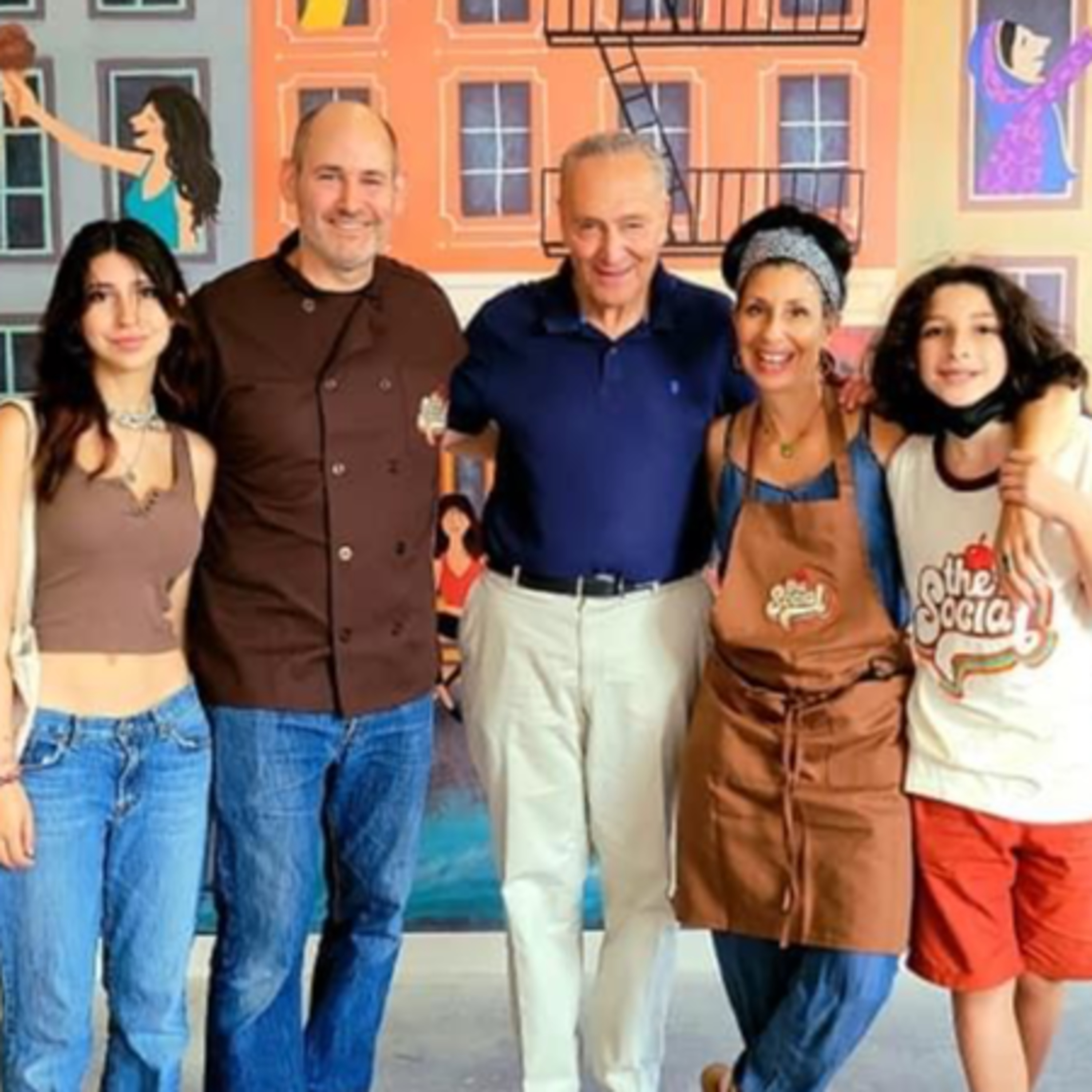
Jackie and Brian, the former founders of the beloved Ample Hills Creamery, recount the turbulent launch of their new ice cream shop in this podcast episode. After losing their previous business to bankruptcy just before the COVID-19 shutdown, they were determined to start over. Their new shop opened in late July 2021 with a grand celebration, including a ribbon-cutting by Senator Chuck Schumer, and initial sales were through the roof. However, this success lasted only about 10 days. The Delta variant soon caused customer anxiety and a drop in foot traffic, while historic rains, an electrical fire, and Hurricane Ida further disrupted operations. The loss of private party bookings—critical for winter revenue—exacerbated financial strain. As the cold season approached, they realized they lacked sufficient cash reserves, forcing them to seek additional investment from their backers, a process that triggered painful memories of their previous bankruptcy. Despite these challenges, they remain confident in their product and space, focusing on surviving until spring. On a personal note, their teenage daughter works at the shop and thrives, providing a source of pride. However, the business has strained their work-life balance, with Brian handling ice cream production and Jackie managing all other tasks, often from home, making it difficult to disconnect.
Welcome. We're Jackie and Brian, and this is As the Ice Cream Churns. Together, we found an ample hills creamery, one of the most beloved ice cream brands of the last decade. Then, we lost it all. We filed for bankruptcy a day before New York City shut down to the COVID-19. Now, someone else owns ample hills and we're out of work. But, we're ready to start over. Come join us for an exploration of what went wrong, and more importantly, what comes next. Our guides are close friend Debbie Rosen. She created the cracked cookies in her hit flavor, salted cracked caramel. When she's not baking, she's a therapist. We thought she could help us navigate these troubled waters. Let's get started. Debson, hi. How are you doing? Good, good. How are you? Good to see you. We miss you. We miss you. We miss you. We miss you. We'll all vibe together. This is the first thing. It's been six months, since we met last. So, let's go back to the opening days of the social. How did it go? Oh, I mean, it was amazing. I think that when we did our last podcast, our last interview, we were just days away from opening the shop. We said we'd be back in a few weeks or maybe a month. I know it's taken a little bit longer, but we've been busy. We've been busy. But it's interesting because when we opened ample hills the first time, I guess 11 or 12 years ago now, we were so overwhelmed and terrified and completely incapable of enjoying those first few days. And we've talked a lot about those first few days at that first shop. The nice thing about it, this time around was very different. We had friends and family gathering the night before we opened. We had the shop properly staffed, thanks to Jackie. And I'd made enough ice cream, thanks to Jasmine and the kitchen and others that have been helping out. So, we were ready and we were prepared in a way that allowed us to really, I don't know about sit back as the right word, but we were able to enjoy. Yeah, yeah. I mean, an opening day was amazing. I mean, it was incredible. Chuck Schumer was there. He cut the ribbon. Chuck, he did a speech about Brooklyn coming back and that we were a part of that, that resurgence that, you know, we weren't going to quit. And that was really, really wonderful. It was great to have him there. And the crowd, the line stretched down the block. Had a DJ. Yeah, we had a DJ. And people were just so overwhelmingly excited about us. And it was humbling. And even at times, you know, I just didn't even know how to react. I mean, there were people that were coming in just constantly telling us how excited they were that we were. And a lot of people that had been heard the podcast and were coming to the shop to sort of see how it went. And I mean, this was the third week of July, if you recall. And the timing at the time just seemed perfect. It seemed like we had thread this COVID needle perfectly. If you remember, COVID was like on the way. And it felt like we were in the midst of that, that summer Renaissance, you know, like the roaring 20s. Everybody pouring out of their houses, looking for things to do, places to eat, fun times. You know, and so we just felt like, man, we've nailed it. It's perfect. End of story. Well, okay. Why am I guessing this is not the end of the story? Yeah. I mean, it was like that for about 10 days. Yeah. I think we had about 10 days where we thought that everything was just magnificent and perfect. The shop was packed. We were making ice cream non-stop. And yeah, it just felt like we were back. And then the Delta variant came by. And that was really defined August in New York and in so much of the country. And it was, it was tough. August was tough. I mean, we were worried about our own family safety. We were worried about the staff safety, of course. And customers. And customers rightly felt the same way. And, you know, as much as you'd like to think, you know, everybody's just going to come and still get ice cream, you know, people naturally, you know, feel anxious and nervous about going in inside spaces again when the Delta variant came through. And so it impacted how things, you know, were going. And it just, you know, we just saw it happen like that first week to 10 days from the end of July, the very beginning of August. The lines and the sales were really just through the roof. And then it just, it just started to sort of, eat away. Yeah. And the shop was actually really packed. And people were engaging in the tables that we had the, you know, game boards built into people were playing ping pong. I mean, it was just like, woo, like, this is great, you know, and everybody was super excited to have this great space in the community. And then let's not forget about the rains. In August, there were like historic rains in August in New York. One of those downpours caused an electrical fire in the street up in front and cut the power out for us for a whole day. And we lost a ton of ice cream. There were like flames like 20 feet, two flames into the sky through like, you know, the, the pothold. I don't even know. It was like the conned was there for like a couple of weeks until they finally, you know, fixed it. Luckily, we didn't lose ice cream for a couple of weeks. But it definitely, definitely hurt us. And then there was Hurricane Ida with the floods there. So it was not the greatest of August. How do you manage all these obstacles or how did you manage and what's your mindset during that time? Yeah, I mean, it was tough. You know, we opened this shop. This is big, beautiful, large shop with a private party room. We've talked a lot about that and doing the ice cream socials and the ice cream parties. And we didn't book a single party in the month of August or in December because of the Delta variant. And so that, you know, the business relies literally needs those parties to be part of the business in order to just survive. And so we could sort of see that problem happening right away. And then of course, as September is happening, you know, the weather is starting to turn cooler. And so the sales naturally start to weaken anyway in September. Yeah, I mean, you know, we were nervous. But, you know, we were confident about what we were doing. The ice cream response to the ice cream was overwhelming. The response to the donuts was overwhelming. And so we knew, you know, things, you know, we're going, you know, great in terms of the product. And ultimately the space because everybody who walked into the space would tell us how, you know, how warm they felt in the space, how wonderful the space felt. You know, how happy they were that, you know, we had created such a beautiful, happy space. And yeah, I think when you say, you know, how do you manage it? I think that at the end of the day, because we could see how people responded to the space and responded to the ice cream, we ultimately still have this sense of confidence and have the sense of confidence that, you know, we've done something good and that it will weather whatever storm it is, COVID or not. But the problem was, you know, just from a pure brass tax money point of view, we could see that by the middle of September that we weren't going to get through the winter without needing more money. You know, as you know, ice cream business in general is wildly seasonal. People, you know, buy a third of the amount of ice cream in December as they do in July. And, you know, back at Amphol Hills, all of our shops would make all their money in the summer, but they'd lose money in the winter, just not as much as they made in the summer, obviously. And so the problem is we opened the shop in late July. So, had we opened a, you know, Memorial Day, in May or even in June, we'd have had more of that summer to build up cash reserves, right? And, you know, we didn't. We opened at the end of July. And then, with August being as tough as it was due to the Delta variant, and that flowed into September. And then by October, Delta was starting to Wayne and we actually
We just started booking parties and we booked parties in October and we booked even more parties in November and December and we had like five or six parties booked in January. So we could see the progression, the positive progression, but we also knew that no amount of chocolate and no amount of doughnuts and no amount of ice cream was going to mitigate the idea of 20 and 30 degree days in the winter. And we just didn't have enough, we could see that we just didn't have enough money to get through the winter. And that was all before Omicron took off. That was before Omicron. And so it just got worse all the parties in January canceled or pushed back the reservations to February. So I mean we're talking now and it's the middle of January and Omicron is in full force and it's just, yeah, it means a tough place to be. Managing finances is a big part of your last experience. How are you money wise handling these setbacks? Yeah, I mean we're pouring over a budget constantly just being aware of exactly what we're spending, that we're not going over that. We're, you know, ice spends every week looking at labor costs and figuring how to be more efficient, how to bring things more in line with our sales. So that's definitely one of the ways in which we're dealing with that. Yeah, and then the cogs, which is the cost of goods, the cost that it takes to make the ice cream, the raw ingredients. Those are something that, you know, we're much more in touch with now than we used to be back at the old business, you know, very aware of what we're spending. The problem is at the end of the day, all those things, whether it's the cogs or the labor, those are your two biggest drivers of expense, right? Your labor and your cost of goods. They're all done in the food industry as a percentage of sales. So meaning, you know, the goal with labor is to have your labor be 25 or 30% of the total sales and your cogs the same thing. And then you have fixed costs like rent, which is just doesn't obviously change or an electrical bill or utilities. The problem is is you cannot make the sales get to a certain point than the, than nothing you can do to the labor cost or the cogs can get those numbers into where they need to be for the business to be a right side up or healthy in the winter time. And so at the end of the day, we knew that we needed more money. And again, we have great investors. I mean, we've talked about them before in previous episodes, obviously, and how we'd met them and the support they'd given us. And, you know, we had to go back to them. And, you know, I think that what was so difficult about that was just the sort of, the PTSD of those last months and weeks at Amphol hill as we were heading into the bankruptcy and trying to make payroll the next week and trying to scrounge to make payroll the next week and so on and so forth and managing money and to sort of be in that place where you see the bank account dwindling and know that you have to go to the investors and make that call and ask for the money. I mean, you know, they've responded very positively, but it doesn't mean from our point of view, it's still very important. No, it is, it's emotional. I mean, honestly, it's just, you know, when you're building a business and I guess this was the difference, right, when we were building our first business, everything was on the up, right? And so in everything's really positive and you're growing and you're growing and growing. And you know, here we're doing the same thing. We're growing and we're growing and we're seeing all the positives that exist. You know, we're also, you know, getting all these roadblocks at the same time and then, you know, having to, you know, you know, get, do that during the winter when we know that the sales are going to be low because we're an ice cream business. We've done this for 10 years. We know that this is the way it's going to be. It's just a weird disconnect, disconnect psychologically to, you know, be growing this business and then yet still feeling, you know, anxious about not having enough money. It's just not the experience that we had the first time. And so it's a bit, it is, it was, there was some PTSD for sure. How are you able in the best way that you can plan during this unstable time? Well, I think that the, I don't know that we are able to plan. I mean, you know, we have gone to the investors. They are supplying us with the money that we need and that's, I think, critically important. And at the end of the day, you know, we have zero control over Omicron or COVID. But, you know, in reading all the news reports, it does seem like it's in the process of peaking and then we'll start to pull away. So I mean, our whole thing is just we need to get to the spring. We need to get to warmer weather. We need to get to the summer. And we just, we can't wait for that to come. I mean, for so many reasons. But I just, you know, with no more COVID variants and the warmer weather coming, we think we're poised and ready for, you know, a great spring and summer. But, you know, it's really, you know, six months from now, we'll be able to, we'll tell. Yeah. So, let's take a turn to the personal side for a minute. And turns the family, how's everyone? And what's it like to have teenagers during this time while establishing a business versus toddlers back? Yeah. And you had him. Yeah, it's very different. You know, I mean, it was, you know, with toddlers, obviously, you have to watch them all the time and you have to figure out who's watching them. And you're in a constant state of like, you know, kind of going back and forth from the business to the kids, to the kids of the business. And teenagers are now like kind of independent. It's a little sad in a way. I mean, not that I miss that, you know, intensity of dealing with the toddler in a new business. But, you know, it's kind of like, oh, wait, where are the kids? Oh, did you give them the keys? Do they have the keys to get in? Yeah, okay. So, they're fine. So, you know, it's, it's, it's, it's, it's, it's their excitement of being kids and an ice cream shop is a little not, not quite there anymore. No, I mean, their excitement is still there. It's just very different. Yeah. You know, I mean, you know, our daughter works at the social. That's exciting. Yes, I mean, that's been honestly the, the greatest part about, you know, the, the teenage years is, you know, our son's not quite old enough yet. But our daughter works at the shop and is just incredible. I mean, she's actually like a great employee. I mean, I don't bring in cries every time he sees her behind her. I can't tell her a little bit. Okay. Maybe just a little. And, in ways that like we didn't, we just see a different side of her at the shop when we do it home because at home, you know, when you're dealing with a teenage daughter, you know, there's, you know, maybe not the most talkative, the most sharing, the most gregarious. I mean, it's just, that's natural teenage life. But then the way that she is with customers is gregarious and friendly and outgoing. And then she'd come into the kitchen when it was slow and say, Hey, Dad, can I help you make any ice cream? Do you need any help? Like, I just, I don't know. So it's been overwhelmingly proud. Yeah. Yeah. No, she's great. It's great to see her in that element and, you know, and to be, and for her to be a part of the business in a way that, you know, she grew up sitting at the end of the counter at the Vanderbilt shop that we had, you know, first opened. And so, you know, most of the time she was drawing or, you know, playing a game or doing her homework. And it just feels like somehow, you know, she absorbed all of that activity. You know, she's just, you know, you know her, Dad, but you know, with the intensity that she kind of can, you know, absorb and, you know, who knew, you know, it's just like, and I don't, we don't, both of us don't feel like we taught her specific, you know, skills here. But, you know, I guess what we've been doing is rubbed off. And so that's a wonderful feeling. Is Kaleo want to work eventually or is that not his thing? Yeah, he wants money. I think, no, he does want to work. He came in for a day when he was, I can't remember, but like we, he came in and helped out in the, in the kitchen one day, but, you know, he's not technically yet, you know, quite old enough to scoop it in time. So how are you managing work, life, balance and, or, I guess, are you? Oh, well, it's hard. It's hard. I mean, we have clear roles to find now, so I think that helps. Yeah, I mean, I really don't do much other than make ice cream, right? I don't, I don't make the donuts. We have a woman who's our baker, Jasmine, who's amazing, and she makes the donut. Oh, and her sister, that's, of course.
Olivia makes it donuts and how many hours a day Brian do you make ice cream? Oh I mean I you know all day long I mean some days are longer than others depending on you know in the winter time it's definitely a little bit slower because there's not as much ice cream that needs to be made so but in the summer it's longer hours but it's all day and I mean I'm still among my feet all day long I've lost all that weight again you know doing the physical labor make an ice cream but I've gained all the weight I've taken his weight and ate it but you know I think I think it's important you know the the work life balance is it's definitely easier for me from a work home balance because I only just make ice cream and when I come home I obviously can't make ice cream for the shop at home and so I'm able to in a way physically more you know leave or distance myself from the business when I'm at home Jackie basically does everything else I mean overseas the payroll the labor hiring training ordering of supplies sales tax issues you know you name it she does it and so what that means is a vast majority of that stuff is done sitting at a laptop and so it's much harder for her because she can do that anywhere and that means of course she does it anywhere and everywhere including the kitchen table and and everywhere so I think it's it's much it's definitely much harder for you yeah it's it's I'm not gonna say yes it is it is well it's hard because you know you're you're in there making ice cream right and you know and I'm you know dealing with all this other stuff that you know by myself and in many ways which is very very kind of lonely for me you know just the responsibility aspects of it all and knowing that I have to make decisions and I have to do things that you know I don't have anybody really to consult with about so so that part is challenging and you know the fact that you know my day doesn't really end because I'm in you know constant contact if I'm not scooping at the shop and helping customers and managing there and you know then I'm you know interacting with you know the managers that are in the shop just you know offering advice and help or you know helping deal troubleshoot a situation somebody calls out yeah yeah yeah yeah staffing issues obviously you know now are difficult but you know it's just you know it's just it's a lot it's a lot you know I can't I can say it's not but you know I mean I appreciate that you at least when I get home if I get you know Brian will text me are you coming home yet are you coming home because every day you do come home and make dinner for the family and he makes a point of being home by like 5 30 at the latest to and you know and then you know furiously text me you know to that I needed to come home because it's on time yeah no it's true I it's funny because I think there's more organization in that regard than we used to ever yeah I used to eat out all the time and I know that you know but well that's true I don't even mean eat out I mean order in you know and which you also cost more but yeah but just there is something about having that you know a family dinner together where everybody sits down and catches up on the day and we do that now much more than we used to and so yeah I'll take credit for at least that part previously you mentioned the benefits and drawbacks of starting over 10 years older now that you're in the thick of it how does it compare to what you imagine hmm you know it's interesting in many ways it's much easier you know we certainly planned better this time around we hired a lot more staff up front I hired staff in the kitchen up front to help and we hired enough staff out front scoopers and managers to help so that we didn't have to be there every single minute it doesn't mean as we just explain you know that we're not thinking about it every single minute but when we were at that first shop on Vanderbilt I think it was four or five months in before anybody else closed the shop other than me I mean I was there to open the shop in the morning and then closed the shop at 10 o'clock 11 o'clock at night every single day for four or five months I thought I was gonna lose my mind and this time around from the very beginning we just we knew we didn't have that in us and we knew it wasn't necessarily healthy for the business either to have us burnt out like that and so we've hired and trained others to be responsible and to help with that stuff from the very beginning so in that way it's just it's definitely been easier but yeah I mean you know so in other ways it's a lot harder it's just it's a lot harder because you know we're 10 years older and you know like I said we have teenagers and so you know the demand for that kind of you know constant you know you have to get up in the morning and you know tend to your toddler is it's different with a teenager there's less of that and it's kind of the same way with the shop like if you were to like in the shop to the teenager right like it was a toddler the first time around when we opened it you know there's an analogy for you right and now you know now now we've kind of gone into the teenage years of business and so it's it's a bit different yeah all the physical labor is harder you know it's just it's just harder being older and doing the physical labor yeah just even yeah right exactly like when I'm doing a shift you know those shifts I remember kind of breezing through even you know eight nine years ago you know and it would be I'd feel fine I'd be able to go out meet friends at the end of the day or take care of the kids or whatever and at the end of a busy shift I'm tired like I need a break yeah I mean I will say psychologically I think more than anything it's just it's just tough I mean when we did this before we had this wild and smashing rocket ride of a success with ample hills I mean it just went through the stratosphere almost immediately and all that's all that's still possible you know all that excitement and growth all that's still possible again it's just I I think at you know 50 plus and doing it again and the hill that we have to climb it's just it's hard to get up every morning and and and be at that starting line again you know I don't I don't know exactly what I'm saying but I mean we're obviously we're extremely extremely grateful for the second chance and we we dearly love this this business that we've we've created but you know it is a tall mountain decline and you know all that we've talked at length about the personal debt that from the bankruptcies and the sales tax and all that that money that we still owe and that you know every dime of that we still owe because you know we're still just getting into deeper debt with the new business right now as we just described so that that hill is just high and feels like sometimes it's getting higher and our ability to sort of get up and keep saying like the little engine that good I think I can I think I can it's hard what do you tell yourselves keep moving forward yeah I mean I don't want to sound all defeated at all but because you know I mean you know ultimately you you have to get up again it's a new day right it's a new day was that song in the Wiz that I love to sing honestly and like when I need some positive infusion it's a new day and so I have to look at it every single day it's like okay well so what's gonna be positive about this day what can I do today that is going to help benefit the business I mean the business the business business is constantly on my mind so it's just you know kind of the finding that the joy and the little the little things and honestly one of the things that that keeps me going that keeps you know keeps me motivated is is dealing with people dealing with the people in the community that come into the shop and talk to me about you know how much you know they love a specific flavor how they remember having their birthday parties at our old you know place and you know and how you know I served them once and how wonderful it wasn't you know it's just all of those things that are just so positive that that keep me going and and that keep me thinking okay like we have something here and it's something that is it's somehow we've
tapped into people's emotional centers with this thing. And you know, and it means something. It's not, it means something to other people. And so when I take myself out of it, honestly, and I think about, you know, what it means to other people to have this business, that's what keeps me up to know that there's inspiration, like that we have personally inspired people is amazing. I mean, you know, tire banks came into the shop a couple weeks ago and told me how much I inspired her. And I was like, uh, hello. - She'd listen to the podcast, right? - She'd listen to the home podcast. She has inspired so many people, and obviously inspired me. So just to hear that from her was just amazing to me. And it's just, you know, she's an incredible person. But, you know, but tire of banks, yes, that was wonderful. It's also so wonderful, like this woman came in yesterday who, you know, with her daughter who's 13 and had her party with us at our last place when she was three and had a wonderful experience and, you know, it was gonna have her 13th, you know, birthday party with us in March. And it's just, you know, I get that all the time, like from people just saying, and, you know, saying thank you so much for opening this. Thank you, thank you. And, and honestly, that's, you know, that's what keeps me going. - I think that's incredible. Just to feed off of, you know, in our dark days, to feed off of the thing that we've created and how it's impacting others is great. I mean, for me in terms of how to get up, I mean, I, you know, some half the battle, sometimes it's just mind tricks. I mean, I think stupidly about, you know, the whole thing about a glass half empty or glass half full. I mean, you know, literally the glass is half empty. It's also literally half full. I mean, it is both things. And so, you can choose therefore how to see it. I mean, you know, because no matter how you choose to see it, the glass is still half empty and half full. And so, if you just get up and tell yourself that it's half full, then you can sometimes you, you know, it's sort of almost like making it until you make it. You have to get up and and. - What's the psychological term that he's talking about? I mean, you know, what is that, Deb? (laughing) - It keeps me make it as perfect. My grandma, they say that. - Yeah, yeah. - It's not denial? No. No. No, but I think that it's just, you know, and it's remembering the passion. I mean, I still get up in the middle of the night and you have to go to the bathroom and think about, okay, maybe I don't want to relate those two things. All right, forget about going to the bathroom. I get up in the middle of the night and I think of a flavor or something that I want to make, you know, or in the morning. How about that? First thing in the morning. I'm thinking about ice cream. - It means what it is. - And, you know, and so while the body doesn't quite want to get dragged into work and physically go and make ice cream, you know, the part of my brain that's still seven, you know, is still very much excited about, you know, thinking about that next great flavor of ice cream. - So what's next? I mean, what's your vision for the immediate future and long term? And I know that's really hard to predict, but I'm gonna ask it anyway. - I mean, immediately in the short term, it's just, it's survival. I mean, we have to survive the rest of this winter. I mean, we have the investors, we have the money, we can survive it. We need to get to the spring in the summer. Our real test for ourselves is the spring in the summer. Meaning, we know we have the product, we know we have the ice cream and the donuts in the space and the beauty of that and the passion of the fans. What is untold yet is whether or not the business economics of it all makes sense and it's a, you know, it can be a thriving business which isn't or aren't always the same thing. So, you know, our short term is just getting through to give ourselves a chance to really knock out of the park this spring and this summer. I mean, long term, I think that the vision remains the same, which is, you know, as Jackie's talked about, just using ice cream and, you know, leaning into our name, social and bringing people together. Social, one day we're going to be able to be maskless and, you know, partying with free abandoned at the social. Yeah, it's that effort to go back to, yeah, the roaring 20s. That's, we need to roar. Yeah. We all need it. I mean, come on, man, we gotta work towards that. That has to be our focus and, you know, our optimistic, you know, North Star. Yeah. I think that, you know, sweet wine down here. I mean, close out this, this, this part of the story. I think, you know, I'd like for us to come back and talk again, you know, in a few months, once the spring and the summer starts in and we can, you know, make some time to, you know, really sort of see how the rest of the winter went and what we're doing at that point as it's flipping over into the warmer weather. I mean, it's been really interesting hearing about starting your business, period, but also during a global pandemic and a new wave. There's so many unknowns and it'll be really interesting to hear next time we meet how things, you know, have played out. You know, greed, greed across your fingers. Yeah. Subs in all right great to see you so nice to see you. Thank you. Bye. Bye. Bye.
Podcast Summary
Key Points:
Jackie and Brian, former owners of Ample Hills Creamery, launched a new ice cream shop after losing their previous business to bankruptcy during COVID-19.
The new shop opened to great fanfare in late July 2021, with a ribbon-cutting by Chuck Schumer and strong initial sales, but success lasted only about 10 days.
The Delta variant, historic rains, an electrical fire, Hurricane Ida, and the Omicron variant severely impacted sales, especially private party bookings crucial for winter survival.
Financial challenges forced them to seek additional investment, triggering PTSD from their previous bankruptcy, but investors responded positively.
Their teenage daughter works at the shop and excels, providing a personal bright spot, while Brian handles ice cream production and Jackie manages all other operations, leading to work-life balance struggles.
Summary:
Jackie and Brian, the former founders of the beloved Ample Hills Creamery, recount the turbulent launch of their new ice cream shop in this podcast episode. After losing their previous business to bankruptcy just before the COVID-19 shutdown, they were determined to start over. Their new shop opened in late July 2021 with a grand celebration, including a ribbon-cutting by Senator Chuck Schumer, and initial sales were through the roof.
However, this success lasted only about 10 days. The Delta variant soon caused customer anxiety and a drop in foot traffic, while historic rains, an electrical fire, and Hurricane Ida further disrupted operations. The loss of private party bookings—critical for winter revenue—exacerbated financial strain.
As the cold season approached, they realized they lacked sufficient cash reserves, forcing them to seek additional investment from their backers, a process that triggered painful memories of their previous bankruptcy. Despite these challenges, they remain confident in their product and space, focusing on surviving until spring. On a personal note, their teenage daughter works at the shop and thrives, providing a source of pride.
However, the business has strained their work-life balance, with Brian handling ice cream production and Jackie managing all other tasks, often from home, making it difficult to disconnect.
FAQs
It's a podcast where Jackie and Brian, former owners of Ample Hills Creamery, discuss what went wrong with their business and what comes next, with help from friend and therapist Debbie Rosen.
It was amazing—Chuck Schumer cut the ribbon, a DJ played, and a long line stretched down the block, with overwhelming excitement from the crowd.
The Delta variant reduced customer traffic in August, historic rains caused a power outage, and Hurricane Ida brought floods, all hurting sales.
They closely monitored budgets, labor, and cost of goods, and had to ask investors for more money to survive the winter, which was emotionally challenging.
They aim to get through winter with investor support, hoping warmer weather and no new COVID variants will lead to a strong spring and summer.
Teenagers are more independent, but work-life balance is hard—Brian's physical labor lets him disconnect at home, while Jackie's laptop-based role makes it difficult to stop working.
Chat with AI
Loading...
Pro features
Go deeper with this episode
Unlock creator-grade tools that turn any transcript into show notes and subtitle files.
 PodcastTranscript AI