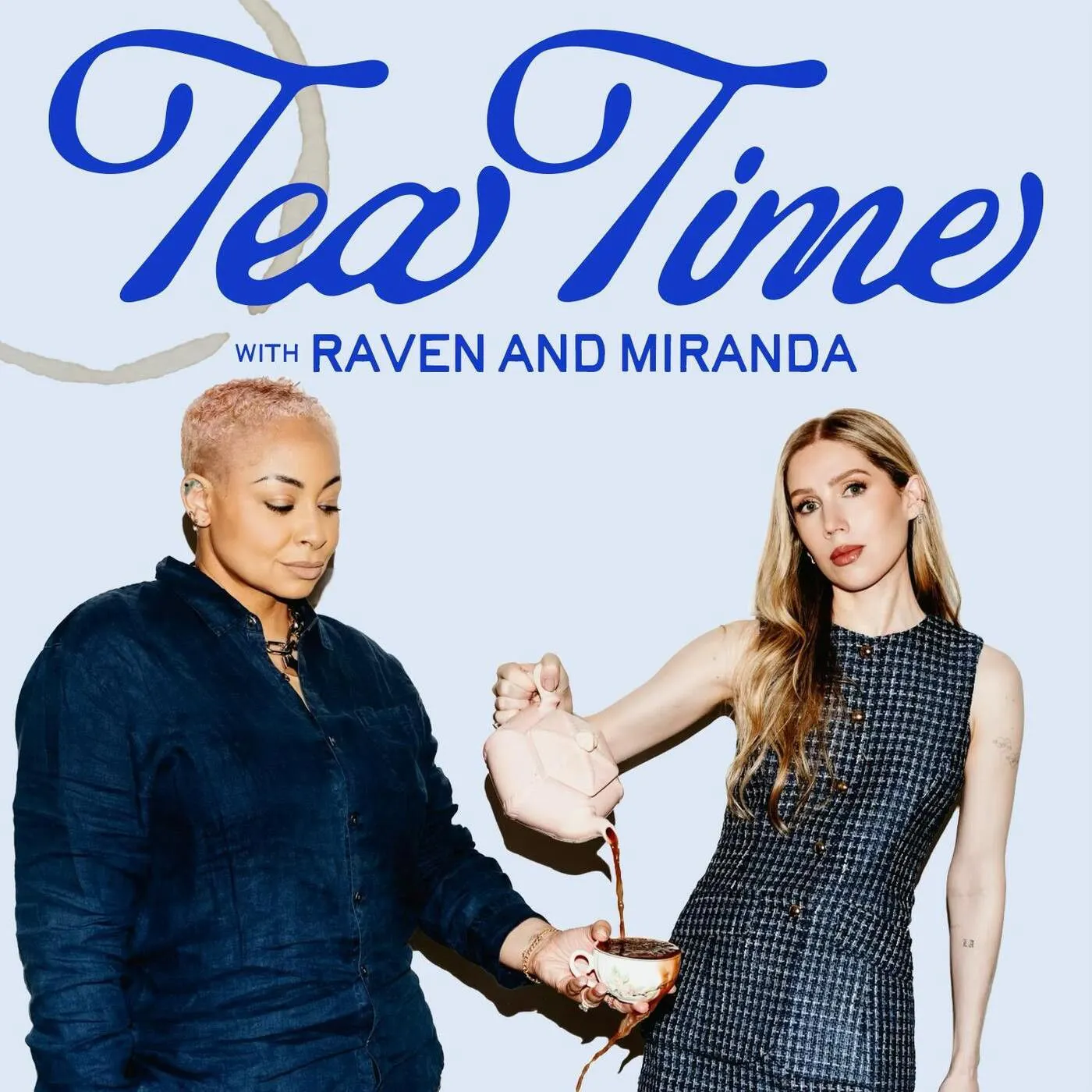
S2 EP90: Daniella Monet on Victorious, First Love & Life as a Working Mom
1h 4m 40s
The podcast episode blends personal storytelling with deep conversations about identity, trauma, and self-growth. Hosts explore how early experiences—like first love, childhood homes, and relationships—shape emotional patterns and personal resilience. A central theme is hypermobility, which is reframed beyond physical flexibility as a condition tied to nervous system dysfunction and trauma, affecting sleep, posture, and daily life. The hosts also discuss disassociation not as a flaw but as a protective and empowering survival tool, especially for those with trauma histories. Guest Dinyella Monet shares her journey through television acting, emphasizing how her early experiences shaped her emotional maturity and connection to her work. The conversation touches on organizational habits, such as using junk drawers, as practical tools for managing mental overwhelm. Personal stories of first love—whether romantic or academic—are examined as formative experiences that influence future relationships and self-perception. The episode concludes with a heartfelt look at healing, self-awareness, and the importance of creating safe, supportive environments for emerging artists. Through these intimate reflections, the podcast offers a powerful insight into how personal history informs emotional well-being and resilience in adulthood.
Hi, this is Carrie Washington. I've always been curious about how people become who they are and where their story begins. So, I started asking one pretty simple question. What's the street you grew up on? Because every adventure begins somewhere. And now, the street you grew up on is a podcast. This season, I'm sitting down with amazing guests like Ben Affleck, Demi Lovato, Jessica Alva, Mel Robbins, Colin Kaepernick, and so many more from Simpson Street and Daylight. Season 5 begins September 30th. Follow now wherever you get your podcasts. Disassociation for me. Disassociation. Disassociation. Is there a specific scenario where you did the D word? Well, when I did the D for the first time. Exactly. Let me think. Hold on. [laughs] Oh, gosh. Hey, Biscuits. Hey! Back to another episode of Tea Time. I'm Miranda Maiden. And I'm Ravensmall. Hey, babes. Hey! What are you going through today? I've been in my brain palace all morning. I went into my back house and started organizing things and I looked at myself. And I cannot start a painting project without organizing and reorganizing and then reorganizing all of my materials. And then once it looks good, then I can start painting. Yeah. I don't know if that's hyperfixation. It's more of just an awareness of what I do before I paint. I hyperfixate before I paint. You do. On clean space, organized space. More organized than clean. Like, that's what I appreciate about our relationship. I'm the organizer. You're the cleaner. Because you know, I will organize something, but I will not dust it down. You will come in and be like, I'll be like, babes, help me move furniture. I'm organizing. Like, oh, but it needs to be wiped. I'm like, okay. Yeah. I'm like, let me dust it before you put the shoes back on to make sure that the shelf is clean. Yeah. That's very, very much. Okay. So that's kind of where your brain's been. How are you? Okay. So I have been hyperfixated/thinking a lot about hypermobility. Because I keep seeing people on TikTok talking about hypermobility and prior to my TikTok deep dive research/education, I thought being hypermobile simply meant like, my knees could hyper extend or that you're really flexible. I am discovering that hypermobility actually causes a lot of physical dysfunction/nervice system dysregulation. And I am here to stop. Okay. Because I can put my thumb closer to my elbow, but I have a nervous system. Yeah. Because the what is happening in your body that's allowing you to do that is a joint laxity. A joint flexibility that is then not keeping you structurally in place as much as you actually have to be. So hypermobile people like, you know how you get annoyed with me? And you're like, you always need a pillow between us. You always need a pillow between us. It's actually, it's not because I want like space between us ever. It's because I need that lift up because I'm so uncomfortable otherwise. And I need my legs. Oh, I thought it was because I overheat and you needed space. No. No. Because even when we don't sleep in the same bed, I sleep the exact same way. And I always need a pillow between my legs. And like, I need my leg up and I sleep like this. And this is all trauma. When you sleep like T-Rex, they say you are having a traumatic experience. But that's also hypermobility. That's like neat. Sure. It's probably like crazy right now. I'm sure I do. And I'm sure I do when I also sleep. And that's hypermobility. And I just thought like it was like you're saying like, oh, I can do this. But no. So your joints are really, really flexible. Therefore structurally, you're not being held the right way. And your nervous system does become regulated by your system, how it's held. And therefore, if you have this hyperflexibility or your vagus nerve is being moved out of whack all the time, you're not well. Well, as an American, I just think I'm not well. Well, I am a black American. I'm probably doing a little bit better, but I'm definitely unwell. But I really want to understand. I'm hearing all of these people talk about the symptoms of hypermobility, hypermobility. Have you deal with this? Have you deal with that? And I'm like, okay, yes, yes. But no one is saying what can help or fix it. Okay. It just sounds like we have to live with it. I'm just going to put this out here because you know, I love it. Devils. Add the kid. I'm just now hearing about this. And there's so much new research going on. What if that's not true? Like back in the day when they said, you know, eating margarine was better for you than eating butter and come to find out. It's fucking not. But if this is like, what if in actuality, the more hypermobility you are, the more you're healthier, the doper you are. I would love that. And maybe in like 30 years time, we'll figure it out. But when I am dealing with this like chronic neck and shoulder pain, and I'm sleeping like, you know, a weird T-Rex raptor. And I don't really understand why or I need this pillow position here or I. It's the standing. This was the thing. Oh my god, the standing. This was a major one. Tell me because they say if you stand for too long, you start like trying to lean in different ways and whatnot. And that happens to me. When I stand for too long, I'm always. This is not a medical thing. This is because you ask it's tired. It does it out. No, I'm not tired. It's hypermobility. It's because my body is. My joints are fatiguing more quickly than a non-hypermobile person. You also have the torso, the length. Your torso is the length of a yardstick. You're just top-headed without the boobs. So I feel like. Oh, this was everyone. Wait! I'm remembering the other one where it's from. The other one that really got me. Let me just tell you. Okay. And I hear your devil's advocate, but this is what I'm going to say. I, for the forever, have said. I have a really big head. And I have said this. I feel like I have a very large, heavy head. Well, with that head on, it does look kind of big. That, my neck. I'm having a bad hair day. Don't come for me. And I thought it was maybe a little cute. Whatever. Anyhow. I'm like, my neck is weak. My neck is. My neck is weak. Listen to me. Listen to me. And I can't hold the head. And I even called my mom one time. What about your back? Is it weak? I called my mom one time. And I was like, did you do tummy time with me when I was a kid? Because I don't think you helped me develop my neck strength. And she was like, I can't remember. And I was like, okay, well, I think I needed more of it. Because I have a big head and a weak neck. And that is, that is a symptom of hypermobility that your head feels heavy as hell. All I heard was my neck, my back, my, and my crack. That's what I heard. That's what I heard. That's what you heard. That's what I heard. That's all you heard. Well, I guess we can't have much of a dialogue. So in that case, let me introduce our guest today. Our guest today is a generation defining actress. She's a television veteran who spent four seasons as Trinavega on Victorious. Before that, she was on ABC's Eight Simple Rules, Nickelodeon's Zoey 101 and Disney Channel's sweetleth of Zack and Cody. She's also a bonafide host, leading the digital series, TV, and Nickelodeon Kids' Game Show Paradise Run. And now she is back, you guys, reprising her role as Trina and executive producing the upcoming Victorious spin-off Hollywood Arts, streaming October 15th on Netflix. Biscuits, please help us welcome Dinyella Monet. We will be right back with her. Dinyella. Welcome to the podcast. Thank you. We're so happy to have you here. Yes, we're so happy to have you. How are you? Doing good. Yeah. Yeah, it's nice to be like in this cozy little world with you guys. Thank you so much. Cool and chill. What time do you wake up today? I woke up at a comfy, actually earlier than usual. A comfy 717. That was the time I tapped the phone and saw. I love that. I love that. You know, Raven likes to set her alarm clocks for odd times. Meaning she won't say like, oh, I'm waking up at 730. She'll wake up at 722. Same. You do that? Yeah. Why? I don't know. I think I need like the, I need the breathing room. Like I like that it's like not on the number. And like if I want to just coast that like eventually I'll hit a round number with my body on the ground. Yeah. So it's like if you're waking up at 717, then you can snooze till 730 and let me out of bed. Yeah. That makes perfect. And I did. I actually, I get up. And the first thing I do is I go in my bathroom and I brush my teeth. But then I'll like go back and lay down. Really? Like I can't like wake up and know what's happening in there without addressing it. And then I'll go back down. Not what's happening in there. Yeah. That's funny. People say that that is what you're supposed to do. Like the minute you wake up, you go. I tell my kids don't swallow. Yeah. That's because all the bacteria. Yes. How has it been to you? I know. I'm out this close. Almost. Because I think what I've heard through my news source on Instagram. On TikTok. Yeah. I think that overnight you're liver and things are getting rid of so many toxins. And the only place for them to exit outside of the other way is your mouth. So you just got to scrape and brush. That's why people are like, don't go eat food or drink water. Because you're swallowing all that bacteria, scraping your tongue is also supposed to be on my life.
- I get on a discreet pertongue. - So do I. - Maybe I want that gunk off. - Yeah, I want that gunk off. - And I wasn't this girl. Like if I'm being completely a hundo, I was not someone who brushed their teeth in the morning period. - Me too. - I didn't like it. - I didn't like it. - I didn't like it. I'd rather have my coffee first. Like I didn't understand it. - Yeah. - But then something happened, and it wasn't even that long ago, when I realized like, I can't go back now. - That's how I'm so sensitive to the feeling of my mouth. Like I can feel when my teeth start to get a little fuzzy, and that can just be from, I mean, I brush religiously twice a day always. Sometimes I'll do three times a day, and I also floss. Like I, a big on, - Three times a day is diabolical to me. - I'm big on oral. - I get it now. - Hell. - But I get it. - But I get it. - I know, I get it. - I'm big on oral. - Hell. - Sorry. - But yeah, you understand. You're in my words. - Now I get it. I wasn't in this world. I was one time a dire at night. - Okay. - And now I could see the three. Like if I'm leaving the house, this is post like breakfast, coffee, all the things, and I know that I'm gonna be like, I will brush my teeth again. - So what was your thought process or relationship to morning breath if you weren't brushing your teeth in the morning? - That's for other people to deal with. I didn't-- - I love her! - Okay, she's like, it's coffee, you guys. - I can feel it. - I can feel it. - There you go. I mean, the fare. - I have, I also am a TikTok scrawler, okay? - And I just bought that stick that you're supposed to chew and then like scrape your teeth with and it's old ways to brush your teeth. - It's a stick. - It's a stick. - It looks like a bark, a piece of bark. - I think I can find one. - I have like 10 upstairs, 'cause I bought the, I was on top of that. - So what did they do? Sanitize the stick? - No, the stick was like actually sanitizing, and then you chew it. And I've been doing it and supposed to like polish your teeth and also, but it doesn't get the tongue. So I find myself polishing and scraping and then also having to brush. - So I don't know if it's just more steps. - Okay. - And I'm not a fan. - Sure. - Like give me a mouthwash, give me like a towel. - Quick, quick, quick. - Kill it and then like get out of the way. - Are you-- - I think it messes with the flavor of my food. - Oh, yeah, yeah. - Are you a TikTok shop fire? - You know, I actually can't tell you the last time I was on TikTok. - I'm so proud of you. - I'm trying really hard to like not be on my phone now. I will do the Instagram, but like I'm pretty good about just putting my phone down. - I don't-- - Why? - Why are you old? - I'm old. I'm very old now, and I literally can't unsee mess. So if I see that there is something that needs my attention in my home, like that wins, but I do listen to a lot of podcasts. - That's good. - So if I can be productive, like I will have a podcast in my ear and I'll do the dishes laundry. I'm basically just this help. - You know what? I feel like in having a house, there truly is always something to do. Like I am overwhelmed by the thoughts sometimes in my brain work. 'Cause I'm just like going through the list and I'm going to have to do X, Y, the fridge, the trash, this, the clothes, the laundry here. There's always something. - And it doesn't even look like I'm doing anything. - But I'm sure you are. - I do to all the time. - Yeah. - It's just like-- - And then I look up and I'm like, well this is a joke, it's sick. - Yeah. - I have something to help you with that. - What can tell? - It's called a junk drawer. - Oh what? - This is my secret to make the house clean. It's a little bit more work than necessary, but this is what I started to do as a kid. - Just to get out to, though. - But listen, this process. - It stresses me out, but at the same time, it works. And I learned it when I was a kid when my parents would get mad at me. You take all of this shit in your place and put it in a closet. - Oh yeah. - And then the house is clean and then you deal with the closet one thing at a time. - I get that. I have you heard of the basket. Like I've seen this on the, I love the basket. Like throw it in a basket. I used to have this thing with my kids where it'd be like, if it's on the floor, it goes in the trash. So now my kids like trying to keep things. - I love this part. - That's smart. - Okay. - Like if it's on the floor. - Also traumatic, but I love it. - Yeah. - Therapy. - That lasted like a good couple of weeks. And then I just was like, I can't quite stick to it. I don't know what my method is yet. - And that's important. There's different methods of organizing there. There's a woman on YouTube that I watch when I was living single and love that show. And trying my best to like figure out the way that I work. And she says that some people need baskets on the stairs because they leave stuff on the stairs. And instead of moving it into a house and organizing it immediately, you live in it and see where your piles go. - What's interesting for me when I think about my organization or lack thereof is I grew up in a very organized house. Super clean, very meticulous. I've always been that way. But recently I felt so overwhelmed by things. And moving into this house, you've been here two years. This house doesn't really have the best storage. - It's open, right? You can't talk anything. - You can't write anything away. You have to literally buy furniture to actually use. - Yes, so then because we don't have the furniture, things are just. - We have the furniture, we just don't want. - But I think that's good. Like I'm with you. I think what you're getting at is kind of where my belief system is, it's like we just don't need it. - Yeah. - Do you guys ever, when you go out of town, at least for me, every time I've spent a significant amount of time away, I realize how little I need. - Yes. - I go, oh my gosh, I have lived with one suitcase and I'm so fine. And then I come home and I look at everything and I get instantly overwhelmed and then I pull the trash bags out and I'll hand everyone a trash bag out. - I love her. She's like, it's time. - It's time for time per day. - We've been here, we've been using this stuff. - It's like, no, everything's on the floor in my mind. Let's go. It's all trash. - You don't listen to our podcast, right? - Yes, I have. - Oh, you do that so much. - Yes. - Babes, did you tell her what you love podcasts for and what it means and why the name of it? - No, I haven't yet. - But I will tell you, so growing up in my household, my very clean, tidy, meticulous household, my mother used to say to me and my sister that there was no problem that could not be solved with a good cup of tea. And that's where tea time really was born. So Raven and I like to ask our guests, if they have a problem that we can help them with. - Oh my goodness, let me think. Wow, when we start, hold on, a problem. I like to call them challenges. - Yes. - Great. - Yes. - Do you have a challenge? - Let's think of a challenge. Yes, I would like to better understand how I can get more comfortable in being uncomfortable. And that applies to so many things, like in approaching like a conversation that could be uncomfortable and you know it's gonna be uncomfortable. How do you just get comfortable and that's how you can just address it. And also just in life, when you're like in that in-between time, I don't know about you or I honestly, it probably applies for everyone. But like, I will have these moments where I'm like so settled. And I'm like, it feels icky. Why is everything like so calm, cool, and collected? And I still feel like I need something chaotic going on. I need more to do. - I have so many thoughts to all of these things because discomfort to me is such an amazing opportunity for growth and you can master class yourself through it. And I often tell myself when I'm uncomfortable, which is quite often because I have a lot of stuff like most of us do, but I am just also like hypersensitive to the world. I ask myself what is on the other side of this discomfort? And if I don't get through it, then I will never discover what is on the other end of it. So let's use the conversation, right? So this conversation is gonna be uncomfortable. You're avoiding it a little bit. But on the other side of it, there could be something potentially air quotes worse, but there also could be something that you never expected. Something that makes you have a different perspective or maybe a different connection with that person. Or even if it does go self, there's a learning lesson in that for you too, that I think can help build resilience or just how to navigate complicated people. So I think discomfort is just such a great indicator into ourselves and again, how to grow. What are you gonna give you the toxic answer? - Okay. - Because that's the healthy answer. Dissociate. - Oh, I'm too good at that, honey. - Look out. - Look out. - Look out. - Oh, girl. - I could give you a faster one than that. - No. - Not the undoing I'm trying to work on. - Well, but I have dissociative, I have dissociative disorder as well. And I've turned it into a superpower. - I agree that it is actually a superpower because I can skirt through a lot of things. Like people just look at me and I'm unfazed. So I do think it can be a superpower. And if you reframe it from a problem to a challenge, then reframe it from a disorder to a superpower. And so when you go into those situations, allow your body to say, "Who do I need to be?" - Or do I handle this situation? - I think I can do that. - It's super toxic. (laughing) - But if you blend the two, you might get healthy. - Yeah, yeah, yeah. No, I think it's a blended approach. It's nothing's black and white, right? - No. - Like this is what it is. I like that. - I just feel like the ability to dissociate. - Dissociate. - Dissociate. - It's not disassociated, it's dissociated. - No, dissociate. - Yeah, you correct me every time. To dissociate comes from your work and being so young in the entertainment. - Laird. - It's layered. - For me. - Yeah, I will say, I know we're interviewing you, but I gotta jump in here. - Please, I wanna hear it. I'm here to soak up the tea.
I will say that childhood trauma and trauma, adulthood trauma, can create dissociative moments in life. I wouldn't blame it all on the industry, but because I was in the industry at a young age and because of the trauma at home, then yes, that's why I have dissociative moments. Please, no, I think it's hard for me to pinpoint it. There's a part of me that thinks if I'm looking at it through the lens of a superpower, there's a part of me that's had to just push through a lot and maybe not ignore it, but file it in the back so that I can be composed enough to be my best self, right? Yeah, I think that there's an element of professionalism that comes into play when you're trying to just be your best version of yourself. I don't know. I think everyone manages things differently, so disassociation for me. Dissociation. Dissociation. Well, when I did the D for the first time, let me think, hold on. Oh, gosh, I can't really, I mean, I'm sure it was all stemming from being a child and having to keep it good on the outside, knowing that there was chaos going on behind the scenes. Yeah, I would just say as a kid, I don't know about you guys, but it was a different time, different generation. My parents were part of a different generation, so there was a lot of language and things that we just didn't know about at the time, and they had to figure out the hard way how to find themselves and figure out, you know, whether they were right for each other, and I think through that being a kid or a product of that, you learn how to make sure you feel safe and like taking care of and sort of grow up a little quick. Working with Chris Massey. Oh, yeah. Okay. I dissociated with that finish. I didn't really work with them. Oh, okay. Well, Zoe 101. Yes. Yes. I was recurring on that show, so I was kind of in and out, but I remember them around in the world. I'm just playing. Are you though? No. Yeah. I don't know. Being within that community, the Nickelodeon lifestyle, and just being around everyone there, I look back at myself and say, I don't think that I consciously was dissociating. I found out later that me not remembering what I said or what I did or a certain take. I was like, oh, that's what that meant. So I didn't find out until later. Interesting. So you remember your sets from childhood? Okay. So this is where it's going to be kind of flipped. I think that I looked at work as like escapism, love that. And so I do. I actually remember more of my sets than I do my childhood home. Wow. What was your favorite? And what was your favorite crafty? Oh, my gosh. That's so funny. Well, the first one that comes to mind, the first show that I was on as a series regular was a show called Listen Up. And it was a really powerful experience because it was the first time that I'd ever like worked a full time job. And there was a lot of pressure. And I learned a lot about like being on a TV show ratings and da, da, da, da, da. And our crafty there was so good. I mean, crafty is where you get the food, you guys. Oh, they know that I had my own drawer, my own shelf and the project, like they were like at the time, I don't, I'm vegan, I've been being most of my life. And there was a restaurant called Real Food Daily that was like, so we know that, and they would like get it for me sometimes for lunch. And I was just like, this is so exciting, I never want to not work again. I mean, you were vegan before it was like trendy, yeah, yeah, I still am. I don't know if it's trendy anymore. What started this for you? I was five years old at a dude ranch with my family. And I just saw, you know, a cattle ranch situation learned about how they raise livestock. And then eventually we ended up at a dining hall on the property. And they were like, here's the food that we raise. And it would just like clicked for me and just being five and influential. I just realized, no, I don't want to eat animals. And your family was cool with it. I mean, I think like, I don't know about you, but I also felt very sure of myself at a young age. Very, I'm lucky that I had this like interesting confidence that like, I knew that didn't matter really, I was going to do what I was going to do. And I felt like that was the best thing for me. And I had just enough support to make it happen. And yeah, I've been, I've been vegan ever since, where do you think that came from for you? Probably feeling like I needed to be in charge a little bit. Like I needed to like have my back and like figure out what was the best thing for me. And yeah, what was your first ping in your body as a kid that made you go, Oh, I want to act or how did you break into that world? That's a great question. Um, I grew up in LA and I was very annoying. I always had to have the family in the living room, so I could do a song or a dance or this or that. And, um, yeah, I think my mom must have just caught on to the fact that like, well, we can do this and like, you can go on auditions. And for me, that was what it was. It was like, my friends would have, you know, softball or soccer, dance or whatever. And I would just go do a Barbie commercial. And that was my, my entry into it all when I was about like five, five years old. And you just always loved it. I loved the work. I never really loved the auditioning part, like didn't love being in the car on the way to the auditions with the Thomas guy in the back turn left here, like I have Thomas guys. I love the Thomas guy. Thomas guys were my life support. Like that's how we got from A to B. I did not live close to like auditions. So I spent a lot of time invested in getting there and finding out I didn't get it. Yeah. A lot of that. But, um, but the actual work, yeah, I, I, I think I really, when I think about it now, it's like, I think I really enjoyed the idea of being treated like an equal, you know, and like, maybe I was silly to think that that existed because at the end of the day, I was still a kid in a very adult world. But there was a part of me that like felt important and felt like I was there to do a job in that it was like, there was, there was importance there. But that is purpose back then, like back then we were treated as adults because of all the pressure that was going on, whether it turned into toxic toxicity or not. Now I feel like they're treated like kids and responsibilities a little bit different for me. Interesting. I haven't worked with kids in, I just, I took five years off and I had my kids. And then at some point I just realized like, I need to work like what is, what's next? Like I'm too young to retire and what are we going to do? So I, and I miss it. I do love it. And when I went back, like, it was the first time I went back and like played in an adult world. Like, how did that feel? Yeah. Um, it was, I still feel weird. Like I just did a movie where I like felt stupid saying this, but I caught myself saying this all the time. And then like, I'm playing like a grown-up in a girl movie, like this is like, I'm very much in my late 30s now. So yeah, it's been, it's been, it's been good. It's been good. Do you see big differences in terms of how the industry is runs behind the scenes, the energy of set life and culture in the whole new world? Like, now there are so many cooks in the kitchen, like back when I was, you know, in the hay day of the industry. Like, let's say it was when I was like a kid actor. There'd be like one studio and it felt like they were, you know, they were the studio. And now there's like all these co-pros and there's like multiple studios and there's multiple sources of product producers and money and like, there's a lot of, um, and then, you know, obviously now it's not about ratings. It's like, we got to get the data in and like, there's a lot of different things that you're watching in terms of viewership and, um, it's cool. Like, I'm in it. Like, we'll see you, dude. I'm happy to be working. Yeah. You're working. You're married. You have kids. One of my favorite stories is that when you found out you were pregnant, you put the pregnant sea stick and a cup of coffee into your husband's work. Yeah. Yeah. Why? Well, okay. So we are big. We are love coffee. We love a morning beverage and match a coffee. Like, it's a big deal for us. And I told him I was in the area and I was like, oh, I went and grabbed a coffee for you. And I said, can you just come down? And it got you a good coffee or whatever and he came down and it was obviously like mostly empty and he opens it up and it's a pregnancy test. I, it was my first time, right? Like my first pregnancy, my first, like, I could not fathom the idea of like doing absolutely anything else without him knowing. Like I was sitting in the bathroom like, I think I literally found out and within like four minutes was in the car driving. I could not, I couldn't be in that alone. Yeah. Yeah. And you guys had also kind of like a sweet proposal, too, right? Yeah. It was, it was sweet in a sense of like just very simple and very us like I, amongst, you know, all the things that have gone on in the past, like I tried to do YouTube, like at one point and I decided to do like a vlog Christmas thing. So I happened to be filming and I was in the kitchen Christmas morning and I turned around and he's, you know, I'm sorry, he's like, look out the window. There's a gift out there. Like, look out the window and I'm looking on the driveway thinking like there's a bike or something. And I, I like look past the tree. But when I eventually saw that he had carved a marry me into the tree, I turn around and he's on one knee. And our house is.
at the most messiest state of my entire life of living in a home. And all I remember is like just blacking out from that point on and I still had the camera in my hand. Oh my god. So it was like so wild that I got to like capture, you know, that whole moment and it was like very organic. - Did your family stand around and watch you still perform? (laughing) - Oh my god, your family now. - Yeah, I wish like I really should run that back. Yeah, now I do it and I'm like will you just watch the thing and like put it on, you can leave the room, just leave it on and just watch the thing. - That's what my wife does if the television is back in the day, remember when the performance was released. - Oh yeah, so it's such a thing. - Oh yeah. - You can just leave the podcast on. - I still do it. - You can just leave it, just go. - Totally. I'm like, yes, and then I look at the YouTube and I'm like, oh wow, we have so many more views, so excited. - Does that really ticking up, I have no idea. In my mind, it does. - It's just supportive of you. - Yeah, that's the right idea. - Do you let your kids watch your older shows? - Yeah, I did when I realized we were gonna be coming back and I wanted them to have context as to like, 'cause they had never known me as an actor, as an actor. And I decided to let them watch Victoria's one summer and it was wild 'cause they're fairly young, so obviously I just let them kind of get a piece of it all. And they put the puzzle pieces together and I told them like, you know, mommy's gonna go to work and I have to go away for this and I'm gonna do a show like this one. And it helped, it really did help. And yeah, now they get it and it's funny too because prior to them watching the show, they went to summer camp for the first year, first time and their counselors had caught when that guy was, it was like the perfect genre. Like they were the demo that watched the show growing up and then they looked at my kids and they were like, your mom is Trina Vega and they were like, no, my mom is my mom. Like I don't know who that is. So they were kind of the one that tipped it off and then I realized, okay, I'm gonna be going back and playing this character. I should show them what the show is. - Yeah. - So first I started with the music and I was like, it's a soundtrack and so we listened to the music and they were like, oh yeah, my mom's Trina Vega from the music and I was like, all right, we're gonna have to go one step further and then they watched the show and now they get the whole picture and they're a big fan. So I love that for you. - Do you think you'd ever put your kids in the industry? - It's been, it's, it's, it's come up. People have asked me, they haven't necessarily asked me and I'm not gonna do it if they're not like so passionate about it. I mean, I think about it from my perspective and I'm like, I don't know where I would be if I didn't have that support and that I didn't get into the business 'cause I really do, I really love it. And I also always wondered what it would be like to like go to high school and like go to a dance and go sit and like watch a football game and like there's a lot that I wondered about and when I had my kids I was like, this is, they're gonna have those experiences like I get to like support them through it. So I'm open. I'm just trying to, I let them kind of like lead me. I'm just there to like, you know, support them. - Let's talk about Hollywood arts. (laughing) - First of all, you're working with someone that we absolutely love, event. - Yes. - We love her. I'm very excited about it. Tell us first day on set, where you uncomfortable. - Great question. So my first day basically going and starting this whole Hollywood arts thing was really interesting 'cause we did two weeks of what I would call almost like a chemistry boot camp thing. So fly out to Vancouver and we're now spending two weeks with this cast and we're learning music and dance but really just like vibing out. So like it was a really good warm welcome into like, this is our new world. But I will say the first time on the set when I got to see the sets in real life was emotional. It was weird. Stop it. - Oh my God, let me first of all, let me tell you why I have dissociative disorder. You said it, I know it. Obviously, guess who's on the show? - Who? - I was like, is this the same show? Guess who's on the bad show. - Who? - I knew you were gonna say it. - Oh, I knew that actually. I knew that because I saw some of the girls. - Girl, I'm so sorry. - No, please let me catch about her. - She's catching up. - I'm catching up because my head didn't say it, babe. I don't. - Yeah. - Because I was like, wait a minute. This is girl. How is it me doing? That's my girl. - Okay, I'm so glad you said that. She's such a star. (screaming) - She's incredible. This cast, so this was my first time being able to like see behind the curtain a little bit. So I got to be a part of casting because that was like number one for me. And it was a long process. It took months to find this cast and we saw thousands of submissions. It was great. I'm sure you understand. It was crazy. And oh, I got the chills thinking about it because they were, they are the Creme de la Creme. Like I can't say enough good things about this cast. Emmy Lou being one of them. We call her Emmy Lou because in our show, one of the girls characters name is Emmy. So it gets a little complicated. - Yeah. - Now Emmy Lou is now Emmy Lou. - Okay, Emmy Lou, I like him. - Emmy Lou. - That's her middle name. - Yes. - So yeah. - Is she a farmer? - Yes, yes. - Her family is so far away. - Yes. - And her voice is wild. - Woof. - That girl is so special. - She's saying upper body. - Spatic. - Don't. - There's no, there hasn't even aired yet. (laughs) - You're early. - Thank you very much. - There you go, babe. - That makes me so excited. Okay, so you're in casting. - Yeah. - You are watching it and seeing it. What do you like about being behind the scenes? - Compared to before. - Ooh, I mean the simplest way to put it is that like, I can like raise my hand and people will listen. - Yeah. - Yeah. - It's really interesting. And I don't abuse it. I trust everyone involved. There's so much alignment in this production. And if I were to get into the nuance of it at all, it would just be like, whoa, whoa, whoa. Like I am not the kind of person. I'm very selective. And that's probably why I've had sort of like the slower career that I've had in a way. But I always feel like I'm being led in some way shape or form. And I know that this was meant to be and it was meant to be with the people that are part of it. So fortunately, I'm able to like really enjoy the ride more than be like, you know, crossing my teeth and donning my eyes. Like there are the best people involved in this. But yeah, just being able to like be heard. And the biggest part I would say is to be there for them, like the rest of the cast. Like I feel so responsible for them. And so they know that like, I'm their girl. They can tell me anything come to me. Like, oh, that is just, I've never really had that. And so yeah, that's cool. - That is so cool. - Yeah, yeah. - You're being the role that like you just said, like you didn't really have that either, right? Like someone you could just go to and feel like you're being heard and seen by. And that's most important when on set. Especially when you are, especially now in this generation, when not only do you have to know your lines and show up to set, but you also have to be social media. And you also have to be this and this and this and that. And when you, for me, when you step on set, especially back in the day when I was working with it, me and I was like, just forget it. And enjoy what's happening right now. Because I'm sure you've experienced it where the magic of a family, when it comes to us, a sitcom, a show, is a once in a lifetime thing. Like you create this bond with people that is, that sometimes lasts and can be stronger than family members sometimes depending on where you sit in life. And you're in that person's life forever. - Yeah, Emmy lose a good example. And since you worked with her, I wanted her to feel like this was all happening for her and that she didn't have to feel that kind of pressure. And I know that like in this business and in any job, being a young actor or young performer, there's a lot of pressure you put on yourself. And it's not even sometimes like that's just what we do. And I think like she had such a growth in terms of, I'm speaking to you, I mean, I'm such a fan of hers because she's got the biggest heart and she commits to the bit in a big way. I mean, that girl won't sleep if there's something important on the right. Like that girl will give everything. And what I felt like my role with her maybe was to be like, enjoy the ride, enjoy it, have fun. Like you're here because you're special. Like this is your time. I believe that like wholeheartedly. And I want everyone in our cast to feel that. And so that way it's like, you don't got to worry about anything. Like it's all just happening. - That is such a gift to give to our young professionals because I think there is so much pressure and so much comparison and just, you know, you're young. You're dealing with all the normal stuff that you would at 13, 14, 15, 16. And then to add on the pressure of having to show up and do the work and handle social media is a lot. How are you finding the work/working mom life balance? - So far, so good. I honestly owe it all to my husband. He was like, go. And we don't have like any any or anything. Like he was like, go, I got this. And I would only want him there with them because that's the other half, right? So I did, I literally picked up and I essentially moved to Canada. And I shot the show and every hiatus I'd fly home or they would fly up and visit. And I lived in two places for almost six months and it worked. My kids are now five and a half and seven. And I think how did they have been any younger?
it would have been harder for me. - Yeah. - They had the awareness like they were able to understand more about what we were doing. And it's so funny, like I would fly home and it would be like I never even left. They'd be like, "Mom, can you give me some water?" And I would like walk through the door with my suitcase and they'd be like, "Mom, she's in the bathroom." And I'm like, "Oh, hi!" And I was gone for like two weeks, you know? So kids are really resilient and I think that experience really helped me understand like this is right, this is good. That's so, I love that because I feel like so many people find themselves super conflicted and they're like, "Oh, I don't want to leave my kids "and I can't leave my kids." But I think that in doing so you also are sending such a great, subconscious message of independence and being someone who can go out in the world and return and things are safe and, "Oh, I love what you just said." 'Cause that's like what I'm trying to instill. I grew up very independently and I think it served me in a really big way. And it's an important thing for me in terms of like mothering and general. Like, I don't need to always, you know, I want my kids to learn and I want them to know that if they like make a mistake, you know, yeah, I'll show up for them. But like, how can you be there for yourself? - I think it's so important. Almost as important as what we do here on every episode of Tea Time, which is go into the tea pot. So, Danielle, there is a topic in there for you. - Oh, super. - Diving in and telling us what we're talking about today. - Yes. - Oh, aggressively, let's see. You can be aggressive. Look at the lid. It definitely was, it's been broken. - Broken. - It's been a lot of stuff. - Ooh, this will be interesting. First love. - Ooh. - Yeah. - Do you remember your first love? - Oh my God. Well, I'll just spill 'cause that's what we're here doing. My husband is my first love, which is crazy to say. - That's something. - You're a big rom-com of life. - It's nuts. - I don't know how I manifested this, but like, yeah, I'm very lucky. Like, he's the first person I ever felt loved for, but I actually like thought I liked someone a whole lot off the back of doing this movie called Taking Five. I've never shared this story, but like, I thought I like loved this guy. So, how old are you? - I'm gonna say. (laughing) - I was 17. The shortest in all of, like, when you look back, when you look back, you're like, yeah. But I was young, I was 17. And I'd been away in Utah filming this movie with this band, the Click Five, that was actually a prominent, like, pop band back then. They had never acted before as far as I know. And it was their big, like, first movie or whatever. And so, we had a lot of time to just bond and have the best time in Utah. And then, the way that I remember it, is they came back, we wrapped, and they were looking for a new lead singer with TRL. So, TRL was doing this, like, search for their new lead singer. And yeah, I thought I fell in love with the, like, the new lead singer, and, like, ended up, like, going on a tour bus and, like, came out with them, like, it was such a wild experience. And, less about, like, I just use that as a segue to tell, like, my cool story, to give me, like, a little clap, but that's all I got. My love is my first my husband. (laughing) - So, you met your husband, young. Yeah, I met him when I was 20. I just turned 22. So, yeah, now I'm, like, that seems really young. At the time, I felt like, you know, never had a boyfriend. Never been in love. Like, that was, I just thought 22 was way too old. And, that's right. - That's ridiculous. - That's perfect. - That was when your first love, who and when? - Who and when, okay, if we're talking, like, romantic first love, I guess, well, because I also feel like I could be, like, my first love, probably as, like, a little, little girl, was, like, Rafi or Barney. Like, I love it. - You know, not like, it wasn't sexual, but, like, I loved-- - No, I love sexual way. - Well, it's just, but I'm saying, first love, we can take it wherever we want. It doesn't have to be sexual. - First love, I want to know. - Okay, my first sexual love would have to be my high school boyfriend, right? Because, I mean, I had crushes, but nothing ever came of them. And he was the first boy that I had a crush on that liked me back. So, thanks for that. (laughing) - Yeah, so I was 18. - Okay, I was a late bloomer. - Okay, you were two, I mean, I get it. He wasn't my forever love, but that was probably my first love. And my first time, you know, he really loved me. And it was my first time really getting to feel what it was like to be cared for in that way. 'Cause obviously, it's different than parental love or sibling love or whatever which I had. - It's like chosen, you like choose. - Exactly. - And just like to feel like somebody was showing up for me and fighting for me and supporting me, that was a different experience. And it gave me the egg. - So, that's so funny. - Would you mean it gave me the egg? - I hear that. - It gave me the egg. - Yeah, it was someone like, like see you a little too much. - Yeah, you're like, whoa. - It really gave me the egg because I wasn't used to it. - And you just like, talk about toxic. Now we're flippin' the cool egg. - I don't know what you're talking about toxic toxic. - Because it was, it was like that discomfort of it, not initially. Like initially, it was what I wanted. - Of course. - But a year in, it was just like. - You still love me that much? - Ooh, it was like you're still like, whoa, whoa dude, like back it up. - And I feel like an asshole now, because now I can look back at it and I can see like, that was my unhealthy, my toxic. That was pushing that away because I was like, I'm not really, the subconscious conversation is probably like, I'm not worthy or deserving of this or the fear is that I'm gonna like, fuck it up or something, who knows, but. - What about you, babes? - You guys my first love was 13 years old. - Okay. - He was a musician, talked about him a couple times, and the ether. - Mm-hmm. - I met him at the Timberwolves game, and I let him come into my room. - Okay, shout out to our Marion. - Right? - Yo, she got jokes. - Shit, you guys my wife is hilarious. - Hell, I don't know what Marion is. - That's, she's getting drunk with the Marion, super cute. - That's just the rumor, that's just the rumor. - No, he was part of another boy band. - Boy group. - What is this boy band energy? - Yes, right, it's not our fault. - It's not, you're promoting it to be a lawyer. - Literally. - And we were together for like seven years. - You're a kidding. - The lean. - She's from 13 years old. - Yes, 13, 4, 5, 6, 7, 8, 9, 9, 9, 9, 10, 10. - That's, that's legit. - Oh no, no, everyone was like, it's just puppy love. I'm like, this is in puppy love. - Whoa. - This is actual love. We were in love. - Wow, you went in. - We went together. We had a long distance relationship. We moved in together. We had a very, very interesting toxic, horrible, fucking break up. And it's guard me for the rest of my life. - Mmm, I, I'm scarred. - Yeah, oh my gosh, sorry. - The straight me is scarred. Like the part of me that thought I was straight is scarred. - The lesbian flourished right after. So I'm-- - It was all meant to be. - It was all meant to be. - What a journey, truly what a journey. - How much do you guys feel like Arfer's loves set the foundation for our relationships that then come after? - Mmm, I think that's when I go into the non-romantic love. I think that's when it's like, are you a daddy's girl? Do you love your daddy more than your mom? Because then when you talk about first loves, that, to me, is setting the foundation because let's say you're a daddy's girl. No man is gonna amount to him but, you know, kind of thing or if you're a mommy's person and mommy's girl, it's like whatever that looks like. I feel like that's when you start talking about non-sexual first loves when they talk about foundational constructs of life. - That's an interesting perspective. - That's interesting. Yeah, I'm just like wondering if I can find the connective tissue between like my first love and my last love or if I kind of like, well, you know, you say I'm like your daddy. So love that for me. - You know, you totally are. And I can see like patterns of, let's say like attraction, but I'm wondering if there is something that impacts how we perceive love and romance and relationship separate from our family of origin but simply from the experience. 'Cause like you said, you were super scarred. That scar probably impacted how you then moved into your next relationship. - Whether it was, I was a toxicist. - Yeah, whether it was with more toxicity or a rebellion or like a heart, like a fuck you, no one's ever doing that to me again, kind of energy. - All of the above. So it like lays, it impacts. - What do you think? - Well, I'm curious to know from your guys' perspective because obviously then you were like, I'm not doing that again. And did you think that you were, like do you believe that you were wanting to be with a woman before him? - Yes, he knew. - He knew. - I told him he's eight. - Yes. - Gotcha. Okay, so I guess it didn't impact it in the way that it was like, well, extreme. Like I'm, oh no, I did it men after him too. I did it men after him and I dated females as well. When I was with him, I wasn't dating anybody else. I think that what it did was sharpen my eye for red flags and behaviors.
that I do not tolerate from anyone anymore because I went from toxic family to a toxic relationship. Well, a toxic breakup. The relationship was beautiful. Even my therapist is like, wow, normally people's first relationship out of your type of family dynamic is really bad. Also, how young you were, their children. Like, that's impressive. You had a lot of self-awareness. Like, you got to give yourself credit. Maybe the breakup was bad, but I think there's probably so much growth. It was the dissociative disorder. - Bring it all back together. This has been on TV and tell me you would have been on TV before. - You bring back a joke right? - And so many pivotal years of development, too, because the difference between a 13-year-old and a 17-year-old, 17-year-old and a 20-year-old, those are big markers in someone's life. - I have a question. - Yeah. So, because I was a late bloomer, you were a late bloomer, I would assume. Would you advise that it helped or hurt you being in a relationship so young? Because I used to think that I was so behind, and I was self-conscious of it for a lot of years. And now, in hindsight, I kind of appreciate that I was able to experience other things, or grow, or learn, or kind of look at things objectively. And now, being in my marriage, I'm like, oh, I'm almost grateful that I don't have a lot of scars. Like, I do feel lucky in that regard, but I'm curious. - I think it all depends on the person. - Yeah. I needed that relationship for me to ground myself because of some things that were going on in my family dynamic. So, I think the universe placed that stable, love relationship for me to not be absolutely apeshit crazy. I will say, not that anybody asked, but I didn't lose my virginity until later. So, I was, I would definitely held on to the goods. For a while. Also, it was like a real, like, companionship, and all that. - Oh, yeah. We both needed each other in that situation. - Because also, wasn't it in the beginning not allowed? And that was when it was long distance? I was, I wasn't allowed to date at all. Our whole relationship was secretly from the time we got together to the time we broke up. Nobody knew about us except for his family and a few of my friends. - My parents didn't even know. - Mm-hmm. See, that's so interesting. Does that, were they? Does that, does that somehow make the relationship less valid in a sense? Because like, if I cook for him every night, how do you manage in secret? That's crazy. Because my, my relationship after my first boyfriend was with a woman. And to kind of the question you asked Raven earlier, his response was, oh my god, did I make you gay? Like, this is crazy. - And it's like, you know, no, you didn't. - She's like that bad. - She'd been like, no, it's like, you have that much power. She's like, you don't have that much power over me. No, you didn't. Oh, I like that. Yeah, no, but that relationship was really interesting because neither of us had been with girls before. And she came from a family. She was Armenian. And so it was really not okay. - Okay. - And so we were in secret the entire time, almost two years. And for me, that was really difficult because heavy, so heavy, so much pressure. And also as a person who has like the, the battles and traumas of like being seen and self-worth, like having to hide triggered that stuff a lot. So it was, it was, I counter that. I counter having to hide and not tell anybody, continue to make our relationship work, because there was no influence from anyone. - And you just bound, you bound together a little bit. - Yeah. - Have each other, you want each other. - Trauma bonded. - Yeah. Okay. Okay. Love a first love. Let's talk about first love in school. - Oh my gosh. In school. - Subject wise? - I don't know. I leave it open into the class. - I mean, M&M. - Like the rapper? - Yeah. - I don't like that. - Oh! I was like, what class is that? - Oh my. So eight mile in the theater. Oh my gosh. - Oh my gosh. - Yeah. - Wow. - Really? - Oh really? - Monter Marshall. - Yeah. Just that like hard, but like, not totally, you know? - Yeah. - Yeah. - Like depth. Sorry. What's that? - I know what I mean, guys. Like he's just like, there's something about that like, tough exterior, I don't know. - You're also from Cali. - So like, I guess so. - Yeah, I guess so. - Myle, it's. - Yeah, yeah, yeah. - Okay. - But he had such a charisma. I totally understand that. I feel connected to him because he's M&M, like, and I'm Miranda Mayday. So I'm like, oh, synergy. - Yes. - Connections. - Name connection is big. Okay. So my first love in school, can I take it to a subject? - Babes. - I'm saying open to interpretation. - Because interpretation. Because creative writing and art. Art class with Mrs. Lau was maybe my first love of a subject in school because I had a lot of anxiety in school and I didn't really want to ever be there. But I could have fun with Mrs. Lau. And I liked anything to do with writing because I got to use my imagination and just like build a world in that 45 minutes of whatever I was doing, pen to page, I was escaping. - That's so cool. - I love that. - Did you like school? - I loved school. I went to public school in Atlanta. - You did. - School on nerd. - I love such a nerd. - My first love in school. Kelly. Oh, the camera. She was the nurse's daughter. - Oh, okay. I was waiting. I was like, Roland? - I wish. They weren't out when I was in school. Destiny's Child hadn't come out yet in this group. - Oh, I love Destiny's Childs. Kelly, the nurse's daughter. Her hair was so thick. - They care was a thing. - Oh, I love thick hair. - Horse hair. If you had to use like two ponytails. - She had to use two ponytails. It was like super. - Wow. - It was so thick. - It kind of clacked down farther than it should have though. It was like a lot of hair. She's probably gotten waxed by now. I hope. I'm just joking. Kelly, you were beautiful. Because she smelled good and I connect Kelly to Goosebumps books. - Like it's her Goosebumps books and like. - Love nature school. It was a good time. - In the era of just pure. - Yeah, it was good. - I have loved this conversation. - I have grown to love you in the last hour. - You're super sweet. - You're wonderful. - Please tell us where we can find you. See more of you. - Oh, that's sweet. I just, yeah, I would love for everyone to watch Hollywood Arts. You'll see a version of me, a very eccentric version of me, playing Trina Vega. It's on Netflix, October 15th. Otherwise, yeah, just be. - No more YouTubes. - No, I put the camera down. - Actually, I think I was done with them almost after that proposal. - She's like, "Oh, I'm good. I'm here. Bye." - You know what's funny is we. I posted it and my husband was so sweet. He played "Carol of the Bells" in the background because that's his favorite Christmas song. And because of that, that video was not able to make any money whatsoever. And I very quickly realized, "I'm bad at YouTube." - Hilarious. - But she monetized Netflix so. - Oh, thanks so much. - She's right, you go. - Thank you so much. - Thank you, she's still yellow. - She's so cute. She's so cute. She's so pretty. I love that she and her husband have this like long. The fact that I'm sorry, I'm interrupting myself. But the fact that he carved will you bury me in a tree? - Yeah. - That's amazing. - Super cute. She deserves all the romcoms. She feels like a romcom. She feels like a romcom and also she feels like a really good person. When she's grounded, she's smart, she's funny. It was just great to get to know her. - Hey, how did it feel sitting next to a true Angelino? - It's rare. - It's rare. - It's rare that I get to meet other people that are from here. And she thought that I was more of an Angelino than she was because of where I lived in LA, but she. - Yeah, it was very cool. - It was very, very cool. Hey, how about we learn some tea about one of our biscuits? - Yeah. - 'Cause it is teapot confession time. - From this anonymous biscuit. My family thinks my grandmother was buried with her wedding ring. She wasn't. The night before her funeral, my mom asked me to go to the funeral home and bring the dress she wanted to be buried in. While I was there, I saw her ring on the table next to her, her other things. My grandmother always told me privately that she wanted me to have it, but she never put it in her will. So I took it. At the funeral, my aunt noticed the ring was missing and completely lost it. The funeral home swore they never received it and my family threatened to sue them. That was four years ago. I still have the ring. I wear it sometimes when I know I'm not gonna see my family. And last week, my cousin announced she's getting married and said the only thing she wishes she had was grandma's ring. - Oh my God. - I almost gave it to her. Don't give it to her. Your grandma said it was yours. Keep it. And all y'all people on the last breath, I'm gonna need you to do some will. - Yes, that's what I want to do. - I'm gonna need y'all to do this. - I want to talk to the grandma, okay? So here we say on them. - Yeah, let's just call into grandma real quick because when people, if you want to give it to her, save her the grief of having to hide it and just tell the family, be like, this is, you know, I really appreciate that about my family. My family has taken it upon themselves. Granted, it is a source of trauma for me. But from the time I was little, my father has basically been like, here's my will. This is where this is gonna be. This is the basket.
with all the paperwork, I'm like, okay dad, I'm five and are you dying tomorrow? Like this is creating anxiety. But I knew and when my grandmother got sick, she did the same thing. She had eight kids and like 25 grandchildren. She literally was like, here's what's happening, here's what's going on, and then made one of the kids, the spearheader of it all, who kind of like delegated. And I got a few beautiful pieces of my grandmother's jewelry, things that I had mentioned I loved. Do it, saves the living so much more, just saves them. And to our biscuit who took the ring and wears it every now and then, I'm really proud of you. I think it's amazing, I think it's super smart. Because she said that and you knew, you know for a fact that if you said you had that, it would be a hot mess. And keep it for yourself and your grandmother's probably laughing up there watching you just dodging bullets, left and right. They funny, but it's also crazy that they were threatening to sue the funeral home. See like, I think it's crazy that you got to stick with your life. It's yeah, but it's so crazy when you have a lie going and then you watch the results around the lie. Like you're seeing your family in this kind of like grief and this dispute of feeling like something was stolen from them. Meanwhile, you have it up in your house and you're putting like, listen, you saw me, I'm shrugging, that's not my fault. I mean, we smuggled milk glass out of your grandma's house because you know, yeah, somebody wanted me to, but to your point of your family, having wills, my family didn't, well, some of them did. I got kicked off as the executive, whatever, and I can talk about it. I don't care how old you are. If you have accumulated anything in your life, worth something, put it on paper. I think a lot of people don't do wills because it feels finite. Yeah, it feels like, okay, the end is actually fronting. It's confronting, but there's something beautiful like you said about making sure that you're what you're doing is actually taking care of your people later. So suck it up, do something hard. If Danielle can do it, so can you. Not the will part, but just doing hard things. And we can all get through the discomfort. We can all see what's on the other side of the December. We have wills. Yeah, I do have a will. We, we have wills. Yeah, you have a will and I have a will. And then we have a will, don't we? Together. No, baby, I have a will and you have a will. I had a will before. Not really, I had a will. You got a will. We got wills. We got wills and will power. But before we do anything else, let's toast. Today on the podcast, we are toasting to a quarter billion for pets. Dave and Cheryl Duffield have been funding animal welfare for more than 30 years. They started Maddie's fun back in 1994. Now they're committing $250 million to help families who can't afford a vet. That's amazing. And estimated 50 million dogs and cats in this country go without regular care because the bill is too high. Not you, Clint. The money is already moving. 250 grants to community clinics plus millions more for the ones ready to grow. In Dave Duffield's words, pets are members of our families. So to the Duffields and to every family who can finally say yes at the vet, cheers to you. I'm so happy. I love it when it's about animals, especially dogs. We got to take care of our dog. Quinn, it's universal pet care. Yeah, I love them for that. And that's such a nice place to put that much money. If you have that much money, wow, good for you. Think about all the teeth cleanings that there'll be. Think about all of the bones that you eat. It's going to be fine. Quinn, you're going to be OK. We're going to get you into the Duffield grant. I just think that's really fantastic. And taking care of animals, it's true. So many animals are under-treated because their owners can't afford them. And I think that it's lovely because everyone deserves the love and connection that an animal can bring. And enjoy. And an animal is a family member, 1,000 per cent, 1,000 per cent. But it can also be really expensive. And I think that it's amazing that these people have done that. So thanks, Duffields. We really appreciate you. Everyone, thank you so much for watching T-Time with Miranda, myself, and Quinn. We hope you enjoyed this episode. And if you did, give us a like and a comment. If you didn't, watch another one. And like and comment on that one. Yeah. And if you didn't, we don't even care. Hey, bye-bye.
Podcast Summary
Key Points:
The podcast explores personal identity, trauma, and self-discovery through stories of childhood, relationships, and mental health.
Hypermobility is redefined not just as physical flexibility, but as a condition linked to nervous system dysregulation and trauma, affecting sleep, posture, and daily functioning.
Disassociation is reframed as a survival mechanism and even a superpower, especially for those with trauma histories, allowing emotional protection and resilience.
The host, Dinyella Monet, shares her journey from early career in youth television to evolving roles in adult entertainment, highlighting personal growth and reconnection with family.
Organizational habits, like using junk drawers or structured routines, are discussed as tools for managing mental overwhelm and maintaining balance in daily life.
First loves and formative relationships are examined as foundational experiences shaping emotional patterns, self-worth, and future relationships.
The podcast emphasizes the importance of self-awareness, especially in recognizing toxic patterns and learning from past traumas.
The upcoming series *Hollywood Arts* is introduced as a project rooted in healing, support, and creating safe spaces for young performers.
Summary:
The podcast episode blends personal storytelling with deep conversations about identity, trauma, and self-growth. Hosts explore how early experiences—like first love, childhood homes, and relationships—shape emotional patterns and personal resilience. A central theme is hypermobility, which is reframed beyond physical flexibility as a condition tied to nervous system dysfunction and trauma, affecting sleep, posture, and daily life.
The hosts also discuss disassociation not as a flaw but as a protective and empowering survival tool, especially for those with trauma histories. Guest Dinyella Monet shares her journey through television acting, emphasizing how her early experiences shaped her emotional maturity and connection to her work. The conversation touches on organizational habits, such as using junk drawers, as practical tools for managing mental overwhelm.
Personal stories of first love—whether romantic or academic—are examined as formative experiences that influence future relationships and self-perception. The episode concludes with a heartfelt look at healing, self-awareness, and the importance of creating safe, supportive environments for emerging artists. Through these intimate reflections, the podcast offers a powerful insight into how personal history informs emotional well-being and resilience in adulthood.
FAQs
The podcast explores how people become who they are by tracing their personal stories back to where they grew up, emphasizing that every adventure begins somewhere.
Season 5 features guests like Ben Affleck, Demi Lovato, Jessica Alva, Mel Robbins, and Colin Kaepernick.
Season 5 begins on September 30th.
Hypermobility refers to unusually flexible joints that can lead to physical dysfunction and nervous system dysregulation, causing discomfort and instability in the body.
People with hypermobility often sleep in unusual positions, like a T-Rex stance, due to discomfort and instability, which is a result of their joints not holding the body in place as effectively.
Dinyella Monet is a television veteran known for her roles in shows like 'Victorious' and 'Zoey 101,' and she is now executive producing the 'Hollywood Arts' spin-off on Netflix.
Chat with AI
Loading...
Pro features
Go deeper with this episode
Unlock creator-grade tools that turn any transcript into show notes and subtitle files.
 PodcastTranscript AI