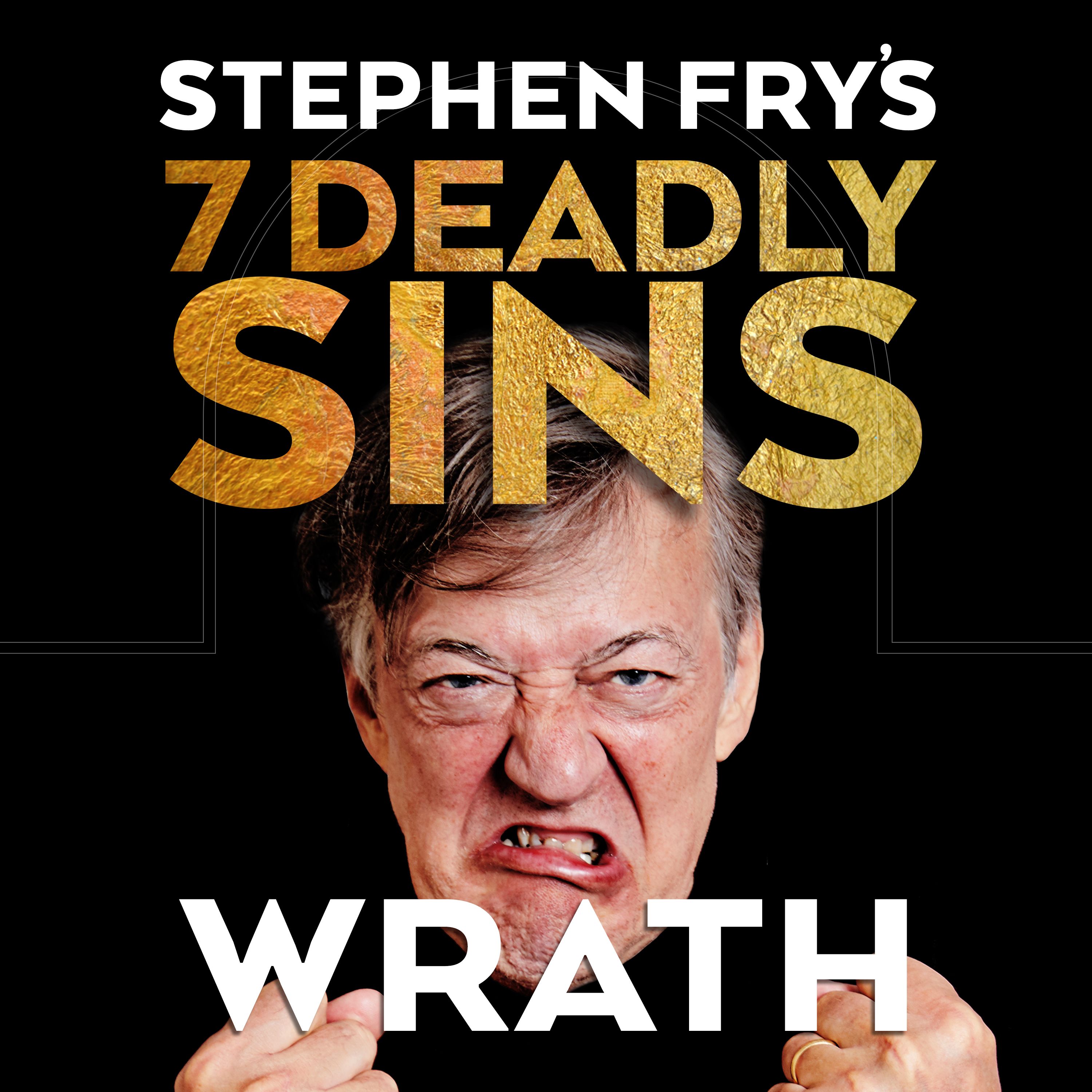
Stephen Fry examines anger as a pervasive modern vice, arguing that it defines contemporary culture, amplified by social media and identity politics into a cycle of rage and outrage. While anger can feel righteous against perceived injustices, Fry contends it is ultimately ineffective and self-destructive, clouding judgment and leading to personal and social harm. He contrasts this with historical examples, such as the calm, determined resolve that countered Nazism, suggesting rationality and purposeful action are superior to fury. Using personal anecdotes like road rage, Fry highlights human hypocrisy and the irrationality of anger, often rooted in primal evolutionary instincts. He distinguishes between personal "rage" and moral "outrage," questioning their utility. Ultimately, Fry advocates for self-control and effective action over righteous indignation, proposing that anger, like intoxication, often leads to regret rather than solutions.
[Music] This is Stephen Fry's Seven Deadly Sills. Episode 7. Roth. Anger is the vice of our age. Our age is our rage. Everyone can surely agree on that. Whether you're on the left or right as if those demarcations have any meaning anymore, you know that they, the enemy, are motivated by manufactured rage, fake fury, confected collar, virtue signaling outrage, self-righteous indignation and reckless irrational eye. The culture wars are fed by our anger, much as the vast fortress empires of Silicon Valley are fed by our data. And as it happens, the rage feeds the data in an endless vicious cycle. And I mean vicious. Or vicious is the adjectival form of vice, a cycle of vice, a cycle peddled by the sixth of the seven deadly vices of our series, Roth. The twin giants, rage and outrage, we might think about the difference between the two later, have long-sold newspapers and now they fuel click-throughs, posts, counter-posts and all the social media shitstorms and flame wars are times endure. The modern fetish for identity, equally on what we might as well persist in calling left and right, exhibits this truth well. Whatever you're so called identity, you are convinced you know that your rage is real and justified. Rage against the patriarchy, rage against immigration, rage against white privilege, rage against liberal metropolitan elites, rage against transphobia, rage against political correctness, rage against hate speech, rage against the suppression of free speech, rage against Brexit, rage against remain, black raid, white raid, male raid, female raid, straight raid, queer raid. Their rage is a pathetic made up fast, yours is a noble, truthful epic. It's no good me playing the reasonable rational liberal in the middle, smuggling immune from and superbly above these frantic, flailing human failings. I am, as ever, no less guilty than the rest of the population. I get incandescent too, I can froth with Roth as much as anyone. They don't get it, it's not okay. They are on the wrong side of history, they are the problem. That thing they wrote, said, posted, it's unconscionable. We should rise up and roar with fury. And as for their anger, their foe outgrade, it makes me boiling mad. Their pretend anger doesn't fool me, it just riles me and it inflems me further. Do you still make the mistake I do of waking up, turning to your phone or tablet, and looking through the early news and trending topics? I'm trying, vainly I confess, to train myself not to. Every time I do it, it causes a leak of something like hot lead into my stomach as I take in the madness of this morning's malevolent, moronic and malignant mediocratism mischief and makers. He said what? She replied, how? They claimed this, they denied that. By the time I've got out of bed, that surge of hot lead, adrenaline, it must be, has spread its poison to the rest of me and I'm slightly trembling. A vein in my temple is throbbing, my breath is coming in short pants. Coming in short pants, surely I can phrase that better. And the slightest mishap, a dropped wristwatch, a fumbled shoelace, a small razor-nick, will have me yelling and cursing at the world, even before I'm fully dressed, the day is already dark, damned and doomed and I'm like basil faulty or worse. Michael Douglas's character in that film falling down. But isn't rage against the machine, rage against the system, rage against the wickedness and malice of the enemy justified? Isn't anger the correct, the only response to a world gone mad? When dangerous dark, deluded and demonic ideas are given the kind of free reign they are today, then surely our wrath is right. Stoicism and Buddhism may be all the, dare I say, at all the rage, but wrongs must be righted. All it takes for evil to flourish is for the good to do nothing. Isn't a little righteous anger just what is needed to confront the evils of the mean mad and malevolent forces that threaten our world? What's the use of sitting in your study, wagging your finger and urging loudness, reason and temperate moderation? Well, yes, but rage is just rage. It's a noise. It isn't resistance, it isn't rebellion, it isn't a solution. Like most vices, it only really hurts the one it possesses. It stabs the gut, stresses the heart and boy does it ever mess with judgment and sense. If there is wickedness in the world, if there is injustice and man-made misery, how do we best counter them? Surely that's the point, not to be right or righteous, but to be effective. If there be dragons, how best be they slain if you'll forgive the creaking subjunctives? We always go back to the 1930s when we talk of the rise of evil. It's hard not to. The outlines of that decade seem so clear. Hitler was always a man incensed. His rages were not just private fits and tantrums. He full-manated and frothed at Munich in meetings and in his public speeches too. His furies fueled and fermented his rise. How was it met? When Churchill rose in Parliament as Britain's new Prime Minister to make his first speech, what words did he choose? Did he rant and rave? Did he shake his verbal fists, threaten and storm? He stood and he said, "Can you imagine? Can you imagine?" A leader today saying this on such an occasion, he said, "I have nothing to offer." But blood, toil, tears and sweat. If we have an image of how Nazism was defeated, it is one of grim-faced determination, calm, cold, rational planning, endurance and the blitz spirit, fortitude, quiet courage, sacrifice and heroism certainly. But hot tempered raging and uncontrolled anger had absolutely no place in that battle. Somewhere inside the breast of every man, woman and child who had to live through the horrors and terrors of that war, there would certainly have been a cold, seething fury. And of course there was, but they knew then that righteousness and wrath were of no use, sense and sacrifice, rationing and being rational. Yes, better to be effective than to be righteous. The winner is the side that is smarter, cooler-headed, clearer in thinking, planning and purpose. Rage is just rage. It isn't a plan. It isn't helpful. It doesn't scare an enemy. It doesn't write wrong. And then there's personal individual rage, not in a cause or against a political or social evil, but our rage, yours and mine. Did you ever check out Google Labs in the very early days of Google Mail, now Gmail? These days there are add-on extensions for the service, but back then people wrote little utility apps that you could try out. And one of them was the most inspired notion I ever came across. You selected a time period, say between 10 or 11 at night and 9 in the morning. If you tried to send an email during that time window, a box would come up on screen with a long division sum, and it wouldn't let your email be sent until you had solved it. It was there to prevent you sending drunken emails and it worked brilliantly. Other than divide 478 by 17 or whatever, you just gave up. In the morning you saw the email in your drafts mailbox and gassed with relief. Thank God I never sent that. Rage is just another form of intoxication really and I wish that simple little app was still around. I'd write it myself if I had the time encoding talent and in such a way that it could be used for social media posts and messaging as well as emails. I know that Instagram is considering a pop-up "Are you sure you want to post that dialog box?" And maybe my wish will come true. Tweet, enhaste, repent at leisure as long be my watchword. Though of course, being human and a twazook, I naturally overlook or neglect my own advice all too regularly and being human and a twazook, I will tend to look to a convenient technological fix rather than making an effort to use
own self-control discipline or moral sense. But some solution is needed for anger begets all kinds of outcomes that one can only regret. Violence is the most obvious and terrible. I'm not a competitive person, I've never been in a fight and I would run a mile from verbal confrontation, little and fisticuffs. But the red mist has descended over my eyes as much as anyone's and I've pictured myself responding physically and furiously to whatever or whoever has inflamed me. I don't like how ready I am to picture myself in flicked in harm. We hear of some beast in the papers, a child murderous say, and we imagine throttling the life out of them, castrating them, whatever. Vengeful rage is why we have laws and courts, of course. How many innocent or truly unwell people might have been lynched beaten to a pulp or stoned to death had we given way to our first enraged impulses. Did you ever see Fritz Lang's fury? His first English language film, I think, Spence Atrace's character is under arrest for a crime we know he didn't commit a ghastly crime against a child. An enraged populace sets light to the jailhouse where he's awaiting trial. He escapes, leaving everyone believing that he had been burned to death by the lynch mob. Safely hidden, he plots his dark revenge and with the help of his brothers, plants evidence that makes it look as if he was quite certainly dead. The town, meanwhile, has come to its senses and discovered that he wasn't even guilty of the crime for which he'd been wrongly apprehended and the ring leaders of the lynch mob are now indicted. I won't spoil the ending, which is fabulous, but the point of the film is its title, Fury. It refers not just to the flaming rage of the mob, but to Spence Atrace's cold, implacable fury as well. They are both seen to be inhuman and horrific. I love that film, but of course it's a masterpiece and made in black and white and doesn't have anyone in it who can fly or make laser beams shoot out of their ass, so naturally no one under fifty would dream of watching it. They're there. Now I'm getting angry. Shhh, Stephen. Calm down. You're listening to Stephen Fry's Seven Deadly Sins. I'll be back after a short interval. I mentioned earlier that rage was a bit like intoxication. Certainly the suspension of judgment and reason, the recklessness and unreasoning rush to action that each can propel one to suggest a similarity between the two states, and there's another similarity suggested by this from James Baldwin. I imagine one of the reasons people cling to their hate so stubbornly is because they sense once hate is gone, they will be forced to deal with pain. Hate-filled anger can numb or displace deeper feelings of depression, isolation and doubt. There's an argument that says, "Don't give way to sorrow and dumb despair. Do not go gentle into that good night, but rage, rage, and arm yourself for the fight. Rage can indeed seem like an armor. It's adrenaline rushes, suppress pain, and replace fear with insane courage just as drink and drugs can do. We're all guilty of giving way to destructive rage." I say all, but maybe a small section of you listening have somehow transcended the frail, error-ridden limitations of everyday humanity through rigorous application of Japanese Buddhist chanting, stoic philosophy, Kundalini yoga, or a diet of CBD brownies, or maybe a combination of all of those, I am still at a lower level of being, I fear. Let me instance what I mean by reference to the motor car. I can't be the first to think of driving as being a revelatory window on the human soul. I won't go into my long theory about what living, working, and consequently driving a great deal in the United States has taught me about the differences between the American and British character, that's a whole other ball of wax or a whole other load of waxy balls, perhaps. But for the purposes of today's podcast, let's look at driving as a microcosm or symbolic distillation of our relationship with Roth. Road rage is a phenomenon that encapsulates much about the whole nature of the magma that seethes within us, waiting to erupt. I'm driving along. If someone pulls out in front of me, doesn't notice me, makes a turn without signaling, slows down inexplicably, cuts me up, it's astonishing how angry I can get. You twat, you anus, you unexampled cock I will yell. I'm not so sick in the head as to give the finger the wanker gesture or whining down the window and actually shout the words out loud at the driver who has earned my anger, but inside I really am furious. I really, really want them to know how imbecilic they are, what an unforgivably bad driver they are, how inconsiderate, how usbubblingly incompetent their driving is. Part of that is letting them know how much of a superior human being I am, of course, how traffic aware, how responsible, how smart, but what has really happened? A momentary lapse of concentration on the other person's part, probably, unlikely to be much more than that, it's slightly possible that they're drunk, incapable or just selfish and aggressive, but no less possible that they've just had terrible news. Their daughters had an accident at school, their grandfathers had a fall, something awful that isn't their fault is praying on their mind. We can't possibly know. Or as I say most likely, it was just a momentary lapse of concentration. And yes, the sanctimonious self-justifying voice inside us wants to wag a finger and say, "It's momentary lapse of concentration that calls accidents, that run over children, that end lives." But come on, Stephen, have you never had a momentary lapse of concentration? Fair point. And when I have accidentally pulled out without properly looking round and checking the blind spot, when someone has honked their horn at me for making just such an error as I am now being so high and mighty about, how have I reacted? Yeah, yeah, yeah, yeah, keep your hair on. It's not the end of the world. So I made you slow down for a second, Jesus, some people. How ugly we are inside. So angry, impatient, unforgiving and judgmental of others yet so pissed off at being judged ourselves. On the one hand, the pregish sanctimonious desire to make the other person see and acknowledge their irresponsible carelessness. On the other, the snorting impatience with their intemperate reaction to our mistakes. Lighten up, Pilgrim, nobody's perfect calm down, we say, though we'd hate it if anyone said that to us. Yes, what hypocrites we are. It's the same, staying in the realm of motoring, when it comes to the pedestrian driver's cyclist wars. When we're in a car, how we are pissed off by self-righteous pedestrians who showily stride onto zebra crossings almost without looking just because they know it's their right of way, who walk out in front of or behind our cars so close that they activate the proximity sensors, who trip along the crossing just as green is changing to amber and red, causing us to have to break and stop and wait for a whole new cycle of lights. Are they any consideration or awareness? And what about grim faced, hate-filled, humal cyclists who glare furiously down at the bonnets of cars as if they're very marked panzers? We can tell from their scowls and head shakes that they think we drivers are all fascistic, climate-change denialists. But the moment we've parked our cars and become pedestrians ourselves, how dare that driver not be aware that I'm trying to cross the road, how dare they belch their fumes in my direction. Or come the sunny day we decide to cycle through town just as the doctor ordered and just as friends of the earth recommend. Bloody brutal barging, polluting, bastard cars, have they no awareness, no consideration? Incidentally while all this is actually true of traffic, I'm using it as a symbol of our wider hypocrisies and moral inconsistencies. The moment we change tribe, we become the enemy we hated yesterday. What's it all about? Why should we be like this? Well, for an explanation we can look as is fashionable to evolutionary psychology and make guesses that might lead us to a more or less convincing explanation. Forgive me if, as it's quite likely, you know far more about this than I do. Our limbic system are…
Ancient lizard brain makes great use of rage to energise us and give us the adrenaline and heedless courage to stand and engage with predators and those who wish us harm. It was a necessary part of our survival equipment. We have the well-known and described fight or flight response to threat and danger, and when fight is chosen over flight, then rage seems like a very useful addition to our armoury. We are infused with a fierce explosive energy that allows us to roar in the face of aggressors to frighten them with outbursts of fury. You can see it in our nearest relatives in the ape family and in all manner of more distantly connected mammals. We detected in birds and reptiles too. Anyone who's seen a swan defending its signants or a snake rearing up when trodnon can legitimately call the response something akin to rage. But we developed over time into a unique species thanks to what many call the "cognitive revolution", which includes our rapidly increased and enhanced tool-building capabilities, the control of fire, the unique gift of language acquisition, and then the agricultural leap forward that led to settlement and what we call "civilisation" from ape troops and bans of nomadic hominids to a unique form of social cooperation and close communal living. But the old, survival-oriented anger, still there. It came out now not when physical violence and harm threatened us, but when the holy objects of our particular tribal clan were desecrated, our myths, manners, and ways were disrespected, our totems, flags, and sacred symbols defiled. Even when people looked at us in the wrong way, you disrespecting me, honor-killings, and wounded pride. Pride again, the first of the deadly sins, pride like an angry snake when stood upon deliberately or even accidentally could rear up and venomously strike. If what we believe and value is assaulted, it's like a physical assault, as far as our glands are concerned, and an anger that should find venting bodily activity and exertion builds up internally. Without release, it poisons us from the inside. But today, can't we allay this dangerous energy, this fierce and often fatal vestigial relic to our ancient past? It's the bull in our China shop, the rhino in our drawing-room, the untamed tiger who comes to tea. Mostly the raging beast is under control, of course, as we go about our daily lives, but the particular nature of the modern world's social media, above all, has allowed it out. When we feel unloved, unappreciated, when we're not taken into account, when we are overlooked and shouldered out of the top echelons of the group, tribe or clan, then we simmer like a volcano until we erupt. Yes, Roth emerges when there is injustice, cruelty, and wickedness stalking the world too, which brings us to that question, the difference between rage and outrage. What about that bee, I wonder? We are aware, I think, that outrage, more than rage, is the mood of the moment. The emotion of our age is outrage. An outrage, the noun, of course, is an atrocity, an abomination about barriconthinkable, horrific and terrible crime, or at the very least an assault on standards of decency, propriety and are accepted canons of virtue. Perhaps to be enraged is to be brought to a pitch of anger by something personal, in the front of the self, whereas to be outraged, is to be pricked by a fury against those more general standards of decency and right. I'm not entirely sure, but that seems to be the feeling. Human decency and its standards can be outraged by an attitude, speech or behavior, but only the self can be enraged. Maybe you have a different sense of the two words and their meanings. An ideal opportunity then to be in touch with @stivenfri on Twitter, or @stivenfri actually on Instagram using the hashtag #7figure77deadlicens. While we're in questioning mood, what I wonder is anger's opposite. Not apathy, not meekness, I would suggest, not passivity or calm. Now I think the opposite is laughter. The only reliable way I've found of trying to shrink my own furies is to laugh at myself. So if I do get crossed in the car, I turn the anger onto myself, but by twisting it into self-mockery, I laugh at the silliness, the self-importance, the wasteful overreaction, the lack of proportion. Come down, Steven, you idiot, listen to yourself. Who are you, Basil Fulti? Come on now. And when it comes to wider world problems, political horrors, the loathsome inadequacy and malignant fakery of our leaders, then, well, neither rage nor laughter seem the right response anymore. Sorrow, real, deep grieving, sorrow, and a feeble, on my part, very feeble, attempt to access the rolling up the sleeve spirit, the blood-sweat, toiletiers approach, the appeal to reason and sense, the hope for determination, fortitude in form resistance, and the long, slow struggle to bring us all to our senses. In that I fail and fail miserably. But that is a matter to examine, I suspect, when we come to next week's sluggedly sin, slow. In the meantime, thanks for accompanying me thus far and catch you next time. If either of us could be bothered. You've been listening to Stephen Fry's Seven Deadly Sins. Grateful thanks to our composer, Guy Farley. The show is produced by Andrew Sampson and Norman Goodman. Additional episode information can be found at stevenfry.com/bananaskins. This has been a Sam Fry limited production.
Podcast Summary
Key Points:
Anger is portrayed as a dominant vice in modern society, fueled by social media and cultural divisions, creating a cycle of rage and outrage.
While anger can feel justified against perceived injustices, it often proves ineffective and self-destructive, impairing judgment and leading to regrettable outcomes.
Historical examples, like the response to Nazism, suggest that calm determination and rational action are more effective than rage in confronting evil.
Personal experiences, such as road rage, reveal hypocrisy and the irrational nature of anger, often stemming from evolutionary instincts ill-suited to modern life.
The distinction between personal "rage" and moral "outrage" is explored, with both being potent but potentially harmful emotional responses.
Summary:
Stephen Fry examines anger as a pervasive modern vice, arguing that it defines contemporary culture, amplified by social media and identity politics into a cycle of rage and outrage. While anger can feel righteous against perceived injustices, Fry contends it is ultimately ineffective and self-destructive, clouding judgment and leading to personal and social harm. He contrasts this with historical examples, such as the calm, determined resolve that countered Nazism, suggesting rationality and purposeful action are superior to fury.
Using personal anecdotes like road rage, Fry highlights human hypocrisy and the irrationality of anger, often rooted in primal evolutionary instincts. He distinguishes between personal "rage" and moral "outrage," questioning their utility. Ultimately, Fry advocates for self-control and effective action over righteous indignation, proposing that anger, like intoxication, often leads to regret rather than solutions.
FAQs
Rage is often a personal, intense anger directed at a perceived threat to oneself, while outrage is a broader fury sparked by violations of societal standards of decency or morality.
Anger fuels culture wars and social media conflicts, creating a vicious cycle that benefits platforms through engagement while harming personal well-being and rational discourse.
Anger impairs judgment, increases stress, and often leads to regrettable actions, making it counterproductive for addressing injustices compared to calm, rational planning.
Hitler's rages fueled his rise, while Churchill's response to Nazism emphasized determination and rational action, showing that controlled resolve is more effective than uncontrolled fury.
Tools like delayed email senders or social media pop-ups that prompt reconsideration can prevent impulsive, anger-driven messages, similar to how sobriety checks prevent drunken emails.
Road rage highlights our hypocrisy—we judge others harshly for minor mistakes while excusing our own, reflecting deeper impatience and a lack of empathy in daily interactions.
Chat with AI
Loading...
Pro features
Go deeper with this episode
Unlock creator-grade tools that turn any transcript into show notes and subtitle files.
 PodcastTranscript AI