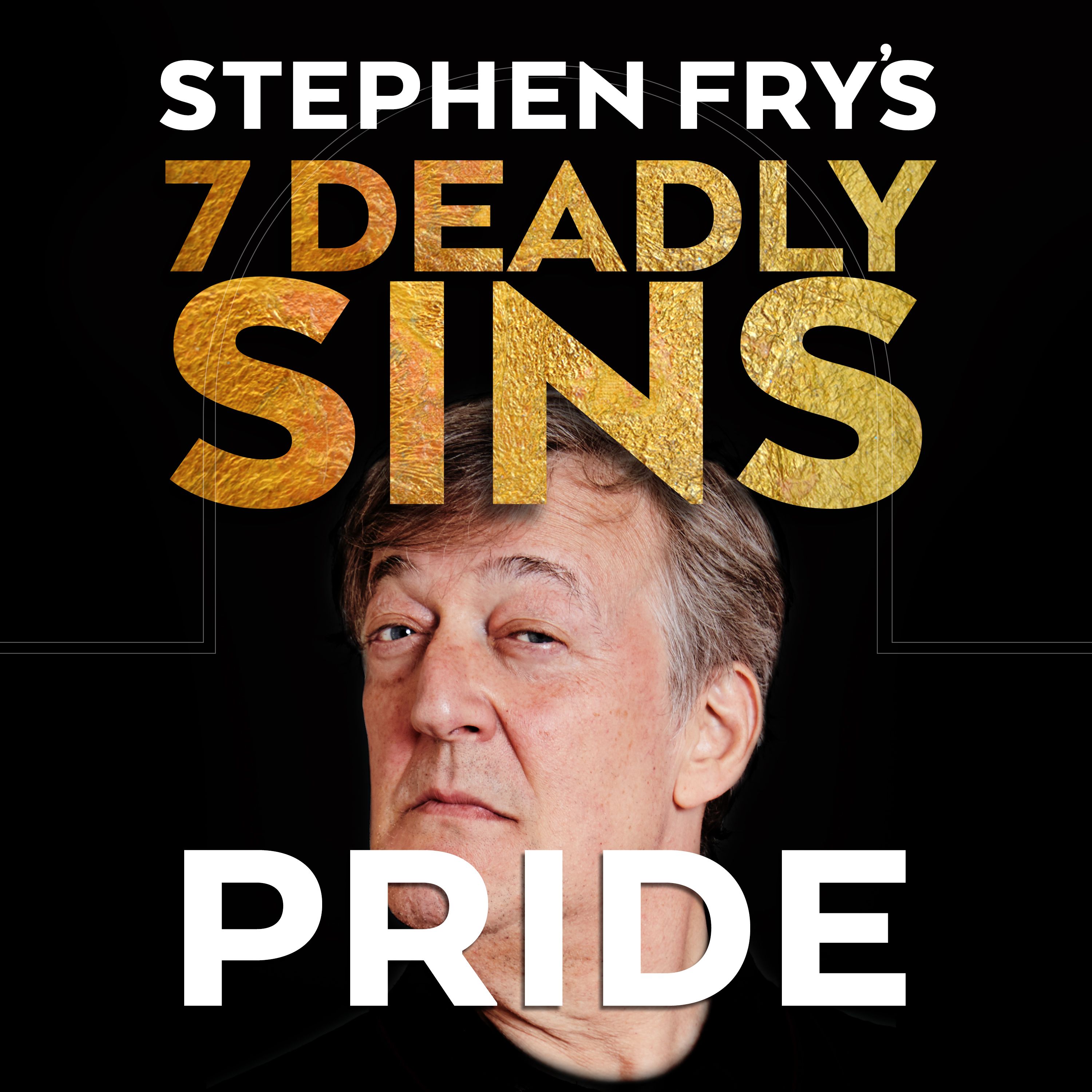
Stephen Fry's exploration of pride examines its complex evolution from the cardinal sin to a modern virtue. Historically, pride was deemed the deadliest sin, a dangerous challenge to divine and social order that encouraged the lower classes to "know their place." However, the modern perspective often celebrates pride as essential for self-worth, confidence, and identity, particularly for LGBTQ+ and other marginalized communities reclaiming dignity. The analysis distinguishes between healthy pride (self-esteem, solidarity) and its destructive counterparts (arrogance, hubris, chauvinism, "honor" violence). Fry suggests pride is unique among sins—it is intrinsic to the self, not an external temptation. He links it to the contemporary "age of the self," where self-focus, amplified by social media, can lead to fragility and discord. Ultimately, pride is presented as a dual-natured force: a necessary social binder and a potential source of personal and societal harm, reflecting its enduring power and ambiguity.
[music] This is Stephen Fry's Seven Deadly Sills. Episode 2. Pride. I'm proud to welcome you to Deadly Sin, number 1. Pride. Pride. Words we hear more than a little. I'm proud to say it gives me great pride to welcome. I'm proud of my country. Show a little pride in your work. The pride of the Clyde. Black pride. I'm House Proud. I'll see you on the Pride March. My pride and joy takes pride of place. London Pride. Stan Proud. The pride of the Yankees. He takes no pride in his appearance. Have you no pride? Pride of lands. Civic pride. We're playing for pride now. Make me proud of you, my darling. Make me proud. And pride is a sin. Not just any sin. For 2000 years, pride has stood at the very top of the list of the Seven Deadly Sills. Held to be the worst and most dangerous of them all. Christian apologists, C.S. Lewis, claimed that next to pride, quotes, "Unchastity, anger, greed, drunkenness and all that, are mere flea bites in comparison. It was through pride that the devil became the devil. Pride leads to every other vice." The great Benjamin Franklin had a characteristically wittier and more amiable approach in the introduction to his autobiography. I'm not going to try the American accent. Well, I will. Unless he would think, "Don't write." In reality, there is perhaps no one of our natural passions so hard to subdue as pride. Disguise it, struggle with it, stifle it, mortify it as much as one pleases. It is still alive and will every now and then peep out and show itself. Even if I could conceive that I had completely overcome it, I should probably be proud of my humility. Nothing wrong with a little humility, if that is the opposing or complementary cardinal virtue, but is pride so great a sin. In our age, we are taught that one of the most destructive failings that can hold us back is actually a lack of self-esteem. Surely pride is a healthy harbinger of self-belief, self-worth, self-confidence. Not in fact a dangerous monster thrashing inside you and threatening to bring you down, but at worst a stern, sergeant major barking at you to smarten yourself up and straighten you back. And at best that good friend who pulls you a glass of wine and tells you that you're terrific and wonderful and marvellous. Pride, bolster's faith in one's identity, one's value, one's future, one's whole self. Surely we can disqualify pride from any list of deadly sins that are of relevance to us in this 21st century. Maybe the opposite of pride isn't humility, a good thing, but shame, something very bad. It used to be a matter of shame, to be homosexual. But the very word we now use to describe annual demonstrations of the happy fact that we gay people are no longer ashamed is, of course, pride, which has become a metaphor. Or more, pedantically I think, and accurately, a metonym for annual displays of the whole unshaming of same sex and queer relations. We met during pride. What are you doing this pride? Does Vienna have a pride? That's sort of thing. Oh, distracting sidebar number one. Talking of metonyms, I remember that during the first four or five years of presenting the BAFTA film awards, the phenomenon of the arrivals and interviews on the red carpet began to be a bit more dramatic. Red carpet began to grow and grow every year, until it threatened to be more important than the ceremony itself. That element as everyone arrived ended up having its own producer and separate presenters covering celebrity and fashion. The red carpet became not a scarlet coloured tapestry floor covering that you trod on, but a slot. You know, a scheduled section, content. This was born in on me when I looked at the actual carpet that snaked along Leicester Square to the front of the Odin and asked the shows director, how long is the red carpet in fact? And she replied without thinking, oh, it's about 50 minutes this year. Metonym, you see? No longer a real carpet whose length could be expressed in feet and inches, but a phrase standing for a whole procedure an event whose length was now properly expressed in minutes. A metonym, and distracting sidebar. And why did I mention that? Oh, yes. You're in the same way. The word pride is for many a metonym for annual demonstrations of LGBTQ solidarity and self-belief. But not just that particular grouping. Say, loud, I'm black and I'm proud, saying James Brown. When previously disenfranchised, disempowered or marginalised minorities or special interest groups or one kind or another find their voice, they're happy to say that they're proud. And who are we to call this sinful or wrong or detrimental to fulfilment and success? Four, we should remind ourselves that when I talk of sins here, I don't mean in the religious sense a moral transgression that imperils the immortal soul and leads to an afterlife of torment and domination. I mean an obstacle, a stumbling blocker, banana skin, a fiend that fowls up the self and society. In such a reading, pride seems to be more angel than demon. Perhaps we can say that it was in the older days of hierarchy and order that pride, like ambition, was considered a monster to be slain. A peasant, a worker, a surf, even a respectable tradesman or bourgeois exhibiting pride. Why, that was challenging the God-given order of things. Do you remember the hymn, "All things bright and beautiful"? Specifically written for children, its third verse goes, "The rich man in his castle, the poor man at his gate. God made them high and lowly and ordered their estate." I don't believe that those lines are still being sung in school assemblies every morning. Or maybe they've been rewritten all that verse dropped. It certainly wasn't dropped when I were a lad. Your reward we were told will be in heaven, so long as you are docile, submissive, humble, modest, pious, obedient and keep your place. In this light, the seven deadly sins were not so much threats to the individual soul and its destiny in the afterlife. As threats to the established order of things down on earth in the present life, the uppity worker, the uppity slave, they had to be kept down. And tables of sins and commandments painted up on the church walls would keep them there, fortified by hymns and sermons, warning against the dangers of pride. Blessed are the meek, pride goeth before a fall. And perhaps even the commandment, honor thy father and mother is connected, since it's all parts of the insistence that we look up to our parents, our Lord, our Bishop, our King, our God. They're all above us. Never a hint of a suggestion that maybe parents should honor their children. The dishonoring of elders is, of course, terrible. But most of us might think that the dishonoring of children, their abuse, neglect and abandonment is a far, far greater problem in our world. And a far, far greater sin. But old-time commandments and sins seemed to have been much more about protecting authority, order and property than the rights of the weak or helpless. Pride, like education and free speech, gives underlings ideas and must be squashed. Otherwise, as Dickens' Celeste deadlock in Bleak House was fond of gloomily remarking, we would see the obliteration of landmarks and opening of floodgates and cracking of the framework of society. And in this reading, Pride can be seen as the fire that starts the social revolution, the splendid shining hero that breaks the shackles and hastens the new dawn of liberation and equality. Pride let us believe that we're all endowed with the same rights and dignities from birth, that we are each as entitled as the other to enjoy the riches, knowledge and bounty of the planet. Pride is the steadily burning flame of self that won't be told to sit down, shut up, know its place and do as it's told. Didn't we fall in love with all those heroines and heroes of fiction precisely because they stood up for themselves? And didn't we loathe the villainous schoolmasters, governesses and step-parents because they tried to keep them down? Why, this child has ideas, they must be taught a lesson and down comes the cane with a thwack, punished for their pride, their refusal to submit to the court.
admit and be broken into the bit and bridle of convention. Far from being the primary vice, pride now might seem to us to be the primary virtue. Has the world turned upside down so far so fast? Maybe every deadly sin has now become a virtue. We shall see. Of course, if next pride, pride that can't discriminate, self-congratulatory pride, smug, complacent, self-regarding pride, these manifestations of pride might reasonably be regarded as destructive foolish and wrong. And what about those three slimy demons that are always looking down, snobbery, disdain, and otter, as the French say, horter? Can they be fitted on the pride spectrum? And their ugly siblings vanity, narcissism, arrogance, hubris, and conceit. These are clearly unattractive beasts and are surely close relations of pride. When self-possession, self-esteem, self-belief, and self-confidence are overblown into selfishness, self-importance, and self-regard, we can call them sinful according to our contemporary interpretation of the word. They harm, they distress, they aglify, and they pollute. But since there are other names for such errors, perhaps, they don't really come under the heading of the word pride. Is my country right or wrong, jingoist nationalism, chauvinism? Is that reasonable patriotic pride or tribal loyalty amplified into something unattractive and bad for the world? And what about the attitude that the Italians call far-figura, cutting a figure, saving face, a cultural phenomenon along with machismo that is mostly male, it seems, but which is far from confined to the Mediterranean? We hear it in respect and dissing, and in the knife-wielding cry, "You disrespecting me?" And at its utter worst, in the spates of so-called "honor killings." Stories of these inter-familiar and inter-community horrors crop up at regular intervals, didn't they? Honour, such an old fashioned word. It still such a prevalent and dangerous idea in the world. It seems to have an antique charm, doesn't it? The right honorable, honorable intentions. My honorable friend, scouts honor. Yet an entrenched sense of family honor, gang honor, a group, clan, tribe, and national honor can, when inflamed and threatened, cause broken bones, blood on the pavement, and holy tragic and dishonorable outcomes. Hmm, well, let's go further back for illumination. An ancient Greek word for pride was "megalope sukiya," "megalow saiki," in other words, "the magnus of soul," which Aristotle counted as amongst the greatest of virtues, as opposed to overweaning hubris. You'll be thinking already way ahead of me, I'm sure, that it is the language we use to describe a so-called sin-like pride that lies behind much of our confusion here. Pride is not just any word, after all. It's an English word. It doesn't mean quite the same, as, for example, the French words "orguey" and "fiatte," nor the German "stoltz." I can't tell you what the real meanings, connotations, nuances of the Russian "gordinia" or the Arabic "fakar" might be. The words for what we might call "negative pride," from which the Christian seven deadly sins derived, were the Greek "hyper fannea," and the Latin "superbier," both the hyper and the super, meaning "above," forgetting "above your station," "above yourself," was the dangerous threat to good order. You're listening to Stephen Fry's seven deadly sins. I'll be back after a short interval. Once there was only religion and those in clerical orders to tell us what was right or wrong, they were the only gatekeepers, the only designers of what was useful or harmful, constructive or destructive to the public or personal good. Having freed ourselves from the manacles of ecclesiasticism when it comes to morality, we now seem to have found ourselves shackled to the new medicalised languages of psychology, psychiatry and neuroscience. We talk not so much of demons and trespasses, sins or moral failings as of pathologies, complexes, syndromes, fixations, neuroses, disorders and dysfunctions. Or we can use the increasingly popular language of evolutionary psychology, pride in these readings, like everything else, evolved for some biological or social purpose, some evolutionary good. We evolved to show loyalty to our home and band, our kith and our kin. Such an impulse was necessary for a social species as mankind, which depends upon bonds and ties. In this way pride can be looked on as "as less a moral failing and more as a necessary social pheromone." As individuals, we evolved to fight for the teeth, to fight for attention, to fight for the family and clan. We found that aggressive self-assertion, display and gestures of superiority helped us as it does other mammals in the race for life, food, shelter and the transmission of our genes. And in the social sphere, collective pride cemented important status and rank. Over time, different skin colours, different languages, different gods, different ways of prospering, sold upon the kind of adherence, loyalty and belonging that pride activates. Along came crests, colours, armorial bearings, banners and national songs all cemented by pride. Pride bound and banded us together. Pride gave us the right to despise the outsiders, to believe ourselves better. But over further time, empires and religions absorbed the smaller clusters and collectives, and new homogenous standards of established morality were handed down to the subjected majority. The priests and priestesses, emperors and popes, warrior chiefs and their functionaries used and exploited national, racial, cultural, religious and sectarian pride as a means of uniting their people and keeping them loyal while outlawing personal individual pride so as to keep each ant in the colony committed, unquestioning and obedient. By all means be proud of your king and country, but don't you dare be proud of yourself. We can see that pride has its uses and its dangers. That does everything, of course, from motorcars to salt, from cutlery to cricket balls. There is nothing of substance, after all, that does not cast a shadow. Nothing so benign that it cannot be used for malign purposes. The softest, plumpest pillow can be and has been used as a murder weapon. A word that keeps repeating itself again and again when talking of pride, whether as a necessary quality or a vicious sin, is self. When we moved away from being a society of hierarchy, order and established processes, we moved into an age of self. Cultural historians might say they started with romanticism and the egotistical sublime or the post-Freudian modernist ages of anxiety, fragmentation and neurosis. In between was Samuel Smiles, the Victorian who started what was known as the Self-Help Movement. Away from generations of living in small villages with large families in the same dwelling, people were suddenly more likely to be on their own. The age of the individual had begun. The old order was God, King, Church, Country, County, City, Market Town, Village, Home, Family and then Self. The past 150 years, Self has pushed itself up that list until it's now at the very top. In our age every year, the section of the bookshop given over to Self-Help goes larger. It's real estate encroaching on and swamping the fiction, biography and cookery shells. Make yourself rich, fit, sexy, successful, slim, happy, motivated. Self is the prefix of our age. Self helps, self confidence, self assurance, self publishing, self searching, self determination, self-deprecation, self-control, self-esteem, self-improvement, self-satisfaction, self-service, self-awareness, self-discipline, self-knowledge, self-seeking, self-worth, self-belief, self-procession, self-sacrifice, self-image, self-reliance, self-procession, self-expression, self-denial 9.
So, self assertion would then do on the darker side, self-consciousness, self-regard, self-absorption, self-obsession, self-satisfaction, self-righteousness, self-centered, self-loathing, self-pity, self-harm, self-destruction. Not to mention, self is. We're all aware and have all probably tried to think hard about what this self-self-self-obsession is doing to our psychies, especially in the light of social media. We read of children taking their own lives because an Instagram they've posted has been mocked, or their number of followers is the lowest amongst their friends. We notice, or at least I do, that people are much more sensitive to being disagreed with than my memory says they used to be. The fracture in our society that used to be political left and right is now so deeper cultural and social-scar that it makes it very difficult to find points of connection. We'd rather be individually right than at peace with each other. The more some apparently lucky few seem to have it all, millions of dollars and followers, the less we feel ourselves are reckoned of account or meaning, and the more our pride is stung by a sense of powerless invisibility, and the more it is likely to make us angry, addicted, envious. Oh, some other deadly sins are having a look in there. Is that what CS Lewis meant by pride leads to every other vice? And stung, I said our pride can be stung. That's a point worth considering. Pride of all the deadly sins is the only one which can be stung, hurt or wounded. You can't wound someone's gluttony or envy, for example, but you can certainly wound their pride for pride, I think. Is the only sin that is actually a part of oneself. It's the only one that can't be pictured as an external monster or dragon. Pride is oneself. Gluttony is a beast, a drive, an impulse. The one either can or can't control or subdue. Pride is not in me. It is me. Maybe that too is why medieval theologians and others gave it a special status as first and worst of the sins. It is perhaps the bananas skinniest of all the deadly bananas skins, for as the Old Testament famously puts it, pride goeth before destruction and a haughty spirit before a fall. Proverbs 16, 18, "Hers if I have to remind you." It's a rule of comedy that a clown, skidding on a banana skin, isn't funny, but a solid, important figure in a pinstriped suit skidding on one is. In a very famous interview, the then elderly film star James Cagney, who well into his 80s painted and drew every day, sailed boats, played musical instruments, read, danced, did woodwork, taught himself languages, and lived as full, rich and contented alive as can be imagined. He said, "Obsorption in things other than self is the secret of a happy life." How does this square with the Socratic Cry, the unexamined life is not worth living? Can they both be true? Well, perhaps Socratic examination of the self, pitiless, objective scrutiny is not the same as absorption. Selfishness in English can be egoism or egoism. The tea makes a real difference. An egotist is the narcissistic bore who never stops talking about themselves. Whereas an egoist has a kind of philosophy or world view at least that suggests it is one's duty to act for oneself, not others. At its most extreme, I can express it as libertarian individualism that denies society or collective good. At the milder end, egoism is perhaps more akin to Adam Smith's ideas of enlightened self interest. Oh, distracting sidebar number two. When I was young, the British English always said egoism and egotism. Now we've succumbed to American long vowels and say ego, the same with patriotic and homosexual. But it's not always American vowels long, British short though. We say leave and they say lever. They say edipus, we say edipus. It doesn't matter. They are. Viva devaels, what? And distracting sidebar number two. But still talking of American British differences, a Britain in America soon learns that what we wistfully might have believed was our charming self deprecation and modesty is that best misunderstood and at worst tedious and irritating to Americans. We tend to be so terrified of appearing cocky, full-oven, pleased with ourselves that we writhe with awkward embarrassment, disavowing any skilled talent or ability rather than be thought boastful, hoping that what will come across is an endearing, huge grant charm. But actually failing to understand that it is read as a different kind of vanity and conceit. From our point of view, we are rather puzzled by how often Americans begin a sentence with "I need. I need this door open right now." Instead of might someone open this door or "I need you to listen carefully," as opposed to "listen carefully." What is all this add up to? Well, I shall rename pride for our age and call it not a egotism, I think we should stay Anglo-Saxon, but selfishness. Not the selfishness of a child who won't share their toys, but the absorption in and tortured obsession with self that is so powerful an agent of destruction in our age. What do we do about it? By we, I don't mean society or the world. You and I can't change society or the world, they're to hell and screwed and forcacter, but we can change ourselves. Just you and me. The two of us, no one else need be involved. This, undertake, simply to reduce the number of times we begin a sentence with the word "I" and the number of times "me" and "mine" crop up in our talk. No more than that, a simple thing, but indicative of something good and important. There are convincing reasons to believe in just that small ritual rehearsed as we drop off to sleep, as I close my eyes by night so I'll remember to close my eyes by day. More of thee and thine and less of me and mine. Something like that can be our mantra. Look, I'm not a life coach or a hypnotist, nor a neural linguistic programmer, but do try it. Between now and when we meet again for a tour round, sin number two, have a risk. Try it. Now you've listened all the way through. You made it to the end. Be proud. Be very proud. See you next time for Averis. Don't forget to tweet me @StevenFry with the #Figure7 DeadlySins to contribute to the final episode. You've been listening to "StevenFry's Seven Deadly Sins." Grateful thanks to our composer, Guy Farlie. The show is produced by Andrew Sampson and Norman Goodman. Additional episode information can be found at stevenfry.com/bananaskins. This has been a Sam Fry limited production.
Podcast Summary
Key Points:
Pride has historically been considered the worst of the Seven Deadly Sins, seen as a threat to social hierarchy and order.
In the modern context, pride is often reframed as a positive force for self-esteem, identity, and social justice, especially for marginalized groups.
The negative aspects of pride are linked to concepts like arrogance, hubris, vanity, and harmful expressions such as toxic nationalism or honor-based violence.
The discussion highlights the duality of pride
The modern "age of the self" amplifies pride's role, connecting it to contemporary issues like social media, self-obsession, and societal fragmentation.
Summary:
Stephen Fry's exploration of pride examines its complex evolution from the cardinal sin to a modern virtue. " However, the modern perspective often celebrates pride as essential for self-worth, confidence, and identity, particularly for LGBTQ+ and other marginalized communities reclaiming dignity. The analysis distinguishes between healthy pride (self-esteem, solidarity) and its destructive counterparts (arrogance, hubris, chauvinism, "honor" violence).
Fry suggests pride is unique among sins—it is intrinsic to the self, not an external temptation. He links it to the contemporary "age of the self," where self-focus, amplified by social media, can lead to fragility and discord. Ultimately, pride is presented as a dual-natured force: a necessary social binder and a potential source of personal and societal harm, reflecting its enduring power and ambiguity.
FAQs
For 2000 years, pride has been considered the worst of the Seven Deadly Sins, seen as leading to all other vices and challenging social order.
Today, pride is often viewed positively as a source of self-esteem, self-worth, and confidence, especially for marginalized groups asserting their identity and rights.
Negative forms include smugness, complacency, arrogance, hubris, vanity, and narcissism, which can harm oneself and others.
Pride is used as a metonym for movements like LGBTQ+ Pride and Black Pride, symbolizing solidarity, self-belief, and the rejection of shame for marginalized communities.
Historically, pride was suppressed to maintain social order, as it encouraged underlings to challenge authority, while collective pride was promoted to unite people under rulers or nations.
In the age of individualism, pride is tied to self-help, self-esteem, and self-expression, but can also lead to self-absorption, sensitivity, and social fragmentation.
Chat with AI
Loading...
Pro features
Go deeper with this episode
Unlock creator-grade tools that turn any transcript into show notes and subtitle files.
 PodcastTranscript AI