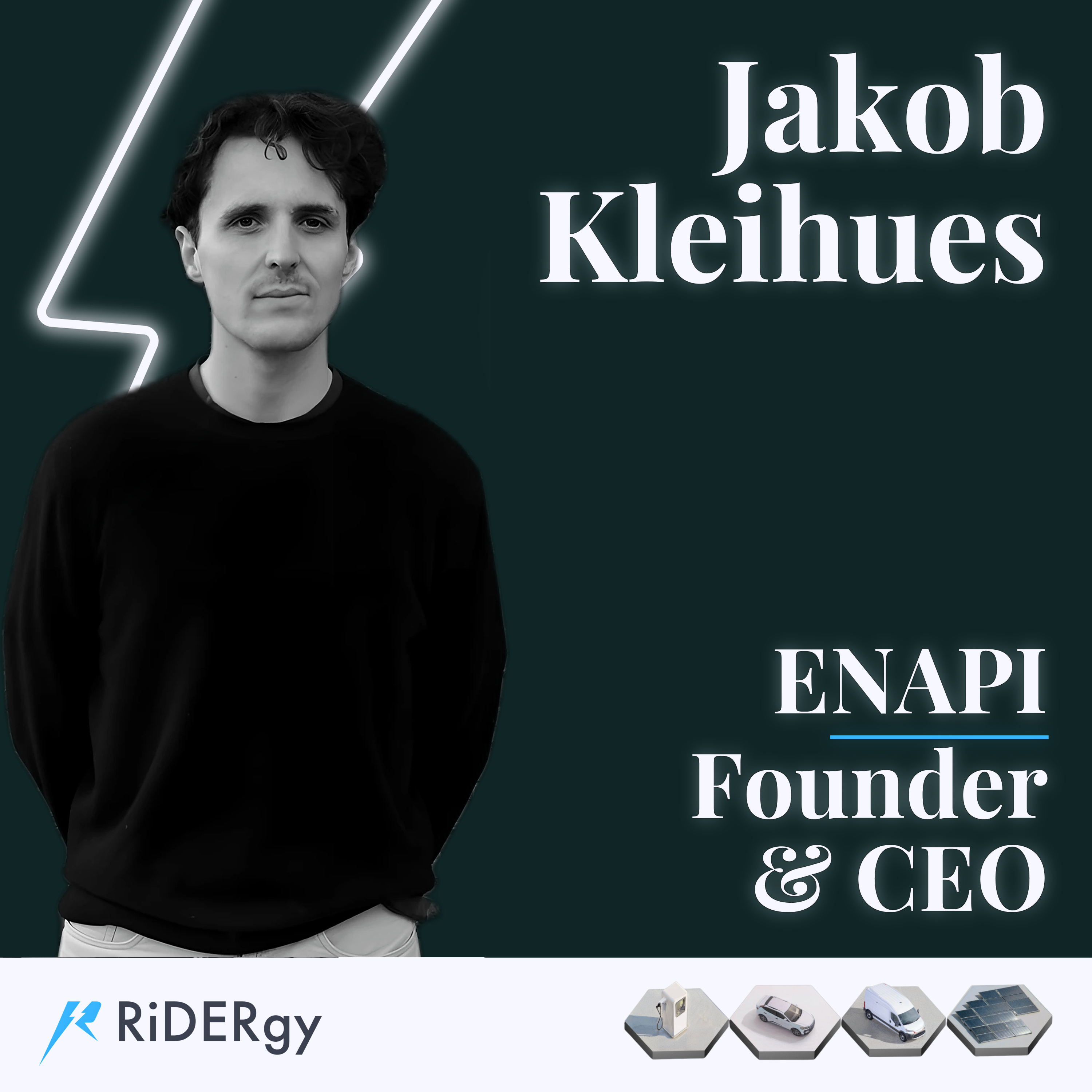
S2 Ep. 10: Jakob Kleihues, co-founder of ENAPI | EV roaming, OCPI, financial clearing, uptime and AI native engineering
from Smart Charge by RiDERgy
1h 17m 22s
NAPI, co-founded by Jakob Plyhus, addresses a critical flaw in the electric vehicle charging ecosystem: the fragmentation and inefficiency of connectivity between charge point operators (CPOs) and mobility service providers (MSPs). Instead of relying on costly, error-prone bilateral integrations, NAPI offers a unified, free connectivity platform based on the open OCPI protocol. This allows for seamless, high-quality data exchange with minimal technical overhead, achieving over 99.998% uptime and sub-20ms latency through advanced cloud infrastructure and automation. A key innovation is NAPI’s financial clearing service, which validates charge detail records, detects anomalies, and streamlines invoicing—solving a major pain point for both CPOs and MSPs who face complex, manual processes. The company has onboarded over 450 partners and surpassed one million charge points connected, growing rapidly with a lean, remote-first team. NAPI’s business model is built on enabling industry-wide collaboration rather than competition, with a clear belief that connectivity must be a free, scalable commodity. By reducing transaction costs and improving data accuracy, NAPI empowers the entire ecosystem to scale efficiently. The platform also leverages AI to accelerate development, while maintaining rigorous operational standards that ensure reliability and trust. As the industry moves toward dynamic pricing and flexibility in energy usage, NAPI positions itself as a foundational enabler of smarter, more responsive charging networks.
(upbeat music)
- Welcome to the Smart Charge by RIDIGI podcast.
This is Claudio Geichen, founder and CEO of RIDIGI.
This is your show to learn about all things,
energy management and smart charging innovation
for electric vehicles and fleets.
(upbeat music)
Connect to 450 partners and you build 450 handshakes
or you build one.
That is the idea behind the NAPI.
And my guess today is its co-founder, Jakob Plyhus.
In two and a half years, his company has connected
more than one million charge points.
And it did so with a claim that sounds almost provocative.
Connectivity between charge point operators
and mobility service providers should be free.
The money he says is made somewhere else.
We talk about where, about what financial clearing
really involves and about how a very small team keeps
its infrastructure running at 99.998% of time.
Let's get into it.
- Right, Jakob, nice that you are here today.
How are you?
- Yeah, thank you so much for the invite.
Yeah, I'm a little bit stressed.
- As you know, I was late.
- No worries, you're rushing from the effort,
but other than that, I'm fine.
Thank you so much.
- You made it in, from the Netherlands today.
So that I think I didn't have so far,
so I guess it made it so far in the same day.
- Yeah, exactly.
Especially because I'm home in Berlin as you are,
so a little bit strange.
But anyways, very good.
And thank you so much for the invite.
- Yeah, and great to also know that you are a true Berliner,
born here, born and raised, and your parents as well.
So it's something I didn't know,
as I also was raised here in Berlin, so.
- True.
Yeah, I grew up in Berlin.
I mean, I lived for quite a lot of years,
kind of in other cities, all across Europe,
studied in the south of Germany,
and in Copenhagen, then worked in London,
for a short time in Amsterdam.
So I kind of know some other places as well,
but I'm back in Berlin for quite a lot of years already.
- Yeah.
- And building a nappy from Berlin as well.
- Yeah, and maybe you can share a little bit more
about your background.
Also, I also decided to go from Berlin
to the south of Germany, funny enough, to study.
But I think a lot of Berliners like to stay as well in Berlin,
what's your motivation to go to the south and to study?
- Ooh, I mean, this is going back to when I was 18, right?
Like, I wonder if I can even recollect, kind of, right?
That was, right?
To be honest, I think a very natural,
let's go as far away as possible,
and maybe my horizon back then was a little bit
Germany kind of focused, to be honest.
But yeah, so there was south of Germany,
so I studied at Zeppelin University,
and had a great time there.
- Of course, of course.
- No, it's Friedrichshafen, yeah.
But like, Lake of Constance, exactly.
So, and yeah, had a great time there.
To be honest, I sometimes wonder how much I'm actually applying
from what I learned at university or school
in general in my normal life,
and it's close to zero, but I definitely have a lot of,
yeah, my closest friends from that time still,
so very much kind of would do it again.
- What did you study?
- I studied, it's like a generous studies
between sociology, politics, culture, and economics
for the first year, and then you focus,
and I focused for corporate management economics.
Yeah, so there was essentially my study at Lake of Constance,
and then I went for a pretty standard master
and business administration for the Copenhagen Business School
for my masters, and obviously in between,
like a lot of internships at different startups,
different companies.
I never worked, and we briefly spoke about that,
kind of just before we started taping here,
but like I never worked for a big company.
So I essentially don't have any experience with kind of corporates,
and how it is working for corporates,
and that's why I think I'm on an ongoing basis,
learning a lot about kind of how these organizations work.
- Yeah.
- But in general, no, yeah, that is essentially,
yeah, what I studied.
And then what did you do in your past jobs?
What were your--
- So I employed-- - Yes, and--
- So as I said, I did a lot of internships
in different companies, and I think like what,
like then there was one company where we were,
actually there was one company that was maybe interesting
for this podcast as well, and there was a climate kick.
I did an internship with climate kick.
There was at Euliff Campus, where obviously a lot of
and famous kind of European and German companies are kind of
headquartered by now.
But yeah, back then they had like a green garage there,
and they essentially incorporated some startups there,
which was very exciting, and I was just part of the team there
trying to help founders kind of get shit done essentially,
but there was maybe an interesting first step,
but like I think the first, like, yeah,
step that was relevant for my future kind of job
was at Project Adventures, where like more or less
did an internship in 2018, but like it was very intense,
and what I loved about it is you're talking to kind of people
who are excited about what they're doing every day,
right, because you're talking to founders.
And I think that that was what I had missed kind of
in a lot of other kind of positions that I had held before.
- Totally. - So yeah, that by decided--
the way as I was at energy.
So also the other kick, and climate was more broader,
climate topics and energy very much on energy.
And then I could also feel the energy of the founders
we were supporting, so I can totally relate to the point.
- Yeah, exactly, and then I decided, okay,
fast pace environment, I learned a lot.
I'm not bored at all, and the people around me are not bored.
So let's spend some more time here,
and essentially start working for venture capital funds.
And I did that for four and a half years,
so actually quite some time.
Always in the earlier stages, so essentially startups
that had nothing, or close to nothing,
essentially the founders themselves
and their commitment to build something big.
And trying to figure out, do they have chances
to actually make it, right?
Super exciting time, I would--
- What did you learn to be able to distinguish that,
that maybe you also is relevant today, then,
for your founder being like--
- I mean, it's hard to break it down like that, probably,
but I think one thing, like, I believe I learned
is that, for example, a lot of startups,
what, investing into startups is essentially investing
into a potentially outlier, as in like a company
that returns significantly more money
than any other company, kind of in the industry.
So what you wanna invest into is something
that has the potential to become really, really big, right?
And I think what you learn quite quickly
is everyone has a kind of huge incentive
to kind of do that based on data, right?
And historic kind of performances of other companies,
but a lot of these outliers are actually not following
kind of the normal paths of other startups,
because otherwise they wouldn't do something different
and therefore wouldn't be an outlier, right?
Maybe that's oversimplifying here, right?
And like a lot of the most exciting companies
I think are built from first principles
without kind of trying to mimic another company, right?
Like so we are the Airbnb for, I don't know,
for phone sharing or something like that, right?
How crazy boring, right?
Like I'm trying not to swear, right?
Like so that was a little bit what I learned for myself, right?
Like think yourself to a certain extent,
because most likely if you dare to think yourself,
maybe this could be more successful
than kind of if you don't write all the sense.
And I think that was one of the things,
the other thing was, it's definitely to some extent about,
okay, do I work hard?
And am I able to kind of understand the context?
But a lot of kind of starting and kind of scaling a company
is also luck and energy, right?
Like how much energy am I able and willing
to kind of invest every single day?
And I think that's something that, yeah, we also learned,
or I also learned kind of working
in the venture capitalist space.
- Yeah, the idea versus execution,
which I saw you had a point, I don't know,
I remember if it was in the blog post
or in a social media post.
So maybe can you elaborate on how you apply it
in your day to day as well like this?
And then we will come back to also how you got the idea,
but then, and maybe pivot it from the initial concept,
at all, or if at all.
- Yeah, I'm always surprised how little we actually pivoted
to be honest, but like we can totally speak about that.
But yeah, I mean, you spoke about execution
and I think what our view on this as a NAPI team
would be is kind of, we are the challengers in the industry,
as a startup you kind of get into this industry,
you essentially have no logo, you have no brand,
you have no team, you have no,
you don't even have capital in the world.
beginning, right? I mean, we're able to rise quite quickly. But like essentially the entire world
is against you, right? And the one thing that you kind of potentially have is execution, right?
Because you will always be faster, you will always be able to kind of react quicker and you will
always care more than kind of the companies that are so far in comments, right? And therefore,
I mean, we face a lot of situations. I mean, for example, these stealth startups or something
like that, right? That come out of stealth and launch themselves. Like, I never understood this,
right? Because from our perspective, like, it's all about execution. And I'm happy to share with
anyone, essentially, what we are trying to build here and all of the secrets that we have, right?
Because, like, what it comes down to is we need to execute better than everyone else, right?
And I see that a lot kind of happening in this industry, right? Like, so for example,
we are being asked a lot to sign non-disclosure agreements, right? Which is something we are open
to do, right? And we also do have a lot of NDAs. I always need to be careful what kind of names
I dropped anywhere. But like, long story short, we never asked any company for an NDA.
Same reason, right? At the end of the day, execution is kind of meta and not who knows what
about secrets that you have an idea about or something like that. So,
what is good execution for you? Like, what would you say? Like, maybe if you have two,
the first things that come to mind where you say, yeah, this is definitely what we believe is good
execution that we foster every day in the team. Yeah, I mean, maybe that sounds a little bit too
easy now, but like, what that is is focus, right? So knowing what you want to own in the value chain,
and then being 10x better than everyone else in owning that and building that, right? And
and it sounds easy, but in this industry, like, I mean, we are by now, and we'll probably speak
about that later on, but like working with have contracts with slash have on-boarded in production,
like the vast majority of the industry, right? Especially in Europe. And everyone has problems,
and we love to hear about them, right? Because it's really sometimes surprisingly hard to get
good quality kind of feedback on what it is that we could solve for them, right? At the same time,
we need to say no to 95% of these requests and ideas that we have to be able to focus on what we
actually want to kind of execute on an own, right? And only if we can actually get this focus in,
can we actually execute in the next step? Because then we know kind of what is our mission, right? And
so yeah, my easy answer would be focus, and maybe what I would add to that is, we have an insane team,
right? So this is a team that is remote first for the engineering team, and essentially,
my co-founder and me had like five people in mind who we wanted to bring on board when we started
in ARP, like the day after we signed our kind of first running round and knew we can hire some
people. We essentially have had five profiles in mind, and for four of them, we onboarded them.
Nice. So for us, it's like the dream team to a certain extent, and I think that also helps to
execute, right? Because like everyone is kind of pushing in the same direction, and everyone
pushes themselves, but also like has a goal-oriented way of working together, right? Like so we can also
tell each other, okay, this was not good, right? And so far, yeah, just have a lot of fun working
together. And I think that's the second thing. So focus and having fun to work with great people.
Excellent. Now I can totally relate. And is it before we dive deep dive into in ARP in a sec,
how did I know you worked for Bonnet? How did you get into Bonnet or in the E-mobility industry?
What was the path? Yeah. I mean, Bonnet, maybe for some people who were listening to this,
this is like, they know the brand. Bonnet is a company. I really don't want to lie now, but like,
it's an EMSP. There was started, I would think around 2020, or something like that.
Out of Imperial College London, by two amazing founders, Patrick and Elliott, who literally
out of a university project kind of started an EMSP because they said, okay, that out there,
there's no fancy EMSPs with a good brand, right? And I got to know them kind of quite early,
I think maybe four, five months into their journey, because they applied for funding from
the venture capital fund I used to work for. And I hope to recall with them, essentially,
we did the deal, right? Like quite a small investment. And I started working with the team,
essentially, to build the company, right? And in this time, I think we spent quite some time
together. They definitely struggled to raise the next round and so on. And we worked a lot to kind
of get that done. And then suddenly, it's always like a little bit of the catch-up effect, right? Like,
essentially, everyone wanted to invest because the company grew quite quickly. And they raised money
from light speed and Google Ventures to quite well-known and renowned kind of investors. And then
Patrick and Elliott asked me to come on board full time. And that's what I did.
I mean, I don't want to get into the details of kind of what happened at Bonnet. The company was
a little bit later, like one and a half years later, sought to overall energy. And today,
the team works as a overdrive, an amazing team as well. But when the acquisition happened,
I already knew I wouldn't want to work for a big corporation in the UK. And also, I had kind of
experienced this kind of connectivity pain that we tried to solve with ENAPI firsthand, both from
a commercial, but also to a certain extent, from a technical point of view. And that's why I dropped
out and started ENAPI. Yeah. And then maybe let me just explain the, set some context, set
to scene so that we are on the same ground. So the connectivity problem, as far as I understand,
and please elaborate or correct me if I'm missing something that you identify is there are plenty
of players around in the industry. We have CBOs, we have MSPs. That's the most important roles,
I would say. And underneath these CBOs, there are the CPMs. So that's the software that CBOs use.
And then there are traditionally roaming hubs that were created to connect those different players.
I don't know now the exact number that there was and that there is right now in terms of numbers
of CBOs and MSPs, but it's significant. Maybe you can update if you have them on top of your mind.
And so, disconnectivity layers from traditional hubs. That's what you identify. There are quite a lot
of issues with it or there are a lot of ways that can be done better. And that's what ENAPI essentially
is building, right? And maybe you can elaborate now with a bit more detail. Yeah.
Yeah, so maybe first of all, because I think as an industry we are not doing this often enough
to maybe look at this, I think it's best to look at it from a kind of customer point of view,
like also EV driver point of view. The EV driver wants accurate data about the availability of
charge points. And then they want to pay the lowest possible price. And that's very much not how
EV charging, public EV charging works today. And now we can get into okay, why is that, right?
And I think then you quite quickly arrive at, okay, there's a lot of different companies in this
industry. You already elaborated there's different roles, right? Like CBO, CPMS, EMSP, whatever.
Right? There's then also fragmented kind of markets. So there's a lot of different CBOs,
also a lot of different kind of strategic interests in the market. But long story short,
like these companies need to work together in a efficient way to make this customer experience
actually work at scale. And at Bonnet what we learned quite quickly is this is not working at scale,
right? So we were very classic EMSP and essentially wanted to connect to all relevant CBOs in Europe.
And essentially back then there was 2022 summer. There was essentially two ways to connect, right?
Like what I would call legacy roaming hubs. So platforms that were pioneers 15, 14 years ago,
right? When they started essentially trying to standardize the communication between CBOs and
EMSPs in the market, right? And when I started in this industry, they already, like they
still did like something like 80% of the integrations, but they already only did 20% of the transactions,
because the big volume integrations with a lot of transactions, the big EMSP with the big CBO,
they already back then kind of started to go bilaterally, build bilaterally or CPI integrations.
And that's essentially the second option, right? So legacy roaming hubs and bilaterally or CPI integrations.
So at Bonded, we in the beginning thought, okay, why not working with the hubs, right? And the alternative,
as I said, was bilaterally or CPI integrations. So Bonded started building a lot of bilaterally
or CPI integrations. So we had like I think over 50 or CPI integrations, right? And what I can
recall is like on average 10 or something like that of those who are always down. And there was not
[BLANK_AUDIO]
because of bonnet, they had an amazing tech, right?
Like the reason was not even technical issues,
but more operation issues, right?
Like something doesn't work.
Some config doesn't work.
Some tokens weren't synced.
Something just like some small thing,
some small interpretation of the OCPI protocol
and implementation didn't work, right?
And then you need kind of the other person
on the other side of the aisle to kind of debug that, right?
It stopped there for a second, because I think it might be
not so obvious for everyone.
Like if you're not an IT deep IT integrations person,
so there's two sides to do this integration, obviously.
So there's two systems that need to integrate
and two software layers that need to integrate.
And there's a protocol, this OCPI,
then I think there's a couple more that are,
but these are the hubs that I'm managing the protocols, right?
If I'm correct me then if I'm wrong.
But so the OCPI is, let's say, the free independent one.
And there it is, like in many other protocols,
and I think the OCPP faces the same issue
where the charger talks to the charge point management system,
but this is not really the core focus of this podcast,
that's the interpretation of this protocol
and the implementation of the protocol.
If one stakeholder messes things up,
that's when things go sideways.
Am I correct in putting it this way?
- Kind of, exactly.
So let me maybe, so a little bit of a historic kind of breakdown,
and I'm definitely going to be in some ways wrong here,
I'm in this industry for five years, right?
Like I think since then I understand it quite well,
but like back then I have no idea what happened before that, right?
But long story short, essentially there's these platforms
that back then tried to standardize communication.
As I said, as pioneers in this industry, right?
And they started essentially defining protocols
to standardize it, right?
So HUBJ came up with OICP,
maybe there was something before it,
but like that's what we know, all right?
GREF came up with EMIP,
I think E-Clearing came up with OCHP, right?
And I think out of the Netherlands, mainly,
and I think that because my co-founder, Dennis Laumann,
was one of the original authors of OCPI,
essentially there was this willingness,
especially among chart point operators,
to get independent, right?
And essentially launch a protocol
that is independent of these commercial non-neutral players.
And that's why the EV Roaming Foundation was launched
in our piece today, part of the EV Roaming Foundation.
So is a lot of other kind of relevant players in this industry.
And what the EV Roaming Foundation does is it's essentially
coming together to define the OCPI standard.
The most relevant OCPI versions today
are OCPI 2.11 and 2.21.
There is the OCPI version 2.30,
launched already and implemented by very few players.
Happy to speak about that in detail.
But essentially, OCPI is the answer
of a lot of CPOs to get independent of proprietary protocols.
So that's the core open source protocol.
And obviously, the kind of platforms
that I just mentioned, they have adopted OCPI by now.
So from our perspective, it very much becomes kind of the standard
and not only in Germany or Europe,
but actually across the world.
So I read it as that recently
that more than 95% of the public chargepoints
outside of China actually communicate OCP data.
And then the vast majority of these chargepoints could also
kind of use the OCPI protocol.
So that is I think the high level summary
of these protocols, right?
And OCPI to just answer your question,
was launched initially with the idea
of building bilateral integrations.
Now, I think in your initial kind of introduction,
you already said, right?
The markets for chargepoint operators
and EMSPs are fragmented, right?
So there's hundreds of players
on both of these kind of market sites.
And if you would have three players on the CPO site
and three on the EMSPs site,
it's quite easy everyone connects with each other
and you have nine integrations, right?
Now, if you have like 500 players on the EMSPs site
and 500 players on the CPO site,
then it's 250,000 bilateral integrations.
Right.
I think there you already kind of start understanding, okay,
this is all integrations that need a handshake,
they need to be set up, they need to be tested
and then they need to be maintained.
And now we are talking a lot of different versions
of OCPI that are obviously not interoperable
with each other, right?
So it gets very, very messy, very, very quickly.
Let me maybe tell it to say it like that, right?
So I think what the industry phase to go back
to kind of when I entered the industry was,
essentially I believe connectivity should be a commodity,
should be a freely available good,
but actually it's a constant pain in the,
and so on, right?
And that's the main reason for us at Bonnet
where we kind of had a hard time delivering
on a really good customer experience
and most of the costs kind of coming from that,
even indirect costs, so for example,
customer success costs where we're created
because of exactly these connectivity issues.
And that's why we said, I said,
okay, there needs to be a better way to kind of do that
and started looking into other industries, right?
And yeah, there was summer '22,
I reached out to my two co-founders
and essentially started thinking about what would a model look
like that actually would bring together
the huge advantages of one single integration
and at the same time essentially good data quality
and with our significant transaction costs.
And the answer to that is in NAPI,
but I guess we'll get there now.
- Yeah, yeah, let's get into this second,
but as you mentioned, the co-founders,
one thing that struck me also because personally speaking,
it took me also quite some time to find my co-founder
and I find especially finding technical co-founders
as we are both CEOs, it's very difficult
and you managed, if I remember correctly,
you had like one person in mind that you really wanted
to co-found the company with and it turns out
that this person said yes, which is quite impressive
or incredible, like how did that maybe story
and can you elaborate on this co-founder matching,
which is so important as a foundation for the company.
- Yeah, so I had experienced the problem, right?
I had negotiated a lot of roaming contracts,
I had like kind of tried to escalate a lot of problems
with connectivity on the commercial side to a certain extent, right?
But I knew kind of what we wouldn't want to build,
but to me it wasn't super obvious kind of
if we can even build it like the way
that I envision kind of a NAPI back then, right?
So what I did as a very first step is essentially
I put together kind of a memo,
maybe a little bit an old investor kind of mindset,
but I kind of a memo on what would this company do?
Like five pages also, like I need to search for it again,
it's somewhere on my computer.
And I essentially sent this to I think four or five people
to be honest, all of them, like I just did a code outreach, right?
I literally looked up in GitHub, okay,
who wrote the OCPI protocol, right?
And what you find then is, and I hope I can say these names here,
but like yeah, so essentially Olga Vanier,
then Patrick Radermarkas and Dennis Laumann,
always kind of the, among the three names,
that kind of, the Godfather's, I love that.
Actually that's probably from one of my pitch decks, yeah.
But the Godfather's of OCPI, exactly.
And I actually spoke to all,
wanted to speak to all three of them,
spoke to Olga as well,
but then like Dennis and me met
and had a very funny, co-incidental kind of second meetup
in Aachen at the E-Clearing event or an E-Clearing event.
And I can just remember, like we were already
both quite excited about the memo,
and we essentially used the two days in Aachen,
just to kind of lock ourselves in a room
and kind of think, okay, how could this be built, right?
I think and how could we do that?
And now Dennis Beck then was still a managing partner,
I think they caught him at IHoma.
I think one of the leading tech consultancies
in the industry built a lot of CPMSs before
and so on, had a really talented team there as well.
And therefore it wasn't easy for him to drop out, right?
Like for me it was quite obvious
that we were gonna start this company.
So essentially I think we worked for three, four months,
quite intensively next to our day jobs.
And then we came to a point where I was like, okay,
let's try this for three, four months, right?
And if we haven't raised until end of Q1, 23,
then you go back to your job, right?
And that's how we started.
So I think what a lot of investors always say
is like, ooh, a founding team where the founders
don't know each other from a daily work
or where they're not friends, essentially, is risky, right?
And we even had like this one guy
who said no in our first round,
where we had a lot of investors who wanted to invest,
but said no because of exactly those vibes, right?
Like that we didn't know each other well enough.
And we were considering kind of sending him a Christmas card
kind of every year.
We worked together now because we are so close.
So long so I shot, no dentists is amazing.
It's like he's been doing this for a long time.
- Based out of the Netherlands, that's why I was always
100% clear that we would build this remote first.
We are trying to hire the commercial team in Berlin,
but everything else is kind of remote first.
But no, it's really like, like on the first days,
kind of we trust each other, love each other.
And yeah, we've experienced a lot together now,
so quite excited about that.
- Exciting, a very cool background story as well,
I think inspiring for founders out there.
And so you said you created the companies
or more or less than in 2022, and right, yeah.
- Yeah, yeah, yeah.
So we officially incorporated the company, I think,
January 23, and then also we already had signed a term sheet.
So essentially the, yeah, it had talked to investors
in December '22.
So yeah, it was super quick.
It was literally two weeks after we started fundraising.
We had like five term sheets, six term sheets
and had to decide.
And then raised a very first funding round,
literally based on a pitch deck
with project avengers and seed camp from London.
- Yeah.
- And that was a 2.5 million round, right?
And then January 25 was a 7.5 million round.
- Yes, so I think announced,
I think there was more or less discussed in November, December,
exactly 25.
Sorry, no, no, 20, 23.
Yeah, am I getting this right now?
Yeah, I think so.
No, 24, of course, this was January 24.
Sorry, we were one year too early here at the entire time.
So January 24, we launched in ARP and in January 24,
we also announced our 2.5 million pre-seed round.
And then announced in January 25,
our seed round of 7.5 million.
- Right, we had closed in December 24.
So essentially 10 months after we raised our first round,
we raised an additional round.
Yeah, exactly. - Time flies, yeah.
And then I read that you had 600,000 charge points
connected by the end of 2025.
But then now, by now, I think most recent post
was like 850 already something.
- No, you, I mean, like, to be honest,
no had feelings because it's moving fast.
Like, we are now, I think, when this is coming out,
I can say that already we are now announcing
a million charge points connected in production.
And actually, we are already at 1 million and 50,000.
So, yeah, we're just growing super fast.
We've onboarded more than 450 partners since we started.
That's, yeah, I think on average,
if you calculate that like 2 and 1/2 years a little bit more
since we started onboarding, yeah, two per week
or something like that a little bit more.
And that is literally with one team member
who's mainly doing that, right?
Like, of course, others can do it as well.
But like, essentially, one person who's kind of more or less
full-time testing onboarding and pushing, right?
On the technical side, and the rest is widely automated.
So I think that's one of the reasons
why we were able to grow so fast.
Like, the timing was perfect when we started in RP, right?
It was literally exactly that time
where people were fed up with the legacy roaming hubs.
They ran into issues with kind of building bilateral
integrations, and they had an OCPI-ready API.
So essentially, we could connect them right away
without kind of any significant friction, right?
And of course, like building 450 handshakes, right?
You come across a lot of, I don't want to judge,
but maybe a little bit weird interpretations
and implementations of OCPI, and that's the big problem
about OCPI that it's essentially implementable
in many different ways, let's say, like that, right?
And we have built work around.
So by now, we rarely see kind of implementation times
of more than a week, two weeks.
Yeah, maybe that's a stupid question,
but also, as I'm not so deep into that,
it would be interesting to understand that better.
So like, fundamentally, the API quality
of one of the stakeholders can mess things up.
So putting yourself somehow in between these stakeholders
and ensuring that this connectivity works well.
Still, if one stakeholder messes it up,
how do you prevent these mess-ups?
Is it because of, are you able to identify those quicker
the mess-ups or how is your role, so to say,
how are you enabling that the mess-ups don't occur?
Yeah.
So I think what's the obvious, maybe,
low-hanging fruit value proposition that we have here is,
you're not doing 450 handshakes anymore,
you're doing one within RP.
And then you can scale from there, essentially,
without any technically on top work, right?
You just, in our port, essentially, click,
I want to send them an offer, send them an offer,
if they accept your PUI data as a CPO,
I push to the MSP and you can pull the tokens
from an RP, right?
So super straightforward, super kind of little
technical overhead, right?
But to answer your question, I think that's important.
So actually, we play a huge role in harmonizing
the OCPI-ready APIs of our partners.
So OCPI is set up in different modules
and not every single one of these modules
is necessary to kind of make a connection work, right?
So when we started a lot of our partners, for example,
had not implemented the so-called terrorist module yet.
So they essentially had a hard time automatically
communicating the terrorists with each other, right?
This creates friction.
And therefore, what we always kind of motivate everyone
to do is to actually implement the entire
OCPI protocol, right?
Having said that, I think we play a huge role
in harmonizing in that sense that a lot of MSPs tell us
that they have significantly better success rates
within RP than they have in bilateral OCPI integrations.
And I think that's counterintuitive, right?
A lot of people in the industry are like,
ah, but I'm adding an additional stakeholder
and the chain, like it's going to create more friction,
there's another kind of party also.
But this is just not how in reality it works, right?
Like we have a very sophisticated learning system.
More than 90% of our customer success interactions
are outbound and not inbound, right?
So we actually are the ones cleaning up the data
and helping partners to get on top of their shit, right?
And as an next step, we therefore see
a lot of very successful transactions.
So yeah, another issue that you see a lot
in bilateral integrations is for example,
sync jobs failing, right?
So some token doesn't arrive at the EMSP, at the CPO.
And therefore, it cannot be authorized
the session when the token tries to charge there.
Or some UVSE somehow isn't in the mobile application
of an EMSP and you wonder why, right?
And what we help kind of partners to do is
to kind of get visibility into the success
of their sync jobs and to get flexibility
into how they want to sync, right?
Do they want to push, pull the data?
When do they want to do this?
What is the cadence and so on, right?
All of these things kind of help the entire industry
to streamline actually connectivity.
And I think why I'm putting so much kind of emphasis
on this is, in ARP from day one,
wasn't built to kind of replace the legacy hubs, right?
They probably, like we are growing also in part
because people are migrating from them,
but our most direct competition is not these legacy hubs,
our most direct competition is bilateral CPO integrations,
because that's where the big volumes are.
And our ambition is that 100% of the volumes
of one specific CPO, EMSP, I'm migrating to an ARP, right?
Now obviously I know this is going to take time
and a lot of trust in the industry,
but this is what we're here for, right?
And that's how we have built an ARP from day one.
So it's super important for us that, for example,
success rates in ARP integrations are higher
than in the bilateral setup,
and that people understand that this is actually
kind of the new norm we're going forward, right?
And what is also super important for us
is that we see the first bilateral integrations
being migrated to an ARP, actually, right?
So it's one thing to onboard all of the logos,
but it's another thing to kind of make them migrate
all of the integrations to an ARP.
And we're getting there right now.
So yeah.
- And one stakeholder or connection type
that we haven't talked about,
that I think is quite common in the industries,
the platform, the platforms,
which I think mostly the back ends, the CPMSs,
that are also facilitating integrations, right?
- Yeah.
- So how do you look at that stakeholder type?
And maybe you're even able to say
which share of the integrations is done by our platforms
and which one is done by our bilateral roaming hubs
in the now in ARP.
- That's a good question, man.
(laughing)
Sorry, no, no, it's good.
- If it's difficult, I know sometimes
I'm just getting ahead of myself.
- Like what comes into my head,
like when thinking about that is like our pitch deck
for the pre-seed round in January 24, right?
There was essentially, we did a little bit
of a customer segmentation and we essentially said
the charge point operator side.
So if you want in our modded supply side, right?
That can be separated in three different kind of groups
of companies, right?
The first one is strategic multinational players,
oil and gas companies, utilities,
carbon manufacturers, right?
OEMs, essentially companies that have a strategic
interest in this market that have very
very, very deep pockets and tend to be slightly slow moving,
although we love all of them who are working with us.
But you know what I mean?
The second bucket is essentially the most capable players
probably in the industry today.
And that is the infrastructure, fund backed joint ventures
and startups in this industry.
They are really good at leveraging their data.
They are really interested in optimizing their processes.
Good examples for that is the charging leak, for example,
fast net, Atlanta, Ionate, Elektra,
those kind of players, power.
Maybe those kind of players come into mind.
These players tend to not have the biggest networks,
but they have a lot of transactions
because it's really high quality networks
and because they are scaling really fast.
And then the last bucket, I think,
is like the long tail being aggregated
through charge for management systems.
- Okay. - So exactly.
And how that looks like is that these charge for management
systems act as the kind of contractual partner with EMSPs.
So for us, they are the CPO,
if you want to think of it like that, right?
Because they have the roaming contracts with the EMSP
and then they essentially invoice the EMSPs as well
and kind of distribute the money
between the CPOs afterwards, right?
So for us, the stakeholder or the kind of player
we are integrated with is the charge for management system.
And they also have the count with NRP
if they kind of are the contractual partner for the EMSP.
So we always look for, it's like,
we really don't care who you are essentially.
Are you the kind of party in the roaming contract, right?
And if you are, you are our customer.
And we love a lot of CPO methods.
Like we have partnerships announced
with more or less all of them by now.
We are very close with them.
I don't want to lie, but I think there's no CPO-MS
that we don't have any integration with in Europe.
Obviously also these CPO-MSs you can again segment
into a little bit kind of older, a little bit slower moving,
startups and so on, right?
I don't want to do that now because as I said,
we work with all of them.
But a lot of amazing technology
and a lot of amazing companies and people
that we're working with that.
- Yeah, essentially also if I understand correctly,
you, when we talk, you integrate between CPOs and MSPs.
It's your integrating CPMS implementation of OCPI, right?
- Exactly, so, I mean,
sometimes the CPOs have their own CPMs, right?
So the CPOs who built their own CPMS,
there was a little bit of a trend maybe two or three years ago,
like then there's CPOs, sorry, CPMSs
who are just charge per management system,
so essentially software as a service company, right?
And they don't own the roaming contracts, never, right?
From our perspective, oftentimes in the interest of the CPO,
then there are some CPMSs who essentially have a long history
and kind of doing the entire financial clearing
and the entire kind of heavy lifting
for their CPO customers, right?
And all of them have a right to exist, right?
So it's really complex, but you're right,
after all, obviously we have technical integrations
and therefore we connect to charge per management systems,
but as I said, there's very big charge per operator
who own their own charge per management system,
there's very small charge per operator
who suddenly have their own charge per management system,
so this market is just like, yeah,
they have all different flavors.
- Exactly, and talking about the business model,
I think you already hinted to it
that connectivity should be free,
so I understand this is also a fundamental difference
between INAPI or other stakeholders
that are trying to do the same thing that INAPI does,
where connectivity is not for free, I understand,
and your business model is entirely now based
on the financial clearing,
maybe you can also elaborate on this clearing aspect
and how you do it better than other stakeholders
that are focusing on the clearing aspects.
- Yeah, so I think I hinted briefly towards
that from day one, and that's also a little bit
where I'm always surprised that we haven't really changed
our identity and missions since day one, right?
But from day one, what our ambition was
is that we replaced bilaterally direct integrations,
direct or superior integrations
because they didn't work at scale for us at Bonnet,
and some people tell us they work,
some people are like, okay, they don't work at all,
but also, I think if you look at success rates
and everything involved and essentially connectivity
should be a commodity, right?
And it's not a commodity today, right?
Because like everyone has like a tech team sitting there
controlling data, everyone builds their own
a little bit scrappy kind of validations in-house,
they need to look at charge detail records
so it's essentially building a relevant transaction data
to kind of look at this, right?
And all of this doesn't work, right?
And we always said, okay, we want to kind of build product
for 100% of the volumes of a CPO or EMSP, right?
Not for the long tail.
And if you say that, then you need to look at, okay,
why do they broker 80% of their transactions
through bilaterally integrations, right?
And for us, the reason is quite obvious.
It's significant transaction costs, right?
If you charged transaction costs for connectivity,
then people have an incentive to go bilaterally, right?
Because even if you only charge five cents a session, right?
At one million charging transactions a month,
there's quite obvious significant kind of incentive
to go bilaterally, right?
And therefore, from our perspective,
in the mass market in the future, connectivity,
there won't be any connectivity costs.
No one who charges for connectivity
will be able to win in the future, right?
And I think this was a little bit surprising
to the market two and a half years or three years ago
when we started, but by now,
the vast majority of the market agrees with us on that, right?
And then the obvious question is, okay,
how do we then do connectivity
because as already stated by bilaterally integrations
don't scale, right?
So how do we then do connectivity?
And what is the next biggest problem, right?
And I think our answer to that is,
let us commoditize connectivity,
make it a freely available good,
make sure that everyone who invests even one engineering hour
into internal connectivity
that they wouldn't need to invest
is essentially wasting time and money
because they should be investing
into something where they can build differentiation, right?
It's a commodity, it's free of charge, right?
- Right.
- And then let's look at the next biggest problem.
And from our perspective,
the next biggest problem is financial clearing.
CPO's have a very hard time in essentially getting paid,
and EMSPs have a very hard time validating
charge detail records, opening relevant transaction data,
then approving invoices and paying them in a scalable way, right?
The biggest EMSPs out there,
they receive like 450 invoices every month, right?
And they actually not every month,
but every two, four, six, eight, 12 weeks,
sometimes with CDRs, without CDRs,
different currencies, different VIT rates, it's messy.
- Yes.
- And this is what we are tackling here.
Now, why do we have an unfair advantage to solve that?
We only have an unfair advantage to solve that
if we actually broke out the transaction, right?
Because what we can do is we can validate the transaction
at a different level than kind of horizontal players
who are doing this in many different industries code, right?
Because we can look at the charge detail records
that are invoiced and can say,
hey, there's some CDRs on there
where we didn't authorize the session,
this didn't happen with CDR,
or we can say, hey, there's some missing CDRs,
or there's some duplicate CDRs, right?
With different CDR IDs, but we know that
because we authorize the session, right?
And there's millions of details now what we can validate,
but long story short, only because we broke out the transaction
can we actually build the best financial clearing product
out there.
And our strong belief is that the vast majority
of the market won't be doing their financial clearing
in the future themselves.
Right now, there's not a standard that people use, right?
It's scrappy in-house kind of processes based on CSV files
and so on, that we are competing against
with our financial clearing product.
But in the future, this is going to get more complex.
And because we'll have valuable pricing, we'll have discounts,
we have a lot of kind of things that add complexity to this.
And it doesn't make sense that 450 companies in Europe
kind of build their own solution in-house, right?
And this is where we come in.
So the clearing is mostly done also in-house,
or there are a lot of third parties that are doing it
with, let's say, a legacy tech that would be the--
I don't want to be so judgey with legacy tech and whatever.
But like what I can say is maybe, as always,
and I think that's a steady thing for our talk so far, right?
Obviously, there's everything in this industry,
people who do it themselves, people who do it with--
I don't know, some random companies from outside,
people who just don't do it at all, and essentially just
pay them voices, however, they come and they don't validate
anything, right?
So there's really everything.
We've come across everything also.
But it's definitely a obvious problem that everyone faces.
And also, everyone, kind of, you can talk to every CP on MSP
out there.
They'll kind of agree with you that the validation
of the billing relevant transaction data,
then the approval of the kind of payments.
And then the payments and themselves
are supermanial processes.
Yeah, I can confirm as well from conversations I've had.
And also, you said that an impressive--
KPI, which was 99.998% optime and under 20 milliseconds latency in 2025, which is quite
impressive. It sounds impressive. How are you able to achieve such great KPI? Which I understand,
yeah, that's what we are competing against, legacy tech with such advanced tech and good arguments
to be made to adopt your technology. Yeah, so I think what is very much true and an easy
argument is an insanely talented team, right? We are still a very small team and we are very
conscious about that, right? Like, we believe if we're in intermediary and we don't want to charge
connectivity costs, right? Like, we can build this with a very lightweight team at the same time,
we have incredibly talented on the team. The other honest answer is in difference to kind of the
legacy hubs that I just kind of spoke about, right? We didn't start 14 years ago. We started in 2024,
all right? And our cloud infrastructure is probably the heart of our product. It's state-of-the-art
technology and yeah, that's how we can achieve that. Also, one thing that I want to share is like,
we, in difference to most of the players out there, actually publish our optime at all times,
right? So everyone can click on status.inapi.com and we'll see kind of the optime of our infrastructure
both in the essence in Europe. So I think we hold ourselves accountable by making this public as
well. And so far, this has been, yeah, working really well. So super happy with the team, but I think
there's many reasons for that and there's a lot of work involved to be honest as well. And also,
a lot of AI, as it's the name of the game, at least it's on my mind every day and how are you
looking at AI as probably an AI native company somehow? Yeah. So first of all, yes, right? I think,
I mean, I wouldn't need to look it up again, but I think since January 16th or something like that,
I believe that was when the new model of cloud was launched. You're fable, you mean? Yeah,
this new fable was more recently. I think there was opus back then in January, in January, 15th of
January, 26. I think there was something like that. Anyways, I think more than 94% of our production
code was AI written. Obviously, it speeded us up like crazy, right? And definitely this helps,
right? What I will also say though is we are not your next kind of AI rocket ship company that
just likes those whatever comes their way kind of into a pull request and let's go, right?
And that's very good reason for that, right? If you essentially want to build trust with big
corporations as a company, as a startup, right? The one thing they will look for is this product
working, right? And you can just not afford, if you are infrastructure relevant for CPO and MSP,
and that is direct our eye relevant, right? To be down for, I don't know, 20 minutes or an hour,
like the legacy hub sometimes are, right? This is just something we just cannot afford as a startup,
right? And therefore, there's parts of our product and our engineers are very aware of that,
that we only touch with utmost care, it's like that. And where AI is helpful, but like,
obviously not kind of solving, yeah, kind of the really good or the really important kind of second and
third and fourth look for humans, right? So that's the one comment, but yeah, AI definitely huge
topic for us, obviously enabling us and then maybe last but not least I think on the commercial side,
it's crazy, right? I mean, we're today, one of my co-founders spends a lot of time in product,
but he's also quite involved in kind of with customers, but other than that, it's me and
our newly hired director growth Dennis Brown at Daniel Brown from from from from Chargeburn,
former Chargeburn and who were doing our our commercial kind of scaling. So I think,
yeah, by now we work with the vast majority of the industry, but you know, we haven't run like crazy
outbound campaigns and have reached out to them because it just doesn't work. I was more or less
alone on the commercial side, right? And and AI helps there a lot, right? So that's another kind
of dimension. But with that, whoever'd never talked to me in the past, please reach out, especially
CPOs and MSPs, I think we are sometimes surprised by some of the players, especially in the Spanish
region, France, but also in the Nordics, who never heard of us, right? And I'll be like, uh, yeah,
okay, it sounds a little like object, and we're like, yeah. All right, but like, let's talk.
So yeah, I think we'd love to talk to you. And you said in the past that there's a problem in
collaboration in the industry that you feel like we should collaborate more. What did you mean with that?
I, um, to be honest, I don't know what context I said that. To be honest, I'm surprised sometimes how
open people are for cooperation, but, well, collaboration, but I think there's very little
alternatives for us, right? Like most of the companies are not this Tesla out there who essentially
have a full stack kind of solution from hardware to judgment operator to CPMS, to EMSP, to essentially
a car for plug-and-charge and so on. Yeah, there's only Tesla, essentially, right? And other than
that, people have to collaborate and cooperate. So I think there's not really an option. So, yeah,
not sure when I said that, but I agree as much collaboration as possible is kind of helpful
for the industry, I think. And then there was a post you made and maybe you can elaborate in your
own words again. It's the size of the pie over slice of the pie if you remember your blog post.
Yeah. So from our perspective, and to be honest, I can feel that in the vast majority of the
conversations I have, if the industry wins, everyone wins, right? And that is
our mindset. We're not trying to kill a competitor. Diesel is the enemy. Yeah, exactly.
Diesel is the enemy, right? Like the Tankrabatt is the enemy in Germany. Now, at the end of the day,
we want to kind of play a role in enabling the green mobility revolution, right? And we're just not
yet there. I mean, 17% growth, right? Like, sounds good for old school industry, but what the hell?
Like, we need to, we need to make this kind of transformation work, right? And I think if the entire
industry is focused on that, then we'll just make it work much quicker and everyone will kind of
benefit from that. And that is what I want to say with that, right? We are not optimizing for, okay?
We now want to, I don't know, kill another company or we want to optimize for this percentage,
or something. We just want to make sure that we actually solve connectivity for the industry
to kind of help the industry scare, right? And I think so far, this mindset has helped us quite a
lot to kind of do the right things oftentimes. Makes sense. And then let's start pricing,
which is a topic that I'm also particularly interested in in the smart charging space and
flexibility space, which will come as a last bit, is you also wrote about it that there's
different levers that can, that CPO's could play. There's the volume incentives or fleet rates or
other types of surcharge on traffic routes to aggregators. Maybe you can elaborate what you view
is, what will be the future pricing, which now is, I mean, everybody probably knows it's still
quite static. It's just depending on speed of charging. If it's DC charger, usually it's higher,
but it's not too many dynamic rates. What do you see the industry going in? And maybe also then
as a thinking of as a segue for flexibility, what would be the ideal pricing if you have any thoughts
on that? Yeah. I recently heard like a Staatssekretärin talk of the Fakasmuseum, talk about
of the transportation industry or whatever it's called, and talk about flexibility. This would be
exciting. Imagine, right? And I had a little bit this kind of Angela Merkel internet kind of
remembered, I don't know if you know what I mean, but this mean. But essentially, for us it's quite
obvious, right? Like I read a stat, need to look this up again, but something like 75% of the
battery capacity until 2030 is electric cars driving around. How can we actually lift this
potential, right? Lift this treasure. And I think a lot of very smart people, you included kind of,
essentially spend a lot of time on this question, right? Thank you. We are starting. We are starting
and I think that I'm coming back a little bit to this focus point, right? We could now be thinking
a lot about how do we implement that? How can we orchestrate that? Whatever, right? Like this is not
how we're spending my time right now, right? Like where we are spending our time is like, how can we
help companies that we are working with to come to run the business model that they want to run?
Because otherwise, they again will have an incentive to go bilaterally if they cannot do it for us
if what they want to do, right? And a lot of them want to test out a lot of things. I think the
starts with variable prices, right?
I mean very easy start would be two different prices a day, nighttime pricing that that this can be communicated through the terrorist module as I said the first challenge right or we need to help.
But then obviously what we also see is for example if I have a duty vehicles quite a lot of discounts because it's quite attractive for CPOs right.
So how do you implement these discounts right because it gets really messy if you like what we see in the industry a lot is like touch on operators just applying 10% discount to the invoice.
But then one CDR is kind of challenged and suddenly like the whole thing kind of breaks obviously right.
So you want to get this to the OCPI level to and to the charge point a chart data record level to be able to really kind of have control right.
And that's what we are enabling for.
So what we have in place today is what we call discounts can also theoretically add a surplus.
But essentially what we do there is we enable CPOs to define a discount for a given partner right.
Our system then re-rates the terrorist module adds a routing header to the terrorist module to the specific partner that they want to give a discount to.
And then also re-rates the CDRs so that the MSP receives the correctly rated CDRs from this is a product we natively kind of support today.
And it's quite an exciting product potentially but I think now to go over to your next question right this kind of a little bit more fancy thinking.
I mean I always feel like what what what what sounds code is like essentially how do we implement a incentive scheme via price mechanism from energy provider like throughout the chain to the EV driver right.
With obviously the goal that the EV driver has a kind of incentive like reacts to the to the price signal.
And I think this is future music where we are happy to play a role but like right now of clear focus is on enabling our partners.
But one could say you enable it through better implementation of connectivity of CPOs and implementation of certain modules like the pricing module in a better way.
This also is the foundation at the end of the day for fancier stuff if you want.
100% agree to me right.
It's a little bit like if you go for the US for example and it's super exciting market it's just a lot of super interesting people who we are working with there right now right like what everyone is talking about autonomous driving and and and we agree obviously right but like our focus mindset is always like okay.
But what about kind of making the charging transaction today work right and and and I think by thinking like that we actually get to an a that so I couldn't agree.
Yeah by the way I saw I saw your trip to the US which was I think quite recent as well you also mentioned autonomous driving being a big part of the of the trip as well so you are active already in the US as a solution right now and is there any.
You also said that there are quite a lot of differences but if for you as a product would you say there are a big difference now to operate in the US compared to Europe or yeah our product is theoretically scalable across the world today right.
OCP is a standard maybe first like to get a straight OCP is a standard but then OCP is to send a standard as well and and we have launched a North American infrastructure and we are actively onboarding partners right now.
It's the early but like we already have signed I want to lie but I think it's something like 13 contracts now and onboarded like eight partners or something.
We have brought on board yeah person I always wanted to work with Daniel Brown from a global head of roaming at charge point and and he's leading our US efforts and the UK efforts and he was recently there I was there quite a lot because we also raised from the US venture capital fund.
I was seed round the Voyager venture exactly probably the leading they always don't want me to say transact transatlantic but the leading climate we see I think now they don't want to call it climate anymore now it's resilient.
They also have a community I think I'm also part of the community in the world your community amazing I don't know about the community but they're amazing amazing people who understand electricity and electrons like.
Better than anyone else I met and who are exactly as the other two and VCs that are invested in an RP interested in financial return what I want to say by that is we don't have any strategic investors right.
So there's no one who will tell me hey Jakob can you please build this in that because this big company would want that right and that's so important for us to be neutral and be just solely focused on kind of financial return.
So they're amazing but that's why I spend a lot of time in the US we we like it a lot in the US it's different but I think our product is kind of scalable right away I think what is the kind of main difference and that is an interesting one is we don't want to we don't want to force anyone also not in Europe right like the very idea of your own your own contracts on commercial and therefore you have kind of control right.
The US that argument is even more important because no one wants to be forced into roaming anything like that right we believe to optimize your utilization to optimize your unit economics it's a good idea to work with other partners.
But hey right like we give you the infrastructure if you wanted but you keep control that's very important in the US and that's something we learned so I think going really well so you're open for business everywhere in the world right now so like.
You're taking me at a good one because like I speak a lot about focus and like all the answers probably yes and I there's a world where we say no to some things that are really out of our scope right now but I think maybe to take it back and think about that like what are growth patterns right and I think a lot of startups have this city to city country to country region to region currency could to currency growth kind of.
That's not how we grow right like we grow network to network and if I on a TV with 24 countries well charge points in 24 countries tells me hey how can you please onboard these five MSPs in the new country that I'm entering obviously I'm doing it right so.
So that's that's the nature and that also brought us to onboarding partners in the US but also brought us to onboarding partners in Australia New Zealand another.
So it's a careful it's a it's a it's a yes and yeah let's not let's let's let's keep the focus but yeah it's a yes and yesterday I was at the electric truck conference or one leading topic was the
electric trucks at the national lights telling German so the electric mobility is a association linked to the government so electric trucks are quite a hot topic right now it doesn't affect your business in in in some way like booking or
mcs in yeah you are throwing nice yeah so okay so we have a feature for example that we call OCPI version of probability where we enable different kind of partners to for example be connected to us via 2.21 OCPI 2.21 and then
raw with partners 1211 right that is quite helpful for some partners who essentially asked to stuck with 211 for example now there's a new version of OCPI and I really I'm not the one OCPI
expert like we have probably out of 20 team members probably yeah 11 note better than me but probably even 15 anyways but by what I can say is like OCPI 2.30
essentially has two main features why people are adopting it from our experience so far that is on the one hand in the locations module you have some
more kind of ability to communicate more sophisticated data for example how big is the charging lot and stuff like that right
and secondly the booking module the booking module is a essentially add on that lets you book a slot in the future right
we believe that is highly relevant for logistics companies and especially highly relevant for behind the fence kind of charging situations but in public charging this is in part at least
a lot of people who are discussed about that with tell me that they don't really believe in this at scale because there's potential operational issues that kind of arise right like for example there's another car park there right now right like so what do we do
and those kind of things kind of make it quite complex to deliver on a really good customer experience around booking sometimes we're part of the Euro Foundation
a fence of the new protocol don't get me wrong what I'm saying is like we don't spend crazy time on booking and for public charging where today still focuses like we don't feel like it's
like the top of mind right now and heavy duty tickets though are totally top of mind right and we have onboarded the core players in the field
we don't want to name the names but now but like both on the MSP and CPO sites I think we have all of the players connected and we're happy for them to roam for us
why is it interesting because of crazy volumes right and because trucks are always driving right and therefore
also need to charge a lot. So maybe last comment on that, when I entered the industry five
years ago, right, like there was still a lot of kind of players in this industry running around
and saying, yeah, hydrogen, like, yeah, for passenger cars, maybe electric is now, it's going to be
the new normal, but the hydrogen for trucks is pretty short, right? And the barrier was kind of
funding some hydrogen ideas around mobility with 200 million or whatever, right? And it's just like
quite funny sometimes to kind of take a step back and look at this again and see how this industry
is now so obviously going for electrification as well. And maybe, yeah, I mean, for us that is
the reason why it's sometimes frustrating to discuss things like, I don't know, we have these
buzzwords and German politics, like, technology, often hide, and open this for technology. And you're
just like, yeah, all right, we can keep this open and kind of lose even more ground than we
already have, because it's so obvious to the first principles that electric mobility is going
to win. And again, that's one of the big kind of messages I want to put out there, right? Like
size of the pie, rather than slice of the pie, please let's all understand there's no alternative
and it's also not going to change. Let's let's go. And there's enough, well, a lot of people in
Germany and Europe who have not understood this. Yeah, and just looking at the future, the last
question before we end on a personal note, the bidirectional charging. Do you see them public
charging or only in private charging? And do you also now that you focus clearly on the public
charging, do you see a big role for, you know, be also in private charging? Yes, focus, all right?
I don't think about it too much. No, I do, obviously. So we, like, I would argue, I can just tell you
what I hear from our talks with sea levels at more or less all relevant CPUs out there, right? And
I think they're thinking about it quite actively, also for public charge plants. And that's
interesting for me to hear because obviously their identity is selling electrons, right? And
also suddenly they're going into, okay, we're not optimizing utilization, we're actually kind of
trading flexibility. And they're like, okay, there's some kind of end questions there, right?
How does it going to be implemented? We don't know, but we do believe it's at least something
that public CPUs spend time with. And for your question, and I think for a lot of these
connectivity topics, like we are there, kind of a preferred partner to talk to, right? And we are
very happy to kind of discuss with them how to implement certain ideas again. And for private
charging, yeah, of course, right? Like, we already have a lot of private charge points connected.
We know that roaming is obviously a topic for private as well. And, yeah, we believe that
we are quite obviously the best solution out there for connectivity today. And that's both
for public and private too, right? And why am I not talking about it a lot? And why am I not
reaching out to, I don't know, CPU masses who are focused on private charge from them behind
the fan charge points right now, focus on that. I can't do everything. And I think we want to
leverage network effects. We very clearly see these network effects and publicly be charging right
now. And we want to leverage on that. All right. And I don't know if you actually drive an electric
vehicle, but yeah, if you had to drive an electric vehicle any funny or also a worse public charging
story that you had engaged with in one very pleasant one. Okay, that's a good question.
So, first of all, I currently don't have a car, but like actually I have two electric cars in
Berlin available to me. My dad drives the Honda E. My brother drives the Tesla. And I've obviously
used both of these cars a lot to test charging transactions. I think the most delightful one,
maybe to break it down is recent. Yeah, what is it called? Like essentially trip that we did
at one of our on-site in Berlin, where most of our team members came to Berlin. And our new team
member, Daniel Brown, essentially did a tour with us through Berlin from charge point to charge point.
And obviously our engineers kind of took their computers with them and kind of tracked everything
a little bit. And that was fun. That was very nice. Two cars, eight people just enjoying themselves.
And then, yeah, do I have a bad story? To be honest, I obviously hear about bad stories everywhere,
right? Like, I mean, I tell my family or friends of my family or my parents or whatever,
right? Like, or investors. I tell them kind of connectivity doesn't really work. And there's
like, more or less, I would say, 90% of the people who I tell us just like, yeah, that's true.
I was on holiday once somewhere and I had an electric car and it was really awful, right?
And I heard like, 20 of these stories, more or less in the last two weeks again. So, yeah,
you're fixing it, but I don't want to add to more stories. Well, then with that, we end in a good
positive note. You're doing your best to fix it very quickly. I'm sure. Thanks a lot, Jacob,
for your hard work and for being here today. Thank you so much. Thanks for the invite.
Three things stay with me from this conversation. First, the price of connectivity.
Even a fee of five cents per session adds up at one million sessions a month. And that gives partners
every reason to build their own direct connections instead. Jacob's conclusion, no one who charges
for connectivity will win in the long run. Second, clearing, because Enapi brokers the transaction
itself can compare invoiced charge detail records with the sessions it's actually authorized
and find duplicates or missing records. Third, AI. More than 94% of Enapi's production code is now
written with AI, yet the parts that cannot go down are touched only with utmost care. And the
uptime is public for anyone to check. Jacob's word for all of it is focus. Thank you for listening
to Smart Charge. If this episode was useful, share it someone who works on charging infrastructure
or give us five star. See you next time.
Podcast Summary
Key Points:
NAPI was built to eliminate the complexity and costs of bilateral integrations by offering a single, unified connectivity layer between charge point operators (CPOs) and mobility service providers (MSPs).
The company believes connectivity should be free and commoditized, as charging transaction costs for integrations create incentives for inefficient, fragmented bilateral connections.
NAPI harmonizes OCPI protocol implementations across partners, ensuring high success rates in data sync and session authorization, with over 90% of customer success interactions being outbound.
Financial clearing is a core value proposition—NAPI validates charge detail records, detects missing or duplicate transactions, and streamlines invoicing and payments, reducing manual processes for MSPs and CPOs.
The platform achieves 99.998% uptime and under-20ms latency through state-of-the-art cloud infrastructure, a lightweight team, and transparent public performance dashboards.
NAPI’s success stems from a strong focus on focus, execution, and team alignment, with one core team member managing onboarding while automation drives scalability.
NAPI integrates with CPMSs (charge point management systems) as the primary stakeholders, regardless of whether they are owned by CPOs or operate independently.
The company operates with a cooperative mindset, believing that industry-wide collaboration and shared success—rather than competition—will accelerate the green mobility transition.
Summary:
NAPI, co-founded by Jakob Plyhus, addresses a critical flaw in the electric vehicle charging ecosystem: the fragmentation and inefficiency of connectivity between charge point operators (CPOs) and mobility service providers (MSPs). Instead of relying on costly, error-prone bilateral integrations, NAPI offers a unified, free connectivity platform based on the open OCPI protocol. 998% uptime and sub-20ms latency through advanced cloud infrastructure and automation.
A key innovation is NAPI’s financial clearing service, which validates charge detail records, detects anomalies, and streamlines invoicing—solving a major pain point for both CPOs and MSPs who face complex, manual processes. The company has onboarded over 450 partners and surpassed one million charge points connected, growing rapidly with a lean, remote-first team. NAPI’s business model is built on enabling industry-wide collaboration rather than competition, with a clear belief that connectivity must be a free, scalable commodity.
By reducing transaction costs and improving data accuracy, NAPI empowers the entire ecosystem to scale efficiently. The platform also leverages AI to accelerate development, while maintaining rigorous operational standards that ensure reliability and trust. As the industry moves toward dynamic pricing and flexibility in energy usage, NAPI positions itself as a foundational enabler of smarter, more responsive charging networks.
FAQs
NAPI is a platform that enables seamless connectivity between charge point operators (CPOs) and mobility service providers (MSPs) by offering a unified, free integration layer. It replaces fragmented bilateral integrations with a single, scalable connection, improving data accuracy and reducing transaction costs through standardized OCPI protocol implementation.
Connectivity should be free because it’s a foundational service, not a profit center. Charging for connectivity creates an incentive for companies to use bilateral integrations, which are inefficient and costly. By making connectivity free, NAPI allows businesses to focus on value-added services and innovation instead of spending time and money on basic integration.
NAPI achieves 99.998% uptime and under 20 milliseconds latency through state-of-the-art cloud infrastructure, a lean but highly skilled engineering team, and a focus on reliability. The team continuously monitors performance and publishes real-time uptime data, ensuring transparency and accountability.
AI is heavily used in NAPI’s product development, with over 94% of production code written using AI tools. However, AI is not used to replace human oversight in critical areas like system stability and security. The focus remains on maintaining reliability and trust, with AI primarily used to accelerate development and support customer engagement.
NAPI offers a financial clearing service that validates charge detail records, detects errors like missing or duplicated transactions, and streamlines invoice processing. By breaking out transactions from bilateral integrations, NAPI enables accurate, automated, and scalable financial clearing—something most companies currently do inefficiently in-house.
NAPI’s business model is built on financial clearing, not connectivity fees. It charges only for value-added financial services, not for the basic connection between CPOs and MSPs. This model creates a sustainable, trust-based ecosystem where connectivity is free, and financial operations are optimized at scale.
Chat with AI
Loading...
Pro features
Go deeper with this episode
Unlock creator-grade tools that turn any transcript into show notes and subtitle files.
 PodcastTranscript AI