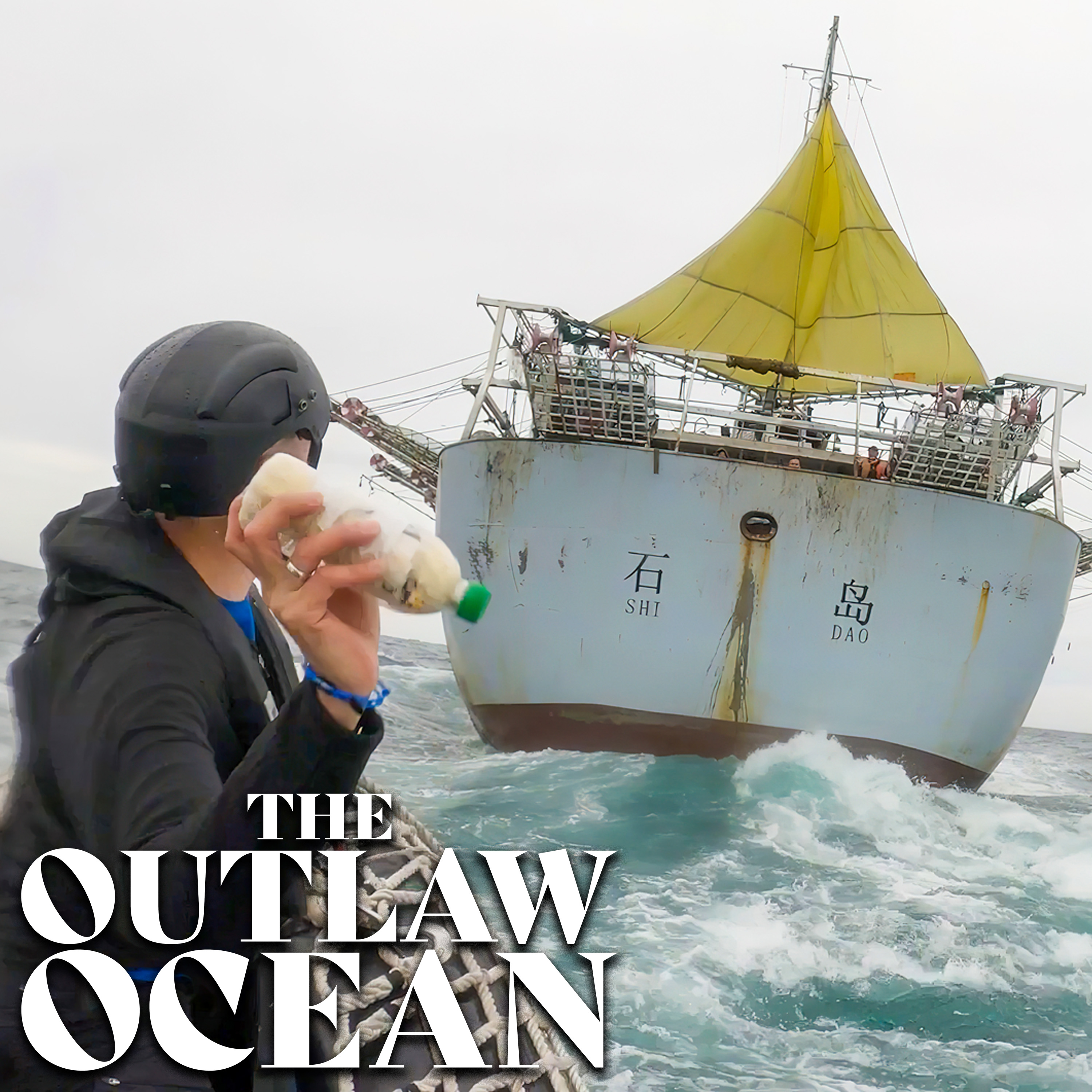
The transcript covers an investigation into human rights abuses and forced labor in the Chinese seafood industry, revealing the exploitation of workers on Chinese fishing vessels and in seafood factories. The connection between Uyghur labor and the Chinese seafood industry is exposed, highlighting the systemic forced labor practices, particularly in Xinjiang. The Uyghur Forced Labour Prevention Act in the U.S. has significant implications on imports linked to Xinjiang labor. Challenges in tracing the seafood supply chain from ships to processing plants are discussed, emphasizing the difficulties in monitoring and verifying labor practices. The history and current situation of the Uyghur minority group in China, including the Uyghur genocide and forced labor, are detailed, shedding light on the cultural assimilation efforts by the Chinese government. The complex dynamics of the Chinese state-building project in Xinjiang, driven by economic, political, and cultural factors, are also explored.
Transcription
6219 Words, 36600 Characters
A new season of Love Me is here. Real stories of real, complicated relationships.
It's not even like a gender. I mean it's wrapped up in gender, but it's just a really deep self-hate.
I think I cried almost every day. I just stood myself on the floor.
It's coming on really straight. It's like he's trying to date you all of a sudden.
Yeah, and I do look like my mother.
Love Me. Available now, wherever you get your podcasts.
This is a CBC Podcast.
When we embarked on this project, looking at the Chinese fleet,
we realized that if we really want to understand seafood as a product,
we need to understand it as a thing that traverses two distinct universes.
One is at sea and the other is on land.
So, in the previous episode, we told you about Daniel Ayrtonong, a young man from Indonesia
who had been working on a Chinese squid jigger called the Zenfa Seven.
Daniel was beaten, starved, and held against his will.
He was brought to shore in Uruguay, where he died from berry berry
and easily preventable disease caused by a lack of vitamin B.
Daniel's story is just one instance of the rampant human rights abuses
we found when we looked into the Chinese fleet.
Workers we spoke to told us, in some instances,
they were forced to stay at sea for as long as three years at a time.
They told us that what little wages they earned were often garnished for basic needs,
like food, drinking water, safety equipment, or medicine.
We also found that access to healthcare on board was tenuous at best.
Sometimes when workers get injured or sick, they're not even allowed to be offloaded
to another ship and taken back to port.
The result, especially when it comes to diseases like berry berry,
is that far too many seafarers are dying.
With all that in mind, we wanted to look at what happens once the catch leaves fishing vessels
and heads to land.
What are the conditions like inside these plants?
Is there child labor?
Is prison labor being used?
Are trafficked workers being used?
Are there environmental issues?
These are the same questions you'd ask if you were doing this investigation in Bangladesh
or Venezuela or the US.
These questions are much harder to answer when it comes to China,
but still, we just sort of went down the list.
We did not find child labor.
We did not find prison labor.
But when we started digging into the issue of traffic labor and Uyghur labor in particular,
that's when things really opened up.
Our investigation uncovered a massive state-run system of forced labor
where the Chinese government is relocating thousands of Uyghurs from their homes in Xinjiang
and putting them to work in seafood factories on the other side of the country.
If these people say no to these jobs that the government assigns to them,
they're arrested and sent to internment camps for "reeducation."
Our groundbreaking reporting is the first to show this connection
between Uyghur labor and the Chinese seafood industry.
In this episode, you'll hear how we did it.
I'm Ian Urbina, and this is the Outlaw Ocean.
[Music]
A word you're going to hear a lot in this episode is Uyghur.
That's the name of a Muslim ethnic minority in China,
most of whom live in a remote western region called Xinjiang.
Xinjiang shares borders with Mongolia, Kazakhstan, and Pakistan.
It's completely landlocked.
In fact, it's the furthest place from the ocean on Earth.
And by contrast, most seafood processing in China happens in coastal Shandong,
which is a province on the other side of the country.
Shandong is thousands of miles from Xinjiang,
so it's not a place you'd think to find Uyghur labor.
But once we started looking, that's exactly what we found.
Okay, yeah, my name is Daniel Murphy.
My background is in investigations, research, and advocacy,
focusing on forced labor in the fishing sector.
As part of our investigation into human rights abuses
and China's seafood supply chain,
Daniel and others on my team spent countless hours
combing through Chinese websites, social media apps, and company communications.
In some cases, it didn't take much effort at all
to find hints that China is not playing by the rules.
I typed the name of a Chinese company into Baidu,
which is a Chinese search engine.
And within two minutes, I'd found our first indication
that seafood processing plants were taking weaker workers.
It was not difficult.
Which, for me, underscores one of the main problems here.
The fact that we could do this in such a short amount of time
with relative ease really highlights the importance
of just basic human rights due diligence in global supply chains.
And that is something that the companies,
the large global companies sourcing from these factories
and China as a whole, are simply not doing.
Nowhere is more difficult to report than China,
especially on things like this.
And seafood is an unusually tough product to investigate,
partially because it's typically fished on the high seas,
on a ship that's inaccessible,
but also because there are all sorts of handoffs of the catch.
And so once we targeted specific ships
and were monitoring what they were pulling on board,
the next challenge was to follow the catch from the ship
all the way back to shore.
You do that through a combination of means.
One is direct surveillance.
So you're actually on the boat and you follow the fishing fleet
or the fishing ship and you see where it goes.
The second more common, more feasible approach is
you identify when a certain catch is pulled from the water
and then you keep watching that ship
to see if a mother ship, which is a refrigeration vessel,
comes to pick up that catch.
And then you follow the refrigeration vessel
by satellite back to shore.
A third way is by accessing the traceability documents
that the companies keep.
Those will indicate that this ship handed off this catch
to this other ship.
Then that ship brought it back to shore.
But those documents are sketchy.
They're often really hard also to access.
And then the final method to find out where a catch is headed
is to interview the crew and ask them what was going on.
So those are the various tactics that you can use
to trace seafood all the way back to shore.
They're all very slow.
It's a tough process to get all that information
and you usually have to cobble together multiple sources
to figure it out.
But once the seafood gets to the shore,
you have a new set of challenges.
If you're trying to connect the crimes on a ship all the way
to say Walmart or Red Lobster or whatever company
that sells the seafood to the end consumer,
the link from the refrigeration vessel to the processing plant
is the toughest link to monitor.
A crane lifts the catch out of the ship.
Guys with forklifts pick up the catch.
They put it in the back of a truck.
The truck leaves the port and drives to a processing plant.
Making the connection from ships to plants is so difficult
because you need to get eyes inside a port.
And trying to get inside a Chinese port is almost impossible.
There typically isn't paperwork that you can use
or satellite monitoring capacity you can use
to figure out that one link in the chain.
So you need boots on the ground.
You need direct surveillance.
You need someone essentially with a telephoto lens
who's either at a high-rise building next to the port
or standing somewhere where they can see what's going on.
And what those guys are looking for specifically
is that catch went into this truck with this license plate
and then we followed, usually in a car with tinted windows,
that truck to this processing plant at this address.
You do that legwork, that gumshoe reporting,
then you can probably connect the entire supply chain
all the way back to the end consumer.
Because once you know the processing plant
and you know it's a dress, then there are paper records
that allow you to figure out who the buyers
on the other side of the world were
that were connected to that processing plant.
Once you figure out the connection between the ship,
the port, and the processing plant,
you hit another brick wall, which is the plant itself.
These are huge industrial-scale factories
and they supply most of the world's supermarkets
and restaurants with the product that is seafood.
There are trade secrets, non-disclosure agreements,
and billions of dollars at play here.
So security at these plants is unbelievably tight.
And that's where the connection to Uyghur labor comes in.
So why does finding Uyghur labor
in a Chinese seafood plant matter?
Well, because China has a track record
of human rights abuses and forced labor,
especially when it comes to Uyghur workers.
And in the U.S., there's legislation
that recognizes this in 2020.
The U.S. passed a law that bans the importation
of basically any product that's connected to Uyghur workers.
So in the short time that the law has been on the books,
it's had a massive effect on industries like electronics,
textiles, tomatoes, other types of produce,
things that are grown or manufactured in and around Xinjiang.
The law has stopped over a billion dollars
of these products from entering the U.S.
So connecting Uyghur labor to the seafood industry
could have massive repercussions
on Chinese companies that supply seafood,
as well as the international consumers that purchase it.
This means that since 2020,
Uyghurs have become a central part in the trade war
between the U.S. and China.
So to unpack all this,
we need to take a minute to explain
how Uyghurs fit into broader Chinese culture and history.
My name is Susan Rai,
and I'm a research and investigations editor
at the Outlaw Ocean Project.
My name is Joe Galvin.
I'm the post-editor for the Outlaw Ocean Projects.
There are loads of different ethnic groups in China.
I mean, it's over 50, at least,
that are officially recognized by the Chinese government.
So the Uyghur people are an ethnic minority
based predominantly in China, in the Xinjiang region.
Predominantly Muslim.
They have their own language, own customs,
which make them somewhat, you know, unusual in the Chinese context.
And certainly seen by China in recent years,
particularly beginning around the early '90s,
as a group that they wished to assimilate or re-educate,
whatever Ufumism you'd like to use
into the predominant culture of the Han Chinese,
the Communist Party.
And the recent history has kind of been,
I suppose it's been centered on clashes between
the Han Chinese and ethnic Uyghurs,
and things sort of boiled over 2008, 2009.
There was an incident at a factory
where there were allegations of sexual assault,
and they involved people of one ethnicity
making a complaint against those of another.
And it sparked enormous riot,
and things really took off at that point.
Kind of led to much, much wider riots,
and a lot of people were killed,
and a lot of those were killed in those riots.
I believe they were Han Chinese.
So it encouraged a sense of, you know, Uyghurs
and the Muslim ethnicities in Xinjiang
of being terrorists, being difficult,
being troublemakers,
and the government set out to quell that very forcibly.
And that's when you had the so-called Uyghur Genocide, Uyghurs.
The first indication, or the first kind of major allegation,
was that China was engaging in the mass internment of Uyghurs,
other ethnic minorities too,
but predominantly Uyghurs and camps to re-educate them,
to change the culture,
and integrate it into the predominant Chinese culture.
The UN had said it received reports
that up to a million people were being held
in internment camps in Xinjiang in 2018.
So you had a lot of ancillary allegations following that,
including allegations that China had been forcibly
mass sterilizing Uyghur women,
aiming to reduce the population in Xinjiang
and make it more Han Chinese.
And there was lots of reports,
in addition to that, of physical abuse, mental abuse,
sexual violence, torture, and so on.
So really horrific crimes being alleged,
and all focused on the Uyghur minority group.
There are several different ways to look at the Chinese agenda
when it comes to the Uyghurs.
One way to think about it is,
China has engaged in an ongoing state-building project,
where it's attempting to bolster its middle class,
it's attempting to solidify its position as a global superpower,
and for the country to succeed,
it needs to consolidate its territory, its regions, its provinces.
So there's a lot of difference in Xinjiang,
culturally, linguistically, religiously,
and the state needs to solidify its control over that population
if China is going to succeed as a unified, centralized nation.
There's also economics.
So the economics of wealth disparity in China
is a big concern for the government,
and Xinjiang is a very poor region,
and Beijing wants to attempt to get that region caught up economically.
And so there's a genuine effort by the government
to economically integrate the people of this region
into the rest of the population.
There's also the economics of what's underground in the region,
oil, gas, minerals,
and if Beijing wants to really tap into those resources,
it needs to have control, more control,
over the autonomous region that is Xinjiang.
And thirdly, there's also the extent to which Xinjiang
is a gateway to the rest of Eurasia.
Pipelines and migration flows and military concerns
all come to play in that border region.
Lastly, I'd point out that Xinjiang is a predominantly Muslim region
in the context of a decidedly secular country.
And not only that,
Xinjiang shares borders with other Muslim nations.
So if Xinjiang were really to declare and exert its autonomy,
Xinjiang would have a lot of potential
to break away and join its Muslim neighbors.
And that's a serious concern for the Chinese government.
Here's Joe Galvin again.
China don't necessarily see this as that they're doing anything wrong
or at least your average Chinese person.
I think this is something we encountered in our investigation,
is that there's a view that this is a kind of cultural crusade, perhaps,
that we're helping these poor, weaker people
to join into the modern society,
helping them to get jobs,
helping them to find work in factories
and these far-fung places from Xinjiang.
So it's viewed differently internally
and the allegations that China's conducting mass torture,
mass internment and these kinds of things.
Well, they deny the accusations that crimes are taking place.
As much as the Chinese government would have liked to have kept its treatment of Uyghurs a secret,
word still spread throughout the international community,
a lot of that was because of advocacy work done by Uyghurs
who had emigrated out of China.
And in 2019, the Chinese government announced to the world after a lot of pressure
that they were closing the "reeducation camps."
On the outside, when you look at the numbers of the reeducation camps
and the detention facilities, they have dropped in the past few years.
They have come down.
And on the surface, that looks like a success for human rights.
It looks like the messages come through that people have been heard,
that they're being treated with greater respect,
but those people are just being put in different places.
When the news got out that the Chinese government was housing and detaining,
re-educating huge numbers of Uyghurs,
the government in Beijing pivoted and began instead transferring tens of thousands of them
from Xinjiang to other provinces.
Sometimes they were transferring them to farms and factories within Xinjiang,
but most often they were transferring them to provinces around Xinjiang
that had various types of factories that needed more workers.
The effect was enormous.
Between 2017 and 2019, according to the Chinese government,
birth rates in Xinjiang declined by almost half.
And that was because all these families were being broken up
and the men and women were being relocated.
Uyghur people and other minority groups were given a false option.
You know, you can go work in Shandong 3,000 miles away
or wherever else, thousands of miles away.
And that's your choice.
But if they say no, they're moved back to the internment camps.
So, of course, a lot of people said yes.
I mean, better to chance this out in a factory someplace,
even in a kind of military-managed, as they describe it, environments,
then to go back to an internment camp.
To me, it's forced labour if you can't refuse that.
If you're being told you have an opportunity to be sent somewhere
or be taken somewhere to work and you cannot say no,
if there are repercussions for you saying no, then that's not free.
That's not a free labour. That is forced labour.
If you're at risk of being put in a detention facility,
if you're a family at risk of being arrested because of your refusal,
if you were being told that your refusal to take that job
means that you will get nothing, then those are free decisions.
By 2020, there were congressional hearings in the U.S.
and out of those hearings came this very unusual law
called the Uyghur Forced Labour Prevention Act.
This law essentially says that no products are allowed to come into the U.S.
that have been worked by Xinjiang labour.
So, not just Uyghurs, but any workers from Xinjiang.
And that applies not only to complete finished products,
but to the ingredient parts as well.
So, if you have a frozen pizza and the sauce was made from tomatoes
that were harvested by Uyghurs in Xinjiang,
then that frozen pizza is not allowed to come into the U.S.
But the thing that is really unusual about the Uyghur law
is something called rebuttable presumption.
It's a legal term that basically put the onus on industry.
And what it means is that if an NGO or a journalist
brought credible evidence forward that a product is tied to Uyghur workers,
then suddenly the burden shifts to the specific company,
the specific importer, the specific industry,
to prove that, in fact, no,
there isn't any tie of Uyghur workers to that product that they've been importing.
And until the industry or the company could prove
that that was the case, that indeed their supply chain was clean of Uyghur workers,
that product had to be stopped at the port.
It could not be brought all the way into the U.S.
The result of the law is that in the short window of time that it's been on the books,
over a billion dollars worth of goods have been stopped at the port in the U.S.
Tomatoes, solar panels, electronics, cotton,
these are the biggest industries that so far have been impacted,
but seafood was totally off radar.
The headlines never stop, and it's harder than ever to tell what's real,
what matters, and what's just noise.
That's where Patsy of America comes in.
I'm Tommy Vittor, and every week I'm joined by fellow former Obama aides John Favreau,
John Lovett, and Dan Pfeiffer to break down the biggest stories,
unpack what they mean for the future of our democracy,
and add just enough humor to stay sane along the way.
You'll also hear honest, in-depth conversations with big voices
in politics, media, and culture, like Rachel Maddow, Gavin Newsom,
and Mark Cuban that you won't find anywhere else.
New episodes drop every Tuesday and Friday with deep dives every other weekend.
Listen wherever you get your podcasts, watch on YouTube,
or subscribe on Apple Podcasts for ad-free episodes.
No one ever assumed or suspected that seafood would be a product
that would have any tie to Xinjiang for one big reason.
Xinjiang is the most landlocked bit of earth on the planet.
It's the furthest from the ocean of any place you can find.
It's over 2,000 miles from the coast.
The seafood infrastructure in China is on the other side of the country,
largely in Shandong province along the coast.
So you wouldn't intuit that Xinjiang workers would be in seafood
over on the other side of the country.
But what happened was that after COVID,
there was a huge labor shortage in many industries, seafood included.
And because of the lockdowns that were occurring in China,
it was very tough to leave your city, your province, your neighborhood,
much less travel across the country.
And so a lot of factories were short on workers.
So the Chinese government got involved
and began stepping up the labor transfer program
in which it was moving Xinjiang workers in the thousands,
wherever they needed to be moved.
They moved them by planes, trains, buses.
And Shandong and the seafood industry in China said,
"Hey, look, we need workers bad or else we're going to fall behind here."
And so over 1,000 of these workers, of these Xinjiang workers,
were moved forcibly by the state across the country
and put in seafood factories in Shandong.
I think it's useful here to recap for a second
and to give a sense of the scale of this entire reporting project.
I mean, it's really remarkable.
So we wanted to map out the entire seafood supply chain from bait to plate.
And that meant our first step was traveling to some of the most remote spots on the planet
to see the Chinese fleet in action.
We got on board the ships, saw the conditions, talked to the guys working
and got a sense of, yeah, absolutely, there's severe labor abuses happening here.
People are dying on these ships.
And we can take that evidence to the companies here in the U.S. and Europe and Canada
or wherever and say, "Hey, look, see what's happening on these ships?
Look at these labor abuses. This is against your corporate policy, right?"
But a lot of these companies lean into their ability to claim plausible deniability.
The supermarket or the restaurant or whoever can come back to us and say,
"Well, look, we followed up and our suppliers in China have told us
that they don't purchase from these ships. Thank you. Leave us alone."
So what that meant for us as reporters was that we needed to connect the ships
that pull the fish out of the water, the ones we saw in person,
to the refrigeration ships that carry the catch back to shore.
And we did that largely through satellite tracking.
This got us all the way to the ports,
which is where we had to hire direct-on-the-ground surveillance teams, pretty dangerous stuff,
to film the cargo being moved off the refrigeration ships put on trucks
and driven to the processing plants.
That gave us even more evidence to take back to the companies and say,
"Okay, look, we followed up on this stage, too, and you're either lying to us
or your suppliers are lying to you."
But clearly the catch we're pointing at from these ships engaged in criminal behavior
are tied to your product, your brand, your consumers.
But look, I mean, again, the companies can continue to deny,
and this only gets us so far.
It's still, for us as reporters, a game of whack-a-mole
where you're constantly one step behind the companies and their factories.
The thing that would really, truly, in my view, move the needle in terms of this issue
would be to stop the seafood that's tainted by labor abuses before it ever reaches U.S. soil.
And because of the 2020 Uyghur Force Labor Prevention Act,
documenting the presence of Uyghur labor in the supply chain
would trigger that law and would allow for just those blocks,
just those barriers at port to come up.
So to connect the final dot, we needed to use a set of tactics
that would allow us to get inside these factories,
even though we were situated on the other side of the planet.
And that's where we turn to OSINT, or Open Source Intelligence.
In my view, OSINT is the front edge of where journalism is heading.
This is material that's sort of out there on the Internet.
This is TikTok, Facebook. This is cell phone footage.
For example, the parent company that owns many of the plants that we were focused on
has its own newsletter.
Those newsletters are really candid and open
because they assume that the only people reading the newsletters
are their own staff and industry professionals in China.
These are public documents, these newsletters.
So we just needed to know how to get our hands on them and see what they said.
My name is Austin Brush,
and I'm a research and investigations editor at the Allied Ocean Project.
So we relied on a combination of tiny state media reports,
government press releases, secret company press releases and statements,
as well as corporate newsletters, all publicly available and accessible through online research.
And so within these corporate newsletters,
we found that these companies were outlining strategies to employ labor
from outside of the provinces which they were based,
including migrant labor or Uyghur workers based out of Xinjiang province.
And in many cases, they cited these migrant workers as a mechanism to fill
or address the issue of labor shortages, again, caused by COVID, as well as other factors.
A lot of what Austin and others found are things that the western seafood companies
that sell the seafood to consumers should have been looking for themselves.
Daniel Murphy, who you heard from at the start of this episode,
also worked on our team of OSINT researchers.
We're still at a stage where many companies don't know how to do this.
At least they don't know how to conduct effective human rights due diligence.
To me, that just speaks to the fundamental failure of the prevailing modes
of verification and assurance, which is based on a tool called social audit.
Audits are the primary tool that the seafood industry uses to police itself
on paper, at least, their way of using third-party investigators
to make sure that there aren't any labor or environmental abuses happening in their supply chains.
There are two types of audits that exist within the seafood industry.
One is marine audits.
These are audits that are primarily focused on the environmental and ocean concerns.
Things like, did that seafood come from someone's waters where that ship wasn't allowed to go?
Did that catch come from a ship that was using nets that were the wrong size and illegal?
Did that seafood come from a ship that went dark and turned off its transponder and disappeared
and therefore broke the law?
Those marine audits are deeply flawed.
It's a paperwork exercise that gives some seal of approval,
but there aren't real penalties and methods of correcting the problems,
but they exist, the audits at least exist.
The other kind of audits are social audits.
These are audits that focus on human rights and labor issues.
Social audits in the seafood space are nascent.
They're younger, it's much less developed, and there are some firms that do social audits,
but they're primarily focused on the processing plants, in other words, not on the fishing vessels.
In other words, spot checks of labor conditions on fishing vessels simply don't exist.
And this is a huge blind spot for the global seafood industry.
This is why the problem of sea slavery is pervasive and difficult to counter,
because so far the industry has not been forced to figure out how to deal with the issue.
Labor and human rights are sort of a third rail in China.
So social audits of factories in China are a bit of a scam.
First of all, they're announced visits.
"Hey, you know we're going to come and check your plant on Tuesday,
so that's already deeply problematic because everyone can clean things up
because they know the inspector is coming."
And number two, these social audits are really flawed because they're only looking for certain things.
And that's by their own admission.
When we presented our evidence to some of the main firms that do these social audits of the processing plants,
we knew that these inspectors had been in a certain factory the day before we documented Uighurs on site.
We had footage of Uighurs posting selfies in the plant,
but the social auditor didn't note the presence of Uighur labor in the plant.
Why? They weren't checking for that issue.
They were looking for things like child labor or locked fire doors and fire hazards.
So for so many reasons, this industry, the seafood industry,
has a big problem when it comes to whether it's going to be able to check labor concerns on the fishing ships or in the plants.
And that's hopefully what our investigation will change.
Social media was a very useful tool for us to confirm some of these reports we were able to find online,
including from companies and Chinese government as well as state media.
We primarily relied on Douyin, which is TikTok's mainland China counterpart.
In an almost identical manner to TikTok, users are able to post short video content,
or in some cases, photo reels, depicting whatever the user might choose.
Xinjiang workers who are transferred by the state are often filming themselves,
doing short selfie videos as they're being relocated.
That footage is amazingly useful, and it often can take you all the way inside the processing plants,
because workers at these plants are just like anyone else.
They're filming themselves or taking selfies, doing average things.
They're sending messages back to family, to their friends.
We initially identified one Uighur user who was uploading videos to Douyin, the Chinese TikTok.
And from that one individual, we conducted a social network analysis to identify other Uighur users
who were also working in Shandong and posting from seafood processing facilities.
We were able to identify and verify that they were Uighur by drawing on a few different indicators,
and we were able to identify specific seafood processing facilities by using geospatial analysis
and comparing imagery from satellite imagery in photographs of factories, as well as comparative analysis.
So looking at pictures on corporate websites of company uniforms, for example,
and comparing those uniform styles with the uniforms that we saw in videos.
In the background of the videos, the ones shot at the factories,
their boxes that are in full view and those boxes that you can zoom in on have really useful information on them.
Oftentimes, the workers are filming themselves in front of the buildings as well,
and it shows you the name of the plant where they're working.
You can pinpoint exactly where the workers were and when.
And when you piece all that together, you start getting eyes into a place that otherwise you wouldn't be able to access,
and you can do it all from 3,000 miles away.
You know, workers are often friends with other workers,
so you sort of navigate your way through an entire community of people by looking at the links online.
We were able to identify hundreds of videos posted by Uighurs working at factories across China,
and this included many workers at seafood processing plants.
We had earlier identified as the recipients of labor transfers out of Xinjiang Province.
The videos these workers posted included many things,
but it showed what working conditions were like.
It showed these workers on, you know, fish processing lines.
It showed them in workers' uniforms.
It showed them at the processing facilities, both inside and outside.
It's included showing them, you know, shorting seafood, packaging it, putting it into trucks,
in some places cleaning and gutting fish, you know, all the key kind of components
of what it means to work on a seafood processing line and a Chinese factory.
All important ways in which we were able to kind of further corroborate the fact
that Uighur laborers are present across, you know, multitude of seafood processing facilities,
including those exporting outside of China.
Like I mentioned earlier, Xinjiang is the most landlocked place on earth.
So most of these people that are moving across the country that are being moved by the state
to Shandong Province, which is a coastal province, have never seen the ocean.
And one of the first things they do when they get there is they film themselves in front of the water,
sort of sending a video back home saying, "Look, here's the ocean. Here's the sea."
Just that sense of awe, that sense of remove, that sense of distance from their loved ones
gets really clearly conveyed in the videos as well.
So, bottom line, these videos are an incredible resource for us as journalists.
But they also allow us to look for more subtle pathos,
sort of the anthropology of this forced labor transfer experience.
The video content uses a variety of different types of media to convey a message in our opinion.
In some cases, it's text that they might be pulling, such as poems or, you know, religious text,
either an Arabic script or Uighur that might be sending a message of melancholy or celebration.
In all the cases, they're using music from Xinjiang and they're overlaying that over their videos.
In some cases, those songs are melancholic and represent a longing for home and a family.
In these videos, you have a lot of quiet resistance occurring from Xinjiang people
who are posting songs that are mournful, deeply sad.
But it wasn't until we brought on two independent Uighur researchers to review these videos for us
that we started to understand that some users were uploading videos that could only really be described as subversive.
I was watching a video of a man cutting a white fish on a processing line.
And the music that he had uploaded to that video, it was powerfully full of sorrow.
It was music that just in the 22nd clip had an emotional impact on me, just watching it immediately.
And at the end of the video, it cut to an image of a young girl who I presumed was this man's daughter
after reviewing some of his other videos, which showed her repeatedly.
The use of these songs, these sad songs, allows Uighur workers to say something without running a foul of the Chinese internet censors
and without having that video removed or getting in trouble, because what are they doing?
They're just posting a song innocently.
But the lyrics, when coupled with the footage that they put up with the song, conveys a pretty clear message of their sense of sadness.
What these videos tended to revolve around were themes of separation, themes of loss, themes of homesickness,
and the users are uploading footage accompanied by songs, often with very precisely selected lyrics or excerpts from songs and poems
that were speaking to these feelings of loss and heartache and homesickness.
They were providing people's thoughts and feelings as they went through the experience of being taken from their homes,
transported almost 4,000 kilometers, and in some cases forcibly integrated into a factory wage labor system.
As a result of this long-term investigation into China's seafood supply chain, we found that at least 10 large seafood companies in China
used more than 1,000 Uighur workers between 2018 and 2023.
During that same period, those companies shipped more than 47,000 tons of seafood to the US,
and that seafood was bought by major importers in the US and Canada.
In total, we identified seafood imports tied to labor from Xinjiang in more than 20 countries.
And the list of all the companies, the restaurants, the grocery stores, the plants in China that we're using for slave,
all the details of this global seafood supply chain and its problems are on the website,
and you can see which companies are implicated there.
The website is theoutlawocean.com.
Next time, the final episode of our three-part series on China's dominance of the world's oceans and global seafood.
Beijing's refusal to play by the rules goes beyond using Uighur workers.
We found clear evidence that Chinese plants are using forced labor from the Hermit Kingdom, North Korea,
a clear violation of UN sanctions and US law.
This series is created and produced by the Outlaw Ocean Project.
It's reported and hosted by me, Ian Urbina, written and produced by Michael Katano.
Our associate producer is Craig Ferguson.
Mixed sound design and original music by Alex Edkins and Graham Walsh.
Additional sound recording by Tony Fowler.
For CBC Podcasts, our coordinating producer is Fabiola Carletti.
Senior producer, Damon Fairless.
The executive producers are Cecil Fernandez and Chris Oak.
Tanya Springer is the senior manager and Arif Narani is the director of CBC Podcasts.
For more CBC Podcasts, go to cbc.ca/podcasts.
Podcast Summary
Key Points:
Investigation into human rights abuses and forced labor in Chinese seafood industry.
Connection between Uyghur labor and Chinese seafood industry uncovered.
Uyghur Forced Labour Prevention Act implications on U.S. imports.
Challenges in tracing seafood supply chain from ships to processing plants.
Uyghur minority group's history and current situation in China.
Summary:
The transcript covers an investigation into human rights abuses and forced labor in the Chinese seafood industry, revealing the exploitation of workers on Chinese fishing vessels and in seafood factories. The connection between Uyghur labor and the Chinese seafood industry is exposed, highlighting the systemic forced labor practices, particularly in Xinjiang. S.
has significant implications on imports linked to Xinjiang labor. Challenges in tracing the seafood supply chain from ships to processing plants are discussed, emphasizing the difficulties in monitoring and verifying labor practices. The history and current situation of the Uyghur minority group in China, including the Uyghur genocide and forced labor, are detailed, shedding light on the cultural assimilation efforts by the Chinese government.
The complex dynamics of the Chinese state-building project in Xinjiang, driven by economic, political, and cultural factors, are also explored.
FAQs
It explores real stories of real, complicated relationships.
Ian Urbina is featured in the 'Outlaw Ocean' podcast.
Forced labor, lack of healthcare, and abuse were reported in the Chinese fleet.
Methods include direct surveillance, following catches, and interviewing crew members.
It could have significant repercussions due to human rights abuses and forced labor issues.
It has led to over a billion dollars worth of goods being stopped at U.S. ports.
Chat with AI
Loading...
Pro features
Go deeper with this episode
Unlock creator-grade tools that turn any transcript into show notes and subtitle files.
 PodcastTranscript AI