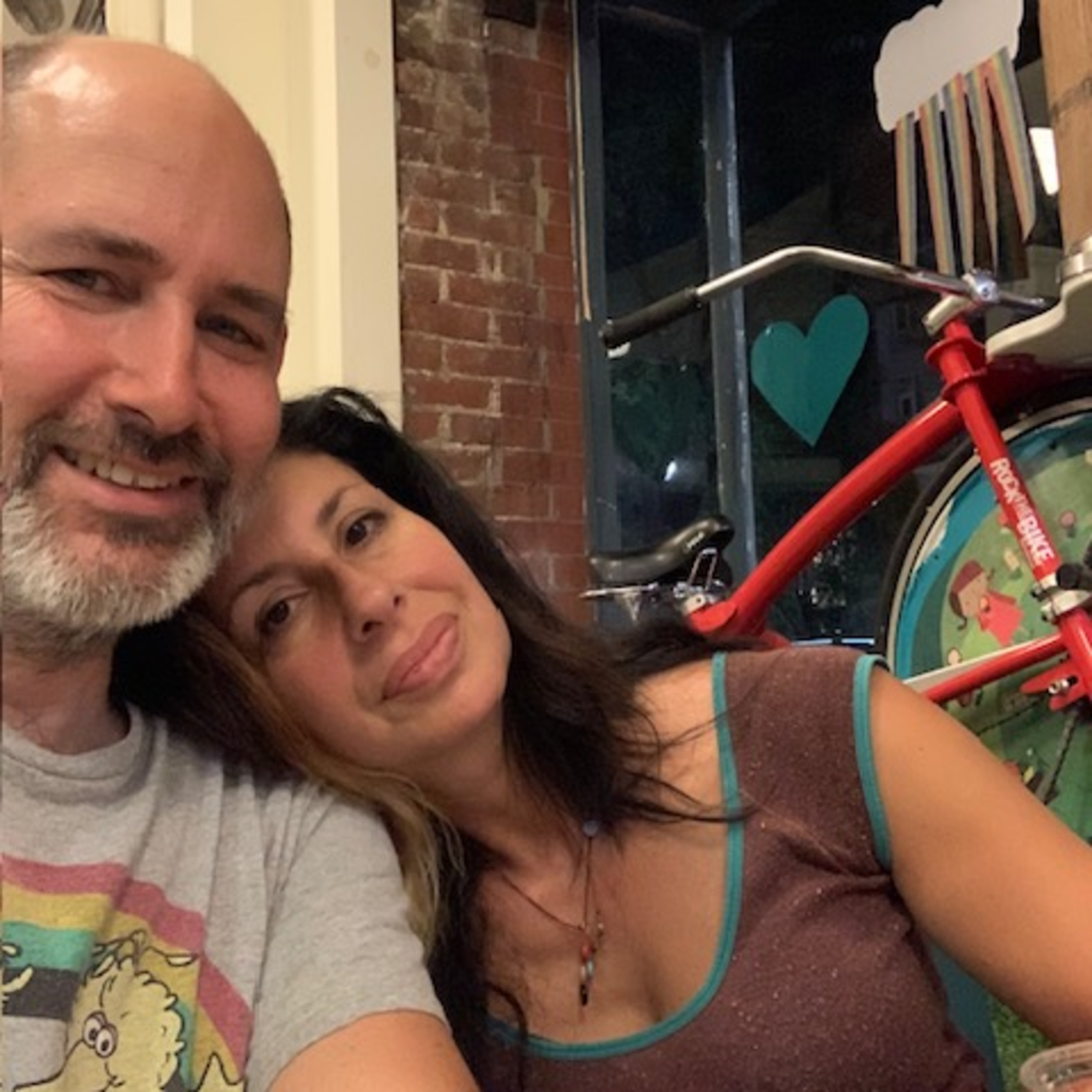
Jackie and Brian, founders of Ample Hills Creamery, recount their journey from building a beloved ice cream brand to losing it all through bankruptcy. They filed for bankruptcy just before the COVID-19 pandemic, and a new owner now runs the company. In this episode, they answer listener questions about their experience. They miss the community and connection of their scoop shops, feeling lonely without that environment. They regret not forming a partnership with the new owner but chose to leave rather than compromise their creative vision, even though it means financial hardship and second thoughts at night.
Key mistakes included building a factory without a feasibility study, which ran over budget and became a financial drain. The finance team was underfunded and behind on tracking cash flow, so they didn't realize the company was in trouble until it was too late to avoid bankruptcy. Investors lost their money, with some reacting angrily and others more understanding. The factory could have been shut down or replaced with co-packing to save costs, but denial and attachment to their DIY ethos delayed that decision.
Looking ahead, they want to rebuild a smaller, more local brand focused on what they do well, ideally without outside investors, though personal bankruptcy makes that challenging. They emphasize learning from their mistakes, especially the importance of financial health and strategic planning.
[Music] Welcome. We're Jackie and Brian, and this is "As the Ice Cream Churns." Together, we founded Ample Hills Creamery, one of the most beloved ice cream brands of the last decade. Then, we lost it all. We filed for bankruptcy a day before New York City shut down to the COVID-19. Now, someone else owns Ample Hills, and we're out of work. But we're ready to start over. Come join us for an exploration of what went wrong, and more importantly, what comes next. Our guides are close friend Debbie Rosen. She created the cracked cookies in her hit flavor, salted cracked caramel. When she's not baking, she's a therapist. We thought she could help us navigate these troubled waters. Let's get started. Hey Debbie. Hey, Debs. Hi there. So, this week, we are going to spend the episode answering questions that everybody has submitted and asked, and appreciate all your thoughtful questions. So, Debs, you want to read the first one? Sure. Tasting 238 asks, "What do you miss most about leaving Ample Hills?" So, I think one of the things that I miss the most is being in the scoop shops, scooping ice cream alongside the employees, you know, being around customers, and the environment and the vibe that we created that as a community member, as a person who lives in Brooklyn, and who always wanted to create this environment, now no longer feels good about going in there because it's hard. It's for me, it's like this loneliness that you, you know, that we didn't have when we had Ample Hills and we could go into the shops and, you know, it's being connected to that broader community, both the scoopers, but then also the customers and being part of something that was bigger than our household that we've spent through coronavirus a lot of time together. And it's wonderful, but like it's about the connection to something so much bigger than the four of us in the house, you know, it's, that's the hard part. E.J. Riley 123 would like to know, "What did the new owner do to turn you off from working with him?" Which raises the questions, "Do you have second thoughts now? And do you wish you'd stayed on at Ample Hills?" Yeah, well, I mean, I think in terms of the new owner, it was, you know, it was clear that there was no partnership that he wanted to form with us, which is really, I guess, naive on our part, but it was what we were hoping for from a new buyer that they'd want to work with us and want to be partners with us, not, you know, financially, but just, you know, what we did so well to be a part of that together. So it felt wrong really to not be able to be a partner with somebody. And that was probably the biggest issue. Yeah, I mean, I think that's right. I mean, in terms of second thoughts, oh my god, yes, I mean, when I wake up at 3 in the morning and after I go to the bathroom and I can't get back to sleep, you know, I thinking about having to pay the bills or buy the groceries, you know, money would be good. And it's there and it's sort of the darkest of night when you really say, what the hell did we do and why did we make this decision? But, you know, in the light of day, in the morning, the resolve comes back. You know, the thing is Jack and I have never taken the easy road. I mean, from the very beginning, when I turned down that job, but the audiobook company, you know, that was the easy choice. I mean, that was the choice that I desperately wanted to make because I didn't want to have to go open the shop that we designed and spend all this time doing because I knew how terrifying and scary it was. I wanted to just have this out of taking this job and going to work and having benefits and being able to take care of the kids. And, you know, but we didn't because there's something in our DNA. I mean, why are you laughing? Risk averse, we're not. I mean, you know, and so like at the end of the day, like that's to our benefit because it allowed us to like build and grow ampahels. And obviously, it's to our detriment because those risks also, you know, when taken too far, let us losing ampahels. But yeah, I'm sorry. I, you know, I mean, I'm not laughing maniacally because, you know, I don't, I feel like we very frequently do things that are so much more difficult. But we, like you said, we just, it's in our DNA. It just, we can't help ourselves. Like, you know, we've got to take the the more difficult path, the harder road, the, you know, most riskiest. Well, it's also about, you know, following our own path and being creative, right? And so at the end of the day, whether or not we felt, you know, feel regret or second thoughts, at the end of the day, we know that waking up in the morning and going to work with somebody that we couldn't see eye to eye with and agree with would have felt like a really slow death. And, you know, with, you know, we'd rather be poor now and control our destiny than feel like we were part of somebody else's journey. And I think, I mean, that's, that's hard because it's maybe not the responsible thing to do with kids, but it just, it feels like it's the responsible story to tell the kids. Sarah Miller sent in, would it have been easier to have had the shops close or a competitor buy it and shut it down as opposed to watching the stores new ownership interact with the following you built in no longer control? I mean, yeah, it's hard to see our company being run by someone else. And they actually bought the goodwill of the brand. That was in the purchase agreement. Our photos, our family photos, our old or the shops, they're embedded in the tables. So emotionally, yes, it would have been easier to have, you know, had another ice cream company come in and take it over. I mean, divorce is, it's like divorce in a way. And I mean, I mean to minimize death, but you know, I often hear people say that in some ways the, the death of a partner is easier than divorce, you know, because you continue to see their lives go on as opposed to the sort of horrible, terrible morning, but then it's over and everybody can grieve with you. And in this sense, you know, Ample Hills goes on and we have, you know, see it and are reminded of it every day, whereas, you know, in some ways, it would have been easier emotionally, not good for all the employees though. So, I mean, we don't wish that. It's just, no, we don't wish that at all. We're glad that, you know, that everyone, you know, has, has been able to keep their jobs, those who wanted them, which is wonderful. And I'm proud that we've actually created this company that has, has done that, you know, for the good of, you know, the community for the, you know, I mean, it really, it's something that I think I want to constantly remind myself because I sometimes walk around feeling badly about everything that happened and just, you know, feeling low, but saying, hey, look, we did this. And, you know, all these people wouldn't be employed if we hadn't, you know, grown the company in the way that we did. So, you know, Mona Lipson asks, what would you tell your 11, 12 year younger selves after all you've been through? I think chill out and enjoy the ride, you know, maybe get some better business growth strategic advice, which is, you know, kind of what we're doing now. But, you know, back then I think that that that would have been really helpful. Yeah, get good, get a good finance person from the beginning, you know, follow economic models instead of just, you know, carrying bags a cash around to the bank. I mean, you know, having a model plan. Right. All of that. Tina at Milken Cookies, New York City asks, how did you inform the people who invested the 12 million about the bankruptcy and did they have to take a loss? Also, interested in hearing what their reaction was and how they handled their loss. Yeah, I mean, those were hard conversations to have because, of course, you know, some of the investors, you know, were good friends before
they were investors and many of the investors then became good friends and so you know it was really a difficult thing to have to explain to them that you know we had come to this place. Yes I mean in terms of did they have to take a loss yes I mean that's what happens when you invest in sort of an equity situation like this you know the investors are basically they're playing for an exit if you will what that means is you invest so many dollars at a valuation let's say the company's valued at 10 million dollars and you invest so much money and then you're waiting for the company to potentially grow to a certain size and be bought by another company or sold and for a hundred million dollars and so that means the investment you made is worth 10 times what you put into it and you would see that money upon that exit you wouldn't see the money in terms of dividends or returns of profits it doesn't work that way in that equity model that we'd raise money at so people were playing a long game and waiting for that sort of exit to happen you know and so that you always know when you go into an investment like that that you know you can lose everything it doesn't make it any easier I imagine when you do lose it but yes when a company goes belly up and goes through bankruptcy you know all the investors are wiped out I mean that that happens to everybody equally so their reaction I mean you know some of them were super angry I mean I remember a couple people writing very long and passionate and very angry emails that you know felt like we had betrayed them and screwed them out of their money and so on and other people were much more understanding and you know it basically came down to you know people that were professional investors that sort of you know you know psychologically write off their investment when they make it because they they know that they can lose it are more accepting and understanding if they do lose it then maybe somebody who's investing because they're passionate about this thing and it's not it's it's you know maybe more money than they thought that they should have invested but they really believed in it and so those are things that you know we still struggle with because you know we can't we can't do anything about those losses. Rune it wants to know why didn't the investors on your board see the expenses of the factory and weigh in on this. Well I mean this is a good question. Rune it you know they should have I mean we all we all bear responsibility I certainly bear the most responsibility is the CEO and the head of the board the board met you know once a month and the people on the board you know could see what was happening but I guess you know a couple of things happen you know there's something called group thing and and and people you know sort of start to think and and feel similarly over time sometimes you know you start to sort of drink your own kool-aid and your own story and your own narrative and everybody together you start to you stop necessarily questioning every decision or every thought and in terms of sort of technically how they didn't see the expenses as they were piling up at the factory part of the problem was that we didn't have a finance department that was that didn't have the finance department didn't have the resources it needed they were understaffed and underserved by us and we had not put the the proper money towards giving them the people that they needed and so they were constantly behind three months six months on sort of that critical window into what the hell is going on in the company and understanding the math and so because they were behind those those are sort of critical moments where the board and the CEO myself don't necessarily have the information they need at the point that they needed to make the decisions because you know and so we were always trying to catch ourselves up and and we didn't see the problem until too late to be able to put enough resources towards it. Rune also asked was there any feasibility study done for the factory in terms of size production operating requirements and labor? Well Rune and that would have been a good idea. No we didn't do a feasibility study there's really not much more to say there except for if we were to build another factory I would do a feasibility study but no we just thought you know hey it's it's it's not rocket science you know it's like we know that this machine can make so much ice cream and it just didn't seem like we needed such a thing but yes we should have had more. Bill Graber wants to know if the shops were so successful and the factory was the real problem why didn't you just shut shut the factory down and save the company? Well you know I mean that's that's really smart and honestly at first I would say the reason was one of denial I mean the factory wall it had run over budget by a couple million dollars when it opened in the late summer early fall of 2018 you know it was shiny and new and we loved it and we had literally spent years building it out and millions of dollars so we weren't going to walk away from it at that moment and you know it took it took a long time to come to an acceptance as a company as a business that the factory might be a problem you know and and and also that we could maybe survive without a factory I mean when we opened ample hills I made every scoop of ice cream myself out of that kitchen at Vanderbilt and I did it in front of the public and so to me it was it felt absolutely critical to our DNA that we make the ice cream from scratch from beginning to middle to end in front of the public and the so the only way to keep doing that as we grew it was to build out a big factory but at the end of the day there is something called co-packing which a lot of other ice cream brands do and that means you go and you find another ice cream factory a company that makes ice cream and they can make our flavor so ample hills could have taken all of our recipes exact same we go we better cake recipe known as these oatmeal lace recipe and given it to this other co-packer and they could have made our ice cream for us nobody would be able to tell the difference at that point because again it's the exact same recipes right executed by somebody else and then we would basically buy that ice cream from them and you could do it at half the cost half the cost that it was costing us to operate the factory so we only came to that understanding in probably November or December of this last year so maybe two or three months before we filed for bankruptcy at which point it was too late to save us from bankruptcy it was definitely one of the thoughts coming out of bankruptcy was that somebody might buy the company and say hey we should shut the factory down you know to the new owners credit they're trying to keep the factory I mean obviously I would have loved to have kept the factory but it requires accepting that there's going to be a lot of financial losses before there are any financial gains because basically that factory is going to lose money and continue to lose money for a while until the company can grow to a certain size that it could support it the quicker easier path would have been to not build the factory or to shut the factory down and move to a co-packing model ruin its final financial question why were the books not managed enough to see the cash flow issue hey thank you ruin it why were the books not managed enough well that goes back to the fact that the finance department didn't have the resources or the people power to manage the books and obviously that was like a critical factor and an issue that we you know I think yeah no I mean when it was it was June of last year when the finance team came into to me and we talked about this in in another earlier episode and said, you know, the models showing us now.
that we're not going to make it through the winter. We don't have enough money. And that was like a shock at that point in time. And, you know, we should have just known earlier than that. And we didn't. There's no good answer. I think the health of a business is rooted in the health of the finances. I think we know that now. We paid the ultimate price. It sounds like there's a communication breakdown between you and the finance. Yes, I think that's absolutely fair to say. And I think it would be unfair to throw the finance team under the bus. Again, everybody at the company bears some responsibility. And ultimately, that responsibility is mine for not funding the finance team and having the right people in place and communicating what we needed out of the finance team. I remember going to our biggest investor in June and explaining to him what we just learned from the finance team about not having enough money. And, you know, you don't talk about investors, you know, reactions like he just raked me over the cold. He's like, how do you as the CEO, not know where every damn dime is going? How do you not know that you didn't have this money in the bank? How is this a shock, Ryan? How is it? And, you know, as much as I don't have an answer right now, I didn't have an answer for him. It's just, you know, we'll do better next time. That's all I can say. Mona Lipson asks, what would you rather, sorry, would you rather not have investors moving forward and keep things more local small? Or do you want to build another national brand? So I think what we want to do now is focus on what we do really well and allow that to just date, you know, with the idea that we could grow, but only when we're ready. And it's in keeping with our core principles and vision and of course financial stability. Yeah, and I think it's always great if you cannot take other people's money. Obviously that would be ideal. Unfortunately for us, if it's probably not realistic at this point, since we of course have just filed personal bankruptcy and we don't have anything and have no resources. So, you know, that's a catch 22. You know, it's just there's better ways to sort of, I think, approach it. But, you know, that would certainly be the goal. John Haas asks, why didn't Ample Hills have more success in grocery stores and did it not sell well because it was too expensive or was it hard to get shelf space? Yeah, I mean, that's a great question and I do think it's probably a little bit of, it's definitely a little bit of both. So, Ample Hills did have some success in grocery stores and honestly we didn't really get involved in that wholesale business into grocery stores until the factory came online. So, you know, because at the time before that we were hand packing pints and so we just didn't have the opportunity to make enough. And so, once we were able to get the factory and automate pint production, you know, we grew from 80 or 90 grocery stores to about 800 or 900 in a year. So, that was some significant movement and success. And, you know, the ice cream sold pretty well in the New York City Tri-State area stores and the stores, you know, closest to our own shops. And that has to do with, of course, name recognition, brand recognition. They were expensive pints. And so, that, while it's not as huge a challenge in the city and in stores, you know, like, you know, the whole foods where, you know, our pints at 899 were not even the most expensive pints where there are other pints that were 10 or 11 dollars. It's certainly not a big challenge there. It's certainly a bigger challenge when you get outside of the city, even when you get to, like, Connecticut and we were in stop and shops, is that right? And those, you know, and there it was more challenging because it was the most expensive pints. And, you know, yes, in terms of getting it into shelf space, that's always a challenge when you're starting out. You know, it's a real old boys network in a way trying to get into those that frozen aisle. And you have to pay for many of the grocery stores. You actually have to pay what are called slotting fees. And so, you know, some, you know, you'll pay for the shelf space. And you'll pay tens of thousands of dollars for them to give you shelf space to put your pints on it. So, you can imagine how many pints you didn't have to sell to make that economically feasible. So, we would sit there and we would go, okay, well, we've got this offer from this grocery store chain, but we're going to have to pay $100,000. And wait, it's going to, we're estimating it might take two years to make $100,000 back from the sale of those pints before we're really moving. And so, you'd have to balance which grocery store chains you wanted to be in based on those slotting fees and based on the finances. Yeah, and then you're also paying a company to help you orchestrate that. Right. Broker fees. And, you know, and the margins with wholesale are obviously insanely small. Right? If we saw a pint out of the ice cream shop directly to a customer for $9, then we know how much that pint costs us to make, which, you know, was $2,000,000. So, we understand the profit margin, but if we sell that pint to a distributor for $4,000, and then the distributor sells it to a grocery store for $5,000, and then the grocery store sells it for $9,000, you know, we're only making that much, much, much smaller margin. And, you know, which is fine with volume. I mean, that's, it's a volume game. It means, right? And so, otherwise the expenditure to do it, it puts you under water. I mean, you know, you have to allow everybody told us when you get into wholesale, it'll take two or three years to make money. You know, and that's if you're successful because of the amount of money you're having to expend to get under the store shelves to market it, to pay the brokers to pay all the different people involved. And because the margins are so small. The Kupnowski, hope I said that right, wants to know what was the hardest aspect of consistent quality control when becoming so popular? Yeah, Bob, I know you're one of our biggest and most supportive fans, and thank you for that. And I know you got pints where there wasn't any pieces of ooey gooey in them and things like that. And it absolutely happens. It is, it's crazy. You know, even, you know, one would think that when you get into an automated situation and a factory and you're built from scratch with all those great machines that your consistent quality control would just, you know, be a thing of the past. At the end of the day, though, people have to operate those machines. And so if somebody standing over the machine and where the ooey gooey is going into the machine and isn't paying attention, then, you know, then five, six, 10, 20 pints will go by. And there won't be any pieces of ooey gooey in them or the machine clogs up a little bit. And so it's not got enough pieces of ooey gooey going through and going into each pint. So it, you know, I think at the beginning when we first started in the factory, we didn't foresee that any of those issues would really be problematic. So we didn't, we hadn't put enough resources into really checking the quality control of what was coming off the assembly line. And part because we were so overwhelmed with just trying, just needing to like make ice cream because the factory was so delayed in opening and we were just trying to like get it done. So after, you know, six months, eight months, nine months in the factory, the quality control got a lot, lot better because we put people on the job of just focusing on making sure that there's enough pieces of ooey gooey in each pint, et cetera, et cetera. And it doesn't mean those problems still don't happen occasionally from time to time. You'll even see it and have been in Jerry's pint from time to time. But it's, you know, it's much, much rare. The bigger you get because you put in all those checks and balances on your system, you know, and we didn't have them at the very beginning. Joe wrote, I live on the Jersey Shore and have been wanting to get it into the ice cream business for a few years now and researching and saving. Do you recommend any business books or courses for the business? Yeah, I mean, I think the number one thing that I did when we were starting out was I went to Penn State. It's pin state.
has probably a hundred, I think 125 year old dairy program, a dairy school, ice cream course. And you don't have to go to Penn State to do this. It's what's called a short course. So it's a seven day course that's offered in January every year. And the Burkey Creamery is the name of their ice cream company that's on the campus there. And so you get to do hands on stuff, but you get to do a lot of real technical ice cream chemistry stuff. So if you're really interested in ice cream and making your own ice cream and understanding the way that the fat interacts with the liquids and the solids and all that stuff, that course was invaluable. And all the industry players go. So the Ben and Jerry's and Hagen Doss and Unilever, they all send representatives and mom and pop shops go. And so you meet people and network with people that are passionate about ice cream the way you are. So that's sort of the number one thing. Yeah, and I would add, just in terms of building a company and a brand, one of the places that I attended and that we used kind of as a model once we were kind of up and had more than one shop was Zingermans. Zingermans is a community of businesses outside of in Ann Arbor, Michigan. And they teach courses. So I mean, you can take, you can go to a seminar there, you can buy their books. But I think we were running a company from the mom and pop perspective that really needed to be codified eventually. And Zingermans kind of gives you that. So I would recommend Zingermans books. And another book I think that was helpful just in terms of company culture and the vibe was Danny Myers book, setting the table. So that was an inspirational book when we were starting out. Zach Philadelphia sent in, when starting up a ice cream shop, what's your top five items equipment to invest in? - Right, well, I think it depends on what kind of ice cream shop you're doing. I mean, for us, when we started, because I knew we were gonna make all of our ice cream from scratch, from beginning to middle and end, the number one thing was, I needed a pasteurizer. And so, you know, we needed that piece of equipment in order to cook our own ice cream base. And then of course, you needed your ice cream maker, a batch freezer. And you need the dipping cabinets, you know, to scoop the ice cream out of. And you need a blast freezer, like a hardening freezer. So normal freezer sort of operates at zero or negative 10. But to make the best ice cream smooth, creamy ice cream, you need a freezer that can get down to negative 20 and negative 30. And that's what's called a blast freezer or hardening freezer. So I think those are really the critical pieces. - Sea glass asks, "What's the best ice cream base to create my own flavors at home?" - Yes. So, you know, I'm gonna just refer to our cookbook here and tell you that the base that we would use for everything is basically equal parts milk and cream, one and, I don't have my glasses on. One and two thirds cups milk, one and two thirds cups heavy cream. So equal parts cream and milk. And then a half a cup of skin milk powder. That's dehydrated milk. So all the milk solids without the milk water. It's basically a thickening agent for the ice cream. Three quarters cup sugar and then three egg yolks. And no vanilla. That's just a basic sweet cream mix that you can use as a sounding board for all of your ideas. - Is he laying? Wants to know, are you looking to stay in New York for future ventures? - Yeah. - Yes. - I think so. I mean, unless an amazing opportunity comes about elsewhere. - Yeah. - You know, for now. I'm a diehard New Yorker. So it'll take a lot for me to get out of New York. No, New York is not dead. New York is always going to be alive. And so I pride myself with some ways is supporting New York in that way. But with that said, like I said, if some incredible offer came in, you never know. (laughing) - Yeah, I mean, we raised our family in Brooklyn. Our kids go to school in Brooklyn. We live here. You know, it's hard to imagine not wanting to be here and be part of this community. It'll head ice cream, would like to know, how do you find a good location for a successful stoop shot? - Well, I think that, you know, the first thing is, is you just go out and look constantly. And so, I mean, I'm constantly out on my bicycle and just taking walks and taking photographs of empty storefronts and locations. And looking at what the foot traffic looks like and the feel. And for ice cream, you know, we look at, like, is it near a movie theater, is it near a school, or is it near other restaurants critically, you know, that are like what you call feeder restaurants, that people are gonna go to a restaurant, and then afterwards get ice cream, you know, is it near those kind of activities? Is it near a subway station? And so we look at that and then corners, I mean. - Yeah, corners. And then in the feel of it, too, that you can walk into a space, or at least I feel like I can walk into a space and say, oh, this feels right, you know, and this would be a great spot. There is, you know, an element of, you know, of feeling in all the other parts. - In addition, Fiddlehead ice cream asks, how do you plan to finance your new adventure? - Yeah, so, yeah, earlier we were talking about not necessarily wanting to take investor money. Unfortunately, I just, you know, it's not realistic. And so the model that we're looking at though now, I feel much better about, it's what's called a traditional restaurant model. So say you've got a chef and he wants to open up a restaurant. He does have money, but he can make incredible food. And so he goes to investors and the investors would support the financial build out of the restaurant and the shop. And then the profits from that shop, that restaurant, go back to the investors until they're made whole. So, pick a number, say it costs $100,000 to build out of space. You raise $100,000 from investors. 100% of those profits go back to the investors until, at which point they've now been paid back their investment. And now you create a split, which is, you know, can be 60, 40, 70, 30. It's some version of that in which, you know, the chef, the people starting the business would get that chunk of the profits moving forward and the investors then would get, say, 30% of the profits moving forward. So over the course of the rest of the business, you know, they'll see that return on their investment. Now, the reason why that's so holding completely different is that the old model, the way we raise money at Amphol hill and that equity model, was all based on this concept of a future exit, you know, where you sell the company for hundreds of millions of dollars. And so the need or the concern for profitability and watching every dollar wasn't there. It's sort of built into the system that it's not there because the whole point is growth, growth, growth. And sometimes growth for the sake of growth without focus on whether it's profitable. There's sometimes that sense that, you know, we'll fix the profitability issue later as long as we're growing, we can be attractive to somebody that might want to purchase it. Whereas in this model, Jackie and I aren't going to make money unless the company's profitable from day one because we have to return all that money, that profit to the investors so that they're made whole before we see a dime, which is, you know, a much more grounded way to structure the dynamic of a being, of an entity, of a business. - Do they make money if you sell the company or what happens at that time? - Right, well that's a good question. So, you know, yes, they would have an ownership stake which whatever that balance of power was in terms of the way that it happened. But if you go to open a second shop, they don't necessarily have an ownership stake in a second shop, they would have to then invest new money in the build out of the second shop because you're not getting to build the second shop with the profits from the first, which is what you would do in an equity model, right? Because all the profits go into growth in that other equity model. But in this model, there are no profits that are going into growth. All the profits are just going back to paying people. And so there's no money to grow unless you now raise more money.
money for another entity. And that entity then would also be grounded in that way. So that's just the model that we're looking at. - Beiber Linner sent in in terms of starting over, how are you thinking about company culture? Will you do anything different this time? - Yeah, I mean, company culture at Ampholose developed organically. And it was good. It was the mom and pop shop, mom and pop vibe. We were all in this together in the beginning. It was good. But then it was also not so good because we hadn't really fully set clear expectations. We hadn't set clear expectations and roles for people. We didn't have a roadmap of, if you start out as a scooper, how can you become an area manager? Or we hadn't set that out because we were growing organically and also very quickly. So I mean, I've thought about that a lot because there was a lot of disappointment sometimes because those expectations weren't clear, because the roles weren't clear. And having, like I mentioned before, gone and taken some of these courses and been involved in a roundtable discussion as Zingermans, we really kind of talked about how important it is to make sure all of that is codified and written out and understood so that people can feel good about where they are currently and where they're going to go. Everybody needs that sense of security, that sense of feeling like they're a part of something, but you can't really feel that you're a part of something without understanding what your actual role is and then fitting into the greater vision of the company, which is what we basically started doing towards the end of our time with Amphah Hills. And I was really excited about it because I felt like we were on this path of really kind of making that clear. But, you know, so yes, I would definitely want to do that differently and start from the beginning. - Brooks Shapiro asks, will you ever teach ice cream classes again? - Yes, of course. That was one of the most fun things we did at Amphah Hills and it'll definitely be a part of anything new we do. - Ed would like to know, if you are opening a new shop in the near future, how do you plan to deal with the coronavirus hangover? Are you assuming it will all be normal in 2021? - I hope so, but it's definitely not assuming that it's going to be normal. - It's not going to, it won't be normal in 2021 now. We actually have a plan, I mean, as we've built out a model, we built out a 10 year model for a new shop, which is shocking because when I think about when we opened the first shop, we didn't have a one year model, we didn't have a six month model. So that's just an example of something we're doing differently now is we actually have a financial model that goes down line item by line item. And as we've built that 10 year model, the first year of 2021 heading into 2022, we built it based on the idea of sales being a percentage of what they would be in 2022, based on a worst case scenario, which people still aren't coming in for those ice cream classes in those birthday parties and sitting down for long times at tables because of the coronavirus. And so it's just sort of, it's about, obviously building out a space that's safe for the employees and safe for the customers, but really it's about sort of setting expectations, with a new landlord for rent in the first year and with what we expect to bring in and revenue in the first year based on the idea that things will not be back to normal until probably later in 2021 or even 2022. - Is he Lang who says her favorite flavors are peppermint patty and flavor of record from York, England? Asks, are you planning any twists in the old Ample Hills flavors or did you have to leave your original flavors behind? - Yeah, I mean, we're definitely gonna do some twists on Ample Hills flavors. I mean, interestingly enough, we could make those, many of those flavors again. I mean, we designed and created them and there's nothing that's really sort of copyrighted about making a ooey gooey butter cake ice cream or making an oatmeal cookie ice cream. But the most part though, I think are just our creative desires to not just replicate what we did at Ample Hills, especially if we're gonna be in Brooklyn with a shop and we wanna do something different and differentiate ourselves. I mean, when we were at Ample Hills, we must have made two to 300 flavors over the course of 10 years. So at any given time, there's only 20 flavors in the dipping cap, but we made hundreds of flavors. So, I think that's, yeah, I mean, it's fun. I mean, that's probably the most exciting part about it all. It's like creating new flavors, but then, yeah, even taking some of our classics, the ones that we created to begin with, that we have, history of being very successful flavors to take those flavors and to do something even more creative with them and have more fun with them and be playful. And, you know, I mean, you know, no need to use oatmeal ice cookies. Those are my mom's cookies. I mean, those are my mom's cookies. Like, that's all I'm gonna say about that. Those aren't going anywhere. We're gonna find a way to figure out how we can make those into a new fabulous flavor. - Yeah, I mean, we'll just keep experimenting and keep playing and adding to what we've done in the past. - And finally, Sally Vading asks, how have you managed to stay so positive and upbeat you guys seem resilient? - Well, that's great. - Yeah. - We go for a day. - Today's a good day. - Yeah. - It's literally like, our today is a good hour. Actually, it's interesting because I talked to Kathleen King who was the owner of Kate's Cookies, who then became the owner of Tate's Cookies and, you know, that company sold for like $500 million. And one of the, I reached out to her when we lost the, you know, ample hills or, you know, we were in the process of the bankruptcy, whatever, right? And I just needed to hear something from somebody that was positive, that had a positive outcome. Clearly she had a positive outcome of no idea. That's gonna be our positive outcome. But I think one of the things she said to me that was such great advice was just like, you know, when you're going through this and she, you know, had one company that, and her name was actually, she had to give up her name. Her name is Kathleen and the name for company was Kate. And it was taken over, you know, by, you know, somebody else and she had to give that up. And it was a very, very hard, difficult time for her. And she just said, you know, just don't think about tomorrow. Don't even think about, you know, three hours from now. Think about the moment that you're in right now. And think about, you know, can I, you know, what do I need to be okay in the next moment? And it's just constantly kind of like that. It's like, okay, what do I need to do right now to feel okay, you know, maybe I just need to clear off my desk. And then I can think a little clearer or maybe I need to sit down and figure out like, how we're going to create known adizont meal-lace, you know, cookies into a new ice cream flavor. You know, it's touch and go. I don't know. I mean, I think the resiliency, you know, is, you know, something that we have to actually be resilient because we've got a family and-- Yeah, I don't know. In some ways, we don't have a choice. You know, so like, you know, you may wake up one morning and just want to stay in bed all day and hide underneath the covers and cry and not have to be resilient and positive and optimistic. But I mean, we have to do it because we don't really-- we don't have any other choice. And so there's definitely days where, you know, you have to, you know, fake it and make it. Yeah. So, you know, you just-- you do put on a happy face and you go out and you try to say, okay, what are the three things that we can try to do today to control our destiny? And we, you know, and what are the darts that we can throw against the wall the day to see if some new thing happens? I think it's so critically important, which, you know, really sort of takes us to the end here because I think that was the last question if I'm not mistaken. Yeah. So, you know, at the beginning of each of these podcasts in the intro, we talk-- Jackie talks about the podcast.
cast being about what happened, the story about what happened, but more importantly, what comes next. And it's just one of our regrets is that we still hear seven, eight episodes in, don't know what comes next. And it is driving us a little bit mad. But basically, we thought when we started this process, that the time that it would take to get the story told of the first six or seven episodes would give us the time to know what came next and be able to just sort of segue nicely into being able to announce the location and the plan. And of course, the best way to plan some. But basically, we just don't know. Right now we've got a lot of great ideas and concepts in play. But based on that personal bankruptcy case and based on some of the timing with everything, we don't know what comes next yet. And we just ask for your patience while we continue to try to have patience ourselves, which is running out. But basically, in a few weeks, we hope to come back with a new episode. We're coming back. We definitely will come back. We're coming back. So a couple of weeks or more than that, we will let you know. But in the meantime, thank you for listening and thank you for all your questions. I believe your resiliency comes from a belief. There's a 2.0. I look forward to hearing what's next. Thank you, David. And thanks for taking us on this journey. It was really wonderful to have our good friend, Debbie Rosen, who we used to hang out with. I just have to say this. In her guidance, counseling office in Brooklyn, when we were all teaching together, and we share positives and negatives and bemoan our lives and make plans for the future. So just grateful that you're still in our lives. So thank you. Likewise. Thank you. Love you guys. Bye.
Podcast Summary
Key Points:
Jackie and Brian lost their ice cream brand, Ample Hills, after filing for bankruptcy just before the COVID-19 shutdown; a new owner now controls the company.
They miss the community connection from scoop shops, feel lonely without it, and regret not partnering with the new owner, but chose to leave rather than compromise their values.
They acknowledge risky decisions (e.g., no feasibility study for the factory, underfunded finance team) led to financial blind spots, with investors losing their money and some reacting angrily.
The factory was a major problem—over budget and inefficient—yet they hesitated to shut it down or switch to co-packing until too late to avoid bankruptcy.
Moving forward, they aim to rebuild locally, focus on core strengths, and avoid outside investors if possible, despite personal bankruptcy limiting their resources.
Summary:
Jackie and Brian, founders of Ample Hills Creamery, recount their journey from building a beloved ice cream brand to losing it all through bankruptcy. They filed for bankruptcy just before the COVID-19 pandemic, and a new owner now runs the company. In this episode, they answer listener questions about their experience. They miss the community and connection of their scoop shops, feeling lonely without that environment. They regret not forming a partnership with the new owner but chose to leave rather than compromise their creative vision, even though it means financial hardship and second thoughts at night.
Key mistakes included building a factory without a feasibility study, which ran over budget and became a financial drain. The finance team was underfunded and behind on tracking cash flow, so they didn't realize the company was in trouble until it was too late to avoid bankruptcy. Investors lost their money, with some reacting angrily and others more understanding. The factory could have been shut down or replaced with co-packing to save costs, but denial and attachment to their DIY ethos delayed that decision.
Looking ahead, they want to rebuild a smaller, more local brand focused on what they do well, ideally without outside investors, though personal bankruptcy makes that challenging. They emphasize learning from their mistakes, especially the importance of financial health and strategic planning.
FAQs
The founders miss being in the scoop shops, scooping ice cream alongside employees, and connecting with the broader community of customers and staff, which created a sense of belonging they no longer have.
The new owner did not want to form a partnership, which disappointed them. They have second thoughts at night due to financial struggles, but in the daylight, they feel they made the right choice to avoid a slow death working with someone they disagreed with.
Yes, it would have been emotionally easier, like a divorce versus a death, because they see the brand continue without them. However, they are glad employees kept their jobs.
They would advise themselves to chill out, enjoy the ride, get better business growth strategic advice, hire a good finance person from the start, and follow economic models.
They had difficult conversations with investors, who were friends. Yes, investors took a loss, as equity investments are wiped out in bankruptcy. Reactions ranged from anger to understanding, depending on whether investors were professional or passionate.
The board shared responsibility due to groupthink and lack of critical questioning. The finance department was understaffed and behind by months, so critical financial information was unavailable in time for decisions.
Chat with AI
Loading...
Pro features
Go deeper with this episode
Unlock creator-grade tools that turn any transcript into show notes and subtitle files.
 PodcastTranscript AI