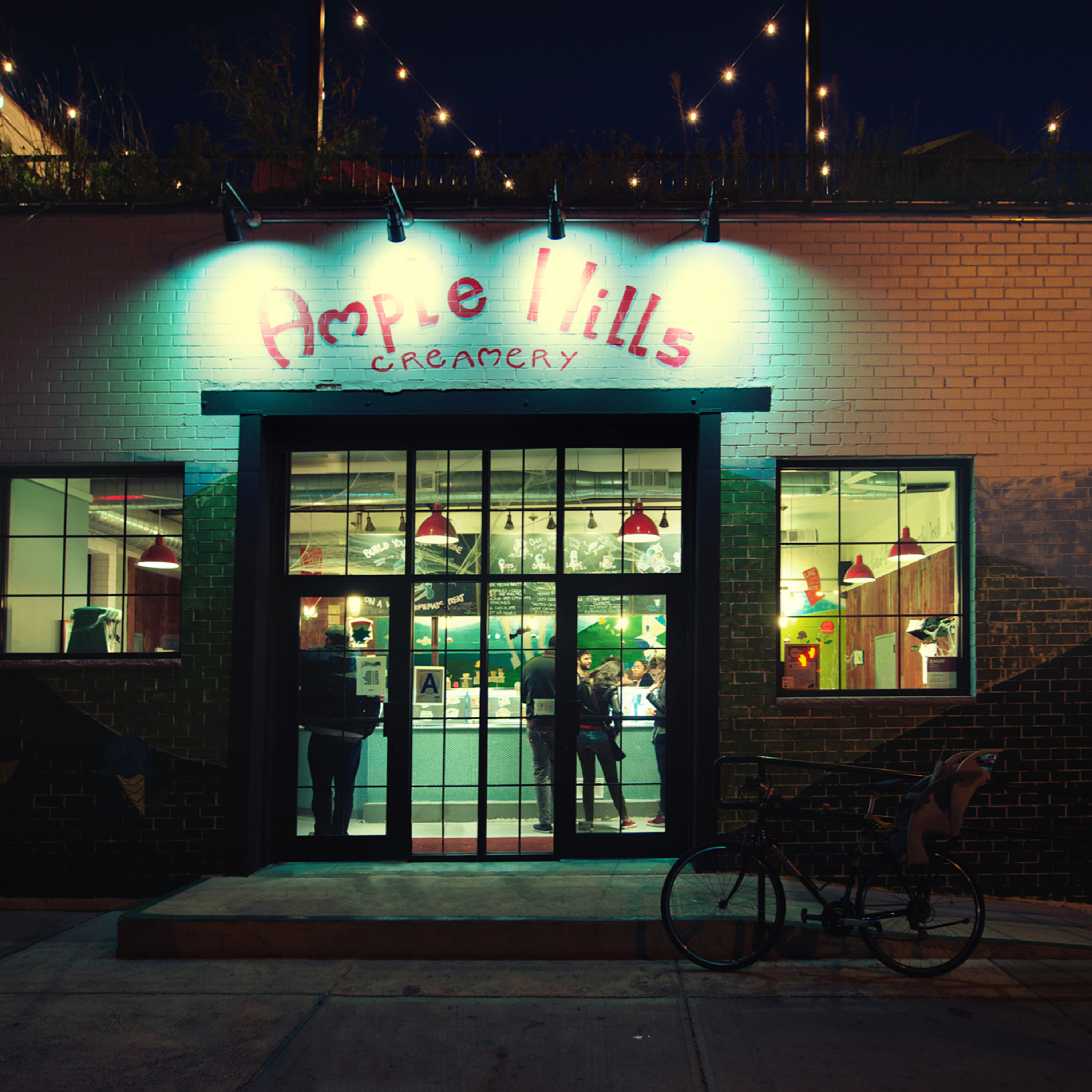
In this episode of "As the Ice Cream Churns," founders Jackie and Brian recount their journey from building the beloved Ample Hills Creamery to losing it all through bankruptcy. After filing for business bankruptcy (Chapter 11) just before New York City shut down due to COVID-19, they now face personal bankruptcy (Chapter 7) to discharge a $3.5 million loan they personally guaranteed. They explain that while the business bankruptcy aimed to sell assets and restart, the personal guarantee made them liable for the debt, forcing them to file personal bankruptcy to achieve a clean slate. A critical mistake was failing to pay sales tax during financial struggles, which they later learned is a non-dischargeable personal liability. The bankruptcy process involved hiring a lawyer, listing minimal assets (no home, no savings, only a car), and completing an online course on budgeting, which felt humiliating given their situation. Despite these challenges, they are determined to start over, having learned to watch finances closely and create budgets. They hint at a new shop and concept but cannot yet share details. The episode highlights the harsh realities of entrepreneurship, including personal financial risks and the importance of understanding legal obligations like sales tax. They plan to discuss running a business with a spouse in future episodes.
Welcome. We're Jackie and Brian, and this is As the Ice Cream Churns. Together, we found an ample hills creamery, one of the most beloved ice cream brands of the last decade. Then, we lost it all. We filed for bankruptcy a day before New York City shut down to the COVID-19. Now, someone else owns ample hills and we're out of work. But, we're ready to start over. Come join us for an exploration of what went wrong, and more importantly, what comes next. Our guides are close friend Debbie Rosen. She created the cracked cookies in her hit flavor, salted cracked caramel. When she's not baking, she's a therapist. We thought she could help us navigate these troubled waters. Let's get started. Hey there. Hey, Debs. We ended last week with the bankruptcy in New Leaving ample hills. What's the plan now? What are you working on? Well, I wish I could say that we're working on opening up a new shop and a floor plan and designs for new flavors and all that. Unfortunately, what we've learned in this process is that there's a lot to do. There's a lot of baggage that comes from the experience of having gone through the businesses bankruptcy before we can really get to the point of starting over. It's just, you know, it's not as easy as just saying go. And the reason for that is, unfortunately, we have to go back to the beginning again and to this concept of what's called a personal guarantee. It's not something we've sort of discussed over the last few episodes. And it's not something that related to us when we started the business because when we opened that first shop on Vanderbilt Avenue, we did it with our own money. You know, we'd had that $200,000 or so and we put that into the business. And so there were no loans, there was no debt, there were no relationships with anybody that was just our own money that we were putting in. But over time, you know, as we grew, we went to the bank and we went to the bank and we borrowed $3.5 million to help pay for all that build out. I mean, using your own money is scary. But what does it feel like to take out a loan of $3.5 million? Well, again, it didn't seem scary at the time because all we're thinking about is all this future growth and the plans that we've got and the excitement around it and the brand was hot. And so it, I don't know, it didn't have the weight that maybe in hindsight, it should have. But the thing is, when you go to get that loan, that $3.5 million loan for your business that's relatively young, the bank requires what's called a personal guarantee. And what that means is you are personally guaranteeing the loan even if the business fails to pay back the loan. So, you know, in retrospect, that's pretty overwhelming because that's $3.5 million that we're personally liable for. At the time again, it didn't seem very scary because you're growing, you're unstoppable. Who cares if you have to sign a guarantee? I mean, also, we didn't have any assets. We didn't have $3.5 million sitting around in our house. Yeah, it seems like play money in a way, you know, because it wasn't, we didn't have anything that, you know, we were worried about losing because we were barely, I mean, we were taking salaries at that point, but it wasn't as if the salaries were, you know, anything crazy or, you know, there were people that were making much higher salaries that worked for the company with us. So, you know, it wasn't, you know, in terms of a loss, we didn't have anything to lose. We have nothing to lose. Yeah. And so, also, when you think about it, when you're in that position, you really have no other choice as an entrepreneur with your business. If you want your business to grow, you have to take these risks. And, you know, if you can't do it in any other way, except for getting that personal guarantee, what would have the option been? The option would have been that Ampholose couldn't have built out a factory, couldn't have grown, couldn't have done the things that we did. So, you know, we did it. We signed that personal guarantee. It was $3.5 million from the bank, which was $3.5 million more than we had. So, the thing is, the problem with starting over now is that if we go to start over, I mean, we obviously don't have money. So, starting over means bringing in new investors to support a new enterprise that we want to do, right? And, you know, fortunately, because of the brand that we created in Ampholose, we still have a lot of people out there that, you know, believe in what we do and what we have to offer and that have sort of rallied around us and said, you know, that they want to help us start over and participate in a new thing. But, if we were to raise all that money, say, yesterday, today, tomorrow, and we have this personal guarantee sitting there of $3.5 million. Then, those creditors, the bank and other creditors that we have from the business, from our personal guarantees, they could come after that new money. They can come after that new business, which would basically be a non-starter. You can't start the new business if they're going to be able to take all the money that it would take to build the new business. And so, it's a Catch-22, which leaves you with really no other option, but to file personal bankruptcy, which we did yesterday. So, it's like we went through the business bankruptcy, which was a chapter 11. A chapter 11, of course, was an effort to start over to sell the assets and to come back out of it. For personal bankruptcy, we filed chapter 7, which means lights out liquidation on us, which means that any assets we have get sold, and then that money goes to pay off the creditors. The whole point of chapter 7 is you're trying to discharge that debt you are. So, if you go through it, you go through the whole process of the chapter 7 process, and then you have a clean slate, you've wiped clean that debt, and you can start over, because you've discharged that debt. As an aside, just nothing to do with the chapter 7, unfortunately, but there's something else that doesn't get discharged via the chapter 7 bankruptcy, and that is sales tax. So, it's a little bit complicated, it's a little bit in the woods, but I think it's worth sort of going through and talking about, because it's one of the things that I think our mistakes and our things that we did wrong might be able to protect some people in the future from making the same mistake. So, I sort of want to take a second and explain what I'm talking about. When you sell a product anywhere, you collect sales tax, right? So, we would sell scoops of ice cream for $5, and the sales tax on that to the customer is 8.5%. So, on $5, they're paying $5.50 or something like that. I can't do the math in my head, but any event, you're collecting that sales tax as a business, which you collect, but then you hand over to the state, because it's the New York State sales tax, right? So, in October of last year, when we started to really run out of money, and we were struggling to pay the bills, we stopped paying rent. That was one of the first things we did, right? And all of our shops, the last, last, last thing you can't pay and still be in business is payroll. If you can't pay your employees, you're done. You're filed chapter 7, you liquidate the businesses over. If you can't pay your payroll. So, you're always trying to protect your payroll with the dwindling money. Around that time, I had directed our finance team to stop making any payments on anything that was not absolutely essential to pay. Unfortunately, one of those things that they then decided to not pay that was considered not essential was the sales tax. If you knew this information at the time about the sales tax,
tax, would you have it directed your financial team to pay that? It's a tricky question. Yeah, I don't know because the thing is we, I guess to understand the gravity of what you're asking first, I just need to explain that that sales tax is considered a trust tax and it has to be paid. And even if the business doesn't pay it, the real sinker that I didn't understand then is that the officers of the company, which is Jackie and I, are personally liable for that money. I did not understand that at that moment. Had I understood it, I certainly would have been more hesitant to not pay it. But if we hadn't paid it, I mean, if we had paid it, then we would have had less money to make payroll and we would have been in a much more dangerous position in terms of heading into bankruptcy sooner than we did. And every single second of every single hour of every single day during October, November, December, January and February was trying to avoid going into bankruptcy. We didn't think we were going into bankruptcy in October, November, December, January. We were trying to avoid it. We knew that it was a worst-case scenario. But we were trying to do everything we could to avoid it. And so when you're in that mindset, you're not thinking, "Oh, if I don't do this and we lose everything, then I'm going to owe these tens of thousands of dollars in sales tax." You're just not going there. Should we have gone there? I don't know. Because we probably would have been in the same position anyway. I mean, we would have lost everything, but then we wouldn't have owed the sales tax. But it gave us a fighting chance. Unfortunately, yeah, so this is one of the things that we also were personally liable. And the reason I brought it up is because that sales tax that were personally liable is not dischargeable through personal bankruptcy. That's the real kicker that I didn't understand and left this process played out. So even though if we're successful, we can go through this chapter seven process and discharge that three and a half million dollar of debt, which is almost laughably high, we can't discharge the sales tax. We'll still be paying that off for years from now, as we go ahead. I mean, it's not something that Ample Hills, the new company that bought Ample Hills, was liable for, at least not legally liable for, to have to pay that back sales tax. They only had to pay the sales tax within the bankruptcy, but they didn't have to pay it from before. Whether they should have paid it is maybe an open question. But in any event, regardless, we're left with that debt. We're left with that. But to go back to the issue of bankruptcy, just to sort of walk through the steps of the personal bankruptcy, it might help people sort of understand the process. I mean, step one, get a higher lawyer. So you have to spend more money, yeah, more money that you don't have because you're filing personal bankruptcy. And then you have to put together a list of all the assets you have. What assets? Lovely, I guess. That's a very short list. Well, I think there's, I just want you to talk a moment about, I know you're saying you don't have assets, but I think there was a perception because you were so successful for so long that you guys had a lot more than maybe you did. I just thought you could speak about that. That's interesting. And I know that there is a perception about that. And as an entrepreneur and as a business owner, you actually give up a lot because you're putting all of those hopes and dreams into the future of what you might have eventually. And so therefore, we didn't take high salaries. We didn't ever achieve success where we could purchase an apartment, a home. Right, we'd taken all that money and put it into the business. Right. So we didn't have it sitting in our bank account. Correct. Right. We had nothing. So we were living, okay, we were living, we were able to, you know, I mean, we couldn't send our kids to private school. I'm not that I wanted to send my kids to private school. I'm not a proponent of private schools, but I'm just saying, you know, if we had wanted to, we couldn't have done that. I mean, there was, you know, we were living, you know, in New York City, you know, as middle-class people, but not in any other. Yeah, I mean, we were certainly doing well. We just not, you know, we're not, we did not have a giant set of assets. We didn't have a save. No, we had no savings. We had no savings. So, you know, that's why we, you know, so it's in that sense, it's an easy personal bankruptcy case because it's considered a no assets case. We don't own a home. So if you own a home and you filing personal bankrupt, so you're going to have to sell that home and that money would go back to a creditor. If we had a second home, a summer place, you'd have to sell that. If you have, you know, ex-valuable paintings or really nice jewelry, you have to sell that. So the first step of filing personal bankruptcy is to go through the litany of your, you know, your assets, you know, and your 10-year-old TV is not really going to be an asset that somebody can sell and generate value. I mean, we do have a car and that was one of the big things that we were worried about, you know. I don't know if we were worried. I was worried that, you know, we'd have to sell the car and not be able to have a car because, you know, but you are allowed to have a car in personal bankruptcy. I think it sounds to me like the lack of assets that you had was sort of led you to take the risk that you took. Yes, absolutely. Probably, yeah. Absolutely. Yes, you know, and that's a really good point actually. I mean, even when we were signing the personal guarantee, I remember when we signed the personal guarantee on that 3.5 million loan of thinking it was kind of laughable that they wanted a personal guarantee for me. Right. Right. And I remember making a joke about how I didn't have anything. And I guess that's not necessarily the case for all entrepreneurs. I assume that most entrepreneurs don't have much because that's why they're entrepreneurs and they're starting businesses to make something. But if you do have, you know, three homes and multiple cars, you're going to have to sell them. I mean, had we had a Porsche SUV, we would have had to have sold that and instead, you know, the car that we had, you can have a car, it just can't have, it can't exceed a certain value in that process. So we've learned a lot about like what you can have and what you can't have. The whole process is, you know, pretty humiliating, just like the chapter 11 business process is humiliating. I mean, you have the lawyers, the creditors, everyone's looking into your personal stuff and the decisions that you've made to get here. The finances, it's all very public. Then you have to take courses. I mean, we had to take an online course and good business and good finance practices and good budgeting and home budgeting. I mean, it was pretty funny because of course, we were in bankruptcy and personal bankruptcy because we'd had business bankruptcy. The online course is sort of written in a different way. Yeah, it's not like if we, you know, maxed out our credit cards. We didn't even have any credit cards. So it wasn't a personal situation. It wasn't bad decisions on the personal front. It was obviously bad decisions on the business front, the flood to the personal bankruptcy. But this online course, you go through and you fill out what assets you have and then how much money you spend every month on paper goods and how much money you spend every month on clothes and dining out and movies. And then after you fill all those things out, then it comes back with these recommendations and it would be like, you've spent $50 on movies last month based on your salary of $0. We recommend that you rent a movie instead of going out to the movies. No things like that. Or, you know, we see that you spend $100 going out to eat, you know, based on your salary of $0. Perhaps you should make food at home. So it's that kind of process. It was, you know, a little bit humiliating and amusing. But we have done it. We filed yesterday. It's, you know, started, that process has started. And now, now we can really start over. I mean, we're looking, we're looking to open
a new shop, a new gathering spot. Some fun changes from Ample Hills, things we learned along the way. We even think we might have found the perfect spot. But you know, it's challenge. You know, you have to, we really do have to be in love with the space and have a landlord that's willing to talk to you and you've gone through two bank repcies. So what's the first thing that you would do differently with this possibility coming up? Boy, I mean, I think that we look at the finances and watch the finances like a hawk. And you know, when we started Ample Hills, I never even counted the money. You know, I would put it in a brown paper bag and take it over to the bank and the cashier would ask how much money I was depositing and I'd say, I don't know, don't you have a counter? And I put the money in the machine and it would go, you know, and it would count the money and I would say that's going to count it better than I can. And she would just berate me. I mean, the actual teller at the bank, I still see her at K-F-E. She would berate me because I didn't even know how much money we're depositing. I was like, well, it's more than we're spending, so we're good, right? Brand used to walk to the bank with like, you know, change, like actually, like, you know, heavy bags filled with change. But I mean, yeah, we would do that differently. I mean, we would, yeah, we know how to create a budget. Now we know. We know. Excel spreadsheet. I didn't even know what that one was. So, yeah, those would be the big things. Those would be the big things. I think some of the things that we did so wonderfully well at Ampholhills, we will even do better now, just storytelling and creative flavors, which, you know, we're constantly coming up with new, fun, amazing flavors, which you were doing. We just can't quite talk about it. No. Quite yet. No, no, no, we can't. We can't talk about it yet. We need a few more weeks to be sure it'll all work out. And then we'll do an episode about, you know, the new concept, the new location. And in the meantime, we'll take a detour and discuss questions. And thank you, by the way, for all the questions that have been submitted. I got them. We've got them. And we're definitely going to get to answering them. And if you still want to submit questions, please DM as the ice cream churns, as the ice cream churns with any future questions. But next week, I think we're going to talk a little bit more and explore what it means to try and run a business with your husband, your wife, your partner, and raise a family at the same time. Very important looking forward to that. Thanks, Debbie. Thanks, Debsons. Bye. Bye.
Podcast Summary
Key Points:
The founders of Ample Hills Creamery filed for business bankruptcy (Chapter 11) and personal bankruptcy (Chapter 7) after the business failed, partly due to the COVID-19 pandemic.
They signed a personal guarantee for a $3.5 million loan, making them personally liable even if the business failed.
Unpaid sales tax became a non-dischargeable personal debt because it is considered a trust tax, and they were unaware of this liability.
The personal bankruptcy process required listing assets, but they had few (no home, no savings), making it a "no assets" case.
They plan to start a new business but must first clear the personal debt through bankruptcy, and they are looking for a new location and concept.
Lessons learned include closely monitoring finances, creating budgets, and avoiding similar mistakes in the future.
Summary:
In this episode of "As the Ice Cream Churns," founders Jackie and Brian recount their journey from building the beloved Ample Hills Creamery to losing it all through bankruptcy. 5 million loan they personally guaranteed. They explain that while the business bankruptcy aimed to sell assets and restart, the personal guarantee made them liable for the debt, forcing them to file personal bankruptcy to achieve a clean slate.
A critical mistake was failing to pay sales tax during financial struggles, which they later learned is a non-dischargeable personal liability. The bankruptcy process involved hiring a lawyer, listing minimal assets (no home, no savings, only a car), and completing an online course on budgeting, which felt humiliating given their situation. Despite these challenges, they are determined to start over, having learned to watch finances closely and create budgets.
They hint at a new shop and concept but cannot yet share details. The episode highlights the harsh realities of entrepreneurship, including personal financial risks and the importance of understanding legal obligations like sales tax. They plan to discuss running a business with a spouse in future episodes.
FAQs
A personal guarantee means you are personally liable for repaying a business loan if the business fails, even if you have no personal assets.
They filed for personal bankruptcy (Chapter 7) to discharge the $3.5 million personal guarantee debt from their business, allowing them to start over without creditors seizing new funds.
Chapter 11 is a business bankruptcy aimed at restructuring and selling assets, while Chapter 7 is a personal bankruptcy that liquidates assets to discharge debt.
Sales tax is considered a trust tax, and officers of the company are personally liable for it. It cannot be discharged in Chapter 7 bankruptcy, so it must still be repaid.
They had few assets, such as a car and a 10-year-old TV, but no home, savings, or valuable items, making it a 'no assets' case.
They learned to watch finances closely, create a budget, and use tools like Excel spreadsheets, unlike their earlier hands-off approach.
Chat with AI
Loading...
Pro features
Go deeper with this episode
Unlock creator-grade tools that turn any transcript into show notes and subtitle files.
 PodcastTranscript AI