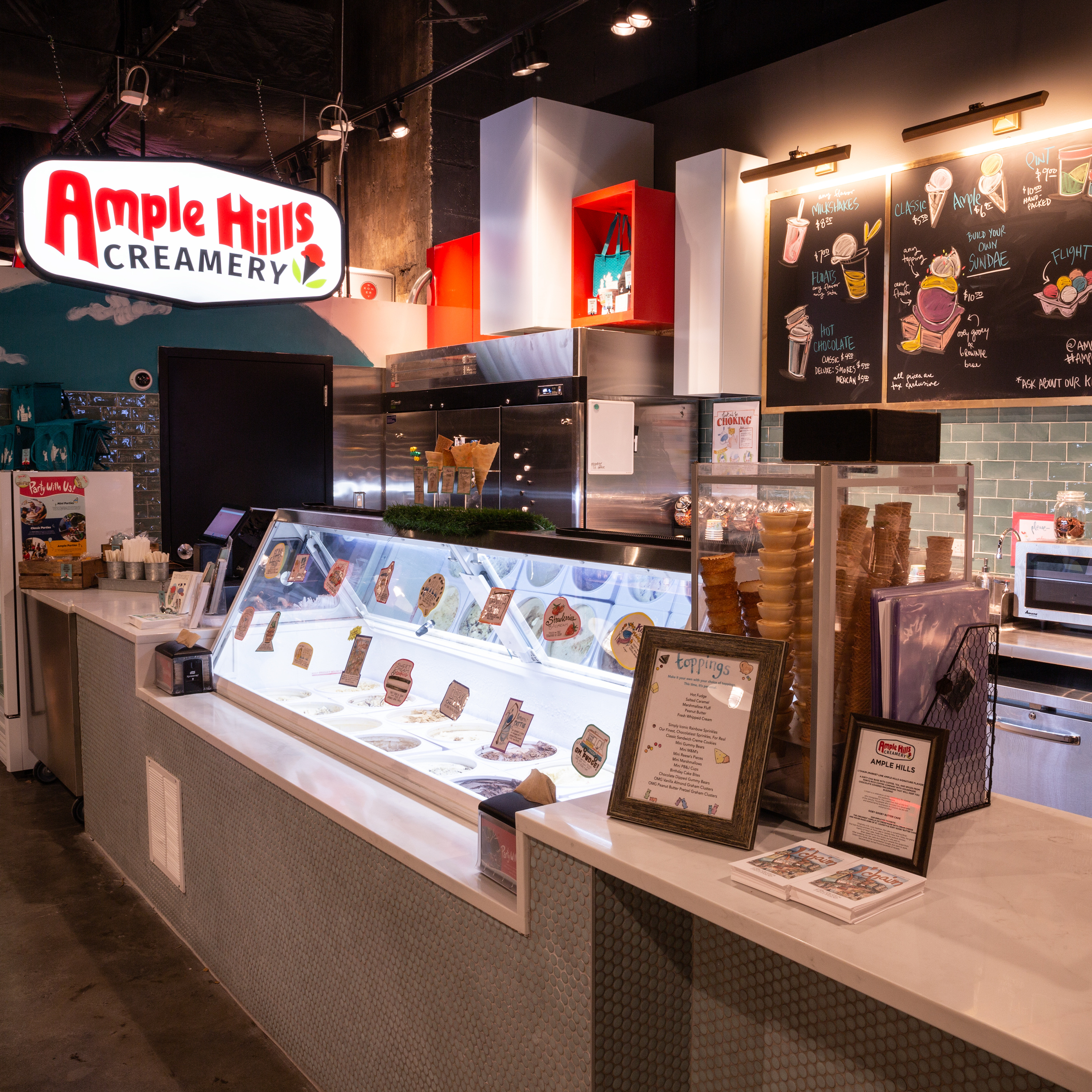
In this episode of “As the Ice Cream Churns,” founders Jackie and Brian recount the downfall of their beloved ice cream brand, Ample Hills. Despite the brand’s strong reputation and busy shops in summer 2019, they faced a severe cash shortage. They turned to their largest investor, who initially seemed supportive but demanded concessions, including cutting their salaries and installing a new co-president. The investor later insisted the new hire become CEO, stripping Brian of his role. After months of delays, the investor pulled out entirely in late 2019, leaving the company without a lifeline. Jackie and Brian scrambled to raise funds by lowering the company’s valuation from $40 million to just $1 million, but no investors bit due to significant bank debt and the factory’s inefficiency. The factory needed to produce twice as much ice cream to be profitable, requiring millions in new capital. They stopped paying rent to keep payroll going, but by January 2020, no solution emerged. A fleeting boost from a Jimmy Kimmel collaboration could not offset the financial collapse. Ultimately, their reliance on one investor and failure to diversify fundraising efforts sealed the company’s fate, leading to bankruptcy and loss of control.
Welcome. We're Jackie and Brian, and this is As the Ice Cream Churns. Together, we found an ample hills creamery, one of the most beloved ice cream brands of the last decade. Then, we lost it all. We filed for bankruptcy a day before New York City shut down to the COVID-19. Now, someone else owns ample hills and we're out of work. But, we're ready to start over. Come join us for an exploration of what went wrong, and more importantly, what comes next. Our guides are close friend Debbie Rosen. She created the cracked cookies in her hit flavor, salted cracked caramel. When she's not baking, she's a therapist. We thought she could help us navigate these troubled waters. Let's get started. Morning Debbie. Morning. Hey, Deb. Hi. It's June of 2019, and you just found out you're not going to have enough money to make it through the winter. How'd you handle that? Well, I mean, ultimately we didn't. No. I mean, so the very first thing we did after, you know, shedding a few tears was to go through and call our biggest investor. So, our biggest investor has also been one of our landlords for one of our shops. And we, he had supported us millions of dollars and had just been a great supporter. And so, he was our first phone call. And, you know, it's an embarrassing thing to have to call up a landlord and a supporter and an investor in June. At summertime, the shops are all crowded. They're all busy. There's lines out the doors and say, we're out of money. We're not going to make it. We need more money. Can you invest more money? So, I did that. And, you know, he was, he indicated from the beginning that he'd be there to help. You know, he'd be a backstop. And, you know, he'd be there. Did he have any idea that this was happening? No. At that point, until we called him. No. And that, you know, so, of course. And from the outside, you know, all of our shops, again, Brian said it was June. So, you know, they were all really busy. They were all doing really well. You know, we had launched Marvel, right? So, everything from the outside looks great. And there would be no indication that we were, you know, on a course to losing money. Yeah. I think it's worth noting that, you know, all the problems that we had, even, you know, every last thing that led up to and through the bankruptcy process, the brand, the brand that we built was still as healthy as ever. I mean, none of the problems resolved around or revolved around people not liking the ice cream anymore, shifts in dynamics of people not eating as much ice cream or competition or people not caring about ampliles as much. I mean, if anything, the brand was hotter than ever with the Marvel experience, even with the botched Mickey Mouse experience, the Disney shop. I mean, the brand was as big as ever. But we had these almost unsolvable, insurmountable problems unless we got more money. And so, we went to this investor. He said, okay, he was angry. He was upset as anybody would be and should be. But, you know, he wanted to protect his investment that he made. And he still believed in this brand and in the story. He wanted to see changes. You know, he wanted to see changes that would allow for him to make a bigger investment. And if we made those changes, then he would make the investment and we'd be okay. So, we got to work. I mean, one of the things that he asked us to do was to cut our own salaries, you know, our executive salaries and to look for other payroll cuts in the business. So, we cut our own salaries by 10% immediately. And then the next thing you wanted to do was to bring on board a new co-president. You know, we already had one president who reported to me, a guy named Morgan Johnson, who had been one of our investors as well. And it was great and was working on the wholesale accounts and helping us when we did raise money. And he wanted to this landlord asked us to bring in this new co-president who was a friend of his, an old personal friend. And this person had a huge background in retail business. In grocery stores, also in financing. He was a CFO. He'd been a finance director. So, he had a lot of this experience on paper. We were lacking. And we were excited about it. I mean, we actually were like, great. You know, this person can come in and help us and then great. You know, we need that. Yeah. And so, he wanted him to come in to basically say, to look at the business, to work for us, but to look at the business and say, yes, the business is not fatally flawed. The business makes sense. And then I'll invest more money. And so, this guy came in. And he came in in August of 2019. So, now it's just a month or two later. It's August of 2019. He starts on August first. I think it was. And then as soon as he started by the next day, he was telling this landlord, this is a great business. I mean, he was a true believer. He really was. He still is. And he wanted his old friend. And they'd been friends for 20, 30 years to invest more. I mean, now he was working there. He believed in it. And the landlord still had some cold feet. Still wasn't sure. And he wanted more. He wanted to feel that his new investment would somehow be protected even more from me, you know, as the CEO, making any more mistakes. So, at some point in, I think it might have been September, maybe just a month later. And now we're getting closer and closer to this time of running out of money, which looks like it's going to be in December, you know, according to our models. And in September, this landlord said, you know what? I'm glad you hired that guy. But I don't want him to report to you. I want you to report to him. I want him to be the CEO of Amphel Hills. You know, he's my closest trusted friend. If you want me to invest millions more into this business, make him the CEO. You report to him. You'll still have the creative vision of the company. But he's going to be the financial guardrails of the company. At this time, simultaneously, were you looking at other sources for funding? No. And I think that's, you know, ultimately that was the mistake that we made. Yeah. Because we went out to him, you know, naturally when you have a lot of investors, and we had investors that had invested $10,000 to investors that had invested a million or $2 million. You start from the top, you know, if you have a problem and you're going back and you're trying to raise more money, you start from your largest investor because you want to get them on board first. And we went to him and since the very first day, he indicated that he would be there and be there to support us, we kept delaying going out to other investors because we wanted to make sure we had him locked down and that his support was absolute and that he'd written a check. And if we could get to that point of him writing that check, then we could go out to all the other investors and the money would come, you know, that his stamp of approval in this new CEO, the first not CEO and then CEO would give us that imprint of validity. The problem in retrospect was that we spent three or four months chasing that without going out to other people and we should have been going out to anybody and everybody. There really wasn't, I don't think as much urgency as we needed to have had in June when we learned that information. We had all that urgency come October, November and December at which point it was a little too late. But just getting back to this idea of this guy coming in and being CEO, I mean, that was a huge, that was a huge concession that we made and it was a difficult thing for me. Personally, I had been the CEO, I had been the one responsible ultimately for all of those kind of decisions, obviously in lockstep with Jackie, but I had the title of CEO. And, you know, at the end of the day, though, I recognized that it was my financial decisions that had, you know, brought us to this position. So
I didn't actually go unwillingly. I mean, I really felt like this guy, this made sense. I would lead the creative vision of the company and this guy would lead the financial guardrails of the company and sort of keep us on the train tracks, if you will. So it really actually made sense to both Jack and I and we agreed to that and we did that. And then he still didn't invest. So we-- You know why? No, to this day, I'm still not sure why. It's one of the things that just eats away at me. I just think-- and his friend, I mean, this guy that had known him for decades that came in as the new CEO. I mean, he was in such a difficult position because he'd come in basically knowing that he was there only as the request of this landlord and this investor in order to secure this new investment. And then when the investment didn't come-- and I think it was around the end of October, the beginning of November of 2019, when the landlord finally said we're not investing another dollar, that's it. We're done. We're not doing it. And we just-- Yeah, I think at the end of the day, he just couldn't get comfortable with the notion that he'd been burned. And he couldn't-- he just couldn't come around to feeling confident again. I don't know. I still don't know. And it still hurts. But at that moment in time, we then said, well, we've got to go out to all the other investors. There were dozens of other investors. We immediately lowered the valuation of the company. What month was this? We're talking-- Oh, sorry. This was October, November. I'd say this was the end of October or so. And we were really-- we knew that we didn't have money come December. So we made the decision on November 1st to stop paying rent. We had 12, 13 shops at the time. We decided we just couldn't pay any of the landlords November 1st because we'd have been out of money and couldn't make payroll by the end of November. And ultimately, when you're sort of fighting against those financial headwinds and you really are running out of money, the final last straw that's the difference between the company being in business and not being in business is not being able to make payroll. Because you're legally required to keep paying the people that are obviously working for you. And if you can't pay them, then they're not working for you. And you have no business. And so the very first thing that you do is you stop paying other bills. And the first big bill that we stop paying was all the rent in order for us to have enough money to keep paying payroll so that the shops could stay open. Because we knew we could do that for a period of time. But yes. When this is happening, what's going through your mind at this point? Both of you. Mm. Yeah. I had no idea what the next steps were really going to be. I mean, well, we did have an idea. And it was hard because it was about cutting people's jobs. And I mean, we had expanded to the point where we had grown different departments and had taken on a number of different employees that were working to continue to help grow ample hills. And now we knew that we were going to have to cut some of these people. And that was hard. It was also because-- I mean, obviously, we had built relationships with them all. And I felt very responsible for bringing them on, even though I might not have directly brought them on. But it was a difficult time. Yeah. I think that we started making a series of layoffs. I mean, we knew we had to contract the payroll. We also cut our own salaries by 150%. And that was the-- We initially did it just a little bit. Yeah, by 10%. And then by November, December, our own salaries down to the minimum wage for executives. And we tried to not pay ourselves at all that point. Yes. But apparently, that's not legal if you're actually accompanied with investors. It was strange. But in any event, I think the real thing that we had to do is we had to lower the valuation of the company. When you're raising money, you set a value to the company. And so you're selling a part of the company. You're selling equity in the company in exchange for money. And so by the time we were entering into this phase, Jack and I owned 41% of ample hills. And the other 59% were owned by a whole series of investors. And so the value of the company that we had last established had been about 40 to $45 million. So on paper, we own 41% of that. But that doesn't do you any good if the company's not being sold to a big company that's not money in your pocket. But we owned that percentage of the company. And so when we went out to raise more money in a point of what was absolutely a point of desperation, one, it's winter. So nobody's really thinking about ice cream and investments in ice cream. There's a psychological element to that. And then two, we clearly were in a place where we had to have money. And that's never a strength when you're going out to investors. And so we immediately dialed back the valuation from 40 million to 30. That wasn't enough. We dialed it all the way down to $15 million, which was a big-- let's call it a down-round. And that wasn't enough. And there just weren't bites. There were a lot of meetings, a lot of conversations. But nothing was really happening. Eventually, we lowered it to a valuation of just $1 million. And we thought, for sure, this kind of basic, diminimous valuation would do the trick. The problem with that was that there was so much debt on the company, bank debt. And there was such a whole to dig ourselves out of that it wasn't just a matter of the valuation. It was a matter of investors believing there was a path back to profitability. And then in the midst of all of this, we certainly-- you would ask how we were feeling about the process. I still felt forever the optimist and always the half-glass fall. I mean, I really still believed in the brand and the ability for ample hills to come out of this process and be leaner and meaner and stronger. So I wasn't really despairing. It was just we were just out there doing a lot of work. I mean, I called Bob Eiger. I mean, I thought Bob could help. And obviously, he was one of the folks. Was that a hard phone call to make? Oh, God, yes. And he could hear it. I remember him just saying to me, God, I can hear it in your voice. It's a dark time. And he had been a part of that really incredible rise and story that we had to tell. And for me to call him and tell him that we were basically begging at this point of the end of the road, it was hard. It felt like the sun going to the dad and trying to tell him that you'd done something wrong. You'd wreck the car. You had to come up with the money to pay for it. And to his credit, he tried. I mean, the thing is, is that Disney has a whole bunch of interior mandates and rules about how they invest in other companies and the size of the companies they invest in. And ultimately, ample hills was just way, way too small to be something that they could participate in. And he just-- he couldn't do it financially. He did, at that moment, though, actually reach out and try and help still in the way that he knew how, which was he long ago introduced the ice cream to Jimmy Kimmel, Jimmy Kimmel show. And Jimmy Kimmel had become a fan and ordered ice cream. And was supportive. But Jimmy does once a year in the fall in October, November. He does a week that he comes back to Brooklyn. Because Jimmy Kimmel is originally a Brooklyn boy. And so he brings this show back from Los Angeles to Brooklyn once a year and shoots in--
Brooklyn at BAM at the Brooklyn Academy of Music. And so Bob, it's suggested, well, why don't you make a flavor of ice cream for Jimmy for his week in Brooklyn and let's see if we can get it on the show. Get some buzz and pizzazz. And we did that. I mean, I reached out to the contacts that Bob had given us at Jimmy Kimmel's show. We developed a flavor with Jimmy Kimmel. What was it? - Jimmy's bananas in Brooklyn? - Jimmy's bananas for Brooklyn. - Yeah, it was a debate. - Yeah. - But it was, yeah, Jimmy's bananas for Brooklyn. - What was in it? - It was, well, Jimmy was like obsessed with banana ice cream. That was his favorite thing. And then he also loved you bet, chocolate syrup. You bet's like a 100 year old Brooklyn company that makes chocolate syrup. And so he wanted there to be fudge chunks and chocolate syrup swirls in a banana ice cream. I think that's what it was. Yeah, Jimmy's bananas for Brooklyn. And it was, I mean, it was great. And we made that. We did some artwork for the pint container showed Jimmy with the Brooklyn bridge behind him. And they did. He featured it on Jimmy Kimmel's show. He brought the pint out. Who's the guest? Who's his sidekick on the Jimmy Kimmel show? Was sitting there eating the pint. And Jimmy was showing the pint and telling people about Amphal Hill. So, I mean, it was wonderful. And that kind of publicity and excitement around the brand, again, was happening at the same moment. We were struggling with how are we gonna make payroll next week? And how are we gonna make payroll next week? I mean, that went on for the next two or three months. So I guess it was now, it was November, December, and January. We still weren't paying bills. Landlords, of course, are starting to get angry. Landlords are starting to go through a-a-viction proceedings, which, of course, takes months and months. So we still thought we'd find a solution. We'd find an investor. And we were having meetings. It's not as if there weren't any leads. I mean, literally every day we were- Every day. There was a meeting. Yeah. We were meeting with people because people loved the brand. The problem was we had $3.5 million of bank debt. And at this point, it had taken this long. But by January of 2020, we had finally gotten a finger on what the problems had been with the factory. All the story about the labor ballooning, the costs of operating it on a day-to-day and a month-to-month level. We didn't have eyes on because we'd been in the midst of that sinking ship with the bandaging it, bandaging it. But by January, we had got all the models done. And we had a clear understanding on models going forward, even into 2021, what it would take for the factory to write itself and to not be a drag, like an albatross around the neck of the business. One problem is that what those numbers showed was we had to pour a lot of money into the business. We couldn't shrink or contract out of the problems that we had. We had a factory that simply needed to make twice as much ice cream as it was making in order for it to be efficient and not lose money hand-over-fist. But we only had 12 or 13 shops. So in order to do that, you have to go build out another 10 or 12 shops overnight. How much ice cream did you need to produce? Oh, hundreds of thousands of gallons. I mean, I think we were at 250 to 280,000 gallons a year by the end of '19. And we were estimating that that needed to get up to over 400,000 gallons, something to that effect. In order for the factory to be at a break-even place. But where does that extra ice cream, you have to sell that extra ice cream. And that's a gradual process. And if it's a gradual process of opening shops and wholesale accounts, then for a gradual time you are going to be bleeding money. Which ultimately is okay. I mean, there's a lot of businesses hell Amazon. Okay, I'm not trying to compare Amazon to Amazon. Okay, I am. All right, I am. Yeah, Amazon. I'm saying Amazon. Same thing. Amazon for how long? Decades they were losing money, right? But they knew that they were going to eventually make money. They were going to reach a critical mass. And honestly, if we'd had enough money in the bank, we could have gotten to that same place, not the same place as Amazon, but to the same place of making more money than we were losing. The problem was, is we didn't have it. So any new investor had to, had to believe all that, had to buy all that and had to know that beyond the million dollar valuation, they also were going to have to pour in two, three, four million dollars and further losses before the ship turned around before it got right. And that was just too hard to, to, to convince somebody off. And so by February, middle of February, we were starting to get very close. Days away, weeks away from losing shops that we had, you know, due to the eviction proceedings that were becoming imminent. And we certainly didn't want to have a store just closed down because we were evicted or the Marshall showed up. And so we were at a place where we had run out of options and bankruptcy, which was just this dirty word that we were trying to stay away from, for months and months, became the only path that we could see. And even in that thinking, we thought, well, you know, we could see a way out of it because businesses come in and out of bankruptcy all the time. They operate in bankruptcy and they operate successfully in bankruptcy. What bankruptcy does is it protects you from all of the creditors. It stops the rent, I mean, it stops the efforts to collect rent. It stops eviction proceedings and it wipes away or discharges the debt that is on the business. And so it would allow us to come through in a leaner, meaner way. There was just one thing that got in the way of all that we found for bankruptcy on March 15th of 2020. On March 16th, anybody remember what happened? How can you forget? New York City shuts down. Yeah, due to coronavirus. And so the coronavirus didn't cause us to go into the bankruptcy, but it did have a profound impact on the process of the bankruptcy, which, you know, I think we can get to next week. I think we've taken us up to the moment of having to file, which was, you know, also long, long and arduous process. A lot of false starts and, you know, hopes being dashed of trying to stop it from happening. Thanks, Debbie. Okay. Bye-bye.
Podcast Summary
Key Points:
Jackie and Brian, founders of Ample Hills Creamery, lost their business after filing for bankruptcy just before the COVID-19 shutdown.
Despite the brand’s popularity, financial mismanagement and a problematic factory led to a cash crisis by June 2019.
They relied heavily on one major investor, who demanded leadership changes (including hiring a new CEO) but ultimately refused to invest further.
Desperate fundraising efforts (lowering valuation from $40M to $1M) failed, and they stopped paying rent to cover payroll.
A chance for publicity via Jimmy Kimmel’s show did not solve the underlying financial issues.
The factory required massive production increases to break even, needing millions more in investment that never came.
Summary:
In this episode of “As the Ice Cream Churns,” founders Jackie and Brian recount the downfall of their beloved ice cream brand, Ample Hills. Despite the brand’s strong reputation and busy shops in summer 2019, they faced a severe cash shortage. They turned to their largest investor, who initially seemed supportive but demanded concessions, including cutting their salaries and installing a new co-president.
The investor later insisted the new hire become CEO, stripping Brian of his role. After months of delays, the investor pulled out entirely in late 2019, leaving the company without a lifeline. Jackie and Brian scrambled to raise funds by lowering the company’s valuation from $40 million to just $1 million, but no investors bit due to significant bank debt and the factory’s inefficiency.
The factory needed to produce twice as much ice cream to be profitable, requiring millions in new capital. They stopped paying rent to keep payroll going, but by January 2020, no solution emerged. A fleeting boost from a Jimmy Kimmel collaboration could not offset the financial collapse.
Ultimately, their reliance on one investor and failure to diversify fundraising efforts sealed the company’s fate, leading to bankruptcy and loss of control.
FAQs
It's hosted by Jackie and Brian, founders of Ample Hills Creamery, exploring why their beloved ice cream brand filed for bankruptcy and what comes next, with guidance from therapist and friend Debbie Rosen.
They filed for bankruptcy a day before New York City shut down due to COVID-19, after facing financial troubles including running out of money and being unable to secure additional investments.
They called their biggest investor, who was also a landlord, to ask for more money, even though the shops were busy and the brand looked successful from the outside.
Their biggest investor demanded it as a condition for investing more money, wanting his trusted friend to handle financial guardrails while Jackie focused on creative vision.
They spent months solely chasing their biggest investor for more money instead of simultaneously approaching other investors, which left them with insufficient time when that investor backed out.
They lowered the company's valuation from $40 million to $1 million, cut salaries, stopped paying rent, and made layoffs, but investors were hesitant due to debt and doubts about profitability.
Chat with AI
Loading...
Pro features
Go deeper with this episode
Unlock creator-grade tools that turn any transcript into show notes and subtitle files.
 PodcastTranscript AI