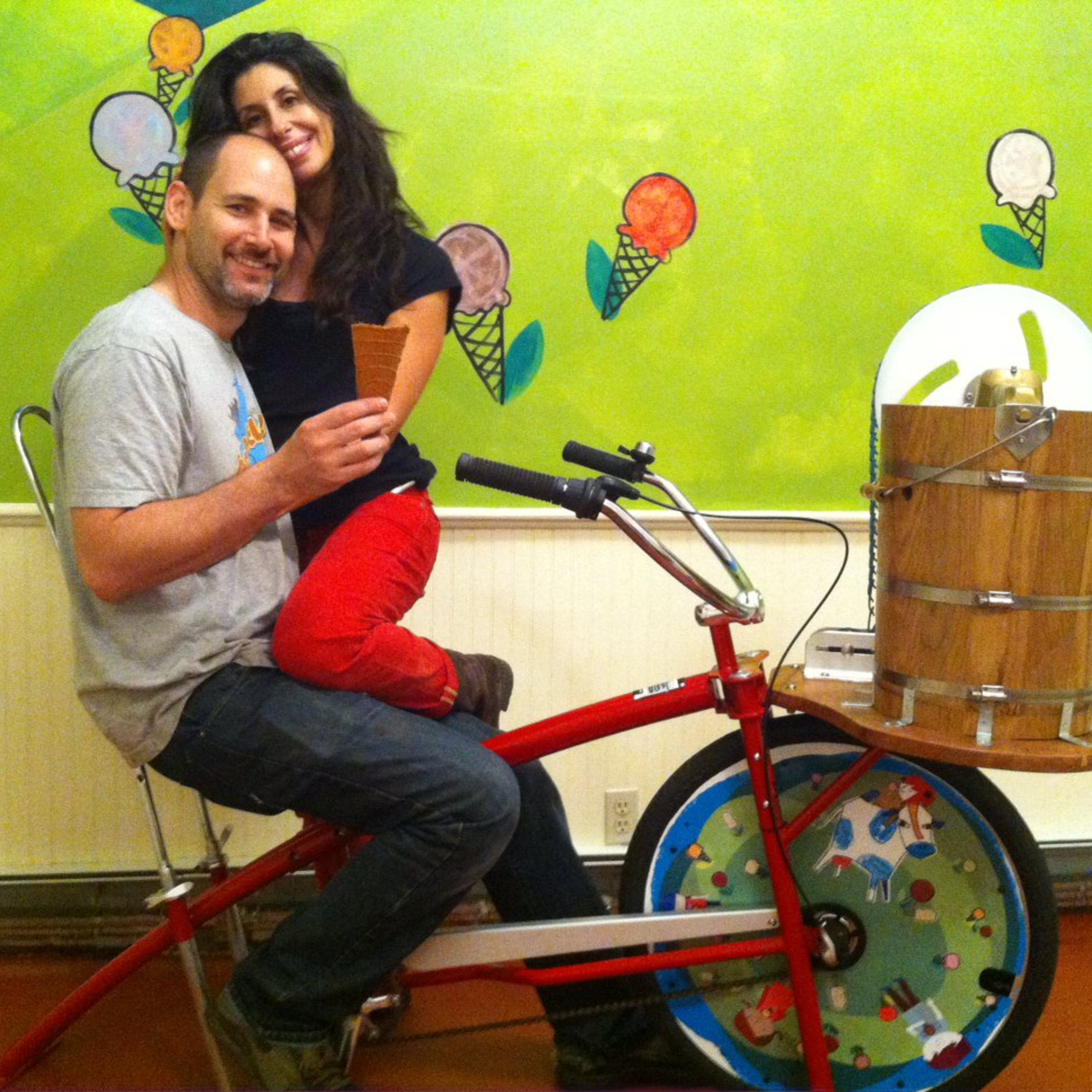
S1E1: "Our humble beginnings; From Pushcart to scoop shop to selling out of ice cream"
43m 42s
Brian and Jackie, founders of Ample Hills Creamery, recount the rise and fall of their beloved ice cream brand. They built it from a push cart in Brooklyn to a $10 million business with 16 shops, only to lose it all in March 2020 when they filed for bankruptcy and sold the company for $1 million, with no personal gain. The series, guided by their friend Debbie Rosen, delves into their emotional journey—feeling overwhelmed, sad, and violated, yet hopeful for the future. They explain their passion for ice cream stems from its power to evoke childhood joy, and Brian saw it as a midlife creative outlet. Starting with a push cart in 2010, they opened their first shop in 2011 thanks to supportive landlords who chose community over profit. A critical decision came when Brian turned down a secure job to invest their entire $225,000 savings into the venture. The shop was an instant success, but they faced operational challenges, like Brian being the sole ice cream and cone maker. Despite the loss, they remain committed to starting over, reflecting on the lessons learned from their decade-long journey.
[MUSIC PLAYING] Welcome. We're Brian and Jackie. Or Jackie and Brian, it's up for debate. This is, as the ice cream churns. Together, we founded Ample Hill's Creamery, one of the most popular and beloved ice cream brands of the last decade. Food network named us the best in the country. And Oprah chose us as one of her favorite things. We lived, breathed, slept, and ate Ample Hill's for 10 years, building it into a company with sales of $10 million annually across 16 shops in four states. Then we lost it all. I mean, everything. We filed for bankruptcy in March 2020, a day before New York City shut down to the COVID-19. Then three months later, Ample Hill's sold for $1 million to a machine parts company out of Portland, Oregon. And no, we didn't get a dime of that money. Nor should we have. It went to our creditors. We ended up with nothing. And we are out of work. But we are ready to start over. Come and join us for an exploration of what went wrong. And more importantly, what comes next. Our guide, if you will, will be our close friend, Debbie Rosen. She'll grill us on these and other subjects. You may know Deb from her starring role in our first hit flavor, salted crack caramel. She's the inventor of Deb's cracked cookies. Deb is a therapist when she's not baking. She's not our therapist. But we thought it might be helpful if she played the part as interviewer in this series to help navigate the troubled waters with us. Let's get started. OK, I think are we recording? Where is the thing say? Oh, yes, we are recording. Great. [LAUGHS] Why don't we start with how you're feeling? Yes. Well, I mean, it's a mixed bag. I think the number one word is just overwhelmed, feeling overwhelmed all the time with so many different emotions. And just feeling conflicted emotions. I was taking a kaleo or sun on a plate the other day. And it's been three, four weeks now since we left Amphol hill. And it was the first time this playday happened to be right next to an Amphol hill. And it was just bizarre to feel like I needed to avoid the space. Instead of sort of this sort of conflicted feeling of a longing to go into the space. And the other feeling of wanting to avoid it like the plague, I mean, it was just-- I don't know, it brings the mind-- another Whitman poem. Because our name, Amphol hill, originally comes from Walt Whitman, right? Crossing Brooklyn, Fair Area. I too lived Brooklyn of Amphol hills was mine. And there's another one we did a flavor for called "I contain breakfast foods," which is a line-- I'll get it. --to I contradict myself. Yes, I contradict myself. I am large. I contain multitudes. And I just think we can feel all these things rage, and anger, and jealousy, and pain and suffering, and also a sense of hope, and positivity, and all of these things. And they can all happen at the exact same time, which I think is ultimately how I'm doing. Jack, yeah? Well, that was profound. No. Why? I mean, and it really-- and it connected Whitman. Like you're amazing. I love that. How do you feel it? Well, at this moment, I'm feeling a little giggly. But if you were to ask me about how I normally am feeling walking through the world since Amphol hills, I would say sad. I mean, I wake up in the morning. I'm sad. I go to sleep at night. I'm sad. I walk anywhere in Brooklyn. And there's an ambulance like nearest, like you said. And it's just a feeling of just exactly what you just described, wanting to go in there and to help and to see the employees, and to scoop. I mean, that was one of the things I love doing, and to meet with customers. And all of that has been completely ripped away. And so it just feels really sad and hard. And I feel violated. Like people have come in and taken away a piece of my heart. Like our third child is gone. And somebody else owns it now. I mean, which just feels very violating and weird. But happy and optimistic too, right? Well, how do you coexist at this time with, you know, right there is what you built, but it's not yours anymore. How do you envision living in Brooklyn and being able to tolerate that? That's a really, really great question, Deb. I think every day is a different feeling for me about how to continue to live in the place that I love. Dearly, near York City, I grew up here. I've been living in Brooklyn for 30 years. And I grew up in Queens in Manhattan. And so figuring that out is kind of what we've been doing and what I struggle with on a daily basis. And how do you support each other during this? Yeah, I mean, that's a challenge because we're not always on the same page emotionally. I mean, you know-- No, tell me more about that. Yeah. I mean, you know, I think they're times when I feel more optimistic and more positive about things moving forward. And I think Jackie does more of the morning for us. And then I do more of the glass half full for us. And it definitely can be complicated and hard. I'm not comfortable with the degree of sadness. I mean, I just said, and happiness and optimism a couple minutes ago. And I know that was not cool because it's like trying to not feel comfortable with the degree of pain and suffering. I can talk about it intellectually, but it's hard to go there emotionally because I just want to keep getting back up on the horse and move ahead and move ahead and move ahead. Right. And Jackie does the morning for you and you're the cheerleader. Yeah. Yeah. What about the children? And how are they reacting to it? And what have you told them? Yeah. I mean, they're definitely reacting to it. I mean, ample hills was like they're sibling. So they grew up in ample hills. They sat at the end. They were parties. Their birthday parties were all in ample. Yeah. Every birthday party that known a had from age 5 to age 12, basically was at an ample hills in some form, kaleo as well. So it's-- Nona was actually hoping to work there this year. And we were hoping to have her work there because before we left ample hills, during quarantine times, when we first opened the shop in May, Nona was helping us when it was just the family actually opening this scoop shop at Guwannis and at Vanderbilt. And she was amazing. She was so good with customers. It was just really wonderful to see. So-- She learned from her mom. She learned just-- Oh. [LAUGHTER] But you know, I mean-- And I think just hearing from other people about ample hills, especially for a 14-year-old, that's how Nona is now, is difficult that we no longer are a part of the company. There was an identity that she felt very good about, I think, being the daughter of the ample hills. Right. They don't talk much about it. I mean, they're not processing their feelings about it. I don't think. But it affects them. Yeah. I can imagine. So how did everything start? No, that's going way back. Yeah. Yeah. I mean, I guess we should talk about the beginnings. Yeah. The beginnings.
things we should. I mean, really, I was a screenwriter. I was a teacher. I was writing bad monster movies for sci-fi channel and producing and directing audio books and radio plays. I was the one that was obsessed with ice cream. We made ice cream for parties and for friends and you came over and had ice cream. It was great. I found that I was making ice cream as a creative outlet to screenwriting, which is kind of weird because screenwriting is a creative process writing. But I was finding more fulfillment in the work of making flavors of ice cream. How so, what was it about it that was fulfilling? I think that there's something about ice cream in particular among all the food groups that really connects us to childhood. I mean, there's an innocence and a joy. And if you go around a room, which years later we did when I would teach ice cream classes and we would ask people for an early memory of ice cream or a childhood memory of ice cream. And everything changes. Everybody has this memory of either chasing down an ice cream truck or going to celebrate a birthday at an ice cream shop when they were kids. And it's good ice cream, bad ice cream. It doesn't matter. There's something of so powerfully American about ice cream and about its connection to childhood. And I think that I was 40 when we started all of this. And so I think of ice cream as my midlife crisis. Like it's like a, you know, instead of a sports car that makes you feel younger, it was this ice cream that sort of connected back to that joy of discovery and wonder that you feel as a kid. I thought if we could make ice cream like that and share that with people and connect people to something more than the combination of milk, cream, sugar and eggs that we might have something worth doing. It's also connects to, you know, the morning. I mean, there's a lot of reasons for sure. But having that ability to spread joy and happiness, having that kind of taken away from you at least temporarily is difficult. Yeah, that's it. I mean, that really is it. It's, you know, the summertime was the best time, right? You know, and just seeing the look on somebody's face when you gave them a sample of a flavor that really spoke to their heart and soul was just an amazing moment and it just bringing that joy and seeing the joy in somebody else's face when they tried their first taste of Ui Buttercake or salted crack caramel or corn to run. It was amazing. Yeah. So now we know why ice cream. So what's next? So I mean, we started with a push card. I didn't want to start with a push card. I mean, I wanted to start with a push card. I wanted to just open up a big shop. I'd go for it, you know, a push card just seemed to like, yeah, it's just a tiny little push card. But, you know, Jackie's probably right. She wanted to, you know, see if I actually liked making ice cream for a living. People actually liked buying the ice cream if there was a model. So we started with a push card and celebrate Brooklyn's concert series in Parks Love and Prospect Park. And we did that one summer, the summer of 2010. And by the end of that summer, we knew that, you know, it worked. People responded positively to it. I liked making the ice cream and we had fun connecting with people and selling it in the park. And so we started looking for a location. And I was also still trying to, you know, do audiobook work and get gigs and, you know, pay the bills because at the end of the day, you know, Jackie was teaching and she was supporting us with her teaching salary. And, you know, we were trying to get the shop open so that, you know, Brian had a job. Well, we were, yeah, I mean, we, we, weren't 100% sure until after that summer that we definitely knew then that we wanted to open a scoop shop. And, and we used to go to dinner at really good friends of ours, Phoebe and Ohad on Vanderbilt Avenue. And, and that was one after one of those dinners, we, we walked by that corner location and it said, you know, a four, there was a four rent sign out there and we're like, hmm, it said no restaurants, but we're like, well, not really a restaurant. And that's when we called up the landlord. I think, you know, the next day Ohad and Phoebe were like, you've got to, you've got to rent this space. You've got to rent this space. And, and it was, Dan was amazing, you know, he wanted to have the ice cream shop there. And what did he have that, well, so before we had ended up signing that lease or he had spoken with us, Chase Bank had offered to take over the front half of the space. So not even the entire space, but just the front half and they would make it into an ATM machine. And there were no ATM machines on Vanderbilt Avenue. So, you know, they were offering basically twice the amount of money and rent that we could offer. And, you know, to Dan and Catherine's credit, they said no because they own the building since the 80s. They lived in the community. Yeah, they lived in the building. And the, you know, they wanted an ice cream shop. They wanted something for their community. They didn't want an ATM machine. And, and so we were able to, you know, rent that space for not that much money. And Dan ended up building it out because he was also a contractor. So that was also really wonderful. But before, you know, we signed that lease, do you remember like, I mean, what a difficult decision that was. I mean, it was my October, October maybe of that year of 2010. And, you know, I hadn't worked and I hadn't gotten a gig in three or four months. And, but I've been out there trying to do it. And we were, you know, we'd sold ice cream over the summer. Right. But that had dried up. And you had gone back to work teaching. And we had been negotiating this lease with Dan. And it was like a week that we were going to sign the lease. Yeah, that very same week. That same week, I got a call from an audiobook company offering me a job, like a full job to run the audiobook division of that company. Great salary. Yeah. Great salary benefits. All that stuff. You know, the kids were what three and one or three and six months or so. No, he was three and one. Yeah, they were little. And a lot of bills and a responsibility. And, you know, in what world do you turn down that job and you, you know, go for this crazy dream of like taking all of our life savings and throwing them into an ice cream shop. Right. So this is a fork in the road. And why did you choose to do the unexpected? Yeah. I mean, it was, I mean, I didn't. I mean, for the first 24 hours or so, I accepted the job. I was like, there's not a decision to be made. I cannot as a responsible adult and parent at 40 years old turn down this job. I mean, we spent $225,000, which was our whole life savings to open that shop. So we basically got, we went from $225,000 to zero to open the shop. And we could have kept all that money and I could have taken that job. I don't know. It's sounding like a good thing now. But no, I'm sure. 225,000 sounds like a great thing now. But why? Why don't you remind us why we decided to change them? Yeah. Why we decided, well, no, because I, you know, I think you at the time felt very guilty about wanting to open the shop. And I remember feeling at that moment in time that, you know, sad when you decided that we should just, you should just take the job. And you were confused as to why I would be sad because you thought that I was going to be like, no, no, you're right. You should take the job. And I had gotten all of my hopes and dreams attached to the fact that we were going to be opening this community gathering space, this scoop shop, this place for the neighborhood that, you know, we had always wanted his parents. And when, when that, you know, fork in the road or spoon in the road, right, happen, I, I snow way. I'm like, we've got to do this. We've just got to go for it. Whatever happens happens, you know, until you're credit, I mean, the thing that
I remember most about that moment in time. It's just that, you know, you said you didn't, you knew I would be miserable going and taking that job. Well, right. I mean, that was the thing. You know, I knew you were, you were so excited about it. I was so excited about it. The kids, well, they didn't know much, but, you know, they were just little, but they were excited about ice cream. Yeah, but you remember you saying you didn't want your kids to have a miserable father. Exactly. So, you know, if we were happy and struggling through ice cream, so, you know, I think it was good, you know, it's better to have loved and lost than to never have loved. That's right. Yeah. And I think, you know, at the end of the day, of course, it was better to have gone through the last 10 years than to have not done it. Yeah. Yeah, for sure. And it sounds like from the beginning, the whole idea of ample hills was began with Dan and Catherine, the whole idea that, you know, you were at a dinner. You see this local shop and then his support of the two of you, which is really what continued throughout. Yeah. 100%. I mean, that spirit was so important to the beginning of the company and who we are as people and how we wanted to be as a community ice cream shop. Yeah. And the fact that he did, he was a contractor and he did actually end up building out our shop. So, you know, our landlord built the shop and was intimately involved in every, you know, the aspect of it all the way through. So it was, you know, a profound, you know, sort of gathering of families to build out this ice cream shop. And you know, that was, that took, well, I don't know, about six months from, you know, the late fall of 2010 and through the spring of 2011, you know, leading up to opening day. And may. Yeah, we opened, well, we opened, I guess, right before Memorial Day, we get on that Wednesday, because, yeah. So I'm good on to ask, when you first opened, what was your wildest dream and then I'm going to ask that later as well. Before we opened, what was the wildest dream? I mean, it was, yeah, I guess it was to have a shop that could support me and have a job. I mean, it was a low bar at the beginning. It was the idea, I mean, we really had planned for failure. We didn't really plan for success. So we went around and we went to a ton of ice cream shops and I took Kaleo when he was like six months old to like every ice cream shop in the five boroughs and also Jersey and Connecticut and counted customers and counted number of scoop sold and things like that. And so I had an idea of how many scoops we had to sell each day to pay the bills and to pay a salary. And that's the way we designed the business. We hadn't conceived in any way, shape or form or dreamed really of something that was two times that or three times that or four times that. Yeah. Yeah. Of course, that's exactly what happened. We ended up with two times that, three times that. I don't know, maybe four times that right out of the gate, you know, on day one. So let's talk about the beginning. Yeah. So that was such a crazy time. I mean, we were working really hard to try and get the shop open before Memorial Day. And we had Danielle who is our friend who designed the shop. She painted the mural. She helped create all of the, all everything about, you know, the interior and exterior signage of the shop. She was with us. Dan was with us. We were working hard to try and get it done before Memorial Day weekend. And we did. And so we opened on the Wednesday. And it was, it was hot and beautiful. It was like a perfect May, you know, day. And the New York Times wrote about it that day. Florence Fabricant wrote it, wrote about it. And so we were, we had a lot of people coming in to check us out. And the lines just started to form. And then they didn't stop. Yeah. An important thing to note here is that I had not trained anybody how to make ice cream. I was the only one that made ice cream. I mean, because, you know, my numbers and my basic idea was, you know, that was what it would take. I would make all the ice cream. And I also was the only one making ice cream cones at that time. And we'd made this bonehead a decision not to offer any cones like wafer cones or sugar cones or anything, only homemade cones. Yeah, our spiral cones. Our signature spiral cones that were very excited about. We changed out the waffle cone plates to, with it made it a spiral design. And we're beautiful and delicious, you know, a bean cone. But not terribly efficient to only offer that. And to also only be the only one making ice cream. Right. And I have the burns to prove that it was only that. That's right. You were an amazing cone maker because of your experience with pottery and heat. You knew how to deal with like, you know, yeah, those, that was rough. We didn't even have the right supplies in the beginning either. So, or the right gloves to, to, to use when you were making those cones. The biggest challenge was that we couldn't make enough ice cream. And so on that first day, we could see even on that very first day that if we sold ice cream at the pace that we were selling at that day, I wouldn't be able to keep up. Now we sort of thought, well, maybe it's the first day and the rest of the days won't be like that. But, you know, they were about us. I mean, yeah, no, it's true. But you also have to, what we were trying to do at the time, again, we weren't thinking that we were going to be that successful. Sort of a very small kitchen, right? I mean, that was what we had and what we're going to, you know, have anyway because that was the size of the space. But it was 175 square feet. Brian was pasteurizing all the mix on site and he can talk a little bit more about why that was really important to us and part of our vision to begin with. But, you know, it was a tiny, tiny little space to do all of this, this stuff and that we, we had no idea that we were going to sell that much ice cream quickly. Yeah. We wanted to make everything from scratch, from beginning to middle and end. I mean, it was one just like a desire to be creative. I mean, I had been a screenwriter and I wanted to be able to tell the story of how ice cream got made from the beginning to the end and not only tell it, I wanted to be able to show it so people could come into that first shop on Vanderbilt and see these illustrated signs that we had set up that walked people through the narrative and through the process. We realized very early on that, you know, storytelling was going to be a big way of how we differentiated the brand of Amphel Hills from other ice cream brands, you know, that, that telling that story. Yeah. Just, I have a, just to say something about behind the scenes of that story, which is I, my recollection is that you were working 18 hours making ice cream. Jackie and I were selling ice cream in the park and we would come to pick you up at, I don't know about that, or 12 and you wouldn't have eaten all day. The only place open was McDonald's. Yes, McDonald's. You know, organic, artisanal ice cream and then, you know, chowing down McDonald's at the end of the day. Oh my God, so good. Yeah. It was so good. Yeah, maybe not quite 18 hour days, but they were definitely in 14 and 16 hour days and, and I remember so distinctly that actually that very, very, very first night because, you know, the first day was like a 14 or 16 hour day, but it had followed after six months of actually working and pouring all of our blood sweat and tears into getting to that opening day. And I remember going to bed that night and we were lying in bed and, and it was exactly like the feeling of the first night when we brought Nona home from the hospital and having her lie in between us and go, oh my God, what have we done? Like, you know, I remember profoundly wanting to like give Nona back, like just that feeling of like, wait, okay, we've had her. This is wonderful, but like, we can't handle it. I don't know how to take care of this thing. Like, this is terrifying and like wanting to not go into work the next day. Like, okay, we did it. Yay.
Congratulations, we open the shop now. Can we take a nap? - Yeah, now can we go home? - Yeah, can we go sleep? - It's been a six month break. - Right. - And I just, I remember being so difficult to like get up the next day and to like just do it again. - And again. - And again. - I mean, you know, luckily from that point of view, we did only have to do it for three more days before we ran out of all the ice cream and I had to shut down. - Right, so talk about that. - Oh my God. - Yeah, well, so that first night before we went home, I'll never forget that also. It's just the amount of community support and excitement that people had coming into the shop. And you know, while we were working really hard to open the shop, we had no idea that everybody else was like secretly or not secretly, but you know, just so excited about us opening. So when they, we finally did open, the hordes of people just kept coming in and getting ice cream, which led us obviously to run out of ice cream. But no, no. And I was, you know, like you said, we were, I mean, I was trying to deal with the front of house. Brian was also trying to deal with the front of house, I guess, at that point and make cones so that people had cones. And I had the kids, I had Kalea and Astroler. It was packed. No, no, you know, wanted ice cream. And there was no seats available for her. And I saw this table of like these young guys hanging out, you know, very excited with their ice cream. I'm like, what's you guys mind if my daughter would, you know, sit with you and eat her ice cream? And they're like, hey, you have no problem. And that ended up being Eric Wu, who was our general manager for several years. He recognized that, you know, we were, we were family struggling to keep up with, you know, what was going on and offered his health and services, which was wonderful. And again, that was just part of the community spirit of the place. I mean, UW, you know, making your crack cookies for crack, you know, salted crack ice cream, you know. And. And what about our first employee? Oh, Caroline. Hi, Caroline, your daughter. How did you? That's right. So she figured out what she wanted to do. Yeah, she was there. So I mean, on that second day, we was a Thursday, heading into Memorial Day weekend. We continued to sell more ice cream than I could make. And I could see that the weekend was going to be tough if not impossible. And on day three, which was Friday, the crowds grew because it was Friday of Memorial Day weekend. And we had sort of hoped that maybe the initial wave of Wednesday and Thursday from the press would would would teeter out and allow us to keep going. But on Friday, when the crowds got even more intense, we started to lose flavors. We'd started with 24 flavors. And we started to just drop flavors like flies. I mean, we were down to, I don't know, 18, 15 flavors by the end of day three. And I could see that there was no way we were going to get through the weekend. And yeah, it was rough. What was the last flavor left? Well, on Sunday, the last flavor left was a really good flavor, very underappreciated flavor. It was the only flavor that Brian still tries to get us to make this flavor. Bubble gum ice cream. I mean, when I was a kid, the flavor that made me love ice cream was bubble gum ice cream from Swinsons ice cream in South Florida, an old, tiny faux ice cream parlor that made pink bubble gum ice cream with these big gumballs. And you would like-- First, ours was colored with beet juice. Yeah, I just thought of beet juice. And it had all natural like chicklets in it. Yeah, yeah, what was that gum? It was like an all natural gum. I don't know, but they would dissolve when we tried to eat them. It was not good. It was awesome. But that was the last flavor. I think it's important to remember that, Jackie, you really didn't want us to close. Oh, I was so upset about this. You wanted me to stay and pull three-all miters in a row, making ice cream so that we didn't have to close. Yeah. Yeah. Well, I think the fear was that if you close, nobody would come back, am I right? Yeah, absolutely. That was the worst feeling of all. Because we closed. It was Saturday of Memorial Day weekend. And it was beautiful. It was just a stunning day. It wasn't even 10 o'clock at night. It was like 5 or 6 p.m. And we had to close if we didn't have any ice cream. And the last few flavors we just gave away for free because we felt so bad. People had heard about it and read about it. And they were coming in from all over. And we had to put up a sign on the door. We still saved that sign. Yeah, still hanging. Oh, no. We're out of ice cream. And we shut down for what ended up being about nine days. And we doubled the staff, hired people to train them, to make ice cream with me. Caroline made ice cream with me. We moved Christian, one of the scoopers, into the kitchen where he still is to this day, working at Amphol hill, making ice cream. So it was a rough period of time. So then what happened when you opened? Well, I mean, before we reopened, when we were sitting there going, is anybody going to come back? The New York Times reporter for The New York Times came in probably on like day five or day six. And knocked on the door and asked if they could write an article about why we had to shut down after opening. And I said, well, OK, figuring any publicity is good publicity. But really fearing that the headline would be shopped, so mismanaged, closes after four days. Because that's how it felt to us. And truth be told, had we done a little better planning, we could have had a little more ice cream in there. But in fact, the headline of the article was so successful, ice cream shop, closes after four days. And that was a profound turning point that really allowed us to sleep at night and know people would give us a second shot. Maybe not a third shot or a fourth shot, but a second shot. Yeah, I mean, that was a defining moment where we really had to say, OK, so here we are. We're successful. We have a product that's incredible. And people love it. And so how are we going to take this through the summer? How are we going to keep up with demands? What exactly are we going to do? And so then all of a sudden, we went from like, we have no idea what this is going to be about to-- OK, we have an idea of what this is going to be about. So let's figure out how to make sure that we can make this an incredible space and get people excited and happy. At this point, did your dream change? Well, I mean, certainly it was shifting. Yes, I mean, I started to see that if there was going to be no stopping this, that you start to fantasize about all those big ideas. I mean, Ben and Jerry's had been the ultimate inspiration. I mean, I remember first getting pints of Heathbar crunch in the early mid '80s in South Florida where I grew up. And the explosion of flavor that they had and all the fun mixins and the storytelling that they had done with some of the flavors. And that was really the inspiration always for ample hills. And the idea that this one scoop shop might sort of take on that empire was certainly not something that allowed ourselves to think. But I think after those first four days and then some of the press that came and some of the reviews, yeah, those sort of dreams started to see in and influence how we thought about the future. Yeah. Definitely. Yeah, for sure. But you know, I mean, it was still very, very difficult in that 175 square foot kitchen that summer to keep up with demand. And as you said, you know, that we would pick up Brian and we take him to McDonald's and he can't stop like, you know, a big wapper. I don't know, I guess that's Burger King. Well, whatever. One of those sandwiches there. Big burger. Yeah, yeah, Big Mac, yeah, whatever. But so I think that, I mean, that takes us up through the opening. And I mean, that first summer was really just sort of hanging on by our fingernails. I mean, not-- In a good way. Yeah, not-- Yeah, not financially. But hanging on by our fingernails, trying to keep up with demand. We closed on Mondays. Yeah. We had hoped to stay open on seven days a week. But we had to close every Monday just to catch up in the kitchen to make an advice for him for the week. And we-- Yeah, the kids were largely unattended. I mean. And it was almost like it takes a village. There were lots of moms out there that were super duper supportive and helpful on Mayan because they could see I was trying to multitask and figure out how to serve customers, help the employees, figure out staffing, paychecks, basically because that's what I was doing back then. But occasionally they would pick up one of their kids from outside and say, "Hey, your kid was walking down the block." "Oh, okay, thanks." So it was kind of like that in the early beginnings. And it was wonderful. And those people actually still friends with and become customers and become friends and employees. It was a really beautiful time actually. And also it was a great opportunity, Jackie, to hire a lot of former students, be able to spread out the jobs. Oh yeah. Well that was, no, that's true. That's exactly what we did and what I was able to do because it was wonderful to have all of those people that I knew, students that I had either taught or even were currently teaching. And so what's next? Well, yeah. So I mean I think that that really covers that first summer and as we think about the coming years, we pretty much stayed the course and kept at it. And I think the next episode we'd like to talk about the real turning point and the thing that changed from moving from one shop to what became 16 stores and a more national company. And that moment happened after we opened the store in Gawanas and started shipping ice cream around the country. And this we can discuss more at length. But one of the very first customers that ordered ice cream was a guy by the name of Bob Eiger. And we googled that and we said, "Well, Bob Eiger, that sounds familiar." It was the CEO of Disney who had ordered ice cream. And we sent him a copy of a cookbook that we had just written and sent that off to him. And about three days later he wrote this email to me in October of 2014. Brian, I can't thank you enough for the book and your ice cream is simply incredible. I've already sent a few six packs to friends and I fully intend to introduce others to your magnificent creations. If I can do anything for you, please let me know. Who knows? Maybe we can get ample hills to Disney. Best, Bob. It was one of those things that just fell out of the universe and changed everything. So we'll discuss that and more. And more. Next time. Okay. Thank you, Debbie. Thanks, Debsons. Okay. And so I'm going to. [Music]
Podcast Summary
Key Points:
Brian and Jackie founded Ample Hills Creamery, a highly successful ice cream brand with 16 shops in four states and $10 million in annual sales.
They lost everything in March 2020, filing for bankruptcy and selling the company for $1 million to a machine parts company, with proceeds going to creditors.
The series explores what went wrong and what comes next, hosted by their friend Debbie Rosen, a therapist and creator of Deb's cracked cookies.
Brian and Jackie describe feeling overwhelmed, sad, and violated after losing the business, but also optimistic about starting over.
Ice cream was chosen for its connection to childhood joy and American culture, serving as Brian's midlife creative outlet.
They began with a push cart in 2010, then opened their first scoop shop in 2011 with support from landlords Dan and Catherine, who prioritized community over a bank offer.
A pivotal moment occurred when Brian turned down a stable job to pursue the ice cream shop, investing their $225,000 life savings.
The shop opened successfully, with immediate high demand, but they struggled with inefficiencies like making all cones and ice cream themselves.
Summary:
Brian and Jackie, founders of Ample Hills Creamery, recount the rise and fall of their beloved ice cream brand. They built it from a push cart in Brooklyn to a $10 million business with 16 shops, only to lose it all in March 2020 when they filed for bankruptcy and sold the company for $1 million, with no personal gain. The series, guided by their friend Debbie Rosen, delves into their emotional journey—feeling overwhelmed, sad, and violated, yet hopeful for the future.
They explain their passion for ice cream stems from its power to evoke childhood joy, and Brian saw it as a midlife creative outlet. Starting with a push cart in 2010, they opened their first shop in 2011 thanks to supportive landlords who chose community over profit. A critical decision came when Brian turned down a secure job to invest their entire $225,000 savings into the venture.
The shop was an instant success, but they faced operational challenges, like Brian being the sole ice cream and cone maker. Despite the loss, they remain committed to starting over, reflecting on the lessons learned from their decade-long journey.
FAQs
Brian and Jackie founded Ample Hills Creamery together.
They filed for bankruptcy a day before New York City shut down due to COVID-19.
It sold for $1 million to a machine parts company from Portland, Oregon.
The name comes from a Walt Whitman poem, 'Crossing Brooklyn Ferry,' which includes the line 'I too lived Brooklyn of ample hills was mine.'
It started with a push cart at Celebrate Brooklyn concert series in Prospect Park during the summer of 2010.
Their wildest dream was simply to have a shop that could support one salary and pay the bills.
Chat with AI
Loading...
Pro features
Go deeper with this episode
Unlock creator-grade tools that turn any transcript into show notes and subtitle files.
 PodcastTranscript AI