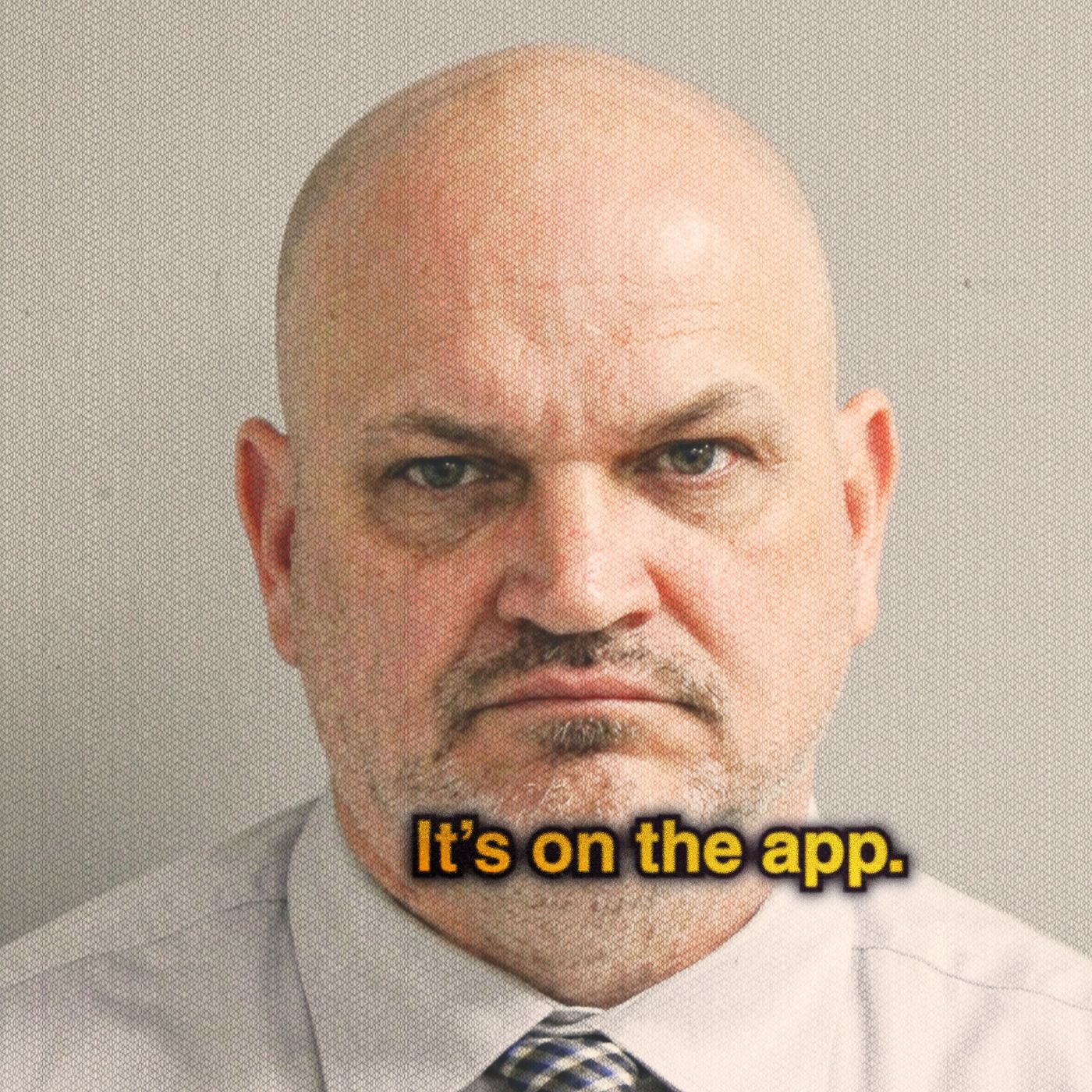
This episode of "Tapes from the Dark Side" examines gambling addiction through the case of Carl Jacobson, a decorated police chief in New Haven, Connecticut, who secretly wagered $4.4 million on sports betting apps over a year, including stolen city money. Jacobson, who had previously struggled with alcohol, told colleagues he had “fixed” that problem, but his gambling spiraled out of control, leading to his arrest for embezzling $85,000, including funds meant for children’s programs. The narrator, Tyler Zachary, interweaves his own story of placing a first bet during March Madness, triggered by a FanDuel promotion offering bonus bets. He describes the rush of winning a long-shot bet on a buzzer-beater, which ignited a dopamine response that made him crave more. The episode explains the neuroscience behind addiction, emphasizing that uncertainty and near-misses activate the brain’s reward circuit as strongly as wins, making gambling particularly addictive. It also highlights the crossover between substance and gambling disorders, noting shared genetic and neurological vulnerabilities. The narrator reflects on his own recovery, contrasting mere sobriety with “emotional sobriety,” which he believes is key to understanding Jacobson’s downfall. Ultimately, the story serves as a cautionary tale about the dangers of mobile betting, the hidden nature of addiction, and the profound impact of unresolved emotional issues on relapse and destructive behavior.
It's getting dark outside. Tapes from the dark side contains descriptions of violence and sexuality. Listener discretion is advised. I don't even remember who was playing. I just remember the green and blue of the fan-dual interface, the $300 number on the screen, and my thumb hovering over the button. But I honestly don't remember losing. That's the part nobody tells you about gambling addiction. Nobody remembers their first loss. It slides off you like water off a dead man's back. It's nothing. It's a shrug. Your brain doesn't even bother filing it away. But your first win. You remember that. The best way I can put it is, it's kind of like the first time someone you trust puts their hand on your throat. You remember it not because it heard, but because part of you liked it. Everyone remembers their first win. On January 5th, 2026, a man sat in a conference room in New Haven, Connecticut. Three of his closest colleagues were across the table. He had been their boss for two and a half years. One of them had a cell phone in his pocket, recording. Because he was afraid of what this man might do when confronted. The man looked at them and said, "And I'm quoting directly from a secretly recorded audio tape that is now part of a criminal case file." "I have a problem. I fixed my alcohol problem. I turned to gambling. I don't know why it just got worse recently." That man was the chief of police of New Haven, Connecticut. His name was Carl Jacobson. And in the 12 months before that conversation, he had wagered $4.4 million on sports betting apps on his phone. $4.464,884. That number will follow Carl Jacobson for the rest of his life. I think everyone has a bit of a fascination with the dark side. And myself, who always loved the dark side as well, I think it's something everyone secretly longs for and longs. To say that this news is a shock as an understatement. It's a shock to me. It's a shock to the command staff. It's a shock to the men and women of the police department. It's a shock to the New Haven community. [Music] It was late March, 2026, and March madness was in full swing. If you watch sports, if you even casually follow sports, you know what March looks like now. Every time out is a draft Kings ad, every halftime is a fandible promo. To my international listeners who might be unfamiliar, March madness is a national college basketball tournament, single elimination, the whole country watches, and my personal favorite thing about March madness are the Cinderella stories, the underdogs, and I love a good underdog. I don't remember where I saw the first ad it might have been scrolling on Instagram. It might have actually been one of the timeouts on TV, but the offer caught my eye, not because it was necessarily flashy and featuring John Ham, but because if you understand math at all, this looked like free money. That phrase "free money" might just be the most dangerous pair of words in the English language. It's the worm on the hook, the proverbial candy in the van. Ooh, betting in space? New customers get up to $300 back in bonus bets every day for 10 days if your bets don't win. Here's how it works. You place a bet, let's say $300 on a money line. If it wins, great. You keep your $300 stake and you keep the winnings. That's the best outcome. But if it loses, you don't automatically forfeit that $300 initial bet, because the next day, Fandool gives you what they call a bonus bet, $300 to bet on anything you want. If that bonus bet hits, then you keep the profit, not the $300 stake. So the backup plan is a worst deal, but it increases your odds of winning drastically. This promo ran for 10 days, $300 bet reset token per day. Now, I honestly had no intention of using it more than once. I just wanted to make one March Madness game a little more interesting. If you bet in win, great. But if you bet in lose, you get a second chance. The absolute worst case scenario is I'm out $300. Not a small sum for a guy like me, but unlike the vast majority of gambling. The odds are actually in your favor. And at 340 in the morning on March 29th, I placed that first bet. $300 on Tennessee over Michigan in the Elite 8 plus 260. That's what you call a long shot. It wouldn't be until about 10 days later that I realized what actually happened in that moment. Something deep in my psyche was stirring. Later that day, Tennessee lost, but my $300 wasn't gone. Instead, I got the consolation prize. The next day, a bet reset token kicked in. And now I had $300 in bonus money, sitting in my Fandule account. I needed to pick another game. This time, I picked another underdog, Yukon over Duke, Moneyline plus 184. And what happened in that game matters. Not for the basketball, but for what it did to my brain. There is one spot remaining and one game left to determine who goes to the final four. Duke was up big at a half time. 44 to 29. Number one seeds had been 134 and zero in tournament games where they led by 15 points or more at half. So a 44 to 29 advantage for Duke and Yukon trying to climb out of this deep hole. Yukon's win probability at this point in the game was 1.3%. And then Yukon came back. Yukon down by as many as 19. They have a chance to cut it to two. The pressure is building now. Yukon erased a 19 point deficit. The largest comeback ever against a number one seed in that situation. And with four tenths of a second left, a freshman named Braille and Mullins, who was 19 years old. A literal teenager, launched a three pointer from 35 feet away. And stolen by Mullins, caravan two seconds, Mullins tosses it up. Oh my god, fuck you! Game by the way, what is happening? Well, not so fucking weird. I'm really impossible. It's over! Yukon still has the mark magic! Yukon 73. Duke 72. I won 252 dollars on a bonus bet on a game with a 1.3% win probability in half time. And what ended up being important in that moment was not what happened on screen. But what happened inside me? Because something lit up that I hadn't felt in a long time. A warmth, a vibration in my rib cage that said, "Do that again." The way a dog hears a frequency you can't, the way a corpse flower knows when to bloom after ten years. Nothing. What happened to me in that moment has a clinical name. It's called a dopamine response, more specifically along the mesolimpic pathway. It was more important than money, more important than the apps. Because that feeling that I got from watching Braille and Mullins shock go in is the same feeling that grabbed the subject of our story. It's the first hit. And for some people, for people with brains like mine, it's the only hit the machine ever needs to give you. That exact feeling grabbed a man named Carl Jacobson. The difference is what we brought to the table when it hit us. And what was waiting on the other side. Carl Jacobson was by every external measure exactly the kind of person you want running your police department. He was 55 years old, a new and new person.
England native, kid 27 years in law enforcement, nine years with the East Providence Police Department starting in 1998, then the New Haven Police Department from 2007 onward, reclined from patrol officer to sergeant to lieutenant to assistant chief. Along the way he earned a US Attorney's Director Award in a National Association of Police Organizations Top Cop Award. These are not participation trophies. These are recognitions given to officers who have done exceptional work. In May of 2022, after a nationwide search for a new police chief, New Haven Mayor Justin Elliker chose Carl. He didn't pick someone from LA or Chicago or New York. He picked the local guy, the one who'd been in the department for 15 years. Carl was sworn in as chief on July 6, 2022. So help me, guys. Congratulations. When I started this journey of public safety, I had one goal in mind and that was to make others feel safe. As chief is my responsibility to ensure that this department remains transparent and accountable and works for the community. He lived in Branford, Connecticut with his wife Dawn. She had two children, an older son named Carl, and a daughter named Kelly. Hello and welcome to Day On New Haven, at WNHH FM New Haven's home for community radio. Today we have a man who is New Haven's new police chief. Carl Jacobson, thanks so much for coming on the WNHH. Thanks for having me, Paul. It's good to be here. Like as chief, you had a pretty early on recommend firing some people who you personally liked. What was that like? How do you do that? Once I've been chief three people have been fired. There's a couple more that's been recommended to be fired on. It's hard because you make connections with people and they work for you. But then when you have people tell you the story and the story is like really over the top and then in this situation it was just a matter of just telling the truth. And you're like, what are you doing? And you know, we're all human and we make mistakes. I'm not looking to fire people, but I'm telling you, since the Randy Cox thing and the incident that you're talking about, you have to treat the community with respect and dignity. That's what it comes down to. If the officers did that in these different cases, there would be a different outcome. It almost sounds simple, Paul. Give people a voice, treat them with dignity, neutrality and decision making. So you go to a call. Take the time of that interview, Carl Jacobson was already gambling. The warrant would later reveal that in the year following this conversation alone, he wagered more than four million dollars. And investigators believe it started long before that, but you can't hear it in his voice. There's no tremor, no desperation, no tells. That's the thing about this disease. It doesn't alter your behavior like drugs or alcohol. In fact, it makes you sound fine. It makes you sound exactly like yourself right up until the moment the floor gives out. In December 2021, the University of New Haven published a feature story about a father and daughter who shared a passion for criminal justice. Carl Jacobson and his daughter Kelly were attending the University of New Haven at the same time. Carl was completing his Master of Science and Criminal Justice. Kelly was starting her undergrad degree also in criminal justice at the University's Henry C. Lee College of Criminal Justice and Friends Sciences. They were in the same program, same time at the same school. Kelly told the University and I'm quoting her directly. "It's been great earning a degree while my dad is too. We're definitely able to bond over it. Sometimes we even get competitive about who has the better grades." Carl said, "I am extremely proud of my daughter. It was a hard worker and a dedicated person." Kelly wasn't just getting by. She was a field hockey player with a 3.9 GPA. She was named a National Field Hockey Coaches Association scholar of distinction. She told the University that her father's dinner table stories about policing were what inspired her to major in criminal justice in the first place. By 2023, Kelly Jacobson wanted to become a New Haven police officer. She wanted to follow in her father's footsteps. Within three years of that university feature, Carl Jacobson will be arrested for stealing $85,000 from the city of New Haven, including $4,000 from a fund that paid for children's basketball clinics and summer camps, written as checks to himself at Christmas time. But we're not there yet. Not even close. Right now, in this moment, Carl Jacobson is a decorated police chief with a master's degree, a proud father, and a promising career. He is truly living the American dream. A nice house, Connecticut, there's wife and kids. He goes to work every day and tries to make New Haven safer. And somewhere underneath all of it, something was already wrong. Something had been wrong for a long time. The kind of wrong that doesn't make noise, it just sits in the walls like black mold, growing until one morning, you peel back the wallpaper. We'll be back after a quick break if you want to skip the ads and support the show. You can do so at patreon.com/tapes from the dark side. We need to discuss something about Carl that might not seem relevant yet. Carl Jacobson had an alcohol problem. We know this because of what he said during that secretly recorded confrontation on January 5th, 2026, when his three assistant chief sat him down and asked him why the informant money was missing. He told them, quote, "I fixed my alcohol problem." He said, "Fixed. Past tense. Like a leaky pipe, you tighten. Like a house chore you cross off a list." Now before we dive into this, we should be careful. We don't know Carl Jacobson's full story. We don't know when he stopped drinking if he saw a therapist if he went to rehab or if he just stopped. None of that info is in the arrest warrant. None of it is in any court filing. All we have is that one word. Fixed. And from personal experience, that word tells you a lot. Maybe not everything, but a lot. You see in recovery lingo, there's something that's beyond merely being sober. It's called emotional sobriety. But I'm getting ahead of myself. For now, I just want you to file that word away. Connecticut legalized online sports betting in 2021. Draft Kings, FanDuel, Fanatics. Available on every smartphone in the state. For someone with Carl's history, this would turn out to be a very bad arrangement. Nathan Novemsky, a Yale professor known for his behavioral economics and consumer psychology research, put it like this. "It's just like an alcoholic living in a liquor store or a bar." Carl didn't have to drive to a casino. He didn't have to fly to Vegas. He didn't have to find a bookie or walk into an off-track betting parlor. He just had to open his phone. When one of the assistant chiefs told Carl during their confrontation that he'd never actually seen Carl gamble, Carl picked up his cell phone, said it on the conference table, and said, quote, "It's on the app." Four words. The whole catastrophe, the whole 4.4 million dollars, the stolen money, the children's fund, the career, the pension, the family, all of it. Lived inside of a rectangle glass and a lumenum that fit in his pocket, that he carried everywhere that slept on his nightstand, that no one ever thought to look at. Because why would you? It's just a phone. Let me tell you what happened inside my skull when Yukon hit the buzzer beater and I saw dollar signs appear on my screen. There's a circuit in the brain called the Meso-Lymbic Dopamine Pathway. It runs from a region called the eventual tegmental area deep in the brainstem up to the nucleus acumbins and then forward to the prefrontal cortex. This is the reward circuit. This is the system that evolved to make you feel good when you eat, when you have sex, basic survival stuff. It's the system that says, whatever you just did, do it again. When you win a bet, this circuit fires. Dopamine floods the nucleus acumbins euphoria, excitement, a sense of mastery. Your brain tags the experience as important. It files it away. It builds an association, this app, this action, this feeling. Do it again.
But here's the part that makes gambling addiction different from almost any other kind of reward. The dopamine response is strongest, not when the reward is guaranteed, not when you know you're going to win. The dopamine fires most intensely during maximum uncertainty. When the odds are roughly 50/50, when you genuinely don't know it's going to happen. Think of that Yukon game, a 1.3% win probability at half time. Every possession in the second half is ratcheting up that uncertainty as Yukon slowly comes back. By the final minute, the game is nearly tied. Anything can happen. My brain was flooded with dopamine, not necessarily because of the money, but because of the not knowing. The uncertainty itself is the drug. The money is just how it gets delivered. And there's more. Researchers at Cambridge, this was a Luke Clark's team, published in the journal Neuron in 2009, found that near-miss outcomes activate the same reward circuitry as actual wins. If you bet on a team and they lose by one point on a last second play, your brain processes that almost the same way as it processes a win. Your brain lies to you. Says you were close, you were right. The universe just got in the way. Instead of saying you lost, stop, it says you almost won. Do that again. In pathological gamblers, this effect is even more extreme. When brain imaging studies show that problem gamblers actually have a stronger dopamine response to losses than healthy people do. They get more pleasure from losing than a normal person gets from winning. The disease of addiction has rewritten the source code. Loss is pleasure. Pain is fuel. The worse it gets, the better it feels. I want to tell you something about myself that most of you don't know. On the show I go by TZ, which stands for Tyler Zachary. That's my name. I go by Tyler in my personal life, but back in 2024, I started going by tie. The reason being, that was the year I came back. Back to my recovery. Back to meetings, sponsor, therapy, the whole thing. And I came back not from a relapse, but from something that might be arguably worse. For about four years from 2020 to 2024, I was technically sober. I was making this podcast, which has been an incredible journey. And on the surface, life was going okay, but underneath the surface, it wasn't. I wasn't drinking. I wasn't using, but I wasn't in recovery. The pandemic had given me the perfect excuse to stop doing the internal emotional work that real recovery demands, emotional sobriety. It's the difference between just not using and actually being well. I didn't have it at the time. I was sober on paper, but falling apart underneath. The clinical research behind emotional sobriety might be the most overlooked aspect of this case. And I believe it might explain everything about what happened to Carl Jacobson. But for now, here's what you need to know about me. When I opened FanDuel and placed that first bed in March of 2026, my brain was not a normal brain responding to a normal stimulus. My brain had been shaped by years of addictive behavior. My brain has altered dopamine receptors and a prefrontal cortex that had been weakened by years of addiction and then four years without any emotional sobriety. A brain that was on a neurological level, hungry. These science on this is not ambiguous. The DSM-5, the so-called Bible of psychiatric diagnoses, though it's better at looking backward than forward, reclassified gambling disorder in 2013. They moved it out of the so-called impulse-controlled disorders and into substance-related and addictive disorders. Same category is alcohol-use disorder. The same category has opioid addiction. They did this because the research showed that gambling activates the same neural circuitry, shares the same genetic vulnerabilities and produces the same patterns of tolerance with drawl and compulsive behavior as substance addiction. The crossover data is staggering. Approximately 30% of people with a gambling disorder also have a substance use disorder. People with a substance use history develop gambling problems at four to five times the rate of the general population. The shared genetic vulnerability, a variant called the DRD2, TAC-1A1 allele, and it appears in both populations at elevated rates. Twin studies estimate that the heredability of gambling disorder is between 50 and 60%, which is comparable to alcohol addiction. What this means in plain language, if you've been addicted to one thing, your brain is pre-wired to get addicted to another. Not because you're weak, not because you lack willpower, but because the circuitry that was altered by the first addiction doesn't care what substance or behavior fills the void. It just wants the dopamine in gambling, especially mobile sports betting with its constant availability and its engineered uncertainty, delivers dopamine as efficiently as anything on Earth. When I opened Fandool for the first time and placed that bet, my brain wasn't starting from zero. It was a brain that had been primed by years of addiction, by a reward circuit that had been sitting in a dark room for a long time, and when Yukon hit that buzzer beater, and $252 appeared on my phone. The door didn't just open, it came off the hinges. The sports betting industry in the United States processed $149 billion in wagers in 2024. In 2017, before the Supreme Court struck down the Federal Sports betting pan, the legal market was roughly $4.9 billion, so in seven years, the industry grew by a factor of 30. Draft Kings and Fandool control approximately 70% of the American market. That promotion I took, the bet reset token that felt like free money, Draft Kings has reported that the average customer they acquire through those promotions has a lifetime value of approximately $2,500 against an acquisition cost of $371. And they know that 95-97% of customers lose in the long run. The promotions are not gifts, they're bait. And once you become a so-called heavy user, they don't just leave you alone, they assign you what's called a VIP host, a real person inside the company whose entire job is to keep you playing, to message you to offer you personalized promotions, to learn your name, your habits, your patterns. Think of it as a friend who will only call when you're bleeding, who gets paid by the pint. According to the arrest warrant, Carl Jacobson had a customer relations person assigned to him by the sportsbooks. We don't know what they said to him, we don't know what promotions they offered, but we know the function they served. They were there to make sure Carl kept bleeding. We don't know if Carl won his very first bet. The warrant doesn't go into that kind of detail, but the data on his account tells us something. Across that first tracked year, he wagered $4.4 million and one back $4.2. He was cycling money constantly, and the research on how gambling addiction develops is nearly universal on this point. Somewhere early on, there's a stretch of winning, a hot streak, a run where the math seems to bend in your favor. Researchers call it the early winning phase. Carl had a winning phase. I'm certain of it, because without it, you don't make 1,366 deposits. It's late March 2026. I'm sitting in my home, phone in my hand, fan-dual app open, a few hundred dollars richer, already entertaining the next bet, already noticing that another app, DraftKings, is offering a sign-up bonus. Bet 365 is offering $365 on a $10 deposit, and BetMGM also has a promotion. I'm calculating how many apps I can sign up for, how much bonus money I could extract from the machine. But somewhere, something in the back of my mind is building a nest. Carl J.
Jacobson. Sometime in 2024 is sitting somewhere in Brandford, Connecticut, phone in his hand. Draft Kings are fanned all open, coming off his own first big win, his own dopamine flood. And inside him, something had already moved the furniture around and changed the locks. Two brains shaped by prior addiction, suddenly, fed. The only difference that mattered was invisible. It was internal. It had nothing to do with intelligence or character or moral fiber. It had to do with something that happened or didn't happen in the years before we ever opened those apps. Carl said he fixed his alcohol problem. For me, after four years of failing to work on myself, I had actually started the recovery process again. Carl, as far as we know, didn't have a sponsor, therapist, program. He didn't have someone he could call it to in the morning when the thing in the crawl space started whispering. I did. And I almost didn't call him anyway. In the next episode, I'm going to tell you about what happened to me over the following 10 days. How I downloaded nine sports betting apps. How I placed hundreds of bets. How I deposited thousands of dollars. And how I won. And how winning was the thing that nearly destroyed me. I'm also going to tell you about what happened to Carl Jacobson over the following 12 months. How the arrest warrant said he made 1,366 transfers from his checking account to gambling apps. How he started writing checks to himself from a fund meant to pay confidential informants. While his daughter was home for the holidays. His daughter Kelly wanted to be a cop like her dad. She told the university that his dinner table stories are what inspired her. I wonder what the dinner table conversations are like now. The family hasn't spoken and frankly they don't owe us anything. But I think about her. I think about her a lot. I'm TZ. I've been your host. And this is Tapes from the Dark Side. If you or someone you know is struggling with gambling, the national problem gambling helpline is available 24/7. That's 1-800-522-4700. Free confidential. You could hear the next episode in the series early, ad-free, and in uncompressed, pristine audio quality. That's on Patreon or Apple Podcasts. Our newest Patreon members. And you can join at patreon.com/tapes from the Dark Side. At $3 we have Jen, Joy Bennett, Carous Walker, Jasmine Gonzalez, Jonathan Greenway, Josh Lamy, Jessica O'Kugic, Andrea Sevilleus. I'm probably saying that one wrong. Whitney, whimsical pirate, Ellie Yarraali, Brittany Tautin, and George E. Kinsey Martin, and Kelsey. And we have a $4 member, Andrew Talon, $5 members, Danny Garaway, Kayla Barber, or sorry, Kayla Babber, Rusticapo, Dr. Dars, Anna Triante Couture. And at $7 we have four Lauren Flesh. And at $9 we have Elusive Sam Squatch. Thank you to our associate producers, Kayla Asmus and Meg, and also to our secret tier members, Lindsey Choi and Alison Barkley. You guys truly helped the show keep going. Thank you for editing help from Troy Turner. Thank you to 2600 who allowed us to adapt one of his songs for our main theme. And thank you of course to the incredible Augusta Trevor Roarham, who created original music that we used in today's episode. Please rate the show five stars on Apple or Spotify. And send the show to a friend or post about it online. Anyway, we can get the word out. If you want to get in touch with the show, you can do so at tapes from the dark side pod at gmail.com or follow the show on Instagram at the dark side pod. Until next time, try to enjoy the daylight. [Music] In 1976, the first casino open outside of Vegas is right here by the half a mile from my home across the boardwalk. The lines would wrap around the block and go to first open at was 12. So I was too young to really see anything beyond going in the lobby and just feeling the excitement. When I'm 16, we would slip in the casino, we'd play roulette. The lowest would be $5. So I'd put five on black and he put five on red and one of us would win but we'd drink for free until zero and double zero would come up. So when you're 16, 15 bucks is a lot of money, 20 bucks, whatever. I would lose every time I went. It would take a while and I'd get free beers. But then we'd leave and I'd have no money for the weekend until we could go back. I'd glue my own versions to gambling. I saw it for what it was, a fool's back. And I also had the good fortune of learning over 20 dollars a week and not the family mortgage.
Podcast Summary
Key Points:
The episode explores gambling addiction through the story of Carl Jacobson, a New Haven police chief who wagered $4.4 million in 12 months, including stolen city funds.
Jacobson’s addiction emerged after he claimed to have “fixed” his alcohol problem, illustrating the crossover between substance and behavioral addictions.
The narrator shares his own experience with sports betting, sparked by a FanDuel promotion during March Madness, highlighting the psychological pull of wins and near-misses.
The narrative explains the neuroscience of addiction, focusing on the mesolimbic dopamine pathway, where uncertainty and near-misses trigger reward responses similar to actual wins.
Jacobson’s downfall is revealed through a secretly recorded confrontation with his assistant chiefs, where he admitted to gambling and later faced arrest for theft, including from a children’s fund.
The episode emphasizes the role of mobile betting apps in enabling addiction, comparing them to an alcoholic living in a liquor store.
The narrator connects his own recovery journey and the concept of “emotional sobriety” to understanding Jacobson’s behavior, suggesting that untreated underlying issues can fuel addiction relapse.
Summary:
4 million on sports betting apps over a year, including stolen city money. Jacobson, who had previously struggled with alcohol, told colleagues he had “fixed” that problem, but his gambling spiraled out of control, leading to his arrest for embezzling $85,000, including funds meant for children’s programs. The narrator, Tyler Zachary, interweaves his own story of placing a first bet during March Madness, triggered by a FanDuel promotion offering bonus bets.
He describes the rush of winning a long-shot bet on a buzzer-beater, which ignited a dopamine response that made him crave more. The episode explains the neuroscience behind addiction, emphasizing that uncertainty and near-misses activate the brain’s reward circuit as strongly as wins, making gambling particularly addictive. It also highlights the crossover between substance and gambling disorders, noting shared genetic and neurological vulnerabilities.
The narrator reflects on his own recovery, contrasting mere sobriety with “emotional sobriety,” which he believes is key to understanding Jacobson’s downfall. Ultimately, the story serves as a cautionary tale about the dangers of mobile betting, the hidden nature of addiction, and the profound impact of unresolved emotional issues on relapse and destructive behavior.
FAQs
The episode explores gambling addiction through the story of Carl Jacobson, a police chief who wagered $4.4 million, and the narrator's personal experience with sports betting.
Carl Jacobson was the police chief of New Haven, Connecticut, with 27 years in law enforcement, who was arrested for stealing $85,000 from the city to fund his gambling addiction.
He stole money, including from a children's basketball fund, to support his gambling addiction, which involved wagering $4.4 million on sports betting apps.
The first win is memorable and triggers a dopamine response that can lead to addiction, unlike the first loss, which is often forgotten.
Gambling disorder is classified with substance-related addictions, shares genetic vulnerabilities, and people with substance use histories are more likely to develop gambling problems.
Dopamine fires most intensely during uncertainty, making the not-knowing itself addictive, and near-miss outcomes activate the same reward circuitry as wins.
Chat with AI
Loading...
Pro features
Go deeper with this episode
Unlock creator-grade tools that turn any transcript into show notes and subtitle files.
 PodcastTranscript AI