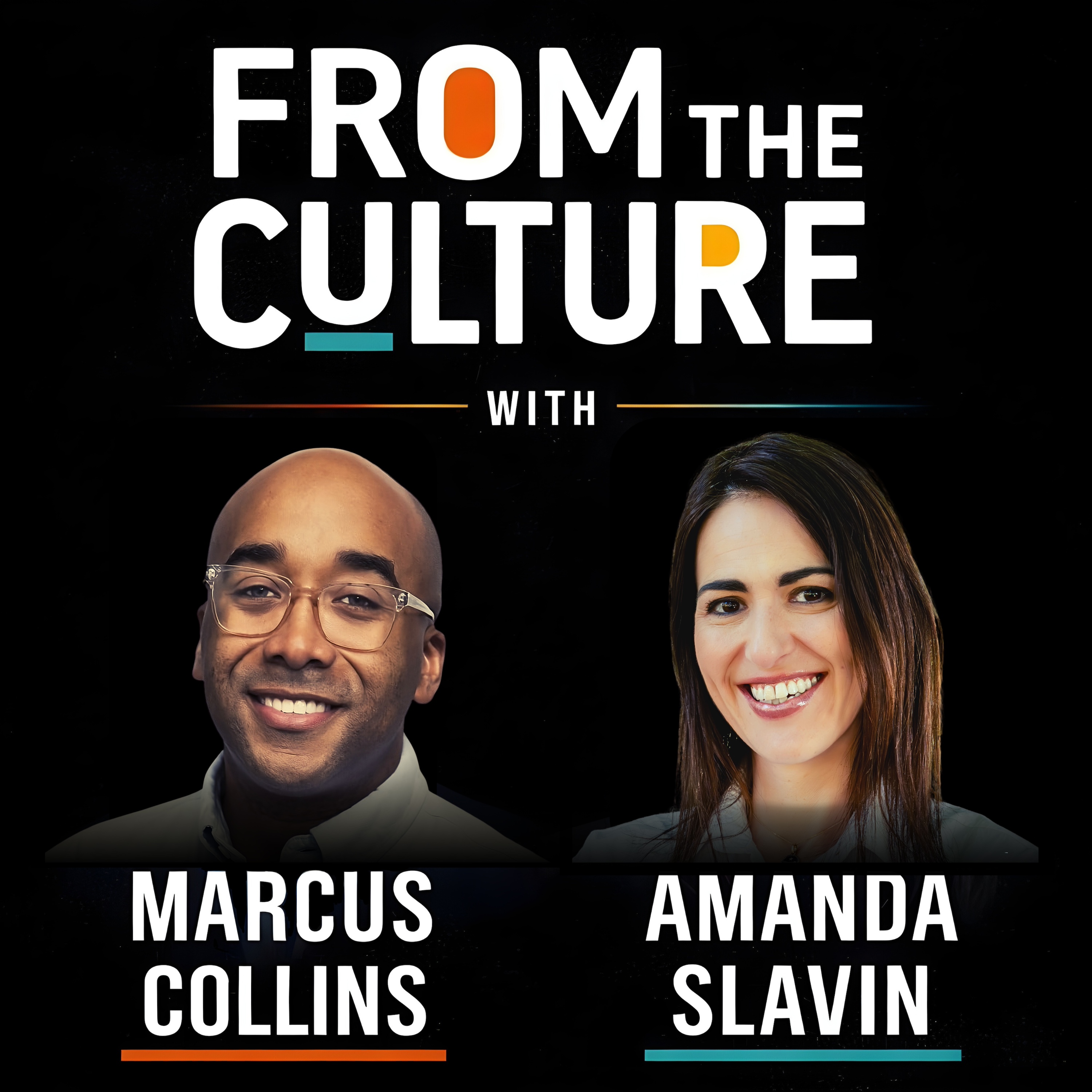
In this podcast episode, hosts Marcus Collins and Amanda Slaven explore decision-making in uncertain, high-stakes situations, using Whitney Houston's song "How Will I Know?" as a central metaphor. They discuss how, whether in personal relationships or professional contexts, people often seek absolute certainty but rarely find it. The key insight is that effective decisions rely on self-knowledge and intuition rather than external validation. The conversation connects this to organizational culture, noting that in today's fluid job market, individuals must understand their own values to navigate career paths and know when an environment aligns with them. This self-awareness is not automatic; it requires deliberate personal work and development. The hosts reinforce this by referencing an interview with executive Tarik, who shares how introspection and understanding his own identity, including traits like dyslexia, have been crucial to his leadership and ability to help others excel. Ultimately, the episode concludes that while we can never be 100% certain, learning to trust oneself is essential for making meaningful choices in work and life.
>> Hi, I'm Marcus Collins. >> I'm Amanda Slaven. >> And welcome back to another episode of From the Culture, where we're talking organizational culture. That is the backstage of an organization that allows the front stage to flourish. Now, Amanda, I have a question for you. It might seem off topic, but it's going somewhere. Question four. >> It always does. It always does. >> Who was a better singer? A Dale, Whitney Houston, or Mariah Carey? >> Of the three, who do you think the best vocals? >> That's not, I don't, this is blasphemous. I don't think I could answer this question. >> You got to pick one. >> Here's the thing, here's the thing. Obviously, I'm never just going to have a short answer. I mean, that's just not my vibe. Those three people have had such different roles in my life that I can't just think about their vocals. I have to think about the roles that they have played. But I will say, my relationship to each of them, Adele was when I was going through heartbreak in my 20s. When he Houston taught me about love with Howell, I know, and just doesn't draw on the airplane. I was crying again, even recently just bringing being brought back there. And Mariah Carey, I mean, she was my team years, as well as obviously, again, she reminds me of Christmas. I would say that Whitney Houston is, she created a category that shifted and made it possible for Adele and Mariah Carey. That's the right answer. I don't know what the right answer is. >> I think you have chosen well. I mean, Mariah Carey is a beast, Adele is so good, but Whitney is the gold standard. She's the standard center. And you actually kind of beat me to this, because out of all the amazing songs when he Houston has, the one that really touched me. >> Oh my God, that's what you were going to say? That's amazing. >> I agree with my children too. I used to introduce my children to Mariah Carey too, and Whitney Houston, rather, was how will I know? >> My favorite song of life, it just came up on my Spotify. What, there is just nothing like that song. It's something that is so universal and it's so human. And also, it's just this like, it's just this, you think it's an innocent question, and then it is just so powerful, because you're like, wait, you don't know, is when you're in something so important, something so meaningful, and something so, how do you know when he tell me? >> I love about it. So to your point, I always think about that song. In fact, I have a session that I teach for my master's students about ethnographies, the name of the session is called How Will I Know? And what I love about the song, on top of the fact that the song is great, the music is killing, and she sounds phenomenal, as always. But she has all these indicators to tell her that this guy is really into you, but yet she arrests her hubris. And what would look like a lack of confidence, but she's really like, I'm just trying to find some really strong, unshakable proof that this guy is into me. And I think that's kind of how we go through life. That we're looking for things to help us confirm what we believe and if we're curious enough to help us see the world differently. But the thing is, we don't ever truly know. So every time we make a decision, we're sort of stepping out on faith, but we don't truly 100% know with full confidence. >> That's surreal. I actually never, you're blowing my mind right now because first of all, there's this meme. It's like a woman and a man in like a bed and she's like, you know, tell me, like he's like, I think about you every single day and I love you so much. And she's like, you hate me. And it's like, I think that when the stakes are high and we're vulnerable and when something matters so much to us, we're looking for the 100%. Like this is it yet because we're so vulnerable and because it means so much to us, we're never going to find the thing and we actually just have to trust our gut and trust our intuition and trust ourselves and say this feels right to me. So it doesn't actually matter. I don't, I actually don't know, but to me in this very moment, this feels right. And that is enough for me to make a decision. >> When the costs are too high, we definitely get, we have to get worrisome about making the wrong choice to your point. It means so much to us and if we get it wrong, it could feel catastrophic in nature. But it requires us to have some vulnerability. And we think about this in the context of organizational culture or organizations in general. We had a job that maybe we don't really love it, but it's been good to us and we experience these great things and we made some decent salary, but we go, but if I leave, if I leave too early, am I missing out on something, unless you're running away from something, deciding if it's the right thing could be a challenge. Which is why I always tell anyone who I've ever hired, I ask them, what are you looking for? Because I want you to run towards something away from something. So the idea here, for me at least, I think about this notion of how will I know and it comes to organizations is that when the stakes are high, because you care, because the meaning is so strong, we're never truly 100% no. To your point, you just got to follow what feels right. And that requires knowing who you are, how you see the world, what is meaningful for you, that is what is full of meaning for you and try to find congruence there. Does that feel about right? - I mean, there's this quote. Can you imagine I was like, no, that does not feel right, that feels totally wrong in my body. I do not know, give me more, I want more information for it to feel right. How do I know? How will I know if it's right, Marcus? There's this quote, work harder on yourself than your business. And I think that when you know yourself, which most people, I remember, and this will be a short story I promise you. I remember when Tony, my business partner Tony Shea was rolling out self-organization to Zappos. And you know, a lot of people at Zappos were customer service representatives. And they wanted a job in which they could go to work. It was amazing. They wanted to be a part of culture. They wanted to be something bigger than themselves that was fun and meaningful. But they wanted, they did want kind of to know what their job was. And when he introduced self-organization, which was all about self-agency and being able to really make these choices of what worked for you and really again, knowing quote and quote, what was right for you and right for the organization. A lot of people in the beginning kind of freaked out. They had like a little bit of an existential crisis. And I met with the entire leadership team. And I said to them, I said, what you're doing, I said, you and I have actually talked to us about change. You as an, you know, I'm pointing to you, Marcus. - Yes, I Marcus me. - And this, I did not you and the audience, not the audience of me. But you and I, but you know, in this idea that we talked about change. I don't know if you even remember this. And we talked about how as adults get older, so they don't like change. But when kids, they love change. And kids love change because it gives them the opportunity for access or something to do something fun, to do something meaningful. You said like when your daughter was like six, seven, she could chew gum or like grind a bite, right? But as adults get older, it reminds them. I'm not going to talk about death every episode, I promise. But like it reminds them that they're getting culture to death. So change is scary. Change is terrifying. So when they brought up this change, we're like, you can have freedom. And you can make all these choices. I was like, guys, you're bringing up things that they might not have, they did their changes in their lives that they didn't want to happen. They actually want solid funding. They want solid ground. They want to have a job where they feel like they know what's going on and they are customer service representatives where they literally are. Yes, it's fun and adventurous and it's new. But they know what they're doing every single day of their lives. And so it was a really big opportunity to talk about what it looked like when change happened, what it looked like for someone to trust themselves. And so we had to bring in leadership coaching, leadership training, leadership development to get people to know themselves enough to then be a part of an organization where they can make changes in the company. And I think that how will I know it's not, people are not, you're not just born knowing, you have to learn to know yourself. And that's how you will know. But it takes work. It takes work in yourself. I mean, if you're straight, like, how will I know? You can't know until you know yourself because you are the instrument of evaluation here. You're the one who's deciding because what might be good for you may not be good for me. And because there's that level of variability, it's really based on how I decide to translate it. And you know, if I'm listening to this, right? So if you're listening to this, not you, Amanda, but the listener. Exactly. We really have to distinguish between the you pointing person that I'm talking to Marcus and the you as in the capital, you. We're going to do, when we do capital, you, it's the audience. I'll just say, I'll say your name. And I'm referring to you, Amanda. Amanda. Every time that sounds very much like I'm in trouble. But well, okay, well, if I could, if I could, but. If I'm the listener here, I'm listening to this podcast. You ask yourself, all right, I'm interested in how do I lead culture? I'm interested in finding the right environment where I can realize the best version of myself as a laborer, as someone who works, such that I'm able to realize my full potential and benefit from the greater harvest. That is the organization realizing its potential. And you go, okay, so what does this mean for me? Well, the question is that you are, we are in the most dynamic work environment ever, where the tenure that one has in their job is a fraction of what he once was when our parents were in the workforce force full out, right? So we're constantly changing and moving. The world around us is constantly moving. I mean, chat GPT didn't come out until 2023 and look at the impact that has had. It's upending everything, it seems like change is all around us, change is a foot. So we have to know when we will change, and when we will stand our ground as it were, when we will be able to decipher discern whether I'm in the right place in this organization, or the way I see the world is no longer aligned with the way the organization does. And it's okay, but I have to know or be able to decide when it's the right time for me to move. How will I know? And I think you're right, it starts with knowing you, knowing yourself so that you're able to make these, these judgment calls along the way. You could have also said, should I stay or should I go? That's another great song. You could have brought that one up. That's another good one. You know, Gen Z, there's a static, the Gen Z, I think switches like 10, they have 10 jobs within like the first like few years, it's a cool, we have to look up the staff. But it was, I was giving a talk at Web Summit on Gen Z versus the old economy. And the reporter was from the BBC and she was talking about how she, you know, the moderator and she's talking about, she's a lot of Gen Zs that work with her. And there was a stat about how Gen Zs like changing jobs every, you know, a few months and few, like they don't care anymore about their resume and what it looks like and they, when they're ready, they're ready. But I also think it's this concept of, again, that when you know yourself, that you're not actually, you know, leaving when the second things get harder, things get uncomfortable or because it looks better, you know, you are really, there's discernment. I think that word of just, of really knowing yourself and, and with me was doing the right thing. She was like, I'm not going to just fall head, head over heels in a relationship. I mean, she had some patterns of not the best relationship, like, I think she, I'm not, no, she was, she was like taking a minute and it's like, how will I know if he really loves me, like if this is the right, if this is where I'm going to spend, you know, I'm going to commit for the right job, like you could commit 20 years of your life, especially at the level of a chief level position of a huge corporation, you are committing. And so before you jump into a relationship, before you jump into another job, another job, like maybe you should take a minute and look at the science and be like, how will I know? At the very least there's an opportunity cost to wherever you are, you chose not to go somewhere else and you, you lose that. So speaking of how well I know, I had an amazing conversation. It was really, it was, it was actually just an unbelievably surprising experience because we were at Cannes and when you're at Cannes, I mean, I don't think anyone knows anything, I'm talking about how well I know, I think we're just like, how will I know that I, if I will sleep, if I look at water, if I will just even just be able to take a breath without words coming out of my mouth. It is so overwhelming. I mean, it's 70,000 people, you're meeting it, you're running into, it is, it is a lot. It's amazing. It's incredible. There's so much, but it is a lot. So what, you know, we did these interviews at Cannes and we, we collaborated with Culture 3 and had this villa and it was quite a little bit off the beat in half. It was like a 20 minute Uber drive, Uber is not a sponsor in any, in any car drive, a lift to Uber, whatever, if you want to be a sponsor, I mean, you can. And, and Tarika saw who I, I had met briefly, but you know, very, very well, you know, schlepped up the hill out of Cannes and, you know, came because he really trusts you, because he, you know, how will he know? He just knew that he was going to do this interview and we sat down and it was supposed to be like, I think, maybe 20 minutes is probably closer to 45 minutes. And we just had such an impactful interview and it wasn't just about work. It was really a get about, about the work on yourself and knowing yourself and knowing when something feels right and knowing again, when you are not necessarily just in the wrong place. That wasn't actually what it was all about. It was when, will you know if you can make a change? When will you know if you should step back? And will you know when it is time to push versus to release versus to leave versus, I mean, it was all of that idea of how well I know. So love with me, love the interview, very excited to hear more. Tarika is one of my favorite people in this planet. He started off as a client of mine when he was a chief marketing officer at McDonald's North America and we became sort of fast fans of each other, being strategist by trade and to becoming fast friends and actually consider him to be a brother. He's amazing. And I love just how introspection, introspective he is when it comes to just the decisions that he makes. He's very deliberate and intentional because he knows himself. So let's cut to the interview here and then we'll come back and discuss this based on what we took away from it. So here's Tarika's on, enjoy. For you, you know, it seems like you're very passionate about self growth, working on yourself even harder than the work that you're doing in your businesses. I'm curious why you think that's important. I'm curious how it's affected your role as a leader because this just came up and we just had a, and it also I've known you again because you're in these communities and you are nurturing your own self. So talk a little bit about that. Let's start there with self. Yeah, you look, I think part of it like all of us starts with the layers behind the business, right? It starts with two years as individuals. And I think for me, you know, it was a journey, even well before professional career, personal elements that have us discover those things, fight those things, challenge, right? And for me, whether that's identity through my love and ease background and some of the challenges that would come with that over my lifetime, I'm dyslexic and I think it took a long time for me to be able to actually go from comfort of disclosure to comfort of support to actually recognition of full superpower, right? I hope my dyslexia is like one of my absolute superpower. But that was a journey to get there. And so as you become more senior, more engaged and more accountable for yes, the results and the numbers, but the people you develop, you know, it's the, if not for those before me kind of mindset kicks in with a little bit of gray hair, a little bit of wisdom and a little bit of, you know, fucked it up enough that it's time to like, how do I like take on that responsibility? And I think you combine that with a role here and there where you lose that identity, right? And I certainly had one of those to come out of that and decide like, no, that's not inseparable, right? And I grew up near where there was a separation between self and home, self of work or that those things were, you know, we weren't talking about bringing your whole self. And then I think it's actually where I started as a business person, I started in the agency world as a planner, I was a little bit of observation and strategy and insight and, you know, those things have always been present with who I am and now as a marketer, right? I've always started with that core empathy, empathy to the problem, empathy to the customer, empathy to the category, empathy to the competitor, like, this is inherently who I am, I think without even realizing that that's part of what the formula is. So go back to your original question to do that. We don't feed and nurture ourselves for that kind of performance, right? And so when we're off, then our subjectivity is off, our objectivity is off, our peripheral site is off. And then honestly, I think, you know, a few times around the track and putting points up on the board for business and winning is great, but at some point in your career, you start to ask for like, what else is there, right? And so for me, I mean, I'm going to, you know, the stage in my career where my joy comes from what I'm able to convey with my teams and other people in my life, right? My eaky guy, my true north on this is really simple. It's helping exceptional people do extraordinary things. And that's not about the numbers, but it's everything about the numbers because when you do it and do it well, those people deliver, right? And they deliver for the business and they deliver for the vision and they deliver for themselves. And so that's, but you can't do that unless you're taking care of you, right? And modeling that, right? I think sometimes as leaders, we think, oh, we can't be putting ourselves first because we need to show that we're going to be the ones working the hardest. And so how did you model that for others, what was, was it always in you? Like we always like, I just need, this is really important. Or was there a moment in which you caught yourself or you're like, wow, I'm just working myself to the bone. And now I need to shift that mindset. I think those things come in phases too, right? Yeah. I went through my young, dumb and arrogant phase like, like so many of us, right? Where the, the focus on self was the wrong filter, right? It wasn't the positive aspect of focus on self, but there's learning inside of that, right? If I say, if I look back at my career, I'm not a regret person, I'm a reflection person. But if I look back and reflect on some, you know, the opportunities I would have liked to have happened sooner, it would have been around mentorship, right? It would have been around having that sort of really objective, personal board of governors that told you, you know, what was what when you needed it. But again, you know, I grew up in an era where mentorship and coaching and a lot of those things were like, when you're fast-tracking, oh, you must not need it, right? The reality is it's the exact opposite. That those, those are the, those are your high performers and your race of the top performers are the ones that really need it. And then I, like everything for me, contextually, yeah, what you learn professionally, fall down, make mistakes, experiences, but also personally, you know, think a big, big point of change for me as a leader was not in the professional environment. So I had left my career in the technology space with HP and was, you know, my way to the next thing when my four and a half year old daughter was diagnosed with a very poor, a renail cancer. And I would say that 10 month journey as a dad, as a parent, as a caregiver, and frankly as a student, I learned a ton from this little four and a half year old, um, ultimately five and great, you know, knock on wood, great outcome. But the resiliency, like you remind yourself, like, oh, the shit that they beat out of us, right? And we forget and we don't learn and keep in reminding ourselves. So I always say like watching her, the ease at which, in many ways, she navigated the ease of which she focused on just like still being a kid. And then strategically sitting with doctors and learning about disease and learning about move, you know, the process to get from here to there, that stayed with me in terms of when I went into my next space and how I thought about things now, ironically, the next space ended up being the one that was absolutely the wrong one from a true North compass. But I think I was more equipped and prepared to work my way through, but then also to recognize at some point, like, no, I mean, I don't know who I am inside this anymore. And so you progress. So I think there's a lot of reflection in the things that make up, you know, who we are for certainly long before the first time we ever walk into our first business meeting. And hopefully, you know, the wisdom to reflect enough and internalize those things as we continue to move on. I mean, that was so, thank you so much for sharing. I have two little ones. And I think you talked about before bringing our whole selves to work. And that is something that's now important. And I'm so curious in what you've done or what you've seen that's worked, that allows for people to show up because you going through that, right? That's, you're still working and people are going through these types of, they're going through life, right? And there's no separation. So how do you create workplaces that allow for people to show up as their whole selves? Yeah. I mean, I think what I've learned along the way is that, and I had, you know, I had a mentor that you still always say, like, you know, there has to be an action that comes with the words. Because we forget that, and for good reason, we think we're being sincere and we're being empathetic and we're leaning in and we're creating that safe space and saying it, you know, should do it and it doesn't for our folks sometimes. And it has to be repeated and it has to be repeated and then there has to be actions that come with it. So I've worked in environments where what you have to keep in mind as a leader is that there was culture before you got there. There's scar tissue, but there's also positive things that are in that culture that are just different than how you get to positivity. And you have to understand and survey those because you're bringing something that could be very, very positive, but if not internalized understood that way, culturally, then it was ironic. You know, my last role, I had an organization that had a lot of paralysis of fear of failure, had a lot of sort of suspect of the executives and leadership that were overtly open. It was almost like, it was so different to what they were used to. There must have been something, there must have been an angle, right? What's your angle here? It's very easy for a leader to take that personally. And I would say I did initially at first before I realized that there were a lot of ghosts down the hallway because the cultural elements weren't even present in the company still. They were just lower of culture that are still present and they're strong, right? Even with people who weren't in the company back then, once you get past that and if you're committed to it, then you repeat, and you repeat, and you just keep going and find a way to get there. And so I recall there was a moment when I was probably three months into the company and I had a handful of meetings to appear off the calendar and someone to walk the hall. I'm still learning who people on my team are and I'm just going to walk halls and introduce myself and say hello. One of the assistants came over, an executive assistant and she said to me, are you just wandering around and saying hello and talking to people? And I said, yeah. And she said, you're kind of freaking people out, right? And there's this moment where you're like, why? I'm just coming to say hi and she said, well, like, executives don't roam halls and do this. And I said, well, first of all, thank you because there's an incredible insight in that initially, right? But then I very quickly said, well, we're going to have to get used to this executive, right? Because I do. But that was a couple of months and it took a good year for the organization to see that and not think there was an agenda behind it, right? And so do you have the empathy to understand those things and not necessarily take offense to them, but rather internalize it and have the fortitude to kind of keep going and create that space. You know, fast forward almost four years later, when I leave, really proud of the fact that probably the most common thing that folks either said to me before or after I left or since I've left was for creating that safe space, for allowing that kind of vulnerability, for being that kind of authentic leader and allowing them that. So like that to me to go back to your very original question, that's the stuff that I want to get up and do every day and to your earlier point, you've got to have the right energy stories, you have to have very attitude, you have to have the right perspective of the world. You have to have the empathy of your people for that to be able to be somehow and by it's a work in progress, right? We're never ever perfect on that every day. I mean, first of all, the lore of past ghosts of culture past Marcus and I are going to have a field day on that. That's amazing. I'm so curious on two things that you just talked about. One, your own, actually three things before you were talking about how your North Star wasn't aligned with an organization and I'm so curious about your own personal North Star, which it seems like to allow for people to feel seen and to connect to what I want to hear from your own words you said it before, but I wanted to begin. Are you looking for organizations now that have the same values as you or that you feel you could bring those values to and shift and change and evolve? Is it like, no, it has to be a perfect match. I need to feel like I'm going to go in here and this is going to feel good from the start or is it they're going to let me do my thing. It's going to be uncomfortable, but that's going to allow for me to get it. What are you looking for now? It's a fantastic question. Go back to your original, the front end of your question is, you know, for me, it shifted my, that true North shifted from being a results based. Again, business results are important, but it's shifted from the business results, the awards for the work. Now I want to see that for my people, right? And there's probably elements of that of also, you know, I'm going to, that same daughter is now graduating high school on the college, right? So I think we bring those sort of chapters of our life to how we think about our people, right? That's amazing. But I think those things are inherent in how we think about what's important for our kids and our family are the same things that you like, at least for me, how I think about like, I don't, the score for me is now watching great leaders achieve that next level and that goes back to my point, which is around, like I said, I love working with exceptional people, like chief extraordinary things, because many of them, first of all, blows my mind, don't know there's exceptional as they are, because they don't look like what they believe exceptional is. And I take a lot of joy in helping people establish their own definition, their differentiated purpose of what that exceptionality is for them. And then what I would say is I kind of really hope, yes, all of those things are important in terms of companies I'm looking at, culture is absolutely critical, and I agree with you, you know, culture does need strategy. It's like it can be the amazing accelerator, it can be the amazing inhibitor, but having said that, I hope I have the wisdom to always want to have the mindset of abundance and an additive mindset of culture, not that I need to go in and just sprinkle my own, and therefore, that I go into a culture, and I only embrace theirs. I think cultures need to evolve and be static at the same time, right, they need to be anchored in certain elements, but they also need like we do as people, I need to have experiences, shift, and learn from failure, and learn from winning, and allow those things to sort of flow into the taste of the culture, right? And so I hope I have the fortitude to, yes, know those things are important and look for them, but also look for what will it give me, right? It's arrogant to me to assume that I have my culture, frame work, completely defined, so I hope I add to theirs, but I absolutely hope I find a culture that is open and brought and able to add to my, what I know I wouldn't want is you, but you also know where closed cultures exist, right? And if there's Adam at closure, probably not going to be best friends. Okay, I have so many, I have so many, my mind, it creates connections where first of all I was thinking about you being Lebanese and a friend of mine once told me that rather than a melting pot, what we want to be is more like a gumbo now, we don't want to just be like a melting pot where everything's kind of, and this idea of what it looks like to have your own culture and your own values and then show up in a workplace and have that alignment, but not lose yourself in it. So I wanted to just make that comment to you, but I want to go over here for a moment and talk to you. Yeah, just to your point. Yeah. So I grew up in Canada, I was born in the States, but raised in Canada, and when Canadians talk about culture and multiculturalism, they talk about as a mosaic, which is the gumbo, right? Exactly. And so I'm a product of a cultural environment where, you know, there's equal pride in identity, but there's an additional layer of equal pride on the shared ability to share that identity and participate in others' identities, and I think that absolutely holds true on how I've been developed. And that started in my home. That is my parents. That is my grant, you know, my immigrant grandparents hold who you are, add to the flavor of the community, but go participate in that community and add your value to it as well. So that's absolutely been present long, long, long before work. That's, and just the idea too, when you're talking about gifts, I always feel like gifts, when they come so naturally to us, we don't know their gifts until someone else says that's a gift. And that's that opportunity for a leader to identify and say, do you know that that's what makes you really special? I do want to talk a little bit about what you were saying, though, which was quite profound as well as, how do you, first of all, how do you even pick up on a culture? You talked a little bit about listening and surveys, but how do you even know what is happening with an organization? And how do you know intuitively when to push back, when to look back for the future, when to know, hey, this isn't really working for us anymore. Or maybe we should look because you're talking about real legacy brands. I mean, established brands with people that made decisions from a long time ago. And so how do you know when to push, how do you know when to flow? How do you know? How do you know all of it? Pick up on it and push flow. How do you know? Well, I think you start with the, again, I'm better at this on some days than others, but I think you have to start with the grace of recognizing you don't know all of it. I am far more infatuated with the question than I am the answer. In my life and work, the things I pursue, for me, I pursue a question for the next best question, not actually the answer. I mean, at some point, obviously, we have to make decisions, but I don't think we've spent enough time interrogating the questions and integrity. And to me, your point, your question, like, how do you know you have to understand what is the environment that you're in, you have to understand the mission and the goal of that organization because we can also want to, you know, convey and project the culture infusion that we want that actually the company doesn't need. You want to do it. And that's okay. But you may need to go somewhere else to do it because that actually isn't additive of value to the company. My grandfather and I'm really not good at this some days and I'm better at it other days. You just say two years, one mouth, right? So how do you start? And now I've not come to learn. He means two eyes, one mouth, two, right? So just observationally, are you listening? Are you engaged? You listen with MB50. Are you actively thinking and asking questions and why did these things take place? Do you want to understand? And I think that's not only true of business culture, I think that's true of our human relationships. I think it's true of the environments that we're in. And then when I say do you want to, that means being open to being wrong. That means being open to being challenged. That means, you know, finding ways to convey that, you know, you're right ultimately. I'm a big believer you don't get to greatness without tension in that process, well, that's the creative process of the strategic process or frankly human relationship process. I'm a big fan of play nice, fight nice. But if you don't allow yourself both of those, I think you, you might be content, but I think you get, and for at least for me, you know, it's mediocrity to me. And so I like that. I also have come to realize in my last couple of roles, I love transformation. I thought that is just something, like an IMA transformational leader, right, getting comfortable with that was really, really important because it also helps you understand when your agenda is done. And sometimes we try to stay and continue to drive change. That is really about how your reward system works, but not necessarily with the benefit of the organization, right? That is, that is profound. That self-awareness of knowing not only what you believe in and what you care about and how it fits in, but what lights you up and that that might be a certain period of time. It's circumstantial and contextual and not just about the values, right? You're like, is this the time now this relationship has to transition in order for the company to get to that next? That requires putting your ego aside and really having self-awareness. Well, and you have to be responsible in it, right, too, because you can't, it can't be, you know, short either, short-sighted, like you came to do something. So finish what you came to do. That's right. It's just that when you've completed those tasks, you know, when I was a younger version of this, you know, I'd wander down the hallway looking for shit to break just to fix it because of the reward it gives you, that's not additive to the organization. That's additive to your own reward system and how you work as an individual. That's not a bad thing unless it gets used poorly, right? But you have to be aware of those things. And certainly, and I have not, this is certainly a later in career thing I'd become more in tune with. We mistake it as boredom sometimes. And so we say, it's just me, let me just muscle through. That's not healthy. That leads you. You might do the great, you might do great work, but that doesn't reward you to your point about that self-development of a leader. Or you might sabotage things. That's certainly not healthy. It's not healthy for you. It's not healthy for the folks around yourself. It's not healthy for the business around you. As opposed to being able, and that's come back all the way back to the beginning of our vulnerability comment, and that's in that secure environment comment, as opposed to being in an environment, and this is the situation I was just most recently in devil. Worked for a great leader that we can sit and have a conversation that says, you know, the agenda's been met, right? This is a good thing. And view that as a positive, as opposed to like, how do I continue to get this out in a way where, yeah, you can potentially add additional value to the organization. But then you start to deplete yourself and you start to, you start to deny your own reward system in doing so. Yeah. An abandoned yourself. Yeah. I'm super curious. You talk a lot about empathy. And really empathy for self and the business as a whole empathy for the leaders that you work for empathy for your employees. Has there been something in practice where you've used empathy and it's, you've seen a direct result with a team or internally? You know, I just, I kind of like that grounded of the use case for someone to wrap their head around. Yeah. This can really affect change. Yeah. There's an area in particular I'm incredibly passionate about. I work on because we assume people mistake empathy as sympathy sometimes and they mistake empathy as, you know, understanding to the point of agreement. That's not what empathy is, right? For me, there's an area in particular that I spend a lot of time, so you've heard the vulnerability and the safety component. I like creating those two spaces because the way I think you have to get to real greatness with your people, your team and your outcomes is when you establish that vulnerability and safety, you can actually start to remove fear of failure. And this is an area that I have tremendous passion around and I actually have a lot of concern about as we head into an incredibly exciting era of using data and AI, which I'm absolutely thrilled about. I'm really excited to jump into the potentials of those are, but I worry that it's going to atrophy the muscle to take chances. We're already having data paralysis that does that and so I spend a lot of time in my last two organization roles really focusing on how do we remove that fear of failure and started with what I said earlier, I said it with talking and saying it over and over, but then seeing a lot of head nods coming out of town halls and meetings and behavior not changing. Right? And that little voice in the back of my head from that mentor that's like, okay, you have to have an action to it. So I built an action with my leaders where we developed something called the Amazing Almost, which where they had to bring me quarterly nominations for great examples of failing greatly in the organization. And I use those two words together on purpose, failing greatly because we put a construct around how exactly you fail, right? As a contrary to what we like to believe there are bad ideas and there are bad ways to fail, but there are incredible ways to fail where you are collaborating to find those objectives. You're working with the right, you know, the organization understands what you're pursuing. You're measuring, right? You're pursuing the outcomes of a larger goal and opportunity and it doesn't work. That's okay. And you understand why it doesn't work. And oh, by the biggest benefit of it is there's a byproduct of failure that actually leads to something highly successful and I, and at first it was hard to get my team's head around this. And I said to them, "What do startups call failure?" They call it a pivot because they need to raise money and keep moving and they need to continue to drive the business forward. Well, we need to take that mindset inside. And so the first time we did it was very uncomfortable with the team. My team said, "Oh, well, people are going to feel called out. You're going to call them out for making mistakes." And like, again, go back to those ghosts and in culture we talked about, people who made mistakes went away. They became ghosts. Right? The further time. And so I said, "No, we're going to do it." So we did it. They came back and said, "Oh, I was awful. People feel horrible about this. You call them out." And I said, "Yup. Do it again." We can't do this again. Yep. Do it again. We're going to keep doing it until the uncomfortable becomes the passionate conviction, right? Until you're sitting in a meeting and you're reviewing something and someone says, "Well, that didn't work, but it's going to be a hell of an amazing, almost nomination." Right? How do you start to change the cultural mindset that failure actually fuels greatness, right? And one of my leaders said something one day and he said, "You know what? We actually just don't even spend enough time determining whether we fail enough every year." And so for me, that can't happen without deep leadership leaning into empathy, vulnerability, safe environment, and then commitment together, right? To own that failure together, but more so commitment to determine the action you take once you do. I mean, what a powerful thing about the people in that organization taking these lessons back to their children, to their friends, and how them not thinking about themselves as these output machines, that them not thinking that they're bad because they weren't able to accomplish something. Think about how that changes their life outside of work. Yeah, and for me, this one, this one, go, and I didn't really get my head around this until the last, I don't know, handful of years, to recognize that I think the reason I'm so passionate about this is I didn't feel safe to do that with my own challenges with my dyslexia, right? So I grew up in an environment where you spend your time hiding behind that. You spend your time trying to, you know, block it and demonstrate it's not this, so whereas if I'd been able to allow, and by the way, now I had some amazing educators, they didn't know what I was dealing with. I was actually diagnosed quite late in my schooling, almost before I got to college, but had it not been for a few educators who use sports and who use their own mindsets to like help me remove my fear of failure, I'm not sure I would have had the kind of the ongoing success in education and moving on to further education, but I don't think I internalized that the fear was actually there and how to actually address it and allow that to take on. So I think I probably committed to it because it's sought, right? I usually look back and you reflect on those experiences. So how do I, again, as you contribute to the culture you're creating, how do you contribute in a way that others maybe don't have to go through some of those things? So that one's a definitely deep personal one for me. Was your teacher, did a teacher help you get diagnosed? Yeah. So first of all, I don't think I get through primary school, even into high school effectively, without, you know, I remember my mom and dad being kind of at Wittsend and literally one of the coaches stood up and said, I want him and he took me and moved me into his class and then another coach took me the next year and then another coach took me the next year. And I think by that point started developing coping mechanisms, but then I got late in the high school. And ironically, I was an advanced level English student all the way through, but it was, you know, take your time. You're being lazy. Check your syntax, right? And then finally I had a fantastic teacher who just identified things in my behavior, my written language that her then sixth grade son who just been diagnosed had and said, I think we need to get you retested, right? So, you know, if not for a handful of the right people, but even then, I'm not sure how much it helped because the systems and the understanding weren't really is in places they are today, but they would at least that you couldn't put a name on something. You can identify something that you couldn't, all those years of frustration, you couldn't kind of express why you couldn't do the things you couldn't do, right? Separately, that's my whole work is everything in schools and making kids feel like their uniqueness is their superpower, helping them recognize there's no such thing as a standard student. There's no such thing as a bad kid. You can't be a bad, you're not bad because you need something and it's unique to you. That's just what makes you you awesome. And I think if we keep treating kids and we keep treating adults like productivity machines, they're going to be outpaced, so we need to embrace them. So I do want to end with this idea of regret versus reflection. You said that and I absolutely love it. I think it's a big part of you. I'm curious, you know, you talked about your parents and being in a part of community. And again, now with her dyslexia, I'm kind of forming a mosaic of you, but I'm just so curious. That doesn't keep you up tonight. No, it's so awesome. It's a scary picture. You're painting. It's like the Picasso. Exactly. Exactly. Exactly. You can see all these people. Incredibly abstract. No, it's the best. But this idea of regret versus reflection and how you've used that, I mean, and I'm also curious, so your last team was how many people within your quote unquote team, like you were under how many. Yeah. Just north at 250. Okay. So how have you used this idea of regret versus reflection with everything we've talked today, today about in terms of, you know, empathy in terms of embracing failing greatly, greatly failing, failing greatly, about what it means for someone to see themselves as unique. But does that play, I think that's really like a foundation for a lot of what you're talking about? Well, 100% and I think it's, I think it's a lifelong march of self forgiveness, frankly. You know, I think, I think the, the elements around that, when you march through your, your younger years, trying to figure out why you can't deliver the expectation, and I had incredible like, this was not one of those things where I had parents that were negative in response. They were frustrated like a lot of parents when they can't solve something for the child. But year, it takes years to understand how those things show up. And you learn this in coaching, right? When you're doing professional coaching, you're not actually coaching someone about their capabilities as a business person, you're actually helping them unravel the layers and help them understand who they are that create the behaviors. And it's not the change them all, right? I'd say, I'd say to people a lot, you're not broken, I'm not looking to fix you, I'm not looking to change you, right? I'm striving to understand you, and I think the place that we do that the least is with ourselves, right? And so I think many, as much of this is about like helping me find understanding as to, you know, shift to that journey, have to be as hard as it was. But I wouldn't change a thing from it, right? And I say the same thing about my daughter's cancer, right? I hate she went through it. But I love who I guess now, young woman that she is on the other side of it, right? And so we don't get to pick those things that take place, but we do have the opportunity to decide what we do with the buy product to those experiences. And that's not easy, right? It's taken me a long time in my career and in my life to see those things, identify them, find comfort in them, and then leverage them, right? And so if I think about the success I've had in particular in my last two roles at the heart of them, during it back to what you guys talk about, what you and Marcus talk about, is cultural understanding, right? And that is something that is just inherently naturally comfortable to me, but it's because of the layers of the things we just talked about for the last half hour, right? And it's a natural instinct because of those things that you experience. And so I think part of that comes back to, yes, I pursue these things for the success of the business, yes, for the success of the organization, certainly is a better reflection of a parent for my daughter, is a partner and more increasingly for yourself, right? Because then you start to really start to find that opportunity to find something special and those were the critical elements to what drove both success with Peco and what drove success with McDonald's was having a broader lens of you of culture and it's, right, for the cultural, if I can steal Marcus's notion, for the culture is about understanding that we work in service of a culture we participate in as individuals, the brands we lead, and to do that, the depth of understanding and empathy you have to have for the people you're doing that for customers and with your people and the organization you're part of and the community you're part of. Just absolutely phenomenal. I mean, like that, I'm not surprised, but I'm always impressed with Tark, for sure. You know, a lot of things that got my attention and I'm curious about what you gravitated to, but I tell you the first thing they got me right away, this idea of the ghost of culture passed. Oh, that was so good. That was so good. That was so good. That was so good. I was like, Marcus, I knew you're going to love that. That's amazing. The ghosts of culture passed. That was so good. I did it. Like, you know, you are, if you didn't, if you're at the founder, you are coming into an edifice that already exists. And the idea is that are you going to re-imagine the thing? Are you going to change the settings or even add something new to it? Right? Or is it going to be status quo? These are all decisions you have to make. How? Well, I know. Oh, my God. Like knowing yourself, bringing your whole self to work, knowing who you are, to say, hey, you know what? Maybe it's time for someone else to take the mantle. Maybe this isn't for me. I realized, like, my, my imaginations, my realities are not what this place is. Maybe it's changed. Whatever the case may be, being able to discern that, I think it's so unbelievably powerful. Realizing that there was someone here before you and they're likely going to be someone here after you. So there ghosts that exist, the ghosts of cultures pass and you have to decide, you know, are you going to summon them just to kind of follow the metaphor? Right? Are you going to exercise the demons? Right? And these are all decisions that you have to make. That was amazing. I mean, it reminds me of the Disney ride, like the haunted mansion. I just can like see like the ghosts of culture pass, like, you know, because there's also those pictures of like all the old CEOs and CMOs, like down the hallway of all the decisions that they have made. But I think that's a really, you know, intuitive way of thinking about it. And being able to, again, he talks so much about his own personal life and his own personal experiences. And he talks a lot about what he was going through with his daughter and how that had a profound impact on his life. And he's really the type of person that is, is very retrospective. Like he's looking, he's constantly reflecting, evolving, changing, thinking about what is standing in the way of his own trajectory of growth and his own impact. And so I think that that's the type of people that, you know, will know what is right for them and not just for them, what is right for the organization. Because he's thinking about, you know, what has informed these decisions, he's not going in and bulldozing and saying, I'm the leader now and I'm the decision maker and whatever I say goes. I think that that was a really amazing way of thinking about his personality and how he just operates as a human being, which is very open and very, you know, giving feedback and taking feedback and wasn't actually the norm in the organization. And so he had to navigate how he could make changes, you know, create positive ripples of impact in a way that not cost him his own identity himself, but also did not push the organization too fast because the ghosts of, you know, culture past, satatone, can't just roll in and, you know, sing opera in the middle of the hallway. If, you know, it was mostly a pop type of organization going back to this and we're going to really stick with a thing to metaphor this whole. I'm here for it. I'm here for it. I mean, this idea that like, you know, executives don't roam the halls and for him to be sort of criticized, but reprimanded to some degree that like, hey, this is not how we do things around here, you know, in that moment, you have to ask yourself, am I the person that's going to change to fit the edifice based upon the people before me, or is this the time to change the organization or to exit myself? And it makes sense like you hear Tarek talk about the way he sees the world and way he navigates the world like this, this unbelievable sense of vulnerability, reflection and empathy. It makes all the sense in the world that he would be the successor of Morgan flatly at McDonald's because she too is extremely vulnerable, very empathetic, very curious. And nothing, no surprise because of their leadership that McDonald's as an organization, as a marketing organization, would be dare I say it curious, empathetic, like wanderers. Like these things become reflections of who we are, you know, so the ghosts of culture's past, they're not just sort of the conventions of the organizations, but they're really reflections of the leaders inside the organizations that help establish those things or at least inspire them inside the organization. So if we want to be a certain way, as we say here on the pod, if we want to be a certain way on the front stage, it's going to be informed I was happening on the backstage, and you as a leader have to have the discernment, the ability to know whether or not this is for you or not. Yeah. And we talked, you and I talked a little bit about this on one of our episodes about, you know, the work that you did around fandom and McDonald's having to kind of become their own fans and changing the culture. And I do think, I don't know if you ever saw the doc, it wasn't documentary, it was a movie that was about the franchise, like how McDonald's formed. Oh yeah, yeah. Yeah. And how Billy, uh, it was a Jack, it was a Jack Nick, it was, oh no, it was, Michael Keid, I was like, it's Beetlejuice. It was Beetlejuice. That's a normal, it's a normal reference to Michael Keid and like a very, yeah, it was Beetlejuice. Um, but I, I thought it was on what all, when he was talking about McDonald's and this idea, again, of like the way that things were versus things, you know, change to be and what he could put, I was just thinking of that scene from that movie when he drew out the, the line, the, you know, how small it had to be and where everything was in the kitchen in order for the burger to take an exact amount of time in order for the burger to land in the person's hand in order for them to burger to be wrapped in order for, and it was, I mean, it was like down to a science like this is like, and from the franchise model, everything is, you know, yes, McDonald's is like, they've tried, you know, I remember as a kid when they did the baby, the baby babies and the, I don't know if you remember, there was like, it was like, it was, they've, they've taken risks. It's all about fun. It's all about joy. It's all about celebration. But at the end of the day, McDonald's, you go to, I go to Dubai and I see the McDonald's and it looks exactly the same McDonald's is the one I saw, like Dallas three weeks, but I'm like, this is a machine. This is an operation. And so, you know, you think about it through that lens and what it would take to change culture internally in order to be alive at the times to reach the customers that are young people. That's who's, I mean, you know, again, families, Gen Z pop culture, I mean, that's always been McDonald's. And to have to have the external, you talked about the backstage informing the front stage, but in this case, actually, the front stage of, you know, there's all this fandom going on and you actually have to listen and take in this information. How will I know? You will know when your customers are changing and evolving and you're not, because you're not going to be there anymore to know. So probably should, you know, maybe listen a bit. What I keep coming back to as I think about your conversation with Tarek and just talk we're having about how, how will you know, how will I know? I can't help but think about, you know, all the changes I've made in my career and finding if I'm in the right place, like, you know, trying to, like, what was those moments? And maybe this is something you should think about too. What are the moments where you're like, oh, man, this is right. I'm here. Like, this is where I'm supposed to be. You know, I think about when I came to, to, to widen Kennedy, I remember those first couple months, I was talking to, you know, Arthur who was the CEO, he's the global CEO of widening. And I remember telling him, I was like, you know, I feel like my career, like all roads have led to this moment because all of the things were just converging, right? I just feel like this is where I'm supposed to be now. I rather than be here forever, that, I, who, I can't say, but in this moment right now, this feels right because I knew myself, right? And I knew where I was strong, but I also knew where I wanted to be better. Again, another, another strength of Tarek's character is that he's constantly, you know, doing inventory on, on himself. And why didn't I just ask myself like, I know what I want to be better at and know what I'm really, really good at. I feel like this environment right now in this moment is where I'm supposed to be to do that thing. I don't know if I would have been that, uh, that articulate one, but that insightful had I not known myself well, like, yeah, I think, yeah, I do. I think, I mean, in my 20s, when I met, when I met Tony, I was going through such a big life change. It was like a quarter life crisis. And I had, you know, I would have been in restaurants. I was a master's in education. I produced a music festival. I organized a TEDx. I was doing these like this event series. And when I met Tony, he was building all these small business restaurants. He was doing the music festival. He was opening a school. He was doing this event series. And I was like, this is, he wanted to create these like TED type events. I was like, I've never in my life. I remember I went and he showed the vision of what he wanted to do with his $300 million revitalization project. And I was like, this makes, and all of my experiences had been in like a few years. And I mean, I produced a festival in Central Park. And, you know, again, was organized a TED within a year. It was such a bizarre thing. It was all leading up to this moment. And I looked and I said, I mean, there's no other place in which all of these experiences in a million, in a million years would make sense. I was in the exact right place at the exact right time. But I think what was interesting talking about knowing ourselves is that, you know, Tarek had dyslexia and no one really noticed. And he was made to be told that he was, you know, a bad learner and he talks about his parents and how his parents really, I mean, they, they knew him, right? And they helped him and they helped him understand himself. And I think that when we go through these moments in life where everyone is telling us something about ourselves, that was the moment for me actually. Do you remember Clout? Yeah. The question was Clout. Yeah. Okay. That was the moment where, you know, I was, I have a master's education. I was in hospitality. I was opening all these restaurants and I looked to my clout and it told me the things that I was most, you know, the expert in was bars, drinking, like nightlife. Hospitality. I was like three years ago. I had a master's education. I was teaching six roles and this is what I'm most known for. And it actually was this mirror and this reflection for me where I was like, I don't want to be known for this in this digital world. And so it, it made me take signal. How will I know? I knew I was like, this is not me. And it made me take significant steps to make a difference in my life. And I think that again, when people are showing you, this is you, this is you. You're a bad learner. You're a, you don't know how to think about it. You don't know. And eventually, you know, he was like, this isn't me. Like, I love to learn. I love to grow. I love to expand. He had to keep looking at himself. I mean, like, all these people are wrong about me. Like, I need to know me because while everyone else, you know, there was a friend of mine once said, you know, when someone gives you an insult, the, the same people that give you, if you're going to believe the, if you're going to believe the compliments, you have to believe the insults. If you believe the insults, you have to believe the compliments. It's all just external. And Taric has constantly is, I love that word, inventory. He's like, who am I? What makes sense today? What matters to me now? And he then helps others. That's the way he is the leader. That's right. That's others shape the reality for themselves in order to be able to create that. It's not just about him, a co-created reality that is pushing something forward that creates meaning. I think that that he's an unbelievable leader in that way. I could not agree with you more. I talked to him a couple months after my father passed. And you know, we just got to focus. It had been a while. He had left me down at this point. And we go on the phone. And he's like, how you doing? I was like, I'm good, man. Doing this and that. And he was like, no, how you really doing? And I was like, you know, it's tough. You know, every question is like, you know, get it be closer, closer, closer to the truth. And he goes, you know, I asked because I realized just like a month after your father passed, I saw you everywhere. And I was like, he said this to me. He was like, I thought to myself, where is Marcus running? Because he's running. And I was like, dude, stop. You said before, towards, towards her away. Exactly. And that's thing is I was running away from grief. I was running away from like the reality, my new reality. And you know, Tark is that kind of person because he knows himself so well. He can see it in other people when they are running from who they truly are. And to your point, that's makes them such a good leader. And I think about my moments of being a manager, coming in to a position with someone before me, like the ghosts of culture's past, and I remember people saying to me, my direct reports this time saying, well, it's not how someone's so used to do it. Well, someone's so used to do this and I like me to do that. And I was like, great, someone's so used to hear anymore, you know? And you have to know yourself to say, I don't want Marcus's kind of leadership. It's no longer the place for me. I think this is the net net for me, the TLDR, if you will, for everyone, no matter where you are in your career, see suite all the way to janitor, like it doesn't matter where you are. Entry level to super tenured, you know, I think the idea is the better we know us, the more likely we are to get the most out of work, the most likely we are to make best decisions, the better decisions, the most likely we are to find ourselves in the right environments to be the best versions of ourself. And in that level of introspection, it's one that we all need to work on, present company included. Yeah, that's the work. That's the real work. By the way, and also, it's not selfless. I mean, I don't know if we talked about this before with the janitor that created the spicy Cheetos. Yeah, yeah, yeah. I think that's, I mean Tony was obsessed with that story of this, you know, that great ideas can come from anywhere. And I think that requires some real, you know, from self belief, you know, to be able to see something, see an opportunity, first of all, even know that it's an opportunity, be able to speak up, you know, be able to bring it to the people that matter, that's, that requires confidence. It's again, knowing when you push, knowing when you sit back. And it's something that I think the other, the other really big thing to note and I go, I'm going back to love and I'm going back to Whitney Houston. Is that love relationships are a two way and work, which again, really is, I mean, love made visible with, you know, productivity, yes, but like, it's, it's outputs, yes, but like things, creations, I mean, that's work, right? We're creating that's love in a lot of ways. So it's all relationships, right? And so relationships are not just about, this is what I want to do, like, you know, my way or the way, like good luck, dude, like, this is me and, you know, who like sucks for you, sucks for you. I know myself. You don't know yourself. That's not it. It's actually when you really care about the people you work with, the people that you want to be in a relationship with, people, you're like, huh, you're different from me. You're really different. And rather than making this about me and making you wrong, like, oh, you process slower. You take, you know, you take more time. You're a bit more reserved. Like, you're not someone that's going to like jump to, you know, even interested, you're not going to jump to have all the answers and make all the decisions you're not made. I'm going to learn. I learn about myself and I have compassion and grace of myself and I'm going to learn about you and I'm going to mirror to you what it looks like to have compassion and grace with you for yourself so that we can, so that I will know and you will know. And I'm not going to take offense. If you know that I am not the right fit for you and you are not the right fit for me. Like, that's okay. Amen. The culture is grounded in congruence, right? Do people like me do something like this? The answer is yes, we do. If the answer is no. We don't. Amanda, another good episode. I got to say, Tariq is so value-ad, I'm super grateful for him. So Tariq, thanks so much for being with us and for listening. Thanks so much for joining us for another episode of From the Culture. We'll see you next week. All right. That's all we've got for today's episode of From the Culture. I want to thank you all for tuning in and being part of this important conversation. Remember, understanding and shaping culture isn't just about having a foosball table in the office or a catchy slogan. It's about truly understanding the invisible forces that guide our behavior and using that knowledge to create positive change. If you enjoyed this episode, please take a moment to rate, review, and share it with your network. Your support helps us reach more people and continue these crucial conversations about culture and its impact on our organizations and society. Don't forget to subscribe so you never miss an episode. We've got some amazing guests lined up and I can't wait to share their insights with you. Until next time, keep questioning, keep learning and keep sharing and shaping the culture around you. This is Amanda Slaven and Marcus Collins signing off. Stay curious.
Podcast Summary
Key Points:
The hosts use Whitney Houston's song "How Will I Know?" as a metaphor for navigating uncertainty and making decisions in life and work, especially when stakes are high and definitive proof is elusive.
They argue that self-knowledge is the foundation for making such decisions; you must understand your own values and intuition to discern what is "right" for you, as external indicators are often insufficient.
This concept is applied to organizational culture and career choices, emphasizing that in a dynamic work environment, individuals must learn to trust themselves to know when to stay, change, or leave a role.
The discussion highlights that this self-awareness isn't innate but requires intentional work, coaching, and personal development, as illustrated by examples from Zappos and an interview with executive Tarik.
Summary:
" as a central metaphor. They discuss how, whether in personal relationships or professional contexts, people often seek absolute certainty but rarely find it. The key insight is that effective decisions rely on self-knowledge and intuition rather than external validation.
The conversation connects this to organizational culture, noting that in today's fluid job market, individuals must understand their own values to navigate career paths and know when an environment aligns with them. This self-awareness is not automatic; it requires deliberate personal work and development. The hosts reinforce this by referencing an interview with executive Tarik, who shares how introspection and understanding his own identity, including traits like dyslexia, have been crucial to his leadership and ability to help others excel.
Ultimately, the episode concludes that while we can never be 100% certain, learning to trust oneself is essential for making meaningful choices in work and life.
FAQs
Organizational culture is the backstage of an organization that allows the front stage to flourish. It's crucial because it shapes the environment where employees can realize their full potential and contribute to the organization's success.
You can know by understanding yourself—your values, what feels meaningful, and what aligns with your vision. It requires self-awareness and sometimes trusting your intuition, as there's rarely 100% certainty in high-stakes decisions.
Self-knowledge is essential because you are the instrument of evaluation; what works for one person may not work for another. Knowing yourself helps you discern when to stay, change, or leave based on what feels right for you.
Change can be scary, especially for adults, as it may remind them of uncertainty or loss. Employees often seek stability, so introducing change requires support, such as leadership coaching, to help them adapt and trust themselves.
Vulnerability is key when stakes are high, as it allows you to acknowledge uncertainty and trust your gut. It involves being open to risk and making decisions based on what feels right, even without absolute proof.
Leaders can foster a thriving culture by encouraging self-agency, providing development opportunities, and modeling self-care. It's about helping exceptional people do extraordinary things by aligning organizational goals with personal growth.
Chat with AI
Loading...
Pro features
Go deeper with this episode
Unlock creator-grade tools that turn any transcript into show notes and subtitle files.
 PodcastTranscript AI