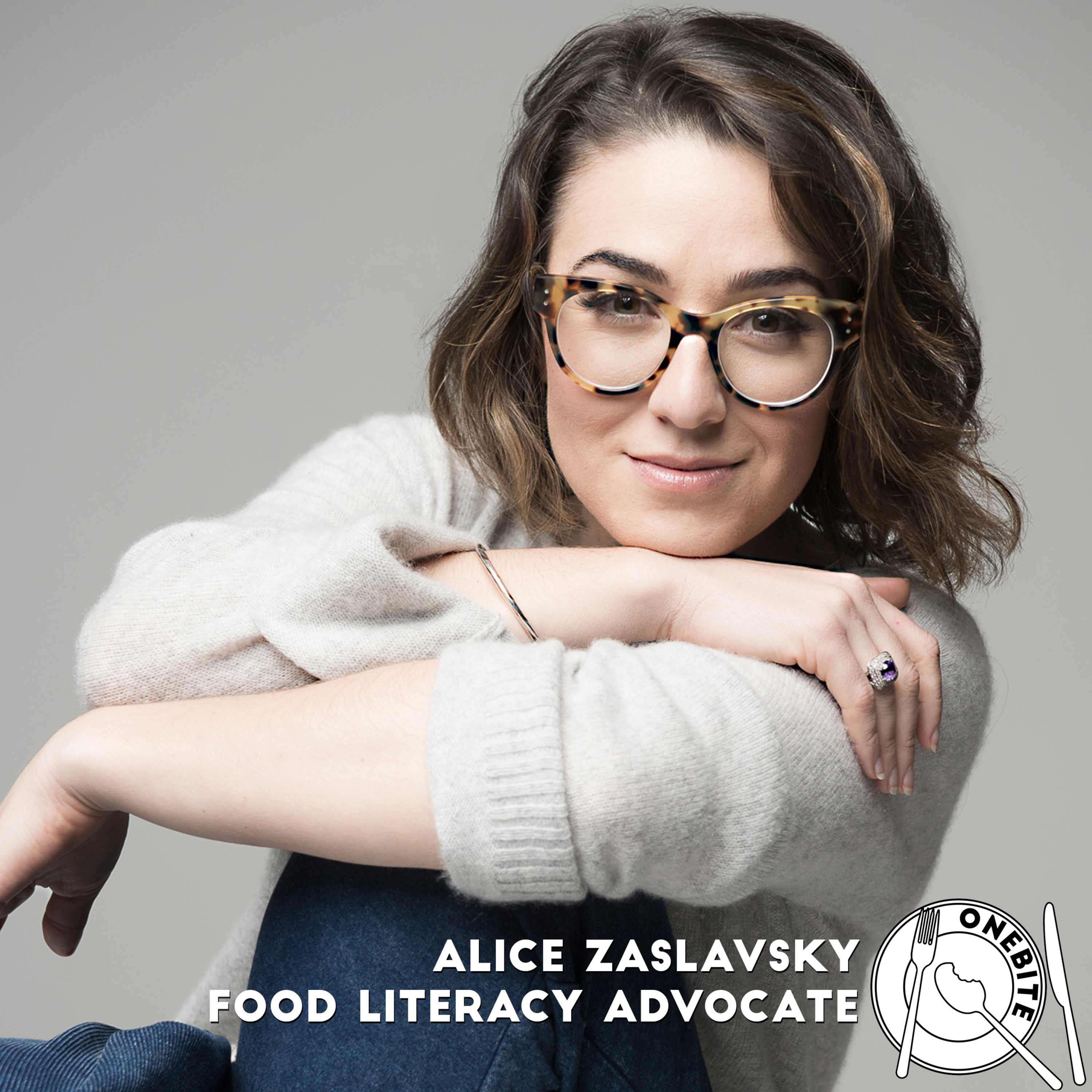
In this podcast episode, host Xavier interviews food literacy advocate Alice Zaslavsky. The conversation explores how COVID-19 reinforced the interconnected food system and forced a digital shift, with Alice adapting her media work to a home studio. They discuss the cultural disconnect from food, evident in poor dietary habits alongside the social media obsession with aesthetic "perfect" food, and how this relates to deeper societal issues, including the symbolic rejection of vegetables tied to patriarchal norms. Alice emphasizes that food literacy is fundamental and describes her free educational program, *Phnomenom*, which integrates food learning into standard school subjects by fostering curiosity and avoiding labels like "good" or "bad" foods. The discussion critiques aspirational cooking shows for promoting waste and inaccessibility, advocating instead for celebrating practical, sustainable cooking. Alice argues for reconnecting with food through kitchens and "dirty" (nutrient-rich) produce, viewing the kitchen as a vital space for connection and empowerment beyond mere functionality.
With this pandemic, what it's reinforced is that there is a chain reaction and that we are part of a system and that we do have power in that system and that we do have impact. Hello and welcome to OneBite, a podcast exploring the Australian food system. I'm your host, Xavier Caliote, a food researcher and sustainability student at the University of Sydney. This series focuses on the impacts of COVID-19 and how we build back better. We will meet Australians working from farm to fork and beyond, gaining diverse perspectives on our food system and how we can shift to more sustainable, resilient and fair food. So grab your knife, fork and spoon and join me as we digest the Australian food scape, one bite at a time. Hello and welcome to OneBite, Xavier here. Today I'll be speaking with Alessas Slapski, aka Alessin Frames. I'd like to start by acknowledging the radical people of the E-Orenation, the traditional custodians of the lands that I'm on and pay my respect to their elders past, present and emerging. Alessas Slapski is a food literacy advocate, resident culinary correspondent for ABC News, breakfast and ABC radio. Author of In Praise of Veg, Alessas Food A to Z and creator of Phenomenon, a free digital toolbox helping teachers slip more serves of veg into the curriculum. So welcome to OneBite, Alessas, great to have you on. Thank you, great to be here and what an intro. So I wanted to ask you what are you really enjoying eating right now? Well, right now, right this second that I'm staring at is a beetroot chocolate brownie that I baked yesterday that I'm really enjoying eating, 85% of the time because I managed to throw in half an egg's worth of shell into the food processor. So every now and then I get like a bit of shell grit and it's the actual worst but the brownie's so good that I'm like gritting my teeth through it. It's the worst, it's so bad. So I want you to know that it happens to all of us. Pushing on through. I should know better but I don't. So could you tell us a little bit about your journey into food? My journey started, my professional journey started as a teacher. So the way that I fell into food is through a little show called MasterChef where I auditioned for the show because I just done a course about kind of improving my home cooking skills and they were bumping our course out and bumping in the MasterChef auditions and I figured what a perfect opportunity to learn more about food and to meet interesting people and just to be immersed in it. And at the time I was trying to pitch an elective to my heads of school to do like a food culture elective for my kids and I thought if they saw me on TV they'll want to do my elective. So it was very much an organic process and after the show the kids definitely thought I was way cooler but so did when I went back to school they were just like oh my god it's Alice from MasterChef and I said okay firstly it's Miss Z. It'll always be Miss Z to them they still they're in their 20s they still call me Miss Z when they slide into my DMs but also why didn't you want to hear what I had to say when I was your teacher you know I'm still the same person still got the same views so I realised what a platform MasterChef had given me and so the last close to decade I've been in the food media in the food literacy space in the sense of I guess trying to encourage policymakers and key decision makers to think about food literacy as just as important as learning to read and write. Yeah and I think that it is and I think it's very important and we will dive into that a bit more in this interview. That way. But I just wanted to ask you you're based in Victoria just outside of Melbourne and what's the kind of COVID impact been for you and for your kind of networks because I know you're quite involved with some of the hospitality people down there. Yeah I normally I would be doing a lot of live stuff throughout my week but because everything went digital it kind of I think it kind of concentrated people's attention to what everyone's been up to so it kind of was an opportunity for me to help to showcase my industry through things like the Taste Dining at Home Series and Click for Vic where I'm kind of encouraging people to think about the producers and the providers of the food the amazing produce that we have in in Australia and then in terms of our own sort of personal experience with the COVID and lockdown all of my stuff has been broadcast from home so in March I got a phone call from my news breakfast you know ABC News Breakfast team and they said we're not having anyone in studio so can you do this from your home kitchen so since that was March so since then we've set up a home studio I suppose with you know great broadcasting gear I've now got like a camera switcher so I can do multi-cam I'm like a busker on the street but on zoom and so yeah I think COVID's kind of encouraged us a little bit like a bit of sand grit in a shell in a noice to shell is that it's kind of helped to polish my performance and hone what it is that I enjoy doing and I want to do more of yeah yeah I think that P word that we've all heard many times pivoting yeah it's a lot of people have had to do that so something I wanted to talk to you about is the cultural disconnect from food and you know we sort of see that in terms of people's intakes of fruit and veg and our intakes have kind of fast food but then on the flip side there's a bit of a fetishisation of perfect food across the socials and that kind of thing so there's kind of these two things happening at the same time hmm I think that food it's it's one of our primary needs right if you look at Maslow's higher archit you know pretty high up there and so we all have to eat so obviously I think that to some level we all think about food in some way whether that is the absence of whether that is the obsession with you know through things like orthorexia or you know or on the flip side the obsession with because it's a passion and it's a joy for you so I think that that's why it's probably so keenly felt where you sit on that in terms of people's intakes of fruit and veg I'm trying to formulate an answer that has it's you know what it is food as a concept is so multifaceted in there's so much emotion in it there's so much status in it as well you know it's very aspirational so when you talk about Instagram food and the fetishisation of it often it's talked about in negative terms I suppose because it is you know an obsession with perfect food I read and a research paper just the other day talking about how perfect food in images acts on our natural perceptions of its healthy healthfulness and healthiness so in doing so when we see ugly veg we think that that is not as good for us when actually most often it's it's the opposite because it's kind of potentially it's an heirloom variety or it's been grown at home so it's probably what would I say I don't think that we necessarily that things are any different now than they were a hundred years ago in terms of people having very different notions of what's important to them in the food sphere it's just that now it's a lot more visible where it is that we stand and what it is that we stand for when it comes to food yeah and I think that ugly veg thing you've sort of spoken about vegetables being a symbol of something much deeper and the way that we kind of other vegetables can can be kind of symptomatic of other things Holly you are Xavier you are speaking to the choir here because I have a theory and it's an interesting one I think that vegetables if you think about it who do we think about you know for people listening who do you think about when you think about vegetables it's probably your mother or your grandmother you know or a person that cares for you when you are young and so to me there's a level of the mother you know capital T capital M to veg and so that rejection of the mother is in turn a rejection of the divine feminine right which if you think about what we're breaking down you know a lot of those kind of patriarchal performative toxic masculine ideals that society has been built on for a really long time all of that is coming crashing down and so I think it's actually no accident that plant-based diets and that that vegetables are starting to be pushed forward and that on the flip side you've also got people who are very vocally rejecting it and you know a lot of that mckismo around there you can't tell me what to eat I know there's a quote you know George George W Bush saying oh you know my mum forced me to eat broccoli but now I'm a grown-up but I don't eat broccoli anymore so kind of thing so yeah I think that probably there's a lot of collective unconscious action going on at the moment and it's kicking up a lot of different conversations around and vegetables happen to be there as well so yeah I'm glad I'm glad that you brought that up that resonates with me very strongly yeah I did my homework and and I do just quickly want to touch on the the master chef thing and and cooking shows and you know Michael Pollan sort of says we now spend less time cooking and more time watching cooking shows and you know I think there are those very aspirational elements of some of these cooking shows and maybe some of the things that are being kind of put to the forefront in terms of food waste and in terms of seasonality need to be re-examined couldn't agree more and if there's anything that through that interlite it was that in the first lockdown when the new season of master chef came out and there were you know there's obviously the final table there are a lot of very high fine dining high for luten shows out at the moment and yet you've got the top Michelin stars in the world cooking at home with their kids you know baking cookies and you've got chefs from you know top chefs from Australia showing what they do with for their you know it was omelets and chicken parmers right so yeah I absolutely do think that we need to re-examined what it is that we encourage people to aspire to because that's essentially you know if we are putting it on television and if we are glorifying it are we also then encouraging people to think that that is the most glorious thing that we can do with with that carrot you know is it that we need to what's the word I'm looking for turn it until it's just like a little smidge of what it used to be and chuckle through the rest of it out you know we already waste 40% of the food that we buy so what can we do to encourage Australians and encourage people to rethink the way that they see food yeah and you know I think that's where education comes in and a lot of the work you've done around education and educating children and you've got kind of the phenomenon program I wonder if you could tell the listeners a little bit about phenomenon phenomenon with an M that's not a that's not a typo it's a it's a free digital toolkit for teachers and parents to encourage kids to fall in love with food and particularly fresh produce without ever using the word healthy without ever showing them perfect plates and food pyramids it's more about picking their curiosity and encouraging them to make their own choices and their own decisions around food a lot of the work and the research coming out of academia in this space speaks to the fact that what we've been doing for a long time is creating some really negative and reinforcing some really negative kind of perceptions of what food needs to be in order for kids to feel like they are doing the right thing so what I mean by that is the notion of sometimes foods and good and bad foods and clean and dirty foods and healthy and you know junk foods all of that language to adults we understand nuance whereas for kids who are still very very black and white they're that kind of moralistic language around food is internalized and absorbed so for a child to hear that the food that they ate for dinner last night at their house where they felt comfortable and safe was bad food because it came out of a box or whatever or a packet they will internalize that they in turn are bad so and here's the thing right their parents are doing their best their teachers want them to be their best they do but teachers too come to this space with their own baggage and so to expect teachers to teach food in a way that is nuanced enough for adults and yet respectful of that lack of nuance in kids when it's not their area of expertise which is what a lot of people in this space talk about we need more food education we need you know every kid needs to blabla that's very fraught so as I step off my soap box for a brief moment phenomenon is funded by Hort Innovation so that's the grower funded research and development not for profit for the growers of vegetables fruit seeds and nuts in Australia and when they and I were first speaking about this I said that the program needs to be free because I want it to be accessible to everybody at every level of the socio-economic sphere it needs to be integrated into every subject because I don't want this to be something that teachers need to find space for I want the space to be found for the teachers in what it is that they're already teaching because here's the thing when I was teaching it was the food that was a hooking kids into history and geography in the first place so actually we are teaching numeracy and literacy it's just that food literacy happens to be slipped in there as well yeah they can make it so as good as that yeah yeah they can your cake's a great way to look at fractures totally you know and looking at measurement looking at following instructions looking at some of the language and you know why not use it as an opportunity to like compare and contrast a baking a cake recipe from this era versus the 15th century like what how does the language change there's just so much that I you know it's a real deep dive so that was so you know it's free it's all all in there kind of slipped into you know really like very kind of chunked into subjects that they're already teaching and it's meeting not just the kids where they are you know in not using language that doesn't resonate but also it's meeting teachers where they are because it's it's kind of saying you teach maths you teach maths but it just so happens that you'll be teaching food literacy at the same time so we're about to launch some new resources as well and it's particularly speaking of covid times it's a food and mood resource pack so encouraging kids to kind of think about some of the things that they can do to help boost their mood naturally and obviously fresh produce you know the more vi- the more vibration you have in your food the fresher it is and the kind of vegetables in particular to me make me zin so that's that's how I think of them but also what else can you do there's mindfulness meditation there's spending time in nature there's doing some gardening there's moving your butt you know all of that stuff will make a difference to your mood so kind of arming them with the tools that hopefully if they need to find that resilience deep within themselves you know find that grit it's a lot it's a lot for kids what's happening at the moment and hopefully what we're going to provide them with is something that is helpful not just for the classroom but also for parents as well yeah yeah it is a lot and and I think you know that food and mood connection is is very important and that also then connects back to the soil and and sort of how our food is kind of grown and coming to us and you sort of talked about the labeling of different food and dirty food being a bad thing but I know you really dig dirty food yeah dig dirty food that's um so Simon Bryant who's one of my favorite chefs in Australia he's got dirty ink he's like you know eat dirty he says and he's so he cook in the chef you know if I think of like naughty chefs Simon Bryant is definitely up there and his vegetable cookbooks are fabulous if you're listening to it looking for recommendations highly highly recommend but yeah you know if we if we truly want to eat in a way that's nutritious for our bodies then eat dirty food food that's been grown in dirty soil you know that that's still got the myriad of amazing nutritious what's what's the word I'm looking for bacteria and life exactly life life is the word Xavier yes exactly yeah and I think you know there's sort of the Stephanie Ali Zander Kitchen garden program which is amazing and but again it's separate and I think the great thing about Phnominom is the integrated nature of it and the fact that it's aligned to all of the codes I was a high school teacher prior to this course so I can appreciate the work that went into that yeah well so our curriculum specialist actually aligned the curriculum for kitchen garden to the Australian curriculum so she was very mindful to make this as complimentary to kitchen garden programs as possible because those schools are already halfway there so what we're trying to say is okay you awesome you're in there for an hour a week an hour a fortnight what about the rest of the time what else can we do to scaffold and reinforce this positive behavior and these positive kind of habits as well yeah hopefully you've got some teachers listening that are just like oh this sounds good I will check it out please do yeah well a couple of my family members are teachers so awesome that's so great we'll go from there and you know I think part of these programs as well is about actually bringing kids back into the kitchen and reconnecting with food on a much more fundamental level yeah well I think the kitchen for a lot of kids is an unfamiliar place to be which is very is a very unfamiliar kind of feeling for me I suppose because that's where I grew up but that's not the experience of a lot of people as you know dual working parent households have become more and more than normal my my own included you know I was very much a latch key kid but I was very lucky that I had my grandparents living with us as well and so you know I saw grandma in the kitchen anytime that mum was at home she was probably in the kitchen I was probably helping her and so I'd really like that feeling the connection that comes with the kitchen to be one that I can facilitate as often as possible whether that be because the kid is the one that's in the kitchen first you know that would be nice empower them and remove those barriers that would be that would be really really good yeah but you know that what I keep thinking about is I was chatting to someone last week who mentioned that people are building apartments in America without kitchens kitchen lists apartments and actually you should have seen my face I was like what's like what's what is where the kitchen is then like what do you mean and she said well they're they're buying food out so much that they don't need a kitchen there and because the space is so you know at a premium who needs it and it's just like I just can't even compute it I cannot compute it that's mind blown right yeah and I don't know you know I think that I'm obviously I also need to check my privilege right because like I am coming from a very privileged perspective not just from a being comfortable and having a home and all of those things but also the privilege of growing up in a home where food was valued and and the kitchen was a place of comfort and safety and security so you know I'm saying that completely with that in full check but far out like like make the I don't know make the bedroom small like all you need in the bedroom is a bed all you need is like I just don't know just there's so much more to the kitchen than a functional space yeah that yeah it's it's concerning that that it's happening especially when you kind of think about the knock on effects of eating a lot of takeaway or not being able to prepare your own fresh food and and we sort of see a lot of the costs in the food system externalised onto the health or the environment so that trend is rather concerning 100% and then on the flip side you've got so many innovations occurring based on high density urban living where people are trying to find ways to still fit in little growing you know mechanisms and I spoke to a guy just the other day who's got like a created a UV light to help the veg like to the fruit and veg grow inside and I just think that's just there's so much amazing stuff out there and I think that we need to amplify those voices and as much as possible say hey it's not okay to build flats without a kitchen because you're not giving people the choice it's not you know when those people are moving in they're not saying oh yeah that's I'm gonna take that apartment with without a kitchen but if that's the only choice that they have then that's then as you say got knock on effects for them personally but also their community their environment it's whack it's whack yeah it's really whack so I wanted to talk to you about how we communicate about veg and originally I was thinking about it just kind of in terms of kids but actually it's a lot broader and it's how we kind of communicate as adults but also two adults and you know I think often people have had that incidents with a certain veg where it was murdered by a loved one trying to do their best and and it we just say I don't like that and you've said hedonism and health should not be mutually exclusive. Totally so there is this preconceived idea that vegetables and fresh produce and eating healthfully has to be at the expense of deliciousness which is bullshit. Like honestly there is nothing better when you think about the notion of treat yourself you know if you really want to treat yourself then treat yourself well right treat yourself with food that is tasty and full of life and full of flavour and taste is nutrition and so you know I think that for a long time the notions of tasty food and deliciousness have been co-opted by big food because they know that emotion sells food a lot better than reason and logic and when people are told eat it because it's good for you that is something that speaks directly to that inner child inside of us that the last time that we heard that we had to shovel something overboiled and under seasoned into our mouths and the last thing that we want to do is treat ourselves to that. So if we want to reframe the way that people see that sort of food then we need to reintegrate pleasure and enjoyment into fresh produce and into real food. Yeah absolutely absolutely and you know I sort of think about that experience personally and for me it was a cauliflower that was boiled to death and I always just thought I'm not a cauliflower person until someone like barbecued some cauliflower with a tahini sauce and blew my mind. Yeah yeah I think that unfortunately what happens is that if our expectation of those sorts of foods is that we have to eat them because they're good for us then we try we don't try as hard to make them taste good right so because we're just like that's not going to taste good ever but as you say brassicas love being burnt they love creamy sauces and if there's a food that you as an adult are saying I don't like it then maybe what you should say is I haven't liked what has happened to it in the past but I'm willing to give it another go and I'm going to challenge myself because isn't that part of what being human is all about is you know not letting our identity be defined by our past yeah yeah praise be which is a wonderful segue into your new book in praise of veg which I happen to have borrowed a copy from my corner smoothies it is absolutely delightful it's about plant forward eating it's color coded it's about loving your leftovers it's dotted with history and a good dose of Alice's puns particularly like the one about the avocado and anything that starts with garlic and ends with avocado you've got me yes I love that what I'm gonna that is my that's my sound bite from this can you please like pinch that as my sound because you've really encapsulated what this book is about I I think that for a long time when people have read about vegetables or written about vegetables it's with like a a caveat or like a like with their breath sucked in I suppose you know and I know that because in 2016 I went about challenging myself to do 365 days of vegetables as a hashtag and what I wanted to do was showcase all the different veg all the beautiful things that have been said about them and really hero them you know champion them when it came time for me to start googling quotes it was really hard to find nice things that people had said about vegetables beyond Jane Griggsson and beyond a few other kind of you know big tidbits here and there everything was negative and it came back to that negative perception that negative narrative that we've fallen into so I realized at some point probably within the phenomenon journey as well that if I was going to encourage kids to try veg I needed to arm their parents with the skills and the knowledge and the enthusiasm for making that vegetable that they chose tastes good so it's kind of like where's the slam dunk I can only lead that horse to the trough you know you need to make whatever's in that trough taste really good so that's what you know in praise of edges all about so and you're emphatic nodding just makes me so happy you know I just I'm so proud to see people holding this book because it's been such a labor of love for so long and I hope I truly hope that we can populate the quote quote sphere of Google with some of the stuff in this book not just from me because that's kind of the motivation behind are they posted notes? but yeah I did I did tell you I've done my homework holy crap so but I'll finish I'll finish that thought so what I've done is I've reached out to some of my favorite chefs in Australia and around the world and I've asked them what their favorite vegetable is and what do they do with it because you know it's not just my words that I want people to use I want to be able to say you know unarosh thinks that eating a tomato in the height of some eyes like drinking a tall glass of water like right boom my drop moments on every page I just I just love it yeah and I think you know opening that up to to others and other people's voices and perspectives is really powerful and and that's part of what I'm sort of trying to do here so the mash crackle and pop that to me looks very special so it's a mashed potato and then you kind of crackle up fry up the skin of the potatoes for that like crackle I'm I'm excited about that yeah yeah and then you use the leftover potato did you flip the page is that what you're gonna say I wasn't but go for it the knocky you use the leftover mashed potato to make no key and if you've got any leftover mashed potato after that you can also make the mushrooms that are which are like resold stuff with mushroom so you know like yeah I'm glad that you got it from the cornice myth girls because you know if there's anyone that knows how to use up the leftovers it's javy and really so yeah and something that both you and the cornice mythies did which had kind of never occurred to me was that idea of taking the sausage mints out of the the skin and and because it's generally flavoured and delicious and this rediche on sausage pasta looks amazing yeah that's the bomb.com that's really really good yeah and you don't even need to like if you can't be bothered making that you can also just turn it into meatballs like you can just pop the the sausage mints out in balls fry that off and then put that in the sauce as well yeah and I'm I'm very happy that there's parsnip brussel sprouts and okra in here because praise to those three vegetables and I actually grow a variety of red okra. I love it and that red okra is so striking it's beautiful. Yes the only the one weird thing I needed to ask you about was peanut butter, tomatoes and honey and parsley or basil because yes I do the peanut butter honey and banana but where did the tomato come from? think about tomatoes in that height of summer they are so so sweet you know especially if that you're growing them yourself and you've got those little cherry tomatoes so you've got the acid if you think about peanut butter and jelly the reason the jelly is there isn't necessarily for the sweetness it's there for the acid to cut through the richness of the of the peanut butter so that's what the that's what the tomatoes are doing in that is that they're the acid and the freshness and then you've got the sweetness from the honey and then you've got the crunch from the peanut butter and the richness as well and then it's all topped off with some brioche and basil and tomato obviously are really good friends but basil so fragrant especially when tomatoes are really good basil is really good right so that as a combo is like I want to I want to challenge you I want you to think about it but it also is so the inspiration behind it beyond a dish that I tasted years and years ago at a great cafe when I was a restaurant critic it was at a cafe in Melbourne square and compass I think that's what it was called the other thing is that there's a Sudanese dipping sauce that's also in the book that's a tomato and peanut butter combo and so this is kind of like well if you can do that then why not do this because I mean we do we use peanut sauce in sort of lots of Asian recipes and that kind of thing so I did kind of think I was like yeah I can sort of see how that would work and I will try it and I will let you know try it I will yeah and you don't have to do the honey you can keep it savory if you want to as well what's your favorite recipe I mean it's it's a tome it's like asking your favorite child it is yeah there are over 150 recipes in here if I had to pick one it is it like the one that's kind of got the most like or the one that I think everyone should cook so for the one that's got the most it's probably the bush because that to me is like my childhood in a nutshell it's the thing that my you know when we first came to Australia my mum you know we didn't have a lot of money and mum would cook big pots of bush because it was really all we could afford for us to have you know the afternoons and it's still what we do with our veg box you know I whatever we have either in the crisper if I've had a long week or at the start of the week if I'm really motivated and I've got the fresh veg that all goes in a pot and I make that soup so you know wouldn't it be amazing if everybody had a pot of soup in their fridge all the time and then you wouldn't need to talk to people about getting there two and five because you just are yeah it just is tasty so that one for sure and then I think the desserts like there's so many really good veg desserts in there there's the parsnips sticky date pudding which is just like I don't know you like parsnips so yeah yeah yeah yeah the beetroot chocolate brownie which I'm eating right now is extremely good the colour is beautiful it's like a magenta no like a wine colour it's beautiful even with eggshell it's good so even with eggshell oh my god Xavier I can't tell you how unpleasant the eggshell is please please for the love of all that is sacred and holy about vegetables do not crack an eggshell into your food processor as you blitzing this up like be sensible put it in a jug and then finally probably like in the dessert category so got the sticky date beetroot brownie the carrot cake that's my mother's in mother-in-law's carrot cake it's gluten-free the flavour is moist and the flavour is like spices and the texture is moist and it's just yeah I'm I'm getting hungry just thinking about this yeah carrot cake is definitely up there for me in like a favorite dessert cake situation so I just wanted to finish up by asking what's one thing that is bringing you hope one element an aspect of this whole Covid times new normal all of the other buzz wordy kind of bumper stickyy ways that we speak about this time is the feeling that I had in that first lockdown where you could turn on social media and you could see that massive obitura was stuck at home making ragoo with his kids and that you could see that mark best was having a conversation with klaresmith in london you know there was a real sense of togetherness that were all in this together it made the world feel so small and I think that if ever we're all in our little hives aren't we like we all feel like we're in our little echo chambers where it actually doesn't matter what other people think or you know whatever it is and yet with this pandemic what it's reinforced is that there is a chain reaction and that we are part of a system and that we do have power in that system and that we do have impact on others in that system so you know through things like click for vick for example the upshift in people purchasing from small producers has been enormous and Australia as a market is naturally like where a bricks and mortar kind of purchases purchasing mentality this has precipitated a push into the online space and so it's actually democratized the bougie farmers market scene in a way where now nanna can have it delivered to her doorstep she can support that producer that would otherwise not have access to her support and money and she would not otherwise have access to that produce that is more nutritious and delicious and probably going to encourage her to you know eat more interesting things so what's giving me hope is that what we know is that we're at the crest of a wave we are within the shift of paradigms and all we need to do is continue to put our power and our voices and our dollar towards positive action and positive causes and that will drown out the rest of the stuff that pulls us you know normally will drag us down so that's it these conversations this is what gives me hope yeah absolutely thank you so much that's great and that brings us to the end of one bite for this week I'm your host Xavier Calione I've been speaking to Alessas Lapski about food literacy and veg ugly veg beautiful veg culturally getting reconnected to our food and Alessas beautiful new book you can find more info in the show notes or head over to the website at onebytepod.com and Alistair you want to spruke some links when's the book dropping the book is dropping November 3rd it's out so I don't want to like timestamp this podcast but you are you know speaking of crests of a wave I have the storms avia you are speaking to a soon-to-be fully published big book author um so in praise of veg.com is where you can go to find out more about in praise of veg for nom and nom with an amma.com.au is where you can go for completely free food literacy resources if you're a teacher if you're a parent if you're listening to this thinking my kid could really use some inspiration and so could I that's where you can go and if you want to talk to me Aless in frames is where you can find me on all the socials and alessinframes.com yes and I'll pop links to all of those in the show notes and thank you so much for listening if you do like the show please subscribe drop us a rate and review because it does help others find us see you next time
Podcast Summary
Key Points:
The COVID-19 pandemic highlighted systemic interconnections and individual agency within the food system, prompting a digital pivot in food media and education.
There is a cultural disconnect from food, seen in low fruit/vegetable intake and fast-food consumption, contrasted with the social media fetishization of "perfect" food.
Food literacy is as crucial as traditional literacy; education programs like *Phnomenom* aim to integrate it into school curricula by sparking curiosity and avoiding moralistic language about food.
Vegetables symbolize deeper societal issues, with their rejection linked to patriarchal structures, while their embrace aligns with a shift toward plant-based diets and reconnecting with food origins.
Cooking shows often promote aspirational, wasteful practices; there is a need to glorify accessible, sustainable home cooking and reduce food waste.
Summary:
In this podcast episode, host Xavier interviews food literacy advocate Alice Zaslavsky. The conversation explores how COVID-19 reinforced the interconnected food system and forced a digital shift, with Alice adapting her media work to a home studio. They discuss the cultural disconnect from food, evident in poor dietary habits alongside the social media obsession with aesthetic "perfect" food, and how this relates to deeper societal issues, including the symbolic rejection of vegetables tied to patriarchal norms.
Alice emphasizes that food literacy is fundamental and describes her free educational program, *Phnomenom*, which integrates food learning into standard school subjects by fostering curiosity and avoiding labels like "good" or "bad" foods. The discussion critiques aspirational cooking shows for promoting waste and inaccessibility, advocating instead for celebrating practical, sustainable cooking. Alice argues for reconnecting with food through kitchens and "dirty" (nutrient-rich) produce, viewing the kitchen as a vital space for connection and empowerment beyond mere functionality.
FAQs
OneBite is a podcast exploring the Australian food system, focusing on the impacts of COVID-19 and how to build back better towards more sustainable, resilient, and fair food.
Alice Zaslavsky is a food literacy advocate, culinary correspondent for ABC News, author, and former teacher. She gained recognition through MasterChef and now promotes food education and literacy.
Phenomenom is a free digital toolkit for teachers and parents to help kids fall in love with food, especially fresh produce, without using terms like 'healthy' or showing perfect plates. It integrates food literacy into existing school subjects.
COVID-19 shifted her work to digital formats, leading to initiatives like the Taste Dining at Home Series and Click for Vic. She also set up a home studio for broadcasting, which helped polish her performance and focus on her passions.
She believes food is multifaceted, involving emotion and status, and that social media often fetishizes perfect food, affecting perceptions of health. She notes that ugly vegetables can be more nutritious and that plant-based diets are gaining traction amid societal shifts.
She sees vegetables as symbolizing the 'divine feminine' and connects their rejection to broader societal issues. Promoting vegetables aligns with breaking down patriarchal norms and encouraging healthier, more sustainable eating habits.
Chat with AI
Loading...
Pro features
Go deeper with this episode
Unlock creator-grade tools that turn any transcript into show notes and subtitle files.
 PodcastTranscript AI