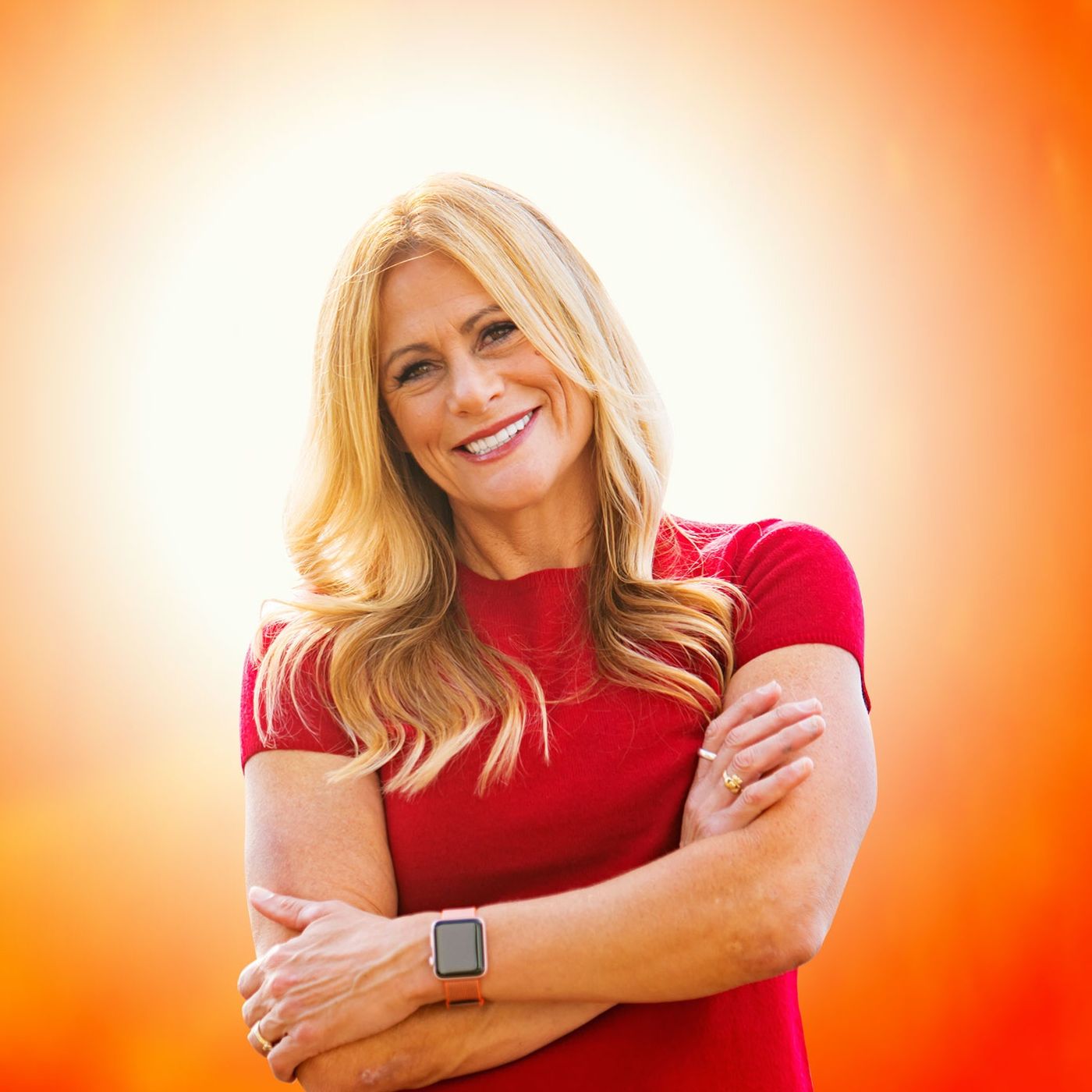
The speaker shares lessons from adventure racing and personal challenges. In a key race, her team was losing until a teammate, Steve, innovated by tying their two canoes together into one long boat and switching from canoe paddles to kayak paddles, leveraging their kayaking strength. This "Steve Gurney missile" allowed them to overcome a large deficit and win, demonstrating the power of creatively changing the rules of the game. Later, the speaker faced a major medical setback requiring multiple hip replacements. She adapted by becoming a solo ultra-endurance kayaker, setting a world record and consistently placing on the podium in major races. This experience inspired her to found Project Athena, which helps survivors of medical or traumatic setbacks achieve adventurous dreams as part of their recovery. Another racing story highlights perseverance when her team's support crew vanished; they improvised with local bikes, faced penalties, but were ultimately celebrated for their attitude. The overarching theme is that challenges are inevitable, but success is defined by one's innovative comeback, leveraging core strengths, and maintaining a positive, adaptable spirit in the face of absurdity.
And he grabbed the top of my head, which was facing backwards, and he physically spun my head back around to face forwards, downriver, and he leaned over, and in my ear, he said, "Winning is that way." [Applause] Okay, honestly, since they're all friends, I could totally admit that I didn't have like his big breakthrough moment. I'd spent hours thinking about all the ways I could drown the man. Totally, too. But there was a guy on the other side of the boat, though, who I named Steve Gerdy, and he had one of those MacGyver brains, you guys remember the show MacGyver? Like this guy could build a space shuttle in his living room. So he started thinking about what it was really going to take to win and what resources we had in the next transition. And when we got to that next transition area, the race director took away each team's whitewater raft and handed each of us two inflatable canoes. So our competitors, the French, they jumped in their two inflatable canoes, they grabbed their canoe paddles, and they were gone down the river. And Steve turned to all of us and he said, "Hey guys, hold up, I got an idea. I want to get our climbing rope out of our gear box that we used for the mountaineering section. And I want to tie our two boats together." This had never been done before. He wanted to tie our two boats together end to end using our climbing rope through all the d-rings on the outside of both boats so he could make one big long boat. And then he said, "And why aren't we mentally stuck using canoe paddles just because these are canoes?" We're a hell of a lot stronger kayaking team. We have our kayak paddles in our gear box for the next section anyway, but no one had ever thought to use kayak paddles in these canoes before. Now why do you guys know the difference between canoe and kayak paddles, right? Can you paddle single blade, switch hands, use it on the other side? A kayak paddle is a long stick with blades on both ends and you swing back and forth with it. They're literally two completely different sports. So they were a much better canoeing team, we were a much better kayaking team. We got at our kayak paddles and just made them longer to fit around the edges of the canoes. In between those two things tying the boats together and switching paddles, we ended up creating what we called the Steve Gurney missile. And we put that sucker on the water 40 minutes behind the French. And I was completely freaking out. And it was a huge big risk. But sometimes a big risk comes. Yeah, and believe it or not, they actually caught the Steve Gurney missile in action. See you guys check it out. They head into the raging white water of the rail to watchy river. Team Steve Opingyo launches first. 13 minutes behind the leaders, Solomon Presidio heads down river. Solomon Presidio charges forward, determined to catch the leaders before the transition to the sea kayaks. From Solomon Presidio pulls up on the beach at Somme. They will soon become the first American team ever to win an international adventure race. Yeah, Steve Gurney, how smart is that guy? Isn't he the best? Not bless him. Now, so the big question is, what is your next Steve Gurney missile going to be? I mean, either at your hotel or in the hospitality industry in general. It's all about taking your core strengths and talents and background and experience and competency and your amazing team members and your great resources and your creativity and your agility and saying, you know what, we're not just going to find a way to tilt the game board in our favor. Maybe we're going to be the ones who find a way to completely change the game or change the way the game has played. I mean, in our case, the industry said this is supposed to be a canoe race. Five people, two canoes, canoe paddles. Steve said, I don't think so. I'm going to make it a kayak race with five people in one boat. That's what made all the difference. We couldn't shake those guys for eight days. In the last day of the race, we put two hours on them with the Steve Gurney missile. And it was literally that moment when somebody said, guys, let's do what it takes to win versus simply not lose. That changed everything. Great there's also embrace their challenges and setbacks when they happen because they happen to all of us. As a chance to maybe learn something or excel in a different way. Now I had a small medical setback about eight years ago. I discovered I had end stage osteoarthritis in both my hips. And so for the last eight years, I've had six hip replacements because the first four failed. I know I'm the person that they're looking for in those commercials. Like if you've had failed hip replacements, call the law offices. Like that dude and that guy. Yeah. Cheers. And that's my butt. And now we're all BFFs, aren't we? But the reason I share these crazy metal hips with you guys is because I think my bono hips are awesome. And I get to tell people I'm 25% Wolverine. This is sweet. And they get the nicest backup from the lady at the airport at the TSA when I go there. I don't even pay for my sausage anymore. It's wonderful. But these crazy metal hips led me to a couple of really neat things. I was always inspired by the Chuck Yeager quote about how you back up but never give up. So I thought, okay, adventure girl, what are you going to do with this? So the first thing I realized was I need a brand new sport because I really wasn't going to be a good adventure racer anymore. But I always loved the kayak sections and the races. That's where I felt my happiest and my strongest. But I didn't really know whether the guy behind me in the double kayak was the motor or whether I had some motor. So I decided to take a whack at being a solo ultra endurance kayaker. So for my first trick, I decided to take a whack at the Guinness World record for a long assistance paddled by a girl in a kayak in 24 hours. And went up to the Yukon River and was able to pull off that record and it still stands. And they said, "But this is your certificate." So I had to be a goober joke guys. You guys are so nice. Thank you so much. So for my second trick, I decided to enter the longest nonstop paddling race in the world, which is called the Missouri River 340. It's a 340 mile paddle nonstop from Kansas City to St. Charles. And I totally just started with some shorter. I brought my adventure racer brain to ultra distance paddle racing. And whereas all the racers in that event would sleep for a few hours at night on the banks because that's what they had always done and they assumed they needed to, I knew I had raced for two days without sleep before. So I just blew through the whole thing. And when I got to the finish line, my husband had to physically pick me up out of the boat. And when he picked me up, he said, "Oh my God, I'm so proud of you. You were second." And I was like, "Get out of here. I was second woman. I was so thrilled to be second woman in my first race." And he said, "No, you don't understand. You were second overall." And of all, 111 solo boats in the race. It was so neat. But you guys have actually been second place overall now four times. It drives me bananas. There's always one boy that beats me. And it's always a different boy. I can't even wait for the one guy to just stay home. It's the worst. But I'll tell you what, it really is neat to be a girl on the podium top three in the biggest nonstop paddling race in the world. It's awesome. It's a best. I love it. Thanks you guys. But the neatest thing that these crazy metal hips led me to was the best thing that's ever happened in my whole life. And that's the inspiration to start the project Athena Foundation. And what we do at Project Athena is my semi-broken adventuracer friends and I help survivors of medical or traumatic setbacks live an adventurous dream as part of their recovery. So they can show themselves, their families, their doctors, how awesome they are after a big crazy setback in their life. And we were so thrilled and honored to become one of the 2014 CNN heroes. And they made this little video for us. I initially got hurt in 2005. I had 46 surgeries and attempts to salvage the leg. And I finally decided on amputation. A lot of people view as a loss, but I got my life back. Very often people are saying, okay, I survived, but now what? And we want to be that now what? Good job, ladies. I was a world-class adventuracer. In the world championships, I hit the deck and the doctor said, you're never going to run again. I've had four hip replacements. After my first, I said, I'm just going to put something on my calendar so that I'm still training for something. It just makes you realize it's not about the setback, it's about the comeback. So I thought, let's do that for other women. Athena! I started an organization that helps survivors of medical or traumatic setbacks live an adventurous dream as part of their recovery. This is about you going out there and doing the bad ass that you are. You're strong, kid, how you girls? I was in a place of such uncertainty, so finding the website was such a message of hope to me. Here was a group of women who understood it on a different level. Athena, girls! Yeah, baby! Being an Athena, you're not just a survivor, you're an adventurer. We give them a different label to put on themselves and it's something they become on their way to the finish line. It's the best thing in the whole world. It's the best. Thank you, thank you, thank you. And the reason that I share it with you awesome people is because some of you may know a survivor that we can help live her adventurous dream as part of her recovery or his adventurous dream. We started taking male survivors a couple of years ago as well instead of Athena, we call them Zeus. But we not only take survivors on our six big annual adventures, we also take fundraisers who raise the money to support the survivors training in their adventure and we call them our gods and goddesses. And guess who our gods and goddesses are? Just like you guys, yay! I know you're so excited. So honestly if anybody out there has a wild hair to come with me and other normal, cool, non-adventure racer people on a great adventure for a cool cause, like hiking across a Grand Canyon in one day. Or kayaking and riding your bike from Key Largo to Key West in November, which is awesome, right? You don't have to rush the stage to sign up. You guys know the deal, right? Sometimes something happens in your life or at your hotel. And you look back a few years later and say, you know what? In a lot of ways, it was one of the best things that ever happened to me or best things that happened to us. I mean, in my case, I would have discovered paddling or started Project Athena if there was more cartilage in the world. So I am kind of grateful for that all the time. Because at the end of the day, you're never defined by your setback. You're defined by your comeback. Thank you. That's true. Never forget that. Last but not least, great leaders never let the pursuit of perfection hinder progress. Things are never going to be exactly the way you want them, right? But we go forward and we inspire our team members to do the very best we can with what we've got on that day and in that moment. That's exactly what my teammates and I did in Tibet, the next beating your share with you guys. So my teammates and I are on day seven of the French version of the Eco Challenge, the Raid Galois once again racing. Now, yeah, back and forth, neck and neck, like Groundhog Day. Day seven, it appeared as though all we had to do was run into this transition area, jump on our mountain bikes, ride 60 miles to Nepal to the finish line. Yay, we're going to win the raid for the second year in a row. Not so fast. We go running into the transition area and our crew isn't there. Our bikes aren't there. There's nothing there. There's just a bunch of locals walking around in this big open field and one guy from the race organization standing in the middle, the French mountain bike course director, a guy named Sylvan. And Sylvan is quite a character. We aren't running up to Sylvan. We said, where's our crew, where's our stuff? And we got the standard Sylvan response for all the international teams. Z, she's a very big problem. Not for you. Not the problem with the race. So they might be many days away. I think you sit. Last thing is I was happy to see. So we sat for about five minutes. Then I had these three awesome leaders spring into action. You will note that I'm not one of them. And it really wasn't pretty, but we did the very best we could with what we had on that day and in that moment. I'll let you guys see what happened. I should have had time to get here. I would have thought, because we'd been traveling for two days. And walking. And I should be. I told that their crew is a days travel away. They're devastated in disbelief. This is not happening. There's one of light's great experiences that's going to teach us something. Robin Venakasa and Solomon Land Rover have been leading for three days. And time is ticking away. Do you speak English? We're not understanding the word defeat and with no means of finding out how far away their assistance crew truly is. Team Captain John Howard of Solomon Land Rover has taken matters into his own hands. We don't have our bicycles here because our assistance haven't arrived. And so we want to buy five bicycles from anyone. We can maybe rent. All right, let's do it. Let's have a look at them. Do you want to come and shift them out? Yeah. It'll be great, Robin. It's a spirit adventure. You can have a woman's one, Robin. What that one would be fancy? Solomon wasn't about to give up without a fight. As long as the bikes could roll, they would do the trick. Or so they thought. They're fleeting moment of hope. It's dashed just seconds later. Robert Nagle is astounded when race officials say that they will be penalized for using the bikes since they fail to meet mandatory specifications. After enduring over 400 miles of immeasurable challenges, it is this that breaks him. But only for a moment. It seemed like at that point that it wasn't even possible that we could sew in this thing. And that's when we all got a fire lit under our butts. At times like these, it is clear that adventure racing tests a person's mental strength as much as physical strength. We took off on those local bikes saying these guys are making up the rules as they go along. They're not going to let us win this race. Now we just have to prove what kind of people we are. You know, people judge you in your life, right? No, what you achieved, but what you had had a few days for them. It's so awful. Do you guys want to know what happened real quick? Oh, you've made it. Okay. We didn't get a big gold star for our incredible innovation. Sylvan makes the executive decision that we should have 12 hours of penalties. For each bike not having the required front lights, rear lights, or suspension per the race rules. So we throw on our whitewater rafting helmets and we've victoriously take off on those POS bikes. You know what, we're just going to make them take the win away from us at the finish line. And you guys saw those bikes. They were never meant to go that far, right? And everything's breaking and exploding. And you know, by about 12 miles into this, we're all pushing these bikes through the sand. You know, just waiting to be passed by inner sport. And then we look up and we're super thrilled and excited because our crew has caught up to us with our good bikes. And they pull up and we start switching out the crappy bikes for the good bikes. And we're about to take off thinking that we could still win. And then somebody on my team had a really bad idea. He thought we should break out the race radio and ask Sylvan if we were allowed to do that. Right? You guys all know big forgiveness later. So. Right. So we hear back, this is impossible. This is a disqualification. So now we're going to be disqualified because we're switching gear in a different location than the official transition area, which was 12 miles back where we started. To get that to push the bike, 40 something miles that way to the finish line or push them back the 12 miles to the only square of dirt where we were allowed to get on our good bikes and start over. And we're pushing our bikes back the 12 miles. And in tears as usual. And my buddy Keith is like making up successories, posters like, but wait, we're going to be judged by our attitude, whatever it is. And then we look up and guess who's coming towards us on their super awesome mountain bikes. Yeah, the French hurling victoriously to the raid got was finish line as it should be. And we can tell that they've launched a helicopter in the distance. It's coming towards us with the TV camera because they have to videotape the moment of the past where the sad Aussies and Americans and Kiwis are pushing our bikes back and the French are going on to win the raid. And then something kind of crazy happened. About five miles after the pass, somehow, poor team intersport was arrested and detained by the Nepalese police. They're in jail. They're in jail in Nepal. You can't make this stuff up. I just disappeared. And this finished team that was six hours behind both of us, tiptoed to the mayhem and won the race, the end full meltdown. You guys have had days like that. But it turned out that my buddy Keith was actually right. We were judged by our attitude. After all that, we were a fourth place. And when they announced us in fourth place, all the other racers stood on their feet and pointed and cheered and clapped and kind of symbolically gave us the win, which was very nice. And then for the Finns, that technically won, there was very polite golf clapping. So there's always great different ways to deal with challenge change in averse. All the positive attitudes stuff, but on some days, do you know what has hit the fan and the fans on Super High Speed that day? And what's the best thing we can inspire our team members to do on those days when things are just that sideways in ludicrous? Yeah, laugh. Keep moving. That's exactly what these next guys do. You'll love us a clip. If a racer drops out, the team is disqualified. The remaining members sometimes form a temporary team so they can continue on the expedition. We've now got a team of UK and a team of US, so we've got half and half. It's the only team now mixed nationalities in the whole race. US, so US and UK is US. Shut up. And we suck. I speak a little bit of English, but I've done a little bit of the translation between Dave and the bridge. I'm sitting in front of the boat and I say, Dave, we need to go right. What? It needs to go through three translations. Up the boat, back down the boat. We still pretty far apart on a lot of issues. Traveling with yanks, well, it's like having a flea in your ear most of the time. But they're behind us, so we use to that. They're a witty bunch. The attitude was the same. There were four of us. There was a serious level of humour. Right around it. Sleepy. Onshore. Onshore. In the ECO challenge, the pain is notorious. A lot of it's physical, even more of it's mental. Pain is mandatory and suffering is optional. You suck. You suck. You suck. You suck. The race is 320 miles long. You can't change that. But to have good people around you and to have fun doing it, that's what it's all about. Enjoy it and laugh and get through it. You suck. You suck. You suck. How awesome is that? Isn't that the best? God love them. Do you guys think they finished? Hell yeah, they finished. And they even came back to race together the next year because they had so much fun. Isn't that the best? My favourite part of that that I think about all the time you guys might now too. Pain is mandatory. Suffering is optional. Just a conscious decision where they're going to suffer or not. And those guys literally laughed the way all the way to that finish line. Alright, next essential element of building world class teams is all about helping your people become we thinkers versus me thinkers. A we thinker walks out their front door or walks into your hotel every single day and says, "You know what? There's a world full of teammates for me here. Not a world full of people I have to get over around and through to accomplish my goals. Why is being a we thinker important? Because the best of the best and you guys know this being the best of the best, you never have a goalie can accomplish alone, do you? Does anybody in this room have a goalie can accomplish alone? Absolutely not. And if you do, it's not big enough. So one of your most important skills and talent as a manager and as a leader is that ability to help connect people from mutual gain, create those partnerships, collaborate. I mean in your case you not only have your team members that are at your property every single day, you have members of your community, you have your guest that are on your team, you have the gang at Hilton's Intergalactic headquarters that are on your team. The brand management team is always your team members, the supply management team, members of your community and everyone in this room of course always has each other as a team mate. And when you have a great team around you, whether it's team that you're on for a transaction or a team that you're on for a lifetime, it works really well. If you as a leader inspire everybody on that team to suffer equally. Now this is just kind of a funny term that my buddy Robert came up with by accident at the start line of the raid in Ecuador. Up until this moment, the way that everybody raised was they would look at the race rules, fill their backpack with the mandatory gear and walk next to each other towards the finish line, which is our common understanding of teamwork in business, right? You guys have all seen those successories posters like teamwork walking side by side towards a common goal. Robert had a whole different idea of the way we were going to try to win this race. Literally five minutes for the start, he turned to all of us and he said, hey guys hold up. I got an idea. I want everyone to take all of your mandatory gear out of your packs and make a big pile here in the middle because this isn't his gear and his gear and her gear. This is our stuff to get to the finish line. And he assessed the course and it started with a 75 mile run at 14,000 feet elevation to get to the first checkpoint. And he assessed all of our strengths and challenges as athletes and he leaned over and he took the bulk of the weight from the pile and he handed it to the two strongest runners for that leg. And he handed me a water bottle. I was just standing there with a power bottle at the start line. And I was kind of mortified. I remember saying to Robert, Robert, all the other girls have their packs on. Can I just wear my empty pack? And he said, no, all the other girls aren't going to win. You are. We are. He said, my idea and how I think we are going to be faster than anybody else out here is if from start to finish, everybody on this team suffers equally. He said, think about Rob, if you leave the start line with your full pack, your heart rate is going to be like 180. Keith Murray, our strongest runner with just his mandatory gear, his heart rate might be 140. If I can find a way to make both their heart rates 160 somehow for this leg by giving him more weight and you a little bit less for a while with the understanding by the way, mini sidebar. What we discovered over the years in adventure racing was that the guys are always the strongest team members, the first 24 hours of a race. The girls are always the strongest team members, the last 24 hours of a race. Which is very cool, right? So we were not only good at different sports, we were good at different times throughout the race and the game became to capitalize on that. And you might be saying, well, why is that? I'll give you one quick reason. I mean, there are many, but here's the most important one. So the guys, they'd start out brute strength, right? But over the course of like the six to 10 days of a race, all the guys would lose like 15 to 20 pounds. And they'd lose a lot of strength. Guess how much weight I would lose? Zero pounds. Not one pound. What the heck? Did I get an A-man from anyone who's tried to lose weight ever, ever, ever? So I do, okay, so the moral of that story is everything that you hear about like, oh, losing weights just simply a matter of calories in versus calories out. I'm here to tell you that's total bullshit. All right. So I, all right, back to the race. I'm in so much trouble already. So Robert says, aren't we going to go further faster if we're all suffering equally? And it turned out that in that moment, he literally stumbled upon how winning in the long term really works. That it wasn't just about individual responsibility and accountability. He was now saying, you know what, on this team, when you have a little bit of extra strength, let's give it to each other. Let's be responsible and accountable for getting each other across a finish line. And as we left the start line, we realized this wasn't just like purple dinosaurs, and I love you, and you love me, and pink fluffy things and butterflies. This was killer strategy. We started passing teams. We had never even seen before in our lives, because at some point, all the top teams had to slow down and wait for their slowest person. And we just decided not to have a slowest person. We were all suffering equally, moving weight around all day long. So overnight, we took the lead for the first time in a big adventure race. And one of my teammates was so excited about the concept of suffering equally that the next day, he thought of an even more efficient way to do it. He said, you know what? I think I can carry any more weight, but I bet I can tow somebody. So we cut a piece of bungee cord off the netting in the back of his backpack, and he made a little tail, which is what you see going on. That shot right there. That's my Kiwi buddy, Neil Jones, telling us down the beach a couple years later in New Zealand. But it was in that race that my friend said, why would we wait for someone who's challenged today, or maybe this sport isn't their strength or their suffering, if they can just grab onto somebody stronger for a little bit, and we can just take them with us. And it was in that race you guys that we went from being average adventure racers to being consistently on the podium, top five at the World Championships, for the next 10 years. 10 years. And I swear you guys, we were never any better as athletes. We were all completely mediocre athletes. And we were between like 35 and 50 years old. We weren't even spring chickens, and we came from all over the world. We never even trained together. We just showed up at start lines to race together. But whereas the other teams brought their five best, we brought the best five. We were just better together. And it, okay, so here's what the real difference was. We weren't just out there with each other. We were out there for each other. So how does this manifest itself in the real world? In some cases, literally, I actually had a guy write to me a couple months ago, and he said, hey, Robin, sorry, your presentation went home made a toe line. And for the first time, my 10-year-old daughter and I were able to run a five-k together. Right, which I thought was the cutest thing. And so I wrote back, oh my god, it must have been so much fun for her to be able to keep up with you in the race. He writes back in caps. He toad me. It's so cute. But this is really about the culture that you create around you as a leader. You know, of course, Hilton's culture is amazing, but your culture, you know, as a leader, when you say, you know what, when you work with me, let's not care who gets the credit. You know, it's only care about our guests getting the results. And then this team lets always value all of the background and skills and strengths and experience that every member of this team brings to the table because it's that diversity of background and experience that makes this team great. And we genuinely can't do this without each other. And on this team, let's always find a way to capitalize on each other's strengths and throw a toe line to a teammate when the going gets tough for them. Because when you work with me, grabbing a toe line is never seen as a weakness. It's understood that that's how we win. And you create that world around you. There's no finish line that's too far away.
Podcast Summary
Key Points:
An adventure racing team innovated by tying two canoes together and using kayak paddles, creating a faster "missile" that helped them win.
The speaker overcame a medical setback (multiple hip replacements) by transitioning to ultra-endurance kayaking, setting records and achieving podium finishes.
This personal challenge inspired the creation of Project Athena, a foundation that helps medical survivors achieve adventurous dreams as part of their recovery.
A race anecdote illustrates how teams persevere through extreme logistical failures and absurd setbacks by maintaining a positive attitude and adapting.
The core message is that setbacks do not define you; your comeback and attitude do, emphasizing innovation, leveraging strengths, and finding opportunity in adversity.
Summary:
The speaker shares lessons from adventure racing and personal challenges. In a key race, her team was losing until a teammate, Steve, innovated by tying their two canoes together into one long boat and switching from canoe paddles to kayak paddles, leveraging their kayaking strength. This "Steve Gurney missile" allowed them to overcome a large deficit and win, demonstrating the power of creatively changing the rules of the game.
Later, the speaker faced a major medical setback requiring multiple hip replacements. She adapted by becoming a solo ultra-endurance kayaker, setting a world record and consistently placing on the podium in major races. This experience inspired her to found Project Athena, which helps survivors of medical or traumatic setbacks achieve adventurous dreams as part of their recovery.
Another racing story highlights perseverance when her team's support crew vanished; they improvised with local bikes, faced penalties, but were ultimately celebrated for their attitude. The overarching theme is that challenges are inevitable, but success is defined by one's innovative comeback, leveraging core strengths, and maintaining a positive, adaptable spirit in the face of absurdity.
FAQs
The 'Steve Gurney missile' was created by tying two inflatable canoes together and using kayak paddles instead of canoe paddles. This innovative approach leveraged the team's kayaking strength, allowing them to catch up and win despite starting 40 minutes behind.
Setbacks can be opportunities to learn, excel in new ways, or discover new passions. The speaker used a medical setback to transition from adventure racing to ultra-endurance kayaking, setting a world record and finding a new sport.
Project Athena is a foundation that helps survivors of medical or traumatic setbacks live adventurous dreams as part of their recovery. It supports both female survivors (Athenas) and male survivors (Zeus), along with fundraisers called gods and goddesses.
The speaker learned that great leaders don't let the pursuit of perfection hinder progress. Instead, they inspire their team to do the best with what they have in the moment, adapting to challenges with a positive attitude.
After multiple hip replacements, the speaker switched to solo ultra-endurance kayaking, setting a Guinness World Record and competing in long-distance races like the Missouri River 340, where she placed second overall multiple times.
It means that physical pain is inevitable in challenging events, but suffering is a choice. Teams can choose to maintain humor and positivity, focusing on enjoyment and teamwork to overcome difficulties.
Chat with AI
Loading...
Pro features
Go deeper with this episode
Unlock creator-grade tools that turn any transcript into show notes and subtitle files.
 PodcastTranscript AI