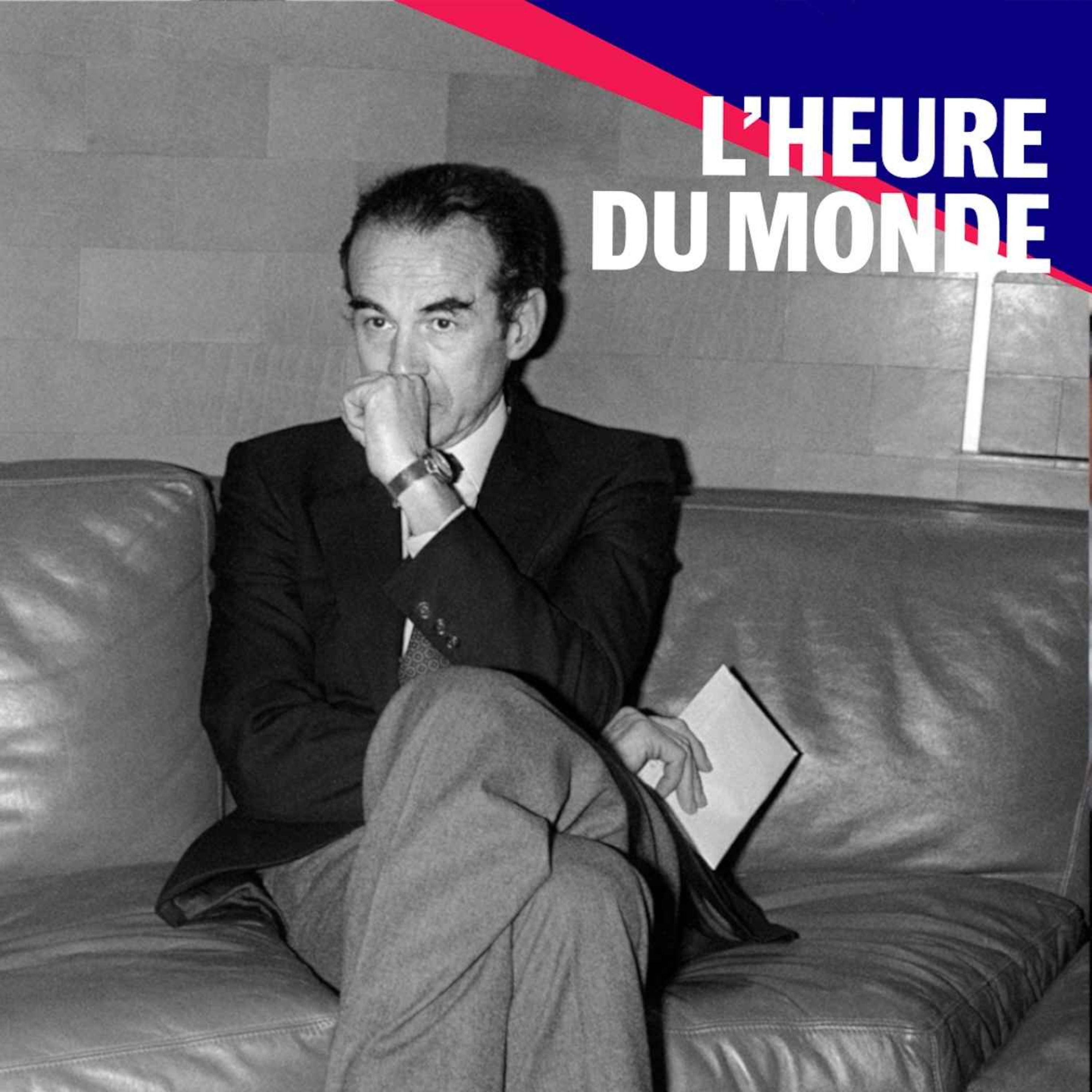
Robert Badinter au Panthéon : son combat contre la peine de mort
26m 10s
Robert Badinter, a prominent figure in French legal history, spearheaded the abolition of the death penalty in 1981. His defense of Patrick Henry, a controversial case, showcased his commitment to justice and opposition to capital punishment. Badinter's background, rooted in a family with a strong sense of fighting injustice, influenced his career trajectory towards defending those facing the death penalty. Despite initial public backlash and threats during his career, Badinter's perseverance and strategic legal work led to significant reforms in the French justice system, including improvements for victims and detainees. His pivotal role in abolishing the death penalty in France cemented his legacy as a champion of human rights and justice, ultimately leading to his recognition with an entrance to the Pantheon.
Transcription
4178 Words, 22985 Characters
[MUSIC]
Bonjour à toutes et à tous, je m'appelle Clare Laisse et il est l'heure du monde.
[MUSIC]
Aujourd'hui.
>> [FOREIGN]
À mort, il n'y a pas si longtemps, moins d'un demi-siècle,
la justice en France s'exerçait encore avec la guillotine.
La peine de mort a été abolie le 9 octobre 1981,
notamment grâce au travail à la lutte acharnée d'un homme,
un avocat, Robert Badinter.
Alors qu'il s'apprête à entrer au Panthéon,
nous vous proposons aujourd'hui de retracer son combat
et la première victoire qu'il a remporté contre la peine capitale
lors du procès de Patrick Henry en 1977.
Pour vous le raconter, je reçois Franck Joannès, journaliste au monde.
Il a eu accès à un document inédit,
le brouillon de la plaidoirie historique de l'avocat.
Il a également rencontré à plusieurs reprises Robert Badinter
et lui consacre un documentaire.
Badinter au Panthéon, son combat contre la peine de mort,
un épisode d'Adelei Tenaglia et Marion Bautorel,
réalisation à Mandine Robillard.
In 1976, in a small town in Laube, A3,
a a little boy recovered from a man at school when his father came to look for him.
He disappeared and we can see that little Philip Bertrand,
who was 7 years old, was taken away.
A question of ransom arrives very quickly on the phone.
A question of ransom arrives very quickly on the phone.
100 millions of old Frank, whose brother-in-law calls.
He is very detached, very cold, quite cynical.
The father, who is on the phone, tries to make the conversation last as long as possible,
as long as the PTT of the time finds the place where the phone comes from.
After several days of an infrequent investigation,
the family starts a desperate call to the brother-in-law.
I am suffering, take it back, don't let us suffer again.
The release lasts 17 days.
At the end of the period, the brother-in-law calls again,
but this time more briefly.
So the father leaves with the money of a suitcase.
He follows a kind of track game imposed by the brother-in-law.
A track game, quite afreux, which also scandals a little everyone.
He meets at such a place, where there is a bot of the little boy,
with a message that tells him that he has to go a little further to deposit the ransom
to the place where he indicates there is a gang of the little boy.
And finally, no one comes to collect the ransom.
The robber saw that he was not alone, he did not want to collect the money, finally.
A very quick man, because of his car, was suspected.
Patrick Henry, who is a 22-year-old young man at the time,
who had lived with little larches from here and there.
He is placed in a safe place, he keeps good for 48 hours, he doesn't worth anything.
And when he goes out, he gives interviews a little to everyone saying,
"Yes, I stopped, it's true that there were coincidences,
but they are only coincidences, it's not me."
He admits that those who did that could deserve the death penalty,
and who wish that the little boy is in good health.
Look at the sounds, Mr. Cagnier said a few days ago,
that it was for the death penalty for the children's rapes.
Is that also your opinion?
I think it's yes, it's my opinion.
The question everyone asks, each right to give his opinion,
do you think he is dead or alive?
Well, I am forced to think that he is alive,
of all my heart, as much as possible.
And in fact, the little boy has already died for a long time.
He never wanted to tell him exactly when,
but he killed him very, very quickly after having removed him.
And he drove in a duvet under the bed of a small studio that he had rented,
under a false name, but which was a little transparent.
And then, after his little daily life,
he left even three days in Switzerland with his friends,
while the little boy was decomposing under the bed.
He is finally recognized by one of his lodgers who had rented the studio,
and he stopped, he tries to get out of the window,
but he is very quick to stop.
And then a case begins that catches cold all over France.
Téfin, 20 hours with Roger Jicale.
France is afraid, I think we can say it so clearly.
France knows panic since last night,
about twenty minutes after the end of this newspaper,
he was taught this horror,
a child is dead.
Three ministers say that in these cases, the death penalty is imposed,
and the case is really done by all the French people,
saying that it could be your son who is there, the little boy was seven years old,
he was charming.
We only talk about that at the moment, in January 1977.
Hello Franck.
Hello Claire.
The process of Patrick Henry opens in 1977 in a very tense atmosphere,
and one of the lawyers who will defend the one that the French consider
as the most indefensible of men is Robert Badinter.
So how does it happen on this process?
At first, at three, all the lawyers refuse to defend Patrick Henry.
Indeed, there is a climate of hatred, of death,
not only at three, but approximately in all of France.
And each of the lawyers says, no, I don't want to defend a monster like that.
There is one who decides, it's the batonnier from Chaumont,
who is called Robert Boquillon,
and who says, my duty is to defend him.
He is like himself as a son.
And then Robert Boquillon sees that the game will be difficult.
So he goes to a Parisian lawyer who was famous for his opposition to the death penalty,
who was actually waiting for his phone call, it's Robert Badinter.
Badinter accepts because he feels that it is his duty,
but he says that the file is very hard to defend.
And you described it well earlier in your story.
France is extremely shocked by this story that it followed almost every day.
So how does it behave in the face of Robert Badinter,
who makes the choice to defend this man?
He and Robert Boquillon are afraid of threats, of death threats.
Tell me, Mr. Boquillon, it's a great father who causes you, listen to what I'm going to tell you.
Don't defend a bandit, don't defend a bandit.
Because you are a great father, listen to what I'm telling you, don't defend a bandit.
Robert Badinter also receives letters, he fills them with trash.
And there is even a bomb that is placed in front of the door of his apartment,
which makes the kids material, nothing serious.
In the end, he believes that it is necessary to put his children in the shelter in the province.
And so for the lawyers, this process seems lost in advance.
How does Patrick Henry react to his side?
Is it to defend himself, he tries to adopt a strategy?
There is no strategy, clearly, except to say as little as possible.
He is a young man, so he had 23 years of the process, very silent.
He responds with a monocle, on a monocle tone.
When you ask him a question, he says, "That's right, Mr. President."
He seems insensitive, cold as a father, according to the grandfather of little Philippe Bertrand.
And he maintained the process that no, he did not want to kill him.
And that he had a crazy time, and he killed him like that.
It does not stick quite with what experts have seen, since in the sense of the little one,
they discovered quite important alcohol traces, and especially barbituric.
At the end of the end, the requisition is going on, where the general lawyer asks for a new death penalty,
without passion, without hatred, but he says, "It's the penal code that imposes it to us."
And if I was sworn, I would vote for the death penalty, so I ask you to apply it.
We are on the last day of the process, which lasted three days,
and then there are two defense lawyers who are going to take the last word.
And what we have to reveal in this state is that it is not the first time
that Robert Beninter must defend a man who risks death penalty.
And what is quite surprising is that it is in this same siege course,
a few years earlier, when a founding member of his career played,
an event that he marked, and a lesson from Pretoire too, what can you tell us?
Yes, it's the Buffet Bontan case, in 1972.
There are two detainees who are in the prison of Clairvaux.
Today, in 1972, two men, Claude Buffet and Roger Bontan,
took a hostage, a nurse and a prison guard, and he was killed.
They are judged, therefore, at three, which is the closest city to Clairvaux prison.
And indeed, it happens in the same siege course, with the same general lawyer,
and Roger Bontan is defended by Philippe Le Maire and Robert Beninter.
They manage to prove, in front of the court, that in fact it is Buffet
who killed the two people and not Bontan.
And miracle, the siege course recognizes him.
And yet, she condemns him to death.
For Beninter, it is the summum of justice.
Someone who did not kill, we are going to kill him in his turn.
And that, he will never admit.
It is indeed a wound that will never heal.
From the moment Bontan is condemned to death, Robert Beninter will see him every day
in prison, in the prison, in the prison of Bontan.
He spends an hour in the morning, he discusses things and others,
he tries to get back up a little moral, where he tests himself,
all the two sit on the peyote of Bontan.
And so Buffet and Bontan were guillotined under a large denouard,
so that others do not see him, so that journalists,
eventually, on neighbors' emails, can see themselves in the prison of guillotine.
And it is a memory that he marked in life.
So found in the same room, with the same general voice,
which will claim the same pain for Patrick Henry,
while the file is more difficult than for Buffet and Bontan.
Clearly, he has not slept well during the whole process.
How does he take himself this time,
and does he change his way of working for this process?
He knows that the file itself, finding certain circumstances
to Patrick Henry will be very, very, very, very complicated.
Not only because of his attitude, but because the file is still in cabling.
Robert Boquillon makes a very, very moving joke,
saying, here I am like you, I am here, it could be my son, it could be yours.
Do not you kill a 23-year-old man? He can change, he is very touching.
He can move the jury, but it is not enough.
So I have to find the words to convince him not to cut his head.
He will hammer this for an hour and a half in front of the jury,
saying that it is you and you alone, he says it 10 times.
It is you and you alone who are responsible.
You have you and you alone at 7 minutes, and we forget everything that surrounds you.
You have the right to live and die alone.
The document we just heard is quite exceptional, and it is formally forbidden.
We have no right to record, neither at the time, nor today,
nor on television, nor on the radio, nor whatever.
And in fact, the history of this document is quite surprising.
Roger Jiquel, the man of the François Peur, went to the trial
and he had hidden in his jacket a little magneto,
and so he recorded it and called it.
And at the same time, it is you alone.
And then he says, he ends with this formula that touched everyone.
There were three jury members who cried.
The journalists who were scotched, they had never heard a story like that.
They finished in 10 years, and then one day, in 10 years, in 15 years,
the death penalty will be abolished and you will tell your children,
"Well, yes, I have condemned a man to death, and you will see their look."
Then the court withdraws to deliberate.
And in the coming, it is declared coup d'etat, Patrick Henry,
to remove him from the murder in the middle of 15 years.
And there is this question, there are satanic circumstances,
and the answer is yes, against the evidence.
Of course, no factual satanic circumstance,
but it was the only way to avoid the death penalty.
So he condemned the criminal prosecution to perpetuity,
and this verdict is the first time for Robert Badalter,
who saves the head of a man.
There is a bit of an impression, Franck, that this historic play,
Robert Badalter has, like, come out straight from his heart of these trips.
But then you, you got access to these shots, to these work notes.
What does she reveal at this moment and the lawyer?
It was someone who lived the worst of it.
It was an extraordinary chance to find his play.
He knew, unlike what he tells a bit by coquetry,
he said, "I had taken a few brief notes before the trial.
In fact, there were 24 pages of tight writing, corrected and corrected.
We found two volumes, one manuscript, one call to the machine of this play.
When did this text have been typed? We don't know.
It may even be possible that this text was written after the trial for history.
Badalter knew that it was at a given time,
and maybe he wanted to keep a trace, but we don't know exactly.
In any case, he obviously didn't read these notes.
It was still a real orator, not only in very good writing.
That said, this evening, beyond Patrick Henry,
there is obviously a question that needs to be asked.
Is the abolition of the penalty of death in France legalized at this historical level?
This verdict is instantly perceived as a turning point,
a first step decisive to the abolition of the penalty of death.
Franck, I would now like to understand with you
why Robert Badalter chose this fight.
Has it been living since the very beginning of his lawyer career?
How did he come to defend this cause?
No, it hasn't happened since the very beginning.
His parents had a great sense of defense of injustice.
It was a family born in Bessarabie, the current model of life.
They were Jews.
It was a tsarist regime at the time, who made the worst mistakes.
It was an intellectual family, not rich at all,
but really, really intellectual.
By saying that the future of the Jews was in the knowledge, in writing.
He was nourished by the reading of Victor Hugo,
so an opponent resolved to the penalty of death.
He really fought over it.
So he was actually vibrated in this culture
that you have to defend justice and that the penalty of death is God.
He became a lawyer when he really wanted to be a university professor.
It is the right that he was passionate not so much about the exercise.
Badalter took care of copyrights and defamation problems.
But he defended all the stars of the time.
And little by little, he made a little bit of a penalty.
He defended some truant.
And then, there was the Buffet-Bontan affair.
He really made his life vile.
And was Badalter a man of his time or against his time?
Because if we come back to the penalty of death,
you said it during the process of Patrick Henry,
the majority of the French were for the penalty of death.
So can we say that he was avant-garde,
or was it not so simple as that?
And in fact, there were several common thoughts
in the public opinion.
The majority of the partisans of the capital penalty
were saying that it was necessary to reserve the penalty of death
for the murder of elderly people or children
or members of the force of the order.
But the majority of France thought that when we killed them,
we killed them all.
And that's how it is.
It is the Italian law that is already in the Bible
that shocked the abolitionists a lot.
There were always certain abolitionists.
And so he was not alone in defending the abolition of the penalty of death.
A lot of scientists said that it was a barbaric penalty.
It does not bring anything to society.
He supported himself on works that also showed
that there was no example of the penalty of death.
In many countries, he had already abolished it.
So no, he was not alone.
But then in France, after the process of Patrick Henry,
it was still necessary to wait four years
for the abolition of the penalty of death to come into force in 1981.
So it means that this verdict, even if it is historical,
it is not a total victory for Robert Badinter either.
Badinter said as long as it will be in the penal code,
it will not be the abolition of the penalty of death.
So he continued to work on courts that risked the penalty of death.
There were five of them, between 1977 and 1980.
There were others who died.
There were only two people who didn't defend the penalty.
They were sentenced to the death of the president of Patrick Henry
who was given his instrument of reason.
On his side, he managed to save all his clients
until the abolition of the penalty of death in 1981.
So let's come back to this year, 1981,
because Robert Badinter did not fight the penalty of death
only in courts.
He also did it on the political front.
Can you tell us a little bit about how he took it?
He became quite close to François Mitterrand.
He spoke a lot of law and justice.
In 1981, when François Mitterrand was elected,
he named Maurice Fort as the guard of the springs.
Badinter didn't say anything.
Well, he had a little bit of trouble anyway.
And Maurice Fort, after a month, said to himself,
"Yes, it doesn't matter at all, this story.
I'm not doing it for that, etc."
At that time, Robert Badinter was appointed as the guard of the springs.
And he immediately said to himself,
"I have 100 days to execute my program.
To avoid the penalty of death, first, right away."
He prepared the text.
There is an absolute socialist majority at the Assembly.
As Mitterrand had said since March 1981,
he would ask for the abolition of the penalty of death.
He would not say, "Yes, but I don't agree."
The text goes on.
Tomorrow, the French justice will no longer be a justice that kills.
At the time of the Council of Ministers,
where the penalty of death was voted,
so it was abolished,
and at the end of the Council of Ministers,
François Mitterrand said to himself,
"Robert, I have a word to tell you."
And he gave him an example of the abolition of the penalty of death.
And so he had an original example of the text that abolished the penalty of death.
And it had greatly affected him, not only because it was historical,
the fight of his whole life anyway.
And then it was a gesture of friendship,
a delicacy of Mitterrand that he really appreciated.
And suddenly, in his apartment, there was this,
a big one,
which he used to say every time.
And he pressed forward every day.
It was for him a very, very, very moving thing.
So a big victory for Badinter.
But still, you have to say that it was not simple,
because he was not already very appreciated as an lawyer,
and as a minister, he was not at all well seen by the French.
Yes, he was not necessarily appreciated by everyone as a lawyer,
he was cold, he was intelligent,
and he was quite sure of himself,
which means that he has not always been appreciated
by the Barrault justice.
After, as a minister, he was the most hated minister of the French Republic.
Everyone hated him, he was the lawyer of the murderers.
There were police demonstrations under his window,
there were taxi demonstrations to prevent him from going to his house,
and he received dozens of injures still after.
He became a famous celebrity a few years later.
People understood the immense task he had accomplished as a justice minister.
But it happened very, very badly.
He was mocked by not only the political class,
but also most of the population.
And so he goes from the figure of the hated minister
to the one of an illustrious character who makes his entrance to the Pantheon,
and this pantheonization,
it was not only due to his fight against the death penalty,
Franck, what were the other battles he led?
He fought for the right-wing, from end to end.
He began by suppressing all the exceptions' jurisdiction.
He improved the way of the victims.
He created the first aid commissions for the victims,
for the civil parties in the process.
He improved the condition of the detainees.
He suppressed the high-security districts,
the prisons.
He had a work like that for the prisoners,
for the people of the Penitentiary, for the victims, which is enormous.
He also penalized homosexuality,
which was instilled under Vichy,
and which dragged on in 1982.
He made advances in the right to work.
He made penalties.
The work of the general interest,
which allowed for the little delights,
and someone to not go to prison,
who was convinced of the crime school,
but who served in the community,
was something that he developed a lot,
and he invented it.
He prepared the penalty code reforms.
He didn't try to do everything.
But there were a lot of things that he had launched,
and that were executed afterwards by his successors.
He deeply changed the judicial and legal aspect of France.
So, what is the heritage of Robert Badinter today?
For example, we talked about prisons.
Did all the advances he had achieved
for the prisoners' rights are still threatened?
In summary, Franck,
what remains of Robert Badinter?
The base of the things he put on
remains not entirely, but remains essential.
He was, by the way, a little ahead of his time.
He was still favourable to the suicides he had witnessed.
For example,
there was also international activity that was very strong,
which remains.
For example, we can no longer suppress the penalty of death today.
He voted for the protocol 6 of the European Court of Human Rights,
which is forbidden in France to restore the penalty of death.
For that, it would be necessary to leave the European Court of Human Rights
and the European Union.
So it's a complicated step.
On the bench, on the panel,
he felt that as a catastrophe.
He could see that the French society was right-wing,
that the fear of fear gained minds,
and that in that case,
it is still the most stupid things that take place,
and that we gently ignore all the liberties.
Still, he did not hear Bruno Rutaio say
that the state of law was neither sacred nor intangible.
It was the opposite of Robert Badinter's approach.
And in France, if we are sorry to see a little,
the construction of prisoners without end,
it is very good that the more there are prisons,
the more they are filled.
And that's a law we have passed now.
So he saw a little bit of the time of his life,
but it's even more stupid now.
We have absolute records of filling up prisons.
So he saw that with his teeth.
It's very good that it's not like that,
that we can reintegrate people into society.
But indeed, the penalty law,
of year after year,
against his will and against all that he has done,
his whole life.
Thank you Franck.
Thank you Claire.
If you want to consult this noise
of Robert Badinter's calligraphy
in its entirety,
well, you have to go to LeMonde.fr.
You can also read, of course,
the articles of Franck Joannès.
And I invite you to watch his documentary
made with Caroline Dussin
and produced with Nova Production.
It's called "Badinter against the Pen of Death,
the process of Patrick Henry"
and it's broadcast on France 2 at 8.50 pm.
The time of LeMonde is over for today.
Thank you for your loyalty and see you soon.
Podcast Summary
Key Points:
Robert Badinter played a crucial role in abolishing the death penalty in France in 198
Badinter's defense of Patrick Henry, a notorious criminal, marked a significant victory against capital punishment.
Badinter's upbringing and early career influenced his dedication to justice and opposition to the death penalty.
Summary:
Robert Badinter, a prominent figure in French legal history, spearheaded the abolition of the death penalty in 1981. His defense of Patrick Henry, a controversial case, showcased his commitment to justice and opposition to capital punishment. Badinter's background, rooted in a family with a strong sense of fighting injustice, influenced his career trajectory towards defending those facing the death penalty.
Despite initial public backlash and threats during his career, Badinter's perseverance and strategic legal work led to significant reforms in the French justice system, including improvements for victims and detainees. His pivotal role in abolishing the death penalty in France cemented his legacy as a champion of human rights and justice, ultimately leading to his recognition with an entrance to the Pantheon.
FAQs
La peine de mort a été abolie le 9 octobre 1981 en France.
L'avocat qui a lutté contre la peine de mort en France était Robert Badinter.
Robert Badinter a défendu des affaires comme celle de Buffet et Bontan en 1972, où il a prouvé l'innocence d'un condamné.
Robert Badinter a été nommé Garde des Sceaux par François Mitterrand en 1981 et a conduit l'abolition de la peine de mort en France.
Robert Badinter a également travaillé sur la suppression des exceptions juridictionnelles, l'amélioration des droits des victimes et des conditions carcérales, et la lutte contre la discrimination.
Robert Badinter a été initialement critiqué et mal vu par la classe politique et une partie de la population pour sa lutte contre la peine de mort.
Chat with AI
Loading...
Pro features
Go deeper with this episode
Unlock creator-grade tools that turn any transcript into show notes and subtitle files.
 PodcastTranscript AI