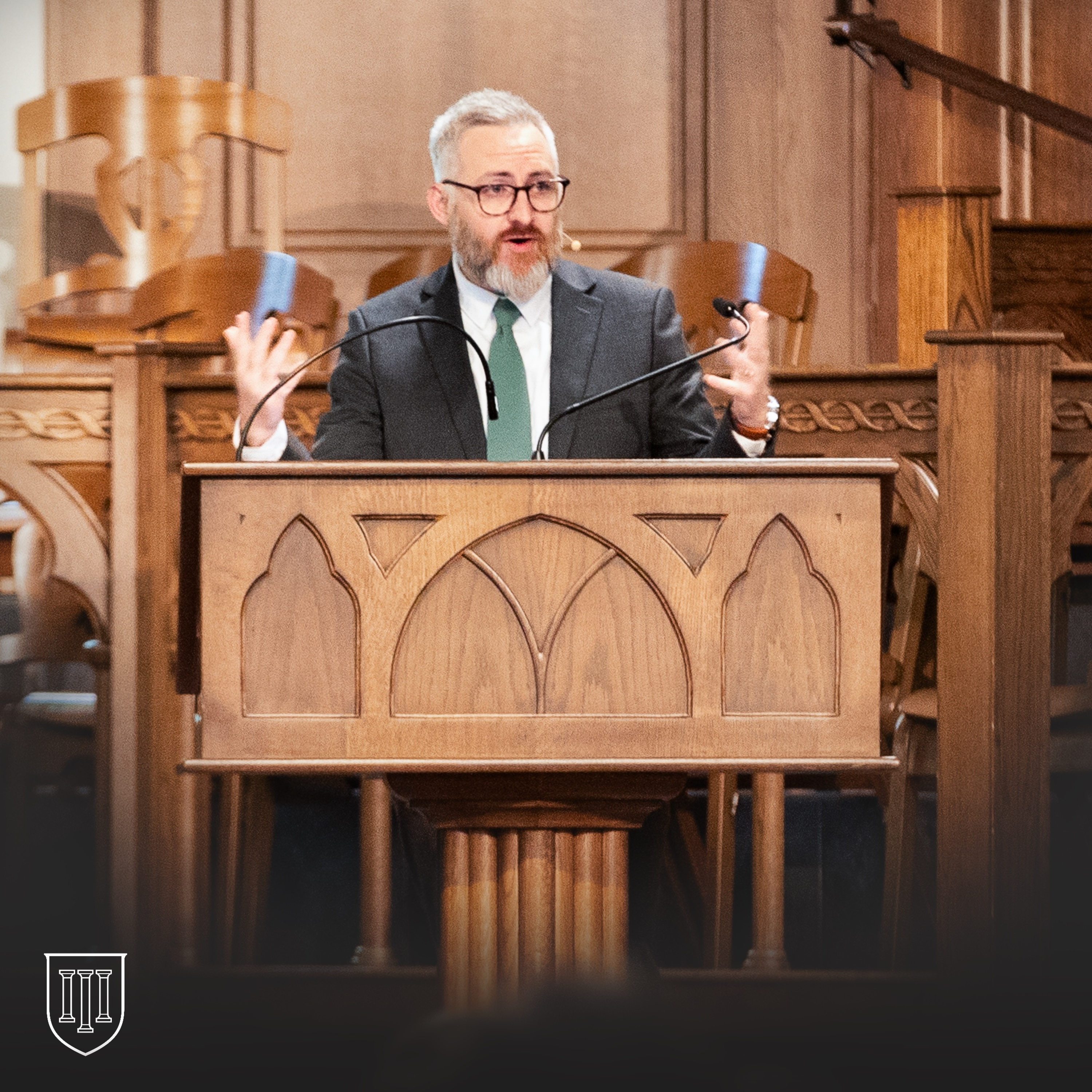
The speaker opens with personal thanks before focusing on Matthew 9:35-38, where Jesus demonstrates profound compassion for crowds he sees as lost and helpless, like sheep without a shepherd. This imagery is rooted in Old Testament prophecies, such as Ezekiel 34, which critique failed leaders and foretell God Himself shepherding His people—a role Jesus fulfills. The core challenge for Christians is to cultivate a heart like Jesus', moving beyond responses of fear, disgust, or indifference toward others. Instead, believers are called to view people spiritually, recognizing their need for a shepherd. Jesus instructs His disciples to see the plentiful harvest—the vast number of souls awaiting the gospel—underscored by modern statistics on global population and unreached people groups. The message concludes by urging listeners to actively perceive the spiritual need around them, whether in distant cultures or daily interactions, and to engage compassionately as laborers in God's harvest.
Well, good morning. Let me invite your attention to Matthew chapter 9 this morning, Matthew chapter 9. As you find your way there, let me first on a personal note, just say how grateful I am to be here at RBC. I have loved my first semester here serving you in my role. It really is a privilege and a joy. So I am again just thrilled to be here. Also, I am thrilled to be able to speak and chapel this morning. It is a great, great privilege. So thank you for the opportunity this morning. Again, Matthew chapter 9, we're going to give attention to the final few verses of the chapter beginning in verse 35. The last four verses, Matthew 9 verse 35 through 38. Matthew writes for us, "And Jesus went throughout all the cities and villages, teaching in their synagogues, and proclaiming the gospel of the kingdom, in healing every disease and every affliction." When he saw the crowds, he had compassion for them, because they were harassed and helpless like sheep without a shepherd. And then he said to his disciples, "The harvest is plentiful, but the laborers are few. Therefore, pray earnestly to the Lord of the harvest, to send out laborers into his harvest." Let's go ahead and pray this morning. Lord, we are just so incredibly grateful for the opportunity to gather together this morning, as is our custom each week. It is a privilege to be together, to sing, to fellowship, and now, to open your word. And so Lord, we pray and ask for your blessings as we do that. The Lord, we ask that you would be so kind as to buy your spirit, open our eyes and hearts to see your glory in the face of your son, Jesus, in the text this morning. And Father, we pray that you might conform us all the more into His image as we see the heart of Christ for His lost sheep. And we pray all of this in Jesus' name. Amen. Amen. Well, this is the end of chapter 9, which means there is a transition here from one chapter to the next, of course. However, this is also a transition point for the gospel as a whole, the gospel of Matthew. We know that because verse 35 is nearly identical to another verse Matthew gives us earlier in chapter 4 and Matthew 4, verse 23, says almost the exact same thing. Again, Jesus is traveling. He's teaching. He's preaching the gospel of the kingdom in the synagogue. He's healing every disease in affliction. And here in Matthew's gospel, in that span of chapters 4 to chapter 9, that's the focus. That's why that's repeated. Again, this is all about the teaching ministry and healing ministry of Jesus. Well, as the story unfolds in Matthew's gospel, from here on out, the emphasis shifts just a little bit and gives emphasis not just to the teaching ministry of Jesus, but also to the rising opposition that's going to come against Jesus and His disciples. In fact, if you go on in chapter 10 from where we read this morning, you're going to hear Jesus give a warning to His disciples that I'm sending you out, but I am sending you out like sheep, sheep amongst wolves. But before that warning comes in chapter 10, Jesus says this to them. He gives this vision for the disciples to catch. And I think really a vision for all of us that we need to catch that yes, there, there are wolves that, nevertheless, there are many, many lost sheep that need a shepherd. And while we're not naive to the dangers of wolves, we should not lose sight of the great need of the sheep. And this is so important for us, I think, because we will look at the world and we're going to see it in all of its brokenness, we come face to face with so much sin and pain and evil and tragedy and students as you grow in age, you're just going to see more and more and more of it. The temptation for us is to see all of that and maybe unintentionally grow cold toward people. But my hope for you, my hope for all of us, myself included, is that we are Christians who simply love people that we love people. In fact, in this text this morning, the final verses of chapter nine, we get a glimpse of the heart of Jesus towards people. And what we're going to see and hopefully find is we as Christians, people who claim to follow Jesus to be like Jesus, we're challenged then to develop a heart like Jesus towards people. We see that in verse 36, we'll look in just a moment, then in verse 37 and 38, really, I think Jesus gives us, I think two instructions to help us buy his grace to develop hearts for the harvest that are here. So let's look again at verse 36, let's see the heart of Christ this morning. Verse 36, again, Matthew says, when Jesus saw the crowds, he had compassion for them, because they were harassed and helpless, like sheep without a shepherd. So again, here's Jesus, he's out and he sees the vast number of people in need and Matthew says his heart is moved with compassion for them. Notice again, it does not say that Jesus was angered at the side of the people. Jesus was not annoyed at everyone in all of their needs. Jesus wasn't disgusted by the side of all those sinners in his midst when he was compassionate, because he looked at the masses again, made up of countless individuals with varying stories and backgrounds and struggles and experiences. And he saw that they were ultimately harassed and helpless, like sheep without a shepherd. Like, think about that analogy for a second, sheep without a shepherd. My guess is most people here do not have sheep or are not sheep farmers, maybe a few are, I don't know. But even if you're not, that analogy is not hard to understand what's laid out there. Sheep without a shepherd. What do they do? They wander. They wander aimlessly. They get lost. They have no direction. They have no one to feed them, no one to protect them from the dangers that surround them. They are as Matthew describes, weary and scattered or harassed and helpless. But we need to understand that that analogy is not something that Matthew just kind of thought of. It's not as Matthew's like, you know, what's a good way to describe all of these people that Jesus sees? Oh, it's kind of like sheep without a shepherd. Now, what Matthew does is he actually draws from the Old Testament. He's doing something very intentional here to point us ultimately, not just to the sheep, but to the shepherd. The Old Testament, very quickly, through the prophet of Ezekiel, God looks at his people and, of course, he knows the way that the religious leaders retreating his people and what God calls out the leaders. He calls out the shepherds. Very quickly, I'll read for you, Ezekiel 34 verses one through six. Ezekiel says, the word of the Lord came to me. The man prophesied against the shepherds of Israel, prophesied and say to them, even to the shepherds, thus says the Lord God. Shepherds of Israel, who have been feeding yourselves, should not shepherds feed the sheep, you eat the fat, you clothe yourselves with the wool, you slaughter the fat ones, but you don't feed the sheep. The weak, you've not strengthened, the sick, you have not healed, the injured, you have not bound up, the stride, you have not brought back, the lost, you have not sought, and with force and harshness, you have ruled them. And so they were scattered, because there was no shepherd, and they became food for all the wild beasts. He says, my sheep were scattered. So again, those who were meant to serve and protect God's people, once who were meant to serve and protect the people of Israel, were instead using God's people for themselves. Like rather than protecting them, they ended up abusing them. Those who were meant to be the shepherds of God's people became the predators of God's people. And so there they were, sheep without a shepherd, and that rang true all the way to Matthew 9. And here's Jesus coming on the scene, and he calls out the religious leaders over and over again, and we see here in Matthew 9 again, Jesus setting his earthly eyes on the crowds, and he's moved with compassion for them. Again, he sees the sheep with no shepherd, sheep wandering aimlessly, sheep exposed to predators, sheep without anyone to bring nourishment and care. But ultimately, that's why Jesus comes, isn't it? He comes to be the shepherd that his people so desperately needed. Again, going on, Ezekiel 34, verse 11 says, "For thus says the Lord God, behold, I, I myself will search for my sheep and will seek them out." As a shepherd seeks out his flock when he's among his sheep that have been scattered, so will I seek out my sheep. And I'll rescue them from all places where they've been scattered on a day of clouds and thick darkness. And I'll bring them out from the peoples and gather them from the countries, and we'll bring them into their own land. I'll feed them on the mountains of Israel by the ravines and all the inhabited places of the country. I'll feed them with good pasture, and on the mountain heights of Israel shall be their grazing land. There they will lie down, and good grazing land on rich pasture, they shall feed on the mountains of Israel, I myself will be the shepherd of my sheep. I myself will make them lie down to clear the Lord God. Again, as God says, the earthly shepherds have failed, so I'm going to shepherd my people myself. And Jesus comes to be that shepherd. He comes to be the shepherd that you and I desperately need. Now we're going to talk more about that in just a moment, but first, just consider the heart of Jesus here. Again, Christ's heart is eight, compassionate heart. It's not reluctant, not annoyed, not apathetic, but loving, and gracious, and patient, and sympathetic. Now here's the thing, again, as followers of that Jesus, the ones us being conformed into that image of Christ, growing in Christ's likeness. What that means is that our trajectory for growth is growing in our compassion towards other people, especially those who don't yet know Christ. And that's a real challenge for us, isn't it? Because let's be honest, we don't always view people that way, Dewey. We don't always share that heart. In fact, if you consider the thoughts and emotions that might arise in our hearts when we see individuals or groups of people, I mean, again, compassion isn't always what we experience. In fact, think with me for a moment. Imagine if Matthew wrote that passage about you and me, and not Jesus. It would probably say something maybe a little bit different, wouldn't it? For example, rather than it's saying, he or she had compassion for them because they were harassed and helpless like sheep without a shepherd, it might say something like this. He or she had a fear of them because they were dangerous and malicious like threats to be avoided. So often we just view people primarily as threats, don't we? And so the primary way that we engage with them is actually through avoidance. We don't engage with them. Because we want to preserve our safety. We want to preserve our comfort. So we don't interact. We don't engage. We're afraid of their views or we're afraid of their motivations. We're afraid of what they might do or what they might say. And so we just avoid. I mean, it's so easy to adopt this posture towards people, especially in a culture like ours that's just so influenced by politics and media that thrive off your mongering. I mean, it's just so easy to adopt this posture of us versus them or me versus him or the church versus the world. But like understand, that's more confrontational than it is compassionate. Or it might say this about us, it might say he or she had discussed for them because they were sinful and appraved like diseases without a cure. But again, we so often look at others, especially those who celebrate with the Bible called sin shows no remorse for their actions and just be disgusted. And so like with fear, we just avoid them. But more than just kind of hoping for avoidance, we actually hope for their defeat. But like we avoid and we hope for their judgment. But understand that's more condemning than it is compassionate. Or it might say this about us, it might have said he or she had apathy towards them because they were irrelevant and insignificant like objects with no usefulness. Again, we so often we view and measure others simply by the way that they improve or don't improve our own lives. Like if they can help us in some way, then we give them the time of day. But if not, we're not really that interested in them. Again, instead of seeing them as people made in the image of God, we view them maybe more as like tools made for the benefit of ourselves. But we know tools can either be used or set aside. That's the only two things we can do. But understand that's a posture that's more controlling than it is compassionate. Or one more, maybe it would say this, he or she showed reckless acceptance of them because they were perfect and proud like sinless sheep with no need of a shepherd. This is the extreme opposite of fear and disgust. It's the extreme opposite of avoidance. It's this acceptance that sees people with no spiritual need whatsoever. They are who they are, they are who they were created to be. The only need that they have is to be celebrated, to be embraced. They don't need a shepherd because they're their own shepherd. We understand that's a posture that's more cowardly than compassionate. But we understand that none of those postures, none of those views of people, whether that's fear or disgust, reckless acceptance, apathy, whatever it is, none of those line up with the way Jesus views people. I mean, Jesus saw the crowd. He recognized they needed a shepherd and it moved him with compassion. And again, the challenge for us is to grow into this posture as well. That rather than seeing others merely as political threats, rather than seeing others as merely useful or useless objects, rather than seeing others as merely disgusting sinners, we need to ask the Lord, would you give us the heart and eyes to see others as people in need of a shepherd. In other words, Jesus views them with this spiritual ends and we need that too. If we view the world as enemies, how do you think we're going to engage them? We're going to engage them as enemies. If we view others as objects, what are we going to do? We're going to treat them as objects. But if we view them as people, as souls in need of a shepherd, we will do what we can to point them to the shepherd. And so we should ask, what emotions do people elicit in your heart? Like his compassion for neighbor, or colleague, or peer, or family member, or a complete stranger? Is that something you experience in your walk? And if not, why not? Could it be that you're failing to think of them in spiritual terms? We need the Spirit to mold our hearts to be compassionate towards those in need of the gospel, because that's what Jesus does. And so the question then is, all right, well, how do we do that? How do we do that? How do we develop a heart like that? How do we develop a heart for the harvest? Well, I think Jesus gives us a couple instructions here. And I think first, developing a heart for the harvest, Jesus says, begins by seeing the harvest. Seeing it, looking again at verse 37, Matthew 937, then Jesus said to his disciples, "The harvest is plentiful, but the laborers are few." And so Jesus here, he shifts this analogy from sheep and a shepherd. Now he shifts it to a harvest with laborers. But the point is the same, in both, isn't it? There's great need for gathering. The shepherd gathers the sheep, laborers gather the harvest. And in the immediate context here, Jesus and his disciples, again, think about this, have gone through numerous cities and numerous towns. And Jesus turns to his disciples and says, "Okay, I came to not only bring the kingdom of God, but to proclaim the kingdom of God." And if the world is going to hear the good news of the kingdom, I've determined that it will take more than just me proclaiming it. That I've determined, in my sovereign will and purpose, that I'm going to use laborers to help in the gathering of the harvest. But first, you need to see how great the harvest is. First, you need to see it. And by seeing how great the harvest is, having your heart be moved with compassion towards them. And so we need to see it. We need to see the immensity of the harvest. You know right now, there are just over 8 billion people in the world. It's projected to be nearly 9 billion in just 10 years. So how quick the population is growing. You know our world is made up of not just geopolitical nation states like US or Canada or Mexico, but by people groups. Ethnolinguistic groupings of people. And each geopolitical nation state can have thousands of people groups in them. In fact, missiologists over the decades have tried to identify those people groups. And as difficult as it is, it's estimated that there are over 17,000 people groups in the world. And in order to gauge the need for the gospel amongst those 17,000 people groups, a stat has been used to identify people groups based on what we might call lossness. In other words, how much or how little access to the good news of the gospel, that group of people might have based on the numbers of Christians that are identified there, churches established gospel workers working among them. So many of you have heard the term unreach people group. It's used to describe a people group with less than 2% evangelical Christian. And identifying those people groups is a way that the church can identify those corners of the harvest that are in the most desperate need for laborers. Laborers who are willing to cross cultural minds in order to do just as Jesus did and has called us to do to proclaim the gospel of the kingdom to all peoples. And so it's estimated that of the 17,000 or so people groups over 7,000 of them are considered unreach today. I mean, that's nearly half. And of the so-called what we may say reached people groups, they're still in immense need for workers. By the way, that's not to dismiss all of the incredible need here in our country and our city and your city back home for laborers in the harvest to tell others of the gospel of Jesus Christ. So that Christ sheep might be brought into the full. We need to see the harvest. We need to see it. I love to travel. I love it. And I love airports. I know not everybody loves airports. I get it. Security line can be really obnoxious. Travel delays are really inconvenient. I understand that. But I love the airport. And the reason I love the airport is because I love to watch people. I love it. Maybe you're like that with me. I love it because you see all kinds of people, don't you? I mean, you see, you know, the exhausted parents trying to keep their little ones entertained while they wait for their next flight. We've been the exhausted parents trying to keep our little ones entertained for the flight. You see the man or the woman, you know, presumably on a business trip because they're, you know, they're dressed nice. You hear them on their phone talking about sales this last quarter. You see the couples clearly in vacation mode because they have their Hawaiian shirts on their straw hats on like they're out of here, even mentally. And so many other kinds of people. But as you watch people, I don't know if you've ever experienced this. Have you ever had that moment where you just, it's just dawned on you? And all of these people have their own life outside my own. Right? Like they have their own backgrounds, their own dreams, their own friends, their own families, their own hobbies. They've experienced their own tragedies and pains and struggles. But I know nothing about. But just normal people like you and me, the challenge though, as a Christian them, is to view them, not just as travelers in that example, but as souls. Right? People who need a shepherd. And that's how we should view our neighbors, our family members, those who maybe march in a parade, those who pick it against our cause, we have absolutely nothing in common with. We see them as people in need of a shepherd. But the problem is, we don't see people. We don't see them. Like visually we see them, like physically we see them there. But we don't see people. Right? Because we're often so focused on ourselves, aren't we? With our own to-do list, our own preferences, what we got going on for the day, our own time, everything on our agenda and calendars, all the things we're thinking through, that's what dominates our view. But we're just so focused on self all the time. I mean, you can imagine it's like walking through a crowd holding up a mirror to yourself. You just see yourself. And the call of the Christian is to put the mirror down for a moment and see the harvest, see people. And as best as you can, see the peoples of the world. And so this is our call. Just look around with Christ-like eyes and hearts. See the crowds and the need for the gospel and that ought to move us to action, which actually brings us to the second way we can develop hearts for the harvest. Look again at Jesus' instruction, verse 37 and 38. Again, Matthew says, "Then Jesus said to His disciples, 'The harvest is plentiful, but the laborers are few, therefore prey earnestly to the Lord of the harvest to send out laborers into His harvest.' Again, the second thing we can do is we pray for laborers in the harvest. Again, the harvest is plentiful. There are few workers, therefore prey. Now, when we get to the end of Matthew's gospel, we hear what's called the Great Commission. Many of you know it. It's Jesus' commission of the church to, again, go and make disciples of all nations, of all people groups. In other words, there isn't a call to an active step towards those who need to hear the gospel in this mission. But first notice Jesus says, "Pray." And that's because, first and foremost, the harvest is His. He's the Lord of the harvest. It all belongs to Him. The laborers serve Him. The great harvest is and will be to His glory and not the laborers. And since the harvest is, as we go to Him, first and we pray. And by the way, notice Jesus' instruction about the prayer there. He's not saying, "Pray for the harvest itself." Like, pray for the sheep to hear the voice of the shepherd and turn to Him. Although we do pray that, that is a proper prayer. We want to pray those things. But notice Jesus' specific instruction here is, "No, pray that the Lord is going to send more laborers into the harvest." Why does He do that? I think it's because one of the beautiful results of prayer. And I mean, not just praying for like personal stuff, which is right and good, we should do that. But praying for others or praying prayers of adoration and praise of the Lord, is that prayer shapes our hearts, doesn't it? It shapes our hearts. So, for example, if I pray for the good of my enemy or someone that I'm struggling with, if I pray for their good, you know what happens to my heart? It softens towards them. Or if in my prayers, I'm just rehearsing how good and how faithful the Lord is. You know what happens to my heart? It grows in peace, doesn't it? And if I'm praying, Lord, the harvest is plentiful. There are so many people who need to hear the good news of your son Jesus. But there are so few laborers. Lord, would you send more laborers to the harvest? What happens to my heart? It grows in compassion for people. And it moves me to action. Right? In fact, that's exactly what happens in chapter 10. He tells the disciples, pray that the Lord sends more laborers. And by the way, I'm sending you into the harvest in chapter 10. And so we desperately need heart shaped by the Lord of the harvest for work in the harvest. In fact, the Greek word there behind send out in verse 38, it's a word that's used many times throughout the New Testament. And more often than not, it's used in a way that describes maybe a not so gentle sending. It can mean to expel or to cast out or to thrust out. For example, it's the same word you used to describe other places for casting out demons from those who are possessed. It's used when Jesus drives out the money changers from the temple in Matthew 21. It's used to describe the casting of Stephen from the city to be stoned in Acts 7. It's used to describe religious leaders driving Paul and Barnivus out of Antioch and Pesidia in Acts 13. And all of that is just to say it's possible then that this is not a gentle calling in view here. When he says, "Would you pray that the Lord would send out labors into the harvest?" And I think the point of that is just to recognize that we're praying that God would stir the hearts of His people, of you and of me, so much so that we are shaken, that we're cast out of apathy or complacency, that we are again brought out of our idolatry, maybe of comfort of our lives. That we might be labors in the harvest, both here and abroad, because we need that. We need hearts shaped for the harvest. We need hearts that align with Jesus, who's moved with compassion as He witnesses the crowds, and thus moves toward them with the good news of the gospel of the kingdom. And so we pray, our hearts are shaped, our eyes are opened, and our feet are moved to go. That's Jesus' call here for you and me. And by God's grace, He's actively still sending labors into the harvest. I know several of you have a heart for personal evangelism. You regularly share Christ with others. I know several here have a deep heart for global missions and have gone on trips and are planning ongoing on trips soon. And it should be your prayer and our prayer that our hearts only grow for the harvest. So commit to pray. Commit to pray for those who don't know Christ in your life and around the world. Pray for the loss right here in Sanford and the greater Orlando area. Pray for the loss who belong to people groups in parts of the world. You'll never go to in your life. Commit to pray for missionaries that you know. Commit to pray for more missionaries to be sent out of your local churches. And can I challenge you this morning? Would you pray, Lord? Could you be calling me to go in some way? Lord, how do you want to use me in the harvest? Whether it's here or abroad. Perhaps the Lord by His grace will shape your heart for the harvest. Now, while we are by God's design again, integral parts of the global harvest, it's necessary to remember we're not the shepherd, are we? Jesus is the good shepherd here. Again, so our task then is simply point people to the shepherd, the shepherd that they so desperately need. In fact, fulfilling what was foretold by the prophets in Ezekiel, we read earlier, Jesus again picks up on this imagery later in John chapter 10. I'll just read these verses for us real quick, John 10 verse 7 to 16. So Jesus again said to them, truly, truly, I say to you, I'm the door of the sheep, all who came before me are thieves and robbers, but the sheep did not listen to them. I'm the door. If anyone enters by me, he will be saved and will go in and out and find pasture. The thief comes only to steal and kill and destroy. I came that they may have life and have it abundantly. I'm the good shepherd. The good shepherd lays down his life for the sheep. He who is a hired hand and not a shepherd who does not own the sheep sees the wolf coming and leaves the sheep and flees, and the wolf snatches them and scatters them. He flees because he's a hired hand and cares nothing for the sheep for 14. I know my own and my own know me. Just as the father knows me and I know the father, I lay down my life for the sheep and I have other sheep that are not of this fold. I must bring them also and they'll listen to my voice. So there'll be one flock and one shepherd. The point of that is to remember that Jesus has more than just compassion for the lost sheep without a shepherd. In other words, Jesus isn't there in Matthew 9 and the rest of his earthly ministry like forced to watch with just a heavy heart as people wander with no hope or possibility of saving. No, Jesus becomes the shepherd they need. That unlike the thief who comes to steal and kill and destroy, here's Jesus the good shepherd who's come to bring life. That unlike the mere hired hand unwilling to sacrifice of himself to protect the flock from danger. Jesus says the good shepherd gives his life that his flock might be spared from death. Jesus is the only shepherd who could rescue you and me from being harassed and helpless and he's done that. He's done that by offering his own life on the cross and raising to new life that we his flock might share in that life. For those of us who have that story, we share that in Christ. Let's have compassion on those without Christ because remember at one time we were the lost sheep like we were the ones wandering aimlessly. We were the ones without a shepherd in harm's way. We were the ones who were unable to shepherd ourselves and so we needed someone to have compassion on us and point us to the good shepherd. And by the work of the spirit is exactly what's happened. So let's commit to pray. Let's pray for more laborers. Let's ask the Lord to grow our hearts for the loss in our community and around the world. And just as a moment, just imagine, imagine what that would be like if we as a college were committed to pray like that. Like imagine the way the Lord might use our BC and his harvest here in abroad. Let's pray for that this morning. Let's go ahead and pray. Father, again, we're so grateful for you. We're thankful for your word, Lord, your inspiration of it, your preservation of it for us today. And Father, this morning we are our challenge to consider our view and our posture towards those outside the church. And Lord, we confess fear or disgust or apathy or reckless acceptance or any other posture that might be found there. We recognize this morning none of them line up with your heart. So Lord, we ask for your forgiveness. Father, it is our prayer, Lord, that you would grow in us hearts of compassion towards people to see the individuals, to see the crowds and see their need for Jesus. And Father, this morning we recognize the harvest is plentiful. The laborers are few. So Lord, we pray, Lord, would you sin more laborers? Lord, we ultimately want to say thank you for Jesus, first and foremost, who is our good shepherd. A good shepherd with a compassionate heart towards his sheep. A good shepherd who's laid down his life for us, his sheep, that we might be brought into the fold forever. So we say thank you. We ask for your blessing as we continue today in the week in front of us in Jesus' name we pray. Amen.
Podcast Summary
Key Points:
The speaker expresses gratitude for the opportunity to speak and reflects on Jesus' ministry in Matthew 9:35-38, highlighting His compassion for the crowds, whom He saw as "harassed and helpless, like sheep without a shepherd."
Jesus' compassionate heart is contrasted with common human responses to others, such as fear, disgust, apathy, or reckless acceptance, urging Christians to develop a similar heart that sees people as spiritually lost and in need of a shepherd.
The instruction to develop this heart begins by "seeing the harvest"—recognizing the vast global need for the gospel, illustrated by statistics on unreached people groups, and viewing individuals as souls in need of salvation rather than as threats, objects, or enemies.
The passage serves as a transition in Matthew's Gospel, shifting focus to the rising opposition against Jesus while emphasizing the ongoing need for laborers to gather the spiritual harvest through prayer and active engagement.
Summary:
The speaker opens with personal thanks before focusing on Matthew 9:35-38, where Jesus demonstrates profound compassion for crowds he sees as lost and helpless, like sheep without a shepherd. This imagery is rooted in Old Testament prophecies, such as Ezekiel 34, which critique failed leaders and foretell God Himself shepherding His people—a role Jesus fulfills. The core challenge for Christians is to cultivate a heart like Jesus', moving beyond responses of fear, disgust, or indifference toward others.
Instead, believers are called to view people spiritually, recognizing their need for a shepherd. Jesus instructs His disciples to see the plentiful harvest—the vast number of souls awaiting the gospel—underscored by modern statistics on global population and unreached people groups. The message concludes by urging listeners to actively perceive the spiritual need around them, whether in distant cultures or daily interactions, and to engage compassionately as laborers in God's harvest.
FAQs
These verses highlight Jesus' compassionate ministry as he teaches, preaches, and heals, and his call for prayer for more laborers to reach the lost, who are described as sheep without a shepherd.
Jesus sees the crowds with compassion, recognizing them as harassed and helpless, like sheep without a shepherd, rather than with anger, annoyance, or disgust.
Matthew draws from Ezekiel 34, where God criticizes the failed shepherds of Israel and promises to personally shepherd His people, which Jesus fulfills.
Jesus instructs his disciples to pray earnestly to the Lord of the harvest to send out laborers, emphasizing that the harvest is plentiful but the workers are few.
Christians should see people as souls in need of a shepherd, viewing them with compassion rather than fear, disgust, apathy, or reckless acceptance, and pray for laborers to reach them.
It illustrates people's spiritual lostness, vulnerability, and need for guidance and care, which Jesus provides as the true shepherd, in contrast to the failed leaders of the past.
Chat with AI
Loading...
Pro features
Go deeper with this episode
Unlock creator-grade tools that turn any transcript into show notes and subtitle files.
 PodcastTranscript AI