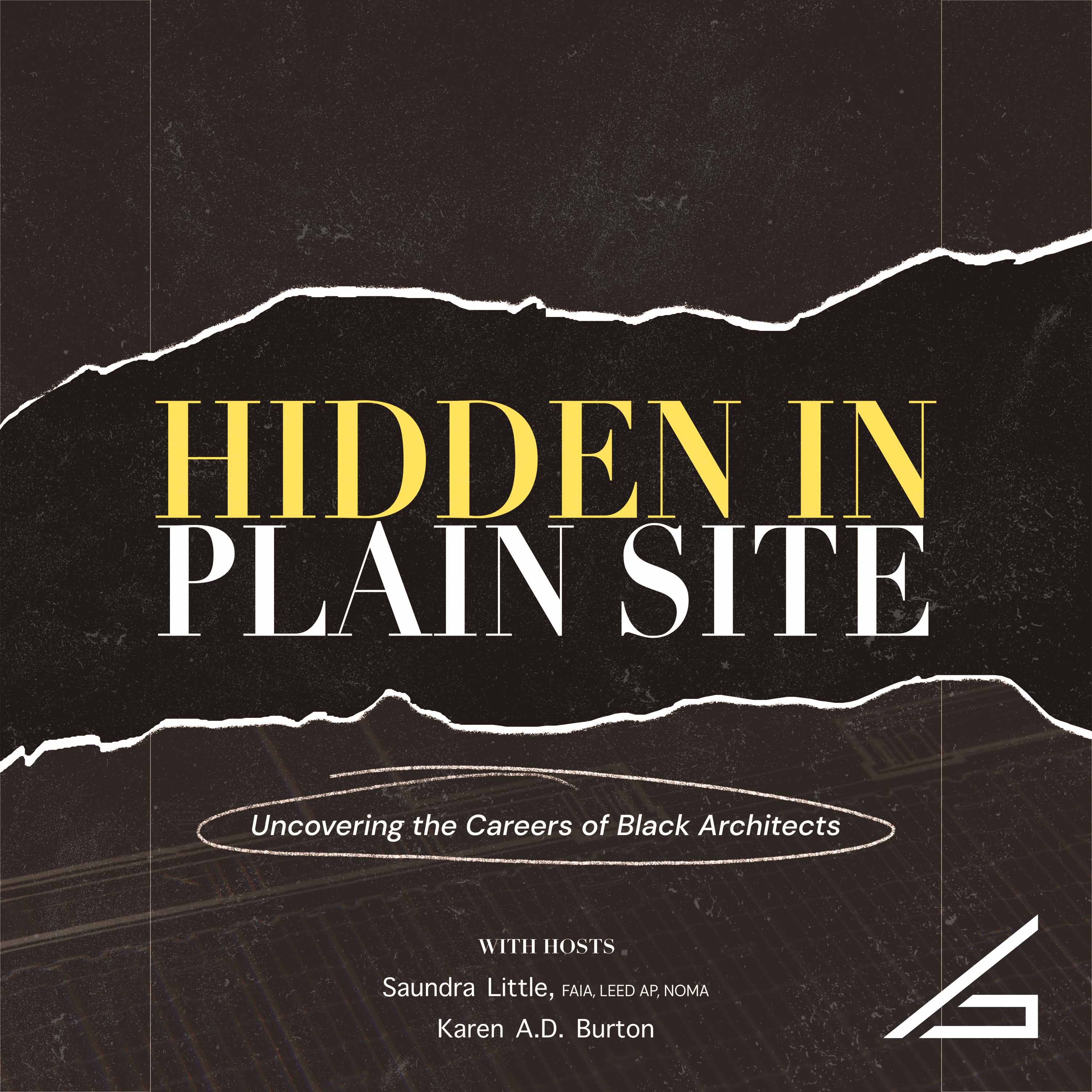
The transcription features three distinct segments. First, it announces the 2025 HUD Innovation and Affordable Housing Competition, a challenge for graduate student teams to develop solutions for affordable housing, with finalists presenting at HUD headquarters. Second, it promotes the "Emerging" podcast, which documents the authentic journey of starting an architecture firm, from initial doubts to foundational steps. The core segment is from the podcast "Hidden in Plain Site," hosting an interview with architect and advocate Tiffany Brown. The discussion details her Detroit upbringing in public housing, her late introduction to architecture, and her subsequent career dedicated to fostering equity. As executive director of NOMA and founder of the nonprofit 400 FORWARD, her mission is to recruit and support African American women in architecture, addressing the lack of exposure and representation she experienced. Her story underscores the systemic barriers in the field and the importance of mentorship and early career exposure for underrepresented groups.
Are you ready to tackle real-world challenges in affordable, sustainable housing production? The U.S. Department of Housing and Urban Development invites graduate students from all disciplines to enter the 2025 Innovation and Affordable Housing Competition. Form a multidisciplinary team, address a real-life affordable housing issue, and compete for cash prizes. Finalist teams will refine their solutions through a visit to the site of the Affordable Housing Challenge and present their solutions at HUD headquarters in Washington, D.C. The deadline to enter a team is January 15, 2025. Search HUD IAH Competition to find out more. That's HUD IAH Competition to find out more. I've mentioned it to my family, but in terms of telling people like, "Oh yeah, we're doing this. I'm looking for projects. You got anything, I'm not there yet because it scares the **** out of me." Dreaming of launching your own architecture firm? Well, buckle up for a wild ride with Emerging. The podcast that shares what it's really like to start an architecture firm. Where do we begin? We don't even know what type of business to formalize us. Is it an LLC? Is it an LLP? Like, how are taxes? I mean, the list is astronomical. Season one featured founders Jeffrey, Lexi, and Chris, owners of Level Studio Architecture are your fearless guides on this unfilled-to-journey from napkin sketches to a thriving studio. One evening, stumbled into one last dive, we sat at the bar and pondered our postgraduate futures. Admits the conversation, a napkin became the canvas for our aspirations, sketching plans and milestones, sealing our heartfelt commitment and shared dreams. In drawing down dreams on a napkin collectively, that man, then in your head, you've rooted like, "Oh, I'm connected to these people, like log term." The process of starting an architecture practice brims with excitement and challenges, demanding meticulous planning, flawless execution, and unyielding resilience. I kind of hate the term because it's so overly used, but I think everybody knows and posture syndrome. And I think it's so real to this day. I don't know if it's with everybody, but with me, I'm always questioning like, "Us, can we do this? Are we ready to do this? Are we prepared? Can we do it?" "Did we just decide a name?" "We did it, guys." "One that's not in nowhere?" "I don't know where, I like it." "It's hot." Ready to turn your aspirations into reality? Follow the link in the show notes to subscribe to Emerging and chart your own path to architectural success. Although black architects attain the same education, perform on the same project teams and complete similar project types, historically their credentials are questioned, and their work often goes unnoticed. We're here to change that. I'm Karen Burton, and I'm Sandra Little, and this is Hidden in Plain Site, and I spoke S-I-T-E. The podcast with the world can get to know the very significant contributions, contemporary, and trailblazing architects have made to the profession, the community, and major cities across the US. Welcome back to Hidden in Plain Site. We are happy to welcome you to our second episode, where we will be talking with the amazing Tiffany Burns. Yes, yes, another native Detroiter that you cannot ever ever say she's not from Detroit. She is like the key advertising person for the City of Detroit, so. Detroit City of Detroit and Detroit architecture, and she actively recruits architects and designers to come to Detroit to work. Yes. He's a your hair bar harden planning director. If you hear him speak, he'll definitely tell you a Tiffany Brown, so be on the City of Detroit and come in here. Right, right. So, Tiffany Brown has a Bachelor of Science in Architecture, a Master of Architecture, and a Master of Business Administration from Lawrence Tech University, and she actively recruits students to go to Lawrence Tech or LTEU also. She is very proud of her alma mater. Great school. Sweet key. Yes, it is. A great school has produced some outstanding architects and designs. They have a little bias there, but yeah, Lawrence Tech grad. Yeah, she's being a Lawrence Tech grad. So, Tiffany has 20 years of experience in architecture, but and she is executive director now of the National Organization of Minority Architects. Another love of hers, where she always is recruiting people to become members of NOMA. She has been a longtime board director in Detroit, and then she moved to the national level, and now she has the executive director role with the organization. NOMA focuses on fostering justice and equity in communities of color and supporting African American architects and architectural designers. In 2017, Tiffany was awarded a grant by the Knight Arts Foundation to launch her 404-word nonprofit organization that focuses on the next 400 women architects with a focus on African American girls. So, her nonprofit organization, which she is also the executive director of that one too, focuses on getting more African American girls and women in the profession and helps them to become licensed architects. Tiffany has been in several architecture and design publications lately. You probably have seen her on the cover of magazines in many online publications. She was named among architizers, 100 women to watch an architecture, and she has also received several recognitions and awards from leaders in the industry, including being named Associate of the Year by AIA Detroit and AIA National, and that's the American Institute of Architects. As we mentioned, she is an active recruiter of Students for LTU. She's also an adjunct professor there, and she is a community engagement mentor at Lawrence Tech University's Marburgers STEM Center. That's the short version of what Tiffany took. I mean, we were a utility myself for all founding members of Nobody Trey in 2007. And like he said, she served as a vice president role for a number of years within Nobody Trey. Two of those years I was president of the organization, so it was just great working with Tiffany again on the National No-Ma Board and the great work that is starting to happen across the profession architecture because of her being an executive director position. No-Ma has just really catapulted in the last couple of years and her being executive director is part of her as well. You know, as we talked to her, it's just amazing. The leadership role she has taken, you know, not only in Detroit, but nationally in the profession of architecture, and she is someone who had not heard of architecture until late in her high school career. She had not heard of an architect or did not know about architecture as a career until she was about in the 11th grade. So that is why she is so focused on getting African-American girls and early start and an early introduction into architecture as a profession. Yeah, they say you don't know what you don't know, right? Exposure is key to increasing the number of black architects, minorities, and by-pock and the field. We don't run into relatives who are architects. We don't run into a lot of relatives who are in a real estate or construction industry, so exposure and the programs like 404 are definitely needed in order to move that needle. So hats off the Tiffany and hats, man, a lot of hats. A lot of hats. Tiffany wears a lot of hats though. Hard worker and- But she wears them in style because she's always. And we- Those hats are always worn in style. So yeah, we are so excited for you to hear today's conversation. With Tiffany Brown. Yeah, one of the questions is Tiffany, we try to add doing each of the podcasts is basically your Detroit story. And with UNESCO, you know, with Detroit being in UNESCO, City of Design, we think it's important to highlight the legacy of black architects in that concept. So I know asking you about how important design is.
and how important Detroit is to design is just the white person's exact question. So tell us your Detroit story and how you began your architecture. Well my Detroit story, if anybody knows me, they know that I am Detroit boy and raised and very proud of being Detroit bread and growing up here, maybe who I am. It prepared me for being in this field and especially in construction management and construction administration, which is where I ended up taking my interest eventually. But I grew up in love with art and creative writing and wood shop classes and middle school and I didn't know what I wanted to be. What I wanted to do for a career. I just knew that I wanted to be somebody that was what my teachers and old principals tell me that's what I said when I was little. So I had a button that said I am somebody on like my fifth grade picture. And so when I look back at it, like all these things kind of come back to me now. But I think that is what took me to architecture eventually, even though I wasn't really exposed to a growing up as a career. I ended up going to study architecture and it played a big part in all the full circle moments that I had in my life. It was either Detroit or was architecture or both. So being able to go back and oversee construction of the housing development where I grew up, being able to work on Detroit public schools like a new school, month or high school, watch it be demolished and rebuilt in the same position, doing demolition at another housing development similar to the one where I grew up at rooster Douglas. All of those things really exposed me to what I wanted to do. They helped me to realize what what I was passionate about and how I wanted to give back. And I really even know that going in architecture that that would be the outcome of my experiences working on different types of projects. But that's my design, my Detroit design story, Detroit made me who I am and the built environment is what I care about. Just what I observed in the spaces where I lived and where I learned growing up here are the reasons why I am in this industry. I know I heard the story of where you grew up and you explained that a little bit more like I mean probably everybody would never know how you carry yourself. It's literally like you said grew up as a project kid, right? Yeah, I was a project and I'm still a project it, you know, because we it's it's where I my whole family was raised, you know, and it's what I knew as my community. It was a very dangerous place, one of the most dangerous cities, but it seemed like that to us because it was really all we knew I didn't know that I was poor or without, you know, other things. And you might not believe this, but as a child, I was very shy. I was very just kind of invisible to the world, you know, so a lot of people asked me how I broke out of this shell that I was in and made like they there's some magic potion that made me who I am today, but growing up in public housing, especially in the type of housing, there was a raw iron fence around and I always talk about this, this black raw iron fence was representing something symbolically as well as its physical presence. You just like a cage around the minds of the people that live there creating dependence on things like welfare and public housing and public assistance and my own school was inside that fence and my middle school was close by and so was my high school too and it was just this little world, this little box that I was in and I just knew that there was more out there. I just knew I don't know how I would experience it or how, like what my future held, but growing up in public housing and not really having people come to our schools for career days, but the only professionals I really saw in my life were the teachers and the police. That was it. Growing up, when folks did come to our school and talk about careers, which was very rare, they always refer to us as a disadvantaged youth and that was something that resonated with me because it was okay, this was telling me that you think that there's limits of what I'm capable of doing because of because where I live or what I look like or I don't know what it was. I just knew that I didn't like it and it was not encouraging and neither were the spaces around me. They weren't nurturing to my creative mind that I knew I had and so it's important to me to just really unpack and explore what public housing or publicly assisted housing like means and how it's created because I know how I was impacted by it and I know I still have family that's impacted by it to this day and I'm not far removed from it. It's always credit my growth to that. It's not something that people automatically pick up on. That kind of depends where I am, but when I have to always have to be a familiar. When I was there, I seemed to be the proper one, but when I was out in school or you know someplace else growing up in Arizona or something like that with my dad or spending summers there, we were the ghetto ones. I was always on the fence and I still feel like I'm on this fence or I have to be a consta-commillion in any situation I am and some people can tell because some people, some situations have brought it out of me, but I'm aware of control it. So, my Tiffany, to go back to the place where you grew up when you were working with Hamilton Anderson to do construction administration on the new housing on that site. It's just very nostalgic for me. It was to be back there and honestly, the only reason we moved out of Herman Gardens is because they were being demolished and a lot of people stayed close. They moved across the street. They stayed in the neighborhood because they had every plan on coming back because they knew it was going to be rebuilt. So, they wanted to come back and my grandmother was one of them. She lives there now and I want one of the other folks that I grew up with and I'm a mom grew up with. But to be back there, it was just very meaningful for me. Working on Garden View of States, working on Mountford High School, being a product of DPS, working there with people who would not live there and people who would not send their kids to that school. It just really put things in perspective for me. I was just looking around like, there's just something wrong with this picture of these project teams and these construction teams and the people who are coming here, they don't really care about what they're doing. They're just here to make money on the off of a project. It was different for me because it was where I was born. And just this whole kind of rebirth of that development and the rebirth of my approach to what I want to do with my life and even rebirth with my daughter. I was pregnant, walking that construction site with Brandon and the place where I grew up that she never would know how her mom grew up, the poor the way that we did. She thinks she's a rich kid. I don't know why, but I ran across a picture of myself coming down some stairs and it was the winter time when I was pregnant with her when I really started to show. And I had on this big car, car, car, and people didn't know I was pregnant. And I had on my hard hat and I was out there in the mud. It was just 30, 40 acres of mud at one point. And I had on this big rain boots up to my knees and people didn't know I was pregnant. But I was out there, you know, just in a place where it was not meant for me to sprout out from and be into an industry like this. It just was not something likely for a kid growing up there. It was not a place likely for me to ever see myself going to Paris to study abroad for architecture standing in front of them. At least going to Spain. I never dreamt that I would be able to do any of those things growing up. So that's what I was going to say. Tell your story of coming from the best school in the world for both of us. So Lawrence technologically. That's right. We're all that critical. Right. We're like here and say, "Bax, you don't miss that percent." It's all about your experience in Lawrence Tech. You know, like say, going abroad and how it just changed you and really helped build you up in this field. So getting to the 12th grade and not really knowing what I wanted to do as a career, I was actually considering being an animator and working for Disney because I was always drawing Disney movies, cartoon characters, people in my class, all those types of things. And I got there. We actually got there because someone from Lawrence Tech, it was just a recruiter. She came to Northwestern where I was. Northwestern was my third high school. I went to three high schools. But Northwestern is where I graduated from. And so a lady came there. She was a black lady. I was an auditorium full of people who could not care less what she was talking about. And it was like she was there to talk directly to me. I remember just feeling like I was the only person in that room. I should just try to learn more about this as a career. I didn't even know anything about it, but I started there in the fall at Lawrence Tech. And I was, Lawrence Tech has been a part of my life.
since our graduate high school, three degrees later, and even as faculty, but getting there as a Detroit public school student with almost a four point on GPA graduating, I was completely unprepared when I got there. I definitely felt out of place. I definitely felt like I was behind my peers who had parents who were architects or who knew what architects do, and they knew about the licensing process. I had no clue about that till three years later. And even what an elevation was or what a scale did, I had no clue. So it was tough and it was, there were a lot of times when I didn't know how I would get through it, but I remember I just kept telling myself that it had to be done. And about three years later, I got a job at working in Halterson, where I met the one in only Sandra Little, who was on the spot. She's so cute. I think she might have been the first black woman architect is that right, Sandra, that I met before? I think I remember you as you said in a person's second, but I know you feel it. It's like, you know, you pick on this as a career feel and you have never even seen somebody who looks like you. Never thought by someone. Didn't have an instructor, didn't have classmates that looked like me. There were students there and other programs, but not in architecture. So it was not an easy task to get to a Bachelor of Science at Lawrence. I've had professors there that discouraged me from continuing. Like maybe this is for you kind of thing, because I was just on a different wavelength as far as the way that I learned and the things that I knew versus my classmates. And I just stuck with it. You had a harder than I did. I mean, when I went to Lawrence, at least I had Damon. Damon Promise was my classmate and ended up becoming my business partner later on. And it was a couple of other, you know, African-Americans that were in the program at the time that I still talked to you to this day, right? And that's tough, you know, it's already tough for like the part time of the White College, but also not having someone who looks like you to even go through the class with and kind of, yeah. To figure out some things. That's pretty tough, too. Yeah, you know, at times I wish I had gone to an HBCU because I just feel like my experience would have been different. And hindsight, now like knowing what an HBC graduate goes through and our industry also, I don't know, we're probably what changed it now, just because I like to be, I need to be around people that look like me. I need to see representation, it's just what I need. And I think I was needed to. And I do have really good friends that I graduated college with. And I'm still close to to this day. And you know, we still get together, we still hang out. My first studio instructor is actually the person that invited me to speak at Stantec tomorrow. And she was one of a few women that I've seen and as a professor at Lawrence Tech, but there was a different experience coming out of the trip, of the schools and going to a predominantly white institution. Private. I have to give a little hat off to Lawrence Tech, then, because they did outreach to you in school. That's right. And the reason I went to Lawrence Tech as well is because they sent to all the counselors this pre-college architecture program. And that's what that meets Lawrence. I took that in my senior year. 'Cause I was like, I was studying an architecture, I was like doing research papers on me, Spandarole and different architects. But I still was like, can I do this? And that class that helped me feel comfortable going into Lawrence Tech. So they were doing outreach and-- - Oh, they did outreach. 'Cause you were in school and was it Ann Archer? Or were you in Detroit? - No, no, I was in the, I was out in Weston. I went to Waynewood High School. - That's why I was in high school. - Yeah, Waynewood High School. So they were doing outreach. They were coming out to people and talking. So that's important. So anybody listening, that's important to visit schools and the kids know, architecture is a career option. - Definitely. Nobody ever came to my school to talk about elementary school to talk about architecture. But by the time I got to high school, we had a draft in class, but no architects came to our school. Then I'm aware of. - Yeah, it was, I do credit Lawrence Tech a lot for my professional development. I did not have the opportunity to go to HBCU tours and to just visit, like being at Lawrence Tech's campus was really my first time being on a college campus. And I just was not exposed to that. I don't know how I missed it in college. I know in high school, there must have been some trips to colleges. So just, I was, I'm a first generation college graduate. And so I didn't really have the push from home to go to college. And I had gone to three high schools. So I can't really say that there was someone consistently in my school making sure that I was applying to college either. I'm just someone who happened to not slip through the cracks and made my, like one person out of an auditorium for the students that made my way to, you know, on that path. - Yeah, I always say that too, feel like you blush, right? You like, he made it through a lot of extreme circumstances. Probably with 200 people in that auditorium that made it out and they got the message too. So. - But you were driven to do so. - You were determined to move on. - The determination was there. It was mostly, when I think back to that, it's, I just knew that I wanted a better life. And I wanted to learn more about the world and to be the best me. You know, I didn't, I had no direction on my idea where I went up. But it still comes with some negative effects, I think, because of the way I grew up. And a lot of people that I do not hear anymore, or, you know, it sounds cliche, but a lot of people that I care about are dead or in jail. And so at times there is survivors remorse or imposter syndrome, or like all of these things that people don't see when they see me, because they think that I have like, at all together. But I'm affected a lot in like many ways mentally by the wide spectrum of like my life experiences, you know? And a lot of it, I'm not even realizing until now, like I'm kind of like buried, you know? - So how was it coming up? Like you were coming out of Lawrence Tech, I said, you were traveling internationally and you started to grow, right? So how did that feel when you first started that into professional world, your first job? And how did that make you, how was it? - I feel like I was going with the flow. I knew that I had a lot of important puzzle pieces floating around me, like the people that I was introduced to, the places that I'd gone, the things I'd seen or learn. And I didn't know how to place these puzzle pieces, you know? I was just kind of like letting them, and I struggled with that too, 'cause there's a big part of me that wants to control everything, every aspect of my life. I need to plan for everything, you know? And so to just kind of like let things happen was tough, but getting a job in an architecture firm, especially when that was Black owned and I'm hired by a civil hire me, and I don't know where I would be today if it wasn't for her and Rainey, believing that I had no experience. I had nothing to do, like bring to that for her. So I started at the front desk and I had some experience in administration, 'cause that's what I was working at before. And I was able to just work my way up and to leading my own projects over the years. So I pretty much grew up at Hamilton Anderson, I was there for 11 years, and at that time I had never done anything in my life for 11 years. I was just trying to let things unfold because I didn't really have the guidance that a lot of people might have had, like in mentors and things like that, really until I got to Hamilton Anderson. - It was a, and you were there like at a critical time, right? It was like the number of after-meric and architects that worked at Hamilton Anderson, I know like starting before I came to, I know at least four to five years after I left. That it was a lot of people now today. If people hear the names and name drop, there were a lot of African-Americans that were at that firm. - I feel very lucky to have had that experience because I was able to work at a black-on-firm around so many black people. And I loved to come to work. And I loved the projects that we were working on. And we all loved to be there. We would hang out with each other after work. - Oh, yes. - Yes. - So it was a great place to be. It was a great time, like you said, to be there. And I was just fortunate to have formed relationships that I formed there. And one of those relationships was with Noma. Being part of the founding of Noma Detroit, which pretty much consisted of Hamilton Anderson employees. You know, that was a pivotal time for me to, 'cause I didn't have Noma at Lawrence Tech as a student. - Yeah, so my experience was a little different. I never, until I came to Detroit, I didn't work with any black people. And I was always the only woman in our protection or engineer or whatever I was doing. So it was like finding family, you know, when I came to Detroit and to Smith Group and to Hamilton Anderson or Urban Works, where I worked with Roland Day. - Yeah, Roland too was someone I met while I was at.
and Hamilton Harrison, but that's part of my Detroit design story also. And, you know, it was just awesome to be able to work there and get my start there. And as just starting in residential construction, working on Garden of USA, working on Brewster demolition, working in flant on housing, working on brush park when it was, you know, $30,000 a condo. And now it's just that half a million dollars. Okay, anything. Rob Saxon was someone that I was working closely on that project. And he was trying to give me understand stare detail. And I was so confused all day, every day. But, yeah, it was, it was something that I was able to do. And then I'm grateful for the, the people that I met and people that are still in my life. Um, and the relationships that I still have, you know, with, with just about everybody from that firm. So including Rainey. You grew up in Hamilton Anderson, while Hamilton Anderson was growing. Um, and what was it like to move on to a larger, more national or international firm? So when Hamilton Harrison being a design firm, it was a smaller firm, but it was pretty large. The for it firm type at that time. We had a hundred or two people. Yeah, it was, there were 130. It's a, it's a peak happening. I remember getting as high as 176 at one point when I was there. I was there for, you know, at time, but it was, uh, I knew that it was hard for me to leave because of my relationship with, with Rainey. But I knew that there was something that I was not getting there. Like I just had this interest. I was doing a lot of C8 work at Hamilton Anderson eventually and the design firm. So I, I wanted to get more experience in construction. I wanted to get more experience in some different project types, like hospitals and things at Hamilton Anderson wasn't doing that much of it at that time. So that was how I left and then going into Smith group, where it's a national firm, offices all over the, the country. It's the, the longest running ever architecture and engineering firm in the country. It is a interdisciplinary. It was something like everything about it was new to me, you know, working at Hamilton. Anderson, civil engineering, everything we needed was consultants. But to be at a firm that had everything under one roof was, I saw the benefits of that. Where we from start to finish or sitting next to everybody on that team and everyone's experts in their, in their areas. And so I think that was when I realized that, like, how well I could thrive in like a corporate setting. And the segway to that was being in business development at Hamilton Anderson for a while. And then realizing that I was also interested in the business and of architecture too. Not only just construction, but business too. So I ended up getting an MBA from Lawrence to supplement my master of architecture so that I could be more versatile because our architecture degrees are very specific to that. And being at some group and starting out in CA and then transitioning to project management. All of these things are just kind of like, they all unfolded like a story. You know, they just all, they were just all stepping stones that I didn't see coming. And you know, when I try to like describe my journey, it's just the way everything happened. Just kind of like like bam, bam, bam clockwork meant to be, you know. So eventually, I realized that just working in a national firm, they're international. I think they've got, you know, one or two offices that are like starting out in other countries. But it was definitely a very different experience from working in a design firm. And you need that to be a little rounded, the person, you know, working in this industry. I was able to go there and just grow and observe and have some mentors that didn't look like me that there were sometimes it was a challenge to like my capabilities were absolutely doubted and questioned while I was there. And so, but with certain people. So, but luckily I was able to form relationships with some folks and upper management that saw what the same thing that civil saw to me and have a fanatic and one of the things that exposed me to some opportunities and that's when I realized that I wanted to be an executive leadership. So what are some of the projects you worked on while at Smithfield? I started out working on four motor companies headquarters in Dearborn and and we were working on those sweets where their leadership. There was kind of like tenant improvement like the top floor for the leadership there for Ford. And I was doing CA there. So I was mostly in the field at the site. I also worked on GM there while I was at Smith group GM some of these projects with these types of clients really shows how these clients with that's just got millions of dollars for throwing a project they just they they want to work you to the ball. And sometimes the firm doesn't really protect the employee from the fatigue that they end up having to like work 50 60 hours. And we're like I couldn't do that you know and work with a team of people that you would get to the city's phase and they want to start the design all over again. And so they sent you into in there to do that. And by that time I was a project manager and I had all these these younger employees like coming to me about I need your help and CA are you just tell me how to say no or I'm unhappy working on this project period. So it was there was a lot of valuable experience on those types of projects and having most types of clients. But I think the most important one for me at that firm was working on at the Cove Me Young building and partnering with the Sandra little and centric design studios on that project. It was it was very tough kind of like being pushed into the deep end of the pool just dropped into the project management on that project and just just having to prove myself to to share it and you know to the rest of the count like the commissioners there that they know that I was put in that position because they needed to diversify that team. But they also made it like she made her business share Madison made her business to make sure that I have the support and the training and like I was not set up for failure by putting it being put in that position. So you know though being able to work on that project was was meaningful and just learning about the responsibilities of being a management manager and managing people and managing projects and managing budgets and managing schedules and construction and. It was a different project type for me a new project type for me and I'll half the time I was really questioning myself while I was able to do that I hadn't never done project management before so. I was just going straight from CA to that but at a firm like that I think the requirements to be a project manager would be different from from others where you're required to be a licensed architect then they have a be stipulations and. But working out working out a firm like that where words interdisciplinary you have structural engineers who are PMs you have interior designers who are PMs you have civil engineers who are PMs and you have me having multiple masters degrees like no one else had that you know and so. That was my ticket there and and guess people did. Question how I got there or how well I would do because of the way I got into that position but that was what I had that was unique about me that no one else had had to to masters or even had a business degree. So how did you feel afterwards at the ribbon cutting and the mayor was there and you know opening up the new inch away and. It's at the end. I think it was it really made me see that maybe my time is complete here is the group because. You know one another one of those full circle moments because around that time I did transition to other work not long after that pandemic happened and so we were working on from home and you know the murder of George Floyd and. Just being in my house having work in my house having to check in on these I want to make sure you're working type of like that's what it felt like to me calls where we're on zoom and now we're on teams and. Just having to be in front of the computer and at my house that used to be my place of peace and now it's where work is it's where church is is where gym is is it's where everything is in here you know so there's I was closed then and I was really starting to like just suffer mentally and. After the murder of George Floyd and after I wrote I was just watching how. Different firms and different folks and different people were responding to things and and how they were advocating or not advocating or how they were being vocal or not being vocal. I started to realize like my energy is not. Being like I don't feel like I'm being effective for my for my community I feel like I'm contributing to the change that needs to happen that has been put on the stage now in front of the world that we always knew was there but now. Now it's being acknowledged you know and I think that's when I was like um it was a semi voluntary leave of absence you know with with that because they wanted me to come work on a project and I was like I just cannot mentally do it I can't even come back to work right now you know. And I got to call a couple of times from them to work on. They needed to be able to do that.
to pee in for this project. And there were a couple great projects that if I were different mindset, I would have been happy to do it. Just I was really conflicted. And then when NOMA put out, it actually Kimmel's at my house when NOMA put out the brave statement on NOMA's position with what was happening in the world. Socially, we both just kind of have some epiphanies that I get in my living room that day. And I was like, I can't be out of firm, working on things I don't care about right now. I'm working on offices and stuff. - Okay. - Working on major corporate offices where people have less money to throw at. - And they are carrying on with these meetings as if this trial was not happening or this riot is not happening. And I could not, because it was affecting me directly, and ways that I didn't expect, you know, and I just, I couldn't do it. So that was just, I think when I realized it was time for me to make a transition, I think that's one of the questions that she all asked me about was like, I had to, it was time for me to shift gears. It was very fun to me. - Hey there, architecture enthusiast, Nikita Reed here, inviting you on an incredible journey through time and space with my podcast, Tangeville Remnants. Historic preservation and sustainability. Let's go ahead right now and debunk the myth that they are opposites. In fact, they are two sides of the same coin, shaping our collective future. - In a work environment, it has been challenging because I've had to probably do more than double just to make sure that I quote unquote fit in. But the environment said it allowed me to do me on the front end. I've been extremely successful. You look at all these PhDs. They've built that on the backs of our elders. - Absolutely. - They consider themselves to be experts at is what they've worked with us to achieve. I know we have to, we have to prioritize people before products and before place. - Join me as we unravel the stories of historic buildings shaped by the people of a specific era and often influenced by race and gender. These tangible remnants are windows into our past and guidepost for the future. Follow the link in the show notes to subscribe now to tangible remnants. Let's explore the interconnectedness of architecture, preservation, sustainability, race and gender. (upbeat music) - Today's Detroit City of Design Spotlight is giving you a little context to a lot of the universities in schools that we talk about in this podcast. A lot of us here in Detroit don't fall, Apple doesn't fall too far from the tree. So we actually go to school in our great state of Michigan and end up practicing and working on this space as well. So I can start out with one of the schools of architecture we talked about briefly and you heard so far Tiffany speak about Lawrence Technological University. The School of Architecture is in Southville, Michigan, which is just outside north of the city of Detroit. So just outside the city borders, the mantra of the school is theory and practice. So Lawrence Techn is one of the schools of architecture that's known actually to produce the most licensed architects that come out of the school 'cause it is a very practical school of architecture. It's usually two types of school, this practical and then theoretical based schools of architecture. Karen, I'll let you talk about your alma mater. - Well, I attended University of Michigan in Ann Arbor, Michigan. U of M has the two plus two plus two programs. So going to University of Michigan gave me an opportunity to study several things before I got into the architecture profession. I was very interested in still having very interested in a lot of things that are go hand in hand with architecture. So I started out in civil engineering. But my first love was architecture and that is where I moved to next to get my Bachelor of Science degree. So I got to study engineering. I took real estate development courses, took a lot of art history and architectural history and all of that helped me to understand architecture and how I worked and to how I worked together with other professions and fields. I really appreciate the well-roundedness and the exploration that I could do in my degree with the University of Michigan. U of M is the oldest university in Michigan and one of the largest, if not, I don't think is larger than Michigan State, but one of the largest student population wise. And we have lots of well-known alumni from the universities. A lot of people that we are interviewing here on Hidden in Plain site, go back and teach at the university, even if they were not students there. The University of Michigan just has a great resource of professionals and it's just a great resource. - Of course. - For the guest faculty and students that want to write, right, guest faculty, the deans who have been a dean of the school and department heads of the school, just a wonderful experience. And I am always amazed. My husband has taught me the power of wearing University of Michigan paraphernalia and clothing. You know, I don't care what city we go to if you've got a U of M shirt on, somebody's gonna pass by you and say, "Go blue." So that network and learning to use that network is just, I've learned it's very powerful. - Yes. - Very powerful. - So yeah, coming to our top 10 university, you know, University of Michigan. - Yes, yes. - Another school that we have here within the state is Kendall College of Art and Design at Ferris State University. We were very fortunate. That's in Grand Rapids, Michigan. So Grand Rapids is kind of in the northwest side of the state of Michigan and the lower peninsula. And we had the opportunity to do a lecture there for a new art design party presenting our work of African American, the history of African American architects on the campus. I wanted to kind of the first in-person lectures we'd done since the pandemic. But their School of Architecture is a, their master's program is accredited at School of Architecture. So a lot of the firms that are out of the Grand Rapids area are have students that actually are graduates of this university and just kind of the anchor to the west side of the state. It's like a, say, roughly like a three hour drive from Detroit to Grand Rapids. But still one of our spotlight schools for architecture. - And then another on the west side of the state, more of the southwest side is Andrews University. A small university founded or a part of the seventh day of Venice Church. They have an architecture and interior design college. And they are very focused on architecture as a service to God. And you can see a lot of that on their website. We know of one or two people in our Noma community who are graduates of Andrews University. And we are gonna do some more research and find out more about Andrews and their impact on architecture, not only in the state of Michigan, but nationally. - And then we'll put our plug in for Andrews. If you definitely we would love to come do a lecture. Noma design party would love to come do a lecture to Andrews University. So please reach out to us. We've pretty much talked to the universities we talked about. But one of our great supporters is our Michigan NAB accredited architectural program is the University of Detroit Mercy, their school of architecture. It is located in the city limits of the city of Detroit on the northwest side of Detroit. They have an accredited MART program. They've been one or two, like I said, our best supporters as far as Noma design party with our project, as well as Noma Detroit chapter. And the work that we've been doing there, we have Noma members who are on the faculty at University of Detroit Mercy. And you're gonna hear on this podcast a number of interviews that we have from University of Detroit and virtually graduates. But yeah, we have a faculty position there that basically supports our Noma national student design competition every year, part of the requirement for that faculty members to be a Noma member. And then it supports those students. And you get Noma members and minority architects that come in and do critiques with the students and actually spend time with them. So giving them exposure to what we always talk about, right? The people you can't see, you don't see a lot of minorities, but during that class, you will see a lot of minority, guess critique members come in as well as the faculty. - And we appreciate you of the Mercy so much for we've had exhibits in the architecture school in their exhibit space, Noir Design party, [BLANK_AUDIO]
had lectures and panel discussions as well. And most recently we partnered with U of D and live six to present about architects and developers on the six mile a couple mile block of six mile in that corridor and the work that black architects and black developers are doing together to renovate and reinvigorate that area. That recording is available online if you want to check it out you can check out that panel discussion on live six Facebook page and website. It's a great conversation that development is happening there. So yeah we wanted to just give you a snapshot as we interview people on this podcast you're gonna hear these university name drop and but we wanted to let you give you some context to each of these universities as you listen to future episodes. And now back to Tiffany Brown. So that that that that is the question like how did you be found the executive director? National Exit and minority architect, fellow architect. So that was that was the question and after that brave statement after your mental break what happened next and how did you get there? So I've been on the board for a nomination for for a long time and I was um vice president of nobody trade for probably 200 years felt like but so I was already um we involved with them and it really was a requirement that I had wherever I went to work because of my involvement with Nome I need you to be able to support my time off support my travel support the mission of this organization because it's important to me so I always say Nome like me was finding Wakanda I went to a predominantly white school and you know just I think finding Nome and seeing that sea of people that I'd never seen never knew existed it was it was like I can't like oh this so so is your first Nome of Congress to say one that was my first one to Orlando was is it your first? It is me yeah yeah that was my first Nome of Congress so that was my first minute. Yeah I didn't go to a single seminar where I was and I was at the awards banquet because that was a time when Hamilton Harris was winning all the Nome Awards every no it was the Moody Nolan of you know like 2009 or 10 or something like that but I was I was there and I was on this task force to try to find a moment executive director and we had gone through three executive directors in three years having a having a you know let them each each of them go people that I thought you saw as very capable doing a job I was I was doing what I could to help them succeed because they were black women you know and I'm like I've been on this board I know how this organization works I'm doing what I can to help them but all the time I was thinking I could do this but I didn't think that was my ministry right then I would fight I should be at a firm I'm not you know I'm at a firm this is what I'm doing so when when the bravest statement was released and we also had recently released our ED Kim did ask me to you know just like what do you think about just kind of standing in as interim for a while and helping us sort things out while we explore a new ED and that went really well I just I realized there were a lot of you know almost been a violent organization for 50 years so everything is everywhere on people's personal emails personal drives like it was to go from being in a corporate environment to then going to someplace where there's no structure no you know real procedures and standards and things like that in place things that I love you know and I need to operate in a workplace having to create that now you know and so I was like well so much time had gone by that I decided I would throw my ring in the head when it was time to do the ED search and so when that time came they had a couple meetings behind closed doors without me and decided that they the money that it would cost to do a search for an ED they wanted to invest in me and train me to fulfill that role so this was something I didn't know like the whatever percentage of that salary 30 percent of it goes toward the ED search like it's a big chunk of money that just been searching for position like that so they they decided to just you know instead of doing that we need this to be someone from within the organization that knows how normal works and I just kind of made that made another segue and and to it so you still using that NBA degree you still using your architecture degree you still using all of that and this in this new row and I'm doing fine with what I love not only did you know how normal work but you understood architects just architecture by architects and how they work and how they think did any of the previous executive directors have an architecture background no they a couple of them had one the our first one had she had and she was a business major she had an NBA and then the next one had you know a lot of DI experience and DI and she was also no more affiliated the next one I know none of them had architectural backgrounds but it was I think necessary sometimes you can have an organization that hired someone from outside of the industry the dynamic of how normal works because we are so familial because it is such a this is my family type of environment with us we're close like because of no mind going to any city in the country and have places to sleep you know these are my close friends my family sometimes that's a detriment with me being this position now it was a struggle for me to leave that corporate environment at national firm and it took a turn talking to by one of my friends was like it's like you're trying to be the best black person at a place that is led by white people and some of them there don't want you next to the method board table you know and that was the case you know so even with your credentials even with my credentials but with use the fact that I was not licensed to keep me from being elevated to associate and other things while I was watching other people who didn't look like me be elevated without a license you know what is what is the thing what is the reason besides what I look like that I can't have the same thing happen you know I'm you see me as this expert in these other parts of like this D.I. expert and I'm representing the firm flying around the country doing all these things speaking at conferences you know doing all these things but when it's time to elevate me I'm being held back from from that you know so I don't have to do that now because now I can go and be in an executive leadership that's what I wanted to do at that firm and at and at the firm before that you know being a student and working in Hamilton it was really hard for me to fight my way out of that student box at that firm oh yeah yeah that is that is very true I mean people will leave a firm right and take to almost for promotion because you are just look at and a certain as a certain role and that takes some consciousness from leadership to say wait a minute no this person is growing I'm gonna try to make sure this person keeps growing and if they're not paying attention to that it's almost like that person getting pigeon-holed and doing details all the time right yeah so you get you get stuck at the state roles so but now you're at the table at a larger table because like so as you come into the ED role right now Norma is at a larger yes because of everything's happened now you're like you know how how is it like doing in conversations of how to move the profession for and in you are the voice for an organization that kind of heads up that minority arm with that and not just the voice for the organization but you're interacting with all of these large firms right it's not so much the firms obviously every firm every company wanted to extend its arm to Norma and partner with Norma because they needed to show or wanted to take part in making some type of change and the DI issues that we were having in our in architecture so we were being and we still are being pulled in from every direction and stretched in and so but the other part of that is now we're part of this alliance of organizations that shape and control the industry from the top you know and so Norma now has its seat at this table of alliance organizations it's it's it's where the six it used to be the six collaterals but we recently just kind of come up with a name for the group the architecture alliance and at that table is Norma it's the ACSA which is the collegiate schools of architecture it's of course the AIAA and AIAS who are two different entities the NAB who credit all of the colleges and then it's in car who controls licensure so we are on these calls with them we're in meetings with them now we're at their board meetings we're at their conferences as presidents and executive directors having regular calls on how we can work together in form of cohesive mission to make the change that we we want to see so it is very meaningful for me to be at that table because I remember just I would be kicking and screaming at the firms I was at like I'm capable of doing this this is what I can bring to this company and now I can do that on a larger platform and use the platform that I've built up
to share my story and to talk about my experiences. Because really, I'm a major advocate for storytelling, especially in architecture with making change in architecture and sharing what I've gone through and things that I've experienced. Because people need to hear that. And it's just they get a better understanding of our point of view. At times, it is exhausting. Nomas at this table, and now we represent every black person or every struggle, or with there to represent everything and everybody and be all things these orgs. And so there was a lot of fatigue there for us. But I'm really proud that I can see that they are taking the steps, and it's going to take some time. But they're taking the steps to make the changes and from within, we can't just drop six black people on the board of NCARB's National Board. Because there's a process to get there just like there's a process to get on Nomas Board nationally. So now we're learning what their process is and kind of holding their feet to the fire to be transparent about what their process is and how they're supporting someone like us to be successful in those roles. So yeah, it is these groups of folks, like these LFRT, large firm around people, these things, these are things I have been existing for 30, 40 years. I never knew about it till now. And so now to be at this table and having these discussions and really being a sponge and offering my expertise in the best way that I can and working with Kim and Jason and Pascal and just folks who are rock stars. And they are my friends. It's meaningful for me. I didn't see AIA hiring a black woman to be their CEO. I just did not think they were ready to do that. And when I found out that they hired LaKisha was I was blown away and proud of them. Because it showed that there's people there that they're like, OK, we're going to do this. And there's going to be, you know, flack and there's going to be complaints. And there's going to be people who are not happy. But this is the move we need to make to do what we need to do. So there are two initiatives that I know about is come out in the architectural alliance. Is one is the baseline for belonging with NCARB and the other one is the 2030 Challenge. So I think the diversity challenge. Yeah, the 2030 diversity challenge. Those two. So you tell us a little bit about those two initiatives. So the 2030 Diversity Challenge is something that Kim and Robert Easter and a couple other folks came up with to double the number of black architects by the year 2030. And I think that we, in order for us to accomplish that, it's 27, 28 people need to be licensed every month for us to reach that challenge. So now what the alliance is, everyone's trying to work together on how we can make that happen. With what they each can do to contribute to that. And we're still working on what that means. I think it's really pointing to what the pipeline is because it sounds like education is something that we all share. All of these orgs have our own silos. They're academia. There's licensure. There's accreditation. There's NOMA. We all have different missions. But I think the mission that we all have is that early exposure is what is kind of a really contribute down the line to making the change that we need to see in this industry. So-- That's the same kind of outreach like we were talking about earlier with Lawrence Tech and meeting you in that auditorium. Touching that-- Yeah, catching that student is what's really going to move the needle. Yeah, you know, we've done this multiple times. When the young said this loud and clear 50 something years ago, he said something needs we done now. And we will be sorry later. And we are doing an injustice to our communities if we don't do something now. And that was-- that was then. And here we are. We still at the same percentage, you know? So being here and in the midst of that anniversary, I need to see solutions. I need to see some answers. I need to see some action from these organizations. And really that is what's going to take me to baseline on the longing. And Carv wanted to do this survey with NOMA because they want to try to understand why people are falling off the path to licensure, why we're not passing exams, all these things. And so they're putting out all of these reports about experience in firms, firm culture, education, the examinations themselves. Are they being biased in the way they ask questions? So they have all these initiatives taking place right now where they need to feed back from NOMA members. And they still do. I know it's a bit of a hard pill to swallow, to just be on this stage where people are talking about, well, research shows that black women are not getting licensed. Yes, we know that. And we want to know why. Well, we can tell you why. We know the answers why. And I'm on this call. I can tell you exactly why. I'm not licensure because I don't-- one of those people-- there are so many things that they don't consider. It's just the culture of us having to take care of-- the way we raise our families and the way that we have to-- we are responsible for the oldest girl. And you're watching all these kids. And you're not exposed to college. There are all these factors. We're graduating with multiple degrees, but we're not paid or promoted at the same rate as our peers who don't look like us. And so how are we supposed to pay back our college loans? How are we supposed to pay for these resources that we need to pass exams? How are we supposed to pay for the exams when we have bills to pay in families to raise and loans to pay back from trying to call a college? So-- You mentioned it too. People don't-- you have to credentials, but people don't want to recognize. That's right. I know it's credentials. Yeah, there are times when I would be at those meetings that when I was working on that for a project, and I would be sitting next to somebody that I would graduate with, that from Lawrence. And he's working for-- and he's about two 80-year-old guys from retiring to being the next CEO of-- in that department. And that is not something that would be available to me. And I know that I have more experience than he does. And I know that I have more degrees than he does. But this is my life. This is me, and having 400 forward, and ushering in the next generation of the designers and architects, and telling them to come into an industry that treats them this way. So I've had my own moments in time where I was like, what the heck am I doing here? Is this really where I belong? Is this really baseline on belonging? People don't know that I've had these conversations with NCARB, and they've asked us to do things, like make videos, or just kind of-- they wanted to write something for us to read, just to try to promote what they're doing. And I couldn't bring myself to do it, because I can't pass your exams. And I'm suspicious as to why. Or I feel some kind of way about the questions you're asking, and you're not asking about the question that you are asking, and the ones that you are not. I have experience in neighborhoods that need to be safe and need. It's a different type of concern that I have, and that's not being acknowledged in the way that you ask these questions. It's a different perspective, right? It's like you have some projects that come into certain neighborhoods and they fail. And it's because who designed that project was not from the neighborhood, or earlier on, before now community engagement is a big thing to do, had not even engaged as a community, and when we're talking about designing this facility. So it's perspective. And then when you get to their exam, this written, it's a different perspective that you're coming to it with. So I mean, I'm not a speculating, but you are hoping people become aware of that difference, right? It's like, but it's tiring. Like that's the other thing, right? We're fighting the DIs. Absolutely. The DIs that was the time. It's that it's stressor that again, other people who are taking the exams, other people in the industry don't have. Absolutely. You're carrying additional weight that other people don't have to. They can go home and lay down at night and not think about some of the other things that have to carry. Yeah, they don't, they don't have to, one of those things they don't have to think about, their family member being shot down in the street because of what they look like. Right. There are so many things that I think, for a long time, it's been, you know, eyes closed, ears closed, mouth shut. Just they have tried to not see. And now there's a little bit of effort there to just say, okay, what can we do? What are we doing wrong? Let's bring in some third party. It's to tell us what we're doing wrong. So being in this position, I'm able to use that voice again and my platform and my experience to tell them what they're doing wrong. And I'm more than happy to do that. So, and it's gotten me further with things, with the change that, you know, we're all hoping to make here. So I think it was just a necessary change. Because these are things that unfortunately, with COVID, a lot of people lost their lives and they're in their jobs and their homes and a lot of those things. But there are some of us that had to go through that to change our lives around and do what the world, become what the world needs to be better. So I'm one of those people. - So let me backtrack just a little bit. You mentioned Kim to a three time.
So I want to say Kim Dal-Dell, former president of national organization of minority architects, and now candidate president of American Institute of Architects, and a Detroiter. And a Detroiter? Yep. So one thing that is remarkable for me is a machining can become president of the AIA, while the AIA has a black woman as CEO, while Noma has a black woman as president, because Pascal is the incoming president of Noma. While Noma has a black woman as ED. And that's history right there. You know, so I'm just very proud to know them and even be part of just that group of people, and just to watch her grow and watch her, her be as a term that she is. Like, she's had a lot of happenings. She lost her father from COVID, you know, and she took Noma into a completely different tax bracket financially while she was president during a pandemic. We've never been in the position we've been in now financially. We've never been at the tables. We've been at now the partnerships that we've had, the amount of members that we've had tripled inside while she was president a couple times. So it was, I just, I hope to speak it into existence. We'll know, I don't know in a couple of weeks now what that outcome will be, but yeah, it'll just be amazing to see that both of our organizations have a black women leading leading things. So that's a great vision. That was that. I mean, to paint that like you said, with black women being ahead of major architectural organizations. So one of the other questions we have for you was, you know, what is your take on the state of black architects today nationally and that's where our favorite subject Detroit? As far as black architects in Detroit, black architects in Detroit were my mentors, you know, black architects in Detroit were always these, just, I don't know how to even describe it, just superheroes who really, you know, like I just look up to and I feel like Detroit as a whole is currently in the spotlight nationally. Like you go to any conference, somebody's talking about work that they've done, a work that they want to do or something that needs to happen in Detroit. It's a trendy topic. I think black architects in Detroit are not acknowledged as they should be. Black architects in Detroit don't get the national credit that they deserve. I think that locally the city, like it's doing as part now to like to do that and especially with the noir design party. Now that they have this information that they can look at and celebrate and learn about and things that they didn't know about the people move her and just all of the projects here in the city that had black architects working on them. The platform that UNESCO has shined on Detroit. So just from a national perspective, I think the story is important and it's celebrated. It's not celebrated enough but I think there are a lot of projects that are taking place here that should have more black architects leading. You know, there's there's rainy's office, there's, there's a lot of new firm. Yeah, starting up. So I think it's on it's on the way to just being elevated to where it should be. From a national perspective, you just really can't deny how awesome and beautiful your architecture here is to Detroit just along, especially historically but from a national perspective, black architecture in Detroit should have much more shine than you get. You mentioned 400 floors. Can you tell us a little bit about your organization? What you're doing with that now and how people can find out more about it? So it was, it's just important for me to be the face that I was looking for growing up. And I realized that when I was working on Brewster Douglas that there's just the, the people who use those faces, me being one of them growing up that way, switching sides of the table to now being someone in the industry, from a user of those types of spaces to now designing them and building them or demolishing them or whatever, where are those places? And I remember looking behind me and I saw the residents of the Old Brewster Douglas across the street. They're now like displaced over there in the one that was rebuilt for them. And so I think that's when I realized I wanted to just start looking into like where are the black people in architecture? Why are there so few? 404 was named after the 400 black woman became a licensed architect and at that time it was 400 out of 119,000 or something like that. And obviously it's 400 of all time. It's not 400 of the last 10 or 25 years, but it's like all time. And I was devastated by that. So where are the next 400 going to come from and what can I do to find them? How can I support them? How can I help them learn about what we do and make sure that they are not finding out about architecture in the 12th grade? So one after a night foundation grant where the focus was using our excellence to just celebrate STEM related fields is what I want to do with 400 to 4 and focus on girls. So that's really how it started for me just after I launched 400 floral with that 50K that I wanted and was able to match that and I'm able to pay for licensure exams. I'm able to pay for resources to study. I'm able to pay for scholarships for girls who are graduating from high school and need laptops and all expensive architectural supplies are. Where are we going to get that money? I'll tell you that when you're applying that. It just brings me so much joy to be able to call someone up because I was a juror for the AA foundations. Their foundation, their 501C3 is the Architects Foundation and they have a pedagruist scholarship for people sending applications for coverage for their exams. And there are a lot of black women and black people who are applying but they can only select so many and so all the black women who were not selected, I decided that I would still give them each scholarship. But you know, most of them, like I would say most of them, like they gave to the black applicants and many of them black women but the ones that didn't get it should have gotten anyway. So for the past three years, the ability for me to be able to pick my phone up and dial someone's number and say, I want to pay for your licensure exams, it just fills me up. It brings me joy to be able to do that. I know that that's my purpose. I'm just glad to be able to be in a position to even do that. And you're helping us move towards the doubling of the Architects in 2030. So that is amazing to me. And just if I could be the person holding that door open and providing some access to the access that I was missing, that's what I know my calling is. You know, and also I just love. I'm really, I'm doing what I'm supposed to be doing. I'm just really, I get all these accolades with people like I'm so proud of you and I'm like I'm just doing what I'm supposed to be doing. This is what I'm supposed to be doing. I need to be doing this. You know. So your impact on the profession is not just buildings, not just structures with people who you're impacting. That's huge. I know I had it that way, but you're right. You're changing systems. Everybody talks about systemic racism all the time, but helping to change the systems that let's an open door makes it a little bit easier for somebody else is definitely moving the deal. I know that even though it was hard for me to fight my way out of that box of being a student, there were people that have been asking that cared about my professional development and they woke up for me and said, we want Tiffany to start doing red lines. We want Tiffany to start doing field reports. I've been called into conference rooms and said and told that you're not focused enough. You're not checking your work. You can't work on a project like this way. So you need to get your act together. These are people who mentor me and I know that that's just something that I have to do. The things that I've learned from my mentors, I need to pass on. I need to share. Sometimes when you're just in these careers and you don't have the guidance that you need, you can't be, how are you successful? How can you be what you can't see? That's, I learned that from the Michelle Obama who I met, who hugged my friend. She kept her arms around me at the conference a couple years ago. It's just important to be that mentor and if I had not had that, it's just kind of people telling me what to do and how to do it. I didn't have that growing up. I didn't have any career guidance in architecture going up. So there was one memory that I have in particular that I knew that I wanted to do construction management and so I wanted to get my masters in construction management. And Rainey said, you can't become a licensed architect if you have a master's in construction management, but having a bachelor of science, you need a master's architecture to get rid of that. You can still be a-.
I started, you know, and so he not told me that I would have not had a mastery of requisition. You know, so it's, he's the only person that told me that. And he'd not been there for me, like, you know, had I not had mentors who were there leading and guiding me. At that time, there just wasn't any, like the amount of resources that are out there now that tell you about the past, the licensure, just did not exist back then. So I do still struggle with my patholize juror, I am still on the patholizing shirt, but, you know, along the way, like, I don't see that stopping me from helping others on their path. Right. Well, some people feel like I should be doing what I'm doing with 400 forward or you, you can't, you know, be, be on this national platform and be great because you're giving me impression that you don't have to be licensed to be awesome. And that's, you know, be licensed to be awesome. But you want to be licensed. That, that, that, that, that, that, that's not my intention to give people the idea that you don't have to get licensed, you know, that's not my intention, but apparently that's what some people think. Everyone's path is not the same. Everybody doesn't travel the same path. So you are following, you know, the way that you feel, you should go and the way that you are led. And again, you are impacting so many other people before you get licensed. We're not going to say that you're not going to be licensed for this. This is the beast. It's thinking, we're not going to do once you do get licensed. Right. You know, I, I see myself, I never wanted to have an architecture firm. I just, I was never one of those people. That's what we can't cross it go to. Well, I mean, I think that's, that's something that's out there. People I expect you to want that and you don't have to do that. You can go and do association management. You go to construction management. You can do all kinds of design with these degrees. And I know that to be a successful firm owner, I should be licensed, you know, if I really want to have a lot of friends who are not licensed and they have these firm and they're missing out on the money that they want or projects that they want because they're not licensed or they have to partner with someone who's like, so I've seen all scenarios. I know how long goals I understand it. I know what I need to do. I know what I can and cannot do. I know I get to a ceiling without being licensed in a firm. If I was to get licensed now and then go back to the firm, I was at, there wouldn't be any reason why I wouldn't just shoot up a ladder there, but or anywhere. So I know the potential that I have with that credential. I know it's important to be in that number and be counted in that number. And it's a goal for you. It is. It is. That's all that matters. It's a goal for you. It is. And I'm going to go back to your first statement. I am somebody. It's just fair. You are somebody and I can see that you're going to be a licensed circuit. You just only. Thank you. Thank you so much. So we don't want to hold you up. We will help you and we do appreciate your time and your conversation today with us. Thank you so much, Tiffany. Great conversation. Thank you. Thank you for reminding me that I am somebody reminding me about, you know, things that my experiences are for a reason. And the thing that the journey that has been my life is being watched and listened to. So to be a part of your podcast and to be a part of the design party is very meaningful for me because of my relationship with one of you. Oh, thank you. Thank you. Appreciate it. I love you too. Thank you so much. Thank you so much. Thank you for listening. If you enjoyed this episode of Hidden and Plain site and S.P.L.S.I.T.E. we really would appreciate your rating and review on Apple Podcasts. And if you know someone else who would love it too, please share it with them. If you're looking for more content like this, Hidden and Plain site is part of the Gable Media Network. You can find similar shows at gablemedia.com. That's g-a-b-l-media.com. And before you go, if you haven't already, don't forget to subscribe so you don't miss out on the contributions of our upcoming contemporary and trailblazing architects. Want to learn more about the unknown ladies of architecture? Then I recommend you listen to She Builds Podcasts, where we tell the stories of remarkable women who have shaped the design and construction industries. Hi, I'm Jessica. I'm Virginia and I'm Lizzie. After you graduated from Syracuse University School of Architecture, we set out to learn and share the untold stories of women that traditional school curriculum left out. One day, there's an announcement on campus that women had been seen wearing "in appropriate clothing." Gasp! What the heck does that mean? Yeah, so it turns out that Ruth and her fellow classmates were these women. They had field classes where they're doing welding, forging, and foundry work. And obviously, they have to wear jeans to those classes instead of like dresses or whatever else. While Gertie wasn't school, she wasn't just going to classes, trying to stay alive like some of us, I know that was me in school, just taking a day by day. But not Gertie, she became the president of every goal and honorary association of Cornell Women Architects. Of course she did. These are stories not taught in schools. Women who've molded the world of architecture, construction, and development for over a century. Some Jane Jacobs to Ray Eams, she builds podcasts explores the legacies of trailblazers. Subscribe now on your favorite podcast platform. Let's fill the gaps in history together. All you have to do is follow the link in the show notes and subscribe and be part of a movement to expand industry narratives.
Podcast Summary
Key Points:
The U.S. Department of Housing and Urban Development (HUD) is hosting the 2025 Innovation and Affordable Housing Competition, inviting multidisciplinary graduate student teams to address real affordable housing issues for cash prizes, with a deadline of January 15, 2025.
The podcast "Emerging" explores the realities of starting an architecture firm, highlighting the challenges, excitement, and imposter syndrome founders face.
The podcast "Hidden in Plain Site" focuses on the significant but often overlooked contributions of Black architects, featuring an interview with Tiffany Brown, a Detroit-native architect and executive director of the National Organization of Minority Architects (NOMA).
Tiffany Brown's work is dedicated to increasing diversity in architecture, particularly through her nonprofit 400 FORWARD, which supports African American girls and women entering the profession, driven by her own experiences growing up in public housing and lacking early exposure to the field.
Summary:
The transcription features three distinct segments. First, it announces the 2025 HUD Innovation and Affordable Housing Competition, a challenge for graduate student teams to develop solutions for affordable housing, with finalists presenting at HUD headquarters. Second, it promotes the "Emerging" podcast, which documents the authentic journey of starting an architecture firm, from initial doubts to foundational steps.
The core segment is from the podcast "Hidden in Plain Site," hosting an interview with architect and advocate Tiffany Brown. The discussion details her Detroit upbringing in public housing, her late introduction to architecture, and her subsequent career dedicated to fostering equity. As executive director of NOMA and founder of the nonprofit 400 FORWARD, her mission is to recruit and support African American women in architecture, addressing the lack of exposure and representation she experienced.
Her story underscores the systemic barriers in the field and the importance of mentorship and early career exposure for underrepresented groups.
FAQs
It is a competition for graduate students to form multidisciplinary teams, address real-life affordable housing issues, and compete for cash prizes, with finalists presenting at HUD headquarters.
The deadline to enter a team is January 15, 2025.
It shares the real experiences of starting an architecture firm, covering challenges like business formalization, taxes, and imposter syndrome.
It highlights the significant contributions of contemporary and trailblazing Black architects to the profession and communities across the US.
Tiffany Brown is the Executive Director of the National Organization of Minority Architects (NOMA) and runs the nonprofit 400 FORWARD, focusing on increasing African American women in architecture.
NOMA focuses on fostering justice and equity in communities of color and supporting African American architects and architectural designers.
Chat with AI
Loading...
Pro features
Go deeper with this episode
Unlock creator-grade tools that turn any transcript into show notes and subtitle files.
 PodcastTranscript AI