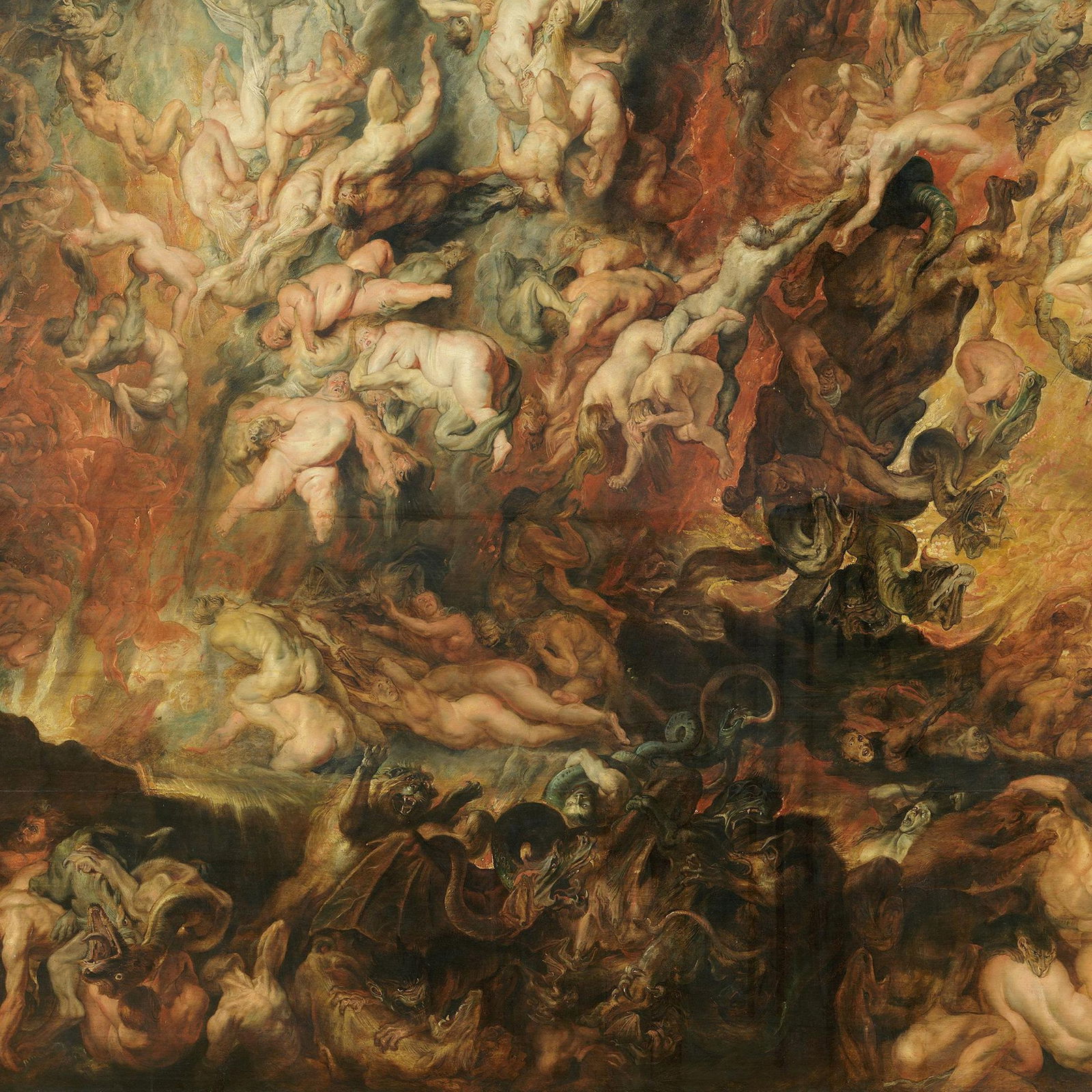
Reprobation and Permission of Sin – Prof. Thomas Osborne
46m 8s
The Thomistic Institute podcast focuses on promoting the Catholic intellectual tradition by organizing lectures on various topics like predestination and reprobation. The discussion delves into the concepts of predestination as God's will to save individuals and reprobation as the permission for individuals to fall into sin. It is emphasized that God does not cause sin directly, and while predestination involves causing meritorious acts leading to salvation, reprobation does not cause sin, hence the distinction between positive and negative reprobation. Ultimately, the discussion contemplates God's will to save everyone, termed as the antecedent will, while also acknowledging the role of justice and mercy in the salvation of individuals within the context of the universe's overall perfection. This nuanced exploration sheds light on theological complexities surrounding the nature of sin, free will, and God's divine will in relation to predestination and reprobation.
Transcription
5862 Words, 32582 Characters
Welcome to the Thomistic Institute podcast. Our mission is to promote the Catholic intellectual tradition in the university, the church, and the wider public square. The lectures on this podcast are organized by university students at Thomistic Institute chapters around the world. To learn more and to attend these events, visit us at ThomisticInstitute.org. So we're hoping that it will be a pleasure to talk about reprobation today. That's what he's saying. But it is an important topic. It's the counterpart to predestination in a way, but not parallel. So it's very important. And in fact, by understanding predestination better, you know more about what reprobation is. By thinking about reprobation, you can understand predestination better. So what is predestination? What is reprobation? In text one of your handout, we have a quote from St. Thomas. Just as predestination is a part of providence with respect to those who are divinely ordered to eternal salvation, so reprobation is a part of providence with respect to those who fall away from dissent. Hence, reprobation does not signify foreknowledge alone, but adds something according to reason just as providence does, as was said above. Just as predestination includes the will of conferring grace and glory, so reprobation includes the will to permit someone to fall into guilt and to inflict damnation on account of the guilt. So we've got two, two different but related notions. Predestination, God wills to save somebody individually, then God gives them the means and causes the meritorious acts. Not all meritorious acts are in the predest and strictly speaking, right? I mean a lot of times we may be meritoriously here offering up the pain of having to listen to people, but then what happens? Well, 20 years down the road, we're in the nursing home and all of our merits disappear and we die in mortal sin, right? We are predestined in that case, but we did, so there are merits that aren't caused by predestination in that case, but the ones that you get to heaven with, those are caused by predestination. Now, the problem is with reprobation, God doesn't will sin, it's the one kind of evil that he can't will. Also, God wills to save everyone in a real way. God doesn't will that everybody go to hell. So there's a problem here thinking about what reprobation is. It's hard enough to think about predestination, right? Because we have to think about how their acts freely chosen contingent because acts are contingent and account of their approximate causes. Can they be impeded or are they contingent for another way? God isn't a proximate cause. You have to think about how that's possible for God to infallibly cause everything yet to be contingent. You have to think about how the future can't be known from the past if it's contingent because the acts aren't present now in a way that can be known. But reprobation, you've got what what an earth is going on here with providence and these souls that just don't make it. It's Thomas thinks his most people. The universe goes on as a whole. Most things achieve their end in the universe. Occasionally you have beaches trying to sun themselves or something on the beach whales, and they don't achieve their end very well. And he thinks that maybe we don't really know, but maybe a third of the angels fell. Humans are really the only ones that are just really messed up and most of us, in fact, are in the reprobate and Thomas' view. So it's a problem. It's strange. How does this fit in with the universe? The one thing you want to avoid is the view that reprobation or predestination are somehow primarily caused by an individual's behavior and not by God's will. Especially with predestination, you can't be by God somehow for seeing that you'll be a good person in the future. There's no reason why God saves one person rather than another. Thomas is very clear. Skodis is clear. Bellarman is clear. Suarez is clear. Molina isn't, but he's a very extreme kind of case. She want to avoid predestination due to foreseen merit. And reprobation, similarly, if you're not predestined, you're reprobate. So there's nothing in the person themselves. So we've got some real problems. So I'm going to bring us through three different points to kind of illustrate the problem. The problem is in text 2, which is taken from Thomas's commentary in the Romans, but it's also in the summa-controgen-teles and the summa-telo-j very similar texts about how, why, why are we where we are in the universe and in heaven and in hell? On our part, there's no more reason than why a brick is in one part of a house rather than another. There's nothing in the brick that does it, right? So how then can reprobation and predestination be so different if they're both just a matter of God's choice? Well, the first is to understand why God can't cause sin. And that allows us to see why, although predestination is a cause of meritorious acts at the beginning of faith and perseverance, reprobation is not the cause of the sinful act, or at least its deformity. And then third, that will help us think a little bit about how it is that some people are saved and others aren't, others are reprobate. So the first point, God cannot will the defect of sin. God does not cause sin, considered as such. The gustant is very clear in this point. Thomas follows a gustant on this point. Who doesn't follow a gustant on this point? John Calvin, okay, in the institutes of the Christian religion, he explicitly mentions Calvin. Also many other earlier Protestant writers, they kind of cleaned up their acts a lot of them by the end of the 1600s, early 1700s, but a lot of the early Protestants, pretty clear notion that God causes sin and reprobation is predestination. It's called double predestination, right? God wills to save some people, then causes them to merit. God wills for some people to be punished in hell, then he causes them to do horrible things, right? By the way, everybody agrees that these punishments are good. Some people's fathers seem concerned about the punishment of sins. If you're doing it to a baby, that's a bad idea, right? But some people need to be kicked or hit, you know? And in this life, punishment is often remedial or it's to teach people, but, you know, everybody agrees once you're in the next life, it's just a good thing for its own sake that bad people be punished. It in a very unpleasant way, right? Friend of mine, his grandfather, wasn't Catholic, but he said that, you know, he liked some Catholic things, like he was sure there had to be a hell for people like Hitler, Stalin, and Franklin Delano Roosevelt. And I'm not saying any of them right could have repented in the last moments. So I'm not saying any of them are in hell, but there is, I think, something that we can see that there's some sort of disorder and people are pretty wicked. They need to be punished for it. In Christianity, what does Vatican II say? It's something like it reveals man to himself, right? We'd have no idea how wicked we are and how awful sin is without Christianity. You get the full extent of the lack of gratitude and the wickedness of human beings, I think, with the Bible and Revelation. Greeks didn't really know it in the same way. Okay, so God does not cause sin against Calvin. So God does that cause evil, evil, but does he? Some evils he does cause. Why? He brings good out of evil. And some evils have conjoined goods, like punishment I mentioned. Thomas Aquinas just thinks punishment is good. Okay, punishment, though, presupposes guilt. It's not to prevent people from doing it again. You can't punish somebody ahead of time because you know they're going to sin. So you think, well, there's a 98% chance this personal sin. So what I just punish him now would be better than letting him do it and having to punish him later. No, punishment is due to guilt because somebody deserves it. All right. Similarly, the corruption in the sublunery realm, which I think is the whole world now, although somebody father to Evan Ports interested in physics. So maybe they were discovering some celestial realm I don't know about. But for Thomas, at least under the moon, what happens, right? All of us or someday, I was going to say we'll be food for worms, but unfortunately, we might be injected with chemicals that preserve our flesh and some poisonous states and nothing wants to eat us. But sort of if we're lucky enough to be buried in a pine box, we're going to be food for worms, right? It's the circle of life, the deer, each the lion eats the deer, right? Bad for the deer, good for the lion. I mean, it's bad, right? For it's bad for deer to die, right? And get ripped up. Well, I realize you're more sensitive now. I have kids. So in my age, we were raised on mutual of Omaha wild kingdom and kids were traumatized. We were put in front of television sets and we would just slowly watch animals being torn into a thousand bits in very kind of bad photography, whereas all of you, you know, you watch cartoons with animals hugging each other. That's not the way the world is. It doesn't help you think about the universe and its perfection and evil, okay? According to Thomas Aquinas, there are real evils in the world or bad things and these animals do suffer and die, but this gives part of providence. What's weird about human beings is that we choose something outside God's order, something against God, something other than God, as soon as connected with the willing, or at least, you know, a pretty voluntary omission. When you will something, you will it kind of under a certain description, right? You will not just have relations with a man, but you will it under Tom Cruise and you should be aware that maybe Tom Cruise is married or something, right? And so then you would be, what, committing adultery, right? There's an order of reason. There's a choice. You're turning away from God towards Tom Cruise. I'm trying to appeal to not just the friars, but to the whole audience, okay? Right? So there's a disorder there, right? Or maybe something, you know, the friars could relate to, you're in bed, you're supposed to get up for matins and you have to think, do I really want to pray to God, or do I want another 10 minutes of sleep, right? And so you're choosing something outside the order or against God, especially with the mortal sin, which is the typical example of sin. So by definition, this isn't something God can choose. Why? God has to, if necessity will his own good, right? Decessity is ordering everything to himself, even externally. God cannot make that sinful choice. Only the created will is because the created will can will things that aren't really good, and here and now in these circumstances, you know, if truly everything considered, right? You may think, but Tom Cruise is so beautiful, good and away, but not, right, not truly good for you, not bringing you closer to God, okay? So when we cause sin, we cause sin, as I mentioned before, we are in not God, or the proximate causes of the sin, contention because we can think about things, deliberate about it, view it in different ways, or just decide not to think about aspects. We cause sin the way that say other agents cause things. We do it freely, but fire necessarily of a sense of physical necessity causes heat, but you might say the way that if we're towing something with a rope, we're causing the movement to what we're towing, we are the direct cause of the sin. Thomas is very clear that the defects of an act, like its contingency, comes from the proximate agent, the agent that's closer, and that in sin, God cannot, by definition, cause this defect, right? Because sin is opposed to the uncreated good itself, this is text 4, and it's contrary to the divine love for itself. That can't love something more than himself, but we can love something more than God, right? Our selves, right, living the high life in the nursing home before we flame out. It's great that we might love that more than God, but God doesn't love anything more than himself. So here's where we have in 5, right? He can't cause sin directly because of this disorder. Now somebody might say, given the temistic and Christian and biblical, I should add, account of God's power over the human heart, right? We have it in the Bible. You don't believe me Augustins, the predestination of the saints, chapter 8, lots of Bible passages there, Thomas has a lot, God can change the human heart, and you might say, well, maybe God is responsible because we're not only responsible for just for things that we do, but also sometimes for things we're bound to prevent, right? And so, well, yeah, I can see, you might say, I can see how God can't cause sin, but he sure ought to prevent it, right? Why doesn't he give me the graces that he gave to the Virgin Mary? I'd be easier to live with, right? And Thomas gives the example in this passage in 5 of the hell's helmsman, right? Now generally a helmsman might be obliged to prevent a ship from sinking because of his role at the helm of the ship, and that's his job. And if he just stands by and doesn't do it, then that's his fault, right? But why is it his fault? Because he's bound to do it, he's bound to stop the ship from sinking due to his job, but God doesn't have a role like that within the universe, right? There's nothing due, nothing due to it, right? So we're obliged to stop sin sometimes because we're able to, and something explains the obligation, God's able to stop sin, he's not obliged to, right? And so that's what makes it so that there's no causality in God's part, okay? So God doesn't cause the sin, he allows it, and he causes the being of the act, the being of the act, but not the defect of the act. And this again, think about the proximate cause. What's the proximate cause of the limp? Right? You might say, why is he limping? Well, maybe he, people have been reading him for 20 years and he's older now, and he's heavier, and he has high cholesterol and blood pressure, and he's being forced to go to the gym, and these people torture him at the gym and shout and yell, and so he's very sore when he travels or gives talks. And so that might be why he's a hard time getting up and down at mass, right? It's not a problem, and the person's ability is a human being, the person has motive power, but there's something wrong with the muscles, okay? That's what's causing the limp. It's the proximate cause, and so that's what causes the defect of the sin, right? But God causes the act itself, and all of the being of the act. So that's the first point. God doesn't cause sin, because it's the being of the act of the sin, but he's a no-way responsible for it. In fact, he could prevent it, but he's not bound to prevent it. There's nothing that he owes to anybody. Second point, right? God doesn't cause sin, and so when we think about what reprobation is and how it differs from predestination, they're not parallel. Predestination causes meritorious acts, at least those ones that you get to heaven with. Reprobation does not cause sin. This is why sometimes it's called negative reprobation, okay? So a common distinction is between positive reprobation, which is the punishment due to the sin, and that presupposes sin, but prior to that is negative reprobation, right? Which is the will to permit someone to fall into sin. Now people explain this will in different ways. Some people say it's a will to exclude some from glory. Others like Garigula Grange think that it's a simply just a not willing, okay? Thomas's text, I think, you know, with anything is theology improves, which I think it did, at least up to the point of, say, these Thomas in the 1600s, theology was improving. Right, Augustine, I mean, it's amazing, but Augustine did, compared to the Greek fathers or as predecessors, you know, it's like one person figured out a lot of this stuff and clarity. You know, I don't think you can argue that anybody was able to do that with the Trinity or the Incarnation, so clear, right? It took a lot, but the people, I think they weren't as bright as Augustine, but the the amount of, you know, like you read fathers in the second century, third century, Aaron A.S. is a doctor of the church, but he says some things about Christ occasionally, or the Holy Spirit of the Trinity, and you might wonder, is this quite right? It's much clear, you know, in the late fourth century. Same thing with predestination. It's huge jump with Augustine. Thomas latches on to Augustine, where then anybody else does, and then these disputes further get refined later on. So Thomas doesn't really, is it a positive exclusion from glory that he's willing, or does God just not will to save that person the way he wills to save the other? It's unclear, I think, at Thomas's text. To me, it seems like he's saying that he wills to exclude them from glory in many places, but I think he never really thought about the distinction. So, why is this interesting and problematic? Well, because you want to say that God wills to save everybody, right? And that Christ died for everybody. And Thomas Aquinas is very clear about that. God died for the whole human race, making salvation possible, right? Not that most people take advantage of it, but it's at least possible. We might say what about infants? Well, it's possible the way baptism is possible, and somebody else can get them baptized. So there's that kind of possibility. So Thomas is very clear that and Thomas are that God, there's something real in God, a real will to save everybody. But this is called his antecedent will. So you see that in text seven. God wills everyone to be saved antecedent, which is not willing simply, but in a certain respect. Not however, consequently, which is willing simply. So willing kind of in the simple simply speaking, we say, does God will to save one person, not another? God wills to save the protestant and not the reprieve, okay? For for or apart from any of their merits. But there's a way in which he wills to everybody's salvation, even in a restricted way. Why? Because people are directed towards happiness, but also through the incarnation, he's given everybody the ability to go to heaven, to participate and divine life with him. And so that is a real, something real. It's not metaphorical, it's not just a sign, it's a real willing of God. But when you consider the whole perfection of the universe, that doesn't mean he's going to will to save each and every individual, because we have other things to consider. Some people he saves to show his mercy, others he allows to be damned to show his justice. So it's the whole order of the universe that we're considering, not just the individual and themselves. And you see, in the commentary on first Timothy, he talks about it, Aristotle's case of the merchant, right? The merchant really wills to keep his goods on the boat and bring them to the market. But what happens? They have bad boats back then, maybe I don't know, and they need to lighten it because of a storm. And so the merchant also wills what to throw the goods overboard, right? Throwing the goods overboard, he says, that's the consequent will, right? That's like what you have in reprobation. You're willing it, not in itself, but you're willing it in that context, in that context you want to throw the goods overboard. But still by the antecedent will, you really wish that you didn't have to do that. It's just in that situation. So Thomas draws the comparison with the perfection of the universe. God creates people all for happiness. He makes possible their ordination to be attitude, but just considering showing his mercy and his justice, right? He doesn't will the salvation of this or that person by his consequent will, okay? But it's still a real willing. Later, Thomas, I think, would often want to say it's also a concrete willing, like some of the Jansenists said that this is only human considered in the abstract. The problem with the Jansenists is one, there's so much politics it's hard to know what's going on. Second, the kind of nations are written in such a way that it can be hard to know what they mean. And third, the Jansenims themselves are into a kind of resource amount theology where they were trying to have the best philosophy of the time mixed with a return to the fathers without having to go through scholasticism. And generally, that works very poorly. So what can you do? But so the Jansenists may have agreed or disagreed with parts of these things. God knows. They certainly didn't hold the full, to mystic position. Although, I mean, I know, I think, said that he didn't hold the things that were condemned. So who really knows? I haven't looked into it enough. Okay. So, you do have a real will to save everybody, but you also have a real will to save just some people and not others. And so that's why passages like this one and text 9 is important. This is predestination is the cause of both what is expected in the future life by the predestination namely glory, and of what is received in the present namely grace. Predestination to glory causes the grace. And in those who are really predestined fully, this grace then leads them to heaven. But reprobation is not the cause of what is in the present namely guilt, but is the cause of being abandoned by God. Okay. Why guilt is due to the sin? God can't cause the sin. So reprobation, the fact that God doesn't choose somebody, causes them to fall into sin. Right. But the guilt for which you're punished, and this is the positive reprobation, that guilt has no other cause but the person. So there's a way in which our meritorious acts aren't really causing our glory in a way they do, but our meritorious acts would be caused by glory, at least the ones that are in the predestined. But the punishment is actually caused by the acts and due to the acts. So we're responsible if we end up in hell. We're fully responsible. God's primarily responsible if we end up in heaven. And that's why this is so important just for the spiritual life. I mean, every good comes to us from God, everything bad from ourselves. Right. And the fact that the good comes from God, our meritorious acts even are due to God's giving us grace and causing us to merit. Right. On the other hand, our sins cause the punishment. Reprobation doesn't, negative reprobation doesn't, our sins do it because they really deserve that punishment. And we can see a horrible sin is by the kinds of punishments that are promised in scripture. And then they're even given in the Old Testament. I mean, think of all the punishments given. You might think, well, they just wanted to party up near the trees or something. Right. They kind of like these ladies or these anulists. Right. And you might think, oh, but God is so strict. Right. No, I mean, he was just, he was just getting going then. Okay. All right. So why is it then that people sin? Right. God, does God prompt them to sin? Now, sometimes you might see in the Bible, somebody was asking about the hardening in the Bible. The gusset and Thomas are kind of careful about what we mean with the hardening. Right. That the whole notion of God's causation of sin is developed more and how sin involves pre-motion. Thomas Aquinas, there is the fact that God causes everything in the sin, but very often he and Augustine focus more on the moral aspect that, look, left by themselves, people commit mortal sins. That's what happens. It's not necessary that they commit a particular mortal sin. Why? Because they're free agents. Right. They choose one thing or another, they can deliberate about them. But it's necessary that they commit a mortal sin. I mean, that's how we're brought into the world. We love ourselves more than God. Our nature is wounded. We need healing grace to enable us to love God more than ourselves, efficaciously. We need elevating grace to bring us to the supernatural realm. So this section in note 11, this text here, I took out for reasons of space, the quotation from Augustine. This is Thomas' commentary on Romans. He says, "Men are moved to good and to evil by God through an inward prompting." Hence Augustine says in his book on grace and free will that God works in men's hearts to incline their wills wherever he wills, either to good through his mercy or to evil according to their desserts. Whoever assures them to good and to evil in different ways, for he inclines men's wills to good directly as the author of these good's deeds. Right. That's a directing clinician. But he has said to incliners throughout men to evil as an occasional cause. Namely, as much as God could before a person, either in him or outside of him something which of itself is conducive to good, but which through his own malice he uses for evil. Right. So I mean, Tom Cruise is a brilliant actor. I can understand why you like him. All right. Tom Cruise is good at himself. All right. But, you know, you might you might use Tom Cruise for evil purposes. Okay. But that's on you, not on God. God didn't create that Tom Cruise to be, you know, used for evil purposes. Okay. Just trying to help the demoral education of the youth as well. Okay. Right. Without a special grace, a final perseverance, people die impenetinent. Now, this is again on text 12, but God's action towards them. This is the reprimate he's talking about here. It's not that he disposes them to evil since they themselves have a disposition to evil from the corruption of the first sin. The only thing God does concerning them is that he lets them do what they want. Right. People want to sin. They prefer themselves and their own things to God. God lets you do it, but you really deserve to be punished. And it's a good thing when you are punished. It's not like punishing a dog or a small child that you're just training them. You're somebody created with reason. God died for you. The kind of evil of sin. It's this infinite evil that if you reject Christ, right. You deserve more than what we can think of. In fact, Thomas says even in hell, hell is merciful because people in hell deserve to be punished more than they're punished. All right. God doesn't punish people as much as he should. All right. So then we have reprobation. It's not something unjust. It would be unjust if somehow punishment didn't involve guilt. Right. Punishment, though, in reprobation is due to sin, which is caused by the sinner. God allows it to happen, but that's very different from God causing the sin, as opposed to predestination where God will somebody to be in heaven, then he gives them the graces to get to heaven. And in performing those acts, their wills are lined up with God's will. Their love of God is lined up with God's love of himself. In the case of sin, God allows them to will something other than what they're directed to by their nature and by grace. And he allows them to love something that more than himself. So what's the reason for all of this? Thomas is very clear in these later texts, right, the beginning of the epistle to the Ephesians. The end of the third book of the summa-controgen tale is the summa-teo-logie, even sometimes incidental remarks, that there are two questions involved, which scotists didn't like. That's an interesting aside. One, why does God do this at all? Right. Why is anybody reprobate? And then second, why is this individual say Judas reprobate and not Peter? Why is one individual? Thomas always talks about the parts of the order of the universe. Just like in the universe, there's a hierarchy of beings, there's angels, human beings, dogs, hamsters, fish, some are better than others, but it's all part of the perfection of the universe. You don't believe me. Unfortunately, somebody dumped their hamster on us. It's like a furry goldfish. It's like a goldfish mammal, but at any rate, the poor woman, the poor, not women, would you call it, female, mischeeks at any rate. Mischeeks got this horrible tumor. And I felt bad, and like if my dog had a tumor, I'd take him to the vet, your hamster gets a tumor, maybe in DC, they're nicer, but in Houston, try to get a vet to help you out. No vet wants to help your hamster live a long, happy, healthy life. So clearly, there's some sort of hierarchy where the dogs up here, and the hamsters way down here, didn't naturally occur to me, but I suppose it makes sense when I think about it, right? So also in the kind of order of the universe, God's showing not just up and down, but also among human beings. You've got some better than others, some being shown as mercy, others showing his justice, and even says the fact that it's so hard for people to be saved, and so fewer saved, that even shows as mercy even more, right? So he thinks that God's decision to save fewer people is actually, really shows as mercy because it clearly shows how awful humans are, right? If most people were going to have it, he thought it wouldn't seem like such a big deal, but the fact that humans just don't make it there shows how merciful God is, and at least some people pulling them out. You might say this is horrible, this isn't Christianity, well, this is what everybody believed up to the 1800s say, except for a few odd people, at least about the numbers, right? Right, so people always say, what about like origin and a weird text from Gregory Vnessa, and I don't know, some Armenian or something? Well, okay, but I mean, I'm talking about Christians in general. All right, so there's no absolute no reason for the universe, yes, there's a reason to show his justice, but because it's not based on human merit, the fact that predestination is not based on human merit also entails for Thomas that negative reprobation is not based on human merit, all right? There's no difference. God chooses, he doesn't choose others, right? And that's very clear in text 14, right? Where you see in the beginning that it's necessary for the goodness of the universe, like he allows other kinds of evil, he also allows sin, he himself makes the comparison, not as commentators between allowing other kinds of evil in the universe and allowing sins in the universe. And then he says, it's just like a builder. Why this portion of matter is under this form and that under another depends upon the simple divine will, just as it depends upon the simple will of an artisan that one stone should be placed in this part of the wall and another in that, although the rationale of the art requires that some stones be here and others there, right? So the stones are like the human beings. There's a reason why some are saved and some are damned, just like there's a reason why some stones are over here in the wall, other stones are over there in the wall, right? Some are in the bottom, some are the top, but sometimes there's no reason to prefer one stone to another. It's just due to the builder. Similarly, there's no reason for God to save one person rather than another. It's just the divine will, right? And so that's ultimately why repurbation is important because it underscores the independence of God from considerations of human merit and predestination, right? And it also shows God's justice that he doesn't like some double predestinerians thought cause us to sin, but he allows us in the effects of the universe. Now, there are a lot of texts where Thomas is a bit undeveloped. It's developed more later on, right? Does he directly will it that they're excluded from glory? The role of original sin is controverted. Father Cutty mentions Gunae who had the unpopular view that repurbation is due to original sin. And I think this view doesn't make any sense. Contents sin about the same times as Gunae made it up, but I could see there are texts in Thomas which seem to say that. So, I think Thomas can be often unclear, but there's no lack of clarity on this basic point. That that repurbation predestination of individuals are due to God's choice, and that no way makes God unjust, it no way makes God a cause of sin. Thank you. Thanks for listening to this lecture on the Temistic Institute podcast. The generosity of people like you makes this podcast possible. If you enjoy these talks, please consider showing your support at www.temisticinstitute.org/donate. Your donation of even a dollar helps us reach more college students and many others with the powerful truths of the faith, and it ensures that we can keep publishing top notch lectures on this podcast. Thanks a lot.
Podcast Summary
Key Points:
The Thomistic Institute podcast aims to promote the Catholic intellectual tradition.
The podcast lectures discuss topics like predestination and reprobation.
Predestination involves God's will to save individuals, while reprobation permits individuals to fall into sin.
Summary:
The Thomistic Institute podcast focuses on promoting the Catholic intellectual tradition by organizing lectures on various topics like predestination and reprobation. The discussion delves into the concepts of predestination as God's will to save individuals and reprobation as the permission for individuals to fall into sin. It is emphasized that God does not cause sin directly, and while predestination involves causing meritorious acts leading to salvation, reprobation does not cause sin, hence the distinction between positive and negative reprobation.
Ultimately, the discussion contemplates God's will to save everyone, termed as the antecedent will, while also acknowledging the role of justice and mercy in the salvation of individuals within the context of the universe's overall perfection. This nuanced exploration sheds light on theological complexities surrounding the nature of sin, free will, and God's divine will in relation to predestination and reprobation.
FAQs
The mission of the Thomistic Institute podcast is to promote the Catholic intellectual tradition in various spheres.
Predestination and reprobation are related as counterparts, with predestination involving the will to confer grace and glory, while reprobation involves permitting someone to fall into guilt.
No, God does not will sin or reprobation, as they are contrary to the divine nature.
God allows some to be reprobate as a manifestation of divine justice and to show mercy to others.
Positive reprobation involves punishment due to sin, while negative reprobation is the will to permit someone to fall into sin.
While God wills to save everyone antecedently, he does not will the salvation of each individual consequentially, as some are allowed to be reprobate to manifest divine justice and mercy.
Chat with AI
Loading...
Pro features
Go deeper with this episode
Unlock creator-grade tools that turn any transcript into show notes and subtitle files.
 PodcastTranscript AI