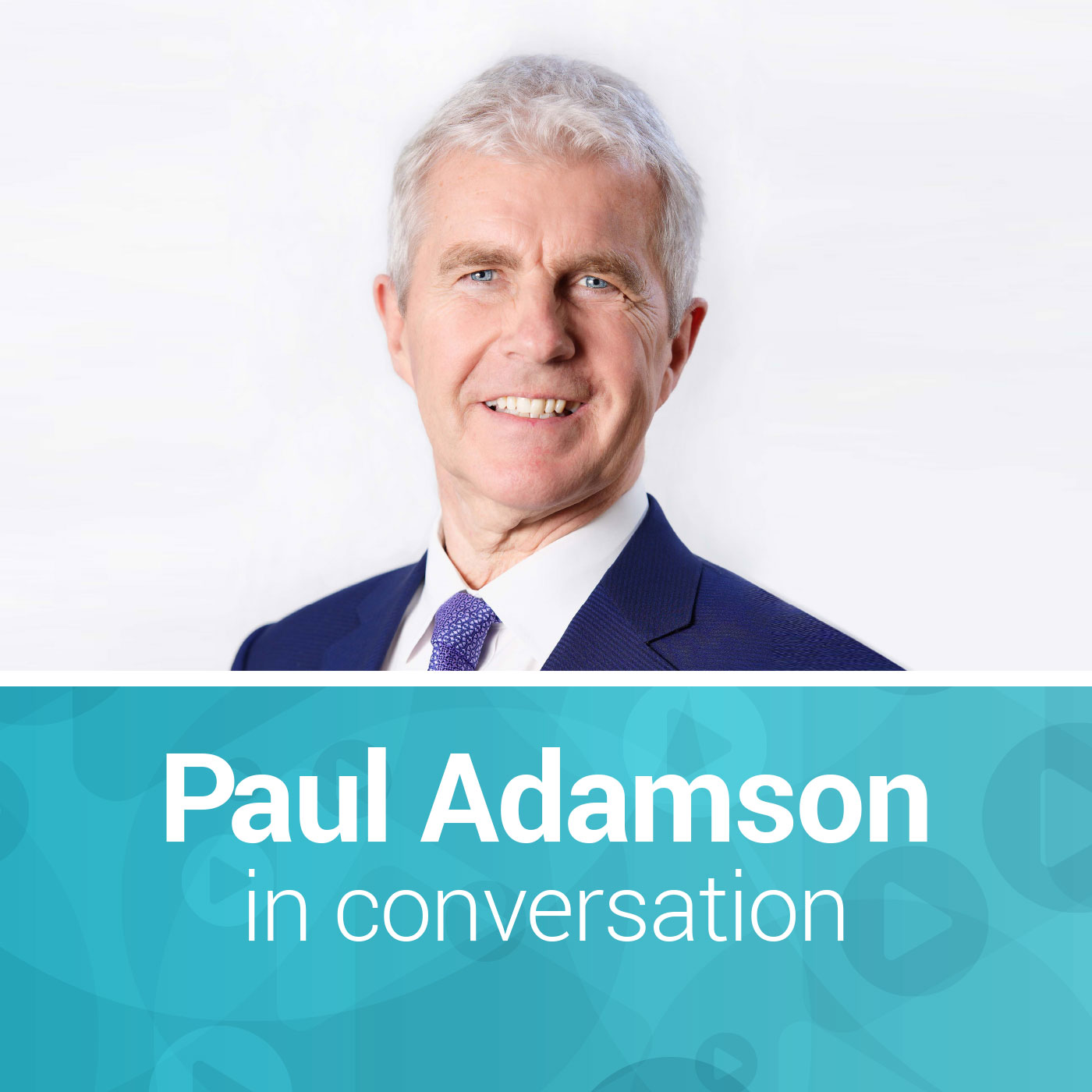
In this podcast interview, Professor Dr. Patricia Nance, President of the European University Institute (EUI), discusses the institute's role and new strategy. The EUI, celebrating its 50th anniversary, was established to foster Europe's cultural and scientific heritage through interdisciplinary research and training future leaders. As an intergovernmental body funded by member states, it combines academic independence with a platform for developing European ideas. Nance emphasizes that publicly funded scholars have a responsibility to engage with society, translating academic excellence into accessible knowledge and co-creating solutions with policymakers, businesses, and civil society. She critiques the current European landscape for lacking long-term vision and boldness, highlighting digital sovereignty as a critical, overlooked issue that underpins other challenges like defense and democracy. Nance advocates for convening diverse actors to foster synthesis and big-picture thinking. She also calls for reforming EU legislative processes to improve implementation and citizen connection, arguing that institutional improvements are essential to harness public support for Europe and address systemic crises effectively.
[Music] My guess is Patricia Nance. Professor Dr. Patricia Nance has been president of the European University Institute in Florence since March 2024. Before that she has served as director of the Research Institute for Sustainability in Podstam and the funding director of the Franco-German Forum for the future. She has studied philosophy, the Munich School of Philosophy and History and Literary Studies as well as Philosophy at Universities in Munich, Milan, Montreal and Frankert Rhein-Main. She has also trained as a journalist and worked as editor for S. Fisher Thalag in Frankfurt and Fertonelli Editorial in Milan. Have you been a researcher at the Max Planck Institute for Research on Collective Goods in Born and Marie Curie Fellow at Westminster University in London? She's been professor of political theory at the University of Bremen and the University of Podstam. She's also been a fellow of the Institute for Advanced Study in Berlin and visiting professor at the Massachusetts Institute of Technology MIT. Welcome to the podcast Patricia. Thank you Paul. I should point out a listener that was an edited version of your bio. I could have spent far more more time, but I think we should stop there. We can safely assume you're pretty well qualified for this position. We're going to talk about the EUI obviously. We call it the European University Institute and it has a new strategy document. We're going to talk about the role of organizations like the EUI in society and politics, but very briefly as we all know by now, the EUI is celebrating this year's 50th anniversary and I would just like it very briefly. Let's not spend too much time looking back when we talk about what was the idea behind the creation of the EUI back in 1976. Well, as you know, it took quite a while to establish the EUI, I think more than 20 years, but the Convention of 72 already says an article two that the EUI should be a place to contribute to the development of cultural and scientific heritage of Europe and to do so through two things. One is interdisciplinary research which back then was very forward looking, but also through exchange of idea and experiences. So I think to my mind it's saying that the EUI is there on the one hand to train young people through the doctoral program because we are many Europe, right? We are coming from all the places of Europe and Meet and speak different languages, so it's like a Europe and Miniatur. So you're socialized as a European, we then become, I mentioned a leader in public institutions or private institutions. So it's really to train the leaders of Europe in the future. At the same time through research, I think it's saying to be able to produce evidence but also orientation to the European project, which is quite seldom. Usually in university you produce system knowledge, right? So many different knowledge is on different issues, but orientation knowledge, what a desirable future would look like. This is something else and of course this you can only do not in isolation, but with society, with policy makers, with business. And so I think it's a wonderful moment to be here. Right. It's the landscape looks grim. Your timing is impeccable. Well the EUI just published a strategy document in 2026, 2031 and in that introduction, it refers to the EUI as unique role as a university, but also as an intergovernmental institution. What does that actually mean in practice, but it's here? Well it means that concretely we have a high council, so it's established out of now 24 member states. So it's their university somehow, right? It's not a EU university, although it's the only true European university, we have EU institutions as observer in the high council. Of course they help us with funding quite a lot, but the initial sort of shareholders, if you want, are the member states, right? Right. So I think what it does to the university is on the one hand, you are independent as a research university. On the other hand, you can use the intergovernmental part of the university as a platform for gathering the perspectives of member states and ideally sort of come up with European ideas and sort of, you know, bring it to the European level. Right. So it's a very timely base that Europe needs, I think. Yeah, we're going to come on to the future of Europe and the challenges that the face is in the moment. Again in the same strategy document, it states as publicly funded scholars, the EU eyes academics are accountable to the societies that support and legitimize them. That's quite a bold statement and I've actually seen it articulated quite like that before. Obviously something is very important to you where this idea that academics and scholars should be accountable. Well, it means, first of all, it's interesting again back to the convention of the institute that it speaks about European societies. Right. Article 2, not particularly, you know, politics. So this is interesting because it means that we should work not only with policymakers, but also with societal actors, which is something different and university are not used to do that. But back to your question, I think that what is of utmost important today is that we keep academic freedom and universities. At the same time, this academic freedom comes with responsibility. Responsibilities of the universities towards their societies. Right. What do they bring society? This doesn't mean to be curtailed in the things you research, but to have in mind that somehow the things you're doing directly or indirectly maybe of relevance, I think is important today. How can we support Europe and how can universities support the societies? Right. Well, that word relevance comes out a lot in this document and clearly you're very committed to it. In a way, it shouldn't need a highlighting, but you know, universities broadly enough for maybe unfairly I could decide whether to be rather remote from the real world. They live in the ivory tower phrase, right. It springs to mind. Well, you're clearly not in that frame of mind at all on the contrary. And again, I quote from the document, academic excellence into dispinarity and public engagement. I've always been the foundation of the UI again. We come back to this theme of you of the scholars and the faculty being relevant to society, engaging with society and communicating. Do you feel it historically without going too much into the past? The UI could have done a better job at communicating. It's research outcomes to a wider audience. Well, I think that, I mean, that's how can I say that? I mean, basically the basis for everything is excellence, right. So without excellence, there's nothing to communicate, by the way. So that's the substance. So the first pillar that mention of the strategy is really excellence and then comes communication beyond the confines of academia and then engagement with society, right. But without excellence, we cannot do anything. So that's important for me to to underline. And this excellent has been at the UI all along in the last 50 years. I think there have been moments, for example, when I did my PhD 25 years ago, where there was a constitutional moment, you know, where people spoke a lot about it was before even the Lisbon process. So I think Europe was much more in the public debate, right? So it was easier for scholars to contribute to public debate. Then in the years after I would say the economic crisis of 2008 onwards, Europe was not so much on the public debate. Now it's coming back again, right? So it has also to do with the conjuncture of Europe in the public sphere. But certainly the UI has always done a very good job in outreach and, you know, with policymakers, but also with society. I think now it would be important to build on that capacity of the UI, which has been there all along and make infrastructure such that scholars could just jump in and, you know, interact with policymaker or societal actors being helped. So not everyone has to reinvent the wheel once he wants or she wants to interact with people, right? So I would want to facilitate that in a way that they don't lose their time being consumed by research and also by supervision, but they could bring their research. For example, I give you an example, it's in the strategy with a science policy interface, right? Where we actually have people who translate period articles, for example, into policy relevant material, right? Or into a security initiative where people who work on security issues on different angles just come in and they meet policymakers so that they don't have to reinvent the wheel each time they want to do some outreach. You think therefore that the UI has always has had, but it has to develop even further in the future, this special role of a convenient, different players, not just classic scholars and academics, but also researches, scientists, business community, non-governmental organisations are bringing together all different actors in a particular debate. Is that some of you see going forward spending more time on? Well, I believe, first of all, the UI is this spot for doing exactly that for Europe. I think Europe needs this very badly right now because there I see lots of reactive spirals at the moment, soundbimes and tactical battles, but what I miss is really you know, a big picture we are all
overwhelmed, but information is being on different issues, but we're really drowning in data, but starving for wisdom, if you wish. Right. You mean the picture, right? Yeah, the picture. And in your role within that, obviously, your title is president. I imagine quite a lot of your work has to do with running the organization, although you are actually delegated to a very effective team. But having said that, do you find you have enough time to be defect the public face, and obviously you're a public intellectual, but do you find that it's relatively straightforward to be visible and to be seen as a public intellectual in the future of Europe debate? You mean the UI in total? Well, you personally as the president of the UI. Well, if I can facilitate also to bring in all the faculty, it would be wonderful. For me, it's important for Europe to provide a space where we are civic and political leadership together with academic leadership, create a space for collaboration between disciplines and sectors, but also generations. I think we need this space because there's so much plantation, not only of knowledge, but also of perspectives. We need theory, we need practitioners. And I do believe that it would mean, you know, making scholars perhaps taking intellectual risks of synthesis also and communicating beyond academia and big picture thinking. But it would also take political actors to really understand the need to step back for a second and therefore, I think Florence is a wonderful place. It's not in Brussels or Berlin or Paris. And reflect on the long term. Where do we want to get at the long term instead of, you know, reacting in a very sort of micro management way of dealing with crisis? That's no longer feasible, right? And the space to meet, to find the coming ground, to see where the problems really lie, right? Instead of superficially tackling one by one, often they are connected. And what we're really lacking is what we're lacking in fact is to have an idea of the European project of the future. And so political action is not able to grasp what citizens also feel, right? Yeah, yeah. But we're able to grasp the reality so long able to improve their real life. And if you want to overcome that, we need to make sense making of what the fact is, of what the big picture is of Europe. Perhaps we missing out on a blind spot. Would you have a plan for that? Well, I've come across very, very clearly, but it's used in the phrase, "big picture, big ideas, standing back, having a longer term perspective." All the things that don't happen at the moment, right? Broadly speaking, because politicians obviously don't think like that. They think the short term are very enough to have their own pressures and constraints. But do you have some ideas on how you can make all that happen? It's great. You've analysed, you've found that so maybe diagnosed what the issue is, what needs to be done, but how do you then go about doing it? Well, there are many sort of singular things which are already happening at the UI, quickly, right? So for example, we just had a side event at the Munich security conference where we try to bring together different issues together. So for example, it was about defense spending and balancing politics with industry and society, saying on the long term, if defense investment continues, how can we do that without undermining economic stability and also public support? So you have to balance out these things. And that was very successful. So we're doing it already here and there. Or we just had, for example, a second example, initiative called the Constitution of Innovation. So this is about competitiveness, right? So how to fill the Europe's brewing innovation gap? And it argues, this manifesto, it argues that regulatory fragmentation is undermining the effectiveness of the single market. So it argues for sort of a federal vision for Europe to do less but better. On their core missions, for example, economic integration and prosperity in the long term. So these things we're already doing with policymakers, but these are on singular issue. It's always connected. So they connect things, for example, innovation and competitiveness and prosperity, right? Also the security with the defense, the defense with democracy. How can we do defense expenditures but generating also public support for that? But I think your question aims at a more general idea. Now universities per se, perhaps not only the EY, can be anchors for transformation. That's a term by an American sociologist who claims that research universities should produce public goods, right? And how can they do that? Only together with actors. So I think it's a real know-how to convene people and to co-create knowledge from different perspectives, not only disciplinary perspectives, but also sectorial perspectives. And this is what I aim to do. And I give you one example. I mean, I would, I really much focused on what are the blind spots in Europe in this big picture. And if the analysis is correct, it might be that one of the big blind spots is surprisingly the digital sovereignty. I mean, digital sovereignty is now on all the headlines, but it's just one among other priorities. So what we lose out is to understand that this is a precondition of many other issues. It's a precondition of defense, it's a precondition of democracy, it's a precondition of competitiveness, et cetera. And if we miss out this point, we'll lose it on all the rest. And it seems to have little time left to be able to close this gap. So I would really want to, through one of the initiatives, which is also in the strategy, namely an infrastructure called TechHub. Think about what digital sovereignty would mean. Of course, we cannot be independent from the US and China all along, but what are the stacks? We can build a capacity for so that we are not open to blackmail. And so how can we, you know, I think this is the cool and still moment. So, you know, Jean-Monnaie had this method. What is the one point from which everything else follows, right? Right. It was also the single market and it was the currency in particular, right, the euro. But now today, I think it's digital sovereignty. If we get this wrong, I think your integration is very much at risk. Do you have any sense that leaders of Europe, of men, the states and governments, but also the institutions in Brussels appreciate the scale of the challenges now facing Europe? I mean, a lot of phrases are thrown around like a rubig and a turning point, a tipping point. You know, it's a make or break moment. This may sound slightly exaggerated, but you think that these are real challenges that are leaders are recognizing and are happy to face. It's a good question. I think there is a general sense that we are at a crossroad. I mean, a year ago when I came back from the states and I went to Brussels directly, the sense was not very acute. It seems more like a very strong COVID crisis, right? Today, I understood that really, I think the international order is really not what it was a couple of years back. And so we cannot rely anymore on our transnational partners as we did, etc. So I think the consciousness is bigger. But what I also feel is that we lack kind of a boldness and clarity of what would be be the five biggest issues to tackle and how to tackle it and how to make national states and member states aware that they will not be able to be sovereign on their own. In digital terms, sovereignty has no meaning because data don't stop at borders. So I think it is a critical moment and we would need a step back in a safe time in the future to be able to have a clear direction to go. Well, maybe a final question then, Patricia. This lack of boldness you're talking about. Let me just throw an idea at you. Is it partially because not because the leaders lack boldness, but because they're trying to find common ground all the time. That's it's a description like caricature, but how the EU progresses, even Jormonay, we would subscribe to that. You have to find consensus by definition, but increasing the EU, maybe Jormon broadly, so the EU is not united and they're always looking for common ground. You know, in the council on key policy areas, so even with the best will in the world and they get maybe get many diagnosis from organizations like the EUI and leaders kind of know what needs to be done, but they realize that political constraints are so overwhelming and nothing can happen differently because the system doesn't allow it. Well, I would ask back what is the system? The system is self-made. Right. The system is not god-made, right? Right. And so, I mean, I think to be honest, I think we need to change the system in a way to improve political institutions. And I do believe that's one of our next projects we are working on is how to improve EU legislation. Right. So it's about less regulation or more regulation. It's not about only reducing my tape. That's really too simplistic, right? It's not about segregation. It's about how to improve the political institutions and the legislation in particular as such that you will learn vertically from the ground from the people who have to implement because we have an implementation problem with the big implementation problem. Right. I mean, the Green Deal has been implemented to a very, very little extent because of many problems we have. And one of them is really how to legislate. And so you could sort of really link it.
to the people on the ground, and national, and also local who have to implement. But through technology, you could also horizontalize it to make it more order the inputs. And I think there are many improvements to be able to do in the legislative process, which seemed a very technical issue to speak about. But if you think about it, it's really about rethinking Europe. Because it would really change, it would be not a question of more or less for all Europe. It would really improve European institutions. In the moment where the European Parliament says that citizens across Europe want more Europe, like they said this. And the last time I think it was in '84, so the support for you is very big. But the critique towards this kind of European institution is also very big. So somehow you have to fix it. And I think it's also through rethinking the process of legislation. And I think citizens would immediately understand that through that, the graph politics may have on the real life and on reality would be much bigger. So I think that would be one of the solutions. Unfortunately, we run out of time. Patricia Nance, thank you very much for your time. Thank you Paul. Thanks a lot. This was very enjoyable. [Music]
Podcast Summary
Key Points:
The European University Institute (EUI) was founded to develop Europe's cultural and scientific heritage through interdisciplinary research and the exchange of ideas, aiming to train future European leaders and provide orientation for the European project.
As an intergovernmental institution funded by member states, the EUI maintains academic independence while serving as a platform to gather national perspectives and formulate European-level ideas.
The EUI's new strategy emphasizes academic excellence, public engagement, and societal accountability, advocating for scholars to communicate research beyond academia and co-create knowledge with policymakers, businesses, and civil society.
President Nance identifies a need for "big picture" thinking in Europe to address interconnected challenges like digital sovereignty, which she sees as a critical blind spot affecting defense, democracy, and competitiveness.
She calls for improving EU legislative processes to enhance implementation and citizen engagement, arguing that institutional reform is necessary to translate public support for Europe into effective governance.
Summary:
In this podcast interview, Professor Dr. Patricia Nance, President of the European University Institute (EUI), discusses the institute's role and new strategy. The EUI, celebrating its 50th anniversary, was established to foster Europe's cultural and scientific heritage through interdisciplinary research and training future leaders.
As an intergovernmental body funded by member states, it combines academic independence with a platform for developing European ideas. Nance emphasizes that publicly funded scholars have a responsibility to engage with society, translating academic excellence into accessible knowledge and co-creating solutions with policymakers, businesses, and civil society. She critiques the current European landscape for lacking long-term vision and boldness, highlighting digital sovereignty as a critical, overlooked issue that underpins other challenges like defense and democracy.
Nance advocates for convening diverse actors to foster synthesis and big-picture thinking. She also calls for reforming EU legislative processes to improve implementation and citizen connection, arguing that institutional improvements are essential to harness public support for Europe and address systemic crises effectively.
FAQs
The EUI is an intergovernmental university in Florence that contributes to Europe's cultural and scientific heritage through interdisciplinary research and exchange of ideas. It aims to train future European leaders and provide evidence and orientation for the European project.
The EUI is funded and governed by 24 member states, giving it independence as a research university while serving as a platform to gather member state perspectives. This allows it to develop European-level ideas and foster collaboration.
As publicly funded scholars, EUI academics are accountable to European societies, meaning they should engage with societal actors and policymakers. This involves maintaining academic freedom while ensuring research relevance and responsibility to the public.
The EUI convenes diverse actors—academics, policymakers, businesses, and NGOs—to foster big-picture thinking and long-term solutions. It focuses on interconnected issues like digital sovereignty, defense, and innovation to support European integration.
The EUI builds infrastructure, like science-policy interfaces, to help scholars translate research into policy-relevant materials and engage with society. This facilitates outreach without compromising academic excellence or time for research.
Digital sovereignty refers to Europe's capacity to control its digital infrastructure and data, reducing dependence on external powers. The EUI sees it as a precondition for defense, democracy, and competitiveness, critical for Europe's future integration.
Chat with AI
Loading...
Pro features
Go deeper with this episode
Unlock creator-grade tools that turn any transcript into show notes and subtitle files.
 PodcastTranscript AI