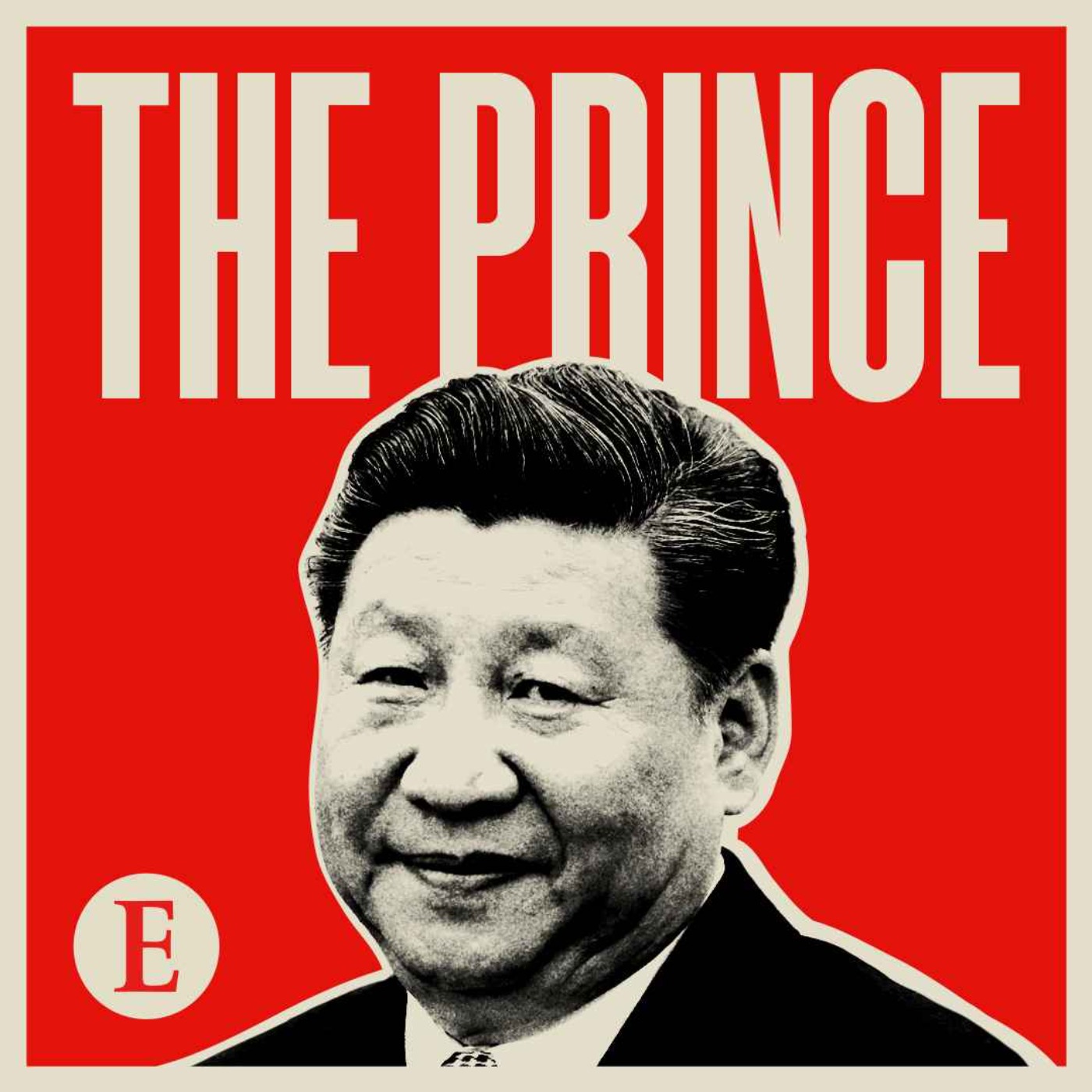
In 2012, Xi Jinping's disappearance before becoming China's leader led to speculation about his well-being, with rumors ranging from illness to an assassination attempt. Xi resurfaced after 14 days, signaling that he was alive. Since taking office, Xi Jinping has amassed substantial personal power, breaking from traditional leadership transitions. His early life was shaped by family history, suffering during the Cultural Revolution, and a transformative experience in a farming village. Xi's parents, Xi Zhongxun and Qixin, played influential roles in the Communist Party, impacting Xi's upbringing. These aspects offer insights into Xi Jinping's background and leadership style, reflecting a complex interplay between personal experiences, family history, and political dynamics in shaping China's current leader.
Transcription
4652 Words, 26240 Characters
In 2012, a couple of months before Xi Jinping became China's leader, he disappeared.
"China is refusing to comment on a mystery surrounding the man who's expected to be the
next president."
59-year-old Xi Jinping has not been seen publicly since September 1st.
Government censors are blocking search results for Xi's name.
Xi canceled meetings with foreign dignitaries, including the then U.S. Secretary of State,
Hillary Clinton.
"Is he the target of an assassination attempt?
Did he hurt his back playing football?"
"Has he fallen out of favor?
Is he ill?
Is he in prison?
Is he dead?"
A frustrated reporter tried asking a Chinese foreign ministry spokesman about the rumors.
Can you at least confirm Xi Jinping is still alive?
The spokesman scoffed.
"I hope you can ask a serious question."
And then, after 14 days, as quickly and as mysteriously as he'd gone away, Xi resurfaced.
"There was an American delegation, I was part of it, that travelled to China and was given
a meeting with Xi Jinping in September of 2012."
Evan Medeiros was the top China adviser in the White House at the time, and an unwitting
extra in a piece of political theatre.
"And he did something he never usually does, which is, at the end of the meeting, he said
hey everybody, let's all stand at the back of the room and take a picture, which of course
was promptly plastered all over People's Daily."
The People's Daily is the official newspaper of the Chinese Communist Party, and the place
for someone like Xi to make a big statement.
"So clearly something was going on at that time.
He used the meeting to indicate that he is healthy, vibrant, and he made a point to basically
say I'm back."
And then, as if nothing at all weird had happened, that autumn Xi Jinping went on to become
General Secretary of the Chinese Communist Party, the top job.
That made him the leader of China, and still, to this day, nobody knows what all that was
about.
All we have are rumours and sketchy theories, and the thing is, Xi Jinping's whole life
is like this.
I'm Su Lin-Wong, China correspondent for The Economist.
This is The Prince, a podcast about Xi Jinping, China's leader.
Barring any big surprises, he's about to begin his third five-year term as General Secretary
of the Chinese Communist Party.
He's breaking a convention set since the long and savage reign of Mao Zedong ended
in the '70s.
The party chief does his decade or so at the top, then makes way for the next guy, always
a guy.
But this guy isn't like the others.
In the ten years Xi Jinping has ruled China, he's shattered decades of cautious collective
leadership to gather enormous personal power.
Chinese officials say he needs it to guide the country through global turmoil and turn
it into a superpower.
Many Chinese agree.
The catch is that now, the future of China's 1.4 billion people and maybe well-peace hinge
on the mind of one man.
And finding out what's going on inside that mind?
That hasn't gotten any easier in the ten years he's been in charge.
If anything, it's become even more difficult and more dangerous as I found out myself.
But I'm lucky.
I'm Australian.
A local journalist in China couldn't even make a podcast like this without risking jail.
So I'm on the hunt for the real sea.
I want to unearth the lessons he's learned in his rise through the brutal world of Chinese
politics and to find out how he's used those lessons to change China and reshape the world.
It's a Machiavellian story of power, how it's won, how it's wielded and how far you
can fall when it's taken away.
This is episode one, Redder Than Red.
Xi Jinping grew up in one of the most traumatic periods of Chinese history.
His family was torn apart.
Why did he keep faith in the Chinese Communist Party?
At the centre of Beijing, the Chinese government's headquarters are built in a former imperial
palace garden, walled off from the rest of the city.
The compound is called Zhongnanhai.
It's the Communist Party's version of the Kremlin, a grand complex of homes and offices
for the country's leaders.
I went inside of Zhongnanhai just once.
Nanyang Li grew up in Beijing in the 1950s.
She was young when she got to see inside, maybe eight years old.
There's a little theatre in Zhongnanhai, so we want to see Peking Opera.
And I saw Mother Dong and I was so excited.
I just thought I was pure luck.
What Nanyang didn't realise is that this wasn't some chance encounter with China's
revered leader, Mao Zedong.
My father never mentioned his job to me.
I had no clue.
My father was Secretary of Mao Zedong.
Her dad was Li Rui, Chairman Mao's Secretary for Industrial Affairs.
That was a big job, but not quite in the inner circle.
Because my father was from the government ministry, we just lived in the regular apartment complex.
Xi Jinping's family, they lived in a military yard called Big Yard, Da Yuen.
Xi Jinping's dad worked for Mao too.
Nanyang says the Xi family lived in one of the big yards, housing compounds near Zhongnanhai,
reserved for top leaders and military bosses.
He would have socialised with kids of similar status, while their fathers travelled to Communist
Party HQ for work.
Their life is totally different from our life.
There is a security guard in the entrance and the people cannot get in without the correct
ID.
And their family has not only the Nany and also housekeeper paid by the government.
When Xi Jinping was born in Beijing in 1953, he was practically royalty.
His dad, Xi Zhongxun, was a founding father of modern China.
Xi Zhongxun had fought alongside Mao during China's civil war.
He's been featured regularly in party propaganda about that period.
And his life story has been dramatised too.
He was one of the heroes in a TV series that came out in 2021, called Decisive War.
The Xi Zhongxun character is shouting orders.
A villager asks Xi if they'll be going to Wuxi.
Yes, says Xi.
We must protect the party.
We must protect Chairman Mao.
After the war was won, Mao Zedong declared a new people's republic.
This was the dawn of a new China.
Since the mid-1800s, China had been ripped apart by rebellions, civil conflicts, imperial
invasions, and for long stretches, the total collapse of political order across huge parts
of the country.
Chinese history books have a name for that period.
By Nian Guochi, the century of humiliation.
When Mao took charge of the country in 1949, he promised to restore China to its former
greatness.
Xi Zhongxun became one of Mao's right-hand guys in government.
At home, he was a brutal disciplinarian, and he was famous even within the elite, which
tended to be strict towards their children as a family that was very, very, very, very
serious about discipline.
Joseph Terigin is working on a book about the life of Xi Zhongxun.
It's really almost like Greek tragedy in some ways.
It's almost kind of amazing.
He's a professor at American University in Washington, and an expert on Chinese and
Russian politics.
The Reds' second generation were a real political liability, and Mao referred to them on one
occasion as a disaster.
Xi Jinping in the offspring of other elites came to be known as Hong'er Dai, the Reds'
second generation, or Tai Zi Dang, Princelings.
The issue was that if you grow up being told that you're the successor to the revolution
and your family helped create the new regime, it's easy for that to kind of go to your
head a little bit, right?
So this idea that you needed to be strict on your kids to overcome this sort of anti-egalitarian
sensibility that some of these Princelings had, I think motivates a little bit why Xi
Zhongxun was so tough.
The influence of Xi Jinping's mother, Qixin, is less well known.
She doesn't figure so strongly in the official narrative.
As a child, it's hard to argue that a mother is not influential, isn't it?
Lucy Hornby is studying Xi Jinping's China as a visiting scholar at Harvard's Fairbank
Center.
We used to work together as reporters, and we've spent many hours trying to figure out
how to prize open the black box of elite Chinese politics.
Chinese political culture is extremely uncomfortable with the idea of a powerful woman, and so
you have this situation where basically in that revolutionary generation, you had a lot
of powerful women there, but almost none of them had a public role.
Xi Jinping's mother is partly responsible for this.
She seems to have gone out of her way to stoke the kind of legend of the father and to obscure
what she might have done.
But even in obscurity, Qixin has been an important figure in Xi Jinping's career.
She was no less committed to China's Communist Revolution and fought in the Chinese Civil
War, and she worked at the Central Party School, which trains officials.
As of this recording, she's still alive, well into her 90s.
A picture of her walking with Xi Jinping has been spotted behind his desk in official broadcasts.
She's been described as a quiet counselor, warning the Xi family against potential pitfalls
as her son advanced through the Communist Party.
As a child, Xi Jinping probably didn't see too much of either parent.
He went to an exclusive boarding school.
But this comfortable life as a member of one of China's top political families was about
to turn upside down.
By the time Xi was a schoolboy in the late 1950s, Communist China was in crisis, and
its leader, Mao Zedong, was under pressure.
His disastrous plan to collectivise China's agriculture and fast-track its industrialisation,
which he called the Great Leap Forward, was causing mass starvation in the countryside.
Tens of millions of people died through the late 50s and early 60s.
Even the kids of Communist Party royalty felt the effects.
Xi Jinping has spoken about having too little to eat at his boarding school.
Oh, I was always hungry.
One of the few ways to understand what Xi's life was like is to talk to people whose lives
overlapped with his.
Nanyang, the daughter of one of Mao's personal secretaries, was also in a school for kids
of party leaders and had the same experiences of food shortages there.
And one day, one naughty student just pulled off the curtain that separated the teachers
and us.
And some kids reported to their parents.
And their parents had some pull.
So the ministry send a working team come over to research what was going on.
But the worst was still to come.
How old were you when your dad got in trouble with Mao?
Mao was digging in and getting paranoid.
He was jailing advisors who he suspected of plotting against him.
Nanyang's father would be shipped off to a prison camp for criticizing the Great Leap
Forward.
He'd spent much of the following nine years in solitary confinement.
My mom said your dad made a mistake, but so many people made the mistakes.
It's not too bad to me, but until one day, I always played with boys, boys' game.
I didn't play too much the girls' game.
And one day, I went to them and they said, "No, no, we didn't want to play with you."
So I cried.
That's the first time I've felt something.
Xi Jinping has also described getting picked on at school for his father's mistakes.
But what did Xi's dad do to get on Mao's bad side?
He was purged from the leadership in 1962 because of a novel.
Joseph Terigian, Xi Zhongxun's biographer, says they fell out over a book that retold
the story of the Civil War.
To Mao loyalists, it gave a little too much credit to Xi Zhongxun's faction of the party.
In the Chinese political context, where competing interpretations of history have such political
implications, something like that could really have devastating outcome for someone like
Xi Jinping's father.
Xi Zhongxun was banished from the leadership.
He was effectively under house arrest.
His family would later remember seeing their patriarch at home, sitting silently, alone
and in darkness.
In Xi Jinping's case, he and his family really experienced very directly the consequences
of losing power.
Lucy Hornby believes this was a formative time for young Xi Jinping.
He went through all the trials and tribulations of belonging to a family that was a loser
in the Chinese political system.
And in the Chinese system, of course, losing power is a zero-sum game.
Xi Zhongxun would soon after be sent away to a distant factory and later to complete
the humiliation to a labor camp.
Xi Jinping's younger brother, Xi Yuanping, was six when their father got in trouble and
nine when he was sent away.
We didn't see him for seven years, he says, in one documentary.
My father became a figment of my imagination.
Each one of us had our own idea about the first thing we'd say to him when we saw him.
We'd say to each other, "When we see our father, none of us should cry."
But Mao Zedong's purge of China's leadership had merely come early for Xi Zhongxun.
By 1966, it came for almost everyone.
That's in a moment.
So I'm pausing the story here for a few seconds just to say that if you're not yet a subscriber
to the Economist, it's really worth signing up.
I might be biased, but I genuinely believe I work with the best China correspondents
in the world.
They've been this podcast's brain trust, and they do an incredible job reporting on
China every week in very difficult circumstances.
To read their coverage in print and online, you'll need a subscription to the Economist.
It's easy to sign up and I promise you, you won't regret it.
We'll help you understand how China is changing and what that means for the rest of the world.
Visit Economist.com/ChinaPod for our best offer.
The link is in the notes for this episode.
Now, on with the story.
The cultural revolution of the late 1960s upended Chinese society.
Mao was calling on students to attack bourgeois intellectuals and officials deemed insufficiently
dedicated to China's socialist revolution.
Young street mobs loyal to Mao called red guards "terrorized cities".
They shamed their teachers in public assemblies called struggle sessions.
Red guards beat, tortured and killed people.
My dad was called onto a platform, says his sister, An An, in a state TV documentary.
They blinded him with a spotlight, and they screamed in his ears through a megaphone.
He fainted.
Xi Jinping suffered for his father's reputation.
Red guards brought him and five others to a courtyard in Beijing to shame them.
Xi's own mother was forced to participate, shouting slogans at her son along with the crowd.
Red guards stormed Xi's fancy school and dragged out the teachers.
They locked people up in makeshift prisons.
Facing similar treatment, Xi's older half sister, Xi He Ping, killed herself.
When he's spoken about that time, Xi has said he feared he might die too.
He was 14 when the red guards captured him and told him he had five minutes left to live.
In another tragic moment, Xi ran away one night from a detention centre and showed up
at his mother's door, shivering.
"I'm hungry," he told her.
But instead of feeding her son, Xi's sin turned him away and reported him to the authorities.
He couldn't risk her own safety by covering for her son.
Xi cried and ran back out into the rainy night, still hungry.
I think a lot of Chinese people are very convinced by this narrative that he suffered as a child.
No subject is more sensitive in China than the lives of the country's leaders.
But Lucy says the story of childhood suffering is one Xi Jinping seems happy to have told.
I've heard it brought up to me by many Chinese of many different walks of life, and it seems
to be something that appears plausible to people, and of course ties into the sense
that they have also suffered when they were children and as young people, and that China
as a nation suffered.
It's not did you suffer or not, it's what did you make of it, what conclusions did you
draw?
There's this narrative of suffering, and there's a narrative of, "And then I found
the party, and I found my way in life."
Liang Jia He was where Xi Jinping found his way.
It was a farming village in China's northwest, not far from his father's hometown.
It's a tourist attraction now, with its own songs, like this one, to celebrate the years
China's leader toiled among the people.
Xi Jinping was sent to Liang Jia He from Beijing when he was 15 years old.
From the late 1960s to the late 70s, millions of young Chinese were sent down from the cities
to the countryside.
That served a couple of purposes for Mao.
First, it broke up the chaos the Cultural Revolution had brought to cities.
Second, it would force urban youth to learn the virtues of hard labor from the peasants.
This is how the man himself describes his time in Liang Jia He.
Xi Jinping reminisced about it for a 2004 state TV documentary.
Being sent down was an incredibly formative experience in my life, he says, one of growth
and purification.
It was a rebirth.
He says, on that first day, everyone on the train ride from Beijing was crying, but he
was smiling.
He was happy to be leaving.
If I'd stayed in Beijing, he says, I'm not sure I would have survived.
Xi didn't take welled farm life in the countryside at first.
I was completely out of my element when I arrived, he says.
His bedroom was a shed dwelling inside a cave.
Xi says the amount of hard labor shocked him.
His skin was swelling up with flea bites.
He was so desperate to eat some meat that when he finally came across some, he ate
it raw.
The locals didn't much like him either.
I was lazy, he says.
He took up smoking so he'd have an excuse to take breaks.
He bolted back to Beijing after just a few months.
He was arrested and made to join a hard labor gang laying sewer pipes, returning to Liang
Jiahe a year later.
He was determined to make a better go of it with the villagers.
The next years weren't entirely without incident.
Xi remembers setting up a small biogas extractor.
The sputtering machine spewed muck at him.
My face was covered in manure, he says.
But as his work improved, so did his responsibilities.
Xi's written about providing rudimentary healthcare for the village.
He helped dig wells, build dams and repair roads.
He said local elders began to seek his advice.
He was a city boy after all and avid reader with some education.
Xi finally left Liang Jiahe at the age of 22, a changed man.
I cried on the day I left, he says.
It was the first time he'd cried since he'd learned of his sister's death.
This is an important period in Xi Jinping mythology.
In the official narrative, it forged Xi from an entitled little princeling to a capable
adult attuned to the concerns of the commoners.
Looking back on his time in Liang Jiahe, Xi later wrote, "I had firmly established
my life's purpose and was full of confidence."
When Mao died in 1976, the cultural revolution ended with him.
Most of those leaders he'd purged, the ones who survived, were rehabilitated, released,
forgiven and welcomed back into the fold.
That included Xi Zhongshun.
The Xi family was restored and reunited.
Nanyang Li's dad also returned to a position of influence in the Chinese Communist Party,
the CCP.
The day when my father claimed his name, I went to the CCP leader of my workshop.
Nanyang had been working in a car factory through the Cultural Revolution.
He said, "Long time ago, I know your father."
Not only that, but her boss had even admired her dad.
He just never felt safe in admitting it while her dad was on the outs with the chairman.
I was really shocked, I said, "You know my father is a good guy."
All through the Cultural Revolution, Xi had been denied opportunities because of her family's
reputation.
For nothing, apparently.
That is really total change in my mind.
I thought I was cheated for so long.
She got a job in the government, in a ministry her father ran for a while.
Her boss would say to her, "Hey, why don't you consider applying for party membership?
You'll have more opportunities to progress here."
And in the very beginning, I said, "Oh no, I don't think I'm that good, no."
But her boss kept pushing.
Eventually, she had to level with him.
I said, "I'm going to tell you the truth, I hate CCP, they totally destroyed my childhood.
I really hate it."
And then I really said, "Oh, okay, okay, okay, I never, I will never raise that question."
What aspects of your childhood do you think the CCP most destroyed?
First, I was really smart, bright students.
I was on top of every class, but I couldn't get any chance to study in the university.
I had to learn everything by myself.
I thought I had no future.
Her future was outside China.
She lives in America now.
Nanyang Li's father, Li Rui, he stuck around.
Li Rui was an agitator, a sort of outsider on the inside.
His willingness to speak his mind was both what got him noticed by Mao and what got him
in trouble.
In later years, he campaigned for a more free and democratic China.
And once Yimping became the number one, my father was so happy.
And my father told me, "Now is good, it's good time."
And the son of Zhongxin became the number one, and we have hope from our political system.
Voice of America interviewed Li Rui in 2018 in his hospital bed.
He lived to be a very old man, 101.
Li Rui said he'd met with Xi Jinping on Xi's way up through the ranks.
Li Rui had known Xi's father, Xi Zhongxun, to be a moderate voice in the party, and hoped
Xi Jinping might have similar tendencies.
He'd encouraged Xi to be more outspoken, to call openly for reform.
But Xi put him off.
I might agree with what you're saying, but I'm still in nobody, he said.
I've got to keep quiet, bide my time.
My father told this story to everybody, he said he had the same idea with us, like us.
But Nanyang didn't share her father's faith in Xi.
And I said, "Calm down, dad, I don't believe it."
And it wasn't until his final years of life that he gave up hope that Xi Jinping might
make China more free.
In the Voice of America interview, Li Rui joked about an expression credited to him.
It was 毛病不改,飢餓成息.
It's a pun on Mao and Xi.
It means something like, Mao's mistakes aren't corrected and Xi accumulates his evil.
The people, my friends, visited him in the hospital, and then they told me, "The only
word your father keeps saying is, "What are we going to do?
What are we going to do?"
Because he's a member of the party until he die.
Li Rui passed away in 2019.
He was buried at the Ba Bao Shan Revolutionary Cemetery in Beijing, where other top officials
are interred.
Nanyang boycotted the funeral.
This wasn't how he'd want to be memorialized, she said, as a hero of a party in which he'd
lost faith.
It wasn't how Nanyang remembered him anyway.
She'd had a very similar childhood to Xi Jinping.
First, a privileged kid of red royalty.
Then, it went wrong.
Dad purged at nine years old, schooling interrupted, traumatized by the Cultural Revolution.
And then, a family rehabilitated, honor recovered.
But her reaction was very different.
The party ruined her life and she wanted out.
So, why didn't Xi want out too?
WikiLeaks has published an American Diplomatic Cable from 2009.
Someone at the US Embassy in Beijing had spoken to an unnamed friend of the Xi family.
The source said that after the Cultural Revolution, with the red families back in the political
elite, most princelings partied.
They drank and dated, lapped up Western movies and books.
But not Xi Jinping.
According to the cable, he chose to survive by becoming redder than red.
Rather than turn away from Mao's Communist Party, he dedicated himself to its cause.
Can you imagine growing up in a household where your father was one of the individuals
who had brought a new regime to power and regaled you with stories of the revolution?
Joseph Triggan says that for Xi, the party is the family business.
But at the same time you had seen your father suffer so much and never lose that devotion,
you yourself suffer so much and decide that to overcome that period of disillusionment,
you wanted to dedicate yourself to the party.
He is someone who doesn't want to see the chaos that he saw as a young person return
to China and sees the party as the one institution that can prevent that from happening.
Early on, before the height of the Cultural Revolution, Nanyang Li also believed in the
party.
I really, really want to be a member of the CCP.
I want to show I was the daughter of the CCP.
I was not the daughter of my father.
I really showed so hard to them.
I just want to follow your way, to follow Chairman Mao and to be the really true revolutionary.
Why was that?
Like, what was it that made you so desperately want to be a daughter of the CCP?
It's very hard for the kids from the really bad family.
You had to try so hard.
You should understand now your time, even in China, you could be everything and you could
be teacher, you could be an actress, actor, you could dream what you want, right?
But our time, 1950s, to be a revolutionary, that's the only way.
Chengwei Ge Mingzhe, become a revolutionary, that's only your future.
People who have little contact with power, who are far from it, always see it as mysterious
and novel, Xi Jinping once said.
But what I see is not just the superficial things, the power, the flowers, the glory,
the applause, I see the jails and the hypocrisy of the world.
All Xi Jinping could trust was the power of the Communist Party.
The Party was the only game in town.
And maybe what made Xi different is that he'd worked out how to play that game.
But in Mao's China, no one was really safe, except for Mao himself.
So Xi wouldn't just have to play the game, he'd have to win.
That's next time.
The Prince is produced by Sam Colbert, Claire Reed, Barkley Bram and me.
Our sound designer is Wei Donglin, with original music by Darren Ng.
Our executive producer is John Shields.
We couldn't have made this without the help of some very brave people we can't name.
For more of the Economist China coverage, get the best offer on a subscription at economist.com/chinapod.
Podcast Summary
Key Points:
Xi Jinping disappeared in 2012 before becoming China's leader, sparking rumors and theories.
Xi Jinping resurfaced after 14 days of absence, indicating he was alive and well.
Xi Jinping has consolidated significant personal power during his leadership, deviating from past leadership transitions.
Xi Jinping's early life was marked by family history, suffering during the Cultural Revolution, and a transformative period in a farming village.
Xi Jinping's parents, Xi Zhongxun and Qixin, had significant roles in the Communist Party, influencing Xi's upbringing.
Summary:
In 2012, Xi Jinping's disappearance before becoming China's leader led to speculation about his well-being, with rumors ranging from illness to an assassination attempt. Xi resurfaced after 14 days, signaling that he was alive. Since taking office, Xi Jinping has amassed substantial personal power, breaking from traditional leadership transitions.
His early life was shaped by family history, suffering during the Cultural Revolution, and a transformative experience in a farming village. Xi's parents, Xi Zhongxun and Qixin, played influential roles in the Communist Party, impacting Xi's upbringing. These aspects offer insights into Xi Jinping's background and leadership style, reflecting a complex interplay between personal experiences, family history, and political dynamics in shaping China's current leader.
FAQs
Xi Jinping disappeared from public view, leading to various rumors and speculations about his well-being and whereabouts.
Xi Jinping's absence raised concerns due to the lack of official comments, blocked search results, canceled meetings, and various speculations surrounding his condition.
Xi Jinping resurfaced after 14 days, meeting with an American delegation and making a public statement to indicate his well-being and return.
Xi Jinping went on to become the General Secretary of the Chinese Communist Party, solidifying his leadership position despite the unresolved mystery surrounding his disappearance.
Xi Jinping centralized power, broke from collective leadership traditions, and aimed to guide China towards becoming a superpower.
Xi Jinping's childhood experiences, including suffering during the Cultural Revolution and being sent to the countryside, influenced his leadership style and focus on connecting with the common people.
Chat with AI
Loading...
Pro features
Go deeper with this episode
Unlock creator-grade tools that turn any transcript into show notes and subtitle files.
 PodcastTranscript AI