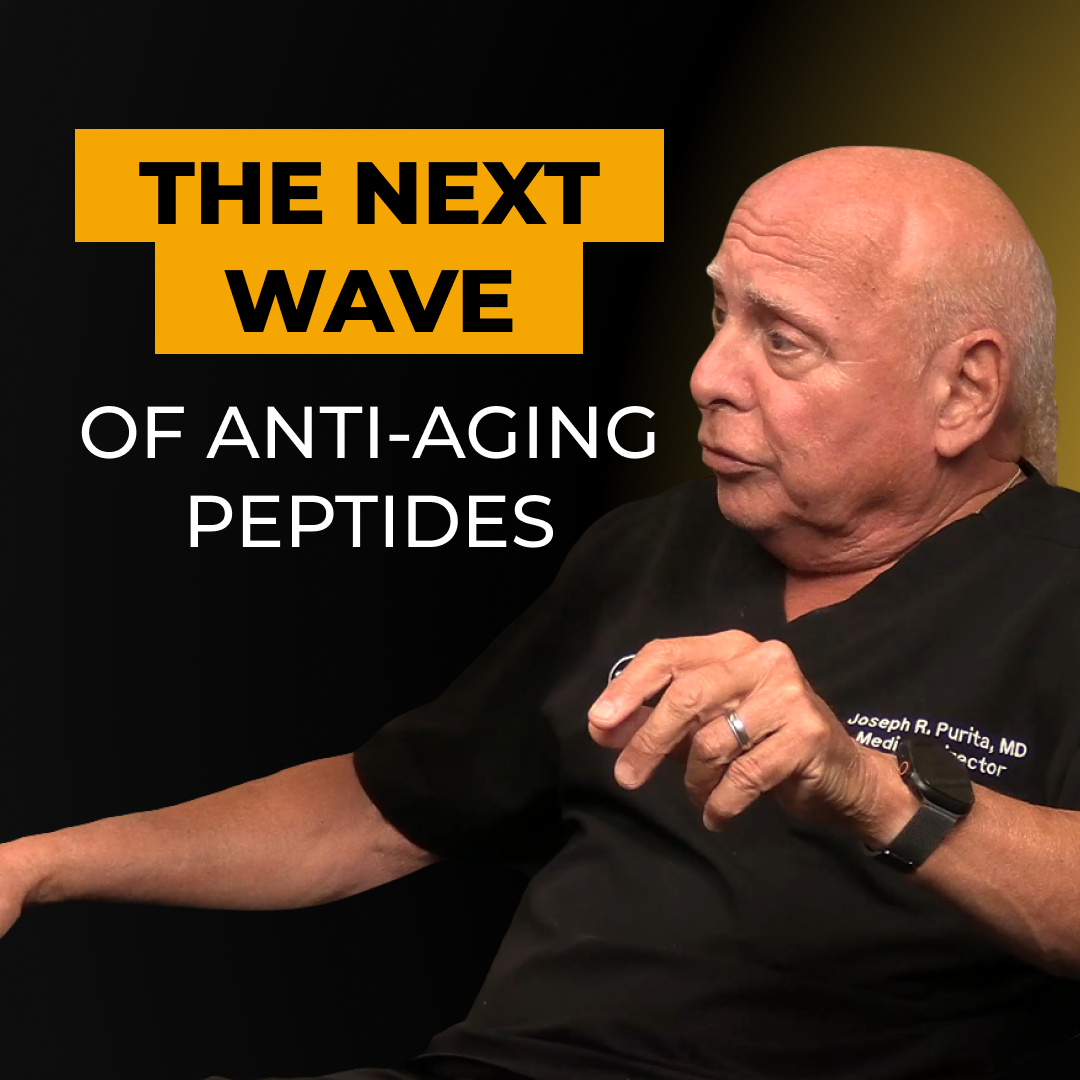
Rebooting Cellular Health: EBO2, Stem Cells & the New Era of Longevity | Dr. Joseph Purita
58m 35s
The transcription features a discussion between a host and Dr. Joseph Parita about EBO2, an advanced regenerative medical treatment. EBO2 involves withdrawing blood, passing it through a dialysis filter for ozonation, exposing it to ultraviolet light (UVA and UVC) for pathogen inactivation, and reinfusing it. Dr. Parita highlights its superiority over methods like Ten-Pass ozone therapy due to a larger surface area for blood-ozone interaction and the use of pulsed light frequencies. He explains that the procedure reduces inflammation, viral loads, and toxins, effectively "rebooting" the body's pathways. Dr. Parita shares his journey from orthopedics to regenerative medicine, driven by a focus on cutting-edge, science-based approaches. He addresses skepticism by emphasizing deep research and personal experimentation, noting EBO2's efficacy in autoimmune conditions and overall wellness, supported by observed clinical improvements and analysis of removed toxins. The conversation underscores EBO2 as a synergistic, logical intervention for enhancing the body's innate healing processes.
There's nothing else that I know in the biologic regenerative world that does the same thing. I did a piece of content about EBO2 on my Instagram and it went viral. I got like 600,000 views just for talking about filtering my blood. Your circulatory system is the superhighway of your immune system. So my understanding of it is, blood goes through a filter. It's then treated with UV light and then it's given ozone as well and then put back into you. Combining these three together synergistically really seems to support the body quite well. Today's guest is Dr. Joseph Parita, orthopedic surgeon and regenerative medicine pioneer, known for pushing the edge of what's possible in cellular healing. EBO2 is a big rebooting. It's the. You're one injury away from having to stop. That shoulder won't heal. Your knee acts up. Your guts never right. Things used to heal, but now they linger. I'll tell you why this is later in the episode. Dr. Joe, really amazing to be recording with you today. And my pleasure and Anato, be with you. I would say thanks for coming to the show, but I'm actually recording that your place today, after having been talking about recording together now for pretty much a year, I think. That's correct. It's actually very funny how this all came around as well. So why we're here today recording together is because I had EBO2 from a clinic in London a couple of years ago now. Fantastic treatment. I was like, wow, this is really biostacking. It was like really an amazing thing. And they said, oh yeah, we heard about it from Place in America and they came over and they trained us and this and that and the other. It's amazing. And then it's like, actually, I did a piece of content about EBO2 specifically on my Instagram. It went viral. And so I thought, actually, I'm going to look up to see who's the pioneer in this space and who's been using this and actually asked chat GPT. And it said three names. Top one was Dr. Joe. Interesting. Cool. So then I looked at your website and I looked into you a bit more and I saw that you're in Boca. So I text my friend Dan and said, dude, Dr. Joe's in town. He's like in Boca where you are. He goes, yeah, I'm here right now with him. And then he sent us a picture, sent me a picture of you too. And like the universe is a very, very funny thing sometimes because it all led back to the moment of overlapping and that's when I was like, I have to recall with him. Those stars aligned. Yeah. Yeah. It's very, very, funny situation and obviously we've been dancing now for the last year. But now here we are. So I'm really looking forward to unpacking this and discussing with you today. Great. So tell me, how did you stumble across EBO2 and what or Ebu, whichever way you prefer to call it? And what are your thoughts about it all? Well, it's very interesting story. So I was going down to the Dominican Republic and for those people that aren't for me, when it's a very fertile rolling ground, so to speak, for professional baseball players and I was going down into treat some. And I came across this kind of crude thing. They were saying, oh, we do this EBO2. Basically to go ahead and get these guys in better shape. I said, well, that's interesting. I said, because I was doing stem cell therapy at the time now near. And I looked at and I said, this is something I got to look into. They said, well, yeah, you won't be able to do this United States. It's not allowed us. Well, okay, that's fine. But, you know, let me look at it and see. So the rest kind of his history because the nice, eventually brought it here. And I was working with some physician, more or less in California. And he had a, the basic stuff. And I said, I think we can make this better, Lou. And then I said, fine. And he said, fine. And then we started working on it more. And then I said, you know, there's something here that we got to make this even better. Because I knew a little bit about, and I've essentially learned a lot more about photo biomodulation. So I never forget, we three deep printed these little boxes. And I'm literally over there with glue and mirrors and things like that and putting it in there. And I said, what we need to do is run this IV line of blood through this little box. And we had their first crude total EBO2. And we were using it with different color lights. We weren't using any ultraviolet though at the time. Next thing you know, I came across these gentlemen that had the hemalumin. And I said, I'd like to see if we could get this technology of yours with technology of ours. And they said, it should work. And I said, I think so too. And of course, like usual, I'm the first one who does it. And it works splendidly. And you know, you said something very profound initially. This is maybe one of the ultimate bio stacking things that we have. Why? We produce an AD. We produce anti inflammation. We produce filtration. I mean, a whole bunch. Again, I tried a lot of crazy things in my time. And then yet, EBO2 is actually just very logical. And for the outsiders, it might seem extreme. But in fact, it's not. I think it's fantastic. It's supporting the body. Totally based on science. I mean, the fact of ozone, it's been around for decades. I mean, it was first used in Russia. And then Eastern Europe and places like that, Germany. And it's just become more and more of an accepted modality. So my understanding of it is. And I would love to hear your detailed level of it. But the way I see it is. Blood goes through a filter. Think of diaticist type thing. It's then treated with UV light to kill viruses and things. And then it's given ozone as well and then put back into you. And then you see the byproduct or whatever comes out of you, which has different colors and shades depending on how much you needed it. So, instead of just ozone therapy, which is often people have 10 parts, which they feel good for it. And it looks good and seems to work well. So there's just having IV therapy or or whatnot, combining these three together synergistically really seems to support the body quite well. Is that how you would describe it? That's how we describe it. But there's some very big differences between EBO2 and 10-PASS. Let's just kind of use our imaginations a bit. So, in 10-PASS, for those that don't know, it's basically we're taking blood with a syringe. We're taking out from a vein and then we're injecting it into an IV bag. Then we are shaking that bag up with those own gas in there. And then we're taking the blood out. Well, first of all, when you start taking blood with a syringe and then injecting with a syringe and taking out your damaging a lot of the components of the blood. Okay. Also, think about it. Now, when you have an IV bag, maybe it's this big in diameter, a few square inches. So that's pretty much our interface between blood and ozone. Whereas, we're using a little dialysis filter that we flip upside down. We have a surface area about anywhere from 16 to 20 square feet. So think about it. Four or five square inches, 20 square feet. That's number one. Now, number two, no ozone ever enters the body in this procedure. Ozone is what we call a pro-drug, meaning that the body has to make it into something that's active. Ozone itself is not going to do anything. You know, it's interesting about the pro-drugs. So it's a pro-drug also. So, anyway, going on with the story, yes, we indeed, we subjected to some ultraviolet light, but we subjected to two different types, ultraviolet A, and more importantly, which most people don't have ultraviolet C. And the other important thing about our procedure is it's also using pulse light. And we can get into that in a little while. It's extremely important because we look at frequencies, and that's becoming a new catch-all in in regenerative medicine of frequency. Everything has a frequency disease, as cells, etc. And we can sometimes match the frequency of the light going on and off with that particular disease entity. Super interesting. I love how there's always another level of detail to everything, and I love unpacking it with people such as yourself. So I think we touch on, you know, what EBO2 has done for people in a little while. So I think we're going to go on with a few other questions in the meantime. So you've been one of the pioneers in regenerative medicine for a while now, and very, very well regarded by all of my colleagues and peers. What was it that got you to move from orthopedics into more of the regenerative cellular health areas? Very interesting question. Even when I was a resident, I was involved in some very interesting things. We were injecting her needed disc with chymal papine. Now you may know chymal papine by a more common thing. At least in the United States, we have something called Adolf's meat tenderizer. You put it on a piece of steak or something, and it would tenderize that steak. Well, we were doing it in discs, and we were dissolving some of the discs. It worked splendidly. And then I got into using a laser disc, I used a laser, and this is 40 years ago now. This is not like, you know, five, six years ago. I was always interested in the cutting edge. I get bored with the mundane things. I mean orthopedics is fine, but I said to myself, you know, orthopedics never going to probably make any big difference in this world. Never going to really invent something that's going to be, wow, that's pretty cool. That's pretty interesting. Where's your regenerative medicine? That was my alley. I started doing regenerative medicine while I was doing hip and knee replacements. I was doing this thing called PRP, plate-to-bridge positive. I said, "You give me that stuff from the blood." I said, "Okay, so I would scorch some in the wound." And I noticed, I said, "These people are getting a lot better, a lot quicker." And low in behold, I started doing more and more of it and just started morphing away until eventually. I was, listen, I was suffering, you know, stings and arrows. So to speak, people say, "This is focus, focus. How can you do this? You're an orthopedic surgeon."
you're throwing away your career, I said, "Well, that's fine, except I think I'm doing what nature already does, thank you." It's becoming quite fashionable very quickly, so it's very interesting to hear. In fact, there was an osteopath I met from Sweden who actually spoke at my conference in London back in September who had been testing for stem cell levels in blood. He got into stem cell space originally because he had lost the cartilage in his hip, and was told he was going to have to have surgery. He took it to himself to be injecting his own blood in there over years. Sounds familiar, thank you. Yeah, so it was actually very interesting. It's really interesting to see the results of what he has in the scans from just then that. Obviously, then he got into the whole down into the rubber hole, which I'd love to discuss with you afterwards, actually. Yeah, so it's really interesting that you're in it very, very, very early. It's crazy. It's a miraculous, well, I think the body is a system or is a machine or is such an amazing thing, and it's interesting that you've been called "hocus-pocus" for something that's just a natural body process. How did you deal with that along the way? Because I knew the science, and that's the key. If you know the science and you really look it up, you know, when I give a talk, I want to make sure I'm the smartest guy in that room on that topic. I want to make sure somebody throws a question at me, I'm going to say, "Well, this is just a net." That's what makes you an expert at, I think. And going back to one of the things you said, it's one of the things I usually use on a lot of my talks. You were talking about the body. I have a very simple analogy for the audience out there. Think of your organs and your cells as the computer hardware, and these pathways of the body as the software. Now, when you have a problem with your computer, what do you do? You reboot it. And that's what we're doing with these pathways. We're rebooting them. It's the reset button. So one area I often come up against is some people, or should I say doctors, especially to say, "Well, there's not enough evidence, and that's what I'm not going to do it." And I think, obviously, there's one thing where a lot of doctors are worried about trying new things for obvious reasons. And I think that holds back the space quite a lot. How do you balance delicately, obviously, the risk to reward on some of these new forefront things that you do? Because it, from your work, you dealt with quite a lot of these advanced things, or should I say, more commonplace things nowadays. Well, you know, in the old days, I mean, I would really do some deep investigating of it and say, "Okay, let me look and see what was the potential problems, what were the complications? What could this potentially do? What happens if something goes awry?" And then you'd know how to do it. Because just like with EBO2, at one time we were seeing a lot of problems with low blood sugars. And we said, "Okay, let's figure that out and we've got that down patent now." So any other thing I'll tell you, especially some of these surgeons and things like that, I said, "Well, there's not really good evidence." And so we'll tell me what the evidence is for the success of our throscopy. There isn't any. There's no real good studies of one versus the other. And actually, when we look at some of the literature now, for instance, our throscopy, what we used to think was, "Listen, I used to do a lot of them. Very benign operation, you're going to be great." Yeah, the people were great except what happened is down the road. They would start developing osteoarthritis. So what we thought was saving them was actually condemning them to an arthritic dehypbersulder, etc. Interesting. There's one line that I read recently, and it was, I've noticed it down in my month, your mind is, is like, "I don't form an opinion on something unless I look at my opposition's opinion and understand it as well as they do before forming an opinion." And it's like, I guess from what you're saying is you do pretty much exactly that. Absolutely. And the other thing is, I make sure I do it on myself first. Yeah, awesome. Very, very cool. So for those that are listening that haven't really heard of EBO2 before, give us the basics of it and what do people expect from having it done? And is it as crazy as my Instagram followers seem to think? All right, well, let's kind of go over it. First of all, what does it really mean? EBO2, extra-corporal blood oxygenation and osanation. So what does that mean in everyday English? It means that anything that's extra-corporal means it's outside the body, which, indeed, it is. The blood is taken outside of the body. It's in one IV line, and then it goes into a dialysis filter that's flipped upside down. That's where the magic starts. In that, in the dialysis filter, the blood and the ozone mix together. Ozone is almost densely converted to other compounds, some of which is oxygen, some of which is hydrogen peroxide, etc. Then the blood travels to what we call the hemolumine machine where it's subjected to red, infrared, blue, green, ultraviolet, ultraviolet, sea light. Then it goes back into the patient on the typically the other arm. Occasionally, we have reasons that we have to only use one arm for any number of reasons. And that's where the basically the process is. Now, why do we do it that way? Well, the ozone can do many different things. It stimulates a certain pathway in the body called the NRF2 pathway. Now, the NRF2 pathway is a major pathway in the body that reduces inflammation. It's the thermostat of anti-inflammation. There's another pathway that we have called NF-capabata. Now, NF-capabata is important. God forbid, if you're dealing with a barred infection, virus infection, things like that. If it gets too much out of hand, though, that can be very serious. We were seeing that in COVID, for instance, when they had the cytokine storm. Basically, the body revved up so much that it was actually doing more harm than good. It's talked about that EBO2 pulls out molds and toxins and in inflammation and things like that. What does it actually pull out of us? What does it treat or help? And one of the differences for bloodmark is for people before and after. Okay, so let's go over some of that. First of all, pulling out, yes, it pulls out a number of things, but let's kind of go to more of the basics. As we age, we have more and more viruses in our body. We always have viruses in our body, but as we get a little older and some people get a little older, even, it will make more and more viruses. Now, viruses cause inflammation. Inflammation causes aging, hence the term "inflammaging." So the more we can get rid of this viral load in our body, the better we're going to be. Now, how does the ozone take care of that? Two ways. The ozone itself will damage the lipid envelope of the viruses. About 75% of the viruses that cause disease in humans have this lipid envelope. Now, once that envelope is damaged, it exposes the DNA and RNA of the viruses to the environment. And as soon as that's exposed, it's curtains for that virus. Same thing with mold. Same thing with limes and things like that. Now, the other safety guard that we have is the ultraviolet sea light, not so much the A, but the sea light, because the sea light is very toxic to these organs, but luckily not so much to ourselves. So we give it the one-two punch. Now, we also have filtration. Now, somebody thought they were a real wise guy and said, "Well, you're not really filtering anything. You know, where you're getting a suction," I said, "on the contrary, we are." Because when you have a gas that passes at a speed, it creates something called the Venturi effect, which means it creates a suction. So we are getting suction through the dialysis filter. And the doctor said, "Well, you know, I hate to say it, but you're right." And that's what we're getting there. Now, we have fluid in there. We have foam in there and things like that. There's a couple of things. It's beta-microglomitin, which is kind of a byproduct of inflammatory cells, cancer cells, etc. Now, that doesn't mean if you have this foam in there, you have cancer cells. No, I mean, we all have cancer cells per se, they say, but how long is our immune system keeps them in check? And I'm talking about a cell here in the cell. They are not a really main part of it. That's fine. Now, what we did not too long ago is we actually said, we wanted to get this true that we were getting in our canister and we want to analyze it. So we got a whole of one of the companies in the United States and we said, "We'd like to do an analysis for this." And they said, "All right, fine, but you have to send it as urine just so we can. I said, "Well, fine. So we sent it and we were getting mycotoxins. We were getting trolley in products for every chemicals, all sorts of things. We can always show you those. I mean, I've got a couple slides on it." So now we were able to say, "Ah-ha. We are pulling things out." Some people say, "Yeah, but big deal. It's fluid." I said, "Well, you know, that's fluid that was basically stair-a-ward to begin with. It was from an IV bag, so it's stuff that we're pulling out. So now we pretty much vindicated ourselves and we know that we're pulling things out." So what's one thing you've seen with EBO2 that kind of still blows your mind? Some of the autoimmune conditions. We can see after just two treatments, they can be significantly better. They say, "Yeah, I feel better. I have more energy and things like that." Now, I do it myself to treat them once in a while. I don't seem to get things, but I know it's doing a lot of stuff behind the scenes. And that's what I tell some people. I recommend, if you're just doing it for general obeying maybe once a quarter, once every six months. But for the more difficult cases, I usually recommend one and then a second one two weeks later, and then we, or a week later, and then we reassess everything. That's in addition to other things that we're doing for them also. So, do you have patients that come in that you like actually we need to get you on EBO2 before anything else because it's quite apparent that this is for you? Absolutely. That's many times my go-to method because like I say, I'm doing a bunch of stacking with one treatment. It's going to mimic some of the things of hyperbaric oxygen. It's going to mimic some of the things of intermittent hypoxia, some IV NAD, some IV cacermin, things like that. But I can get it with one treatment in 45 to 50 minutes an hour, let's say, in my clinic. Awesome. So, what would you tell doctors that because when I shared it out on Instagram, I got a lot of pushback, a lot. And it's like, you're this rich buyer, HackerDude, that doing all these crazy techniques and you're privileged in things and it's not even proven science.
Actually, there was one colleague, doctor that I know, who's a functional doctor. She said, "There's no evidence in that and there's not information in there what comes out of you and things like that." What would you say to those guys? If you were on my comment section, defending it, what would you say to them for that? - I would say, before you comment on something, learn the science. When you learn the science, then you have the ability to comment on something. If you say there's no science, that means there's no science in your mind because you just don't know it. And that's what upsets me a lot of times. When people start commenting on things, without investigating it, without looking at things, look at my comments and see. And if you can say, "Hey, the things you're saying "is ridiculous, it makes no sense, then fine." But if you can't say that, then I have one, so to speak. - I love that so much. I've been doing the Instagram thing for quite a long time now and had so much pushback on so many things. And it's quite funny when you comment on something with science and then someone pushes back and you're arguing for an opinion that you really know nothing about. - Exactly. - It's just your ego at play now, not actually wanting to get further in the order to the truth. So actually really funny helps. So many people are attached for that. And I've seen it so many times, even yesterday on stage at Udomonia, dear friend of mine, Dr. Dominik Nishwitz, who's a biological dentist from Germany. He was being interviewed or a fireside with someone that chases down conspiracy theories and pushes back on them. And he said it was a fluoride chat. - Okay. - And the conspiracy, anti-conspiracy guy said, I'm pro fluoride. And obviously Dr. Dom, I'm anti-fluid and like, and then he was challenging him on all these things. It was very interesting. And this is to your point, he's challenging him on these things, but his logic was completely flawed. And you could see he really didn't understand like health. - Exactly right. And a lot of times also, there's another mode of, it's a threat to them financially. The EBO2 is a threat to these people and instead of spending thousands and thousands of dollars on medications and going and back and forth to the office, hey, we can maybe take care of these things in a few visits. - That was exactly my next question actually. - I'm sorry. - No, no, it's perfect. It's perfect. It's like, I'm sure Tam, who helped me with the questions for today is sitting here looking at the questions going, oh, he's answered that one. So it should be quite a good moment for her. She puts a lot of work in behind scenes for me. But yeah, no, it seems very true. Like, for instance, all health can be quite expensive if you choose for it to be and some treatments do. But it just seems crazy how a lot of these medications are on repeat ongoing forever, not actually curing anything, masking symptoms that are telling us to fix something or work on something in dig deeper. And then there's a treatment that isn't actually putting any medicine in you at all, working with your body's natural processes and with nature for sunlight. And then people are saying that that's not evidence-based. Find it very funny how people push back on these things. I think again, I think it must be ego. The other line is it's like, you can't convince someone of something if their livelihood depends on it. (laughing) - Yeah, are you right? - Yeah. So I want to move on from EBO2 onto a couple of other juicy topics that I know that you're very into. Now stem cells, now they are very fashionable at the moment and seem to be everywhere and everyone's doing them and a lot of problems popping up left-right in center, especially with clinics in different places that aren't necessarily fully regulated properly or whatnot. But what's your experience in history with stem cells specifically? 'Cause I know it's quite prevalent for you. - Well, it's interesting. I have one slide in one of my talks and I think it's really a profound slide. Cells not doctors heal patients. - What we're trying to do is we're trying to mimic nature and nature basically makes stem cells. You know, no matter what happens, ultimately it sells. If you have a hip replacement, knee replacement, heart transplant, ultimately the cells have to really take over and organize things and get it fixed. So that's one thing. Now there's a lot of crazy claims out there that are being made and I know that they don't work. Some of these things, oh well, patient had, they used paralyzed and the next thing, you know, he was walking the next day and that's not gonna happen, okay, things like that. Realistic things and then there's totally unrealistic things and again, that's what gives this field sometimes a bad name because some of the things are. Now I'm more partial right now to autologous, meaning that from the patient run allogenic, although I think allogenic has a lot of potential. One of the problems we've had here in the United States is that a lot of these allogenic cells, the way they're processed, most of the cells are not really alive. And that's one of the things that I'm always concerned about. Now I'm looking at a new cell called a mu cell. It's not really new, it's been around, actually I looked at one of my lectures in 2012 and I was mentioning that, but I think it has a lot of potential and it doesn't have maybe some of the baggage. A lot of stem cells that you get from other sources beside yourself can potentially, they'll make a claim, all these cells are immune privileged and they're not, they're immune evasive. They evade immune system, but you can still have a problem with them. But I think we're gonna move towards that realm more as time goes on to use the allogenic cells because they're easy to use. And some states, when I say states, states of health, they may not be the best cell for the patient from their own. And if we use these other sources, they can work well. - Yes, because I recently had stem cells done two or three times actually for various things, one was for a sinus surgery or should I say rebuilding here in Spain and various other things. And then I had a tennis elbow done actually and it was I think it was an unbilical cord and I'm sourced stem cells, but I've dug into it quite a lot and I got a friend that's a PhD in stem cells and discussed it at length and dug into it quite deep. I love the idea of our own stem cells, even though they're obviously there were older and necessarily a young person's. But I do like the idea of utilizing what our body has is that as you know, when one of the things that discussed recently with Dr. Toby in Stockholm was, when I had done last, I started walking down the road and my hips started clicking my tennis elbow, flared up again. And I said to him, Toby, I think I'm gonna have to go back to the hotel because I'm just not feeling good. And he said, "Oh, this is because when you mobilize stem cells, it's looking around for what needs fixing." - What needs to be fixed? - Create inflammation. - Yeah, but hormone. - Exactly. And it's like actually quite professional. So this fine, you'll see in week, 10 days, two weeks, you're gonna be tired for a week or so and then you're gonna see how it's done and then 10 days later my tennis elbow went and it never came back. And whether it's the first time I had it done, it helped probably 30% and they were the on billical chord versus my own systemic versus local. So it's really quiet for me. It was the result was profound actually because my tennis elbow was so bad I couldn't lift up a coffee cup. - Sure. - It's really miserable. - I really was like, actually one thing is not being able to play tennis, we should privilege the problem. But not being able to pick up a cup of coffee or really, you know, shaking it. - Yes, really it was actually really quite bad and there's no limit at the door. - Yeah. - And this is why I wanted to touch on it today because it obviously, from the PRP to the stem cells to the compliance that's come in from how actually compliance is slightly changing right now. How mainstream is exosomes are and obviously the signaling part of that. So I'd love you to really explain for people listening how PRP is, what PRP is, how stem cells are in relation to that and what exosomes are because obviously this is. - Sure. - One of the analogies I like to use is the gardening analogy. Okay, I like the garden, that's why I have a nice tan. So in a garden, what do you have? Soil, seeds and fertilizer. So sometimes what we'll do is we'll take some fat, we do it from the loving area and we use that as a scaffold. Now, if you're using the patient's own, that's fine. You can also use something called Whartons Jelly, which has a similar milieu, so to speak, where it has a scaffold. That's basically the soil. Now the seeds, believe it or not, fat is a very rich source of stem cells. A lot of what we call mesenchymal stem cells in it. The other regenerative soup that I use is from bone marrow, but what we call bone marrow aspirin. Now bone marrow aspirin is probably one of the best things that has ever been created because it's stem cells, it's exosomes, it's V cells, it's mu cells and cells that we don't even know about. So it's a beautiful regenerative soup and doesn't get that bad with age, as long as you use it with other things. And of course the PRP is the fertilizer, so that combination is what makes the garden grow. And then sometimes I'll say, all right, and when a garden's growing, you don't go back and put more soil or seed, you put more fertilizer. So I may repeat a PRP down the road a bit. Now the other thing that I know is extremely important is photo-biomodulation. We have a little machine here, we call it the pure light that I helped invent. And we'll photo-activate any biologic that goes in the body prior to it. Why do we do that? Well, if you use a red light for instance, it stimulates something called cytochrome seocides, which is an enzyme, it's can complex, et cetera. But what it does is it makes the mitochondria produce more ATP. ATP is the body's energy currency. More ATP means a healthier cell. It's going to survive those stressful areas in the body. Amazing. Things aren't healing like they used to and you've noticed. Here's what changed. When you were younger, your body produced what it needed to repair damage overnight, growth factors, repair signals, and the compounds that rebuild tissue. Over time, that production declines. And without those signals, damage accumulates. The new Wolverine peptide stack from level up is designed to support recovery on multiple pathways. They've doubled the quantity of BPC157 for stronger regenerative signaling across your gut, joints and tendons, and added sysus so joints hold up under load.
The formula provides cellular repair, structural strength, and inflammation control all in one. I use it so I don't have to stop doing the things I love, just because recovery isn't what it used to be. If you're dealing with chronic joint issues, slow recovery, or gut problems that never fully resolve, this was built for real-world wear and tear. Use code TimBioHacker for 15% off at leveluphealth.com. That's LVLUPhealth.com. Tell me, what is PLP exactly? PLP, if I could tell you what it is exactly, I'd probably win them though the prize. I can give you an idea. It's a way to come from. It's some platelets mainly. Most people think of a platelet as basically you get a cut, you put pressure on it, finally it formed a scam. Yes, indeed it does help form a clot, so to speak. But it releases a number of multitude of growth factors. Playlets also have exosomes, platelets also have micro particles. They're the first step in getting things repaired. The body uses them all the time. Then they also send out various singles to have stem cells come to the area to join in and get things accomplished. Essentially, for the guys listening, platelets and PLP and stuff like that, my understanding is you draw blood and you spin it in a centrifuge and separate it out. You get rid of most of the white blood cells and red blood cells, but you keep some. I think that's a very important aspect of things. That leaves you with the elements of PLP. It means it's platelet-rich plasma. We plasma is a watery part of the blood, so we have a lot of much higher concentration of platelets in that. We have the plasma and then some of the other components. Separate out some of the fluid. Then you've got a more condensed version of that sex blood, which is correct. Plasma-rich. Excellent. Then, obviously, those have all the growth factors and everything. In very simple terms, draw blood out, spin it, put the concentrated blood back in or inject it into specific areas to help. Almost like when you cut everything rushes to the cut to fix it, you can do that. For instance, I think in tennis elbow, one of the things that when I was researching tennis elbow, because it was completely new to me when it happened. Actually, there's not much blood flow into this and you have many more. You hit it right on it. It had very important. It's an avascular area. We have to try and mimic a blood supply there. To take it one step further, around the tendon area, there's some muscles and things like that. There is some potential that we can make some blood vessels grow there. But in a knee, not really much potential of blood vessels there. That's why in a knee, we have to use stem cells because stem cells have the ability to take it one step further. They can make blood vessels where they're having a bit of a knee, whereas PRP can usually build on blood vessels that are already there. Interesting. The devil is in the detail. That's exactly in the details or what's going to make you have success or failure. Interesting. So, what do v cells exactly? V cells are one of my interests. It's called very small embryonic-like stem cells. Now, when you hear the word embryonic, you say, "Wait a minute. No, it has nothing to do with embryos. They've found in each and every one of us." But there's sort of an emergency stem cell supply. They have to be stressed to really work well. Now, how do we stress them? Well, very simply, we put them at four degrees centigrade, which is about 38, 39 degrees Fahrenheit in very low oxygen conditions overnight. Then we give them back intravenously the next day. We've seen some very interesting things with them. Among other things, we're using them now to treat somastial porosis. It's part of a protocol that would help develop. Interesting. So, what have you seen fixed or improved upon by using these v cells? Certain autoimmune conditions. A variety of things. I just had a patient and the other day he's come in this must be his like 10th treatment over 15 years or so. And he actually grew ahead of here. I wish. I only wish. But he did. But we see all kinds of things. But we do it for general well being also and things like that. It's something that I think is very beneficial. Once in a while, I'll put it in a joint like I had a lady the other day. I inject her sick really act joint because it's really been the only thing that's helped or even PRP wasn't helping her in this has. So, what's the biggest win that you've seen from this? A number of different things. I remember I had somebody with something called grover's disease. It's a skin condition in white males that are 60 years old or so. And the dermatologist says there's nothing can be done for this. And it was just miserable. The guy was itching. We did it literally two days later. It was gone and I've had a number of people. It just takes care of it. So, there's a lot of autoimmune conditions. It seems to help. Amazing. So, let's just say you wrecked your shoulder doing some sport. What would you do? Well, I can tell you exactly what happened because about three, four years ago, I'm a nut. I walk every morning about four miles in the dark. It was a sprinkle on. I said, "Let me just take a short cut tripped dislocated my shoulder." I got my eyes and I said, "Hey, you got to take a medium-range room. Took a medium-range room, popped it in place, did some PRPs, ate myself an injection among other things, and had some friends do it. But that has helped me tremendously. So, I have a full range of motion, no restrictions or anything. Amazing. Now, I took it one step further too. I put myself on some peptides at the same time. What peptides? Let's get it. What's the peptides? You'll get it every this. Okay. Well, you know, the real simple ones, BPC-157-TB-500. I think peptides can really enhance the healing. There are a lot of good things about them. I love peptides at the moment. And of course, everything's changing on them quite quickly. But, I mean, for my understanding, my very layman way of explaining peptides for those of you that haven't heard of peptides before, from the food that we eat, specifically proteins. We break down proteins into amino acids. Those amino acids are usually two, three or four strong together, which are basically the livers way of creating messages to tell the molecules. Single molecules. Exactly. Exactly. Single molecules. Yeah. So, they tell the body to do different things. For instance, the one, I think some people are a bit skeptical of them. But when you use something like Melana-Tan, for instance, which, you know, as you know, by injecting this peptide, you can be in the sun for 30 minutes, a couple of days in a row and you have a full on proper tan shows how amazing these peptides can be. I personally think that peptide therapy is the future of medicine. Oh, yeah. Absolutely. No doubt. And I think that, you know, a certain industry is holding the grip on it for right now. I do think that that will change at some point. But, yeah, it's interesting. You say BPC 157, which is actually a brand I work with, or shall I say exhibit to our conference, which is Level Up Health, and they do BPC 157 and TB 500 combined. They call it the Wolverine stack. Wolverine, yeah. Absolutely. That's a great thing. The other thing I think we're really going to see a lot, and I think big farmers probably against it, but the mitochondrial peptides. Because I always have a saying to me, everything kind of falls down to this and it really depends how healthy you mitochondria determine how healthy you are. And what are the mitochondria, I'm asking for a friend, of course, right now. One of them might take care of the peptides. Well, it's interesting. There's just one that's been approved in the United States for some very esoteric disease. I don't even remember the name of the disease. Mitochondriges in young males, but SS 31 essentially. And then there's moths, and then there's epitelon, which is similar. It's a little different because it's for the telomeres, but there's a whole host of them. And there's more, I'm sure, out there that we're going to even find out more about. But again, right now, you know, you've got to be a little careful with it. You know, a lot of regulatory issues there. We're very cognizant of that here in the office. Yeah. In fact, I recently invested in a brand that does nice inner-mide copper peptides and microfilter-talo face cream. And make the results. The results have been fantastic for people. In fact, it's great. It's growing like crazy. It's scary. But the thing is that the result is just so good. And you know, my partner was stealing more of mine than I was using. And so, yeah, we brought out a female version because it was for guys originally just in that copper peptide. It works so fantastic. Oh, copper peptide. Copper peptide is great because it's a great anti-inflammatory agent in very anti-cancer. Although it's very difficult to say that, isn't it, these days? No, I have no qualms about saying that at all. I'm not necessarily going to say, okay, I'm going to treat you with your cancer because, but it can help reduce, you know, the effects of cancer, I think. I've also been experimented with thymocin alpha-1, which was actually quite nice, but I've also experimented with a few of the bioregulators and, you know, things like kidney organs, kidneys or prostate or some of these other things with the, you know, the traditional viewpoint of like heels, like what are your thoughts around things like that for specifically? I think, you know, it's the other field that we don't know that much about yet, but I think it's going to be another burgeoning field that's going to really make a difference for us. Amazing. So I want to go back to V cells just quickly because this is an area that interests me very much. Where do they come from? How do you, how do you get them specifically? Is that from the bone marrow or is it from the blood? You could get them from the bone marrow. You could get them from the blood, however, that's how we do it. We'll take about three, maybe not quite 300 C-C's blood, okay? Then we start the process, which is a bit of a proprietary thing, but one of the keys that we use here is a plate that lightsate. Now, what does that beat in everyday terms? We get the platelets and we crack them open. Now, typically to do something like that, most of the time when people were doing is they would get the platelets and make a PRP essentially and put it into freezer and freeze it, then they thought and that would, first of all, that could take many hours, you know, overnight or more. And it would damage a lot of the other cells. So what we do now is we do it in a half hour. Now, very simple thing that we kind of stumbled on myself and a good friend of mine from Australia. This must have been 15 years ago. We get the platelets
and we make our PRP and then we put it in what we call an ultrasound bath. Now, for someone who doesn't know what an ultrasound bath is, it's used to clean surgical instruments and things like that. Sometimes you're dentist who use that for you, but it'll just light the plate, you know, it'll light these plates in 30 minutes and we have a beautiful thing because the platelets basically have the growth factors, the exosomes, the micro particles, etc. And I myself think that's part of what's giving us the results with the V cells because we're using this really concentrated regenerative soup with these cells. So do you think this is the future of medicine V cells and the application of them? It does sound pretty good. I mean, if you're coming from gluts. It's your own stuff so there's no problem with rejection. It's homologous use, meaning we take it from one spot, give it back to a spot. So not much in a way of regulatory issues there. And I think it works now. I think we have to refine it more. And I think another cell that's very similar is a mu cell. And I think that's going to be maybe the combination of the two or something like that's going to really work well. So how does the V cell and the mu's and the normal stem cell what's the difference between the two of them? Because I mean, for me, my layman brain or semi-layman brain in this is like, okay, stem cells, the stem cell, what's the difference with the V cell if it's a smaller thing? It's a smaller cell, much smaller cell. But a mu cell and a V cell are what we call pluripotent, meaning they can produce many different types of cells. Whereas most cells like a mesenchymal stem cell, hematopoetic stem cell, they're a multipotent, meaning they can produce cells, but only a certain number. The other thing that's very important about a V cell to know is the V cells produce telemerase, which is an enzyme that makes the telemiers stay long. Now, it basically makes these cells almost immortal. Now, there were some other cells that produce telemerase. For instance, are reproductive cells. That's why a man can be 85 years old, but his reproductive cells are still young and he can produce a child. He may have some DNA damage, but his telemiers are long. Cancer cells unfortunately also have telemiers that are long because they make telemerase. So that's one of the trade-offs. We don't know if they could potentially increase cancer, but I don't think so. So you've been at the forefront for quite a long time. I mean, some really interesting forward-thinking things. And they're stacked up. I mean, when I was researching deeper into Dr. Joe, so there's just so many things. What do you think is the next thing? What's exciting you right now? Because to your point earlier on, you're like, well, actually, I always need to know the next thing, or I need to have excitement in this. Okay. Well, I can tell you, but I was just giving a lecture three, four weeks ago in Geneva on cell senescence. In other words, zombie cells and how we can treat them. And I met someone there that kind of peaked my interest because it's something I've known about for a number of years. Are you familiar with Clothoprotein? No, I'm not familiar with senescence cells. Okay. Well, this is a very, we can talk about those too, but Clothoprotein is a very interesting compound. It's produced by the kidney, but we think it has massive anti-aging benefits to it. And I'm really fascinated by it. And we know one of the best things that you can do is, what I recommend that somebody asks me, what's the best thing you can give your patient? Best medicine? I tell them exercise. And Clothoprotein is one of the things that it's increased back to. But I think you're going to see a lot more. I think we're going to see artificial Clothoproteins and things like that being made. Interesting. So would you say that's the one thing that not really many, or if anyone is talking about right now? Well, now people talking about it. I mean, in my circles, I know other people, they're we're talking about it here and there. I think that's something that's very important. I think gene editing is very important. I mean, there's a whole host of things out there. Yeah, essentially, I heard about considering full of statin for a while, three of my colleagues and friends have been on it. And they said that this is actually quite a good thing to make on more muscle. Yeah, I mean, I'm as a hard gain in myself, even then I and I lift as heavy as I can. I'm very, very tempted, but editing the gene, although I'm, let's say, optimizing my genes on a daily basis with various supplements and technologies and stuff, actually using full of statin to edit them. That's a little bit worrying. What do you think? I think you're right. It's a little worrying, but I'm going to give you a very simple way to do it. You ever hear blood flow restriction? So for those people that don't know it, it's basically working out with turnigits that are restricting some of your blood. It's causing localized intermittent hypoxia. And what happens is we know, for instance, when you do that, a low-intensity workout gives you better benefits than a very high intensity workout. What does it do also? Increases IGF1, increases full of statins, things like that. Myel statin blockers. So, you know, I've given that something. I've given a lecture on a couple of different places in intermittent hypoxia therapy, which I'm really, really fond of. There's a brand called, I think it's Katzu, Katzu bands? Yeah, that was from Japan. Yeah, that I used a few years ago for that. It's actually very interesting. Then they've got a new wireless device version of it. We have a, the United States, they have a company, smart cuffs, kind of centers your blood pressure, and then it just restricts it to what you want. Yeah, there's actually some really interesting data I saw around it with in the UK, we call it OAPO, older age pensioners, but there's some really interesting data around older people that were using them for muscle mass. Watch your grace, super interesting. It gets really nice. So, I've got opinion. Yeah, super interesting. I love that you said that as well. I mean, I'm probably not going to use the blood for restriction too much. I am considering the follow-step in, but I want to see a bit more data to behind it before I dive in. Agreed. Once it's done, it's done. Agreed. So, if regulation and red tape vanish tomorrow, gone, what's the one thing that you'd want to do? That's a very good question. Probably stack a couple of the various stem cells together. I think that's the key. And what would you apply it to or what would you get to? Most everything I'd probably, you know, and look, I'm going to be honest with you. I'm going to probably use it many way, but I think we're using it looking into using use cells. Matter of fact, probably within the next couple of weeks. Really amazing. Amazing. If I had it here fast. Awesome. Is there anything else that you'd want to do? I think, you know, it's hard to say. I mean, I'd have to give it some thought and say, wow, what can I do? Because I feel we have restrictions, but I think there's work around most of the time. Okay. The cell therapies, the only things that really I think are really restricting. So, if you could do a clinical trial on anything and to prove anything, what would you pick? I mean, there's, I know it's a wide question, but it's super interesting to see where Dr. Joe's brain. Medical trial. I would, again, I think the real key is anti-aging and not just anti-aging, but increasing our health span at the same time. So, I think some of these gene therapies are very intriguing to me to say the least because I don't think there's anything good out there right now. You know, you're just trying to use IV stem cell, but not anything tremendous. I think the gene therapies are going to be where it's going to be at. Amazing. I'm going to watch this space at these muse cells as well. So, at anyone in their 30s or 40s, what's something that you think that everyone should be doing to help with cellular health and to regenerate without having to spend lots of money on all of these different therapies and things? Okay. Well, I can tell you right off the bat, I've taken any deep precursor, I like NR, I like Uralith and A. I think that's key to maintaining your health. I mean, to me, that's a compound that basically is causing mytoffesi and mytogenesis, mytoffesi getting rid of the bad guys and making more mitochondria. Again, I think that's the key to health. And so, I like those things. I think I take a whole handful of things every day, but I'm not in my 30s or 40s. Although some of my biologic tests show it, but, you know, but I think in general, biologic ages are mosaic. You know, I hear these stupid people. Well, I'm only 30, you know, even though my, you know, chronologic ages, what does that mean? You have one marker. So, those are things. But I think anything that you can do to increase your mitochondria health, that's why I like intermittent hypoxia therapy. I think that's great. I think hyperbaric things like that. So, I'm a big fan of all of these things. You're looking at A, actually. I mean, I love the amount of research that's gone into that. Obviously, there's timeline nutrition, which is the Swiss company that's been just done a lot of research on it. They've done a lot of research and they're trying to stymie anybody else out there. Really? There's other companies that I think have better products. Really interesting. I've only ever heard of timeline to be honest. Again, the look at a company called Codage. Really? Okay. We'll do. Amazing. Yeah. Some really. I trust my health with them. Really? I mean, that's a big thing to listen to. Okay. Perfect. It's really interesting and what I've read so far about how amazing it is. And I thought I actually did some content on your early thing, and how amazing it was for your might's country. And some people are saying, well, just eat, you know, pomegranate. So it's not quite that easy. Not that easy. You're not going to absorb the amount. And certain people, I think, there's a certain part of population that can process the pomegranate adequately. Okay. No, I'm a big fan. I love that you've said these because it's a very easily accessible biohack. And another biohack that I just literally wrote an article on, I think last week. I don't even know if it's on our website yet. TMG, Tri-Methaglicing, read an article from China. And it was in a very prestigious journal. And they said, this is exercise and a pill. It's, you know, reduces your home assisting level. I give it here because it lets patients that are getting intravenous NAD. It's a methylating agent. So it's much easier for them. They can tolerate it a lot quicker. But now when I'm reading all the other things that reduces home assisting, I knew about that. But how it can benefit you with exercise. And if you exercise, it's going to make that even have better benefits for you. TMG, a cheap supplement, I take 4,000 a day.
I think. I love TMG. In fact, I was interviewed just before our interview today and I was asked, "What was the one supplement you'll never stop taking?" I said, "Trymouth or glycine?" My father and I obviously have very similar genes. He's bipolar and trymouth or glycine with very high homocysteine I might add. Obviously no one's ever diagnosed him with anything like it. I look at his genes and I'm like, "Oh, interesting." I love that compound. Yeah. It's amazing. And then my heart rate variability on the days where I take two to 3,000 milligrams before bed, my heart rate variability is at least, and I'm not saying this isn't just a "Oh, yeah, finger in the air." At least 30% better, at least. Well, I can believe it because we know it has profound cardiac things. I mean, we're finding more and more out of it. Sometimes the simplest things work the best. The other thing that I really fond of, I take it once in a while, you may not know it. It's a really esoteric thing, but a very important thing called celbex, S-E-L-B-E-X. It's an ulcer medicine from Japan. You can get it online easily. It dramatically increases heat shot protein production. Makes a big difference. Amazing. Oh, I'm going to have to look this up. There's some juicy things for me to go ahead and join it. I'm really I'm grateful that you mentioned trymouth or glycine. And for those of you listening today, trymouth or glycine, it's trymouth or I, eat three methyl donors and glycine. That supports your methylation. It gives you methyl donors for your methylation process. So, specifically good for people with specific MTHFR gene variations. Right. Exactly. It gives your body. I've always looked at it like this, actually, when describing it. Is think of your methylation process as a tube. If you haven't got enough trymouth or glycine, the tube will be too tight and it will relax that and help your methylation processes flow significantly. No, it's not so important. It's true that your audience does. Another name for it, I think, is what? B-18? B-18, yeah. So just in case they say, "Well, this is B-18, this is the same thing." Yeah, it's amazing. It really is a miracle supplement, actually. Yeah, like I say, I think the article is going to be on in the next week or two on the website. I mean, I really did a deep dive into it and really kind of narrowed it down there. Amazing. So what's one lab marker that you really like to use for. And I'm not just talking one specific case. What's one marker that you'll go to? Well, I think some of the simple ones are like just getting back to simplicity again, said-rate, see-react, a protein, things like that. Something that gives me some good general markers of inflammation. I think that's key. Now I'm going to move into the more esoteric things. I'm going to start doing buckleswabs for mitochondrial function to see how that mitochondria is functioning in stage 1, 2, 3 and 4 of the electron transport chain. But I think those couple that I mentioned are the best. I love that you mentioned that as well, actually, because I had one of our vendors or exhibitors from the summit in Austin did a device for ESR, so said entry rate. And you do your finger prick, you put it into the tube, it goes into a device and it measures the said entry rate. I love that. That's great. Then it emails you the result within four or five minutes once it's settled. And so I'd love to do that for EBO2 before and after see what results are right away. The guy that invented it. So he's a really super interesting guy. When I spoke to him about it and I said, okay, so I love obviously ESR is important. What are you talking about? As is CRP, which is obviously more of the acute inflammation from infections and things. But ESR is a very interesting one. It's obviously is how your blood settles sedentary rate as it's in the name. However, it is in the indicative of inflammation, right? Well, the one thing that the guy that invented this device said, he said, yeah, my results. And you know, I've not really seen any one thing that's ever shifted the dial too far. It was not interesting. Can I look at his results? I said, okay, can you do me a favor? Can you go outside and take your shoes off and stay grounded, please? And then I didn't speak to him again for, you know, for a few weeks. And then he texted me and his message was, okay, I'll leave out the profanity. Oh my goodness. I cannot believe how much of a difference grounding has made to my ESR. You couldn't believe the amount. He said, this is the single biggest thing that's changed the inflammation marker for me. Then this is the guy that made the device. So it was pretty-- It makes sense. Sure. It's like really interesting how it's such an important marker and it's like almost like grounding deficiency test, I guess, or, you know, various other things. So it's like, wonder how vitamin C or astrosanthin or any of these other anti-inflammatories or things are regenerated. It's a beautiful, you could see the given amount of IV, cacermin. And say, okay, let's do it before. Let's do it after. I mean, it's a simple thing. Normally, you wouldn't do it. You say we have to send the patient to the live. They're going to take it lost. I'm not going to go to lab and then go to lab again, you know, where is that simple? I'm making note of the ESR device actually from the summit because it's a brilliant device. That sounds like it's really something. Yeah. It was really good to get the guy that made the quantification quantify the device working. So it shows quite a problem and that, I mean, okay, cool. So before we wrap up, I'd like to do a quick file with you if you're there. Okay. What's one thing that the medical world gets wrong about inflammation? They're not attacking it properly or attacking it just to give you medications or something like that. They're not looking at the pathways to control it. That's bad. What's the most underrated marker for longevity? Well, again, I'd probably say something like maybe, say great because again, inflammation, aging, aging. Here you go. What's EBO2 in three words? Bio-stacking phenomenon. Amazing. What's one treatment that is going to be commonplace in the next 10 years? I think EBO2 because of all the things it can do. If you had 30 seconds to discuss EBO2 with a very skeptical doctor, what would you say? I would say to him, please look at some of my articles, which you'll lead you to this science. There is multitude of articles on the benefits of this found in Europe, Asia and Russia, etc. Excellent. Before we wrap up, I just wanted to touch on John Ops' work. I don't know if you're familiar with John Ops. He wrote the book. I think it was Light and Healing and talking and he was tasked with growing a pumpkin for Walt Disney and they were taking a photo of this as it was growing 24 hours a day throughout the clock and it wouldn't grow. They tried different colors of the perfects over it, but it was interfering with the plants, the cadium rhythm. It's very, very interesting how they couldn't grow it so they had to change the timing of it to only take a photo at certain times of the day in the circadian rhythm. What they noticed is that when they changed the different prospects, it filtered different light wavelengths, which then stopped the plants from growing enough or growing short or wide and how the different light spectrums causes plants to grow in a different way. Then when they had no sunlight, how the plants would actually become, have more infections and be sicker. When they presented full spectrum light to it, it actually killed off the infections or viruses for the plants and they grew fully again. It's very, very interesting work. With the EBO2 specifically, it's like how amazing light is UVA, UVB, UBC or full spectrum light is for the body and how many processes it turns on. Imagine what it's doing to your blood as it's being filtered when you're having EBO2. I always tell patients, remember now, your circulatory system is the superhighway of your immune system and you're basically making your immune system stronger, healthier and it's going to take care of those problems arising. Dr. Joe, thank you very much for recording me. In my pleasure and an honor and a good time. Thanks. Thank you. Recovery isn't one pathway and it is an instant. The updated Wolverine formula from level up supports recovery through cellular repair, structural strength and inflammation control all in one stack. If recovery has slowed or issues keep coming back, this supports the foundations instead of just masking symptoms. Use code TimBioHacker for 15% off at leveluphealth.com.
Podcast Summary
Key Points:
EBO2 (Extracorporeal Blood Oxygenation and Ozonation) is a regenerative medical procedure that filters blood, treats it with ozone and specific UV light (including UVC), and returns it to the body to reduce inflammation, viral load, and toxins.
The treatment is described as a "reboot" for the body's systems, synergistically combining filtration, ozonation, and photobiomodulation to support healing, unlike simpler methods like Ten-Pass ozone therapy.
Dr. Joseph Parita, an orthopedic surgeon turned regenerative medicine pioneer, developed an advanced EBO2 system after early exposure in the Dominican Republic, emphasizing its scientific basis and benefits for autoimmune conditions and overall cellular health.
The procedure is noted for its ability to remove pathogens, mycotoxins, and inflammatory byproducts via a unique filtration process, with significant patient-reported improvements in energy and chronic symptoms.
Summary:
The transcription features a discussion between a host and Dr. Joseph Parita about EBO2, an advanced regenerative medical treatment. EBO2 involves withdrawing blood, passing it through a dialysis filter for ozonation, exposing it to ultraviolet light (UVA and UVC) for pathogen inactivation, and reinfusing it.
Dr. Parita highlights its superiority over methods like Ten-Pass ozone therapy due to a larger surface area for blood-ozone interaction and the use of pulsed light frequencies. He explains that the procedure reduces inflammation, viral loads, and toxins, effectively "rebooting" the body's pathways.
Dr. Parita shares his journey from orthopedics to regenerative medicine, driven by a focus on cutting-edge, science-based approaches. He addresses skepticism by emphasizing deep research and personal experimentation, noting EBO2's efficacy in autoimmune conditions and overall wellness, supported by observed clinical improvements and analysis of removed toxins.
The conversation underscores EBO2 as a synergistic, logical intervention for enhancing the body's innate healing processes.
FAQs
EBO2 stands for extracorporeal blood oxygenation and ozonation. It involves filtering blood outside the body, treating it with ozone and UV light, then returning it to the body to reduce inflammation and remove toxins.
EBO2 uses a dialysis filter with a much larger surface area for ozone interaction and ensures no ozone enters the body directly. It also includes UV light treatment and avoids damaging blood components compared to syringe-based methods.
EBO2 helps reduce viral loads, inflammation, and toxins like mycotoxins. It is noted for improving autoimmune conditions, boosting energy, and supporting overall immune function through pathways like NRF2.
EBO2 is based on established science, using ozone and UV light with decades of history in medicine. Safety is maintained by preventing ozone entry into the body and addressing potential side effects like low blood sugar.
Blood is drawn from one arm, passed through a dialysis filter for ozonation, treated with multi-spectrum UV and other lights in a hemolumine machine, then returned to the other arm, typically in a single session.
He was drawn to cutting-edge innovations beyond routine orthopedics, exploring treatments like PRP and stem cells to enhance natural healing, despite initial skepticism from peers.
Chat with AI
Loading...
Pro features
Go deeper with this episode
Unlock creator-grade tools that turn any transcript into show notes and subtitle files.
 PodcastTranscript AI